
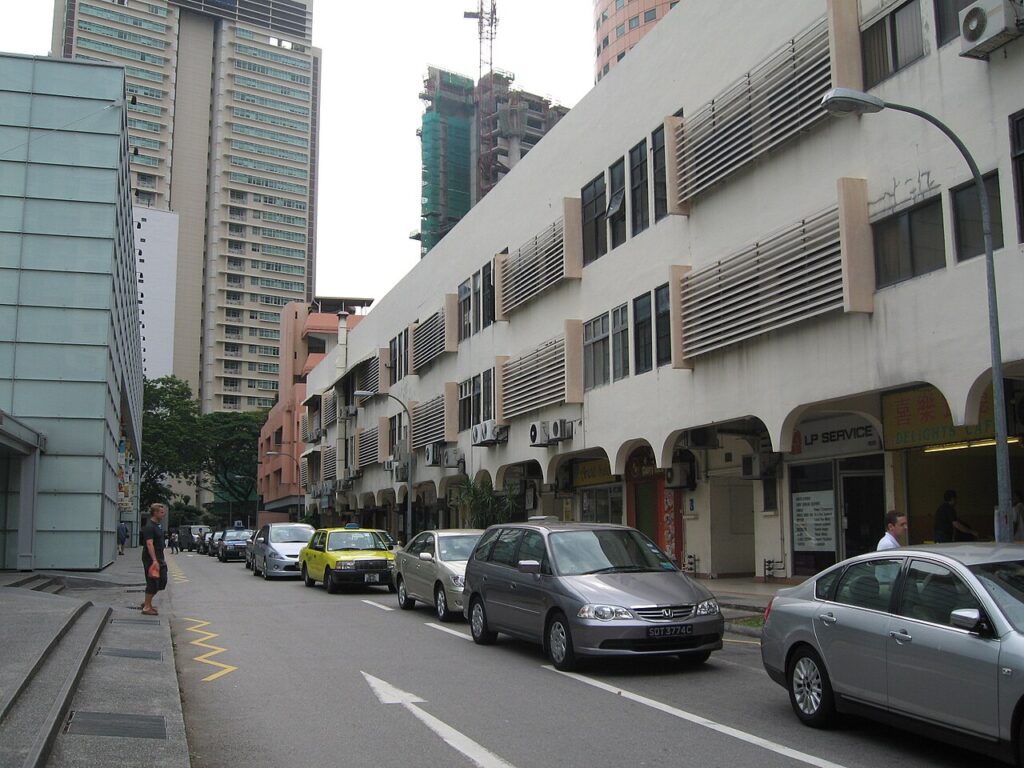
A Gilstead Court en bloc tender has just launched at a S$198 million reserve price, marking the fourth time owners of this 48-unit freehold estate off Novena have tried to sell the site collectively since 2005. If the sale succeeds, it will end a 21-year saga that has already produced one of Singapore’s most cited legal rulings on collective sales.
For owners weighing whether to sign an en bloc agreement, and for buyers watching how freehold sites in the Core Central Region are being priced against government land parcels, Gilstead Court is a useful live case study. Here is what has happened, why three earlier attempts fell through, and what the numbers say about its chances this time.
Quick Answer — Gilstead Court en bloc at a glance
- Gilstead Court, 52 Gilstead Road (District 11, Novena/Newton), has launched its collective sale tender at a S$198 million reserve price.
- That works out to S$1,874 psf per plot ratio (ppr) on gross floor area, or S$1,751 psf ppr once the 7% balcony bonus GFA is included.
- More than 80% of owners, by share value and floor area, agreed to the sale — the statutory threshold for a freehold site under the Land Titles (Strata) Act.
- This is the fourth attempt since 2005; the 2013, 2018 and 2019 tenders all failed to complete.
- The 2013 attempt was cancelled by the Court of Appeal and remains a leading precedent on good-faith requirements in collective sales.
- The site’s plot ratio of 1.4 under URA’s Master Plan caps redevelopment at an estimated 98 units averaging 1,076 sq ft.
- The tender closes on 13 October 2026, with JLL acting as sole marketing agent.
What Happened: A Fourth Attempt at S$198 Million
Gilstead Court sits on a 75,479 sq ft freehold plot at 52 Gilstead Road, tucked between an established landed housing enclave and the Novena and Newton MRT interchanges. The estate comprises three four-storey walk-up blocks built in 1978, with 48 three-bedroom apartments ranging from 1,389 sq ft to 1,464 sq ft. There is no lift, and shared facilities are limited to a small pool and courtyard, typical of an ageing 1970s freehold development.
Owners representing more than 80% of share value and floor area signed on to the current collective sale agreement, clearing the threshold required under Singapore’s collective sale legislation before a tender can be launched. The reserve price of S$198 million values the land at S$1,874 psf ppr based on the maximum allowable gross floor area of 105,671 sq ft under the site’s Master Plan zoning, or S$1,751 psf ppr once the additional 7% bonus GFA for balconies is factored in.
Why the Previous Three Attempts Collapsed
Gilstead Court’s history is unusual even by the standards of Singapore’s often protracted en bloc process. In June 2013, 43 of the 48 owners, representing close to 90% by share value, agreed to sell to a buyer linked to a listed developer for S$150.17 million. Five dissenting owners objected, arguing the collective sale agreement unfairly loaded extra costs onto them, including a bigger share of common-fund contributions and a lower per-unit payout than neighbours in identical apartments.
The High Court initially approved the sale in 2015 by striking out the disputed clauses, but the Court of Appeal overturned that decision later the same year. It found the agreement had not been struck in good faith, as required under the Land Titles (Strata) Act, and ruled that once bad faith is established, a court cannot simply edit an agreement to rescue a sale. The case, Lim Li Meng Dominic v Ching Pui Sim Sally, is still cited by lawyers and consultants drafting collective sale agreements today, and it forced the Gilstead Court owners back to square one.
A relaunch in 2018 at S$168 million drew no bids at all, a casualty of the July 2018 cooling measures that lifted Additional Buyer’s Stamp Duty on developers and tightened loan-to-value limits within days of the tender closing. A further attempt in 2019, at a reduced S$153 million after more than 60% of owners agreed to cut the reserve, also failed to find a buyer. The current S$198 million reserve sits roughly 29% above that 2019 attempt, a gap that reflects both construction-cost inflation and the stronger appetite developers have shown for prime freehold land over the past two years.
Owners and buyers who want the fuller mechanics of how a collective sale reaches this stage, including the consent thresholds, Strata Titles Board process and sale-committee obligations, can read our En Bloc Sale Process Guide.
Inside the Site: What a Developer Would Be Buying
Under URA’s Master Plan, the Gilstead Court plot carries a gross plot ratio of 1.4, well below the 2.8 enjoyed by a neighbouring development on the same road and far below the 4.9 ratio seen on nearby Government Land Sales (GLS) parcels. That constrains any redevelopment to a maximum GFA of 105,671 sq ft, or 113,068 sq ft including the balcony bonus, translating to an estimated 98 units averaging 1,076 sq ft if built to the maximum.
| Site Fact | Detail |
|---|---|
| Address | 52 Gilstead Road, District 11 (Novena / Newton) |
| Tenure | Freehold |
| Site area | 75,479 sq ft |
| Existing development | 48 units across three 4-storey walk-up blocks, completed 1978 |
| Plot ratio (Master Plan) | 1.4 |
| Maximum GFA | 105,671 sq ft (113,068 sq ft with balcony bonus) |
| Reserve price | S$198 million |
| Land rate | S$1,874 psf ppr (ex-balcony) / S$1,751 psf ppr (incl. balcony) |
| Estimated redevelopment potential | ~98 units, average 1,076 sq ft |
| Tender closes | 13 October 2026 |
How Gilstead Court’s Reserve Price Stacks Up
JLL, the site’s marketing agent, has benchmarked the reserve price against two recent nearby GLS awards: a Bukit Timah Road site next to Newton MRT that was awarded at S$1,820 psf ppr, and the Peck Hay Road site awarded at S$1,865 psf ppr. On paper, Gilstead Court’s S$1,874 psf ppr sits slightly above both. The comparison is not perfectly clean, however. Both GLS sites carry 99-year leasehold tenure against Gilstead Court’s freehold status, but they also carry a plot ratio of 4.9, letting a developer build more than 300 units each and spread fixed costs, such as show flats, marketing and construction mobilisation, over a much larger unit count.
That scale gap is likely to matter more to developers than the small premium on land rate. A boutique freehold plot of Gilstead Court’s size typically draws smaller private developers rather than the mainboard-listed names that chase larger GLS sites, and any successful buyer is more likely to build low-density apartments or strata-landed units than a large condominium. The nearby freehold project 32 Gilstead, a 14-unit ultra-luxury development, has already sold out at a median of S$3,455 psf, suggesting there is appetite for small, well-located freehold product in this pocket of District 11 if a developer can make the plot ratio arithmetic work.
Why This Matters
Gilstead Court is a reminder that a strong reserve price and majority owner consent are only the first hurdle in a Singapore collective sale; the site’s own zoning constraints and the wider policy backdrop matter just as much. Developers still have to weigh Additional Buyer’s Stamp Duty on land purchases, project sell-through obligations within five years, and financing costs against the eventual sale prices they can achieve. Since land rates for larger GLS parcels remain a live benchmark (see our GLS Programme Guide for how confirmed and reserve list tenders are priced), boutique freehold sites like Gilstead Court effectively compete for developer capital against much bigger, scale-efficient land parcels.
For owners in older freehold estates considering their own collective sale, the lesson from Gilstead Court’s 2013 attempt is arguably the more durable one: agreements that impose uneven costs or payouts on dissenting owners invite legal challenge, and a rescinded sale can cost a decade of lost time. Anyone weighing an en bloc decision, whether as a majority owner pushing for a sale or a minority owner assessing an agreement, should read the underlying Collective Sale Agreement carefully and take independent legal advice before signing. Our En Bloc Sale Singapore Guide sets out the process end to end, and buyers of any resulting new launch should also budget for stamp duty using our ABSD Singapore Guide.
Frequently Asked Questions
What is the reserve price for Gilstead Court’s collective sale?
The reserve price is S$198 million, equivalent to S$1,874 psf per plot ratio on the site’s gross floor area, or S$1,751 psf ppr once the 7% balcony bonus GFA is included.
Why did Gilstead Court’s earlier collective sale attempts fail?
The 2013 attempt was cancelled by the Court of Appeal after dissenting owners successfully argued the sale agreement was not made in good faith. The 2018 tender drew no bids amid tighter cooling measures, and a reduced-price 2019 relaunch also failed to attract a buyer.
How many owners need to agree to a collective sale in Singapore?
For a freehold development, owners representing at least 80% of share value and strata floor area must consent before a collective sale application can proceed. Gilstead Court’s owners cleared this threshold over roughly six months.
What could Gilstead Court be redeveloped into?
Given its 1.4 plot ratio, the site could yield an estimated 98 units averaging 1,076 sq ft if built to the maximum allowable gross floor area. Its scale points toward a low-density apartment block or strata-landed development rather than a large condominium.
When does the Gilstead Court tender close?
The public tender closes on 13 October 2026. As with any collective sale, a successful outcome still requires a developer to submit a winning bid at or above the reserve price.
Related Articles
- Singapore En Bloc Sale Process Guide 2026
- En Bloc Sale Singapore 2026: Complete Collective Sale Guide
- SERS Guide Singapore 2026
- GLS Programme Guide Singapore 2026
- ABSD Singapore 2026: Complete Guide
Disclaimer: This article is for general information only and does not constitute investment, legal or financial advice. Collective sale outcomes depend on tender results, regulatory approval and market conditions, all of which can change. Figures are based on publicly reported tender details and URA zoning data as at 31 August 2026 and may be superseded by subsequent announcements. Prospective buyers and sellers should verify current details with URA, the Singapore Land Authority and a licensed conveyancing lawyer before making any decision.
Need a brochure, price list or professional introduction?
Planning your next property purchase? Contact Lin Xuan at 82222556 or Ade at 81888871 to request a project’s full brochure and latest available price list, discuss a viewing, or ask for introductions to bankers who can help you compare home-loan rates and packages to find the best available option for your needs.
WhatsApp Lin Xuan | WhatsApp Ade. Please include the project name and your question. Brochures, prices and unit availability are subject to developer confirmation; loan eligibility, rates and approval are determined by the bank.
Lin Xuan: ONG LIN XUAN, CEA registration R069812H. Ade: CHUA MUAY MUAY (ADE CHUA), CEA registration R014252F. ERA REALTY NETWORK PTE LTD, estate agent licence L3002382K. If you need legal advice, contact Lin Xuan or Ade and we can introduce you to property lawyers.
Supporting graphics
Original article illustrations are available below.
- Figure 1: Gilstead Court’s reserve price has climbed with each fresh attempt, though scale and market conditions have sunk every prior tender.
- Figure 2: Gilstead Court’s asking land rate is competitive against nearby leasehold GLS sites, but its low plot ratio means a buyer gets far fewer units to sell against a similar per-square-foot cost.

