
Updated 24 Sep 2026. This guide now focuses on a joint home purchase by a Singapore citizen and a non-citizen spouse where neither currently owns Singapore residential property. It corrects the previous claim that all remission requires paying ABSD first, and removes misleading claims about citizenship shares, inheritance and developer concessions.
If you are a Singapore citizen buying jointly with your PR or foreign spouse, Additional Buyer’s Stamp Duty (ABSD) remission may be available even though your spouse is not a citizen. Under rule 3 of the Stamp Duties (Spouses) (Remission of ABSD) Rules 2013, the key starting point is that neither of you owns a Singapore residential property interest when the purchase instrument is executed.
“First joint home” is a convenient description here, not a requirement that you have never owned property in your life. The question is what each spouse owns at the relevant transaction date. Someone who previously sold a home needs that timing checked; someone with a small inherited share must disclose it.
The conditions to check before signing
| Check | Requirement for this remission |
|---|---|
| Buyers | Exactly the two spouses jointly. One is a Singapore citizen; the other is a permanent resident or foreigner. |
| Marriage | They are married when the instrument is executed. The definition in rule 2 includes a qualifying marriage under foreign law; a Singapore wedding ceremony is not itself required. |
| Existing interests | Neither spouse beneficially owns an estate or interest in Singapore residential property at that time, applying rule 2’s definitions. |
| New property | The instrument concerns a single residential property. It must not be partnership property or, for current purchases, held on trust by either spouse. |
Under rule 2(2), joint ownership can be as joint tenants or tenants in common. The relief is not based on reducing the non-citizen spouse to a token percentage. Changing percentages does not cure an existing-property interest, an ineligible buyer combination or the addition of a third purchaser.
A foreign marriage must meet the statutory definition: it must be valid under the applicable foreign law and not void under the Women’s Charter. Give the conveyancer the relevant records, including any translation they request, before using the remission in your budget. Do not assume that a plan to marry later satisfies a condition tested at execution.
You may apply for remission instead of paying ABSD first
IRAS explains that eligible couples in this no-existing-property category can apply for ABSD remission when stamping, instead of first paying ABSD. Stamping through myTax Portal produces the remission certificate. This relief does not itself remove Buyer’s Stamp Duty (BSD).
Ask the conveyancer to confirm the eligibility basis, the declaration to be made and the amount actually due. Keep the certificate with the purchase documents. “We should qualify” in a message is not a substitute for a correctly completed stamping record.
Hypothetical example: a citizen and PR are already married, neither has a Singapore residential property interest, and they buy a condominium in their two names without a trust or partnership arrangement. That is the type of transaction rule 3 covers. Add a parent as a third purchaser, and the two-party condition is no longer met. Each version needs its own assessment before signing.
If either spouse still owns a home, use the replacement-home rules
Do not reuse a no-existing-property declaration if one spouse still owns an interest in another home. A qualifying replacement purchase falls under a different provision, rule 4. That route requires ABSD payment first and compliance with disposal and other conditions. Our replacement-home ABSD refund guide explains its separate sale and application deadlines.
For transaction timing, rule 2(3) distinguishes a contract from an option that must be exercised. A property is not necessarily still counted until legal completion, and an unexercised option to a prospective buyer is not necessarily a completed disposal for these rules. Have the lawyer identify the operative event for both transactions before relying on a sell-first sequence.
This matters for the household budget as well as tax. If you sell first, work out where you will live between handovers, what storage and rent would cost, and whether the new purchase can still proceed if the planned timing changes. Do not let a tax saving obscure an unaffordable move.
Keep eligibility, ownership and funding as separate questions
An ABSD remission does not approve your mortgage or establish that you can buy a particular HDB flat, EC or restricted property. Those questions require their own checks. Likewise, a choice between joint tenancy and tenancy in common affects ownership planning; it should not be selected solely because someone says a smaller share will fix the tax.
If the property will be held through a trust, or either spouse has a beneficial interest that is not obvious from registered ownership, stop using this simple checklist and obtain advice on the actual arrangement. The definitions in rule 2 and trust exclusions in rule 3 matter. This article does not assess estate distributions, developers, entities or other remission schemes.
Before committing, assemble each buyer’s citizenship or residency evidence, marriage record, existing property-interest details and proposed ownership structure. Ask for a written tax calculation, applicable remission basis and a funds schedule. For an investor, include running costs and vacancy in the separate affordability analysis; for an occupier, preserve a moving and emergency budget.
General legal and tax information, checked on 24 September 2026 against the linked SSO rules and IRAS guidance. SSO displayed the current version as at that date. Rule 1 dates commencement to 12 January 2013; rule 3’s trust exclusion applies to instruments executed on or after 9 May 2022. Earlier transactions require their own version check. Obtain advice on the actual ownership and purchase documents before relying on this guide.
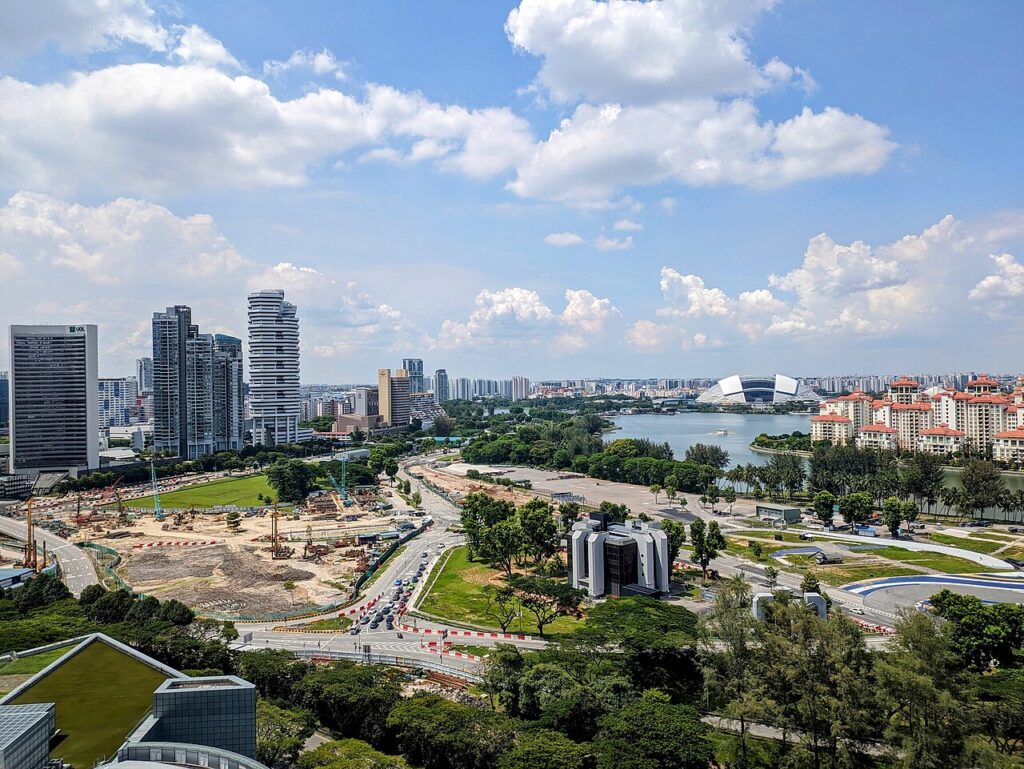
Featured photograph: Kallang Basin from Centennial Tower, 26 April 2024, by Robert Sim, Wikimedia Commons, CC BY-SA 4.0. Cropped for the website; archive Singapore context, not an example purchase.
