
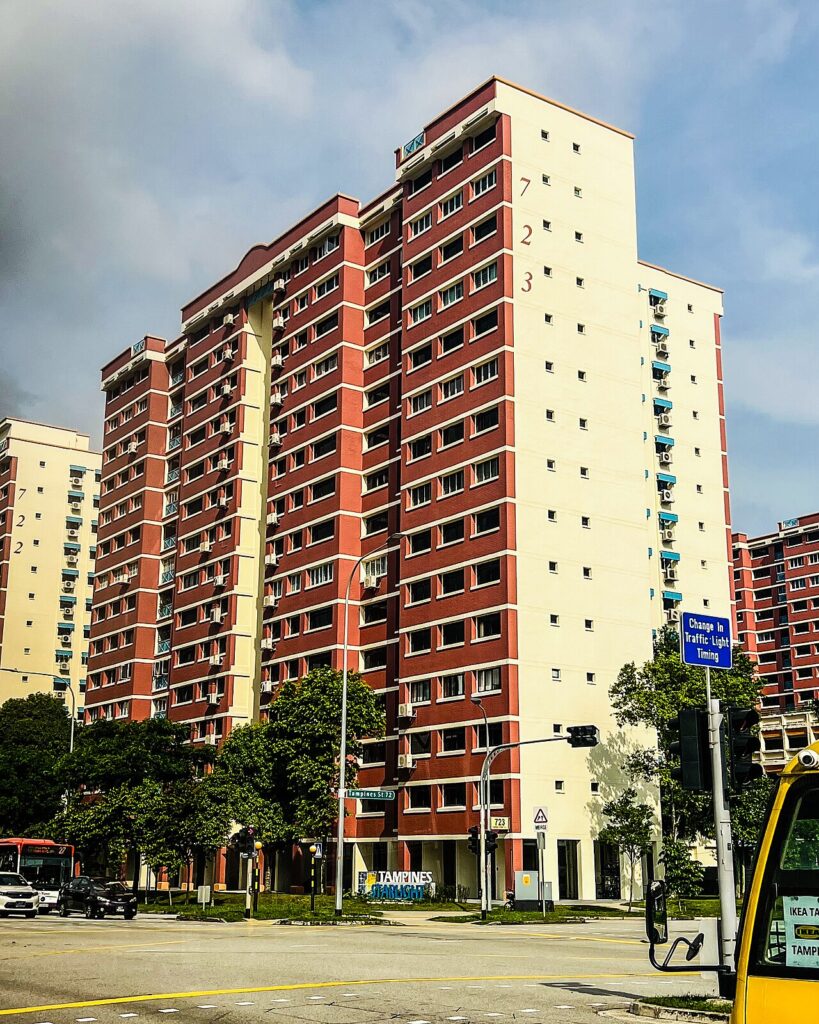
🏠 Quick Answer — Singapore Property Ownership Types 2026
- Five tenure types exist in Singapore: true freehold (999yr/9999yr/perpetuity), 99-year leasehold, 60-year leasehold, 30-year leasehold, and HDB lease (a form of 99-year leasehold from the state).
- Three property classes apply: public housing (HDB), private residential (landed and non-landed), and commercial/industrial.
- CPF Ordinary Account funds can be fully used for freehold and leasehold properties where the remaining lease covers the youngest buyer to age 95. Short leases below 30 years cannot be funded by CPF at all.
- Foreigners (non-PRs) may purchase non-landed private condominiums and Sentosa Cove landed property but are barred from HDB flats, executive condominiums (within or outside MOP), and mainland landed homes.
- Joint tenancy (JT) grants equal shares with automatic survivorship rights, while tenancy-in-common (TIC) allows flexible ownership splits and individual bequeathals — the structure used in “decoupling” to manage ABSD liability.
- ABSD (Additional Buyer’s Stamp Duty) counts each owner’s total property holdings. Adding a co-owner who already holds property triggers ABSD based on that co-owner’s profile, not the primary buyer’s.
- Permanent Residents purchasing landed property require approval from the Singapore Land Authority (SLA) and are rarely granted such permission.
What “Property Ownership Type” Means in Singapore
When property professionals in Singapore talk about ownership type, they are simultaneously describing at least three separate legal concepts: tenure (how long you own the land), property class (public versus private, landed versus non-landed), and ownership structure (who holds the title and in what proportions). These three dimensions interact with one another in ways that determine your eligibility to buy, how much you can borrow, whether CPF Ordinary Account funds may be applied, the stamp duties you pay, and ultimately the resale value and liquidity of the asset.
The Urban Redevelopment Authority (URA) and the Housing & Development Board (HDB) jointly administer Singapore’s land-sale and housing framework, with the Singapore Land Authority (SLA) maintaining the land register and the Inland Revenue Authority of Singapore (IRAS) administering stamp duties. Understanding how their overlapping rules affect each ownership type is essential before signing any option to purchase.

The Five Tenure Types in Singapore
Tenure determines the fundamental nature of your ownership relationship with the state. Singapore sits on land that ultimately belongs to the Singapore government; private landowners hold either a perpetual grant or a time-limited lease from the state.
True freehold (Freehold in perpetuity) means the owner holds the land and building indefinitely, subject only to compulsory acquisition under the Land Acquisition Act if the state requires it for public purposes. True freehold plots are rare — they originated largely from pre-independence Crown grants and old colonial titles. Examples include many shophouses in the historic districts and certain older private estates in prime districts. In practice, “freehold” in Singapore’s property listings almost always means 999-year or 9999-year leasehold, which is treated as commercially equivalent to perpetual freehold because the lease outlasts any human concern.
999-year and 9999-year leasehold are historical tenures used before Singapore standardised GLS (Government Land Sales) to the 99-year format. Properties such as Nassim Road black-and-white bungalows and some Tanglin-area condominiums carry 999-year titles granted in the colonial era. For all practical purposes — CPF eligibility, bank lending, resale values — these are treated identically to true freehold.
99-year leasehold is the dominant tenure for private condominiums, executive condominiums (ECs), and most post-independence landed homes sold under GLS. The 99-year clock starts from the date the state grants the lease to the developer, not from the date you purchase from the developer or on the resale market. A new launch condo may offer you 99 years; a 20-year-old resale unit may offer only 79 years — a critical difference for CPF eligibility, bank loan quantum, and eventual en-bloc prospects.
60-year leasehold is less common and appears mainly in older HDB upgrader-type private apartments from the 1980s–1990s and some industrial or commercial sites. When the remaining lease dips below 30 years, CPF cannot be used at all; between 30 and 59 years, CPF usage is prorated, reducing the maximum CPF withdrawal progressively.
30-year leasehold is primarily found in commercial contexts — some shophouses and industrial units. Bank financing becomes difficult: MAS-regulated financial institutions typically require the loan tenure to end before the lease expires, so a 25-year-old property on a 30-year lease can support only a 5-year loan. CPF is generally unavailable. Investors in this space are largely cash buyers or institutional funds.
HDB flats are technically a distinct form of 99-year lease between HDB (as lessor) and the flat buyer (as lessee). Unlike private leasehold property held under a land title, HDB flats are governed by the Housing & Development Act, which imposes eligibility, resale, subletting, and Minimum Occupation Period (MOP) rules that do not apply to private property.
Property Classes: Public, Private Landed, and Private Non-Landed
Singapore’s property market is stratified into distinct classes, each with different eligibility criteria, price points, and regulatory frameworks.
Public housing (HDB) accounts for roughly 80% of Singapore’s resident population. Built and managed by HDB, these flats are sold under a 99-year lease on heavily subsidised terms to eligible Singapore Citizens (SCs) and, in limited circumstances, Singapore Permanent Residents (SPRs). The Ethnic Integration Policy (EIP) limits the proportion of any ethnic group in each HDB block to maintain social cohesion. HDB flats cannot be sub-let entirely without HDB approval, and short-term lettings (Airbnb-style) are prohibited.
Executive condominiums (ECs) are a hybrid tenure: built by private developers but sold at subsidised prices to eligible SC/SPR households who meet income ceilings (S$16,000/month as at 2026). ECs are fully privatised after the 10-year mark from the issuance of the Temporary Occupation Permit (TOP) — only then can they be sold to foreigners. Between TOP and the 5-year MOP, ECs may not be sold at all on the open market. Between the MOP and 10 years, they can be sold to SCs and SPRs on the open market.
Private non-landed residential property — condominiums, apartments, and serviced residences — is available to SCs, SPRs, and foreigners without restriction (subject to ABSD). These properties are governed by the Building Maintenance and Strata Management Act (BMSMA), which requires a Management Corporation Strata Title (MCST) to maintain common property and set maintenance fees and sinking fund contributions.
Private landed residential property — detached bungalows, semi-detached homes, and terraced houses — is the most tightly regulated class. Under the Residential Property Act, foreigners (non-ERM) are generally barred from buying mainland landed property. SPRs may apply to SLA for approval to purchase landed homes, but approvals are rare and subject to demonstrating economic or professional contribution to Singapore. Sentosa Cove, a designated area on Sentosa Island, is the sole exception: foreigners and SPRs may purchase landed property there without SLA approval, albeit subject to ABSD.
Commercial and industrial property — shophouses, offices, retail units, and industrial facilities — carries no citizenship restrictions. Foreigners may purchase these freely. However, ABSD does not apply to commercial properties, and mortgage conditions differ significantly from residential financing.

Title and Strata: How You Actually Hold the Property
In Singapore, how you hold title to property is as important as what you hold. There are two principal title structures for private property.
Strata title (under the Land Titles (Strata) Act) is the ownership structure for condominiums, cluster homes, and many commercial properties. Each owner holds a strata lot — their individual unit — alongside an undivided share in the common property (corridors, lifts, pools, carparks). The share value, expressed as a fraction of the total share values in the development, determines the owner’s pro-rata obligation for management fund and sinking fund contributions, as well as their voting weight in MCST general meetings.
The MCST — a body corporate automatically constituted upon registration of the strata subdivision plan — governs the common property. MCST fees are set by the council and passed at general meetings. Every buyer of a strata unit inherits any outstanding MCST levies as a statutory charge on the property; it is therefore essential to search for MCST-level encumbrances before completion.
Landed title operates under the Land Titles Act. The owner holds the land parcel and the structures on it outright. There is no MCST; maintenance, insurance, and structural repairs are entirely the owner’s responsibility. Landed property within a “housing estate” managed by a town council (mostly HDB estates) may be subject to estate maintenance levies, but this is unusual for private landed homes.
HDB flats do not use either strata or landed title in the same way. HDB retains ownership of the land and building; the flat buyer acquires a leasehold interest documented in a lease agreement with HDB, not a land-titles strata lot. This means HDB flat owners do not have the same proprietary rights as private strata title holders — for example, they cannot mortgage the flat to a non-bank lender and are subject to HDB’s ongoing consent for major alterations.
Ownership Structures: Sole, Joint Tenancy, and Tenancy-in-Common
When two or more people buy property together, Singapore law offers two co-ownership structures, each with materially different legal and tax consequences.
Sole ownership is the simplest structure: one individual holds the entire title. All CPF, mortgage servicing, stamp duty obligations, and eventual sale proceeds belong to that one owner. ABSD is assessed based solely on that owner’s property holdings.
Joint tenancy (JT) is the default when married couples purchase property together in Singapore. In a JT, co-owners hold the property as a single indivisible unit in equal shares. The defining feature is the right of survivorship: if one owner dies, their interest does not pass through their estate — it automatically vests in the surviving co-owner(s) by operation of law, regardless of what the will says. JT cannot be bequeathed and cannot be sold piecemeal; to transfer a share, the co-owners must first sever the JT into a TIC.
Tenancy-in-common (TIC) allows co-owners to hold defined, distinct shares — 50/50, 60/40, 99/1, or any other split. Each share can be independently bequeathed, mortgaged (subject to lender consent), or sold. This flexibility is the basis of the “decoupling” strategy used by some couples to manage ABSD exposure: one spouse transfers their TIC share to the other (paying BSD on the transferred share), effectively becoming a sole owner, freeing the other spouse to purchase a second property without paying ABSD as a co-owner of the first.
IRAS has tightened scrutiny on decoupling arrangements; the transfer is subject to BSD (and ABSD if applicable), and the entire structure must be commercially genuine. MAS mortgage rules also apply independently to each borrower post-decoupling, so TDSR (Total Debt Servicing Ratio) and LTV compliance must be rechecked after any ownership change.
CPF and Financing Rules by Ownership Type
The CPF Board’s housing withdrawal limits interact directly with the tenure and class of property. In broad terms:
For freehold or long-lease (999yr/9999yr/99yr) properties where the remaining lease at the time of purchase covers the youngest buyer to the age of 95, the full CPF Ordinary Account (OA) balance can be used for the downpayment and mortgage servicing. There is no CPF usage cap beyond the standard Valuation Limit (VL) and Withdrawal Limit (WL) based on loan-to-value (LTV) ratio.
For properties with a shorter remaining lease, CPF usage is prorated. If the remaining lease at the point of purchase is below 30 years, no CPF may be used at all — only cash and bank mortgage. Properties with a remaining lease of between 30 and 59 years attract partial CPF limits, calculated by a formula that considers the youngest buyer’s age and the lease remaining. Buyers often underestimate how sharply CPF restrictions affect their liquidity on leasehold properties purchased in the resale market.
For HDB flats, the CPF rules are broadly similar to private 99-year leasehold property, but with additional HDB-specific rules: HDB flats can also be financed by an HDB Concessionary Loan (at 2.6% per annum as at 2026, pegged to CPF OA interest rate plus 0.1%) or a bank loan. The HDB loan allows 80% LTV; bank loans for HDB resale flats are capped at 75% LTV under MAS regulations.
ABSD and Stamp Duty Implications by Ownership Profile
Both BSD (Buyer’s Stamp Duty) and ABSD (Additional Buyer’s Stamp Duty) are administered by IRAS and are payable within 14 days of signing the Sale & Purchase Agreement. The ABSD rate is determined by the buyer’s citizenship status and the number of residential properties they own at the point of purchase — counting both Singapore and overseas residential properties.
ABSD as at 2026:
| Buyer Profile | 1st Property | 2nd Property | 3rd+ Property |
|---|---|---|---|
| Singapore Citizen (SC) | 0% | 20% | 30% |
| Singapore PR (SPR) | 5% | 30% | 35% |
| Foreigner (non-ERM) | 60% | 60% | 60% |
| Entity (company/trust) | 65% | 65% | 65% |
| SC + SPR (joint) | 5% | 25% | 30% |
| SC + Foreigner (joint) | 60% | 60% | 60% |
When two buyers purchase jointly, the ABSD rate applied is the higher of the two buyer profiles’ applicable rates, based on each person’s total property count at the date of the option exercise. This means that adding a co-owner who is a foreigner to a purchase immediately invites the 60% ABSD rate, regardless of the primary buyer’s SC status.

Worked Example: The Chen Family’s Tenure Trade-Off
📊 Worked Example — Mr and Mrs Chen, Singapore Citizens
Mr and Mrs Chen (both SC, ages 38 and 36) currently own a 4-room HDB resale flat in Ang Mo Kio purchased in 2019 for S$520,000 under joint tenancy. They want to upgrade to a private condominium in District 20 (Bishan/Thomson) at S$1,450,000. Their combined income is S$14,500/month. The HDB flat still has 7 years left on its MOP (they bought a resale unit with 12yr MOP achieved in 2031, but let’s assume MOP has been served).
Scenario A — Sell HDB first, then buy: Selling the HDB removes it from their property count. Both are first-time private property buyers. ABSD = 0% (SC, 1st private property). BSD on S$1,450,000 = S$43,600. Bank loan 75% LTV = S$1,087,500; monthly repayment at 3.5% over 25yr = S$5,442. TDSR = 37.5% ✓. Downpayment 25% = S$362,500. Total upfront: BSD S$43,600 + downpayment S$362,500 + legal ~S$3,500 ≈ S$409,600.
Scenario B — Buy first (HDB retained as joint tenancy), then sell: Both spouses hold the HDB flat. Buying a second residential property: ABSD 20% on S$1,450,000 = S$290,000 cash (ABSD cannot be paid from CPF). This pushes total upfront cost to ≈S$699,600. The couple must sell the HDB within 6 months of TOP of the new purchase to obtain an ABSD remission (applicable to SC married couples buying their first private property while retaining an existing HDB flat and selling it within 6 months of TOP).
Decision: Sell first saves S$290,000 in ABSD and avoids bridge financing risk. Buy first is justifiable only if the HDB sale proceeds are needed to bridge the downpayment gap and the couple is confident of completing the HDB sale within the 6-month window. In either case, they must check that TDSR remains below 55% after all debt obligations are factored in.
What Might Come Next for Property Ownership Rules
Singapore’s property ownership framework is reviewed periodically by MAS, URA, HDB, and SLA in response to market conditions. Several developments are worth monitoring in 2026 and beyond.
The government has indicated it will sustain a high Confirmed List supply under the GLS Programme — 9,320 units for 2026 full-year — to moderate price growth. This elevated supply pipeline may eventually compress the freehold-leasehold price premium as more 99-year sites enter the market.
The ABSD framework — last revised in April 2023 — remains under ongoing review. Market observers note that the 60% foreigner ABSD is a deliberately prohibitive rate designed to preserve housing affordability for locals rather than generate revenue. The rate may be adjusted if foreign demand patterns change materially.
The CPF housing usage rules for short-lease properties were tightened in 2019 to protect buyers from locking retirement savings into depreciating leasehold assets. Further refinements are possible if market data shows buyers systematically underestimating lease-decay risk on resale leasehold properties.
Finally, the en-bloc collective sale cycle — which periodically transforms ageing freehold and 99-year leasehold estates — depends heavily on the land sales cycle and government GLS pricing. Property owners in older developments should monitor MCST votes and URA master plan changes, both of which affect en-bloc potential.
Summary Table: Singapore Property Ownership Types 2026
| Ownership Type | Tenure | Who Can Buy | CPF OA | Max LTV | ABSD Applies? |
|---|---|---|---|---|---|
| HDB flat (new BTO) | 99yr (HDB lease) | SC / SC+SPR (eligible) | Yes (full) | 80% (HDB loan) / 75% (bank) | No (residential only, 1st property SC) |
| HDB resale | 99yr (HDB lease, residual) | SC / SPR (limited) | Yes (lease-prorated) | 75% bank | ABSD if SPR 1st (5%) or 2nd+ SC (20%) |
| EC (within MOP) | 99yr (private) | SC / SC+SPR (eligible) | Yes (full) | 75% bank | ABSD if SPR |
| EC (after 10yr) | 99yr (private, privatised) | All nationalities | Yes (full) | 75% | Yes (full ABSD schedule) |
| Freehold condo / apt | Freehold / 999yr | All (ABSD applies to foreigners) | Yes (full) | 75% | Yes (full ABSD schedule) |
| 99yr leasehold condo | 99yr (residual) | All (ABSD applies) | Yes (lease-prorated) | 75% | Yes |
| Mainland landed (SC/SPR) | Freehold or 99yr | SC (free); SPR (SLA approval); Foreigner (barred) | Yes | 75% | Yes |
| Sentosa Cove landed | 99yr | All (including foreigners) | Yes | 75% | Yes (60% for foreigners) |
| Commercial shophouse | Freehold or 99yr / 60yr | All | No (commercial) | ~50–55% (commercial rate) | No ABSD (non-residential) |
Frequently Asked Questions
Can a Singapore Permanent Resident buy landed property in Singapore?
SPRs may apply to the Singapore Land Authority (SLA) for approval to purchase restricted residential property, which includes all mainland landed homes — detached, semi-detached, and terrace — outside Sentosa Cove. In practice, SLA approvals are granted rarely and generally require the applicant to demonstrate a strong economic, professional, or social contribution to Singapore. SPRs who have been PRs for many years and who have children in Singapore schools, for example, may have a marginally better chance, but there is no published threshold. Sentosa Cove landed property is the notable exception: SPRs and even non-PR foreigners may purchase there freely, subject to the applicable ABSD rate (60% for foreigners, 5%/30%/35% for SPR first/second/third+ properties).
What happens to joint tenancy property when one owner dies?
Under joint tenancy, the right of survivorship operates automatically upon death: the deceased co-owner’s interest passes directly to the surviving co-owner(s) by operation of law, without going through the estate or probate process. This means a will cannot override the right of survivorship on JT-held property — even if the deceased’s will bequeaths their “share” of the property to someone else, the will has no effect on the JT interest. If the couple wishes the property to pass to children or other beneficiaries on death, they should sever the JT into a tenancy-in-common, which allows each co-owner to bequeath their defined share independently. Note that severance of a JT itself does not attract stamp duty, but it must be properly registered with SLA.
How does lease decay affect resale value for 99-year leasehold property?
Lease decay — the progressive reduction in remaining lease years — has an increasingly pronounced effect on resale value, CPF eligibility, and bank financing as a property ages. URA transaction data shows that 99-year leasehold condominiums with fewer than 60 years remaining typically trade at a meaningful discount to comparable freehold or newer-lease units in the same area, reflecting restricted buyer pools (fewer CPF-eligible buyers, tighter bank-loan terms) and lower en-bloc potential. The CPF Board’s 2019 rules, which restrict CPF usage where the remaining lease does not cover the youngest buyer to age 95, have further compressed the buyer pool for older leasehold units. Buyers considering a 20–30-year-old leasehold unit should model their exit assumptions carefully — factoring in the remaining lease at the time of anticipated sale, not just the current lease.
Is decoupling still viable for SC married couples in 2026?
Decoupling — where one spouse transfers their TIC share to the other, exiting co-ownership so they can purchase a second property without ABSD — remains legally permissible and is used by some couples. However, the transaction is no longer as cost-free as it once was. BSD applies to the transferred share: on a S$1.5M condo, transferring a 50% share (S$750,000) incurs BSD of approximately S$19,300. ABSD may also apply if the transferring spouse is acquiring another property simultaneously. IRAS has made clear it scrutinises decoupling arrangements to confirm they are genuine rather than artificial. Additionally, MAS mortgage stress-tests apply independently post-transfer, so the sole remaining owner must individually qualify for the full outstanding mortgage under TDSR rules — a hurdle that has become more challenging as interest rates have risen from the near-zero era of 2020–2022.
Can foreigners buy an HDB flat if they are married to a Singapore Citizen?
A foreigner (non-PR) married to a Singapore Citizen may purchase an HDB resale flat under the Public Scheme, where the SC spouse is the applicant and the foreigner spouse is listed as an occupier (not an owner). The HDB flat is owned solely by the SC spouse in this case. The foreigner spouse does not appear on the title and does not count as a property owner for ABSD purposes. New BTO flats, by contrast, require both applicants to be SC or SPR; a non-PR foreigner cannot be on the BTO application at all. Under the Non-Citizen Spouse Scheme (previously called the Non-Citizen Family Scheme), the foreigner spouse may eventually be included as an owner if they obtain PR status.
What is the difference between an HDB lease and a private strata title?
An HDB flat lease is a contractual lease agreement between HDB (as lessor) and the flat buyer (as lessee) for a 99-year term. The flat buyer does not own a strata lot in the legal sense; HDB retains the underlying land and building ownership. The buyer’s rights are extensively regulated by the Housing & Development Act — including rules on who may reside, sub-letting, renovation, and resale eligibility. A private strata title, by contrast, is a property right registered under the Land Titles (Strata) Act. The strata lot owner holds a legal interest in their unit and an undivided share in the common property, enforceable against the world. The owner has significantly more autonomy over use, sub-letting, short-term letting (within regulations), and mortgaging than an HDB flat lessee.
Do the same ABSD rules apply to commercial shophouses as residential property?
No. ABSD applies only to acquisitions of residential properties. Commercial shophouses — whether the entire unit is commercial or whether it is a mixed strata-commercial unit — do not attract ABSD. BSD still applies at the standard commercial BSD rate (1% on first S$180,000; 2% on next S$180,000; 3% on next S$640,000; 4% on remainder for properties up to S$1M; further progressive rates apply above S$1M). Buyers of commercial shophouses should note that mortgage terms differ substantially from residential financing: LTV ratios are typically 50–55% rather than 75%, loan tenures are shorter, and CPF OA funds may not be used for commercial property purchases. Foreign ownership is permitted for commercial shophouses without restriction.


0 Comments