
A tenant should not assume that every repair below S$200 is automatically their responsibility, or that ordinary wear excuses every charge. The signed tenancy agreement, the cause of the problem and the repair procedure all matter. Resolve those questions before authorising work or agreeing to a deduction.
The repair allowance is a negotiated term
CEA’s optional private residential tenancy template leaves the minor-repair amount for the parties to agree. Clause 4.2 uses a per-item, per-incident amount after the agreed problem-free period, with separate treatment for excess costs, faults beyond repair and tenant negligence or wilful default. It is a contract model, not a statutory S$200 rule.
The useful question at signing is what the clause actually allocates. Does it cover a repair, replacement parts or the entire replacement of an appliance? How is one incident identified? A heading such as “minor repairs” does not answer those questions by itself.
Report the problem before the evidence disappears
The template’s clause 4.1 deals with defects reported in writing during the agreed problem-free period. Clause 4.9 also addresses repair work undertaken without prior written consent and without giving the landlord sufficient opportunity to act. These provisions show why both the report and the permission sequence deserve attention in the actual agreement.
When an appliance fails, preserve the message reporting it, photographs, any error display and the service history. Describe what happened without guessing the technical cause. A contractor’s diagnosis may distinguish age-related failure, a part that can be repaired and damage associated with misuse.
If there is an immediate safety risk, prioritise safety and contact the relevant emergency or qualified service provider as appropriate. Record what was necessary and notify the landlord promptly. That does not establish an automatic contractual entitlement to reimbursement for every emergency call-out.
Separate responsibility from the amount
Illustration only: assume a signed term makes the tenant responsible for the first S$150 of an agreed S$420 repair, with the landlord paying the balance, and that the term applies to the fault. The split is S$150 and S$270. It does not follow that the same split applies to an appliance beyond repair or to damage caused by negligence.
First identify the clause and why it applies. Then establish what work is needed and what supports its price. An invoice proves a charge was made; it does not by itself decide who must bear it. Equally, disagreement about the price does not establish that no repair obligation exists.
Ask for the quote to distinguish diagnosis, labour, parts and replacement where relevant. If several unrelated jobs appear on one bill, keep each disputed item identifiable. Record any agreed contribution and whether it settles the whole issue or only one part.
Fair wear and tear needs a factual comparison
The optional template’s handback provisions and end-of-tenancy checklist refer to fair wear and tear. Read the wording adopted in your agreement alongside the repair and maintenance clauses. A fair-wear exception should not be replaced by a blanket promise that every item will be returned as new.
Keep the move-in record, the item’s age and condition, dated fault reports and the handover record together. Distinguish gradual deterioration from a specific event, and identify any earlier defect. A photograph of a mark at the end of the tenancy is more useful when there is a comparable starting photograph and a clear description of the item.
Routine servicing, cleaning and a replacement after failure may be different obligations. If an air-conditioner is disputed, for example, preserve servicing receipts and the technician’s explanation of the failure. Avoid assuming that either the existence or absence of one receipt resolves every issue.
Use the right dispute route
Schedule paragraph 1(c) of the Small Claims Tribunals Act 1984 covers claims relating to residential lease contracts not exceeding two years. Section 5 also governs jurisdiction, including service in Singapore and value and time limits. The lease-length requirement and the filing time limit are different tests.
The Singapore Courts eligibility guide states an ordinary S$20,000 limit, or S$30,000 with both parties’ signed memorandum of consent, and filing within two years after the cause of action accrues. Do not assume that clock always starts at move-in. Check the actual breach and the available route before relying on a deadline.
A sensible first response identifies the item, the clause, the account of what happened and the amount accepted or disputed. Keep correspondence and supporting documents together. A disagreement does not automatically authorise rent withholding, disposal of the appliance or cancellation of the tenancy.
Read the rental deposit deductions guide for the separate question of retaining a deposit, and the pre-signing tenancy guide for negotiating the wider contract. If advice is needed, Lin Xuan or Ade can introduce a property lawyer to review the agreement and options.
General legal information. Statutory provisions and contractual template checked 3 November 2026.
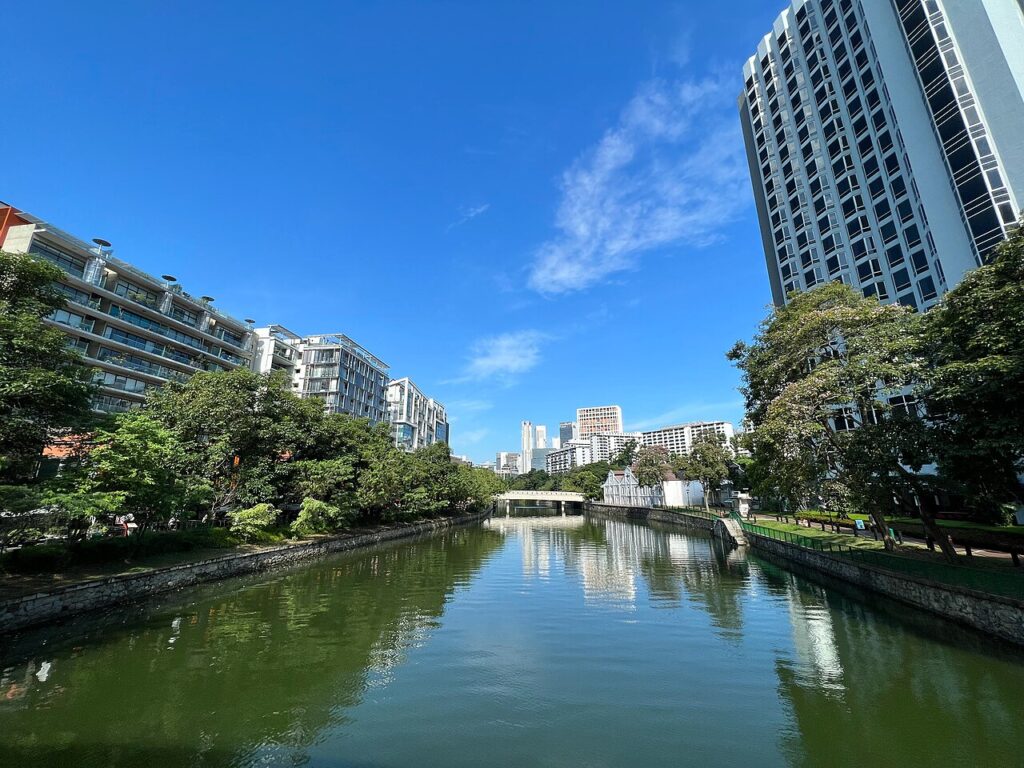
Photograph: Singapore River at Robertson Quay, 14 August 2022, Wzhkevin, CC BY-SA 4.0. Source: commons.wikimedia.org/wiki/File:Singapore_River_at_Robertson_Quay_-_2022-08-14.jpg. Licence: creativecommons.org/licenses/by-sa/4.0/. Resized and displayed cropped. Housing context; no inspection, transaction or client experience is claimed.
Need a brochure, price list or professional introduction?
Contact Lin Xuan at 82222556 or Ade at 81888871 or Benn at 83218774 for the full project brochure, latest available price list, a viewing, or introductions to bankers who can help you compare home-loan rates and packages to find the best available option for your needs. If you need legal advice on a property purchase, sale or tenancy, we can also put you in touch with property lawyers.
WhatsApp Lin Xuan | WhatsApp Ade. Let us know the project or property question you would like help with. Prices and availability are subject to developer confirmation, while loan terms and approval are determined by the bank.
Lin Xuan: ONG LIN XUAN, CEA registration R069812H. Ade: CHUA MUAY MUAY (ADE CHUA), CEA registration R014252F. ERA REALTY NETWORK PTE LTD, estate agent licence L3002382K.
Benn: TAN JUN FENG, BENNEDICT (BENNEDICT TAN), CEA registration R058941E. PROPNEX REALTY PTE. LTD., estate agent licence L3008022J.