Bishan Singapore Neighbourhood Guide 2026: Prices, Schools & Living

Bishan Singapore Neighbourhood Guide 2026: Prices, Schools & Living

×

Click anywhere to close

Quick Answer — Bishan Singapore 2026 at a Glance

  • Location: Bishan sits in District 20, central Singapore, bordered by Ang Mo Kio, Toa Payoh, and Novena.
  • HDB resale prices: 4-room flats trade around S$620,000–S$700,000; 5-room flats S$820,000–S$920,000 as at H1 2026.
  • Private condo PSF: Median ~S$1,800–S$2,000 psf for leasehold projects; Sky Habitat and other freehold/99-year developments anchor the premium end.
  • MRT access: Two stations — Bishan (NSL/CCL interchange) and Marymount (CCL) — give residents dual-line connectivity.
  • Schools: Among the best school densities in Singapore, including Raffles Girls' Primary School, Catholic High, CHIJ St. Nicholas Girls' School, and Bishan Park Secondary School.
  • Lifestyle: Bishan–Ang Mo Kio Park (90 hectares) is one of Singapore's largest urban parks; Junction 8 mall is the main retail anchor.
  • Investment outlook: Limited new supply, strong school catchment premium, and the Circle Line ensuring connectivity support steady long-term price appreciation.

What Is Bishan and Where Is It?

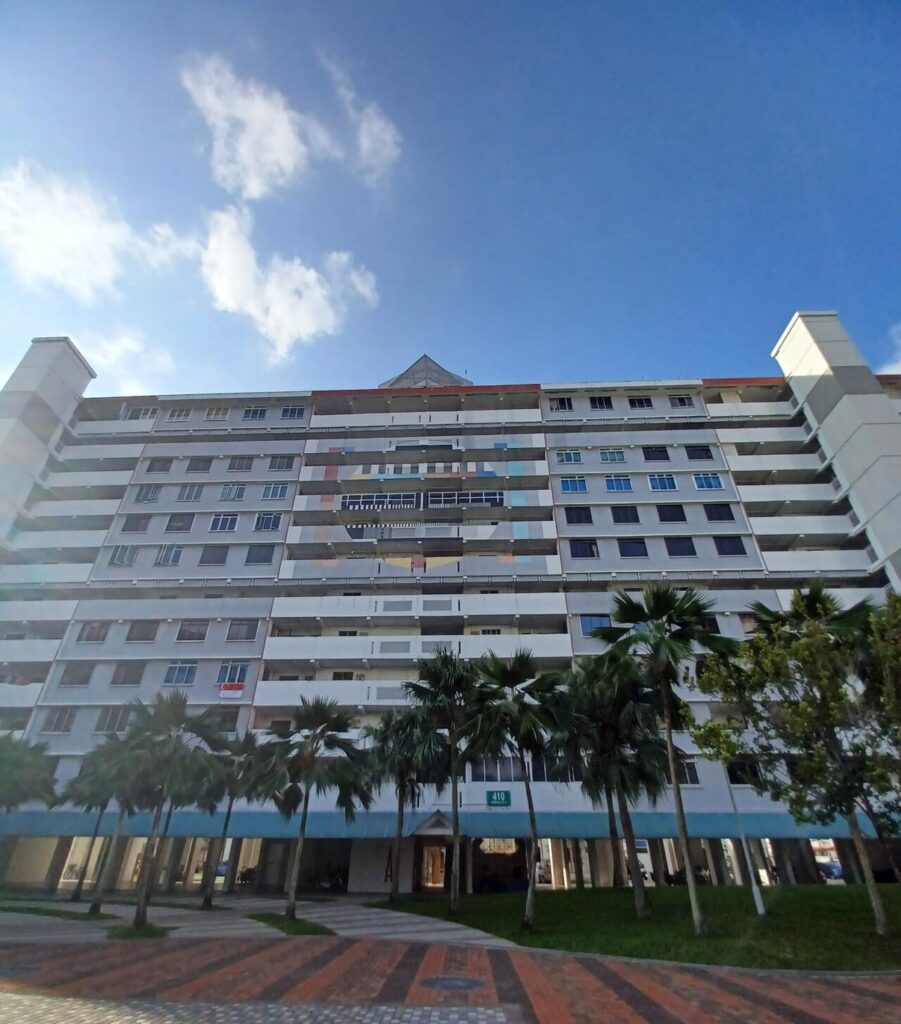
Bishan is a mature HDB new town and residential enclave that occupies the heartland centre of Singapore. Administratively part of the HDB Bishan–Toa Payoh Town Council, it straddles Districts 20 and partially borders District 12. Despite being a “new town” by HDB reckoning (development began in the 1980s on the site of Peck San Theng cemetery), Bishan today feels thoroughly mature — with a full suite of community infrastructure, a deeply embedded school-catchment culture, and a mix of HDB flats, private condominiums, and limited landed housing.

Geographically, Bishan is bounded to the north by Ang Mo Kio Avenue 1, to the south by Braddell Road, to the west by Thomson Road and the Marymount area, and to the east by Upper Serangoon Road. Its MRT connectivity is a major selling point: Bishan MRT station is an interchange between the North–South Line (NSL) and the Circle Line (CCL), making the CBD, Orchard, and Jurong all reachable within 30 minutes. Marymount MRT (CCL) serves the western fringe of the town.

Bishan HDB resale median prices by flat type 2022 to 2026
Figure 1: Bishan HDB Resale Median Prices — 4-Room and 5-Room flats, 2022 to H1 2026. Data: HDB resale transaction records.

HDB Resale Market in Bishan

Bishan’s HDB resale market commands a consistent premium over the broader Singapore average, driven by its location, school catchment, and relatively tight supply of available flats. The Bishan–Toa Payoh Town Council area encompasses approximately 18,000 HDB flats, with a significant portion already past their Minimum Occupation Period (MOP), meaning they trade actively on the resale market.

As at the first half of 2026, transacted median prices in the Bishan area are as follows:

Flat Type Median Resale Price (H1 2026) Price Range Typical PSF (approx.)
3-Room S$420,000 S$380,000 – S$470,000 S$600–S$720 psf
4-Room S$660,000 S$580,000 – S$760,000 S$680–S$820 psf
5-Room S$875,000 S$780,000 – S$980,000 S$700–S$860 psf
Executive S$980,000 S$880,000 – S$1,080,000 S$720–S$880 psf

The premium over neighbouring Toa Payoh and Ang Mo Kio reflects Bishan’s superior school catchment (see below), newer block typologies, and its position as a “second-ring” mature estate that has not yet seen en bloc redevelopment pressure deplete supply. Flats within 1 kilometre of Raffles Girls' Primary School consistently transact at 10–15% premiums over comparable Bishan flats outside that radius, a pattern that URA resale data has confirmed consistently since 2020.

Private Property Market in Bishan

Bishan’s private residential market is anchored by a cluster of landmark developments along Bishan Street and the Thomson Road corridor. The most prominent is Sky Habitat (Moshe Safdie, 509 units, 99-year leasehold), followed by Sky Vue (694 units, 99-year), and the smaller 8@Bishan (20 units, freehold). Newer launches have been limited — Bishan’s proximity to the greenbelt and its established residential character constrain redevelopment — making each resale transaction closely watched by the market.

Bishan condo PSF compared with nearby districts Ang Mo Kio Toa Payoh Novena 2026
Figure 2: Median Condo PSF — Bishan versus nearby districts. Bishan trades at ~S$1,850 psf, below Toa Payoh (D12) and well below Novena (D11). Sources: URA Realis, 2026 data.

On a per-square-foot basis, Bishan condos traded at a median of approximately S$1,800–S$2,000 psf in H1 2026, per URA Realis data. This places Bishan above Ang Mo Kio (approximately S$1,700–S$1,750 psf) but below Toa Payoh (S$2,000–S$2,100 psf) and well below Novena (S$2,800–S$3,000 psf), reflecting Bishan’s position as a “value premium” location — premium over outer-ring estates, but accessible relative to the traditional prime districts of D11 and D12.

Schools in Bishan — The Primary Draw

No discussion of Bishan property is complete without addressing schools, which are arguably the single largest driver of price premiums in the estate. The Ministry of Education (MOE) Primary 1 registration system grants priority to children living within 1 km and 2 km of a school. Bishan’s school density is exceptional even by Singapore standards.

School Level Type Key Notes
Raffles Girls' Primary School Primary Government Consistently oversubscribed; 1km catchment commands 12–18% premium on Bishan HDB flats
Ai Tong School Primary SAP (Chinese) Strong academic reputation; central Bishan location
Catholic High School (Primary) Primary SAP (Chinese); boys Integrated primary–secondary; Direct School Admission (DSA) pathway
Kuo Chuan Presbyterian Primary Primary Government-aided Presbyterian mission; established community links
CHIJ St. Nicholas Girls' School Secondary Mission; girls Integrated secondary–junior college track (CHIJ JC)
Catholic High School (Secondary) Secondary SAP; boys SAP designation; strong IP track
Bishan Park Secondary School Secondary Government Sports-branded school; niche specialisation in outdoor education
Raffles Institution Integrated (Yrs 1–6) Autonomous Technically in Bishan boundary; Singapore’s most selective boys' school

The concentration of top primary and secondary schools within a compact area means that families actively pay a “school premium” on Bishan property. This premium is self-reinforcing: parents who prioritise education cluster in Bishan, sustaining demand for housing, which in turn sustains price premiums that keep the estate attractive to the next cohort of school-seeking families.

Bishan in Numbers — Amenities and Connectivity

Bishan Singapore neighbourhood overview key facts 2026
Figure 3: Bishan at a Glance — MRT stations, schools, parks, and retail anchors. Source: LovelyHomes editorial compilation, 2026.

Beyond schools and property prices, Bishan functions as a well-rounded residential estate with mature civic infrastructure. Junction 8 mall (4 storeys, ~183 retail units) is the primary retail hub, anchored by Cold Storage supermarket, a BHG department store, and a substantial food court. It is directly connected to Bishan MRT and serves as the main commercial node for the estate. Bishan North Shopping Centre caters to the northern end of the town with wet market, hawker centre, and everyday services.

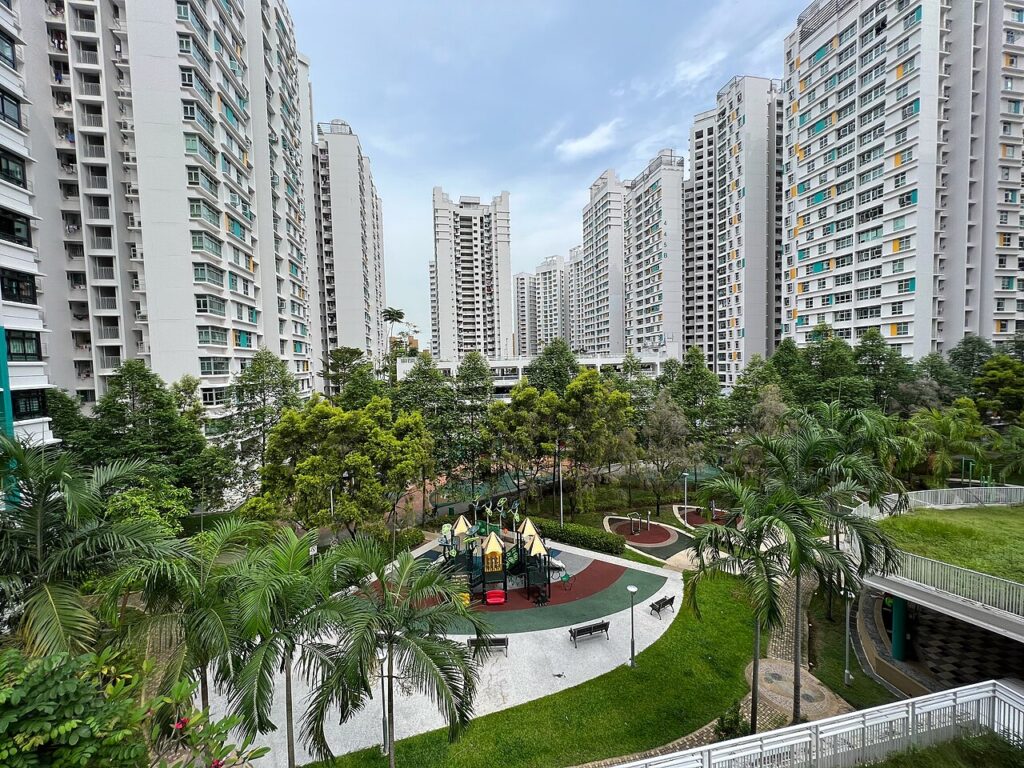
The crown jewel of Bishan’s lifestyle offering is Bishan–Ang Mo Kio Park, a 90-hectare green corridor straddling the Bishan–AMK boundary. Designed by Singapore landscape firm Ramboll Studio Dreiseitl, the park integrates a naturalised river (the Kallang River was restored from concrete canal to a meandering stream in 2012), community sports facilities, a dog run, adventure playground, and two restaurants. For residents, the park is the primary recreational asset — an amenity that few other HDB towns of comparable density can match.

Worked Example — Buying a 5-Room Bishan HDB Resale Flat (2026)

Scenario: First-timer couple (both Singaporeans, joint income S$12,000/month) purchasing a 5-room Bishan HDB resale flat at S$875,000. No outstanding private property loans.

  • Stamp duty (BSD): 1% on first S$180,000 = S$1,800; 2% on next S$180,000 = S$3,600; 3% on next S$640,000 = S$19,200; 4% on remaining S$0 (≤S$1M). Total BSD: S$24,600.
  • ABSD: First-timer Singaporean couple buying first property = 0%. Nil.
  • CPF Housing Grant (EHG): At joint income of S$12,000/month, EHG is available up to S$25,000 (income ceiling S$9,000 applies to full EHG; at S$12,000, family is above EHG income ceiling). No EHG. Note: EHG income ceiling is S$9,000/month for families as at 2026.
  • HDB Loan (HLE): Maximum loan = 80% of purchase price or resale price (lower of) = 80% × S$875,000 = S$700,000. Subject to HDB's MSR (Mortgage Servicing Ratio) cap of 30% of gross monthly income. At S$12,000/month, MSR headroom = S$3,600/month. At 2.6% p.a. over 25 years, S$700,000 loan ≈ S$3,164/month. This fits within MSR. ✓
  • Cash / CPF required upfront: Purchase price S$875,000 minus loan S$700,000 = S$175,000 cash/CPF OA. Plus BSD S$24,600. Total upfront: S$199,600 (may be funded from CPF OA).
  • Monthly repayment (HDB loan at 2.6%, 25 yrs, S$700,000): approximately S$3,164/month.

Why Bishan Property Matters for Investors and Owner-Occupiers

For owner-occupiers, Bishan’s combination of school access, park proximity, mature estate amenities, and dual-MRT-line connectivity justifies the premium over comparable outer-ring estates. The calculus is straightforward: families pay more upfront for Bishan, but receive the “invisible yield” of school access, which has demonstrable resale value when children age out of primary school and the family may choose to move.

For property investors, Bishan presents a nuanced picture. The HDB resale segment is constrained by ownership rules (HDB flats may not be rented in their entirety unless the owner has fulfilled the Minimum Occupation Period and obtained HDB's approval), and rental yields on HDB are typically lower than private residential. Private condos in Bishan, however, offer genuine rental appeal: the estate's school catchment attracts expatriate families willing to pay a premium for proximity to reputable schools, and the CCL ensures international school commutes are manageable. Sky Habitat units, for instance, have consistently achieved gross rental yields of 3.0–3.5% — above the Singapore private residential average of approximately 2.8%.

Compared to regional alternatives such as Ang Mo Kio or Hougang, Bishan commands a structural premium. Compared to Novena or Thomson, it offers a more accessible entry price while preserving much of the lifestyle infrastructure. This “premium-lite” positioning has proven resilient through multiple property cycles, including the 2022–2023 cooling measure impact and the 2025 normalisation period.

What Might Come Next for Bishan Property

Several near-term catalysts could influence Bishan property values over the 2026–2028 horizon. First, the Cross Island Line (CRL), currently under construction, will introduce a Bishan station (CRL phase 2 extension, expected ~2032) that will provide direct east–west connectivity to Jurong Lake District and Changi Airport — a significant accessibility upgrade for the estate. Second, the ongoing redevelopment of former SCGS campus land adjacent to Bishan town presents a potential medium-density residential site; should this be tendered, new private supply could moderate price growth in the short term before enhancing vibrancy long-term. Third, the government's periodic review of school posting boundaries could alter school catchment premiums, though the MOE has signalled stability in the near term.

The broader Singapore property market context — characterised by MAS's calibrated approach to macro-prudential controls, sustained HDB upgrader demand, and limited new private supply in the central region — supports Bishan's medium-term price floor. The risk is a generalised correction if interest rates rise sharply or if ABSD is adjusted upward to cool upgrader demand; either scenario would be felt across Singapore, with Bishan less exposed than speculative outer-ring new launches precisely because its demand base is owner-occupier and school-catchment driven rather than speculative.

Frequently Asked Questions — Bishan Singapore Property

Is Bishan a good area to buy property in Singapore?

Bishan is widely regarded as one of Singapore's most desirable mature HDB towns and private residential enclaves for families. Its combination of top primary schools (including Raffles Girls' Primary, Ai Tong, and Catholic High), dual-MRT-line connectivity (NSL + CCL interchange at Bishan station), and proximity to the 90-hectare Bishan–Ang Mo Kio Park makes it a sustained long-term demand area. The trade-off is price: Bishan property commands a significant premium over comparable outer-ring estates such as Hougang or Tampines. Buyers should assess whether the school premium is relevant to their household — families without school-age children may find better value elsewhere.

What is the average HDB resale price in Bishan in 2026?

As at H1 2026, median HDB resale prices in Bishan are approximately S$660,000 for a 4-room flat and S$875,000 for a 5-room flat. Executive flats, which are scarce, transact above S$950,000. Prices vary significantly by floor level, remaining lease, facing, and proximity to schools — a 5-room flat within 1 km of Raffles Girls' Primary School may transact at S$950,000 or above, while a comparable flat in northern Bishan away from the school catchment may transact closer to S$820,000. Buyers should use HDB's resale statistics portal to check recent transactions in their target block and street.

Which schools are in Bishan's primary school catchment (1 km zone)?

The 1 km catchment for Phase 2B (home proximity) primary registration in Bishan encompasses Raffles Girls' Primary School, Ai Tong School, Catholic High School (Primary Section), and Kuo Chuan Presbyterian Primary School, depending on the precise address. MOE updates school postal codes and catchment boundaries periodically; buyers should verify using MOE's Primary 1 Registration Distance Tool for any specific property address before purchase. The school catchment premium in Bishan is well documented in URA resale data, with addresses within 1 km of Raffles Girls' consistently transacting at 10–18% above comparable Bishan addresses outside that radius.

How does buying in Bishan compare to Toa Payoh?

Bishan and Toa Payoh are neighbouring mature estates, but they differ in character and price dynamics. Toa Payoh is older (developed from the 1960s), more central by geography (closer to Braddell and the CBD rail corridor), and has seen stronger en bloc activity that has steadily reduced the stock of ageing HDB flats. As a result, Toa Payoh private condo PSF is typically 10–15% above Bishan. Bishan, by contrast, offers a stronger school-catchment premium and a more uniformly “family neighbourhood” feel with the large park as a lifestyle anchor. For HDB buyers, the difference in resale prices between the two towns is moderate — Toa Payoh tends to be 5–10% pricier for comparable flat types — making the choice largely a question of school catchment, lifestyle, and block-level factors rather than pure price.

Are there any upcoming new launches in Bishan?

As at July 2026, there are no confirmed new private residential launches scheduled for Bishan in the near term. The URA master plan does not designate any major new residential sites within the existing Bishan town boundary for the current planning cycle. The estate's private residential stock therefore depends primarily on resale transactions and occasional en bloc redevelopments of older projects — a dynamic that supports price stability but limits supply, which in turn underpins the resale premium. The longer-term catalyst is the Cross Island Line (CRL) station expected in the Bishan vicinity (~2032), which may prompt URA to revisit plot ratios in adjacent areas once the CRL is more proximate.

What is the ABSD for buying a Bishan property as a foreigner?

Foreigners purchasing any residential property in Singapore — including in Bishan — are subject to Additional Buyer's Stamp Duty (ABSD) at 60% of the purchase price as at 2026, in addition to Buyer's Stamp Duty (BSD). This rate applies irrespective of the number of properties the foreigner already owns. For most foreigners, this makes purchasing Singapore residential property economically prohibitive except in specific circumstances (e.g., ABSD remissions under the Free Trade Agreement for nationals of the USA, Switzerland, Iceland, Liechtenstein, and Norway under certain conditions). Singapore permanent residents (PRs) purchasing their first residential property pay 5% ABSD. Full ABSD rates and conditions are published by IRAS.

Is Bishan at risk of HDB lease decay affecting resale values?

Bishan HDB flats were largely built between 1984 and the mid-1990s under the new town development programme. The oldest blocks carry 99-year leases dating from 1984 (i.e., approximately 42–43 years used, 56–57 years remaining as at 2026). CPF rules restrict the use of CPF savings and HDB loans for properties with short remaining leases: as a rule of thumb, lease must cover the youngest buyer to age 95. A flat with 56 years remaining is still well within this threshold for most buyers under 40. However, buyers should be aware that as leases shorten toward the 40–50 year mark (expected in the 2030s–2040s for the oldest Bishan blocks), CPF eligibility constraints will begin to narrow the buyer pool and may exert downward pressure on resale prices for those specific blocks. Newer Bishan blocks from the early 2000s will not face this pressure for several decades.

Disclaimer: The information in this article is for general informational and educational purposes only and does not constitute financial, legal, or property advice. All figures (prices, rates, policies) reflect publicly available data as at July 2026 and may change without notice. Property values are indicative only and vary by specific address, block, floor, and market conditions at the time of transaction. Readers should consult licensed real estate salespersons, financial advisors, and solicitors before making any property investment or purchase decision. Official sources include HDB, URA, IRAS, MOE, CPF Board, and MAS.

Toa Payoh Singapore Neighbourhood Guide 2026: HDB Prices & Schools

Toa Payoh Singapore Neighbourhood Guide 2026: HDB Prices & Schools


⚡ Quick Answer: Toa Payoh Neighbourhood Guide 2026

  • District: D12 — mature HDB estate in central Singapore
  • HDB 4-room resale median: ~S$595,000 (2025–Q1 2026) — above Singapore average of S$545K
  • Private condo PSF: ~S$1,850 psf (URA REALIS) — limited new private supply in D12
  • MRT: North-South Line — Toa Payoh and Braddell stations; Caldecott (CC Line) nearby
  • Schools: CHIJ Primary (Toa Payoh), St Joseph’s Institution, SJI International, CEDAR Girls’ Secondary
  • Character: One of Singapore’s oldest and most established HDB towns; limited supply drives premium resale pricing
  • Best for: Buyers who value MRT convenience, mature amenities, and strong school catchments near the city
  • Watch out for: Older HDB stock (shorter remaining leases on some blocks); limited new launch private options

Why Toa Payoh Stands Out Among Singapore’s Mature Estates

Toa Payoh holds a special place in Singapore’s housing history. Developed in the late 1960s and 1970s, it was among the first large-scale HDB new towns built by the Housing & Development Board and remains one of the most liveable and sought-after mature estates in Singapore today. Situated in District 12, it is bounded by Balestier to the south, Bishan to the north, Lorong Chuan to the east, and Braddell Road to the west.

What makes Toa Payoh genuinely distinctive is its combination of central location, strong MRT connectivity via the North-South Line, well-established schools, and a limited HDB flat supply that consistently keeps resale prices above the Singapore median. This is not a discount market. Buyers come here because they value proximity to the city, a mature community infrastructure, and the character of a proper neighbourhood — with wet markets, hawker centres, and town centre amenities that newer, master-planned estates are still building toward.

This guide draws on HDB Resale Statistics, URA REALIS, and publicly available school and transport data to give you a current, data-led picture of Toa Payoh’s property market in 2026.

HDB resale median prices Toa Payoh vs Singapore average 2026 flat type comparison bar chart
Figure 1: HDB Resale Median Prices — Toa Payoh vs Singapore Average by Flat Type (2025–Q1 2026). Source: HDB Resale Statistics.

HDB Resale Prices in Toa Payoh (2025–Q1 2026)

Toa Payoh consistently commands resale prices above the Singapore national median — a reflection of its central location, established amenities, and constrained supply. Most of Toa Payoh’s HDB stock dates from the 1970s through the 1990s, meaning the estate has relatively few newly-MOP’d or recently constructed flats entering the resale market. This limits choice and maintains pricing pressure.

Flat Type Toa Payoh Median (S$) Singapore Average (S$) Premium vs Average
3-Room 480,000 370,000 +30%
4-Room 595,000 545,000 +9%
5-Room 720,000 660,000 +9%

Source: HDB Resale Price Statistics 2025–Q1 2026. Figures are estate-level medians; individual transactions vary significantly by block, floor, and condition.

The 3-room premium of 30% over the Singapore average reflects the particular scarcity of smaller, centrally located HDB flats in D12 — popular with singles, retirees seeking to right-size, and buyers who prioritise central location over flat size. Notable transactions have regularly broken S$700,000 for high-floor 4-room units in premium blocks near Toa Payoh MRT, and some 5-room flats with city-facing views have crossed the S$800,000 threshold. These are outliers but they signal the ceiling the market is reaching in a supply-constrained mature estate.

Private Residential Property in Toa Payoh

Private residential supply in D12 is sparse by Singapore standards. Toa Payoh has no significant government land sales activity in recent years, and the district’s existing private stock consists largely of older freehold and leasehold apartments concentrated around the Lorong 3–5 enclave, Toa Payoh Rise, and the fringes toward Caldecott. The relative scarcity of private supply tends to keep PSF relatively high compared with districts where new launches frequently add inventory.

Private condo PSF Toa Payoh D12 vs mature estate comparison Singapore 2026 bar chart
Figure 2: Private Condo Median PSF — Toa Payoh vs Comparable Mature Estates (2025–Q1 2026). Source: URA REALIS.

Toa Payoh private condos have transacted at a median of approximately S$1,850 psf over the 2025–Q1 2026 period — above Bishan (S$1,780 psf) but below Queenstown (S$2,100 psf) and Tiong Bahru (S$2,250 psf). Freehold or near-freehold boutique projects in D12 attract a tenure premium. Buyers considering private residential here are predominantly upgraders, investors seeking stable rental yields from the central location, or purchasers attracted by the quiet, low-density character of the D12 private enclave.

Toa Payoh district snapshot 2026 key facts MRT schools amenities prices infographic
Figure 3: Toa Payoh District Snapshot 2026 — Key facts on HDB prices, MRT, schools and neighbourhood character. Source: URA, HDB, MOE.

MRT Connectivity: North-South Line at Your Doorstep

Toa Payoh’s MRT connectivity is one of its strongest selling points. Toa Payoh MRT station (NS19) on the North-South Line sits at the heart of the estate, providing direct access northward to Bishan, Ang Mo Kio, and Yishun, and southward to Novena, Newton, Orchard, and the city centre at Raffles Place in approximately 20 minutes. Orchard Road is just four stops away. Braddell MRT station (NS18), further into the estate, provides an additional entry point for the northern precincts.

Caldecott MRT station (CC17/TE9) on the Circle Line and Thomson-East Coast Line (TEL) is reachable by a short bus or taxi ride from upper Toa Payoh, giving residents in that part of the estate access to a second line. The TEL is particularly relevant for buyers who commute to Orchard, Stevens, or eventually the Marina Bay area along the eastern corridor.

Bus services along Braddell Road, Lorong 8 Toa Payoh, and Toa Payoh Central provide comprehensive coverage within the estate. The estate is also cycling-friendly along park connector routes toward Bishan-Ang Mo Kio Park to the north.

Schools and Education in Toa Payoh

Toa Payoh’s school catchment is among the most respected in central Singapore, particularly for primary school planning. The estate sits within reach of several popular mission schools and autonomous institutions, making it a frequent target for families who prioritise Primary 1 Registration ballot priority.

School Level Type Location
CHIJ Primary School (Toa Payoh) Primary Mission (SAP) Toa Payoh Lor 8
Kheng Cheng School Primary Government-Aided Toa Payoh
Pei Chun Public School Primary Government-Aided Toa Payoh
CEDAR Girls’ Secondary School Secondary Mission Braddell (nearby)
St Joseph’s Institution Secondary/JC (via IP) Mission (Autonomous) Malcolm Road (nearby)
SJI International School Secondary Independent Bukit Timah (nearby)
Catholic Junior College Junior College Government-Aided Bishan (nearby)

CHIJ Primary (Toa Payoh) is consistently one of the most sought-after girls’ primary schools in Singapore. Families who are alumni of CHIJ institutions receive ballot priority, but proximity-based Phase 2B and 2C priority also makes living within 1 km a meaningful strategic consideration. Parents are advised to verify current school boundaries via the MOE School Finder at moe.gov.sg before making school-proximity purchasing decisions.

Amenities and Lifestyle in Toa Payoh

Toa Payoh’s mature estate character means it has the full range of community infrastructure that newer towns are still developing. At the centre of the estate sits Toa Payoh Hub, a multi-purpose integrated complex housing a public library, sports centre, neighbourhood police post, and retail shops. Toa Payoh Central Wet Market and Food Centre — one of Singapore’s most beloved hawker institutions — remains a daily destination for residents and food trail visitors alike.

The estate is well-served by supermarkets, coffee shops, and clinics distributed throughout its lorongs. Balestier Plaza and Shaw Plaza to the south provide additional retail options. Toa Payoh Town Park and Bishan-Ang Mo Kio Park (accessible via the Kallang River Park Connector to the north) provide meaningful green and recreational infrastructure for a centrally located urban estate.

📊 Worked Example: Buying a 4-Room HDB Resale in Toa Payoh (2026)

Scenario: A Singapore Citizen couple (first-time buyers) purchases a 4-room HDB resale flat at Toa Payoh Lorong 4, Block 123, at S$620,000 (above median, reflecting a high-floor unit facing Bishan and near Toa Payoh MRT).

Item Amount (S$)
Purchase price 620,000
Buyer’s Stamp Duty (BSD) — 1% on first S$180K + 2% on next S$180K + 3% on balance 13,200
ABSD — Singapore Citizens, first residential property Nil
HDB conveyancing & legal fees (estimate) 1,800
Valuation fee (estimate) 300
Minimum down payment at 5% (HDB loan) 31,000
CPF Proximity Housing Grant (PHG) if applicable Up to (30,000)
HDB loan quantum (at LTV 80% of valuation) up to 496,000
Estimated monthly repayment at 2.6% p.a., 25 years approx. 2,248/month

BSD computed per IRAS formula: 1% on first S$180K = S$1,800; 2% on next S$180K = S$3,600; 3% on remaining S$260K = S$7,800; total = S$13,200. Figures are illustrative only and do not constitute financial advice. CPF grant eligibility subject to income ceiling and other criteria at homes.hdb.gov.sg.

Why Toa Payoh Commands a Premium Over the Singapore Average

Toa Payoh’s pricing premium over the Singapore HDB average is not a fluke — it reflects a structural scarcity dynamic that is unlikely to self-correct. Unlike new HDB towns in the OCR or Tengah, Toa Payoh receives very limited injections of new HDB supply: there are no large-scale BTO exercises planned for D12, and the handful of Selective En Bloc Redevelopment Scheme (SERS) exercises that historically renewed parts of the estate have not repeated at scale. As a result, every resale transaction competes for a fixed and slowly aging pool of flats.

Central location alone explains part of the premium — the journey from Toa Payoh MRT to Raffles Place takes approximately 20 minutes on the North-South Line, comparable to Bishan and noticeably better than OCR estates. But the school premium matters too: CHIJ Primary (Toa Payoh)’s reputation draws families who are willing to pay a location premium specifically to remain within the 1 km ballot priority zone. In comparable scenarios across Singapore’s mature estates — Queenstown near Henry Park Primary, Bishan near Ai Tong School — this school-proximity premium is a documented phenomenon in URA REALIS transaction data.

What Might Come Next for Toa Payoh Property (Speculative Outlook)

The following is editorial analysis, not investment advice. Several factors could influence Toa Payoh’s property market through 2028–2030:

  • Thomson-East Coast Line (TEL) maturation: As Caldecott station (TE9) becomes more embedded in commuting patterns, properties within walking or short bus range of Caldecott may benefit from a growing two-line premium, particularly given the TEL’s eastward extension toward Changi.
  • SERS or redevelopment prospects: Some Toa Payoh blocks built in the 1970s may eventually become candidates for SERS or redevelopment, which historically generates strong short-term demand from displaced residents seeking replacement flats nearby. Any SERS announcement would likely cause a price spike in the surrounding area.
  • Greater Southern Waterfront influence: As the Greater Southern Waterfront development unfolds over the next decade, central-Singapore locations like Toa Payoh benefit indirectly from the westward shift of affluent residential demand away from the traditional core.
  • Ageing population and right-sizing: Toa Payoh’s older resident population means that 3-room and smaller flat supply will continue to come onto the resale market through voluntary downsizing and HDB Lease Buyback Scheme participation. This may moderate the 3-room premium over time.

Frequently Asked Questions: Toa Payoh Property 2026

Is Toa Payoh a good investment location in 2026?

Toa Payoh’s combination of central location, constrained supply, and strong school catchments supports a thesis of relative price stability and modest appreciation over a 5–10 year period. However, buyers should note that the premium pricing means the entry cost is higher than comparable-sized flats in OCR estates, and the short remaining leases on older blocks — some dating to the 1970s — are a real consideration for CPF usage and eventual resale value. High-floor flats in recently-renewed blocks with 60–70+ years remaining tend to hold value better than ground-floor units in blocks with under 55 years remaining.

How do HDB resale prices in Toa Payoh compare to Bishan?

Toa Payoh and Bishan are frequently compared as adjacent mature estates. Based on 2025–Q1 2026 data, Toa Payoh 4-room median resale (approximately S$595,000) sits above Bishan’s comparable median (approximately S$580,000). Bishan has benefited more recently from GLS and private development activity, while Toa Payoh’s advantage is its closer proximity to the city and CHIJ school catchment. The two markets are broadly competitive, and the “better” choice depends on your school priority and commute destination.

What is the remaining lease on HDB flats in Toa Payoh?

Toa Payoh HDB flats range widely in remaining lease. Blocks built in the early 1970s have approximately 44–50 years remaining; blocks from the 1980s have approximately 60–65 years remaining; and blocks from the 1990s onwards have approximately 70–80 years remaining. Remaining lease affects CPF usage (you must be able to use CPF to cover the flat until age 95), bank loan tenure (MAS caps mean shorter-lease flats qualify for shorter loans at higher monthly repayments), and long-term resale liquidity. Always check the exact block’s TOP date via HDB’s My HDBPage at hdb.gov.sg before committing.

Is CHIJ Primary (Toa Payoh) within the 1 km registration zone?

The 1 km radius for CHIJ Primary (Toa Payoh) generally covers parts of Toa Payoh Lorong 1–8 and surrounding streets, but school registration zones are drawn by MOE and can change annually. The definitive source is the MOE School Finder tool at moe.gov.sg/schoolfinder. Do not rely on any third-party map or neighbourhood guide — including this one — as your sole source for school registration boundary planning; verify directly with MOE before making a purchase decision based on school proximity.

Are there new private condos launching in Toa Payoh?

As at Q2 2026, there are no significant new private residential launches under construction or imminently announced within D12 proper. The URA’s 2025 GLS programme does not include any confirmed residential sites within Toa Payoh itself, reflecting the limited availability of development land in this mature estate. Buyers seeking new private property close to Toa Payoh’s amenities typically look at adjoining districts — D20 (Bishan), D13 (Serangoon), or the Balestier corridor in D12’s southern fringe — where occasional boutique projects appear on the market.

What are the ABSD rates for foreigners buying property in Toa Payoh?

ABSD rates are uniform across Singapore and do not vary by location. Foreigners purchasing any residential property in Singapore — including HDB (which foreigners generally cannot purchase) and private residential — pay 60% ABSD on all private residential purchases, introduced under the April 2023 cooling measures. Singapore Permanent Residents buying a first private residential property pay 5% ABSD; a second, 30%. For the full ABSD rate schedule, visit IRAS at iras.gov.sg or consult the LovelyHomes ABSD Complete Guide.

Is the Toa Payoh wet market and hawker centre still operating?

Yes — Toa Payoh Central Market and Food Centre (Block 93 Lor 4 Toa Payoh) continues to operate as one of Singapore’s most popular hawker centres. It was extensively renovated in recent years and hosts a wide range of hawker stalls including popular pork noodle, nasi lemak, and dim sum stalls. The wet market operates in the morning daily; the food centre continues through lunch and dinner. For buyers valuing walkable hawker amenities, its location within the estate’s commercial centre makes it a significant lifestyle draw.

Disclaimer: This article is for general informational purposes only and does not constitute financial, legal or property investment advice. All property prices, resale data and market statistics cited are based on publicly available sources including HDB Resale Price Statistics, URA REALIS and MOE school information as at Q1–Q2 2026. Market conditions change frequently; readers are encouraged to verify all data at hdb.gov.sg, ura.gov.sg, iras.gov.sg and moe.gov.sg before making any property decision. Consult a licensed property agent, mortgage broker and/or qualified financial adviser for advice tailored to your circumstances.

Jurong Singapore Neighbourhood Guide 2026: Prices, MRT & Living

Jurong Singapore Neighbourhood Guide 2026: Prices, MRT & Living


⚡ Quick Answer: Jurong Neighbourhood Guide 2026

  • District: D22 — covers Jurong West, Jurong East, Boon Lay, Lakeside and Pioneer
  • HDB 4-room resale: Jurong West median ~S$458K; Jurong East median ~S$530K (Q1 2026)
  • Private condo PSF: Jurong West ~S$1,180 psf; Jurong East ~S$1,350 psf (URA REALIS 2025–Q1 2026)
  • MRT: East-West Line + North-South Line (Jurong East interchange); Jurong Region Line opening in phases 2026–2028
  • Transformation: Jurong Lake District (JLD) — Singapore’s second CBD; 1,070 ha of mixed-use development planned to 2040
  • Top schools: Rulang Primary, River Valley High (IP), NUS High School, Jurong Pioneer JC, NTU
  • Best for: Budget-conscious HDB buyers seeking good connectivity; investors eyeing JLD appreciation
  • Watch out for: Older leasehold private stock; long commute times to the city centre from Jurong West

What Makes Jurong Worth Your Attention in 2026?

Jurong often surprises first-time buyers. The district — historically associated with industrial land and sprawling HDB estates — is quietly becoming one of Singapore’s most watched property markets. Two forces are driving this shift: the Jurong Lake District (JLD) transformation, arguably the boldest urban-planning move since the Marina Bay reclamation, and the opening of the Jurong Region Line (JRL), which will for the first time give the western reaches of Singapore a dedicated metro network of their own.

Jurong covers a significant portion of District 22, bounded broadly by the Kranji Expressway to the north, Jurong Island to the south, and the Pan Island Expressway to the east. Its two main nodes — Jurong West and Jurong East — have quite different characters. Jurong West is Singapore’s largest HDB town by flat count, offering some of the most affordable resale prices in the Outside Central Region (OCR). Jurong East functions as a regional commercial hub anchored by JEM, Westgate and the International Business Park, with transaction prices noticeably higher than its western neighbour.

This guide draws on HDB Resale Statistics, URA REALIS, the URA Master Plan 2025, and LTA transport data to give you a data-led picture of property prices, connectivity, schools, and investment outlook for Jurong in 2026.

HDB resale median prices Jurong West Jurong East Singapore 2026 flat type bar chart
Figure 1: HDB Resale Median Prices by Flat Type — Jurong West vs Jurong East vs Singapore Average (2025–Q1 2026). Source: HDB Resale Statistics, URA.

HDB Resale Prices in Jurong (2025–Q1 2026)

Jurong West remains one of the most affordably priced HDB resale markets in Singapore. Its scale — over 140,000 flats across multiple precincts — keeps supply plentiful and prices grounded. The table below summarises median resale prices for both Jurong West and Jurong East across common flat types, benchmarked against the Singapore national average.

Flat Type Jurong West (S$) Jurong East (S$) Singapore Average (S$)
3-Room 310,000 350,000 370,000
4-Room 458,000 530,000 545,000
5-Room 575,000 650,000 660,000
Executive 680,000 745,000 750,000

Source: HDB Resale Price Statistics 2025–Q1 2026. Figures are medians; individual transactions vary based on floor, facing and precinct.

Jurong West’s 4-room median of S$458,000 represents approximately 16% below the national median of S$545,000. High-floor units in sought-after precincts near Lakeside MRT regularly transact above S$550,000, with premium units touching S$600,000-plus, but these remain exceptions. Jurong East commands a premium reflecting its commercial-node status, dual-line MRT interchange, and proximity to JLD.

Private Residential Market: Condos in Jurong

Private residential supply in Jurong is more limited than in city-fringe or CCR districts, reflecting the area’s historically public-housing character. Key projects include Westwood Residences (Jurong West), The Lakegarden Residences (Lakeside), and older leasehold mid-rises around Jurong East. The private condo market here is characterised almost exclusively by 99-year leasehold tenure, which matters for CPF usage and refinancing options as the lease shortens.

Private condo PSF Jurong West Jurong East vs Singapore districts comparison 2026 bar chart
Figure 2: Private Condo Median PSF — Jurong Districts vs Selected Singapore Benchmarks (2025–Q1 2026). Source: URA REALIS.

Jurong West private condos transact at a median of approximately S$1,180 psf, while Jurong East achieves roughly S$1,350 psf — both representing meaningful discounts to Queenstown (S$2,100 psf) and the CCR (S$2,600+ psf). This PSF gap is the investment thesis for buyers who believe JLD transformation will narrow the discount over a 10–15-year horizon. That thesis carries significant execution risk and a long time horizon, however, and should not be the sole basis for a purchase decision.

Jurong district snapshot 2026 key facts MRT schools malls prices infographic overview
Figure 3: Jurong District Snapshot 2026 — Key facts on HDB prices, MRT, schools and future plans. Source: URA, HDB, LTA.

Jurong Lake District: Singapore’s Second CBD

The Jurong Lake District is the single most consequential factor in Jurong’s medium-term property outlook. Covering approximately 1,070 hectares around Jurong Lake and its environs, JLD is designated as Singapore’s second Central Business District under the URA Master Plan 2025. The district is intended to deliver up to 100,000 new jobs, 20,000 new homes, and a mixed-use environment integrating offices, retail, hospitality, and lakeside recreational spaces by approximately 2040.

The anchor development at present is the International Business Park, already home to Bosch, Rolls-Royce and various life-sciences firms. The URA has signalled plans for a World Expo-scale mixed-use precinct on the JLD waterfront. Infrastructure supporting JLD includes the Jurong Region Line, road-network upgrades along Jurong Town Hall Road and Boon Lay Way, and a future Cross Island Line (CRL) extension expected post-2032. The JLD white site GLS tender (launched 3 July 2026, pr26-53) closes 17 November 2026 — bid levels will serve as the clearest market-implied valuation signal for JLD to date.

MRT and Transport Connectivity

Jurong East station is one of Singapore’s busiest MRT interchanges, serving both the East-West Line (EWL) and the North-South Line (NSL). This dual-line access gives residents one-transfer connections to Raffles Place, Orchard, Bishan, Novena, and Changi — all reachable within approximately 40 minutes. Jurong West is primarily served by EWL stations: Boon Lay, Pioneer, Joo Koon, and Gul Circle.

The Jurong Region Line (JRL) will serve areas currently reliant on feeder buses, including Jurong West precincts near Tengah (the new “forest town”) and parts of Choa Chu Kang. The JRL also serves NTU, dramatically improving campus connectivity. Phase 1 opened in late 2026; subsequent phases targeting completion by 2028 will complete the western loop. The Cross Island Line (CRL), expected post-2032, will add a further east-west axis through the Jurong corridor.

Schools and Education in Jurong

Jurong has a well-established school catchment at all levels. For Primary 1 Registration, proximity within 1 km of a sought-after school can confer ballot priority — a consideration that materially influences some buying decisions in the Jurong East precinct surrounding Rulang Primary School.

School Level Type Location
Rulang Primary School Primary Government Jurong East
Jurong West Primary School Primary Government Jurong West
Fuhua Primary School Primary Government Jurong West
River Valley High School Secondary/IP Autonomous Jurong East
Hua Yi Secondary School Secondary Government Jurong West
NUS High School of Math & Science Secondary/JC Independent Clementi (nearby)
Jurong Pioneer Junior College Junior College Government Jurong West
Nanyang Technological University (NTU) University Autonomous Jurong West

Families with secondary-school-age children who value Integrated Programme (IP) pathways may find River Valley High School’s location in Jurong East a meaningful draw. Parents are advised to verify current school boundaries via the MOE School Finder at moe.gov.sg before making proximity-based purchase decisions, as catchment boundaries are subject to revision.

📊 Worked Example: Buying a 4-Room HDB Resale in Jurong West (2026)

Scenario: A Singapore Citizen couple (first-time buyers) purchases a 4-room HDB resale flat in Jurong West Street 74 at S$480,000 (above median, reflecting a mid-floor unit in reasonable condition).

Item Amount (S$)
Purchase price 480,000
Buyer’s Stamp Duty (BSD) — 1% on first S$180K + 2% on next S$180K + 3% on balance 9,000
ABSD — Singapore Citizens, first residential property Nil
HDB conveyancing & legal fees (estimate) 1,500
Valuation fee (estimate) 300
Minimum down payment at 5% (HDB loan) or 25% (bank loan) 24,000 or 120,000
CPF Proximity Housing Grant (PHG) if living near parents Up to (30,000)
Estimated monthly HDB loan repayment at 2.6% p.a. over 25 years on S$456,000 loan approx. 2,068/month

BSD computed per IRAS formula. CPF grants subject to eligibility — visit homes.hdb.gov.sg for your actual entitlement. Figures are illustrative only and do not constitute financial advice.

Why Jurong Matters for Singapore Property Buyers

Jurong’s significance in the Singapore property market is structural rather than cyclical. The government’s commitment to JLD — backed by GLS activity, MRT capital expenditure and the URA Master Plan — provides a rare instance of explicit public-sector signalling about where long-term urban value is intended to flow. For buyers who take a 10-to-20-year view, Jurong offers the possibility of purchasing ahead of infrastructure completion at still-moderate prices.

For genuine owner-occupiers, Jurong West offers one of the most practical value propositions in Singapore: affordable HDB resale flats, a credible school catchment, improving MRT connectivity, and a full suite of town-level retail amenities including JEM, Westgate, IMM, Jurong Point, and Big Box. The commute penalty relative to the city is real — Jurong East to Raffles Place via EWL takes approximately 38 minutes — but for families prioritising space and price, the trade-off is frequently compelling. Peer markets in Malaysia’s Iskandar region and Bangkok’s Bang Na corridor demonstrate that infrastructure-led western urban extensions can close significant price gaps over a decade.

What Might Come Next for Jurong Property (Speculative Outlook)

The following represents editorial analysis, not investment advice. Several catalysts could influence Jurong property prices in the 2026–2030 period:

  • JLD White Site tender award (late 2026 or 2027): The tender closes 17 November 2026. A strong bid above S$1.8 billion would set a market-implied valuation for JLD land and likely reprice nearby private residential assets upward.
  • Jurong Region Line full opening (2028): Once all JRL phases are operational, an estimated 200,000 residents will gain direct rail access, removing the accessibility discount currently embedded in Jurong West prices.
  • HDB BTO launches in Tengah (2026–2028): Tengah’s car-lite, green-corridor design concept is attracting buyer attention. Successful BTO launches and high resale COV figures in Tengah could lift perceptions of the broader western corridor.
  • Cross Island Line Phase 2 (post-2032): CRL stations near Jurong would dramatically shorten cross-island travel times and potentially add a meaningful long-term MRT premium to surrounding properties.

Frequently Asked Questions: Jurong Property 2026

Is Jurong West a good place to buy property in 2026?

Jurong West is one of Singapore’s most affordable HDB resale markets, making it well-suited for first-timer Singapore Citizens or Permanent Residents who need space at reasonable prices. The Jurong Lake District transformation provides a long-term price narrative, though buyers should note that JLD’s direct impact is most visible in Jurong East rather than Jurong West. For genuine owner-occupiers with a 5–10 year horizon, Jurong West remains among the most practical options in the OCR.

How is Jurong East different from Jurong West as a property market?

Jurong East is the commercial heart of the western region, home to JEM, Westgate, the International Business Park, and the planned JLD core. It commands an HDB resale premium of roughly S$60,000–S$80,000 over Jurong West for equivalent flat types, and private condo PSF is approximately S$170 psf higher. Jurong East also benefits from dual MRT connectivity (EWL + NSL), making it significantly more accessible than Jurong West, which is primarily served by the EWL.

When will the Jurong Region Line open?

The Jurong Region Line (JRL) is opening in phases. Phase 1, connecting Choa Chu Kang to Tengah and Brickland, opened in late 2026. Subsequent phases linking NTU, Nanyang, Peng Kang Hill, and the Jurong East interchange are targeted for completion by 2028. Residents in Jurong West precincts currently served only by feeder buses will gain direct rail access once the western phases are complete.

Are there good schools in Jurong for primary school registration?

Yes — Rulang Primary School in Jurong East is among the most sought-after primary schools in the west, and proximity within 1 km confers ballot priority that can influence buying decisions. River Valley High (Integrated Programme) and Jurong Pioneer JC serve secondary and JC levels. NTU and nearby NUS High School provide tertiary and specialised secondary options. Verify current school boundaries via the MOE School Finder at moe.gov.sg before making proximity-based purchase decisions, as catchments can change.

What is the Jurong Lake District (JLD) and how does it affect property prices?

The Jurong Lake District is Singapore’s planned second CBD — a 1,070-hectare mixed-use precinct centred on Jurong Lake that URA expects to host 100,000 jobs and 20,000 new homes by 2040. JLD’s direct property price impact is most visible in Jurong East, where developer land bids and new residential launches have already priced in some JLD premium. Jurong West properties benefit more indirectly through improved infrastructure sentiment and MRT access rather than direct JLD job proximity.

What are the ABSD rates for buying a second property in Jurong in 2026?

ABSD rates apply uniformly across all residential properties island-wide and do not vary by location. Singapore Citizens buying a second residential property pay 20% ABSD. Permanent Residents buying a first property pay 5%; a second property, 30%. Foreigners buying any residential property pay 60%. Rates were last revised in April 2023. For full ABSD tables, refer to IRAS at iras.gov.sg or the LovelyHomes ABSD Complete Guide.

Is it better to buy a new launch or HDB resale in Jurong?

This depends on your timeline and budget. BTO HDB launches involve a 3–5 year wait but come with modern finishes and a full 99-year lease. HDB resale flats offer immediate occupation and CPF Housing Grant eligibility (subject to flat age and income criteria), but the remaining lease will be shorter — a factor that matters for CPF usage and bank loan tenures under MAS Notice 645. Private new launches in Jurong (primarily GLS sites) typically offer 1–3 years to completion. Buyers should model their specific scenario against current CPF, HDB, and MAS lending parameters.

Disclaimer: This article is for general informational purposes only and does not constitute financial, legal or property investment advice. All property prices, resale data and market statistics cited are based on publicly available sources including HDB Resale Price Statistics, URA REALIS and URA press releases as at Q1–Q2 2026. Market conditions change frequently; readers are encouraged to verify all figures with official sources at hdb.gov.sg, ura.gov.sg, iras.gov.sg and cpf.gov.sg before making any property decision. Consult a licensed property agent, mortgage broker and/or qualified financial adviser for advice specific to your circumstances.

Executive Condominium Singapore 2026: EC Buying Guide

Executive Condominium Singapore 2026: EC Buying Guide

The Executive Condominium (EC) occupies a unique position in Singapore’s housing landscape: priced and governed closer to HDB than to the private market on launch day, yet destined to become fully privatised a decade later. For buyers who earn too much to qualify for a standard BTO flat but find private condo prices out of reach, an EC can offer remarkable long-term value — provided you understand the rules.

This guide explains how ECs work, who can buy them, what the income ceiling and MOP rules look like in 2026, and how to evaluate whether an EC fits your circumstances. All figures reflect current HDB and MAS rules as at 26 July 2026.

⚡ Quick Answer: Executive Condominium Key Facts (2026)

  • What it is: A hybrid housing type built and sold by private developers but subsidised at launch by HDB rules, with income ceilings and an MOP. Fully privatised 10 years after Temporary Occupation Permit (TOP).
  • Income ceiling: Combined gross monthly household income must not exceed S$16,000. At least one applicant must be a Singapore Citizen (SC); co-applicant can be SC or Singapore Permanent Resident (SPR).
  • Minimum Occupation Period (MOP): 5 years from TOP before you can sell on the open market. During MOP, you may not sublet the whole unit. After MOP, you may sell to SC/SPR.
  • Full privatisation: 10 years from TOP, after which the EC is treated as a private property — foreigners may buy, HDB rules no longer apply, and en bloc proceedings become possible.
  • Typical launch prices: S$1,100–S$1,450 psf as at mid-2026 — a significant discount to comparable private condos in the same area, which typically trade at S$1,500–S$2,500 psf.
  • CPF grants available: Eligible first-timer SC families may apply for CPF Housing Grants of up to S$30,000 for an EC purchase from a developer (HDB Proximity Housing Grant does not apply at launch).
  • Key risk: EC projects typically have a 3–4 year construction period. Buyers commit at BTO-style sales before the project is built and must manage a prolonged TOP wait combined with the 5-year MOP before any liquidity.

What Is an Executive Condominium? Origins and Purpose

The EC scheme was introduced by the Singapore government in 1995 to address a gap in the public housing ladder: professionals and dual-income couples earning above the HDB income ceiling but unable to afford private condo prices were left without a suitable housing option. The solution was a public-private hybrid — developed, built, and marketed by private developers, but subject to HDB eligibility rules and subsidy recovery mechanisms at the point of sale, for the first ten years of the unit’s life.

HDB selects EC sites on the Government Land Sales (GLS) programme, invites developers to tender, and sets the eligibility rules. The developer then markets and sells units to qualifying buyers at launch — typically at prices meaningfully below comparable private condos in the same precinct, reflecting the income ceiling constraint that limits demand.

Over the past decade, ECs have proven to be one of Singapore’s best-performing asset classes by capital appreciation for long-term owners. Units purchased at launch in 2012–2015 at S$700–$850 psf have in many cases transacted post-privatisation at S$1,200–$1,600 psf, generating substantial gains for owners who held through the 10-year window.

Executive condominium versus HDB resale versus private condo comparison table Singapore 2026
Figure 1: How ECs compare to HDB resale and private condos across price, eligibility, MOP, and ownership rules. Source: HDB, URA Realis.

Who Can Buy an EC? Eligibility Criteria (2026)

EC eligibility is governed by HDB and must be verified at the point of booking with the developer. The primary eligibility conditions for a new EC launch in 2026 are as follows.

Citizenship and family nucleus

At least one applicant must be a Singapore Citizen. The co-applicant may be a Singapore Citizen or a Singapore Permanent Resident. Common eligible family nuclei include married or engaged couples, SC/SPR families with children, and SC parents applying with SC children. Singles and SPR-only households cannot apply for a new EC launch.

Income ceiling

The combined gross monthly household income of all persons listed in the application must not exceed S$16,000. This ceiling was raised from S$12,000 to S$14,000 in August 2019 and further raised to S$16,000 in August 2024, reflecting income growth and housing affordability pressures. Income is assessed at the point of application on the basis of the most recent 12 months of payslips or, for self-employed persons, the most recent Notice of Assessment from IRAS.

Property ownership history

Applicants must not own any private residential property (in Singapore or overseas) or have disposed of one within the 30 months preceding the application date. If any applicant owns or has recently sold a private property, they are ineligible to purchase a new EC. For resale EC transactions (secondary market, post-MOP), the private property restriction does not apply — foreigners may buy after full privatisation at the 10-year mark.

Previous HDB / EC subsidy history

An applicant who has previously received an HDB housing subsidy (purchased a BTO flat, received a resale grant, or purchased an EC from a developer) is considered a second-timer and is eligible but does not qualify for the first-timer CPF grants. Both HDB flat owners and EC flat owners must ensure they have not benefited from two prior housing subsidies — HDB limits each household to two subsidised purchases over a lifetime in most circumstances.

EC income ceiling versus HDB BTO income ceiling Singapore 2026 and EC median launch PSF trend 2018 to 2026
Figure 2 (left): Income ceilings by housing type in 2026 — HDB BTO (S$14,000 family), HDB BTO singles (S$7,000), EC (S$16,000). (right): EC median launch PSF trend 2018–2026. Source: HDB, URA Realis.

The MOP Rules: What You Can and Cannot Do During the First 10 Years

The EC’s MOP framework is more nuanced than that of a standard HDB flat and operates in two phases.

Phase 1 — First 5 years from TOP: Full MOP lockup

From the date of TOP, the EC owner enters a strict 5-year MOP. During this period: the unit cannot be sold on the open market; the entire unit cannot be sublet (renting out individual rooms is permitted, but the owner must continue to occupy the unit); and the EC remains subject to all HDB rules on ownership, nationality, and family nucleus.

Phase 2 — Years 5 to 10: Partial opening

Once the 5-year MOP has been served, the EC may be sold on the open market — but only to Singapore Citizens and Permanent Residents. Foreigners remain ineligible as buyers. The selling price is negotiated freely on the open market with no government reference pricing; by this stage, post-MOP EC resale prices typically reflect a significant uplift over the original launch price. Whole-unit subletting is also permitted from the end of MOP.

Phase 3 — 10 years from TOP: Full privatisation

At the 10-year anniversary from TOP, the EC is fully privatised. From this date, all HDB rules cease to apply. Foreigners may purchase units (subject to ABSD at the applicable foreign-buyer rate). En bloc sales become legally possible. The EC is indistinguishable from a freehold or leasehold private condominium for all practical purposes, except that all ECs are sold on 99-year leasehold land from the date of purchase.

Summary of EC Rules at a Glance (2026)

Rule Detail (2026)
Developer Private developer (HDB selects GLS site; developer builds and sells)
Income ceiling (launch) S$16,000 gross combined household income / month
Citizenship requirement At least 1 SC; co-applicant can be SC or SPR
Minimum Occupation Period 5 years from TOP (partial opening); 10 years (full privatisation)
Subletting (whole unit) Prohibited during first 5 years; permitted after MOP
Eligible buyers (5–10 yr) SC and SPR only
Eligible buyers (after 10 yr) All nationalities (foreigners pay ABSD)
Tenure 99-year leasehold
CPF grant (first-timer SC family) Up to S$30,000 (CPF Housing Grant for EC)
ABSD (SC first property) Nil (BSD only applies at purchase)
Resale levy applicable Yes, if applicant previously received HDB subsidy on a flat sold within last 30 months
Typical launch PSF (2026) S$1,100–S$1,450 psf (varies by location)

Worked Example: Buying an EC in 2026 — Full Cost Breakdown

📈 The Scenario

Daniel and Priya are a married couple. Daniel is a Singapore Citizen; Priya is a Singapore Permanent Resident. Combined gross monthly income: S$14,500 (below the S$16,000 ceiling). They are first-timers with no prior HDB or EC purchase. They are interested in a new EC launch at S$1,250 psf for a 1,076 sq ft (100 sqm) 3-bedroom unit.

Step 1 — Purchase price:
1,076 sq ft × S$1,250 psf = S$1,345,000

Step 2 — Buyer’s Stamp Duty (BSD):
On S$1,345,000: 1% on first S$180K = S$1,800 + 2% on next S$180K = S$3,600 + 3% on next S$640K = S$19,200 + 4% on next S$500K (capped at S$345K remaining) = S$13,800
Total BSD ≈ S$38,400

Step 3 — Additional Buyer’s Stamp Duty (ABSD):
Daniel is SC, Priya is SPR; both first-time. For a joint purchase, IRAS levies ABSD based on the buyer attracting the highest rate. SPR first property = 5%; SC first property = 0%. Highest rate governs the entire transaction. ABSD = 5% × S$1,345,000 = S$67,250. (Note: holding the property in the SC’s sole name avoids ABSD entirely — a common approach for mixed SC/SPR couples. Seek legal advice before structuring.)

Step 4 — CPF Housing Grant:
Daniel (SC first-timer) qualifies for the CPF Housing Grant for EC. With combined income of S$14,500, the grant is S$10,000 (grant tapers above S$12,000; check CPF Board’s grant schedule for the exact tier). This is credited to CPF-OA and used toward the purchase.

Step 5 — Down payment and loan:
EC purchases must be funded with a bank loan (HDB concessionary loans are not available for ECs). Maximum LTV is 75% of purchase price for first-time borrowers with no outstanding housing loans.
Loan: 75% × S$1,345,000 = S$1,008,750
Down payment: 25% = S$336,250 (minimum 5% in cash; remainder from CPF-OA)
Cash minimum: 5% × S$1,345,000 = S$67,250

Step 6 — TDSR/MSR check:
At 4.00% stress rate, 30-year tenure, monthly repayment on S$1,008,750 ≈ S$1,008,750 × (4.77/1,000) ≈ S$4,812/month
MSR check: S$14,500 × 30% = S$4,350/month. Monthly repayment S$4,812 > S$4,350 → MSR breach.
Solution: Reduce loan quantum or increase tenure (if age permits) or consider a smaller unit. Alternatively, if Daniel’s name alone is used, income drops — likely worse. At a lower unit price of S$1.2M, loan = S$900K, monthly repayment ≈ S$4,293 < S$4,350 → MSR passes.

Executive condominium MOP timeline from purchase to full privatisation Singapore
Figure 3: EC ownership timeline — from launch purchase through 5-year MOP to full privatisation at 10 years from TOP. Source: HDB.

Why ECs Often Outperform: The Long-Term Value Proposition

The EC’s structural advantage is its launch discount. Because the income ceiling constrains the buyer pool at launch, developers price ECs below the prevailing private market — typically a 15–25% discount to comparable private condos in the same estate at the time of launch. Yet once the 10-year privatisation window opens, the EC trades freely against all private properties in the same precinct, including those that have always been fully private. The discount disappears, but the unit remains the same.

Historical data from URA Realis confirms this pattern. EC projects launched in Districts 19, 23, and 27 between 2011 and 2015 at S$700–$850 psf have, post-privatisation, transacted at S$1,100–$1,600 psf — a compound annual appreciation of 5–8% for long-term holders. This significantly outpaces the HDB resale index over the same period and is broadly comparable to private condo appreciation in those estates.

The key risk is illiquidity. During the 10-year window, your capital is locked into the property. Unlike a private condo, you cannot quickly exit if your circumstances change — a job loss, a divorce, or a sudden need to upgrade or downsize requires either selling within the post-MOP SC/SPR pool or waiting for full privatisation. Buyers who are not confident they can remain in the unit for at least 5–7 years should think carefully before committing.

What Might Come Next for ECs

The EC pipeline as at mid-2026 remains active. Several GLS sites awarded in 2024 and 2025 are expected to yield new EC launches between Q4 2026 and 2028 in areas including Tengah, Bukit Timah Link, and Plantation Loop. Supply is expected to run at approximately 2,000–2,500 new EC units per year — comparable to recent averages.

Whether the S$16,000 income ceiling will be raised again is a matter for periodic HDB review. Prior adjustments (2015, 2019, 2024) have tracked income growth with a lag; with the next HDB review cycle typically every 3–5 years, the ceiling is unlikely to change before 2027 at the earliest. Buyers currently at or near the S$16,000 ceiling should apply before their income exceeds the limit — income is assessed at the point of application, not at TOP.

There is no indication from HDB that the 10-year privatisation rule will change. This has been a structural feature of the EC scheme since its inception and underpins the long-term investment thesis for EC buyers.

Frequently Asked Questions: Executive Condominium Singapore 2026

Can a single Singapore Citizen buy an EC?

No — singles cannot apply for a new EC launch from a developer. HDB requires EC applicants to form one of the eligible family nuclei: a married or engaged couple, a family with children, or in certain cases a joint application between SC parents and their SC child. Singles wishing to own an EC must wait until the post-MOP secondary market opens (5 years from TOP) and purchase from a resale EC seller. Note that after full privatisation at 10 years from TOP, foreigners — and therefore also SPR singles — may also purchase ECs on the open market. There are no restrictions on singles once full privatisation has occurred.

My spouse owns a private condo. Can we still apply for an EC?

No. If your spouse owns any private residential property in Singapore or overseas, or has disposed of one within the 30 months preceding the EC application date, you are ineligible to apply for a new EC launch. This restriction applies to all persons listed on the application. If your spouse’s private property was sold more than 30 months before the application date, you would generally be eligible — but you should verify this against HDB’s official eligibility checker, as rules can be nuanced depending on the timing of sale and grant history.

Do I have to take a bank loan for an EC, or can I use an HDB concessionary loan?

ECs must be financed entirely through a bank loan or your own funds — HDB concessionary loans (which offer below-market interest rates and are available for HDB flat purchases) are not available for EC purchases. This means EC buyers must pass the TDSR and MSR requirements applicable to bank loans, including the 4.00% stress-test rate. The maximum Loan-to-Value (LTV) for a first housing loan from a bank is 75% of the purchase price; buyers must fund the remaining 25% from CPF-OA savings and cash. At least 5% must come from cash.

What happens to my EC if I get divorced during the MOP?

A divorce during the MOP creates complications because neither party can sell the EC on the open market. HDB has a formal process for this situation: either one spouse can take over the full ownership (subject to eligibility checks), or HDB may grant an early release from the MOP in exceptional circumstances involving a court order. The resolution typically requires the couple to obtain a court order on the division of matrimonial assets, after which HDB will assess whether a transfer of ownership is permitted. Given the complexity, buyers contemplating separation during MOP should consult a family law practitioner and approach HDB directly.

Can I rent out my EC during the MOP?

You may rent out individual rooms during the MOP, provided you (and the other registered occupiers listed on the application) continue to occupy the flat. Renting out the entire unit is prohibited during the MOP. Violations can result in HDB taking action, including compulsory acquisition of the flat. Once the 5-year MOP is served, you may rent out the entire unit without restriction — at this point the EC opens to the SC/SPR resale market and standard market rents apply. This flexibility makes post-MOP ECs popular with investors who previously lived in the unit and wish to rent it out while residing elsewhere.

Is the EC income ceiling assessed on the date I book the unit or the date I sign the Sale and Purchase Agreement?

Income eligibility for an EC is assessed at the point of application to HDB for eligibility check — which typically occurs at or before the booking date. HDB issues an Eligibility Letter (or a similar approval) confirming the income ceiling assessment. If your income changes between the assessment date and the date of signing the Sales and Purchase Agreement, HDB’s rules require you to report any material change; if income has risen above the ceiling, eligibility may be withdrawn. Buyers close to the S$16,000 ceiling should time their application carefully and avoid taking on additional income sources (such as substantial freelance work) in the months preceding application.

Disclaimer: This article is for general informational and educational purposes only. It does not constitute financial, legal, or property purchase advice. EC eligibility rules, income ceilings, MOP requirements, CPF grant amounts, and stamp duty rates are set by HDB and the Monetary Authority of Singapore and may change at any time. All worked examples use figures that are illustrative only; actual costs depend on your individual circumstances, property selection, and prevailing rates. ABSD rates for mixed-citizenship couples depend on the share ownership structure and applicable remission rules — consult a licensed conveyancing lawyer before committing to a purchase. Always refer to HDB (hdb.gov.sg), CPF Board (cpf.gov.sg), and IRAS (iras.gov.sg) for the most current and authoritative information.

Katong & Marine Parade Singapore Neighbourhood Guide 2026

Katong & Marine Parade Singapore Neighbourhood Guide 2026

🗺️ Katong & Marine Parade — Quick Answer

  • Location: District 15 (D15), eastern Singapore. Bounded by the East Coast Parkway (ECP), Geylang River, and the Singapore Strait coastline.
  • Property mix: Predominantly private (condos, shophouses, landed) — roughly 70% private, 30% HDB. No large HDB estates compared to other planning areas.
  • Private condo PSF (2026 estimate): S$1,900–S$2,100 psf for freehold and older 99-year projects; newer freehold launches have exceeded S$2,200–S$2,400 psf.
  • HDB resale (2026 estimate): 4-room flats transact between S$700,000 and S$860,000, depending on location and block age.
  • MRT connectivity: The Thomson–East Coast Line (TEL) opened Marine Parade, Marine Terrace, Marine Crescent, and Siglap stations, transforming D15 connectivity.
  • Cultural identity: Katong is Singapore’s most iconic Peranakan enclave — shophouses, nyonya kueh, beaded slippers, and a rich Straits Chinese heritage that is protected under URA’s conservation framework.
  • Who buys here: Families wanting top schools (Tao Nan, CHIJ Katong Convent, Victoria School), lifestyle buyers drawn to East Coast Park and the F&B belt, and investors seeking freehold properties in a supply-constrained district.
  • Key concern: Relatively limited HDB supply means the entry price for new residents is higher than in non-mature towns. Competition for school-proximity units is fierce.

What is Katong & Marine Parade?

Katong and Marine Parade are colloquial names for the heart of Singapore’s District 15 — a stretch of the eastern coastline that runs roughly from Geylang in the west to Siglap in the east. The planning area is formally classified as Marine Parade under the Urban Redevelopment Authority (URA), but residents and property professionals almost universally refer to its two most storied neighbourhoods: Katong, the Peranakan cultural heartland, and Marine Parade, the coastal residential belt developed from reclaimed land in the 1970s.

Administered under the Marine Parade Group Representation Constituency (GRC), the area sits in URA’s Outside Central Region (OCR) for most purposes, though parts of the northern fringes near Tanjong Rhu touch the Rest of Central Region (RCR). This distinction matters for buyer eligibility and ABSD planning.

The district is relatively scarce in HDB supply — a legacy of the land being developed primarily for private housing when reclamation was completed. This supply constraint has historically underpinned price resilience in D15, making it one of the few non-CCR districts that commands near-RCR pricing.

Katong Marine Parade District 15 HDB resale price index vs national average 2023 to 2026
Figure 1: HDB Resale Price Index — District 15 vs Singapore National Average (2023–2026, indicative). District 15 has consistently tracked above the national index, reflecting the area’s scarcity of HDB supply and sustained buyer demand. Source: HDB / URA.

MRT Connectivity — The TEL Transformation

For decades, District 15 was derided as one of Singapore’s least MRT-served districts, with residents relying on buses or driving. That changed decisively with the Thomson–East Coast Line (TEL). Phases 3 and 4 of the TEL brought four stations directly into D15:

TEL Station Location Interchange / Notes
Marine Parade Marine Parade Road / Marine Terrace Near Parkway Parade, the district’s main regional mall
Marine Terrace Along East Coast Road Serves the Bedok South / Opera Estate fringe
Marine Crescent Marine Crescent estate Serves older HDB blocks and the marine crescent park area
Siglap New Upper Changi Road / Siglap Road Serves the Siglap sub-market; freehold landed enclave nearby

The TEL connects D15 directly to the Orchard Road corridor (Napier, Stevens), the CBD (Marina Bay, Shenton Way), the northern line (via interchange at Woodlands), and Changi Airport via Expo interchange. Journey time from Marine Parade station to Marina Bay is approximately 20–22 minutes — a significant improvement from the pre-TEL era of 35–45 minutes by bus.

Property analysts have noted a measurable TEL effect in D15 pricing — freehold resale transactions within a 300-metre radius of TEL stations showed an estimated 6–9% price premium compared to pre-TEL levels, consistent with research from the National University of Singapore (NUS) Institute of Real Estate and Urban Studies (IREUS) on transit-proximity premiums in Singapore.

Private Property Market — Condos and Shophouses

Katong Marine Parade District 15 private condo PSF by sub-area 2024 vs 2026 comparison
Figure 2: Private Condo Average PSF (S$) by D15 Sub-area — 2024 vs 2026 (indicative). The Katong/Marine Parade core commands the highest PSF in the district, driven by freehold tenure, school proximity and TEL access. Source: URA / industry estimates.

District 15 is one of Singapore’s most sought-after freehold corridors. The majority of older condominium developments — particularly along Amber Road, Meyer Road, and the Tanjong Rhu waterfront — were built on freehold or 999-year leasehold land, which is increasingly scarce across Singapore. This makes D15 a perennial favourite for buyers who prioritise tenure security for generational wealth transfer.

Key Sub-markets

Katong / Marine Parade core (Marine Parade Road, East Coast Road, Tembeling Road) is the cultural and commercial heart. Properties here are a mix of conservation shophouses (which cannot be redeveloped en bloc in the traditional sense), boutique freehold condos, and older private apartments. Pricing in this sub-market ranges from S$1,850–S$2,050 psf for most resale stock, with premium launches exceeding S$2,200 psf.

Amber Road / Tanjong Rhu is the waterfront sub-market. Tanjong Rhu — technically in the RCR — features upscale developments such as The Waterside, Caribbean at Keppel Bay’s spiritual equivalent, and newer launches. PSF here has historically been 5–10% above the D15 average due to waterfront positioning and RCR classification for some projects.

Siglap (the eastern edge of D15, straddling D16 boundary) is the district’s growth frontier following the TEL Siglap station opening. Predominantly freehold detached and semi-detached landed properties. Private apartments in this sub-market tend to be older and transact at a slight discount to the Katong core, offering entry-level freehold opportunities in D15.

Notable Projects

Notable developments that have shaped the D15 market include Amber Park (launched 2019, 592 units, ~S$2,430 psf average at launch — by City Developments Ltd), Parksuites (boutique freehold near Tanjong Katong), and the consistently in-demand Haig Court. En-bloc activity has also been pronounced in D15 — the Neptune Court en-bloc sale at over S$680 million in the 2018 cycle was one of Singapore’s largest, and several older estates remain on investor watch lists for potential collective sales.

HDB Resale Market

The HDB presence in D15 is concentrated primarily in the Marine Crescent and Marine Terrace precincts — flat blocks built in the 1970s and 1980s as part of Singapore’s coastal reclamation housing programme. These flats are considered mature estate stock under HDB’s classification and carry the associated CPF Housing Grant eligibility (Proximity Housing Grant, Family Grant) for eligible buyers.

Median resale prices in Marine Parade (HDB) as at mid-2026:

Flat Type Typical Transacted Range (2026) Median Lease Remaining
3-Room S$490,000–S$610,000 ~47–55 years
4-Room S$700,000–S$860,000 ~47–55 years
5-Room S$830,000–S$980,000 ~47–55 years

Buyers should note that these HDB blocks are ageing — most were built between 1976 and 1988, meaning remaining leases of roughly 47–55 years as of 2026. This is a material consideration for CPF usage (the CPF Board applies lease-decay restrictions when remaining lease falls below 60 years at point of purchase for buyers aged 55 and above) and for long-term resale liquidity.

Schools — The Education Premium

School proximity is arguably the single largest driver of demand spikes in D15, particularly in the Tao Nan Primary and CHIJ Katong Primary corridors. Singapore’s Primary 1 registration framework assigns children to schools based on home-to-school distance in Phase 2C and 2B balloting, creating intense competition for addresses within 1 km (Phase 2C) and 2 km (Phase 2C-Supplementary) of popular schools.

Key schools in and near District 15:

School Type Approximate Postal Zone
Tao Nan School Primary (SAP) Marine Parade Road area
CHIJ (Katong) Primary Primary (Mission) Amber Road / Tanjong Katong
Haig Girls’ School Primary Haig Road
Opera Estate Primary Primary Siglap / Opera Estate
Victoria School Secondary (SAP) Siglap Road (secondary phase)
CHIJ Katong Convent Secondary (Mission) Mountbatten Road
Dunman High School Secondary / JC (SAP) Tanjong Rhu / Dunman Road

The Tao Nan Primary 1-km radius has historically triggered price premiums of 5–8% for properties that fall within its catchment, according to NUS IREUS data analysing registration-proximity pricing effects.

Lifestyle and Amenities

East Coast Park — Singapore’s most popular recreational park by visitor count, stretching 15 km of coastline — is the defining lifestyle asset of Marine Parade. It offers cycling, inline skating, beach volleyball, barbecue pits, water sports rental, and a constellation of food-and-beverage outlets from casual hawker stalls to established seafood restaurants. The park sits directly south of the Marine Parade estate, accessible on foot or by bicycle from most D15 addresses.

Key commercial nodes: Parkway Parade (the district’s anchor mall, currently undergoing Asset Enhancement Initiative works by LREIT), I12 Katong (lifestyle mall with cinema), Katong V, and the UNESCO-listed conservation shophouse belt along East Coast Road and Joo Chiat Road offer an eclectic mix of local restaurants, Peranakan eateries, artisan cafés, and specialty retail that is genuinely difficult to replicate in newer towns.

What the Data Means for Buyers and Investors

Katong Marine Parade District 15 property at a glance snapshot overview 2026
Figure 3: Katong & Marine Parade — District 15 at a Glance. Key metrics, amenities, schools, MRT lines and property mix summarised for buyer reference. Source: URA, HDB, MOE.

District 15 presents a compelling but high-entry-price proposition. The combination of freehold supply scarcity, TEL connectivity uplift, school-proximity demand, East Coast Park lifestyle, and cultural heritage conservation means that D15 real estate is structurally supply-constrained — there is simply not much new land to develop, and URA conservation designations protect the shophouse belt from redevelopment.

The risk for buyers is the relatively high quantum. A typical 3-bedroom freehold condo in D15 now transacts above S$1.8 million, placing it beyond the reach of first-time buyers without significant savings or parental assistance. HDB flats in the district, while theoretically more accessible, carry the lease-decay risk outlined above.

For investors, D15 rental yields have historically been modest relative to quantum (typically 2.5–3.2% gross for private units), but the capital preservation argument — freehold tenure, URA conservation context, TEL uplift — has historically compensated for the yield compression among longer-horizon owners.

What Might Come Next

The East Coast area master plan (URA Master Plan 2025) identifies the Bayshore precinct — immediately east of D15’s Siglap fringe — as a major new waterfront residential and mixed-use district. Bayshore Drive (site sold via GLS to GuocoLand at S$1.106 billion in July 2026 per URA pr26-55) will introduce approximately 1,540 new private residential units, with the Bayshore MRT station (TEL Phase 4) providing direct connectivity. Spillover demand from Bayshore buyers reconsidering D15 stock is plausible in the 2027–2030 window.

Additionally, the rejuvenation of the Parkway Parade mall (slated for major Asset Enhancement Initiative works) and potential HDB SERS (Selective En-Bloc Redevelopment Scheme) designation for some of the older Marine Crescent blocks — though purely speculative at this stage — remain long-term optionality themes for the district.

Worked Example: Buying a Freehold 3-Bedroom in Katong

Scenario: Singaporean Citizen buying a freehold 3-bedroom resale condo

Purchase price: S$1,950,000 (indicative, ~1,000 sqft at ~S$1,950 psf)
Buyer profile: SC purchasing a second property (HDB sold, MOP met)

Cost Item Amount (S$) Notes
Purchase Price 1,950,000
BSD (Buyer’s Stamp Duty) 66,600 1% on first $180K, 2% next $180K, 3% next $640K, 4% balance $950K: (1,800+3,600+19,200+38,000+4,000) — calc: $1,800+$3,600+$19,200+$38,000+$4,000 = ~$66,600
ABSD (SC, 2nd property) 390,000 20% × S$1,950,000 (rate effective Apr 2023)
Legal / Conveyancing ~5,000 Estimate
Valuation Fee ~800
Total Upfront Costs ~462,400 Excl. down payment
Minimum Down Payment (25%) 487,500 Bank loan, TDSR applies
Estimated Monthly Instalment ~S$7,400 S$1,462,500 loan, 25 yrs, 3.6% p.a.

At S$1,950,000 and assuming a gross rental yield of 2.8%, the monthly gross rental would be approximately S$4,550. This implies a net-negative carry of roughly S$2,850/month before property tax, maintenance fees, and any renovation capital expenditure. Buyers should model this carefully against their holding-period assumptions and capital appreciation expectations.

Note: ABSD for SC purchasing a 2nd residential property is 20% as at July 2026 (effective 27 April 2023). SC buyers purchasing their first residential property pay no ABSD. Rates subject to change by the Ministry of Finance. Seek professional advice.

FAQ

Is District 15 a good area to buy property in Singapore?

District 15 (Katong, Marine Parade, Siglap) is consistently ranked among Singapore’s most desirable residential addresses, primarily because of its combination of freehold land tenure, top-tier schools (Tao Nan, CHIJ Katong, Victoria School), East Coast Park lifestyle access, and the recent Thomson–East Coast Line MRT connectivity. The trade-off is one of the highest entry prices outside the CCR — freehold condos routinely transact above S$1,800 psf and family-sized units above S$1.5 million. Whether it is the right choice depends on your budget, tenure preference, school requirements, and investment horizon. The area has historically demonstrated above-average price resilience during market downturns, partly owing to supply scarcity of developable land.

What MRT stations serve Katong and Marine Parade?

The Thomson–East Coast Line (TEL) now serves the district with four stations: Marine Parade (TE26), Marine Terrace (TE27), Marine Crescent (TE28), and Siglap (TE29). Marine Parade station is the most central, providing a short walk to Parkway Parade and the East Coast Road food belt. The TEL connects directly to Orchard (TE14) in around 15 minutes and to Marina Bay (TE20) in approximately 20–22 minutes, significantly improving commute times compared to the pre-TEL bus-dependent era.

Are there HDB flats in Katong and Marine Parade?

Yes, but in limited supply relative to other districts. HDB flats in D15 are concentrated in the Marine Crescent and Marine Terrace precincts — older blocks built in the 1970s and 1980s. Because no new BTO launches have been planned for this district in recent years, the only route to HDB ownership is the resale market. Prices are materially higher than in non-mature new towns: 4-room flats transact between S$700,000 and S$860,000. A critical point for buyers: these flats have remaining leases of approximately 47–55 years (as at 2026), which affects CPF usage limits and long-term resale liquidity.

What is the Peranakan conservation area in Katong?

The URA has designated significant stretches of Joo Chiat Road, East Coast Road, and the surrounding streets as conservation areas under the Joo Chiat Conservation Area — one of Singapore’s most intact clusters of Peranakan (Straits-born Chinese) shophouses. Properties within the conservation area are subject to URA’s conservation guidelines: owners may renovate interiors extensively, but facades and certain structural elements must be preserved. This means en-bloc redevelopment for conservation shophouses is generally not possible, which limits large-scale supply changes in the area and contributes to the district’s character and pricing stability.

How does District 15 compare to District 10 for investment?

Both districts are freehold-rich and command premiums in their respective areas of Singapore. District 10 (Bukit Timah, Holland Road, Balmoral) sits fully within the Core Central Region (CCR) and attracts predominantly foreign buyers and high-net-worth Singaporeans, with PSF typically 30–50% above D15. D15, in the OCR/fringe, offers freehold properties at a relative discount — but with comparable school quality and arguably stronger lifestyle amenity (coastal access, East Coast Park). For investors targeting rental yield, D15 benefits from a broader tenant pool including expats working in the eastern corridor and Changi Airport, though gross yields in both districts are typically 2.5–3.5%. Capital appreciation potential in D15 has historically been solid for long-hold strategies, particularly for freehold assets purchased ahead of MRT-opening cycles.

What is en-bloc sale activity like in District 15?

District 15 has one of Singapore’s most active en-bloc histories. The district’s combination of ageing freehold developments sitting on well-located land, low development baseline, and high redevelopment potential has made it a perennial hunting ground for collective sales. Notable past en-bloc sales include Neptune Court (S$680 million), Tulip Garden, and multiple smaller boutique developments. As at mid-2026, market sentiment for en-bloc has been cautious given the Additional Buyer’s Stamp Duty (ABSD) remission deadlines for developers, but the pipeline of ageing developments in D15 means that en-bloc risk (or opportunity, depending on perspective) remains a structural feature of the area.

Which property types are best for families in Katong?

Families prioritising school proximity (especially Tao Nan Primary or CHIJ Katong Primary catchments) typically target: (1) freehold 3- or 4-bedroom condominiums along East Coast Road, Amber Road, or Marine Parade Road — providing a stable address for Primary 1 registration planning; (2) conservation shophouses with residential upper floors, which offer generous space and cultural character but require significant renovation investment; (3) the limited landed stock in the Opera Estate and Frankel Estate precincts (D15’s most popular landed enclaves), where semi-detached and terrace houses offer garden space and strong school proximity. Families on a tighter budget sometimes target the older HDB resale stock in Marine Crescent, though the lease-decay consideration is important to model carefully.

Disclaimer: All property prices, PSF figures, index data, and market estimates quoted in this article are indicative and based on publicly available information from the Urban Redevelopment Authority (URA), the Housing & Development Board (HDB), the Ministry of Education (MOE), NUS IREUS research, and industry sources as at July 2026. Property markets are subject to change. Stamp duty rates, CPF usage rules, and loan eligibility frameworks are determined by the Ministry of Finance, the CPF Board, and the Monetary Authority of Singapore (MAS) respectively and may be amended at any time. This article is for general informational purposes only and does not constitute financial, legal, tax, or investment advice. You should seek advice from a licensed property agent, qualified solicitor, and licensed financial adviser before making any property decision. lovelyhomes.com.sg is not a licensed real estate agency or financial adviser.

×

Click anywhere to close

HDB PLH Model Singapore 2026: Rules, MOP & Clawback Guide

HDB PLH Model Singapore 2026: Rules, MOP & Clawback Guide

Quick Answer — HDB PLH Model Singapore 2026

  • What it is: The Prime Location Public Housing (PLH) model applies to HDB flats built in prime central areas. It imposes stricter resale rules to prevent windfall gains from heavily subsidised public housing.
  • 10-year MOP: PLH flats have a minimum occupation period of 10 years, double the standard 5 years for regular HDB flats.
  • Subsidy clawback: When you sell your PLH flat for the first time, you must return 6% of the resale price or current market value (whichever is higher) to HDB.
  • Buyer restrictions: PLH flats on first resale can only be sold to Singapore Citizens (not Permanent Residents). The buyer’s household income must not exceed S$14,000/month.
  • Launched: The PLH model was introduced by HDB in November 2021. Nine PLH projects have been launched through July 2026.
  • Rationale: The model ensures that HDB can continue to provide affordable housing in prime areas without enabling excessive speculative gains by early buyers.
  • Does not apply to standard BTO: Regular HDB BTO flats in non-prime areas follow the standard 5-year MOP and have no clawback.

What Is the HDB PLH Model? An Introduction

The Prime Location Public Housing (PLH) model is a set of enhanced rules applied by the Housing and Development Board (HDB) to new flats launched in prime central locations — areas where land costs, amenity access, and MRT connectivity make property significantly more valuable than in suburban HDB towns.

HDB first announced the PLH model on 26 October 2021 and applied it to two BTO projects launched in November 2021: King George’s Heights in Kallang/Whampoa and Rochor in the Rochor planning area. Since then, every BTO launch in prime central Singapore has been designated as a PLH project.

The model was created in response to a policy tension that HDB had long grappled with: how to keep public housing affordable for Singaporeans who need it in prime locations, while preventing taxpayer-subsidised flats from becoming speculative assets for buyers who resell at a significant profit years later. The PLH model does not cap resale prices, but it does impose a clawback mechanism and elongated MOP to reduce the speculative appeal of prime-location BTO flats.

PLH model versus standard BTO key differences table — HDB Singapore 2026
Figure 1: PLH Model vs Standard BTO — Key Policy Differences (2026). Source: HDB PLH Guidelines.

The Four Key PLH Model Rules Explained

1. Ten-Year Minimum Occupation Period (MOP)

Under the standard HDB framework, flat owners must live in their flat for a minimum occupation period of five years before they may sell on the open market, rent out the entire flat, or invest in private property. The PLH model doubles this to ten years. This means a household that purchases a PLH BTO flat in 2022 and collects keys in 2026 cannot sell until 2036 at the earliest.

The extended MOP has two effects. First, it limits the liquidity of PLH flats, which reduces their appeal to buyers who are not committed long-term occupiers. Second, it ensures the public housing stock in prime areas is occupied by genuine owner-occupiers for a meaningful period before it enters the resale market. The standard MOP rules apply in all other respects: PLH owners can still rent out individual rooms (not the whole flat) and may not own private residential property during the MOP.

2. Subsidy Clawback on First Resale

The single most financially material rule of the PLH model is the subsidy clawback. When a PLH flat owner sells their flat for the very first time after completing the MOP, they must pay HDB a sum equal to 6% of the resale price or 6% of the current market value — whichever is higher. This clawback represents a partial return of the enhanced subsidy that HDB provides for prime-location flats, which are priced below the true cost of building and the prevailing market value of the location.

The clawback applies only once — on the first resale. Subsequent buyers of a PLH flat (i.e., buyers who purchase on the open resale market after the first resale) are not subject to any clawback when they eventually sell. However, the standard 5-year MOP and normal HDB resale rules apply to subsequent buyers.

HDB PLH clawback worked example S$1.1 million resale 2026
Figure 2: PLH Clawback Worked Example — S$1.1M First Resale. The clawback is 6% of the higher of resale price or market value. Source: HDB.

3. Resale Buyer Restrictions

When a PLH flat owner completes the MOP and lists their flat for sale, the pool of eligible buyers is restricted compared to standard HDB resale. Specifically:

  • The first resale of a PLH flat can only be sold to Singapore Citizens. Permanent Residents (PRs) are not eligible to purchase a PLH flat on its first resale.
  • The purchasing household’s monthly income must not exceed S$14,000. This is the same income ceiling applied at the point of BTO purchase, and it is intended to ensure that prime-location public housing remains accessible to Singaporeans of moderate means, not only high earners.

These restrictions dissolve after the first resale. From the second resale onwards, PLH flats are treated similarly to standard HDB resale flats — PRs may purchase them, and there is no income ceiling for buyers.

4. No Concurrent Private Property Ownership During MOP

Like all HDB flat owners, PLH flat owners are prohibited from owning private residential property in Singapore or overseas during the MOP. Given the 10-year MOP, this is a longer constraint. Owners who receive private property by way of inheritance during the MOP must dispose of it within 6 months.

PLH Projects Launched to Date (as at July 2026)

Complete list of HDB PLH projects launched in Singapore as at July 2026
Figure 3: All PLH Projects Launched in Singapore Through July 2026. Source: HDB BTO Launch Records.

Nine PLH projects have been launched since the model’s introduction in November 2021. All are located in prime central areas that would otherwise have been too expensive for the majority of Singaporean households. Projects are distributed across several planning areas including Kallang/Whampoa, Rochor, Queenstown, Toa Payoh, and Ang Mo Kio Central — areas that were historically served only by ageing HDB estates and expensive private housing. The PLH model has enabled HDB to continue selling new flats in these desirable locations without surrendering the affordability mandate of public housing.

Summary Table — PLH Model at a Glance

Feature Standard BTO PLH Model BTO
Minimum Occupation Period 5 years 10 years
Subsidy Clawback (1st Resale) None 6% of resale price or current market value (higher)
1st Resale — Eligible Buyers SC and PRs Singapore Citizens only
1st Resale — Income Ceiling None S$14,000/month household income
Subsequent Resales Standard HDB resale rules Standard HDB resale rules (clawback does not apply again)
Location Any HDB town Prime central areas designated by HDB
Private Property During MOP Not allowed (5 yrs) Not allowed (10 yrs)

Worked Example — Buying and Selling a PLH Flat

Scenario: PLH Flat in Toa Payoh Crest — Purchase, MOP, and First Resale

BTO purchase (2023): A Singapore Citizen couple buys a 4-room PLH flat at Toa Payoh Crest for S$498,000 (after HDB grant). They collect keys in 2027 (typical BTO lead time of 4 years).

MOP expiry: 10-year MOP from key collection = MOP fulfilled in 2037.

First resale (2037 — illustrative): Market value assessed at S$980,000. Resale price agreed at S$1,020,000.

Item Amount
Agreed Resale Price S$1,020,000
Current Market Value (assessed by HDB) S$980,000
PLH Clawback Base (higher of the two) S$1,020,000
PLH Clawback Amount (6%) S$61,200
Proceeds After Clawback (before agent fees, legal, CPF refund) S$958,800
CPF Ordinary Account Refund (principal + accrued interest) Deducted separately per CPF rules

This is an illustrative scenario. Actual clawback is calculated at the time of resale. Market values in 2037 are entirely speculative. Consult HDB and a licensed financial adviser before relying on any projection.

Why the PLH Model Matters for Singapore Homebuyers

The PLH model represents a significant policy shift in how Singapore manages the tension between public housing accessibility and market efficiency in prime locations. Prior to its introduction, BTO launches in prime areas (like Pinnacle@Duxton in Tanjong Pagar, completed 2009) produced cases where buyers who paid subsidised BTO prices resold after 5 years at more than double what they paid, capturing gains that critics argued were underwritten by taxpayers via HDB’s development subsidies.

For prospective buyers weighing a PLH flat against other housing options, the key trade-offs are:

  • Pros: Genuine location premium — you get a flat in a central area at below-market pricing; well-designed, modern HDB blocks typically with excellent MRT access; strong community facilities.
  • Cons: Longer MOP reduces flexibility for 10 years; clawback reduces your eventual net sale proceeds; buyer pool restriction on first resale could limit your exit options; opportunity cost of not owning private property for 10 years.

For buyers who intend to live in their flat as a genuine long-term home, the PLH model’s constraints are relatively minor. For buyers who view the BTO as primarily an investment with an intention to upgrade quickly, the PLH model is a material deterrent — which is precisely its design intent.

What Might Come Next for the PLH Model

HDB has indicated it will continue launching PLH projects wherever prime central sites become available through redevelopment or land release. In 2026, the government is exploring further amendments to the HDB resale framework, including whether the PLH clawback rate should be adjusted over time to reflect changing market dynamics. HDB has also hinted at a potential review of the income ceiling for resale PLH flat buyers, given rising household incomes across Singapore. These are official statements subject to policy evolution — buyers should track HDB announcements at hdb.gov.sg for the most current guidance.

More broadly, the PLH model reflects a broader policy philosophy: Singapore’s land is finite, and the government’s role is to allocate housing resources equitably, not to maximise speculative gains for early buyers. As long as this philosophy guides housing policy, PLH-style constraints on prime-area BTO flats are likely to remain — and potentially expand.

FAQ — HDB PLH Model 2026

Can I rent out my PLH flat during the MOP?
You may rent out individual bedrooms in your PLH flat during the MOP (with HDB approval) but you cannot rent out the entire flat. Renting out the whole flat is only permitted after the MOP is satisfied. This is the same rule that applies to standard HDB flats — the PLH model does not change the subletting rules, only the MOP duration and first-resale conditions.
Does the 6% clawback apply every time I sell my PLH flat?
No. The clawback applies only on the first resale — when the original BTO buyer sells the flat after completing the MOP. From the second sale onwards (i.e., when the first resale buyer subsequently sells), no clawback applies. However, from the second sale onwards, PLH flats are treated as ordinary HDB resale flats subject to standard rules: 5-year MOP for the new buyer, no income ceiling, and PRs are eligible to purchase.
What happens if the market value is higher than my asking price at resale?
The PLH clawback is based on 6% of the higher of the resale price or the current market value as assessed by HDB. If a flat owner tries to reduce the stated transaction price to minimise the clawback, HDB’s valuation will be used instead. For example, if you sell at S$900,000 but HDB’s valuation is S$950,000, the clawback is 6% × S$950,000 = S$57,000 — not S$54,000. This provision prevents gaming of the clawback through under-declared transaction values.
Are there any PLH projects in the pipeline for future BTO launches?
HDB has not published a confirmed list of future PLH sites beyond those already announced. Historically, PLH projects have been launched in Kallang/Whampoa, Rochor, Queenstown, Toa Payoh, and Ang Mo Kio Central. It is widely anticipated that future BTO launches in areas such as Mount Pleasant (to be redeveloped), Tanglin, or any future central area sites will also be designated as PLH. HDB’s announcement for each BTO sales exercise will confirm PLH designation. Monitor HDB’s official website and press releases for updates.
Can I buy a PLH flat if my combined household income is S$14,500 per month?
At the point of BTO application (new PLH flat purchase), the income ceiling is S$14,000/month for a household. If your combined income exceeds S$14,000/month, you are not eligible to apply for a new PLH BTO flat. The same S$14,000/month income ceiling applies to buyers of PLH flats on first resale. However, if you are buying a PLH flat on its second or subsequent resale (i.e., not the first resale from the original owner), no income ceiling applies — you may purchase regardless of income, subject only to normal HDB eligibility conditions (citizenship status, family nucleus, etc.).
How does the PLH model compare to the HDB Plus flat classification introduced in 2024?
In 2024, HDB introduced a revised BTO flat classification: Standard, Plus, and Prime (PLH). Under this framework, the existing PLH designation was re-labelled as “Prime” flats. “Plus” flats occupy a middle tier — they are located in choice areas but not the most central prime zones. Plus flats have an 8-year MOP (compared to PLH’s 10 years) and a subsidy clawback that is somewhat lower than the 6% PLH rate. Standard flats retain the 5-year MOP and no clawback. For flats launched before the 2024 reclassification, the original PLH terms continue to apply. Always verify the specific classification and conditions for any flat you are purchasing with HDB directly.

Disclaimer: This article provides general information about the HDB Prime Location Public Housing (PLH) model and does not constitute financial, legal, or property advice. HDB policies, MOP rules, clawback rates, income ceilings, and eligibility conditions are subject to change by the government. All figures and policy details reflect information available as at July 2026. Verify all PLH-specific rules directly with HDB at hdb.gov.sg before making any housing decision. For matters involving CPF withdrawal, stamp duty, or legal documentation, consult the CPF Board (cpf.gov.sg), IRAS (iras.gov.sg), and a qualified lawyer respectively.

Translate »