
Updated 16 September 2026. A leasehold-value table can help explain the effect of tenure in a land valuation. It cannot tell you what a particular condo will sell for in 10 or 20 years. Before accepting a projection based on Bala’s Table, check what the percentage measures and what assumptions have been left out.
This article examines that calculation. For the wider purchase decision, read our freehold versus leasehold buying guide. For the funding question, use the remaining-lease and CPF guide.
What does Bala’s Table measure?
The Centre for Liveable Cities’ 2017 study of Bala’s Table describes a comparison of leasehold land values with the value of the land assuming freehold tenure. Its Appendix 1 records 99 years at 96%, 60 years at 80% and 30 years at 60%. These are reference percentages from that published table, not observed discounts for every apartment with those leases.
The study says the exact time and basis of the table’s adoption are not known. It discusses an approximate discount-rate explanation, rather than establishing a guaranteed investment return. Our earlier article’s claimed 1980s origin, later revisions and several percentages were unsupported or incorrect.
There is a concrete administrative use today: SLA’s remnant-land premium guidance includes a leasehold factor in its calculation for land sold with a tenure of 99 years or less. That is a specific land-premium framework. It is not a valuation of your shortlisted finished apartment.
The denominator matters
A percentage is incomplete without the value it is a percentage of. A 60-year factor of 80% refers to the freehold land-value benchmark in the table. It does not mean “80% of whatever I paid for my condo”. Nor does moving between two factors automatically describe the return on your original purchase price.
Consider a deliberately simplified illustration with a fixed freehold land-value benchmark of S$1 million:
| Assumed lease term | Factor | Illustrative amount |
|---|---|---|
| 99 years | 96% | S$960,000 |
| 60 years | 80% | S$800,000 |
The difference is S$160,000. That is 16 percentage points of the freehold benchmark, but about 16.7% of the S$960,000 starting amount: S$160,000 divided by S$960,000. Neither figure is a forecast of a condo’s loss over 39 years. The calculation holds the benchmark fixed and considers only two lease factors.
If somebody instead multiplies a S$960,000 starting amount directly by 80%, the answer is S$768,000. That applies the factor to a value already adjusted for a different lease term. Ask for the complete calculation before accepting a chart’s conclusion.
What a condo price comparison still needs
A buyer purchases a particular home, with a particular layout, condition and location. A tenure percentage alone does not account for the differences between that home and a nearby freehold alternative.
- Comparable evidence: compare actual transactions with dates, unit sizes and relevant differences, rather than treating two asking prices as a market valuation.
- Physical condition: consider private renovation and common-property works. Freehold tenure does not keep a lift, roof or bathroom new.
- Usability: compare the space you can use, light, noise, access and the daily journey. A smaller or less suitable home can still command a higher price.
- Financing: obtain a current assessment for the exact property and borrowers. A table factor is neither a loan offer nor a CPF approval.
- Exit assumptions: state the intended holding period and remaining lease at sale, while recognising that future demand and lending conditions are unknown.
This is our suggested comparison method, not a claim that these items can be reduced to one universal adjustment rate. Where the price gap is material to your decision, a qualified valuer can assess the specific properties.
Do not assume the lease will be renewed
SLA’s lease policy says the general policy is to allow leases to expire without renewal, with renewal considered case by case against the relevant criteria. For State leases, land and buildings revert to the lessor on expiry. A potential renewal should therefore not be entered into a purchase spreadsheet as a guaranteed outcome.
The same budgeting discipline applies to a hoped-for collective sale: do not make the purchase affordable only by assuming a payout at your preferred date. Model whether the property works for your actual occupation or rental plan if that event does not happen.
Ask what an investment projection includes
A chart showing a rising future sale price is not a complete return calculation. Record purchase and sale costs, interest, maintenance, property tax, repairs and any rental income or vacancy assumptions. Identify which figures are actual quotations, which come from transactions and which are merely scenarios.
If a comparison assumes that buying the cheaper home leaves money to invest, keep the initial saving separate from the investment gain. For example, S$100,000 growing to S$120,000 produces S$20,000 of gain, not S$120,000. The return, risk, tax treatment and liquidity of that alternative investment also need explicit assumptions.
For an own-stay buyer, add one more question: would you still choose this home if resale prices were flat for your intended stay? That does not predict a flat market. It tests whether the decision rests on a home you can use and afford, or on an appreciation claim that the leasehold table cannot establish.
Editorial correction: this replaces the earlier inaccurate table and unsupported claims about tenure premiums, policy timelines, financing cut-offs and future returns. The numerical example is hypothetical, not a property valuation or price forecast. Original URL retained; the broader tenure and CPF decisions are covered in the companion guides linked above.
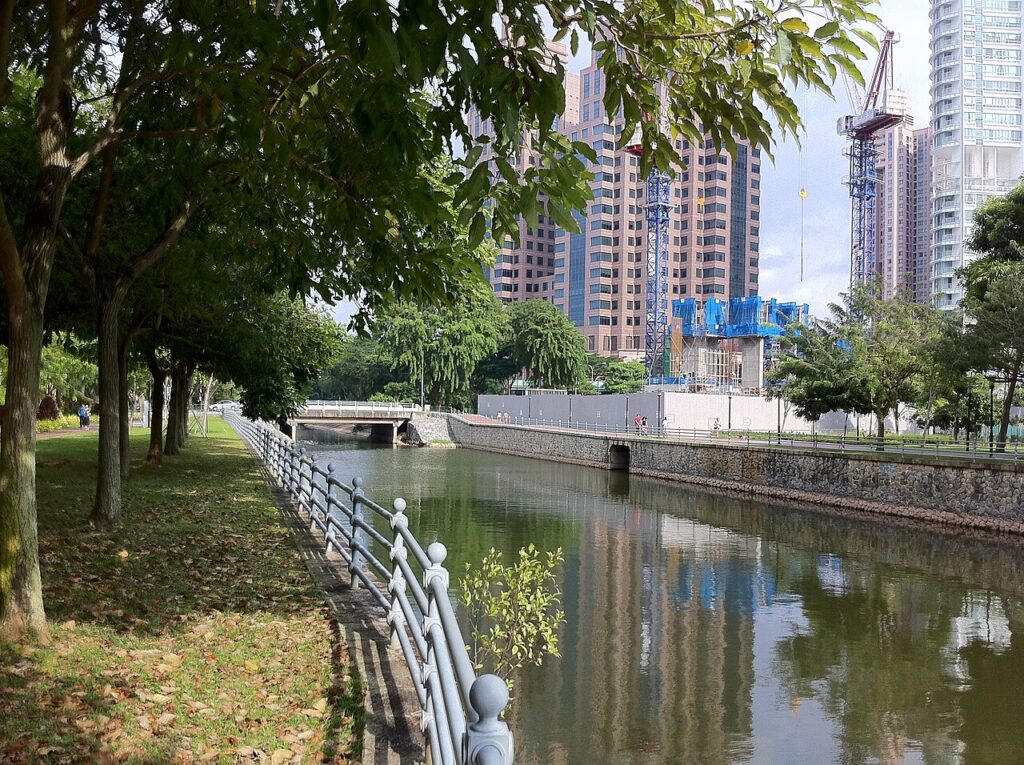
Featured photograph: Robertson Quay in 2011, Bryanmackinnon, via Wikimedia Commons (https://commons.wikimedia.org/wiki/File:Robertson_Quay,_Singapore_-_20110731.jpg), CC BY-SA 3.0 (https://creativecommons.org/licenses/by-sa/3.0). Archive neighbourhood image, not evidence of any building’s tenure, value or present condition.
Need a brochure, price list or professional introduction?
Planning your next property purchase? Contact Lin Xuan at 82222556 or Ade at 81888871 to request a project’s full brochure and latest available price list, discuss a viewing, or ask for introductions to bankers who can help you compare home-loan rates and packages to find the best available option for your needs.
WhatsApp Lin Xuan | WhatsApp Ade. Please include the project name and your question. Brochures, prices and unit availability are subject to developer confirmation; loan eligibility, rates and approval are determined by the bank.
Lin Xuan: ONG LIN XUAN, CEA registration R069812H. Ade: CHUA MUAY MUAY (ADE CHUA), CEA registration R014252F. ERA REALTY NETWORK PTE LTD, estate agent licence L3002382K. If you need legal advice, contact Lin Xuan or Ade and we can introduce you to property lawyers.