
A request to inspect a rented home and a demand to return possession are different decisions. The signed access clause helps organise a visit. A threatened lock change or forfeiture raises further questions about the breach, notice, exercise of the right and possible relief. Neither party should treat a spare key or a termination message as the complete answer.
Keep an ordinary appointment workable
For an inspection, repair or viewing, read the complete signed agreement and any amendments. Record the purpose, who will attend, the proposed time, duration and areas involved. If the suggested appointment is difficult, propose alternatives in writing and keep the reply. This gives both sides a useful record rather than an argument about whether someone was generally cooperative.
A room rental also needs a clear description of the room and shared spaces. A request concerning a shared kitchen should not be treated as though it necessarily concerns the tenant’s exclusively occupied bedroom. For urgent hazards, prioritise the appropriate emergency or building response; an appointment checklist does not authorise force.
When access becomes a possession dispute
In JJV v JJW [2026] SGSCT 30, Tribunal Magistrate Jared Kang Chern Wey gave grounds in the State Courts’ Small Claims Tribunals on 26 October 2026. Paragraphs 17 to 21 explain why a re-entry clause does not resolve every question: the right must arise and be validly exercised, and relief may be available.
The tribunal made no finding that the police had said what the tenant alleged. Its explanatory observations should not be presented as a finding of unlawful police conduct or a ruling that this tenant was entitled to relief. The judgment is a first-instance decision; a later appeal outcome has not been established as at 28 October 2026.
Different breaches can follow different rules
Section 18 of the Conveyancing and Law of Property Act 1886 restricts forfeiture for breaches within its scope. Section 18(1) requires a notice identifying the breach, requiring a remedy if possible and monetary compensation, followed by a reasonable opportunity to comply. Sections 18(2) to (4) provide for an application for court relief and the court’s consideration of the circumstances.
The exclusions matter. Section 18(8) excludes specified assignment, underletting, possession-disposal, bankruptcy and execution conditions. Section 18(9) preserves the separate law for non-payment of rent. A landlord or tenant cannot safely copy the notice analysis for a repair dispute into an arrears dispute.
Section 18A concerns an action to enforce forfeiture for non-payment of rent. It provides court-payment routes and conditions, including restrictions where other grounds or claims are combined. Its court-order timetable is not a general notice period for every private re-entry. An actual claim needs its own procedural assessment.
A termination letter is not the whole act of forfeiture
In Campbell Hospitality Pte Ltd and others v Marchmont Pte Ltd and another appeal [2025] SGHC(A) 6, the Appellate Division of the High Court explained at paragraphs 49 and 60 to 61 that the notices alone had not forfeited the tenancy. The relevant act there was commencement and service of the possession action. The judgment was delivered by See Kee Oon JAD on 22 May 2025 for the court.
That was a hotel lease dispute, not a residential inspection appointment. It illustrates why the agreement, breach notice, termination communication and act relied on to recover possession must be examined separately. The recent JJV v JJW judgment cites this distinction. Complete subsequent appellate status beyond the accessible decisions has not been established here.
Build a chronology before taking the next step
Keep the signed agreement, rent ledger, bank records, notices and appointment messages together. Add dates for any key return, changed lock, attempted entry and collection of belongings. Distinguish an agreed appointment, a refused appointment and a demand for possession. Record what happened without assuming the legal result from the label used in a message.
For example, a hypothetical tenant receives an inspection request on Monday and a possession demand on Wednesday. Combining both as a single access disagreement hides the important questions: what each message required, which clause it relied on and what happened next. A chronology helps a property lawyer identify the relevant issues without inventing a universal response deadline.
Do not infer from an access dispute alone that rent can be withheld or that a landlord may change locks. If possession or forfeiture is contested, contact Lin Xuan or Ade for an introduction to property lawyers before acting on a template clause. For related planning, read our tenancy agreement guide and holding-over guide. This is general legal information, with the cited provisions checked on 28 October 2026.
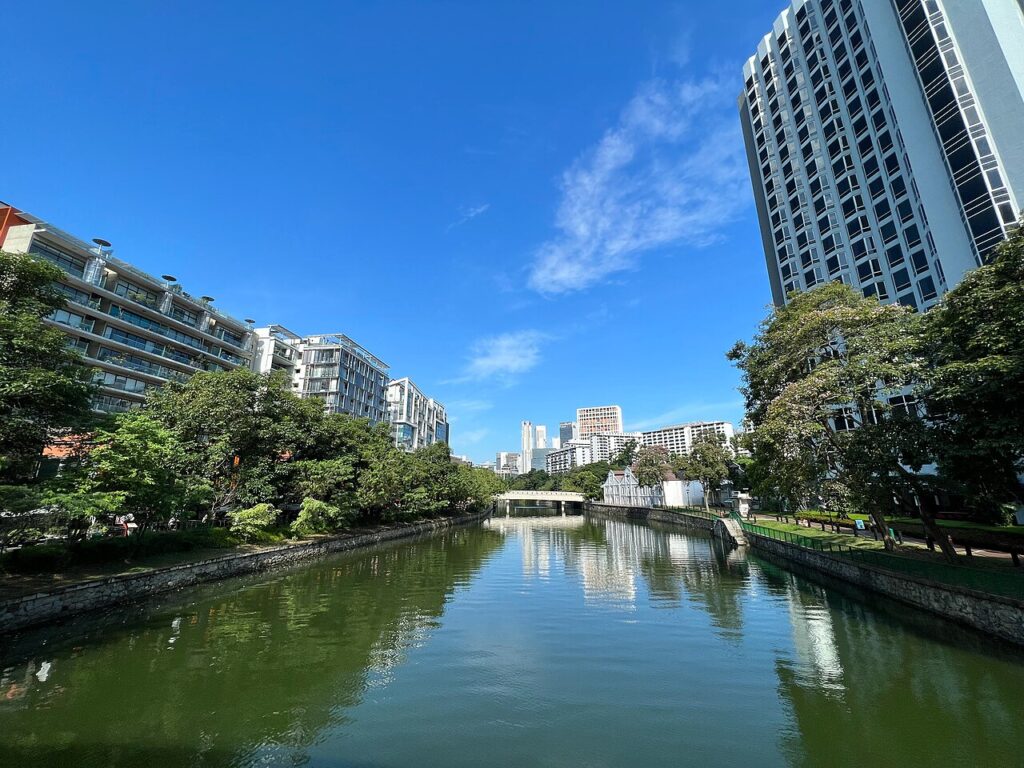
Photograph: Singapore River at Robertson Quay, 14 August 2022, Wzhkevin, CC BY-SA 4.0. Source: commons.wikimedia.org/wiki/File:Singapore_River_at_Robertson_Quay_-_2022-08-14.jpg. Licence: creativecommons.org/licenses/by-sa/4.0/. Resized for web and displayed cropped. Neighbourhood context, not an inspected unit or dispute location.
Need a brochure, price list or professional introduction?
Contact Lin Xuan at 82222556 or Ade at 81888871 or Benn at 83218774 for the full project brochure, latest available price list, a viewing, or introductions to bankers who can help you compare home-loan rates and packages to find the best available option for your needs. If you need legal advice on a property purchase, sale or tenancy, we can also put you in touch with property lawyers.
WhatsApp Lin Xuan | WhatsApp Ade. Let us know the project or property question you would like help with. Prices and availability are subject to developer confirmation, while loan terms and approval are determined by the bank.
Lin Xuan: ONG LIN XUAN, CEA registration R069812H. Ade: CHUA MUAY MUAY (ADE CHUA), CEA registration R014252F. ERA REALTY NETWORK PTE LTD, estate agent licence L3002382K.
Benn: TAN JUN FENG, BENNEDICT (BENNEDICT TAN), CEA registration R058941E. PROPNEX REALTY PTE. LTD., estate agent licence L3008022J.