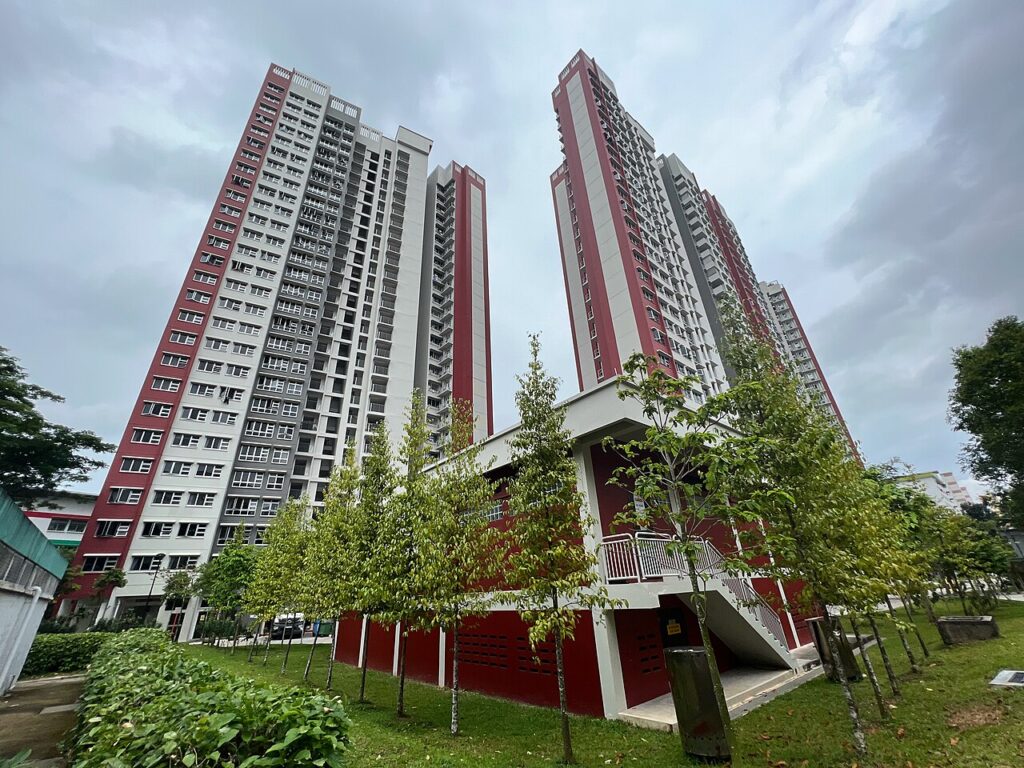
Singapore Property Purchase Process Guide 2026: Step-by-Step from Search to Keys

Singapore Property Purchase Process Guide 2026: Step-by-Step from Search to Keys

Singapore property purchase process guide 2026 — LovelyHomes

Quick Answer: Singapore Property Purchase Process at a Glance (2026)

  • There are 8 key stages to buying property in Singapore: budget and eligibility, financing pre-approval, property search, Option to Purchase (OTP), exercise of option, stamp duty payment, legal completion, and key handover.
  • Buyer’s Stamp Duty (BSD) is payable within 14 days of the Option exercise date. Rates range from 1% (first S$180,000) to 6% (above S$3,000,000). A S$1.5M purchase incurs BSD of S$44,600.
  • Additional Buyer’s Stamp Duty (ABSD) applies on top of BSD for most buyers: 0% for Singapore Citizens buying their first property, 20% for SC second property, 5% for PR first property, and 60% for foreigners.
  • The Total Debt Servicing Ratio (TDSR) cap of 55% is applied by all licensed financial institutions. The Mortgage Servicing Ratio (MSR) of 30% applies additionally to HDB flat and EC purchases.
  • HDB resale takes 5–8 months from HFE application to key collection. Private resale typically takes 8–12 weeks.
  • CPF Ordinary Account (OA) funds can be used to pay BSD/ABSD, the initial property price, and monthly mortgage instalments — subject to the Withdrawal Limit (Valuation Limit for properties with 60+ years remaining lease) and the accrued interest rule.
  • All property purchases in Singapore must be completed through a licensed Singapore advocate and solicitor. Legal fees for a S$1.5M private resale typically range from S$3,000–S$5,000 (excluding disbursements).

Why the Singapore Property Purchase Process Matters

Buying property in Singapore is one of the largest financial decisions most households will ever make — and the process involves multiple government agencies, strict financing rules, mandatory legal representation, and a series of deadlines that, if missed, result in financial penalties or forfeiture of deposits. Yet the process itself is well-regulated and transparent. Understanding each step before you begin means you negotiate better, avoid costly mistakes, and complete your purchase with confidence.

The key agencies you will deal with are the Housing and Development Board (HDB) for public housing, the Urban Redevelopment Authority (URA) for planning and land use approvals, the Inland Revenue Authority of Singapore (IRAS) for stamp duties, the Singapore Land Authority (SLA) for title registration, the CPF Board for CPF OA withdrawals, and the Monetary Authority of Singapore (MAS) whose TDSR rules govern all residential mortgage lending.

This guide covers both the HDB resale pathway and the private residential pathway. New HDB BTO applications are covered separately in our HDB BTO Ballot Guide 2026.

8 steps to buying property in Singapore 2026 swimlane diagram
Figure 1: The 8 steps of buying property in Singapore — from budget-setting to key handover. Source: HDB, SLA, IRAS, CPF Board.

Step 1: Set Your Budget and Check Eligibility

Before viewing a single property, you need to know exactly how much you can spend and whether you are eligible to buy the type of property you want. This step involves three calculations and two eligibility checks:

Check What to Assess Authority / Tool
TDSR calculation All monthly debt obligations / gross monthly income ≤ 55% MAS; any bank
MSR calculation (HDB/EC only) Monthly HDB/EC mortgage / gross monthly income ≤ 30% HDB; any bank
CPF OA balance How much CPF OA can fund down payment and monthly servicing CPF Board (my.cpf.gov.sg)
HDB eligibility (if buying HDB) Citizenship, age, family nucleus, prior ownership, income ceiling ≤ S$14,000 HDB (HDB Flat Portal)
ABSD profile Determine ABSD rate based on citizenship, PR status, property count IRAS (iras.gov.sg)

The TDSR and MSR calculations are the binding constraints. A household earning S$12,000/mth has a TDSR-based maximum monthly obligation of S$6,600 (55% × S$12,000). If they have an existing car loan of S$800/mth, the maximum mortgage payment is S$5,800/mth. At a 3.5% interest rate on a 25-year loan, this translates to a maximum loan of approximately S$1.12M — meaning their maximum purchase price (at 75% LTV) is approximately S$1.49M.

Step 2: Obtain Your HFE Letter or Bank AIP

For HDB flat buyers, you must first obtain an HDB Flat Eligibility (HFE) Letter before you can receive an OTP from any HDB seller. The HFE letter confirms your eligibility to buy an HDB flat, your CPF housing grant entitlement, and your HDB concessionary loan eligibility (if applicable). Apply via the HDB Flat Portal; the letter typically takes 2–3 weeks and is valid for 6 months.

For private property buyers, you should obtain an Approval In Principle (AIP) from your bank before making offers. The AIP confirms how much the bank is willing to lend you, based on your income, existing debts, and the TDSR framework. An AIP is typically valid for 30 days and can be renewed. It is not a formal loan commitment (that comes later), but it gives you — and sellers — confidence that your financing is viable.

At this step, you should also decide whether you will use an HDB concessionary loan (for HDB resale purchases, at 2.6% p.a., 80% LTV) or a bank loan (floating or fixed rates, currently 3.0–3.8% p.a. for 25-year terms as at August 2026, 75% LTV). The HDB loan has a higher interest rate than the best fixed-rate bank packages, but offers more flexibility on early repayment and does not have lock-in penalties.

Step 3: Property Search and Making an Offer

In Singapore, the property market is primarily served by CEA-licensed property agents. You can also transact directly (DIY) — URA’s REALIS portal and HDB’s ResalePlat portal provide transaction data for price discovery. Commission conventions as at 2026:

Transaction Type Who Pays Commission Typical Rate
HDB resale (seller’s agent) Seller 1–2% of sale price
HDB resale (buyer’s agent) Buyer 1% of purchase price (negotiable)
Private resale (co-broke) Seller and Buyer split 50/50 1% each (total 2% of sale price)
New launch (developer) Developer pays agent; buyer pays nothing 2–3% paid by developer

When you identify a property, conduct due diligence: check URA’s approved use, verify there are no caveats or charges on the title (via SLA INLIS), confirm the property is free of HDB subletting restrictions or disputes, and — for landed properties — verify the land boundaries and any road lines (future road reservations that reduce usable land). Your lawyer will conduct most of these searches formally at Step 7, but it is worth doing preliminary checks before committing.

Step 4: The Option to Purchase (OTP)

The Option to Purchase is the standard contract that kicks off the formal purchase process in Singapore. It is a unilateral contract — the seller grants you the right, but not the obligation, to buy at the agreed price. Key mechanics:

Item HDB Resale Private Resale / New Launch
OTP form HDB standard form (mandatory) Typically Law Society standard form
Option fee S$1 (symbolic; no cash deposit) 1% of purchase price (credited to purchase)
Option period 21 calendar days 21 calendar days (standard; negotiable)
Exercise fee S$5,000 (4-room and above) 4% of purchase price (credited to purchase)
What triggers on exercise HDB resale application submission Sale & Purchase Agreement signed

Once you pay the option fee and the seller signs the OTP, the property is effectively reserved for you for 21 days. The seller cannot accept other offers during this period. If you choose NOT to exercise the option, you forfeit the option fee (1% for private; S$1 for HDB) — but are free to walk away. If you exercise and then back out after signing the S&P, you forfeit the full 5% deposit (1% option fee + 4% exercise fee).

Singapore stamp duty BSD ABSD by buyer profile 2026 bar chart
Figure 2: Stamp duty payable (BSD + ABSD) by buyer profile and purchase price, 2026 rates. For a S$1.5M property: SC first-timer pays S$44,600 (BSD only); SC second property pays S$344,600 (BSD + 20% ABSD). Source: IRAS.

Step 5: Exercise the Option and Pay Stamp Duty

To exercise the OTP, the buyer pays the balance of the deposit (typically the 4% exercise fee for private, or the HDB flat exercise fee) to the seller’s lawyer in escrow. For private property, this simultaneously triggers the signing of the Sale & Purchase (S&P) Agreement.

Both BSD and ABSD must be paid within 14 days of the OTP exercise date (or the date of the S&P Agreement, whichever is earlier). This is a hard IRAS deadline — late payment incurs a penalty of 5%–15% of the duty, and the IRAS may also impose interest. BSD and ABSD can be paid in cash or from your CPF Ordinary Account.

BSD rates as at 10 August 2026:

Purchase Price Band BSD Rate Marginal BSD
First S$180,000 1% S$1,800
Next S$180,000 (S$180,001–S$360,000) 2% S$3,600
Next S$640,000 (S$360,001–S$1,000,000) 3% S$19,200
Next S$500,000 (S$1,000,001–S$1,500,000) 4% S$20,000
Next S$500,000 (S$1,500,001–S$2,000,000) 5% S$25,000
Amounts above S$3,000,000 6% (variable)
BSD on S$1,500,000 S$44,600

ABSD rates as at 10 August 2026: Singapore Citizens first property: 0%. SC second property: 20%. SC third or more: 30%. Singapore Permanent Residents first property: 5%. PR second property: 30%. PR third or more: 35%. Foreigners: 60%. Entities (companies, trusts): 65%.

Step 6: Legal Completion — SLA, CPF, and Mortgage

After exercising the option, your lawyer takes over the process. The key legal tasks between option exercise and completion are:

Task Who Does It Timeline (Private)
Lodge caveat (SLA) Buyer’s lawyer Within 3–5 days of option exercise
Legal requisitions (road, MRT, planning) Buyer’s lawyer 2–4 weeks
CPF withdrawal application Buyer + CPF Board via lawyer 3–5 weeks
Bank loan documentation Buyer + bank’s panel lawyer 3–5 weeks
Title search (final) Buyer’s lawyer 1 week before completion
Completion account prepared Both parties’ lawyers 1–2 weeks before completion
Mortgage charge registered (SLA) Bank’s lawyer On completion day

For HDB resale, the HDB itself coordinates much of the completion process through its resale portal. Both buyer and seller must submit their respective portions of the HDB Resale Application within 7 days of each other. HDB then checks eligibility, processes the grants, and schedules a Resale Appointment (typically 8–10 weeks after submission). At the Resale Appointment — now conducted online — the transaction is officially completed, and the buyer receives the keys.

HDB resale vs private property purchase timeline comparison Singapore 2026
Figure 3: HDB resale vs private property — purchase timeline from start to completion. Source: HDB, SLA, CPF Board.

Step 7: Moving In and What Happens After Completion

On or after the completion date, you will receive the keys to your property. For new launches, “completion” at this stage means the Option has been exercised and payments made — actual physical handover of the keys occurs when the development receives its Temporary Occupation Permit (TOP) from the Building and Construction Authority (BCA), which can be 3–5 years after launch for major projects.

Post-completion obligations include: paying property tax to IRAS annually (the owner-occupier rate is 0%–16% of Annual Value; non-owner-occupier rate is 12%–36% of Annual Value), maintaining adequate fire insurance if you have a mortgage (mandatory under most bank loan agreements), and notifying the relevant authority of any change in use or occupancy. HDB flat owners must occupy the flat themselves for the applicable MOP period before they can sublet or sell.

Worked Example: Ms Priya Buys a S$1.2M 3-Bedroom RCR Resale Condo

Ms Priya (Singapore Citizen, first property) earns S$9,500/mth gross. She has no other debts. She wants to buy a 3-bedroom resale condo in the Rest of Central Region (RCR) at S$1,200,000.

Item Calculation Amount
TDSR check Max monthly obligation = 55% × S$9,500 = S$5,225 PASS
Max bank loan (75% LTV) S$1,200,000 × 75% = S$900,000 S$900,000
Monthly mortgage (3.5%, 25yr) S$900,000 → ~S$4,506/mth TDSR 47.4% PASS
Buyer’s Stamp Duty (BSD) S$24,600 (first S$1M) + 4% × S$200,000 = S$24,600 + S$8,000 S$32,600
ABSD (SC first property) 0% S$0
Legal fees (estimated) Scale fees + disbursements ~S$4,200
Option fee paid on OTP 1% × S$1,200,000 S$12,000
Exercise fee paid (20 days later) 4% × S$1,200,000 S$48,000
Balance at completion S$1,200,000 − S$900,000 (bank) − S$60,000 (option+exercise) S$240,000 (from CPF OA or cash)
Total cash/CPF needed (excl. mortgage) ~S$336,800

Ms Priya has S$180,000 in her CPF OA. She uses S$32,600 for BSD (paid within 14 days of exercise), S$4,200 for legal fees, and S$143,200 towards the balance purchase price. She tops up the remaining balance (about S$96,800) from cash savings. Her monthly CPF OA contributions of ~S$1,710 (based on her salary) will service approximately S$1,710 of the S$4,506 monthly mortgage, with the remainder of S$2,796 paid in cash each month.

The full transaction from AIP to key collection takes approximately 10–12 weeks. She engages a lawyer on the day she exercises the OTP, and the lawyer lodges the caveat within 3 days. At legal completion (8 weeks after option exercise), the SLA registers the mortgage charge and transfers the title to her name.

What This Means for Property Buyers in 2026

Singapore’s property purchase process is intentionally structured to prevent overleveraging and speculative flipping. The TDSR at 55%, the ABSD tiers, and the SSD on sales within 3 years of purchase all work together to ensure that buyers can genuinely afford what they buy — and that short-term speculation is expensive. For genuine homebuyers, the system works well: prices are transparent (URA publishes every transaction), the legal framework is robust, and the financing landscape, while tighter than a decade ago, remains accessible to households with stable incomes.

The most common sources of friction are: (1) the 14-day BSD/ABSD payment deadline, which requires buyers to have their CPF withdrawal request in process before the option exercise date; (2) the TDSR calculation catching households where one partner is self-employed or on variable income; and (3) the HFE letter processing time creating a gap between identifying a flat and being ready to make an offer. Knowing these potential delays allows you to plan ahead and avoid losing a property you want.

What Might Come Next for Singapore Property Purchase Rules

Several areas are under review by the relevant authorities heading into late 2026. MAS is monitoring household debt levels in the context of global interest rate expectations — with the US Federal Reserve signalling at most one further cut in 2026, Singapore SORA rates are likely to remain in the 2.8–3.2% band through year-end, keeping TDSR constraints relatively tight. There is no indication from MAS of any change to the TDSR or LTV rules in the near term.

On the ABSD front, the Ministry of Finance conducted its annual ABSD review in February 2026 and left rates unchanged. The 60% foreigner ABSD (introduced in April 2023) remains in place. Market observers expect rates to stay flat through at least H1 2027 unless private property prices accelerate sharply above the current moderate 0.5% quarterly growth rate. On stamp duties, there is ongoing industry discussion about whether the 6% BSD tier (above S$3M) should be extended to a 7% tier (above S$5M) to further dampen the ultra-luxury segment — but no formal proposal has been announced.

Frequently Asked Questions: Singapore Property Purchase Process 2026

How long does it take to buy a private resale property in Singapore?
A typical private resale transaction in Singapore takes 8–12 weeks from OTP signing to legal completion. The timeline breaks down roughly as: 1 week to negotiate and sign the OTP; 3 weeks for the buyer to exercise the option; 8 weeks for legal completion (SLA searches, CPF withdrawal, bank mortgage documentation, title searches, and completion accounts). In practice, delays arise most often from CPF withdrawal processing (which takes 3–5 weeks if it is the buyer’s first CPF property withdrawal) and from bank loan documentation. Buyers who start their bank process and CPF planning before the OTP signing stage complete faster. The HDB resale pathway is significantly longer — typically 5–8 months from the HFE Letter application to key collection — due to HDB’s application checks and mandatory scheduling of the online Resale Appointment.
Can I use my CPF Ordinary Account to pay the stamp duty?
Yes, you can use your CPF OA to pay BSD and ABSD. However, the CPF withdrawal must be processed before the 14-day IRAS payment deadline — in practice, this means initiating the CPF withdrawal request on the same day you exercise the option (or earlier if possible). CPF Board typically takes 3–5 business days to process a withdrawal for stamp duty purposes, and the funds are transferred directly to IRAS. Many buyers also pay BSD in cash to avoid the risk of a CPF processing delay triggering a late stamp duty penalty. ABSD, being much larger in most cases (especially for second-property or foreigner buyers), is typically paid from a combination of CPF and cash.
Do I need a property agent to buy a resale property in Singapore?
You are not legally required to engage a property agent for a resale purchase. However, the process involves legal documents (OTP, S&P Agreement), financing coordination, HDB/URA checks, and IRAS stamp duty filing — and errors at any step can be costly. If you transact without an agent, you should still engage a lawyer (mandatory for legal completion), use government portals (URA REALIS, HDB ResalePlat, IRAS e-Stamping) for price data and stamp duty calculation, and ensure you fully understand the OTP terms before signing. For first-time buyers transacting without an agent, CEA’s website provides educational resources and a sample OTP for reference. For experienced buyers transacting DIY, the savings (typically 1% of purchase price) can be meaningful.
What is the difference between the Buyer’s Stamp Duty and the Additional Buyer’s Stamp Duty?
BSD (Buyer’s Stamp Duty) is a tiered tax administered by IRAS that applies to ALL property purchases in Singapore, regardless of the buyer’s citizenship or how many properties they own. It ranges from 1% to 6% of the purchase price in progressively higher brackets. ABSD (Additional Buyer’s Stamp Duty) is an additional tax that applies ON TOP of BSD for certain buyer profiles — its explicit purpose is to moderate demand from investors and foreign buyers. Singapore Citizens buying their first residential property pay 0% ABSD. SC second property: 20% ABSD. SC third or subsequent: 30% ABSD. Permanent Residents (first property): 5% ABSD. PR (second+): 30–35% ABSD. Foreigners: 60% ABSD. Entities (companies): 65% ABSD. ABSD is calculated on the full purchase price with no brackets. Both BSD and ABSD must be paid within 14 days of the OTP exercise date.
What happens if I change my mind after exercising the Option to Purchase?
If you exercise the OTP (by paying the 4% exercise fee for private property, or the HDB flat exercise fee for HDB) and subsequently decide not to proceed, you forfeit your entire deposit — typically 5% of the purchase price (1% option fee + 4% exercise fee). For a S$1.2M property, this means losing S$60,000. You may also still owe the stamp duty that was filed (BSD is payable on the OTP exercise date, regardless of whether the sale ultimately completes). In very limited circumstances — such as death of the buyer, or the seller failing to complete — you may recover the deposit, but this requires legal proceedings. The practical lesson is: do not exercise the OTP unless you are certain about the purchase and your financing is confirmed in writing from your bank.
Can a foreigner buy HDB flats or landed property in Singapore?
Foreigners (non-Singapore Citizens and non-Permanent Residents) generally cannot buy HDB flats, with limited exceptions under the Non-Citizen Spouse Scheme (allowing a Singapore Citizen to include a foreign spouse in the flat ownership). Foreigners also cannot purchase landed residential property (bungalows, semi-detached houses, terrace houses) in Singapore without approval from the Singapore Land Authority (SLA) under the Residential Property Act. This approval is rarely granted and typically requires the applicant to demonstrate exceptional economic contribution to Singapore. Foreigners can freely purchase private non-landed residential properties (condominiums, apartments, executive condominiums after 10 years), but are subject to the 60% ABSD rate as at 2026. Certain nationalities (US, Swiss, Norwegian, Icelandic, Liechtenstein citizens) enjoy treatment equivalent to Singapore Permanent Residents under Free Trade Agreements, meaning they pay 5% ABSD on a first purchase rather than 60%.
What is the Seller’s Stamp Duty (SSD), and does it affect buyers?
The Seller’s Stamp Duty (SSD) is a tax on the SELLER, not the buyer — but it affects buyers indirectly because it influences seller behaviour and pricing. SSD applies to sellers who sell within 3 years of acquiring private residential property: 12% if sold within 1 year, 8% if sold within 2 years, and 4% if sold within 3 years (no SSD after 3 years). SSD was introduced to prevent short-term flipping and is administered by IRAS. HDB flats are exempt from SSD but subject to a 5-year MOP before they can be sold. As a buyer, knowing the SSD framework helps you understand why sellers who bought within the last 3 years may be reluctant to negotiate aggressively — they are absorbing a significant exit cost. It also means that very few private properties change hands within 1–2 years of purchase, which generally contributes to price stability.

Related Articles

Disclaimer: This article is for general informational purposes only and does not constitute legal, financial, or property advice. Stamp duty rates, CPF rules, HDB eligibility criteria, TDSR/MSR caps, and all other regulatory requirements are subject to change. Always verify current requirements with the relevant authorities: IRAS, HDB, URA, CPF Board, SLA, and MAS. Consult a licensed Singapore advocate and solicitor, a licensed financial adviser, and a CEA-registered property agent for advice specific to your circumstances.

Singapore Tenants’ Rights Guide 2026: Laws, Deposits and Dispute Resolution

Singapore Tenants’ Rights Guide 2026: Laws, Deposits and Dispute Resolution

Singapore tenants rights guide 2026 — LovelyHomes

Quick Answer: Singapore Tenants’ Rights at a Glance (2026)

  • Tenants are protected under the Residential Tenancies Act (RTA) 2022, administered by the Community Disputes Resolution Tribunals (CDRT).
  • Your security deposit is capped at two months’ rent for a two-year tenancy; one month for a one-year tenancy. The landlord must return it within 14 days of lease end, less deductions supported by receipts.
  • Every tenancy should be stamped with the Inland Revenue Authority of Singapore (IRAS) within 14 days of signing. The rental stamp duty rate is 0.4% of total rent for leases up to four years.
  • HDB flat owners may only sublet to Singapore Citizens, Singapore Permanent Residents, or approved non-citizens. The flat must have met the five-year Minimum Occupation Period (MOP).
  • The URA caps occupancy for private residential units at six unrelated persons per unit; HDB caps at six persons per flat (eight for five-room and larger).
  • Landlords must give tenants at least 24 hours’ notice before entering the premises except in emergencies.
  • Rental disputes can be brought before the Small Claims Tribunal (SCT) for claims up to S$30,000, or the CDRT for neighbour and landlord-tenant disputes.
  • As at Q2 2026, the URA All Residential Rental Index stands at approximately 137 (2009 = 100), down from the peak of 143.9 in Q3 2023 but still 28% above pre-pandemic levels.

What Is the Residential Tenancies Act 2022 — and Why Does It Exist?

Singapore’s private residential rental market handles roughly 200,000 active tenancies at any given time. Until 2022, rental disputes between landlords and tenants were resolved primarily through contract law — meaning whoever had the better-drafted tenancy agreement often won. The Residential Tenancies Act (RTA) 2022, which commenced on 1 July 2023, changed that by establishing a set of baseline rights and obligations that cannot be contracted away, regardless of what the tenancy agreement says.

The RTA is administered by the Ministry of Law (MinLaw). It creates a dedicated Rental Disputes Resolution Centre (RDRC) to handle disputes under S$30,000, making it faster and cheaper to resolve common complaints about security deposits, unauthorised deductions, landlord entry, and property conditions. Claims above S$30,000 continue to be heard by the State Courts.

Separately, HDB-flat rentals are governed by the Housing and Development Board (HDB) under the Housing and Development Act. The URA governs private residential properties under the Planning Act. Both agencies set rules on who may rent, how many occupants are permitted, and what disclosures are required.

Upfront rental costs breakdown Singapore 2026 — security deposit, advance rent, stamp duty
Figure 1: Upfront day-1 rental costs for a S$4,000/mth 3-bedroom OCR condo. Total outlay: S$15,576. Source: IRAS, SP Group, Industry Practice.

Security Deposit Rules: Your Rights and the Landlord’s Obligations

The security deposit is typically the largest single upfront cost for a renter. Under Singapore market practice — now codified in the RTA — the deposit is:

Tenancy Length Market Standard Deposit Return Timeline Governing Body
1-year lease 1 month’s rent 14 days from lease end MinLaw / RDRC
2-year lease 2 months’ rent 14 days from lease end MinLaw / RDRC
3-year lease (uncommon) 2–3 months’ rent 14 days from lease end MinLaw / RDRC

Landlords may deduct from the deposit only for: unpaid rent, damage beyond fair wear and tear, unpaid utilities, and reinstatement costs (returning the property to its original condition). Every deduction must be supported by a receipt or contractor’s invoice. Deductions for “cleaning fees” without evidence of actual cleaning costs are not permissible under the RTA.

If the landlord fails to return the deposit within 14 days, the tenant may file a claim with the RDRC. The RDRC can order the landlord to repay the deposit plus interest. Importantly, the burden of proof shifts to the landlord to justify deductions — not the tenant to disprove them.

Rental Stamp Duty: What You Pay and When

The rental stamp duty is a government tax administered by the Inland Revenue Authority of Singapore (IRAS). It applies to all residential tenancy agreements in Singapore. The duty is calculated as follows:

Lease Duration Stamp Duty Rate Payment Deadline
1 year or less 0.4% of total rent Within 14 days of signing
More than 1 year to 4 years 0.4% of average annual rent Within 14 days of signing
More than 4 years 0.4% of 4 × average annual rent Within 14 days of signing

Worked example: A 2-year tenancy at S$4,000/mth has total annual rent of S$48,000. The stamp duty is 0.4% × S$48,000 = S$192/year × 2 years = S$384 total. In practice, agents use the IRAS e-Stamping portal. By convention in Singapore, the stamp duty is paid by the tenant (though this is a market convention, not a legal requirement, and can be negotiated).

An unstamped tenancy agreement is still legally binding between the parties, but it cannot be used as evidence in court without paying the duty (plus a penalty). IRAS penalties for late stamping range from S$10 or the duty amount (whichever is higher) to four times the duty amount for deliberate evasion.

Singapore tenant rights and obligations comparison 2026
Figure 2: Tenant rights vs obligations in Singapore under the RTA 2022 and HDB/URA guidelines. Source: MinLaw, HDB.

HDB Rental Rules: What Tenants and Landlords Must Know

Renting an HDB flat involves an additional layer of regulation beyond the RTA. The Housing and Development Board requires flat owners to obtain prior written approval before subletting their flat. Without this approval, the sublet is illegal — and the tenant could be asked to vacate on short notice with limited recourse.

Key HDB rental rules as at 10 August 2026:

Rule Requirement
Minimum Occupation Period Owner must have occupied the flat for 5 years (Standard), 10 years (Plus), or 10 years (Prime) before subletting
Eligible tenants Singapore Citizens, Singapore Permanent Residents, or non-citizens approved by HDB (excluding visitor pass holders for whole-flat sublet)
Minimum tenancy period 6 months per application (no short-stay, Airbnb-style lettings)
Maximum subletting period 3 years at a time; application must be renewed
Occupancy cap — standard flat Maximum 6 occupants (all persons residing, including owner’s family if any)
Occupancy cap — 5-room and larger Maximum 8 occupants
HDB approval renewal Must apply to renew approval before expiry; non-renewal means sublet becomes unauthorised

As a tenant, it is your right — and responsibility — to verify that the flat has HDB approval before signing the tenancy agreement. You can ask the landlord to produce the HDB approval letter. If the landlord cannot, walk away. Renting an unapproved HDB flat exposes you to sudden eviction, as HDB can order the unauthorised sublet to cease.

Private Property Rental: URA Rules and Occupancy Limits

For private residential properties (condominiums, apartments, landed houses), the Urban Redevelopment Authority (URA) sets the rules. Since 2022, the occupancy cap for private residential units is six unrelated persons. This applies regardless of the unit size. “Unrelated” means persons not belonging to the same family unit; a family of eight can still stay in a unit because family members are not counted individually under this rule.

Short-term rentals (fewer than 3 consecutive months for any single tenant) are prohibited for all private residential properties except those with specific planning permission. This means platforms like Airbnb, Booking.com, and similar operate illegally in standard private condominiums. Landlords who violate this face fines of up to S$200,000. Tenants subletting on a nightly basis without the landlord’s knowledge also risk early termination of their lease.

The Tenancy Agreement: What Must Be In It

While there is no standard government-prescribed tenancy agreement form in Singapore, a legally sound agreement should include all of the following:

Clause Why It Matters
Parties’ full legal names and NRIC/passport numbers Identifies who is bound; needed for IRAS stamping
Property address and description Defines the leased premises
Tenancy duration (start and end dates) Determines notice period and renewal rights
Monthly rent and payment date Establishes payment obligation and late-payment trigger
Security deposit amount and return conditions Governs RTA deposit rules; specifies permissible deductions
Permitted use (residential only) Required by URA; running a business is not permitted without change of use
Maintenance obligations (landlord vs tenant) Structural repairs by landlord; fair-wear-and-tear items by tenant
Diplomatic clause Allows early termination if tenant is relocated overseas (typically after 12 months with 2-month notice)
Access clause (24-hour notice) Codifies RTA requirement for notice before landlord entry
HDB/URA approval reference (if applicable) Confirms regulatory compliance

The Council for Estate Agencies (CEA) — the government body that licenses property agents — provides a standard tenancy agreement template on its website. Both landlords and tenants are encouraged to use it as a starting point.

Singapore renting process 5 stages flowchart 2026
Figure 3: The 5-stage renting process in Singapore — from search to tenancy. Source: HDB, IRAS, RTA 2022.

Resolving Rental Disputes: Your Options in 2026

If something goes wrong — the landlord refuses to return the deposit, enters without notice, or fails to repair a structural fault — you have several escalation pathways:

Forum Jurisdiction Claim Limit Typical Timeline
Rental Disputes Resolution Centre (RDRC) Security deposits, unauthorised deductions, landlord entry S$30,000 4–8 weeks
Small Claims Tribunal (SCT) Tenancy disputes, damages, unpaid rent S$30,000 (S$20,000 for hire-purchase) 1–3 months
Community Disputes Resolution Tribunal (CDRT) Neighbour nuisance, interference with enjoyment No monetary cap 3–6 months
Magistrate’s Court / District Court Large claims, eviction proceedings Unlimited 6–18+ months

For most common disputes — primarily security deposit disagreements — the RDRC is the fastest and cheapest avenue. Filing fees start at S$10 for claims up to S$1,000, scaling to S$120 for claims up to S$30,000. Adjudicators are empowered to make binding orders. There is no need to engage a lawyer for RDRC proceedings, though both parties may bring legal representation if they choose.

Before escalating, it is strongly advisable to send the landlord a formal written notice (email with read receipt, or registered post) specifying the dispute, the amount claimed, and a 7-day deadline to respond. This creates a paper trail and satisfies the RDRC’s requirement to demonstrate that direct resolution was attempted.

Worked Example: Mr & Mrs Cheng’s 2-Year OCR Condo Tenancy

Mr and Mrs Cheng (Singapore Permanent Residents) move into a 3-bedroom OCR condominium in Tampines at S$4,200/mth on a 2-year tenancy commencing 1 September 2026.

Upfront costs on move-in day:

Item Calculation Amount
Security deposit 2 months × S$4,200 S$8,400
Advance rent (1 month) September rent S$4,200
Rental stamp duty 0.4% × S$50,400 (annual rent) S$403
Agent commission (co-broke) ½ month (co-broke split) S$2,100
SP Group utility deposit Estimated (owner-occupied meter) S$200
Total Day-1 Outlay S$15,303

When the tenancy ends on 31 August 2028, the landlord has 14 days (i.e., by 14 September 2028) to return the deposit of S$8,400, less any documented deductions. The landlord deducts S$350 for touch-up painting with a contractor receipt. The Chengs receive S$8,050 within the 14-day window. If the landlord had withheld the full deposit without justification, the Chengs could file with the RDRC from 15 September 2028.

What This Means for Singapore Renters in 2026

The combination of the RTA 2022, the RDRC’s operational launch in 2023, and updated HDB subletting guidelines has materially strengthened tenant protections in Singapore over the past three years. The key practical shifts are:

First, the security deposit return obligation is now legally enforceable (not just contractual), with RDRC adjudicators able to award interest and costs on late returns. Second, the burden of proof for deposit deductions has shifted to landlords, meaning tenants no longer need to prove the deduction was unjustified — landlords must prove it was justified. Third, the occupancy caps — both HDB’s 6/8-person rules and URA’s 6-unrelated-person rule — are increasingly enforced through anonymous tips to HDB’s hotline and URA’s enforcement team.

The rental market itself has softened from the 2022–2023 peak. URA data shows the All Residential Rental Index at approximately 137 as of Q2 2026, down 4.8% from the peak. For tenants, this means better negotiating leverage on rent, but also more landlords seeking to maximise income through subtle cost-shifting (e.g., demanding tenants pay for minor repairs that are legally the landlord’s responsibility). Knowing your rights under the RTA is the best defence.

What Might Come Next for Singapore Rental Policy

MinLaw has indicated it is monitoring the RTA’s effectiveness with a view to potential amendments in 2027. Areas under review include: extending mandatory deposit return deadlines to individual-room rentals (currently excluded from the RTA), introducing a standardised government-issue tenancy agreement template (similar to HDB’s template), and potentially capping the security deposit at two months’ rent by statute (currently a market convention, not a legal cap). HDB is also considering extending its digital subletting approval portal to allow real-time tenant verification — currently, tenants can only verify approval by requesting the letter from the landlord.

Frequently Asked Questions: Singapore Tenants’ Rights 2026

Can my landlord enter the property without telling me?
No. Under the RTA 2022, a landlord must give at least 24 hours’ advance notice before entering the premises, except in a genuine emergency (such as a burst pipe or fire). The notice should specify the date, approximate time, and reason for entry. If your landlord enters without notice repeatedly, this constitutes interference with your quiet enjoyment and you may file a complaint with the RDRC. Document each instance with a timestamped written message (WhatsApp, email) to the landlord noting the unauthorised entry.
My landlord is deducting money from my deposit for “general wear and tear”. Is this legal?
No — deductions for normal wear and tear are not permissible under the RTA. Fair wear and tear includes things like minor scuffs on walls, faded paint after two years, small carpet indentations from furniture, and slight scratching on wooden floors from regular use. What landlords CAN deduct for includes: holes in walls, broken fittings, significant stains on carpets or upholstery, missing items listed on the inventory, and costs for professional cleaning if the property was returned in a noticeably dirtier state than on move-in. Always do a joint move-in and move-out inspection with your landlord and photograph every room on both occasions. This documentation is your strongest protection.
My HDB landlord is now overseas. How do I verify that the sublet is properly approved by HDB?
Ask the landlord to email you a copy of the HDB subletting approval letter, which shows the approved period and the approved tenants. You can also independently verify by calling HDB’s hotline at 1800-225-5432 or checking the HDB Resale Portal — however, direct flat-level sublet status is not publicly searchable. If you have signed the tenancy agreement before seeing the approval, and it turns out the sublet is not approved, you have grounds to terminate the tenancy and claim your deposit back under the RTA, as the landlord has misrepresented a fundamental condition of the tenancy.
What is a diplomatic clause, and should I insist on one?
A diplomatic clause (also called an “ex-patriation clause” or “break clause”) allows a tenant to terminate the tenancy early if they are required to relocate overseas due to their employment. Standard terms are: the clause activates only after the first 12 months; the tenant must give 2 months’ written notice; the tenant forfeits one month’s rent as a “break fee.” Not all landlords will accept a diplomatic clause, particularly in a softer rental market where they prefer security. If you are on an Employment Pass or work permit, this clause is highly advisable because your work authorisation can be cancelled at short notice. Negotiate it before signing — it is very difficult to add it after the agreement is executed.
Can a landlord increase the rent during the tenancy?
No — unless the tenancy agreement contains an explicit rent escalation clause. Under Singapore contract law, a rent increase during the fixed term of a tenancy requires both parties’ agreement, evidenced in writing. A landlord who unilaterally demands higher rent mid-tenancy is in breach of contract. If you are on a periodic tenancy (month-to-month after the fixed term expires), the landlord may increase rent with proper notice — typically one rental period’s notice (i.e., one month for a monthly tenancy). If the rent increase is unacceptable, you may give the equivalent notice to terminate the periodic tenancy without penalty.
What happens if the landlord sells the property while I am still renting it?
Under Singapore law, a registered tenancy agreement survives a change of ownership — the new owner steps into the shoes of the old landlord and is bound by the original tenancy terms. However, most tenancy agreements are not formally registered with the SLA. In practice, a sale of the property while tenanted typically means the new owner will honour the existing tenancy (it transfers with the property) or negotiate an early exit with you. The key protection is ensuring your tenancy agreement was properly executed and stamped, as this makes it enforceable. If the new owner tries to evict you before the tenancy expires, they must go through the proper legal process — they cannot simply change the locks.
I found mould in my rental unit. Who is responsible for fixing it?
Responsibility depends on the cause. Structural moisture intrusion (through external walls, roof, or building waterproofing) is the landlord’s responsibility under the RTA’s implied covenant of fitness for habitation. If mould arises from the tenant’s behaviour — such as not ventilating the bathroom, drying clothes indoors without air flow, or keeping the aircon off in a humid climate — the tenant bears responsibility for remediation. In practice, Singapore’s humidity means that even well-ventilated apartments can develop mould. The most pragmatic approach is to notify the landlord in writing as soon as mould is discovered, request an inspection, and let the landlord determine the cause. If the landlord refuses to investigate structural causes, you may file a complaint with the RDRC citing breach of the implied warranty of habitability.

Related Articles

Disclaimer: This article is for general informational purposes only and does not constitute legal advice. Rental regulations, stamp duty rates, HDB subletting rules, and court procedures change periodically. Always verify current requirements directly with the relevant authorities: Ministry of Law (MinLaw), Housing and Development Board (HDB), Urban Redevelopment Authority (URA), and Inland Revenue Authority of Singapore (IRAS). For specific tenancy disputes or legal advice, consult a practising Singapore advocate and solicitor.

Singapore Property Conveyancing Guide 2026: Legal Fees, Timeline & Tips

Singapore Property Conveyancing Guide 2026: Legal Fees, Timeline & Tips

Quick Answer: Property Conveyancing in Singapore

  • Conveyancing is the legal process of transferring ownership of real property from seller to buyer; in Singapore it is governed by the Land Titles Act (Cap 157) and administered through the Singapore Land Authority (SLA).
  • For private property, you should appoint a property lawyer as soon as you sign the Option to Purchase (OTP). If you are using CPF savings or a bank mortgage, a lawyer is legally required.
  • Legal fees for a S$1.5M private condo typically run S$2,500–S$3,500 for the buyer and S$2,000–S$3,000 for the seller, on top of disbursements (title searches, registration fees, caveat lodgement) of S$1,200–S$2,000.
  • The full private property conveyancing process takes approximately 8–12 weeks from OTP exercise to completion. HDB resale conveyancing is longer — typically 5–8 months — because it involves HDB’s own approval pipeline.
  • Buyer’s Stamp Duty (BSD) must be paid within 14 days of exercising the OTP (for completed properties) or within 14 days of signing the S&P Agreement, whichever is earlier. ABSD must be paid at the same time.
  • Seller’s Stamp Duty (SSD) applies if the property is sold within 3 years of purchase: 12% (year 1), 8% (year 2), 4% (year 3). SSD is computed on the higher of the sale price and the property’s market value.
  • Joint representation (one law firm acting for both buyer and seller) is permissible where there is no conflict of interest, and is common in straightforward residential transactions — it reduces total legal fees.

What Is Property Conveyancing?

Conveyancing is the branch of law concerned with the legal transfer of property rights from one person to another. In Singapore, every sale and purchase of real property must be recorded on the land register maintained by the Singapore Land Authority (SLA) under the Land Titles Act (Cap 157, 2004 Rev Ed). The act of registering the transfer, mortgage, and any charges (including CPF charges) on that register is what your property lawyer actually does. Until registration is complete, the title does not legally pass to the buyer, which is why conveyancing is not optional — it is the mechanism by which you become a legal property owner.

The legal profession’s role in conveyancing is governed by the Legal Profession Act and the Legal Profession (Professional Conduct) Rules. Only advocates and solicitors of the Singapore Bar may conduct conveyancing for clients. Conveyancing practitioners are subject to the Law Society of Singapore’s practice directions, including those on client monies, title insurance, and anti-money-laundering checks (required under the Estate Agents Act and the Legal Profession (Conveyancing) Rules).

When Do You Need a Property Lawyer?

Singapore law does not require a buyer to appoint a lawyer for a pure cash purchase of private property with no mortgage and no CPF usage. In practice, however, this is vanishingly rare: the vast majority of buyers take a bank mortgage, use CPF Ordinary Account (OA) savings, or both — and for either of these, a lawyer is legally required. The bank’s in-house or panel lawyers act for the mortgagee (the bank) and also typically act for the buyer under a joint representation arrangement, reducing fees. If you use CPF, the CPF Board must be a party to the transaction, and your lawyer handles the CPF charge registration as part of the standard conveyancing package.

For HDB flat purchases, HDB provides its own conveyancing service for first-timer buyers of new flats at no additional cost. For resale HDB flat transactions, buyers and sellers must each appoint their own lawyers (HDB does not accept joint representation for resale). Private property buyers and sellers may use the same firm (joint representation) if there is no conflict of interest, which is common in uncomplicated transactions.

Estimated conveyancing costs by property price Singapore 2026
Figure 1: Estimated total conveyancing costs (legal fees + disbursements + stamp) by property price for a buyer (Singapore, 2026). Based on market rates; actual fees vary by firm. Source: Law Society of Singapore, LovelyHomes analysis.

The Conveyancing Process: Step by Step

The private property conveyancing process in Singapore follows a predictable sequence, with most transactions completing within 8–12 weeks. HDB resale transactions are managed partly through the HDB portal and take considerably longer.

Property conveyancing timeline Singapore 2026 step by step
Figure 2: Typical private property conveyancing timeline from OTP to completion — Singapore 2026. Times are indicative; complex transactions or financing issues may extend the timeline. Source: LovelyHomes analysis.

Step 1 — Option to Purchase (OTP)

The transaction starts when the seller grants the buyer an OTP in exchange for a 1% option fee (typically). The OTP is a unilateral contract: only the seller is bound to sell; the buyer has the option but not the obligation to proceed. The option period is typically 14 days for private property (extendable by agreement). During this window, the buyer should appoint a lawyer, arrange financing in principle, and complete due diligence searches.

Step 2 — Exercising the OTP

If the buyer proceeds, they exercise the OTP by delivering the signed acceptance copy to the seller’s lawyer and paying the balance of the initial deposit — typically 4%, bringing the total initial deposit to 5%. The balance 5% may be funded from CPF OA or cash. At exercise, BSD and ABSD become due to IRAS within 14 days. Failure to pay stamp duties on time attracts penalties and interest under the Stamp Duties Act.

Step 3 — Sale and Purchase Agreement

Once the OTP is exercised, the parties’ lawyers prepare the formal Sale and Purchase Agreement, which sets out completion conditions, representations, warranties, and the completion date. The S&P Agreement will include standard Law Society conditions of sale, clauses on title, encumbrances, vacant possession, and completion accounts. Your lawyer will conduct title searches through the Integrated Land Information Service (INLIS) to verify ownership, check for caveats, confirm that there are no encumbrances you have not been told about, and ensure the property is not subject to any URA planning restrictions affecting intended use.

Step 4 — CPF and Bank Approvals

If CPF is being used, your lawyer submits the necessary forms to the CPF Board to obtain approval for the CPF withdrawal and the registration of the CPF charge. The CPF Board’s processing typically takes 2–4 weeks. Simultaneously, the bank prepares the Letter of Offer, Facility Agreement, and Mortgage document. Your lawyer reviews and explains the mortgage terms to you, and you execute the documents before a solicitor as required under the Legal Profession (Professional Conduct) Rules.

Step 5 — Requisitions and Searches

Before completion, your lawyer runs the full suite of property searches: bankruptcy search on the seller (to confirm they can pass clear title), building plan search (to ensure there are no unauthorised structures), and road and drainage reserves search (to check for any government acquisition that might affect the property). These disbursements typically total S$400–S$700.

Step 6 — Completion

On completion day, the balance of the purchase price is paid to the seller’s solicitors in exchange for the duly executed Transfer and vacant possession. The buyer’s lawyer immediately lodges the Transfer and Mortgage for registration with the SLA via the electronic lodgement system. Once registered, the buyer becomes the legal owner on the land register. The keys are typically handed over at or shortly after completion.

Legal Fees: What You Will Pay

The Law Society’s mandatory fee scale for conveyancing was abolished in 2009. Since then, fees are negotiated between lawyers and clients. The table below shows typical market rates in 2026 based on the legacy SLS scale, which remains an informal reference point:

Property Price Est. Buyer Legal Fees Est. Disbursements Stamp/Misc Total Estimate
S$500,000 (HDB) S$1,800–S$2,200 S$700–S$900 S$400–S$600 S$2,900–S$3,700
S$800,000 (EC) S$2,300–S$2,800 S$900–S$1,200 S$400–S$600 S$3,600–S$4,600
S$1,200,000 (OCR) S$2,800–S$3,300 S$1,100–S$1,500 S$700–S$900 S$4,600–S$5,700
S$1,500,000 (OCR) S$2,900–S$3,500 S$1,400–S$1,700 S$900–S$1,100 S$5,200–S$6,300
S$2,000,000 (RCR) S$3,800–S$4,500 S$1,600–S$2,000 S$1,000–S$1,300 S$6,400–S$7,800
S$3,000,000 (CCR) S$5,500–S$6,500 S$2,000–S$2,500 S$1,200–S$1,600 S$8,700–S$10,600

Seller’s legal fees run roughly S$2,000–S$4,500 depending on property value, covering the preparation of the Transfer and handling the mortgage redemption. Agent commissions (typically 1%–2% of sale price for the seller) are a separate commercial cost and are not part of conveyancing per se. For context, the seller of a S$1.5M condo paying 2% commission pays S$30,000 to their agent — a larger sum than their legal fees.

Buyer vs seller property transaction costs Singapore 2026 pie chart
Figure 3: Buyer and seller cost breakdowns for a S$1.5M property transaction (Singapore, 2026). SC first-time buyer (0% ABSD); seller holds more than 3 years (no SSD). Source: IRAS, LovelyHomes analysis.

Stamp Duties: BSD, ABSD, and SSD

Stamp duties are a significant transaction cost that your lawyer administers but that the client pays. The Inland Revenue Authority of Singapore (IRAS) levies three main types relevant to property transactions. Buyer’s Stamp Duty (BSD) is payable by every buyer on every property purchase — there are no exemptions. ABSD applies to buyers who are not SC first-timers: PRs pay 5% on a first property, SCs pay 20% on a second property, and foreigners pay 60%. Both BSD and ABSD must be paid within 14 days of exercising the OTP or signing the S&P Agreement. Seller’s Stamp Duty (SSD) is levied on sellers who dispose of a residential property within 3 years of acquisition — at 12% (year 1), 8% (year 2), or 4% (year 3). SSD was substantially tightened in April 2023 (holding period extended from 1 year at 4% to 3 years at tiered rates) as part of a package of cooling measures. For a detailed breakdown of ABSD rates and remissions, see our complete ABSD guide.

HDB Resale vs Private — Key Conveyancing Differences

HDB resale conveyancing follows a distinct process managed partly through the HDB Resale Portal, which all parties (buyer, seller, and their respective lawyers) must use to submit applications, upload documents, and schedule the final HDB Resale Completion Appointment. The approximate timeline for an HDB resale from OTP exercise to key collection is 5–8 months, much longer than the 8–12 weeks typical for private property. This is because HDB’s approval involves eligibility checks, CPF valuation checks, and the scheduling of the Resale Completion Appointment, which must be booked at HDB’s Hub at Toa Payoh. Legal fees for HDB resale conveyancing are generally lower than for private property because the title is simpler (no freeholds, no complex encumbrances), running S$1,800–S$2,500 for the buyer. For more detail on the HDB resale process, see our HDB resale price and process guide.

Worked Example: Buying a S$1.5M OCR Condo

Case Study: Ms Tan — S$1,500,000 OCR Condo, SC First-Timer

Profile: Ms Tan (SC), 35 years old, gross monthly income S$9,500. First residential property purchase. CPF OA balance: S$120,000. Cash savings: S$350,000.

Stamp Duties (payable to IRAS within 14 days of OTP exercise):

  • BSD on S$1,500,000: (1%×S$180K) + (2%×S$180K) + (3%×S$640K) + (4%×S$500K) = S$1,800 + S$3,600 + S$19,200 + S$20,000 = S$44,600
  • ABSD (SC first property): S$0

Conveyancing (payable to her lawyer over the course of the transaction):

  • Buyer’s legal fees: ~S$3,100
  • Mortgage legal fees (joint representation with bank): ~S$2,500
  • Disbursements (title searches, INLIS, caveat, CPF charge registration): ~S$1,600
  • Valuation fee (required by bank): ~S$500
  • Miscellaneous (photocopying, couriers): ~S$200
  • Total conveyancing costs: ~S$7,900

Financing breakdown:

  • Purchase price: S$1,500,000
  • Bank loan (75% LTV): S$1,125,000 (3.4% p.a. SORA-based, 25-year term)
  • Downpayment (25%): S$375,000 = cash S$75,000 (5%) + CPF OA S$120,000 + residual cash S$180,000
  • Monthly instalment (est.): S$5,590 | TDSR: S$5,590 ÷ S$9,500 = 58.8% — slightly above the 55% cap
  • Adjustment needed: Ms Tan would need to either reduce the loan (larger CPF/cash input), extend tenure to 30 years (~S$5,040/mth, TDSR 53% PASS), or increase her income. A co-borrower (e.g., her partner) would allow joint TDSR assessment.

Total day-1 outlay: S$375,000 (downpayment) + S$44,600 (BSD) + S$7,900 (conveyancing) = S$427,500. This is within her S$350,000 cash savings combined with CPF S$120,000 = S$470,000 total resources. The transaction is feasible if the TDSR issue is resolved by extending the loan tenor to 30 years.

Choosing a Property Lawyer: What to Look For

Not all property lawyers in Singapore are equally experienced in the conveyancing niche. Here are the factors most buyers should evaluate before appointing. First, look for a firm that handles residential conveyancing regularly — some general practice firms do conveyancing only occasionally and may be slower or less familiar with current INLIS query protocols or HDB Resale Portal procedures. Second, ask upfront for a fee quote in writing that distinguishes between professional fees and disbursements — reputable firms will provide this without hesitation. Third, check whether the firm is on your bank’s panel of solicitors; if it is not, you will need to engage separate lawyers for the mortgage, effectively doubling legal fees. Most major Singapore banks maintain panels of approved firms. Finally, check the Singapore Law Society’s Find a Lawyer directory (lawsociety.org.sg) to verify that your chosen solicitor holds a valid practising certificate.

What Might Change Next?

The digitalisation of Singapore’s conveyancing pipeline has accelerated in recent years. SLA’s e-Lodgement system processes most land registry filings electronically, and the CPF Board’s digital portal has significantly reduced the time for CPF charge approvals. Looking ahead, the Law Society’s Law Reform and Revision Committee has indicated interest in reviewing professional fee guidelines — potentially introducing a new non-mandatory reference fee scale to improve market transparency for consumers. Separately, the proposed expansion of the Singapore Land Authority’s Digital Infrastructure platform may eventually allow buyers to track their property title status in near-real time. Neither reform is yet law as at August 2026.

Frequently Asked Questions

Do I need separate lawyers for the purchase and the mortgage?

Not necessarily. Under the Law Society’s practice directions, one law firm may act for both the buyer and the mortgagee bank in the same transaction, provided there is no conflict of interest and the client’s informed consent is obtained. This is called joint representation, and it is the norm in straightforward residential transactions. The firm will charge a single combined fee covering both the conveyancing and the mortgage work. You should confirm that the firm is on your bank’s panel — if it is not on the panel, the bank may insist on appointing its own panel firm for the mortgage work, and you will be charged separately for each.

When exactly must I pay BSD and ABSD?

BSD and ABSD must be paid to IRAS within 14 days of exercising the OTP (for completed private properties where the OTP is the binding instrument) or within 14 days of signing the S&P Agreement for a new launch developer sale, whichever is earlier. Your lawyer will calculate the exact figures and arrange payment through IRAS’s electronic stamp duty system (e-Stamping). Late payment attracts a penalty of S$10 or 10% of the unpaid duty, whichever is greater, plus interest of up to 6% per annum from the date the duty was due. For stamp duty rates see our complete stamp duty guide.

What is a caveat and why does my lawyer lodge one?

A caveat is a notice registered on the land register by your lawyer on your behalf, serving as a public record that you have an equitable interest in the property (arising from the S&P Agreement). Once lodged, no further dealings on the title can be registered without first notifying the caveator. The caveat protects you in the window between signing the S&P Agreement and completion — it prevents the seller from fraudulently selling the property to a second buyer or granting a second mortgage without your knowledge. Caveats are electronically lodged through SLA’s e-Lodgement system at a registration fee of S$64.45 (2026 rate). Your lawyer typically lodges the caveat within days of OTP exercise.

What is the difference between legal title and equitable title?

Singapore uses the Torrens title system, under which registration with SLA confers indefeasible legal title — meaning once registered, your ownership is guaranteed by the state and cannot be challenged except in cases of fraud. Before registration, the signed S&P Agreement gives you equitable title, which is enforceable against the seller in court but is not yet recognised on the land register. This is why the caveat is important: it protects your equitable interest until registration converts it to legal title. For practical purposes, you are the legal owner of the property only from the moment the Transfer is registered at SLA, which typically occurs on or just after completion day.

Can I appoint an overseas law firm to handle Singapore conveyancing?

No. Singapore property conveyancing must be conducted by a Singapore-qualified advocate and solicitor holding a valid practising certificate issued by the Singapore Supreme Court. Foreign-qualified lawyers or law firms — even those with Singapore offices — may not conduct conveyancing unless they hold the relevant Singapore qualifications. This rule protects the integrity of the Torrens title system and ensures that all practitioners are subject to the Law Society’s disciplinary jurisdiction and the Conveyancing Rules’ client account safeguards.

What is Seller’s Stamp Duty and how do I avoid it?

Seller’s Stamp Duty (SSD) is levied on the seller (not the buyer) when a residential property is sold within 3 years of acquisition. The rates as at 2026 are: 12% of the higher of the sale price or market value if sold in the first year; 8% in the second year; 4% in the third year. SSD does not apply if the property is sold after 3 years from the date of acquisition. The acquisition date is the date you exercised the OTP (or for a new launch, the date of the S&P Agreement, not TOP). To avoid SSD entirely, hold the property for at least 3 years. There are limited remissions — for example, if the seller has passed away and the property is transferred to the estate — but commercial transactions do not qualify for remission.

How long does HDB resale conveyancing take compared to private property?

Private property conveyancing typically completes in 8–12 weeks from OTP exercise to key collection. HDB resale conveyancing is substantially longer — usually 5–8 months from OTP exercise — because it involves HDB’s eligibility assessment, CPF Board processing, HDB Resale Portal submissions from both parties’ lawyers, and the scheduling of the HDB Resale Completion Appointment at HDB Hub. During this period, both buyer and seller must respond promptly to HDB’s documentation requests. Delays in obtaining financial documents, resolving flat condition disputes, or scheduling the completion appointment can extend the timeline further. Buyers of HDB resale flats should factor in this waiting period when planning their move or managing the sale of their existing property.

Related Articles


Disclaimer: This article is for general informational purposes only and does not constitute legal advice. Conveyancing fees, stamp duty rates, CPF rules, and SLA registration procedures are subject to change. Readers should obtain independent legal advice from a Singapore-qualified advocate and solicitor and verify current rates and procedures with official sources — SLA.gov.sg, IRAS.gov.sg, LawSociety.org.sg, CPF.gov.sg, and MAS.gov.sg — before proceeding with any property transaction.

Singapore Private Property Market Outlook H2 2026: Prices, Trends and What Comes Next

Singapore Private Property Market Outlook H2 2026: Prices, Trends and What Comes Next

Quick Answer — Singapore Private Property Market Outlook H2 2026

  • URA Q2 2026 flash estimate: the Private Residential Price Index (PPI) rose 0.4% quarter-on-quarter in Q2 2026, continuing a measured upward trend from the Q3 2024 trough.
  • Transaction volumes recovered in Q2 2026: an estimated 2,750 new launch units and 4,180 resale units transacted — both up modestly from Q1 2026.
  • Prices by region: OCR (Outside Central Region) commands the highest absolute PPI at 201.2 (Q1 2009 = 100) and the strongest growth, driven by large-scale launches in the Rest of Region corridor.
  • ABSD remains the dominant constraint on investment demand — 20% for SC second purchases, 60% for foreigners. This has kept speculative buying at bay despite the price recovery.
  • Interest rates: 3-month SORA was approximately 2.80–3.10% as at August 2026. Bank mortgage rates for new loans ranged from 2.90% to 3.40% fixed. Rates appear to be stabilising.
  • H2 2026 outlook: modest positive growth of 1–3% for the full year 2026 is the central scenario, barring a global macro shock. New launch supply is moderate, and genuine homebuyer demand remains stable.
  • Key risk: a renewed US Federal Reserve tightening cycle, a sharper-than-expected China slowdown, or MAS-imposed macro-prudential tightening could reverse the trajectory.

Where the Market Stands: H1 2026 in Review

Singapore’s private residential property market entered 2026 on cautious footing, still digesting the macro repricing of 2023–2024 when mortgage rates rose sharply following global central bank tightening. The URA’s Private Residential Price Index — the broadest official measure of market prices, compiled from caveats lodged with the Singapore Land Authority (SLA) and published quarterly — posted its 25 July 2026 flash estimate showing the overall PPI at 186.5 for Q2 2026, up 0.4% from Q1 2026’s 185.7.

That headline figure masks divergent regional trajectories. OCR prices (201.2) have remained the most buoyant, reflecting strong demand from HDB upgraders who monetised their resale flats in the preceding two years of elevated HDB prices. CCR (Core Central Region) prices (172.0) remained more subdued, constrained by the 60% ABSD on foreigners that has dramatically reduced ultra-luxury demand from non-residents since April 2023. RCR (Rest of Central Region) was the focus of major new-launch activity in H1 2026, including the Berlayar Drive GLS site awarded in August 2026 at a record S$1,515 psf ppr.

URA private residential price index by region Q1 2024 to Q2 2026
Figure 1: URA Private Residential Price Index by Region — Q1 2024 to Q2 2026. Source: URA Q2 2026 Flash Estimate (25 July 2026) — LovelyHomes 2026

New Launch vs Resale: Who Is Buying?

One of the defining features of Singapore’s post-2023 market has been the relative health of the resale segment versus the new launch segment. Resale transactions, which typically range from 4,000 to 4,700 units per quarter, have been anchored by genuine owner-occupiers and HDB upgraders. New launch transactions, which dipped to roughly 1,980 units in Q3 2024 at the height of rate anxiety, have since recovered to an estimated 2,750 units in Q2 2026 as developers brought a pipeline of well-located projects to market and buyers returned at prices that had stabilised.

The recovery in new launches is partly attributable to the slate of GLS (Government Land Sales) sites tendered between 2022 and 2024, which are now reaching their launch window. Berlayar Drive (HL-GuocoLand JV, 415 units, indicative ASP S$2,630–S$2,716 psf) and Holland Plain (499 units) are among the RCR pipelines expected to launch in H2 2026, contributing to a new launch supply of approximately 9,000–10,000 units for the full year — broadly in line with the 5-year average.

Singapore private property transaction volumes new launch vs resale 2024 to 2026
Figure 2: Singapore Private Property Transactions — New Launch vs Resale, Q1 2024 to Q2 2026. Source: URA REALIS — LovelyHomes 2026

Prices by Region: CCR, RCR, and OCR Compared

The three URA planning regions tell different stories about Singapore’s property market in H1 2026.

Core Central Region (CCR): Districts 9, 10, 11 and the Downtown Core, Orchard Road, and Marina Bay precincts. The CCR median new launch PSF reached approximately S$2,960 in H1 2026, up from S$2,780 in FY 2024 — a 6.5% gain over 18 months. This recovery has been driven primarily by Singaporean buyers and permanent residents, as the 60% ABSD on foreigners effectively removed a significant demand segment from 27 April 2023 onwards. Ultra-luxury units priced above S$10M remain a specialist market with patchy transactional volume.

Rest of Central Region (RCR): Districts 1–4 (excluding parts of the Downtown Core), Buona Vista, Holland Village, Queenstown, and the fringe areas. RCR median PSF reached approximately S$2,290 in H1 2026, up 7.5% from S$2,130 in FY 2024. The RCR has been the focal point of major new launch activity: multiple large sites awarded through the GLS programme between 2022 and 2024 are now entering the sales market, supporting pricing at the S$2,200–S$2,700 psf range depending on location and specification.

Outside Central Region (OCR): The mass-market heartland comprising the rest of Singapore. OCR median PSF reached approximately S$1,740 in H1 2026, up 7.4% from S$1,620 in FY 2024. This outperformance reflects the broadest base of demand — HDB upgraders, young families, and first-time private property buyers who qualify for the 0% ABSD on their first purchase — and the healthy take-up of large OCR developments launched in 2025–2026.

Singapore private residential median PSF by region FY2024 vs H1 2026
Figure 3: Singapore Private Residential Median PSF by Region — FY 2024 vs H1 2026. Source: URA REALIS, LovelyHomes Research 2026

Interest Rates and Mortgage Costs: What Buyers Face Now

The mortgage cost environment has improved materially from the peak of late 2023, when variable-rate loans crossed 4.5% and spooked many prospective buyers back to the sidelines. As at August 2026, 3-month SORA (the Singapore Overnight Rate Average, the benchmark for floating-rate mortgages administered by MAS) stood at approximately 2.80–3.10%. Fixed-rate mortgage packages from major banks — DBS, OCBC, UOB — ranged from 2.90% to 3.40% for a 2-year lock-in, depending on the loan quantum and LTV ratio.

MAS continues to stress-test mortgage borrowers at a floor of 4% per annum under the TDSR framework, meaning borrowers must qualify for repayments at 4% regardless of the actual rate contracted. For a S$1.5M loan over 25 years, this implies a qualifying instalment of S$7,975/month, requiring a minimum gross monthly income of approximately S$14,500 (at 55% TDSR with no other debts). By comparison, at the actual contracted rate of 3.10%, the actual monthly instalment would be S$7,181 — S$794/month lower than the qualifying threshold.

What the ABSD Framework Means for H2 2026 Demand

Singapore’s Additional Buyer’s Stamp Duty (ABSD) structure, administered by IRAS, remains the most powerful demand-management instrument in the market. The rates as at August 2026:

Buyer Profile 1st Residential Property 2nd Residential Property 3rd and Beyond
Singapore Citizen (SC) 0% 20% 30%
Singapore PR 5% 30% 35%
Foreigner (individual) 60% 60% 60%
Entity (corporate) 65% 65% 65%

The 60% ABSD on foreigners, doubled from 30% in April 2023, has effectively segmented the CCR luxury market. Projects targeting international buyers must now compete almost exclusively for the Singaporean and PR pool, who face ABSD of 0% (first property SC) or 5% (first property PR). This structural shift has reduced speculative foreign investment demand but has not impaired genuine owner-occupier and long-hold investor demand from domestic buyers.

SC upgraders — the backbone of RCR and OCR demand — face a 20% ABSD on their second property (their upgrade target) unless they sell their first property first. The ABSD remission scheme for SC-SC married couples provides a remission of up to 20% ABSD on a second property if the first is sold within 6 months of the second purchase (for resale) or 6 months from key collection (for new launches). This 6-month sale-and-buy-back window remains the primary mechanism allowing SC upgraders to transact without a permanent ABSD cost.

Worked Example: SC Couple Upgrading from HDB to Condo in H2 2026

Scenario: Mr and Mrs Lim, SC-SC, upgrading from Bishan HDB to an OCR condo

  • Current property: 5-room Bishan HDB (purchased 2017 at S$490k), MOP cleared Jun 2022, current market value S$750k. Outstanding HDB loan S$160k. CPF used: S$200k principal + S$52k accrued interest = S$252k refund to CPF on sale. Net cash from sale: S$750k – S$160k loan – S$252k CPF – S$7.5k agent – S$3k legal = S$327.5k.
  • Target property: New launch OCR 3-bedroom, S$1.65M (OCR mid-market, indicative Q3 2026 launch)
  • BSD on S$1.65M: 1%×S$180k + 2%×S$180k + 3%×S$640k + 4%×S$500k + 5%×S$150k = S$1,800 + S$3,600 + S$19,200 + S$20,000 + S$7,500 = S$52,100
  • ABSD: 20% on S$1.65M = S$330,000 upfront (to be remitted if HDB sold within 6 months of key collection)
  • ABSD remission strategy: Sign new launch SPA → apply for ABSD remission → sell HDB within 6 months of keys → ABSD refunded (less S$1 admin). This requires bridging S$330k for the interim period.
  • Loan: Bank loan 75% LTV = S$1,237,500; at 3.1% p.a., 25yr = S$5,953/month
  • TDSR (at 4% floor): qualifying instalment S$6,596/month; required income S$11,993 (55% TDSR). Combined gross S$14,000 — passes ✓
  • Net cash required at exercise: 5% cash downpayment S$82,500 + 20% CPF/cash S$330,000 + ABSD S$330,000 + BSD S$52,100 + legal ~S$4,000 = S$798,600 (of which S$330k ABSD is refunded ~6 months later)

Key insight: The ABSD remission scheme works for upgraders with the liquidity to bridge the S$330k upfront payment for 6 months. The net effective additional outlay (BSD + downpayment above CPF refund) is manageable for a household with the S$327.5k net HDB sale proceeds available.

Why This Matters: Singapore Property in the Regional Context

Singapore’s residential property market is structurally undersupplied relative to population growth and household formation. The resident population grew by approximately 1.1% in 2025 (SingStat) and new private housing completions in 2024–2026 have run at roughly 9,000–10,000 units per year — broadly matching the formation of approximately 22,000 new households annually when combined with the HDB pipeline.

Singapore’s property market also functions as a store of value and a safe-harbour asset within the Southeast Asian region. Compared with other regional markets — where property rights enforcement, currency stability, and rule of law are less certain — Singapore’s legal framework administered by the Singapore Land Authority (SLA), the Ministry of National Development (MND), and the courts provides institutional confidence that continues to attract long-term capital even at a post-60%-ABSD adjusted yield.

Gross rental yields on Singapore private condos run at approximately 3.5–4.2% in the OCR and 2.8–3.5% in the CCR as of mid-2026 (URA rental data). These yields are below the 10-year risk-free rate proxy of approximately 3.2–3.4% (10-year Singapore Government Securities yield as at August 2026) on a gross basis, but buyers typically factor in capital appreciation expectations and the broader diversification value of a Singapore-domiciled hard asset.

H2 2026 Outlook: What Might Come Next

These forward-looking observations represent our editorial assessment as at 8 August 2026, not investment advice. They are based on publicly available data from URA, MAS, and industry research. Markets can and do move in ways that confound near-term forecasts.

Central scenario — modest appreciation continuing: If SORA continues its gradual decline toward 2.5% by year-end, bank mortgage rates should settle at 2.7–3.0%, reducing the monthly servicing burden and expanding the pool of qualifying buyers. In this environment, a full-year 2026 PPI increase of 1–3% is plausible, consistent with the trajectory of the first two quarters.

Upside scenario — GLS pipeline drives launch momentum: A successful launch calendar for major H2 2026 projects (Berlayar Drive, Holland Plain, and several OCR sites) could push new launch transaction volumes toward 12,000–13,000 units for the full year — above the recent run rate — and put mild upward pressure on pricing, particularly in the RCR where land costs are high.

Downside scenario — macro shock resets buyer sentiment: A renewed US Federal Reserve tightening cycle, a sharper-than-expected Chinese economic slowdown, or an unexpected macro-prudential intervention by MAS (such as a TDSR reduction or LTV tightening) could reverse sentiment quickly. Buyers considering a purchase should stress-test their finances at a 4.5–5% mortgage rate before committing, not at today’s contracted rate.

Summary: Key Metrics at a Glance — Singapore Private Property H1 2026

Metric CCR RCR OCR Overall
URA PPI (Q2 2026, base Q1 2009=100) 172.0 183.7 201.2 186.5
PPI change (Q1 to Q2 2026) +0.5% +0.7% +0.6% +0.4%
Median new launch PSF (H1 2026) S$2,960 S$2,290 S$1,740
New launch volume (Q2 2026 est.) ~350 ~900 ~1,500 ~2,750
Resale volume (Q2 2026 est.) ~620 ~1,100 ~2,460 ~4,180
ABSD (SC, first property) 0% 0% 0% 0%
ABSD (SC, second property) 20% 20% 20% 20%
3-month SORA (Aug 2026 est.) 2.80–3.10%
Typical bank fixed rate (2yr) 2.90–3.40%

Frequently Asked Questions

Is now a good time to buy a private property in Singapore?

This is a question of personal financial circumstances rather than market timing. The URA PPI has shown measured appreciation of 0.3–0.7% per quarter through H1 2026 — not a rapid run-up, but a steady grind upward. Interest rates have moderated from their 2023 peak, and mortgage qualifying costs have declined. For buyers with a long holding horizon of 10 years or more, a genuine owner-occupier need, and the financial capacity to service the loan comfortably at a 4–5% stress rate, today’s conditions are more supportive than they were in late 2023. For investors seeking yield, gross yields of 3.5–4.2% in the OCR are barely above the risk-free rate, so pure yield plays require careful underwriting. Buyers should not rely on capital appreciation alone as a justification for purchasing at current price levels.

Will prices fall in H2 2026?

A significant price correction in H2 2026 is not our central scenario. Singapore’s property market is characterised by tight supply management through the GLS programme, strong domestic demand from a growing resident population, and a buyer demographic anchored by genuine homeowners rather than speculative investors (a function of the ABSD structure). However, prices are not immune to a global macro shock. The key downside risks are: (1) a renewed US Federal Reserve tightening cycle pushing SORA back above 3.5%, which would increase monthly mortgage costs materially; (2) a sharp China slowdown reducing capital flows into Singapore; or (3) unexpected macro-prudential tightening by MAS. None of these risks is our base case, but prudent buyers should stress-test their finances against them.

What is the URA PPI and how is it calculated?

The URA Private Residential Property Price Index is Singapore’s official quarterly measure of private residential property price movements, published by the Urban Redevelopment Authority. It is calculated based on caveats lodged at the Singapore Land Authority (SLA), which represent actual transacted prices. The index uses a hedonic regression methodology that controls for property characteristics — floor area, storey, age, district, and property type — to isolate the pure price change. The base period is Q1 2009 = 100. The flash estimate is released approximately 4 weeks after quarter-end (the Q2 2026 flash was released 25 July 2026) and is based on approximately 50–70% of caveats lodged. The final figure is released approximately 4 weeks later and may differ marginally from the flash.

How does SORA affect my mortgage rate?

SORA (Singapore Overnight Rate Average) is the benchmark rate administered by MAS for Singapore-dollar floating-rate loans, replacing SIBOR from 2024. Most bank variable-rate mortgages are priced as SORA + a spread: a typical product in August 2026 might be 3-month compounded SORA (approximately 2.85%) plus a bank spread of 0.75–1.00%, giving an all-in rate of 3.60–3.85%. When SORA falls, your variable-rate monthly instalment falls in the next review period (usually quarterly). Fixed-rate packages (2.90–3.40% for a 2-year lock-in in August 2026) provide certainty but do not benefit from SORA declines during the lock-in period, and incur a clawback (typically 1–1.5% of the outstanding loan) if you refinance early.

Should I buy in CCR, RCR, or OCR for investment purposes?

Each sub-market serves a different investment thesis. CCR offers prestige, international linkages, and access to the luxury tenant pool — but yields are typically 2.8–3.5% gross and the 60% ABSD on foreigners has structurally reduced the buyer pool for resale. RCR offers a middle ground: improving infrastructure (Greater Southern Waterfront, upcoming MRT connections), a strong upgrader demand base, and mid-range yields of 3.2–3.8% gross. OCR offers the broadest buyer pool, the strongest rental absorption from the HDB upgrader demographic, gross yields of 3.5–4.2%, and — crucially — the largest pool of future liquidity as more HDB upgraders monetise their resale flats. For a pure capital appreciation play over 5–10 years, industry figures indicate OCR has outperformed on a percentage basis since 2015. For a rental income play, OCR also leads on yield. CCR remains most relevant for buyers seeking a prestige primary residence or access to ultra-luxury capital appreciation in a supply-constrained luxury district.

What new launches should I watch in H2 2026?

Based on developer GLS award timelines and typical construction-to-sales periods, the following projects are expected to launch or progress in H2 2026: the HL-GuocoLand joint venture development at Berlayar Drive (RCR, ~415 units, indicative ASP S$2,630–S$2,716 psf, Telok Blangah area); the YTL-Woh Hup development at Holland Plain (RCR, ~499 units, Holland Village precinct); and several OCR sites from the 2023–2024 GLS Confirmed List that have entered their sales window. The Little India conservation cluster at Chitty Road (awarded to YK Land at S$35.3M for long-stay serviced apartments or strata landed housing) is likely a niche product rather than a standard residential launch. Buyers should track developer announcements via URA’s developer launch portal and sales bookings records.

Related Articles

Disclaimer

This article is for general informational and editorial purposes only. Nothing in this article constitutes investment advice, financial advice, or a recommendation to buy or sell any property or financial product. Property prices, rental yields, interest rates, and government policy cited are as at 8 August 2026 and are subject to change. Past performance of property prices is not indicative of future performance. Market outlook statements are editorial judgements, not forecasts. Always engage a licensed financial adviser, a licensed property agent (CEA-registered), and a qualified mortgage broker before making any property purchase decision. Refer to URA (ura.gov.sg), MAS (mas.gov.sg), IRAS (iras.gov.sg), SingStat (singstat.gov.sg), and SLA (sla.gov.sg) for authoritative data.

Singapore First-Timer Property Guide 2026: BTO, Resale, Grants and Stamp Duty Explained

Singapore First-Timer Property Guide 2026: BTO, Resale, Grants and Stamp Duty Explained

Quick Answer — First-Timer Property Buyer Essentials 2026

  • First-timers are eligible for the full suite of HDB grants: EHG up to S$80,000, CHG up to S$50,000, and PHG up to S$30,000, depending on income and property type.
  • Eligibility gates: at least one Singapore Citizen applicant, a qualifying family nucleus, combined income within the ceiling (S$14,000 for BTO/resale HDB; S$16,000 for EC), and no prior private property ownership.
  • The HFE letter from HDB is mandatory before applying for a BTO flat, exercising an OTP for a resale flat, or signing an EC sales and purchase agreement. Valid for 6 months.
  • BSD applies to all residential purchases — S$44,600 on a S$1.5M condo, S$14,100 on a S$710k resale flat. First-timer SC-SC couples pay 0% ABSD on their first property.
  • TDSR cap: total debt repayments cannot exceed 55% of gross monthly income, stress-tested at 4% p.a. MSR cap of 30% applies to HDB and EC loans.
  • CPF OA can be used for the down payment above the 5% cash component, monthly instalments, and BSD — subject to the Valuation Limit and lease restrictions.
  • MOP: Standard HDB flats require 5 years; Plus and Prime BTO categories require 10 years before sale or private property purchase.

What Does “First-Timer” Mean in Singapore?

In the Singapore property context, a first-timer applicant is a Singapore Citizen (SC) who has never received a housing subsidy from HDB, never owned an HDB flat, and has not previously acquired a private residential property. The Housing & Development Board (HDB) and the CPF Board jointly define the term, because subsidy eligibility, grant amounts, and CPF usage rules all hinge on this status.

The distinction matters enormously at the point of purchase: a confirmed first-timer family buying a 4-room BTO in a non-mature estate at S$430,000 may access grants totalling S$80,000 (EHG at maximum), whereas a second-timer faces a Resale Levy of S$15,000–S$55,000 and loses access to most grants entirely.

This guide covers the full first-timer journey — from checking eligibility to collecting keys — with current 2026 figures on grants, BSD rates, TDSR, CPF rules, and what the government is likely to change next.

Step 1 — Am I Eligible?

HDB administers eligibility through the HFE (HDB Flat Eligibility) letter, which replaced the old Eligibility Letter in May 2023. Before browsing flats, check these gates:

Citizenship: At least one applicant must be a Singapore Citizen. A Permanent Resident couple may purchase a resale HDB flat under the Non-Citizen Family Scheme after 3 years of PR status, but cannot access the EHG.

Age: Applicants must be at least 21, or 35 if purchasing as a single SC under the Single Singapore Citizen Scheme.

Family nucleus: You must form a qualifying household — a married or engaged couple, a parent-and-child unit, an orphan sibling group, or a lone single SC aged 35 or above.

Income ceiling: S$14,000/month gross for BTO and resale HDB purchases; S$7,000 for singles; S$16,000 for EC. Assessed over the most recent 12 months.

Ownership restrictions: You must not own or have disposed of any private residential property within 30 months before applying for a BTO or before resale flat completion. No undischarged interest in private property at time of EC application.

Singapore first-timer property purchase 7-step roadmap 2026
Figure 1: Singapore First-Timer Property Purchase — 7-Step Roadmap. Source: HDB, CPF Board, IRAS — LovelyHomes 2026

Step 2 — Grants: How Much Can You Get?

Singapore’s housing grant system is administered by HDB and the CPF Board. First-timers can stack multiple grants, but only certain combinations apply depending on whether you are buying a BTO, resale, or EC unit.

Enhanced CPF Housing Grant (EHG): Introduced in September 2019, the EHG applies to first-timer SC families with a combined gross monthly income of S$9,000 or below. The maximum S$80,000 applies at incomes up to S$1,500/month, stepping down to S$5,000 at the S$8,501–S$9,000 bracket. The EHG applies to both BTO and resale HDB purchases, and the flat’s remaining lease must cover the youngest buyer to age 95.

CPF Housing Grant (CHG): Available for resale HDB purchases only, the CHG provides up to S$50,000 for SC-SC families earning up to S$14,000/month. An SC-PR family receives up to S$40,000. Not applicable to BTO or EC purchases.

Proximity Housing Grant (PHG): Up to S$30,000 when buying a resale flat to live with or near parents or children within 4 km. SC-PR couples receive up to S$20,000. Not applicable to BTO or EC.

Step-Up CPF Housing Grant: S$15,000 for first-timer SC families earning up to S$7,000/month who are buying a 2-room Flexi BTO while living in a rental flat — designed to assist the lowest-income renter households into ownership.

Executive Condominium Family Grant: S$30,000 for SC-SC families or S$20,000 for SC-PR families, when buying a new EC directly from a developer with combined income not exceeding S$16,000/month.

HDB housing grants first-timer Singapore 2026 maximum amounts table
Figure 2: HDB Housing Grants for First-Timers 2026. Source: HDB — LovelyHomes 2026

Step 3 — Financing: TDSR, MSR, and Your Borrowing Limit

Singapore’s loan framework is governed by the Monetary Authority of Singapore (MAS). Two caps constrain how much you may borrow:

Total Debt Servicing Ratio (TDSR): Total monthly debt obligations — new mortgage, car loans, credit card minimums, personal loans — must not exceed 55% of gross monthly income. MAS stress-tests bank mortgage repayments at a floor rate of 4% per annum. For HDB concessionary loans at 2.6%, TDSR applies at the contracted rate without a floor.

Mortgage Servicing Ratio (MSR): For HDB flats and ECs, a stricter cap of 30% of gross monthly income applies to the housing loan instalment alone. This prevents over-commitment on subsidised housing.

Loan-to-Value (LTV): HDB concessionary loans are at 80% LTV (effective August 2024). Bank loans are at 75% LTV for the first property. Minimum cash down payment is 5% of purchase price for bank loans; the remaining 20% may come from CPF OA.

Step 4 — BSD: What You Pay in Stamp Duty

Buyer’s Stamp Duty (BSD), administered by IRAS, applies to every residential property purchase in Singapore. The tiered rates are:

Portion of Purchase Price BSD Rate Effective Date
First S$180,000 1% 15 February 2023
Next S$180,000 2% 15 February 2023
Next S$640,000 3% 15 February 2023
Next S$500,000 4% 15 February 2023
Next S$1,500,000 5% 15 February 2023
Remainder above S$3,000,000 6% 15 February 2023

First-timer SC-SC couples pay 0% ABSD on their first property. This is one of the most significant advantages in Singapore’s property market: a SC-SC couple buying a S$1.5M condo as their first home saves S$300,000 in ABSD compared to purchasing a second property, where 20% ABSD would apply from the day of purchase.

BSD buyers stamp duty payable Singapore 2026 by property price
Figure 3: Buyer’s Stamp Duty (BSD) Payable by Property Purchase Price — Singapore 2026. Source: IRAS — LovelyHomes 2026

Step 5 — Using CPF OA to Buy Property

The Central Provident Fund (CPF) Ordinary Account (OA) is Singapore’s primary homeownership savings vehicle. First-timers may use CPF OA to pay the down payment above the 5% cash component, monthly mortgage instalments, BSD, and legal fees — subject to two limits:

Valuation Limit (VL): For private properties and ECs, CPF usage is capped at the lower of purchase price and market valuation. Excess above valuation must be funded in cash only.

Withdrawal and lease rules: For HDB flats, the remaining lease must cover the youngest buyer to age 95 for full CPF usage. For private properties with shorter remaining leases, prorated or blocked CPF usage applies. On eventual sale, CPF principal withdrawn plus accrued interest at 2.5% per annum must be refunded to your CPF OA, reducing your net cash proceeds.

Worked Example: Mr and Mrs Ahmad — BTO vs Resale Comparison

Scenario: SC-SC Couple, Combined Income S$11,200 per month

Option A: 4-Room Standard BTO, Tengah — S$445,000 (indicative, 2026 launch)

  • EHG: S$25,000 (income S$9,001–S$11,000 sliding scale)
  • Effective price after grant: S$420,000
  • HDB loan 80% LTV: S$336,000 at 2.6% p.a. over 25 years = S$1,522/month
  • MSR: 13.6% — within 30% cap
  • BSD on S$445k: 1% x S$180k + 2% x S$180k + 3% x S$85k = S$7,350
  • Upfront cash: S$1,000 OTP + 5% cash downpayment S$22,250 = S$23,250
  • CPF used: balance 10% down S$22,750 + BSD S$7,350 + legal S$2,000
  • ABSD: S$0 — first property SC-SC
  • Estimated key collection: Q3 2029–2030

Option B: 4-Room Resale HDB, Toa Payoh — S$710,000

  • EHG: S$25,000 + CHG: S$30,000 = S$55,000 total grants
  • HDB valuation (estimated): S$695,000; Cash Over Valuation (COV): S$15,000
  • HDB loan 80% LTV on valuation: S$556,000 at 2.6% p.a., 25 years = S$2,519/month
  • MSR: 22.5% — within 30% cap
  • BSD on S$710k: 1% x S$180k + 2% x S$180k + 3% x S$350k = S$14,100
  • Upfront cash: OTP 1% S$7,100 + COV S$15,000 + 5% downpayment + BSD, approx S$70,000
  • ABSD: S$0 — first property SC-SC
  • Keys: approximately 2–3 months from legal completion

Verdict: BTO is cheaper by roughly S$100,000+ in effective outlay and requires a 3–5 year wait. Resale gives immediate occupancy at higher total cost. Both attract 0% ABSD as first-timer SC-SC buyers.

Why This Matters: Singapore’s First-Timer Advantage

Singapore’s first-timer subsidy framework is among the most generous in the Asia-Pacific region. Australia’s First Home Owner Grant of A$10,000–A$30,000 is dwarfed by Singapore’s EHG maximum of S$80,000 — and Australian buyers must compete in a fully open market without any MSR constraint, meaning mortgage sizes can reach 8–10 times annual income versus Singapore’s effective 4–5 times. Hong Kong’s subsidised Home Ownership Scheme (HOS) provides a comparable grant, but ballot wait times can span decades.

The combination of BTO pricing below market, grant stacking, an HDB concessionary loan at 2.6%, 0% ABSD on the first property, and CPF OA contributions means a Singapore SC couple on a combined S$10,000/month income can achieve homeownership in a new flat with a total upfront cash outlay of roughly S$20,000–S$30,000. That is a remarkable policy outcome by global standards.

What Might Come Next for First-Timers

Based on signals from HDB, MAS, and the Ministry of National Development (MND) as of August 2026, the following are areas to watch. These represent editorial judgement, not official announcements:

The BTO classification framework (Standard, Plus, and Prime categories, introduced October 2024) is still bedding in. MND has indicated it will review the 10-year MOP for Plus and Prime flats after the first cohort reaches TOP around 2029–2031. First-timers choosing Plus or Prime flats today commit to a decade of illiquidity.

Income ceilings were last raised in August 2019. Another revision may be warranted given cumulative wage growth since then, but has not been signalled for the remainder of 2026. Watch the annual Budget in February 2027.

EHG adequacy: The S$80,000 maximum EHG was calibrated against 2019 BTO prices. With 4-room mature-estate BTOs now indicatively priced at S$500,000–S$600,000, the maximum grant covers only 13–16% of the purchase price. An upward revision would disproportionately benefit lower-income first-timers.

Summary: Key Numbers for First-Timers in 2026

Item HDB BTO (4-rm, non-mature) HDB Resale (4-rm, mature) New EC / Private Condo
Indicative price range S$400k–S$500k S$600k–S$800k S$1.1M–S$1.4M / S$1.3M–S$2M+
Max EHG S$80,000 S$80,000 N/A (EC: Family Grant S$30k)
Max CHG Not applicable S$50,000 Not applicable
ABSD (SC-SC, 1st property) 0% 0% 0%
LTV (HDB loan) 80% 80% Not applicable
LTV (bank loan) 75% 75% 75%
MSR cap 30% gross income 30% gross income 30% (EC); none (private)
TDSR cap 55% stress-tested at 4% 55% 55%
MOP before sale 5yr Standard / 10yr Plus-Prime 5yr Standard / 10yr Plus-Prime 5yr (EC); none (private)

Frequently Asked Questions

My spouse is a Permanent Resident. Are we still considered first-timers?

Yes, if neither of you has received an HDB housing subsidy before and neither owns a private residential property. An SC-PR couple qualifies for BTO under the relevant HDB scheme and for most grants, though at slightly lower amounts. The EHG maximum is the same S$80,000 for qualifying SC-PR couples as for SC-SC couples, since EHG is calibrated by income level. The CHG for SC-PR resale is up to S$40,000 versus S$50,000 for SC-SC. The Proximity Housing Grant is S$20,000 for SC-PR versus S$30,000 for SC-SC. Your HFE letter will confirm exact grant amounts based on your household composition and income.

Can I use CPF OA to pay the mandatory 5% cash downpayment?

No. For bank loans, the first 5% of the purchase price must be paid in cash — CPF cannot substitute for this mandatory cash component. The next 20% of the purchase price, to reach the 75% LTV ceiling for bank loans, may come from CPF OA or additional cash. For HDB concessionary loans, the minimum downpayment is 20% of the lower of purchase price or valuation, of which a minimum 10% must be in cash. The other 10% may come from CPF OA. In practice, HDB loan borrowers need at least 10% in cash as a hard floor.

What is the difference between a Standard, Plus, and Prime BTO flat?

HDB introduced the Standard-Plus-Prime classification in October 2024 for all new BTO launches. Standard flats are in non-prime heartland towns such as Tengah, Woodlands, or Bukit Batok, with a 5-year Minimum Occupation Period and no special resale restrictions. Plus flats are in more centrally located or well-connected towns with a 10-year MOP; on resale they may only be sold to SC or PR buyers, and a subsidy clawback applies to proceeds. Prime flats are in the most central or sought-after locations such as Rochor or Kallang, with a 10-year MOP and stricter resale restrictions including income ceilings for subsequent buyers. First-timers who choose Plus or Prime flats gain affordability in prime locations but sacrifice liquidity for at least a decade.

What happens if my income rises above the ceiling after I apply for a BTO?

HDB assesses your gross monthly household income at the point of application, averaging the preceding 12 months. If you exceeded the ceiling at that assessment point, you would be ineligible for that launch. However, once your application is submitted and income is confirmed within the ceiling, subsequent rises in income do not generally affect your eligibility for that specific application. For the HFE letter, the income snapshot is taken when you submit the application — so time your application carefully if your income is near the ceiling boundary.

Can a first-timer buy a private condominium instead of an HDB flat?

Absolutely. SC first-timers are entirely entitled to purchase private condominiums, strata units, or landed property subject to the relevant residency rules. The first-timer advantage in the private market is primarily the 0% ABSD on the first property — saving 20% ABSD that would apply on a second purchase. For private purchases there are no income ceilings, no HFE letter requirement, and no MSR restriction (only TDSR at 55%). The trade-off is no access to HDB grants, no HDB concessionary loan, and full market pricing without subsidy buffering. Note also that buying private forecloses the BTO route: you cannot apply for a BTO or resale HDB flat while you own a private residential property, and must wait 30 months after disposal before applying.

What is the Resale Levy, and does it affect me now as a first-timer?

The Resale Levy applies when a second-timer buys a new subsidised flat from HDB, whether a BTO or an EC. As a first-timer, you do not pay any Resale Levy on your current purchase. However, once you sell your first HDB flat after the MOP, you become a second-timer and will be subject to the Resale Levy on any subsequent purchase of a new HDB flat or EC. The levy ranges from S$15,000 for a 2-room flat to S$55,000 for a 5-room or executive flat, depending on the type previously sold. There is no Resale Levy when purchasing a resale HDB flat on the open market as a second-timer — it only applies to new purchases from HDB.

Should I buy a BTO or resale HDB flat as a first-timer in 2026?

The decision depends on your timeline, budget, and location preferences. BTO advantages include: lower entry price — often S$100,000–S$200,000 cheaper than equivalent resale in the same town — full EHG eligibility, no COV risk, and brand-new condition. BTO disadvantages include: 3–5 year wait for keys, limited location options for Standard flats, and a ballot process that may require multiple attempts. Resale advantages include: immediate occupancy, full market choice of location and floor level, grant stacking with CHG and PHG, and the ability to inspect the exact unit. Resale disadvantages include: COV risk, larger BSD, older leases in mature estates progressively reducing CPF usability, and significantly higher total outlay. For couples with flexible timelines who prioritise cost efficiency, BTO remains the more financially sound choice in 2026.

Related Articles

Disclaimer

This article is for general informational purposes only and does not constitute financial, legal, or property advice. Grant amounts, loan limits, income ceilings, BSD rates, and ABSD rates are current as at 8 August 2026 and may be revised by HDB, CPF Board, MAS, or IRAS at any time. Verify current figures directly with HDB (hdb.gov.sg), CPF Board (cpf.gov.sg), IRAS (iras.gov.sg), and MAS (mas.gov.sg). Engage a CEA-registered property agent and a licensed financial adviser for advice tailored to your personal circumstances before committing to any property transaction.

Singapore Leasehold vs Freehold Guide 2026: What Every Buyer Needs to Know

Singapore Leasehold vs Freehold Guide 2026: What Every Buyer Needs to Know

Quick Answer — 10 Things to Know

  • Freehold property grants perpetual ownership; 99-year leasehold ownership returns to the state when the lease expires.
  • Freehold condos typically command a 7–12% price premium over comparable 99-year leasehold units in the same area (Q2 2026 data).
  • 999-year leasehold titles — common in older Districts 9, 10 and 11 — trade almost identically to freehold in practice.
  • HDB flats are always 99-year leasehold; you cannot buy a freehold HDB flat.
  • The value gap between freehold and aging leasehold widens significantly once a 99-year lease has fewer than 40 years remaining.
  • CPF can be used to buy private leasehold property as long as the remaining lease covers the youngest buyer to age 95. Below 30 years remaining, CPF usage for private property is blocked entirely.
  • Bank financing (75% LTV) is generally available for most leasehold properties; restrictions may apply for very short leases.
  • For long-term capital appreciation, freehold land in prime districts has historically outperformed 99-year leasehold — but recent data shows the gap narrowing in the OCR.
  • Older 99-year leasehold condos now face lower en bloc consent thresholds under the August 2026 Land Titles (Strata) Act amendments.
  • The 99-year lease question is ultimately about timing: a new leasehold launch with 95+ years remaining is a very different asset from a 1985 development with 58 years left.

What Leasehold and Freehold Actually Mean in Singapore Law

In Singapore, all land is ultimately owned by the state — either the government or the Singapore Land Authority (SLA). When you “buy” a property, you are buying the right to occupy and use the land for a specified period. That period is your tenure.

Freehold (or fee simple) means your right to the land has no stated expiry. It does not mean the government can never acquire your land — the State Lands Act and the Land Acquisition Act preserve compulsory purchase powers — but absent such action, freehold land passes to your heirs indefinitely. Freehold property in Singapore is, practically speaking, permanent ownership.

99-year leasehold means the lease from the state runs for 99 years from its grant date. Once it expires, the land reverts to the state. Most 99-year leaseholds were granted from the 1960s onward as Singapore developed its housing stock. A flat in Toa Payoh with a 1972 lease start has around 45 years remaining as at 2026 — a very different proposition from a 2022 launch with 95 years left.

999-year leasehold titles exist mainly in older districts — Districts 9, 10 and 11 — and date from the colonial era when the British Crown granted very long leases. 999 years is, in practical terms, indistinguishable from freehold: no buyer alive today will ever see such a lease expire. The market prices 999-year leasehold almost identically to freehold in the same district.

The Urban Redevelopment Authority (URA) and SLA maintain the national land register. When a lease enters its final 30 years, CPF Board and MAS rules begin to restrict financing — a built-in warning system designed to protect buyers from becoming trapped in unlendable, non-CPF-eligible stock.

Singapore condo median prices by tenure and region Q2 2026 leasehold vs freehold comparison
Figure 1: Median transacted prices (S$ psf) for condos by tenure and region, Q2 2026. Freehold commands a 7–11% premium across all regions. Source: URA REALIS.

The Price Gap: How Much More Does Freehold Cost?

As at Q2 2026, across all three URA market regions, freehold condominiums command a measurable premium over 99-year leasehold comparables. In the Core Central Region (CCR — Districts 9, 10, 11, 1 and 2), the median transacted price for freehold condos was approximately S$2,950 per square foot (psf) versus S$2,650 psf for 99-year leasehold stock: a gap of about 11.3%. In the Rest of Central Region (RCR), the differential was S$2,100 psf freehold versus S$1,920 psf 99-year leasehold, a premium of about 9.4%. In the Outside Central Region (OCR), freehold units achieved about S$1,620 psf compared with S$1,510 psf for 99-year leasehold equivalents — a narrower gap of roughly 7.3%.

The narrowing premium in the OCR reflects the upgrader demographic. Many families buying their first private property after an HDB MOP are focused on the absolute quantum — keeping the all-in price within S$1.5–2M — rather than tenure. In the CCR, by contrast, the buyer base skews toward investors and ultra-high-net-worth individuals who place a structural premium on perpetual land ownership.

999-year leasehold properties in Districts 9–11 typically trade within 2–5% of freehold equivalents. Some older 999-year leasehold blocks command a slight discount simply because of age and condition; tenure itself is not the driver at that time horizon.

How Leasehold Values Decay Over Time

A 99-year leasehold property does not lose value at a constant rate of one year’s worth of lease per calendar year. The relationship is non-linear, and is governed primarily by the financing and CPF eligibility rules that constrain who can buy the property as the lease shortens.

Singapore 99-year leasehold value decay curve compared to freehold benchmark
Figure 2: Illustrative leasehold value decay relative to a freehold benchmark. Values are indicative. Source: LovelyHomes analysis, CPF Board guidelines.

There are three critical thresholds:

  • 60+ years remaining: CPF can be used in full up to the Valuation Limit. Banks lend freely at 75% LTV. The discount to freehold is cosmetic (5–10%) and driven primarily by perception rather than financing constraints.
  • 30–59 years remaining: CPF usage is prorated — the amount you can withdraw depends on the ratio of remaining lease to the number of years the youngest buyer needs the property to cover to age 95. Banks may price in additional risk. The discount to freehold widens to 15–30% depending on location.
  • Under 30 years remaining: CPF Board prohibits the use of CPF Ordinary Account funds for private properties with fewer than 30 years of lease remaining. Bank financing becomes difficult and expensive. The buyer pool shrinks dramatically to cash buyers. Discounts of 40–60% below freehold equivalent are not unusual.

CPF Withdrawal Rules: The Financing Cliff

The CPF Board’s rules on using Ordinary Account (OA) savings for private property turn on one central question: does the remaining lease of the property cover the youngest buyer to age 95? If yes, CPF can be used up to the Valuation Limit. If the answer is no but the lease still covers the youngest buyer to age 80, CPF can be used on a pro-rated basis. Below 30 years remaining on a private property, CPF usage stops entirely.

CPF withdrawal rules by remaining lease for Singapore private property table
Figure 3: CPF Ordinary Account withdrawal eligibility by remaining lease. Source: CPF Board, MAS (as at 7 August 2026).

For a 35-year-old buyer, age 95 minus 35 equals 60: the property needs at least 60 years of lease remaining for full CPF use. A 99-year leasehold launched in 2026 would still have 99 years at purchase — full CPF use is unaffected. But that same unit will reach the 60-year threshold in 2065, when the buyer is 74 — well past most resale horizons. The constraints only bite future buyers at that point, which is why the market discounts older leasehold stock relative to new launches.

Freehold vs Leasehold: A Worked Example

Mr and Mrs Wong are a Singapore Citizen (SC) couple, aged 35 and 33, upgrading from their Tampines HDB flat after their MOP. They have identified two comparable 3-bedroom condos in the RCR:

  • Option A — Freehold: River Valley, 1,100 sq ft, S$2.3M (S$2,091 psf). Built 2010, freehold title.
  • Option B — 99yr leasehold: Toa Payoh, 1,100 sq ft, S$2.09M (S$1,900 psf). Built 2005, 78 years remaining on a 99-year lease.
Cost Item Option A — Freehold S$2.3M Option B — 99yr LH S$2.09M
Purchase Price S$2,300,000 S$2,090,000
Buyer’s Stamp Duty (BSD — IRAS tiers) S$76,600 S$69,200
ABSD (1st property, SC couple) S$0 S$0
Legal Fees (estimated) S$3,500 S$3,200
Total Upfront Outlay S$2,380,100 S$2,162,400
Freehold Premium S$217,700 (10.1% of price)
Bank Loan (75% LTV, 3.5%, 25yr) S$1,725,000 → S$8,640/mth S$1,567,500 → S$7,845/mth
TDSR (combined income S$22,000/mth) 39.3% — within 55% cap 35.7% — within 55% cap
CPF eligibility check Freehold — full CPF use 78yr remaining → youngest buyer (33) to age 111 > 95 — full CPF use ✓

The leasehold option saves S$217,700 upfront and approximately S$795/month in mortgage repayments. Over a 10-year hold, that represents roughly S$95,400 in instalment savings. The freehold premium delivers a capital floor and broader future buyer pool — the trade-off is a real cash outlay today that may or may not be recovered on resale, depending on market conditions over the holding period.

En Bloc Potential: The Leasehold Wild Card

One argument for 99-year leasehold condominiums is their en bloc (collective sale) potential. As leasehold condos age toward the 30–40-year mark, the economics of redevelopment become compelling: the land is depreciating, maintenance costs rise, and the government’s Land Titles (Strata) Act (administered by the Ministry of Law) allows a super-majority of owners to sell the entire development collectively. En bloc payouts often deliver a premium of 20–30% above open-market values.

The August 2026 Land Titles (Strata) (Amendment) Bill (tabled 4 August 2026) lowered consent thresholds for older developments: from 80% to 70% for developments aged 40–59 years, and to 65% for those aged 60 or more. For a typical 1980s 99-year leasehold condo now in its mid-40s, this makes collective sale meaningfully easier to achieve — an additional argument for buying into the older leasehold segment at a discount, provided the building fundamentals support it.

Investment Perspective: What the Data Shows

Over the ten years from 2015 to 2025, URA transaction data shows freehold condo prices in the CCR appreciating by approximately 22%, while 99-year leasehold equivalents in the same region appreciated by approximately 18%. The gap is real but modest. In the OCR, the difference was almost negligible: both freehold and leasehold OCR condos appreciated by approximately 38–40% over the same period, as the upgrader story drove both tenure classes upward.

What this means practically: the freehold premium is largely a store-of-value premium, not a capital-return premium. An investor who bought a well-located 99-year leasehold in 2015 and sold in 2025 would have captured nearly identical returns to a comparable freehold investment. The spread becomes material only when: (a) the lease is already aging significantly (fewer than 60 years remaining), or (b) the holding period is long enough for lease decay to compound meaningfully against the asset.

What Might Come Next

The most likely near-term development is lease renewal policy evolution. As the first generation of 1980s leasehold condos begins to approach the 60-year mark from the mid-2040s, pressure will mount for a more structured framework — whether through site-specific lease top-ups, en bloc facilitation, or entirely new models. The government has signalled that blanket lease extensions are not automatic, but it has also made clear that it does not want entire housing estates to become unliveable before policy responds.

A second variable is the ABSD regime. If ABSD rates on investment properties moderate over the next decade, the investor segment — currently heavily penalised at 60% for foreigners and 20–30% for multiple-property citizens — could return to the private condo market with renewed preference for freehold stock, widening the tenure premium once again.

Finally, the CPF rules themselves may evolve. The current CPF lease-coverage formula dates from 2019. As Singapore’s population ages — by 2030, an estimated 23% will be over 65 — the 95-year coverage benchmark may need recalibration, potentially expanding CPF eligibility for mid-lease properties and boosting their liquidity.

Summary: Leasehold vs Freehold at a Glance

Factor Freehold New 99yr Leasehold (>60yr left) Aging 99yr Leasehold (<40yr left)
Typical price vs freehold Baseline 7–12% lower 20–40%+ lower
CPF Ordinary Account Full (up to VL) Full (up to VL) Prorated or blocked
Bank LTV 75% standard 75% standard Reduced / difficult
Buyer pool on resale Broad Broad Cash buyers / thin
En bloc potential Yes (high land value) Yes (lower threshold at 40yr) High if >40yr old
10yr capital appreciation (CCR) ~22% (2015–2025) ~18–22% Compressed by lease decay
Long-term risk Negligible Low High

Related Articles

Frequently Asked Questions

Is freehold always better than leasehold in Singapore?

Not necessarily. Freehold property offers perpetual ownership and a structural floor on value, but the premium you pay at purchase (7–12% on average) is real and may not be fully recovered on resale, especially in the OCR where upgrader demand focuses on quantum over tenure. Leasehold property with a long remaining lease (60+ years) carries minimal practical disadvantage for most owner-occupiers on a 5–15 year horizon. The calculus changes significantly for property with fewer than 40 years of lease remaining, where financing and CPF constraints compress the buyer pool and depress valuations.

Can foreigners buy freehold property in Singapore?

Foreigners can buy freehold private condominiums and apartments freely, subject to the Additional Buyer’s Stamp Duty (ABSD) of 60% on the purchase price (effective 27 April 2023). Freehold landed property in Singapore is restricted to Singapore Citizens and Permanent Residents — a foreign buyer requires approval from the Land Dealings (Approval) Unit (LDAU) of the Singapore Land Authority, and approvals are rarely granted outside Sentosa Cove. HDB flats, which are all leasehold, are not available to foreigners.

Does tenure affect the CPF Ordinary Account amount I can use?

Yes, in two ways. First, for private property, the CPF Board requires the remaining lease to cover the youngest buyer to age 95 for full OA usage up to the Valuation Limit. If the lease runs out before the youngest buyer reaches 95, the usable CPF amount is prorated accordingly. Second, if the remaining lease is below 30 years on a private property, CPF OA funds cannot be used at all. For HDB flats, the relevant rule is whether the flat can be mortgaged for the normal loan tenure — flats with very short remaining leases may not qualify for HDB concessionary loans.

What is the difference between 99-year and 999-year leasehold?

In practical terms, very little for a buyer today. 999-year leaseholds were granted mainly during the colonial period and are common in Districts 9, 10 and 11. For a typical residential buyer, a 999-year leasehold flat is functionally equivalent to freehold. Prices in the market reflect this: 999-year leasehold properties in the same area trade within 2–5% of freehold, versus 7–12% below for new 99-year leasehold. For formal legal or institutional finance purposes, true freehold (estate in fee simple) has a technical edge, but this rarely affects a residential buyer’s experience.

Should I worry about lease expiry on a recently-launched 99-year leasehold condo?

If you are buying a 99-year leasehold launched in 2024 or 2025, the lease will not expire until 2123 or 2124. For an owner-occupier buying today, this is not a near-term concern: assuming a 10–20-year hold, you would sell the property with 79–89 years remaining, which still attracts a broad buyer base, full CPF eligibility, and standard bank financing. The lease becomes a meaningful concern only if you plan to hold for 40+ years or if you are buying an older leasehold resale property. Always check the actual lease start date — not the construction date — before purchasing a resale leasehold condo.

Is 999-year leasehold considered freehold for CPF purposes?

The CPF Board applies the same lease-coverage test to 999-year leasehold as to any other leasehold property. However, because 999 years will always comfortably exceed the “youngest buyer plus 95 years” threshold for any living person, 999-year leasehold is in practice treated identically to freehold for CPF withdrawal purposes. For IRAS stamp duty calculations, 999-year leasehold is classified as leasehold — not freehold — but this distinction does not affect the BSD or ABSD rates, which apply the same way to both tenure types.

Can I use CPF to pay BSD or ABSD on a leasehold property?

No. CPF Ordinary Account funds cannot be used to pay Buyer’s Stamp Duty (BSD) or Additional Buyer’s Stamp Duty (ABSD) for any property, freehold or leasehold. These stamp duties must be paid in cash — BSD within 14 days of signing the Sale and Purchase Agreement (private property), ABSD by the same deadline. BSD is computed on a tiered schedule applied to the purchase price or valuation (whichever is higher), administered by IRAS. ABSD is a flat-rate surcharge based on buyer profile and property count, also administered by IRAS.

Disclaimer

This article is for general informational purposes only and does not constitute property, legal, tax or financial advice. Property prices, CPF rules, stamp duty rates, MAS financing rules and government policies cited are based on publicly available data and guidelines as at 7 August 2026 and may change. Verify current rates and rules with IRAS (iras.gov.sg), CPF Board (cpf.gov.sg), URA (ura.gov.sg) and MAS (mas.gov.sg) before making any property purchase decision. Engage a licensed property agent (CEA-registered), solicitor and independent financial adviser where appropriate.

Translate »