
Buying residential property through a living trust can require a large upfront stamp-duty payment even where the family expects a later refund. The trust terms, beneficiaries and transaction profile determine whether remission is available. A planned refund should not be treated as cash already available for completion or fit-out.
Start with the upfront duty
For current transactions within its scope, Article 3(bi)(xix) of the First Schedule to the Stamp Duties Act 1929 sets a 65% rate for a trustee other than a trustee for a housing developer. This paragraph applies to instruments executed on or after 27 April 2023.
IRAS’s ABSD (Trust) guidance explains that payment comes before the remission application. An intention to apply does not provide an upfront exemption. The actual transaction, dutiable amount and any other applicable duties need their own assessment.
A living trust is created during the settlor’s lifetime. IRAS distinguishes it from a testamentary trust made through a will and taking effect on death. The living-trust ABSD rule should not be applied indiscriminately to every trust mentioned in an estate plan.
A named beneficiary is not the whole test
Paragraphs (1A) and (1B) of Article 3 define an identifiable individual beneficiary for this purpose. The individual must be identified in the declaration and have the required beneficial ownership, without terms making it revocable, variable or subject to a condition subsequent. Remainder and reversion interests are excluded.
The definition also excludes an unborn individual, a person entitled only to income, and a person with a contingent or discretionary interest or an entitlement arising only upon revocation. A family label or a name on the document does not resolve those conditions.
For example, a provision that postpones entitlement until a future event raises a different question from beneficial ownership already vested. Have the complete instrument reviewed, including powers to change interests, conditions and other beneficiaries. Removing one problematic phrase may not establish that the arrangement as a whole qualifies.
Read the remission conditions together
The Stamp Duties (Trusts for Identifiable Individual Beneficiary) (Remission of ABSD) Rules 2022 provide the framework. Rule 3 concerns the specified instruments for identifiable individual beneficiaries only and calculates the amount remitted. It does not promise every qualifying trust a refund of the whole upfront payment.
Rule 4 requires payment of the ABSD, a refund claim within six months after execution of the instrument, or a longer period allowed by the Commissioner in a particular case, and the Commissioner’s satisfaction that the requirements are met. Do not plan around a discretionary extension. Other remission provisions can also affect the calculation under the Rules.
Prepare the trust instrument and relevant purchase documents with the application. The receiving authority’s assessment of the actual arrangement matters; the guide is not an approval of a family structure or a promise of a refund date.
The cash commitment can exceed the eventual charge
Hypothetical arithmetic: assume a S$1 million dutiable amount subject to 65% ABSD (Trust). The upfront ABSD is S$650,000. If a qualifying refund calculation left an assessed beneficiary-profile charge of 20% on that same amount, the remaining charge would be S$200,000 and the refund S$450,000.
The 20% figure is an assumed assessed outcome for this illustration, not a determination of any reader’s profile. If the calculation instead left no charge, the arithmetic refund would be S$650,000. If the conditions were not satisfied, that expected refund could not be relied on. Other duties and costs are excluded throughout.
The decision is therefore partly about liquidity. The family needs a lawful funding plan for the upfront payment and the purchase itself, while retaining money for living costs and unexpected expenditure. Do not sign another commitment against an unapproved refund.
Beneficial ownership still matters later
Article 3(2)(aa) treats the identifiable individual beneficiary as beneficially owning the relevant interest for the specified property-count descriptions. A trust should therefore not be presented as making the underlying residential interest disappear from a later purchase assessment.
Set out the intended ownership, beneficiaries’ existing interests and possible future purchases before choosing the structure. Keep tax treatment separate from authority to own or acquire the particular property, and from the lender’s financing assessment. A remission does not answer every ownership or loan question.
Use our ownership and title guide to organise the property documents, and the purchase cash calendar to map the payments. Lin Xuan or Ade can introduce a property lawyer to assess the proposed trust and transaction before the family commits.
Statutory provisions, remission Rules and IRAS guidance checked 4 November 2026. General information; no particular trust or remission application has been approved through this article.
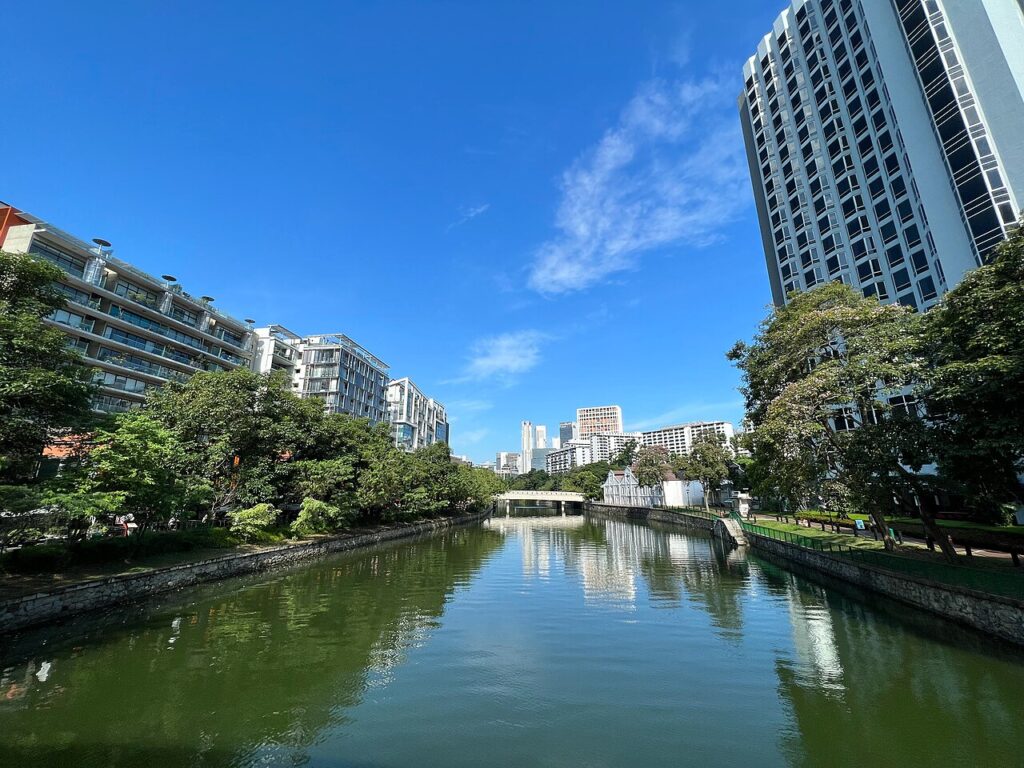
Photograph: Singapore River at Robertson Quay, 14 August 2022, Wzhkevin, CC BY-SA 4.0. Source: commons.wikimedia.org/wiki/File:Singapore_River_at_Robertson_Quay_-_2022-08-14.jpg. Licence: creativecommons.org/licenses/by-sa/4.0/. Resized and displayed cropped. Housing context, not an inspected property or a mortgagee-sale listing.
Need a brochure, price list or professional introduction?
Contact Lin Xuan at 82222556 or Ade at 81888871 for the full project brochure, latest available price list, a viewing, or introductions to bankers who can help you compare home-loan rates and packages to find the best available option for your needs. If you need legal advice on a property purchase, sale or tenancy, we can also put you in touch with property lawyers.
WhatsApp Lin Xuan | WhatsApp Ade. Let us know the project or property question you would like help with. Prices and availability are subject to developer confirmation, while loan terms and approval are determined by the bank.
Lin Xuan: ONG LIN XUAN, CEA registration R069812H. Ade: CHUA MUAY MUAY (ADE CHUA), CEA registration R014252F. ERA REALTY NETWORK PTE LTD, estate agent licence L3002382K.