
A smaller condo is worth its higher commitment only if its layout, location and facilities improve the way your household lives. A larger HDB resale flat may offer more useful rooms and a stronger cash reserve. Compare two homes you can actually buy and occupy, rather than treating either property type as an automatic next step.
This comparison is for households considering an HDB resale flat and a completed private condo. It is not an eligibility checklist for BTO flats or executive condominiums, and the figures below are invented planning assumptions rather than asking prices or transactions.
Check eligibility before comparing floor plans
HDB’s HFE guidance explains that the letter assesses eligibility to buy, CPF housing grants and an HDB loan. Resale buyers need a valid HFE letter before obtaining an OTP and at resale submission. Use your own outcome, rather than assuming a grant from a headline maximum.
Check any existing property interest, ownership restriction, occupation requirement and proposed future letting against the actual flat and household. For the private home, establish the permitted purchase and use, applicable duties and financing too. A condo label does not replace those checks, and buying for occupation is a different decision from buying for rental income.
Compare space you can use every day
Put furniture on the actual plans. Start with beds, wardrobes, a dining table, work desks and clear routes between them. A study that cannot fit the equipment you need should not be counted as a second workspace. Check whether both adults can take calls without occupying a child’s bedroom.
Then test the routine: where wet laundry dries, where a stroller or mobility aid goes, whether cooking smells reach the work area, and whether a caregiver has suitable sleeping space. Confirm what areas are included in each stated floor area before comparing price per square foot. A balcony can be useful, but it does not substitute for an enclosed bedroom.
| Question | Smaller condo | Larger resale flat |
|---|---|---|
| Space assumption | 70 sq m, two bedrooms | 100 sq m, three bedrooms |
| Purchase-price assumption | S$1,400,000 | S$800,000 |
| Household test | Can two bedrooms support sleep, work and visitors? | Does the extra room remain useful after furniture and circulation? |
| Location test | Does the actual route reduce the journeys that matter? | Does a different address preserve an acceptable school, work and care routine? |
| Condition test | Inspect the unit and common-property commitments | Inspect the flat and obtain renovation quotations |
These sizes do not describe every condo or HDB flat. Measure or verify the selected home’s dimensions and approved layout. The useful comparison is the space your family will use, not a claimed market-wide size advantage.
What the price difference does to your reserve
Assume each home has a valuation equal to its price and each buyer is separately approved for a bank loan of 75% of that price over 25 years. Assume a constant 3% annual interest rate, monthly amortising payments and no fees. These are comparison inputs, not offered packages, HDB loan terms or approval predictions.
| Item | Condo assumption | Resale-flat assumption |
|---|---|---|
| Approved loan assumed | S$1,050,000 | S$600,000 |
| Price minus loan | S$350,000 | S$200,000 |
| Monthly loan instalment, approximately | S$4,979 | S$2,845 |
| Monthly instalment at an assumed 4% instead | S$5,542 | S$3,167 |
The larger assumed price requires S$150,000 more towards the purchase price and about S$2,134 more a month at 3%. At 4%, the monthly difference is about S$2,375. This is arithmetic for the stated inputs, not a finding that any two live homes have that price gap.
Split the upfront contribution into mandatory cash, approved CPF and additional cash. Then add the actual stamp-duty assessment, fees and quoted renovation work. Do not deduct an assumed grant from a cash bill or treat CPF as unrestricted cash. Our valuation and funding-gap guide shows why a lower valuation or smaller approved loan can change the result.
Compare recurring bills and facilities you will use
Get the selected condo’s current contributions, financial statements and planned-work information. Compare those bills with the flat’s actual service and conservancy charges, rather than inserting a generic monthly fee. Both homes need budgets for in-unit maintenance, insurance, utilities and tax.
Put a value on facilities using your routine. A pool used every weekend may matter more than a larger lobby; a gym you cannot use at the available times may add little. Ask about booking rules and practical access. Our condo maintenance-fee comparison explains why estate size alone does not determine the bill.
Check the street and unit at times relevant to sleep, work and school. Compare the actual lift route, crossings, sheltered sections and transport alternatives without assuming a map distance is a walking time. If family support is nearby, include the journeys that would otherwise be made for childcare or eldercare.
Choose the compromise you can keep living with
The smaller condo may suit a household that can use its location and facilities without sacrificing a necessary room or exhausting reserves. The larger flat may suit a family that values separate work and sleeping areas and wants more financial headroom, provided it meets the relevant ownership and occupation conditions.
For an investment plan, establish that the intended letting is permitted, use evidenced rent for the actual unit and allow for vacancy and expenses. Do not count forecast appreciation as money available for today’s instalments. For an own home, ask whether the choice remains comfortable if income falls or the family needs an extra room.
Shortlist one realistic alternative in each category. Bring the plans, eligibility outcome, lender figures, recurring bills and renovation quotations into the same comparison. Choose on the resulting household budget and routine, then arrange the next viewing with those unresolved questions in hand.
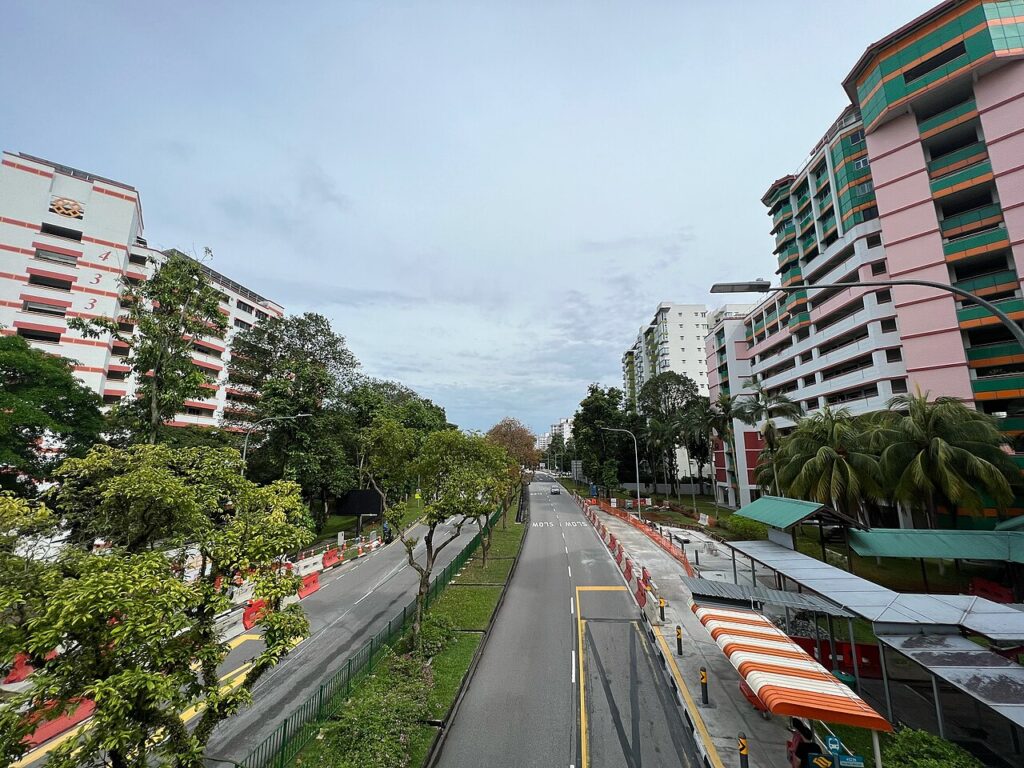
Choa Chu Kang Way, photographed 31 October 2022. Photo: Wzhkevin, Wikimedia Commons. CC BY-SA 4.0. Resized for web. Neighbourhood context, not either hypothetical home below. Source: https://commons.wikimedia.org/wiki/File:Choa_Chu_Kang_Way_2.jpg. Licence: https://creativecommons.org/licenses/by-sa/4.0/.
Need a brochure, price list or professional introduction?
Contact Lin Xuan at 82222556 or Ade at 81888871 for the full project brochure, latest available price list, a viewing, or introductions to bankers who can help you compare home-loan rates and packages to find the best available option for your needs. If you need legal advice on a property purchase, sale or tenancy, we can also put you in touch with property lawyers.
WhatsApp Lin Xuan | WhatsApp Ade. Let us know the project or property question you would like help with. Prices and availability are subject to developer confirmation, while loan terms and approval are determined by the bank.
Lin Xuan: ONG LIN XUAN, CEA registration R069812H. Ade: CHUA MUAY MUAY (ADE CHUA), CEA registration R014252F. ERA REALTY NETWORK PTE LTD, estate agent licence L3002382K.