
Updated 28 September 2026. Buying with another person can make the deposit easier to assemble, but it also joins two sets of priorities. Before signing, agree how money will go in, who will pay the bills and what happens when one owner wants to leave. A mortgage approval cannot answer those household questions.
This checklist is for the discussion before a joint purchase. It complements our legal comparison of joint tenancy and tenancy in common, which explains survivorship, wills and changing the manner of holding. It is not a template agreement or confirmation of HDB eligibility.
Write down contributions without assuming they settle ownership
List each person’s cash deposit, intended CPF withdrawal, transaction costs and future payments. Record whether money from parents is intended as a gift, a loan or something else, and obtain advice on documenting that intention. Avoid describing all family money as “our savings” when the contributors expect different treatment.
| Question | What to record |
|---|---|
| Who pays at purchase? | Cash, CPF, duties and costs for each person, with dates. |
| What ownership is intended? | Manner of holding and any specified shares, checked against the legal documents. |
| Who pays each month? | Loan payments, maintenance, tax, insurance and a repair reserve. |
| What if income stops? | Available reserves, temporary contributions and when to review the arrangement. |
| What if one person leaves? | Proposed valuation, buyout funding, sale process and dispute advice. |
For example, one buyer may provide S$200,000 cash and the other S$100,000, while they intend to split future instalments equally. That does not by itself answer what happens on sale after one person has paid several years of repairs or taken unpaid leave. Discuss whether extra payments are gifts, loans or intended adjustments, and have the legal documents reflect the agreed position.
Keep title, loan and CPF records separate
The title records legal ownership. The loan documents describe the borrowers’ obligations to the lender. CPF has its own withdrawal and refund rules. Do not infer a person’s loan exposure or approved CPF amount from a 70/30 ownership ratio, or assume that removing a name from ownership releases that person from the loan.
MoneySense explains that loan size depends on lender assessment, existing borrowing, tenure and servicing limits. Ask the lender to confirm the actual offer and consequences if one income is lost. Test affordability using household spending, not only the maximum loan available.
CPF OA savings can cover eligible BSD and ABSD, but reimbursement timing matters. On a completed purchase, payment of an eligible reimbursement is processed at legal completion. Agree who provides the earlier cash and how that is reconciled when reimbursement arrives. Obtain each buyer’s approved CPF figures rather than dividing an assumed allowance by the title percentage.
Price the joint purchase as one transaction
A mixed-profile joint purchase generally takes the highest applicable ABSD rate on the full value, rather than separate rates on each owner’s percentage. Check IRAS’s joint-purchase rule and available relief before deciding the title proportions. A later buyout also needs its own duty and financing analysis.
Build a dated payment schedule covering deposits, duties, legal costs and completion funds. The completion-cash guide shows how to reconcile deposits without counting them twice. Confirm both people’s access to funds by the actual deadlines.
Agree an exit process while the relationship is good
Discuss what would happen if one owner wanted to move overseas, start a family or reduce work. A proposed buyout needs an agreed valuation method, funding and time to complete. A small ownership interest does not guarantee that an outside buyer will want it.
For a home shared by occupiers, include moving and temporary accommodation. For a rented property, include how an existing tenancy affects the proposed sale. Decide how to obtain advice if the owners disagree; do not rely on a promise that any one person can always force an immediate sale.
HDB owners must also check the applicable ownership-change process and eligibility. The ownership label explains how the interest is held; it does not itself authorise adding, removing or replacing an owner.
Unequal deposits need a second conversation about monthly cash
Suppose Buyer A contributes S$200,000 and Buyer B contributes S$100,000 towards the purchase, but they agree to share ongoing housing costs equally. Record those opening contributions separately from later spending. A kitchen replacement, mortgage principal, mortgage interest and groceries are different entries; adding every transfer together can hide what the owners intended.
The following is a hypothetical household budget, not a loan quotation or a statement of ownership rights. Assume a S$3,600 monthly mortgage, S$600 set aside for other housing bills and repairs, and CPF usage already approved for the amounts shown. Exclude ordinary living costs for this first calculation, then put them back when testing each person’s remaining income.
| Buyer | CPF | Cash |
|---|---|---|
| A | S$1,500 | S$600 |
| B | S$500 | S$1,600 |
The CPF payments total S$2,000. The S$2,200 cash total covers the remaining S$1,600 mortgage and S$600 other housing allowance. Cash is not split equally here because the agreed total contribution, including CPF, is equal. If the buyers instead choose equal cash payments, write down that different arrangement. Neither approach establishes their legal entitlement on a later sale.
Decide what happens during unpaid leave before it starts
If Buyer B takes six months of unpaid leave, do not assume the S$500 monthly CPF payment continues indefinitely. Check the available OA balance, approved usage and the date fresh employment contributions stop. In this illustration, B’s S$1,600 monthly cash commitment needs S$9,600 over six months if the CPF allocation continues. If it cannot continue at all, the cash commitment is S$12,600. The S$3,000 difference is only the missing CPF funding; food, childcare and other personal spending still need a budget.
If A covers B’s temporary shortfall, agree whether that help is a gift or repayable advance before recording it as either. Consider when repayment would start and whether it remains affordable after work resumes. A promise to settle everything from a future capital gain is weak protection if the home sells at a loss. For the legal distinction between family gifts, loans and ownership interests, use our family funding guide.
Reconcile the records at practical milestones
Keep a simple dated record of the payer, payee, purpose, cash or CPF source, and supporting statement. Mark reimbursements against the original payment so that they are not counted twice. Review it after completion, a change of job, parental leave, major repairs and before discussing a buyout. Both buyers should be able to understand it without reconstructing years of bank transfers.
Then test the arrangement as occupiers: who stays if one person’s commute changes, and can a parent or child continue living there during a proposed sale? As investors, use actual net rent after expenses and a vacancy scenario, rather than treating hoped-for rent as a guaranteed contribution. If the plan works only when both salaries and rent arrive without interruption, a lower purchase budget may be the better decision.
A useful final conversation
Ask each buyer to describe the plan independently: what they contribute, what they own, what they pay and what they expect if the arrangement ends. Differences in those answers are worth resolving before the purchase. Bring the written points to the lawyer and lender, and retain the agreed documents with your completion records.
Correction, 22 September 2026: refocused this overlapping guide on co-buyer planning. Removed incorrect CPF proportionality and interest claims, cash-only ABSD statements, outdated tax rates, faulty upfront-cost calculations and blanket decoupling advice. Legal ownership and inheritance detail is now handled in the linked comparison. This is general information, not a drafted agreement or professional approval.
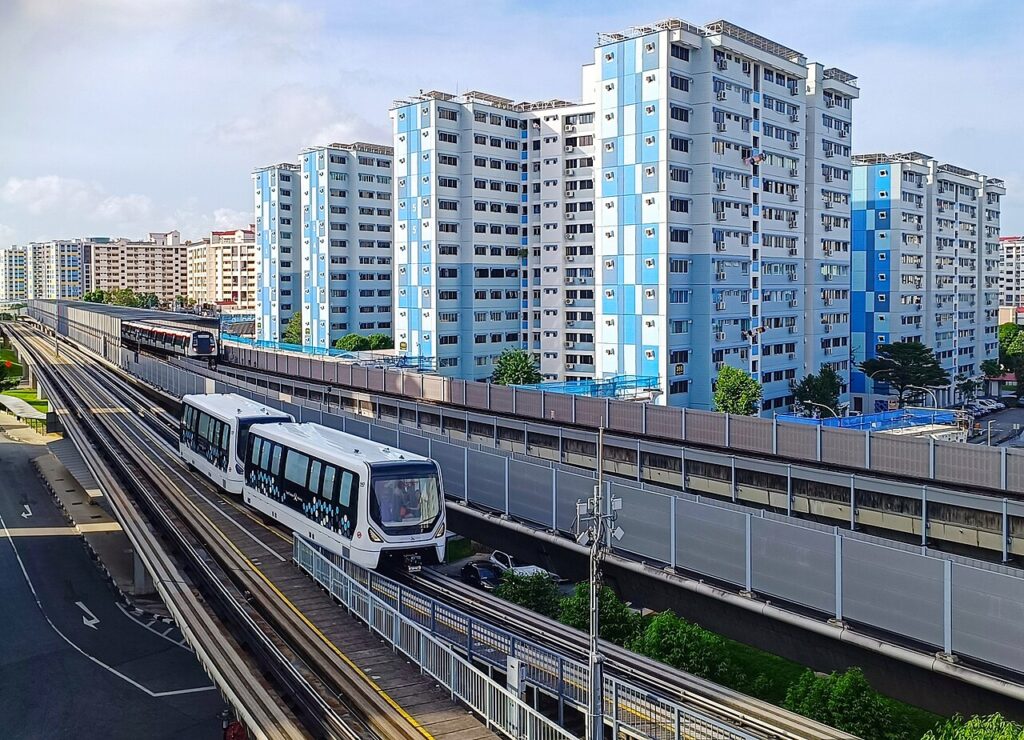
Featured contextual photograph: View of HDBs in Choa Chu Kang 202501 (photographed 2025). Photo: 33Loading. Source · CC BY-SA 4.0. Resized for web display; not evidence about a particular household or renovation.
