
Updated 16 September 2026. A tidy lobby tells you little about the decisions a condo’s owners are about to make. Before buying, read the MCST records to find out what has been approved, what is still unresolved and which rules will affect the way you live.
This guide focuses on interpreting meeting minutes and following up on missing information. For the numbers, use our separate guides to comparing maintenance fees and checking sinking funds and future works.
How can a prospective buyer obtain MCST records?
BCA’s guide to maintaining management corporation records explains that prospective purchasers can make written requests under section 47, subject to the applicable process and prescribed fees. Contact the managing agent or MCST office with the exact lot details and ask how to arrange inspection or copies. Your conveyancing lawyer can help identify the appropriate request.
Start early enough to read the response before a binding purchase decision. Ask for recent AGM minutes, relevant EGM and council minutes, and subsequent updates concerning the issues you identify. Request the financial and works records that support those decisions. Specify the period and subjects you need; a request for every document ever created is harder to work through than a focused reading pack.
Keep a list of documents received, their dates and what remains outstanding. Do not put residents’ personal details from the records into public discussion groups.
Read decisions in sequence, not one minute in isolation
Our suggested approach is to trace each important issue from its first appearance to the latest recorded action. A reference to lift replacement may mean that somebody raised a concern, that a consultant was appointed, or that a contract has been awarded. Those are very different stages for a buyer planning a move.
| Recorded stage | Follow-up before buying |
|---|---|
| Problem raised | What investigation followed? Is there a written assessment of the cause and urgency? |
| Quotations requested | Is the scope settled? Which costs or options are still being compared? |
| Proposal approved | Read the actual resolution, conditions, funding decision and any later changes. |
| Contract awarded | Ask for the latest programme, access restrictions and payment arrangements. |
| Work reported complete | Check whether defects, final payments or follow-up items remain open. |
This is an editorial reading aid, not a statement that every project follows an identical legal approval sequence. Where the validity of a decision matters to your purchase, ask your lawyer to examine it. Do not infer voting requirements from the word “approved” alone. BCA provides a separate guide to general-meeting proceedings.
A worked example: “the lifts are being upgraded”
Imagine that a seller describes a lift upgrade as settled. The AGM minutes instead authorise obtaining quotations. A later council minute records that two quotations need clarification. There is no confirmed start date in the material supplied. This is a hypothetical example, not a finding about a named condo.
Your next questions should be specific: has a contract since been awarded, is funding approved, which lift will be out of service first, and what access arrangements are planned? Until the answers arrive, record the project as unresolved. Do not build a renovation or move-in timetable around a verbal completion promise.
For a household with a pram or someone with limited mobility, the alternative route could matter more than the appearance of the new lift. For an investor, the practical issue may be whether viewings or a planned tenancy start will coincide with disruption. Neither effect can be assessed from the headline works budget alone.
Check rules against how you intend to use the home
Obtain the current by-laws and relevant operational rules. BCA’s by-laws guide distinguishes prescribed by-laws from additional ones made by a management corporation; additional by-laws cannot conflict with the prescribed rules. A rule being printed in a resident handbook is not, on its own, a complete legal assessment of its validity.
For your shortlist, ask practical questions about renovation applications, moving arrangements, deliveries, pets, parking and facility use. If your purchase depends on a proposed alteration, show management the actual plan and ask which approvals and documents it requires. A seller’s previous renovation is not confirmation that your different proposal will be accepted.
Keep the written answer and the version of the rules supplied. If a restriction is disputed or would change your decision to buy, resolve its application with professional advice before committing. Do not assume that you can simply ignore it after completion.
Separate a recorded complaint from an unresolved defect
Minutes can contain disagreements even in a well-run estate. Count unresolved outcomes, not just unhappy comments. Repeated references to the same leak deserve a closer look, but they do not establish its cause or the party responsible.
Ask what investigation occurred, what action followed and whether the latest record closes the matter. Arrange an appropriate inspection of the unit where needed. The MCST’s paperwork cannot replace a physical assessment of a defect, and an immaculate viewing cannot answer questions about a long-running common-property repair.
Finish with a short decision record
For each material issue, write down the document and date, current status, person asked for clarification, response received and consequence for your purchase. For example: “Balcony works, July minutes; programme not supplied; ask for dates before agreeing our renovation start.” This turns a large bundle of records into a usable list of decisions.
Keep financial liability separate from disruption. Ask your lawyer to check the lot’s account, relevant certificates and the contractual allocation of any charges. Use the buyer’s checklist to fit these enquiries into the wider purchase process.
Editorial correction: the earlier version overstated voting and council powers and made unsupported claims about managing-agent licensing and a minimum sinking-fund percentage. This replacement focuses on document interpretation. It is a desk-researched buyer guide, not an inspection or legal opinion on any development.
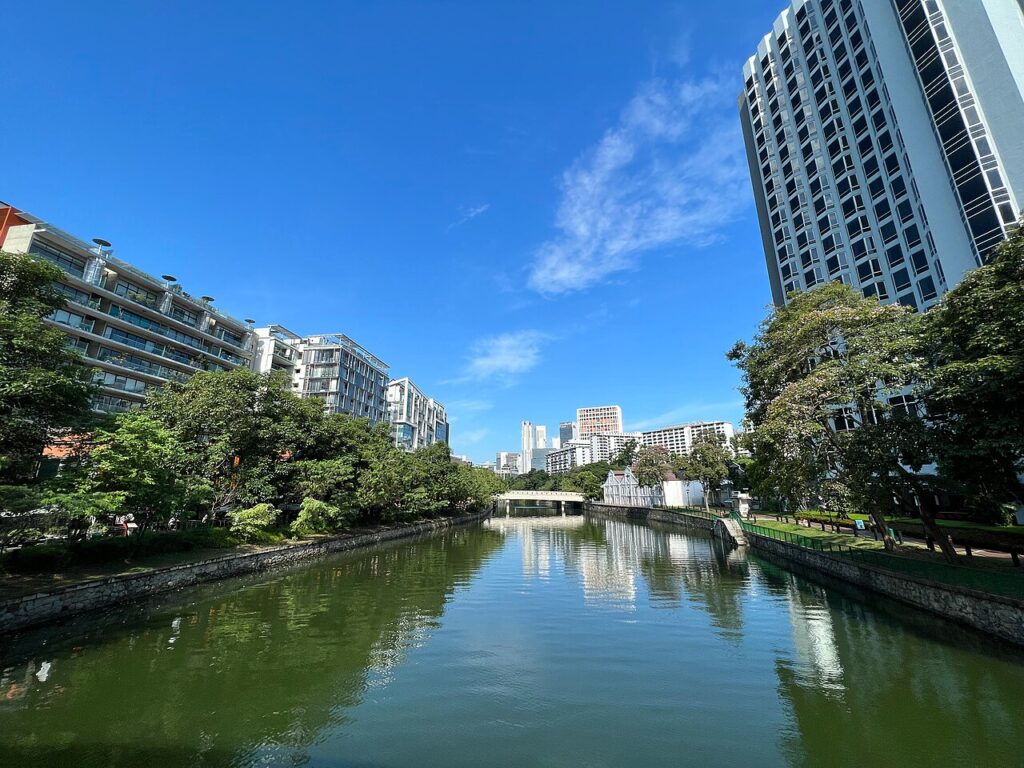
Featured photograph: Robertson Quay in 2022, Wzhkevin, via Wikimedia Commons, CC BY-SA 4.0. Archive neighbourhood photograph; no claim is made about the management or condition of the buildings shown.
