
Updated 21 Sep 2026. Singapore’s property rules did not stop changing in April 2023. HDB’s loan ceiling changed in 2024, and the Seller’s Stamp Duty holding period changed in July 2025. A useful policy history must distinguish when a measure was announced from which transactions it applies to.
This is a selected timeline of measures that help explain today’s buyer and seller decisions, not an exhaustive list of every housing-policy change. Historical rates below describe their stated periods. Use our current buyer funding checklist for a purchase budget.
Selected policy milestones
| Effective period | Selected change and scope |
|---|---|
| 20 February 2010 | Residential SSD applied to acquisitions from this date that were disposed of within the applicable holding period. It was not introduced in September 2009. |
| 11 March 2017 | SSD was eased from a four-year to a three-year holding period for new acquisitions, with lower tier rates. This did not retrospectively rewrite every older purchase. |
| 16 December 2021 | The TDSR threshold tightened from 60% to 55% for covered new property loans. HDB loan LTV also fell from 90% to 85% for the relevant new-flat exercises and complete resale applications. |
| 27 April 2023 | ABSD rose for several buyer profiles. For example, the SC second-property rate rose from 17% to 20%, and the foreigner rate from 30% to 60%. |
| 20 August 2024 / October 2024 BTO | HDB loan LTV fell from 80% to 75% for complete resale applications received from 20 August, and BTO applications from the October exercise. |
| 4 July 2025 | Residential SSD returned to a four-year holding period for purchases from this date, with higher tier rates and no transition period. |
Sources for the table: IRAS’s acquisition-date SSD schedule; the March 2017 joint release; the December 2021 joint release; IRAS’s historical and current ABSD rates; and HDB’s August 2024 announcement. The 85% HDB figure is a historical milestone, not today’s loan offer. The selected rows omit intervening and specialised measures.
There is no single date that answers every policy question
For ABSD, IRAS identifies the purchase or acquisition date through the applicable instrument, commonly execution of the acceptance of an OTP, rather than simply the date the seller granted it. For the December 2021 TDSR change, the joint release expressly used the OTP grant date for the covered purchase loans. HDB’s 2024 resale LTV change used receipt of the complete resale application, including both parties’ portions.
Keep these records together: option grant, acceptance, sale agreement where relevant, complete application and completion. If your transaction straddles a policy change, ask the lawyer, lender or HDB to identify the exact trigger and any transition conditions. An old OTP is not a general exemption from a new tax.
This distinction is especially useful when upgrading. One household can be selling under an older SSD acquisition cohort while buying under today’s tax and loan rules. Neither the age of the existing mortgage nor the date a listing was published settles all those questions.
Why the July 2025 SSD change affects an exit plan
For acquisitions from 11 March 2017 to 3 July 2025, the SSD tiers are 12%, 8% and 4% across the first three holding years. From 4 July 2025, they are 16%, 12%, 8% and 4% across four years. The applicable rate is charged on the higher of sale price and market value. Use IRAS’s exact date rules and exemption provisions for an actual disposal.
Consider two otherwise identical hypothetical homes with a S$1.5 million taxable disposal value. At a disposal more than one year but within two years after acquisition, the earlier cohort’s 8% is S$120,000; the later cohort’s 12% is S$180,000. The S$60,000 difference is a policy cost before mortgage redemption, CPF refund and selling expenses. It says nothing about either home’s price performance.
For a buyer who may relocate, change jobs or need a larger home soon, an early-sale budget matters even if the intended holding period is long. Rental income or an assumed capital gain should not be used to hide the cost. Compare buying now with retaining flexibility until the likely housing need is clearer.
What a lower loan ceiling does to an HDB budget
Assume a S$600,000 resale flat whose value equals its price, and a household able to qualify for the full hypothetical LTV in each comparison. An 80% loan would be S$480,000, leaving S$120,000 of price to fund. At 75%, the loan is S$450,000 and the balance is S$150,000: S$30,000 more before other purchase costs.
This is arithmetic illustrating the ceiling change, not a loan entitlement. The actual loan may be lower, and eligible grants and permitted CPF may contribute to the price. The August 2024 package also increased Enhanced CPF Housing Grant support for eligible first-timers. Comparing the ceiling alone cannot establish how every household was affected.
Do not turn a policy timeline into a price forecast
The official releases explain policy aims such as prudent borrowing and a sustainable market. They do not establish that a particular condo will fall by a specified amount, that a future ABSD cut is likely in a named year, or that a buyer should rush before the next announcement.
A household decision should still survive ordinary downside: a smaller approved loan, a lower sale price for the existing home, a delay in handover or a period without rent. Choose a home that meets the intended occupier’s needs and leaves reserves. A policy forecast cannot replace those tests.
Do not assume that HDB ownership makes SSD irrelevant: IRAS specifically identifies SERS replacement-flat cases that may meet MOP but still fall within the SSD holding period. Current tax liability, eligibility and any remission must be checked for the actual transaction; a historical table cannot clear them.
Sources and calculations checked 21 September 2026. Selected historical milestones are identified by their effective transaction cohorts; hypothetical examples are not actual transactions or predictions. This article does not establish individual legal, tax or financing eligibility.
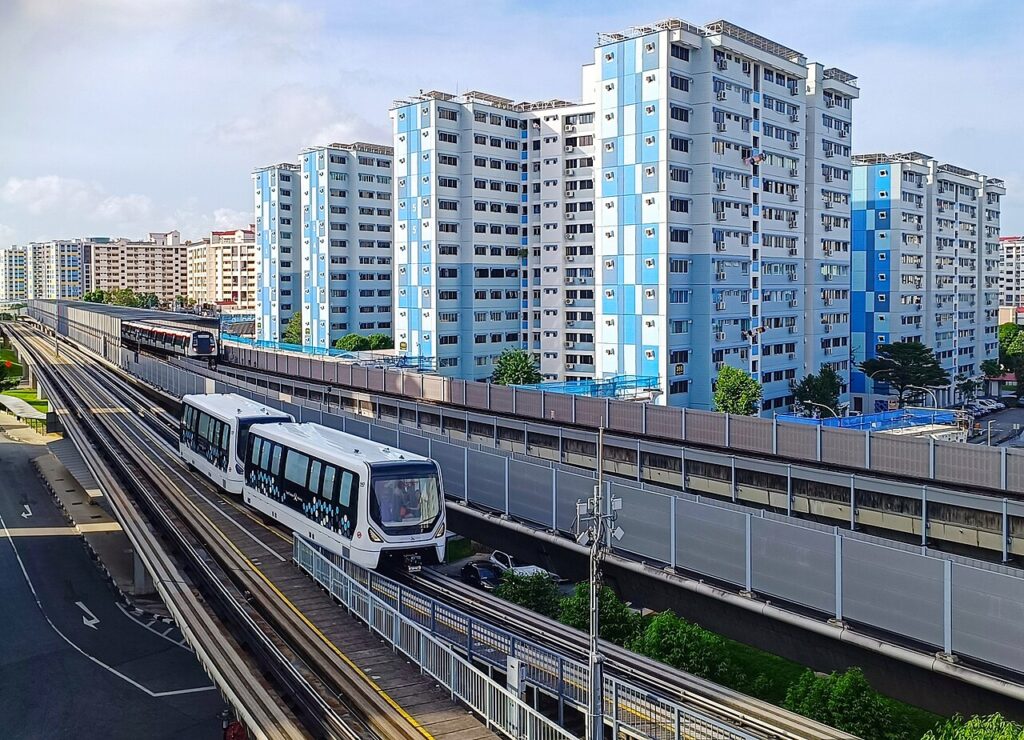
Featured photograph: Choa Chu Kang HDB blocks, photographed in 2025 by 33Loading, Wikimedia Commons, CC BY-SA 4.0. Resized; residential context, not a property offered for sale.
