
For an HDB resale flat, cash-over-valuation (COV) is the agreed price above HDB’s value. That excess must be paid in cash. The practical issue is timing: you agree the price and receive the Option to Purchase (OTP) before requesting the value, so your budget needs room for an outcome you do not yet know.
This guide covers HDB resale. A private condo follows a different valuation and contract process, explained in our bank valuation and cash-gap guide.
The correct order: grant the option, request the value, then decide whether to exercise
- Prepare your eligibility and financing. Check your HDB Flat Eligibility (HFE) letter and borrowing position before committing to a flat.
- Agree a price and receive the seller’s OTP. The price is negotiated before the value is known.
- Submit the Request for Value promptly. Where you intend to use CPF savings or a housing loan, HDB’s procedure requires submission by the next working day after the Option Date. Do not wait until exercise.
- Read the result and rebuild the funding plan. Confirm COV, usable CPF, the actual loan and cash available by each payment date.
- Exercise only after resolving the purchase and financing requirements. Bank borrowers need a valid Letter of Offer when exercising the OTP.
The HDB resale procedure specifies a non-refundable S$120 Request for Value fee, including GST. The Council for Estate Agencies buyer guide also places the value request after receiving the OTP and the bank loan offer before exercise. Check the deadline on your own documents rather than relying on a salesperson’s informal timetable.
An S$850,000 flat with an S$830,000 value
The COV is S$20,000. Below is a hypothetical bank-loan example assuming approval at a 75% LTV limit, a 5% minimum cash downpayment, and sufficient eligible CPF savings to fund the remaining amount. A smaller approved loan or restricted CPF use increases the buyer’s contribution.
| Component | Calculation | Amount |
|---|---|---|
| Agreed price | Seller and buyer’s price | S$850,000 |
| Financing base | Lower of price and value | S$830,000 |
| Bank loan | 75% × S$830,000 | S$622,500 |
| Cash downpayment on base | 5% × S$830,000 | S$41,500 |
| COV, cash only | S$850,000 minus S$830,000 | S$20,000 |
| Minimum cash towards price | S$41,500 plus S$20,000 | S$61,500 |
| Remaining contribution | Eligible CPF or additional cash | S$166,000 |
| Total cash and CPF | S$850,000 minus S$622,500 | S$227,500 |
The 5% component is calculated on S$830,000, not S$850,000. HDB’s bank-loan guidance uses the lower of price or value for the minimum cash payment. CPF Board separately identifies the amount above market value as cash.
If the usable CPF amount is S$140,000, the cash contribution rises to S$87,500. The same S$20,000 COV can therefore create very different pressure for two households. Count the OTP deposit already paid towards the price once, and ask for a completion statement showing the balance.
Stress-test the cash budget before you make an offer
Keep the same S$850,000 price, but assume the household has only S$140,000 of CPF approved and available for the price. The table tests three possible values. These are hypothetical scenarios, not valuations or forecasts for the photographed flats. Each assumes a bank approves the full 75% loan and the 5% cash requirement applies.
| HDB value | 75% loan | Cash needed |
|---|---|---|
| S$830,000 | S$622,500 | S$87,500 |
| S$810,000 | S$607,500 | S$102,500 |
| S$790,000 | S$592,500 | S$117,500 |
In each row, cash equals S$850,000 minus the loan minus S$140,000 CPF. COV is respectively S$20,000, S$40,000 and S$60,000. The minimum cash floors, including COV, are S$61,500, S$80,500 and S$99,500. Actual cash exceeds those floors because the household does not have enough usable CPF to fund the rest.
If this household has S$100,000 reserved for the purchase price, the first row fits with S$12,500 left. The second row is already S$2,500 short before taxes, fees or moving costs. An offer can therefore become unaffordable without any change in the seller’s price.
A valuation is only one limit. If the bank approves S$600,000 rather than S$622,500 at the S$830,000 value, the same household needs S$110,000 cash towards the price. Use the lower actual approved loan in your budget. Do not add COV again after calculating price minus loan minus usable CPF: it is already inside that cash gap.
Match the valuation timetable to the option deadline
HDB gives buyers 21 calendar days from the Option Date, including weekends and public holidays, to exercise. Its Request for Value guidance says the outcome is typically available within 10 working days, and buyers must wait for it before exercising. Typical processing time is not a guaranteed delivery date.
Once the value is available, a bank borrower needs to convert the earlier in-principle approval into a valid Letter of Offer before exercise. Put both deadlines in the calendar and follow up early if the valuation or bank paperwork is outstanding. Do not assume the option automatically extends.
The value remains valid for three months from the date it becomes available. HDB requires both parties’ portions of the resale application and the necessary documents within that validity period; otherwise a fresh value request is needed. An exercised OTP is not the final administrative step.
What changes with an HDB loan?
Do not apply the bank’s 5% cash requirement automatically to an HDB loan. Use the loan amount and terms in your HFE and purchase documents, then deduct that loan and approved CPF use from the agreed price. The amount above valuation still needs cash. The result also depends on the flat’s remaining lease and the buyers’ circumstances.
For either loan type, having money in your OA does not mean every dollar is available for this purchase. CPF Board explains the lease and housing-use limits. Grants also require eligibility and approval; they should not be treated as cash available to pay COV.
Reduce the risk before paying the option fee
Compare recent completed resale transactions for genuinely comparable flats. A listing price is what a seller wants, and an agent’s estimate is not HDB’s value. Look closely at flat type, floor area, remaining lease, location and condition. A renovated interior may matter to you without ensuring that the full renovation cost appears in the valuation.
Set a maximum total price and a separate maximum cash commitment. For example, test what would happen if the value were S$10,000, S$20,000 or S$40,000 below your intended offer. These are stress tests, not predictions of the result. Keep funds for stamp duty, legal costs, moving, repairs and ordinary living expenses outside that ceiling.
If the COV is more than you can fund
Stop and reconcile the figures while the option remains open. Ask HDB or your lender to confirm the loan basis, and check your CPF position. Discuss the contractual position and any potential price change with your conveyancing adviser. Neither a revised price nor a higher value is guaranteed.
Do not exercise on the assumption that future salary, an unapproved loan or a sale that has not completed will arrive in time. The possible loss of an option fee and the consequences of failing to complete a binding purchase are different issues. Get advice on your actual contract before the deadline.
Does zero COV make a flat good value?
It removes this particular cash gap, but it does not settle the buying decision. You still need to assess the lease, household commute, condition, renovation budget and comparable alternatives. A value above the price is not a promise of a future profit.
Use our downpayment guide to build the full funding budget. Keep the seller’s price, HDB value, loan approval and available cash as separate figures until the whole plan balances.
Updated 20 September 2026. HDB process, bank-loan cash basis and CPF treatment checked against linked primary sources. The examples are hypothetical and exclude taxes, fees and other purchase costs.
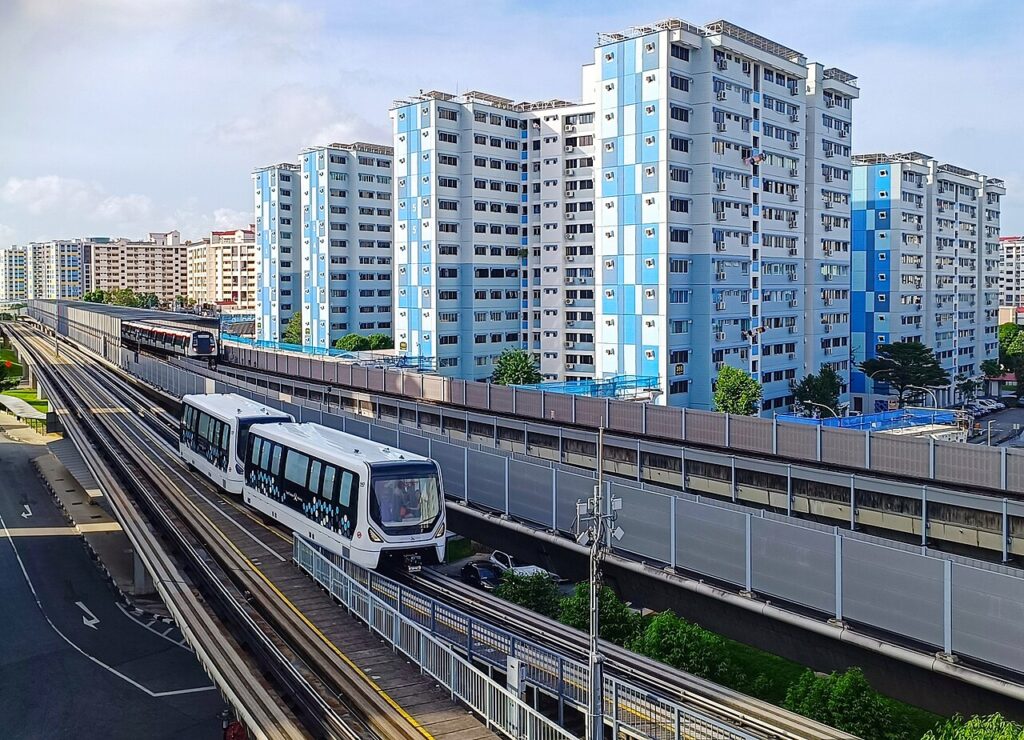
Featured photograph: HDB blocks in Choa Chu Kang, January 2025, by 33Loading, CC BY-SA 4.0. Resized for the web; neighbourhood context only.
