
Updated 13 September 2026. A property can show a respectable rental yield and still require a substantial monthly cash top-up. Before buying, calculate three separate numbers: gross yield, net operating yield and cash flow after the mortgage. They answer different questions.
This rental yield Singapore guide uses a hypothetical condo to show the difference. The rent, purchase price, financing and expenses below are assumptions, not a quotation, a market average or a forecast for any development.
Which rental yield are you comparing?
| Measure | Calculation | What it tells you |
|---|---|---|
| Gross rental yield | Full-year scheduled rent ÷ purchase price × 100 | A quick starting comparison before vacancy and bills. |
| Net operating yield | Rent after vacancy and operating costs ÷ purchase price × 100 | What the property produces before financing and personal income tax. |
| Financed cash flow | Rent received minus operating costs and full mortgage instalments | The cash surplus or top-up before income tax and any excluded expenditure. |
Keep the denominator consistent. A yield based on the purchase price is higher than one based on the price plus stamp duties, legal fees and initial furnishing. If comparing two listings, rebuild both calculations on the same basis. A percentage quoted without its assumptions is not enough to choose a property.
A worked example: 3.84% gross becomes 2.52% before financing
Assume a completed condo costs S$1.5 million and can be rented for S$4,800 a month. For planning, allow one vacant month in the year. This is an illustrative allowance, not a claim about typical vacancy.
| Item | Annual amount |
|---|---|
| Scheduled rent: S$4,800 × 12 | S$57,600 |
| One month without rent | −S$4,800 |
| Rent received | S$52,800 |
| Property tax, assuming assessed Annual Value of S$42,000 | −S$6,000 |
| MCST charges, assumed S$400 a month | −S$4,800 |
| Insurance | −S$360 |
| Repairs and upkeep budget | −S$1,200 |
| Letting-fee allowance | −S$2,616 |
| Total operating costs | S$14,976 |
| Net operating income | S$37,824 |
Gross yield: S$57,600 ÷ S$1,500,000 × 100 = 3.84%. Net operating yield: S$37,824 ÷ S$1,500,000 × 100 = 2.52%, rounded.
The letting allowance assumes a negotiated, all-inclusive fee of S$5,232 spread over two years for budgeting. It is not a standard commission rate. The actual payment may fall entirely in the first year, so a cash calendar will differ from this smoothed budget. CEA explains that commission is negotiable. Record the agreed fee, tax treatment and payment timing in the estate agency agreement.
Check the actual MCST statement and planned works. A repair allowance is money set aside, not proof that repairs will cost that amount. A special levy, major appliance replacement or an unexpectedly long vacancy can make this budget inadequate. Our condo sinking fund guide explains which records to request.
Why a positive yield can still mean negative cash flow
Now assume a S$1.125 million loan, a constant 3.5% annual interest rate and a 25-year term, repaid monthly. This is a calculation assumption, not a current loan offer or confirmation that a buyer qualifies for this loan.
The monthly repayment is approximately S$5,632, or S$67,584 a year. Subtracting that from S$37,824 of net operating income produces a S$29,760 annual cash shortfall, about S$2,480 a month, before personal income tax and major works.
The full repayment includes principal and interest. Once the full instalment has been deducted, do not subtract interest again. Principal repayment reduces the loan balance: it uses cash, but it is not the same as an operating expense. A cash shortfall is therefore not, by itself, the investment’s economic loss or its taxable loss.
Run a downside case before committing. If rent falls to S$4,300 and the unit is vacant for two months, receipts become S$43,000. Holding the S$14,976 operating budget constant for comparison gives S$28,024 before financing and approximately S$39,560 negative cash flow. In practice, fees and repairs may also change. Neither scenario includes capital gains or losses.
Set aside a reserve that you can actually access when bills fall due. A theoretical future sale profit cannot pay next month’s instalment. For a home you occupy yourself, the benefit is somewhere to live; hypothetical rent should not be entered as cash received.
Use the actual property-tax assessment
For an ordinary residential property that is not owner-occupied, the current progressive rates are 12% on the first S$30,000 of Annual Value, 20% on the next S$15,000, 28% on the next S$15,000 and 36% above S$60,000. The example’s S$42,000 assessment therefore gives S$3,600 + S$2,400 = S$6,000. It is not a flat 12% tax on rent. See the IRAS property-tax rates.
Annual Value is IRAS’s estimate of annual market rent excluding furniture, furnishings and maintenance fees. It is not a fixed percentage of your signed rental contract. Get the assessment rather than estimating it as 60% or 70% of rent. See IRAS’s Annual Value explanation and our property-tax guide with 2026 rebates.
Rental income tax is a separate calculation
Eligible individual landlords can generally use deemed rental expenses of 15% of gross rent, plus qualifying mortgage interest, or claim actual allowable expenses instead. Do not claim both the 15% allowance and the same actual expenses. Loan principal is not deductible. Repairs, improvements, vacant periods and different ownership arrangements have specific treatment; check the IRAS rental-income guidance.
The 15% option is a tax simplification, not evidence that your real costs will be 15%. Likewise, money merely reserved for future repairs is not an expense already incurred. Calculate taxable rental income separately from the operating budget, then estimate income tax using your own circumstances. That amount still needs funding even if mortgage principal makes the property’s cash flow negative.
How to test the rent before buying
- Start with completed rental contracts. Use URA’s private residential property data to investigate the development and comparable units. Asking rents are a negotiating position, not proof of a completed lease.
- Compare genuinely similar homes. Note size, bedroom configuration, contract date and any known differences in condition or furnishing. A larger unit’s rent does not establish what a smaller unit will earn.
- Inspect the tenant’s everyday experience. Check usable bedrooms, storage, heat, noise, transport connections and the condition of appliances. Record what you personally checked and what remains an assumption.
- Budget the changeover. Allow for cleaning, repairs, marketing and a gap between tenants. If buying with a tenant, have the tenancy, deposit, rent-payment history and handover obligations checked.
- Separate a new launch’s future rent from today’s cash flow. A unit that is not ready to let does not generate the assumed rent during construction. Model completion, fitting out and finding a tenant as separate stages.
Do not choose a district simply because a table labels it “high yield”. The useful comparison is between properties you could actually buy, at defensible prices, with achievable rents and expenses you have checked.
Check that your intended rental use is allowed
HDB whole-flat letting has its own eligibility requirements. Singapore permanent residents cannot rent out their entire HDB flat. Eligible owners of other flats must meet the applicable occupation requirements; Plus and Prime flats cannot be rented out in their entirety, even after their ten-year minimum occupation period. Verify the flat’s classification and your position against HDB’s current eligibility rules before budgeting whole-flat income. Bedroom letting is a different arrangement.
For private homes, occupants must stay at least three consecutive months. Daily or weekly short stays are not an alternative way to fill vacancy. Check URA’s rental rules, the applicable occupancy cap and any relevant executive-condominium restrictions.
Plan the exit as well as the letting. Residential property acquired on or after 4 July 2025 generally falls within a four-year Seller’s Stamp Duty holding period, rather than the earlier three-year period. Your acquisition date matters: use the IRAS SSD rules with your conveyancing adviser.
Questions to settle before making an offer
- What evidence supports the rent, and what happens if it is lower?
- Have I allowed for vacancy, property tax, MCST charges, repairs, insurance and letting costs?
- Can I fund the mortgage and tax bill during a difficult year without a forced sale?
- Am I comparing returns on purchase price or on the full acquisition cost?
- Does the property’s permitted use fit the letting plan?
A lower advertised yield with documented costs may be easier to assess than a higher one built on optimistic rent and missing bills. The purchase decision should survive a realistic cash budget before any assumption about capital appreciation is added.
Editorial correction, 13 September 2026: this guide replaces unsupported market-yield averages and fictional investor anecdotes. It corrects the earlier flat property-tax assumption, rental restrictions, SSD timing and the treatment of mortgage principal. Calculations are hypothetical and rounded, with assumptions stated above.
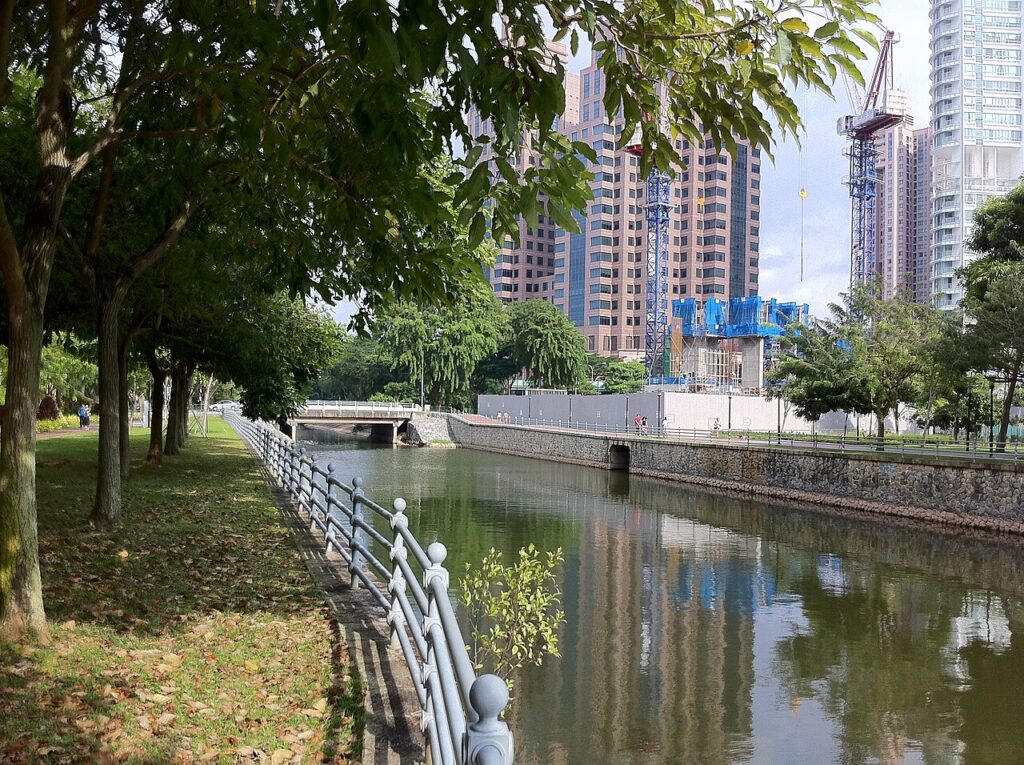
Featured photograph: Robertson Quay in 2011, by Bryanmackinnon., via Wikimedia Commons, CC BY-SA 3.0. Archive neighbourhood photograph; it does not identify the example property or establish current rental conditions.
