
Updated 22 September 2026. Singapore’s residential Seller’s Stamp Duty (SSD) depends on when the property was acquired as well as when it is sold. The three-year schedule is not the rule for every sale in 2026. Acquisitions from 4 July 2025 fall under a four-year schedule with rates starting at 16%.
Before accepting an early-sale plan, identify the acquisition instrument, the proposed disposal date and the applicable schedule. Then calculate what the duty would leave for your loan repayment, CPF refund and next home.
Choose the schedule by acquisition date
The following comparison covers the two acquisition periods most relevant to recent purchases. Historical acquisitions and special transactions should be checked against the complete IRAS stamp-duty rate tables. These are residential rates, not the separate industrial-property rules.
| Holding period | Acquired 11 Mar 2017 to 3 Jul 2025 | Acquired from 4 Jul 2025 |
|---|---|---|
| Up to 1 year | 12% | 16% |
| More than 1 and up to 2 years | 8% | 12% |
| More than 2 and up to 3 years | 4% | 8% |
| More than 3 and up to 4 years | No SSD | 4% |
| Beyond the applicable holding period | No SSD | No SSD |
The percentage applies to the higher of the selling price and market value at disposal, not the original purchase price or the profit. A sale below your purchase price can still attract SSD. Ask the conveyancing lawyer to confirm exact anniversary dates using IRAS’s date treatment rather than converting years into a rough number of days.
Which dates count?
In an ordinary sale, acquisition and disposal dates generally follow acceptance of the Option to Purchase or the applicable sale agreement, rather than completion or key collection. An OTP subject to signing a sale agreement is treated differently. Inheritance, qualifying matrimonial transfers and separately acquired shares need their specific rules. In particular, inherited property generally follows the deceased’s acquisition date, not simply the date of death. See IRAS’s SSD liability and date guidance.
Put the documents in date order and ask the lawyer to identify the legally relevant events. If you purchased an additional share later, do not assume the whole property has the same acquisition history. Avoid agreeing a disposal date first and checking the tax later.
Worked example: the same selling price, two different bills
Assume two hypothetical owners each sell a wholly owned residential property on 14 September 2026 for S$1,280,000, also its market value. Neither qualifies for an exemption or remission. One acquired on 15 June 2025; the other on 15 July 2025. Both have held for more than one year and less than two, but their acquisition dates select different schedules.
| Acquisition | Rate | SSD |
|---|---|---|
| 15 June 2025 | 8% | S$102,400 |
| 15 July 2025 | 12% | S$153,600 |
The difference is S$51,200. It arises from the applicable regime, not a difference in the selling prices. The illustration does not establish whether either owner has made a profit or can fund a replacement home.
For the second owner, suppose the settlement budget also includes a S$700,000 loan redemption, S$250,000 CPF refund and S$20,000 sale expenses. Cash left after these assumed items is S$1,280,000 – S$153,600 – S$700,000 – S$250,000 – S$20,000 = S$156,400. This is a reconciliation, not legal payment priority. Deposits already received form part of the selling price and must not be added again.
Use your actual redemption statement and CPF refund figures. Our CPF sale-proceeds guide explains why money returned to CPF and spendable cash are different amounts.
Waiting reduces one cost, but creates others
A lower SSD tier is a known input under the applicable rules. The future selling price, rent collected and cost of holding are uncertain. Compare both, rather than assuming waiting must produce a better outcome.
For a separate sensitivity test, assume a sale at 12% SSD today versus 8% after the relevant date, with a S$1,280,000 price and market value in both cases. The duty reduction would be S$51,200. If the additional holding period costs S$30,000 after any rent, the improvement is S$21,200 before other differences.
Now assume both the future price and market value are S$25,000 lower. At 8% SSD, that reduces proceeds after duty by S$23,000. Under these deliberately simplified assumptions, waiting is S$1,800 worse. This is a sensitivity illustration, not a prediction or a recommended sale date.
Build your own holding-cost estimate from mortgage interest, maintenance, tax, insurance, repairs and accommodation needs, less realistic rent where applicable. Track mortgage principal separately as a cash requirement that reduces debt. Include any changes in selling costs or loan-redemption charges. Test an empty period if letting the home is part of the plan.
Work out the price at which waiting stops helping
In the sensitivity example, a sale now leaves S$1,126,400 after 12% SSD, before the other settlement items. To match that after waiting, the future sale must cover that amount plus S$30,000 additional holding costs. At an 8% SSD rate, and assuming the future price equals market value, the break-even price is (S$1,126,400 + S$30,000) / 0.92 = approximately S$1,256,957.
That is only about S$23,043 below today’s assumed S$1.28 million price. A S$51,200 headline duty saving therefore does not mean the owner can absorb a S$51,200 price fall. Holding costs consume part of the saving, and the future duty changes with the future value.
Use this as a sensitivity tool, not a valuation. If IRAS’s duty base remains above the eventual price, this simplified formula no longer applies. Selling fees may also vary with price. Ask the lawyer to confirm the next tier’s effective date and build a separate loan/CPF settlement schedule for each proposed sale date.
Check whether the household can afford the wait
Compare the additional monthly payments with the cash and usable CPF actually available. Principal repayment reduces the outstanding loan but still requires funding during the wait. Avoid subtracting the full instalment as a cost and then subtracting the same principal reduction again in the exit calculation.
An investor should allow for vacancy, lease expiry, repairs and the possibility that an occupied unit appeals to a different buyer. An owner-occupier should price any overlap with a replacement home, temporary rent, storage and school or work disruption. Even a financially attractive waiting period may be impractical if the household cannot fund it.
Prepare two dated worksheets: sell now and sell after the verified tier change. Each should identify the offer price, duty valuation, redemption amount, CPF refund, selling costs and funds available for the next home. Keep past purchase costs in a separate total-return analysis; they should not disappear merely because today’s decision concerns SSD.
HDB sales and unusual disposals need a separate check
There is no blanket rule that all HDB sales are SSD-exempt. IRAS specifically notes that some SERS replacement-flat sales can attract SSD even after the Minimum Occupation Period is met. Exemptions and remissions have defined conditions. A collective sale can also attract SSD for an affected owner who did not consent. Check the circumstances in the official SSD guidance.
Do not treat “family transfer”, “divorce” or “inherited home” as enough information for a tax conclusion. Give the lawyer the ownership history and relevant instruments. An HDB permission or eligibility question is separate from calculating stamp duty.
Likewise, a shophouse label does not settle whether a property has a residential component. IRAS considers permitted use and zoning in its residential-property definition. A mixed-use transaction requires the appropriate classification and allocation; do not apply an ordinary condo example to the whole property without checking.
Arrange payment before relying on completion proceeds
Stamp duty concerns dutiable documents, including relevant electronic documents. IRAS’s general property guidance provides a 14-day period after signing in Singapore, or 30 days after receiving a document signed overseas, to stamp without penalty. Electronic execution has its own receipt rules. See IRAS’s document and stamping guidance.
Ask the lawyer to confirm the deadline and funding source for the actual transaction. Completion may be later, so do not assume the sale money arrives before duty is due. If a transaction fails, obtain advice on the executed documents and any refund route; neither “no completion means no duty” nor “a refund is impossible” is a safe general rule.
Before committing to an early sale
- Verify the property classification and each relevant acquisition date.
- Confirm the disposal date and correct SSD schedule.
- Calculate duty on the appropriate value, with any partial interest checked.
- Prepare the cash and CPF reconciliation, including costs already paid.
- Compare waiting with realistic costs and a less favourable price scenario.
- Confirm any specific relief and payment arrangements before relying on them.
Editorial correction, 14 September 2026: added the regime for acquisitions from 4 July 2025, corrected the duty base and inherited-property date treatment, removed blanket HDB-exemption and completion-only claims, and replaced a one-sided wait-versus-sell forecast with transparent sensitivity arithmetic.
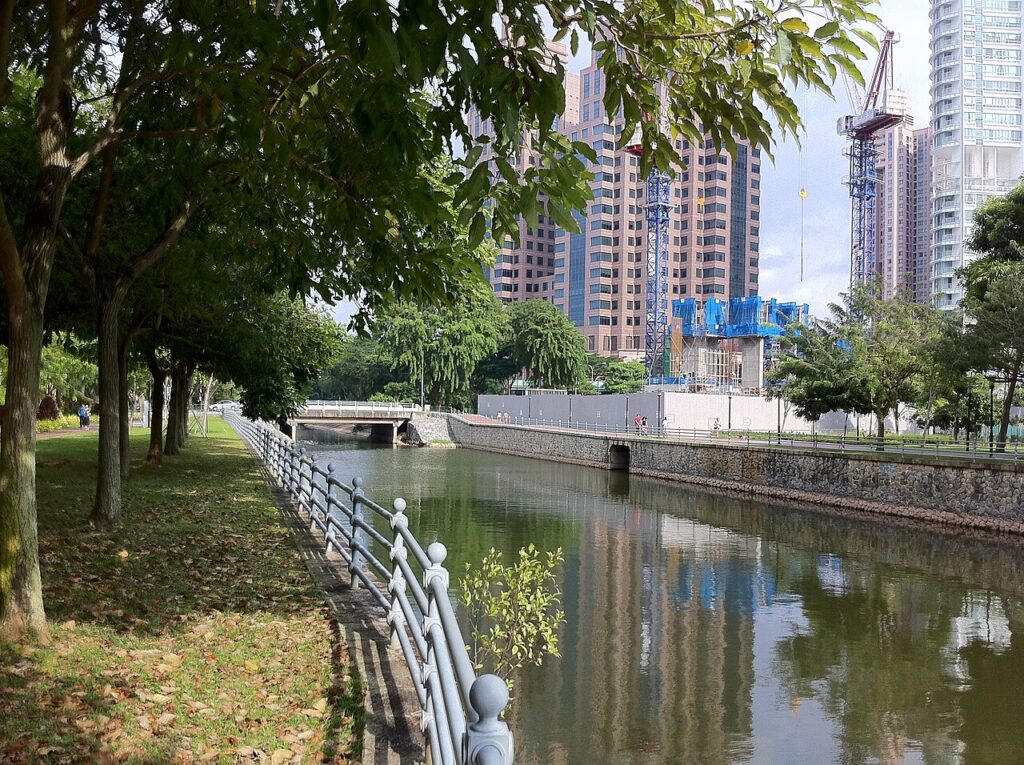
Featured photograph: Robertson Quay, photographed in 2011 by Bryanmackinnon, via Wikimedia Commons, CC BY-SA 3.0. This archive view illustrates the property setting; the examples do not describe a pictured transaction.

Update, 22 September 2026: rechecked the linked primary guidance and added the break-even resale-price calculation, liquidity test and separate household exit worksheets. Original historical examples remain labelled by their assumed disposal date.