
When a tenant leaves furniture, boxes or equipment behind, the landlord needs a documented collection or clearance arrangement. Keep that decision separate from a demand for unpaid rent. Belongings in the flat should not become an informal rent-recovery fund.
Start by establishing whether possession has been returned, which items remain and what the signed agreement says about their removal. A missed collection appointment is a reason to resolve the next step in writing, rather than assume that every item is available to sell or discard.
Record the handover and the items separately
A practical handover record identifies the keys returned, the date and time, the remaining items and any arrangements for collection. Photograph their condition and location. Separate the landlord’s inventory from items the tenant brought in, and note anything said to belong to a family member, employer or hire company.
Our guide to returning keys and unsettled claims explains why returning possession and settling the tenancy account are different questions. If the tenant disputes that possession has been returned, resolve that issue before arranging a new letting or treating the property as available for unrestricted clearance.
Read the complete removal or disposal clause, including its notice requirements, any agreed collection period and subsequent written variations. A clause should be assessed against the actual circumstances. Do not treat an arbitrary seven-day or fourteen-day message as a universal statutory disposal deadline.
Agree a workable collection plan
Send an itemised list and proposed collection arrangements to the tenant using the agreed contact channels. Ask the tenant to identify anything owned by somebody else and to confirm who is authorised to collect it. Record access times, transport arrangements and who will attend, so that a collection appointment does not become a fresh dispute about entry.
If both sides agree to disposal, identify the items and the agreed method in writing. Preserve the response and the resulting receipts. Where moving or storage is proposed, record the location, condition and access arrangement. Keep a quotation or invoice for any claimed cost; the existence of a bill alone does not establish that the tenant must pay it.
If the tenant cannot be reached, ownership is disputed or the clause is unclear, contact LovelyHomes for an introduction to property lawyers before selling, donating or discarding the goods. Valuable documents, personal effects and equipment claimed by a third party warrant particular care.
Unpaid rent does not authorise informal seizure
Section 4 of the Distress Act 1934 requires distress for rent to follow the Act. Under section 5(1), a landlord or an agent authorised in writing may apply without notice for a writ to recover qualifying rent for no more than the preceding 12 completed months. Section 7 addresses the writ to the sheriff. This is a court process, not permission for a landlord to choose goods and sell them privately.
The Act also deals with goods remaining after a tenancy ends. Section 5(3) permits distress for arrears after determination where the tenant remains in occupation or the tenant’s goods remain on the premises. That provision does not dispense with the statutory process.
In Cupid Jewels Pte Ltd v Orchard Central Pte Ltd and another appeal [2014] SGCA 2, the Court of Appeal explained the statutory basis of Singapore distress at paragraphs 85 and 86, and judicial oversight at paragraph 28. The judgment, delivered on 13 January 2014, concerned jewellery at commercial premises. It illustrates the court process; it does not establish a general right to dispose of a residential tenant’s remaining belongings.
A writ still has limits and safeguards
Section 8 excludes specified property from seizure, including necessary clothing and bedding for the tenant and family, and other categories subject to their stated conditions. Section 9 requires the sheriff’s inventory, valuation and notice. Under section 16, the tenant may apply to discharge or suspend execution of the writ or release property.
Third-party claims also need attention. Sections 10 and 12 contain conditions and exclusions governing applications by people other than the tenant. An assertion that something belongs to a friend is not a complete answer to those provisions. Equally, its presence in the flat should not be treated as proof that the landlord owns it.
For an existing writ or court notice, send the actual papers promptly to the lawyer handling the matter. This checklist does not replace the dates and procedures that apply to that case. For the separate issue of ending a tenancy for unpaid rent, see our lease forfeiture guide.
Close the collection and the money account clearly
At collection, record which items were released, to whom, their condition and what remains. Keep any rent, deposit, damage or clearance-cost claim in a separate account with its supporting documents. If a settlement is intended to release claims, put its scope in the written agreement instead of relying on a receipt for keys or furniture.
Updated 23 November 2026. General information about Singapore tenancies, not advice on a particular dispute. The cited case is a Court of Appeal decision; this article does not certify its complete subsequent treatment. The contract, ownership evidence and any current court orders need individual assessment.
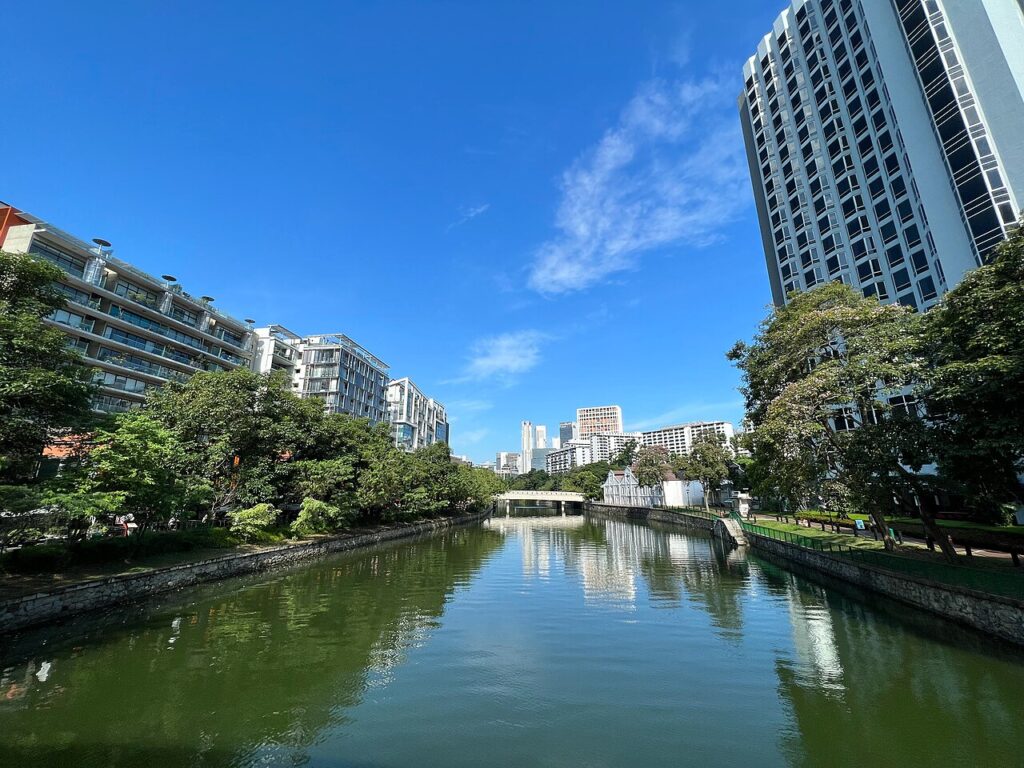
Archive housing photograph for context, not a property inspected for this article. Singapore River at Robertson Quay – 2022-08-14 (photographed 2022). Photo: Wzhkevin. Source (https://commons.wikimedia.org/wiki/File:Singapore_River_at_Robertson_Quay_-_2022-08-14.jpg) · CC BY-SA 4.0 (https://creativecommons.org/licenses/by-sa/4.0). Resized and displayed cropped.
Need a brochure, price list or professional introduction?
Contact Lin Xuan at 82222556 or Ade at 81888871 or Benn at 83218774 for the full project brochure, latest available price list, a viewing, or introductions to bankers who can help you compare home-loan rates and packages to find the best available option for your needs. If you need legal advice on a property purchase, sale or tenancy, we can also put you in touch with property lawyers.
WhatsApp Lin Xuan | WhatsApp Ade. Let us know the project or property question you would like help with. Prices and availability are subject to developer confirmation, while loan terms and approval are determined by the bank.
Lin Xuan: ONG LIN XUAN, CEA registration R069812H. Ade: CHUA MUAY MUAY (ADE CHUA), CEA registration R014252F. ERA REALTY NETWORK PTE LTD, estate agent licence L3002382K.
Benn: TAN JUN FENG, BENNEDICT (BENNEDICT TAN), CEA registration R058941E. PROPNEX REALTY PTE. LTD., estate agent licence L3008022J.