
Quick Answer: What Should You Know About Bishan Before Buying?
- Bishan is a planned satellite town developed from the early 1980s on former cemetery land, and today sits in District 20 as one of Singapore’s most established mature estates, prized for centrality without a Core Central Region price tag.
- Bishan MRT station is a full interchange between the North-South Line and the Circle Line, giving direct rail access to Orchard, the Central Business District, one-north and Changi via a single change.
- The estate is anchored by some of Singapore’s most sought-after schools, including Raffles Institution and Catholic High School, and the one-kilometre priority admission catchment around these schools is consistently cited as the single biggest driver of Bishan’s resale premium.
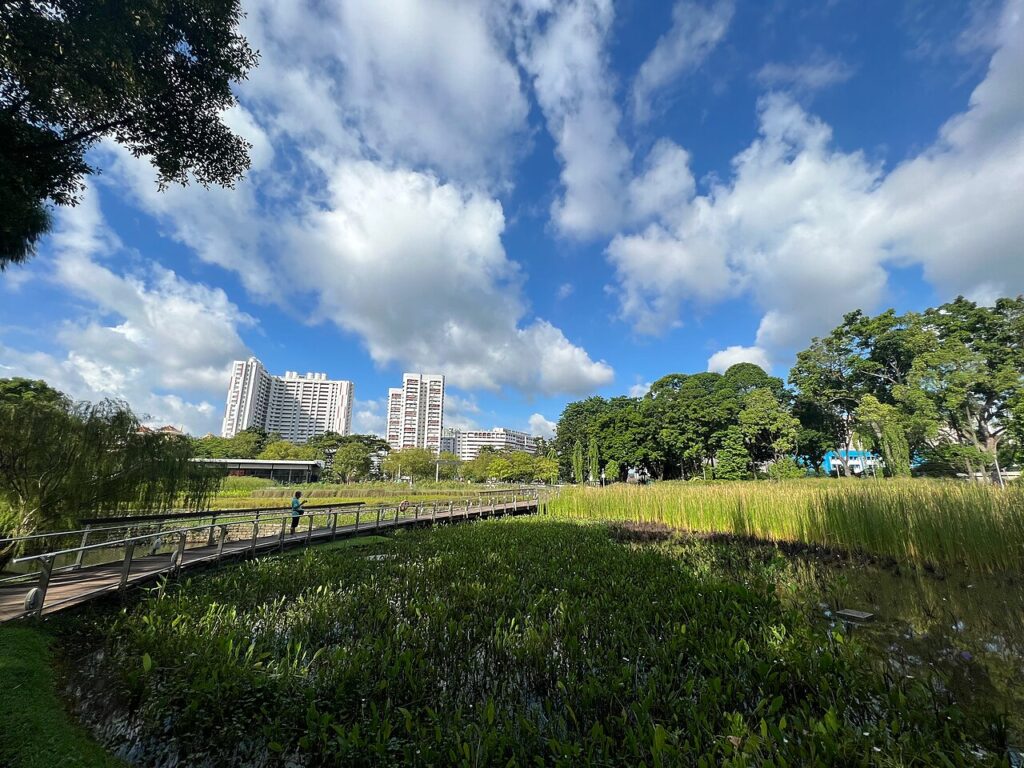
- Bishan-Ang Mo Kio Park, home to the naturalised Kallang River restoration completed in 2012, is one of Singapore’s largest and most celebrated urban parks, and properties within walking distance typically command a further premium.
- Most Bishan HDB flats date from the 1980s and 1990s, meaning remaining lease is an important factor in both financing (CPF usage and bank loan tenure taper as lease runs down) and resale value; newer public housing in the estate is comparatively limited.
- Private options include Sky Habitat, the Moshe Safdie-designed twin towers linked by sky bridges (completed 2015), and The Gardens at Bishan near Marymount MRT, both offering an alternative to HDB resale at a materially higher entry price.
- Bishan is officially classified within the Rest of Central Region (RCR) for private property purposes, not the Core Central Region, which matters for cooling-measure and tax planning comparisons against Districts 9, 10 and 11.
- Buyers should budget realistically: Bishan’s combination of schools and interchange connectivity means it rarely trades at a discount to other mature estates, even when a specific block or unit needs renovation.
Bishan occupies a peculiar place in Singapore’s residential map: it is neither a Core Central Region address commanding CCR-style prices, nor an outlying heartland estate priced for pure affordability. It sits squarely in between, a mature, established, thoroughly built-out town whose enduring appeal rests on three pillars that rarely appear together this strongly anywhere else: a full rail interchange, a cluster of nationally renowned schools, and one of the island’s largest and most loved parks. This guide sets out what actually drives Bishan property values, how its resale market compares with peer mature estates, and what a buyer should check before committing.
From Cemetery Land to Model Satellite Town
Bishan’s name derives from a Hokkien rendering that has, over the decades, become associated with its origins as the site of Peck San Theng, a large Chinese cemetery that was cleared and redeveloped from the early 1980s under HDB’s satellite town programme. The estate was purpose-built with a clear town-planning logic: a central hub around Bishan MRT and Junction 8 shopping centre, ringed by residential neighbourhoods, with schools, a community club, a public library and sports facilities distributed so that most flats sit within walking distance of at least one amenity cluster. That original planning discipline is a large part of why Bishan still reads as unusually well-organised for an estate now more than four decades old.
Bishan MRT: A Genuine Interchange, Not Just a Station
Bishan MRT station is one of only a handful of stations on the network that functions as a true interchange between two full lines, the North-South Line and the Circle Line, rather than a single-line stop with a nearby bus interchange. This means a resident can reach Orchard Road, the Central Business District and Marina Bay via the North-South Line, or reach one-north, Buona Vista, Paya Lebar and Changi Airport via the Circle Line, with at most one change at either Bishan itself or a downstream interchange. For a household that needs two working adults to reach two different employment clusters without a car, this kind of connectivity is difficult to replicate at Bishan’s price point anywhere closer to town.
The School Effect: Why Bishan Commands a Premium
Bishan hosts Raffles Institution and Catholic High School, two of Singapore’s most sought-after secondary schools, along with well-regarded primary schools such as Ai Tong School. Singapore’s Primary 1 registration framework gives strong priority to children living within one kilometre of a school in the earlier registration phases, and it is this one-kilometre catchment rule, not sentiment alone, that converts school reputation directly into measurable resale demand for flats and condominiums within the qualifying radius. Buyers with school-age or soon-to-be school-age children routinely cite this as their primary reason for choosing Bishan over an otherwise comparable estate, and it is the single most consistent factor cited by industry observers for why Bishan resale flats trade above nearby non-mature estates of similar vintage.
Bishan-Ang Mo Kio Park and the Naturalised Kallang River
Bishan-Ang Mo Kio Park is one of Singapore’s largest urban parks and the site of a landmark 2012 river restoration project that transformed a straight concrete drainage canal into a naturalised, meandering waterway with soft, planted banks. The project, delivered under the national ABC Waters (Active, Beautiful, Clean Waters) programme, is frequently cited internationally as a model of nature-based urban water management, and it materially changed how residents use the park, from a passive green buffer into an active recreational and biodiversity asset. Flats and condominiums with a direct or near view of the park, or an easy walk to it, typically carry a further premium over otherwise comparable units elsewhere in the estate.
Housing Stock: Mostly Mature, With Newer Pockets
The bulk of Bishan’s HDB flats were completed in the 1980s and 1990s, which means most units now carry a remaining lease in the range of roughly 55 to 70 years, a level at which both CPF usage and bank loan tenure begin to face the standard age and lease-based tapering rules that apply across all of Singapore’s older housing stock, not just Bishan. Newer public housing in the estate has been comparatively limited, with SkyResidence @ Bishan among the more recent additions, so buyers chasing a younger lease profile in Bishan specifically will find fewer options than in a newer town. On the private side, Sky Habitat, designed by architect Moshe Safdie with linked sky bridges between its twin towers and completed in 2015, and The Gardens at Bishan near Marymount MRT, completed in 2016, represent the estate’s more contemporary condominium stock, at a materially higher entry price than HDB resale.
Beyond Schools and the Park: Everyday Amenities
Junction 8 shopping centre sits directly above Bishan MRT station and remains the estate’s main retail and dining anchor, supplemented by a cluster of smaller neighbourhood shops and hawker centres spread across the town’s various blocks. Bishan Public Library, one of the larger branches in the National Library Board network, and Bishan Community Club both sit close to the town centre, giving residents a genuine civic core rather than a purely residential estate with amenities bolted on at the edges. Healthcare access is solid without being a standout feature: residents typically rely on nearby polyclinics and private clinics within the estate, with tertiary hospital care available a short drive or MRT ride away in neighbouring districts. None of these amenities alone would justify Bishan’s pricing, but together with the school catchment and the park, they round out a town that genuinely functions as a self-contained neighbourhood rather than a commuter dormitory.
Bishan vs Comparable Mature Estates
| Dimension | Bishan | Toa Payoh / Ang Mo Kio / Queenstown |
|---|---|---|
| MRT connectivity | Full interchange (North-South + Circle Line) | Single-line stations, except where noted in each estate’s own guide |
| Marquee schools | Raffles Institution, Catholic High School | Varies by estate; generally fewer nationally top-ranked secondary schools |
| Signature green space | Bishan-Ang Mo Kio Park, naturalised Kallang River | Smaller neighbourhood parks in most cases |
| Housing stock age | Predominantly 1980s-1990s, limited newer public housing | Mixed, with some estates undergoing active redevelopment (e.g. Dawson Estate in Queenstown) |
| Private condo options | Sky Habitat, The Gardens at Bishan | Varies; see each estate’s dedicated LovelyHomes guide |
| Planning classification | Rest of Central Region (RCR) | Rest of Central Region (RCR) in most cases |
Worked Example: Resale Flat vs Condo in Bishan
Consider a Singaporean couple with a school-age child, weighing a 4-room HDB resale flat in Bishan against a 2-bedroom unit at Sky Habitat. The HDB resale flat, at an indicative S$780,000, financed with a 25-year HDB concessionary loan at 2.6% per annum after a 20% down payment (combining CPF and cash), works out to an estimated monthly instalment of roughly S$2,850, comfortably within most dual-income households’ Mortgage Servicing Ratio ceiling of 30% of gross monthly income. The Sky Habitat 2-bedroom unit, at an indicative S$1,450,000, financed through a bank loan at a 75% loan-to-value ratio over 30 years at prevailing rates, produces an estimated monthly instalment of roughly S$5,650, which must clear the Total Debt Servicing Ratio ceiling of 55% rather than the more restrictive HDB-specific MSR test. The couple’s decision ultimately turns on lifestyle preference and budget rather than on any structural barrier: both paths keep them within Bishan’s school catchment and interchange radius, but at very different entry costs and financing structures.
Why This Matters
Bishan is a useful case study in how Singapore’s planning decisions from four decades ago continue to shape property values today. A full rail interchange and a marquee school cluster were not accidents of geography; they were deliberate features of the original satellite town masterplan, and they remain the two most durable, hardest-to-replicate advantages a mature estate can offer. Buyers evaluating Bishan against a newer town with lower headline prices should weigh these structural advantages against the trade-off of an older lease profile and limited redevelopment upside, since Bishan itself has seen comparatively little large-scale renewal activity relative to estates like Queenstown’s Dawson Estate.
What Might Come Next
Longer-term planning signals, including successive URA Master Plan reviews, have periodically flagged potential rejuvenation opportunities across Singapore’s older mature estates as leases run down and redevelopment sites become scarcer elsewhere. Any future Selective En bloc Redevelopment Scheme (SERS) announcement, new BTO supply, or significant amenity upgrade around Bishan would materially affect the estate’s supply picture; none has been announced for Bishan at the time of writing, and buyers should monitor URA and HDB announcements directly rather than relying on speculation.
Frequently Asked Questions
Is Bishan considered a mature estate?
Yes. Bishan was developed from the early 1980s and is classified by HDB as a mature estate, which affects the resale flat grant amounts available to eligible first-time buyers and generally means fewer BTO launches compared with non-mature towns.
Which MRT lines serve Bishan?
Bishan MRT station is an interchange between the North-South Line and the Circle Line, giving direct access to Orchard, the CBD, one-north and Changi Airport with at most one further change.
Why are Bishan flats more expensive than similar flats in nearby estates?
The combination of a full rail interchange, marquee schools such as Raffles Institution and Catholic High School within the one-kilometre priority admission catchment, and proximity to Bishan-Ang Mo Kio Park are the factors most consistently cited for Bishan’s resale premium over otherwise comparable mature estates.
What private condominiums are located in Bishan?
Sky Habitat, designed by Moshe Safdie and completed in 2015, and The Gardens at Bishan near Marymount MRT, completed in 2016, are the estate’s best-known private condominium developments.
Is Bishan in the Core Central Region?
No. Bishan is classified within the Rest of Central Region (RCR) for private residential property purposes, distinct from the Core Central Region that covers Districts 9, 10 and 11.
How old are most Bishan HDB flats?
Most Bishan flats were completed in the 1980s and 1990s, meaning remaining leases now generally fall in the range of roughly 55 to 70 years, which affects both CPF usage limits and the maximum bank loan tenure available to buyers.
Can Permanent Residents buy an HDB resale flat in Bishan?
Yes, subject to HDB’s standard eligibility rules for Permanent Residents, including the requirement to purchase jointly with a spouse or family member and to meet the applicable ethnic integration and citizenship quotas for the specific block.
Related Articles
- Queenstown Neighbourhood Guide 2026
- Toa Payoh Neighbourhood Guide 2026
- Ang Mo Kio Neighbourhood Guide 2026
- Punggol Neighbourhood & Property Guide 2026
- Singapore HDB Resale Price Guide 2026: Complete Breakdown by Town and Flat Type
- TDSR & MSR Singapore 2026: Complete Guide