
A home near shops can make ordinary errands easier, but the useful comparison is between two actual routes and two actual units. The same retail cluster may be convenient from one entrance and awkward from another. A bedroom facing a service area asks a different question from a living room facing a public walkway.
Start with the trips your household makes repeatedly: groceries, meals, medication, school pickups and visits by an older relative. Then compare the selected home’s access and outlook with a similarly suitable alternative farther from retail. Convenience has value when it solves those routines, not simply because a brochure puts a shop symbol nearby.
Walk the route you would use with shopping
For a completed home, follow the permitted route from the unit door to the shop entrance. Include lifts, access gates, crossings, steps and any unsheltered section. A straight line on a map does not show whether the route works with grocery bags, a pushchair or a mobility aid.
Separate public access from access requiring a resident’s card, and distinguish an open passage from a route that depends on a building’s operating hours. Ask about the arrangements that apply to the specific entrance. Do not assume a nearby door is available to residents merely because it is visible.
For an uncompleted project, use the selected unit’s site plan and sale documents to identify the proposed route. Keep a proposed connection separate from an existing one. If the connection is essential to the purchase decision, establish what is actually included before paying for that convenience.
Locate servicing activity as well as shopfronts
On the plan and at a completed property, identify loading access, bin areas, vehicle ramps and mechanical equipment where that information is available. Check where they sit relative to the selected bedroom windows, balcony and main approach. A general neighbourhood description cannot answer a stack-specific question.
View at a time relevant to the household, with the seller’s permission. A weekday worker, a shift worker sleeping during the day and a family eating dinner at home may notice different things. Record what happened during the visit and its time; a quiet visit does not establish that every other period is quiet.
Commercial equipment also has a separate technical context. NEA’s building-plan guidance addresses noise clearance and air-conditioning or mechanical-ventilation emissions from non-industrial buildings. That is not a promise that a particular flat will be silent, and an informal phone reading does not establish regulatory compliance.
If equipment or servicing noise could decide the purchase, obtain the relevant location information and ask for a suitable professional assessment. For a completed unit, distinguish sound heard inside with windows in the positions you expect to use from sound on a public footpath. Do not invent a universal higher-floor discount or assume every unit facing shops has the same exposure.
Put a price on the convenience you will actually use
Suppose two otherwise suitable homes differ in price by S$80,000. In an invented comparison, the closer home saves the household S$120 a month in transport spending. That is S$1,440 a year; S$80,000 divided by S$1,440 is about 55.6 years. This simple calculation excludes financing, purchase taxes, investment returns and resale differences. It is not a valuation method or a prediction that the premium will be recovered.
The point is to stop a small monthly saving from silently justifying any purchase premium. Time saved, independence for a relative and the ability to manage without a car may matter more than fares. Write those benefits down separately. Keep the asking-price difference distinct from evidence of completed transactions.
For an investor, convenience may be part of a letting proposition, but it does not establish a rent premium or eliminate vacancy. Use relevant rental evidence for the actual unit type and budget the ownership costs. For an occupier, consider whether the extra spending leaves enough flexibility for household changes.
Choose the better whole-home trade-off
Make a short comparison of the actual shopping route, bedroom exposure, delivery access and purchase cost. Mark unresolved items as questions for the selected unit rather than filling the gaps with an assumed walking time or future shop tenant.
The closer home may justify its price if the route materially improves daily life and the unit’s drawbacks are acceptable. A slightly farther home may be the better choice if its layout, access or quieter outlook matters more. Our new-launch versus resale comparison helps separate what can be inspected now from what is being bought on plans. Where nearby works are a concern, use the construction-neighbour guide for that separate risk.
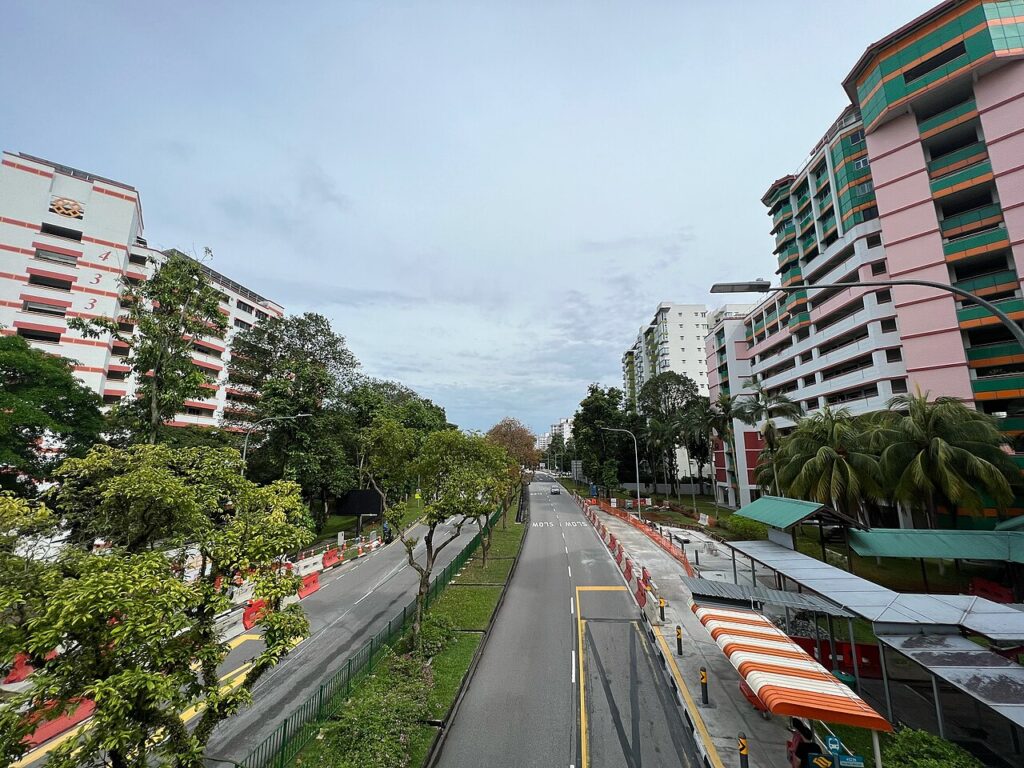
Choa Chu Kang Way, photographed 31 October 2022. Photo: Wzhkevin, Wikimedia Commons. CC BY-SA 4.0. Resized for web. Housing context; no claim about the households shown. Source: https://commons.wikimedia.org/wiki/File:Choa_Chu_Kang_Way_2.jpg. Licence: https://creativecommons.org/licenses/by-sa/4.0/.
Need a brochure, price list or professional introduction?
Contact Lin Xuan at 82222556 or Ade at 81888871 for the full project brochure, latest available price list, a viewing, or introductions to bankers who can help you compare home-loan rates and packages to find the best available option for your needs. If you need legal advice on a property purchase, sale or tenancy, we can also put you in touch with property lawyers.
WhatsApp Lin Xuan | WhatsApp Ade. Let us know the project or property question you would like help with. Prices and availability are subject to developer confirmation, while loan terms and approval are determined by the bank.
Lin Xuan: ONG LIN XUAN, CEA registration R069812H. Ade: CHUA MUAY MUAY (ADE CHUA), CEA registration R014252F. ERA REALTY NETWORK PTE LTD, estate agent licence L3002382K.