
Before buying a home, check what could be built around it. The URA Master Plan shows the planned use of land and its development intensity. It can help you ask better questions about an empty plot, a nearby industrial site or a redevelopment proposal.
The current plan is Master Plan 2025, gazetted on 1 December 2025. It is not a separate “Master Plan 2026”. Check the live map for subsequent amendments. Source: URA’s gazette announcement.
Start with the address and the map legend
Open URA SPACE, find the address and select the Master Plan layer. Check the property itself, then the surrounding plots. Use the legend displayed with the map; do not identify a zone from a colour remembered from a marketing brochure.
Read the land-use label together with the plot ratio and any relevant planning controls. Residential, commercial and mixed-use designations answer different questions from a building-height restriction. A map screenshot on its own may leave out information you need.
What plot ratio means
Gross plot ratio relates gross floor area to site area. For example, multiplying a 10,000-square-metre site by a plot ratio of 2.8 gives 28,000 square metres. That is a floor-area calculation, not a promise of a particular number of flats.
You cannot reliably turn that figure into a unit count by dividing it by an assumed apartment size. The approved design, floor-area rules and other development controls also matter. Nor does the ratio alone tell you the exact height or shape of a future building. For the applicable definitions and controls, refer to URA’s Master Plan resources.
A Reserve Site does not have a confirmed use
A Reserve Site is land whose specific use has not yet been determined. It should not be described as a confirmed future condominium, shopping centre or MRT station. URA also distinguishes this planning designation from a site on the Government Land Sales Reserve List. Source: URA’s land-sales FAQ.
If an agent suggests that a reserve plot will improve a property’s value, ask for the official announcement supporting the claim. An expectation about future planning is different from an approved project with a stated timetable.
What to check before a viewing
- Look up the exact address, rather than relying on the development name alone.
- Check neighbouring plots as well as the home you are considering.
- Save the date of your map check so you can revisit it if plans change.
- Ask for the source behind claims about future views, redevelopment or transport links.
- For rebuilding or redevelopment, have a qualified professional review the controls for that specific site.
The map is a useful starting point for due diligence. It is not a valuation, a construction schedule or a guarantee that today’s view will remain unchanged.
Corrected on 8 September 2026: this guide now identifies Master Plan 2025 as the gazetted plan, corrects the meaning of Reserve Site and removes an unsupported estimate of unit numbers.
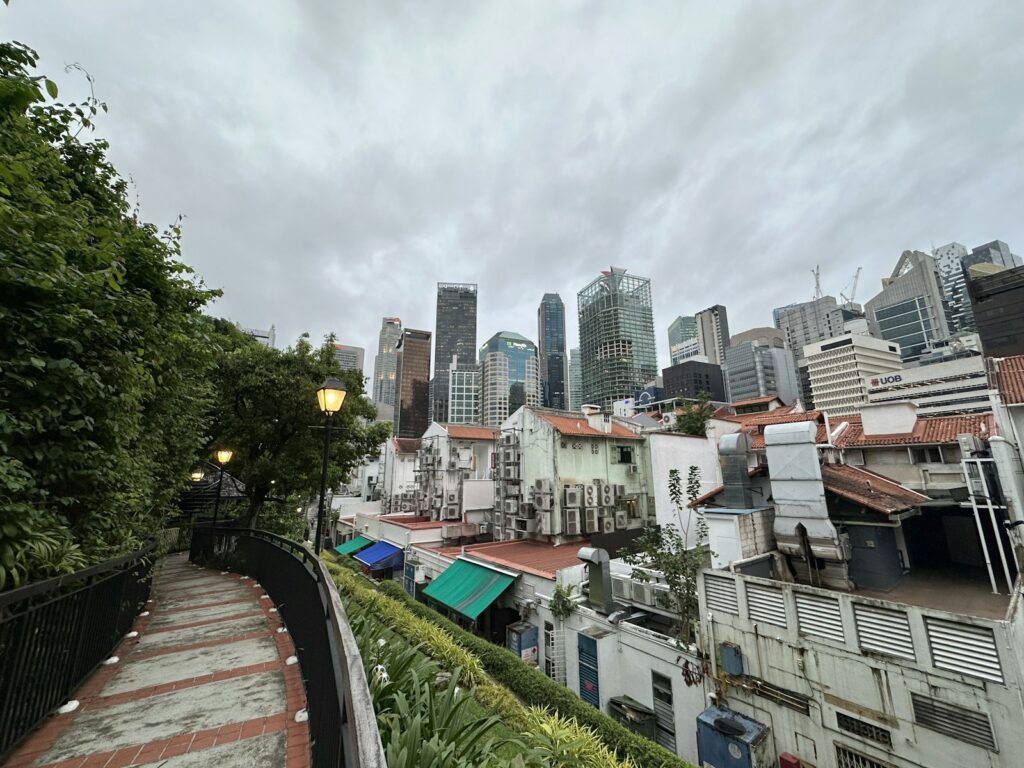
Chinatown, Singapore. Photo by Andy Wang on Unsplash. Original photograph.