
A restriction on a property’s title can affect an alteration even when the proposed work has planning approval. Before buying a home for a particular extension or use, obtain the title instrument and establish what restriction applies, who benefits and whether a formal variation or release is needed. A seller’s reassurance is not the same as clearing the restriction.
Start with the instrument, not the label
Part 14 of the Land Titles Act 1993 addresses restrictions on the use of registered land created expressly by covenant, excluding covenants in a mortgage, charge or lease from this definition. It identifies dominant land, which benefits, and servient land, which is burdened.
This scope matters. A lease condition, planning control and strata by-law do not all become the same thing because someone calls them a restrictive covenant. Identify the actual document and legal route before relying on a rule about removal or duration.
Section 139 provides for notification of a qualifying restriction on the servient land’s folio. Under subsection (2), a restriction does not bind assigns unless notified. The section also requires a negative or restrictive obligation and clear identification of dominant and servient land.
Notification does not give the restriction greater effect than it otherwise has. A title entry is therefore the beginning of the inquiry, rather than a complete answer to enforceability. Ask for the underlying instrument and have its wording, scope and application to the intended work assessed.
Whose agreement is required?
Section 140 provides for release or variation by an approved instrument executed by the current proprietor of the dominant land and any person having a registered interest in that land. The servient proprietor can then apply for the relevant entry by the Registrar.
A conversation with one neighbour may leave this process incomplete. The beneficiary and registered interests need identifying from the documents, and the agreed instrument must match the change required. Do not pay for a design on the assumption that an informal “no objection” resolves the title position.
Nor does a planning approval itself extinguish the covenant. Section 140 sets out court powers to extinguish or vary a restriction on specified grounds. These include an approved planning change of use where continuation impedes development in the stated circumstances, or a proposed variation that will not materially injure those entitled to the benefit. The section also contains compensation and procedural provisions.
These are routes for a properly assessed application, not a promised outcome. A buyer considering a conditional purchase needs advice on the actual instrument, parties, required process and the contract’s treatment of an unsuccessful application.
Do not assume the restriction simply expires
Section 141 generally provides a 20-year period from entry of the notification unless extended, but it contains a separate rule for specified older restrictions. For those restrictions, subsection (2) uses the latest of three periods, including periods tied to creation, notification and 20 August 2001.
The section also permits extension before the restriction becomes unenforceable, through an approved instrument and notification. An extension runs for ten years from its notification. It does not cure another reason for unenforceability.
Consequently, “the house is more than 20 years old” is not a sufficient expiry check. The relevant dates are attached to the restriction and its title history, including any extension, rather than simply the building’s age. Have the complete chronology checked before treating a title entry as spent or assuming it can be ignored.
Price the home before assuming the alteration
Compare two versions of the purchase: the home as it can lawfully be used now, and the home after the desired change if all required permissions and title steps are completed. If only the second version meets the household’s needs, resolve the feasibility before committing to an unconditional timetable.
Separate professional investigation, design, any formal application and construction in the budget. Costs incurred before the restriction is resolved may not produce the intended extension. Obtain actual quotations and agree what happens if the proposal cannot proceed; there is no universal removal fee or fixed completion period.
Our ownership and title-registration guide provides the wider document checklist. For a condo, also distinguish title questions from the management approval process for renovations. One permission does not establish the other.
Bring the title search, restriction instrument, extension history and proposed plans to the transaction discussion. Lin Xuan or Ade can introduce a property lawyer to advise on the restriction and any contract conditions. That gives the household a basis for choosing the property before it pays for a home that only works with an uncertain alteration.
Land Titles Act sections 138 to 141 checked 3 November 2026.
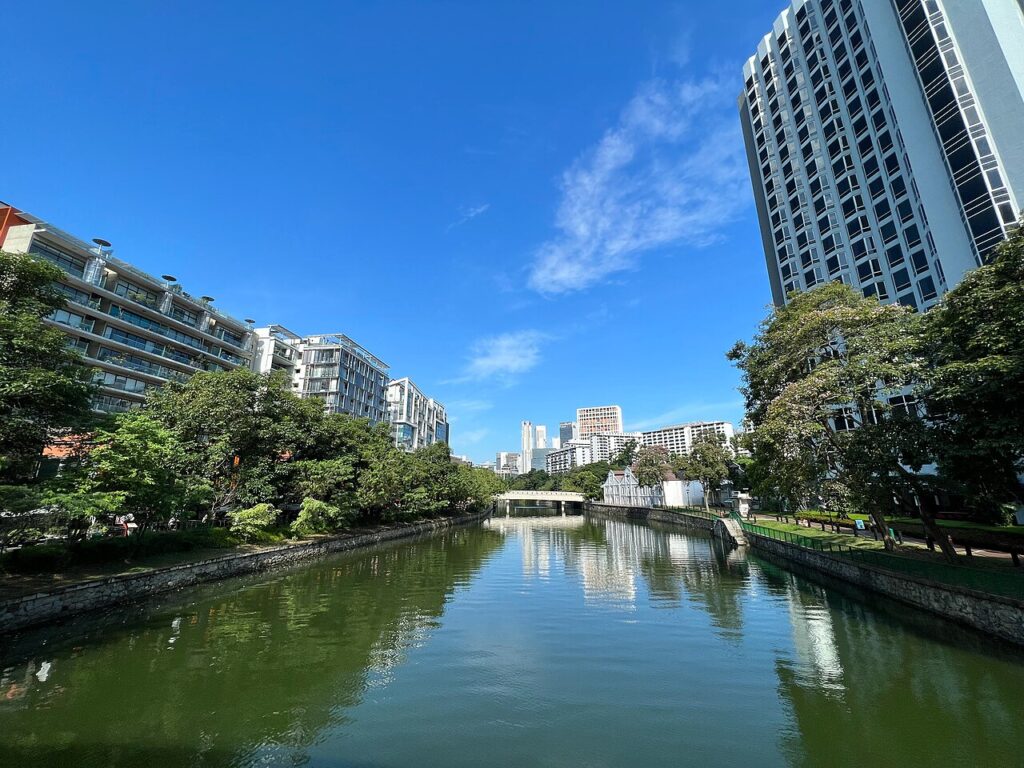
Photograph: Singapore River at Robertson Quay, 14 August 2022, Wzhkevin, CC BY-SA 4.0. Source: commons.wikimedia.org/wiki/File:Singapore_River_at_Robertson_Quay_-_2022-08-14.jpg. Licence: creativecommons.org/licenses/by-sa/4.0/. Resized and displayed cropped. Housing context, not a property inspected by LovelyHomes.
Need a brochure, price list or professional introduction?
Contact Lin Xuan at 82222556 or Ade at 81888871 for the full project brochure, latest available price list, a viewing, or introductions to bankers who can help you compare home-loan rates and packages to find the best available option for your needs. If you need legal advice on a property purchase, sale or tenancy, we can also put you in touch with property lawyers.
WhatsApp Lin Xuan | WhatsApp Ade. Let us know the project or property question you would like help with. Prices and availability are subject to developer confirmation, while loan terms and approval are determined by the bank.
Lin Xuan: ONG LIN XUAN, CEA registration R069812H. Ade: CHUA MUAY MUAY (ADE CHUA), CEA registration R014252F. ERA REALTY NETWORK PTE LTD, estate agent licence L3002382K.