
Quick Answer: What the Jurong Region Line Means for Property
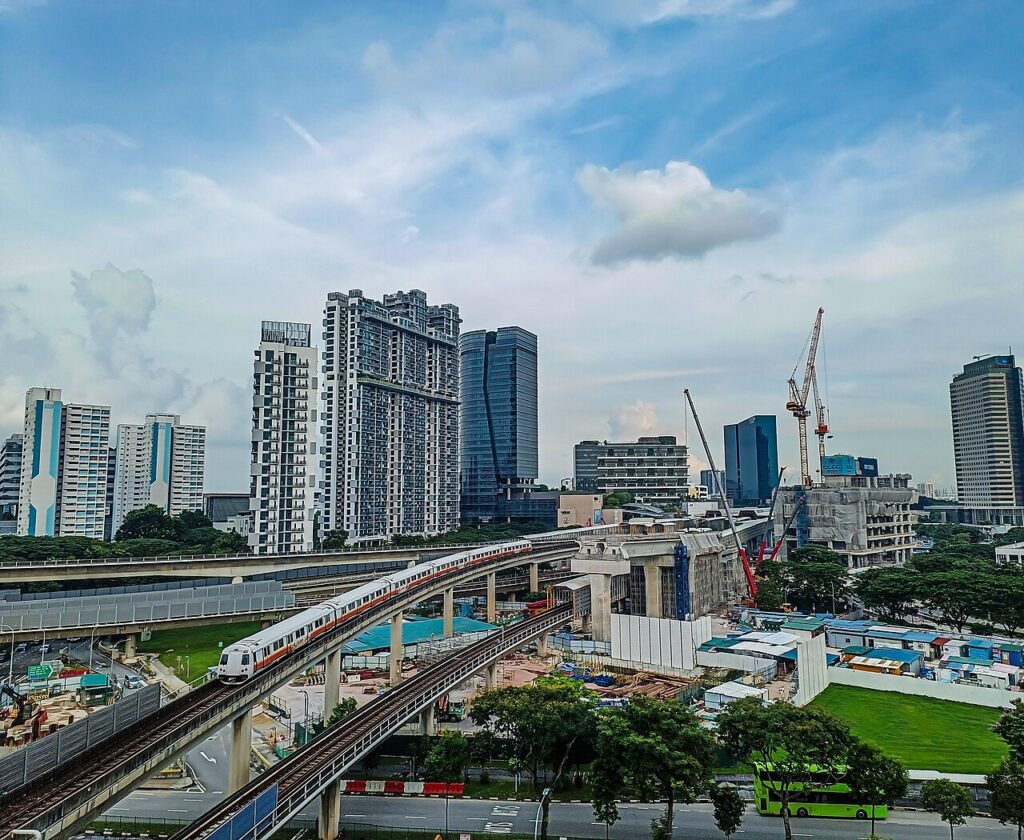
- The Jurong Region Line (JRL) is a new MRT line built and delivered by the Land Transport Authority (LTA), and unlike the underground Cross Island Line, JRL is designed to run fully elevated and fully automated (driverless), serving the western part of Singapore.
- JRL opens in three phases: Phase 1 (Choa Chu Kang to Bahar Junction/Boon Lay) is targeted for around mid-2028; Phase 2 (a separate eastern branch from Tengah to Pandan Reservoir via Jurong East) is also targeted for 2028; Phase 3 (Jurong Hill and the remaining stations) is targeted for 2029.
- When fully complete, JRL will span around 24 kilometres across roughly 24 to 25 stations, making it one of the largest single MRT line rollouts in Singapore’s rail history.
- JRL creates a triple-line interchange at Jurong East (joining the North-South and East-West Lines), and a new interchange at Choa Chu Kang (North-South Line and the Bukit Panjang LRT).
- The line is designed to directly serve Tengah, Singapore’s newest HDB new town, along with the Jurong Innovation District and the broader Jurong Lake District, which the government has designated Singapore’s largest business district outside the city centre.
- A future western extension of the Cross Island Line has been flagged by LTA as a longer-range plan to interchange with JRL near Jurong Lake District, though this segment remains unconfirmed and should be treated as indicative only.
- As with any multi-year infrastructure project, buyers should treat every phase and station timeline in this guide as LTA’s own published estimate, which is subject to change, and should check LTA’s official JRL updates before making a purchase decision based on the line.
The western half of Singapore, anchored by Jurong East and stretching out to Tuas, has historically depended on the East-West Line and a patchwork of bus services to connect residents to jobs, schools and amenities scattered across a wide, low-density area. The Jurong Region Line is LTA’s answer to that gap, and it is notable for being engineered differently from Singapore’s most recent lines: rather than tunnelling underground, JRL runs on an elevated viaduct for its full length and operates without an onboard driver, in the same automated style as the Circle Line and Downtown Line. This guide sets out how the line is being built, which stations create genuine interchange value, and what the rollout means for buyers and residents across Jurong, Tengah and the wider west.
What the Jurong Region Line Actually Is
The Jurong Region Line is a new MRT line planned and delivered by the Land Transport Authority as part of the Land Transport Master Plan, built specifically to serve residents, students and workers across Jurong, Tengah and the wider western region who currently rely almost entirely on the East-West Line and connecting bus services. Structurally, JRL is a fully elevated line, meaning its viaducts and stations sit above ground rather than underground, and it is fully automated, meaning trains run without an onboard driver, consistent with the operating model already used on the Circle Line and Downtown Line. This combination is generally faster and less costly to build than a fully underground line, which is one reason LTA has been able to plan such an extensive network of around 24 to 25 stations across a single line.
Phase 1: Choa Chu Kang to Bahar Junction
The first phase of the Jurong Region Line connects Choa Chu Kang to Bahar Junction and Boon Lay, and has been targeted by LTA for opening around mid-2028, having previously been targeted for late 2027 before a subsequent schedule adjustment. This phase creates a new interchange at Choa Chu Kang, joining the North-South Line and the Bukit Panjang LRT, and gives residents in the Choa Chu Kang, Bukit Batok and Jurong West areas a direct new rail option that does not require travelling into the existing East-West Line corridor first.
Phase 2: Tengah to Pandan Reservoir via Jurong East
A separate eastern branch of the Jurong Region Line, running from Tengah through Jurong East to Pandan Reservoir, is also targeted by LTA for 2028. This phase is arguably the most consequential for property buyers, because it creates a triple-line interchange at Jurong East, joining the North-South Line, East-West Line and JRL in one station, and because it directly serves Tengah, the HDB new town built around a “forest town” masterplan concept that had previously relied on bus connections pending its own rail line.
Phase 3: Jurong Hill and the Remaining Stations
The final phase, comprising Jurong Hill and the remaining stations needed to complete the full JRL network, is targeted by LTA for 2029. This phase rounds out coverage of the Jurong Innovation District, an area LTA and JTC have positioned as a hub for advanced manufacturing and applied research, and brings JRL closer to Jurong Lake District, which the URA Master Plan designates as Singapore’s largest planned business district outside the central area.
Why Jurong Lake District Matters for JRL
Jurong Lake District has been earmarked under the URA Master Plan as Singapore’s largest business district outside the city centre, intended to house a mix of commercial, residential and lifestyle developments, and to serve as a second, more affordable business hub relative to the traditional Central Business District. JRL’s role in this plan is to give the district a dedicated rail spine of its own, on top of the existing Jurong East interchange, which planners generally view as essential to making a decentralised business district function without simply pushing commuter traffic back onto the existing East-West Line.
Which Estates Benefit Most
Tengah stands out as the estate with the most to gain from JRL in absolute terms, since the new town was planned around the assumption that a dedicated MRT line would eventually serve it, and residents who move in ahead of the line’s 2028 opening are effectively betting on infrastructure that has not yet arrived. Choa Chu Kang and Bukit Batok gain a genuine second rail option rather than a first one, which still meaningfully shortens journeys that currently require an interchange elsewhere. Jurong East, already a major hub, becomes considerably more significant as a triple-line interchange, a status that tends to support retail, office and residential demand around the immediate vicinity of the station over time.
Jurong Region Line: Selected Stations at a Glance
| Station | Phase | Interchange With |
|---|---|---|
| Choa Chu Kang | Phase 1 | North-South Line, Bukit Panjang LRT |
| Bahar Junction / Boon Lay | Phase 1 | East-West Line (Boon Lay) |
| Jurong East | Phase 2 | North-South Line, East-West Line (triple-line interchange) |
| Tengah | Phase 2 | Standalone JRL stations serving Tengah new town |
| Pandan Reservoir | Phase 2 | Standalone JRL station |
| Jurong Hill | Phase 3 | Standalone JRL station serving Jurong Innovation District |
| Jurong Lake District (future) | Phase 3 area, CRL interchange not yet confirmed | Proposed future Cross Island Line western extension |
Worked Example: Buying Ahead of a Rail Line That Has Not Opened Yet
Consider a young family weighing a BTO flat or resale unit in Tengah today, at a point where the estate’s own JRL station will not open until Phase 2 in 2028. Buying ahead of a confirmed but not-yet-open MRT line is a common strategy among buyers seeking a lower entry price before a location’s connectivity story is fully realised, and it has historically been associated with a gradual firming of resale value as construction visibly progresses and the opening date approaches. It is not without risk: buyers in Tengah today must accept several years of bus-dependent travel before the line opens, and should size that trade-off honestly against their own daily commute needs rather than relying solely on the promise of a future station.
Why This Matters
The Jurong Region Line is one of the clearest examples of Singapore’s rail expansion deliberately following planned population and business growth rather than only responding to existing demand, since Tengah and Jurong Lake District were both master-planned with JRL already factored into their design. For buyers with a multi-year horizon, this kind of pre-committed infrastructure is unusually visible and durable compared with more speculative growth stories, precisely because station locations and phasing are already fixed even where exact opening dates may still shift.
What Might Come Next
LTA has already adjusted JRL’s Phase 1 opening once, from late 2027 to around mid-2028, which is a reminder that large elevated-rail construction programmes can see their schedules refined as engineering and site conditions become clearer. The proposed Cross Island Line western extension that would eventually interchange with JRL near Jurong Lake District remains unconfirmed, and buyers should check LTA’s official Jurong Region Line updates directly before making a decision based on any specific station or completion date.
How JRL Differs From Singapore’s Other New Lines
Buyers comparing JRL against the Cross Island Line or Thomson-East Coast Line should understand that the engineering choice behind JRL, a fully elevated, fully automated viaduct rather than a tunnelled line, is not simply a cost-saving decision; it also changes what living near a station feels like in practice. Elevated stations and viaducts are generally faster to construct and cheaper to maintain than deep tunnelled stations, but they also introduce visible infrastructure, train noise at close range and a different streetscape compared with an underground line where only station entrances are visible at surface level. LTA’s design standards address this with noise barriers and careful viaduct alignment, but buyers considering a unit directly facing the elevated line, particularly in a low-rise landed enclave, should factor this into their own assessment rather than assuming an elevated MRT line behaves identically to an underground one for property purposes.
Property Investment Considerations Along the JRL Corridor
Beyond the residential estates JRL serves directly, the line also has an important employment-access dimension that is easy to overlook. The Jurong Innovation District and the broader Jurong industrial and business park precincts are significant employment nodes in their own right, and better rail access to these areas can matter as much to rental demand as it does to owner-occupier appeal, since tenants working in manufacturing, logistics or applied research roles based in the west have historically had fewer convenient housing options near their workplace. Investors evaluating a unit for rental yield along the JRL corridor should weigh this employment-access angle alongside the more commonly discussed owner-occupier connectivity story, since the two buyer and tenant profiles do not always prioritise the same stations or amenities.
Frequently Asked Questions
When will the Jurong Region Line open?
Phase 1 (Choa Chu Kang to Bahar Junction/Boon Lay) is targeted by LTA for around mid-2028. Phase 2 (Tengah to Pandan Reservoir via Jurong East) is also targeted for 2028, and Phase 3 (Jurong Hill and remaining stations) is targeted for 2029.
Is the Jurong Region Line underground like the Cross Island Line?
No. JRL is designed to run fully elevated on a viaduct above ground, and is fully automated (driverless), unlike the fully underground Cross Island Line.
Which existing MRT lines will JRL connect to?
JRL creates a new interchange with the North-South Line and Bukit Panjang LRT at Choa Chu Kang, and a triple-line interchange with the North-South Line and East-West Line at Jurong East. A proposed future Cross Island Line western extension may eventually interchange with JRL near Jurong Lake District, though this is not yet confirmed.
Does JRL serve Tengah?
Yes. Tengah is directly served by JRL’s Phase 2 branch, running from Tengah through Jurong East to Pandan Reservoir, targeted for 2028.
Has the JRL timeline been delayed?
Phase 1 was previously targeted for late 2027 and has since been adjusted by LTA to around mid-2028. Buyers should always check LTA’s official updates for the latest confirmed schedule rather than relying on earlier announcements.
How many stations will the Jurong Region Line have?
When fully complete across all three phases, JRL is expected to span around 24 kilometres across roughly 24 to 25 stations, based on LTA’s published plans.
Will buying in Tengah or Jurong West before JRL opens guarantee a resale gain?
No. New MRT lines have historically been associated with a gradual resale premium in many past cases, but the size and timing vary widely by estate, and broader market conditions, interest rates and a unit’s own attributes generally matter just as much as MRT proximity alone.
Related Articles
- Cross Island Line (CRL) Property Guide 2026
- Thomson-East Coast Line (TEL) Property Guide 2026
- Jurong East Singapore Neighbourhood Guide 2026
- Singapore GLS Programme Guide 2026
- Bishan Neighbourhood & Property Guide 2026
- Punggol Neighbourhood & Property Guide 2026