
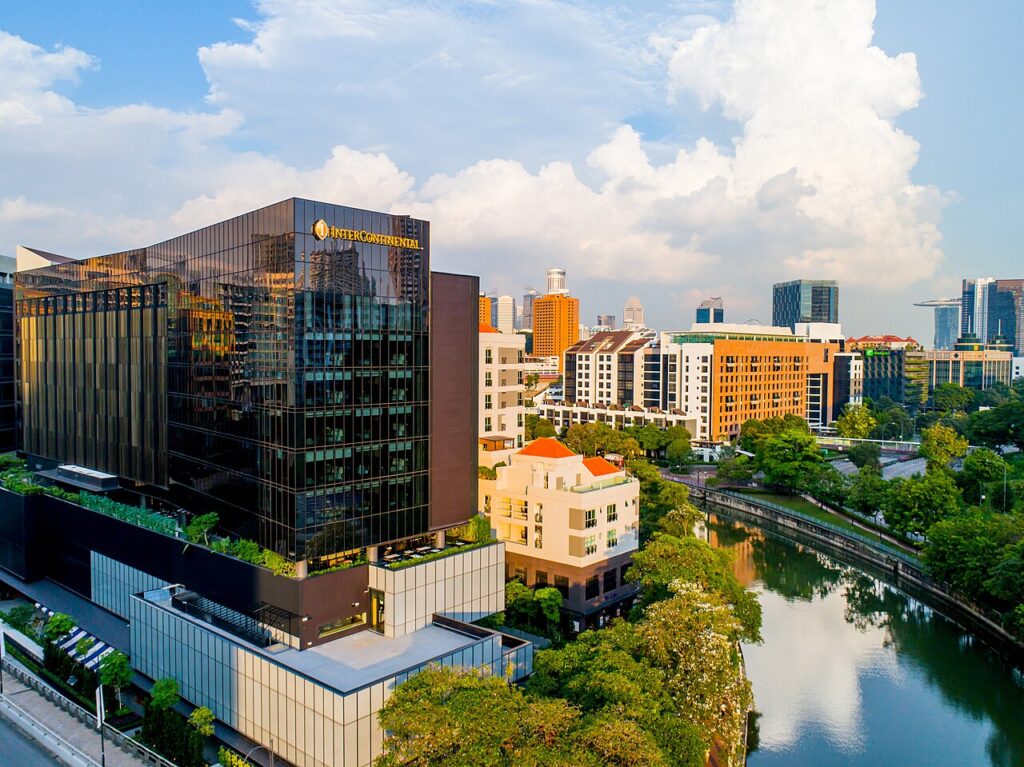
Singapore private condominium rents edged up 0.8% quarter-on-quarter in Q1 2026 according to the URA rental index flash estimate released at the end of April. This is the first positive print since Q4 2023 , ending a nine-quarter stretch in which rents corrected from their post-pandemic peak. The flash estimate will be finalised in early May; historically the full release has moved within 0.2 percentage points of the flash.
The regional picture
All three geographic segments moved up. The Core Central Region (CCR , districts 9, 10, 11 and the Marina area) led with a 1.2% quarter-on-quarter increase. The Rest of Central Region (RCR) gained 0.9%. The Outside Central Region (OCR) , the suburban bulk of the private market , rose 0.5%. The CCR’s stronger performance reflects a tighter top-end rental pool; prime CCR units are thinner in supply and the relocation-driven expatriate demand has firmed since the start of the year.
For context, the private rental index had declined every quarter since Q4 2023, with the 2024-25 cooling driven by the large pipeline of TOP completions meeting a softer expatriate demand backdrop. The 2026 turn suggests that pipeline pressure has worked itself through and the market is returning to an equilibrium where rents track wage and demand growth.
HDB rentals , still positive
HDB subletting continues its separate trajectory. The HDB rental approvals index (IRAS data, which lags URA by roughly one quarter) has risen 3.8% year-on-year through Q4 2025. HDB rents never corrected in the 2024-25 window the way private rents did , the HDB rental stock responds to a different demand base (mid-income professionals, young families waiting for keys, short-term relocation) and the supply-side discipline (subletting caps, minimum occupation period) keeps the rental inventory tight.
What’s driving the turn?
Three forces matter. First , supply. The TOP pipeline for private condos peaked in 2024-25; 2026 sees materially fewer new completions. Fewer new units hitting the rental market means the absorption rate improves. Second , demand. Employment pass approvals are up in financial services, tech and healthcare in the first quarter. Each new Employment Pass holder is a prospective renter for the first 6-12 months. Third , positive feedback. The URA flash estimate signals that the rental decline is over, which tends to pull forward renewal decisions; existing tenants renewing on marginal rent increases rather than trying to negotiate down.
District-level colour
Within the CCR, the strongest performers were rental comparables in D09 Orchard / River Valley and D10 Tanglin / Holland / Bukit Timah, where the flight-to-quality dynamic has been most pronounced. Luxury segment rents (3-bedroom and above in CCR condos) were up 1.6% QoQ, outpacing 1-bedroom rents (+0.9% QoQ) , a reversal of the prior-year pattern where compact units outperformed.
In the OCR, the strongest gains were in D15 Katong / Marine Parade and D19 Hougang / Serangoon / Punggol, where the retiree and family-owner-occupier demographic has kept the rental inventory thin. OCR 2-bedroom rents were up 0.7% QoQ; 3-bedroom up 0.6%.
What happens in Q2 2026?
Two signals to watch. First , the full URA Q1 2026 release around 24 April will confirm the flash number and give the district-level breakdown. Any significant revision from the flash estimate would be a short-term market mover. Second , the IRAS rental-assessment data for Q2, due in August, will test whether the flash signal converts into actual transaction-level evidence. Landlords and tenants negotiate new leases on the flash, but the real test is whether signed leases in April and May reflect the flash.
On current trajectory, the base case is that Q2 2026 prints another +0.6-1.0% QoQ , a continuation of the turn, not an acceleration. A breakout above 1.5% QoQ would suggest the market is pricing in a tighter supply-demand balance than currently evident in the TOP pipeline. A return to zero or negative prints would indicate the Q1 reading was noise, not signal.
Implications for property investors
If you are holding a Singapore private condo as investment property, three things follow. First , rental yields, which had been compressing since early 2024, should stabilise. On a constant-denominator basis (ignoring capital value changes), a unit pulling S$4,500 rent two quarters ago and S$4,536 now is earning an extra S$864 annually , modest but directionally positive. Second , the tax arithmetic matters more at the margin. Non-owner-occupier property tax is flat-banded, so modestly higher rent drops more cleanly to the bottom line than the gross reversion suggests. Third , refinancing windows: lenders use rental income in TDSR computation; a hotter rental market eases borrowing capacity for investors.
Cross-read , what this means for buyers
For buyers currently deciding between purchase and continued rental, the rental turn removes one of the ‘wait and see’ arguments. In a market where rents were falling every quarter, the financial case for delaying purchase was concrete , every quarter of rental saved versus the carry cost of owning. With rents turning up, that argument weakens. Paired with the stable mortgage-rate environment (SORA has held in the 2.8-3.1% band through Q1), the total cost of owning relative to renting has improved on the margin for eligible first-property buyers.
Bottom line
The Q1 2026 private rental print is the first clear turn after nine quarters of decline. At +0.8% QoQ, the move is modest but broad-based. The full URA release in early May will confirm whether the flash signal holds. For landlords, it is the first time since 2023 that modest positive rental reversions are a reasonable planning assumption. For tenants, the negotiating leverage of the last 18 months has narrowed , lock in renewal terms if they are already favourable.
Related reading on LovelyHomes
- → Singapore Rental Yield Guide 2026 , where to find 4%+ gross yields
- → Singapore Q1 2026 flash estimates , private up, public down
- → Singapore private home prices Q1 2026 , URA PPI flash estimate
- → Singapore Property Tax 2026 , owner-occupier vs investor rates
Sources: Urban Redevelopment Authority (URA) Q1 2026 private rental index flash estimate (https://www.ura.gov.sg/); IRAS rental approvals data. This article is editorial commentary produced by the LovelyHomes team and does not constitute investment or financial advice. Rates, indices and figures are current as at the date of publication. Buyers and investors should consult a licensed professional before making a property-related decision.