Conservation Shophouses Singapore 2026: Buying, Restoring and Investing in Heritage Property

Conservation Shophouses Singapore 2026: Buying, Restoring and Investing in Heritage Property

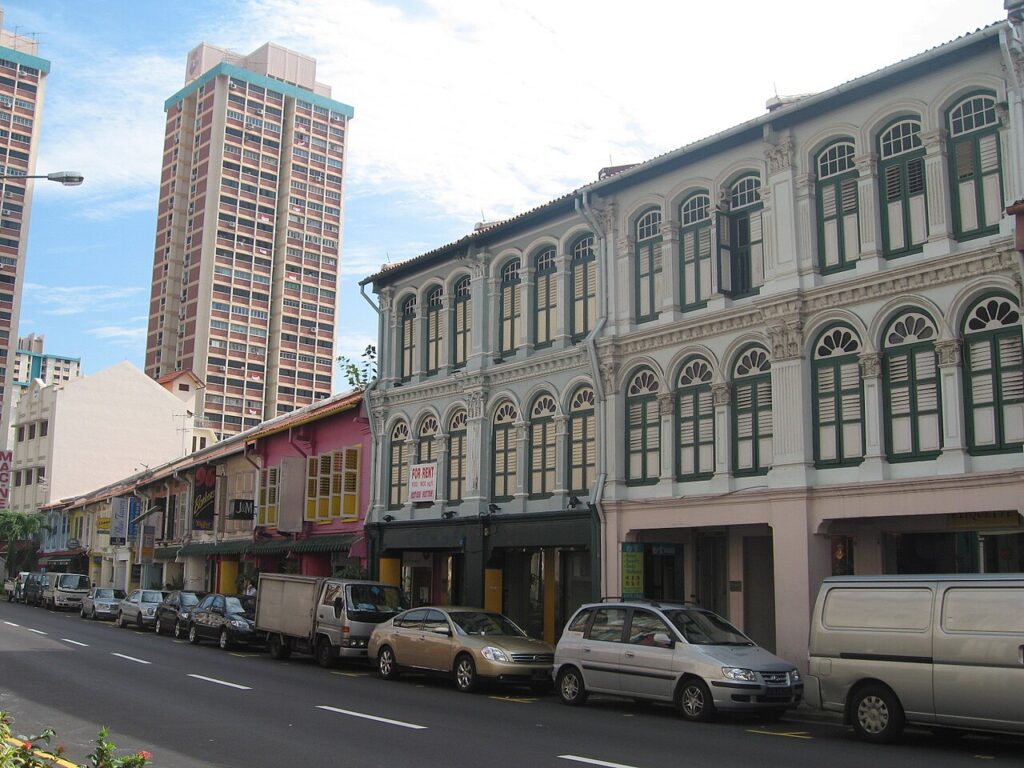
A conservation shophouse is one of roughly 7,200 gazetted heritage units that the Urban Redevelopment Authority (URA) protects under the Conservation Programme that began in 1989. The buildings are easy to recognise — narrow frontage, deep floor plate, ornate plasterwork or Peranakan tile facade, three or four storeys, and the famous five-foot way. The investment story is harder to read. Shophouses sit at an unusual intersection of three regulatory regimes — URA conservation guidelines, the Residential Property Act, and commercial-property stamp duty rules — and the rules around who can buy, what they can do with it, and how it is taxed depend almost entirely on the zoning of the unit.

Quick Answer

  • ~7,200 gazetted shophouses across nine historic conservation districts including Chinatown, Tanjong Pagar, Joo Chiat, Kampong Glam and Little India.
  • Zoning is the single most important variable. Commercial-zoned shophouses can be bought by foreigners without ABSD or Residential Property Act approval. Residential-zoned shophouses require LDAU approval and attract ABSD.
  • Mixed-use is the typical reality. Many shophouses are commercial on the ground floor and residential above; ABSD applies only on the residential gross floor area portion.
  • Prime CBD shophouses traded at S$5,500 to S$8,000 psf in 2024-2025. The market cooled in 2025 after MAS and IRAS scrutiny on suspicious-buyer transactions; 2026 pricing has stabilised but transaction volume is roughly half of the 2023 peak.
  • Restoration costs S$400 to S$1,000 psf. URA-permitted, heritage-compliant restoration is mandatory; non-compliant works can attract enforcement and fines under the Planning Act.
  • Yields are modest. Residential shophouse yields run 1.5 to 2.5 percent; commercial yields 3 to 4 percent; boutique-hotel shophouses 4 to 6 percent (when operating).
  • Financing is harder than condo lending. Commercial loans cap at 60 percent LTV with shorter tenors; residential mortgages still apply TDSR / MSR. Specialist lenders dominate the segment.
  • The buyer pool is narrow. Family offices, ultra-high-net-worth individuals, and Family Trust structures are the main buyers; the segment is illiquid and capex-heavy.

The Backdrop — How Conservation Came About

Singapore began gazetting buildings under the Conservation Master Plan in 1989. The motivation was a recognition that the country had quietly demolished much of its pre-war urban fabric in the development push of the 1960s, 70s and 80s. The first batch of conservation buildings included blocks in Chinatown, Tanjong Pagar, Boat Quay and Kampong Glam. Over the next three decades the gazette expanded to include Joo Chiat, Geylang, Little India, Emerald Hill and pockets along Beach Road, Bukit Pasoh, Balestier and Tiong Bahru’s earliest pre-war stock.

The legal mechanism is straightforward. Once a building is gazetted under the Planning Act and listed in the URA’s conservation portfolio, the owner must obtain URA approval before any external alteration, addition or demolition. The interior is more flexible — owners can refit floor plates, add lifts, and re-plan internal partitions, but the facade, party walls, roof line, five-foot way colonnade and any specific feature called out in the conservation guidelines (timber stairs, decorative tiles, original plaster mouldings) must be preserved.

Conservation shophouses Singapore 2026 districts map Kampong Glam Joo Chiat Chinatown Little India Tanjong Pagar
Figure 1: Where Singapore’s conservation shophouses sit – approximately 7,200 gazetted units across nine historic districts.

Zoning — The Variable That Drives Everything

Whether a foreigner can buy a particular shophouse, whether ABSD applies, what financing is available and what the unit can be used for all flow from the URA Master Plan zoning. The four common configurations:

100 percent commercial. The whole unit is gazetted commercial — typically the entire ground-floor and upper-floor envelope. These are the shophouses that foreigners and family offices have flocked to since the late 2010s, because the Residential Property Act does not apply, no ABSD is payable on purchase, and the asset can be held in a corporate or trust structure with relative ease. Acceptable uses include offices, F&B, retail, professional services and (sometimes) hotel-use under a separate licence.

Mixed-use. Ground floor commercial, upper floors residential — the original design intent of most pre-war shophouses, where the merchant lived above the shop. ABSD here is apportioned on gross floor area: the residential portion is treated as residential property, the commercial portion is exempt. Foreigners can buy if the entire unit is gazetted commercial-overlay, but cannot if the residential GFA exceeds the threshold without LDAU approval.

100 percent residential. The shophouse is entirely zoned for residential use. This is the rarest profile in the prime CBD belt but more common in Joo Chiat / Katong and Emerald Hill. Foreigners need approval from the Land Dealings (Approval) Unit under the Residential Property Act, and ABSD applies as for any residential acquisition. Residential mortgage rules including TDSR and MSR apply.

Hotel-use conservation. A small subset, mostly along Tanjong Pagar / Duxton, Bukit Pasoh and Kampong Glam, where a shophouse cluster has been redeveloped or licensed for boutique hotel operation. Buyer profile is hospitality investors; financing is through specialist lenders.

Conservation shophouse Singapore 2026 zoning commercial mixed-use residential foreigner eligibility ABSD
Figure 2: Shophouse zoning – what you can do with the unit and which buyer profiles can purchase, by use class.

Pricing — From the 2023 Peak to the 2026 Stabilisation

Shophouse pricing peaked in 2023, when prime CBD units changed hands at S$7,000 to S$9,500 psf and total transaction volume hit roughly S$2.0 billion across the year. The 2024 cycle saw a noticeable cooling — partly because the highest-end deals moved offshore as buyers digested the 2023 ABSD hike on residential property, partly because financing tightened with elevated US rates, and significantly because the Monetary Authority of Singapore and the Inland Revenue Authority of Singapore opened scrutiny of suspicious shophouse transactions involving complex offshore vehicles. The 2024 money-laundering case that froze hundreds of millions of dollars of Singapore property included shophouses in the affected portfolio.

By 2026, prime CBD shophouse pricing has stabilised at S$5,500 to S$8,000 psf depending on location and condition. Joo Chiat and Katong residential shophouses sit at S$3,000 to S$5,000 psf. Geylang and Little India fringe transactions can clear under S$2,800 psf. Transaction volume is approximately half the 2023 peak.

Summary — Conservation Shophouse Indicators, 2024 to 2026

Year Total Volume (S$ B) Prime CBD psf Joo Chiat / Katong psf Notable
2023 ~S$2.0B S$7,000-9,500 S$3,200-5,500 Peak cycle; family offices dominant.
2024 ~S$1.1B S$6,200-8,500 S$3,000-5,200 Money-laundering investigation; scrutiny of offshore buyers.
2025 ~S$0.95B S$5,800-7,800 S$2,900-4,800 Volume bottom; ‘cleaner’ deals as enhanced KYC took hold.
Q1 2026 ~S$0.30B S$5,500-8,000 S$3,000-5,000 Stabilised pricing; heritage-restored stock commanding ~10% premium.

Sources: URA caveat data 2023-2026, EdgeProp transaction archives, MAS Financial Stability Review 2024 and 2025.

Restoration — The Hidden Capex

The headline transaction price never tells the full story. A shophouse acquired in fair-restored condition might need only S$200 to S$300 psf of refurbishment for tenant fit-out. A “shell” shophouse — original timber elements, weathered facade, dilapidated roof — typically requires S$700 to S$1,000 psf of restoration. The work is regulated. Owners must engage a qualified person, submit drawings to URA, secure conservation approval, and then secure separate Building & Construction Authority (BCA) permits for structural works. The timeline is typically 9 to 18 months from purchase to completion.

Common restoration line items include: facade repair and re-rendering (heritage plasterwork is irreplaceable; specialist applicators charge S$300 to S$500 psf of facade), timber roof and structural rafters, rear extension with URA approval (a critical floor-area lever), modern services (air-conditioning, new electricals, plumbing, fire-safety), interior reconfiguration (lifts can be inserted but must be free-standing within the conservation envelope), and party-wall and rainwater works.

Worked Example — A 2,800 sqft Tanjong Pagar Commercial Shophouse

To make the deal economics tangible, take a hypothetical 2,800 square-foot, three-storey, commercial-zoned conservation shophouse in Tanjong Pagar. Assume acquisition in early 2026 at S$6,500 psf, a full heritage restoration over 12 months, and a 10-year hold thereafter.

Acquisition at S$6,500 x 2,800 = S$18.20 million. Buyer’s Stamp Duty on commercial property is roughly 5 percent at this price band — about S$910,000. Legal, valuation and due diligence add another S$180,000. Restoration at S$700 psf x 2,800 sqft = S$1.96 million.

Total capital deployed at end of restoration is approximately S$21.25 million. Add 10 years of holding costs (commercial property tax at 10 percent of annual value, building insurance, MCST equivalents on shared structures, intermittent maintenance) at an estimated S$120,000 per annum, or S$1.20 million over 10 years. Add net financing cost — a 60 percent loan-to-value commercial mortgage at 5 percent interest, partly offset by net rental income of about S$45,000 per month at 80 percent occupancy. The financing cost net of rent over 10 years is in the order of S$1.50 million.

Total capital deployed over the full 10-year horizon: S$23.95 million. If the shophouse reprices to S$7,800 psf in 2036 (a 20 percent capital appreciation over 10 years), the gross sale value is S$21.84 million; net of selling costs (~3 percent) it is roughly S$21.18 million. Cumulative net rental over the 10-year hold is about S$3.6 million. Net 10-year return is therefore approximately +S$0.85 million — a modest +3.5 percent on capital deployed. A bull case at S$9,500 psf in 2036 would return roughly +S$5.7 million on the same capital — a meaningful, if not dramatic, outcome.

Conservation shophouse Singapore 2026 economics acquisition restoration holding costs worked example 10-year hold
Figure 3: Total deal economics for a 2,800 sqft Tanjong Pagar conservation shophouse over a 10-year hold, including restoration and exit scenarios.

Why This Matters for You

Three observations follow from the way the segment trades in 2026.

First, the foreigner-friendly route is real but narrowing. Commercial-zoned shophouses remain outside the Residential Property Act and free of ABSD, but enhanced KYC, source-of-funds verification, and beneficial-ownership disclosure now apply at much lower thresholds than five years ago. A foreign family office buying a S$15 million shophouse in 2026 will face significantly more documentation than in 2021. Buyers who cannot produce auditable wealth and tax-paid origins will struggle to clear the deal.

Second, restoration discipline separates winners from losers. The 10-year economics in the worked example are sensitive to restoration overrun, vacancy, and rental compression. Owners who engage experienced QPs, scope works tightly with URA early, and phase tenancy alignment can take meaningful capex out. Owners who treat the shophouse as a vanity project frequently overrun by 30 to 50 percent on restoration.

Third, the asset is illiquid and capex-heavy — a long-hold bet. The buyer pool is narrow, the holding obligations are real, and the realised return profile is more akin to a mid-cap commercial REIT than a residential investment property. Buyers seeking liquidity should look elsewhere; buyers prepared to hold for 10 to 20 years and treat the asset as a heritage-capital allocation tend to find the segment rewarding.

What Might Come Next

Two threads are worth tracking. URA has signalled a willingness to expand the conservation gazette to include early post-war stock — Tiong Bahru art-deco walk-ups beyond the existing pocket, mid-century low-rise blocks in Bukit Timah Road and Balestier — as a way of preserving Singapore’s later 20th-century heritage. Any expansion would create a fresh inventory of conservation properties, possibly under different zoning rules to the pre-war shophouse stock.

The second is government grant programmes for heritage restoration. URA’s Conservation Activation grants and the National Heritage Board Heritage Awards have already provided modest co-funding for exemplar restorations. Industry submissions to the 2025 Master Plan public consultation argued for a structured restoration grant system, capped per unit, with quality benchmarks. Whether the government adopts a formal grant-by-design programme will materially affect restoration economics for owner-occupiers and family trusts.

Frequently Asked Questions

Can a foreigner buy any shophouse without restrictions?

No. Only commercial-zoned shophouses can be bought by foreigners without prior approval under the Residential Property Act. Mixed-use shophouses with significant residential gross floor area, and 100 percent residential shophouses, require approval from the Land Dealings (Approval) Unit. Foreigners include all non-Singapore Citizens, including Permanent Residents.

Does ABSD apply to a commercial-zoned shophouse?

No. Additional Buyer’s Stamp Duty is a residential-property tax. A wholly commercial-zoned shophouse attracts only standard Buyer’s Stamp Duty on a commercial scale. For mixed-use shophouses, ABSD applies only on the residential floor area portion, apportioned by IRAS using gross floor area weights. A conveyancing solicitor and IRAS confirmation should be obtained before exchange.

What can I change about a conservation shophouse?

Almost everything internal — floor plates, internal walls, services, lifts, layouts — subject to BCA structural and fire-safety approvals. Almost nothing external without URA approval. The facade, five-foot way colonnade, roof line, party walls, and any specific element called out in the conservation guidelines (decorative tiles, plasterwork, timber elements) must be preserved or restored under a qualified person’s stewardship. Even paint colour can be regulated in some districts.

What kind of yield should I expect?

It depends on use and location. Commercial-zoned shophouses leased to F&B or office tenants typically return 3 to 4 percent gross. Mixed-use yields are 2 to 3 percent. Residential-zoned shophouses are 1.5 to 2.5 percent. Boutique-hotel shophouses can return 4 to 6 percent when operating, but face significant capex obligations and operational risk.

How is a shophouse financed?

Commercial shophouses are typically financed at 60 percent loan-to-value through commercial mortgages with 15 to 20-year tenors. Residential-zoned shophouses use residential mortgages subject to TDSR (55 percent) and MSR where applicable. Specialist lenders dominate the heritage-property segment because valuations require unusual expertise (heritage condition, restoration backlog, lease profile). Cash-buyer transactions are common at the top end.

Are conservation shophouses a good investment for a first-time buyer?

Generally no. The asset is illiquid, capex-heavy, requires specialist financing, and rewards a long hold of 10 to 20 years. A first-time investor with ordinary capital is better served by a smaller, liquid residential or commercial unit. Shophouses tend to suit family offices, Family Trust structures, ultra-high-net-worth individuals, and dedicated heritage investors who can underwrite the restoration risk and the holding obligations.

What did the 2024 money-laundering case mean for the segment?

Several conservation shophouses were among the assets frozen in the 2024 case where multiple foreign nationals were charged in connection with a S$3 billion money-laundering investigation. The fallout was twofold: enhanced KYC at banks and conveyancing firms, and an MAS-led tightening of source-of-funds documentation for any property transaction over a defined threshold. The segment has not been blacklisted, but it now operates under closer scrutiny for cross-border buyers.

Related Articles

Disclaimer

This article is general information for Singapore property buyers and not legal, tax, valuation or planning advice. URA conservation guidelines, the Residential Property Act, ABSD apportionment, and commercial-property tax treatment are subject to change. Always verify current rules at the official Urban Redevelopment Authority portal (ura.gov.sg), the Inland Revenue Authority of Singapore (iras.gov.sg), and the Land Dealings (Approval) Unit (sla.gov.sg) before making any acquisition decision. For complex situations (cross-border buyers, family-trust structures, hospitality use), seek advice from a licensed conservation architect, conveyancing solicitor and tax advisor.

How to Sell Your Property in Singapore 2026: Costs, SSD, CPF Refund & Step-by-Step Process

How to Sell Your Property in Singapore 2026: Costs, SSD, CPF Refund & Step-by-Step Process

How to Sell Your Property in Singapore 2026 Complete Guide

Quick Answer — Key Takeaways

  • Seller’s Stamp Duty (SSD) of 12%, 8%, or 4% applies if you sell within 3 years of purchase (private residential properties)
  • Agent commission is typically 1–2% of sale price — negotiable; CEA-registered agents only
  • CPF funds used must be refunded to CPF OA with Accrued Interest (compounded at 2.5% p.a.) upon sale
  • The sale process from OTP to legal completion typically takes 10–12 weeks for private property; 8–12 weeks for HDB
  • Outstanding mortgage must be discharged from sale proceeds; early repayment penalty may apply (lock-in period)
  • No Capital Gains Tax in Singapore — profits from property sales are generally not taxed unless you are classified as a property trader by IRAS
  • Decoupling a property before sale may reduce ABSD on a subsequent purchase but requires careful legal structuring to avoid Section 33A anti-avoidance provisions

Selling Property in Singapore — Overview

Singapore’s property market has no Capital Gains Tax — meaning that profits from the sale of residential property are generally not subject to income tax, provided IRAS does not classify you as conducting a property trading business. However, selling a property in Singapore does involve a web of stamp duties, CPF refund obligations, agent fees, legal costs, and outstanding loan discharges. Understanding these costs upfront prevents unpleasant surprises at the point of sale.

The Seller’s Stamp Duty (SSD) — introduced in January 2011 and most recently recalibrated in April 2023 — is the most significant policy lever for sellers. At 12% for properties sold within the first year of purchase, SSD is designed to deter speculative flipping. This guide covers every major cost and step for selling a private residential property (condo, landed, or HDB) in Singapore in 2026.

Singapore property selling costs SSD rates 2026 data infographic
Figure 1: Seller’s Stamp Duty (SSD) rates and indicative selling cost components for a S$1.5M property, Singapore 2026.

Seller’s Stamp Duty (SSD) — Rates and Rules

Seller’s Stamp Duty is payable by the seller if a residential property is sold within 3 years of its purchase date (for private properties). The rates are based on the higher of the sale price or market value:

Holding Period SSD Rate (Current, from Apr 2023) SSD on S$1.5M Sale
Up to 1 year 12% S$180,000
More than 1, up to 2 years 8% S$120,000
More than 2, up to 3 years 4% S$60,000
More than 3 years 0% Nil

HDB flats are not subject to SSD, but have their own MOP (Minimum Occupation Period) of 5 years — during which the flat cannot be sold on the resale market at all.

All Costs When Selling Your Property

Cost Typical Amount Paid by / When
Agent Commission 1–2% of sale price Seller; at completion
Legal Fees (conveyancing) ~S$2,500–S$4,000 Seller; at completion
Seller’s Stamp Duty (SSD) 0–12% of sale price (if <3 years) Seller; within 14 days of OTP exercise
Mortgage Early Repayment Penalty 0.75–1.5% of outstanding loan (if in lock-in) Seller; upon full redemption at completion
CPF Refund (OA + Accrued Interest) All CPF used + 2.5% p.a. compound interest Mandatory; deducted from proceeds at completion
Property Tax (prorated to sale date) Varies by AV; prorated to completion date Seller; adjusted at completion
HDB Admin Fee (HDB resale only) S$40–S$80 Seller; to HDB

Worked Example: Selling a S$1.5M Condo Purchased 2 Years Ago

Scenario: SC seller, selling a condo purchased in April 2024 for S$1.4M, now selling in April 2026 at S$1.5M. Outstanding bank loan: S$900,000. CPF used: S$200,000 OA + S$10,000 accrued interest.

  • Gross Sale Price: S$1,500,000
  • Less SSD (8% × S$1.5M, sold in year 2): −S$120,000
  • Less Agent Commission (1.5%): −S$22,500
  • Less Legal Fees: −S$3,000
  • Less Outstanding Loan Redemption: −S$900,000
  • Less CPF Refund (S$200K + S$10K interest): −S$210,000
  • Net Cash Proceeds to Seller: S$1,500,000 − S$120,000 − S$22,500 − S$3,000 − S$900,000 − S$210,000 = S$244,500
  • Of which cash in hand (after CPF returned to CPF, not to pocket): ~S$244,500 (cash) + S$210,000 returned to CPF OA

Note: This example excludes any early repayment penalty on the bank loan. Verify with your bank and a property consultant. IRAS may treat profits as income if you are assessed as a property trader — consult a tax professional if you have sold multiple properties in recent years.

The Private Property Sale Process — Step by Step

For a private residential property (condominium or landed), the sale process broadly follows these stages over 10–12 weeks:

  1. Appoint a CEA-licensed agent (or sell directly). Agent markets the property, manages viewings, and facilitates negotiations.
  2. Accept an offer and grant an OTP. The buyer pays an Option Fee (typically 1% of agreed price). The OTP is valid for 14 days (standard) — extendable to 21 days by agreement.
  3. Buyer exercises OTP — pays the balance 4–9% deposit within the OTP period. Both buyer and seller appoint conveyancing solicitors.
  4. Solicitors conduct due diligence — title search, CPF charge check, Inland Revenue caveats, mortgagee consent if applicable.
  5. Completion — typically 8–10 weeks after OTP exercise. Sale proceeds are disbursed, mortgage is redeemed, CPF is refunded, and keys are handed over.

Frequently Asked Questions

Is there Capital Gains Tax on property sales in Singapore?

No. Singapore does not impose a Capital Gains Tax on property sales by individuals. Profits from property sales are not taxable — provided IRAS does not classify you as a property trader (i.e. someone who buys and sells properties as a business, subject to income tax on profits). If you have sold multiple properties in a short period, consult a tax professional to confirm your IRAS classification. The Inland Revenue Authority of Singapore (IRAS) administers all property tax matters.

How is the CPF refund calculated when I sell my property?

Upon selling your property, you must refund to your CPF OA: (1) all CPF funds withdrawn for the property (down payment, monthly instalments, BSD, legal fees funded by CPF), plus (2) accrued interest at 2.5% per annum, compounded annually, on those withdrawn amounts. This refund goes back into your CPF OA — it is not a tax, but it reduces the cash proceeds you receive. The CPF Board calculates the exact refund amount at completion. For long-held properties with large CPF withdrawals, accrued interest can be significant.

What if the sale price is less than the outstanding loan and CPF refund?

If the sale proceeds are insufficient to fully redeem the outstanding mortgage and refund all CPF funds with accrued interest, you would face a shortfall. In this scenario, you would need to top up the difference in cash. This is sometimes called a “negative sale.” To avoid this situation, sellers should always compute their minimum viable sale price before listing — accounting for loan balance, CPF refund, SSD, agent fees, and legal costs.

Can I avoid SSD by transferring the property to a family member?

No. SSD applies to all legal transfers of residential property within the holding period — including transfers to family members, whether by sale, gift, or trust arrangement. IRAS treats these as disposals subject to SSD. Section 33A of the Stamp Duties Act also provides anti-avoidance powers allowing IRAS to look through artificial arrangements designed to circumvent stamp duty obligations. Seek advice from a qualified stamp duty lawyer before attempting any form of property restructuring.

What happens if I have an HDB bank loan and sell before 3 years?

Unlike private property, HDB flats carry no SSD on their own — however, HDB resale flats cannot be sold during the 5-year MOP. If you have a bank loan (not an HDB concessionary loan) on a private property, an early redemption penalty (clawback) of 0.75%–1.5% of the outstanding loan may apply if you sell during the loan’s lock-in period (typically 1–3 years). Check your bank’s loan terms carefully before committing to sell. HDB concessionary loans do not carry lock-in penalties.

Related Articles

Disclaimer: Information on this page is for general reference only and does not constitute professional property, legal, financial, or tax advice. Stamp duty rules, CPF policies, and property regulations may change — verify all details with IRAS (iras.gov.sg), CPF Board (cpf.gov.sg), and HDB (hdb.gov.sg) before transacting. Consult a CEA-licensed property agent and a qualified solicitor for transaction-specific advice. LovelyHomes.com.sg does not hold a real estate agency licence.


UPPERHOUSE at Orchard Boulevard Review 2026: UOL & SingLand’s Boutique D10 Luxury

UPPERHOUSE at Orchard Boulevard Review 2026: UOL & SingLand’s Boutique D10 Luxury

UPPERHOUSE at Orchard Boulevard (傲杰嘉苑) is a 301-unit luxury residential development at 22 Orchard Boulevard, District 10 — one of the most coveted postcodes in Singapore’s Core Central Region. Developed by United Venture Development (No. 7) Pte. Ltd., a joint venture between UOL Group Limited and Singapore Land Group Limited, UPPERHOUSE occupies a prime Orchard Boulevard address just minutes from Orchard Road’s retail spine and steps from the Botanic Gardens UNESCO World Heritage Site. With just 301 boutique units across 35 storeys, a Swiss V-ZUG kitchen appliance suite, and bespoke Italian finishes from Caccaro, Rimadesio, and Ernestomeda, UPPERHOUSE is positioned as a curated, low-density ultra-premium residence for discerning owner-occupiers and investors.

Quick Answer — UPPERHOUSE at a Glance

  • Address: 22 Orchard Boulevard, Singapore 249628 — District 10
  • Developer: UOL Group + Singapore Land Group joint venture
  • Total units: 301 across a single 35-storey tower
  • Tenure: 99-year leasehold from 20 May 2024
  • Expected NOVP: 30 June 2029; Legal Completion by 30 June 2032
  • Unit sizes: 1BR+Study from 44 sqm / 474 sqft; 4BR Suite at 191 sqm / 2,056 sqft
  • Appliances: Full V-ZUG Switzerland kitchen suite throughout
  • Unique selling point: Boutique D10 address on Orchard Boulevard with UOL-SingLand track record and Swiss + Italian specification throughout
UPPERHOUSE at Orchard Boulevard — Key Facts
District 10 · Orchard Boulevard · Accurate as at 17 June 2025

Developer United Venture Development (No. 7) Pte. Ltd.
(Joint Venture: UOL Group + Singapore Land Group)
Address 22 Orchard Boulevard, Singapore 249628
District D10 — Tanglin, Holland, Bukit Timah
Chinese Name 傲杰嘉苑
Tenure 99 years w.e.f. 20 May 2024
Total Units 301 (1 block, 35 storeys)
Site Area 7,031.4 sqm | Gross Plot Ratio: 3.5
Expected NOVP 30 June 2029
Expected Legal Completion 30 June 2032
Architect ADDP Architects LLP
Interior Design Massone Ong Pte. Ltd.
Appliances Full suite of V-ZUG (Switzerland)
Source: Developer factsheet (United Venture Development) — 17 June 2025
LovelyHomes
lovelyhomes.com.sg

Location — The Prestige of Orchard Boulevard

Orchard Boulevard is one of the most prestigious residential addresses in Singapore, running parallel to Orchard Road and flanked by Good Class Bungalow areas, embassy residences, and a succession of high-end condominiums. UPPERHOUSE at number 22 sits within easy walking distance of Orchard MRT (North-South & Thomson-East Coast Lines), giving residents direct rail access to the CBD, Marina Bay, Shenton Way, and Changi Airport. The Botanic Gardens (UNESCO World Heritage Site) is minutes away on foot, adding an unrivalled green amenity to the Orchard Boulevard address.

Everyday conveniences include Ion Orchard, Paragon, Wheelock Place, and Tanglin Mall within a short walk or one-stop cab ride. Premium international schools — Chatsworth International School, ISS International School, and INSEAD’s Singapore campus — are all nearby, making UPPERHOUSE particularly appealing to expatriate professionals and the international ultra-high-net-worth community that favours the Tanglin and Orchard Boulevard corridor. The Canadian International School and Anglo-Chinese School (Independent) are also in the wider vicinity.

By car, Orchard Boulevard provides direct access to the Central Expressway (CTE) and the Ayer Rajah Expressway (AYE) onramps, enabling fast airport and island-wide commutes. For those working in the financial district, Raffles Place and Marina Bay are approximately 15 minutes by car or 20 minutes by MRT.

Development Overview & Design Philosophy

UPPERHOUSE is a single 35-storey residential block on a 7,031.4-sqm site with a gross plot ratio of 3.5 and total permissible gross floor area of 24,610 sqm. The project description — “Proposed Residential Flat Housing with Commercial at 1st Storey” — means the ground floor will feature commercial space, consistent with the Orchard Road sub-zone’s character as a retail and lifestyle destination. Three levels of basement carparking provide 241 residential lots (including 5 EV-charging points and 31 private carpark lots), 3 commercial lots, and 3 accessible lots.

The design team — ADDP Architects LLP for architecture, Ecoplan Asia for landscape, and Massone Ong Pte. Ltd. for interiors — has pursued a consistent philosophy of restrained luxury: a landscaped deck podium, generous common areas, and an ultra-low unit density (301 units on a 35-storey tower is genuinely boutique by Singapore standards, implying an average of fewer than nine units per floor).

Unit Mix, Finishes & Appliances

UPPERHOUSE offers five distinct product tiers, from a 1-Bedroom + Study entry point at 44 sqm (474 sqft) to a 4-Bedroom Suite with Private Lift at 191 sqm (2,056 sqft) — the latter available in just 31 units, ensuring exclusivity at the top of the range. The two-pronged collection — Signature (1BR+Study, 2BR Premium, 2BR Premium+Study, 3BR Premium) and Bespoke (4BR Suite) — reflects distinct specification tiers.

UPPERHOUSE — Unit Mix & Share Value

Type Unit Code Area (sqm) Area (sqft) Units Maint. Fund (est.)
1-Bedroom + Study AS1 44 474 67 S$425/mth
2-Bedroom Premium BP1/BP2 65 700 102 S$510/mth
2-Bedroom Premium + Study BPS1/BPS2 71 764 67 S$510/mth
3-Bedroom Premium CP1 94 1,012 34 S$510/mth
4-Bedroom Suite (Private Lift) DP1/DP2 191 2,056 31 S$680/mth
Total 301
Source: Developer factsheet — 17 June 2025
LovelyHomes
lovelyhomes.com.sg

Signature units feature Silverite Marble from Turkey (honed finish, 750 × 750 mm) in living, dining, and study areas; stone look-alike tiles in kitchens; engineered timber flooring in bedrooms; Caccaro Italy wardrobe systems; and Silverite Marble bathroom finishes. The kitchen includes V-ZUG induction hobs (1BR–2BR) or gas hobs (3BR) and a Combi Steam Oven.

Bespoke 4-Bedroom Suites are a category apart: 1,200 × 1,200 mm large-format Silverite Marble in the private lift lobby; Ernestomeda Italy kitchen cabinetry and worktops in Rosso Levanto marble from Turkey (20 mm, leather finish); Rimadesio Italy enclosable walk-in wardrobe (3,488 mm length) in the master bedroom; Hermes Grey marble master bathroom; five-burner gas hob; standalone oven and steam oven; vacuum drawer; undercounter wine cooler; and an integrated dishwasher. The V-ZUG kitchen appliance package throughout is a consistent hallmark of the development’s Swiss-precision positioning.

Developer Profile — UOL Group & Singapore Land Group

UOL Group Limited is one of Singapore’s most established property developers, with a portfolio spanning residential, commercial, hospitality, and investment properties across Singapore and internationally. Singapore Land Group (SingLand) is a subsidiary of UOL and focuses primarily on commercial and residential properties in Singapore. The UOL-SingLand joint venture has a strong track record of delivering high-specification residential projects — including Clavon, Avenue South Residence, and Pinetree Hill — and brings considerable GLS execution experience to UPPERHOUSE.

Investment Considerations & Market Context

District 10 (Core Central Region) recorded a 0.4% q-o-q price increase in Q1 2026 per URA flash estimates — modest but in positive territory, reflecting the CCR’s characteristic stability under the weight of elevated ABSD rates for foreign buyers. The CCR remains primarily driven by Singapore Citizens, Permanent Residents, and FTA-eligible nationals (including US citizens and Swiss nationals, both of whom are treated as Singapore Citizens for ABSD purposes). The foreign buyer tariff of 60% ABSD continues to suppress transaction volumes among international buyers, meaning CCR price support rests largely on domestic demand.

UPPERHOUSE’s investment case is built on address scarcity (GLS sites on Orchard Boulevard are rare), developer pedigree, boutique unit count, and the long-term appreciation profile of freehold-equivalent D10 leasehold addresses adjacent to the Orchard Road rejuvenation corridor. Rental demand from expatriate corporate tenants in the Tanglin-Orchard cluster historically remains resilient through economic cycles, making the development attractive to buy-to-let investors with a long investment horizon.

Buyer Eligibility & ABSD Implications

UPPERHOUSE is a private residential development accessible to Singapore Citizens, PRs, and foreigners. Given the Core Central Region positioning and premium pricing, buyers should factor ABSD carefully. Worked example: A Singapore Citizen buying UPPERHOUSE as a second property at an indicative price of S$3.5 million pays 20% ABSD — S$700,000 — on top of BSD of approximately S$138,600, for a total stamp duty of S$838,600. An FTA national (for example, a US citizen buying as their first Singapore property) pays 0% ABSD and only BSD of approximately S$138,600. See our full ABSD Singapore guide for all remission scenarios.

ABSD Quick-Reference — By Buyer Profile
Applicable to Options to Purchase signed on/after 27 April 2023

Buyer Profile ABSD Rate ABSD on S$2.5m Note
SC — 1st property 0% S$0 No ABSD payable
SC — 2nd property 20% S$500,000 Remission possible if selling 1st within 6 mths
SPR — 1st property 5% S$125,000
SPR — 2nd property 30% S$750,000
Foreigner (any) 60% S$1,500,000 FTA nationals (US, Swiss, etc.) treated as SC
Entity / Company 65% S$1,625,000 Non-individual buyers
Key Takeaway
Singapore Citizens buying their first residential property pay 0% ABSD. For subsequent properties or foreign buyers, ABSD is substantial — factor it into your total acquisition budget before signing any OTP.

Source: IRAS — iras.gov.sg/taxes/stamp-duty — 24 April 2026
LovelyHomes
lovelyhomes.com.sg

Summary Table

Attribute Detail
Project Name UPPERHOUSE at Orchard Boulevard
Developer UOL Group + Singapore Land Group (JV)
Tenure 99 years from 20 May 2024
Total Units 301 across 1 tower of 35 storeys
Expected NOVP 30 June 2029
Nearest MRT Orchard (NSL / TEL) — short walk
Entry Unit 1BR+Study 44 sqm / 474 sqft
Flagship Unit 4BR Suite 191 sqm / 2,056 sqft (Private Lift)
Appliances V-ZUG Switzerland throughout; Ernestomeda / Caccaro / Rimadesio Italy

Frequently Asked Questions

Who are the developers behind UPPERHOUSE?

UPPERHOUSE is developed by United Venture Development (No. 7) Pte. Ltd., a joint venture between UOL Group Limited and Singapore Land Group Limited — two of Singapore’s most established listed property companies with a combined development track record spanning decades.

What MRT stations are nearby?

Orchard MRT (served by both the North-South Line and Thomson-East Coast Line) is the primary station, within walking distance from Orchard Boulevard. Napier (TEL) and Stevens (DTL/TEL) are also accessible nearby. The TEL gives residents a single-seat connection to Marina Bay and eventually Changi Airport Terminal 5.

Can foreigners purchase UPPERHOUSE?

Yes. As a strata residential development (non-landed), UPPERHOUSE is purchasable by foreigners without additional approval. However, foreigners are subject to a 60% ABSD on the purchase price. Nationals of the USA, Switzerland, Iceland, Liechtenstein, and Norway are treated as Singapore Citizens for ABSD purposes under Free Trade Agreement provisions and pay 0% ABSD on their first property.

What is the maintenance fee?

Estimated maintenance fees based on S$85/share value/month range from approximately S$425 per month (1BR+Study, share value 5) to S$680 per month (4BR Suite, share value 8). These are indicative estimates; confirm final figures with the developer.

Is UPPERHOUSE a good investment for rental yield?

District 10 properties, especially on Orchard Boulevard, attract strong expatriate rental demand from corporate tenants affiliated with the numerous embassies, MNCs, and private banks in the Tanglin-Orchard corridor. While absolute rental yields in the CCR are typically lower than the OCR (on a percentage basis), capital value appreciation over 5–10 year holding periods has historically been strong in D10 boutique projects. Always consult a licensed financial adviser for personalised investment analysis.

What is the carparking provision?

There are 241 residential carpark lots across 3 basement levels, inclusive of 5 EV-charging points and 31 private carpark lots. Three accessible carpark lots and 3 commercial carpark lots are also provided, along with 1 motorcycle lot.

Related Guides

Disclaimer: All information is sourced from the developer’s factsheet (accurate as at 17 June 2025) and public records. Prices, specifications, unit mix, and timelines are indicative and subject to change. This article does not constitute financial, legal, or investment advice. Always verify current ABSD rates at iras.gov.sg and consult a licensed conveyancing solicitor or property agent before committing to any transaction.


Springleaf Residence Review 2026: Singapore’s Forest-Integrated New Launch at Upper Thomson

Springleaf Residence Review 2026: Singapore’s Forest-Integrated New Launch at Upper Thomson

NEW LAUNCH · DISTRICT 26 · SINGAPORE

Springleaf Residence

Wing Tai × Hong Leong · 473 Units · 99-Year Leasehold · District 26
D26
District
99-Year Le
Tenure
2028
Est. TOP
473
Total Units
From S$TBC
Starting Price
473
Residential Units
99-Year Leas
Tenure
2028
Estimated TOP
D26
District
~S$TBC psf
Avg Launch PSF

Why Springleaf Residence

Springleaf Residence is a 473-unit 99-year leasehold residential development in District 26, Singapore, developed by Wing Tai × Hong Leong with an estimated TOP of 2028.

01 · Location

District 26 Address

Well-connected neighbourhood with access to public transport, schools, and lifestyle amenities.

02 · Scale

473 Residences

99-Year Leasehold development with quality fittings, smart-home provisions, and full condominium facilities.

03 · Value

New-Launch Advantage

Progressive payment schedule, 12-month Defects Liability Period, and modern specifications throughout.

Project At-a-Glance

Project Name Springleaf Residence
Developer Wing Tai × Hong Leong
District D26
Tenure 99-Year Leasehold
Total Units 473
Est. TOP (VP) 2028
Est. Legal Completion 2031

Unit Mix and Sizes

Bedroom Type Size (sqft) Units % of Total
Download the project factsheet for the full unit mix breakdown and confirmed sizes.

Refer to the developer’s official sales kit for confirmed unit types, sizes, and availability. Download factsheet (PDF).

Indicative Pricing

Entry Units
S$TBC
Mid-Range Units
S$TBC
Premium Units
S$TBC

Prices are indicative and subject to change. Before ABSD, BSD, and legal fees. See our ABSD guide for stamp duty rates.

Why Buyers Are Watching

  1. 1
    District 26 location — well-connected address with MRT access, expressways, and lifestyle amenities in an established residential corridor.
  2. 2
    99-Year Leasehold — 99-year leasehold enabling full CPF usage and bank financing from day one.
  3. 3
    473 residential units — comprehensive development with full condominium facilities and an active resident community.
  4. 4
    Developer pedigree — Wing Tai × Hong Leong brings a track record of quality residential development across Singapore’s private property market.
  5. 5
    Progressive payment advantage — staggered cash outlay during construction typically saves S$30,000–S$60,000 in loan interest compared to a full resale drawdown.
  6. 6
    12-month Defects Liability Period — legally binding developer obligation to rectify defects at no cost within 12 months of TOP.

Location and Connectivity

Transport
MRT Access
Conveniently located near MRT stations connecting to the wider Singapore rail network.
Expressways
Road Connectivity
Access to major expressways for quick connections to the CBD, Changi Airport, and key destinations.
Lifestyle
Shopping & Dining
Nearby malls, hawker centres, supermarkets, and F&B within the immediate neighbourhood.
Schools
Education Belt
Primary and secondary schools within 1–2 km, with tertiary institutions in the broader district.
Higher resolution: Open full factsheet PDF →

Schools Nearby

Primary Schools Schools within 1–2 km — refer to MOE SchoolFinder for 2026 Phase 2B catchment zones at this address.
Secondary Schools Secondary schools serving the District 26 catchment — verify distances via OneMap.
International Schools Multiple international schools within the broader district and surrounding areas.

Lifestyle and Amenities

Recreation & Wellness

Swimming pool, gymnasium, function rooms, and landscaped communal spaces for an active lifestyle.

Dining & Retail

Nearby malls, hawker centres, and F&B outlets serving everyday needs and weekend leisure.

Green Spaces

Parks and park connectors supporting an active outdoor lifestyle in Singapore’s City in Nature vision.

Site Plan

Springleaf Residence site plan and development overview

Development overview · indicative only · refer to official site plan in the factsheet download

Floor Plans (Selected)

Download the full floor plans PDF for all bedroom types, stack-by-stack layouts, and balcony dimensions.

Full Floor Plans PDF
All bedroom types, stack charts, and unit specifications available for download.

Download PDF

Elevation and Stack Chart

Springleaf Residence elevation and stack chart overview

Elevation overview · indicative only · refer to developer’s official stack chart for confirmed positions

Facilities

Swimming PoolGymnasiumFunction RoomsBBQ PavilionsChildren’s PoolJacuzziClub LoungeGarden PavilionSky TerraceYoga LawnSmart Home SystemEV Charging24-Hour SecurityBicycle BaysPneumatic Waste System

Gallery

Developer and Consultant Team

Wing Tai × Hong Leong

Developer of Springleaf Residence with residential development expertise in Singapore’s private property market. Consultant team details are available in the project factsheet.

Developer Wing Tai × Hong Leong
District D26
Estimated TOP 2028

Sustainability and Specifications

  • BCA Green Mark: Designed to meet BCA Green Mark standards with energy-efficient envelope and water-efficient fittings.
  • Smart Home: Smart home management provisions across all units for access control and utilities.
  • EV Infrastructure: Electric vehicle charging provisions in basement carpark.
  • Quality Finishes: Premium materials and fittings in line with developer specifications throughout.

Project Timeline

2023–2024
Land Award & Licence
2024–2025
Sales Launch
2025–2028
Construction Phase
2028
Estimated TOP (VP)
2031
Legal Completion

Project Factsheet

A shareable 2-page PDF snapshot — bring it to viewings, share with family.

Download the Full Sales Pack

PDF · 2 pages

Springleaf Residence Factsheet

2-page LovelyHomes project factsheet — share with family, bring to viewings.

Download Factsheet

PDF · floor plans

Full Floor Plans

All bedroom type floor plans with dimensions and stack positions.

Download Floor Plans

PDF · location map

Location Map

High-resolution location map showing MRT, schools, and key amenities.

Download Map

Frequently Asked Questions

Where is Springleaf Residence located?
Springleaf Residence is located in District 26, Singapore. For the full address, refer to the project factsheet above.
Who is the developer of Springleaf Residence?
Springleaf Residence is developed by Wing Tai × Hong Leong.
What is the tenure?
Springleaf Residence is a 99-Year Leasehold development.
How many units does Springleaf Residence have?
Springleaf Residence comprises 473 residential units.
When is the expected TOP?
The estimated date of Vacant Possession (TOP) for Springleaf Residence is 2028. Subject to BCA approval.
Is Springleaf Residence subject to ABSD?
Yes. Springleaf Residence is a private residential development. ABSD applies at prevailing rates. See our complete ABSD guide.
Can I use CPF to buy Springleaf Residence?
Yes, subject to CPF Withdrawal Limit rules. See our CPF for Property guide.

Ready to see Springleaf Residence in person?

Register your interest for a complimentary project briefing and showflat tour.

WhatsApp Enquiry

Related Buying Guides

Stamp Duty

ABSD Singapore 2026

Complete ABSD rates, remissions, and worked examples.

Finance

Buyer’s Stamp Duty 2026

BSD rates and calculation methodology.

Property Law

Freehold vs 99-Year Leasehold

Bala’s Table, lease decay, and value impact.

Buying Guide

New Launch vs Resale 2026

Progressive payment, ABSD timing, and rental income.

CPF

CPF for Property 2026

OA withdrawal, accrued interest, and limits.

Finance

TDSR & Borrowing Limits

How much can you actually borrow in Singapore?

DISCLAIMER: All information is compiled from publicly available sources and developer-issued materials for informational purposes only. Prices, unit mix, specifications, and timelines are indicative and subject to change without notice. This page does not constitute an offer to buy or sell. Seek advice from a licensed property agent and legal counsel. LovelyHomes.com.sg is an independent editorial platform. Agency Licence: L3010858B.


Singapore Landed Property Guide 2026: Types, Rules, Prices & Who Can Buy

Landed property in Singapore is the apex of local real estate — a scarce, tightly regulated asset class that accounts for just 5% of residential dwellings, occupies about 80 sqkm of the island, and is almost entirely reserved for Singapore Citizens. For buyers who qualify, landed homes deliver three things that condominiums cannot: private land ownership, multi-generational living space, and freehold tenure on the overwhelming majority of stock. This 2026 guide explains the four main landed typologies (Detached, Semi-Detached, Terrace and Cluster/Strata-Landed), the Residential Property Act rules that govern foreign and PR ownership, typical pricing by district, and the structural demand drivers that have made landed property Singapore’s most consistent long-term outperformer.

Singapore landed property guide 2026 bungalow semi-detached terrace
Figure 1: Singapore landed property — Good Class Bungalow, Detached, Semi-Detached, Terrace and Cluster.

Quick Answer

  • Landed property = Detached, Semi-Detached, Terrace, and Cluster/Strata-Landed.
  • Good Class Bungalow (GCB): detached on ≥ 1,400 sqm in one of 39 gazetted GCB areas.
  • Ownership: Singapore Citizens only (landed non-Sentosa); PRs and foreigners need LDAU approval.
  • Tenure: majority freehold; some 99-year and 999-year stock in specific estates.
  • Share of housing stock: approx. 5% of Singapore’s residential dwellings.
  • Median price (2026): Semi-D S$5.8M–S$7.5M; Terrace S$4.2M–S$5.8M; GCB S$25M+.
  • Sentosa Cove: the only landed enclave open to non-resident foreigners, subject to LDAU approval.

What Counts as Landed Property in Singapore

Under the Residential Property Act (RPA), “landed residential property” comprises detached, semi-detached and terrace houses, and — for legal purposes — vacant residential land. Strata-landed (cluster) housing sits in a hybrid zone: it is physically a landed house but legally a strata lot under the Building Maintenance and Strata Management Act.

Typology Definition Key Characteristics
Detached / Bungalow Standalone house on its own plot; minimum 400 sqm plot by URA. Full privacy; highest price point. GCB sub-category at 1,400+ sqm.
Semi-Detached Pair of houses sharing one party wall; minimum 200 sqm per plot. Second most expensive typology; balances space and price.
Terrace Row houses sharing two party walls; minimum 150 sqm per plot. Most affordable landed entry; concentrated in older estates.
Cluster / Strata-Landed Gated enclave of landed units sharing common facilities (pool, gym, guardhouse). Body-corporate-managed; foreigners eligible without LDAU approval (as strata).
Good Class Bungalow (GCB) Detached on ≥ 1,400 sqm in a gazetted GCB Area (39 areas). Singapore’s most exclusive housing; SC buyers only.
Shophouse (conservation) Historically residential/commercial; zoned on a case-by-case basis. Commercial-dominant usage today, but some remain residential.

The 39 Good Class Bungalow Areas

Good Class Bungalows — the pinnacle of Singapore residential — are concentrated in 39 gazetted areas. Each plot must meet four criteria: (1) minimum 1,400 sqm plot size, (2) minimum 18.5m plot width, (3) no more than two storeys plus an attic, and (4) at least 3m side setback. The best-known GCB areas include Tanglin, Nassim, Queen Astrid, Bishopsgate, Chatsworth, Cluny, Cornwall, Dalvey, Gallop, White House Park and Holland Park.

Key takeaway

There are approximately 2,800 GCB plots in Singapore — a fixed, non-expandable pool. The scarcity alone has driven GCB prices to compound at 7%–9% p.a. over the last two decades, outpacing the broader residential index.

Who Can Buy Landed Property in Singapore?

Singapore Citizens

SCs have the fewest restrictions: they can purchase any landed property on the mainland, in Sentosa Cove, or in strata form, subject only to ABSD rules (0% on 1st, 20% on 2nd, 30% on 3rd+ property) and standard financing rules.

Singapore Permanent Residents (PR)

PRs cannot purchase landed property on the mainland without specific approval from the Land Dealings (Approval) Unit (LDAU) of the Singapore Land Authority. In practice, LDAU approval for PRs is rare — usually granted only for PRs of at least 5 years’ standing who demonstrate substantial economic contribution to Singapore. PRs may freely purchase strata-landed (cluster) housing and Sentosa Cove landed (subject to LDAU).

Foreigners (Non-Resident)

Non-resident foreigners may purchase Sentosa Cove landed property (subject to LDAU approval, typically granted for 1 plot with owner-occupation conditions), and may freely purchase strata-landed cluster housing. Mainland landed is effectively closed to foreign buyers.

Entities (Companies, Trusts)

Entities are generally prohibited from owning landed residential property. Certain family-office and LDAU-approved trusts have been granted exceptions, but these are the minority. Entities face a 65% ABSD rate across the board.

Buyer Type Mainland Landed Strata-Landed (Cluster) Sentosa Cove
Singapore Citizen Yes Yes Yes
PR (≥ 5 yrs) LDAU approval (rare) Yes LDAU approval
PR (< 5 yrs) Effectively No Yes Rare
Foreigner No (mainland) Yes LDAU approval
Entity No Yes (subject to ABSD 65%) No

Tenure: Freehold, 999-Year and 99-Year Landed

Most landed stock in Singapore is freehold, a product of colonial-era land grants. A material minority is 999-year leasehold — functionally equivalent to freehold for all planning purposes. A smaller segment is 99-year leasehold, typically in newer developments such as Sentosa Cove and specific GLS strata-landed projects.

Freehold / 999-year command a 5%–12% price premium over 99-year peers. At the 60-year leasehold mark, CPF usage begins to taper (by the 30-year remaining point, CPF is materially restricted), which structurally caps the buyer pool for older leasehold landed — and compresses prices.

Price Benchmarks by Typology and District (2026)

Typology Representative Districts Tenure Mix 2026 Price Band
Detached (GCB) D10 Tanglin / D11 Nassim Freehold S$25M – S$80M+
Detached (non-GCB) D10 / D11 / D15 Freehold S$8M – S$18M
Semi-Detached D10 Holland / D11 Novena / D15 Katong Freehold S$6.5M – S$9M
Semi-Detached D13 Potong Pasir / D14 Eunos / D19 Hougang Freehold / 999-yr S$4.5M – S$6M
Terrace (Inter / Corner) D10 / D11 / D15 Freehold S$5M – S$7.5M
Terrace (Inter / Corner) D13 / D14 / D19 / D25 Freehold / 999-yr / 99-yr S$3M – S$5M
Cluster / Strata-Landed D10 / D11 / D16 / D19 Freehold / 99-yr S$3.5M – S$7M
Sentosa Cove Bungalow D4 Sentosa 99-yr S$15M – S$40M+

Cluster Housing: The Strata-Landed Alternative

For buyers who want a landed lifestyle without the upkeep burden — and for PRs and foreigners whose mainland landed options are effectively zero — cluster (strata-landed) housing offers a compromise. Cluster developments are gated enclaves of terraces or semi-detached units, managed under a body corporate with shared facilities (swimming pool, gym, tennis court, 24/7 security). Because the units are legally strata lots rather than landed titles, they fall outside the RPA’s landed-ownership restrictions.

Flagship cluster developments include The Shaughnessy (Holland), Victoria Park Villas (Bukit Timah), Jardin (Bukit Timah) and Archipelago (Bedok Reservoir). Pricing typically runs at a 15%–25% discount to comparable freehold detached landed within the same district.

Financing Landed Property

Landed purchases are subject to the same LTV, TDSR and MSR frameworks as condominiums — up to 75% LTV for first housing loan, stepped down for second and subsequent loans. Because absolute quantums are higher, the cash requirement is significant. For a S$6M terrace:

Line Item Amount
Purchase Price S$6,000,000
Buyer’s Stamp Duty (BSD) S$229,600
ABSD (SC 1st property) S$0
Legal fees S$5,000
Minimum Cash Downpayment (5%) S$300,000
CPF + Cash Downpayment (20%) S$1,200,000
Loan Quantum (75%) S$4,500,000
Monthly Mortgage (4.0%, 25-yr) Approx. S$23,750
Total Cash Upfront S$534,600

Stress-test your borrowing envelope using our TDSR/MSR guide. Most banks will require comfort on both household income resilience and liquid asset reserves for landed quantums > S$5M.

The Landed Investment Case

Scarcity

Singapore’s landed stock is capped. URA’s Master Plan does not meaningfully add new landed zoning — the only additions are small infill sites and occasional en-bloc redevelopments. The approximately 72,000 landed units on the island represent a finite pool that cannot grow in line with population or wealth.

Demand: Second-Generation Singaporean Wealth

A generation of Singaporeans who benefited from the 1998–2008 and 2013–2023 property cycles are now handing down wealth. Landed is the preferred destination for that capital: it is stable, defensible, and tax-efficient (no capital gains tax on primary residence). The “upgrade ladder” — HDB → condo → landed — is a real phenomenon driving steady demand at the mid-tier.

Underperformance in Weak Markets

The counter-argument: landed prices are less liquid than condominiums. In the 2008–2009 GFC drawdown and the 2014–2017 cooling-measures cycle, landed stock took 18–30 months longer than the condo market to clear at the new equilibrium. Buyers with time horizons shorter than 10 years should consider this liquidity premium.

Landed vs Condominium: Trade-offs

Dimension Landed Condominium
Privacy Full Shared common areas
Land ownership Yes (freehold / 99-yr) No (strata lot)
Maintenance Owner’s responsibility Managed by MCST
Facilities None unless built by owner Pool, gym, security, lounges
Renovation flexibility High (subject to URA GFA) Low (interior only, MCST rules)
Price entry (2026) S$3.5M – S$80M+ S$1.2M – S$20M+
Typical absolute quantum S$4.5M+ mid-tier S$1.8M+ mid-tier
Foreign/PR eligibility Restricted (mainland) Open to all
Annual property tax (AV) Generally higher (land) Lower per sqft
Capital growth 2000–2024 Approx. 6.2% p.a. Approx. 4.8% p.a.

Regulatory and Planning Considerations

Envelope Control

URA enforces an “Envelope Control” regime across most landed estates, capping building height (typically 2 storeys plus attic; 3 storeys in designated zones), setback distances (at least 2m front, 2m side for terraces), and GFA. Reconstruction or redevelopment must comply with the prevailing envelope.

Conservation Areas

Certain shophouse and black-and-white bungalow zones are gazetted conservation areas, subject to URA’s Conservation Guidelines. External alterations require URA written approval and must preserve heritage character.

Drainage Reserves and Plot Ratio

Some landed plots carry URA drainage reserves or setback obligations that effectively reduce buildable GFA. Always confirm with URA’s Master Plan zoning map and the developer’s Schedule of Conditions before offering.

Frequently Asked Questions

Can a foreigner buy landed property in Singapore?

Not on the mainland — the Residential Property Act restricts mainland landed to Singapore Citizens. Foreigners can purchase strata-landed (cluster) housing freely, and Sentosa Cove landed with LDAU approval.

What is the minimum plot size for a bungalow?

400 sqm under URA guidelines. A Good Class Bungalow requires a minimum 1,400 sqm plot in one of 39 gazetted GCB areas.

Is a cluster house considered landed?

Physically yes, legally no. Cluster units are strata lots under BMSMA and are not subject to the RPA’s landed restrictions. Foreign and PR buyers can purchase them without LDAU approval.

Can a PR buy a mainland terrace house?

Only with LDAU approval, which is granted selectively to PRs with substantial economic contribution to Singapore. Most PR applications for mainland landed are declined.

How is property tax calculated on landed?

Based on Annual Value (AV) set by IRAS, which reflects the market rental value of the property. Owner-occupier rates range from 0% to 32% (progressive); non-owner-occupier rates from 12% to 36%. See our property tax guide.

What is the difference between GCB Area and GCB?

A GCB Area is a gazetted zone (one of 39) in which GCB controls apply. A GCB is a specific detached bungalow within a GCB Area that meets the plot-size and setback criteria. A house in a GCB Area that does not meet GCB criteria is simply a detached house within that zone.

Can I convert a terrace into a semi-detached?

In theory yes, subject to URA planning approval and sufficient GFA, side setback and party-wall agreements. In practice, such conversions are rare and require consent from the neighbouring unit owner.

Is Sentosa Cove a good buy?

Sentosa Cove is Singapore’s only waterfront landed enclave and the only mainland-adjacent landed market open to foreign buyers (with LDAU approval). It has underperformed the broader landed index since 2014 due to cooling measures and limited tenant pool, but has recently re-rated on non-resident demand.

Related Guides

External Authority Sources

Disclaimer: Specifications, price bands and eligibility rules are current as at the time of writing. Always verify regulatory positions with URA, SLA and a qualified conveyancing lawyer before committing to a landed purchase. Nothing on this page is financial, tax, or legal advice.


Dual-Key Condo Units in Singapore: Who They’re Really For (2026)

Dual-Key Condo Units in Singapore: Who They’re Really For (2026)

Quick answer
A dual-key condo is a single strata title with two self-contained sub-units — typically a main 2 or 3-bed and a separate studio — behind a shared private lobby. It counts as one property for ABSD, LTV and TDSR. Typical size is 1,100–1,600 sqft. Rental yield uplift from partial rental is 0.5–1.0% over an equivalent single-key unit. Best for multi-gen families, WFH separation, or partial rentals while occupying the main unit.

The dual-key layout was a mid-2010s development marketing innovation: take a standard 3-bedroom floorplate, wall off one of the rooms into a self-contained studio with its own kitchenette and bathroom, and sell the whole thing as one strata title. Ten years on, dual-keys are a small but durable slice of the launch menu — and the rental maths often makes sense.

This guide covers the layout, the financing treatment, the rental-yield case, and the situations where a dual-key actively hurts you. If dual-key is on your shortlist alongside other condo formats, our condo downpayment guide covers the cash/CPF/LTV maths you’ll need to price it.

Dual-key condo floorplan schematic with main unit, sub-unit and shared private lobby
Typical dual-key layout — one title, two self-contained homes.

What a dual-key actually is

Two separate self-contained units sharing a private lift lobby. Each unit has its own:

  • Front door
  • Kitchen or kitchenette
  • Bathroom
  • Living / sleeping area

But critically, they share one strata title, one loan, one ABSD payment, one property-tax account.

Typical sizes and configurations

Layout Main unit Sub-unit Total size
2 + 1 dual-key 2-bed, ~700–900 sqft Studio, ~300–400 sqft 1,100–1,300 sqft
3 + 1 dual-key 3-bed, ~950–1,200 sqft Studio, ~400 sqft 1,400–1,600 sqft

Financing, ABSD and TDSR

One property, one set of duties

The entire dual-key unit is a single purchase. BSD and ABSD are calculated on the full purchase price; LTV is capped as if it were one property; TDSR and MSR apply once. This is the defining benefit over buying two shoeboxes — which would each attract separate ABSD.

Bank valuation quirks

Valuers apply a small discount to the sub-unit versus a freestanding studio, because it cannot be sold or remortgaged separately. Expect 3–6% under the sum of two equivalent standalone units.

The rental-yield case

The typical dual-key yield uplift runs 0.5–1.0 percentage points over an equivalent single-key 3-bedder. Two drivers:

  • The studio rents at studio PSF, which is always the highest PSF band.
  • Partial-rental frees the owner to occupy the main unit — keeping one-time ABSD exposure.

Who dual-keys suit

  • Multi-gen families: adult children, parents-in-law, or a helper with a separate bath/kitchen.
  • Hybrid owner-occupy + rent-out: owner in the main unit, studio leased on 12-month terms (short-term AirBnB is prohibited under URA < 3-month rule).
  • WFH professionals: completely separate workspace behind its own door.
  • First-time investors: live in the main unit, let the studio produce cash flow without triggering ABSD on a second property.

When the dual-key format hurts

  • Resale liquidity is thinner than a standard 3-bedder — the buyer pool is narrower (single families who want a standard 3-bed may skip dual-keys).
  • The sub-unit can feel cramped without good natural light — check window/air conditioning provisions.
  • PSF at launch is often above the comparable single-key because the developer prices in the yield-potential premium.

Frequently asked questions

Can I sell the two units separately later?

No. One strata title. The only way to sell separately is physical remodelling + strata subdivision, which is almost never approved.

Can I AirBnB the sub-unit?

No. URA forbids short-term rentals (< 3 months) of private residential property. 12-month leases are fine; serviced-residence-style rentals are not.

How does property tax work?

One tax account based on the unit’s Annual Value. If you owner-occupy the main and lease the sub-unit, the owner-occupier AV rates apply to the whole unit — a subtle benefit over leasing the entire unit. See our property tax guide.

Do dual-keys en bloc well?

Same as any other unit in the development — the en bloc sale is on the development, not the unit. Apportionment is usually by total share value, so dual-key owners are not disadvantaged.


This guide is for general information only and is accurate as of April 2026. Singapore property rules, taxes and cooling measures change frequently — always verify current figures with URA, IRAS, HDB or a licensed professional before committing. LovelyHomes is not a financial, legal or tax advisor.


Translate »