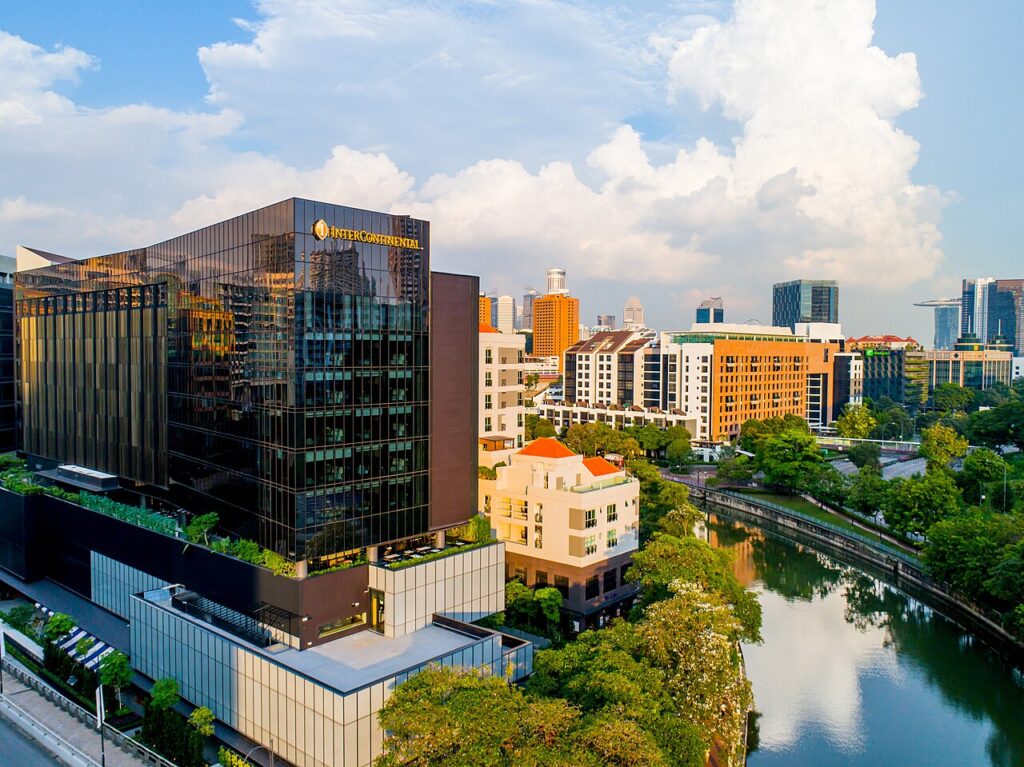
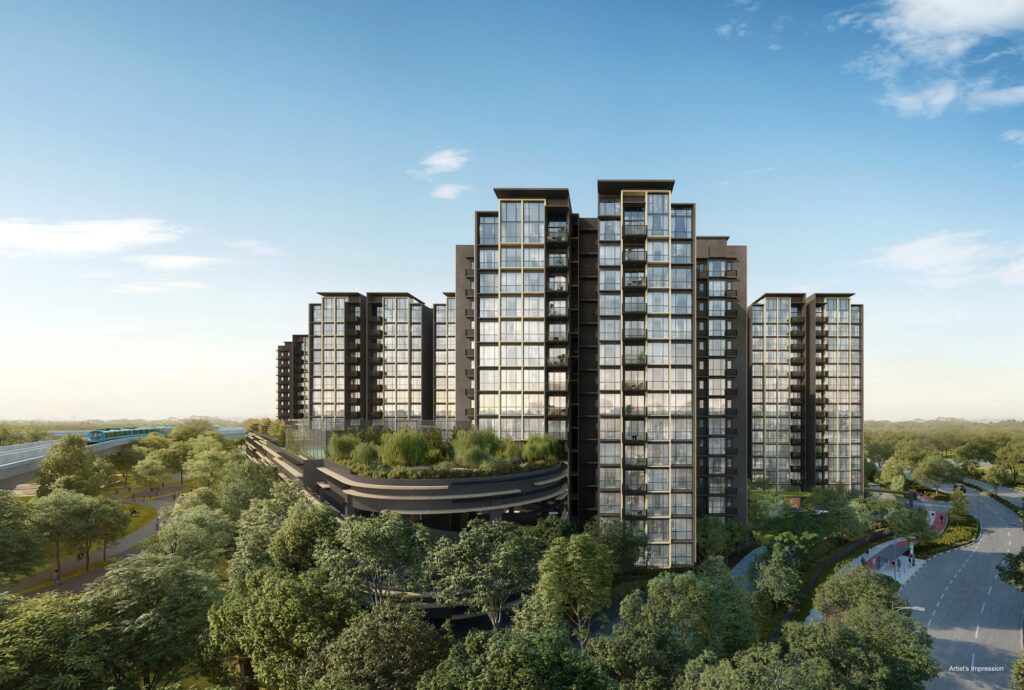
URA defines a shoebox unit as a private residential unit under 500 sqft (46.4 sqm). Typical quantum in 2026 is S$0.9m–S$1.5m depending on region. Gross rental yields are 4.0–5.2% — the highest among private residential formats. Resale liquidity is harder than 2-bedders, especially in supply-heavy pockets. Shoeboxes still work as first rungs on the ladder, as pure yield plays near business parks, and as foreigner-owned entry points under ABSD 60%.
Shoeboxes have been polarising since URA first named them in 2012. Sceptics call them “yield traps” with poor resale mobility. Defenders point at sold-out launches in Geylang, Paya Lebar and Bugis, and at the arithmetic of getting into private property on one income.
This guide sets out the URA rules, the current quantum and yield picture, and the situations where the shoebox format genuinely still works. For broader investor comparison, read alongside our CCR vs RCR vs OCR guide.
The shoebox format, scored across size, quantum, yield and resale.
What counts as a shoebox
URA classifies any non-landed private residential unit under 500 sqft as a shoebox. Some of these are pure studios; others are 1-bedders with a defined bedroom. The common thread is minimal circulation space and a single main living area.
Since 2018 / 2019 URA guidelines, developers face minimum-size rules at project level outside the Central Area: typical average unit sizes must be above a floor (raised further in 2023 for selected districts), which caps how many shoeboxes go into a new OCR project.
Quantum and PSF
Region
Typical quantum (new + resale)
PSF (shoebox)
CCR
S$1.2m–S$1.6m
~S$3,200
RCR
S$1.0m–S$1.4m
~S$2,600
OCR
S$0.9m–S$1.2m
~S$2,100
Shoebox PSF always runs above larger units in the same project — developers price the scarcity of small-unit entry tickets.
Rental yield
Rental yields run 4.0–5.2% gross across regions. The drivers:
Single-occupant tenant profile willing to pay a rent-per-head premium
Shorter vacancy cycles in business-park / CBD-fringe locations
Lower total maintenance cost base
Net yield (after maintenance fees, property tax, insurance, agent fees) is typically 70–80% of gross.
Who shoeboxes suit
Singles / young couples without children: entry ticket into private property from one income.
Upgraders from HDB wanting a second income stream (inside LTV limits).
Foreign buyers absorbing ABSD 60% on a smaller base.
Near-workplace pied-à-terres in Marina South / Paya Lebar.
Where the numbers break
Four failure modes:
Supply concentration. A 500-unit shoebox-heavy OCR project produces a resale queue where nothing moves.
Capital appreciation lag. Over 5–10 year horizons, 2-bedders have outperformed shoeboxes in most tracked projects.
Family-upgrade demand ceiling. Hard to sell to growing families.
Rental concentration risk. Yield dependence on proximity to specific employment nodes.
Worked example — OCR shoebox, 10-year horizon
A S$1.1m OCR shoebox bought at launch in 2016, rented at S$2,800/month from year 2, with 3% annual rent escalation and a 1.5% net of gross conversion:
Gross rent over 10 years: ~S$385,000
Net rent (70%): ~S$270,000
Capital appreciation at 2%/year: ~S$245,000 price uplift
Transaction costs (BSD, agent, legal): ~S$45,000
Simple pre-SSD, pre-CPF-accrued-interest total return: roughly S$470,000 on a ~S$250,000 net cash outlay (assuming 75% LTV). Attractive on paper — but highly sensitive to vacancy and rental softness.
Frequently asked questions
Can I buy a shoebox in an HDB estate?
HDB flats are not shoeboxes under URA’s definition (they’re public housing). The 2-room Flexi at ~430 sqft is the closest HDB analogue; the Fresh Start scheme uses it. See our Fresh Start guide.
Are shoeboxes eligible for CPF usage?
Yes, same as any private residential. Lease-to-95 test still applies.
What’s the smallest shoebox allowed?
URA’s minimum internal gross floor area for new developments is 35 sqm (~377 sqft). Some pre-rule stock goes smaller.
Does URA measurement exclude balconies?
URA applies a minimum GFA excluding balcony. Resale listings typically quote strata area including balcony, so always check the GFA.
This guide is for general information only and is accurate as of April 2026. Singapore property rules, taxes and cooling measures change frequently — always verify current figures with URA, IRAS, HDB or a licensed professional before committing. LovelyHomes is not a financial, legal or tax advisor.
A dual-key condo is a single strata title with two self-contained sub-units — typically a main 2 or 3-bed and a separate studio — behind a shared private lobby. It counts as one property for ABSD, LTV and TDSR. Typical size is 1,100–1,600 sqft. Rental yield uplift from partial rental is 0.5–1.0% over an equivalent single-key unit. Best for multi-gen families, WFH separation, or partial rentals while occupying the main unit.
The dual-key layout was a mid-2010s development marketing innovation: take a standard 3-bedroom floorplate, wall off one of the rooms into a self-contained studio with its own kitchenette and bathroom, and sell the whole thing as one strata title. Ten years on, dual-keys are a small but durable slice of the launch menu — and the rental maths often makes sense.
This guide covers the layout, the financing treatment, the rental-yield case, and the situations where a dual-key actively hurts you. If dual-key is on your shortlist alongside other condo formats, our condo downpayment guide covers the cash/CPF/LTV maths you’ll need to price it.
Typical dual-key layout — one title, two self-contained homes.
What a dual-key actually is
Two separate self-contained units sharing a private lift lobby. Each unit has its own:
Front door
Kitchen or kitchenette
Bathroom
Living / sleeping area
But critically, they share one strata title, one loan, one ABSD payment, one property-tax account.
Typical sizes and configurations
Layout
Main unit
Sub-unit
Total size
2 + 1 dual-key
2-bed, ~700–900 sqft
Studio, ~300–400 sqft
1,100–1,300 sqft
3 + 1 dual-key
3-bed, ~950–1,200 sqft
Studio, ~400 sqft
1,400–1,600 sqft
Financing, ABSD and TDSR
One property, one set of duties
The entire dual-key unit is a single purchase. BSD and ABSD are calculated on the full purchase price; LTV is capped as if it were one property; TDSR and MSR apply once. This is the defining benefit over buying two shoeboxes — which would each attract separate ABSD.
Bank valuation quirks
Valuers apply a small discount to the sub-unit versus a freestanding studio, because it cannot be sold or remortgaged separately. Expect 3–6% under the sum of two equivalent standalone units.
The rental-yield case
The typical dual-key yield uplift runs 0.5–1.0 percentage points over an equivalent single-key 3-bedder. Two drivers:
The studio rents at studio PSF, which is always the highest PSF band.
Partial-rental frees the owner to occupy the main unit — keeping one-time ABSD exposure.
Who dual-keys suit
Multi-gen families: adult children, parents-in-law, or a helper with a separate bath/kitchen.
Hybrid owner-occupy + rent-out: owner in the main unit, studio leased on 12-month terms (short-term AirBnB is prohibited under URA < 3-month rule).
WFH professionals: completely separate workspace behind its own door.
First-time investors: live in the main unit, let the studio produce cash flow without triggering ABSD on a second property.
When the dual-key format hurts
Resale liquidity is thinner than a standard 3-bedder — the buyer pool is narrower (single families who want a standard 3-bed may skip dual-keys).
The sub-unit can feel cramped without good natural light — check window/air conditioning provisions.
PSF at launch is often above the comparable single-key because the developer prices in the yield-potential premium.
Frequently asked questions
Can I sell the two units separately later?
No. One strata title. The only way to sell separately is physical remodelling + strata subdivision, which is almost never approved.
Can I AirBnB the sub-unit?
No. URA forbids short-term rentals (< 3 months) of private residential property. 12-month leases are fine; serviced-residence-style rentals are not.
How does property tax work?
One tax account based on the unit’s Annual Value. If you owner-occupy the main and lease the sub-unit, the owner-occupier AV rates apply to the whole unit — a subtle benefit over leasing the entire unit. See our property tax guide.
Do dual-keys en bloc well?
Same as any other unit in the development — the en bloc sale is on the development, not the unit. Apportionment is usually by total share value, so dual-key owners are not disadvantaged.
This guide is for general information only and is accurate as of April 2026. Singapore property rules, taxes and cooling measures change frequently — always verify current figures with URA, IRAS, HDB or a licensed professional before committing. LovelyHomes is not a financial, legal or tax advisor.
99-to-1 property ownership is a structure where one party holds a 99% interest in a property and another holds 1%. It came under intense IRAS scrutiny in 2023–2024 when the tax authority identified a specific pattern being used to sidestep Additional Buyer’s Stamp Duty (ABSD). This 2026 guide separates legitimate 99-to-1 arrangements from the red-flag pattern IRAS has been reassessing, and explains how it differs from classic decoupling.
For the official IRAS guidance, see IRAS’s stamp duty page. This article explains the practical picture.
Quick Answer — 99-to-1 in 2026
The structure: one party holds 99% of a property, another holds 1%.
Legitimate uses: loan eligibility, succession planning, investment allocation among co-owners.
The flagged pattern: sole buyer signs OTP, then transfers 1% to another party within weeks.
Clawback: original ABSD + 50% surcharge = 1.5x the amount saved.
Different from decoupling: 99-to-1 happens at original purchase; decoupling happens long after purchase.
The red-flag pattern: a two-stage transfer executed within weeks of the original OTP.
Why 99-to-1 Became Attractive
A standard 99-to-1 structure lets two parties co-own a property with minimal share for one. In isolation this is unremarkable — people use it for tax planning, succession, and pooled investment.
Under Singapore’s ABSD framework, though, it can also function as a loan-qualification tool. Here is the pattern IRAS identified:
A buyer without enough income to qualify for a large bank loan wants to buy a S$2m condo.
A family member with high income but who already owns a property agrees to be named on the loan.
The high-income family member was added as a co-owner at 1%, while the main buyer takes 99%.
The bank was willing to lend based on both incomes because the family member is a co-owner.
But because the family member only owned 1%, the buyer’s main ownership would have qualified for first-timer ABSD treatment.
The effect: a high-income co-owner who already owned property was piggybacking on a first-timer buyer’s ABSD rate. IRAS identified this as a tax-avoidance pattern under the general anti-avoidance provision.
The IRAS Audit Pattern
IRAS has been targeting a specific variant of 99-to-1:
Sole buyer signs the OTP and pays BSD on the full purchase price at first-timer rates.
Within weeks of OTP, a 1% share is transferred to a second party (often a spouse or parent).
The 1% transferee already owns another property — they would have triggered ABSD if they had been on the OTP from day one.
The two-stage structure avoids the ABSD that a direct joint purchase would have incurred.
IRAS reviewed approximately 300–400 such cases in its 2023–2024 sweep. Where the pattern matched, IRAS reassessed the transaction as if the 1% transferee had been a co-owner from the start, and issued an ABSD bill plus surcharge.
The 1.5x Clawback
When IRAS reassesses a 99-to-1 arrangement as tax avoidance, the remedy is:
The full ABSD that would have applied had the transferee been on the OTP from day one
Plus a 50% surcharge on that ABSD
On a S$2m purchase where avoided ABSD was 20% = S$400,000, the clawback works out to S$400,000 + S$200,000 surcharge = S$600,000 payable, plus any interest and legal costs. This is materially more punitive than simply paying the ABSD upfront.
Legitimate 99-to-1 Arrangements
Not every 99-to-1 is a red flag. IRAS has explicitly acknowledged the pattern is legitimate when:
Both parties are co-owners from day one
If both parties sign the original OTP and are named as co-owners in the Sale & Purchase Agreement at the 99:1 split, this is a single transaction and the full ABSD applies on the 1% transferee’s share from the outset. No two-stage manoeuvre, no IRAS issue.
Genuine investment-pooling
Multiple family members pooling funds for an investment property, with each contributing in proportion to their share, is legitimate — provided the shares reflect actual contribution.
Succession planning
A parent retaining 99% and transferring 1% to a child for succession reasons is legitimate, subject to the normal BSD on the 1%. Timing is usually far removed from any property transaction, which is itself a credibility signal.
Commercial co-ownership
Business partners sharing an investment property where one partner provides 99% of the capital and the other provides 1% (perhaps in exchange for operational management) is legitimate under normal commercial logic.
How 99-to-1 Differs from Decoupling
Aspect
99-to-1
Decoupling
Timing
At or near original purchase
Years after purchase, before a new purchase
Ownership after
99:1 split persists
One party becomes sole owner
What it enables
Two parties on loan
Freed spouse buys second home
ABSD mechanism
Avoided on the 99% party
Avoided on the transferring party’s next purchase
IRAS scrutiny
2023–2024 sweep
Reviewed case-by-case
Put simply: decoupling restructures an existing joint ownership; the flagged 99-to-1 pattern manipulates a fresh purchase to sidestep ABSD that would otherwise have applied.
If You Already Have a 99-to-1 Arrangement
If you set up a 99-to-1 before 2023–2024 and have not heard from IRAS, it is almost certainly not in the audit scope. However, if you receive an IRAS query letter:
Do not respond on an informal basis. Engage a tax-focused solicitor immediately.
Compile the documentary evidence for the legitimate commercial purpose of the arrangement.
Be ready to pay the full clawback + surcharge if the pattern matches the flagged type. Appealing is expensive and the success rate has been low.
Consider restructuring if the arrangement is ongoing — though retrospective fixes rarely help once IRAS has engaged.
Current Status in 2026
As of 2026, IRAS continues to monitor two-stage transfers with a 1% residual. The 2023–2024 sweep was not a one-off — it set a precedent that routine transaction audits now look for. Structures that superficially resemble the flagged pattern are far riskier than they were before 2023.
For buyers with legitimate pooling or succession reasons, the arrangement remains viable — but put the co-owner on the original OTP, keep documentation of commercial intent, and avoid the tell-tale timing pattern.
FAQ — 99-to-1 2026
Is 99-to-1 illegal?
No. The ownership structure itself is legal. What is scrutinised is whether the specific arrangement amounts to tax avoidance under the general anti-avoidance provision.
Can I still use 99-to-1 today?
Yes, provided both parties are on the original OTP and the arrangement has a genuine commercial purpose. The risky pattern is the two-stage transfer executed soon after OTP.
How does IRAS identify flagged arrangements?
By cross-referencing stamp duty records with property ownership data. If you owned property before the 1% transfer date, IRAS’s system will flag the transaction for review.
What about 95-to-5 or 90-to-10?
The same anti-avoidance principle applies. IRAS has focused on 99-to-1 because it is the most extreme variant, but the logic extends to any split where a high-income party with existing property takes a minor share to piggyback ABSD rates.
Can I unwind an existing 99-to-1 to avoid IRAS attention?
Possibly, but consulting a tax lawyer before any action is essential. Unwinding can itself trigger stamp duty and CPF complications, and retrospective “fixes” are often viewed as evidence of avoidance intent.
Disclaimer: This article explains a complex and evolving area of Singapore tax law. Specific cases require qualified legal and tax advice. IRAS enforcement practice may shift further.
Property decoupling is the restructuring of joint ownership between spouses so that one of them becomes the sole owner of the existing property, freeing the other to buy a second home at first-timer ABSD rates (0% for SCs, 5% for PRs). In 2026, with ABSD at 20% for SCs on a second property, the savings can be substantial — but HDB flats cannot be decoupled except in divorce, and IRAS scrutinises obviously tax-avoidance arrangements.
This guide walks through how decoupling works mechanically, the costs involved, a worked example, and when IRAS is likely to push back.
Quick Answer — Decoupling at a Glance
Who: Joint owners of a private property (spouses typically).
What: One party transfers their share to the other so that the other becomes sole owner.
Why: The transferring party is now property-free and can buy a second home at first-timer ABSD rates.
HDB flats: Cannot be decoupled except under divorce court order.
IRAS risk: If the arrangement is clearly contrived, IRAS can reassess as tax avoidance.
A worked before/after on a S$1.5m second property — roughly S$300k of ABSD saved for a ~S$50k restructuring cost.
How Decoupling Works Mechanically
There are two legal pathways to decouple a property:
1. Part-purchase
One spouse buys the other spouse’s share via a sale and purchase agreement. The price must be at market value (to satisfy IRAS), and Buyer’s Stamp Duty is paid on the share being transferred. If there is a mortgage, the buying spouse typically refinances the loan in their sole name.
2. Transfer-of-ownership
Less common and typically used only in genuine gift scenarios or divorce. The share is transferred via a Deed of Transfer. Stamp duty still applies based on the market value of the share.
The common pathway is Part-purchase, because it creates a clear arms-length commercial record (helpful if IRAS later asks questions).
Costs of Decoupling
Decoupling a typical S$1.5m condo with joint ownership structured as 50:50:
Component
Amount
Property value
S$1,500,000
Share being transferred (50%)
S$750,000
BSD on S$750,000 transfer
~S$17,100
Legal fees (2 parties, separate lawyers)
S$4,000–S$6,000
Mortgage refinancing costs
S$1,000–S$3,000
CPF refund (to transferring spouse’s CPF)
Full principal + accrued interest
Total cost (excluding CPF flows)
~S$22,000–S$26,000
The CPF refund is a cash flow, not a cost — the transferring spouse’s CPF OA is topped up with their original contributions plus 2.5% annual accrued interest. They can then redeploy that CPF for the second property purchase.
Worked Example: Buying a S$1.5m Second Property
A married couple owns a S$2.5m Orchard-area condo jointly. They want to buy a S$1.5m investment unit.
Without decoupling
Both already own property → ABSD 20% applies to the second purchase
ABSD on S$1.5m = S$300,000
Plus BSD on S$1.5m = S$44,600
Total stamp duty: S$344,600
With decoupling
Husband buys out wife’s 50% share of the Orchard condo → BSD on S$1.25m = ~S$35,600
Plus legal fees and refinancing: ~S$6,000
Wife now has zero property → first-timer status
Wife buys the S$1.5m second property → ABSD 0%, BSD only
BSD on S$1.5m = S$44,600
Total stamp duty + decoupling costs: S$86,200
Net saving
S$344,600 – S$86,200 = S$258,400 saved.
HDB Flats Cannot Be Decoupled
Since 2016, HDB explicitly prohibits decoupling of HDB flats except under court order (usually in the context of divorce). The rule was introduced specifically to close the ABSD-avoidance loophole that decoupling had opened for HDB flat owners looking to buy private property.
If you own an HDB flat and want to buy a private unit without paying ABSD, the only legitimate paths are:
Sell the HDB first, buy the private unit as a first-timer (subject to MOP being fulfilled)
Dispose of HDB within 6 months of buying the private unit — the ABSD Remission Scheme refunds the ABSD you initially paid
IRAS Scrutiny: When Decoupling Becomes Tax Avoidance
Decoupling is legitimate when it reflects a genuine change in ownership. IRAS begins asking questions when the arrangement is obviously contrived for tax savings alone. Red flags include:
Back-to-back decoupling and second purchase — decouple today, OTP tomorrow
The transferring spouse had no means to be a genuine buyer (income too low to have qualified for the original loan alone)
Multiple decouplings in sequence — decouple to buy property A, decouple again to buy property B
Artificial “loan” structures where the buying spouse’s share payment is obviously funded by the transferring spouse
Under the Stamp Duties Act and the general anti-avoidance provision, IRAS can reassess the arrangement as tax avoidance and claw back the saved ABSD with a surcharge. The 99-to-1 arrangement scrutinised in 2023–2024 was a related pattern — see our 99-to-1 guide.
Is Decoupling Still Worth It in 2026?
For genuine cases — where one spouse actually wants to become a sole owner, and the other actually has the income and savings to buy a second property independently — yes. The ABSD savings on a mid-market second property (S$1m–S$2m) typically far exceed the cost of decoupling by a factor of 6 to 10.
For arrangements that are transparently tax-motivated — where the transferring spouse has no genuine interest in becoming a sole property owner — the risk calculus has changed. IRAS has shown a real willingness to reassess such arrangements, and the 1.5x clawback means a failed attempt costs more than just paying the ABSD upfront.
Practical Considerations
Timing: Complete the decoupling fully before the second property’s OTP. Back-to-back transactions draw IRAS attention.
Separate legal counsel: Each spouse should use a different lawyer. Joint counsel can be a red flag.
Market-value pricing: The share must be sold at market value, supported by a professional valuation.
Mortgage servicing: The buying spouse must independently qualify for the refinanced loan in their sole name.
CPF flows: The transferring spouse’s CPF must be refunded in the correct amount, including accrued interest.
FAQ — Decoupling 2026
Can I decouple a condo I own with my parent?
Yes, the same mechanisms apply (Part-purchase or Transfer-of-ownership). The stamp duty rates depend on the parent’s relationship, and IRAS may look more closely if the decoupling pattern is unusual.
Does decoupling affect the existing bank loan?
Yes. The bank will need to refinance the loan in the sole name of the buying spouse. If the buying spouse cannot service the full loan independently, decoupling is not viable.
How long does decoupling take?
Typically 8–12 weeks from engagement to completion. Both lawyers, the bank, and CPF must all coordinate.
Can unmarried partners decouple?
They can, but the original joint ownership would need to have had a clear commercial basis (co-investors, for instance). IRAS is more likely to scrutinise an unmarried joint ownership that decouples immediately before a second purchase.
What if IRAS does reassess?
Expect the original ABSD saved plus a 50% surcharge (1.5x clawback). On our S$300k ABSD example, that would be S$450k payable — plus interest and legal costs.
Disclaimer: This is general guidance, not legal or tax advice. Decoupling has significant tax, legal and CPF consequences specific to your household. Always engage a qualified conveyancing lawyer and a tax advisor before proceeding.
An Executive Condominium (EC) is Singapore’s middle-ground property — built by private developers like a condo, but sold initially with HDB-style eligibility rules and subsidies. Ten years after launch, it becomes indistinguishable from a private condo. This 2026 guide walks through the EC framework, eligibility rules, income ceiling, grants, and the full arc from application to full privatisation.
For the latest EC launches and rules, see the HDB EC page.
Quick Answer — EC Essentials
Hybrid flat: HDB-administered for the first 10 years, private after.
Income ceiling: S$16,000 gross monthly household income at application.
MOP: 5 years from TOP — during which you cannot sell or rent out the whole unit.
At year 5: sell to Singapore Citizens and PRs only.
At year 10: fully privatised — sell or rent to anyone, including foreigners.
CPF grants: up to S$30,000 for first-timer families.
ABSD: treated like private property — SCs 0% on first home, PRs 5%.
From launch to full privatisation — the EC follows a distinctive 15-year arc.
What Is an EC?
An Executive Condominium sits between public housing and private property. The Housing Development Board administers the launch and enforces early-stage rules, but the project itself is designed and built by a private developer, is freehold of its strata units, and has all the finishes and facilities of a regular condo — pool, gym, security, the full package.
The tradeoff is the resale restriction: for the first five years, you cannot sell the unit at all. Between year 5 and year 10, you can only sell to Singapore Citizens or PRs. Only from year 10 onwards is the EC fully privatised — at which point it is just like any other condo.
Eligibility Rules
EC eligibility sits in between BTO and private condo:
Applicant profile
Public Scheme (married couples): At least one SC, the other SC or PR.
Fiancé/Fiancée Scheme: Both parties intend to marry within 3 months of key collection.
Joint Singles Scheme: 2 singles aged 35+, both SCs.
No Single-Buyer Scheme — unlike BTO, ECs cannot be bought by a lone single applicant.
Income ceiling
The gross monthly household income must not exceed S$16,000 at application. This is tested at the time of booking, not at TOP. Once you have signed the sale and purchase agreement, subsequent income growth does not disqualify you.
Existing property ownership
Applicants cannot own any other property, local or overseas, within 30 months of the EC application. This is a stricter rule than private condos (where overseas property is fine) but less strict than BTO (which has complete no-tolerance for non-subsidised private property).
Financing and Grants
ECs are financed by bank loans only — HDB Concessionary Loans do not apply. That means:
LTV is bank-determined (max 75% for first property, falling to 45% for second).
Minimum 5% cash downpayment plus up-to-20% via CPF or cash.
TDSR and MSR both apply — whichever is tighter is binding. MSR caps the EC loan at 30% of gross monthly income.
CPF Housing Grants for ECs
First-timer families buying an EC can receive the CPF Housing Grant:
Household income
Family grant
Up to S$10,000
S$30,000
S$10,001–S$11,000
S$20,000
S$11,001–S$12,000
S$10,000
Above S$12,000
Nil
Second-timer + first-timer households receive progressively less; second-timer + second-timer couples receive no CPF grant for ECs.
Payment Schedule: Progressive Payments
ECs use a Progressive Payment Scheme because the unit is still under construction when you sign. You pay in stages as the project hits construction milestones:
Stage
% of price
When
Booking fee
5%
At booking
S&P Agreement
15%
~8 weeks after booking
Foundation
10%
Typically 6–12 months
Concrete structure
10%
Mid-construction
Further milestones
35%
Structure, walls, ceilings, M&E
TOP
25%
Key collection
CSC
15%
12 months after TOP
The 5-10-15 Journey
An EC’s economic and legal profile changes at three fixed points:
Year 0–5 (MOP period)
You cannot sell the unit at all. You can only sublet a single room, not the whole unit. The EC is, legally, treated as HDB for most purposes.
Year 5 (MOP achieved)
You can now sell, but only to Singapore Citizens and Permanent Residents. You can also now rent the whole unit out. Most EC owners who plan to upgrade do so at this point.
Year 10 (full privatisation)
The EC is now legally indistinguishable from a private condo. Foreign buyers are allowed. Resale prices typically see a step-up at this milestone, as the buyer pool widens significantly.
Income growth after booking is fine — but MOP stays at 5 years even if your income later exceeds the EC ceiling. You are not forced to sell.
Do not rent out the whole unit before MOP — this is the most common accidental breach, and HDB can compulsorily acquire the flat at the original price.
Don’t underestimate the progressive payment schedule — you need to service the loan as disbursements happen, not just at TOP.
Check the EC framework for your specific launch — rules on income ceiling, grants and MOP have been revised multiple times over the past decade.
FAQ — Executive Condominium 2026
Can I buy an EC if I already own a BTO?
You must dispose of the BTO before or within 6 months of the EC TOP date, and the MOP on the BTO must already have been fulfilled. Otherwise, you are not eligible.
What if my income goes above S$16k after booking?
No impact. The income ceiling is tested at booking only. Your future income is not relevant to your EC eligibility.
Can PRs buy an EC?
Only jointly with a Singapore Citizen, under the Public Scheme. A standalone PR applicant is not eligible.
Can I sublet individual rooms before MOP?
Yes, up to 3 rooms, provided you continue to occupy the unit. The whole unit cannot be sublet before MOP.
How is EC resale valued at year 5?
The open market determines the price, but the buyer pool is restricted to SCs and PRs only. Prices typically reflect this — liquidity step-ups further at year 10 when foreigners can also buy.
Disclaimer: EC rules have been revised multiple times; eligibility and grant amounts for your launch may differ. Always verify with the specific e-brochure for the project and consult a licensed property agent or HDB directly.
The condo downpayment question — how much cash does a Singapore buyer actually need on day 1 — sounds simple, but it is where most first-time buyers underestimate by S$50,000 or more. The answer depends on three overlapping rules (LTV, minimum cash, and stamp duties), and it changes dramatically if this is your second or third property.
This 2026 guide walks through exactly what you need to write cheques for on the day you collect your condo keys, with worked tables for first-property Singaporean citizens, second-property buyers, and foreign buyers. For the regulator’s guidance, see MAS Notice 632 on residential LTV.
Quick Answer — Condo Downpayment on a S$1.5m Unit
First condo, Singapore Citizen: ~S$119,600 cash + S$225,000 CPF/cash = S$344,600 total day-1 outlay (including BSD).
Second condo, Singapore Citizen: ABSD alone adds S$300,000. Total day-1 outlay S$1,169,600.
Foreigner buyer, any property: 60% ABSD on top of a 45% LTV. Total day-1 outlay S$1,769,600.
Minimum cash: 5% of purchase price for 75% LTV; 10% for 45% or 35% LTV.
BSD & ABSD: payable in cash within 14 days of OTP (reimbursable from CPF OA after).
The Three Rules That Set Your Downpayment
Three layers combine to set the cash and CPF you need:
Loan-to-Value (LTV) ratio. MAS caps bank lending at 75% for a first housing loan, 45% for a second, and 35% for a third and beyond. The balance is your downpayment.
Minimum cash portion. MAS requires at least 5% of the purchase price in cash for a first property, 10% for second and subsequent.
Stamp duties. BSD and, where applicable, ABSD are paid in cash within 14 days of OTP. You can reimburse from CPF afterwards.
Figure 1: Same S$1.5m condo, three buyer profiles, cash needed on day 1 varies by nearly S$1.7 million.
First Property: Singapore Citizen on a 75% LTV
The easiest case. On a S$1.5m condo, an SC buying their first home gets:
Bank loan: up to S$1,125,000 (75% LTV, subject to TDSR).
Downpayment: S$375,000 split as:
Minimum 5% cash: S$75,000 — this is a hard floor, not a guideline.
Remaining 20%: up to S$300,000 can come from CPF OA, cash, or a combination.
BSD: ~S$44,600 (progressive on S$1.5m, capped at 5% at this level).
ABSD: 0% (first residential property for a Singapore Citizen).
Total cash needed on day 1: S$75,000 (min. cash) + S$44,600 (BSD) = S$119,600. BSD can be reimbursed from CPF OA after stamping.
Second Property: Singapore Citizen on a 45% LTV
Two major shifts bite here. First, LTV drops to 45% — meaning you fund 55% of the purchase. Second, ABSD kicks in at 20%.
Bank loan: S$675,000 maximum.
Downpayment: S$825,000 split as:
Minimum 10% cash: S$150,000.
Remaining 45%: S$675,000 from CPF OA, cash, or combination.
BSD: S$44,600.
ABSD (20% SC 2nd): S$300,000.
Total cash needed day 1: S$150,000 + S$44,600 + S$300,000 = S$494,600. That is before the S$675,000 of CPF/cash needed to reach the loan ceiling.
The most expensive profile. Foreign non-residents face LTV 45% (most banks drop to 40% for non-residents without local income), plus a flat 60% ABSD.
Bank loan: S$675,000 maximum.
Downpayment: S$825,000 in cash (no CPF access for foreigners).
BSD: S$44,600.
ABSD (60%): S$900,000.
Total cash needed day 1: S$1,769,600 against a S$1.5m purchase price. Many foreign buyers end up paying 100%+ cash when accounting for legal fees and renovation.
What About CPF OA?
CPF Ordinary Account can cover most of the non-minimum-cash portion of the downpayment, plus BSD/ABSD reimbursement after stamping. Critical caveats:
For private property, CPF usage caps at the Valuation Limit (purchase price or valuation, whichever lower) and the Withdrawal Limit of 120% of VL.
Every dollar used compounds at 2.5% accrued interest — see our CPF for Property guide for the full maths.
New Launch vs Resale: Different Cash-Flow Timing
For a new launch (BUC — Building Under Construction), payments are staggered via the Progressive Payment Scheme. You typically need 25% at the Sale & Purchase Agreement (5% OTP deposit + 20% at S&PA), then 10% at foundation, 10% at reinforced concrete, etc. This reduces upfront cash strain dramatically.
For a resale, the entire downpayment hits at completion — typically 10–14 weeks after OTP. You need the full amount in cash and CPF by completion day.
TDSR Still Applies
The LTV numbers above are ceilings, not entitlements. Your actual bank loan may be smaller if your TDSR maxes out first — see our TDSR & MSR guide. A couple earning S$16,000 a month may qualify for a S$1.1m loan under TDSR even if LTV would allow S$1.125m on a S$1.5m purchase. In that case, the extra S$25,000 shortfall is yours to fund in cash or CPF.
Frequently Asked Questions
Can I put down more than 5%/10% in cash?
Yes. The minimums are floors, not ceilings. Some buyers put 20%+ cash to reduce their loan quantum and future interest.
Does option fee count as part of the downpayment?
Yes. The 1% Option Money and the 4% Option Exercise Fee together form the initial 5%, which is also the minimum cash portion for a first property.
Can I borrow more than 75% LTV?
Not from a MAS-regulated bank. Some private financing vehicles lend above 75% but at materially higher rates and with punitive terms — we do not recommend this route.
Does the 75% LTV apply to under-construction properties?
Yes, but payment is progressive — you do not need the full downpayment on day 1 for a new launch.
What if I am using an HDB loan for an HDB flat, not a bank loan for a condo?
HDB concessionary loans offer up to 75% LTV with 0% minimum cash. See our HDB Loan vs Bank Loan guide for the full difference.
Disclaimer: This guide is general information, not financial advice. LTV and stamp-duty rules are subject to change. Verify current rules at mas.gov.sg and iras.gov.sg, and consult a licensed mortgage broker.