Singapore Citizens and Eligible PRs may purchase HDB resale flats; certain restrictions apply to singles and PRs
The standard resale process takes 12–16 weeks from Option to Purchase (OTP) to key collection
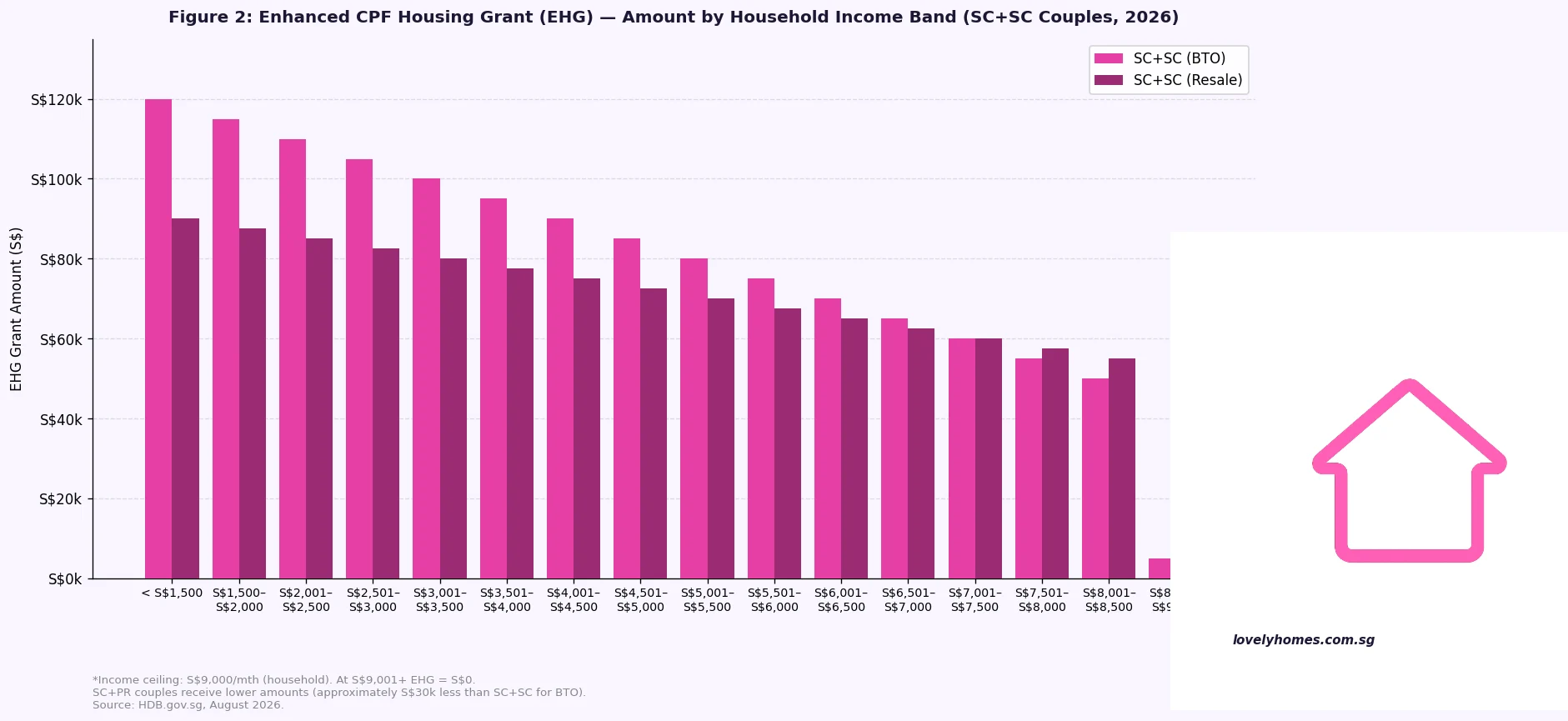
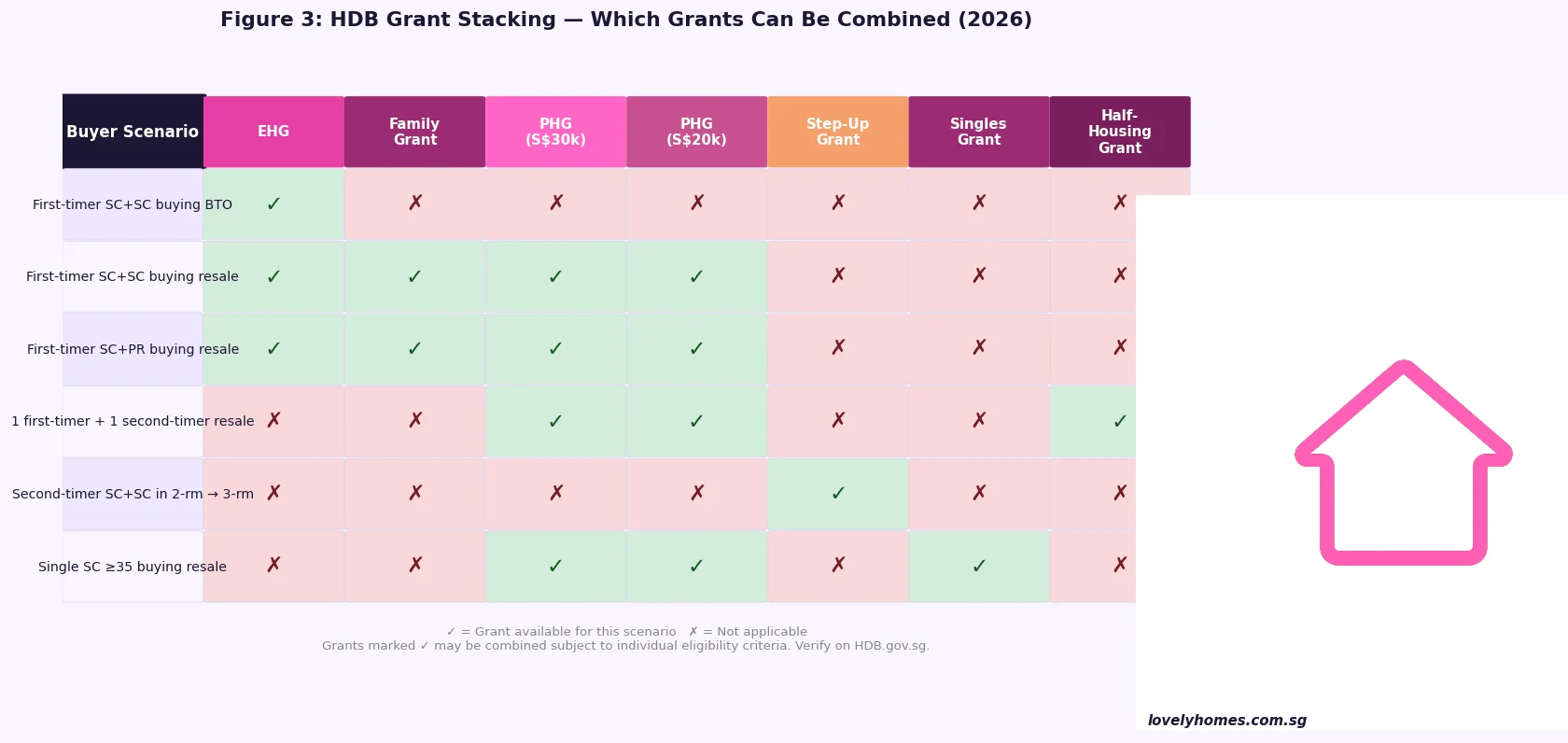
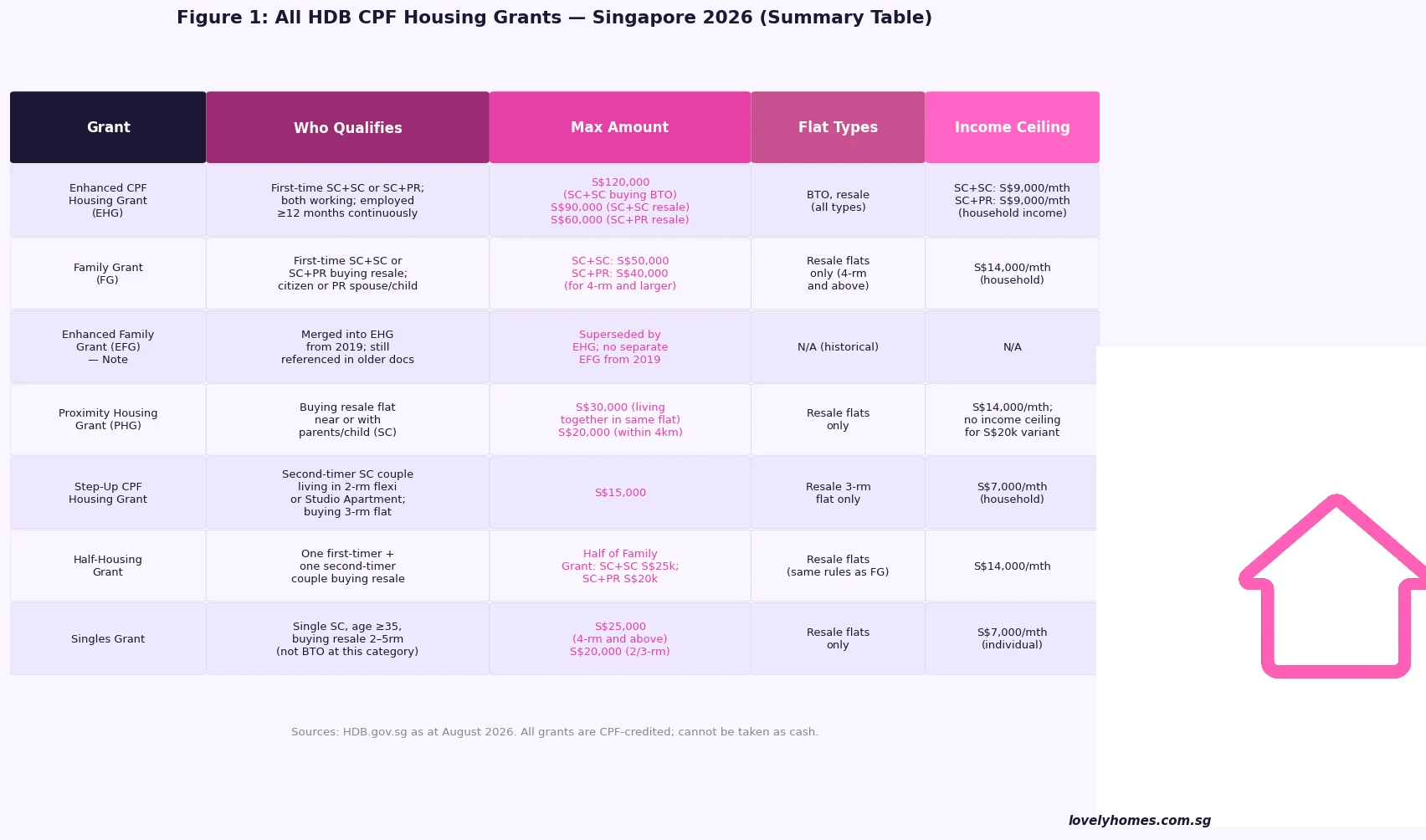
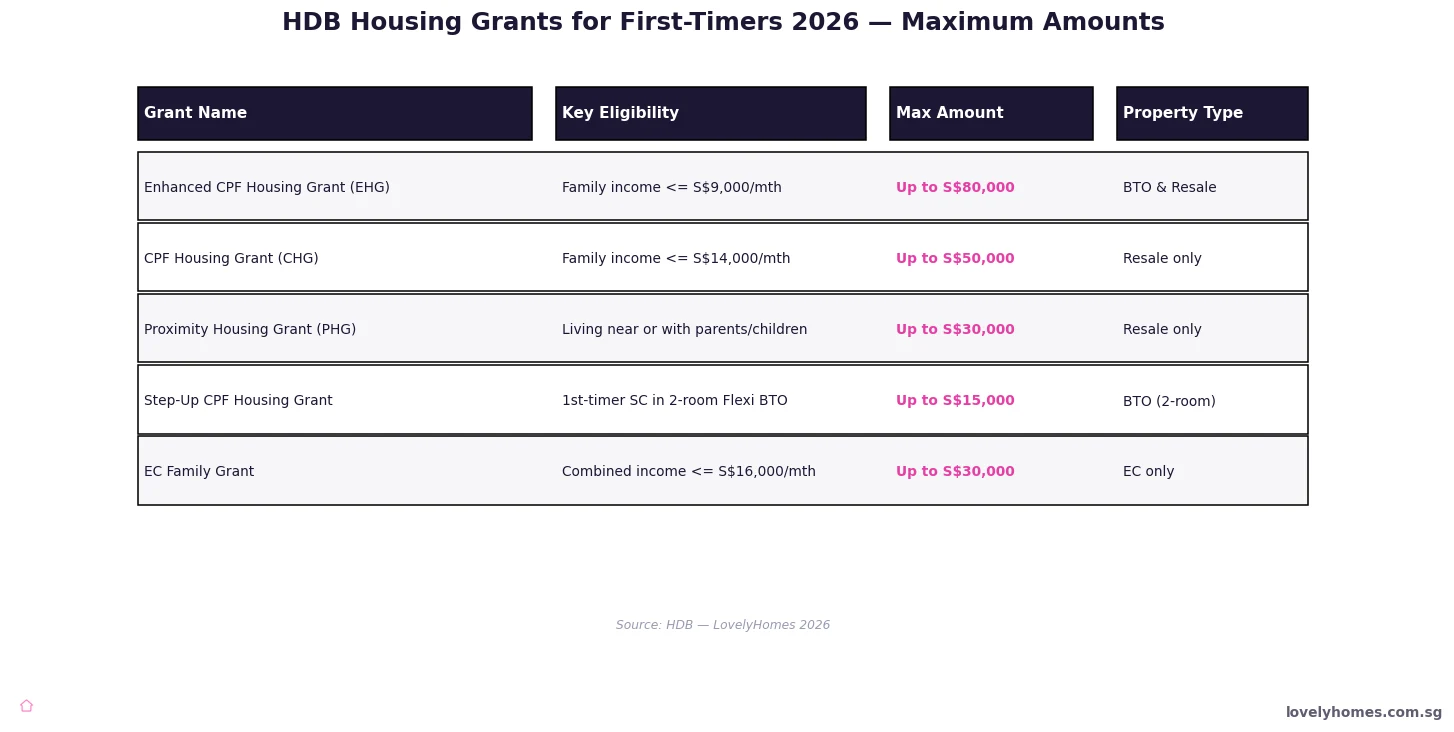
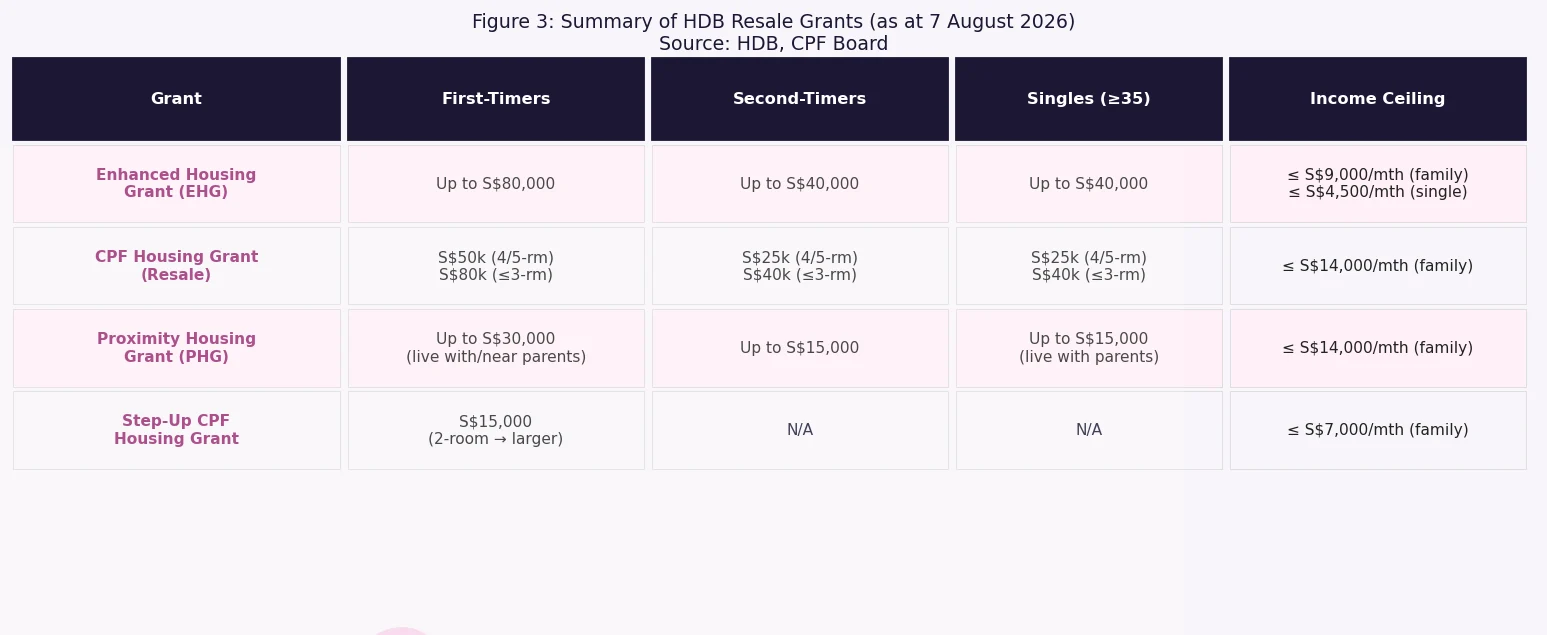
Resale buyers may tap CPF Housing Grants: Enhanced CPF Housing Grant (EHG), Family Grant, and Proximity Grant — up to S$120,000 combined
HDB Loan Eligibility (HLE) letter or bank Approval-in-Principle (AIP) must be obtained before OTP is exercised
Cash-over-Valuation (COV) must be paid entirely in cash and is no longer disclosed by HDB — buyers and sellers negotiate based on market
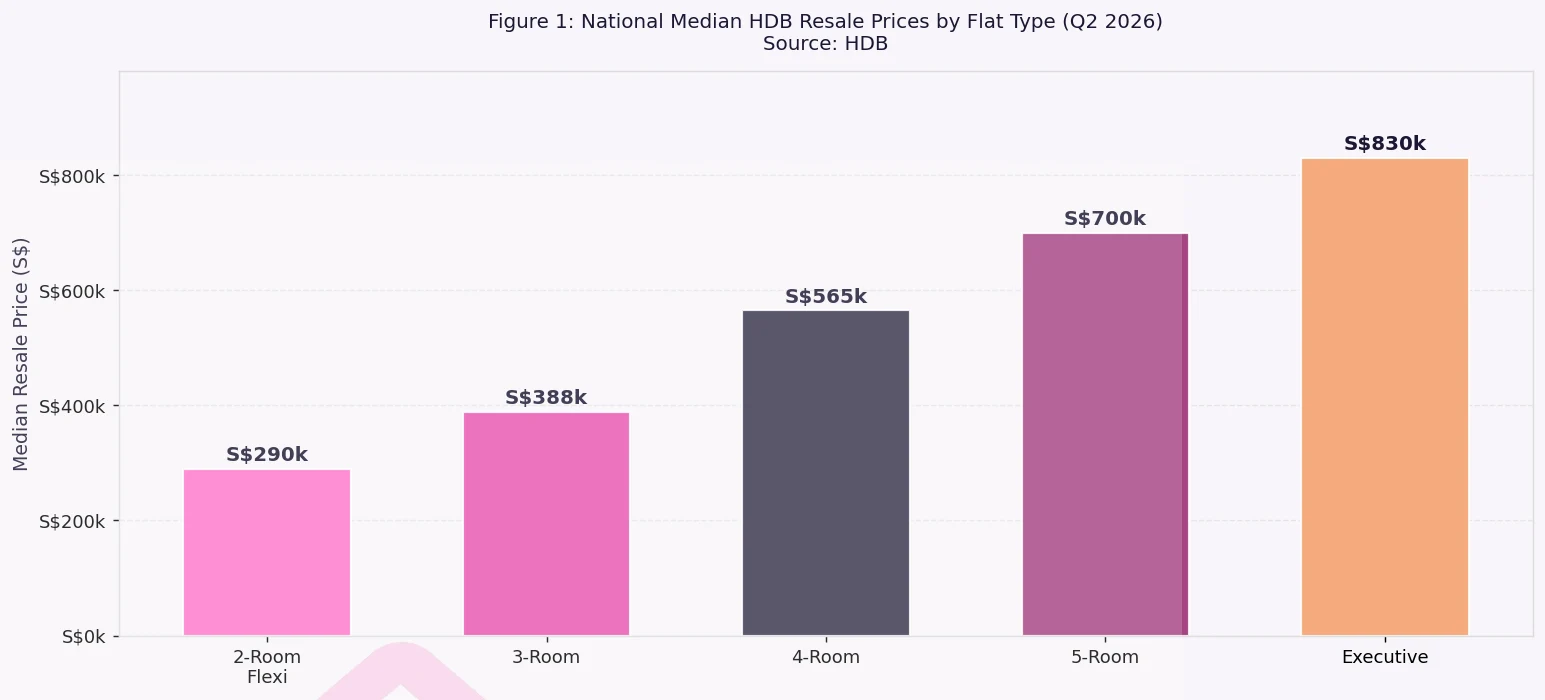
HDB resale prices fell −0.1% QoQ in Q1 2026 (first decline since Q2 2019), though 412 million-dollar transactions set an all-time record
Proximity Housing Grant (S$30,000) available if you live within 4 km of parents/children
What Is an HDB Resale Flat?
A resale HDB flat is a Housing & Development Board flat that has been previously owned by at least one household, has completed its Minimum Occupation Period (MOP) of at least 5 years, and is now available for purchase on the open secondary market through HDB’s resale portal. Unlike a Build-to-Order (BTO) flat — which involves purchasing directly from HDB at a subsidised price with a multi-year wait — a resale purchase is a private transaction between seller and buyer, with HDB administering the eligibility checks and transaction registration.
As of Q1 2026, the HDB Resale Price Index (RPI) stands at 168.9 — representing a rise of approximately 17% from Q1 2022 and a slight moderation of −0.1% quarter-on-quarter, the first quarterly dip since Q2 2019. The resale market remains characterised by sustained demand from upgraders, PRs, and those who cannot wait for BTO completion.
Figure 1: HDB Resale Price Index (RPI) — Q1 2022 to Q1 2026. Source: HDB / URA flash estimates.
Who Can Buy an HDB Resale Flat?
Eligibility for HDB resale flat purchase is governed by HDB’s Ethnic Integration Policy (EIP) and Resale Eligibility Scheme. The primary conditions are as follows:
Buyer Type
Conditions
CPF Grants Available
SC Married Couple (both SC)
May buy any HDB resale flat; MOP 5 years
EHG (up to S$120K) + Family Grant (up to S$50K) + Proximity Grant
SC + PR Family Nucleus
At least 1 SC; can buy any resale flat
EHG (SC portion); reduced Family Grant
SC Singles (≥35 years old)
May only buy 5-room or smaller HDB flat; income ≤ S$7,000
Singles Grant (up to S$25K); EHG Singles
PR Family (no SC)
May buy after PR for 3 years; restricted flat types
No CPF grants; must wait 3 years PR
Foreigners
Not eligible to buy HDB resale flats
N/A
The HDB Resale Purchase Process — Step by Step
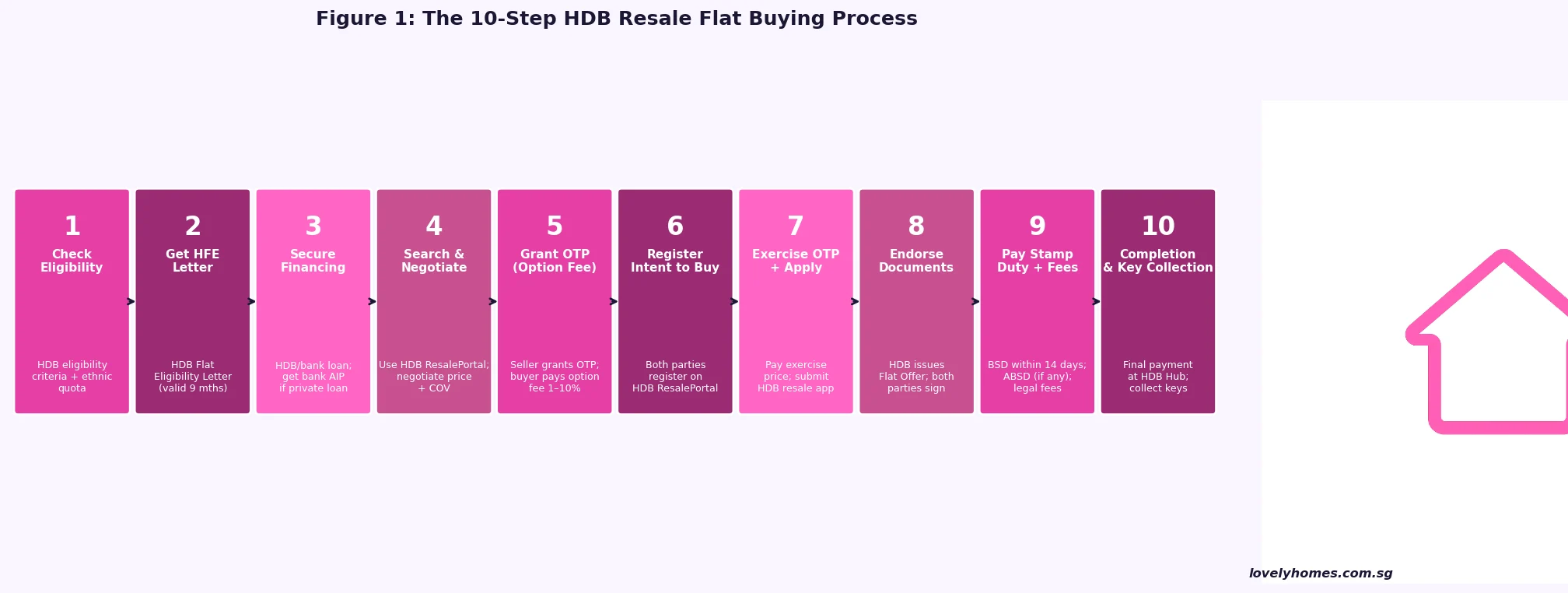
Buying an HDB resale flat involves a structured 12–16 week process administered jointly between the buyer, seller, and HDB’s portal. Below is the typical timeline:
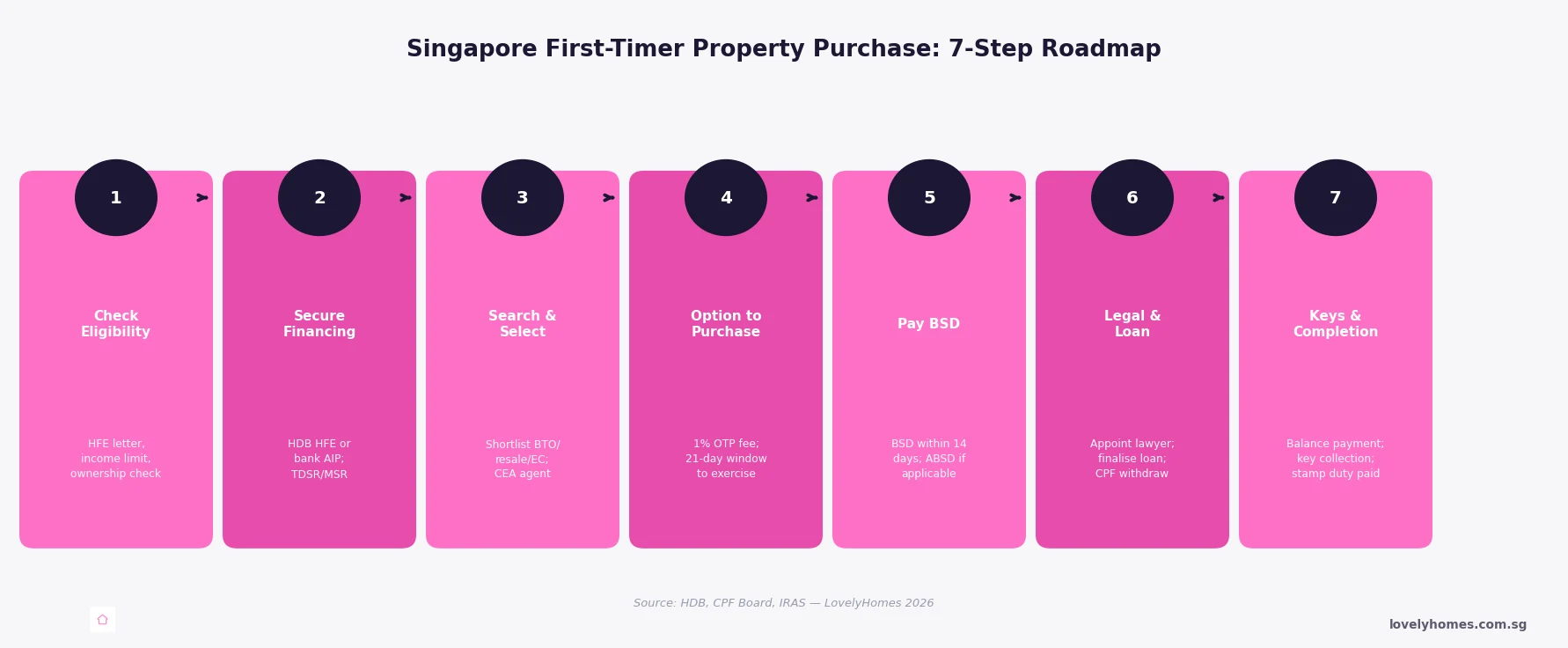
Step 1 — Establish your budget and eligibility. Determine your income ceiling, grant eligibility, CPF OA savings, and maximum loan quantum. Use HDB’s e-Services portal to check eligibility. If using an HDB concessionary loan, apply for a Housing Loan Eligibility (HLE) letter. If using a bank loan, obtain an Approval-in-Principle (AIP).
Step 2 — Engage a CEA-registered property agent (optional but recommended). You may transact directly using HDB’s resale portal, or appoint a Council for Estate Agencies (CEA)-licensed agent. All agents must be CEA-registered. Agent commission of 1–2% of the purchase price is typically borne by the buyer on the buyer’s side.
Step 3 — Search and shortlist. Browse HDB Flat Portal or property portals for listings. Factor in HDB’s Ethnic Integration Policy (EIP) quotas — some blocks may have reached their Chinese, Malay, or Indian quota, restricting the sale to certain ethnic groups.
Step 4 — Grant the Option to Purchase (OTP). The seller grants the buyer an OTP in exchange for an Option Fee of S$1 to S$1,000 (negotiated). The OTP is valid for 21 calendar days. Once the OTP is issued, both parties register their intent on HDB’s resale portal.
Step 5 — Exercise the OTP. Within 21 days, the buyer must exercise the OTP by paying an Exercise Fee (up to S$5,000 minus the Option Fee). At this point, both buyer and seller must submit the resale application to HDB via the portal simultaneously. A conveyancing solicitor is appointed.
Step 6 — HDB Appointment. HDB reviews the application (approximately 4–8 weeks) and schedules a completion appointment. At this appointment, financial documents, CPF pledges, and legal transfers are completed.
Step 7 — Completion and key collection. Keys are handed over, and the transaction is registered with SLA. The buyer officially becomes the registered owner of the flat.
CPF Housing Grants for Resale HDB (2026)
Grant
Maximum Amount
Eligibility Condition
Enhanced CPF Housing Grant (EHG)
S$120,000 (family) / S$60,000 (singles)
First-timer; income ≤ S$9,000 (family) / ≤ S$4,500 (singles); must work continuously for 12 months
Family Grant
S$50,000 (both SC) / S$40,000 (SC+PR)
At least one applicant first-timer; buying for family nucleus
Note: Figures are illustrative. BSD and legal fees (approximately S$9,600 and S$2,500–4,000 respectively) are additional. Verify your specific scenario with HDB or a licensed property consultant.
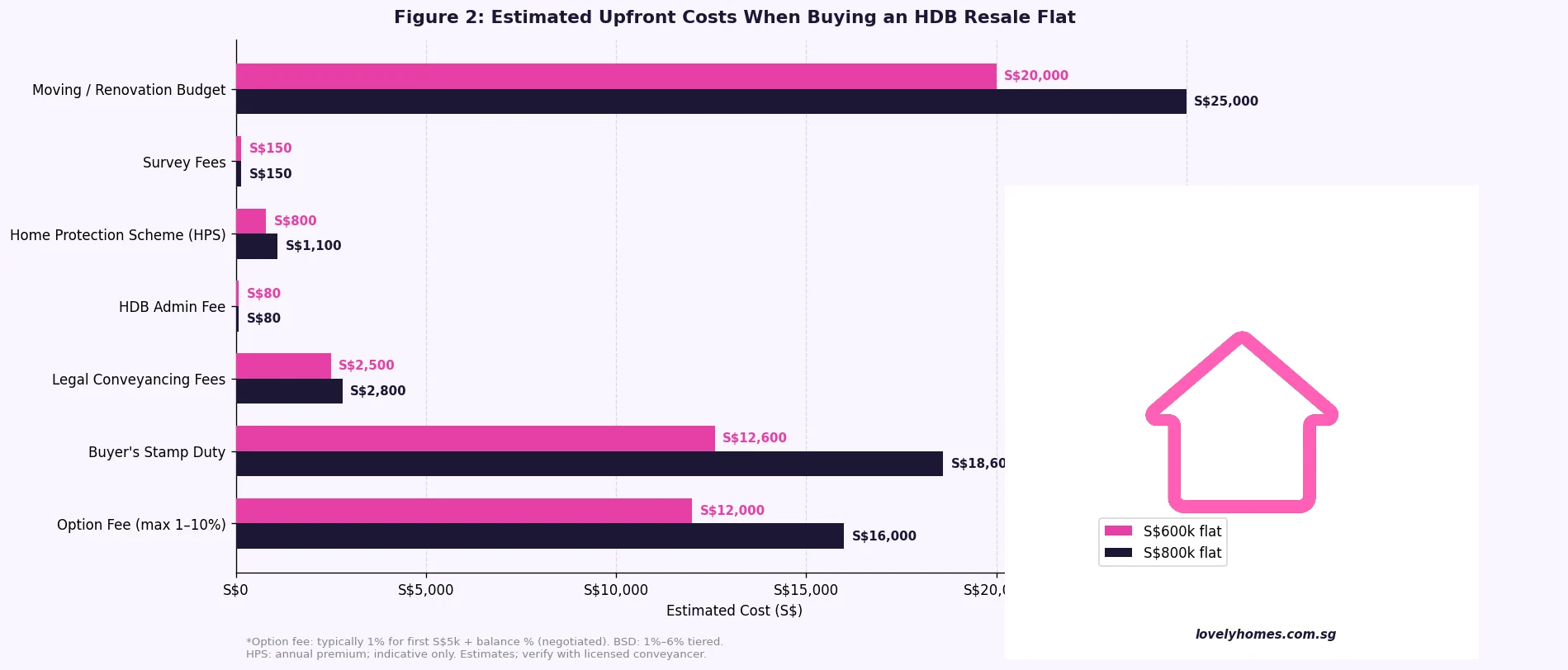
Key Costs When Buying an HDB Resale Flat
Cost Item
Amount / Rate
Payment Method
Option Fee
S$1–S$1,000
Cash
Exercise Fee
Up to S$5,000 (minus Option Fee)
Cash
Cash-over-Valuation (COV)
Market-determined (if price > HDB valuation)
Cash only
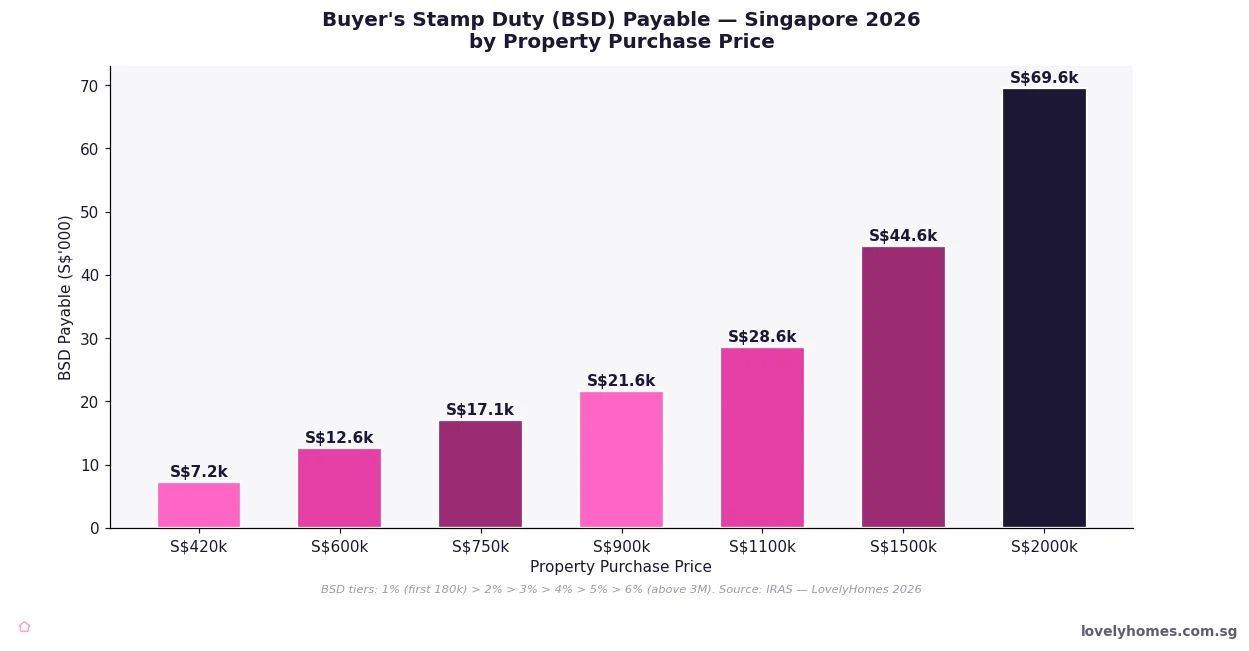
Buyer’s Stamp Duty (BSD)
1–6% progressive on purchase price
CPF OA or cash (14 days)
ABSD (if applicable)
5% (PR 1st property) / 20% (SC 2nd property) etc.
Cash (14 days)
Legal Fees
~S$2,500–S$4,000
CPF OA or cash
Agent Commission (buyer side)
1–2% of purchase price (if appointed)
Cash
Frequently Asked Questions
Can a foreigner buy an HDB resale flat?
No. Only Singapore Citizens and Singapore Permanent Residents (in a family nucleus with at least one SC, and after 3 years of PR status) are eligible to purchase HDB resale flats. Foreigners cannot buy HDB flats under any circumstances.
What is Cash-over-Valuation (COV) and how does it work?
COV is the difference between the agreed purchase price and HDB’s official valuation of the flat. If you agree to pay S$650,000 for a flat valued by HDB at S$620,000, the COV is S$30,000. COV must be paid entirely in cash — it cannot be financed through an HDB or bank loan, and cannot be paid using CPF funds. HDB no longer publishes COV data; buyers and sellers negotiate based on recent transacted prices (available on HDB’s resale flat prices portal).
Can I use CPF to pay for an HDB resale flat?
Yes. You may use your CPF Ordinary Account (OA) savings to pay for the down payment, remaining purchase price (after loan), BSD, and legal fees. However, COV must be paid in cash. CPF usage is subject to the Valuation Limit (you can only use CPF up to the HDB valuation of the flat, not the transacted price). CPF funds used attract Accrued Interest (currently 2.5% per annum), which must be refunded to your CPF account upon sale.
How long does the HDB resale process take?
From the issuance of the OTP to key handover, the HDB resale process typically takes 12 to 16 weeks. The OTP itself has a 21-calendar-day validity period. After both parties register on HDB’s portal, HDB typically takes 4 to 8 weeks to schedule the completion appointment. Delays can occur if eligibility issues arise, if financing takes longer, or if there are outstanding issues with the flat (e.g. renovation works, outstanding season parking).
What is the Ethnic Integration Policy (EIP) and how does it affect buyers?
The Ethnic Integration Policy (EIP) limits the percentage of flats in each HDB block and neighbourhood that can be owned by each ethnic group (Chinese, Malay, Indian/Others). This ensures racial integration. If the EIP quota for your ethnicity in a particular block has been reached, you cannot purchase a flat there — even if the seller is willing. Check EIP quotas using HDB’s online EIP checker before shortlisting a flat.
Disclaimer: Information on this page is published for general reference only and does not constitute professional property, legal, financial, or CPF advice. HDB eligibility rules, grant quantum, and resale procedures may change — verify all details with HDB directly at hdb.gov.sg or through a CEA-registered property consultant before transacting. LovelyHomes.com.sg does not hold a real estate agency licence.
New Launch vs Resale Condo Singapore 2026: Which Should You Buy?
Every Singapore property buyer faces this question. Should you purchase a new-launch condominium directly from the developer — paying a premium for a brand-new unit you will not occupy for two to four years — or buy a resale unit in the secondary market, moving in immediately at a price that reflects market reality rather than developer optimism? The answer is not universal. It depends on your holding horizon, cash-flow situation, rental needs, ABSD position, and how you value certainty of finishes versus flexibility of timing. This guide unpacks every dimension of the new launch vs resale decision for Singapore buyers in 2026.
Quick Answer — Key Takeaways
New launches suit buyers who can wait 2–5 years, want progressive payment to spread cash outlay, and value guaranteed new finishes with a 12-month Defects Liability Period.
Resale condos suit buyers who need immediate occupancy, want rental income from day one, or are targeting specific buildings or locations where no new supply is coming.
ABSD timing matters most for upgraders: a new launch delays the ABSD-remission clock for married SC couples but also delays the resale of an existing property.
Freehold new launches in Districts 9–11 and 15 are rare — when they appear (e.g. Meyer Blue), they typically carry a 10–20% psf premium over leasehold comparable launches but preserve CPF flexibility for future buyers.
Resale condos under 10 years old (sub-5yr from TOP) often price close to new-launch psf but allow immediate occupancy — the best of both worlds, sometimes.
Progressive payment on new launches means loan interest accrues only on drawn amounts — typically saving S$30,000–S$80,000 in interest over a 3-year construction period versus a full drawdown on a resale purchase.
The URA new-launch pipeline for 2026 shows only 17 projects — a 30% year-on-year drop — increasing scarcity pressure on the new-launch segment and potentially supporting resale prices in parallel.
What Is a New Launch Condo in Singapore?
A new launch condominium is a development sold directly by the developer — either off-plan (before construction begins) or during construction under the Progressive Payment Scheme (PPS). Buyers sign the Option to Purchase (OTP), exercise within 3 weeks, and then pay in stages as construction milestones are certified by the Building and Construction Authority (BCA). The buyer does not take vacant possession until the developer issues the Notice of Vacant Possession (also known as TOP — Temporary Occupation Permit) — typically 2.5 to 5 years after launch.
New launches in Singapore are governed by the Housing Developers (Control and Licensing) Act. Developers must maintain a project account at a licensed bank, and all purchase monies flow through that account. The Sales and Purchase Agreement (SPA) must be signed within 3 weeks of OTP exercise, and the SPA locks in price, specifications, and handover timeline.
What Is a Resale Condo in Singapore?
A resale condominium is any private residential unit purchased from a seller in the secondary market — not from the original developer. Resale transactions are governed by standard property law: OTP, caveat lodgement with SLA, 10-week completion timeline, and full payment (loan drawdown + CPF + cash) at completion. The buyer takes vacant possession at legal completion, typically within 10–12 weeks of OTP.
Resale units can range from newly-issued (just received TOP from the developer) to 30-year-old developments. The age, remaining lease (for 99-year developments), MCST condition, and unit condition all factor into the resale price and the true total cost of ownership.
Figure 1: New Launch vs Resale Condo — 10-Factor Comparison, Singapore 2026. Sources: URA, MAS, IRAS. Indicative only.
Progressive Payment: New Launch’s Biggest Cash-Flow Advantage
The single most misunderstood advantage of buying a new launch is the Progressive Payment Scheme. Under PPS, the S$2 million purchase price is not paid in full at completion. Instead, it is paid in stages as construction milestones are certified — typically 5% at OTP, 15% at SPA (within 3 weeks), and the balance in eight certified tranches as the building rises. This has two significant advantages.
First, the bank loan is drawn progressively. If a buyer takes a S$1.5 million loan on a S$2 million purchase, the bank draws only what is needed for each tranche — meaning interest accrues only on the drawn amount. During a 3-year construction period, a buyer might draw an average of 50% of the loan — saving approximately S$60,000–S$80,000 in interest at current SORA-pegged rates of approximately 3.5–4.0% compared to a full drawdown on a resale purchase. Second, the CPF drawdown is also progressive, meaning CPF balances continue to earn 2.5% per annum on the undrawn amount during the construction period.
Worked Example: S$2M New Launch vs Resale, SC 2nd Property, 75% LTV
Purchase priceS$2,000,000
BSD (new formula from 15 Feb 2023)S$52,600
ABSD (SC 2nd property, 20%)S$400,000
Down payment (25%: 5% cash + 20% CPF/cash)S$500,000
Bank loan (75% LTV)S$1,500,000
New launch: interest saving (3 yr progressive vs full drawdown at 3.7%)~ S$55,500 saved
New launch: renovation cost (post-TOP, year 4)S$40,000–S$80,000
Resale: renovation cost (immediate, 10yr old unit)S$80,000–S$200,000
New launch: rental income foregone (3 yrs at S$4,000/mo)S$144,000 opportunity cost
Total year-1 cash outlay difference (NL vs Resale)NL saves ~S$120,000–S$180,000 in year 1
Figure 2: Illustrative Cash Outlay Comparison — S$2M New Launch vs Resale, SC 2nd-property buyer, April 2026. Sources: IRAS, MAS, industry rental benchmarks. Indicative only.
When a Resale Condo Beats a New Launch
Resale condos are the right answer in several specific scenarios. The most common is immediate occupancy need: a buyer who is relocating, who has just sold their HDB (MOP cleared) and needs housing within 10 weeks, or who has children in school and needs stability, cannot absorb a 3-year construction wait. The rental income argument is also compelling — a resale investor can begin receiving S$3,000–S$5,000 per month from completion day, versus zero income for 3–4 years on a new launch with a carrying cost of approximately S$4,000–S$6,000 per month in loan interest.
Resale condos also allow buyers to physically inspect the unit, the MCST management quality, noise levels, actual view corridors, and defect history before committing. New-launch buyers are buying off a showflat — often a different floor level, a different stack, and a different floor area from the unit they will actually occupy. This risk is non-trivial in Singapore’s high-density developments where a 3-storey difference can mean the difference between an unobstructed sea view and a blocked brick wall.
When a New Launch Beats a Resale
The case for new launches is strongest in three scenarios. First, when a developer has priced the launch below secondary-market comparable transactions (known as a “launch discount”) — this is common in OCR launches competing for HDB upgrader dollars. Second, when the project’s TOP date coincides with a catalyst event (MRT opening, school rezoning, masterplan development) that will lift values by completion. Third, when the buyer has CPF savings that would otherwise earn 2.5% in the OA, and spreads those savings across a 3-year progressive payment — essentially deferring a large purchase while maintaining CPF compound growth.
The 2026 supply pipeline context amplifies the new-launch case: with only 17 new launches scheduled for 2026 (versus 24 in 2025 and a 5-year average of 22), supply is genuinely constrained. Projects like UPPERHOUSE at Orchard Boulevard (301 units, D10), Meyer Blue (226 units, D15), and SORA EC (440 units, D22) represent rare entry points into their respective submarkets. Missing a new launch in a supply-constrained environment often means waiting 2–3 years for the next comparable opportunity.
The ABSD Timing Dimension
For married Singapore Citizens buying a second property, ABSD timing is often the decisive factor in the new launch vs resale debate. Under the ABSD remission rules, a married SC couple where one spouse owns a property may claim an ABSD remission (effectively a refund) if they sell the first property within 6 months of obtaining the second property’s TOP. This remission is not available for resale purchases — the 6-month clock starts from the date of completion, not from TOP.
This asymmetry means that buying a new launch with a 3-year construction period gives the couple approximately 3 years + 6 months to sell their first property before the ABSD refund deadline. Buying a resale means the clock starts immediately at completion — creating pressure to sell within 6 months of moving in. For couples with children or other lifestyle constraints that make a fast first-property sale difficult, the new launch gives meaningfully more breathing room on the ABSD remission timeline.
What This Means for You in 2026
The market context of 2026 favours a nuanced approach. The Singapore private residential price index rose 0.3% in Q1 2026 — modest but positive, with OCR outperforming (+1.3% QoQ). Resale volume is recovering from 2024 lows. New-launch pipeline is compressed. This combination suggests that well-located new launches with 2028–2029 TOPs are capturing forward-looking demand, while quality resale stock in mature estates (D10, D15, D19) is benefiting from genuine occupancy demand. There is no universal winner — but buyers who understand the cash-flow mechanics, ABSD timing, and supply context are better positioned to make the call that fits their specific circumstances.
What Might Come Next
Looking ahead to H2 2026 and 2027, several factors could shift the new launch vs resale calculus. The Jurong Lake District master development (JLD) is expected to see its first major private-sector completions in 2028–2029, potentially lifting demand for nearby new launches in D22. The Thomson-East Coast Line (TEL) full completion in 2026 has already begun repricing D15 and D26 resale stock. And a potential ABSD recalibration — speculation has surrounded the 60% foreigner rate since 2023 — could reignite demand in the CCR resale segment if any relief is announced. Buyers considering new launches with 2029 TOPs should stress-test their hold strategy against these macro scenarios.
Can I use CPF to buy both a new launch and a resale condo?
Yes. CPF Ordinary Account (OA) savings can be used for both new launches (progressive drawdowns as construction milestones are met) and resale condos (full drawdown at completion). For 99-year leasehold properties, CPF withdrawal is subject to the CPF Withdrawal Limit (typically capped at the purchase price or valuation, whichever is lower) and the Valuation Limit rules after the property reaches 30 years’ remaining lease. For freehold properties, there is no lease-related CPF restriction. See our CPF guide for full details.
What happens if a new launch is delayed and TOP is pushed back?
Developers in Singapore are legally required under the Housing Developers (Control and Licensing) Act to deliver TOP by the contractual deadline specified in the Sales and Purchase Agreement (SPA). If TOP is delayed beyond the SPA deadline, buyers are entitled to late delivery compensation at 10% per annum of the purchase price (i.e. approximately 2.74% for every 100 days of delay). This compensation is typically credited against the final payment at completion. Buyers should verify the SPA’s Vacant Possession date and Late Delivery Compensation clause before exercising their OTP.
Is it cheaper to buy a resale condo just after TOP?
Not necessarily. Resale units just after TOP (within 2 years of the development’s Temporary Occupation Permit) are often priced at or above the developer’s launch price — particularly if the project achieved strong initial take-up. Motivated sellers in the sub-2-year resale cohort are typically those who purchased for investment and are seeking early exit, or those who bought speculatively and need to exit before the market moves against them. Buyers seeking a bargain are more likely to find it in resale units 8–15 years from TOP, where the original buyers have either paid down significant loan principal or are willing to negotiate for liquidity reasons.
What is the Defects Liability Period for new launches?
The Defects Liability Period (DLP) for new launches in Singapore is 12 months from the date of TOP. During this period, the developer is legally obligated to rectify any defects in the unit and common areas at no cost to the buyer. Buyers should conduct a thorough defects inspection (also called a “handover inspection”) at TOP and submit a comprehensive defects list to the developer within the DLP. After 12 months, all rectification costs are borne by the MCST (for common areas) or by the individual owner (for within-unit defects).
Can I rent out a new launch condo during construction?
No. You cannot rent out a new-launch unit during construction because vacant possession has not been granted. The unit is legally part of the developer’s project account and does not yet constitute a separate strata lot. Rental income is only possible after TOP is issued and the strata title transfer is completed. For buyers who need rental income during the construction period, a resale condo is the only option — or retaining a separate investment property while the new launch is under construction.
How does ABSD ABSD remission work for new launches vs resale?
For a married SC couple where one spouse holds a property and is buying a second, ABSD remission (clawback of the 20% ABSD paid) is available if the first property is sold within 6 months of: (a) the new property’s TOP date (for new launches), or (b) the legal completion date (for resale purchases). This means a new launch with a 3-year construction period gives the couple approximately 3 years + 6 months to sell their first property — versus just 6 months from completion for a resale purchase. The extended window makes new launches structurally more ABSD-friendly for upgraders who want to retain their first property as long as possible. See our ABSD guide for full remission conditions.
DISCLAIMER: All information in this article is for general informational purposes only and does not constitute legal, financial, or property advice. Property market conditions, stamp duty rates, and CPF rules are subject to change by government policy. All price and yield figures are indicative and based on publicly available data as at 24 April 2026. Buyers should seek independent advice from a licensed property agent, financial adviser, and solicitor before making any property purchase decision. LovelyHomes.com.sg is an independent editorial platform and does not represent any developer, agent, or financial institution. Refer to official sources: URA (ura.gov.sg), IRAS (iras.gov.sg), CPF Board (cpf.gov.sg), MAS (mas.gov.sg), HDB (hdb.gov.sg).
HDB’s May 2026 Build-To-Order launch is expected to open for application in the first week of May, the second launch of the year after the February 2026 exercise. Based on the sites gazetted through URA Government Land Sales in late 2024 and 2025, and on pre-launch developer briefings released by HDB, we preview the likely site mix, expected application rates, and the first-timer vs second-timer allocation picture.
At a glance
May 2026 BTO is expected to launch approximately 6,800 flats across Standard, Plus and Prime categories.
Confirmed launch sites include Bukit Merah (Henderson), Tampines (Tampines North), Tengah (Garden District) and Woodlands (Woodlands North Coast).
Bukit Merah Henderson is the category headliner — Prime location classification; expect application rates above 10x for 4-room.
Family grant framework (Enhanced CPF Housing Grant, Family Grant, Proximity Housing Grant) applies; first-timer ballot weights unchanged.
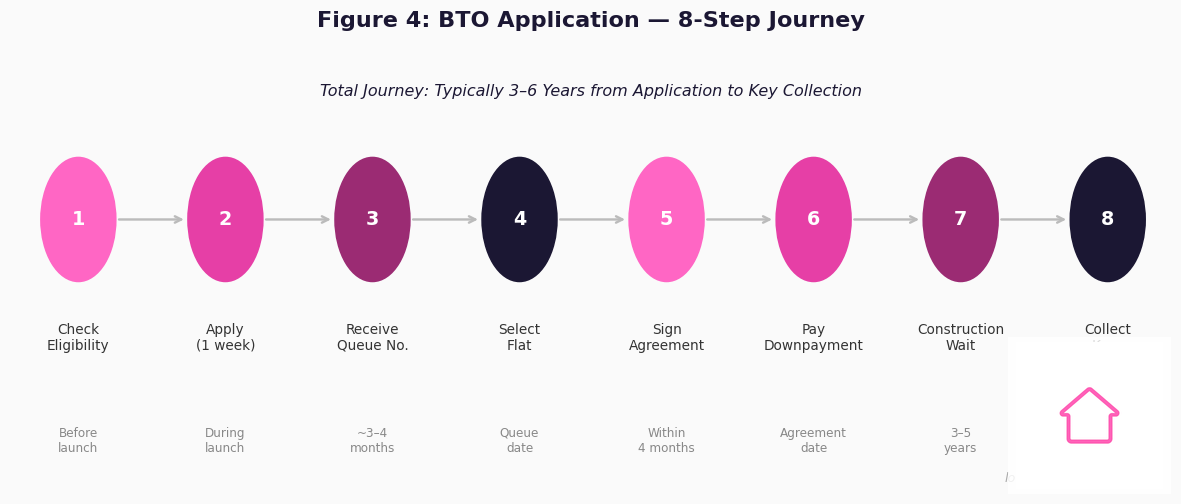
Applications typically close 7 days after opening; ballot results announced 4–6 weeks later.
What a Plus / Prime BTO classification means for May buyers
The Plus and Prime classifications — introduced under the revised 2024 HDB framework — replace the legacy Mature / Non-Mature framework for new BTO launches. Standard flats follow the traditional BTO rules. Plus flats, typically in choice non-mature locations, carry a 10-year Minimum Occupation Period (up from 5) and subsidy clawback on resale. Prime flats, in the most central and amenity-rich locations, carry the same 10-year MOP plus a resale income ceiling that applies when the flat is eventually sold.
Buyers should model the full hold cycle before ballot. A Prime classification delivers an under-market purchase price and exceptional location, but the 10-year MOP plus resale-income-ceiling combination narrows the eventual buyer pool at exit. For households expecting to stay in the flat 15–20 years, the Prime route is straightforward. For households planning a shorter trade-up, the Standard category is typically the better fit.
Site-by-site expectations
Bukit Merah (Henderson) — Prime classification
Estimated launch: approximately 1,200 flats, 4-room and 5-room mix. The site sits on Henderson Road, about a 5-minute walk from Redhill MRT (East-West Line) and within walking distance of Dawson Estate and Bukit Merah Central. The Prime designation is expected to deliver a substantial price discount vs the adjacent resale market, where four-room flats are transacting in the S$850–S$1,050k band. Expect application rates for 4-room flats above 10x on the first-timer pool.
Tampines (Tampines North) — Plus classification
Estimated launch: approximately 1,600 flats, full mix from 2-room Flexi to 5-room. The site is adjacent to the Tampines North MRT (Cross Island Line Stage 1, opened late 2024) and sits in a growing mixed-use district bracketed by Tampines Regional Centre and Tampines North Park. The Plus classification carries a 10-year MOP but no resale-income ceiling. Expect application rates of 4–6x on 4-room flats.
Tengah (Garden District) — Standard classification
Estimated launch: approximately 2,400 flats, the largest single-site batch of the May 2026 launch. The Tengah Garden District is the western master-planned town pioneered as Singapore’s first car-free town centre. The Jurong Region Line MRT is under construction with stations expected to open progressively from 2027 through 2029. Expect application rates of 2–3x on 4-room flats given the larger supply and the longer MRT wait.
Woodlands (Woodlands North Coast) — Standard classification
Estimated launch: approximately 1,600 flats. The Woodlands North Coast site benefits from the recently opened Thomson-East Coast Line terminus at Woodlands North, cross-border connectivity via the under-construction Johor Bahru-Singapore Rapid Transit System, and the still-developing Woodlands Regional Centre. Expect application rates of 2–3x on 4-room flats.
First-timer, second-timer and quota mechanics
HDB ring-fences a majority of every launch for first-time applicant families — specifically, at least 85% of four-room and larger Standard flats are reserved for first-timer families. Two-timer applicants (families who already own or have previously owned an HDB flat, EC or private property) compete for the remaining quota and typically face ballot odds 2–4x longer than first-timers. Singles and first-timer families under the joint application framework are balloted separately under the 2-Room Flexi scheme.
Prime and Plus flats have the same general first-timer preference but with a further stratification: households with household income under the relevant bracket receive the CPF Housing Grant stack, which can add up to S$80,000 in grants depending on income-group position.
Application tactics for a strong ballot position
Three behavioural points the HDB system rewards. First, ballot entry across multiple launches does not compound — each launch is a fresh lottery. But second-timers who roll over their application to a next launch do receive a small priority-weighting uplift, capped at two rollovers. Second, the Proximity Housing Grant (S$30,000 for applying to live with or near parents) is a strong signal to the ballot system and materially improves odds at Bukit Merah Henderson and Tampines North. Third, the Enhanced CPF Housing Grant is income-tiered — the lowest income tier receives the largest grant, which influences eligibility for Standard categories.
Expected timeline
What May 2026 means for the resale market
A May launch of approximately 6,800 flats is a moderate supply pulse into the BTO pipeline, but the immediate effect on resale is indirect. In the short term, first-timer applicants who commit to a BTO ballot typically withdraw from active resale viewings while waiting for the result, which softens resale transaction volume for 4–6 weeks. If ballot rates are high (as expected for Bukit Merah Henderson), disappointed applicants often re-enter the resale market in late June, which typically produces a small transaction bounce in July. This pattern has been consistent across the last six BTO launch cycles.
Frequently asked questions
When exactly does the May 2026 BTO open for application?
HDB typically announces the exact launch window approximately two weeks before applications open. Based on past May launches, the window usually falls in the first 10 days of May, with applications closing roughly 7 days after opening.
Can I apply for both a BTO and a resale flat at the same time?
You can apply for a BTO while viewing resale flats, but you cannot hold a BTO booking and simultaneously enter a resale HDB agreement. Most applicants use the BTO ballot window to continue resale research; successful balloters decline at booking if they have already committed to a resale.
How much is the ABSD and BSD on a BTO flat?
BTO flats are sold directly by HDB under the Housing & Development Act. Buyers’ Stamp Duty applies on the purchase price at the standard schedule. Additional Buyer’s Stamp Duty does not apply to first-timer BTO applicants buying their first residential property.
What is the difference between Plus and Prime?
Both carry a 10-year MOP and subsidy clawback on sale. Prime adds a resale-income-ceiling constraint at exit — the eventual resale buyer must meet an income ceiling. Plus has no such eventual-buyer constraint.
Can PRs apply for BTO flats?
PR-only households cannot apply for a BTO. A Singapore Citizen applying with a PR spouse or family nucleus can apply under the HDB Fiancé/Fiancée, Family or Joint Singles scheme.
What happens if I decline the allocated BTO flat?
Declining a BTO selection appointment has consequences for future applications: after two non-selections in a 12-month period, HDB may debar the applicant from applying for BTO for a period of up to 12 months. Plan your ballot portfolio carefully.
Source
Source: HDB public information on the BTO launch framework and 2024 revised category system, URA GLS announcements, and public site-gazetting records. Full documentation: HDB BTO flat selection and URA GLS current sites.
Editorial note. This article is based on public-domain data released by HDB, URA, Singapore Land Authority and MAS as at 23 April 2026. All analysis is our own. No marketing-agency research is cited. Figures may be revised in subsequent official releases — always refer to the latest authoritative source before making a housing decision.
Quick Answer — the May 2026 BTO launch in five bullets
HDB’s quarterly Build-to-Order exercise is expected to open in mid-May 2026, the second of four regular 2026 launches after February’s exercise.
The May window will sit inside the new Standard / Plus / Prime flat-classification framework, meaning subsidy-recovery clawbacks and 10-year MOP apply to any Plus or Prime flat selected.
Applicants should have CPF Housing Grant eligibility, HDB Financial Information (HFE) letter, and preferred-town shortlist ready before the launch opens — the application window is short (one week).
First-timer families with young children benefit most from the First-Timer (Parents and Married Couples) priority scheme introduced in the August 2024 exercise.
Balance-ballot strategy: in oversubscribed towns, a second-timer or non-priority applicant’s realistic chance of selection is often under 1 in 8 — pick towns where the queue-to-unit ratio is lower.
BTO Framework — Standard · Plus · Prime — LovelyHomes editorial infographic, 22 April 2026.
Why the May 2026 launch matters
The May 2026 BTO exercise lands at a pivotal moment for HDB policy. The Standard / Plus / Prime classification — rolled out from the October 2024 launch — has now been applied across five full launches, and the August 2024 refinement of the First-Timer priority scheme has reshaped how families are slotted into the ballot queue. Applicants who last studied the BTO rulebook before 2024 will find materially different mechanics.
The May slot also traditionally carries heavier volume than February: the Ministry of National Development’s 2026 guidance is approximately 19,600 BTO units across the year, and historically the May and November exercises each release roughly a quarter of annual supply. That means a realistic expectation is 4,500–5,500 units across non-mature and mature-town estates, with a meaningful portion earmarked under the Plus or Prime bands.
Standard, Plus, Prime — what the three bands actually mean
HDB reclassified BTO flats from “mature” / “non-mature” to a three-band framework in October 2024. The band is tied to the flat’s location attributes — proximity to the CBD, to MRT interchanges, to established amenities — rather than the age of the surrounding estate. Each band has its own pricing approach, subsidy profile, resale restrictions and income-ceiling rules.
BTO Classification Bands — May 2026 Framework
Source: HDB Standard/Plus/Prime guidelines · Effective from October 2024 BTO exercise
Band
Typical location
MOP
Resale conditions
Standard
Non-central towns with standard amenities
5 years
Standard resale rules; no subsidy clawback
Plus
Choicer locations, near amenities or transport
10 years
Subsidy clawback on resale; income ceiling on buyer
Prime
Most central or premium locations
10 years
Higher subsidy clawback; income ceiling; no renting out of whole flat
Key shift: under Plus and Prime, the subsidy recovery at resale is calculated as a percentage of resale price, not a fixed dollar figure — which protects HDB’s public investment when values appreciate meaningfully.
Which towns have featured in recent launches
Exact May 2026 town selection is announced by HDB approximately two weeks before the launch opens. Based on the pattern of recent launches, applicants can reasonably expect coverage spanning all three regions — typically two to three non-mature towns, two mature towns, and at least one site in a new or emerging estate such as Tengah or Bayshore.
In the February 2026 exercise, HDB launched units in Tampines, Woodlands, Queenstown, Toa Payoh, and Yishun, with a strong skew to Plus-classified units in the more central towns. The May launch is widely expected to include Punggol, Sengkang, Jurong West, Bukit Merah and Kallang/Whampoa — but this is projection, not confirmation.
Applicants who want the highest chance of selection should keep an open geographic mind: Bukit Batok, Choa Chu Kang, Bukit Panjang and Sembawang have historically carried queue-to-unit ratios below 2 for four-room Standard flats, versus ratios of 5–9 in choicer Plus or Prime locations.
The First-Timer priority reshuffle — who benefits most in May
From the August 2024 exercise onwards, HDB restructured the First-Timer priority scheme into three tiers:
First-Timer (Parents and Married Couples) — or FT (PMC) — married couples with at least one Singaporean child below 18, or engaged couples with a projected child, receive three ballot chances for any non-mature Standard, Plus or Prime flat.
First-Timer (Family) — or FT (F) — all other first-timer families without young children receive two ballot chances.
Non-First-Timers — one ballot chance for non-mature Standard flats only.
The practical impact: an FT (PMC) applicant’s effective probability of being invited to a selection appointment is approximately 1.5x that of an FT (F) applicant in the same queue — not a guarantee of selection, but a materially better ballot position. Couples expecting to apply in May 2026 and carrying a child below 18 should ensure their family nucleus is registered correctly on the HFE letter; a missed declaration loses the PMC priority.
The HFE letter — your pre-application gatekeeper
Since the May 2023 exercise, an HDB Financial Information (HFE) letter is required before submitting a BTO application. The HFE is an integrated eligibility assessment covering:
Flat and grant eligibility (CPF Housing Grants, EHG, Proximity Housing Grant)
HDB Housing Loan Eligibility Letter (where applicable)
Mortgage Servicing Ratio (MSR) and Total Debt Servicing Ratio (TDSR) assessment
Final affordability quantum based on income and CPF position
The HFE takes up to 21 working days to process. This means applicants who plan to bid in mid-May must apply for the HFE no later than the third week of April 2026 — right now is the realistic latest window. A late HFE is the single most common reason a motivated applicant misses the exercise window.
We have a full guide to the CPF Housing Grants stack for 2026 that explains how the EHG and Proximity Housing Grant combine with the HFE affordability figure — useful reading while waiting for the HFE result.
Income ceilings and grant quantum in 2026
The family-unit income ceiling for BTO flats remains S$14,000 per month (S$21,000 for extended families in 3Gen flats), unchanged since September 2019. For singles applying for a 2-room flexi flat in non-mature towns under the Single Singapore Citizen Scheme, the ceiling is S$7,000.
Grants available at the point of BTO application in May 2026 include:
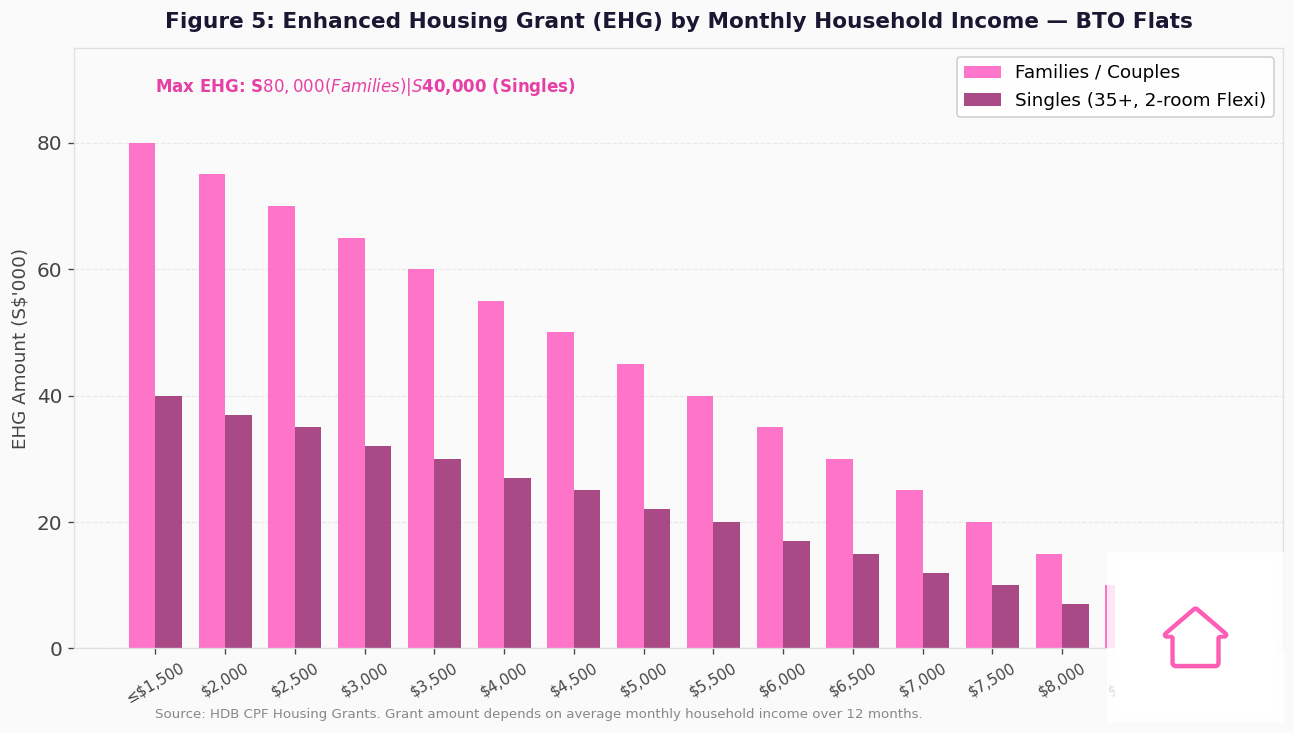
Enhanced CPF Housing Grant (EHG) — up to S$80,000 for first-timer families, tiered by average household income.
EHG (Singles) — up to S$40,000 for first-timer singles buying a 2-room flexi.
Proximity Housing Grant (PHG) — applicable on resale only (not BTO), but worth noting that families planning a BTO now may still consider PHG-eligible resale as a backup.
At the top end, an FT (PMC) couple earning S$5,000 combined can receive up to S$80,000 EHG — which, combined with a 75% HDB concessionary loan and the 30-year repayment horizon, brings a four-room Plus flat at approximately S$550,000 valuation well within affordable-range for a dual-income Singaporean household.
Worked example — four-room Plus flat, May 2026
Worked scenario — FT (PMC) couple, combined S$8,500/month
Four-room Plus flat priced at S$620,000 (indicative)
EHG: S$45,000 (tiered on S$8,500 average)
Effective price after grant: S$575,000
Downpayment at 20% (HDB loan): S$115,000, of which up to 20% can be CPF Ordinary Account
HDB loan quantum: S$460,000 at 2.6% concessionary rate
Monthly instalment over 25 years: approximately S$2,090
This scenario assumes baseline HDB concessionary loan terms and does not include any bank-loan alternative; bank-loan applicants face a stricter TDSR ceiling of 55% and typically secure lower rates when the 3M SORA is running below 2.5%.
The seven-day window — what to do in each step
The application window is compressed. Planning each day in advance is what separates applicants who secure a booking from those who miss out:
T-14 days: HDB publishes town list, unit count by flat type, and indicative pricing. Shortlist two or three towns based on location and queue-to-unit ratio.
T-7 days: Application window opens. Submit within the first three days — no advantage to waiting.
T+7 days: Application closes. Ballot results are published approximately three weeks later.
Ballot notification: Selected applicants are invited for an HDB appointment within six weeks. Bring HFE letter, CPF statements, marriage certificate (or letter of intent for engaged couples), and photo ID.
Option fee: S$500 for 2-room flexi; S$1,000 for 3-room; S$2,000 for 4-room and above. Payable at flat selection.
Queue realities — setting a realistic expectation
Across the February 2026 exercise, application rates (applications per unit available) by broad category were approximately:
Four-room Prime — 8.2x oversubscribed
Four-room Plus — 5.6x oversubscribed
Four-room Standard (non-mature) — 1.9x oversubscribed
Three-room Standard (non-mature) — 1.4x oversubscribed
Five-room Standard — 3.1x oversubscribed
What this means: for a Plus or Prime four-room, even a PMC-priority applicant should expect multiple ballot attempts across launches before drawing a good queue number. For a Standard non-mature four-room, many first-time applicants secure a flat on their first or second attempt.
The resale alternative — when to switch tracks
For applicants facing short timelines — a planned wedding inside two years, a growing family, a parent needing close-proximity care — the BTO four-to-five-year wait from ballot to keys can be decisive. HDB resale offers an immediate-occupancy alternative, with the Proximity Housing Grant (PHG) of up to S$30,000 applicable for first-timer families buying near parents.
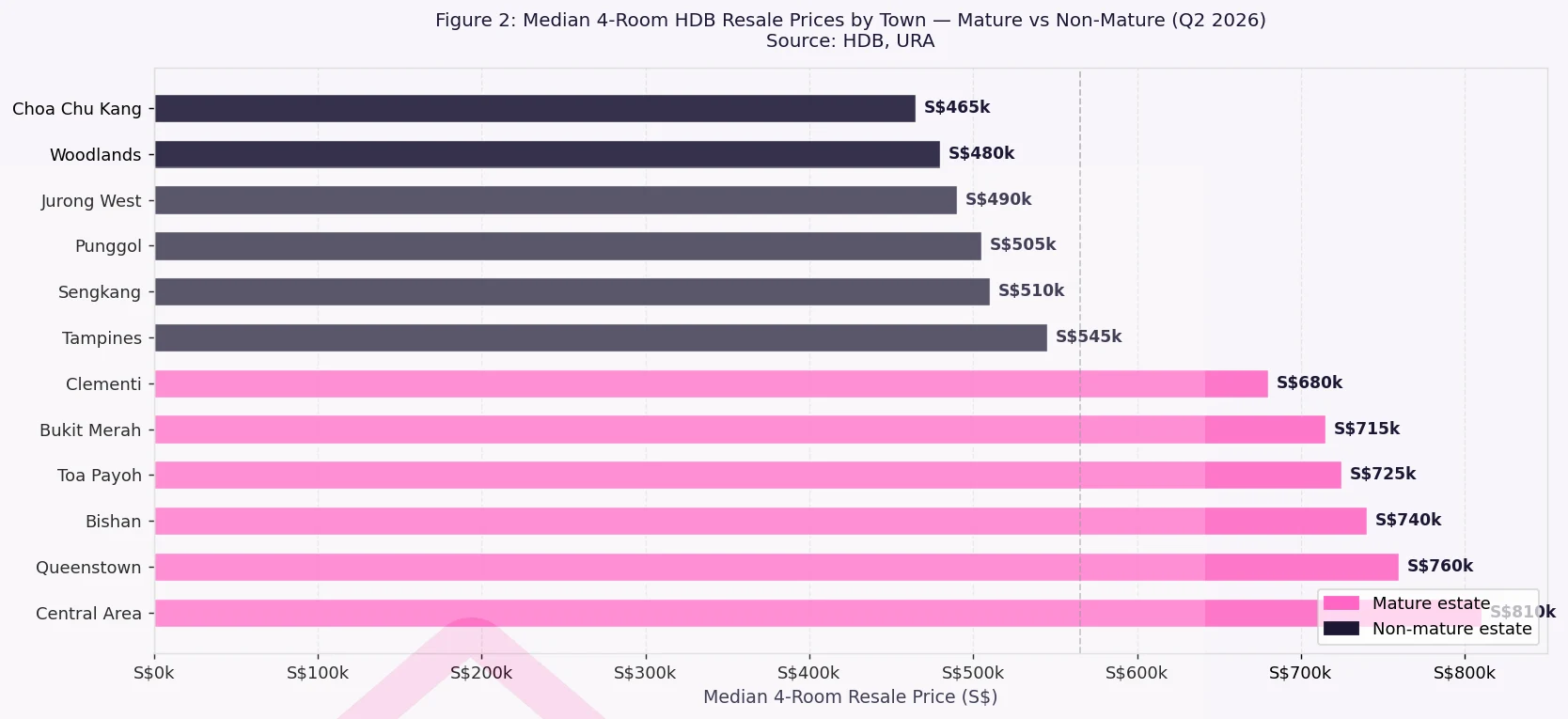
Resale volumes in Q1 2026 were stable, and median four-room resale prices across non-mature towns settled at approximately S$620,000 — roughly on par with a four-room Plus BTO selection price. That said, BTO remains the subsidised-entry path and is usually worth one or two rounds of attempt before switching.
Sale of Balance Flats — the May parallel track
Alongside the May BTO exercise, HDB will also conduct a Sale of Balance Flats (SBF) round covering unsold units from prior launches plus repurchased flats. SBF pricing is close to BTO pricing but waiting time is significantly shorter (often six to eighteen months to keys). Any applicant applying for BTO May 2026 should also apply for SBF simultaneously — there is no additional application cost and a separate ballot is run.
Market context — BTO versus the private market in 2026
Against the backdrop of Q1 2026’s private PPI flash estimate showing decelerating-but-firm growth, the BTO market is in a different rhythm. HDB Resale Price Index growth has slowed to sub-3% annualised through 2025, and the BTO subsidy profile ensures first-timer families still have a meaningfully cheaper path to homeownership than the private resale or new-launch private market.
The Plus and Prime classification is best thought of as HDB’s tool for capturing the value of public-land subsidy when the underlying land is in high-demand locations — the 10-year MOP and subsidy clawback are the price of access to the choicest catchments. For buyers with a longer-term horizon (10+ years to MOP and beyond), Plus and Prime remain attractive; for buyers who may need geographic flexibility within a decade, Standard flats offer cleaner resale mechanics.
FAQ — May 2026 BTO
Q1. When exactly will HDB open the May 2026 BTO launch? HDB has not announced the exact date at time of writing (22 April 2026). Based on the Feb / May / Aug / Nov cadence, the application window is expected mid-May. Monitor HDB press releases at hdb.gov.sg for the confirmed date.
Q2. Do I need an HFE letter before applying? Yes. The HFE is mandatory for all BTO applicants since the May 2023 exercise. It takes up to 21 working days — apply now if you plan to submit for May.
Q3. Can I apply for BTO and SBF at the same time? Yes, HDB typically runs the two exercises in parallel. Applying for both increases your chance of securing a flat within the same quarter.
Q4. What happens if I miss the application window? You wait for the August 2026 exercise. There is no mid-cycle application option outside the four annual launches.
Q5. My partner and I earn S$15,000 combined — can we still apply? No, the family income ceiling for a standard BTO flat is S$14,000. You may consider the Executive Condominium track (ceiling S$16,000) or resale-private routes.
Q6. What is the key difference between a Plus and a Prime flat? Both carry 10-year MOP and subsidy clawback on resale, and both impose an income ceiling on future resale buyers. Prime flats additionally prohibit renting out the whole flat; Plus flats allow whole-flat rental after MOP. Prime flats are also in the most central catchments.
Q7. Can a single Singaporean apply for a 4-room BTO? No. Singles under the Single Singapore Citizen Scheme are restricted to 2-room flexi flats in non-mature towns. For other room types, singles must apply jointly with an eligible occupier (e.g., parent or sibling) under a joint scheme.
Q8. If my ballot number is not called, do I keep a priority position for the next exercise? No — each exercise is an independent ballot. However, accumulating non-selection histories does boost the applicant’s queue position in certain priority schemes (e.g., the Married Child Priority Scheme retains its weighting across exercises).
Q9. Is there any advantage to submitting on day one versus day seven? No. The ballot is computer-randomised; submission time within the window has no effect on queue position.
Q10. When do I start paying for the flat? The option fee is paid at flat selection. Downpayment is payable in stages aligned to construction milestones (typically 15% at signing of Agreement for Lease, 5% at key collection for HDB loan). Monthly instalments begin only after key collection.
The May 2026 BTO exercise is an exercise in preparation: HFE letter in hand, town shortlist validated against queue-to-unit ratios, First-Timer priority correctly filed. Families applying as FT (PMC) for a Standard non-mature flat have realistic one-to-two-attempt odds; those targeting Plus or Prime in a choicer catchment should plan for several exercises of patience. The framework has changed since 2024 — re-read the rules even if you applied under the old mature/non-mature system.
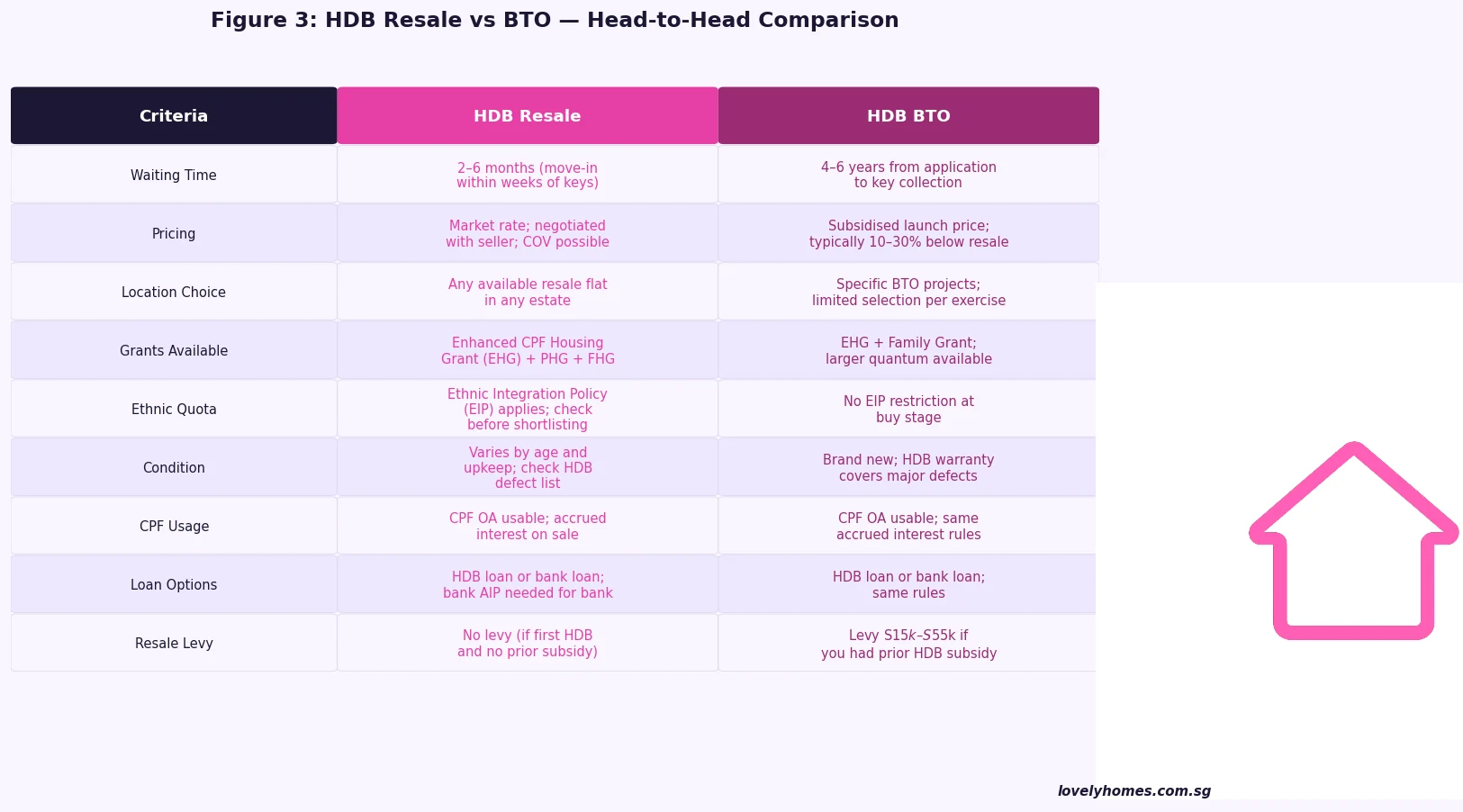
For most Singapore citizens, the decision between a Build-To-Order (BTO) flat, an HDB resale flat, or an Executive Condominium (EC) represents the single largest financial commitment of their lives. Yet the answer is far from straightforward: each option offers distinct advantages and trade-offs in price, location, waiting time, and long-term wealth building.
In 2026, first-time buyers face more choices than ever before. HDB’s new Standard, Plus and Prime classification (introduced October 2024) has reshaped BTO pricing and subsidy structures. The Enhanced CPF Housing Grant (EHG) has been raised to S$120,000 for families and S$60,000 for singles. Executive Condos remain a viable middle ground for those earning S$10,000–S$16,000 monthly. Meanwhile, resale flats offer immediate occupancy but at a premium price.
This comprehensive guide walks you through all three options, compares the financial reality with worked examples, and helps you choose the path that fits your circumstances, timeline and budget.
Quick Answer — Which one is right for you?
Choose BTO if: You can wait 3–5 years, want the cheapest entry price, and prioritise subsidised flats in newer estates. Best for budget-conscious buyers and families.
Choose Resale if: You need to move in within 12 months, want an established neighbourhood with proven amenities, and have sufficient CPF savings. Best for upgraders and those near MOP.
Choose EC if: Your household income is S$10,000–S$16,000, you value hybrid public–private living, and you’re willing to pay a premium for potential capital appreciation after the 10-year privatisation period.
Figure 1: Household income is the biggest filter — it determines which paths are open to you.
HDB BTO Explained
What Is BTO?
Build-To-Order (BTO) flats are new HDB units built to demand. HDB launches BTOs in batches (typically every four months), offers them at subsidised prices below market rates, and constructs them over 3–5 years. Once completed and handed over, you own the flat outright and must occupy it for a minimum occupation period (MOP) before you can sell or rent it out.
Eligibility for BTO in 2026
Citizenship: At least one applicant must be a Singapore Citizen. For families, both applicants can be Singapore Citizens or one can be a Permanent Resident (SPR).
Age: You must be at least 21 years old. Singles aged 35 and above can now buy 2-room Flexi BTOs in any location (expanded from 12 non-mature estates in October 2024).
Income Ceiling (2026):
Families and couples: S$14,000 monthly
Singles (for all flat types and 2-room Flexi): S$7,000 monthly
Ownership: You and your spouse (if applicable) must not own any other property. Inheritance and co-ownership with parents do not disqualify you, provided the flat is not mortgaged.
BTO Pricing Framework: Standard, Plus & Prime (October 2024)
HDB replaced its old classification with three tiers based on location and amenities:
Classification
Features
MOP Period
Subsidy Clawback on Resale
Standard
Good connectivity, suburban, new estates
5 years
None (keep full subsidy)
Plus
Choicer locations, mature estates, proximity to city
10 years
6–8% of resale price
Prime
Choicest locations, central, excellent transport
10 years
9% of resale price
Example Prices (October 2024 Launch): A 4-room Standard BTO in Woodlands or Sengkang starts around S$400,000–S$450,000. A 4-room Plus BTO in a mature estate (e.g. Punggol, Hougang) costs S$550,000–S$650,000. Prime flats (rare) command prices above S$750,000.
Waiting Time & Build Cycle
From the launch month to handover typically takes 3–5 years. HDB now offers a “Shorter Waiting Time” (SWT) option for selected projects, reducing the wait to approximately 3 years. Check each BTO exercise’s buyer’s guide for your project’s expected handover date.
CPF Grants for BTO
Enhanced CPF Housing Grant (EHG) for BTO:
Families (SC+SC or SC+SPR): up to S$120,000 (income ceiling S$9,000/month)
Singles (aged 35+): up to S$60,000 (income ceiling S$4,500/month)
CPF Housing Grant (for those above EHG income ceiling): Families earning S$9,001–S$14,000 receive a grant tapering from S$120,000 to S$0.
All grants are paid into your CPF Ordinary Account and applied automatically at flat handover.
Minimum Occupation Period (MOP)
Standard flats: 5-year MOP. After 5 years, you can sell without restriction and keep the entire subsidy.
Plus & Prime flats: 10-year MOP. When you sell after 10 years, HDB claws back 6–9% of the resale price to recover a portion of the subsidy you received.
During MOP, you cannot rent out the entire flat (though private let of rooms is allowed for some schemes). You must occupy it as your main residence.
Advantages of BTO
Lowest entry price, especially for Standard flats
Large CPF grants (up to S$120,000 for families)
New flat – minimal repairs for first 5–10 years
Predictable pricing and transparent framework
New neighbourhoods with fresh amenities
Disadvantages of BTO
Long wait (3–5 years) – cannot move in immediately
Location not guaranteed (you choose from allocated projects)
Longer MOP for Plus/Prime (10 years vs. 5 for Standard)
Subsidy clawback on Plus/Prime resales reduces gains
Less mature neighbourhoods compared to older estates
HDB Resale Explained
What Is HDB Resale?
HDB resale flats are existing units on the open market, sold by current owners who have completed their MOP. You can view, negotiate and purchase immediately – no waiting for construction. The buyer’s 5-year MOP obligation begins on the date of transfer, even though the previous owner already completed theirs.
Eligibility for HDB Resale in 2026
Citizenship: You must be a Singapore Citizen or a Singapore Permanent Resident. For SC+SPR couples buying in non-mature estates, there is a quota limit (typically 10%) on SPR purchases.
Age: Minimum 21 years old (single or couple).
Income Ceiling: An income ceiling (S$14,000 for families, S$7,000 for singles) applies only if you are claiming CPF grants. If you have sufficient cash and CPF savings, you can buy a resale flat with any income level.
Ownership: You must not own any other property. First-timer status unlocks priority for certain grants.
Resale Flat Pricing
Resale prices are set by market forces and vary widely by location, flat type, floor level, condition and remaining lease:
4-room flats in mature estates (Tampines, Bedok, Punggol): S$550,000–S$750,000
4-room flats in central estates (Bukit Merah, Tanjong Pagar): S$700,000–S$950,000
3-room flats in non-mature estates: S$350,000–S$500,000
Prices fluctuate with economic cycles, interest rates and supply.
CPF Grants for HDB Resale
Enhanced CPF Housing Grant (EHG) – Families:
Up to S$120,000 (income ceiling S$9,000/month)
CPF Housing Grant (Family) – Standard:
SC+SC or SC+SPR couple: S$80,000
Proximity Housing Grant (PHG):
Living with parents (same flat): S$30,000
Living within 4 km of parents: S$20,000
For Singles (EHG – Resale): Up to S$60,000 (income ceiling S$4,500/month).
Total grant stack (families): EHG (S$120,000) + CPF Housing Grant (S$80,000) + Proximity Grant (S$30,000) = up to S$230,000 if all criteria met.
Minimum Occupation Period for Resale
Once you purchase a resale flat, you must occupy it as your main residence for 5 years before you can sell or rent it out. The previous owner’s MOP is already satisfied; yours begins afresh.
Multiple grants available (EHG, CPF, PHG) can stack to S$230,000+
Disadvantages of HDB Resale
Significantly higher purchase price than BTO
Older flats (20–40 years common) – higher repair/renovation costs
Lease decay – remaining lease affects resale value and loan eligibility
Must negotiate price, condition and terms yourself
Requires more cash upfront (HDB resale loans capped at 80% LTV, BTO can be 90%)
Executive Condominium (EC) Explained
What Is an EC?
An Executive Condominium is a hybrid public–private residential scheme. HDB sells the land to private developers, who build and sell the units directly to buyers. For the first 10 years (the “HDB control period”), ECs are subject to HDB-like rules: you must occupy it, cannot rent the whole unit, and are subject to an income ceiling. After 10 years, the building is privatised, and it becomes a full private condominium with no income restrictions, rental caps, or ownership limits.
Eligibility for EC in 2026
Citizenship: At least one applicant must be a Singapore Citizen.
Family Nucleus: You must be in a family nucleus – married couple, divorced/widowed with child, or parents with adult child (25+). Singles cannot buy ECs directly.
Income Ceiling (2026): Household monthly income must not exceed S$16,000. This applies to all new EC purchases from developers.
Ownership: You must not own any other property. First-timer priority applies to ballot allocation.
EC Pricing & Affordability
ECs are built by private developers and priced above HDB but below private condos:
2-bedroom EC: S$800,000–S$1,200,000
3-bedroom EC: S$1,200,000–S$1,600,000
4-bedroom EC (rare): S$1,600,000+
Price varies by location, developer, and finishing standard.
CPF Grants for EC
Enhanced CPF Housing Grant (EHG) – Families:
Up to S$30,000 (income ceiling S$9,000/month for maximum grant)
Note: EC grants are significantly lower than HDB resale (S$30,000 vs. S$120,000) and are based on a lower income threshold.
EC Financing & Loan Requirements
No HDB Concessionary Loan: Unlike HDB flats, ECs cannot be financed with an HDB concessionary loan. You must use a bank mortgage.
Bank Loan Criteria:
Loan-to-Value (LTV): up to 75% (vs. 90% for HDB)
Mortgage Servicing Ratio (MSR): 30% maximum monthly income
Your down payment must be at least 25%
Effective Cost: With a higher down payment (25% vs. 10% for HDB) and a bank mortgage at ~3.5% interest (versus HDB concessionary rates at ~2.6%), monthly payments are significantly higher than a comparable HDB flat.
Minimum Occupation Period & Privatisation
5-year MOP: You must occupy the EC as your main residence for 5 years. You cannot rent it out (whole unit) or sell it.
After 5 years: You can sell on the resale market (still subject to income ceiling if you wish to re-buy an EC or HDB).
After 10 years: The EC block is privatised. Income restrictions are lifted, and it becomes a private condo. You can then rent it out freely, sell to foreigners, or use it as an investment without restriction.
Advantages of EC
Hybrid lifestyle – condominium amenities (gym, pool, concierge) with HDB affordability
Privatisation upside – potential capital appreciation and rental income from year 11 onwards
Better quality finishes than new HDB (private developer standards)
Often in prime locations with strong transport and amenities
Eligible for CPF grants (though smaller than HDB)
Disadvantages of EC
Much higher purchase price than HDB (25–100% more)
Require 25% down payment vs. 10% for HDB – significant cash outlay
Bank mortgage at market rates (~3.5%) vs. HDB concessionary rate (~2.6%)
Lower LTV (75% vs. 90%) – less leverage possible
Smaller CPF grants (S$30,000 vs. S$120,000 for HDB)
No rental income for first 10 years (occupation requirement)
10-year MOP for first unit – cannot upgrade as easily as HDB
Service charges, maintenance fees and sinking funds (not present in HDB)
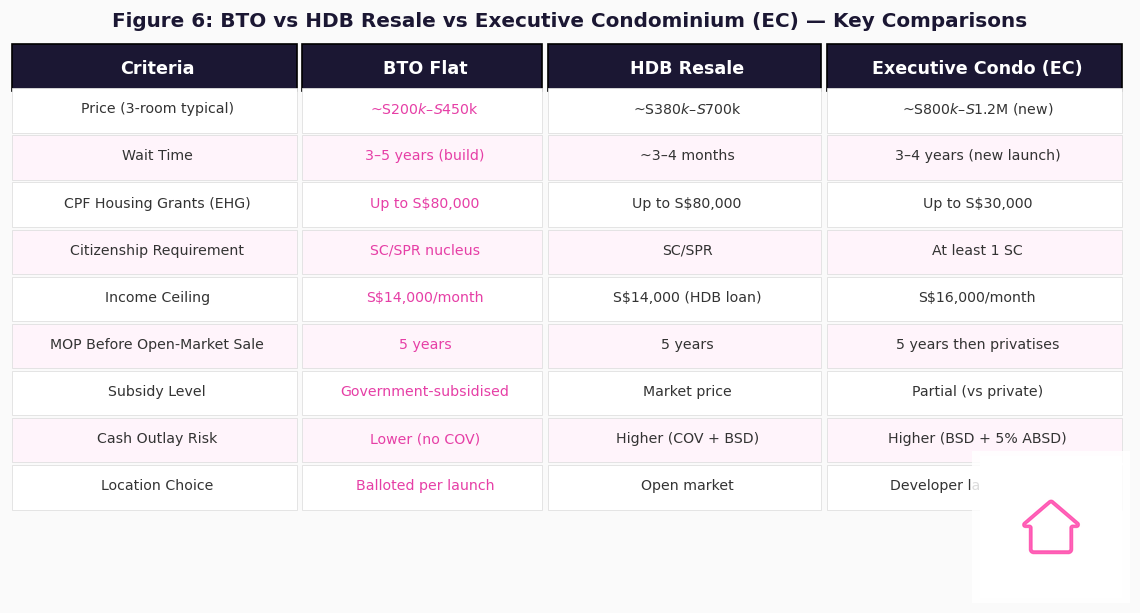
Figure 2: Price, wait time, grants, MOP and loan type compared across the three options.
Side-by-Side Comparison Table
Factor
BTO (Standard)
HDB Resale
Executive Condo
Entry Price (4-room)
S$400–450k
S$600–750k
S$1.2–1.6m
Occupancy Timeline
3–5 years wait
Immediate
Immediate
Max CPF Grant (Family)
S$120,000
S$230,000 (stacked)
S$30,000
Down Payment
10–15%
10–20%
25%
Financing
HDB concessional (~2.6%)
Bank mortgage (~3.5%)
Max LTV
90%
80–90%
75%
MOP Period
5–10 years
5 years
5–10 years
Subsidy Clawback
None (Standard); 6–9% (Plus/Prime)
None
None (private)
Rental During MOP
Room rental allowed; no whole-unit rental
No rental (whole unit or rooms) for 10 years
Income Ceiling
S$14,000 (families); S$7,000 (singles)
S$14,000 (families) for grants only
S$16,000
Facilities
Basic (void deck, lift lobby)
Premium (gym, pool, concierge)
Ethnic Quota
25% Chinese, 13% Malay, 9% Indian
Estate-dependent; no restrictions on resale
No ethnic quota
Worked Example: Which Option Costs Less?
The Scenario
Meet Sarah and Michael — both 30 years old, both Singapore Citizens, combined monthly income S$10,000 (S$5,000 each). They are HDB first-timers looking to buy a 4-room flat and need to decide between BTO, resale and EC. Both have S$80,000 in combined CPF Ordinary Account savings (after set-asides). They plan to hold the flat for 10 years, then either sell or upgrade.
Option 1: BTO (Standard 4-room in Sengkang)
Component
Amount (S$)
Purchase Price
420,000
CPF Housing Grant
–80,000
Net Price After Grant
340,000
Loan Amount (80% LTV)
336,000
Cash Down Payment
4,000
Monthly Mortgage (25 years @ 2.6% HDB)
~1,440
Total Interest Paid (25 years)
94,000
Total All-In Cost After 10 Years
~514,000
Est. Flat Value at Year 10 (assume 2% p.a. appreciation)
512,000
Notional Equity Gain/(Loss)
–2,000
Insight: The BTO is the cheapest entry and has the lowest ongoing costs. However, at only 2% annual appreciation, you barely break even on interest costs after 10 years. The real value is housing affordability now and long-term capital preservation.
Option 2: HDB Resale (4-room in Punggol)
Component
Amount (S$)
Purchase Price
630,000
Enhanced CPF Housing Grant
–80,000
Proximity Housing Grant (living 4km from parents)
–20,000
Net Price After Grants
530,000
Loan Amount (80% LTV)
504,000
Cash Down Payment
26,000
Monthly Mortgage (25 years @ 2.6% HDB)
~2,160
Renovation/Repair Estimate (older flat)
30,000–50,000
Total Interest Paid (25 years)
140,000
Total All-In Cost After 10 Years (incl. renovations)
~810,000
Est. Flat Value at Year 10 (assume 3% p.a. appreciation)
846,000
Notional Equity Gain
+36,000
Insight: Resale flats cost significantly more upfront (S$630k vs. S$420k for BTO). However, established Punggol flats appreciate faster (~3% p.a. vs. 2% for new Sengkang BTO), and you capture a modest gain after 10 years. You also benefit from higher grants (S$100,000 vs. S$80,000 with PHG) and immediate occupancy, valuable if you need to move within 12 months.
Option 3: Executive Condo (3-bed in Tampines)
Component
Amount (S$)
Purchase Price
1,300,000
CPF Housing Grant (EHG, S$9k income threshold)
–30,000
Net Price After Grant
1,270,000
Down Payment Required (25%)
325,000
Loan Amount (75% LTV)
975,000
Monthly Mortgage (25 years @ 3.5% Bank Rate)
~4,580
Monthly Service Charges & Maintenance
~300–500
Total Interest Paid (25 years)
371,000
Total All-In Cost After 10 Years
~1,910,000
Est. Flat Value at Year 10 (assume 4% p.a. appreciation pre-privatisation)
1,920,000
Notional Equity Gain (After Privatisation)
+10,000 (conservative)
Insight: ECs are dramatically more expensive — S$1.3m vs. S$420k BTO, or S$630k resale. Monthly payments are triple a BTO (S$4,580 vs. S$1,440). However, ECs benefit from stronger appreciation (4% p.a. vs. 2–3%) due to privatisation upside and prime locations. After 10 years (and especially after privatisation at year 11), rental income and capital gains potential accelerate. An EC makes sense only if your timeline is 15+ years and you can afford the premium monthly cost.
Figure 3: Ten-year all-in cost of ownership for the same couple — BTO S$514k, Resale S$810k, EC S$1.91M.
Resale (Moderate): S$810,000 all-in cost; modest capital gains (S$36,000)
EC (Premium): S$1,910,000 all-in cost; conservative gains, but privatisation upside at year 11+
Key Takeaway: If you want to minimise housing costs and build equity steadily, BTO wins. If you need to move now and expect moderate appreciation, resale is rational. If you want premium lifestyle and long-term wealth (15+ year hold), EC can pay off after privatisation.
Which Should You Choose?
Choose BTO If:
You can wait 3–5 years for occupancy
You want the lowest entry price and monthly mortgage
You prioritise maximising CPF grants (up to S$120,000 for families)
You value a brand-new flat with minimal repairs for 15+ years
You are budget-conscious and wish to minimise lifetime housing costs
You are comfortable with newer, less-established neighbourhoods
You are open to the estate HDB assigns you (limited location choice)
Choose Resale If:
You need to move in within 12 months (or less)
You want to choose your exact location, estate and block
You value established neighbourhoods with proven amenities and connectivity
You have sufficient CPF savings and can afford the higher purchase price
You are a second-time buyer or upgrader (eligible for larger grants)
You live near parents and are eligible for Proximity Housing Grant
You expect faster capital appreciation (established estates appreciate 2.5–3.5% p.a.)
You plan to hold the flat for 10+ years
Choose Executive Condo If:
Your household income is S$10,000–S$16,000 (above HDB ceiling but below private condo buyers)
You value condominium lifestyle (pool, gym, concierge) but cannot afford pure private condo
You can afford a 25% down payment and monthly mortgage of S$4,000+
You plan to hold for 15+ years, targeting post-privatisation rental income and capital gains
You prefer prime or central locations (ECs are often well-positioned)
You are willing to pay a premium for privacy, space and amenities vs. HDB
You can accept no rental income for the first 10 years and an income ceiling restriction
Frequently Asked Questions
1. Can I apply for BTO and HDB resale simultaneously?
Yes, but strategically. You can submit a BTO application for one project and bid for a resale flat at the same time. However, if you win the resale first, you must withdraw your BTO application (as you cannot own two properties). Many buyers use this two-pronged approach: they apply for BTO as a backup while actively bidding on resale flats.
2. Can a single person buy an Executive Condo?
No, singles cannot buy ECs directly. You must be in a family nucleus (married couple, divorced/widowed with child, or parent with adult child 25+). If you are single and interested in hybrid housing, your only option is HDB (BTO or resale).
3. What happens if I miss the BTO ballot multiple times?
You can keep applying. There is no limit to the number of BTOs you can apply for. However, if you consistently miss (do not win the ballot), it may be a signal that you should pivot to resale or EC if you have the means and timeline allows.
4. Is an Executive Condo considered a private condo?
For the first 10 years: No. ECs are HDB-controlled and subject to HDB rules (income ceiling, occupancy requirement, no whole-unit rental). After 10 years, the block is privatised, and it becomes a full private condo with no restrictions. At that point, it is legally and practically identical to any other private condo.
5. Can I rent out my BTO flat during the MOP?
Not the whole flat. During MOP, you can rent out individual rooms to lodgers, but you cannot rent out the entire flat to a tenant. This occupancy rule is strict. After MOP (5 years for Standard BTO), you can sell or rent out the whole flat freely.
6. What grants am I eligible for?
It depends on your household structure, income and purchase type:
For BTO: Enhanced CPF Housing Grant (families up to S$120,000; singles up to S$60,000, both with income ceilings S$9,000 and S$4,500 respectively).
For HDB Resale: Enhanced CPF Housing Grant + CPF Housing Grant (family) + Proximity Housing Grant, totalling up to S$230,000 if you meet all criteria.
For EC: Enhanced CPF Housing Grant (families up to S$30,000, tiered between S$9,000 and S$16,000 income).
Apply for an HDB Flat Eligibility (HFE) letter to confirm your exact grant amount.
7. Should I wait for BTO or buy resale now?
This depends on three factors:
Timeline: If you need housing within 12 months, buy resale. If you can wait 4–5 years, BTO may save you S$150k–S$250k.
Location: If a specific neighbourhood is critical (e.g. near parents, near your workplace), resale gives you certainty. BTO assigns location at ballot.
Finances: If you have substantial CPF savings but limited cash, resale grants are larger (S$230k vs. S$80k for BTO). If cash is tight, BTO’s lower entry price wins.
Pragmatic approach: Apply for BTO while simultaneously bidding for resale flats. Whichever closes first is your home; the other falls away.
Upgrader’s Guide — Planning your second property? Learn about upgrading from 4-room to 5-room, EC to private condo, and tax implications.
Property Finance Hub — Understand CPF Housing Grants, HDB loans, bank mortgages, and financing strategies.
Home Loans & Mortgages — Deep-dive into HDB concessionary loans, bank mortgage rates, MSR and TDSR calculations.
ABSD Complete Guide 2026 — If upgrading to private property, understand Additional Buyer’s Stamp Duty and tax planning.
Disclaimer
This guide is for general information only and does not constitute legal, tax or financial advice. HDB policy, grants, income ceilings and pricing frameworks change periodically. The figures and eligibility rules cited reflect policy as of April 2026, but may be subject to change. Always verify current information on HDB’s official website (https://www.hdb.gov.sg), consult HDB’s Customer Service or engage a licensed mortgage advisor or housing consultant before committing to any property purchase. CPF withdrawal limits and grant eligibility are subject to CPF Board rules (https://www.cpf.gov.sg). For EC and resale purchases, seek independent legal and financial counsel.