Toa Payoh Neighbourhood Guide 2026: HDB Resale Prices, MRT Access and What’s Coming Next
Quick Answer: Toa Payoh Neighbourhood Guide
- Toa Payoh was Singapore’s first HDB-built new town, developed from 1965, and remains one of the most centrally located mature housing estates on the island.
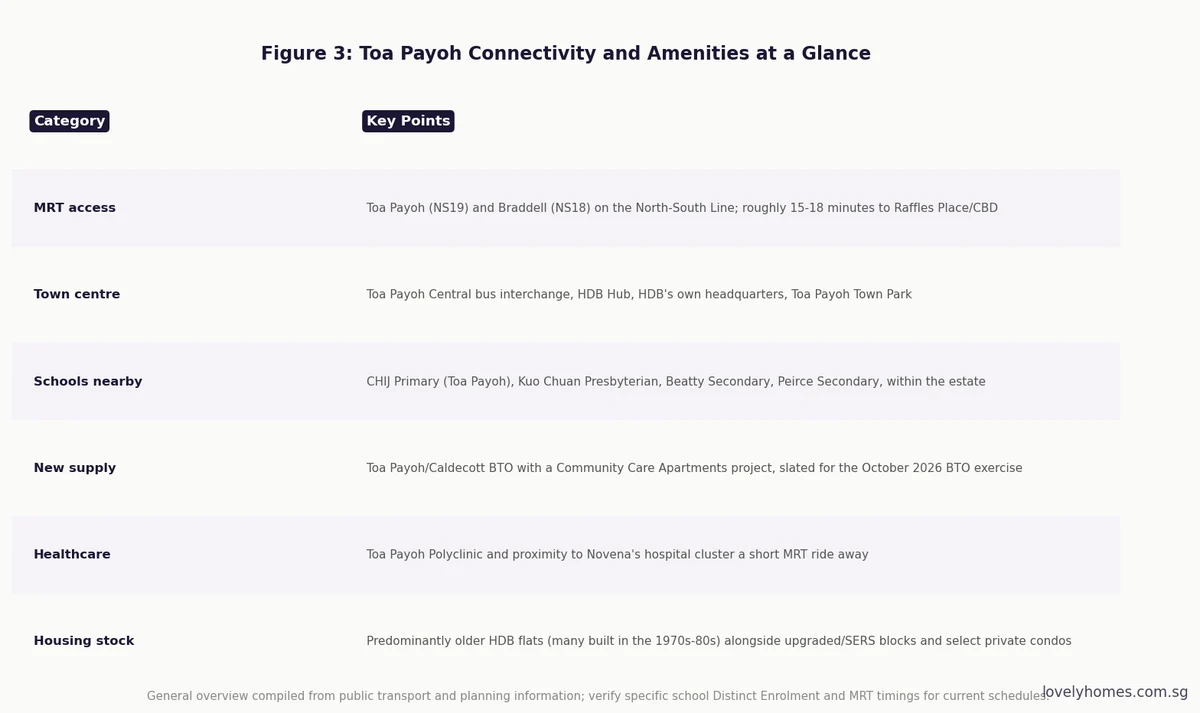
- It sits on the North-South Line, with Toa Payoh (NS19) and Braddell (NS18) MRT stations giving a roughly 15 to 18 minute ride into Raffles Place.
- The estate is almost entirely HDB flats, many built in the 1970s and 1980s, giving it a large stock of shorter-remaining-lease resale flats alongside upgraded and SERS-replacement blocks.
- Toa Payoh Central functions as the town’s commercial heart, anchored by the HDB Hub, a bus interchange, and Toa Payoh Town Park, one of Singapore’s oldest public parks.
- Fresh public housing supply is coming: a new Build-To-Order (BTO) project near Caldecott, including a Community Care Apartments component, is slated for the October 2026 BTO exercise.
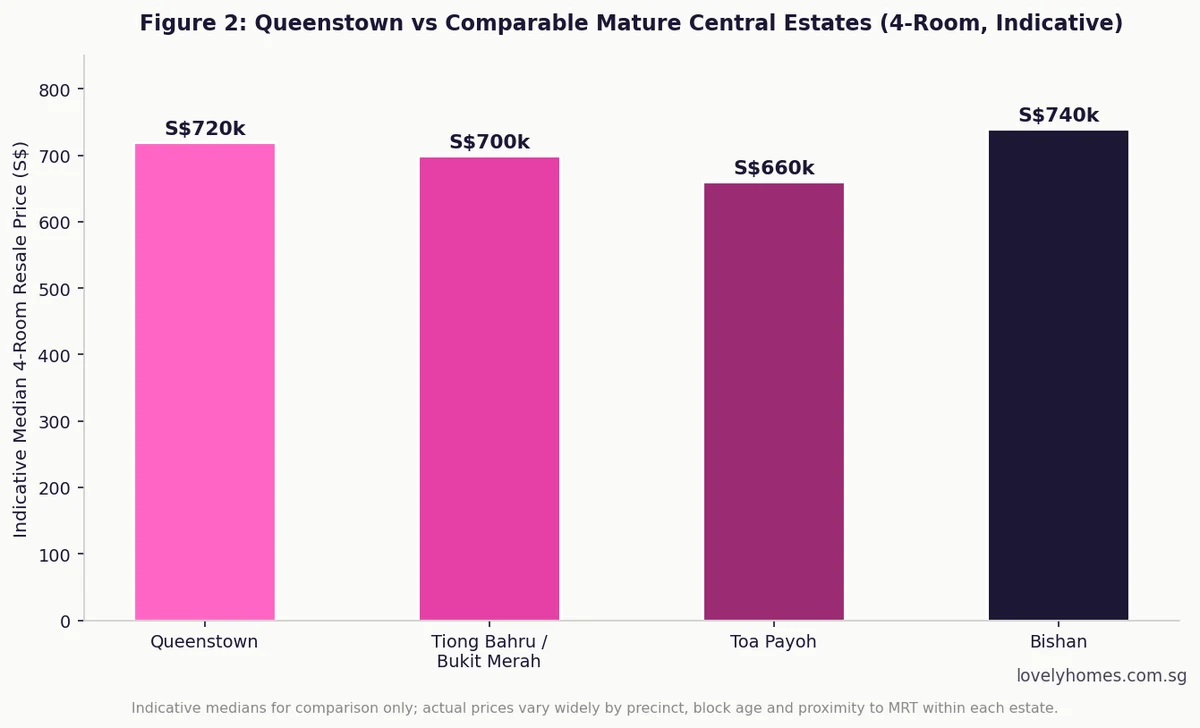
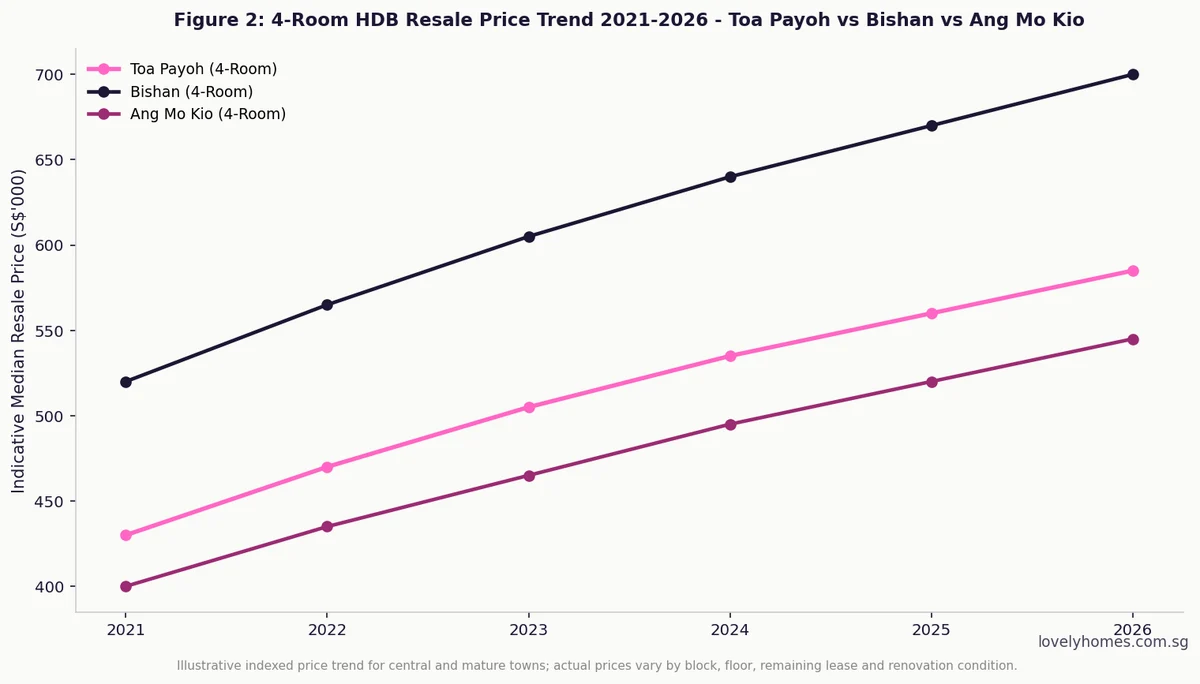
- Resale prices sit between the more central, older estate of Queenstown and higher-priced Bishan, reflecting Toa Payoh’s central location weighed against its ageing housing stock and shorter remaining leases on many blocks.
- Buyers should check a specific block’s remaining lease carefully, since Toa Payoh’s earliest blocks are now well past the halfway mark of a 99-year lease, which affects both CPF usage and bank loan quantum.
Toa Payoh’s Place in Singapore’s Housing Story
Toa Payoh holds a distinctive position in Singapore’s public housing history: it was the first new town built entirely by the Housing and Development Board (HDB), with construction beginning in 1965, shortly after HDB itself was formed. This makes it younger than Queenstown, which was developed earlier by HDB’s predecessor, the Singapore Improvement Trust (SIT), but Toa Payoh is widely regarded as the template for the large-scale, self-contained satellite towns that followed across Singapore, complete with its own town centre, industrial estate, schools, and recreational facilities built around a coherent town plan rather than piecemeal development.
More than half a century later, Toa Payoh remains one of the most centrally located mature estates in Singapore, bordered by Novena, Bishan, Serangoon and Balestier. This central position, combined with direct North-South Line MRT access, keeps demand for Toa Payoh flats consistently resilient even as the estate’s flats age, since few other mature towns offer this combination of proximity to the city centre and an extensive, walkable town centre with decades-old amenities.
MRT Access and Getting Around
Toa Payoh is served by two North-South Line stations: Toa Payoh (NS19), which sits at the doorstep of Toa Payoh Central, and Braddell (NS18), which serves the northern part of the estate closer to Braddell Road and Pemimpin Drive. Both stations put residents roughly 15 to 18 minutes from Raffles Place by train, without any need to transfer lines, a genuine convenience that many newer, more peripheral towns cannot match. Bus connectivity is also dense, with the Toa Payoh Bus Interchange, located within the HDB Hub complex, linking residents to Orchard Road, the eastern and western corridors, and neighbouring towns such as Bishan, Ang Mo Kio and Novena.
For drivers, Toa Payoh sits close to the Pan Island Expressway (PIE) and Central Expressway (CTE), both of which provide fast access to the city centre, Changi Airport, and the western and northern parts of the island. This expressway access, combined with the dual MRT line stations, is one of the more understated reasons Toa Payoh continues to hold its value relative to comparably-aged estates further from the centre.
Toa Payoh Central, Schools and Everyday Amenities
Toa Payoh Central is the estate’s commercial and civic heart. It houses the HDB Hub, which is both a shopping and dining complex and the headquarters of the Housing and Development Board itself, giving the neighbourhood a somewhat unique status as the literal home of the agency that built it. Nearby, Toa Payoh Town Park, one of Singapore’s earliest purpose-built public parks, remains a well-used green space for residents, alongside the Toa Payoh Sports Hall and Public Library.
Families are well served by a cluster of established schools within or near the estate, including CHIJ Primary (Toa Payoh), Kuo Chuan Presbyterian Primary and Secondary, Beatty Secondary School, and St. Andrew’s Junior College a short distance away in Potong Pasir. Healthcare needs are met by the Toa Payoh Polyclinic, with the wider Novena hospital cluster, including Tan Tock Seng Hospital, reachable within a couple of MRT stops.
Remaining Lease: The Key Consideration for Buyers
Because Toa Payoh’s earliest blocks date back to the mid-1960s, a meaningful share of the estate’s flats now carry remaining leases well below 60 years, a critical figure for two practical reasons. First, CPF usage for a resale flat is restricted once the remaining lease falls below certain thresholds relative to the youngest buyer’s age, since CPF rules are designed to ensure the flat’s lease outlasts the buyer into old age. Second, banks typically reduce the maximum loan quantum and tenure for flats with shorter remaining leases, which can materially affect a buyer’s financing options and monthly instalment even at an identical purchase price. Buyers seriously considering an older Toa Payoh block should check the exact remaining lease on the HDB resale portal before making an offer, since blocks completed in different years within the same estate can carry meaningfully different remaining leases.
This is balanced by a wave of renewal: many of Toa Payoh’s oldest blocks have already been through the Selective En Bloc Redevelopment Scheme (SERS) or major upgrading programmes over the decades, replacing or refreshing the oldest housing stock, so the estate today is a genuine mix of original 1960s-70s blocks, SERS-replacement blocks with fresh 99-year leases, and later-built sections from the 1980s and 1990s.
New Supply: The Toa Payoh/Caldecott BTO and Community Care Apartments
Toa Payoh is not simply an ageing estate coasting on its history: fresh public housing supply is on the way. A new Build-To-Order (BTO) project near the Caldecott area, on the northern fringe of the estate, is slated for the October 2026 BTO exercise, and notably includes a Community Care Apartments (CCA) component, purpose-built senior housing with in-built care services, reflecting Toa Payoh’s role as one of Singapore’s most established mature estates with a correspondingly older resident population. This new supply gives prospective buyers a genuine choice between a brand-new BTO flat with a full 99-year lease in a familiar, well-connected estate, or an older resale flat in the same neighbourhood at a lower entry price but a shorter remaining lease.
Summary: Toa Payoh Facts at a Glance
| Question | Short Answer |
|---|---|
| What MRT line serves Toa Payoh? | The North-South Line, via Toa Payoh (NS19) and Braddell (NS18) stations. |
| Is Toa Payoh mostly HDB or private housing? | Predominantly HDB flats, with a small number of private condominiums nearby. |
| Is new BTO supply coming to Toa Payoh? | Yes, a Toa Payoh/Caldecott BTO with a Community Care Apartments component is slated for October 2026. |
| Why check remaining lease carefully here? | Many blocks date to the 1960s-80s, so remaining leases vary widely and affect CPF usage and loan quantum. |
| How far is Toa Payoh from the CBD? | Roughly 15 to 18 minutes by MRT to Raffles Place, with no line transfer required. |
| What is the HDB Hub? | A shopping and dining complex in Toa Payoh Central that also houses HDB’s own headquarters. |
Worked Example: Comparing a Toa Payoh Resale Flat to a New BTO
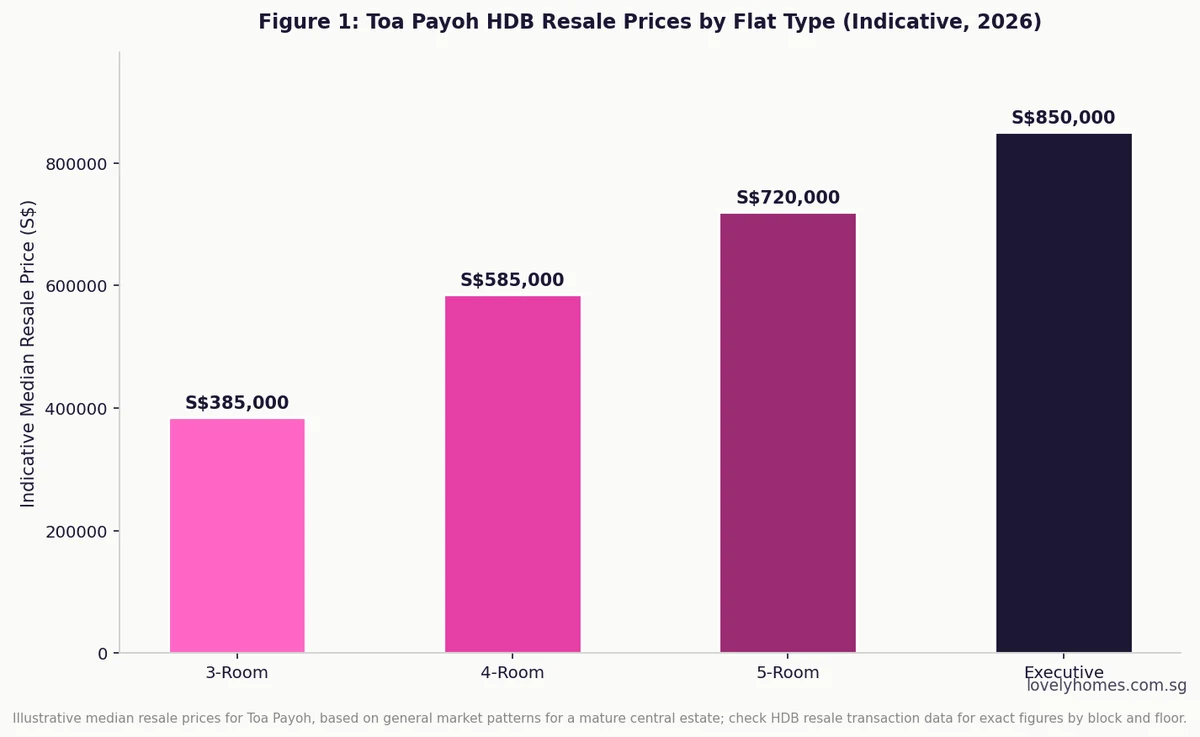
Scenario A – Resale: Mr and Mrs Ong, both Singapore Citizens, are considering a 4-room resale flat in an older Toa Payoh block with roughly 58 years of remaining lease, priced at an illustrative S$585,000. At this remaining lease, their CPF usage and bank loan quantum are only mildly restricted, and with a combined income of S$8,000 a month, a 25-year HDB loan at 2.6% for 80% of the price (S$468,000) works out to roughly S$2,130 a month, comfortably within the 30% Mortgage Servicing Ratio (MSR) cap.
Scenario B – New BTO: The same couple applies instead for the Toa Payoh/Caldecott BTO launching in October 2026. A comparable 4-room unit is priced at an illustrative S$480,000 after subsidy, with a full 99-year lease, but they would need to wait an estimated 3 to 4 years for construction to complete before collecting keys, and would be subject to the standard 5-year Minimum Occupation Period (MOP) from that later date.
The trade-off: the resale flat offers immediate occupation and a familiar, established neighbourhood at a higher price and shorter lease, while the BTO offers a lower price and a fresh 99-year lease at the cost of a multi-year wait. Neither is objectively better; the right choice depends on the buyer’s timeline and how much weight they place on remaining lease.
These figures are illustrative only; check actual resale transaction prices on the HDB resale portal and confirm exact BTO pricing once launch details are released.
Why This Matters for Buyers and Investors
Toa Payoh illustrates a pattern common to many of Singapore’s oldest mature estates: exceptional location and connectivity, weighed against an ageing housing stock that requires more careful due diligence than buying in a newer town. For owner-occupiers prioritising a short commute and an established, walkable neighbourhood, Toa Payoh remains genuinely compelling, particularly for buyers who can find a SERS-replacement or more recently built block within the estate. For investors, the calculus is more nuanced: shorter-lease flats can offer a lower entry price and a reasonable rental yield given the location, but resale liquidity and eventual exit value are more sensitive to remaining lease than in younger estates, a factor worth modelling carefully before committing.
What Might Come Next
The following is informed speculation, not confirmed policy. With the Toa Payoh/Caldecott BTO and its Community Care Apartments component set to launch in October 2026, it is plausible that HDB continues to favour Toa Payoh and other centrally located mature estates for further senior-focused housing given the ageing profile of these towns, though no additional projects beyond the announced one have been confirmed as at this writing. Continued redevelopment of the estate’s oldest remaining blocks, whether through further SERS exercises or major upgrading programmes, also remains a plausible long-term direction as the town approaches the 65-year mark since its original construction began.
Frequently Asked Questions
Is Toa Payoh considered a good location for owner-occupiers?
Yes, particularly for buyers who value central location and direct MRT access to the CBD. The trade-off is an older housing stock, so remaining lease should be checked carefully for any specific block under consideration.
Are there private condominiums in Toa Payoh?
The estate is overwhelmingly HDB housing, with only a small number of private developments nearby; most private condo options in the immediate vicinity are located in neighbouring Novena or Bishan.
When is the Toa Payoh/Caldecott BTO launching?
It is slated for the October 2026 BTO exercise and includes a Community Care Apartments component. Check the HDB website for confirmed launch details closer to the date.
Why do remaining lease lengths vary so much within Toa Payoh?
Because the estate was built in phases from 1965 onwards, with some blocks later replaced under SERS or upgraded, different blocks can carry meaningfully different remaining leases even within the same neighbourhood.
How does Toa Payoh compare to Bishan for resale prices?
Toa Payoh resale prices are generally lower than Bishan for a comparable flat type, reflecting Bishan’s newer housing stock and additional private condominium presence, though both benefit from strong North-South Line connectivity.
Does remaining lease affect my CPF usage for a Toa Payoh flat?
Yes. CPF usage rules are tied to the remaining lease relative to the youngest buyer’s age, so older blocks with shorter remaining leases can restrict how much CPF you are able to use.
Is Toa Payoh well served by schools?
Yes, the estate has several established primary and secondary schools within or near its boundaries, making it a popular choice for families with school-going children.
Related Articles on LovelyHomes
Click anywhere outside to close