
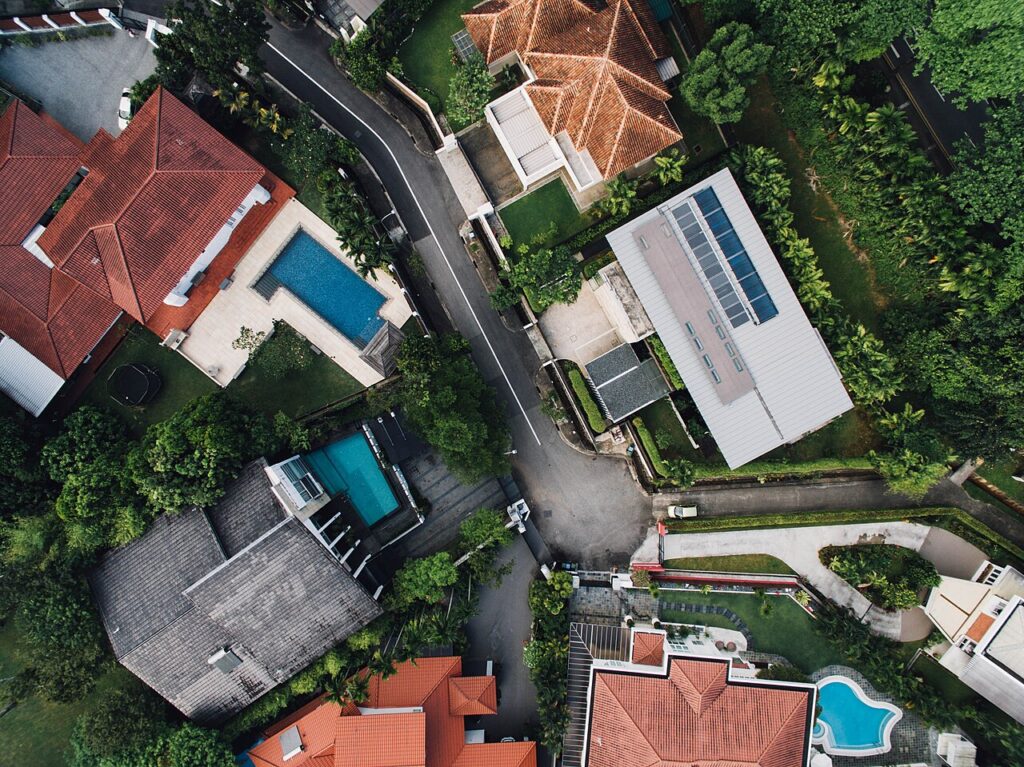
⚡ Quick Answer: Turf City Transformation and D10/D11 Property Outlook
- What is happening to Turf City? The former Singapore Turf Club premises at Bukit Timah Road, covering approximately 161 hectares, are being progressively redeveloped as part of Singapore’s Long-Term Plan Review for the 2030–2040 horizon.
- Location: Bukit Timah Road, primarily within District 10 (Buona Vista/Holland/Tanglin boundary); bordering District 21 (Bukit Timah/Upper Bukit Timah).
- Planned uses: Mixed-use including residential, sports and recreation, hotel/hospitality, retail, F&B, and significant green buffers. No specific GFA breakdown has been gazetted as at July 2026.
- Timeline: Phased development over 10–20 years; near-term interim sports and community uses are expected from 2024–2027.
- Property impact: Industry analysis suggests the Turf City masterplan could add 3–8% to PSF values in the closest D10/D11 sub-districts once the first phase of development is confirmed and under way.
- Key nearby projects: The Opus, 19 Nassim, Bishopsgate Residences, and various freehold landed properties in Coronation Road, Farrer Road, and Bukit Timah Road environs.
- For buyers: The full masterplan is not yet gazetted. Investors should treat Turf City upside as speculative but directionally positive given the historical value lift seen at Fusionopolis (one-north) and the Marina Bay precinct.
Turf City’s Transformation: What Is Changing and Why It Matters
When the Singapore Turf Club relocated its racing operations to Kranji in 1999, the sprawling 161-hectare Turf City site on Bukit Timah Road entered a prolonged interim phase , partially leased to recreation operators, event venues, car showrooms, and equestrian clubs , while the government deliberated on its long-term future. That deliberation has now moved into a more active planning phase. Under Singapore’s Long-Term Plan Review (LTPR), the Turf City site is designated for a major mixed-use transformation that, when complete, will introduce thousands of new residential units, substantial commercial and hospitality uses, and extensive green amenity into one of Singapore’s most prestigious residential corridors.
Industry analysis published in July 2026 examined the potential property value impact of this transformation on the surrounding Districts 10 and 11 , two of Singapore’s most expensive and tightly-supplied residential districts. This LovelyHomes analysis draws on URA’s published planning intentions, publicly available transaction data, and the lessons of comparable Singapore placemaking transformations to assess the opportunity and its limitations for property buyers and investors.
Note: The Turf City masterplan has not yet been publicly gazetted with specific development parameters. All planning details referred to in this article are drawn from URA’s published Long-Term Plan Review documents and publicly available information. Buyers should not rely on this article for specific investment decisions and should monitor URA announcements directly.
What the URA Masterplan Says About Turf City
URA’s 2019 Master Plan and the subsequent 2022 Long-Term Plan Review (LTPR) designated the Turf City area as a significant future development node. The LTPR’s concept plan for this precinct identifies several planning intents:
- Mix of uses: The plan envisions residential development integrated with sports and recreation facilities, acknowledging that Turf City’s large green footprint and parkland character should be substantially preserved. Unlike a purely commercial-residential development, the green open space ratio is expected to be high , potentially 40–50% of the site retained as parks, nature buffers, and green corridors connecting to the Rail Corridor and Bukit Timah Nature Reserve.
- Sports and recreation anchor: Given the site’s equestrian history and existing facilities, URA has signalled that major sports and recreation infrastructure will be a centrepiece , potentially including a new sports hub or equestrian park serving the western Singapore population.
- Residential quantum: While no specific flat count has been published, the scale of the site (161 ha compares to one-north’s 200 ha) suggests a potentially significant number of homes , possibly 3,000–8,000 units over multiple phases, based on typical Singapore mixed-use plot ratio norms and the green space retention commitment.
- Phasing: Turf City redevelopment is expected to take 15–25 years. The first GLS (Government Land Sales) tender for a Turf City sub-parcel has not yet been announced as at 10 July 2026. Near-term uses include the existing recreational tenants (many on short-term leases), and the Singapore Racecourse Master Plan is subject to ongoing stakeholder consultation.
How D10 and D11 Property Markets Are Currently Positioned
Districts 10 and 11 together represent the upper tier of Singapore’s residential property market outside of the super-premium District 9 (Orchard/River Valley) and District 1 (Raffles Place/Marina). Both districts are characterised by a high proportion of freehold and 999-year tenure land, proximity to Singapore’s premier primary schools (SCGS, RGS, ACS (Independent), MGS, CCFPPS), and established address prestige that commands a persistent premium over Rest of Central Region (RCR) and Outside Central Region (OCR) comparables.
As at Q2 2026, the indicative non-landed private residential PSF ranges in D10 and D11 are approximately:
| District / Sub-Area | Indicative PSF Range (Q2 2026) | Typical 2BR Resale Price | Tenure Characteristics |
|---|---|---|---|
| D10 , Holland Road / Bukit Timah Road corridor | S$2,400–S$3,400 PSF | S$2.2M–S$3.4M | Predominantly freehold / 999-yr |
| D10 , Farrer Road / Stevens Road | S$2,600–S$3,600 PSF | S$2.5M–S$3.8M | Mix of freehold and 99-yr leasehold |
| D11 , Newton / Novena | S$2,200–S$3,200 PSF | S$1.8M–S$3.0M | Mix; Novena corridor 99-yr heavy |
| D11 , Watten / Dunearn | S$2,400–S$3,200 PSF | S$2.2M–S$3.2M | Predominantly freehold |
| D21 , Bukit Timah / King Albert Park (adjacent to Turf City) | S$1,900–S$2,600 PSF | S$1.6M–S$2.5M | Mix; some 999-yr old estates |
The Turf City site itself straddles the D10/D21 boundary. The sub-districts most directly adjacent , the Coronation Road / Farrer Road / Bukit Timah Road triangle , already trade at the upper end of D10 pricing, reflecting both school proximity (five top primary schools within 1–2 km) and the existing parkland premium from Bukit Timah Nature Reserve and the Rail Corridor.
Historical Precedents: What Placemaking Does to Singapore Property Values
Singapore has a strong track record of using master-planned precincts to drive medium-term property value uplift in surrounding neighbourhoods. Several precedents are instructive:
One-north (Buona Vista): The Fusionopolis and Biopolis development at one-north, launched from 2001 and substantially built out by 2015, transformed a former industrial estate into a knowledge-economy hub. Property values in the immediately surrounding residential areas (Rochester Park, Ghim Moh, Clementi Park) appreciated significantly ahead of broader Singapore market trends during the 2005–2020 period, as the employment node matured and transport connectivity (Circle Line one-north station) delivered.
Marina Bay (Districts 1–2): The Marina Bay Sands integrated resort and Marina Bay Financial Centre, developed between 2005 and 2013, created one of the most dramatic property value catalysts in Singapore history. The broader Tanjong Pagar and Marina Bay sub-district saw PSF appreciation of 60–90% between 2007 and 2019, well above the Singapore-wide average.
Punggol (Waterway) and Tengah: HDB’s Punggol Waterway and the ongoing Tengah “Forest Town” development demonstrate that even in OCR public housing, master-planned green and amenity precincts command a meaningful premium (approximately 3–8% based on URA resale transaction data for comparable flats within vs outside the precinct boundary).
The Turf City precedent is closest to one-north in character: a large brownfield/interim-use site in an established residential precinct, being redeveloped with a mixed-use programme that preserves substantial green space. The one-north uplift, when adjusted for broader market trends, was approximately 5–12% for the closest residential properties over the decade following the first GLS tender award.
LovelyHomes’ Assessment: Is Turf City a Compelling Property Play?
The Turf City transformation presents a genuine medium-to-long-term opportunity for property investors in D10 and D21 , but it comes with meaningful caveats that distinguish it from a straightforward near-term trade.
The bull case is straightforward: Turf City will introduce significant employment, amenity, and population density into one of the most undersupplied premium residential corridors in Singapore. The Rail Corridor connectivity, proximity to Bukit Timah Nature Reserve, and the school catchment (virtually unique in offering five top primary schools within walking distance) mean that any new residential supply in the precinct is likely to face strong demand , and the uplift to surrounding existing properties from improved precinct vitality should be positive.
The bear case centres on two risks. First, timeline: Turf City redevelopment will take 15–25 years to materialise meaningfully. Investors who buy near-Turf City properties today expecting a 2–3 year capital uplift are likely to be disappointed. Second, supply: if the residential quantum is large (3,000–8,000 units), the new supply itself may partially offset the precinct uplift , particularly in the first decade when construction activity depresses the perceived liveability of the immediate surrounds.
LovelyHomes’ view: The most advantaged properties in a Turf City transformation scenario are existing freehold condominiums and landed properties on Coronation Road, Farrer Road, and the Bukit Timah Road corridor between D10 and D21 , within 800m of the site boundary. These are already premium assets; the Turf City announcement provides structural support for their long-term price floor rather than an immediate uplift catalyst. Buyers who prioritise school proximity (SCGS and RGS catchment), freehold tenure, and green access as primary criteria will find these properties attractive independent of the Turf City story.
FAQ: Turf City Transformation and D10/D11 Property
When will Turf City redevelopment begin and what will be built first?
As at 10 July 2026, URA has not published a specific development timeline or issued a GLS tender for Turf City sub-parcels. The current phase is characterised by interim recreational uses and ongoing masterplan consultation. Industry estimates suggest the first GLS tender could be launched in 2027–2028, with the first major development completing in the early 2030s. The precise sequencing will depend on URA’s decision on whether to prioritise the sports/recreation anchor (which would require significant infrastructure lead time) or the residential component. Buyers interested in properties adjacent to the site should monitor URA’s press releases at ura.gov.sg for official announcements.
Will Turf City affect HDB flat prices in Districts 10/11 or nearby towns?
There are very few HDB flats in the immediate Turf City vicinity , D10 and D21 are predominantly private residential districts. The nearest substantial HDB stock is in Clementi (D5), Queenstown (D3), and Bukit Timah (D21 fringes). For HDB owners in these areas, the Turf City transformation is unlikely to have a direct price impact in the near term. The effect, if any, would operate through general neighbourhood attractiveness and amenity improvements , factors that affect all property types, but with a longer and less direct transmission mechanism than for adjacent private properties. HDB owners in Clementi and Bukit Timah should monitor broader market trends, the HDB Q2 2026 full data release (~23 July 2026), and the upcoming October 2026 BTO launch for a more relevant read on their local market.
Are there any new launches or upcoming projects in D10 or D11 that could benefit from Turf City?
As at July 2026, several new-launch projects in D10 and D11 are either recently launched or in pipeline. Dunearn House (D11, Bukit Timah/Dunearn Road corridor) previewed on 10 July 2026 with prices from approximately S$2,799 PSF , benefiting from the Bukit Timah Road premium and proximity to top schools. The new-launch pipeline in D10/D21 is thin, reflecting the scarcity of GLS or collective sale sites in this tightly-held freehold belt. Buyers seeking new-launch exposure to the Turf City theme would need to look at the upcoming GLS confirmed list (2H2026 GLS list includes no D10/D21 confirmed sites as at this writing). The most practical approach is the resale market , existing freehold condominiums within 800m of Turf City.
Should I buy in D10 or D21 now in anticipation of the Turf City masterplan?
LovelyHomes does not provide investment recommendations. Factually, the current D10 and D21 markets are already pricing in a degree of “masterplan optionality” , freehold properties in the Bukit Timah Road and Farrer Road corridors trade at a consistent premium to comparable leasehold properties in RCR. The Turf City story has been discussed in the market since at least 2019 and is not new information in 2026. Any buyer who acts on this theme should have a minimum 8–10 year investment horizon, sufficient to see meaningful precinct development materialise, and should ensure the property’s current fundamentals (location, tenure, floor plan, school catchment, MRT connectivity) justify the investment independent of the Turf City thesis. The Turf City upside is a potential enhancement , not the primary investment rationale. Speak to a licensed property agent and financial adviser before transacting.
How does the Rail Corridor affect D10/D21 values near Turf City?
The Rail Corridor , the 24-km green strip running from Tanjong Pagar Railway Station to the Woodlands Checkpoint , cuts directly through the Turf City vicinity, connecting the site to Bukit Timah Nature Reserve to the north and the Queensway/Alexandra green corridor to the south. NParks has progressively activated the Rail Corridor as a recreational trail since 2021, and phase-by-phase improvements have added rest nodes, cycling paths, and community spaces. Properties within 200–400m of the Rail Corridor in D10 and D21 have consistently commanded a green-corridor premium in Singapore’s transaction data , a pattern confirmed by URA’s own analysis of comparable resale prices. For Turf City-adjacent properties, Rail Corridor access and Bukit Timah Nature Reserve proximity are compounding green premiums that pre-exist the Turf City transformation and will persist regardless of its timeline.
Related Articles
- Singapore Private Property Buying Guide 2026
- ABSD Singapore 2026: Complete Guide to Additional Buyer’s Stamp Duty
- Singapore Private Property Prices Q2 2026: URA Flash Estimate
- JLD White Site 2026: Up to 1,200 Homes at Jurong Lake District
- En Bloc Sale Singapore 2026: Complete Guide
- Singapore Property Investment Guide 2026
Supporting graphics
Original article illustrations are available below.
