
Smart Home & PropTech Guide for Singapore Homeowners 2026: Digital Locks, Costs and Does It Boost Resale Value
Quick Answer: Smart Home and PropTech in Singapore
- Singapore has one of the highest smart home adoption rates in Asia, supported by a tech-comfortable population, high household income, and the Government’s own Smart Nation initiative.
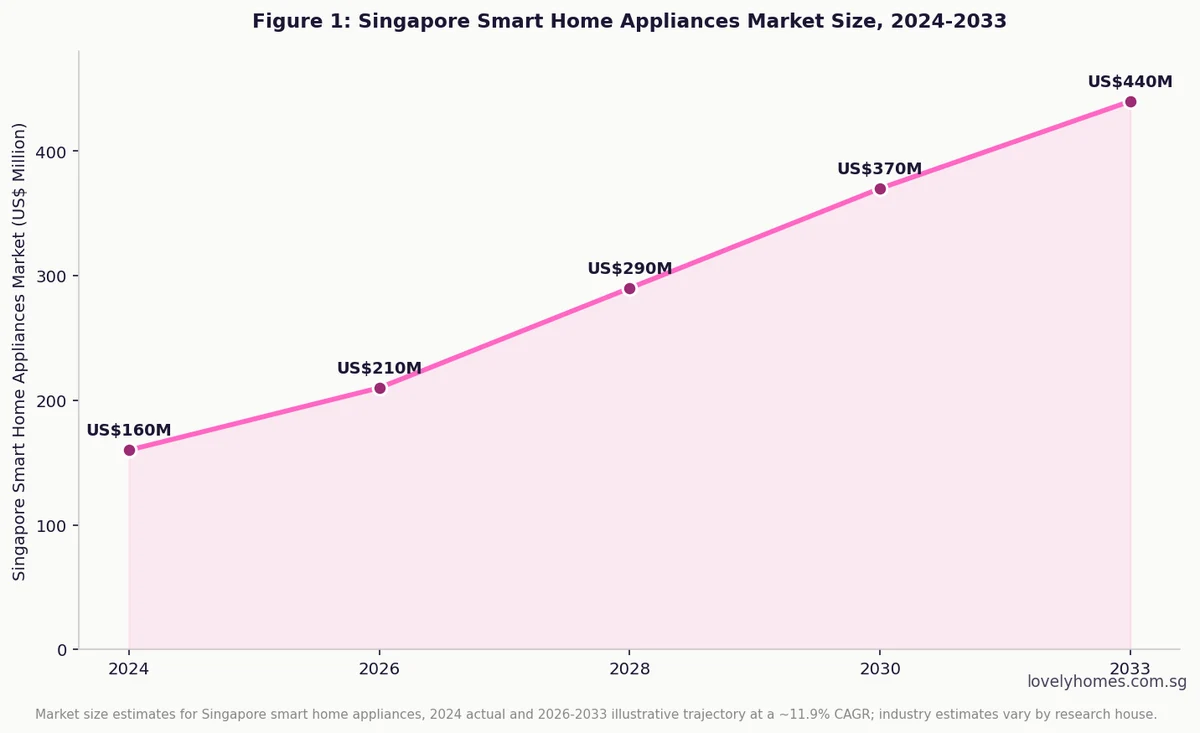
- Singapore’s smart home appliances market was valued at roughly US$160 million in 2024 and is projected to reach around US$440 million by 2033, a compound annual growth rate of about 11.9%.
- Digital door locks have moved from an early-adopter novelty to a near-standard feature, appearing across new BTO flats in estates like Tengah and Bidadari as well as resale flats in established towns such as Tampines and Jurong.
- Digital locks and smart gates must still comply with the Singapore Civil Defence Force (SCDF) Fire Code, which requires that main gates and locking mechanisms do not impede rapid evacuation or firefighter access during an emergency.
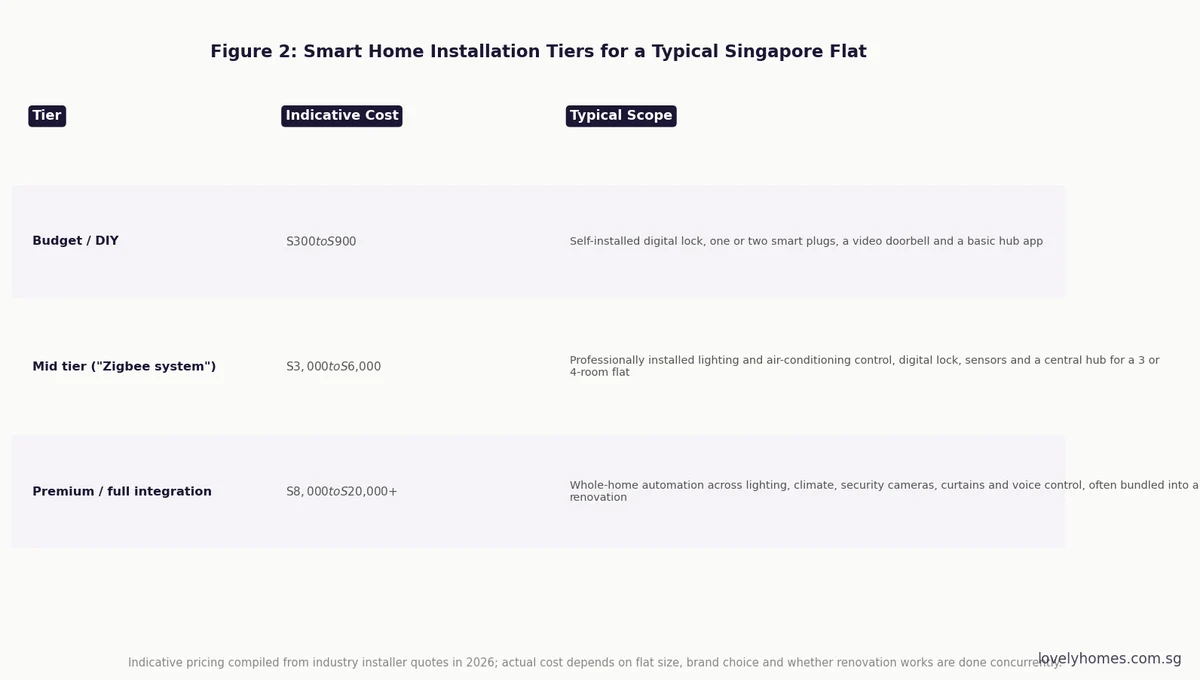
- Installation costs range widely: a budget or DIY setup can cost a few hundred dollars, while a professionally installed mid-tier system for a 3 or 4-room flat typically runs S$3,000 to S$6,000.
- The impact on resale value is real but modest: a “smart-ready” home is a genuine selling point that can widen buyer interest, particularly among younger, tech-comfortable buyers, but it rarely commands a measurable price premium on its own.
- PropTech more broadly, covering digital property search, transaction and management tools, has made the buying, selling and renting process faster, though the fundamentals of due diligence and legal process remain unchanged.
What “Smart Home” and “PropTech” Actually Mean in Singapore
PropTech, short for property technology, is a broad umbrella covering any digital tool that changes how people search for, transact, finance or manage property, from listing portals and virtual tours through to e-conveyancing platforms and digital mortgage applications. Smart home technology is a narrower subset focused specifically on the physical home itself: internet-connected devices such as digital locks, smart lighting, air-conditioning controllers, security cameras and voice assistants that residents can monitor and control remotely, usually through a smartphone app or a central hub.
Singapore is unusually well positioned for both. High smartphone penetration, near-universal home broadband, and a Government that has actively promoted smart living through BTO flat infrastructure and the wider Smart Nation programme have combined to push smart home technology well beyond early-adopter territory. By 2026, choosing whether to add smart features has become a mainstream part of renovation planning for many homeowners, alongside more traditional choices like flooring and kitchen layout.
Digital Locks: The Most Common Starting Point, and the SCDF Rules That Apply
For most homeowners, a digital door lock is the entry point into smart home technology, and by 2026 it has become close to a default choice rather than a novelty upgrade. Modern digital locks typically offer a combination of fingerprint biometrics, facial recognition, PIN codes, RFID key cards and mobile app unlocking, along with features such as temporary guest access codes and break-in alarms. They appear as a standard fitting across many new BTO flats and are one of the most common single upgrades made by owners of older resale flats.
Homeowners should be aware that digital locks, and especially any accompanying smart gate or grille, remain subject to the Singapore Civil Defence Force (SCDF) Fire Code, which sets clear requirements to ensure a home’s main entrance does not impede rapid evacuation in a fire or block firefighter access to the unit. In practice, this means any digital gate or grille installed alongside a digital lock needs a mechanism that allows quick manual release from inside the home, even if the electronic system fails or loses power. Homeowners should check that any product and installer they use is compliant with current SCDF guidelines before installation, particularly for HDB flats where the main gate is part of the shared building’s fire safety plan.
Beyond the Lock: Building Out a Smart Home System
Once a digital lock is in place, the next most common additions are smart lighting and air-conditioning control, typically coordinated through a central hub using a wireless protocol such as Zigbee, which allows multiple devices from different brands to be controlled from a single app or voice assistant. Security cameras, video doorbells and leak or smoke sensors round out a typical mid-tier installation, giving homeowners remote visibility into their flat while away, whether checking that the stove was switched off or keeping an eye on an elderly parent or a pet.
At the premium end, full home automation extends this further to motorised curtains, integrated whole-home audio, and centralised control panels that manage every connected device from a single interface, often installed as part of a broader renovation rather than as a standalone project. The right tier for any given household depends on budget, how much of the work is done during an existing renovation versus retrofitted afterwards, and how much day-to-day convenience the household genuinely wants from automation versus simple manual control.
Does a Smart Home Actually Boost Resale Value?
This is the question most homeowners considering an investment in smart technology actually want answered, and the honest response is nuanced. A “smart-ready” home is a genuine selling point in 2026, and can help a listing stand out and draw stronger interest, particularly from younger, tech-comfortable buyers who increasingly expect at least a digital lock as standard. However, the direct impact on the final transacted price is modest: the cost of installing smart devices is generally small relative to the overall value of the property, and buyers who appreciate the technology are not necessarily willing to pay a specific dollar premium for it, especially since most smart devices can be added relatively cheaply and quickly by a new owner after purchase if they are not already present.
Where smart home technology does deliver clearer, quantifiable value is in ongoing running costs and convenience rather than resale price: smart lighting and air-conditioning control can meaningfully reduce electricity usage over time through scheduling and automatic shut-off, and security features provide genuine peace of mind that has value to the occupant even if it does not show up as a specific line item in a valuation report.
Summary: Smart Home and PropTech Facts at a Glance
| Question | Short Answer |
|---|---|
| How big is Singapore’s smart home market? | Around US$160 million in 2024, projected to reach roughly US$440 million by 2033. |
| What is the most common first smart home upgrade? | A digital door lock, now close to standard across new BTO flats and a common resale flat retrofit. |
| Do digital locks have to meet fire safety rules? | Yes, SCDF Fire Code rules require quick manual release for rapid evacuation and firefighter access. |
| How much does a mid-tier smart home system cost? | Roughly S$3,000 to S$6,000 for a professionally installed system in a 3 or 4-room flat. |
| Does smart home tech raise resale price? | It widens buyer appeal but rarely commands a specific measurable price premium on its own. |
| What is PropTech, more broadly? | Digital tools covering property search, transactions, financing and management, distinct from in-home smart devices. |
Worked Example: Retrofitting a 4-Room HDB Flat
The household: Ms Wong owns a 4-room resale flat in an established estate and wants a mid-tier smart home retrofit alongside a planned renovation, without going as far as full whole-home automation.
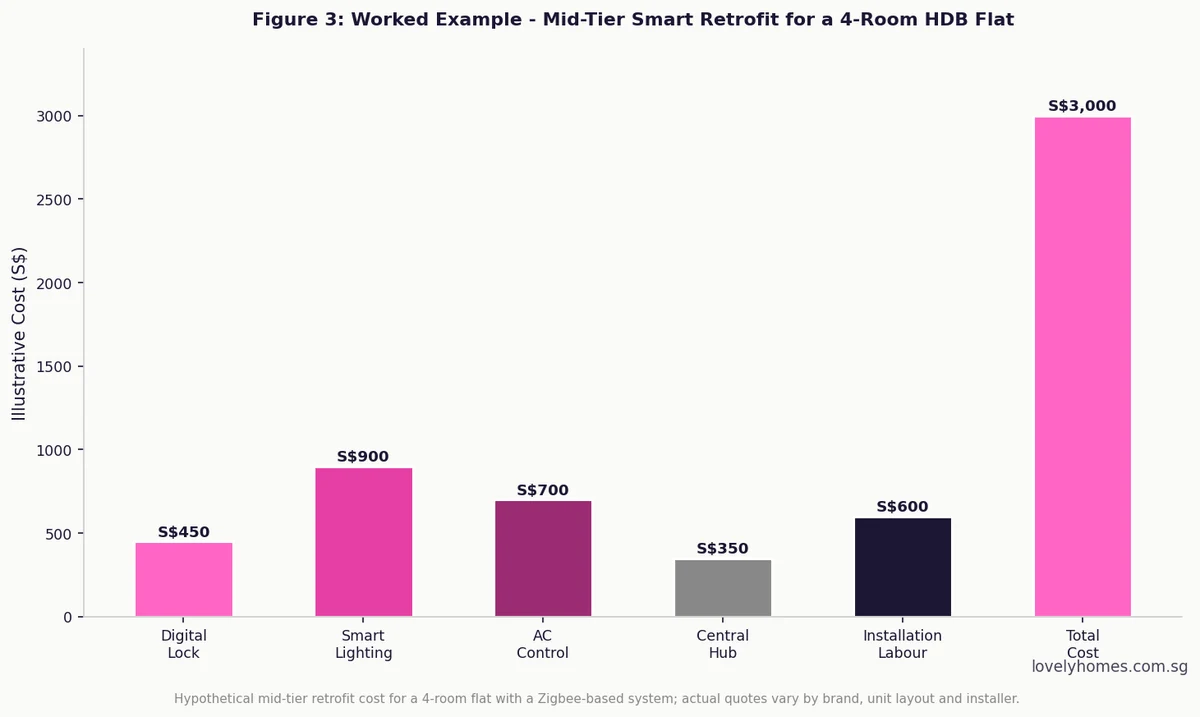
The build-out: she installs a digital lock at approximately S$450, smart lighting across the living room and bedrooms at approximately S$900, smart air-conditioning control at approximately S$700, and a central hub tying the system together at approximately S$350, with professional installation labour adding a further S$600. The total comes to approximately S$3,000, sitting at the lower end of the mid-tier cost range.
What she gets in return: immediate convenience and security from the digital lock and lighting control, an estimated modest reduction in her air-conditioning electricity usage from scheduling and automatic shut-off, and a flat that, should she sell it later, presents as modern and well-equipped to prospective buyers, even though this alone is unlikely to add a specific measurable premium to her eventual asking price.
These figures are illustrative only; actual costs depend on the brands chosen, the flat’s existing wiring, and whether the work is bundled into a larger renovation project.
Why This Matters for Homeowners, Buyers and Landlords
For owner-occupiers, smart home technology is best thought of as a genuine quality-of-life investment rather than a resale strategy in itself: the convenience, security and running-cost benefits accrue to whoever lives in the home day to day, and any resale appeal is a secondary bonus rather than the primary reason to install it. For landlords, offering a unit with at least a digital lock and basic smart features can help a listing stand out in a crowded rental market, since it signals a well-maintained, modern property without requiring a large capital outlay. For buyers evaluating two otherwise comparable homes, existing smart home features are a pleasant convenience worth factoring into a decision, but should not be weighted too heavily relative to more fundamental considerations such as location, remaining lease and layout, since most smart devices can always be added later at relatively modest cost.
What Might Come Next
The following is informed speculation, not confirmed policy. As Singapore’s Smart Nation initiatives continue to mature, it is plausible that future BTO developments come pre-wired for smart home integration at a more comprehensive level than today, reducing retrofit costs for new owners from the outset. Continued growth in AI-assisted home security, including smarter anomaly detection from connected cameras and sensors, is also a plausible direction for the market given the pace of investment already seen in Singapore’s broader smart home sector, though the specific products and timelines are not yet confirmed.
Frequently Asked Questions
Is a digital lock allowed on an HDB main door and gate?
Yes, digital locks are widely used on HDB doors and gates, but any accompanying digital gate or grille must still comply with SCDF Fire Code requirements for rapid manual release during an emergency.
What is the cheapest way to start with smart home technology?
A budget or DIY approach, typically a self-installed digital lock, a smart plug or two and a video doorbell, can cost a few hundred dollars and still deliver meaningful convenience and security.
Will installing smart home devices increase my flat’s valuation?
Not in a formal valuation sense; bank and HDB valuations are based primarily on comparable transactions, not individual fittings, though smart features can support buyer interest and a faster sale.
Can I mix smart home brands, or do I need to stick to one ecosystem?
Many homeowners mix brands successfully using a shared wireless protocol such as Zigbee and a central hub or voice assistant that supports cross-brand control, though checking compatibility before purchase avoids frustration later.
Is PropTech the same as smart home technology?
No. PropTech is the broader category covering digital property search, transaction and management tools, while smart home technology refers specifically to connected devices inside the physical home.
Do smart home devices actually reduce electricity bills?
Smart lighting and air-conditioning scheduling can meaningfully reduce usage over time through automatic shut-off and optimised settings, though actual savings depend on household habits and existing appliance efficiency.
Should I install smart home features before selling my flat?
A basic digital lock can help a listing feel modern and well maintained, but a large smart home investment purely to boost sale price is unlikely to be recovered dollar-for-dollar, so it is better justified by your own convenience while living there.
Related Articles on LovelyHomes
Click anywhere outside to close