Singapore Rental Stamp Duty Guide 2026: Rates, Calculation and How to Pay
🏠 Quick Answer — Singapore Rental Stamp Duty 2026
- Rental Stamp Duty (RSD) is a tax administered by IRAS on tenancy agreements for property in Singapore. It applies to virtually all signed rental agreements, whether residential or commercial.
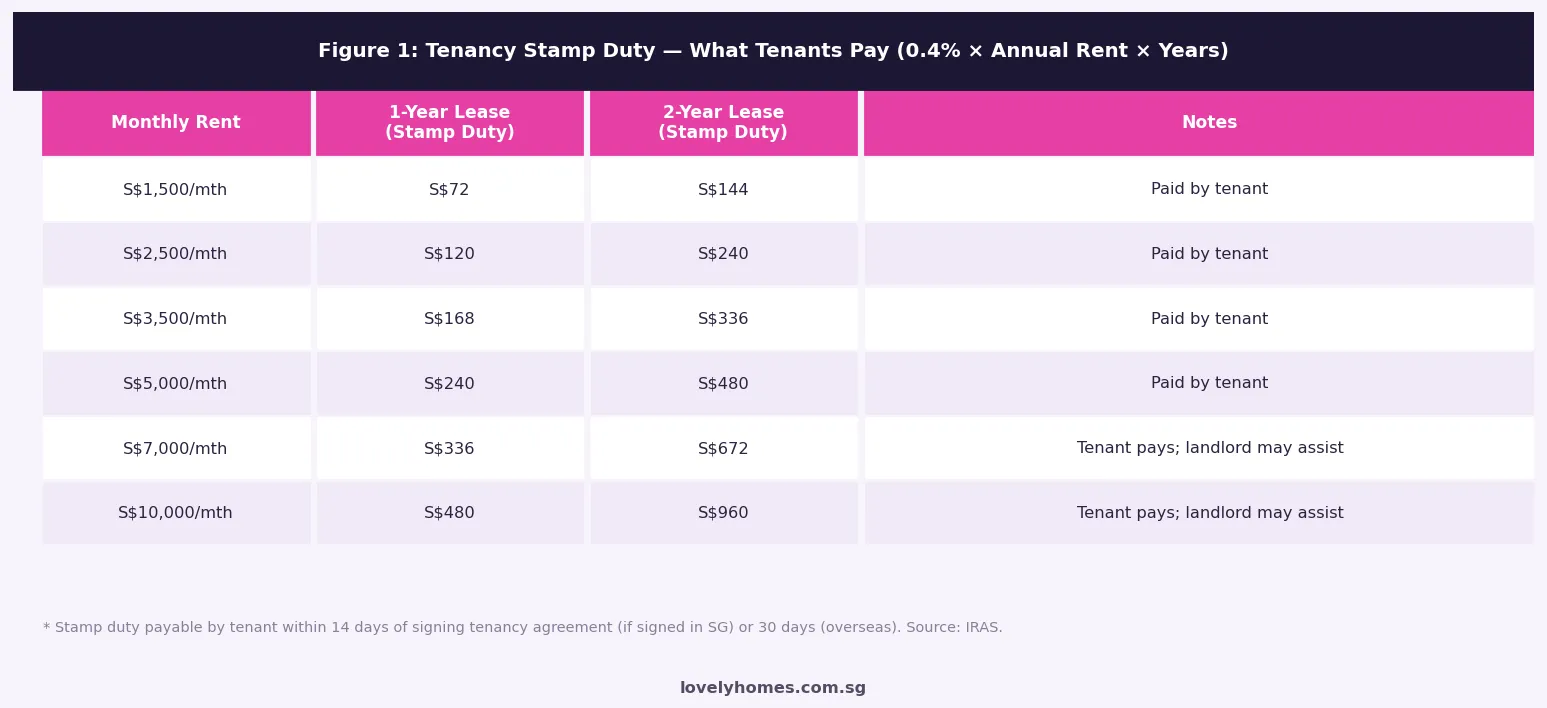
- The standard rate is 0.4% of the total rent payable for leases of up to one year. For leases exceeding one year, the rate still works out to approximately 0.4% of the average annual rent, but the calculation base changes — making longer leases proportionally cheaper per dollar of rent.
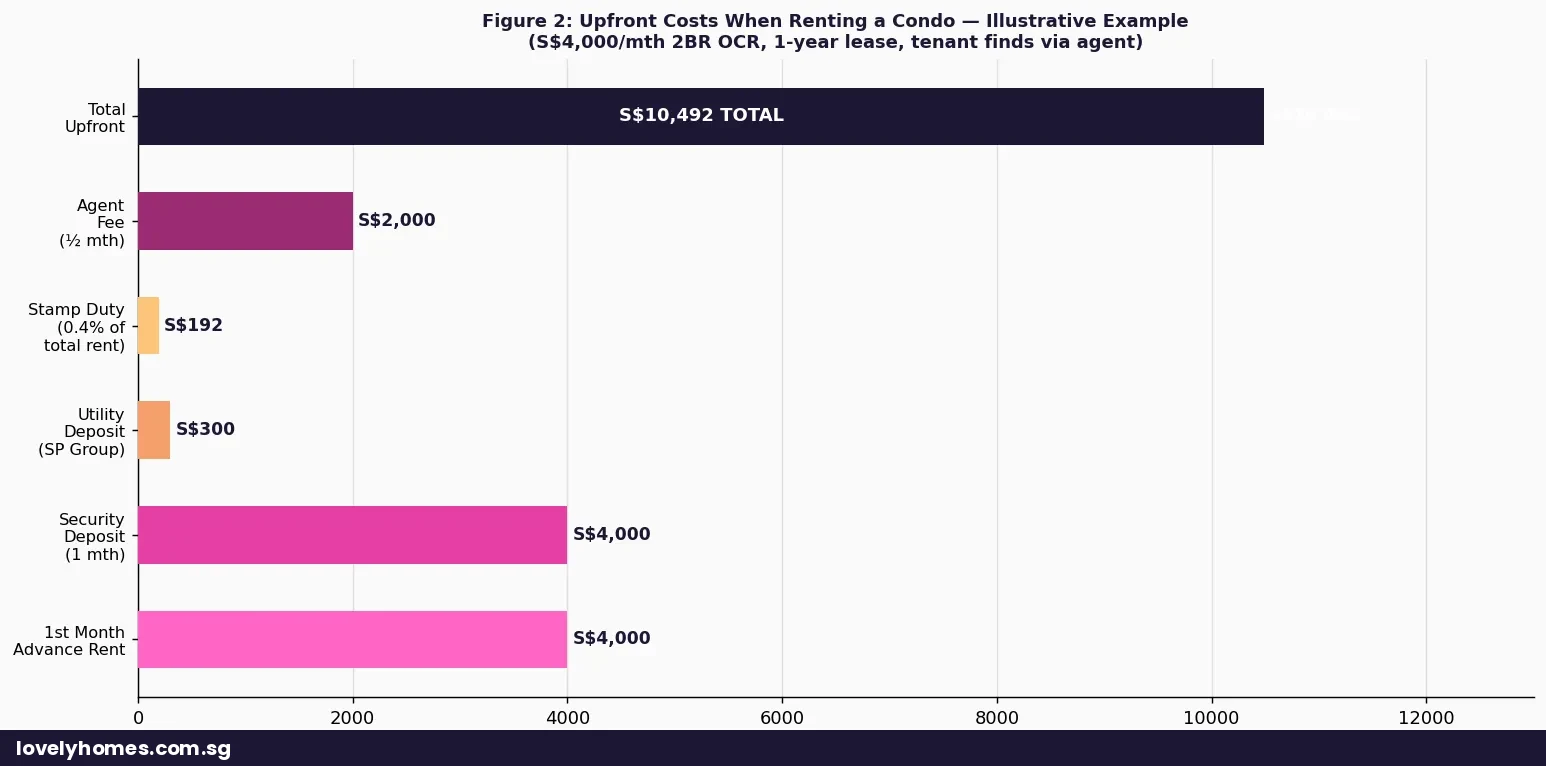
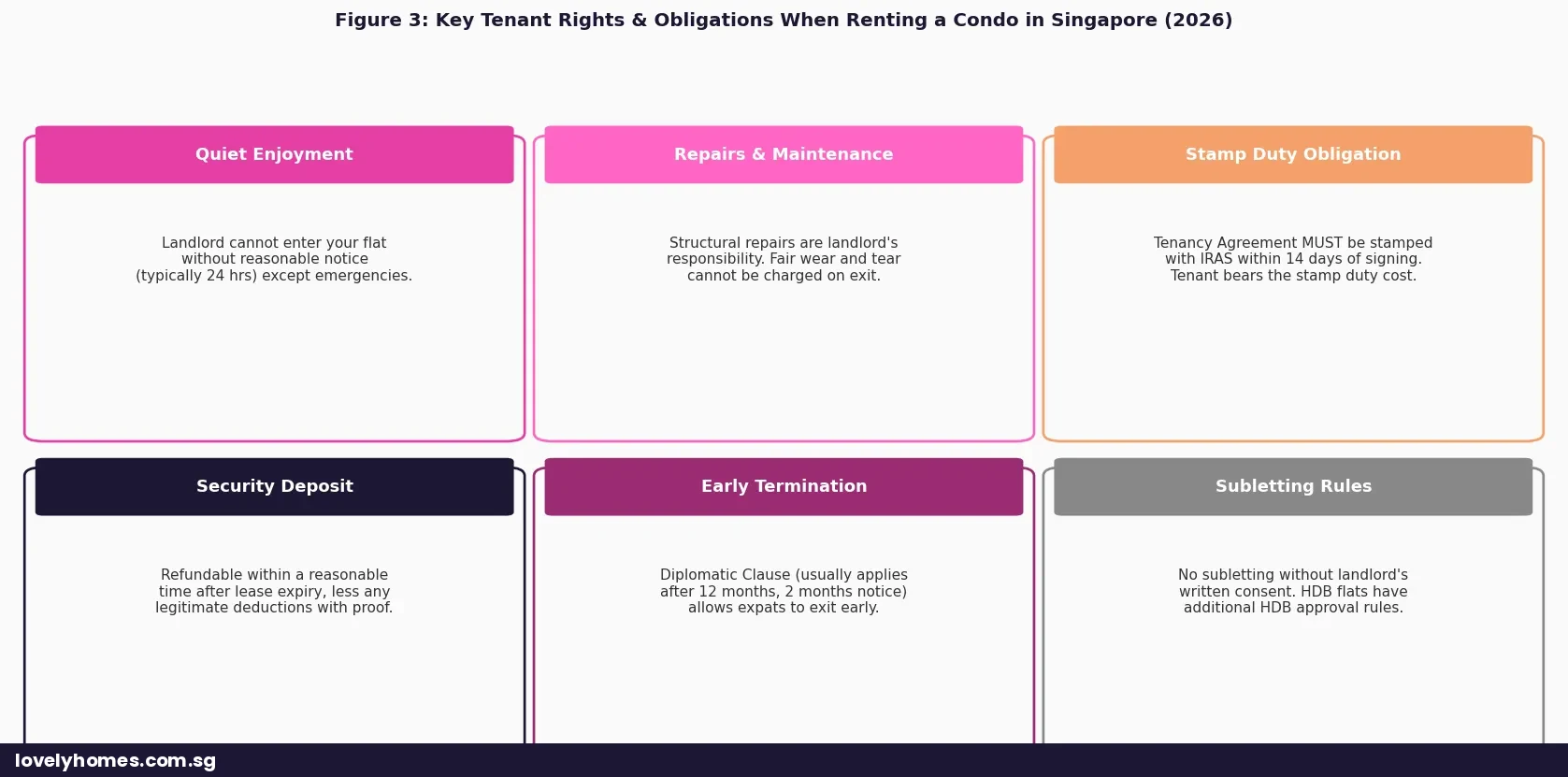
- Legally, the tenant pays RSD, but landlords and tenants may contractually agree otherwise. The obligation to stamp the agreement within the prescribed deadline remains regardless of who bears the cost.
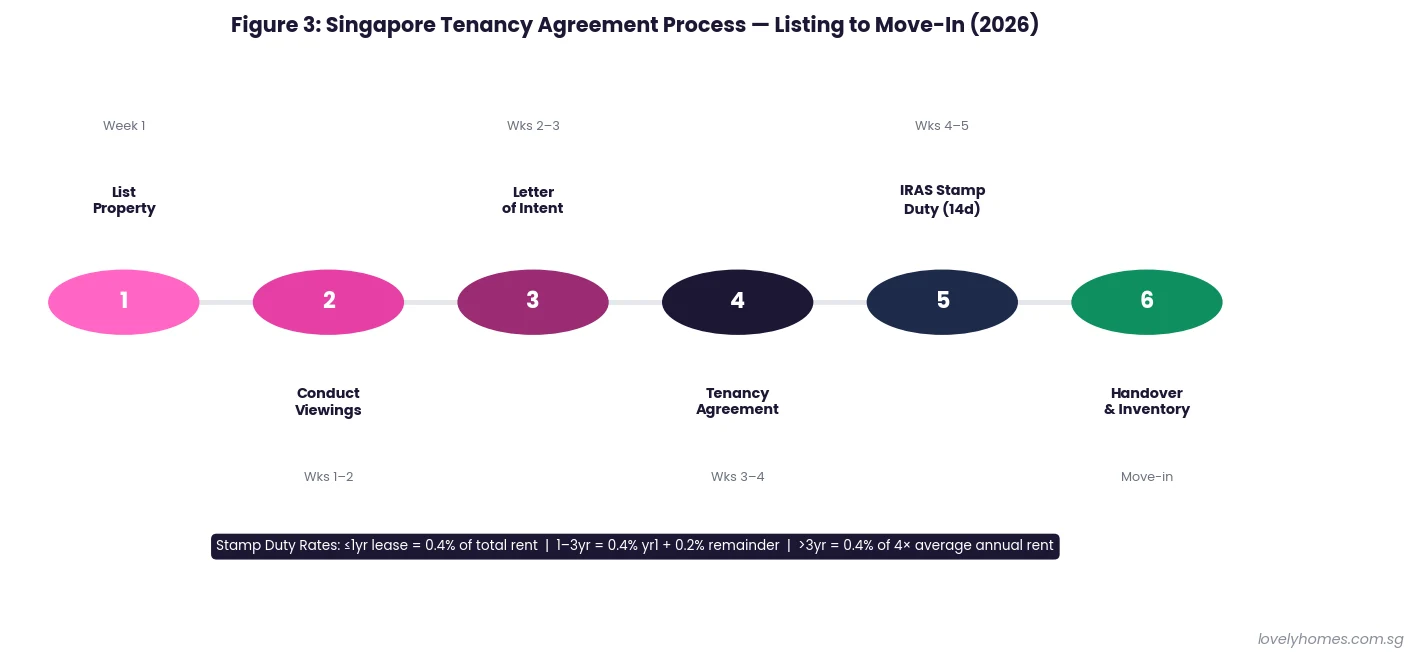
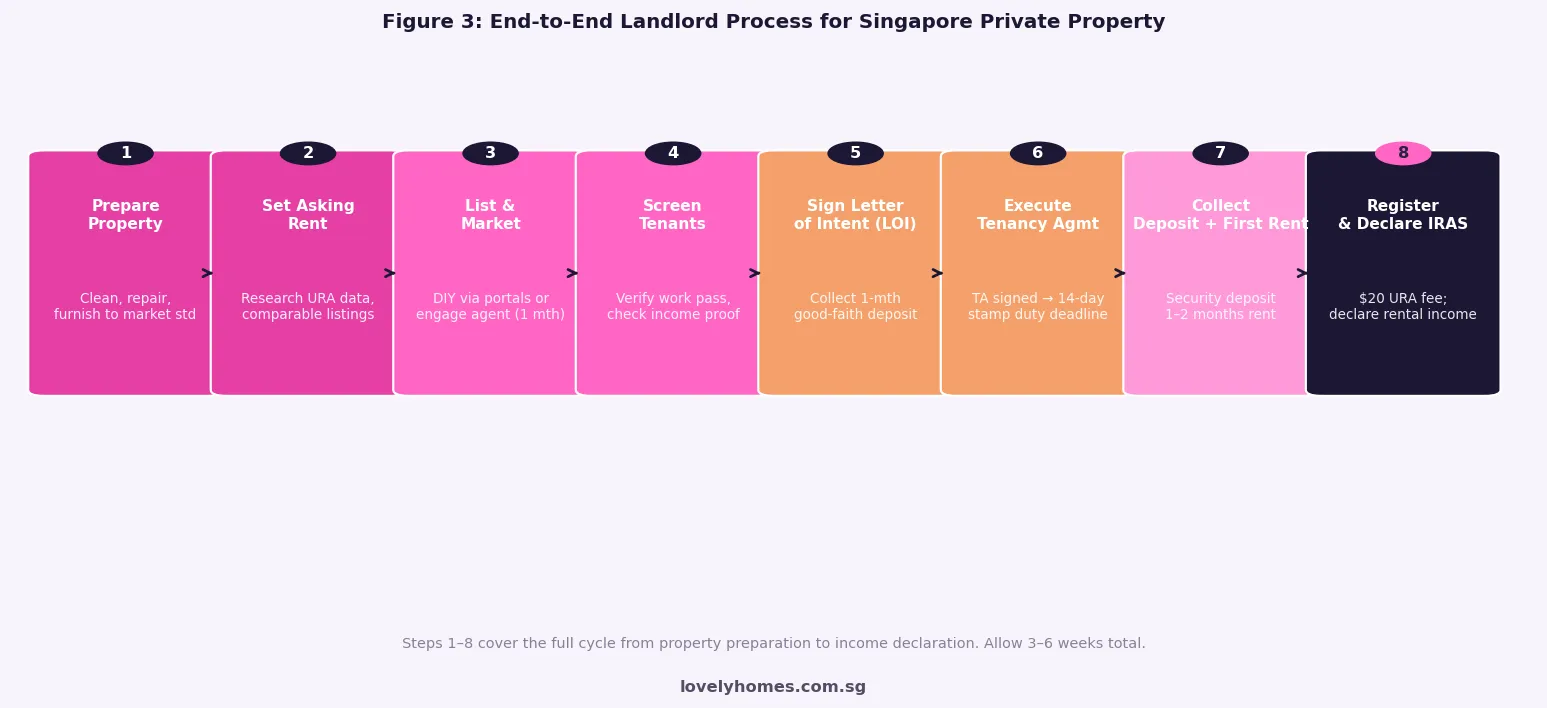
- Deadline: 14 days from signing if the tenancy agreement is executed in Singapore; 30 days if signed overseas. Late payment attracts penalties of up to four times the original stamp duty.
- Payment is made via IRAS e-Stamping at mytax.iras.gov.sg. The stamped agreement serves as legally admissible evidence in court; an unstamped tenancy agreement cannot be produced as evidence without first paying the outstanding duty (plus penalty).
- Exemptions are narrow: certain government-to-government leases and specific short-term licence arrangements may be exempt, but most residential and commercial tenancies are stampable.
- Rental stamp duty is separate from and in addition to GST on rent (if the landlord is GST-registered), and should not be confused with ABSD/BSD on property purchases.
What is Rental Stamp Duty and Why Does It Exist?
Stamp duty in Singapore has a long history rooted in colonial taxation: the original principle was that documents conveying rights — whether over property, shares, or contracts — should bear a “stamp” as evidence that a duty had been paid to the Crown. Today, Rental Stamp Duty (RSD) — formally called “lease duty” under the Stamp Duties Act (Cap. 312) — is the charge IRAS imposes whenever a tenancy agreement or lease is executed for property located in Singapore.
Unlike BSD and ABSD, which fall on property purchases, RSD is a tax on the right to occupy rather than the right to own. Its effect is relatively modest in absolute dollar terms compared with purchase stamp duties, but it is frequently misunderstood — particularly by tenants who may not realise they are legally required to pay it, and by landlords who may not realise that an unstamped tenancy agreement is inadmissible in court should a dispute arise.
IRAS administers RSD under the Stamp Duties Act and has digitised the entire process through its e-Stamping Portal. Since 2017, physical revenue stamps have been abolished; all stamping is done electronically, and a Certificate of Stamp Duty (or Digital Stamp) is generated upon payment.

How RSD is Calculated: The Three Lease-Term Formulas
Singapore’s Stamp Duties Act prescribes the duty rate based on the lease term. The rate is expressed as a fixed monetary charge per S$250 (or part thereof) of “chargeable rent” — which in practice simplifies to the percentages most property practitioners use.
| Lease Term | Chargeable Rent Base | Effective Rate | Formula |
|---|---|---|---|
| Up to 1 year | Total rent for the entire lease | 0.4% | 0.004 × (monthly rent × number of months) |
| Over 1 year up to 3 years | Average Annual Rent (AAR) | 0.4% of AAR | 0.004 × (total rent ÷ number of years) |
| Over 3 years | 4× Average Annual Rent | 0.4% × 4× AAR | 0.004 × 4 × (total rent ÷ number of years) |
In practical terms, for the most common residential lease length of 12 or 24 months, the stamp duty works out to 0.4% of the annual rent. A S$3,500/month 12-month lease has total rent of S$42,000; duty = 0.4% × S$42,000 = S$168. A S$3,500/month 24-month lease has AAR of S$42,000; duty = 0.4% × S$42,000 = S$168. The duty is identical: longer leases within the 1–3 year band do not incur higher total stamp duty.
For leases over 3 years, the multiplier of 4× the AAR effectively applies a penalty on very long-term leases. A S$5,000/month 5-year lease would have AAR = S$60,000; duty = 0.4% × 4 × S$60,000 = S$960. This is significantly higher than a S$5,000/month 36-month lease (AAR = S$60,000; duty = 0.4% × S$60,000 = S$240).
Where a lease includes an option to renew, IRAS takes the view that the full expected lease term — including the renewal period — should be used to determine the chargeable rent base, unless the renewal is genuinely at the tenant’s option with no assurance from the landlord. This is a common area of dispute, and tenants and landlords should take specific legal advice on complex renewal clauses.

Who Pays: Legal Obligation vs Contractual Practice
Under the Stamp Duties Act, the person liable to pay stamp duty on a lease is the lessee — the tenant. This is the default legal position. However, Singapore law does not prohibit parties from contractually agreeing that the landlord will bear the cost of stamping instead. Many commercial leases, for example, provide that the landlord stamps the agreement and the stamp duty is absorbed as part of the landlord’s cost of leasing.
In residential lettings, standard practice in Singapore varies. A typical HDB or condo tenancy agreement often states that the tenant pays the stamp duty; in practice, some landlords absorb it, particularly in competitive rental markets. Regardless of who pays, the legal obligation to ensure the agreement is stamped rests on the tenant. If a landlord promises to stamp but fails to do so, the tenant — not the landlord — faces the legal consequences: an unstamped agreement cannot be produced as evidence in court without first paying the outstanding duty plus a late-payment penalty.
This is a particularly important point for tenants who are new to Singapore. Rental contracts are legally binding once signed, but if the agreement is not stamped, neither party can rely on it in formal dispute resolution (e.g., in the Small Claims Tribunal or civil court) without first remedying the stamping deficiency.
How to Pay: The IRAS e-Stamping Process
IRAS requires all stamp duty on leases to be paid electronically through its e-Stamping Portal at mytax.iras.gov.sg. The process is straightforward:
First, log in using Singpass (for individuals with a Singpass account) or CorpPass (for companies). Second, navigate to “Stamp a Document” and select “Lease” as the document type. Third, enter the details of the tenancy agreement — property address, lease commencement date, monthly rent, lease duration, and any additional rent components (such as a maintenance contribution or parking charge, which may or may not be included in the chargeable rent depending on their nature). Fourth, confirm the computed stamp duty and make payment via PayNow, GIRO, or credit/debit card. IRAS immediately generates a Digital Stamp (a PDF certificate bearing the stamp reference number), which should be appended to the original tenancy agreement.
Foreign tenants or landlords without Singpass may use the Stamp Duty Calculator on IRAS’s website to compute the duty and then authorise a Singapore-registered solicitor or property agent to stamp on their behalf. The stamping must still be completed within the prescribed 14-day (Singapore execution) or 30-day (overseas execution) window.
Late Payment, Penalties and Unstamped Documents
IRAS imposes penalties for failure to stamp a lease agreement within the prescribed period. The penalty scale under the Stamp Duties Act is:
| Delay Period | Penalty |
|---|---|
| Up to 3 months late | S$10 or the unpaid duty, whichever is higher |
| Over 3 months but not more than 6 months late | S$25 or 4× unpaid duty, whichever is higher |
| Over 6 months late | S$50 or 4× unpaid duty, whichever is higher |
In addition to the monetary penalty, an unstamped document has serious evidentiary consequences. Section 52 of the Evidence Act provides that an unstamped instrument that should have been stamped is not admissible in evidence in civil proceedings until the stamp duty — together with any penalty — has been paid. In practice, this means that a landlord seeking to enforce a tenancy agreement in the Small Claims Tribunal or District Court, or a tenant seeking to rely on the lease to resist an unlawful eviction, may find their key document inadmissible until they have first remedied the stamping deficiency. Parties can often remedy this by paying the outstanding duty and penalty immediately before or during proceedings, but this adds cost and delay.
Variable Rent, Turnover Rent, and Inclusive vs Exclusive Clauses
Stamp duty on leases with variable rent — such as commercial leases tied to turnover (a percentage of the tenant’s sales) — is a more complex area. IRAS’ position is that the stamp duty should be computed on the highest annual rent payable, including variable components, at the time the lease is signed. Where the variable component is genuinely unascertainable, the parties may seek an assessment from IRAS.
Rent that is described as inclusive of maintenance charges or service charges is typically fully chargeable for stamp duty purposes if it is paid as a single lump sum under the lease. Landlords who break out maintenance charges as a separate contractual payment (not part of the “rent” clause in the tenancy agreement) may reduce the chargeable rent base, but this must be reflected accurately in the agreement — IRAS can disregard artificial arrangements that separate components of what is economically a single rent payment.
Rental incentives such as rent-free periods at the start of a lease reduce the total rent payable and therefore reduce the chargeable rent base. A 24-month lease at S$4,000/month with one month rent-free has effective rent of S$4,000 × 23 = S$92,000; AAR = S$46,000; stamp duty = 0.4% × S$46,000 = S$184 (not 0.4% × S$48,000 = S$192).

Worked Example: The Ramirez Family’s HDB Lease
📊 Worked Example — Mr and Mrs Ramirez, Tenant
Mr and Mrs Ramirez (Employment Pass holders) are renting a 4-room HDB flat in Tampines from Mr Lim (SC landlord) at S$3,800/month for 24 months commencing 1 August 2026. The tenancy agreement was signed in Singapore on 28 July 2026.
Step 1 — Identify lease term: 24 months. This falls in the “over 1 year, up to 3 years” band. Chargeable rent base = Average Annual Rent (AAR).
Step 2 — Compute AAR: Total rent = S$3,800 × 24 = S$91,200. Number of years = 2. AAR = S$91,200 ÷ 2 = S$45,600.
Step 3 — Apply rate: RSD = 0.4% × S$45,600 = S$182.40. IRAS rounds up to the nearest S$1, so payable = S$183.
Step 4 — Deadline: Agreement signed in Singapore on 28 July 2026. Deadline = 28 July + 14 days = 11 August 2026. The Ramirez family (or their agent) must log in to mytax.iras.gov.sg and pay S$183 by 11 August 2026.
Responsibility: Under the tenancy agreement, the stamp duty is stated to be the tenant’s liability. Mrs Ramirez logs in via Singpass, selects “Stamp a Document → Lease”, enters the property address (HDB flat in Tampines), monthly rent (S$3,800), lease period (24 months), and pays S$183 via PayNow. She downloads the Digital Stamp and attaches it to the signed tenancy agreement. Both she and Mr Lim retain a copy.
What if they forget? If they stamp on 15 September 2026 (48 days late), the penalty for delay up to 3 months = maximum of S$10 or the unpaid duty. Duty = S$183. Penalty = S$183 (duty) + S$183 (penalty, since S$183 > S$10) = S$366 total. If they leave it 7 months, the penalty is 4× the unpaid duty = S$183 × 4 = S$732, paid in addition to the original duty of S$183 = S$915 total.
RSD on Commercial Property and Industrial Leases
Rental stamp duty applies equally to commercial and industrial leases — offices, retail shops, F&B units, factories, and warehouses. The same formula and deadline rules apply. Commercial leases often involve higher rent quantum and longer lease terms (3–5 years is common), meaning the “over 3 years” penalty multiplier (4× AAR) comes into play more frequently.
For commercial leases, it is standard practice for the landlord’s or tenant’s lawyers to handle the stamping at the time of execution, and the stamp duty cost is typically factored into lease negotiations. Commercial tenants should also note that if they sub-let part of the premises to a sub-tenant, the sub-lease is independently stampable — the stamp duty on the head lease does not cover the stamp duty on the sub-lease.
What Might Change in Singapore Rental Stamp Duty Rules
Singapore’s stamp duty regime is periodically reviewed as part of broader property market management. RSD rates have remained at 0.4% for decades — the most significant recent changes to Singapore’s stamp duty landscape have been on the purchase side (ABSD rounds in 2021, 2022, and 2023), not the lease side.
There are no publicly announced plans as at July 2026 to change RSD rates. However, the government has in recent years shown willingness to adjust property-related taxes quickly and without advance notice when market conditions warrant. Tenants and landlords entering multi-year leases should factor in that stamp duty regulations may change at renewal.
IRAS has also been digitalising its stamp duty administration progressively. The full move to e-Stamping was completed in 2017, and IRAS now processes the vast majority of stamp duty transactions without human review. Automated flagging of anomalous arrangements (suspiciously low rent, excessive rent-free periods, or rent structures that appear to understate chargeable rent) is improving. Parties should ensure their lease agreements accurately reflect the true economic rent.
Summary: Key Rental Stamp Duty Facts 2026
| Item | Detail |
|---|---|
| Governing law | Stamp Duties Act (Cap. 312), administered by IRAS |
| Applies to | All signed tenancy agreements / leases for Singapore property |
| Rate (≤1 year lease) | 0.4% of total rent |
| Rate (1–3 year lease) | 0.4% of average annual rent (AAR) |
| Rate (>3 year lease) | 0.4% × 4 × AAR (effectively 1.6% of AAR) |
| Who pays (by law) | Tenant (lessee) — contractually may be varied |
| Deadline (SG execution) | 14 days from date of signing |
| Deadline (overseas execution) | 30 days from date of signing |
| Payment channel | IRAS e-Stamping Portal (mytax.iras.gov.sg) |
| Penalty (up to 3 mths late) | S$10 or unpaid duty, whichever is higher |
| Penalty (3–6 mths late) | S$25 or 4× unpaid duty, whichever is higher |
| Penalty (>6 mths late) | S$50 or 4× unpaid duty, whichever is higher |
| Consequence of no stamping | Tenancy agreement inadmissible in court (Evidence Act, s.52) |
| GST on stamp duty? | No — stamp duty is a government tax, not subject to GST |
Frequently Asked Questions
Does rental stamp duty apply to HDB flats sublet to non-citizens?
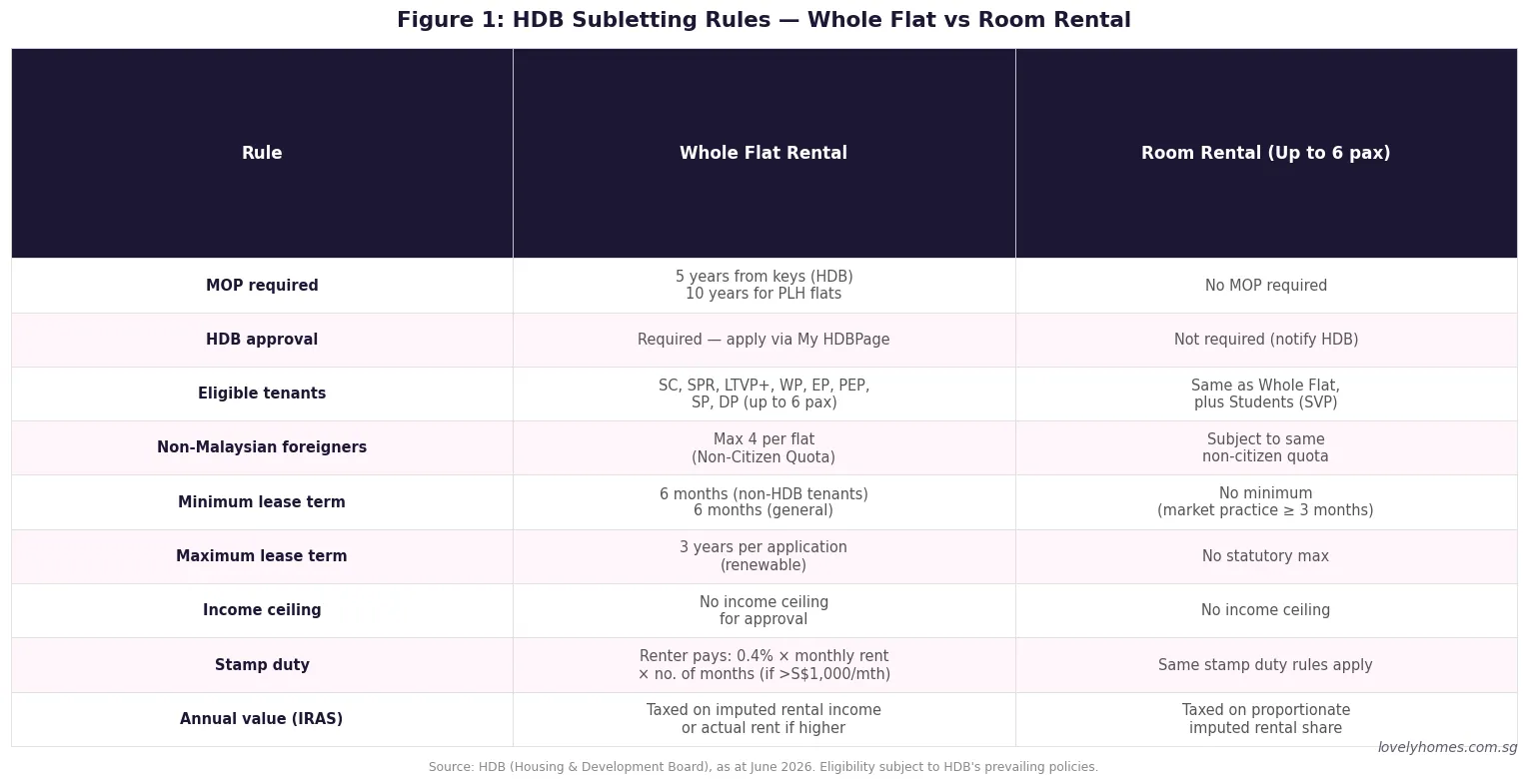
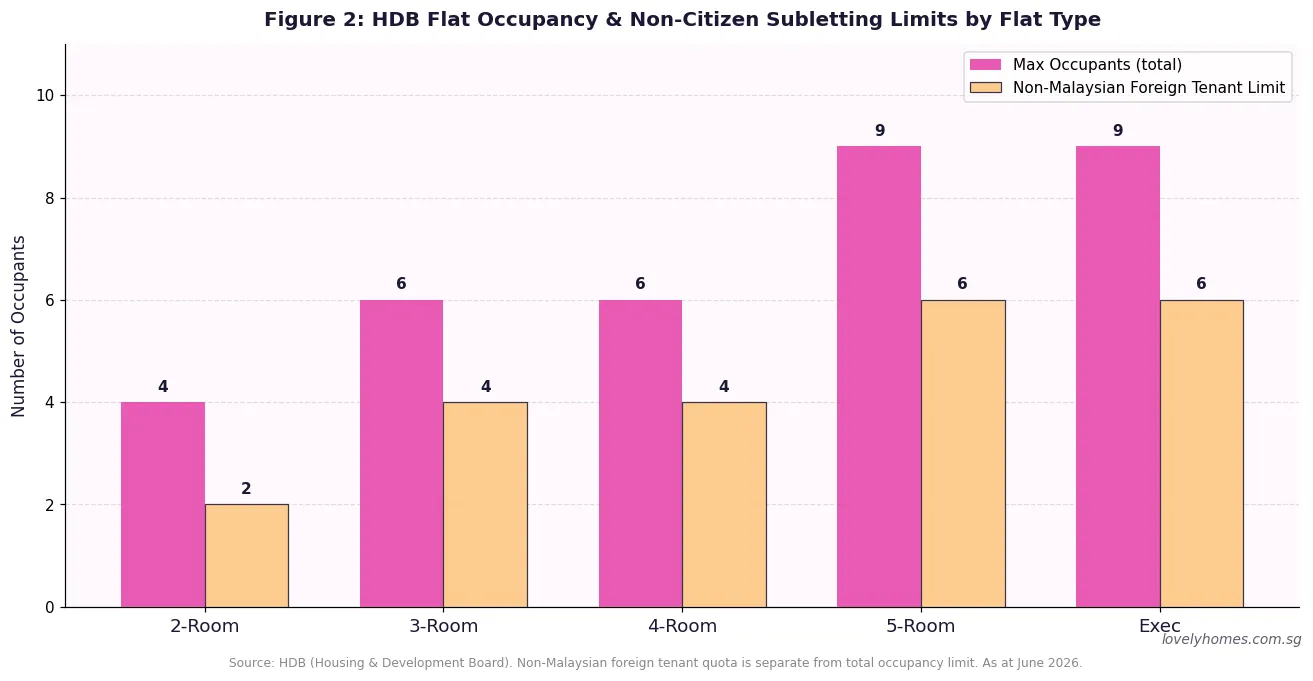
Yes. Rental stamp duty applies to all tenancy agreements for property in Singapore, regardless of whether the property is an HDB flat, a private condominium, a landed home, or a commercial unit. The citizenship or residency status of the landlord or tenant does not affect whether stamp duty is payable. Note, however, that HDB flat subletting has its own separate regulatory requirements — HDB must approve the subletting, and there are restrictions on who can rent an HDB flat and for how long. These HDB subletting rules are administered by HDB and are separate from the stamp duty obligation administered by IRAS.
Is stamp duty payable on a verbal or oral tenancy agreement?
No — stamp duty under the Stamp Duties Act is payable on written instruments (documents), not on oral agreements. A purely verbal tenancy arrangement does not attract stamp duty because there is no written document to stamp. However, this does not mean that oral tenancies are advisable: an oral tenancy agreement is extremely difficult to enforce in practice because neither party can produce a written contract in dispute resolution. IRAS cannot compel stamping of a document that does not exist. If the parties subsequently reduce the oral agreement to writing, that written document becomes stampable at that point. In practice, almost all residential tenancies in Singapore involve a written tenancy agreement, making stamp duty applicable in the overwhelming majority of cases.
Does rental stamp duty apply to short-term rentals like Airbnb?
Short-term rentals — typically defined as leases of fewer than 3 months for residential property in Singapore — occupy a complex regulatory space. First, under the Planning Act and HDB regulations, residential property in Singapore (HDB flats, condominiums, landed homes) may not legally be rented out for periods of less than 3 consecutive months. Short-term platforms such as Airbnb are therefore generally prohibited for residential property in Singapore. If a tenancy agreement for less than 3 months is signed (illegally, for residential property), it would technically be stampable under the Stamp Duties Act since the Act does not exclude short-term agreements. However, enforcing the tenancy itself would be problematic given the underlying regulatory breach. For commercial serviced apartments and licensed hotels, different rules apply and stamp duty on any written rental agreement would still be applicable.
If the rent is paid partly in cash and partly as a service charge, is all of it stampable?
This depends on how the tenancy agreement is structured. If a single monthly figure is described as “rent” in the contract, the entire amount is chargeable for stamp duty purposes. If the agreement separately itemises a “maintenance fee” or “service charge” as a genuinely distinct component — not part of the rent clause — IRAS may, depending on the specific facts, agree that the separate charge is not part of the chargeable rent. However, IRAS scrutinises arrangements where rent is split into components that appear artificial. If the effect is that the tenant pays a combined sum for the right to occupy the property and it is economically equivalent to rent, IRAS may treat the whole as chargeable. Parties wishing to structure leases with service charges separated from rent for stamp duty purposes should obtain specific advice from their solicitors and be prepared to justify the arrangement if queried.
What happens if the tenant breaks the lease early and the agreed rent is never fully paid?
Stamp duty is assessed at the time the tenancy agreement is executed — based on the contractually agreed rent for the full lease term — not based on the rent actually paid if the lease is terminated early. If a tenant signs a 24-month lease at S$4,000/month (stamp duty = S$192), pays 6 months, then breaks the lease, the stamp duty already paid is not refunded. IRAS does not retrospectively adjust stamp duty for lease breaks. The stamp duty is a tax on the right created by the document at execution, not a tax on the economic benefit eventually received. This is one reason why tenants should be cautious about committing to long lease terms with high rent — beyond the financial exposure of the rent itself, the stamp duty is crystallised upfront.
Can the stamp duty be paid by the landlord’s property agent on behalf of the tenant?
Yes. A licensed property agent or solicitor may handle the e-Stamping process on behalf of either party. The agent or solicitor logs into the IRAS e-Stamping Portal using their own credentials and stamps the document on the client’s behalf, then passes the Digital Stamp to the parties. The agent’s stamping on behalf of the tenant does not change the legal liability — the tenant remains legally responsible for ensuring stamping occurs within the deadline. Property agents in Singapore routinely handle the stamping as part of their transaction coordination service. Note that if the agent fails to stamp on time, any penalty falls on the legally liable party (the tenant), not the agent — though the tenant may have a separate claim against the agent for negligence if the agent explicitly undertook to handle stamping and failed to do so.