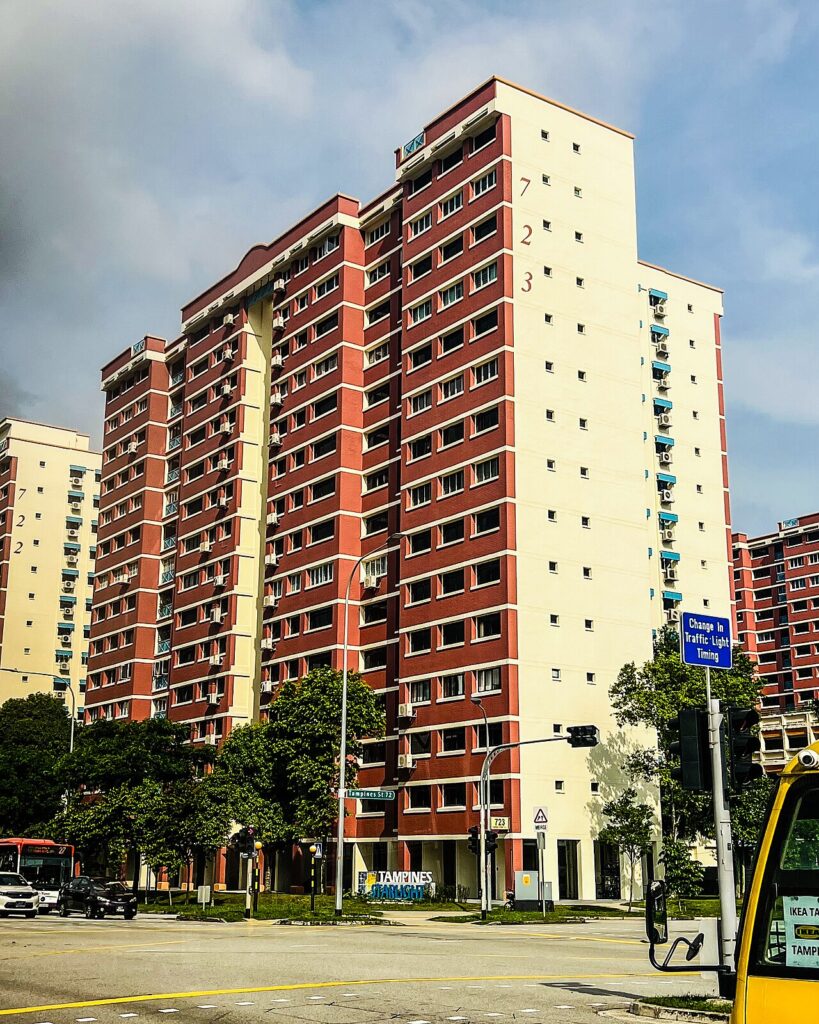
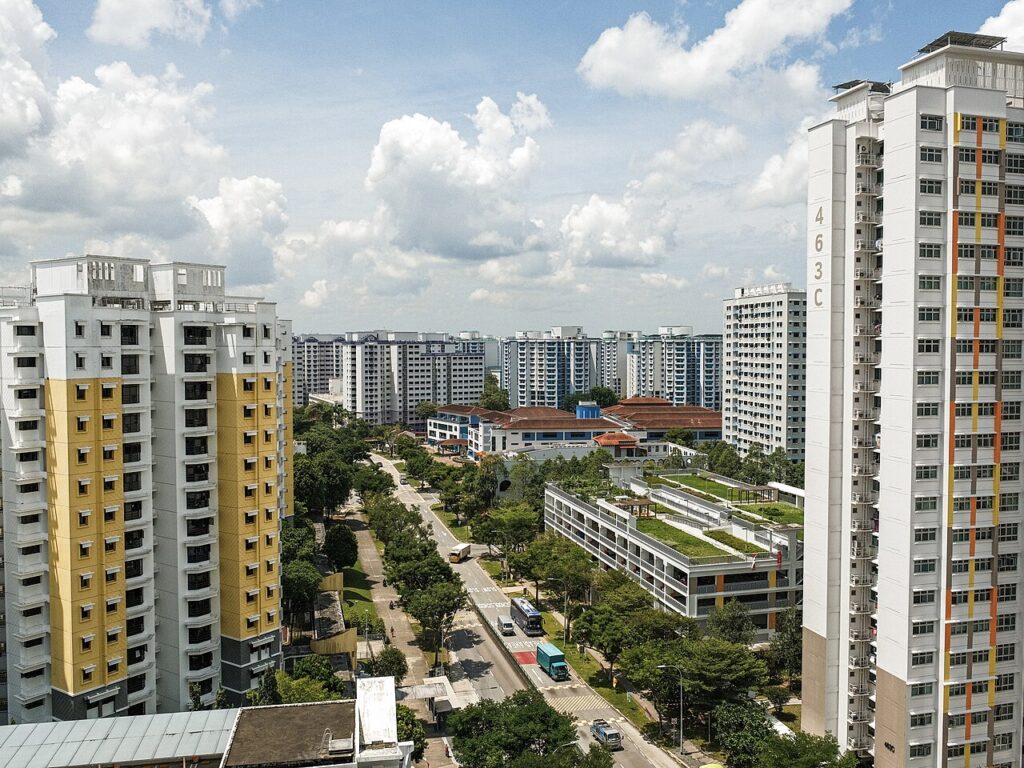
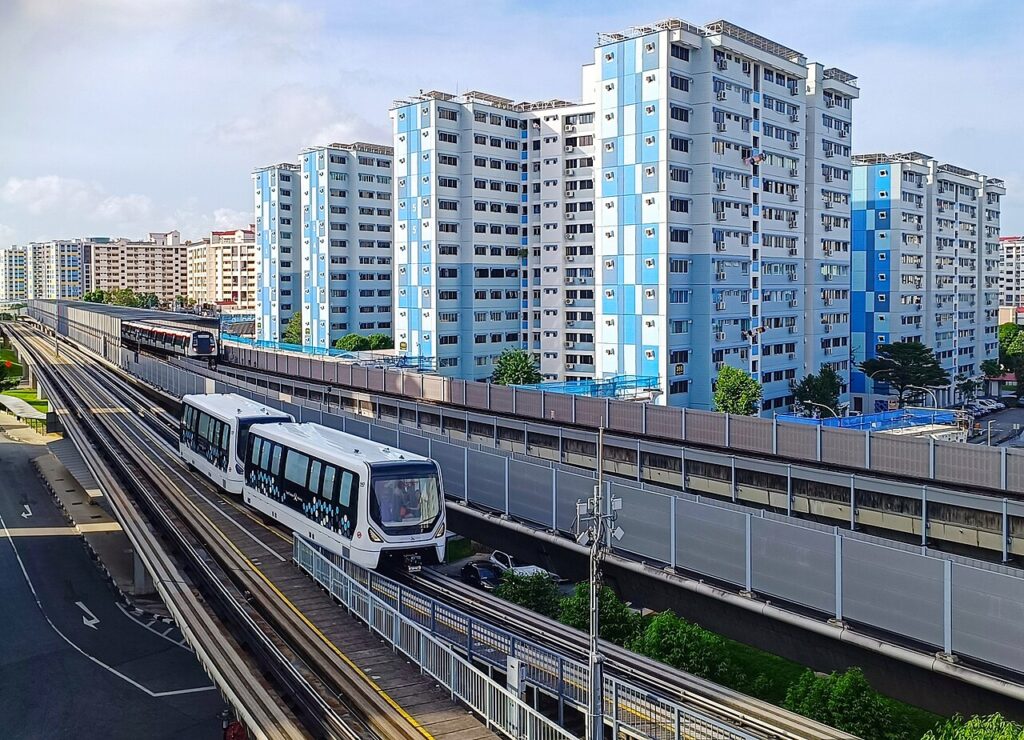
Applying for a BTO flat in Singapore is an exercise in managing eligibility rules, luck (the ballot), and patience (the 3–5 year wait). This 2026 guide walks you through everything: the six eligibility gates that every applicant clears, how balloting actually works, flat selection strategy, and the full launch-to-keys timeline.
For the latest launches, see the HDB BTO/SBF exercises page. This article explains how to actually navigate them.
Quick Answer — BTO Application in 60 Seconds
Four launches a year — February, June, October (plus an SBF).
Six eligibility gates: citizenship, age, income ceiling, family nucleus, property ownership, EIP quota.
Income ceiling: S$14,000 standard, S$21,000 for Prime & Plus flats.
Application fee: S$10 per ballot attempt.
Ballot system: fully computerised; queue number determines flat-selection order.
Wait to keys: typically 3–5 years from ballot date.
The six gates every BTO applicant must clear before a queue number is assigned.
What Is a BTO Flat?
A Build-To-Order (BTO) flat is a brand-new HDB flat built specifically for your balloting cycle. HDB announces the supply for each town, you apply, and — if successful — you wait for construction to complete. You collect the keys 3–5 years later.
Because BTO flats are subsidised by HDB and sold directly from the government, the price is substantially lower than a comparable resale in the same estate — often 20–30% lower. The trade-off is the wait, the balloting uncertainty, and the new Prime/Plus/Standard framework that ties tighter resale restrictions to the most subsidised flats.
The Six Eligibility Gates
Every BTO applicant clears the same six tests. Failing any one of them disqualifies the application entirely. Know these cold before you start filling anything in.
Gate 1: Citizenship
At least one of the applicants must be a Singapore Citizen. A second SC applicant (or an SC/PR spouse) unlocks full grant access; an SC + foreigner household is limited to the Non-Citizen Spouse scheme with tighter eligibility.
Gate 2: Age
21 or above under the Public Scheme (most married couples) and the Fiancé/Fiancée Scheme. 35 or above under the Single Singapore Citizen Scheme. 55 or above under the Joint Singles Scheme.
Gate 3: Income Ceiling
From the latest HDB framework:
S$14,000 monthly gross household income — standard flats (most BTO supply).
S$21,000 — Prime and Plus flats in choice locations.
S$7,000 individual income — Single Scheme applicants (2-room Flexi only in non-mature estates).
Gate 4: Family Nucleus
Your application must fit one of HDB’s recognised schemes: Public, Fiancé/Fiancée, Orphan, Single, Joint-Singles, Non-Citizen Spouse, Non-Citizen Family.
Gate 5: Property Ownership
If you or anyone in your family nucleus has disposed of a private property within the last 30 months, you are in the wait-out period and cannot apply. Existing owners of non-subsidised private property are disqualified outright.
Gate 6: Ethnic Integration Policy (EIP)
The block you choose must not be full for your ethnic group under the EIP. You cannot apply to a block that is at its quota, even if all other conditions are met.
Understanding the Ballot
Each launch exercise, HDB opens applications for a 7-day window. Everyone who applies goes into a ballot. The ballot produces a queue number — your position in the flat-selection order.
How the ballot weightings work
HDB does not run a pure random lottery. Applicant profiles are weighted:
First-timer families get approximately twice the chances of a second-timer.
Applications with children get a boost under the Married Child Priority Scheme.
Third-Child Priority Scheme families get additional weighting.
Parenthood Priority Scheme (PPS) reserves up to 40% of supply for families with children under 16.
The weightings mean a queue number in the low hundreds is far more likely for first-timer parents with kids than for single applicants or second-timers. Single applicants typically face the longest queues of any group.
Queue number and your actual chances
If the project has 600 flats and you have queue number 450, your probability of selecting the unit you want is entirely dependent on what the 449 people ahead of you choose. In popular estates, low queue numbers often select quickly and leave stock for high numbers too; in over-subscribed projects (Tanjong Pagar, Bukit Merah, Queenstown), your queue number has to be in the top couple of hundred to realistically select anything.
The Full Timeline
Milestone
What happens
Timing
Launch opens
7-day application window
Day 0–7
Ballot & queue number
HDB emails your number
~3–4 weeks after close
Flat selection
In-person or online appointment
~3 months post-ballot
Sign Lease Agreement
Pay downpayment, stamp duty
~4 months post-ballot
Construction
HDB builds the project
~3–4 years
Key collection
TOP & handover
3–5 years from ballot
Prime, Plus, Standard — The 2026 Framework
HDB restructured BTO classifications in 2024 into three categories, each with different resale restrictions and subsidy recovery rules:
Standard: No additional resale restrictions. 5-year MOP, then free to sell on the open market. Forms the bulk of BTO supply.
Plus: 10-year MOP, subsidy recovery on resale, income ceiling applied to future buyers. Located in choice mature-estate areas.
Prime: Strictest restrictions — same as Plus, plus a subsidy clawback on resale and tighter future-buyer eligibility. Highest subsidy at purchase.
Tips to Improve Your Odds
Apply as first-timers together — the biggest possible ballot weighting.
Use the Priority Schemes: PPS (children under 16), Married Child Priority Scheme (near parents), Third-Child Priority.
Target non-mature estates if you are flexible — over-subscription is lower, your queue number goes further.
Don’t apply for Prime flats casually — the 10-year MOP and subsidy recovery change the economics significantly.
Keep your HFE letter ready — required before flat selection.
FAQ — BTO 2026
How much does it cost to apply for a BTO?
S$10 per ballot attempt, paid when you submit the application.
Can I apply for BTO while living overseas?
Yes, as long as at least one applicant is a Singapore Citizen. You will need to return for flat selection and key collection.
What if I don’t get a flat after multiple attempts?
Each unsuccessful application counts toward your priority weighting. HDB explicitly tracks first-timer attempts, so persistence does eventually matter. Alternatively, consider a resale flat or EC.
Can I cancel after I get a queue number?
Yes, up until you sign the Lease Agreement. Cancelling after selection incurs a penalty and counts against your first-timer status for 12 months.
What happens to my HFE letter if I don’t get selected?
It remains valid for six months from issue. You can re-apply in the next BTO launch using the same HFE letter (if still valid), or refresh it before applying.
Disclaimer: HDB policies, income ceilings and classifications can change between launches. Always refer to the specific launch e-brochure on the HDB website for authoritative rules on that exercise.
Buying an HDB resale flat in Singapore in 2026 is a process with clear, legally-defined stages. Miss one, and the deal either stalls or collapses entirely. This guide walks you through every step in the exact order you will actually encounter it — from securing your HDB Flat Eligibility (HFE) letter to collecting the keys.
For the official rules, refer to the HDB Resale Buying page. This article explains what those rules mean in practice and how the numbers add up for a typical 2026 buyer.
Quick Answer — The HDB Resale Buying Process
Apply for HFE letter on the HDB Flat Portal (~2 weeks processing).
Shortlist and view flats (typically 2–6 weeks).
Negotiate, then receive the OTP from the seller (S$1,000 option fee).
Exercise the OTP within 21 days with the exercise fee (up to S$4,000 more).
Submit the resale application on the HDB Resale Portal.
Complete the purchase at the HDB Hub appointment and collect keys.
Total elapsed time: typically 12–16 weeks from OTP to keys.
The five stages of buying an HDB resale flat, from HFE letter to keys.
Step 1: Apply for Your HFE Letter
The HDB Flat Eligibility (HFE) letter is the gating document for any HDB purchase. It confirms three things in a single statement: whether you are eligible to buy, how much CPF housing grant you qualify for, and the maximum HDB loan you can take.
You apply through the HDB Flat Portal using Singpass. The portal will check your household income, ages, citizenship, and existing property holdings. Processing usually takes around two weeks — but longer if HDB needs clarification on income or existing flat ownership.
The HFE letter is valid for six months, and you cannot exercise any OTP without one. Budget for your HFE to be ready before you start serious viewings — you will see sellers, and agents expect you to have it lined up.
What the HFE letter tells you
Whether your household meets the eligibility conditions (at least one SC, under the S$14,000 monthly household income ceiling, no overlapping private-property ownership).
The exact CPF Housing Grants you qualify for (CPF Housing Grant, Enhanced CPF Housing Grant, Proximity Housing Grant).
The maximum HDB Concessionary Loan you can take, based on TDSR and MSR.
The minimum cash required at OTP and exercise stages.
Step 2: Shortlist Flats and Conduct Viewings
Once you have your HFE letter in hand, you can begin serious viewings. The HDB Resale Portal and third-party sites (PropertyGuru, 99.co, ourselves at LovelyHomes) let you filter by town, flat type, remaining lease and recent transacted price.
What to actually evaluate at a viewing
Remaining lease: Directly affects your maximum loan tenure and CPF usage. Anything under 60 years of remaining lease starts restricting grants and CPF usage significantly.
Condition of the flat: Look past the paint. Check ceilings for water marks (upstairs leaks), windows for water ingress, and door frames for termite damage.
Ethnic quota status: Your ethnic group must be under the block-level EIP cap. Ask the agent if the block is “open” for your group.
Noise and dust: Traffic, MRT, and construction noise. Visit twice — once at peak hour, once in the evening.
Ownership history: The agent should be able to confirm the number of previous owners and whether any structural alterations were made without HDB approval.
Step 3: Negotiate the Price and Receive the OTP
Once you and the seller agree on a price, the seller grants you the Option to Purchase (OTP). The option fee is fixed by HDB at S$1,000, paid on the spot. This buys you the exclusive right to purchase that flat at the agreed price for 21 calendar days.
The OTP is a legally binding document for the seller during those 21 days — they cannot sell to anyone else. But you, the buyer, can walk away by simply not exercising the option. You forfeit the S$1,000 but have no further obligation.
Cash-Over-Valuation (COV) in 2026
If the agreed price exceeds HDB’s official valuation, the gap must be paid in cash — never from CPF or loan. This is Cash-Over-Valuation, and it is firmly back on the table in 2026’s tight resale market. Budget for it if you are bidding on a popular estate or a high-floor unit. See our full COV guide for negotiation tactics.
Step 4: Exercise the OTP
Within the 21-day window, you exercise the OTP by paying the exercise fee. The option fee plus exercise fee cannot exceed S$5,000 combined — typically structured as S$1,000 option + S$4,000 exercise. At this point the sale becomes unconditional.
In the same 21 days, you should:
Engage a conveyancing lawyer (HDB’s in-house Legal & Claims Registry is a low-cost option for straightforward cases).
If taking a bank loan, finalise your loan offer and submit it for valuation.
Prepare the Buyer’s Stamp Duty (BSD) — due within 14 days of OTP exercise.
Step 5: Submit the Resale Application
Once the OTP is exercised, both parties log into the HDB Resale Portal and submit the resale application jointly. The portal walks you through the Resale Checklist, financial plan, and any declarations.
You will pay stamp duty, agree on the completion timeline, and nominate your solicitor. Your CPF refund to the seller, the loan disbursement and the final cash shortfall are all calculated at this point. HDB aims to process the resale application within eight weeks.
Typical fees at application stage
Resale application fee: S$80 (1-room / 2-room flats) or S$120 (3-room and above).
Buyer Stamp Duty (BSD): Graduated — 1% on first S$180k, 2% on next S$180k, 3% on next S$640k, 4% thereafter. On a S$600k resale, BSD comes to S$12,600. See our BSD guide for the full maths.
Legal fees: S$350–S$600 via HDB Legal, S$1,800–S$3,000 via a private conveyancing firm.
Step 6: Completion and Key Collection
About twelve to sixteen weeks after you first exercised the OTP, you will attend the completion appointment at HDB Hub. Both parties sign the legal transfer documents, CPF disbursements are triggered, your bank or HDB loan is drawn down, and you receive the keys.
From this moment, the flat is legally yours. Your MOP clock starts ticking from this date — see our MOP guide for what that means going forward.
Worked Example: Buying a S$620,000 4-Room Resale Flat
Let’s walk through a realistic 2026 purchase. A young couple, both Singapore Citizens and first-time buyers, buy a 4-room resale flat in Sengkang at S$620,000 — S$30,000 above HDB’s valuation of S$590,000.
Component
Amount
Purchase price
S$620,000
HDB valuation
S$590,000
COV (cash)
S$30,000
HDB loan @ 75% of valuation
S$442,500
Cash + CPF downpayment (25% of valuation)
S$147,500
Buyer Stamp Duty
S$13,200
Legal fees (HDB route)
~S$500
Minimum cash needed upfront
~S$60,000
The couple might qualify for an Enhanced CPF Housing Grant of up to S$80,000 depending on their combined income, which offsets a large chunk of the downpayment. See our CPF for property guide for how the grants flow into the purchase.
Common Mistakes That Delay or Kill the Deal
No HFE letter in hand: You cannot exercise an OTP without one. Plan at least three weeks of buffer before you start offering.
Underestimating COV: It has to come from cash savings, not CPF. Many deals collapse at OTP because buyers find their cash short.
Ignoring the ethnic quota: Your offer can be accepted, only to have HDB reject the resale application because the block is full for your group.
Not checking structural alterations: Unauthorised renovations (load-bearing wall removal, unpermitted window grilles) are the buyer’s problem after completion.
Valuation shock: If the valuation comes in below the purchase price, the cash shortfall must be covered by you — not CPF.
FAQ — HDB Resale Buying 2026
How long does the entire HDB resale process take?
Typically 12–16 weeks from OTP exercise to keys. Add another 2–6 weeks for your flat search, and 2 weeks for the HFE letter.
Can I use CPF to pay the option fee?
No. The S$1,000 option fee and the up-to-S$4,000 exercise fee both come from cash. CPF Ordinary Account funds only flow in at the resale-application stage.
What happens if I cannot exercise the OTP in time?
You forfeit the S$1,000 option fee. The seller is then free to grant the OTP to someone else.
Do I need a property agent to buy HDB resale?
No. HDB’s Resale Portal is designed to let buyers and sellers complete the process without an agent, though you are welcome to use one. Total agent commission on the buyer side is typically 1% of the purchase price.
Can I back out after I exercise the OTP?
Only with the seller’s agreement, and you would likely forfeit both the option and exercise fees (up to S$5,000). HDB does not have a “cooling-off” period for resale buyers once OTP is exercised.
Disclaimer: This is general guidance, not legal advice. Rules, fees and grant amounts change periodically — always verify with HDB directly before committing. Consult a qualified conveyancing lawyer for your specific purchase.
Cash-Over-Valuation — COV — is the gap between the price a Singapore HDB resale buyer agrees to pay and the official valuation HDB assigns to the flat. That gap is paid entirely in cash, on top of the 5% deposit and any loan shortfall. For the first time since 2014, COV is measurably back in Singapore’s hotter resale estates — and most buyers have no mental model for it.
This 2026 guide explains exactly how COV arises, why HDB redesigned the valuation process to kill it in 2014, why it came back, and how to negotiate it down when you are sitting across the table from a seller’s agent. For the official valuation process, see the HDB resale valuation page.
Quick Answer — COV at a glance
COV = offer price − HDB valuation. If positive, the difference is payable in cash only.
No CPF allowed. You cannot draw CPF OA to pay COV.
No loan allowed. Banks and HDB cap their loans at LTV applied to valuation, not to price.
On top of: 5% cash deposit, any BSD and ABSD, and any shortfall between loan quantum and valuation.
Typical 2026 COV in hot estates: S$20,000–S$80,000 in Queenstown, Bukit Merah, Tiong Bahru.
How COV Arises
HDB resale purchases follow a fixed sequence: buyer and seller agree on a price; buyer pays a S$1,000 Option Fee; HDB conducts its valuation; buyer exercises the OTP within 21 days with a further 4% cash Option Exercise Fee. The valuation comes after the price agreement.
If the agreed price is higher than HDB’s valuation, the buyer has a choice: abandon the option (losing S$1,000) or proceed and pay the gap in cash. That gap is COV.
Figure 1: The COV formula. S$60k in cash, stacked on top of the S$39k cash deposit, is what a buyer really needs before signing.
A Worked Example
A couple agrees to buy a 4-room flat in Queenstown for S$780,000. HDB valuation comes back at S$720,000.
Loan ceiling: HDB loan at 75% LTV on valuation = 75% × S$720,000 = S$540,000.
Downpayment (25%) on valuation: 25% × S$720,000 = S$180,000 from CPF or cash.
Loan shortfall: loan only covers S$540,000; purchase price is S$780,000 — shortfall of S$240,000 covered by downpayment (S$180,000) + COV (S$60,000).
Total cash required (excluding stamp duty): 5% deposit + COV = S$39,000 + S$60,000 = S$99,000. BSD of about S$17,400 must also be paid (reimbursable from CPF OA).
Why COV Was “Killed” in 2014
From 1994 to 2014, HDB valuations were issued before buyers made offers. Agents advertised a flat with both the valuation and the asking COV — e.g. “valued at S$500k, asking S$550k (S$50k COV).” This framing normalised COV as a negotiated headline number and fed a runaway COV culture.
In March 2014, HDB reversed the sequence: buyers agree a price first, then HDB values the flat. With buyers no longer able to advertise or openly negotiate COV, the market default moved to “price at valuation” and COV collapsed to zero on most transactions for nearly a decade.
Why COV Is Back in 2026
Resale prices rose 27% between 2020 and 2025 on the HDB Resale Price Index. HDB’s own valuations are based on a 6-month trailing transaction window — which means when prices rise fast, valuations lag the market. In a hot estate, an agent can credibly point to last-week comparables at S$800k while HDB’s valuation, anchored to six-month-old evidence, comes in at S$740k.
Premium locations: mature estates near MRT and international schools see thinner supply and bigger price-to-valuation gaps.
Cash-heavy buyer pools: multi-generational households and HDB upgraders returning to buy smaller units have cash on hand to pay COV.
In Q4 2025, HDB data showed roughly 1 in 8 resale transactions with measurable COV, concentrated in Queenstown, Bukit Merah, Tiong Bahru, Toa Payoh, and Kallang/Whampoa. Two years earlier the number was closer to 1 in 30.
How to Negotiate COV Down
Sellers asking for COV have real competition. Use these levers:
Pull recent transaction comparables.HDB Resale Portal publishes all resale transactions with price, flat type, floor range and storey. If the asking price is above the 90th percentile for comparable flats in the same block, push back with evidence.
Request HDB valuation before exercise. The valuation is issued to you after the OTP is granted. If the gap is unacceptable, you have 21 days to walk away and lose only the S$1,000 Option Fee.
Time your viewing. Sellers under pressure (downgrading, emigrating, selling to fund a BTO completion) drop COV asks fastest. Ask the agent what the seller’s next move is.
Offer a smooth completion. Sellers often trade COV against completion certainty — pre-approved loan, short exercise window, willingness to extend for them to buy their next place.
Walk away. On 2 of every 3 COV asks in 2026, the next buyer in the pipeline pays less or at valuation. Patience is priced.
When COV Is Actually Worth Paying
COV is not always irrational. Sometimes it reflects real scarcity that will not reverse:
Rare floor plate. A high-floor corner unit with panoramic view and cross-ventilation in a mature estate.
Zero-renovation condition. Move-in-ready flats save S$40k–S$80k in renovation and 3–6 months of rent elsewhere.
Family proximity. Living near parents for childcare or caregiving has a legitimate non-market value.
The rule of thumb: if the COV is less than 2% of the purchase price and the trade-offs are non-replicable, paying is defensible. Above 5% COV is rarely justified.
Frequently Asked Questions
Is COV allowed for BTO or EC purchases?
No. COV only appears in HDB resale transactions where a valuation is issued separately from the price. BTO flats are priced directly by HDB; ECs are priced by developers. Both settle on price and never encounter a valuation gap.
Can the seller accept my offer at or below valuation?
Yes. Many transactions settle at valuation with zero COV. The seller’s agent may push back, but the buyer ultimately chooses whether to pay COV.
What happens if HDB undervalues the flat and I walk away?
You forfeit the S$1,000 Option Fee and the 21-day exercise window lapses. No other penalty.
Can I request a second valuation?
HDB valuations are final for the purpose of that transaction. You cannot appeal or request a second opinion — you must walk away and try a different flat.
Does the seller benefit from a higher COV?
Yes, directly. Every dollar of COV goes to the seller in cash at completion. This is why agents representing sellers push for higher COV asks in a tight market.
TDSR & MSR 2026 — because MSR, not LTV, is usually the binding loan limit for HDB buyers.
BSD Singapore 2026 — stamp duty on the purchase price, including any COV component.
Disclaimer: This guide is general information, not financial advice. HDB rules and valuation practice are subject to change. Verify current rules at hdb.gov.sg.
For most Singapore citizens, the decision between a Build-To-Order (BTO) flat, an HDB resale flat, or an Executive Condominium (EC) represents the single largest financial commitment of their lives. Yet the answer is far from straightforward: each option offers distinct advantages and trade-offs in price, location, waiting time, and long-term wealth building.
In 2026, first-time buyers face more choices than ever before. HDB’s new Standard, Plus and Prime classification (introduced October 2024) has reshaped BTO pricing and subsidy structures. The Enhanced CPF Housing Grant (EHG) has been raised to S$120,000 for families and S$60,000 for singles. Executive Condos remain a viable middle ground for those earning S$10,000–S$16,000 monthly. Meanwhile, resale flats offer immediate occupancy but at a premium price.
This comprehensive guide walks you through all three options, compares the financial reality with worked examples, and helps you choose the path that fits your circumstances, timeline and budget.
Quick Answer — Which one is right for you?
Choose BTO if: You can wait 3–5 years, want the cheapest entry price, and prioritise subsidised flats in newer estates. Best for budget-conscious buyers and families.
Choose Resale if: You need to move in within 12 months, want an established neighbourhood with proven amenities, and have sufficient CPF savings. Best for upgraders and those near MOP.
Choose EC if: Your household income is S$10,000–S$16,000, you value hybrid public–private living, and you’re willing to pay a premium for potential capital appreciation after the 10-year privatisation period.
Figure 1: Household income is the biggest filter — it determines which paths are open to you.
HDB BTO Explained
What Is BTO?
Build-To-Order (BTO) flats are new HDB units built to demand. HDB launches BTOs in batches (typically every four months), offers them at subsidised prices below market rates, and constructs them over 3–5 years. Once completed and handed over, you own the flat outright and must occupy it for a minimum occupation period (MOP) before you can sell or rent it out.
Eligibility for BTO in 2026
Citizenship: At least one applicant must be a Singapore Citizen. For families, both applicants can be Singapore Citizens or one can be a Permanent Resident (SPR).
Age: You must be at least 21 years old. Singles aged 35 and above can now buy 2-room Flexi BTOs in any location (expanded from 12 non-mature estates in October 2024).
Income Ceiling (2026):
Families and couples: S$14,000 monthly
Singles (for all flat types and 2-room Flexi): S$7,000 monthly
Ownership: You and your spouse (if applicable) must not own any other property. Inheritance and co-ownership with parents do not disqualify you, provided the flat is not mortgaged.
BTO Pricing Framework: Standard, Plus & Prime (October 2024)
HDB replaced its old classification with three tiers based on location and amenities:
Classification
Features
MOP Period
Subsidy Clawback on Resale
Standard
Good connectivity, suburban, new estates
5 years
None (keep full subsidy)
Plus
Choicer locations, mature estates, proximity to city
10 years
6–8% of resale price
Prime
Choicest locations, central, excellent transport
10 years
9% of resale price
Example Prices (October 2024 Launch): A 4-room Standard BTO in Woodlands or Sengkang starts around S$400,000–S$450,000. A 4-room Plus BTO in a mature estate (e.g. Punggol, Hougang) costs S$550,000–S$650,000. Prime flats (rare) command prices above S$750,000.
Waiting Time & Build Cycle
From the launch month to handover typically takes 3–5 years. HDB now offers a “Shorter Waiting Time” (SWT) option for selected projects, reducing the wait to approximately 3 years. Check each BTO exercise’s buyer’s guide for your project’s expected handover date.
CPF Grants for BTO
Enhanced CPF Housing Grant (EHG) for BTO:
Families (SC+SC or SC+SPR): up to S$120,000 (income ceiling S$9,000/month)
Singles (aged 35+): up to S$60,000 (income ceiling S$4,500/month)
CPF Housing Grant (for those above EHG income ceiling): Families earning S$9,001–S$14,000 receive a grant tapering from S$120,000 to S$0.
All grants are paid into your CPF Ordinary Account and applied automatically at flat handover.
Minimum Occupation Period (MOP)
Standard flats: 5-year MOP. After 5 years, you can sell without restriction and keep the entire subsidy.
Plus & Prime flats: 10-year MOP. When you sell after 10 years, HDB claws back 6–9% of the resale price to recover a portion of the subsidy you received.
During MOP, you cannot rent out the entire flat (though private let of rooms is allowed for some schemes). You must occupy it as your main residence.
Advantages of BTO
Lowest entry price, especially for Standard flats
Large CPF grants (up to S$120,000 for families)
New flat – minimal repairs for first 5–10 years
Predictable pricing and transparent framework
New neighbourhoods with fresh amenities
Disadvantages of BTO
Long wait (3–5 years) – cannot move in immediately
Location not guaranteed (you choose from allocated projects)
Longer MOP for Plus/Prime (10 years vs. 5 for Standard)
Subsidy clawback on Plus/Prime resales reduces gains
Less mature neighbourhoods compared to older estates
HDB Resale Explained
What Is HDB Resale?
HDB resale flats are existing units on the open market, sold by current owners who have completed their MOP. You can view, negotiate and purchase immediately – no waiting for construction. The buyer’s 5-year MOP obligation begins on the date of transfer, even though the previous owner already completed theirs.
Eligibility for HDB Resale in 2026
Citizenship: You must be a Singapore Citizen or a Singapore Permanent Resident. For SC+SPR couples buying in non-mature estates, there is a quota limit (typically 10%) on SPR purchases.
Age: Minimum 21 years old (single or couple).
Income Ceiling: An income ceiling (S$14,000 for families, S$7,000 for singles) applies only if you are claiming CPF grants. If you have sufficient cash and CPF savings, you can buy a resale flat with any income level.
Ownership: You must not own any other property. First-timer status unlocks priority for certain grants.
Resale Flat Pricing
Resale prices are set by market forces and vary widely by location, flat type, floor level, condition and remaining lease:
4-room flats in mature estates (Tampines, Bedok, Punggol): S$550,000–S$750,000
4-room flats in central estates (Bukit Merah, Tanjong Pagar): S$700,000–S$950,000
3-room flats in non-mature estates: S$350,000–S$500,000
Prices fluctuate with economic cycles, interest rates and supply.
CPF Grants for HDB Resale
Enhanced CPF Housing Grant (EHG) – Families:
Up to S$120,000 (income ceiling S$9,000/month)
CPF Housing Grant (Family) – Standard:
SC+SC or SC+SPR couple: S$80,000
Proximity Housing Grant (PHG):
Living with parents (same flat): S$30,000
Living within 4 km of parents: S$20,000
For Singles (EHG – Resale): Up to S$60,000 (income ceiling S$4,500/month).
Total grant stack (families): EHG (S$120,000) + CPF Housing Grant (S$80,000) + Proximity Grant (S$30,000) = up to S$230,000 if all criteria met.
Minimum Occupation Period for Resale
Once you purchase a resale flat, you must occupy it as your main residence for 5 years before you can sell or rent it out. The previous owner’s MOP is already satisfied; yours begins afresh.
Multiple grants available (EHG, CPF, PHG) can stack to S$230,000+
Disadvantages of HDB Resale
Significantly higher purchase price than BTO
Older flats (20–40 years common) – higher repair/renovation costs
Lease decay – remaining lease affects resale value and loan eligibility
Must negotiate price, condition and terms yourself
Requires more cash upfront (HDB resale loans capped at 80% LTV, BTO can be 90%)
Executive Condominium (EC) Explained
What Is an EC?
An Executive Condominium is a hybrid public–private residential scheme. HDB sells the land to private developers, who build and sell the units directly to buyers. For the first 10 years (the “HDB control period”), ECs are subject to HDB-like rules: you must occupy it, cannot rent the whole unit, and are subject to an income ceiling. After 10 years, the building is privatised, and it becomes a full private condominium with no income restrictions, rental caps, or ownership limits.
Eligibility for EC in 2026
Citizenship: At least one applicant must be a Singapore Citizen.
Family Nucleus: You must be in a family nucleus – married couple, divorced/widowed with child, or parents with adult child (25+). Singles cannot buy ECs directly.
Income Ceiling (2026): Household monthly income must not exceed S$16,000. This applies to all new EC purchases from developers.
Ownership: You must not own any other property. First-timer priority applies to ballot allocation.
EC Pricing & Affordability
ECs are built by private developers and priced above HDB but below private condos:
2-bedroom EC: S$800,000–S$1,200,000
3-bedroom EC: S$1,200,000–S$1,600,000
4-bedroom EC (rare): S$1,600,000+
Price varies by location, developer, and finishing standard.
CPF Grants for EC
Enhanced CPF Housing Grant (EHG) – Families:
Up to S$30,000 (income ceiling S$9,000/month for maximum grant)
Note: EC grants are significantly lower than HDB resale (S$30,000 vs. S$120,000) and are based on a lower income threshold.
EC Financing & Loan Requirements
No HDB Concessionary Loan: Unlike HDB flats, ECs cannot be financed with an HDB concessionary loan. You must use a bank mortgage.
Bank Loan Criteria:
Loan-to-Value (LTV): up to 75% (vs. 90% for HDB)
Mortgage Servicing Ratio (MSR): 30% maximum monthly income
Your down payment must be at least 25%
Effective Cost: With a higher down payment (25% vs. 10% for HDB) and a bank mortgage at ~3.5% interest (versus HDB concessionary rates at ~2.6%), monthly payments are significantly higher than a comparable HDB flat.
Minimum Occupation Period & Privatisation
5-year MOP: You must occupy the EC as your main residence for 5 years. You cannot rent it out (whole unit) or sell it.
After 5 years: You can sell on the resale market (still subject to income ceiling if you wish to re-buy an EC or HDB).
After 10 years: The EC block is privatised. Income restrictions are lifted, and it becomes a private condo. You can then rent it out freely, sell to foreigners, or use it as an investment without restriction.
Advantages of EC
Hybrid lifestyle – condominium amenities (gym, pool, concierge) with HDB affordability
Privatisation upside – potential capital appreciation and rental income from year 11 onwards
Better quality finishes than new HDB (private developer standards)
Often in prime locations with strong transport and amenities
Eligible for CPF grants (though smaller than HDB)
Disadvantages of EC
Much higher purchase price than HDB (25–100% more)
Require 25% down payment vs. 10% for HDB – significant cash outlay
Bank mortgage at market rates (~3.5%) vs. HDB concessionary rate (~2.6%)
Lower LTV (75% vs. 90%) – less leverage possible
Smaller CPF grants (S$30,000 vs. S$120,000 for HDB)
No rental income for first 10 years (occupation requirement)
10-year MOP for first unit – cannot upgrade as easily as HDB
Service charges, maintenance fees and sinking funds (not present in HDB)
Figure 2: Price, wait time, grants, MOP and loan type compared across the three options.
Side-by-Side Comparison Table
Factor
BTO (Standard)
HDB Resale
Executive Condo
Entry Price (4-room)
S$400–450k
S$600–750k
S$1.2–1.6m
Occupancy Timeline
3–5 years wait
Immediate
Immediate
Max CPF Grant (Family)
S$120,000
S$230,000 (stacked)
S$30,000
Down Payment
10–15%
10–20%
25%
Financing
HDB concessional (~2.6%)
Bank mortgage (~3.5%)
Max LTV
90%
80–90%
75%
MOP Period
5–10 years
5 years
5–10 years
Subsidy Clawback
None (Standard); 6–9% (Plus/Prime)
None
None (private)
Rental During MOP
Room rental allowed; no whole-unit rental
No rental (whole unit or rooms) for 10 years
Income Ceiling
S$14,000 (families); S$7,000 (singles)
S$14,000 (families) for grants only
S$16,000
Facilities
Basic (void deck, lift lobby)
Premium (gym, pool, concierge)
Ethnic Quota
25% Chinese, 13% Malay, 9% Indian
Estate-dependent; no restrictions on resale
No ethnic quota
Worked Example: Which Option Costs Less?
The Scenario
Meet Sarah and Michael — both 30 years old, both Singapore Citizens, combined monthly income S$10,000 (S$5,000 each). They are HDB first-timers looking to buy a 4-room flat and need to decide between BTO, resale and EC. Both have S$80,000 in combined CPF Ordinary Account savings (after set-asides). They plan to hold the flat for 10 years, then either sell or upgrade.
Option 1: BTO (Standard 4-room in Sengkang)
Component
Amount (S$)
Purchase Price
420,000
CPF Housing Grant
–80,000
Net Price After Grant
340,000
Loan Amount (80% LTV)
336,000
Cash Down Payment
4,000
Monthly Mortgage (25 years @ 2.6% HDB)
~1,440
Total Interest Paid (25 years)
94,000
Total All-In Cost After 10 Years
~514,000
Est. Flat Value at Year 10 (assume 2% p.a. appreciation)
512,000
Notional Equity Gain/(Loss)
–2,000
Insight: The BTO is the cheapest entry and has the lowest ongoing costs. However, at only 2% annual appreciation, you barely break even on interest costs after 10 years. The real value is housing affordability now and long-term capital preservation.
Option 2: HDB Resale (4-room in Punggol)
Component
Amount (S$)
Purchase Price
630,000
Enhanced CPF Housing Grant
–80,000
Proximity Housing Grant (living 4km from parents)
–20,000
Net Price After Grants
530,000
Loan Amount (80% LTV)
504,000
Cash Down Payment
26,000
Monthly Mortgage (25 years @ 2.6% HDB)
~2,160
Renovation/Repair Estimate (older flat)
30,000–50,000
Total Interest Paid (25 years)
140,000
Total All-In Cost After 10 Years (incl. renovations)
~810,000
Est. Flat Value at Year 10 (assume 3% p.a. appreciation)
846,000
Notional Equity Gain
+36,000
Insight: Resale flats cost significantly more upfront (S$630k vs. S$420k for BTO). However, established Punggol flats appreciate faster (~3% p.a. vs. 2% for new Sengkang BTO), and you capture a modest gain after 10 years. You also benefit from higher grants (S$100,000 vs. S$80,000 with PHG) and immediate occupancy, valuable if you need to move within 12 months.
Option 3: Executive Condo (3-bed in Tampines)
Component
Amount (S$)
Purchase Price
1,300,000
CPF Housing Grant (EHG, S$9k income threshold)
–30,000
Net Price After Grant
1,270,000
Down Payment Required (25%)
325,000
Loan Amount (75% LTV)
975,000
Monthly Mortgage (25 years @ 3.5% Bank Rate)
~4,580
Monthly Service Charges & Maintenance
~300–500
Total Interest Paid (25 years)
371,000
Total All-In Cost After 10 Years
~1,910,000
Est. Flat Value at Year 10 (assume 4% p.a. appreciation pre-privatisation)
1,920,000
Notional Equity Gain (After Privatisation)
+10,000 (conservative)
Insight: ECs are dramatically more expensive — S$1.3m vs. S$420k BTO, or S$630k resale. Monthly payments are triple a BTO (S$4,580 vs. S$1,440). However, ECs benefit from stronger appreciation (4% p.a. vs. 2–3%) due to privatisation upside and prime locations. After 10 years (and especially after privatisation at year 11), rental income and capital gains potential accelerate. An EC makes sense only if your timeline is 15+ years and you can afford the premium monthly cost.
Figure 3: Ten-year all-in cost of ownership for the same couple — BTO S$514k, Resale S$810k, EC S$1.91M.
Resale (Moderate): S$810,000 all-in cost; modest capital gains (S$36,000)
EC (Premium): S$1,910,000 all-in cost; conservative gains, but privatisation upside at year 11+
Key Takeaway: If you want to minimise housing costs and build equity steadily, BTO wins. If you need to move now and expect moderate appreciation, resale is rational. If you want premium lifestyle and long-term wealth (15+ year hold), EC can pay off after privatisation.
Which Should You Choose?
Choose BTO If:
You can wait 3–5 years for occupancy
You want the lowest entry price and monthly mortgage
You prioritise maximising CPF grants (up to S$120,000 for families)
You value a brand-new flat with minimal repairs for 15+ years
You are budget-conscious and wish to minimise lifetime housing costs
You are comfortable with newer, less-established neighbourhoods
You are open to the estate HDB assigns you (limited location choice)
Choose Resale If:
You need to move in within 12 months (or less)
You want to choose your exact location, estate and block
You value established neighbourhoods with proven amenities and connectivity
You have sufficient CPF savings and can afford the higher purchase price
You are a second-time buyer or upgrader (eligible for larger grants)
You live near parents and are eligible for Proximity Housing Grant
You expect faster capital appreciation (established estates appreciate 2.5–3.5% p.a.)
You plan to hold the flat for 10+ years
Choose Executive Condo If:
Your household income is S$10,000–S$16,000 (above HDB ceiling but below private condo buyers)
You value condominium lifestyle (pool, gym, concierge) but cannot afford pure private condo
You can afford a 25% down payment and monthly mortgage of S$4,000+
You plan to hold for 15+ years, targeting post-privatisation rental income and capital gains
You prefer prime or central locations (ECs are often well-positioned)
You are willing to pay a premium for privacy, space and amenities vs. HDB
You can accept no rental income for the first 10 years and an income ceiling restriction
Frequently Asked Questions
1. Can I apply for BTO and HDB resale simultaneously?
Yes, but strategically. You can submit a BTO application for one project and bid for a resale flat at the same time. However, if you win the resale first, you must withdraw your BTO application (as you cannot own two properties). Many buyers use this two-pronged approach: they apply for BTO as a backup while actively bidding on resale flats.
2. Can a single person buy an Executive Condo?
No, singles cannot buy ECs directly. You must be in a family nucleus (married couple, divorced/widowed with child, or parent with adult child 25+). If you are single and interested in hybrid housing, your only option is HDB (BTO or resale).
3. What happens if I miss the BTO ballot multiple times?
You can keep applying. There is no limit to the number of BTOs you can apply for. However, if you consistently miss (do not win the ballot), it may be a signal that you should pivot to resale or EC if you have the means and timeline allows.
4. Is an Executive Condo considered a private condo?
For the first 10 years: No. ECs are HDB-controlled and subject to HDB rules (income ceiling, occupancy requirement, no whole-unit rental). After 10 years, the block is privatised, and it becomes a full private condo with no restrictions. At that point, it is legally and practically identical to any other private condo.
5. Can I rent out my BTO flat during the MOP?
Not the whole flat. During MOP, you can rent out individual rooms to lodgers, but you cannot rent out the entire flat to a tenant. This occupancy rule is strict. After MOP (5 years for Standard BTO), you can sell or rent out the whole flat freely.
6. What grants am I eligible for?
It depends on your household structure, income and purchase type:
For BTO: Enhanced CPF Housing Grant (families up to S$120,000; singles up to S$60,000, both with income ceilings S$9,000 and S$4,500 respectively).
For HDB Resale: Enhanced CPF Housing Grant + CPF Housing Grant (family) + Proximity Housing Grant, totalling up to S$230,000 if you meet all criteria.
For EC: Enhanced CPF Housing Grant (families up to S$30,000, tiered between S$9,000 and S$16,000 income).
Apply for an HDB Flat Eligibility (HFE) letter to confirm your exact grant amount.
7. Should I wait for BTO or buy resale now?
This depends on three factors:
Timeline: If you need housing within 12 months, buy resale. If you can wait 4–5 years, BTO may save you S$150k–S$250k.
Location: If a specific neighbourhood is critical (e.g. near parents, near your workplace), resale gives you certainty. BTO assigns location at ballot.
Finances: If you have substantial CPF savings but limited cash, resale grants are larger (S$230k vs. S$80k for BTO). If cash is tight, BTO’s lower entry price wins.
Pragmatic approach: Apply for BTO while simultaneously bidding for resale flats. Whichever closes first is your home; the other falls away.
Upgrader’s Guide — Planning your second property? Learn about upgrading from 4-room to 5-room, EC to private condo, and tax implications.
Property Finance Hub — Understand CPF Housing Grants, HDB loans, bank mortgages, and financing strategies.
Home Loans & Mortgages — Deep-dive into HDB concessionary loans, bank mortgage rates, MSR and TDSR calculations.
ABSD Complete Guide 2026 — If upgrading to private property, understand Additional Buyer’s Stamp Duty and tax planning.
Disclaimer
This guide is for general information only and does not constitute legal, tax or financial advice. HDB policy, grants, income ceilings and pricing frameworks change periodically. The figures and eligibility rules cited reflect policy as of April 2026, but may be subject to change. Always verify current information on HDB’s official website (https://www.hdb.gov.sg), consult HDB’s Customer Service or engage a licensed mortgage advisor or housing consultant before committing to any property purchase. CPF withdrawal limits and grant eligibility are subject to CPF Board rules (https://www.cpf.gov.sg). For EC and resale purchases, seek independent legal and financial counsel.