Buying Private Property in Singapore 2026: Step-by-Step Procedure Guide
- Buying private residential property in Singapore involves 10 key steps: IPA, property search, OTP, due diligence, exercising OTP, appointing a lawyer, full bank loan approval, legal preparation, completion, and post-completion checks.
- The Option to Purchase (OTP) is the pivotal document. A 1% option fee locks in the price. The buyer has 14 days (standard private OTP) to exercise the option by paying the remaining 4% and stamping the document (paying BSD and ABSD).
- BSD and ABSD are due within 14 days of exercising the OTP. ABSD must be in cash; BSD may come from CPF OA.
- Maximum bank loan for a private residential property is 75% LTV (for individuals with no outstanding home loans), meaning a minimum 25% down payment — with at least 5% in cash.
- TDSR (Total Debt Servicing Ratio) caps total monthly debt repayments (including the new mortgage) at 55% of gross monthly income. MSR does not apply to private property (MSR applies only to HDB and EC purchases).
- Legal completion typically occurs 8–12 weeks after exercising the OTP for resale private property. For new launch units under construction, completion occurs at TOP (Temporary Occupation Permit) issuance, which may be years away.
- Total upfront costs for a first-time SC buyer of a S$1.2M property include BSD (S$32,600), 25% down payment (S$300,000, of which minimum 5% in cash), legal fees (~S$3,500–S$5,000), and agent commission (~1%).
- Foreigners pay 60% ABSD on any Singapore residential property purchase — a significant barrier that effectively limits the foreign buyer pool to ultra-high-net-worth individuals.
- Engaging a conveyancing solicitor is mandatory for all private property purchases in Singapore. The law firm lodges the caveat (protecting your interest in the property), handles stamp duty payment, and coordinates with the bank and seller’s solicitors.
- After key collection, verify CPF accrued interest obligations — if you used CPF OA, the accrued interest must be returned to CPF (not to the seller) when you eventually sell, which affects your net sale proceeds.
Overview — The Private Property Buying Process in Singapore
Purchasing private residential property in Singapore is a structured, multi-stage process governed by the Sale of Commercial Properties Act, the Land Titles Act, the Conveyancing and Law of Property Act, and a range of subsidiary legislation and regulatory guidelines from MAS, IRAS, SLA, and the CPF Board. Unlike some markets where buyers negotiate informally and formalise later, Singapore’s private property transactions follow a tightly sequenced procedure with defined legal instruments, statutory deadlines, and regulatory checkpoints at every stage.
Understanding this sequence — and the financial obligations that attach to each step — is essential before you commit to a purchase. A buyer who is surprised by the 14-day stamp duty deadline or underestimates the cash requirement for ABSD can face significant financial difficulty. This guide walks through every step from initial financial preparation to key collection, with specific timelines, cost calculations, and a worked example using real Singapore property market figures.
Note: This guide covers the purchase of resale private condominium and apartment units. New launch (off-plan) purchases follow a broadly similar procedure but with Progressive Payment milestones instead of a single completion date — see our Singapore Property Buying Checklist 2026 for the new launch variant. HDB purchases use a different prescribed procedure — see our HDB Resale Flat Guide 2026.
Steps 1–2: Financial Preparation — IPA, Budget and Property Search
Step 1: Obtain an In-Principle Approval (IPA) from a bank. Before viewing properties seriously, any buyer intending to take a bank loan should obtain an IPA from their preferred lender. An IPA is a conditional pre-approval that tells you the maximum loan quantum you qualify for, based on an assessment of your income, credit history, existing liabilities, and the applicable TDSR ratio (55% of gross monthly income cap). It is not legally binding, but it gives you a reliable ceiling on your borrowing. IPA validity is typically 30 days, though most banks extend or renew on request. Interest rates quoted in the IPA are indicative, not locked in.
MAS’s TDSR framework requires that the bank stress-test your affordability at a higher interest rate (currently 4.5% or the actual rate, whichever is higher). This means many buyers qualify for a smaller loan than the headline mortgage rate suggests — always use the stressed monthly repayment figure when planning your budget.
Step 2: Property Search. With your budget ceiling confirmed, search via property portals (PropertyGuru, 99.co, SRX), engage a licensed real estate salesperson (RES) if desired, and attend viewings. There is no cost at this stage. Useful checks before making an offer: land title search at SLA (to confirm ownership, encumbrances, and caveats), check if the property is within a conservation area, and verify the remaining lease (for leasehold properties). For freehold properties, check the plot ratio and any redevelopment potential.

Steps 3–4: Securing the Property — OTP and Due Diligence
Step 3: Grant of Option to Purchase (OTP). When you have agreed on a price with the seller, the seller grants you an OTP by accepting a 1% option fee (based on purchase price), paid in cash. The OTP is the most important document in the transaction — it locks in the agreed price and grants you the exclusive right to purchase the property for the option period (typically 14 days for private property, though this can be negotiated to a longer period). The seller cannot sell to another party during the option period.
The 1% option fee is paid to the seller (or seller’s agent) as a cheque or bank transfer. It counts toward the eventual purchase price. If you decide not to exercise the OTP, you forfeit the 1% option fee — this is your consideration for taking the property off the market. If the seller wishes to withdraw (which they generally cannot once OTP is granted), they may face legal liability for breach of the OTP terms.
Step 4: Due Diligence. During the 14-day option period, conduct your due diligence: order a bank valuation (typically S$500–S$700), check your bank’s LTV and the indicative loan offer, review the seller’s title deeds (your lawyer will do this), inspect the unit for defects, and confirm your CPF OA balance available for use. If the bank valuation comes in below the purchase price, you will need to fund the shortfall in cash (lenders lend against the lower of purchase price or valuation).
Steps 5–6: Exercising the OTP and Appointing Lawyers
Step 5: Exercise the OTP. To proceed with the purchase, you must exercise the OTP within the option period by paying the exercise fee (typically 4% of purchase price) to the seller and returning the signed OTP. This brings the total paid to seller to 5% of the purchase price. The exercise fee may be paid from CPF OA or cash. Simultaneously, your lawyer lodges a caveat with SLA, which protects your equitable interest in the property against third-party claims or further encumbrances by the seller.
Upon exercise, your stamp duty obligations crystallise. BSD and ABSD must be paid within 14 days of the exercise date. BSD is computed on the higher of purchase price or market value. ABSD, if applicable, must be settled in cash — plan this cash well in advance of exercising the OTP.
Step 6: Appoint a Conveyancing Solicitor. Engaging a law firm is not optional — all private property conveyancing in Singapore is handled by solicitors, and the Law Society regulates conveyancing practice strictly. Your solicitor will review the title, prepare the Sale and Purchase Agreement (S&P), liaise with the seller’s solicitor, manage the bank’s mortgage requirements, compute and pay stamp duty on your behalf, and coordinate completion. Legal fees for a S$1–S$2M property typically range from S$3,000–S$5,000 (plus GST and disbursements). Some banks provide legal fee subsidies when you take a mortgage with them.

Steps 7–9: Bank Loan, Completion and Keys
Step 7: Full Bank Loan Approval. With the OTP exercised, submit your full mortgage application to the bank (or confirm the loan with your existing IPA lender). The bank will require a formal valuation report, the signed OTP/S&P, your income documents, CPF statements, and IRAS Notice of Assessment. The bank underwrites your loan formally and issues a Letter of Offer, which you must accept within the offer validity period (typically 14–21 days). Maximum LTV for a private residential property with no outstanding home loans is 75%, subject to TDSR compliance.
Step 8: Pre-Completion Legal Steps. Your solicitor coordinates the execution of the formal Sale and Purchase Agreement, requests CPF withdrawal from the CPF Board (if applicable), and prepares for the legal completion date. The bank’s solicitor (often the same firm, for efficiency) arranges the loan disbursement. You will be required to pay any stamp duty not yet settled, legal fees, and potentially a final top-up to bring the total paid to the seller up to the contractually required amount by completion date.
Step 9: Legal Completion. On the completion date (typically 8–12 weeks after exercising the OTP for resale property), the balance purchase price is paid to the seller via the combined bank loan disbursement, CPF OA transfer, and any remaining cash. The legal title transfers from seller to buyer. Your solicitor registers the transfer with SLA (Singapore Land Authority). Keys are handed over at or after completion. The outstanding balance owed — i.e., the 20% that was not covered by the option and exercise fees (5%) and not drawn from the bank loan (75%) — is the balance 20%, typically paid from CPF OA and/or cash at this stage.
Step 10: Post-Completion Checks. After receiving keys, verify that the property is in the agreed condition. Check your CPF OA statement — the withdrawal for BSD and down payment will be reflected, along with accrued interest obligations. Note that CPF accrued interest on amounts withdrawn must be returned to CPF (with accrued interest at 2.5% per annum) when the property is eventually sold. This affects your net proceeds computation significantly for long-held properties.

Key Cost Summary — Private Property Purchase
| Cost Item | Amount (S$1.2M, SC 1st) | Amount (S$1.5M, SC 2nd) | Payable In |
|---|---|---|---|
| Option Fee (1%) | S$12,000 | S$15,000 | Cash |
| Exercise Fee (4%) | S$48,000 | S$60,000 | Cash / CPF OA |
| Buyer’s Stamp Duty (BSD) | S$32,600 | S$44,600 | Cash / CPF OA |
| Additional BSD (ABSD) | Nil | S$300,000 | Cash only |
| Bank Loan (75% LTV) | S$900,000 | S$1,125,000 | Bank disbursement |
| Balance 20% down payment | S$240,000 | S$300,000 | CPF OA / Cash |
| Legal Fees (approx.) | ~S$3,800 | ~S$4,200 | Cash |
| Property Valuation | ~S$600 | ~S$700 | Cash |
| Agent Commission (1%) | ~S$12,000 | ~S$15,000 | Cash |
| Approximate Total Upfront | ~S$349,000 | ~S$739,500 |
Worked Example: Mr and Mrs Tan Buying a Resale Condo
Mr and Mrs Tan are both Singapore Citizens buying their first property — a S$1.2 million 3-bedroom resale condominium in District 18 (Tampines/Pasir Ris). Neither has any existing property or outstanding home loans. Their combined monthly income is S$12,000.
Step 1 — IPA. Bank approves IPA for S$900,000 (75% LTV). Stressed monthly repayment at 4.5%: S$4,562. TDSR ratio: S$4,562 / S$12,000 = 38.0% — well within the 55% cap. IPA valid 30 days.
Step 3 — OTP. Agree price S$1,200,000. Pay 1% option fee S$12,000 in cash. OTP granted for 14 days.
Step 5 — Exercise OTP. Pay exercise fee 4% = S$48,000 (from CPF OA). Total paid to seller: S$60,000 (5%). BSD due within 14 days: S$32,600 (paid via CPF OA). ABSD: S$0 (first property, SC). Law firm lodges caveat.
Step 7 — Full Loan Approval. Bank approves S$900,000 at 3.5% over 30 years. Monthly repayment: S$4,041. TDSR: 33.7% — PASS. Letter of Offer accepted. Mortgage Insurance Scheme waived (optional at this LTV).
Step 9 — Completion (10 weeks after exercise). Balance 20% = S$240,000 (CPF OA S$192,000 + exercise fee S$48,000 already credited). Bank disburses S$900,000. Legal fees S$3,800 paid in cash. Valuation fee S$600 paid. Keys collected.
Cash required upfront: Option fee S$12,000 + valuation S$600 + legal S$3,800 = S$16,400 minimum cash (note: 5% down payment = S$60,000 minimum cash, but S$48,000 of this may come from CPF OA at exercise; the S$12,000 option fee is the required cash component at Step 3). Agent commission S$12,000 also typically cash.
CPF OA used: Exercise fee S$48,000 + BSD S$32,600 + balance 20% (S$240,000 − S$48,000 already paid = S$192,000) = S$272,600 from CPF OA. This carries accrued interest at 2.5% p.a. compounding until refunded on eventual sale.
Common Mistakes to Avoid
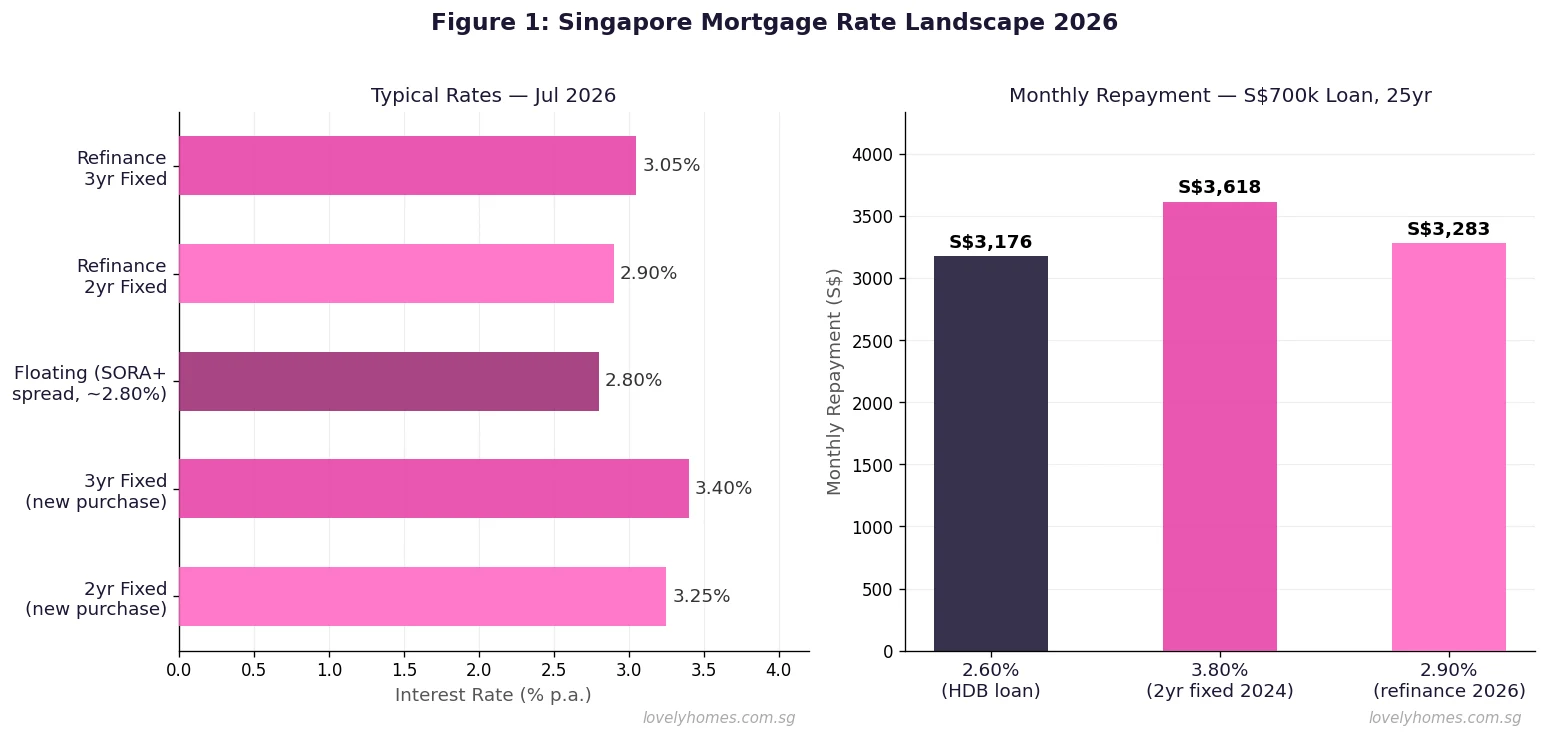
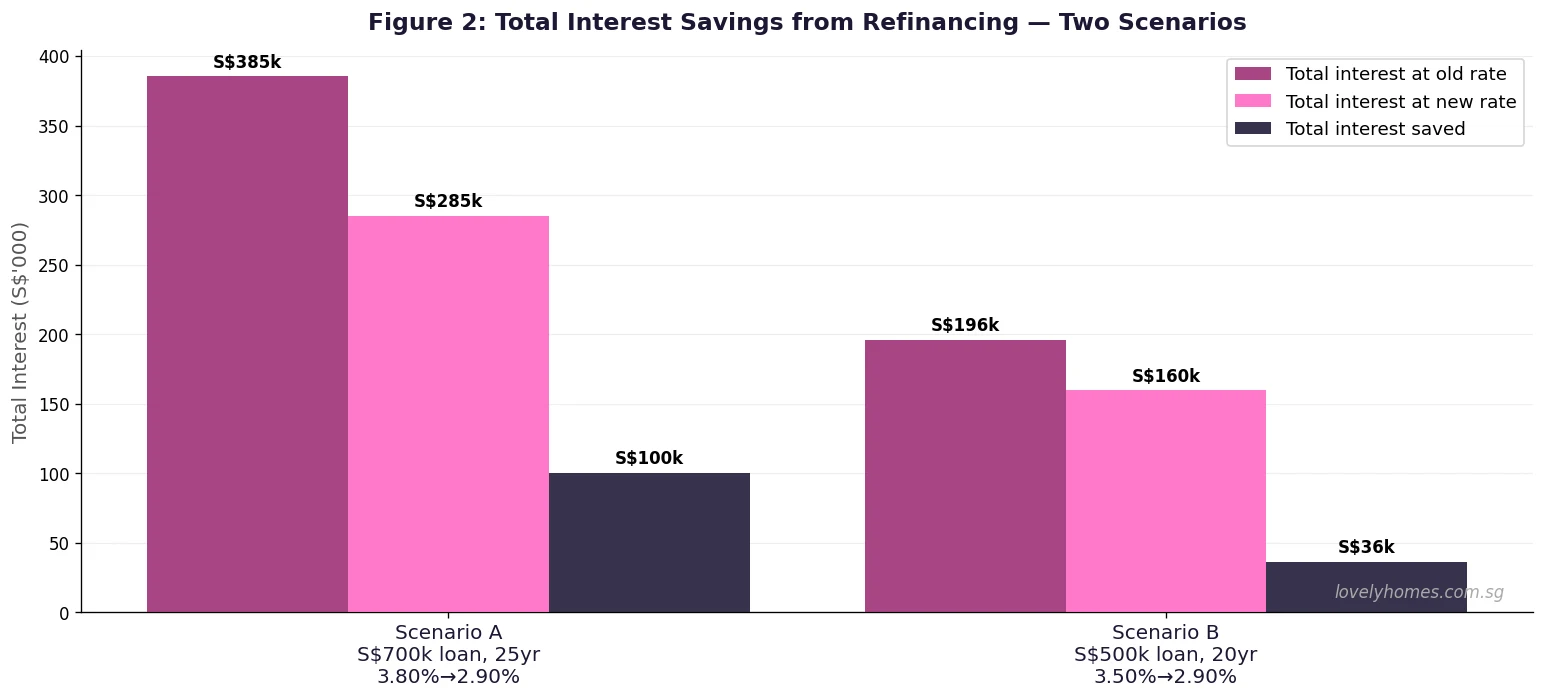
The most frequent errors Singapore property buyers make include: exercising an OTP without confirming ABSD funds are in cash (ABSD cannot come from CPF — buyers sometimes only realise this at the last minute); underestimating the time needed to withdraw CPF funds (allow at least 5 business days for CPF OA withdrawals); failing to verify the bank valuation against purchase price before committing (a valuation shortfall must be funded in cash); and not factoring conveyancing fees and agent commissions into the total budget. Many first-time buyers also overlook the opportunity to refinance 2–3 years after purchase when lock-in periods expire, which can save substantially on lifetime interest cost.
Frequently Asked Questions
Can I back out after granting an OTP?
If you are the buyer and you choose not to exercise the OTP within the option period, you lose the 1% option fee — it is forfeited to the seller as compensation for taking the property off the market. You have no further obligation to proceed with the purchase. If you are the seller and you change your mind after granting the OTP, you cannot legally sell to another party during the option period. Attempting to do so constitutes a breach of the OTP and exposes you to a claim for damages and specific performance by the buyer. This is why the OTP is taken seriously by all parties — it creates real legal obligations on both sides.
What is the difference between a resale condo and a new launch condo purchase procedure?
For a resale condo, the procedure follows the 10-step sequence described in this guide — OTP, exercise, legal completion within 8–12 weeks, and possession of a completed unit. For a new launch (off-plan) condo purchased directly from a developer, the instrument is typically a Sale and Purchase Agreement (S&P) rather than an OTP, the developer collects payments progressively under the Progressive Payment Scheme (PPS) tied to construction milestones (from 5% on booking to balance at TOP), and legal completion and possession occur only at the issuance of the Temporary Occupation Permit (TOP) — which may be 2–5 years after the booking date. Stamp duty (BSD and ABSD) is still payable within 14 days of the booking exercise.
What is a 5% cash down payment rule?
Under MAS mortgage guidelines, a buyer taking a bank loan of up to 75% LTV on a private property must contribute at least 5% of the purchase price in cash. The remaining 20% of the required down payment (i.e., the total 25% down payment minus the 5% cash portion) may be paid from CPF OA or additional cash. In practice, the 1% option fee (paid at Step 3) is part of the 5% cash requirement. If the option fee is S$12,000 (1% of S$1.2M), the buyer needs at least S$48,000 more in cash (or CPF for the exercise fee component, which satisfies the remaining 4% of the 5% floor if paid in cash). The exact mechanics depend on whether the buyer treats the exercise fee as cash or CPF — your bank and lawyer will advise on the appropriate structure.
What is a caveat and why does my lawyer lodge it?
A caveat is a formal notice lodged with the Singapore Land Authority (SLA) that records your interest in a property on the land register. Your solicitor lodges it immediately upon you exercising the OTP, which creates a public record that you have an equitable interest in the property. This protects you against the seller trying to create further encumbrances on the property (such as a second mortgage) or selling to a third party after granting you the OTP. The caveat remains on the register until completion, at which point the title transfers to your name and the caveat is vacated. Caveats can be searched at SLA’s Integrated Land Information Service (INLIS) by any member of the public for a small fee.
Can a foreigner buy any private property in Singapore?
Foreigners (non-citizens, non-PRs) may purchase most types of private non-landed residential property — condominiums and apartments — without restriction, subject to the 60% ABSD at current rates. Foreigners cannot purchase HDB flats, DBSS flats, or Executive Condominiums during the initial 10-year restriction period. Foreigners also cannot purchase landed residential property (detached houses, semi-detached houses, terrace houses, or strata landed housing) without approval from the Land Dealings Approval Unit (LDAU) under the Residential Property Act — approval is rarely granted except to individuals who have made exceptional economic contributions to Singapore. The 60% ABSD means the effective purchase cost for foreigners is 60% higher than the headline price, which has markedly dampened foreign demand since the April 2023 cooling measure.
Do I need to engage an agent to buy private property?
No — there is no legal requirement to use a real estate agent to buy private property in Singapore. Buyers may transact directly with sellers (or sellers’ agents) without a buyer’s agent. However, most buyers — particularly first-time buyers or those unfamiliar with the area — find that a licensed real estate salesperson (RES) adds value in identifying suitable properties, negotiating price, advising on due diligence, coordinating viewings, and liaising with the conveyancing process. If you use a buyer’s agent, the agent’s commission (typically 1% of purchase price) is payable by the buyer (unlike the UK model where agents are paid by the seller). The commission is negotiable and should be agreed in writing before the agent invests time on your behalf. Always verify the agent holds a valid CEA (Council for Estate Agencies) registration.
Related Articles
- Singapore ABSD Complete Guide 2026 — Rates, Profiles and Worked Examples
- Singapore Stamp Duty Guide 2026 — BSD, ABSD and SSD All in One
- Singapore Option to Purchase (OTP) Guide 2026 — Rights, Timelines and Costs
- Using CPF OA for Property in Singapore 2026 — Withdrawal Rules Explained
- Singapore Mortgage Refinancing Guide 2026 — When and How to Refinance
- Singapore Property Buying Checklist 2026 — Everything You Need Before You Buy
- Condo vs HDB Singapore 2026 — Complete Comparison Guide
Disclaimer
This article is for general informational and educational purposes only and does not constitute legal, financial, or property advice. Property laws, MAS guidelines, stamp duty rates, and CPF rules are subject to change. All cost figures and examples in this guide are illustrative and based on market conditions as at 4 August 2026. Always engage a licensed conveyancing solicitor, a MAS-regulated financial adviser, and verify applicable regulations at iras.gov.sg, mas.gov.sg, and cpf.gov.sg before making any property transaction decision. LovelyHomes is not a licensed estate agent or financial adviser.