Singapore HDB Ethnic Integration Policy Guide 2026: EIP Quotas, Resale Impact and Buyer Strategy

Singapore HDB Ethnic Integration Policy Guide 2026: EIP Quotas, Resale Impact and Buyer Strategy

Quick Answer: HDB EIP Singapore 2026 — Key Takeaways

  • The Ethnic Integration Policy (EIP) was introduced by HDB in 1989 to prevent racial enclaves from forming in Singapore’s public housing estates.
  • EIP sets neighbourhood and block quotas for each ethnic group: Chinese 84%/87%, Malay 22%/25%, Indian & Others 12%/15%.
  • EIP applies only to HDB resale flats — it does not apply to new BTO flats, private property, or HDB rental flats.
  • If a block or neighbourhood has already reached the quota for your ethnic group, you cannot buy a resale flat there — regardless of any other eligibility criteria.
  • Sellers in over-quota blocks face a restricted buyer pool: they can only sell to buyers whose ethnic group still has quota headroom, which can affect pricing and time on market.
  • Always check the HDB Resale Portal before making any offer — EIP status is block-specific and changes as transactions are registered.
  • EIP constraints are tightening in mature estates such as Bishan, Bukit Timah, Marine Parade, and Toa Payoh as proportions converge.
  • Indian & Others buyers face the tightest cap (12% neighbourhood / 15% block) and are most frequently constrained in desirable central-region towns.
  • Understanding EIP before shortlisting flats can save weeks of wasted negotiation and prevent abortive OTP costs.

What Is the Ethnic Integration Policy (EIP) and Why Does It Exist?

Singapore’s HDB towns are not only housing estates — they are, by deliberate government design, microcosms of the nation’s multiracial society. The Ethnic Integration Policy, administered by the Housing and Development Board (HDB) since 1 March 1989, is the mechanism that ensures Singapore’s public housing estates remain ethnically diverse rather than gradually concentrating into racial enclaves.

Before EIP, Singapore had begun to experience informal ethnic clustering in older estates. Certain mature towns developed notably higher concentrations of particular ethnic groups through natural social networks and community preferences. The government, recognising that segregated neighbourhoods could erode social cohesion — a cornerstone of Singapore’s national identity — introduced EIP to cap each ethnic group’s share at both the block and neighbourhood level, locking in a composition broadly reflective of Singapore’s national demographic make-up.

The rationale is straightforward: when neighbours share staircases, lifts, and void decks with people of different backgrounds, cross-cultural interaction occurs organically. EIP is the structural guarantee of that interaction. It operates not through direct regulation of individual choice — Singaporeans can still prefer certain towns, floor levels, or orientations — but by imposing a ceiling on the cumulative ethnic composition of any given block or neighbourhood.

How EIP Quotas Work: Neighbourhood and Block Levels

EIP operates at two simultaneous levels, and both must be satisfied for any resale transaction to proceed.
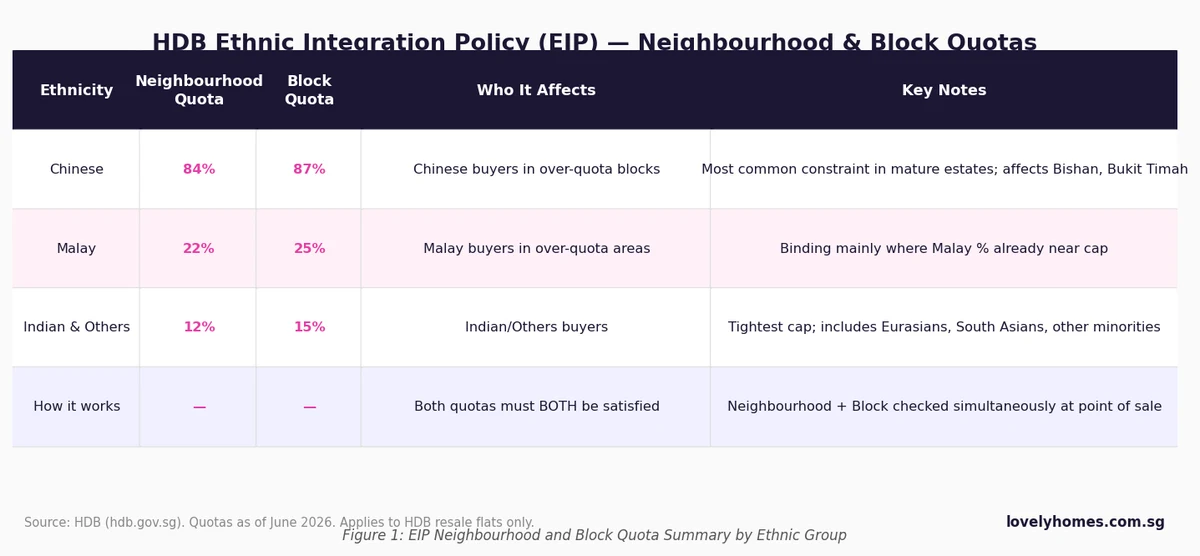
HDB EIP neighbourhood and block quota table by ethnicity Singapore 2026
Figure 1: HDB EIP Neighbourhood and Block Quota Summary — as of June 2026. Source: HDB.

The neighbourhood quota reflects the ethnic composition of an entire planning area or neighbourhood zone (typically a cluster of several blocks). The block quota is more granular — it governs the ethnic proportion within a single HDB block. Because ethnic distributions are rarely uniform across a neighbourhood, a specific block may hit its ethnic ceiling even when the surrounding neighbourhood still has headroom. This means a buyer can be blocked at the block level even if the neighbourhood quota is technically not yet exhausted.

Crucially, these quotas are based on the resident population, not floor area. Each time a resale transaction is completed and a new household registers with HDB, the ethnic composition of that block and neighbourhood is recalculated. The thresholds — Chinese 84%/87%, Malay 22%/25%, Indian & Others 12%/15% — were originally calibrated to Singapore’s 1989 census ethnic composition and have remained substantially unchanged, though HDB reviews them periodically.

One important clarification: these quotas apply to the buyer’s ethnicity as declared on their NRIC, not to the seller’s ethnicity. A Chinese seller in a block that has reached its Chinese quota can only sell to a non-Chinese buyer — specifically, a Malay or Indian & Others buyer whose group still has remaining quota in that block. This restriction flips the usual power dynamic: in some over-quota blocks, sellers effectively have a constrained buyer pool regardless of the flat’s quality or market price.

EIP and Buyers: What to Check Before You Bid

For buyers, EIP is the first filter to apply — before engaging any conveyancer, before negotiating price, and certainly before exercising an Option to Purchase (OTP). The HDB Resale Portal (resale.hdb.gov.sg) provides a real-time EIP check for any block address. Buyers enter the block address and their NRIC ethnicity, and the system returns a pass or fail result. This check takes under a minute and is freely available to the public.
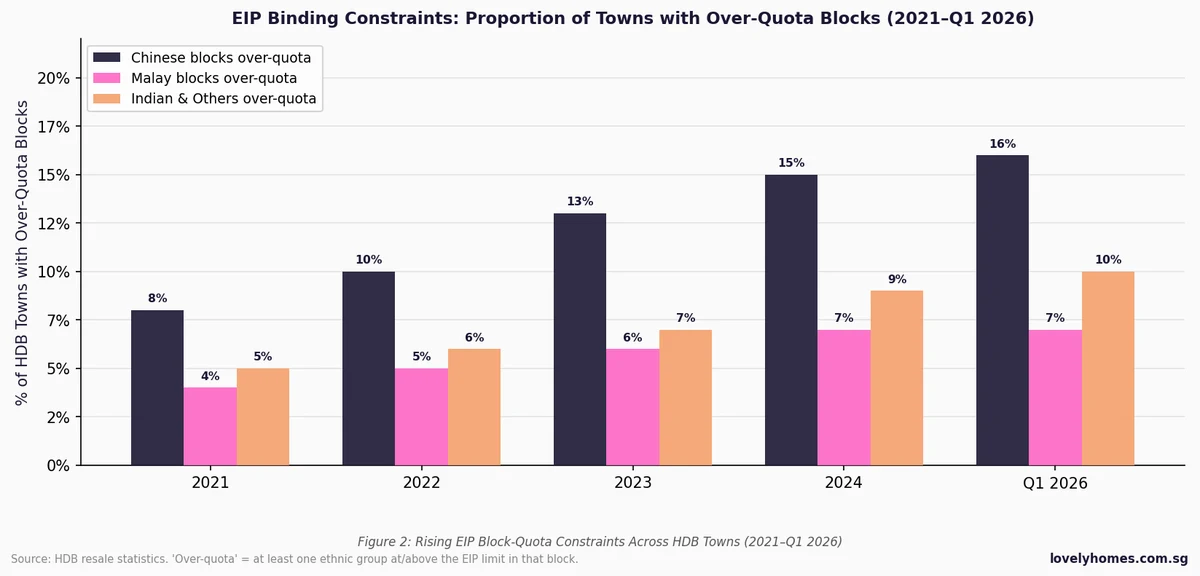
HDB EIP block quota constraint trend 2021 to Q1 2026 rising pressure by ethnicity
Figure 2: Rising EIP Block-Quota Constraints Across HDB Towns (2021–Q1 2026). More towns now have over-quota blocks in every ethnic category.

The trend in Figure 2 is instructive: the proportion of HDB towns with at least one over-quota block has risen steadily across all three ethnic categories since 2021. This is partly a function of natural demographic equilibration — as resale market activity in mature estates normalises ethnic proportions toward the cap — and partly driven by the prolonged resale boom since 2021. Higher transaction volumes accelerate quota convergence. Indian & Others buyers, working with the tightest caps, face the fastest-tightening constraints in central-region towns.

The practical implication is that buyers from minority groups should widen their shortlist geographically or be prepared to act quickly when a suitable flat in a quota-compliant block appears. It also means that a flat you viewed and loved on a Saturday may no longer be accessible by the following Wednesday if another transaction in that block tips it over the quota.

EIP and Sellers: Restricted Pools and Pricing Implications

For sellers, the EIP dynamic is less immediately visible but equally significant. If the block has reached or is near its quota for the seller’s ethnic group, the universe of eligible buyers shrinks to only those whose ethnic group still has headroom. In practice, this means a Chinese owner in a block already at 87% Chinese cannot sell to another Chinese buyer. The flat must be sold to a Malay or Indian & Others purchaser — and their demand in that specific block, at that price point, may be materially thinner.
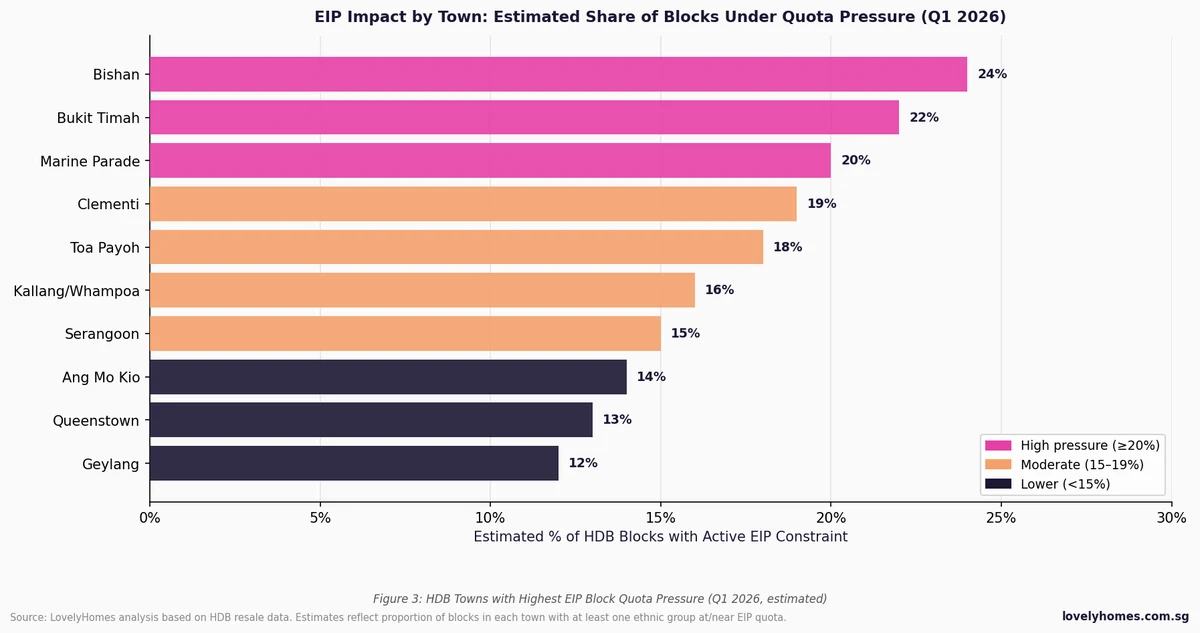
HDB EIP quota pressure by town in Singapore Q1 2026 highest constraint towns
Figure 3: HDB Towns with Highest Estimated EIP Block Quota Pressure (Q1 2026). Mature central-region estates face the greatest constraint burden.

Towns with the highest EIP pressure (Figure 3) — including Bishan, Bukit Timah, Marine Parade, and Toa Payoh — are, notably, some of Singapore’s most sought-after mature estates with strong historical price appreciation. Sellers in these towns who happen to own flats in over-quota blocks may find that a smaller buyer pool translates to longer time-on-market and a need to price more competitively to attract the eligible ethnic minority. This can depress achieved prices relative to neighbouring quota-compliant blocks in the same town.

Conversely, sellers in blocks that remain quota-compliant — particularly in estates with robust Chinese demand — face no restriction on their buyer pool and can generally command fuller market prices. This creates an intra-town pricing differential that is sometimes overlooked by buyers and sellers alike.

EIP Rules at a Glance: Summary Table

Rule / Parameter Details
Administered by Housing and Development Board (HDB)
Introduced 1 March 1989
Applies to HDB resale flat transactions (not BTO launches, not private property)
Chinese quota 84% (neighbourhood) / 87% (block)
Malay quota 22% (neighbourhood) / 25% (block)
Indian & Others quota 12% (neighbourhood) / 15% (block)
Determined by Buyer’s declared ethnicity on NRIC
Both levels must pass Yes — neighbourhood AND block quota checked simultaneously
How to check HDB Resale Portal (resale.hdb.gov.sg) — free, real-time, block-specific
Consequence of breach Transaction cannot proceed; no OTP can be exercised
Applies to SPR buyers Yes — Singapore Permanent Residents declared on their Blue IC are subject to EIP

Worked Example: The Tan Family’s EIP Navigation

Scenario: SC Indian couple upgrading to a 4-room resale flat in Queenstown

Mr and Mrs Selvam are Singapore Citizens (Indian ethnicity, NRIC declared). They have completed their HDB MOP on their 3-room Yishun flat and wish to upgrade to a 4-room resale flat in Queenstown (Queen’s Close / Tanglin Halt area) for the schools and proximity to work. Budget: S$700,000–S$750,000.

Step 1 — EIP Pre-check: They identify three blocks in the area. Using the HDB Resale Portal, they check each block against their Indian & Others ethnicity:

  • Block A, Tanglin Halt Road — FAIL: Indian & Others block quota at 15% (over-quota). Cannot proceed.
  • Block B, Commonwealth Drive — PASS: Indian & Others at 11%, headroom remains. Can proceed.
  • Block C, Holland Avenue — FAIL: Neighbourhood quota at 12% ceiling. Cannot proceed.

Step 2 — Focus on Block B: A 4-room flat in Block B is listed at S$730,000. Valuation commissioned by HDB: S$718,000. Cash Over Valuation (COV): S$12,000 (must be paid in cash, cannot use CPF).

Step 3 — Cost breakdown:
BSD on S$730,000: First S$180,000 @ 1% = S$1,800 + Next S$180,000 @ 2% = S$3,600 + Remaining S$370,000 @ 3% = S$11,100 = S$16,500
ABSD: S$0 (SC couple buying first property as Indian & Others is not subject to ABSD on 1st purchase)
HDB resale admin fee: S$80 (for flat application)
Legal conveyancing: ~S$2,500
COV: S$12,000 (cash)
Total cash outlay (excluding down payment and loan): ~S$31,080

Outcome: By running the EIP check before negotiating, the Selvams avoided two abortive OTP exercises and focused their offer on the only compliant block. They secured the flat and received the HDB Flat Eligibility (HFE) letter confirming they meet all requirements including EIP.

Why EIP Matters: Social Engineering That Shapes Your Investment

EIP is one of the most distinctive features of Singapore’s housing system — a policy with no direct parallel in Hong Kong, South Korea, or Australia’s public housing sectors, all of which have faced varying degrees of ethnic concentration in social housing. Singapore’s approach is deliberately top-down: rather than leaving ethnic integration to market forces or individual goodwill, the government mandated it structurally.

From an investment standpoint, EIP creates a two-tier reality within the resale market. Quota-compliant blocks command the full market price because the buyer pool is unrestricted. Over-quota blocks may see price suppression — not because the flat is inferior, but because the eligible buyer pool is structurally smaller. Buyers who can only consider certain ethnic-group quotas must be particularly attentive to this dynamic, as it affects not only their own purchase but their eventual exit when they resell.

For upgraders from HDB to private property, EIP does not apply to the private transaction. However, the HDB flat they sell must comply with EIP — if they are selling from an over-quota block, they must find a buyer from the eligible ethnic group, which can extend the sale timeline and affect whether they can meet the 6-month window for ABSD remission on their subsequent private purchase.

What Might Come Next: The EIP in a Tightening Market

EIP quotas have remained largely static since 1989, calibrated to demographic proportions that have since shifted — Singapore’s Indian and Other Minority population share has grown modestly, while the Malay share has remained relatively stable. There is periodic academic and policy debate about whether the thresholds should be recalibrated to reflect updated census data, but HDB has not announced any revision as of June 2026.

As the resale market continues to transact at elevated volumes — driven by BTO supply shortfalls and strong demand from upgraders — EIP constraints in mature estates are likely to tighten further before any policy adjustment. Buyers in minority ethnic groups planning purchases in desirable central-region towns should factor in longer search timelines and a readiness to move quickly when compliant blocks become available. Those in the Chinese majority group face less immediate concern but should remain aware of the policy’s seller-side implications when they eventually exit their flats.

Frequently Asked Questions

Does EIP apply when I buy a new BTO flat directly from HDB?

No. EIP applies only to HDB resale transactions between private parties in the open market. When you purchase a new BTO flat directly from HDB at a launch exercise, HDB controls the allocation and manages ethnic integration through its own internal allocation criteria. You do not need to check EIP quotas for BTO applications. EIP becomes relevant only if you later sell your flat on the resale market, or if you are buying a resale flat from another owner.

Can I appeal to HDB if I fail the EIP check for a block I want?

There is no formal appeal mechanism to override an EIP failure for a specific block. The quotas are administered by HDB as hard limits — if the block or neighbourhood is over-quota for your ethnic group, the transaction simply cannot proceed in that block. Your practical options are: (a) search for another flat in a different block in the same town that is quota-compliant; (b) expand your search to a different town where quota headroom exists for your ethnic group; or (c) wait for an existing household in the over-quota block to sell and move out, which marginally reduces the ethnic proportion and may eventually restore headroom. HDB does not grant exceptions to EIP quotas for individual buyers.

Does EIP affect Singapore Permanent Residents (SPRs) buying HDB resale flats?

Yes. Singapore Permanent Residents are subject to the same EIP quotas as Singapore Citizens. HDB uses the ethnicity declared on the SPR’s Blue Identity Card (NRIC) to assess which ethnic group the buyer falls under for quota purposes. SPR buyers must satisfy both neighbourhood and block EIP quotas, in addition to the separate SPR eligibility rules for HDB resale flats (SPRs must form a family nucleus, must have held SPR status for at least 3 years, and are subject to their own resale eligibility conditions). Foreigners without SPR status cannot purchase HDB resale flats at all and are therefore unaffected by EIP.

What happens if EIP is breached after a sale — for example, if I make an error in my ethnicity declaration?

Making a false ethnic declaration to circumvent EIP is a serious offence under HDB’s framework and can constitute fraud. If HDB discovers that a buyer misrepresented their ethnicity — for example, declaring a different ethnic identity than that shown on their NRIC — HDB has the power to compulsorily acquire the flat at a price lower than market value, cancel the resale approval, or take other enforcement action. Buyers should use only the ethnicity as declared on their NRIC, even if they are mixed-race or identify differently culturally. Mixed-race buyers typically use the ethnicity registered with ICA on their NRIC, which may be either parent’s ethnicity depending on the registration at birth.

I am an Indian buyer. Can I buy a resale flat in a block where the Chinese quota is not yet reached, even if the Indian quota is full?

No. Your EIP eligibility is assessed based on your own ethnic group’s quota, not other groups’ quotas. If the Indian & Others block quota has been reached (15%), you cannot purchase that flat — regardless of whether the Chinese or Malay quotas still have headroom. The quotas function independently: each ethnic group’s proportion is measured against its own ceiling. The fact that another ethnic group still has room in the block does not create eligibility for an Indian & Others buyer whose group’s quota is full.

Does the EIP restriction affect landed HDB housing, such as terrace or semi-detached HDB properties?

HDB landed housing (such as the older HDB terrace houses in estates like Toa Payoh and Queenstown) is subject to EIP in the same way as HDB flats, as they are resale transactions on the open market. However, there is very limited HDB landed stock, and most of it is in mature estates where quota pressures can be acute. If you are considering an HDB landed property, you must run the same EIP check on the HDB Resale Portal. Note that HDB landed housing transactions are subject to all the usual HDB resale eligibility rules, MOP requirements, and HFE letter requirements in addition to EIP.

If I am selling an HDB flat in an over-quota block, how do I find eligible buyers efficiently?

The most effective approach is to advertise the listing with the EIP status disclosed upfront — noting which ethnic group(s) can purchase the flat — so that only eligible buyers engage with your listing. This saves time for both parties and reduces abortive OTP risks. Because the eligible buyer pool is smaller, you may need to price the flat more competitively or allow a longer marketing period. Note that while CEA-registered salespersons can help you market the flat, you remain responsible for ensuring EIP compliance — the HDB system will reject a resale application that fails the EIP check regardless of what has been agreed between buyer and seller. Always verify the buyer’s ethnicity against the current EIP status on the Resale Portal before exercising the OTP.

Disclaimer: This article is for general informational purposes only and does not constitute legal, financial, or property advice. EIP quotas are subject to change by HDB and should be verified directly at the HDB Resale Portal (resale.hdb.gov.sg) before any transaction. Always consult a licensed conveyancer, HDB-registered salesperson, or qualified financial adviser before making any property purchase or sale decision. Figures and estimates in this article are based on publicly available HDB data as of June 2026.

HDB Ethnic Integration Policy (EIP) Singapore 2026: Quotas, Eligibility and What Buyers Must Know

HDB Ethnic Integration Policy (EIP) Singapore 2026: Quotas, Eligibility and What Buyers Must Know

⚡ HDB EIP at a Glance — Quick Answer

  • What it is: The HDB Ethnic Integration Policy (EIP) is a quota system introduced in 1989 to maintain racial integration in HDB estates by capping the proportion of each ethnic group in any given block and neighbourhood.
  • Who administers it: HDB (Housing & Development Board), under the Ministry of National Development.
  • Quota limits: Chinese — 87% (block) / 84% (neighbourhood); Malay — 25% / 22%; Indian/Others — 13% / 10%.
  • Who is affected: Anyone buying or renting an HDB resale flat in Singapore — Singapore Citizens (SCs), Singapore Permanent Residents (SPRs), and HDB flat owners renting out.
  • Key risk: If a block or neighbourhood has reached the quota for your ethnic group, you cannot complete the resale purchase for that flat, even after exercising the OTP.
  • How to check: Via the HDB Resale Portal or by calling HDB directly — always check before signing any Option to Purchase (OTP).
  • SPR angle: SPRs face an additional SPR Quota (SPR households cannot exceed 5% of flats per block and 8% per neighbourhood) on top of the EIP.
  • Rental applies too: HDB flat owners must also comply with EIP quotas when renting out their flat or bedrooms.

When Singaporeans buy an HDB resale flat, most focus on price, lease, and proximity to amenities. Far fewer remember to check the Ethnic Integration Policy (EIP) — until they discover, after exercising the Option to Purchase, that the block has already met the quota for their ethnic group.

The EIP is one of Singapore’s most consequential yet least-explained housing policies. Introduced in 1 March 1989 by the HDB under the Ministry of National Development, it was designed to prevent the racial self-segregation that had been emerging in certain estates — a pattern the government concluded was contrary to Singapore’s long-term social cohesion. The policy works by capping the proportion of each ethnic community in any given HDB block and neighbourhood, effectively requiring that no single group dominates any residential area.

For property buyers and sellers, the EIP creates a real constraint: it can limit the pool of eligible buyers for your flat and, conversely, rule out flats you want to purchase. Understanding how it works — and how to check before you sign — is essential for anyone navigating the HDB resale market in 2026.

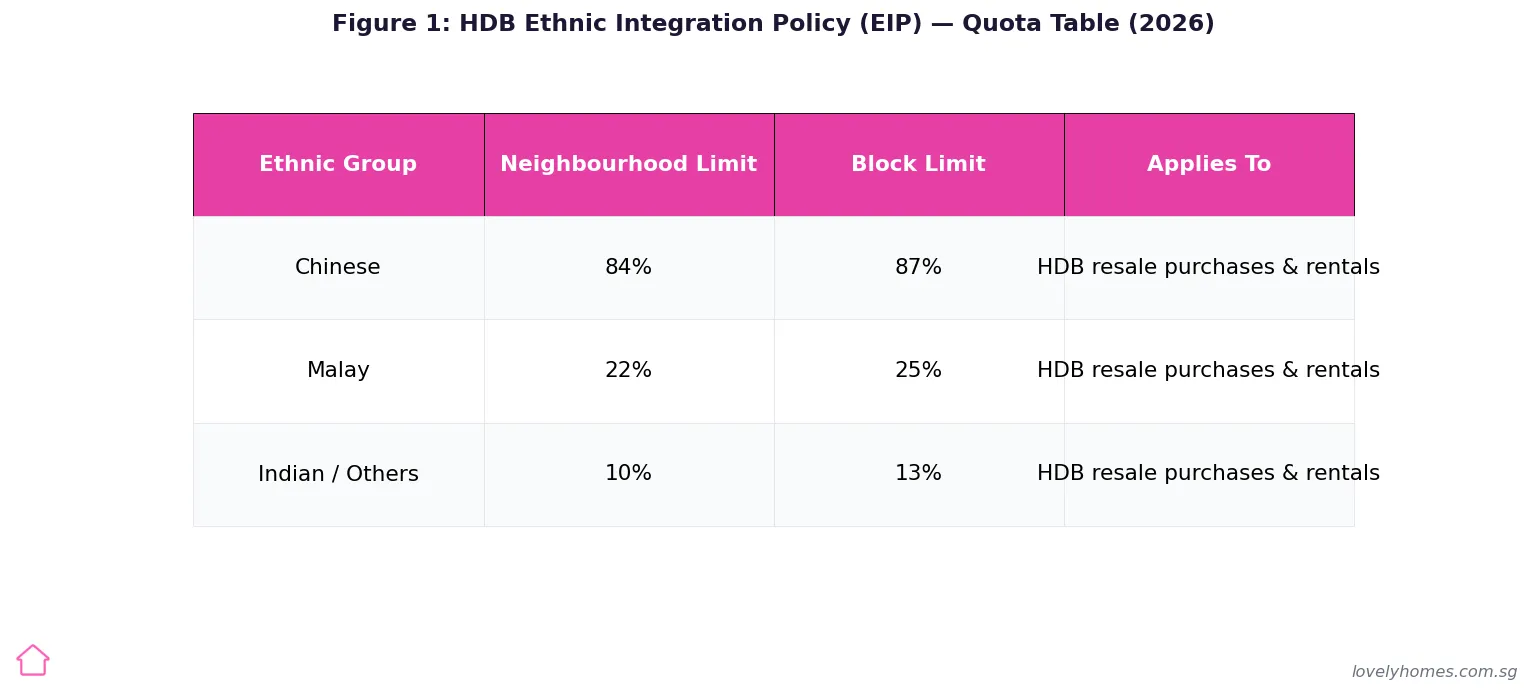
Figure 1: HDB Ethnic Integration Policy EIP quota table neighbourhood and block limits 2026
Figure 1: HDB Ethnic Integration Policy quota limits by ethnic group — neighbourhood and block levels (2026). Source: HDB.

Origins and Policy Background

By the late 1980s, HDB estates had begun to show ethnic clustering — not through any discriminatory housing allocation, but through the natural tendency of communities to live near one another. Surveys showed that certain blocks in Queenstown and Toa Payoh were becoming more than 90% Chinese or more than 80% Malay. The government, mindful of the 1964 and 1969 racial riots in Singapore’s early independence years, concluded that residential segregation — even voluntary — risked weakening inter-ethnic relationships over time.

The EIP was the policy response. From 1 March 1989, every HDB resale transaction required HDB’s approval, contingent on the buyer’s ethnicity not exceeding the established quota for that block and neighbourhood. The quota limits were set to approximate the national ethnic composition at the time: Chinese ~77%, Malay ~22%, Indian and others ~10% — with built-in flexibility at the block level to allow minor deviations.

The policy has remained largely unchanged in structure since 1989, though HDB reviews the specific quota percentages periodically. The last substantive adjustment was in 2010, when HDB reviewed the neighbourhood-level caps. In 2026, the figures remain: Chinese 84% / 87%, Malay 22% / 25%, Indian/Others 10% / 13% (neighbourhood / block).

How the EIP Works in Practice

The EIP operates at two levels simultaneously: the neighbourhood level and the block level. A buyer’s ethnicity must be within quota at both levels for a transaction to proceed.

Neighbourhood vs Block

A neighbourhood is a planning cluster of approximately 1,000–2,000 HDB households — roughly what most Singaporeans think of as a “precinct” or estate zone. A block is the individual HDB building. The block limit is slightly higher than the neighbourhood limit to give HDB flexibility in managing transitions.

If a Malay buyer wishes to purchase a flat in a block where Malay households already constitute 24% of the block’s flats, the block limit of 25% is not yet breached. However, if the neighbourhood (the surrounding cluster) already has 22% Malay households, the neighbourhood limit is met and the transaction cannot proceed — even though the block itself has room.

Who is Classified as What Ethnicity?

The classification follows the buyer’s (and co-buyers’) NRIC race declaration. For mixed-race individuals or couples, HDB uses the race of the primary buyer — generally the person listed first in the application. For joint purchases by couples of different ethnicities, HDB determines the applicable ethnicity based on its established criteria (generally the husband’s declared race in traditional family arrangements, though this has evolved to reflect modern applicant structures — buyers should check with HDB directly for their specific combination).

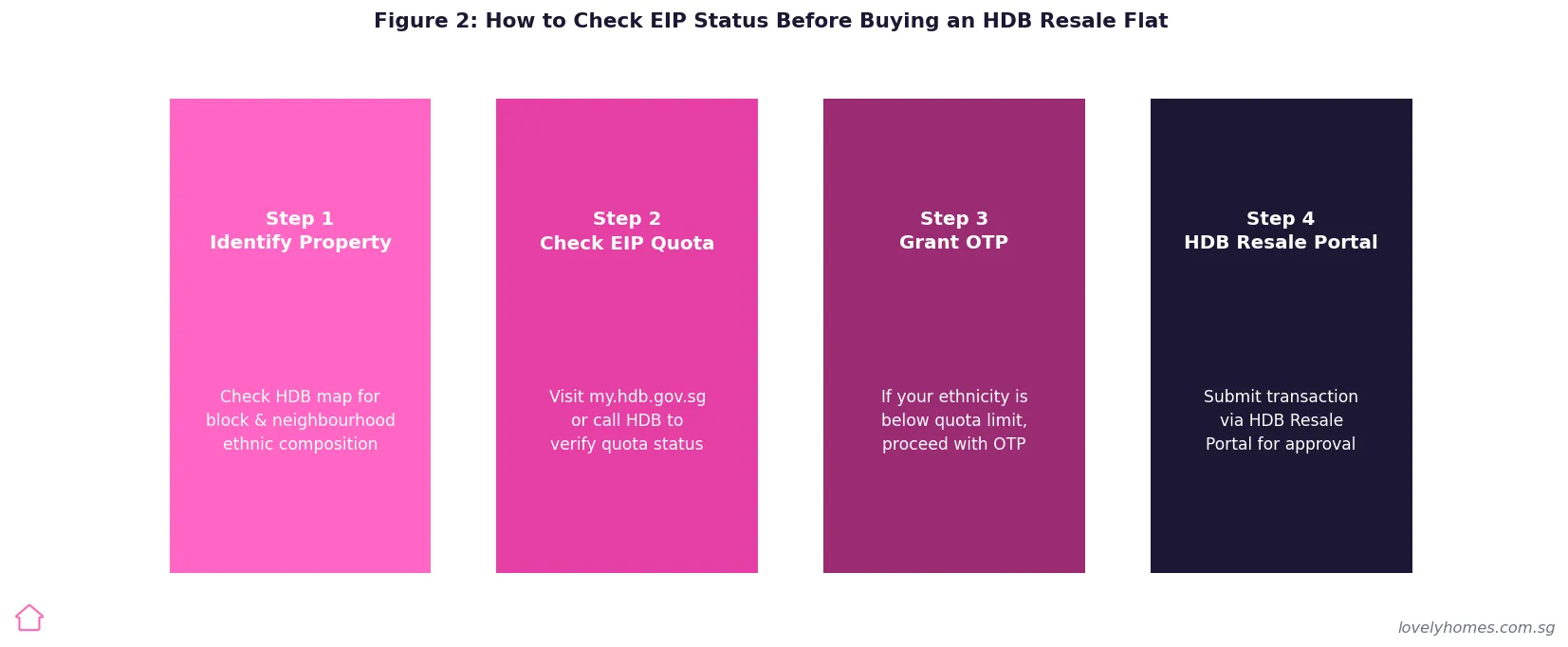
Figure 2: Step-by-step process to check HDB EIP status before buying a resale flat
Figure 2: How to check your HDB EIP status before buying a resale flat — a four-step process.

The SPR Quota: An Additional Layer for Permanent Residents

Beyond the ethnic-group quota, Singapore Permanent Residents (SPRs) face a separate SPR Quota. This quota caps the number of SPR households in any HDB block at 5% and in any neighbourhood at 8%. The rationale: HDB flats are subsidised public housing primarily for citizens, and excessive SPR concentration in any area is seen as inconsistent with that purpose.

Practically, this means SPR buyers face two quota checks before any resale purchase: (1) the ethnic-group EIP check, and (2) the SPR Quota check. Either can block a transaction. In more popular estates — Queenstown, Bishan, Toa Payoh, Tampines — SPR quotas can be reached at certain blocks, limiting options for SPR buyers even when the EIP quota is not an issue.

SPRs also cannot buy new BTO flats or Executive Condominiums during the initial launch period. Their housing options are largely confined to HDB resale flats (subject to both quotas) and private residential properties.

EIP Impact on HDB Resale Sellers

For sellers, the EIP can materially affect saleability. If a Chinese seller owns a flat in a block where the Chinese quota has already been met, the pool of eligible buyers is restricted to non-Chinese buyers only — significantly narrowing demand and potentially suppressing the resale price.

This dynamic is known informally as an “EIP-affected” flat. Industry data (from URA and HDB transaction records) suggests that EIP-affected blocks can see resale prices 5–12% below comparable non-affected blocks in the same estate, as the effective buyer pool is reduced. The discount reflects the liquidity premium buyers demand for taking on an asset with constrained future resalability.

Seller tip: Before listing your HDB flat for sale, check the current EIP status of your block and neighbourhood on the HDB Resale Portal. If your block’s dominant ethnic group quota is near its cap, consider whether a price adjustment is needed to attract buyers from the eligible pool, or whether to time your sale to coincide with demographic shifts in the block.

EIP and HDB Rentals

The EIP applies not only to resale transactions but also to approved whole-unit and bedroom rentals of HDB flats. When an HDB flat owner applies to rent out the entire flat or individual bedrooms, HDB checks whether the rental would cause the block or neighbourhood quota for the tenant’s ethnicity to be exceeded. If so, HDB will not approve the rental application for that particular tenant.

This has practical implications for landlords in popular rental estates. A Malay landlord renting to a Malay tenant in a block near its Malay quota limit may have the application declined, requiring them to seek tenants of other ethnicities. The rental EIP check is done through the HDB Resale Portal and typically takes 7–14 business days for approval.

EIP Compliance Summary for Buyers and Sellers (2026)

Scenario EIP Check Required? SPR Quota Check? How to Check Consequence of Breach
SC buying HDB resale Yes No HDB Resale Portal / call HDB Transaction cannot proceed
SPR buying HDB resale Yes Yes (both) HDB Resale Portal / call HDB Transaction cannot proceed
Foreigner buying HDB N/A N/A N/A Foreigners cannot buy HDB
SC/SPR renting out flat Yes (for tenant) Yes if tenant is SPR HDB Resale Portal (rental) Rental application declined
Flat owner listing for sale No — buyer’s responsibility No Inform buyers to check before OTP Buyer may back out post-OTP
New BTO purchase Not applicable Not applicable N/A HDB allocates based on ballot; no EIP for BTO

Worked Example: EIP Blocking a Resale Purchase

👥 The Rajan Family — Indian SC Couple, Tampines

Situation: Mr and Mrs Rajan (both SC, Indian, classified as “Indian/Others” under HDB’s ethnic categories) have identified a 5-room HDB resale flat at Tampines Street 81 for S$748,000. They have obtained an In-Principle Approval (IPA) from OCBC and are ready to exercise the OTP.

EIP check result: Before signing, Mr Rajan checks the HDB Resale Portal. He finds that Block 837, Tampines Street 81 has Indian/Others households at 12.8% of total flats — just below the 13% block limit. However, the neighbourhood ethnic composition shows Indian/Others at 10.2% — exceeding the 10% neighbourhood limit.

Outcome: Even though the block itself has not reached the 13% block cap, the neighbourhood cap of 10% has been breached. HDB would not approve the resale transaction if the Rajans proceed. They must look elsewhere.

Alternative strategy: Mr Rajan checks two neighbouring blocks in the same estate. Block 821 has Indian/Others at 8.9% (block) and the neighbourhood is at 9.6% — both within limits. The Rajans find a comparable 5-room flat there for S$742,000 and proceed with that transaction instead.

Key lesson: Always run the EIP check on the specific block and neighbourhood before exercising the OTP. HDB’s Resale Portal provides this check in real time. If in doubt, ask HDB to confirm in writing before you commit.

Why the EIP Matters for Property Buyers and Investors in 2026

The EIP is one of a small number of housing policies with no private-sector equivalent anywhere in the world — an active government intervention in the resale market to shape residential demographics. Its continued existence in 2026 reflects Singapore’s view that racial integration in housing is a public good that market forces alone will not maintain.

For buyers, this has three practical implications:

1. Pre-OTP due diligence is mandatory. Unlike stamp duty (which is always payable) or CPF usage (which always applies up to the withdrawal limit), the EIP can create an absolute bar to a transaction. There is no waiver, no appeal, and no workaround. The check is free and takes minutes on the HDB Resale Portal — there is no excuse for not doing it before any OTP is signed.

2. Resale value may be constrained. A flat in a block where one ethnic group’s quota is near saturation has a structurally smaller buyer pool. Over time, as Singapore’s ethnic composition shifts slightly (the 2020 and 2030 Censuses have shown gradual changes in distribution), these constraints may ease or tighten. Buyers should assess whether the block they are purchasing in is near any quota caps — not just for their own purchase, but for future resalability.

3. Rental yield could be affected. Landlords whose target tenant demographic is near the block quota may find their rental application declined and be forced to seek tenants from a different group — potentially limiting rental demand and yields in certain micro-locations.

What Might Change: Possible EIP Developments (Speculative)

The EIP has been in place for 37 years as at 2026 and has rarely been publicly debated in Singapore’s political discourse. However, several developments could prompt a policy review in the years ahead:

  • Shifting ethnic composition: Singapore’s 2020 Census showed modest shifts in ethnic composition — the Chinese share declined slightly from 76.8% (2010) to 75.9%; the Malay share remained at ~15%; Indian/Others grew slightly. If these trends continue, HDB may adjust quota caps to reflect the updated demographic baseline.
  • New citizen intake: Singapore’s naturalisation programme brings in citizens from a variety of ethnic backgrounds not represented in the original EIP framework. If new citizen categories grow significantly, HDB may need to refine how “Indian/Others” is classified.
  • Digital OTP reforms: HDB has been digitising the resale process. It is plausible that future HDB Resale Portal upgrades will integrate real-time EIP checks directly into the OTP workflow, reducing the risk of buyers unknowingly exercising an ineligible OTP.

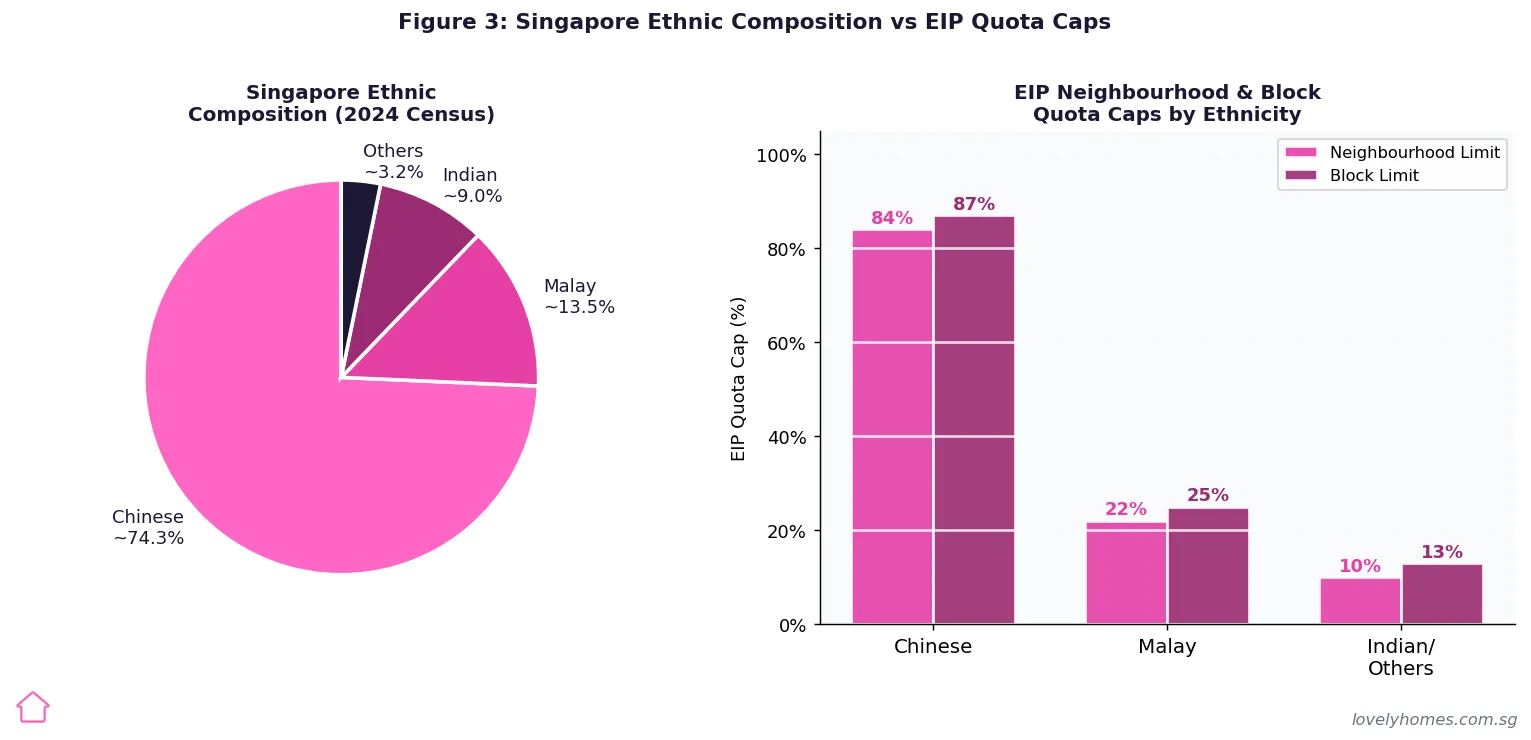
Figure 3: Singapore ethnic composition vs EIP neighbourhood and block quota caps by ethnicity 2026
Figure 3: Singapore ethnic composition (2024 Census) vs HDB EIP quota caps (neighbourhood and block levels). Sources: Department of Statistics Singapore; HDB.

Frequently Asked Questions

Can I buy any HDB resale flat I want, regardless of the EIP?

No. The EIP creates a hard quota that HDB enforces at the point of resale approval. If your ethnic group’s quota has been reached at either the block or neighbourhood level, HDB will not approve the transaction. The OTP is a private agreement between buyer and seller, but HDB’s approval is required for the actual transfer of the flat — so exercising an OTP on an EIP-blocked flat effectively voids the transaction, and the buyer may lose the OTP option fee (typically 1% of the purchase price, capped at S$1,000). Always check before you sign.

Does the EIP apply to new BTO flats?

No. The EIP does not apply to HDB BTO (Build-to-Order) flat purchases. BTO allocation is managed through HDB’s ballot system, and HDB itself manages the ethnic balance during the initial allocation process. The EIP only becomes relevant when BTO flat owners subsequently sell in the open resale market during or after the Minimum Occupation Period (MOP). At that point, the resale flat enters the open market and EIP rules apply to the buyer’s purchase.

What happens if I am of mixed ethnicity?

HDB uses the race as declared on your NRIC for EIP purposes. For mixed-race individuals, the NRIC declaration (made at birth or at the point of citizenship registration) governs which quota is checked. If you have changed your race declaration on your NRIC (permissible under certain circumstances), the updated declaration applies. For couples where both buyers are of different ethnicities, HDB determines the applicable ethnic classification based on its guidelines — typically the primary applicant’s declared race. If this creates ambiguity for your situation, call HDB directly to confirm before exercising any OTP.

Can EIP quotas be waived or appealed?

Generally, no. The EIP is a statutory policy administered by HDB, and there is no formal waiver or appeal process for buyers who cannot meet the quota for a particular block or neighbourhood. The solution is to identify an alternative block or neighbourhood where the quota has not been reached. HDB occasionally adjusts the boundaries of planning neighbourhoods when redevelopment occurs, which can change quota calculations for affected blocks — but this is an administrative restructuring, not an individual waiver.

Does the EIP affect Executive Condominiums (ECs)?

ECs are a hybrid housing type — publicly developed by HDB but privately managed after completion. The EIP does apply to ECs during their public-housing phase (the first 5 to 10 years, prior to full privatisation). Once an EC has been privatised (after the 10-year mark), it is treated as private residential property and the EIP no longer applies to resale transactions. Given the EC MOP change in May 2026 (MOP extended from 5 to 10 years, privatisation extended from 10 to 15 years), the EIP-applicable period for new ECs has in effect been extended alongside these changes.

How do I check the EIP status before buying an HDB resale flat?

The fastest method is to log in to the HDB Resale Portal (resale.hdb.gov.sg) using your SingPass, navigate to the “Check Resale Conditions” section, and enter the block and street address of the flat you are interested in. The portal will return the current ethnic composition percentages and confirm whether your ethnic group is within the quota. Alternatively, you can call HDB at 1800-225-5432 (toll-free) and request an EIP check for the specific address. Always get confirmation in writing (via email or the portal’s printable report) before exercising your OTP.

Does the EIP affect the resale value of HDB flats?

It can. A flat in a block where the dominant ethnic group’s quota has been met effectively has a smaller eligible buyer pool — only buyers of the non-dominant ethnic groups can purchase. This structural limitation on demand can depress the flat’s market price relative to comparable flats in non-quota-affected blocks. The discount is hard to quantify precisely (it varies by estate, ethnic mix, and local demand), but it is a real consideration for buyers making a long-term investment decision. Before purchasing, assess not just your own EIP eligibility, but whether the block’s current composition suggests that future resalability may be constrained.

Disclaimer: This article is for general informational purposes only and does not constitute legal, financial, or property advice. The Ethnic Integration Policy (EIP) is administered by the Housing & Development Board (HDB) under the Ministry of National Development. EIP quotas and eligibility criteria are subject to change by HDB at any time. Readers must verify the current EIP status of any specific block and neighbourhood directly with HDB via the HDB Resale Portal (www.hdb.gov.sg) or by calling HDB at 1800-225-5432 before exercising any Option to Purchase. Ethnic classification rules may vary for individuals in specific circumstances — consult HDB directly for your situation. LovelyHomes recommends consulting a CEA-registered property agent and a qualified legal adviser before entering into any property transaction.

×

Click anywhere to close

Translate »