HDB Resale Records August 2026: Bedok South Horizon Hits S$1.45M, Pasir Ris One Breaks S$1.15M
Quick Answer
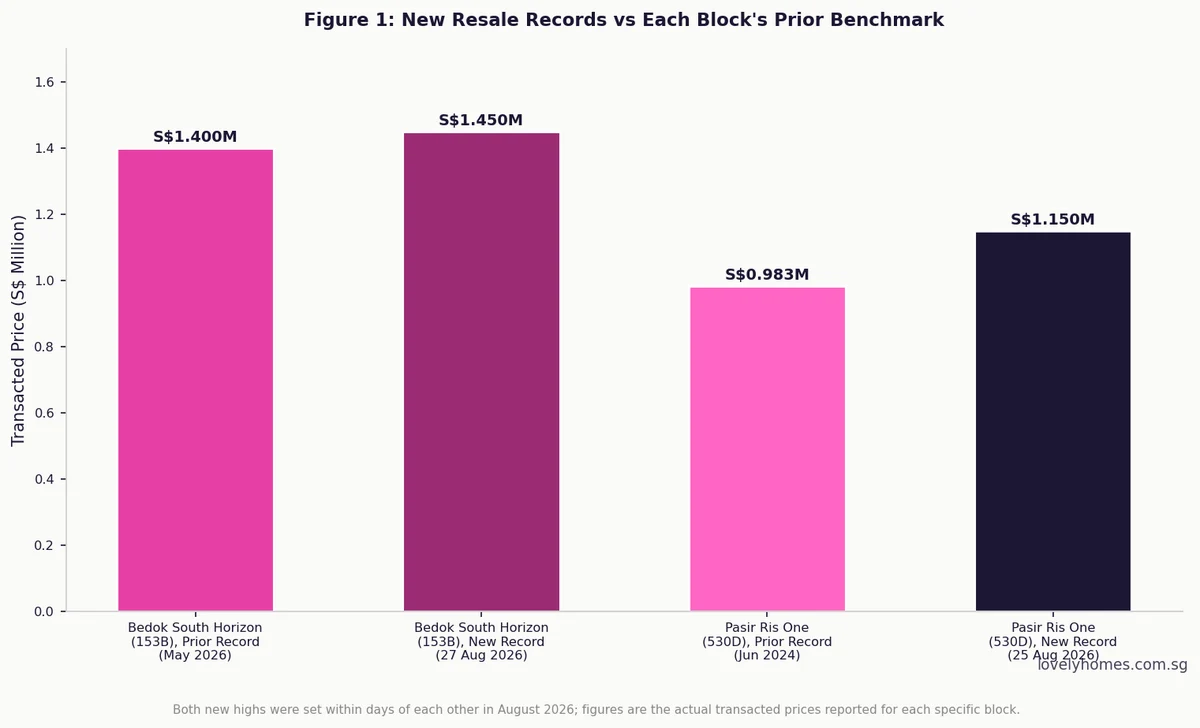
- A 5-room flat at 153B Bedok South Road (Bedok South Horizon) sold for S$1.45 million (S$1,192 psf) on 27 August 2026, the highest price ever paid for a 5-room flat in Bedok.
- Two days earlier, on 25 August 2026, a 5-room Design, Build and Sell Scheme (DBSS) unit at 530D Pasir Ris Drive 1 (Pasir Ris One) sold for S$1.15 million (S$1,018 psf), beating the block’s prior 5-room record by S$167,000.
- This is the second record that block 153B has produced in a single quarter; a unit in the same block sold for S$1.4 million in May 2026.
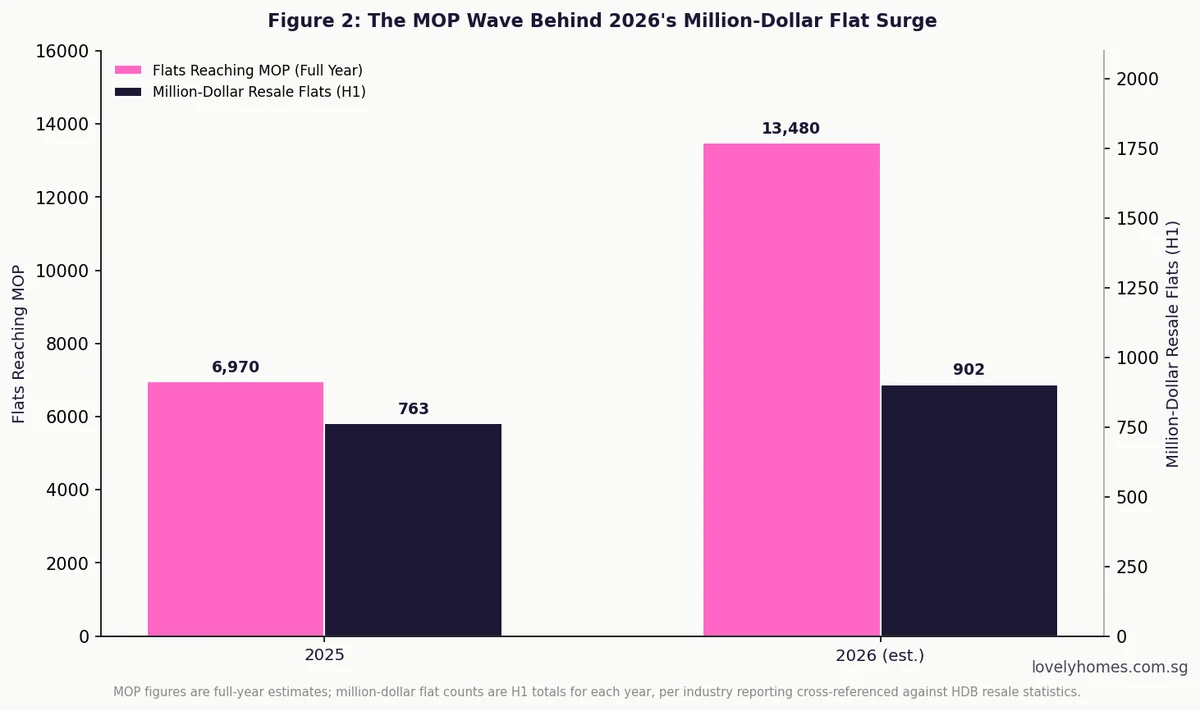
- Both records land amid an unusually large Minimum Occupation Period (MOP) wave: an estimated 13,480 flats are expected to reach MOP in 2026, nearly double the roughly 6,970 in 2025.
- Neither Bedok nor Pasir Ris is among the towns with the heaviest concentration of 2026 MOP completions, which are centred on Punggol, Tampines, Toa Payoh and Queenstown, making these two records more localised than estate-wide.
- The removal of the 15-month wait-out period for private property owners buying a non-subsidised resale flat, announced 28 July 2026, reportedly saw enquiries for HDB flats above S$1 million jump 154% the following week.
- Singapore’s most expensive HDB resale flat to date remains a 5-room unit at City Vue @ Henderson in Bukit Merah, which changed hands for S$1.728 million (S$1,421 psf) in April 2026.
Two Records, Two Estates, Days Apart
Singapore’s HDB resale market produced two fresh benchmark transactions in the space of a single week in late August 2026, in two towns that rarely feature in the usual million-dollar-flat headlines dominated by Toa Payoh, Bukit Merah and Queenstown. On 25 August, a 1,130 sqft 5-room Design, Build and Sell Scheme (DBSS) unit at 530D Pasir Ris Drive 1, part of the Pasir Ris One development, sold for S$1.15 million, working out to S$1,018 per square foot. Two days later, on 27 August, a larger 1,216 sqft 5-room flat at 153B Bedok South Road, within the Bedok South Horizon estate, sold for S$1.45 million, or S$1,192 per square foot, the highest price ever recorded for a 5-room flat in Bedok.
153B Bedok South Road: A Second Record in a Single Quarter
What makes the Bedok South Horizon sale notable is not just the price itself, but that it is the second record-breaking sale the same block has produced within a single quarter. The previous benchmark at 153B was set only in May 2026, when a unit on a similar floor sold for S$1.4 million, itself a new high at the time. The neighbouring block, 153C Bedok South Road, has also contributed three further record-setting 5-room transactions between May and July 2026, changing hands at prices between S$1.28 million and S$1.38 million. The estate sits at the junction of Bedok South Road and Upper East Coast Road, within walking distance of the upcoming Bedok South MRT station on the Thomson-East Coast Line, which is due to open by the end of 2026, a connectivity upgrade that appears to be feeding directly into buyer willingness to pay.
Asking prices at the block have already moved to reflect the new benchmark: current listings at 153B run as high as S$1,518,888 (S$1,249 psf), with a unit at neighbouring 152C listed at S$1,438,888 (S$1,183 psf) and marketed on its unblocked views and newly-MOP status. Sellers at Bedok South Horizon appear to be treating S$1.45 million as a floor for negotiations rather than a ceiling, though whether buyers are actually willing to pay these asking prices remains to be seen in the coming weeks.
530D Pasir Ris Drive 1: A DBSS Rarity Breaks Its Own Ceiling
Pasir Ris One is one of only 13 Design, Build and Sell Scheme (DBSS) projects ever built in Singapore before the scheme was discontinued in 2011, a status that makes its flats a relatively scarce resale category in their own right. Completed in 2015 with 447 units, the development sits directly next to Pasir Ris MRT station, White Sands shopping mall and Pasir Ris Park. The new S$1.15 million transaction surpasses the block’s previous 5-room record of S$982,800, set in June 2024, by S$167,000, a jump that illustrates just how much unit-specific factors matter: a similarly sized ground-floor unit in the very same block changed hands for only S$920,000 in the same month, S$230,000 less than the record-setting unit, reflecting the premium buyers are willing to pay for a higher floor and better facing within an identical block.
Even with this new high, Pasir Ris’ overall priciest HDB resale transaction remains an executive maisonette at Block 531 Pasir Ris Drive 1, which fetched S$1.26 million (S$786 psf) in March 2026; the new 5-room record commands a higher price per square foot but still falls short of that unit’s total quantum.
Why the Records Are Landing Now: the 2026 MOP Wave
Both sales sit against the backdrop of an unusually large wave of flats reaching their Minimum Occupation Period (MOP) in 2026, estimated at around 13,480 flats, nearly double the roughly 6,970 units that reached MOP in 2025. Much of this new supply is concentrated in towns such as Punggol, Tampines, Toa Payoh and Queenstown, rather than Bedok or Pasir Ris, which suggests the Bedok and Pasir Ris records are a more localised phenomenon: relatively new, long-lease flats within these two specific estates testing how much buyers are willing to pay, rather than evidence of an estate-wide surge.
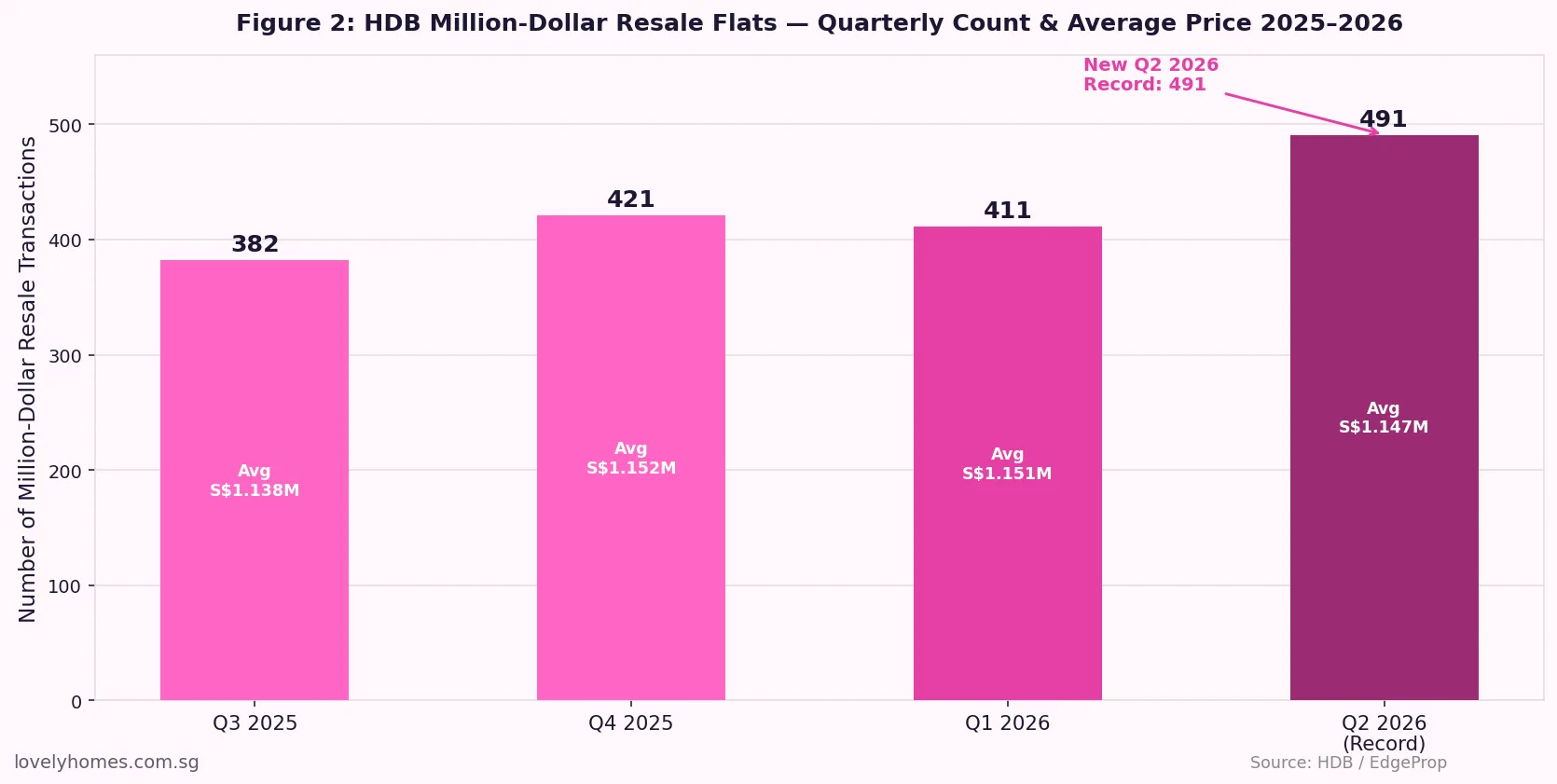
Separately, the removal of the 15-month wait-out period that previously applied to private property owners buying a non-subsidised HDB resale flat, announced on 28 July 2026, appears to have added fresh demand at the upper end of the resale market: enquiries for HDB flats priced above S$1 million reportedly jumped 154% in the week following the change. Taken together, these two records are part of a much larger surge in million-dollar HDB transactions: 902 resale flats crossed the million-dollar mark in the first half of 2026 alone, already ahead of the 763 recorded over the same period in 2025, putting 2026 on a pace that could challenge the full-year record of 1,594 million-dollar transactions set in 2025.
Summary: The Two Records at a Glance
| Detail | Bedok South Horizon | Pasir Ris One |
|---|---|---|
| Address | 153B Bedok South Road | 530D Pasir Ris Drive 1 |
| Sale date | 27 August 2026 | 25 August 2026 |
| Price | S$1.45 million (S$1,192 psf) | S$1.15 million (S$1,018 psf) |
| Flat size | 1,216 sqft, 5-room | 1,130 sqft, 5-room (DBSS) |
| Prior block record | S$1.4 million (May 2026) | S$982,800 (June 2024) |
| Margin over prior record | +S$50,000 | +S$167,200 |
Why This Matters for Buyers, Sellers and Nearby Owners
For owners in the immediate vicinity of either block, these transactions offer a genuine, if narrow, data point on what a well-located, higher-floor unit can now fetch, though it is worth being cautious about assuming the same premium applies to a lower floor, a different facing, or a different block within the same estate, given how much the Pasir Ris comparison between a top unit and a ground-floor unit in the same block illustrates that spread. For buyers, both records are a reminder that headline million-dollar transactions remain concentrated in specific, often newer or better-located blocks, rather than reflecting an estate-wide repricing, so a nearby listing at a similar asking price should still be evaluated on its own floor, facing, renovation condition and remaining lease. For the market more broadly, the fact that these two records emerged from towns outside the heaviest 2026 MOP concentration suggests demand for well-located, well-connected resale flats remains resilient even where new supply is not especially abundant.
What Might Come Next
The following is informed speculation, not confirmed policy. Given how quickly asking prices at 153B Bedok South Horizon have already moved above the new S$1.45 million benchmark, it is plausible that at least one further transaction at or above this level follows in the coming months if a buyer is found at these asking levels, though this is speculative. Similarly, at Pasir Ris One, it remains to be seen whether wider listings across the development adjust upward to reflect the new S$1.15 million benchmark, or whether this proves to be an isolated, unit-specific outcome; the current gap between recent asking prices and the new record suggests the market has not yet fully repriced as at this writing.
Frequently Asked Questions
What is a DBSS flat, and why does it matter for the Pasir Ris One sale?
Design, Build and Sell Scheme (DBSS) flats were built by private developers on HDB land under a scheme discontinued in 2011; only 13 such projects were ever built, making them a scarce resale category, which supports stronger pricing for well-located examples like Pasir Ris One.
Does this mean HDB flats in Bedok and Pasir Ris are now all worth over a million dollars?
No. Both records are specific to a single well-located, higher-floor unit within one block; a nearby flat with a different floor, facing or lease profile should not be assumed to command the same price.
What is Singapore’s highest-ever HDB resale price?
A 5-room unit at City Vue @ Henderson in Bukit Merah, which sold for S$1.728 million (S$1,421 psf) in April 2026, remains the record; neither the Bedok nor the Pasir Ris sale comes close to this figure.
What is the MOP wave, and why is it relevant here?
An estimated 13,480 HDB flats are expected to reach their Minimum Occupation Period in 2026, nearly double 2025’s figure, broadening the pool of relatively new, long-lease resale flats coming onto the market, though this wave is concentrated in different towns from Bedok and Pasir Ris.
Why did HDB resale enquiries above S$1 million jump in mid-2026?
The removal of the 15-month wait-out period for private property owners buying a non-subsidised resale flat, announced 28 July 2026, reportedly saw enquiries for HDB flats above S$1 million rise 154% in the following week.
Is the overall HDB resale market still rising as fast as these records suggest?
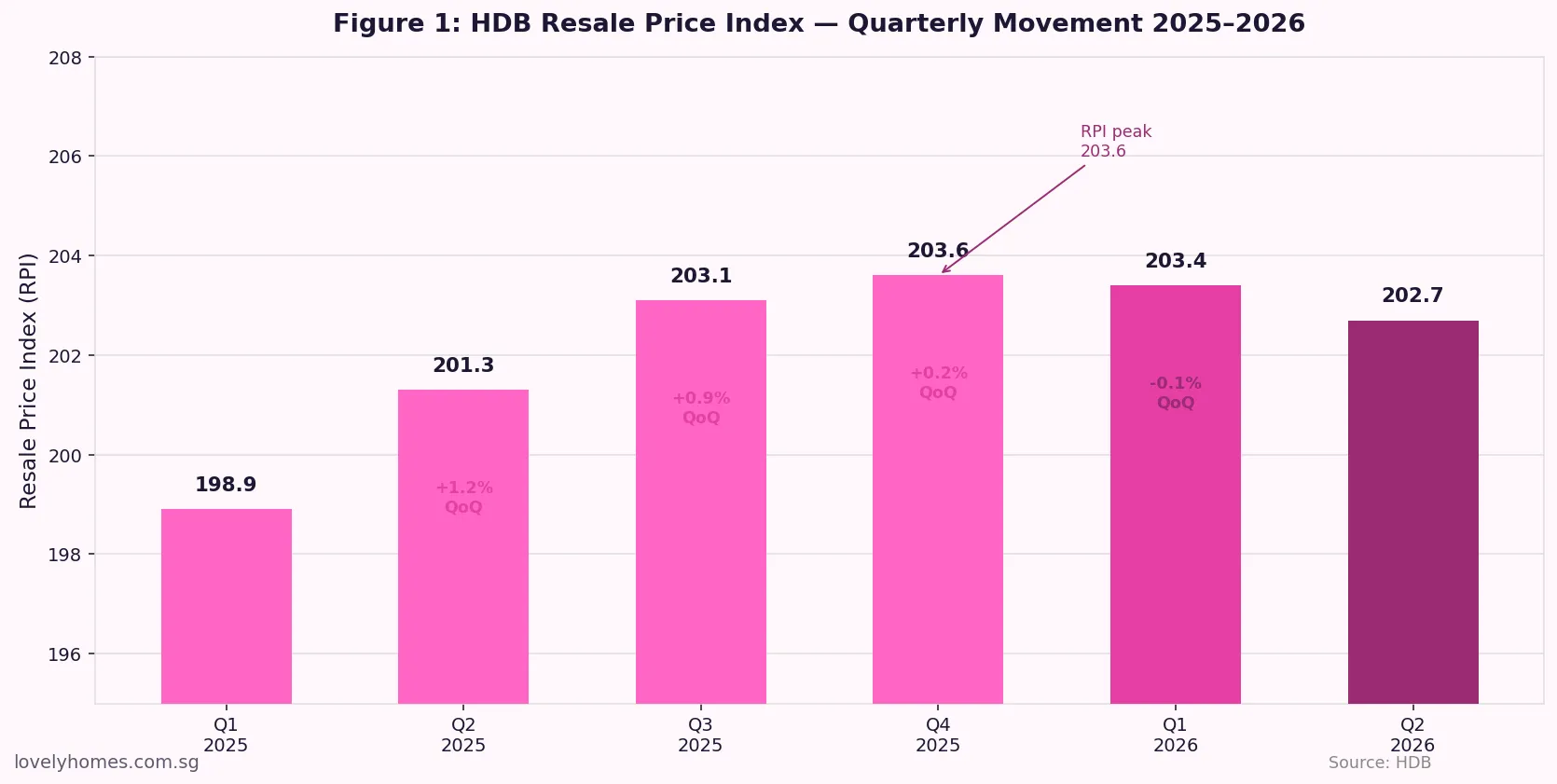
Not necessarily. The HDB Resale Price Index recorded its first quarterly decline since Q2 2019 in Q1 2026, even as a narrow band of premium transactions continued to set fresh records, showing the two trends can coexist.
Where can I check current HDB resale transaction prices myself?
HDB publishes resale transaction data, including price, floor level range and remaining lease, through its official resale flat prices e-service, which is the most reliable source for verifying any specific block or estate.
Related Articles on LovelyHomes
- HDB Record Resale Prices Singapore 2026: S$1.728M Henderson Road Flat
- HDB Resale Price Records June 2026: Bidadari 3-Room Flat
- HDB Resale Market Q1 2026: First Price Decline in 7 Years
- Pasir Ris Neighbourhood Guide Singapore 2026
- Bedok Neighbourhood Guide Singapore 2026
- Singapore HDB Priority Schemes Guide 2026
Click anywhere outside to close