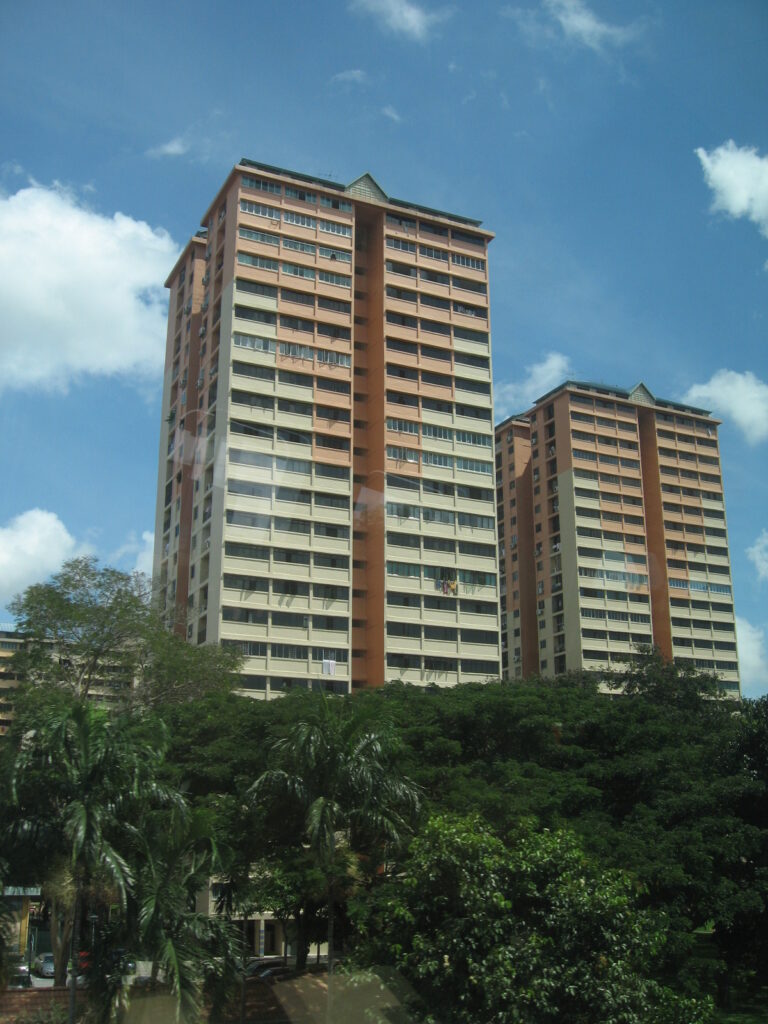
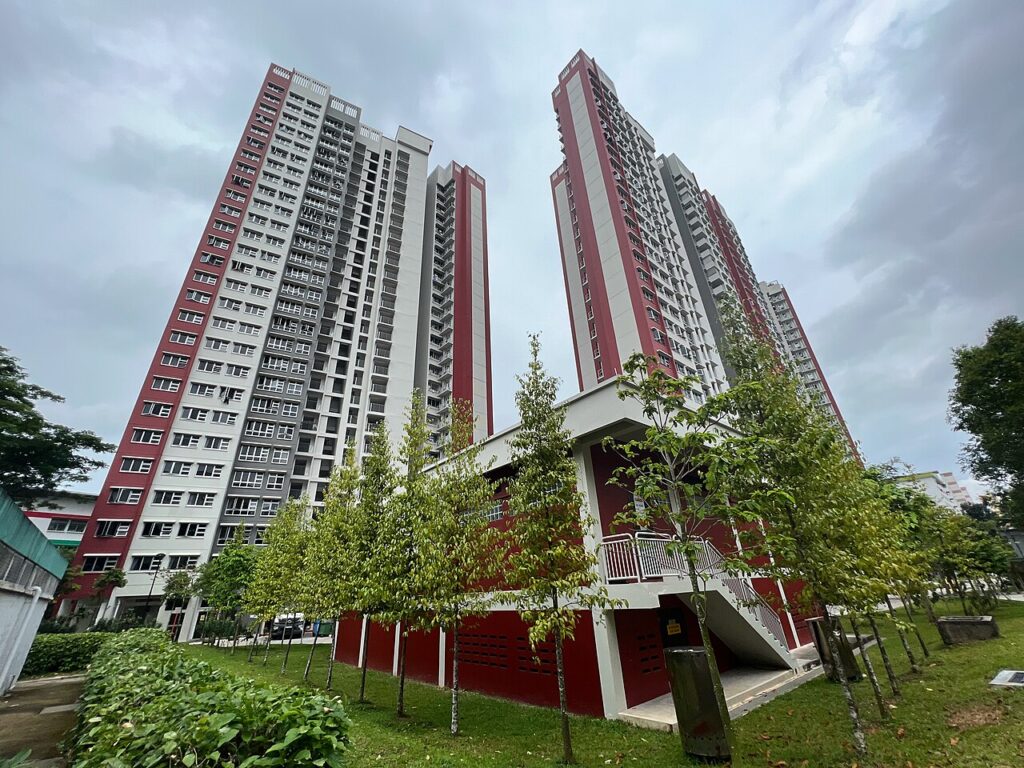
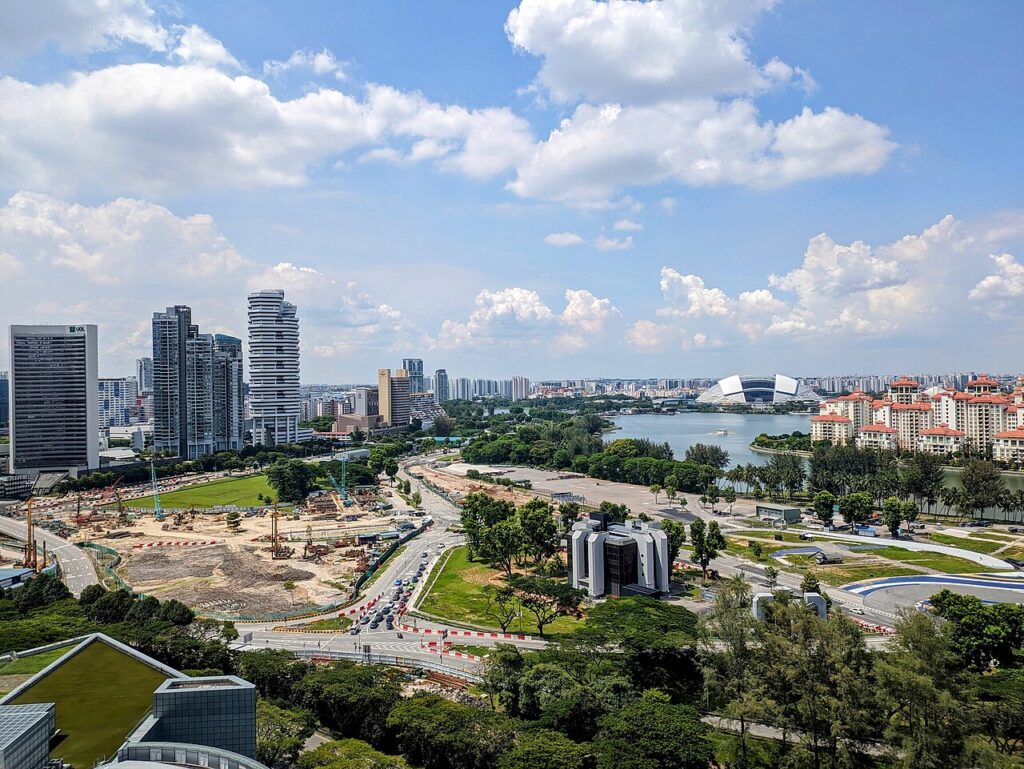
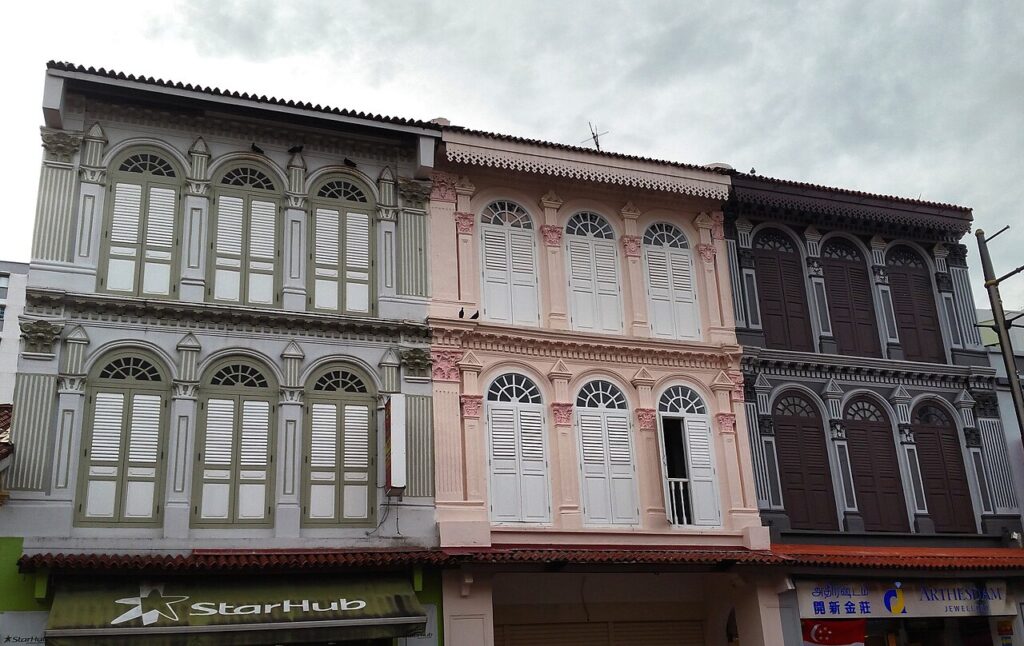
CCR, RCR and OCR are Singapore’s three private non-landed market segments defined by URA. CCR (Core Central Region) is the luxury belt around Orchard and the Downtown Core. RCR (Rest of Central Region) is the city fringe. OCR (Outside Central Region) is everywhere else. In Q1 2026 median PSF runs roughly S$2,650 in CCR, S$2,180 in RCR and S$1,650 in OCR — though the spread narrows for new launches in hot city-fringe pockets.
Every time URA releases the quarterly Property Price Index, the headlines split the private condo market into three buckets: CCR, RCR and OCR. New buyers usually learn the labels when a property agent drops them into a pitch — “this is a rare RCR freehold” or “OCR yields are better than what you’d get in CCR”. The labels shape price, rental yield, buyer profile and the resale pool you are competing with.
This guide sets out what each region is, how the 2026 numbers stack up, and where the label matters most in real buying decisions. If you are comparing condo formats as well as regions, pair this with our condo downpayment breakdown.
Illustrative 2026 median PSF and buyer-impact summary by URA region.
What the three regions mean
Core Central Region (CCR)
CCR covers postal districts 9, 10 and 11, plus the Downtown Core and Sentosa. Think Orchard, River Valley, Bukit Timah, Marina Bay, Sentosa Cove. The stock skews luxury: many freehold blocks, lower-density cluster homes, a deep pool of foreign-bought units pre-2023.
Rest of Central Region (RCR)
RCR is the city fringe — districts 3, 4, 5, 7, 8, 12, 13, 14, 15 and parts of 20. Queenstown, Tiong Bahru, Novena, Toa Payoh, Farrer Park, Marine Parade. From 2022 to 2025 this has been the fastest-appreciating band, thanks to new MRT lines and a rush of 99-year city-fringe launches.
Outside Central Region (OCR)
OCR is the suburbs — everywhere else. Punggol, Sengkang, Tampines, Jurong, Woodlands, Yishun, Bukit Panjang. OCR has the largest supply of new 99-year condo stock, the most owner-occupier demand, and the widest internal price range (budget 99-year next to premium integrated developments).
Where the numbers sit in 2026
Region
Median PSF (new + resale)
Typical 2-bedder quantum
Rental yield (gross)
CCR
~S$2,650
S$2.3m–S$3.2m
2.5%–3.2%
RCR
~S$2,180
S$1.6m–S$2.3m
3.2%–4.0%
OCR
~S$1,650
S$1.1m–S$1.7m
3.5%–4.6%
Note the yield curve inverts the price curve: OCR delivers the highest gross yield; CCR the lowest. This is why investor pockets of OCR — near MRT interchanges, business parks — have been crowded for years.
Why the label still matters
1. Financing is region-neutral, but underwriting isn’t
ABSD, BSD, LTV limits and TDSR are identical across regions. But bank valuation and loan-amount appetite can diverge: CCR luxury units are sometimes under-valued by conservative banks, producing Cash-Over-Valuation surprises. Our COV guide explains how this works in detail for HDB, but the same dynamic shows up in high-ticket CCR resales.
2. Cooling measures hit CCR hardest in absolute dollars
A 20% ABSD rise on a S$3m CCR purchase hurts more than the same percentage on a S$1.2m OCR unit. Post-April-2023 foreigner ABSD (60%) has cooled CCR rental-to-own investment demand the most.
3. Tenure mix differs
CCR has the deepest freehold pool. OCR is mostly 99-year leasehold with a narrow freehold band around older landed enclaves. For the trade-off itself, see our freehold vs 99-year guide.
Worked example — same quantum, three regions
Imagine you have S$1.8m in purchase budget. That buys:
CCR: A small 1-bedder (~650 sqft) in district 9 or a shoebox resale in Sentosa Cove.
RCR: A decent 2-bedder (~750 sqft) in Queenstown, Novena or Toa Payoh resale stock.
OCR: A generously-sized 3-bedder (~1,000–1,100 sqft) in Tampines, Sengkang or Woodlands.
For owner-occupiers, OCR tends to win on size and yield; for investors banking on capital appreciation, RCR has been the sweet spot for a decade.
Frequently asked questions
Is CCR always the safest investment?
“Safe” depends on horizon. CCR held its value better than expected through the 2014–2018 cooling-measure trough, but capital appreciation has lagged RCR and OCR from 2020 to 2025. Luxury CCR stock is also more exposed to foreigner ABSD changes.
Can a development sit across regions?
No — URA assigns each postal sector to one region. Some large projects near boundaries (for example, in Farrer Road or Redhill) feel CCR but are classed RCR. The label on the transaction determines the bucket.
Does the region change the stamp duty rate?
No. BSD and ABSD are identical regardless of region. See our BSD guide for the 2026 rate ladder.
Which region produces the best en bloc candidates?
Historically CCR and RCR, because land scarcity drives developer appetite. OCR en blocs happen, but reserve prices need to fit tighter developer margins.
This guide is for general information only and is accurate as of April 2026. Singapore property rules, taxes and cooling measures change frequently — always verify current figures with URA, IRAS, HDB or a licensed professional before committing. LovelyHomes is not a financial, legal or tax advisor.
Singapore’s vibrant retail landscape is currently navigating a period of significant adjustment as vacancy rates show a noticeable increase. Recent government data highlights that the islandwide retail vacancy rate climbed to 6.8 per cent in the first quarter of 2025. This figure represents a clear uptick from the 6.2 per cent recorded in the previous quarter. This consequently signals a shift in market dynamics. This trend is primarily driven by a slowdown in the net take-up of spaces. This has been compounded by the introduction of a fresh supply into the market. Therefore, both landlords and tenants must understand the underlying causes and future outlook to make informed decisions.
The Driving Forces Behind Rising Vacancies and Tenant Exits
Several converging factors are contributing to the challenging environment that is prompting more retailers to reconsider their physical footprint. Firstly, a prolonged slowdown across the retail and dining sectors has put sustained pressure on businesses. This economic reality is exacerbated by relentless cost pressures, including a persistent labour crunch, which retailers are struggling to absorb. Consequently, their inability to fully pass on these rising costs to consumers is resulting in painfully squeezed profit margins.
Furthermore, consumer behaviour has shifted, with shoppers becoming more cautious and cutting back on discretionary spending. This is evidenced by a drop in retail sales during February and March 2025, following a promising start to the year. In addition, the marketplace has become fiercely competitive, particularly within the Food and Beverage (F&B) sector. Some industry reports suggest the F&B scene is at risk of oversupply, leading to a cycle of rapid expansion followed by equally swift closures, which ultimately results in wasted capital and resources.
The Retail Tenant’s Dilemma: High Rents and Lease Negotiations
Unsustainable rental rates remain a critical pain point for many businesses, affecting even those in traditionally high-traffic locations. Tenants in less populated areas or developments with low footfall are understandably the most pronounced casualties of this pressure. As a result, many tenants are actively seeking to pre-terminate their leases, a clear indicator of market distress. This option, however, comes with stringent conditions that require careful consideration before any action is taken.
Typically, early lease termination requires at least six months’ notice or a significant payment equivalent to six months’ gross rent. Landlords also often require additional compensation equal to the security deposit, making it a costly exit strategy for struggling businesses. For tenants whose lease contracts do not permit early termination, the focus shifts towards negotiation. These discussions may involve requesting a rent reduction, proposing a restructured payment plan, or finding a suitable replacement tenant. These alternatives require the landlord’s explicit approval.
A Tale of Two Markets: Prime Resilience Amidst General Weakness
Despite the overall increase in vacancy, the market is not uniform, revealing a fascinating and complex picture. In the first quarter, net demand for retail spaces was a negative 129,000 square feet, starkly reversing five consecutive quarters of positive take-up. Simultaneously, about 323,000 square feet of new retail space came on stream, which new entrants absorbed, preventing an even sharper spike in vacancy.
However, a key paradox has emerged where average rents have largely held steady, particularly in prime locations. Rents in the coveted Orchard Road and suburban areas remained flat at S$23.20 per square foot (psf) and S$14.70 psf, respectively. Malls in prime districts continue to demonstrate remarkable resilience, supported by a limited supply of available space. This scarcity empowers landlords to negotiate higher rents and maintain healthy momentum for lease renewals, especially with enduring luxury retailers.
A crucial metric for understanding this resilience is the occupancy cost, which measures rent as a proportion of tenant sales. For major mall operators like CapitaLand and Frasers, occupancy costs remained sustainable below 20 per cent in 2024. This suggests that for well-positioned tenants, revenues are still growing at a pace that justifies the rental costs, showcasing a clear divergence between prime and secondary retail spaces.
Future Retail Outlook: Short-Term Stability Before a Supply Wave
Looking ahead, the market is expected to experience increased tenant churn throughout the remainder of the year. Underperforming retailers may choose to exit early or simply not renew their leases upon expiration. While new store openings have historically outpaced closures, there is a growing expectation that this trend could soon reverse. This follows a challenging 2024 where store closures hit a 19-year high, indicating deep-seated structural shifts.
In the short term, rental rates and occupancy levels are likely to remain supported over the next two years. This stability is largely due to a relatively limited pipeline of new retail supply, with under 400,000 square feet of net lettable area expected annually. However, a significant wave of new supply is looming on the horizon from 2028 onwards. This future influx, led by major developments like the Marina Bay Sands expansion, will introduce over 1.2 million square feet of space, potentially reshaping the competitive landscape once more.
For now, industry experts anticipate that Orchard Road rents will likely perform at the upper end of the forecasted 1 to 2 per cent growth range for this year. Conversely, suburban rents are expected to track the lower end of that projection, reflecting the ongoing bifurcation of the market.