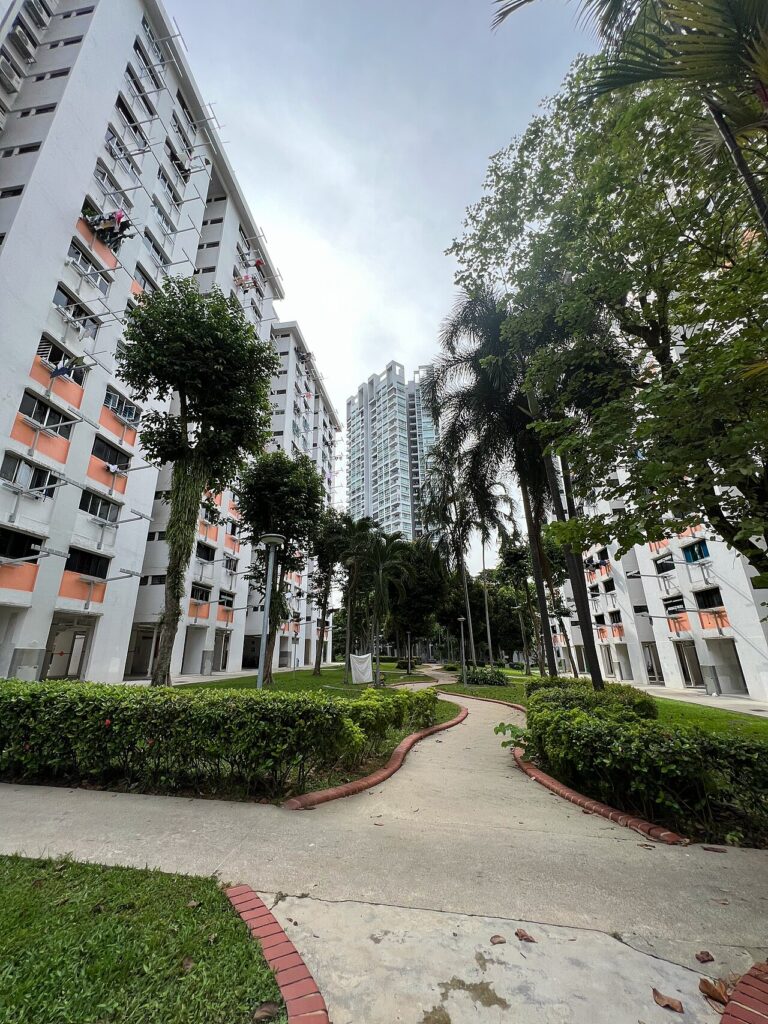
Freehold or 99-year leasehold? This is one of the most consequential questions a Singapore buyer faces — and one of the most commonly misunderstood. Freehold stock in Singapore typically commands a 10–20% premium over an otherwise identical 99-year leasehold, but the price spread varies wildly by district, by remaining lease, and by the buyer’s hold horizon. This 2026 guide walks you through how lease decay actually works, how the price spread behaves across the ownership decades, and when the freehold premium is worth paying.
Quick Answer
Freehold grants ownership in perpetuity. 99-year leasehold grants ownership for a fixed term, after which the land reverts to the State.
Freehold stock in Singapore typically prices at a 10–20% premium over comparable 99-year leasehold stock — the spread widens sharply as remaining lease falls below 60 years.
Only roughly 3% of all residential stock in Singapore is freehold, concentrated in D9, D10, D11 and parts of D15.
For CPF usage and home-loan tenure, a leasehold property with less than 60 years remaining triggers pro-rated financing caps.
The right choice depends on your hold horizon, financing strategy and whether you are optimising for inheritance or capital appreciation.
What is freehold property in Singapore?
Freehold tenure — technically called estate in fee simple in Singapore land law — grants ownership rights in perpetuity. The owner holds the land indefinitely and passes title to heirs without any lease-decay consideration. Most freehold private residential stock in Singapore was originally granted in the 19th century through Crown grants, with title now consolidated into the Singapore Land Authority registered land system.
A small portion of private residential stock is held on tenures longer than 999 years — technically leasehold but functionally indistinguishable from freehold. Banks, conveyancing lawyers and CPF generally treat 999-year leasehold and freehold identically for financing and valuation purposes, and we do the same in this guide.
What is 99-year leasehold property?
Leasehold tenure grants ownership for a fixed term, after which the land and everything built on it reverts to the State. Most modern private condominium sites and virtually all HDB flats are 99-year leaseholds. A handful of developments are on shorter 60- or 99-year leasehold with renewal options, but these are uncommon in the private market.
The 99-year clock does not start on your purchase date. It starts on the date the State granted the lease to the original developer, which may have been 3 years ago or 30 years ago. Always check the remaining lease at the time of purchase, not the original tenure length. For HDB resale flats, this is published on the HDB Resale Flat Prices portal; for private condominiums, it appears on the title deed and in the caveat.
Key distinction
‘99-year’ is a description of the original tenure. ‘Remaining lease’ is what you actually buy. A 2014-developer-TOP 99-year condo sold in 2026 has 87 years remaining, not 99.
How much does freehold cost over leasehold in Singapore?
The data pattern is consistent: the freehold premium starts at around 10–15% at new launch, holds roughly flat for the first two decades of the lease, widens modestly in decades three and four, and widens sharply once remaining lease drops below 60 years. That non-linearity is not speculation — it is a mechanical consequence of how CPF usage and bank financing caps step down as remaining lease falls.
The Bala’s Table — how leasehold value decays
The Bala’s Table, first published by Professor P. Balasubramanian in the 1960s, remains the rule-of-thumb discount applied by the Singapore Land Authority when assessing lease top-up premiums. It approximates how leasehold value falls as remaining lease decreases. The table is not used for open-market pricing today — banks and valuers have largely replaced it with transaction-based regression — but it still frames the direction and rough magnitude of decay.
Two things to notice. First, the curve is gently sloped for the first 25 years of decay — a 99-year lease with 75 years remaining is still worth 90% of freehold. Second, the curve steepens sharply after the 60-year remaining-lease mark. That steepening is why CPF and banks step down their financing caps precisely there.
CPF and financing caps tied to remaining lease
CPF Ordinary Account funds and bank home loans can be used on leasehold property, but both taper once the remaining lease falls below a threshold. The 2026 framework is summarised below.
The pro-rated formula for CPF usage on a leasehold with remaining lease below 60 years is roughly: CPF usage cap = Valuation Limit × (remaining lease at end of ownership) / (minimum 20 years). This mechanic ties your exit horizon to your entry, and is one of the main reasons resale HDB flats with remaining lease in the 40–60 year band have seen price pressure over the last three years.
What this means for HDB buyers
If you buy a 50-year-old resale HDB (49 years remaining) at age 40 and expect to hold 25 years, you will still meet the 60-year threshold at entry. But if you buy at age 55 and expect to hold to age 85, you are in the 30–59 year remaining-lease band at entry — CPF pro-rated usage applies.
Worked example — the 30-year hold
Consider two identical units — same floor, same stack, same facing — in the D15 East Coast pocket. Unit A is freehold priced at S$2,800 psf; Unit B is 99-year leasehold priced at S$2,450 psf. Both are 1,076 sqft three-bedroom.
Purchase economics — 2026 launch
Unit A (freehold): 1,076 sqft × S$2,800 psf = S$3,012,800
Unit B (99-year): 1,076 sqft × S$2,450 psf = S$2,635,200
Absolute spread: S$377,600 (+14.3%)
BSD on A: S$ 128,064
BSD on B: S$ 108,182
BSD spread: S$ 19,882
Total upfront spread: S$397,482
Now fast-forward 30 years. Unit A is still freehold. Unit B has 69 years remaining — Bala’s Table places that at roughly 87% of freehold. If market values for comparable freehold have grown at 3% compound annually, freehold Unit A is worth roughly S$7.3 million. Leasehold Unit B, on the same curve, adjusted for the 87% remaining-lease coefficient, is worth roughly S$6.35 million. The spread at sale is S$950,000 — materially wider than the S$397,000 spread at purchase.
Exit economics — 30 years later (illustrative, 3% CAGR)
Unit A freehold value: ~S$7,305,000
Unit B leasehold value: ~S$6,354,000 (87% of freehold at 69 yrs remaining)
Absolute exit spread: ~S$950,000 (+15.0%)
Spread growth vs entry: S$950K − S$397K = S$553K
The take-away: for a 30-year-plus hold, the freehold premium you pay at entry is typically more than recovered through compounding plus the widening Bala’s Table spread. For a 5-to-10-year hold horizon, the lease-decay math barely moves, and the freehold premium behaves like a pure capital outlay.
Worked example — the 10-year flip
Now take the opposite end. Same two units, sold after 10 years — a typical trade-up horizon.
Exit economics — 10 years later (3% CAGR)
Unit A freehold value: ~S$4,050,000
Unit B leasehold value: ~S$3,472,000 (93% of freehold at 89 yrs remaining)
Absolute exit spread: ~S$578,000 (+16.6%)
Spread growth vs entry: S$578K − S$397K = S$181K
Over a 10-year hold, the widening spread contributes roughly S$181,000 of additional capital to the freehold holder — a modest outperformance but far less dramatic than the 30-year case. For shorter horizons, the leasehold route usually wins on a pure return-on-capital basis, because the upfront capital commitment is lower and the lease-decay spread has not yet materialised.
When freehold is worth the premium
Five situations where paying the freehold premium is typically justifiable:
One, you plan a 25-year-plus hold or intend to leave the property to the next generation. Inheritance planning works cleanly on freehold title and becomes messy on a leasehold property with 40 years remaining.
Two, you are in a prime district pocket where freehold is structurally scarce. In D11 Bukit Timah, D9 River Valley and D10 Holland-Bukit Timah, freehold parcels effectively cannot be reassembled; scarcity protects the freehold premium.
Three, you are buying a landed property. Landed freehold and landed 99-year leasehold trade at a wider spread than non-landed because the scarcity effect is stronger and inheritability carries more weight.
Four, you want optionality on future en-bloc redevelopment. Freehold sites are easier to redevelop at full-density economics; 99-year sites require a top-up premium to the State to refresh the lease, which taxes the redevelopment math.
Five, you are comparing freehold at a 12–14% premium. The 10–15% range is the sweet spot where long-hold math pencils out; spreads above 20% require a scenario-specific justification.
When leasehold is the smarter buy
Four situations where leasehold is typically the better economic choice:
One, you are a short-to-medium hold buyer (under 10 years). The lease-decay spread has not materialised yet; the freehold premium behaves like a pure cost.
Two, you are optimising for rental yield. 99-year stock typically yields 30–50 bps higher than comparable freehold stock, because tenants do not price in lease decay at all — they price on the monthly-rent market rate.
Three, you are a first-time buyer with a constrained deposit. The lower capital outlay on the 99-year option improves your free-cash-flow runway and leaves room to add a second property earlier in the hold cycle.
Four, you are buying in a district where the freehold premium is trading at 20%+. Over-paid freehold premiums tend to compress in the first half of the hold cycle.
Landed freehold vs non-landed freehold — a crucial distinction
The freehold premium behaves very differently in the landed market. Landed freehold properties in District 10 typically trade at 30–40% premium to comparable landed 99-year stock — more than double the non-landed spread. Three factors drive the widening. First, landed freehold land is a finite resource in a functionally-finished supply pipeline. Second, the redevelopment case on landed freehold is cleaner — a single-lot freehold landed plot can be rebuilt without lease top-up negotiations. Third, inheritance preferences in the landed buyer cohort skew strongly toward freehold.
The ‘999-year’ question
A small population of developments are held on 999-year leases. Functionally, 999-year is indistinguishable from freehold for any buyer under 70 years old. The original grants are 19th-century Crown leases, most now registered under the SLA title system. Banks, conveyancers, CPF and valuers treat 999-year and freehold identically for all practical purposes. If you see a 999-year property marketed at a discount to comparable freehold, it is usually mis-priced.
Summary — how to decide
Frequently asked questions
1. Is freehold always worth more than leasehold?
On an absolute-price basis, yes — at any given moment, comparable freehold stock prices higher than leasehold. On a total-return basis, whether the premium is worth paying depends on your hold horizon. For a 25-year-plus hold, freehold typically outperforms; for a 5-to-10-year hold, 99-year leasehold often wins on a return-on-capital basis.
2. What happens to a 99-year leasehold property when the lease runs out?
The land, and any structure on it, reverts to the State of Singapore. The owner at the moment of expiry receives no compensation. This is the default legal outcome under Singapore leasehold law. In practice, collective-sale en-bloc transactions almost always occur long before lease expiry for well-located sites.
3. Can I top up the lease on a 99-year leasehold property?
For private leasehold, lease top-ups to restore the tenure to 99 years require an application to the Singapore Land Authority and the payment of a lease top-up premium, which is assessed using the Bala’s Table methodology. Approval is not guaranteed. For HDB flats, the Voluntary Early Redevelopment Scheme (VERS) and the Selective En bloc Redevelopment Scheme (SERS) are the two mechanisms HDB uses to refresh ageing leasehold stock, but both are government-led — a flat owner cannot unilaterally top up the lease.
4. Does remaining lease affect my home loan?
Yes. Banks cap home-loan tenure such that the loan must be fully repaid by the borrower’s 75th birthday under TDSR rules, and no later than the borrower’s 95th birthday on the remaining lease. CPF usage is pro-rated below a 60-year remaining lease. Both caps become binding together on older leasehold stock.
5. Are freehold properties in Singapore rare?
Yes. Freehold stock accounts for roughly 3% of all residential property in Singapore, concentrated in D9, D10, D11 and the older pockets of D15, D20 and D21. The scarcity is structural: Singapore stopped granting new freehold titles in the 1960s, so freehold supply grows only through subdivision — slowly.
6. Can foreigners buy freehold landed property?
Foreigners cannot buy landed freehold property in Singapore without specific approval from the Land Dealings (Approval) Unit. Sentosa Cove is the main exception — the island allows foreign ownership of landed property subject to MAS disclosure rules. Non-landed freehold (condominium apartments) is unrestricted for foreign buyers, subject to ABSD.
7. Is a 999-year leasehold the same as freehold?
For practical financing, valuation, CPF and tax purposes, yes. A 999-year lease effectively outlasts any human lifetime and multiple generations, and banks treat 999-year and freehold identically. Legally, 999-year is still a lease, but the difference is operationally immaterial.
8. Which districts have the most freehold stock?
D9 (Orchard, River Valley), D10 (Holland, Tanglin, Bukit Timah), D11 (Newton, Novena), D15 (Katong, Marine Parade), D20 (Upper Thomson) and D21 (Clementi, Upper Bukit Timah) have the highest freehold density. D1, D2, D7 and D8 are almost entirely 99-year or shorter.
9. Does freehold guarantee a profit?
No. Freehold buys you duration, not direction. A freehold property can still fall in value if the market broadly corrects or the specific micro-market de-rates. What freehold protects against is time-based lease decay, not price risk.
10. Should I pay a 20% premium for freehold over leasehold?
In most micro-markets, 20% is at the high end of the historically-supported spread. Spreads above 20% are typically observed only in luxury D9/D10/D11 pockets where freehold is structurally scarce. For mid-tier outside-central-region stock, a 20%+ spread is a yellow flag that the freehold unit may be over-priced.
11. How do I find the remaining lease of a property?
For HDB, the remaining lease is published on the HDB Resale Flat Prices portal and on the Form A issued at purchase. For private property, it appears on the title deed and can be extracted from the caveat record on URA’s property information portal. For condominiums, the developer’s factsheet states the TOP date, from which the remaining lease at any future date can be calculated.
12. Does HDB offer freehold flats?
No. All HDB flats — BTO, Sale-of-Balance, resale, DBSS, Premium, Prime Location Housing — are 99-year leasehold from the date of the original lease grant to HDB.
Disclaimer. This article is for general information only and does not constitute legal, financial or tax advice. Figures referenced reflect the position as at 23 April 2026 and are subject to change without notice. Always verify the latest rates and policies with the official authority — IRAS, HDB, URA, CPF or MAS — before making any property decision. Consult a qualified lawyer, mortgage broker or accountant for advice specific to your circumstances.
Property tax is the annual levy every Singapore property owner pays to the Inland Revenue Authority of Singapore (IRAS). Unlike Buyer’s Stamp Duty, which you pay once at acquisition, property tax recurs every year for as long as you hold the property. The rates are modest for a 4-room HDB owner-occupier (often under S$200 a year), but they escalate steeply for larger homes and for investors who rent out residential units.
Quick Answer
Property tax is an annual tax on every Singapore property, paid to IRAS by 31 January each year.
It is calculated as AV × tax rate. AV (Annual Value) is IRAS’s estimate of the annual rent the property could command, unfurnished.
Owner-occupiers get the concessionary rate — a progressive 0-32% scale with a generous S$12,000 AV zero band.
Non-owner-occupiers pay investor rates — flat 12/28/32/36% bands, with no zero band and no concessionary relief.
Rates were increased in Budget 2023 and held steady in Budget 2026 — higher-AV owners are feeling the progressive bite.
The formula is simple: Annual Tax Payable = Annual Value × Applicable Rate. Annual Value (AV) is IRAS’s administrative estimate of the rent the property could fetch on the open market if it were let out unfurnished, on a yearly tenancy. IRAS assesses AV based on current market rents of comparable properties within the same development, district or estate. For a condo in a mature development, the AV moves up and down as rental comparables move — though not in lock-step; AV revisions typically lag spot rent by two to four quarters.
Two different rate schedules apply, depending on whether the owner lives in the property (owner-occupier) or rents it out or leaves it vacant (non-owner-occupier). Owner-occupier rates are concessionary. Non-owner-occupier rates are much higher. The policy intent is to reward owner-occupation and to capture a larger share of rental income at source.
The 2026 rate schedule — owner-occupier
lovelyhomes.com.sgSource: IRAS AV assessment methodology; LovelyHomes modelling
The owner-occupier schedule is progressive, with seven bands rising from 0% on the first S$12,000 of AV to 32% on AV above S$100,000. The structure is designed so that most HDB owner-occupiers pay very little property tax, while owners of premium homes pay meaningful amounts. A key change was introduced in Budget 2023: the top rate was raised from 23% to 32% for AV above S$100,000, with interim tiers bumped too. Budget 2026 held these rates steady — no further increases, no decreases.
If you rent out your property, or leave it vacant (held as investment), the non-owner-occupier rates apply. Four bands: 12% on the first S$30,000 of AV, 28% on the next S$15,000, 32% on the next S$15,000, and 36% on AV above S$60,000. Note that there is no zero band. Even a modest AV attracts 12% tax. For a landlord with a property at S$45,000 AV, annual property tax is roughly S$7,800 — an important line item in any rental-yield computation.
How IRAS determines Annual Value
AV is not what the owner declares, and it is not the actual rent the property commands. IRAS uses a bottom-up comparables approach: for each property, it references a pool of comparable rented units within the same development and computes a central tendency (typically a median or trimmed mean). For HDB flats, IRAS publishes a simplified AV table updated each year. For private condos, AV follows a comparable-rent methodology with adjustments for size, floor level and facing.
IRAS reviews AV annually. If market rents in your development have moved more than 5-10% over the past 12 months, expect a re-assessment notice in November or December. You have 30 days from the date of the notice to object under s.20 of the Property Tax Act if you disagree with the revised AV. Objections that succeed typically rely on specific, documented evidence — actual rental agreements, a licensed valuer’s opinion, or comparable-rent data showing the AV is above market.
Worked example 1 — owner-occupier 4-room HDB
A Singapore-citizen owner-occupier of a 4-room HDB flat in a mature estate. IRAS-assessed AV for 2026: S$13,500.
First S$12,000 × 0% = S$0
Next S$1,500 × 8% = S$120 Annual property tax = S$120
For the owner-occupier HDB household, property tax is effectively a token charge. This is deliberate policy — the MOF has kept HDB owner-occupier tax burdens minimal since the current schedule was introduced.
Worked example 2 — owner-occupier mid-sized condo
A Singapore-citizen owner-occupier of a 3-bedroom condo in the OCR. IRAS-assessed AV: S$38,000.
First S$12,000 × 0% = S$0
Next S$18,000 × 8% = S$1,440
Next S$8,000 × 12% = S$960 Annual property tax = S$2,400
On a S$1.6m market-value condo with an S$38,000 AV, the effective property-tax rate is 0.15% of market value per annum — substantially lower than property-tax rates in most comparable global cities.
Worked example 3 — investor condo (non-owner-occupier)
An investor holds the same 3-bedroom OCR condo in worked example 2 for rental purposes. The unit is rented out or held vacant. Non-owner-occupier rates apply.
First S$30,000 × 12% = S$3,600
Next S$8,000 × 28% = S$2,240 Annual property tax = S$5,840
The same property, same AV, same owner — but held as investment rather than occupied — attracts 2.4× the property tax. Budget this into rental-yield calculations: property tax is typically the second-largest operating cost for a Singapore landlord after mortgage interest.
Key takeaway
Owner-occupier property tax rates are low by international standards. Non-owner-occupier rates are meaningfully higher and compound the investment case on rental property. If your living arrangements change and your home is no longer owner-occupied, IRAS must be notified within 15 days — failure to update the designation is a compliance issue.
Owner-occupier concession — eligibility rules
To qualify for the owner-occupier rate, the property must be occupied by the owner as their main residence. An individual can only enjoy the owner-occupier rate on one property at a time. Joint owners of two properties cannot claim owner-occupier on both — only one can receive the concession.
A spouse who also owns property can claim owner-occupier on their own home, provided each home is actually occupied by at least one of the owners. The rule, in effect, is: one owner-occupier concession per owner. Overseas assignments, military posting, or temporary vacancy up to 24 months do not automatically forfeit the concession — but IRAS must be notified if the property is not occupied for a sustained period.
Payment — deadlines and billing
Property tax bills are issued in December and are payable in full by 31 January of the following year. Most owners use GIRO monthly instalments — 12 instalments starting in January, automatically debited from the owner’s bank account. Late payment attracts a 5% surcharge after 30 days, plus monthly interest of 1.5% per month up to 12 months (compounding on the unpaid amount).
Reliefs, rebates and exemptions
Parenthood Property Tax Rebate (budget-driven): From time to time, the Ministry of Finance grants one-off rebates — for example, Budget 2023 announced a rebate of up to S$60 for lower-AV owner-occupied homes for the 2023 tax year. Budget 2026 did not introduce new rebates but retained the existing schedule.
Heritage/conservation properties: Owners of gazetted conservation properties may apply for concessionary assessment where the conservation designation restricts commercial use. Applications go through URA’s conservation secretariat.
Charitable or educational use: Properties used exclusively for registered charity or educational purposes may qualify for full or partial exemption under s.4 of the Property Tax Act. Application is made to IRAS with supporting documentation.
Appealing an AV assessment
If you believe your AV is too high, you can object within 30 days of the notice. The strongest objections bring specific data: (a) actual rental agreements for comparable units in your development, (b) a signed opinion from a licensed valuer, or (c) URA-registered rental transactions for comparable private homes. IRAS considers objections on the balance of evidence; a general argument that ‘rents have softened’ without supporting numbers is unlikely to succeed.
Common mistakes
First — do not assume the HDB standard AV will stay constant. IRAS updates AV tables annually, and estate-level rental movements feed into the tables. Budget a modest property-tax increase year-on-year.
Second — do not forget to notify IRAS when a property stops being owner-occupied. If you rent out the spare room or move overseas and let the property, non-owner-occupier rates apply from the first day of the change. Late notification attracts back-assessment.
Third — do not assume property tax is deductible against rental income on your personal income tax return. It is, but only for the portion of the year the property was rented out, and only in the year it was incurred. Keep clean records.
Frequently asked questions
1. When is property tax due each year?
By 31 January. Bills are issued in December. Most owners use GIRO monthly instalments.
2. What if I own the property jointly with my spouse?
Property tax is levied on the property, not the individual. The bill is addressed to the first-named owner but is a joint obligation. Owner-occupier concession applies if at least one owner occupies as main residence and no other owner has claimed the concession on another property.
3. Is property tax deductible against rental income for income tax?
Yes — for the period the property is rented out. The deduction is claimed in your personal income tax return under rental expenses.
4. What is the difference between Annual Value and market rent?
AV is IRAS’s administrative estimate based on comparables. Market rent is the rent a willing landlord can command from a willing tenant. AV typically lags market rent by 2-4 quarters, so AV may understate rent in rising markets and overstate rent in falling markets.
5. Can I appeal my AV?
Yes, within 30 days of the assessment notice. Objections should cite specific comparable-rent data, preferably a licensed valuer’s opinion or URA-registered lease transactions.
6. If I leave my HDB flat vacant, do I still pay the owner-occupier rate?
For short periods yes. If the vacancy extends beyond 24 months, or if you have moved overseas and the flat is empty, IRAS may reassess under the non-owner-occupier schedule. Contact IRAS to discuss your specific situation before the 24-month mark.
7. Does property tax change if I add or remove a room?
Structural changes that affect the usable floor area will trigger a reassessment. Routine renovation (flooring, repainting, kitchen replacement) does not.
8. How is property tax calculated on a new condo not yet TOP?
Before TOP, the property is typically vacant land or a construction site and property tax is assessed on the land value at non-residential rates. Once TOP is issued, residential property tax kicks in. Developers typically pay the pre-TOP tax; this rolls over to the buyer from the date of Temporary Occupation Permit onwards, pro-rated.
9. What happens if I sell a property mid-year?
Property tax is apportioned between buyer and seller at completion. Your conveyancing solicitor handles the apportionment on the completion statement.
10. Is there a discount for senior citizens?
No structural discount. Budget packages have occasionally included one-off rebates for lower-AV owner-occupied homes (benefiting retirees who downsize to HDB flats), but there is no permanent senior-citizen concession.
11. Can I use CPF to pay property tax?
No. Property tax must be paid in cash. CPF Ordinary Account is usable for mortgage servicing and conservancy fees (on some schemes), but not for property tax or utilities.
12. Where do I check my current AV?
Log in to myTax Portal (IRAS) with your Singpass. Your AV and current property tax assessment are shown under the ‘Property’ tab.
Disclaimer: This article is produced by the LovelyHomes editorial team for general information only. Figures, rates and rules reflect IRAS, HDB, URA, MAS and CPF publications current as at April 2026 and are subject to change. IRAS rates shown follow the Budget 2023 schedule, held steady through Budget 2026. No information on this page constitutes legal, tax or financial advice. Buyers should obtain independent professional advice before making a property decision.
If you are buying property in Singapore, Buyer’s Stamp Duty (BSD) is the one tax every buyer pays. It is not the headline tax that grabs the news — that distinction belongs to Additional Buyer’s Stamp Duty — but because it is universal, and because the 6% top band materially increases the acquisition cost of luxury homes, every buyer needs a clean mental model of how BSD actually works.
Quick Answer
BSD applies to every property purchase in Singapore, regardless of buyer profile — citizens, PRs, foreigners and entities all pay BSD.
Residential BSD is marginal, from 1% to 6%; the top band (6%) applies only to the portion above S$3m, not the whole price.
Non-residential BSD tops out at 5%, with a simpler band structure.
BSD is separate from Additional Buyer’s Stamp Duty (ABSD) — ABSD stacks on top for second and subsequent residential purchases, PRs, foreigners and entities.
Payment deadline: 14 days from document execution, 30 days if signed overseas. Late payment attracts penalties of up to 4× the duty.
Residential (>S$3m portion)6
Residential (S$1.5m–S$3m portion)5
Residential (S$1m–S$1.5m portion)4
Residential (S$180k–S$1m portion)3
Residential (S$180k onwards aggregate check)2
Residential (first S$180k)1
Non-residential (S$1.5m+ portion)5
Non-residential (next S$1m)4
lovelyhomes.com.sgSource: IRAS BSD rate table — in force 15 February 2023, still applicable April 2026
What is Buyer’s Stamp Duty?
Buyer’s Stamp Duty is a tax imposed by the Inland Revenue Authority of Singapore (IRAS) under the Stamp Duties Act (Cap. 312) on any document that transfers beneficial ownership of property, including residential, commercial, industrial and mixed-use real estate. BSD is levied on the higher of (a) the purchase consideration, or (b) the market value of the property at the date of the contract. IRAS reserves the right to challenge a transaction where the declared consideration appears below market; the reference point is typically the most recent URA caveat-lodged price for a comparable transaction.
BSD is payable by the buyer. That sounds obvious, but it matters — in some cross-border practice the seller absorbs stamp duty, and in Singapore the convention is the opposite. Buyers should budget BSD as a cash call, separate from the down payment, payable within 14 days of signing the contract (30 days if the document is signed overseas).
The 2026 rate schedule
The current BSD rate schedule has been in force since 15 February 2023, and remains unchanged in Budget 2026. The table below shows the marginal band structure for both residential and non-residential property.
lovelyhomes.com.sgSource: IRAS e-Tax Guide on Stamp Duty — 2026 update
Residential applies to HDB flats, condominiums, executive condominiums, landed property and vacant residential land. Non-residential applies to shophouses on commercial-only titles, industrial B1/B2 units, offices, retail, shop-houses on commercial-zoned land and boarding houses. Mixed-use properties — the classic example is a three-storey shophouse with retail on the ground floor and residential upstairs — are apportioned between the two schedules based on the usable floor area.
Worked example 1 — HDB resale flat at S$850,000
A Singapore-citizen first-time buyer is purchasing a 4-room resale flat in Queenstown for S$850,000. The market value confirmed by HDB on its valuation request is S$835,000. The higher of the two — S$850,000 — is the BSD base.
First S$180,000 × 1% = S$1,800
Next S$180,000 × 2% = S$3,600
Next S$490,000 × 3% = S$14,700 Total BSD payable = S$20,100
Because the buyer is a Singapore citizen purchasing a first property, Additional Buyer’s Stamp Duty (ABSD) is zero. The total stamp-duty cash call is therefore S$20,100. This amount can be paid using CPF Ordinary Account funds on reimbursement basis — the buyer pays cash upfront, then submits a CPF claim after legal completion.
Worked example 2 — Private condominium at S$2.4m
A Singapore-citizen buyer already owning one property is purchasing a 3-bedroom condo at S$2.4m. The S&P contract value is the BSD base (the unit is new-launch, purchased directly from the developer).
First S$180,000 × 1% = S$1,800
Next S$180,000 × 2% = S$3,600
Next S$640,000 × 3% = S$19,200
Next S$500,000 × 4% = S$20,000
Next S$900,000 × 5% = S$45,000 Total BSD payable = S$89,600
ABSD (Singapore citizen, 2nd property) = 20% × S$2,400,000 = S$480,000 Combined stamp duty cash call = S$569,600
Notice that BSD alone comes to S$89,600 — not a trivial number, but dominated in this scenario by the S$480,000 ABSD layer. Second-property buyers must budget the combined figure; stamp duties at this size cannot be financed by bank loan.
Worked example 3 — Good Class Bungalow at S$18m
A Singapore-citizen buyer is acquiring a Good Class Bungalow (landed, freehold) in District 10 at S$18m as a second property. This triggers every band of the BSD residential schedule plus the ABSD 20% rate for a Singapore citizen’s second residential acquisition.
Stamp duty is payable within 14 days of the date the instrument is executed in Singapore, or 30 days of its receipt in Singapore if executed overseas. IRAS accepts electronic payment through its myTax Portal e-Stamping service, available 24 hours. In practice, the conveyancing solicitor handles stamping at Option exercise.
Penalties for late payment
IRAS applies a penalty schedule that escalates with the delay: if the duty is unpaid within 3 months, the penalty is S$10 or the amount of the duty, whichever is greater. Beyond 3 months, the penalty compounds up to a maximum of 4 times the duty payable. Deliberate under-declaration of consideration is prosecuted under s.73 of the Stamp Duties Act; conviction attracts a fine up to S$10,000 and the duty owing plus 4× penalty.
Key takeaway
BSD is unavoidable. Every buyer — citizen, PR, foreigner, entity, first-timer or repeat — pays BSD on every Singapore property purchase. The 6% top band materially changes acquisition economics on homes above S$3m, so buyers at that level should model BSD and ABSD together before signing any Option.
BSD vs ABSD — how they relate
BSD is the base tax every buyer pays. ABSD is a residential-only surcharge applied for policy reasons — cooling speculative demand and multi-property ownership. The two are independent calculations on the same base (higher of price or market value), but they share the same 14-day payment deadline. Solicitors file both on the same stamping certificate.
Matrimonial asset transfer on divorce: stamp duty may be remitted under s.15(2) of the Stamp Duties Act when a property is transferred between spouses pursuant to a Court order.
Reconstruction or amalgamation: relief available where a property is transferred as part of a qualifying corporate reconstruction.
Property transferred to a qualifying charity: full remission available where the property is transferred to a registered charity for charitable use.
Common mistakes to avoid
First — do not rely on a rough percentage. BSD is marginal, so a quick ‘multiply the price by 4%’ estimate understates the bill on homes between S$1.5m and S$3m, and overstates it on homes below S$1m. Always compute band-by-band.
Second — do not confuse BSD and ABSD. Buyers sometimes budget for ABSD (because the number is large) and forget BSD entirely, leaving a five-figure cash gap on completion day. Six-figure BSD bills are common on the S$3m-plus segment.
Third — do not forget to include BSD on the higher of price or market value. If you buy from a related party at a discount, IRAS will challenge the consideration and assess on market value. Arm’s-length pricing protects the buyer.
Practical tips
Run the numbers through the IRAS BSD calculator before you sign an Option. Keep a cash reserve of 4-6% of purchase price for BSD and conveyancing. If you are purchasing on CPF, confirm with your solicitor that the CPF reimbursement timing works for your cash-flow plan — CPF cannot pay BSD directly; it is only reimbursable after legal completion.
Frequently asked questions
1. Is BSD the same as ABSD?
No. BSD is Buyer’s Stamp Duty — the base tax every buyer pays on any Singapore property. ABSD is Additional Buyer’s Stamp Duty — a residential-only surcharge applied to second+ purchases, PRs, foreigners and entities.
2. Can I pay BSD using CPF?
Yes, but only on reimbursement basis. You pay BSD in cash (usually through your conveyancing solicitor) and then submit a CPF claim post-completion. CPF Ordinary Account funds cannot pay BSD directly at stamping.
3. Is BSD tax-deductible?
For owner-occupiers, no. For investment properties, BSD forms part of the cost base and is relevant for capital gains computation on disposal (though Singapore does not levy a general capital gains tax, so this only matters if the holding period or volume of transactions makes the sale taxable as trading income).
4. What if I am buying an HDB flat under HPS eligibility?
BSD still applies to every HDB resale. For Build-to-Order (BTO) purchases from HDB directly, BSD is computed on the flat’s selling price after grants. CPF grants (e.g., Enhanced CPF Housing Grant) do not reduce the BSD base.
5. Do I pay BSD on inherited property?
No. Property transferred by operation of law — inheritance under a will or intestacy — is not subject to BSD. You still need to lodge the Grant of Probate or Letters of Administration with the Singapore Land Authority.
6. What about gifts from parents?
A gift is treated as a transfer for BSD purposes, computed on the market value. If parents gift you a property worth S$1.5m, you pay BSD on S$1.5m — potentially tens of thousands in duty. Many families structure the transfer through a sale at market value with a separate cash gift to fund the buyer.
7. What happens if I under-declare the purchase price?
IRAS has a wide investigative power under s.21 of the Stamp Duties Act. Under-declaration can attract back-duty assessment, 4× penalty, and in serious cases criminal prosecution under s.73. Arm’s-length pricing is a one-time expense; back-duty is multi-year.
8. Is BSD the same for corporate buyers?
The BSD rate schedule is identical. But entities (companies, trusts) also face ABSD at the entity rate (currently 65%). Consider the combined charge — BSD 6% plus ABSD 65% on a S$5m residential purchase = S$3.56m in stamp duty.
9. Can I refinance the mortgage to cover BSD?
No. The loan-to-value cap on refinancing is 75% of property value, and BSD is an acquisition cost that must be paid from equity. Buyers sometimes bridge BSD using personal lines of credit; this is expensive and should be a short-term measure only.
10. What documents do I need to file for BSD?
The Option-to-Purchase (OTP) or Sale and Purchase Agreement, plus the IRAS e-Stamping submission. Your conveyancing solicitor prepares the submission through myTax Portal.
Disclaimer: This article is produced by the LovelyHomes editorial team for general information only. Figures, rates and rules reflect IRAS, HDB, URA, MAS and CPF publications current as at April 2026 and are subject to change. Rates shown follow the IRAS rate table in force since 15 February 2023 and were verified against IRAS publications as at April 2026. No information on this page constitutes legal, tax or financial advice. Buyers should obtain independent professional advice before making a property decision.
Critical dates: BSD/ABSD in 14 days, SSD tracked from purchase date (3-year holding for resales), and TOP/CSC windows for new launches.
OTP to Completion — Milestones — LovelyHomes editorial infographic, 22 April 2026.
Why the legal timeline matters more than the price
Most Singapore condo buyers focus on the right things — psf, unit selection, bank loan, cooling measures — but then under-invest in understanding the legal timeline that sits between “I love this unit” and “here are my keys”. Missed deadlines in that window can cost the 1% option money, trigger additional stamp duty, invalidate loan approvals, or leave buyers unable to complete. This guide is the full walk-through: a calendar-day breakdown of what happens, who signs what, and where the common mistakes are.
We cover three transaction types: resale private condo, new launch from developer, and sub-sale (buying a unit whose TOP has not yet occurred from a first buyer who wants to exit). Each follows the same overall arc but has different sub-deadlines.
Stage 1 — Pre-OTP: the due diligence window
Before you sign an Option to Purchase, you have the cheapest leverage in the entire transaction. A buyer who walks away before the OTP loses only viewing time and the occasional lawyer consultation fee. After the OTP, that number jumps to 1% or more. Spend the pre-OTP window on:
Home loan in-principle approval (IPA). Secure this before signing the OTP. An IPA is typically valid for 30 days and costs nothing.
Property valuation. Have the bank’s valuation in hand. For a resale flat, if the offer price is above valuation, you must top up the difference in cash.
Physical inspection. Walk the unit at different times of day, check for water stains, examine the corridors, parking, lift lobbies.
Legal check — encumbrances. Your lawyer should run a pre-OTP title search to confirm no caveats, mortgages, or writs that haven’t been discharged.
MCST search. Confirm no active arrears on the property, no pending special assessments, no upcoming major works (which could mean sinking-fund levies).
Stage 2 — Option to Purchase (OTP)
The OTP is a unilateral contract: you pay the seller 1% of the purchase price (the “Option Fee”) and, in return, the seller gives you an exclusive right (an “option”) to buy the property within 14 days for the agreed price. The seller cannot sell to anyone else during the option period.
What the OTP includes
Purchase price.
Option Fee (1% of purchase price).
Exercise Fee (usually 4% of purchase price for resale; 9% for some resale negotiations where 5% + 5% split is bundled).
Completion date (normally 10–12 weeks after option exercise).
Full schedule of fixtures and fittings.
Specific representations and warranties (title, encumbrances, occupation).
The 14-day clock starts
From Day 0 (date of OTP), the buyer has 14 calendar days to “exercise” the option — i.e., sign the acceptance copy and pay the remainder of the deposit (typically 4%). If the buyer lets Day 14 pass without exercising, the OTP lapses and the 1% Option Fee is forfeit.
Re-issue options and walking away
Occasionally buyers negotiate a re-issue of the OTP (e.g., pay another 1% for another 14 days). This is a commercial negotiation, not a statutory right. Always document the re-issue in writing with both parties’ lawyers.
Stage 3 — Exercise of Option (Day 1–14)
Exercising the option converts the one-sided right into a binding contract of sale. On exercise:
Buyer pays the Exercise Fee (4% of purchase price, bringing total paid to 5%).
Buyer’s lawyer lodges a caveat on the property title.
Stamp duty clock starts — BSD (Buyer’s Stamp Duty) and ABSD are due within 14 days of the date of exercise.
The 3-year SSD (Seller’s Stamp Duty) holding period starts ticking from the exercise date (for future resale planning).
Stamp duty deadlines are strict
BSD and ABSD attract late-payment penalties from day 15 onwards:
1% per month of unpaid duty, pro-rated.
Maximum penalty: 4 × duty amount or S$25,000, whichever is lower.
In practice, the conveyancing lawyer coordinates stamp duty payment within 14 days because buyers almost never have the cash outlay ready on Day 1. This is the single most common source of late-fee surprises.
Stage 4 — Conveyancing (Day 14–56)
Between exercise and completion, the conveyancing team executes a full transaction checklist. The major items:
Conveyancing Checklist (resale private condo)
Day
Action
Responsible
Day 1–3
Lodge caveat, confirm option exercise, notify bank
Buyer’s lawyer
Day 1–7
Full title search, confirm no encumbrances, verify registered proprietor
Buyer’s lawyer
Day 7–10
BSD + ABSD paid, acknowledgements received
Buyer / lawyer
Day 14–28
Bank letter of offer finalised; loan documentation signed
CPF drawdown (if using CPF), cashier’s order prepared for balance
Buyer / lawyer
Day 56–70
Physical inspection, final meter readings, MCST transfer of records
Buyer / seller
Day 70–84
Completion: balance paid, title transferred, keys handed over
Both lawyers
Stage 5 — Stamp duties, explained
Buyer’s Stamp Duty (BSD)
BSD is payable on every purchase — residential or commercial. The progressive rates (as at April 2026) for residential are:
First S$180,000 — 1%
Next S$180,000 — 2%
Next S$640,000 — 3%
Next S$500,000 — 4%
Next S$1,500,000 — 5%
Amounts above S$3,000,000 — 6%
Additional Buyer’s Stamp Duty (ABSD)
ABSD is payable on top of BSD and depends on your citizenship and your order of residential property ownership. For a full rate table, see the ABSD Singapore 2026 guide. Key rates:
SSD applies if you sell within 3 years of purchase: 12% (Year 1), 8% (Year 2), 4% (Year 3). From Year 4 onward, SSD is zero. Factor SSD into any short-hold investment thesis.
New-launch timeline is different: Progressive Payment Scheme
For an uncompleted new-launch condo bought directly from a developer, the buyer does not pay 100% upfront. Instead, payment is staggered through the Progressive Payment Scheme (PPS), matching the construction milestones. A typical schedule:
Stamp duties are still payable in full within 14 days of S&P signing, not progressively. This is a common cash-flow shock for first-time new-launch buyers.
Worked example — resale purchase, first-property Singapore citizen
The single most expensive mistake. If the bank declines, you either pay the exercise fee plus the balance in cash or forfeit the option.
2. Missing the 14-day stamp duty window
Late stamp duty triggers a 4× penalty cap. Calendar the due date from the moment you exercise.
3. Treating ABSD refund as a discount
Married SC couples buying a second residential property can apply for ABSD refund if the first property is sold within the statutory window. That refund is not automatic — applications must be filed with IRAS within 6 months of selling the first property.
4. Forgetting the MCST requisition
Outstanding MCST fees, pending special assessments and upcoming major works are all liabilities that pass with title. Always ask the lawyer to raise specific requisitions on the MCST — “outstanding contributions” alone is too narrow a question.
5. CPF drawdown timing
CPF refunds to the seller’s CPF accounts must settle before completion. If the seller’s CPF balance is below the refund required, they top up in cash. A buyer who waits too long to instruct the lawyer on CPF usage can delay completion.
6. Not verifying title before exercising
Run the full title search before exercising, not after. A pending caveat or unreleased mortgage is a show-stopper that should stop the transaction at Day 1, not Day 45.
7. Forgetting the 3-year SSD window
Not a completion-day issue, but a common regret: buyers who flip within 3 years pay SSD of 4–12% on the selling price. Model this into any exit plan.
Special cases
Sub-sale transactions
A sub-sale is a transaction where a buyer who has signed an S&P with a developer sells their rights to a third party before TOP. The original buyer is the “sub-seller”. The sub-sale attracts SSD if within 3 years of the original purchase date. Conveyancing is more complex because both the original S&P and the sub-sale agreement must be reviewed.
Joint buyers (siblings, parents + children, business partners)
For joint buyers, each party’s ABSD is assessed individually. If one joint buyer already owns a property, the ABSD for the purchase is computed at the highest applicable rate across all joint buyers — not the average.
Decoupling to avoid ABSD
Decoupling — one spouse buying the other’s share to allow the seller spouse to buy a second property without ABSD — was substantially tightened by post-2021 cooling measures. Not all decouplings are now effective to avoid ABSD; consult a tax-aware conveyancing lawyer before relying on the structure.
Frequently Asked Questions
Can I extend the 14-day option period? Only by mutual agreement, usually via a fresh re-issue. It is not a statutory right.
What if my loan is declined after exercising? You must complete the purchase with cash or forfeit your 5% deposit. Always secure IPA before exercising.
Can I change my mind after signing the OTP? Before exercise, yes — you lose only the 1% Option Fee. After exercise, you are contractually bound.
Who pays for repairs discovered during inspection? Generally the seller for any defects existing before completion, subject to the S&P representations. Minor wear and tear is usually the buyer’s risk.
Can I use CPF for the Option Fee? No. The 1% Option Fee must be paid in cash.
How long does a new-launch S&P negotiation take? Typically 3 weeks from the Option to signing the S&P. Developers will not negotiate price in writing during this window, but rebate structures can be adjusted.
Does the lawyer represent the bank too? Yes — the buyer’s conveyancing lawyer is typically appointed by the bank for the mortgage. Their first duty is to the bank on the mortgage, but they owe the buyer duties on the purchase.
What happens if the seller dies before completion? Completion is delayed while the estate is administered. The S&P generally binds the estate; the buyer can either wait or — in limited cases — terminate.
Can I buy without a lawyer? Technically yes, practically no. Bank-required mortgages and complex stamp duty calculations make DIY conveyancing a genuine risk.
Do I pay stamp duty on the rebate or on the gross price? Stamp duty is on the net purchase price after any rebate credited on completion. For rebates paid post-completion, the treatment depends on whether IRAS treats the rebate as forming part of the consideration.
Key takeaway — discipline the calendar, not just the price
Key takeaway
Buyers who write down the OTP, exercise, stamp-duty, and completion dates at the point of signing the OTP have materially fewer problems than those who leave it to the lawyer. Get the IPA before signing, exercise on time, stamp within 14 days, and diarise the SSD window. The transaction then becomes a legal formality rather than a crisis.
Source: Singapore conveyancing practice and IRAS stamp duty rates as at April 2026.
Disclaimer: This article is for general informational purposes only and is not legal or financial advice. Every property transaction is unique. Engage a qualified conveyancing lawyer before committing to a purchase.
Stacked-bar TCO comparison for a Singaporean couple buying in 2026 — EC saves roughly S$0.9m over 10 years before post-MOP uplift.
Quick answer
For an eligible first-time Singaporean couple with household income under S$16,000/month, an Executive Condominium (EC) wins on almost every financial metric over a 10-year horizon. The purchase price is typically 25–30% lower than a comparable private condo, CPF grants can add up to S$30,000, mortgage interest savings compound, and the historical post-MOP capital gain has been 40–60% versus 18–28% for private condos. The trade-offs are the five-year Minimum Occupancy Period (MOP), restricted resale pool, and the 10-year wait before foreigners can buy.
What makes an Executive Condominium different
Executive Condominiums are a hybrid scheme introduced in 1996 to serve the “sandwich class” — households whose income exceeds the HDB Build-To-Order (BTO) ceiling of S$14,000/month but who cannot comfortably afford a private condo. ECs are built to identical specifications as private condos (same facilities, same PPVC construction, same architects and interior designers) but are sold under HDB rules for the first 10 years: buyers must meet income and citizenship eligibility, the Minimum Occupancy Period is five years, and resale during years five to ten is limited to Singapore Citizens and Permanent Residents. On year 10, the project is “privatised” and trades as a fully open-market private condo.
Who qualifies — the eligibility matrix
EC eligibility is gated on citizenship, family nucleus and the S$16,000/month Executive Income Scheme (EIS) ceiling — revised 1 January 2025.
The most common disqualifier in 2026 is income. HDB’s Executive Income Scheme ceiling was raised from S$14,000 to S$16,000 per month on 1 January 2025 — 28% higher than in 2019. This captures households where, for example, both spouses earn S$8,000 each. But for dual-income professional couples in their early thirties, it remains a binding constraint: bonus-laden earners in tech, legal and finance quickly cross the ceiling, and HDB uses a 12-month average.
Opening-day price gap — why ECs undercut private condos
The Government Land Sales price for EC sites is deliberately lower than equivalent private condo sites, reflecting the embedded subsidy in the scheme. In 2025 Otto Place EC (Tengah) and Novo Place EC (Plantation Close) launched at psf bands of S$1,450–S$1,650, while the closest private comparables (Parktown Residence in Tampines North, J’den in Jurong) transacted at S$2,200–S$2,550. That is a 30–35% discount before grants.
Cost component (10-yr)
Executive Condo (S$1.5m)
Private Condo (S$2.0m)
Difference
Purchase price
1,500,000
2,000,000
+500,000
Buyer’s Stamp Duty
44,600
64,600
+20,000
CPF grant (Family)
(30,000)
0
+30,000
Renovation + legal
60,000
70,000
+10,000
Mortgage interest (3.5% × 25 yr, 75% LTV)
310,000
470,000
+160,000
Maintenance (S$400 × 120 mo)
48,000
84,000
+36,000
Property tax (AV S$32k vs S$45k, owner-occupier)
36,000
72,000
+36,000
10-year all-in TCO
~1.968m
~2.761m
+793,000
Illustrative TCO. Maintenance, property tax and renovation are modelled at OCR-level ranges. Private condo assumes a typical 99-year OCR launch at S$2,000 psf for 1,000 sq ft.
Post-MOP capital gain — the real alpha
Illustrative EC vs private-condo 10-year price index. Year 5 is the MOP inflection point — the resale pool opens to SPRs.
The structural advantage of ECs is that they cross-read into the private condo market on privatisation (Year 10). Because opening-day EC buyers paid a subsidised GLS price, the market gap closes as the scheme matures. URA resale data from 2014–2024 shows EC resale indices gaining 40–60% over a 10-year hold versus 18–28% for equivalent-vintage private condos, although the private condo sample is biased towards already-appreciated central assets. The Y5–Y7 window is where the step-change happens because the SPR resale pool opens after MOP.
MOP, resale restrictions and the 10-year staircase
Years 1–5 (MOP): Must occupy. Cannot rent the entire flat (room rentals allowed subject to HDB rules). Cannot sell.
Years 5–10: Resale open to Singapore Citizens and Permanent Residents. Cannot sell to foreigners or companies. Must still meet HDB resale conditions (no ABSD on the SPR buyer is the key attraction).
Year 10 onwards (privatisation): The project is fully privatised. Foreigners can buy. Project becomes indistinguishable from a regular private condo.
Most owners who flip for capital gain do so at Year 5.5 to Year 7 — post-MOP when the discount to private condos is widest and demand from upgrader SPRs peaks. Owners who hold through privatisation also do well, but market timing matters more because the privatisation often coincides with one of the 7–10 year macro cycles.
When the private condo is the better choice
Income over S$16,000/month — you are ineligible for EC, no further analysis needed.
You value liquidity — private condos can be sold anytime. ECs cannot be sold during MOP, even in emergencies, without HDB consent.
You want a CCR / RCR address — ECs are only built on OCR GLS sites (Tengah, Plantation Close, Tampines, Punggol, Woodlands). If you need Orchard, Bukit Timah or the Southern Waterfront, you must go private.
You plan to rent the whole unit early — ECs forbid full-unit rental during MOP. Private condos can be rented from Day 1.
You want to buy under a company / trust — not allowed for ECs.
You are buying as an investment, not a home — the EC scheme is designed for owner-occupation. The MOP makes pure-investment arithmetic work poorly.
Forward view for 2026 launches
Two 2026 EC launches anchor the calendar: Otto Place EC (Tengah Garden Walk, ~600 units) and Novo Place EC (Plantation Close, ~500 units). Both are priced into the S$1,500–S$1,700 psf band for quality-finished units and have benefited from the EIS ceiling increase to S$16,000 — the pre-booking registrations at both projects reportedly exceed available unit counts by 4–5×. Private comparables in the same 2026 window include ELTA (Clementi Avenue 1, OCR) and Promenade Peak (Zion Road, CCR) — both at S$2,300–S$2,800 psf. The 2026 market therefore offers a cleaner-than-usual EC vs private A/B test.
FAQ
1. Can a single Singaporean buy an EC?
Not under the Public Scheme. Singles aged 35+ can only buy an EC under the Joint Singles Scheme with another single, or under the Fiancé/Fiancée Scheme with a Singaporean partner.
2. Is there an ABSD on an EC purchase?
No, not for the buyer — EC is treated as a first property (provided you sell your existing HDB within six months and do not own any other residential). BSD applies at the standard slabs.
3. What is the resale levy on moving from HDB to EC?
A resale levy of S$50,000 (3-room), S$45,000 (4-room), S$55,000 (5-room) or S$60,000 (Executive) applies if you previously enjoyed a first-timer HDB benefit. The levy is deducted from sale proceeds at the EC purchase.
4. How much CPF can I use for an EC?
Subject to the Valuation Limit (100% of the lower of purchase price or valuation) and the Withdrawal Limit (120% of VL). TDSR caps total monthly debt at 55% of gross income; MSR caps EC-specific mortgage at 30% of gross income — whichever is tighter applies.
5. What happens if our income exceeds S$16k/month during MOP?
Nothing — the ceiling applies at the point of application. You will not lose the unit if your income grows after the OTP is exercised.
6. Can the EC grant be refunded if I sell?
The grant plus CPF accrued interest (2.5% p.a. notional) must be returned to your CPF-Ordinary Account at resale. It is a timing friction, not a permanent loss.
7. Do ECs qualify for the Enhanced Housing Grant (EHG)?
Yes, for first-timer households earning under S$9,000/month (up to S$30,000 in EHG tiers). Above that band, EC buyers receive only the CPF Housing Grant if eligible.
8. Is the 5-year MOP counted from key collection or from OTP?
From key collection (TOP), not OTP. So a 2026-booked EC with a 2029 TOP hits MOP in 2034 and privatises in 2039.
9. Can I rent out rooms during MOP?
Yes, subject to HDB rules: maximum 6 occupants including the owner, registered subletting arrangements, no short-term stays. The entire unit cannot be rented.
10. How does the 10-year privatisation affect value?
Privatisation removes the buyer-eligibility restrictions, widening the pool to foreigners and entities. Historically this produces a small upward step (3–5%) in resale psf on privatisation week, but the bulk of the EC-vs-private gap closes between Years 5 and 8.
This article is general information, not personal financial or tax advice. CPF rules, HDB eligibility criteria, EHG amounts, BSD slabs and Green Mark certification pathways change. Figures are illustrative and based on HDB, CPF Board and IRAS published rules as at February 2025 (Budget 2025). Always verify the current position at hdb.gov.sg, cpf.gov.sg and iras.gov.sg before acting.
Worked example — same S$2m property, same half-share transfer, different ABSD era.
Quick answer
Yes — decoupling still pencils out in 2026 for most Singaporean couples planning a second property within two years. The Buyer’s Stamp Duty (BSD) on a half-share transfer is typically S$24,000–S$44,000 all-in, while the Additional Buyer’s Stamp Duty (ABSD) saving on a ~S$2m second property runs S$400,000–S$600,000 depending on citizenship. What has changed is the tolerance window: with ABSD now at 60% for foreigners (from 30%) and 20% for a Singapore citizen’s second property (from 17%), decoupling only makes sense if the second purchase is imminent and funded; otherwise you are paying the BSD upfront for an option you may never exercise.
What “decoupling” actually means
In Singapore property practice, decoupling is the act of transferring one spouse’s share in a jointly-owned private residential property to the other spouse, so that the selling spouse is legally recorded as owning zero properties and can therefore buy a second home without paying the punitive ABSD rate that applies to a Singapore citizen’s second property (20% since 15 February 2025, up from 17%). The buying spouse takes full title to the original home and refinances the mortgage in their own name.
Importantly, decoupling has been banned for HDB flats since 10 April 2018 — the Housing & Development Board will not register a share transfer between owners unless one of the narrow exceptions applies (divorce, financial hardship, renunciation of citizenship). The strategy only works on fully-paid or refinanceable private residential property: condominiums, executive condominiums that have crossed the 10-year privatisation mark, cluster houses, and landed homes.
Why the calculus changed in 2023–2025
Before the 27 April 2023 ABSD hike, the arithmetic was straightforward. A Singaporean couple buying a second S$2m property would pay 17% ABSD (S$340,000). Decoupling the first home cost S$24,600 of BSD plus ~S$5,000 in legal and valuation fees — a net saving of roughly S$310,000. Every tax-literate married couple who could decouple did decouple.
Then the cooling measures stacked up:
27 April 2023 — ABSD for Singapore citizens’ 2nd property raised from 17% to 20%; PR 2nd property from 25% to 30%; foreigner flat rate from 30% to 60%; entities from 35% to 65%.
14 August 2024 — Mortgage Servicing Ratio and Total Debt Servicing Ratio floors tightened, eroding the loan quantum the buying spouse can re-underwrite.
15 February 2025 — the ABSD 6-year remission window for couples was clarified but not broadened; BSD upper marginal rate raised to 6% on the portion above S$1.5m and 5% on S$1.5m–S$3m, making decoupling more expensive than before even though the ABSD saving also grew.
The absolute saving from decoupling in 2026 is larger than it was in 2022 (because 20% of S$2m is more than 17% of S$2m). But the friction cost is also higher, and the optionality risk — paying BSD for a second purchase you end up not making — has become the decisive variable.
Worked example: S$2m property held 50/50 by a Singaporean couple
Spouse A transfers her 50% share to Spouse B for the market value of S$1,000,000. Spouse B takes out a fresh loan for his portion, CPF is refunded to Spouse A, and the title is updated by the Singapore Land Authority.
Break-even at a second-property purchase price of ≈ S$165,000
Break-even on decoupling is reached if Spouse A ever buys a second property worth more than ~S$165k — effectively any private property.
The 2026 decision matrix
Eight household profiles mapped against timing. The green checkmarks cluster where the second purchase is within 12 months.
Two patterns emerge from the matrix. First, timing is now the most sensitive variable. The longer the window between decoupling and the second purchase, the higher the chance that new cooling measures, ABSD rate changes, or personal circumstances (a promotion bumping household income, a medical event, a relocation) invalidate the plan. Second, higher-quantum households benefit more — the BSD on a half-share of a S$3m property is about S$42,000, but the ABSD saving on an equivalent S$3m second purchase is S$600,000. The saving-to-friction ratio is most attractive in the S$2m–S$4m property band.
The 10- to 14-week process
From engaging separate conveyancers to completion of CPF charge discharge.
A clean decoupling — where the buying spouse has the loan capacity and CPF on hand — takes ten weeks end-to-end. The critical path is the fresh loan underwriting: the purchasing spouse’s TDSR and MSR are re-evaluated from scratch, which can trip up households where one spouse holds most of the CPF or bank-qualified income. Couples should get an in-principle approval from the chosen bank before committing to the decoupling, not after.
What can go wrong
IRAS anti-avoidance challenge — Section 33A of the Stamp Duties Act allows IRAS to recharacterise a transaction it considers tax-motivated without commercial substance. In the 2024 Boon Suan decision, the taxpayer’s decoupling was upheld as legitimate, but the bar was set higher for sham pricing and circular-loan structures. Stick to market valuations.
Second purchase never happens — if the buying spouse loses income or the target property does not materialise, the BSD paid on decoupling is sunk cost.
CPF accrued interest shortfall — Spouse A must refund the CPF used plus notional 2.5% accrued interest; if the half-share valuation is below the original CPF contribution, the shortfall must be topped up in cash.
New cooling measure tightens ABSD further — the strategy protects against the current 20% rate but not against future ones. Most practitioners think the 2023 hike is the ceiling for this cycle, but the 2011 / 2013 / 2018 precedents warn against assuming rates only go up in one direction.
Alternatives that work better for some households
Decoupling is not the only way to buy a second property as a married couple. Consider:
Buy under one spouse’s name from day one — if you are still house-hunting for the first property, avoid joint ownership unless CPF or loan structure requires it. This sidesteps the decoupling cost entirely.
Buy under an adult child’s name — ABSD still applies at the child’s citizenship rate, but there is no decoupling friction. Watch the implications for estate planning and HDB eligibility.
Pay the ABSD and claim remission on subsequent sale of the first home within 6 years — the ABSD remission for married Singaporean couples (IRAS e-Tax Guide, Feb 2025) returns the full 20% if the first home is sold within 6 years of the second purchase.
Switch to commercial property or REITs — no ABSD applies, at the cost of a different tax and yield profile.
Forward view — what could change the calculus again
The two biggest “regime change” risks to a 2026 decoupling plan are (a) a further ABSD hike on SC second properties above 20%, which would deepen the saving but also lengthen the tolerance window on BSD paid today, and (b) IRAS pattern-matching against half-share transfers. The Ministry of Finance’s February 2025 Budget maintained the current ABSD structure and signalled that policy attention had moved to the supply side — BTO, GLS and EC launches — rather than further demand-side measures. Practitioners expect stability through 2026, which is also the planning horizon most couples need.
FAQ
1. Can we decouple our HDB flat?
No — HDB decoupling was banned on 10 April 2018 except in narrow circumstances (divorce, bankruptcy, renunciation of citizenship).
2. How long after decoupling must we wait before buying the second property?
There is no minimum waiting period — the second purchase can complete the day after the decoupling completes. Many couples schedule the OTP for the second property within two weeks.
3. Does decoupling trigger Seller’s Stamp Duty (SSD) on the original property?
Yes if the original property was bought less than three years ago. The half-share transfer counts as a “disposal” for SSD purposes: 12% of value in Year 1, 8% in Year 2, 4% in Year 3, 0% thereafter.
4. Can we pay for the half-share transfer using CPF?
Yes, subject to CPF Withdrawal Limits and Valuation Limit rules. The buying spouse’s CPF-OA can pay the half-share consideration exactly as if it were a resale purchase.
5. What’s the BSD rate on a S$1m half-share?
Applying the current BSD slabs: 1% on the first S$180k + 2% on the next S$180k + 3% on the next S$640k + 4% on the final S$0 of the first S$1m = S$24,600 total. On a S$1.5m half-share it would be S$44,600.
6. Is legal advice mandatory?
Not mandatory, but two independent conveyancers are strongly recommended — one for the transferring spouse, one for the receiving spouse — because their interests diverge even within a marriage.
7. Can we decouple a property still under its 3-year SSD window?
Technically yes, but the SSD charge usually wipes out the ABSD saving. Wait until the property has crossed the 3-year SSD threshold.
8. Does the buying spouse need to physically move in?
No — the buying spouse becomes sole legal owner but occupancy of a spouse is not disturbed. The property remains the matrimonial home.
9. If the second property is a new launch, when is the ABSD paid?
Within 14 days of the Option to Purchase being exercised (at booking), regardless of TOP date. IRAS stamps the OTP — not the later SPA — for ABSD purposes.
10. What if we want the second property to be joint-name?
Then decoupling does not help — ABSD applies at the rate of the highest-owning party in a joint purchase (20% for an SC who already owns a property). You would need to buy the second in the selling spouse’s sole name.
This article is general information, not personal tax, financial or legal advice. Stamp duty rates, CPF rules and ABSD remission criteria are subject to change without notice. Always obtain advice from an IRAS-registered conveyancer and tax professional before executing a decoupling. Figures are illustrative and based on IRAS e-Tax Guide on Stamp Duties published February 2025; see iras.gov.sg for the current position.