Singapore HDB Flat Eligibility Guide 2026: HFE Check, Income Ceilings and What Qualifies You

Singapore HDB Flat Eligibility Guide 2026: HFE Check, Income Ceilings and What Qualifies You

Quick Answer: HDB Flat Eligibility Singapore 2026

  • The HDB Flat Eligibility (HFE) letter replaced the old HDB Loan Eligibility (HLE) letter in May 2023. It is a single document that confirms both your eligibility to buy an HDB flat and your eligibility for an HDB housing loan and CPF housing grants.
  • The HFE letter is mandatory before you can apply for a BTO flat or place an Option to Purchase (OTP) on a resale HDB flat.
  • It is valid for 9 months from the date of issue and can be renewed by reapplying.
  • The income ceiling for most BTO flat types (excluding Singles schemes) is S$14,000 per month gross household income.
  • For Singles 35+ buying 2-Room Flexi under the Single Singapore Citizen Scheme, the income ceiling is S$7,000/mth.
  • You cannot buy a subsidised HDB flat if you currently own private property or have sold private property within the last 30 months.
  • Permanent Residents (PRs) can buy resale HDB flats but are not eligible for BTO flats or CPF housing grants.
  • For Executive Condominiums (ECs), the income ceiling is S$16,000/mth for first-timer families.

What Is HDB Flat Eligibility — and Why the HFE Letter Matters

Buying an HDB flat in Singapore is not simply a matter of picking a unit and signing a contract. The Housing and Development Board (HDB) administers the most heavily subsidised public housing programme in the world: as of 2026, over 78% of Singapore’s resident population lives in HDB flats, many purchased at significant subsidies relative to market prices. To maintain the fairness and integrity of this system, the HDB enforces a detailed eligibility framework governing who can buy which type of flat, under what conditions, and with what assistance.

The centrepiece of this framework — for buyers — is the HDB Flat Eligibility (HFE) letter, introduced in May 2023. The HFE letter replaced both the old HDB Loan Eligibility (HLE) letter and the separate eligibility self-check that buyers previously performed themselves. Today, a single HFE application, submitted via the HDB Flat Portal, generates a letter that simultaneously confirms your:

  • Eligibility to purchase an HDB flat (including flat type and scheme).
  • Eligibility for an HDB concessionary housing loan and the maximum loan quantum.
  • Eligibility for CPF housing grants and the grant amounts applicable to you.

No HFE letter means no BTO application and no resale OTP. Understanding how to obtain the HFE letter — and what it assesses — is therefore the logical starting point for any prospective HDB buyer in 2026.
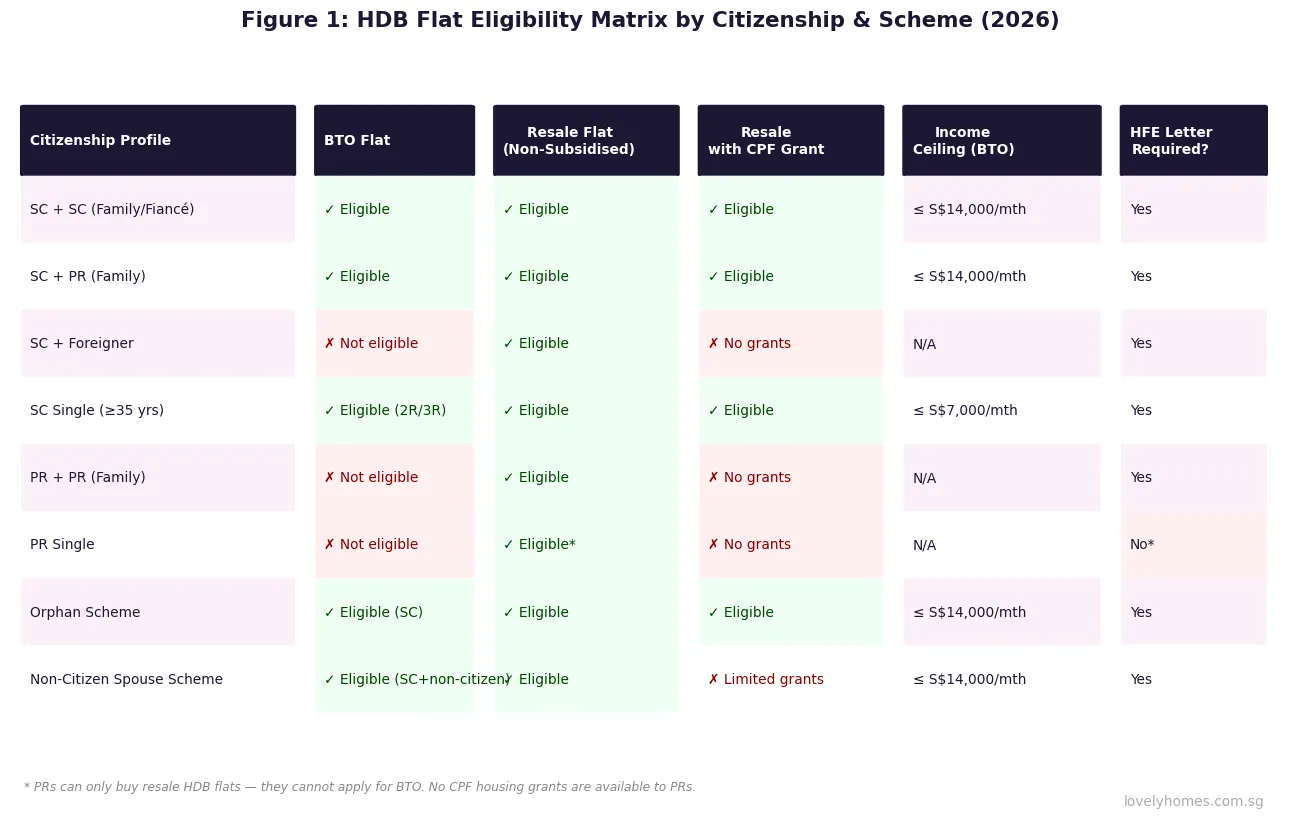
Figure 1: HDB flat eligibility matrix by citizenship and scheme Singapore 2026
Figure 1: HDB flat eligibility by citizenship profile and scheme in Singapore (2026). Green = eligible; red = not eligible for that pathway.

The Seven HDB Eligibility Schemes: Which One Applies to You?

The HDB does not use a single eligibility rule. Instead, it operates seven distinct eligibility schemes, each designed to accommodate a specific family or household configuration. Every applicant must qualify under one of these schemes.

1. Public Scheme: The most common scheme. Requires at least one Singapore Citizen (SC) applicant. The other person(s) in the nucleus (spouse, children, parents, or siblings) can be SCs or Permanent Residents (PRs). This covers the vast majority of married couples and families applying for BTO or resale flats.

2. Fiancé/Fiancée Scheme: Allows SC couples who are not yet married to apply for a BTO flat or book a resale flat together. Both parties must be at least 21 years old and must register their marriage within three months of the resale flat keys being collected, or within three months of the BTO flat booking.

3. Orphan Scheme: For applicants who are single SCs (i.e., unmarried, widowed, or divorced) and whose parents are deceased. The applicant must have at least one sibling who is also unmarried or widowed and who was living with the parents prior to their passing. This scheme allows siblings to pool their eligibility to purchase a flat together.

4. Non-Citizen Spouse Scheme: Allows an SC to buy a flat with a foreign (non-PR, non-SC) spouse. The SC applicant must be the essential occupier; the foreign spouse is named as an occupier. Only a limited selection of HDB flat types is available under this scheme, and CPF grant eligibility is more restricted.

5. Single Singapore Citizen (SSC) Scheme: For SCs aged 35 and above who are single (unmarried, widowed, or divorced). Singles may only purchase 2-Room Flexi flats in non-mature estates under BTO, or any resale flat size. The income ceiling under this scheme is S$7,000 per month.

6. Joint Singles Scheme: Allows two to four single SCs, each aged 35 or above, to buy a flat jointly. The same rules as the SSC Scheme apply; participants must remain as joint owners during the Minimum Occupation Period (MOP).

7. Joint Singles with Widowed/Divorced Persons Scheme: A specific subset allowing a widowed or divorced SC of any age to purchase a resale flat jointly with other single SCs (aged 35+).

Income Ceilings: BTO, Resale and EC
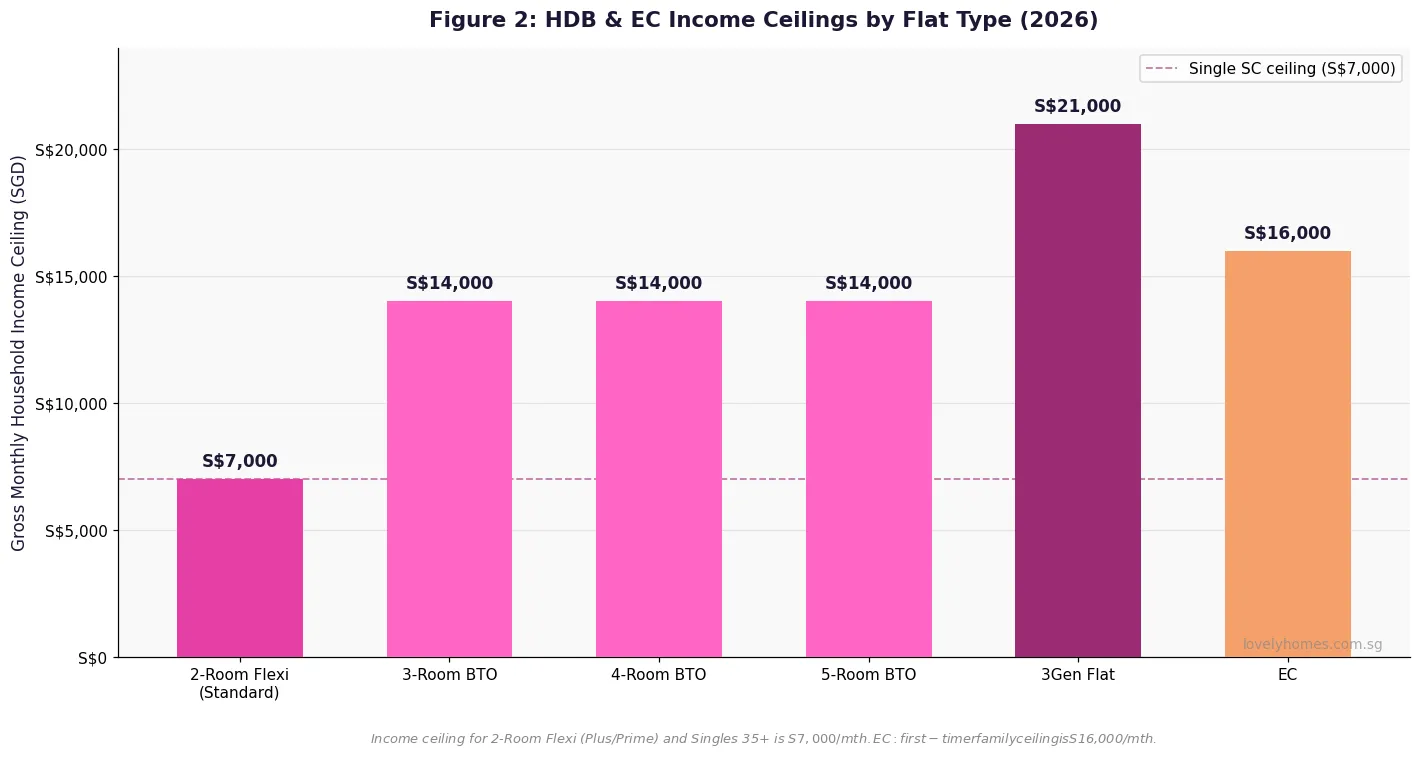
Figure 2: HDB and EC income ceiling by flat type Singapore 2026 BTO eligibility
Figure 2: HDB income ceilings by flat type (2026). Income ceiling for 2-Room Flexi BTO in Plus/Prime classification and Singles 35+ is S$7,000/mth.

Income ceilings for BTO flat purchases exist to ensure subsidised flats are channelled to households that genuinely cannot afford private market alternatives. The ceilings are based on gross monthly household income — the sum of all assessable income of all applicants and essential occupiers listed in the application.

Flat Type / Scheme Income Ceiling (Gross Monthly) Notes
2-Room Flexi BTO (Standard estates) S$14,000 (family) / S$7,000 (singles) Singles 35+ eligible for S$7,000 ceiling
2-Room Flexi BTO (Plus / Prime) S$7,000 (family) Lower ceiling for higher-subsidy estates
3-Room BTO S$14,000 Standard, Plus, and Prime classifications
4-Room BTO S$14,000 Most common flat type
5-Room and 3Gen BTO S$14,000 / S$21,000 (3Gen) 3Gen flats require multi-generational households
HDB Resale (no CPF grant) No income ceiling Any eligible buyer can purchase at market price
HDB Resale (with CPF grants) S$14,000 (family) / S$7,000 (singles) EHG eligibility requires household income check
Executive Condominium (EC) S$16,000 (first-timer family) EC is quasi-private; higher ceiling than HDB BTO

Ownership History and Private Property: The 30-Month Rule

One of the most consequential eligibility rules concerns private property ownership. To prevent higher-income households from simultaneously benefiting from HDB subsidies and private market appreciation, the HDB imposes strict conditions:

  • You and any listed occupier must not currently own private residential property in Singapore or overseas at the time of application.
  • You and any listed occupier must not have disposed of any private residential property (in Singapore or overseas) within the 30 months immediately before the HFE application date (for subsidised BTO or resale with grants). This is the so-called “30-month wait-out period” for private property owners.
  • Owning a commercial property does not affect HDB eligibility, but owning a residential property held through a company or trust may be assessed on a case-by-case basis.

For buyers purchasing a resale flat at market price without any CPF housing grant, the private property ownership rule does not apply — you can own a private property and buy a resale HDB flat simultaneously, subject to paying the applicable stamp duty. However, you would need to sell the private property if you wish to continue owning the HDB flat beyond the applicable occupation period under the terms of the purchase.

MOP Interaction: When Previous Flat Ownership Matters

If you have previously owned an HDB flat, your Minimum Occupation Period (MOP) history affects your eligibility for a subsequent subsidised purchase:

  • You must have fully completed the MOP on your current or most recently sold HDB flat before applying for a new BTO flat.
  • If you are currently within the MOP of an existing HDB flat, you cannot book a new BTO flat — you must wait until the MOP is cleared and the existing flat is sold.
  • Second-timer applicants applying for BTO flats have reduced priority balloting and are subject to a resale levy payable to HDB if they had previously received a housing subsidy on a first subsidised flat.
  • The resale levy ranges from S$15,000 to S$55,000 depending on the flat type of the first subsidised flat, and is payable upon the booking of the second flat.
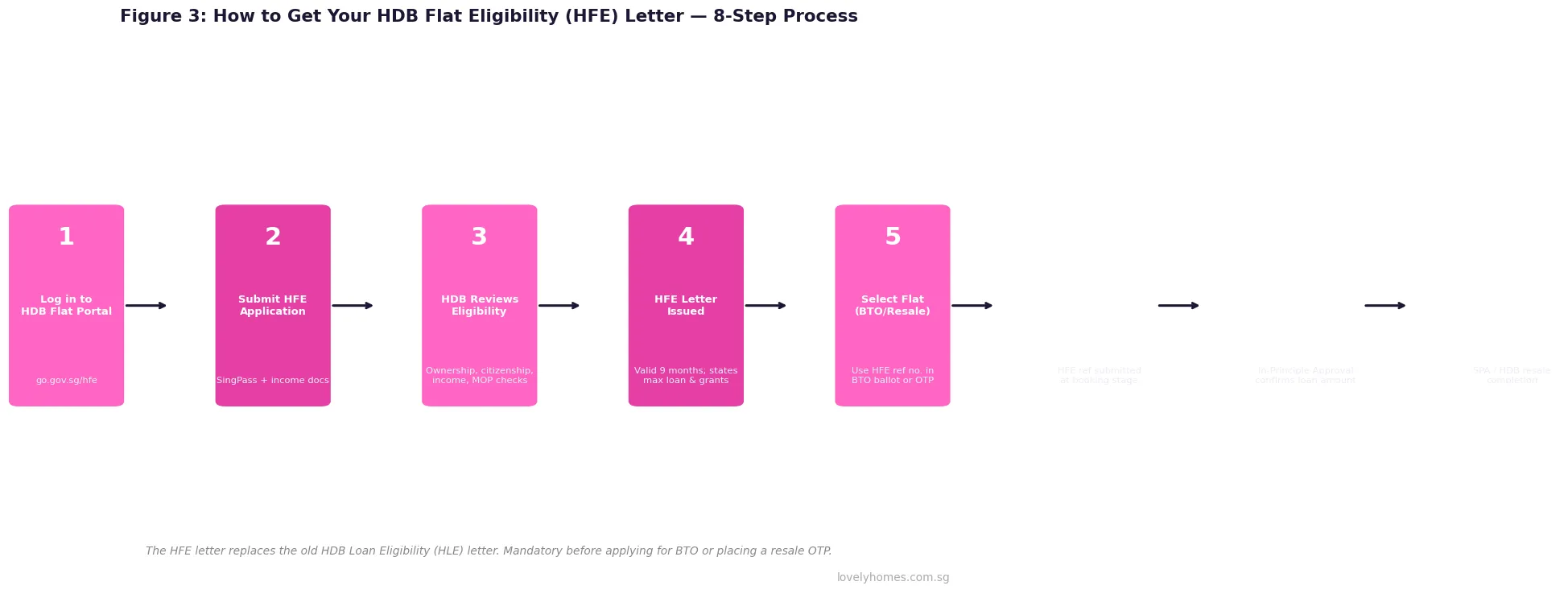
Figure 3: HFE letter 8-step application process flowchart HDB flat eligibility Singapore 2026
Figure 3: The 8-step HDB HFE (Flat Eligibility) letter application process in Singapore (2026). The HFE replaces the old HLE letter and combines loan and grant eligibility in one document.

How to Apply for the HFE Letter: Step-by-Step

Applying for the HFE letter is done entirely online via the HDB Flat Portal at homes.hdb.gov.sg (also accessible at go.gov.sg/hfe). The process requires all applicants to log in via Singpass and provide income documentation. Here is what you need:

  • Singpass login for each applicant.
  • Latest CPF contribution history (auto-retrieved with Singpass consent).
  • Latest payslip(s) for each employed applicant.
  • Income Tax Notice of Assessment (if self-employed or commission-based).
  • Documents for variable income, including bonuses, allowances, and rental income (typically the average over the past 12 months).
  • Details of all outstanding loans (used to assess HDB loan quantum and TDSR/MSR compliance).

Once submitted, HDB typically issues the HFE letter within 5 to 7 working days, though complex applications (e.g., overseas property interests, atypical income structures, or previous flat ownership history) may take longer. The HFE letter is valid for 9 months. If you do not book a flat or sign a resale OTP within this window, you must renew the HFE application.

Worked Example: The Lee Family’s HFE Application and BTO Journey

Mr Lee Jian Ming and Ms Tan Wei Ling are Singaporean citizens, both aged 29, engaged to be married in August 2026. They wish to apply for a 4-Room BTO flat in Bishan under the Fiancé/Fiancée Scheme. Their combined gross monthly income is S$9,200. Neither owns any private property; both are first-time flat buyers.

Step 1 — HFE Application: They apply jointly via the HDB Flat Portal, logging in via Singpass and uploading their payslips. Mr Lee earns S$5,800/mth; Ms Tan earns S$3,400/mth. Combined: S$9,200/mth.

Eligibility check: Income S$9,200 < ceiling S$14,000 ✓. Both are SCs ✓. Neither owns private property ✓. Both are first-timers ✓. Scheme: Fiancé/Fiancée (Public Scheme) ✓.

HFE Letter outcome: Eligible to purchase 4-Room BTO. Eligible for HDB concessionary loan at 2.6% p.a. (pegged to CPF OA rate + 0.1%). Maximum loan quantum: based on TDSR/MSR — HDB assesses their monthly repayment capacity. Eligible for Enhanced CPF Housing Grant (EHG) at S$9,200/mth household income = approximately S$20,000 (tapering scale, family; income ≥ S$9,001 and ≤ S$9,500 band).

At ballot: The Lees apply for a 4-Room flat in Bishan Lakeview (June 2026 BTO exercise, Prime classification). As first-timers under the Fiancé/Fiancée Scheme, they receive a First-Timer Priority ballot advantage. Wait time: approximately 4.5 years (Top in 2031).

Key numbers: BTO price approximately S$680,000 (indicative, Prime D20 4-Room). BSD: S$14,400. No ABSD (first HDB purchase). HDB loan 90% LTV = S$612,000 at 2.6% 25 years = S$2,780/mth. MSR 30%: maximum monthly mortgage S$2,760 — just at the boundary. The couple may consider topping up CPF or adjusting the loan tenure to keep monthly payments within MSR.

Why HFE Matters: Singapore’s Public Housing System and What It Delivers

The HFE framework reflects the extraordinary scope of Singapore’s public housing commitment. The government subsidises HDB flats at prices well below what a private developer would charge for comparable space in comparable locations — a deliberate policy to enable homeownership across virtually all income bands. This subsidy comes with conditions, and the HFE is how those conditions are enforced consistently and fairly.

For buyers, the HFE letter serves another practical function: it gives you certainty before committing. Knowing your exact grant quantum, maximum loan, and MSR headroom before entering the ballot prevents over-commitment and planning failures — a significant improvement over the old system where buyers sometimes discovered eligibility issues only at the booking stage.

By global comparison, few countries provide both a guaranteed right to affordable housing and a structured eligibility framework as rigorous as Singapore’s. The HFE system continues to be refined: the HDB has signalled that digital verification of income will become more automated through MyInfo and CPF integration, reducing the documentation burden on applicants whilst maintaining eligibility integrity.

What Might Change in HDB Eligibility Rules From 2026 Onwards

The HDB and the Ministry of National Development have signalled several potential directions for HDB eligibility policy in the medium term. Observers expect further calibration of the Plus and Prime flat classification framework — introduced in October 2024 — including the possibility of expanding the number of estates with Plus-level restrictions as the scheme matures. The resale levy quantum, last revised in 2006, is overdue for review given the rise in flat prices. The HDB has also mooted reforms to the singles policy, potentially lowering the age threshold below 35 in future BTO launches for certain flat types, in response to demographic changes and the rising number of young singles. Any policy changes would be announced by the Ministry of National Development and take effect for BTO sales exercises from the announcement date.

Frequently Asked Questions

How long is the HFE letter valid, and what happens if it expires?

The HFE letter is valid for 9 months from the date of issue. If you do not apply for a BTO flat or place a resale OTP within this period, you must reapply. The reapplication process is the same as the original application — you log in via the HDB Flat Portal, update your income and financial details, and HDB reassesses your eligibility. Your eligibility may change if your income, property ownership status, or household composition has changed since the last application. There is no limit on the number of times you can renew an HFE application.

Can a Permanent Resident buy a BTO flat in Singapore?

No. Permanent Residents (PRs) are not eligible to apply for BTO flats. PRs may only purchase resale HDB flats, and only if they form a family nucleus with at least one SC (or apply under the PRs-only joint purchase arrangement for resale flats). PRs are not entitled to CPF housing grants. Furthermore, PRs who buy an HDB resale flat must sell the flat before buying or owning any private residential property.

What is the resale levy, and when does it apply?

The resale levy is a payment to HDB made by second-timer applicants who are buying a second subsidised HDB flat (BTO or resale with CPF grants) after having previously received a housing subsidy on a first flat. The levy ranges from S$15,000 (for a previous 2-Room flat) to S$55,000 (for a previous 5-Room or larger flat), indexed to the flat type at time of first subsidy. The levy is intended to reduce the cumulative housing subsidy received by any one household. It is payable at the booking of the second flat and can be paid from CPF OA funds.

Can I apply for the HFE letter if I am currently renting an HDB flat?

Yes. Renting an HDB flat — whether through HDB directly or through a sub-tenancy arrangement from a flat owner — does not disqualify you from applying for the HFE letter or purchasing an HDB flat, provided you meet the other eligibility criteria (citizenship, income, ownership history, age). Your rental status is not assessed as part of the HFE eligibility check. However, note that if you are renting a room in an HDB flat owned by someone else, the owner’s eligibility is what governs the rental — not yours as a tenant.

What happens if my income exceeds the ceiling after I have already booked a BTO flat?

Once you have successfully booked a BTO flat and the booking is confirmed, the income ceiling is assessed at the point of application and booking — not retrospectively at key collection. A temporary increase in income after booking (for example, a salary increment or bonus) does not cause you to lose your booking. However, if you fraudulently misrepresented your income at the time of application, HDB can cancel your booking and take disciplinary action. The CPF grant quantum is fixed at the time the HFE letter is issued; subsequent income changes do not affect the grant amount already confirmed.

Can foreigners buy HDB flats in Singapore?

Foreigners (non-SC, non-PR) cannot buy HDB flats in Singapore under any scheme. They are also ineligible for CPF housing grants. Foreigners may purchase private residential property subject to paying Additional Buyer’s Stamp Duty (ABSD) at 60% of the purchase price (as at 2026). A small category of citizens from countries with bilateral Free Trade Agreements (Iceland, Liechtenstein, Norway, and Switzerland under the EUSFTA/FTA frameworks) may be treated similarly to SCs for ABSD purposes on first purchases, but are still ineligible to purchase HDB flats.

Does the 30-month wait-out period apply if I am giving up my private property through inheritance?

The 30-month wait-out period applies to the disposal of private residential property, not to its acquisition through inheritance. If you inherit private residential property, you are not immediately disqualified from HDB eligibility — however, you must dispose of the inherited private property before your HFE application or BTO booking (within the timeframe specified by HDB). If you are applying for a subsidised BTO flat or resale flat with CPF grants, you cannot hold private property simultaneously. The 30-month clock starts running from the date you legally dispose of the inherited private property, not from the date of inheritance.

Related Articles

Disclaimer

This article is intended for general information purposes only and does not constitute legal, financial, or professional advice. HDB eligibility rules, income ceilings, grant quantum, and related policies described in this article are accurate to the best of our knowledge as at June 2026 but are subject to change by the Housing and Development Board and the Ministry of National Development. Readers should verify all information directly with HDB before making any purchase decisions. Official HDB flat eligibility information is available at hdb.gov.sg. CPF housing grant information is available at cpf.gov.sg. Income tax and stamp duty information is available at iras.gov.sg.
×

HDB Ethnic Integration Policy (EIP) Singapore 2026: Quotas, Eligibility and What Buyers Must Know

HDB Ethnic Integration Policy (EIP) Singapore 2026: Quotas, Eligibility and What Buyers Must Know

⚡ HDB EIP at a Glance — Quick Answer

  • What it is: The HDB Ethnic Integration Policy (EIP) is a quota system introduced in 1989 to maintain racial integration in HDB estates by capping the proportion of each ethnic group in any given block and neighbourhood.
  • Who administers it: HDB (Housing & Development Board), under the Ministry of National Development.
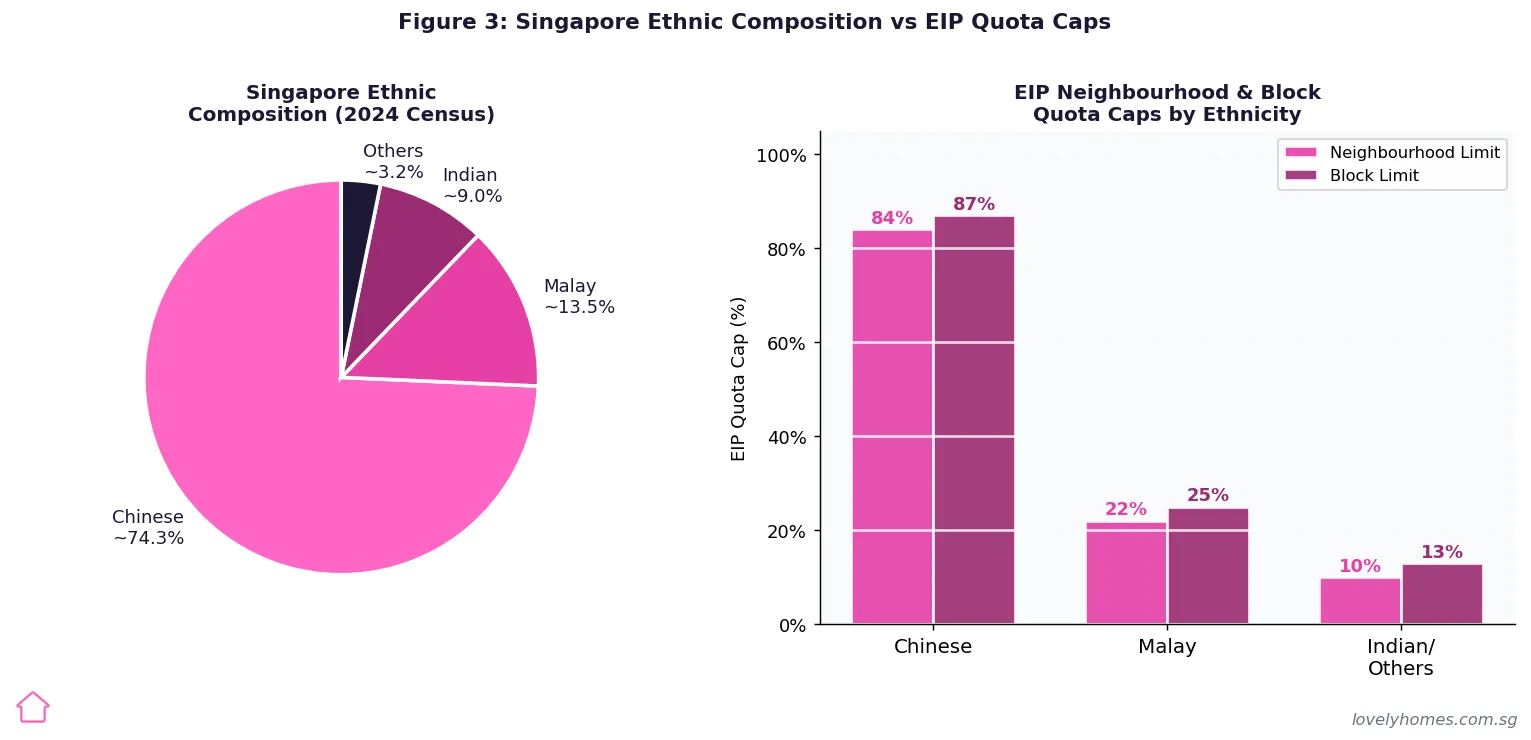
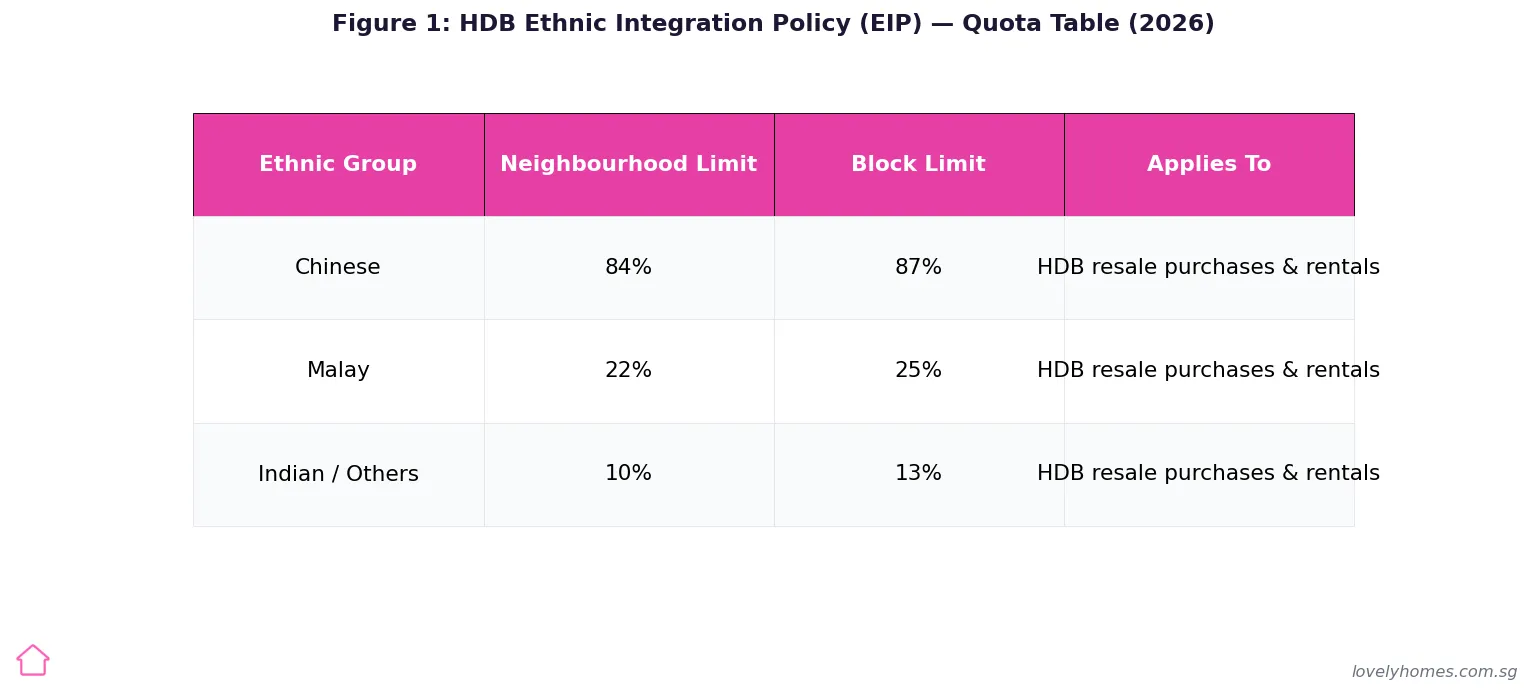
  • Quota limits: Chinese — 87% (block) / 84% (neighbourhood); Malay — 25% / 22%; Indian/Others — 13% / 10%.
  • Who is affected: Anyone buying or renting an HDB resale flat in Singapore — Singapore Citizens (SCs), Singapore Permanent Residents (SPRs), and HDB flat owners renting out.
  • Key risk: If a block or neighbourhood has reached the quota for your ethnic group, you cannot complete the resale purchase for that flat, even after exercising the OTP.
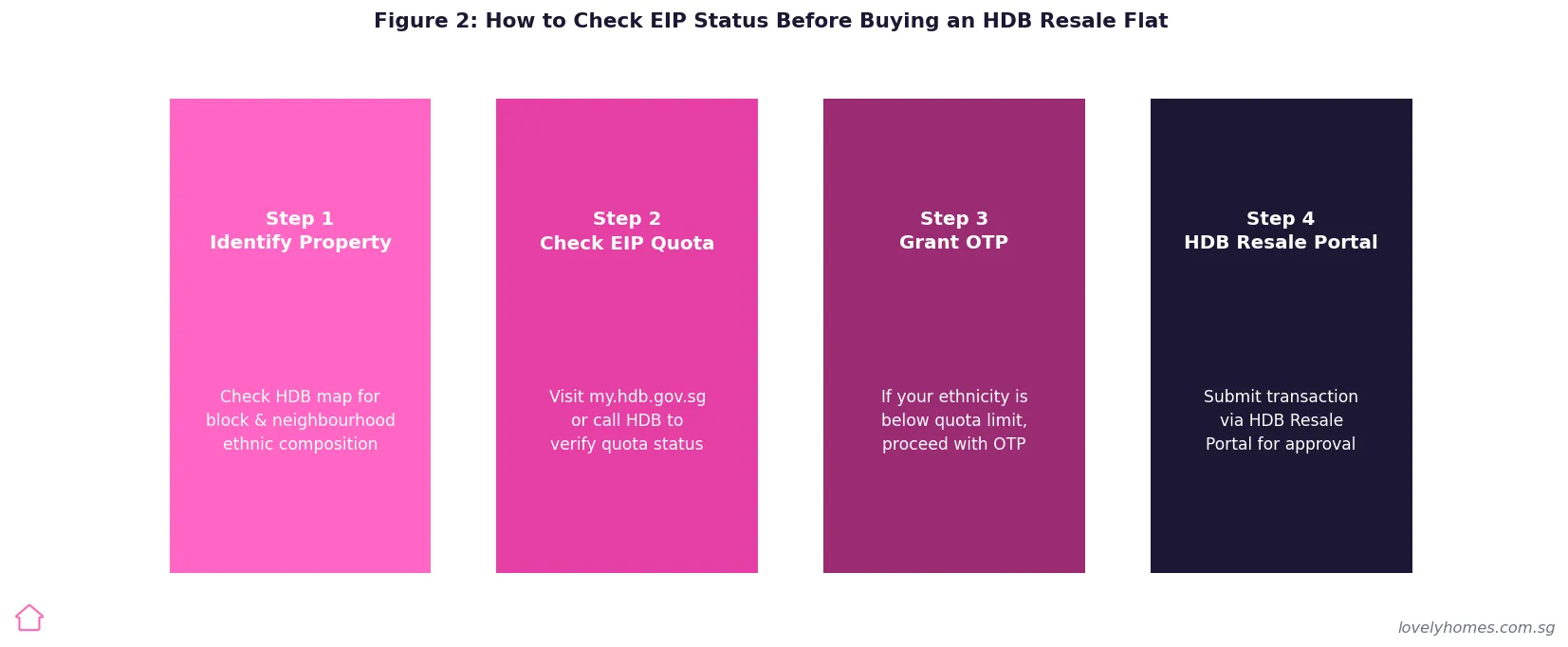
  • How to check: Via the HDB Resale Portal or by calling HDB directly — always check before signing any Option to Purchase (OTP).
  • SPR angle: SPRs face an additional SPR Quota (SPR households cannot exceed 5% of flats per block and 8% per neighbourhood) on top of the EIP.
  • Rental applies too: HDB flat owners must also comply with EIP quotas when renting out their flat or bedrooms.

When Singaporeans buy an HDB resale flat, most focus on price, lease, and proximity to amenities. Far fewer remember to check the Ethnic Integration Policy (EIP) — until they discover, after exercising the Option to Purchase, that the block has already met the quota for their ethnic group.

The EIP is one of Singapore’s most consequential yet least-explained housing policies. Introduced in 1 March 1989 by the HDB under the Ministry of National Development, it was designed to prevent the racial self-segregation that had been emerging in certain estates — a pattern the government concluded was contrary to Singapore’s long-term social cohesion. The policy works by capping the proportion of each ethnic community in any given HDB block and neighbourhood, effectively requiring that no single group dominates any residential area.

For property buyers and sellers, the EIP creates a real constraint: it can limit the pool of eligible buyers for your flat and, conversely, rule out flats you want to purchase. Understanding how it works — and how to check before you sign — is essential for anyone navigating the HDB resale market in 2026.

Figure 1: HDB Ethnic Integration Policy EIP quota table neighbourhood and block limits 2026
Figure 1: HDB Ethnic Integration Policy quota limits by ethnic group — neighbourhood and block levels (2026). Source: HDB.

Origins and Policy Background

By the late 1980s, HDB estates had begun to show ethnic clustering — not through any discriminatory housing allocation, but through the natural tendency of communities to live near one another. Surveys showed that certain blocks in Queenstown and Toa Payoh were becoming more than 90% Chinese or more than 80% Malay. The government, mindful of the 1964 and 1969 racial riots in Singapore’s early independence years, concluded that residential segregation — even voluntary — risked weakening inter-ethnic relationships over time.

The EIP was the policy response. From 1 March 1989, every HDB resale transaction required HDB’s approval, contingent on the buyer’s ethnicity not exceeding the established quota for that block and neighbourhood. The quota limits were set to approximate the national ethnic composition at the time: Chinese ~77%, Malay ~22%, Indian and others ~10% — with built-in flexibility at the block level to allow minor deviations.

The policy has remained largely unchanged in structure since 1989, though HDB reviews the specific quota percentages periodically. The last substantive adjustment was in 2010, when HDB reviewed the neighbourhood-level caps. In 2026, the figures remain: Chinese 84% / 87%, Malay 22% / 25%, Indian/Others 10% / 13% (neighbourhood / block).

How the EIP Works in Practice

The EIP operates at two levels simultaneously: the neighbourhood level and the block level. A buyer’s ethnicity must be within quota at both levels for a transaction to proceed.

Neighbourhood vs Block

A neighbourhood is a planning cluster of approximately 1,000–2,000 HDB households — roughly what most Singaporeans think of as a “precinct” or estate zone. A block is the individual HDB building. The block limit is slightly higher than the neighbourhood limit to give HDB flexibility in managing transitions.

If a Malay buyer wishes to purchase a flat in a block where Malay households already constitute 24% of the block’s flats, the block limit of 25% is not yet breached. However, if the neighbourhood (the surrounding cluster) already has 22% Malay households, the neighbourhood limit is met and the transaction cannot proceed — even though the block itself has room.

Who is Classified as What Ethnicity?

The classification follows the buyer’s (and co-buyers’) NRIC race declaration. For mixed-race individuals or couples, HDB uses the race of the primary buyer — generally the person listed first in the application. For joint purchases by couples of different ethnicities, HDB determines the applicable ethnicity based on its established criteria (generally the husband’s declared race in traditional family arrangements, though this has evolved to reflect modern applicant structures — buyers should check with HDB directly for their specific combination).

Figure 2: Step-by-step process to check HDB EIP status before buying a resale flat
Figure 2: How to check your HDB EIP status before buying a resale flat — a four-step process.

The SPR Quota: An Additional Layer for Permanent Residents

Beyond the ethnic-group quota, Singapore Permanent Residents (SPRs) face a separate SPR Quota. This quota caps the number of SPR households in any HDB block at 5% and in any neighbourhood at 8%. The rationale: HDB flats are subsidised public housing primarily for citizens, and excessive SPR concentration in any area is seen as inconsistent with that purpose.

Practically, this means SPR buyers face two quota checks before any resale purchase: (1) the ethnic-group EIP check, and (2) the SPR Quota check. Either can block a transaction. In more popular estates — Queenstown, Bishan, Toa Payoh, Tampines — SPR quotas can be reached at certain blocks, limiting options for SPR buyers even when the EIP quota is not an issue.

SPRs also cannot buy new BTO flats or Executive Condominiums during the initial launch period. Their housing options are largely confined to HDB resale flats (subject to both quotas) and private residential properties.

EIP Impact on HDB Resale Sellers

For sellers, the EIP can materially affect saleability. If a Chinese seller owns a flat in a block where the Chinese quota has already been met, the pool of eligible buyers is restricted to non-Chinese buyers only — significantly narrowing demand and potentially suppressing the resale price.

This dynamic is known informally as an “EIP-affected” flat. Industry data (from URA and HDB transaction records) suggests that EIP-affected blocks can see resale prices 5–12% below comparable non-affected blocks in the same estate, as the effective buyer pool is reduced. The discount reflects the liquidity premium buyers demand for taking on an asset with constrained future resalability.

Seller tip: Before listing your HDB flat for sale, check the current EIP status of your block and neighbourhood on the HDB Resale Portal. If your block’s dominant ethnic group quota is near its cap, consider whether a price adjustment is needed to attract buyers from the eligible pool, or whether to time your sale to coincide with demographic shifts in the block.

EIP and HDB Rentals

The EIP applies not only to resale transactions but also to approved whole-unit and bedroom rentals of HDB flats. When an HDB flat owner applies to rent out the entire flat or individual bedrooms, HDB checks whether the rental would cause the block or neighbourhood quota for the tenant’s ethnicity to be exceeded. If so, HDB will not approve the rental application for that particular tenant.

This has practical implications for landlords in popular rental estates. A Malay landlord renting to a Malay tenant in a block near its Malay quota limit may have the application declined, requiring them to seek tenants of other ethnicities. The rental EIP check is done through the HDB Resale Portal and typically takes 7–14 business days for approval.

EIP Compliance Summary for Buyers and Sellers (2026)

Scenario EIP Check Required? SPR Quota Check? How to Check Consequence of Breach
SC buying HDB resale Yes No HDB Resale Portal / call HDB Transaction cannot proceed
SPR buying HDB resale Yes Yes (both) HDB Resale Portal / call HDB Transaction cannot proceed
Foreigner buying HDB N/A N/A N/A Foreigners cannot buy HDB
SC/SPR renting out flat Yes (for tenant) Yes if tenant is SPR HDB Resale Portal (rental) Rental application declined
Flat owner listing for sale No — buyer’s responsibility No Inform buyers to check before OTP Buyer may back out post-OTP
New BTO purchase Not applicable Not applicable N/A HDB allocates based on ballot; no EIP for BTO

Worked Example: EIP Blocking a Resale Purchase

👥 The Rajan Family — Indian SC Couple, Tampines

Situation: Mr and Mrs Rajan (both SC, Indian, classified as “Indian/Others” under HDB’s ethnic categories) have identified a 5-room HDB resale flat at Tampines Street 81 for S$748,000. They have obtained an In-Principle Approval (IPA) from OCBC and are ready to exercise the OTP.

EIP check result: Before signing, Mr Rajan checks the HDB Resale Portal. He finds that Block 837, Tampines Street 81 has Indian/Others households at 12.8% of total flats — just below the 13% block limit. However, the neighbourhood ethnic composition shows Indian/Others at 10.2% — exceeding the 10% neighbourhood limit.

Outcome: Even though the block itself has not reached the 13% block cap, the neighbourhood cap of 10% has been breached. HDB would not approve the resale transaction if the Rajans proceed. They must look elsewhere.

Alternative strategy: Mr Rajan checks two neighbouring blocks in the same estate. Block 821 has Indian/Others at 8.9% (block) and the neighbourhood is at 9.6% — both within limits. The Rajans find a comparable 5-room flat there for S$742,000 and proceed with that transaction instead.

Key lesson: Always run the EIP check on the specific block and neighbourhood before exercising the OTP. HDB’s Resale Portal provides this check in real time. If in doubt, ask HDB to confirm in writing before you commit.

Why the EIP Matters for Property Buyers and Investors in 2026

The EIP is one of a small number of housing policies with no private-sector equivalent anywhere in the world — an active government intervention in the resale market to shape residential demographics. Its continued existence in 2026 reflects Singapore’s view that racial integration in housing is a public good that market forces alone will not maintain.

For buyers, this has three practical implications:

1. Pre-OTP due diligence is mandatory. Unlike stamp duty (which is always payable) or CPF usage (which always applies up to the withdrawal limit), the EIP can create an absolute bar to a transaction. There is no waiver, no appeal, and no workaround. The check is free and takes minutes on the HDB Resale Portal — there is no excuse for not doing it before any OTP is signed.

2. Resale value may be constrained. A flat in a block where one ethnic group’s quota is near saturation has a structurally smaller buyer pool. Over time, as Singapore’s ethnic composition shifts slightly (the 2020 and 2030 Censuses have shown gradual changes in distribution), these constraints may ease or tighten. Buyers should assess whether the block they are purchasing in is near any quota caps — not just for their own purchase, but for future resalability.

3. Rental yield could be affected. Landlords whose target tenant demographic is near the block quota may find their rental application declined and be forced to seek tenants from a different group — potentially limiting rental demand and yields in certain micro-locations.

What Might Change: Possible EIP Developments (Speculative)

The EIP has been in place for 37 years as at 2026 and has rarely been publicly debated in Singapore’s political discourse. However, several developments could prompt a policy review in the years ahead:

  • Shifting ethnic composition: Singapore’s 2020 Census showed modest shifts in ethnic composition — the Chinese share declined slightly from 76.8% (2010) to 75.9%; the Malay share remained at ~15%; Indian/Others grew slightly. If these trends continue, HDB may adjust quota caps to reflect the updated demographic baseline.
  • New citizen intake: Singapore’s naturalisation programme brings in citizens from a variety of ethnic backgrounds not represented in the original EIP framework. If new citizen categories grow significantly, HDB may need to refine how “Indian/Others” is classified.
  • Digital OTP reforms: HDB has been digitising the resale process. It is plausible that future HDB Resale Portal upgrades will integrate real-time EIP checks directly into the OTP workflow, reducing the risk of buyers unknowingly exercising an ineligible OTP.

Figure 3: Singapore ethnic composition vs EIP neighbourhood and block quota caps by ethnicity 2026
Figure 3: Singapore ethnic composition (2024 Census) vs HDB EIP quota caps (neighbourhood and block levels). Sources: Department of Statistics Singapore; HDB.

Frequently Asked Questions

Can I buy any HDB resale flat I want, regardless of the EIP?

No. The EIP creates a hard quota that HDB enforces at the point of resale approval. If your ethnic group’s quota has been reached at either the block or neighbourhood level, HDB will not approve the transaction. The OTP is a private agreement between buyer and seller, but HDB’s approval is required for the actual transfer of the flat — so exercising an OTP on an EIP-blocked flat effectively voids the transaction, and the buyer may lose the OTP option fee (typically 1% of the purchase price, capped at S$1,000). Always check before you sign.

Does the EIP apply to new BTO flats?

No. The EIP does not apply to HDB BTO (Build-to-Order) flat purchases. BTO allocation is managed through HDB’s ballot system, and HDB itself manages the ethnic balance during the initial allocation process. The EIP only becomes relevant when BTO flat owners subsequently sell in the open resale market during or after the Minimum Occupation Period (MOP). At that point, the resale flat enters the open market and EIP rules apply to the buyer’s purchase.

What happens if I am of mixed ethnicity?

HDB uses the race as declared on your NRIC for EIP purposes. For mixed-race individuals, the NRIC declaration (made at birth or at the point of citizenship registration) governs which quota is checked. If you have changed your race declaration on your NRIC (permissible under certain circumstances), the updated declaration applies. For couples where both buyers are of different ethnicities, HDB determines the applicable ethnic classification based on its guidelines — typically the primary applicant’s declared race. If this creates ambiguity for your situation, call HDB directly to confirm before exercising any OTP.

Can EIP quotas be waived or appealed?

Generally, no. The EIP is a statutory policy administered by HDB, and there is no formal waiver or appeal process for buyers who cannot meet the quota for a particular block or neighbourhood. The solution is to identify an alternative block or neighbourhood where the quota has not been reached. HDB occasionally adjusts the boundaries of planning neighbourhoods when redevelopment occurs, which can change quota calculations for affected blocks — but this is an administrative restructuring, not an individual waiver.

Does the EIP affect Executive Condominiums (ECs)?

ECs are a hybrid housing type — publicly developed by HDB but privately managed after completion. The EIP does apply to ECs during their public-housing phase (the first 5 to 10 years, prior to full privatisation). Once an EC has been privatised (after the 10-year mark), it is treated as private residential property and the EIP no longer applies to resale transactions. Given the EC MOP change in May 2026 (MOP extended from 5 to 10 years, privatisation extended from 10 to 15 years), the EIP-applicable period for new ECs has in effect been extended alongside these changes.

How do I check the EIP status before buying an HDB resale flat?

The fastest method is to log in to the HDB Resale Portal (resale.hdb.gov.sg) using your SingPass, navigate to the “Check Resale Conditions” section, and enter the block and street address of the flat you are interested in. The portal will return the current ethnic composition percentages and confirm whether your ethnic group is within the quota. Alternatively, you can call HDB at 1800-225-5432 (toll-free) and request an EIP check for the specific address. Always get confirmation in writing (via email or the portal’s printable report) before exercising your OTP.

Does the EIP affect the resale value of HDB flats?

It can. A flat in a block where the dominant ethnic group’s quota has been met effectively has a smaller eligible buyer pool — only buyers of the non-dominant ethnic groups can purchase. This structural limitation on demand can depress the flat’s market price relative to comparable flats in non-quota-affected blocks. The discount is hard to quantify precisely (it varies by estate, ethnic mix, and local demand), but it is a real consideration for buyers making a long-term investment decision. Before purchasing, assess not just your own EIP eligibility, but whether the block’s current composition suggests that future resalability may be constrained.

Disclaimer: This article is for general informational purposes only and does not constitute legal, financial, or property advice. The Ethnic Integration Policy (EIP) is administered by the Housing & Development Board (HDB) under the Ministry of National Development. EIP quotas and eligibility criteria are subject to change by HDB at any time. Readers must verify the current EIP status of any specific block and neighbourhood directly with HDB via the HDB Resale Portal (www.hdb.gov.sg) or by calling HDB at 1800-225-5432 before exercising any Option to Purchase. Ethnic classification rules may vary for individuals in specific circumstances — consult HDB directly for your situation. LovelyHomes recommends consulting a CEA-registered property agent and a qualified legal adviser before entering into any property transaction.

×

Click anywhere to close

Translate »