HDB 2-Room Flexi Flat Singapore 2026: Complete Guide for Singles and Seniors

HDB 2-Room Flexi Flat Singapore 2026: Complete Guide for Singles and Seniors

Quick Answer — HDB 2-Room Flexi Flat at a Glance

  • What it is: A compact HDB flat type (approx. 36–45 sqm) with flexible lease options, designed for seniors aged 55 and above or eligible singles aged 35 and above.
  • Lease flexibility: Seniors may choose a short lease of 15, 20, 25, 30, 35, 40 or 45 years; singles and couples buy on the standard 99-year lease.
  • BTO price range: From approximately S$45,000 (senior, 15-year lease, non-mature estate) to S$140,000 (single, 99-year lease, non-mature estate BTO). Resale 2-room flats are priced by the open market.
  • Who can buy: SC singles (35+), SC/SPR couples where at least one is SC, and SC households aged 55+ (short-lease sub-type).
  • Income ceiling: S$7,000/mth for singles; S$14,000/mth for households.
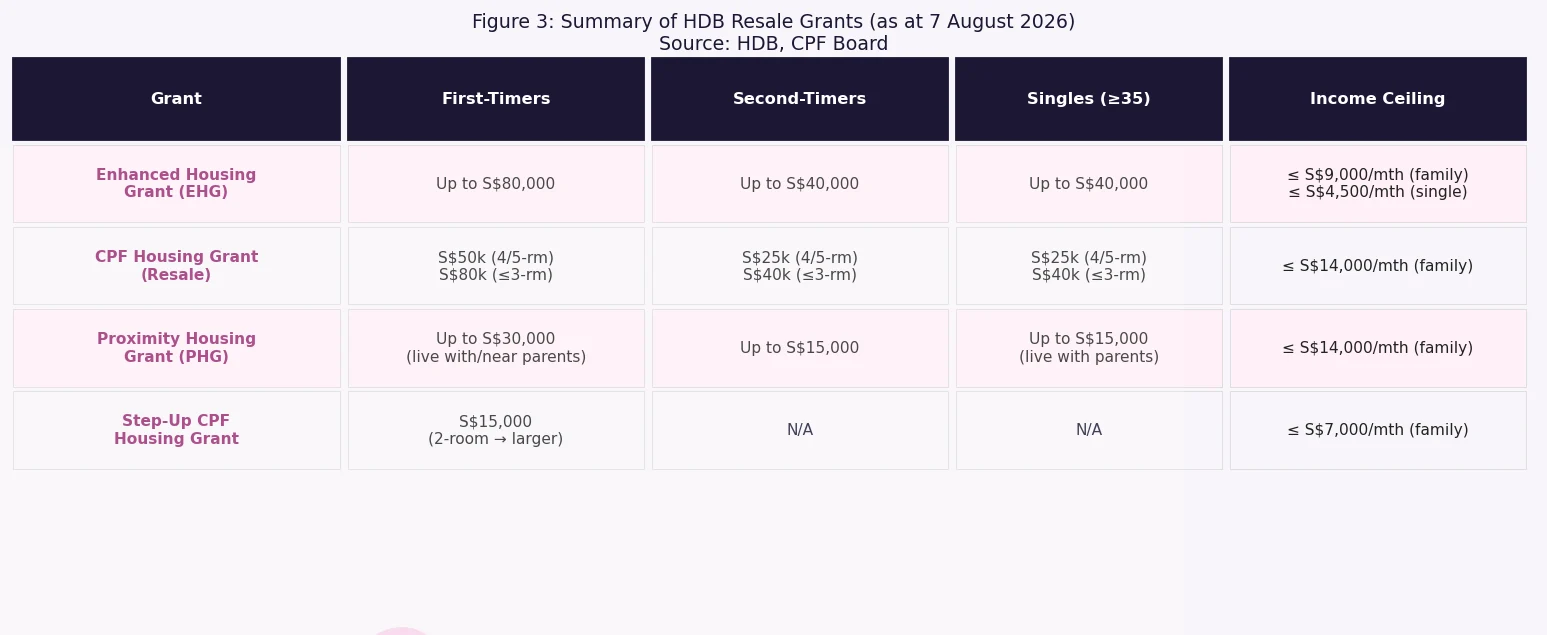
  • Grants available: Enhanced Housing Grant (EHG) up to S$80,000 for eligible first-timers; Proximity Housing Grant (PHG) up to S$30,000 for resale buyers near family.
  • CPF usage: CPF Ordinary Account savings may be used for downpayment and monthly instalments, subject to CPF withdrawal limits and the flat’s remaining lease covering the youngest buyer to age 95.
  • MOP: Standard 5 years for regular 2-room Flexi flats; subletting of the whole flat is not allowed during MOP.
  • Resale restriction: Short-lease flats (below 99 years) may only be sold back to HDB — they are not on the open resale market.
  • Key regulator: All 2-Room Flexi applications are managed by the Housing & Development Board (HDB) at hdb.gov.sg.

What Is the HDB 2-Room Flexi Flat?

The HDB 2-Room Flexi flat is a purpose-designed public housing type introduced in 2015 to replace the earlier 2-room flat. Measuring between 36 and 45 square metres, it is the smallest flat type offered in Singapore’s public housing system. The “Flexi” in its name refers to the scheme’s most distinctive feature: eligible buyers aged 55 and above may opt for a short, right-sized lease rather than committing to the standard 99-year term.

The 2-Room Flexi was designed primarily in response to Singapore’s rapidly ageing population and the Government’s broader policy aim of allowing seniors to right-size their housing expenditure. A senior who no longer needs a large flat — or who wishes to monetise equity from an existing property — can purchase a short-lease 2-Room Flexi for a fraction of the cost of a standard flat, freeing up capital for retirement while remaining in the public housing ecosystem.

At the same time, the scheme remains open to younger singles aged 35 and above on a 99-year lease basis, giving unmarried Singaporeans their first route to public homeownership without the need to form a household with another person. This makes the 2-Room Flexi structurally significant as the only HDB flat type that a single Singaporean citizen aged 35 or above may purchase directly from HDB in a Build-To-Order (BTO) exercise.

HDB 2-Room Flexi BTO prices by lease option 2026 bar chart
Figure 1: HDB 2-Room Flexi BTO Indicative Prices by Lease Option (2026). Prices are for non-mature estate BTO exercises and will vary by project location, storey and prevailing grant deductions. Source: HDB.

Two Sub-Types of the 2-Room Flexi Flat

The 2-Room Flexi scheme comprises two distinct sub-types, which differ fundamentally in lease term, eligible buyers and exit options:

Feature Standard Lease (99yr) Short Lease (15–45yr)
Who may apply SC singles (35+), SC/SPR couples SC households aged 55+
Lease term 99 years (from land grant) 15, 20, 25, 30, 35, 40 or 45 years (buyer’s choice)
Indicative BTO price From ~S$138,000 (non-mature) From ~S$45,000 (15yr, non-mature)
CPF usage Yes, subject to lease-CPF rules Yes, subject to lease-CPF rules
Resale on open market Yes, after 5-year MOP No — must be sold back to HDB
Subletting (whole flat) After MOP, with HDB approval Not permitted
Key grant available EHG (up to S$80k), PHG Silver Housing Bonus (SHB)

Short-lease buyers should note the critical exit restriction: unlike standard 99-year flats, a flat purchased on a short lease cannot be sold on the open resale market after the MOP. Instead, it must be returned to HDB at the end of the chosen lease term (the flat effectively reverts to HDB), or it may be sold back to HDB before lease expiry if the owner wishes to exit early. This means short-lease 2-Room Flexi flats carry zero capital appreciation potential and are explicitly designed as consumption housing rather than investment assets.

Eligibility — Who Qualifies?

The Housing & Development Board (HDB) sets out clear eligibility conditions for the 2-Room Flexi scheme. As at 2026, the key criteria are:

HDB 2-Room Flexi eligibility matrix 2026
Figure 2: HDB 2-Room Flexi Eligibility Matrix (2026). Sources: HDB, CPF Board. Conditions are subject to change; verify at hdb.gov.sg before applying.

For the Standard 99-Year Lease (Singles and Couples)

  • Citizenship: At least one applicant must be a Singapore Citizen. SPR singles may not apply for a BTO 2-Room Flexi; they may only purchase on the resale market.
  • Age: At least 35 years of age for singles; standard family nucleus formation rules apply for couples (21 years and above).
  • Income ceiling: Gross monthly household income must not exceed S$7,000 for singles or S$14,000 for households (combined all income sources).
  • Property ownership restriction: Applicants must not own or have disposed of any private residential property (local or overseas) within the 30 months preceding application.
  • Existing HDB flat: Singles who currently own an HDB flat and are applying as first-time applicants may still be eligible, subject to conditions regarding the sale of the existing flat.

For the Short Lease (Seniors Aged 55+)

  • Citizenship: Singapore Citizens only.
  • Age: All applicants must be aged 55 or above at point of application.
  • Chosen lease term: The lease selected must cover the youngest applicant to at least age 95. For a 55-year-old, the minimum viable lease is therefore 40 years (55 + 40 = 95). HDB enforces this as a hard minimum.
  • Income ceiling: S$14,000/mth household (same as standard). No income ceiling applies if buyers intend to monetise their flat through the Silver Housing Bonus (SHB) scheme.
  • Existing property: Senior applicants may proceed even if they currently own an HDB flat, provided they commit to selling the existing flat (or subletting where applicable) within a prescribed period after collecting keys.

CPF Usage and Loan Mechanics

CPF Ordinary Account (OA) savings may be used to fund both the downpayment and monthly loan repayments for 2-Room Flexi purchases, subject to the CPF lease coverage requirement: the flat’s remaining lease must be able to cover the youngest buyer to age 95 for full CPF usage to be available.

For a 99-year BTO flat, this is rarely a constraint for applicants under 60. For short-lease buyers, the arithmetic matters. A 60-year-old buying a 35-year lease flat (lease ends when buyer is 95) meets the threshold exactly, allowing full CPF usage. A 60-year-old buying a 30-year lease (expires at 90) does not meet the threshold and will face CPF withdrawal limits, meaning more cash is required for the purchase.

The HDB Concessionary Loan at 2.60% per annum is available for eligible buyers of 2-Room Flexi flats, subject to the standard HLE (HDB Loan Eligibility) letter application and the Mortgage Servicing Ratio (MSR) test: monthly repayments must not exceed 30% of gross monthly household income.

Grants Available for 2-Room Flexi Buyers

Grant Who It Applies To Maximum Amount Eligibility Condition
Enhanced Housing Grant (EHG) First-timer SC buying BTO or resale S$80,000 (individual) / S$160,000 (family) Income ≤ S$9,000/mth; continuous employment ≥12 months
Family Grant SC/SC or SC/SPR couples, resale S$50,000 (SC/SC) / S$40,000 (SC/SPR) First-timer family nucleus; income and property conditions apply
Proximity Housing Grant (PHG) Resale buyers living near/with parents S$30,000 (within 4km) / S$20,000 (same town) At least one applicant lives within 4km of parents/children
Silver Housing Bonus (SHB) Seniors selling existing flat to right-size Up to S$30,000 cash bonus 55+; sold existing flat; purchase ≤ 3-room flat; top up to CPF RA
Singles Grant SC single buying resale ≤ 5-room S$25,000 35+, first-timer, income ≤ S$7,000/mth

Grant stacking rules are complex and income-dependent. As a general principle, BTO buyers may access the EHG only (Family Grant is for resale), while resale buyers may stack the Family Grant, EHG and PHG subject to eligibility. Full grant conditions are published by HDB at hdb.gov.sg and change periodically in line with policy reviews.

HDB 2-Room Flexi purchase price versus net cost after grants 2026
Figure 3: HDB 2-Room Flexi — Indicative Purchase Price vs Net Cost After Grants, by Buyer Profile (2026). Sources: HDB, CPF Board. Amounts are indicative; actual grants depend on household income, citizenship status and first-timer eligibility at point of application.

Worked Example: Senior Buying a 2-Room Flexi (Short Lease)

Case Study — Mr Tan (SC, 62), Right-Sizing to a 2-Room Flexi

Profile: Mr Tan, Singapore Citizen aged 62, retired, monthly income S$1,800 (CPF LIFE payout). Currently owns a 4-room HDB flat in Bishan (sold for S$720,000, net proceeds after CPF refund: S$210,000 cash). No outstanding housing loan.

Target: 2-Room Flexi BTO, Hougang estate (non-mature), 35-year lease (youngest occupier Mr Tan, aged 62 → lease expires at age 97 → meets the age-95 threshold for full CPF usage). Indicative BTO price: S$100,000.

Silver Housing Bonus (SHB) eligibility:

  • Sold 4-room flat: ✓
  • Right-sizing to ≤ 3-room: ✓
  • Top-up to CPF Retirement Account (RA): required for SHB disbursement
  • SHB amount: S$20,000 cash (subject to RA top-up of S$60,000 minimum from sale proceeds)

Financing:

  • Purchase price: S$100,000
  • Less EHG (income S$1,800/mth, eligible): S$20,000 (indicative; exact amount determined by HDB based on income at time of application)
  • Net purchase: S$80,000
  • HDB loan (80% LTV): S$64,000 @ 2.60% over 25 years
  • Monthly repayment: ~S$291/mth
  • MSR check: S$291 / S$1,800 = 16.2% — PASS

Upfront cash:

  • 20% downpayment: S$16,000 (payable via CPF OA, as lease covers to age 97)
  • BSD on S$100,000: 1% × S$100,000 = S$1,000
  • Legal and admin fees: ~S$1,500
  • Total cash needed: approximately S$2,500 (remaining from CPF OA and cash)

Outcome: Mr Tan retains approximately S$210,000 net cash from the sale of his Bishan flat, gains S$20,000 SHB cash, and moves into a new flat with monthly repayments of S$291 — effectively freeing up substantial retirement capital while maintaining HDB homeownership in a new estate close to existing community networks.

Note: SHB amounts, EHG amounts, CPF withdrawal limits and HDB loan eligibility are all subject to prevailing HDB policy at time of application. The above is a simplified indicative illustration only.

What the 2-Room Flexi Scheme Means for Singapore’s Housing Market

The 2-Room Flexi scheme plays a structural role in Singapore’s housing policy architecture. For seniors, it provides a formal right-sizing pathway that releases larger flats back to the resale pool — supporting supply for young families who need more space. For singles, it is the de facto entry point into HDB ownership, filling a gap left by the original public housing framework that was designed around family nuclei.

Internationally, Singapore’s right-to-buy-back policy for short-lease flats is unusual. Most countries with public housing allow open-market resale of all units regardless of lease structure. Singapore’s decision to ring-fence short-lease stock within the HDB system prevents speculative resale of taxpayer-subsidised elderly housing and keeps the scheme’s fiscal cost manageable — but it also means seniors must plan carefully: once a short-lease flat is purchased, capital is largely locked in until the lease expires or the flat is sold back to HDB at a regulated price.

Looking ahead, the Government has signalled continued refinement of the Flexi scheme as the population ages. The Lease Buyback Scheme (LBS) — which allows seniors to sell part of their remaining lease back to HDB in exchange for CPF RA top-ups — complements the Flexi scheme and is likely to be expanded further. Seniors nearing retirement should consider modelling both options (right-sizing via 2-Room Flexi vs staying in their existing flat and using LBS) as part of a holistic retirement planning exercise.

Frequently Asked Questions

Can a single person buy a 2-Room Flexi flat?

Yes. Singapore Citizens aged 35 and above who are single may purchase a 2-Room Flexi flat on the standard 99-year lease basis, either through a BTO exercise or on the open resale market. This is one of the very few HDB flat types available to singles. SPR singles may only purchase 2-Room Flexi flats on the resale market (not BTO). The income ceiling for single applicants is S$7,000/mth gross. Grant eligibility (EHG, Singles Grant for resale) depends on first-timer status, income and other conditions set by HDB. Note that under the HDB eligibility framework, singles purchasing a 2-Room Flexi BTO may only apply in non-mature estates — mature estate BTO exercises for 2-Room Flexi flats are reserved for seniors (55+) on the short-lease sub-type.

Can I sell my 2-Room Flexi flat on the open market?

It depends on the lease type. If you purchased a standard 99-year lease 2-Room Flexi flat, you may sell it on the open HDB resale market after completing the 5-year Minimum Occupation Period (MOP) — the same rules as any other HDB resale flat, subject to EIP quotas and SPR quota restrictions. However, if you purchased a short-lease 2-Room Flexi flat (15–45 year lease), it cannot be sold on the open market at any time. It may only be returned to HDB at the end of the chosen lease or sold back to HDB before lease expiry at a regulated price. This is a critical distinction that buyers must understand before committing.

What is the Minimum Occupation Period for a 2-Room Flexi flat?

The Minimum Occupation Period (MOP) for a 2-Room Flexi flat is 5 years from the date of key collection (or from the date the last registered occupier moves in, if later). During the MOP, the entire flat may not be sublet, though individual rooms may be rented out with HDB’s prior approval. The MOP requirement applies regardless of whether the flat is purchased on a 99-year or short-lease basis. After completing the MOP, the 99-year lease flat may be listed for open-market resale; the short-lease flat may only be returned to HDB. There is no provision to reduce the MOP for 2-Room Flexi flats under current policy.

How does the Silver Housing Bonus work with the 2-Room Flexi?

The Silver Housing Bonus (SHB) is a cash incentive for seniors who right-size from a larger HDB flat to a smaller one (3-room or smaller, including the 2-Room Flexi). Eligible seniors receive a cash bonus of up to S$30,000, paid by HDB, when they use a portion of their flat sale proceeds (typically S$60,000 or more) to top up their CPF Retirement Account (RA) — which in turn boosts their monthly CPF LIFE payouts in retirement. The SHB is designed to be used in conjunction with a 2-Room Flexi purchase: a senior sells their 4- or 5-room flat, receives the SHB cash bonus, tops up their CPF RA for higher LIFE payouts and moves into a new, fully subsidised Flexi flat. The exact SHB amount depends on the total CPF RA top-up made and prevailing policy parameters at time of application. Full details at hdb.gov.sg.

Can I use CPF to buy a 2-Room Flexi short-lease flat?

Yes, CPF Ordinary Account (OA) savings may be used for the downpayment and monthly loan repayments, but only if the flat’s remaining lease is sufficient to cover the youngest buyer to age 95. For example, a 58-year-old buying a 37-year lease flat (58 + 37 = 95) satisfies the threshold and can use CPF OA in full. A 60-year-old buying a 30-year lease flat (expires at age 90) does not meet the threshold and faces CPF withdrawal restrictions, requiring more cash out of pocket. Buyers should model the CPF usage calculation before selecting their preferred lease term, and HDB’s loan eligibility framework should be confirmed via an HLE application before committing to a BTO ballot or resale OTP.

What happens to the flat when the short lease expires?

When a short-lease 2-Room Flexi flat’s lease expires, ownership of the flat reverts to HDB. There is no compensation payable to the former buyer — the flat’s value was fully priced into the discounted purchase price, and the buyer would have received use of the property for the entire chosen lease period. This is analogous to an annuity: the buyer “spent” the purchase price buying the right to live in the flat for a defined number of years. If the owner passes away before the lease expires, the remaining lease value may be inherited by eligible successors (typically a spouse) subject to HDB’s inheritance and transfer rules. The Estate will not receive residual cash value for the remaining lease.

Are 2-Room Flexi flats available in mature estates?

2-Room Flexi BTO flats are launched in both mature and non-mature estates, but with different restrictions. In non-mature estates, both singles (99-year lease) and seniors (short lease) may apply. In mature estates, the BTO 2-Room Flexi allocation is typically prioritised for seniors aged 55 and above on the short-lease sub-type, with a smaller quota for singles. Applications by singles in mature-estate BTO exercises compete in a higher-demand ballot environment. For the open resale market, there are no estate restrictions — singles and couples may purchase any available 2-Room Flexi resale flat islandwide, subject to EIP and SPR quota availability in the target block. Mature estate 2-Room Flexi resale flats command a premium of 20–40% over comparable non-mature estate units due to location and amenity access.

Related Articles

Disclaimer

The information in this article is provided for general informational and educational purposes only as at July 2026 and does not constitute financial, legal or property advice. HDB eligibility conditions, grant amounts, lease rules and CPF usage limits are set by the Housing & Development Board, CPF Board and relevant government agencies and are subject to change without notice. The worked example figures are indicative only and will differ based on individual circumstances. Readers should refer to HDB (hdb.gov.sg), CPF Board (cpf.gov.sg) and IRAS (iras.gov.sg) for authoritative and current information, and should consult a CEA-registered property agent and a licensed financial adviser before making any housing or retirement planning decision.
×

Click anywhere or press Esc to close

HDB Resale Levy Singapore 2026: Amounts, Who Pays, Exemptions and How It Works

HDB Resale Levy Singapore 2026: Amounts, Who Pays, Exemptions and How It Works

HDB resale levy Singapore 2026 complete guide
Figure 0: HDB Resale Levy Singapore 2026 — Complete Guide to Amounts, Exemptions and How It Works

Quick Answer — HDB Resale Levy at a Glance

  • The HDB Resale Levy is a payment required when a second-timer household buys a new subsidised HDB flat or an Executive Condominium (EC) unit after previously enjoying a housing subsidy.
  • Levy amounts range from S$15,000 (for a 2-Room Flexi sold) to S$55,000 (for a DBSS flat sold), with EC buyers paying 5% of resale price (capped at S$55,000).
  • It is paid by deduction from the CPF refund when your first flat is sold — you do not write a cheque.
  • Exemptions apply if you bought your first flat on the resale market without any CPF Housing Grant, inherited the flat, or received it via a court order.
  • The levy does not apply when buying a private property — only a second subsidised HDB flat or EC triggers it.
  • Getting the levy wrong can delay your second flat booking and result in owing HDB cash if your CPF proceeds are insufficient.
  • From 3 March 2006, all levy amounts were fixed at the flat-type level — they are not a percentage of the first flat’s resale price (except for EC).

What Is the HDB Resale Levy?

The HDB Resale Levy is a subsidy recovery mechanism administered by the Housing & Development Board (HDB) under Singapore’s public housing framework. When the government provides a housing subsidy — such as the Central Provident Fund (CPF) Housing Grant, the Additional CPF Housing Grant (AHG), the Special CPF Housing Grant (SHG), or the Enhanced CPF Housing Grant (EHG) — it does so on the understanding that this benefit is tied to one subsidised flat per household. If that household later purchases a second subsidised flat or Executive Condominium unit, they are required to “return” a portion of the earlier subsidy benefit in the form of the resale levy.

The policy was introduced to ensure that public housing subsidies are targeted at households that genuinely need them and to maintain the long-term sustainability of Singapore’s public housing system. HDB administers the levy and collects it automatically at the point of sale of the first flat — it is not a separate bill sent to you but a deduction from your CPF Ordinary Account (OA) proceeds before they are refunded.

As at July 2026, the levy framework has remained stable since the flat-type rate schedule was fixed on 3 March 2006. Understanding it correctly is essential for any second-timer household planning to upgrade or right-size within the public housing system.

HDB resale levy amounts by flat type 2026 — S$15,000 to S$55,000 table
Figure 1: HDB Resale Levy Amounts by Flat Type Sold (2026). Fixed rates since 3 March 2006; EC applies a 5% rate with S$55,000 cap. Source: HDB Singapore.

Who Pays the HDB Resale Levy?

You are required to pay the resale levy if all three of the following conditions are met:

  1. You (or your co-applicant, spouse, or essential occupier) previously purchased a subsidised HDB flat — meaning you received a CPF Housing Grant, AHG, SHG, EHG, Step-Up CPF Grant, or bought directly from HDB at a subsidised price in a Build-To-Order (BTO) or Selective En-bloc Redevelopment Scheme (SERS) exercise.
  2. You subsequently sold that subsidised flat (or are in the process of doing so).
  3. You are now applying to buy a second subsidised flat from HDB — either a new BTO flat, a SERS flat, a Design, Build and Sell Scheme (DBSS) unit, or an Executive Condominium (EC) unit from a developer.

The key point is that the levy applies to subsidised second-time purchases only. If your second property is a private condominium, a landed home, a resale HDB flat (from the open market), or any commercial property, no resale levy is chargeable. Many upgraders mistakenly believe the levy applies whenever they buy a second property — it does not. It is specifically a tax on accessing public subsidies a second time.

Couples and Joint Applications

For married couples and joint flat buyers, the resale levy status of either party is taken into account. If either the main applicant or the co-applicant previously received a housing subsidy, the levy is applicable to the household. This prevents a household from circumventing the levy simply by swapping the person listed as main applicant on the second purchase. The rule is designed to capture the household’s cumulative subsidy benefit, not merely the individual’s.

Singles

Singles purchasing under the Single Singapore Citizen (SSC) scheme — eligible for 2-Room Flexi BTO flats — are also subject to the levy if they previously benefited from a housing subsidy. As the levy amount for a 2-Room Flexi flat is S$15,000, it is still a meaningful cost for solo buyers planning to upsize.

HDB Resale Levy Amounts (2026)

The levy amount depends on the type of flat you previously sold. Since 3 March 2006, the rates have been fixed at the following flat-type level:

Flat Type Sold (First Flat) Resale Levy Payable Notes
2-Room Flexi S$15,000 Applies to subsidised 2-Room Flexi BTO flats
3-Room S$30,000
4-Room S$40,000 Most common upgrader profile
5-Room S$45,000
Executive Flat S$50,000 HDB Executive flat (not EC)
DBSS Flat S$55,000 Design, Build and Sell Scheme (discontinued)
EC (Executive Condominium) 5% of resale price Capped at S$55,000; applies after the EC’s 5-year MOP when sold on the open market

One common source of confusion is that the levy is based on the type of flat you sold, not on its resale price. Whether you sold your 4-Room flat for S$500,000 or S$900,000, the levy is always S$40,000. The EC rule is the sole exception: there the levy is 5% of the EC’s resale price (i.e. the proceeds from selling the EC), subject to a maximum of S$55,000.

HDB resale levy bar chart by flat type Singapore 2026 — S$15,000 to S$55,000
Figure 2: Resale Levy by Flat Type (2026). The levy is flat-based, not price-based — except for EC where it is 5% of resale price, capped at S$55,000. Source: HDB Singapore.

How and When Is the Resale Levy Paid?

The resale levy is settled automatically at the completion of the sale of your first flat. HDB deducts the levy amount from the CPF Ordinary Account (OA) refund you would otherwise receive when the flat sale is completed. You do not receive a separate invoice from HDB and you do not make a cash payment at any counter.

Here is how the sequence works:

  1. Apply to buy second flat: When you apply for a BTO flat or EC as a second-timer, HDB identifies your levy status at the point of application.
  2. HDB confirms levy payable: HDB notifies you of the levy amount in the appointment letter for your second flat booking.
  3. First flat sold: On the day of the legal completion of your first flat sale, the CPF Board refunds your OA principal and accrued interest as usual — but before the refund is credited to you, HDB deducts the levy amount directly from those CPF proceeds.
  4. Balance returned: The net CPF refund (after levy deduction) is credited to your OA account.

What If Your CPF Refund Is Less Than the Levy Amount?

This can happen in rare situations — for instance, if the outstanding HDB loan and CPF accrued interest together consume most of the sale proceeds. In such cases, the shortfall must be made up in cash. HDB will require you to pay the difference out-of-pocket before the second flat booking proceeds. This is one reason why financial planning ahead of an upgrade is important: always model your net CPF position against the levy amount before committing to a second BTO application.

Who Is Exempt from the HDB Resale Levy?

Not everyone who has previously owned an HDB flat will be required to pay the resale levy. Key exemptions include:

  • Resale flat purchased without a CPF Housing Grant: If you bought your first flat on the open HDB resale market and did not receive any CPF Housing Grant (Family Grant, Enhanced Housing Grant, Proximity Housing Grant, or any earlier-generation grant), you are not a “subsidised” flat owner for levy purposes. The levy reflects subsidy recovery — without a subsidy, there is nothing to recover.
  • Inherited flat: If the flat was left to you in a will or through intestacy, you did not receive a direct purchase subsidy, so the levy does not apply.
  • Court order transfer: Flats transferred to one party as part of a divorce settlement are generally exempt because the transfer is not a voluntary purchase attracting a subsidy.
  • Private property purchasers: The levy applies only when the second purchase is a subsidised BTO flat or EC. Upgraders to private property are not subject to the levy — though they face ABSD (Additional Buyer’s Stamp Duty) instead.
  • Flat returned to HDB involuntarily: If your first flat was compulsorily acquired by the government (e.g. for road widening or MRT works), this is not considered a voluntary sale and the levy is not triggered.

HDB resale levy exemptions and second-timer rules Singapore 2026 — who pays vs exempt
Figure 3: Who Pays vs Who Is Exempt — HDB Resale Levy 2026. Source: HDB Singapore.

Worked Example: The Tan Family’s Second BTO Application

Scenario

Mr and Mrs Tan (both Singapore Citizens) purchased a 4-Room BTO flat in Tampines in January 2019 at S$420,000, using a CPF Housing Grant of S$40,000. They have fulfilled the 5-year Minimum Occupation Period (MOP) and sell the flat in July 2026 for S$710,000.

They are applying for a new 5-Room BTO flat in Tengah at a subsidised price of S$620,000 — a second subsidised HDB purchase, making them second-timers.

Levy Calculation

Flat type sold 4-Room
Resale Levy payable S$40,000
Sale price of 1st flat S$710,000
Outstanding HDB loan (est.) S$235,000
CPF principal + accrued interest refund S$278,000
Levy deducted from CPF refund – S$40,000
Net CPF refund after levy S$238,000
Net cash proceeds S$710,000 − S$235,000 (loan) − S$278,000 (CPF) = S$197,000 cash

The Tans’ second flat purchase proceeds normally. The S$40,000 levy is handled automatically by HDB and CPF Board; neither party needs to make a separate payment. The net cash received is S$197,000, which can go toward the downpayment and costs of the new flat.

Special Situations and Edge Cases

EC Owners Selling and Buying a Second BTO

If you bought an EC (fully privatised after 10 years) and now wish to purchase a new BTO flat, you are subject to the resale levy at 5% of the EC’s resale price, subject to a maximum of S$55,000. Because EC prices have risen significantly — many ECs in mature estates now resale at S$1.2M–S$1.8M — the effective levy is almost always the capped S$55,000. For example, an EC sold for S$1.4M would attract a levy of S$70,000 in the absence of the cap; the cap holds it at S$55,000.

SERS Flat Recipients

Households that received a replacement flat under the Selective En-bloc Redevelopment Scheme (SERS) are treated as having received a housing subsidy. If they subsequently wish to buy a second new flat from HDB or an EC, the levy applies based on the type of flat they were re-housed in.

Divorce and Reassignment of Flat Ownership

When a flat is transferred to a divorced spouse under a court order, that spouse is considered a second-timer if the transferred flat was a subsidised purchase. If they later apply for a new BTO flat, the levy will apply. Seeking early legal advice on how divorce asset division affects CPF and HDB subsidy status is advisable.

Concurrent Applications

Some second-timers apply for a BTO flat while still occupying their first flat. HDB allows this — but the levy is held in reserve and deducted at the point of the first flat’s sale completion. You must sell your first flat within 6 months of collecting the keys to the second (this is the standard condition for second-timers purchasing new flats).

Why the Resale Levy Matters for Your Upgrade Strategy

The resale levy is one of several interlocking costs that second-timer households must budget for when planning an upgrade within the public housing system. It is easy to overlook because it is deducted automatically from CPF, making it feel invisible — but it directly reduces the cash and CPF resources available for your second flat.

Consider the total cost of a 4-Room BTO upgrade: beyond the flat price itself, a second-timer household must account for the Buyer’s Stamp Duty (BSD) on the new flat, legal fees, potential income grant reductions (second-timers receive smaller EHG amounts than first-timers), renovation costs, and the S$40,000 resale levy. These costs collectively can reduce the effective CPF buffer you have on hand.

In contrast, upgrading to private property involves no resale levy — but attracts ABSD of 20% as a second property purchase (if you own the HDB flat at the time of buying private, and have not yet sold it). The ABSD on a S$1.5M private property would be S$300,000 — a very different magnitude. Households navigating this choice should consider the full cost picture of each route. Our ABSD Singapore 2026 Complete Guide and HDB Upgrader Guide 2026 cover the private-property upgrade path in detail.

Frequently Asked Questions — HDB Resale Levy 2026

Q1. Can I avoid the resale levy by selling my flat before applying for the BTO?

No. Your levy status is determined by your subsidy history, not by the sequence of sale and purchase. Whether you sell before or after booking the BTO flat, the levy still applies because you previously received a CPF Housing Grant. Selling early may give you more CPF OA funds to draw on, but it does not remove the levy obligation.

Q2. My spouse is a first-timer. Does the household still pay the levy?

Yes. HDB assesses the household as a unit. If either the main applicant or co-applicant has previously received a housing subsidy, the entire household is classified as a second-timer for levy purposes. There is no mechanism to apply as a “first-timer” household if one party is a second-timer. However, in this situation, the household may be eligible for a reduced levy in some cases — consult HDB directly for your specific profile.

Q3. Is the resale levy the same as the CPF accrued interest I must return?

No — these are two completely different obligations. CPF accrued interest (at 2.5% p.a.) is the amount you owe your own CPF account for the OA savings you withdrew to pay for the flat. It is returned to your OA upon sale — you are repaying yourself. The resale levy, in contrast, is paid to HDB as a subsidy recovery charge. Both deductions happen at the point of sale, but they serve entirely different purposes and go to different places.

Q4. Can I use CPF to pay the resale levy, or must it come from cash?

The levy is deducted automatically from the CPF OA refund you receive when your first flat is sold. You do not need to arrange a separate cash payment unless your CPF refund is insufficient to cover the levy — in which case HDB will require the shortfall in cash before releasing the booking fee for your new flat. Always check your estimated CPF refund against the applicable levy amount before committing to a second BTO booking.

Q5. Does the resale levy apply if I buy an EC as a first-time EC buyer but sold an earlier subsidised flat?

Yes. If you are buying an EC and you previously sold a subsidised HDB flat, the resale levy is payable. The EC levy is the higher of: 5% of the resale price of your sold flat or (if you are selling a non-EC subsidised flat) the flat-type levy amount — unless you are selling the EC itself, in which case it is 5% of the EC’s resale price (capped S$55,000). HDB’s levy assessment letter, issued before your EC booking, will specify the exact amount applicable to your situation.

Q6. Has the HDB resale levy changed recently? Will it increase?

The flat-type levy rates have been unchanged since 3 March 2006. As at July 2026, there has been no announcement by HDB or the Ministry of National Development (MND) of any impending change to the levy framework. Given that BTO prices have risen considerably since 2006, some analysts have speculated that a levy increase is overdue — but this is speculative. Decisions on the levy are policy matters resting with MND. Monitor HDB press releases and MND Budget announcements for any changes.

Q7. What happens if I cannot sell my first flat in time to pay the levy before the second flat completion?

Second-timers purchasing a new HDB flat must generally sell their existing flat within 6 months of collecting the keys to the new flat. If you have not sold your first flat by the time you need to complete the purchase of the new flat, HDB may defer key collection or require you to arrange an interim cash payment for the levy amount. Contact HDB directly if your sale is delayed — they may grant a time extension in genuine cases, but this is not guaranteed and is assessed case by case.

Related Articles

Disclaimer: The information in this article is intended for general educational purposes only. HDB policies, levy amounts, and eligibility rules can change. Always verify current requirements directly with the Housing & Development Board (HDB), the CPF Board, and the Ministry of National Development (MND). This article does not constitute financial, legal, or property advice. Consult a licensed property agent (CEA-registered), a qualified financial adviser, or a solicitor for advice specific to your situation.

×

Click anywhere outside to close

Singapore HDB Resale Buying Process Guide 2026: Step-by-Step from HFE to Keys

Singapore HDB Resale Buying Process Guide 2026: Step-by-Step from HFE to Keys

Quick Answer: HDB Resale Buying Process 2026

  • 10 steps from eligibility check to key collection — typically 8–12 weeks end to end.
  • HFE Letter first — apply for the HDB Flat Eligibility letter before searching; it covers loan eligibility, CPF grants, and flat eligibility in one application.
  • Option to Purchase (OTP) — option fee S$1–S$1,000; 21 calendar days to exercise; exercise fee S$1–S$5,000.
  • Resale application must be submitted by both buyer and seller within 7 days of OTP exercise.
  • COV (Cash-Over-Valuation) — if you agree to pay above HDB’s valuation, the excess is cash only; CPF cannot cover it.
  • CPF grants available: EHG (up to S$80K), Family Grant (up to S$80K), Proximity Housing Grant (up to S$30K) — stackable, subject to income ceilings.
  • Administering bodies: HDB (eligibility, valuation, approval), MAS (bank loans), IRAS (BSD).

Buying an HDB Resale Flat in 2026: What Has Changed

Purchasing an HDB resale flat remains one of the most common property transactions in Singapore — approximately 27,000–30,000 resale transactions occur each year. But the process has undergone material changes since 2021, most notably the introduction of the HDB Flat Eligibility (HFE) Letter in May 2023 (replacing the prior HDB Loan Eligibility letter and CPF Housing Grant eligibility check with a single, combined application), and the 15-month wait-out period for private property owners effective 30 September 2022.

This guide walks you through every step — from confirming eligibility to collecting your keys — using the current process as at July 2026. It covers who can buy, how to finance the purchase, what grants are available, how to navigate the OTP and resale application, and what costs to budget for.

HDB resale buying process 10 steps Singapore 2026 — from eligibility check to key collection
Figure 1: The 10-step HDB resale buying process in Singapore, 2026. Typical timeline: 8–12 weeks from OTP exercise to key collection. Source: HDB.

Step 1: Confirm Your Eligibility

Before anything else, you must verify that you and your co-applicant (if any) meet HDB’s eligibility criteria for purchasing a resale flat. The key conditions are:

Citizenship: At least one applicant must be a Singapore Citizen. A Permanent Resident may co-apply, but cannot purchase alone. Singapore Citizens who already own an HDB flat may only purchase a second HDB flat if they dispose of the first within 6 months of completing the resale purchase — they cannot hold two HDB flats simultaneously.

Minimum Occupation Period (MOP): If either applicant currently owns an HDB flat, that flat must have fulfilled its MOP (typically 5 years from date of possession for standard HDB flats; 10 years for Prime or Plus classification flats) before a resale purchase can proceed.

15-Month Wait-Out Period: If either applicant currently owns, or has within the preceding 15 months disposed of, a private residential property, they must wait at least 15 months from the date of disposal before they can purchase an HDB resale flat. This measure was introduced on 30 September 2022 and applies strictly — there are very limited exemptions.

Income ceiling: There is no income ceiling for the purchase of an HDB resale flat itself. Income ceilings apply only to grant eligibility (EHG: S$9,000 household/S$4,500 single; Family Grant: S$14,000; PHG: S$14,000) and HDB loan eligibility (S$14,000 household for concessionary loan).

Step 2: Apply for the HFE Letter

The HDB Flat Eligibility (HFE) Letter, introduced in May 2023, is the single most important document you will obtain before starting your flat search. It is issued by HDB and tells you: (a) whether you are eligible to buy an HDB flat; (b) how much HDB loan you qualify for; and (c) which CPF housing grants you are eligible for and in what amounts.

You apply for the HFE Letter via the HDB Flat Portal (homes.hdb.gov.sg). Processing typically takes 21 business days for HDB loan applicants and about 14 business days if you are seeking a bank loan. The HFE Letter is valid for 6 months from the date of issue. If you plan to take a bank loan rather than an HDB loan, you should also obtain an In-Principle Approval (IPA) from your preferred bank before making an offer — banks do not issue IPAs until after you have the HFE Letter for HDB resale transactions.

HDB strongly recommends — and estate agents have been instructed — that buyers obtain the HFE Letter before signing any OTP. Signing an OTP without a valid HFE Letter exposes you to the risk of being unable to complete the transaction if your financing falls through.

Step 3: Search and Negotiate

HDB resale transactions take place primarily through the HDB Resale Portal (resale.hdb.gov.sg), where sellers list their flats, and through licensed property agents on platforms such as PropertyGuru, 99.co, and the EdgeProp portal. Unlike the BTO process, there is no ballot — you negotiate directly with the seller and agree on a price. HDB does not prescribe or cap resale prices, which are determined entirely by market forces.

Once you identify a flat, check the HDB Resale Price data (available on the HDB and URA websites) to understand recent comparable transactions. Pay attention to the Cash-Over-Valuation (COV) — if you agree to pay more than HDB’s valuation, the excess must be paid in cash only. CPF cannot fund COV. As at July 2026, the median COV in mature estates has been running at S$20,000–S$60,000 depending on flat type and floor level.

CPF housing grants HDB resale buyers 2026 — EHG Family Grant PHG stacked bar chart by buyer profile
Figure 2: CPF Housing Grants available for HDB resale buyers by buyer profile (2026). EHG = Enhanced CPF Housing Grant; FG = Family Grant; PHG = Proximity Housing Grant. Source: HDB / CPF Board.

CPF Housing Grants for HDB Resale

HDB resale buyers — particularly first-timers — may be eligible for generous CPF Housing Grants that substantially reduce their effective purchase price. These grants are paid into your CPF Ordinary Account and deducted from the purchase price at completion, reducing the amount you need to borrow.

The Enhanced CPF Housing Grant (EHG) is the most substantial: up to S$80,000 for eligible couples (household income ≤S$9,000/month) and up to S$40,000 for singles (income ≤S$4,500/month). The EHG tapers based on income — households earning S$9,000 receive no EHG, while those earning S$1,500 or below receive the full amount. The Family Grant (up to S$80,000 for SC-SC couple buying a 4-room or smaller resale flat) and the Proximity Housing Grant (PHG) (up to S$30,000 if buying within 4km of parents or children, or S$20,000 if buying in the same town) are stackable on top of the EHG, subject to their respective income ceilings of S$14,000 household income.

CPF Housing Grants for HDB Resale Buyers — Maximum Amounts (2026)
Grant Max (SC-SC Couple) Max (SC-SPR Couple) Max (SC Single) Income Ceiling Stackable?
Enhanced CPF Housing Grant (EHG) S$80,000 S$60,000 S$40,000 S$9,000/mth (couple); S$4,500 (single) Yes
Family Grant (FG) S$80,000 (4-room or smaller) S$50,000 S$14,000/mth Yes
Proximity Housing Grant (PHG) S$30,000 (same town) / S$20,000 (4km) S$30,000 / S$20,000 S$15,000 / S$10,000 S$14,000/mth Yes
Step-Up CPF Housing Grant S$15,000 (2nd-timer buying 2-room) S$7,000/mth Limited

Steps 4–6: OTP, Exercise, and Resale Application

Once you and the seller agree on a price, the seller grants you an Option to Purchase (OTP). This is a standardised HDB document (not a private OTP — HDB prescribes the form). The option fee is negotiable between S$1 and S$1,000; this sum is paid to the seller at this stage. You then have 21 calendar days to decide whether to exercise the option.

To exercise the OTP, you pay the seller the exercise fee (negotiable between S$1 and S$5,000, less the option fee already paid). You should appoint an HDB-accredited solicitor at this point — HDB-approved conveyancing firms handle the legal transfer and ensure all conditions are met for a valid resale application. Note that the solicitor fees for an HDB resale are regulated and relatively modest compared to private residential conveyancing.

After exercising the OTP, both the buyer and the seller must each independently submit their portions of the HDB Resale Application via the HDB Resale Portal within 7 days of the OTP exercise date. The application is rejected if either party fails to submit within this window — there are no extensions. The buyer’s portion covers loan details, CPF usage, grant applications, and identity verification; the seller’s portion covers their existing loan redemption, CPF refund computation, and property condition declaration.

Steps 7–10: Valuation, Approval, and Key Collection

After both parties submit, HDB appoints an independent valuer. The valuation report is typically issued within 5–10 business days. If the agreed resale price exceeds the valuation, the difference is the COV — the buyer must pay this entirely in cash. CPF cannot cover COV. If the resale price is at or below valuation, there is no COV issue and the full price can be funded by CPF and/or loan.

HDB then reviews the application — checking buyer and seller eligibility, loan amounts, CPF usage, and grant amounts — and issues its approval in principle (also known as the Letter of Offer for HDB loans, or confirmation of grant disbursement). This review takes approximately 4–6 weeks. Once approved, HDB sets a resale completion appointment (usually 3–5 weeks later), at which both buyer and seller sign the final transfer documents, the seller’s outstanding loan is redeemed, CPF principal and accrued interest are refunded to the seller’s CPF account, and the buyer’s grants are applied to reduce the purchase price.

At completion, the buyer pays the remaining purchase price (after deducting CPF, loan, and grants), and keys are handed over. The HDB MOP clock begins on the date of resale completion, not the date of OTP or application.

HDB resale total upfront costs 2026 — downpayment BSD legal fees by price band bar chart
Figure 3: HDB resale total upfront costs for a Singapore Citizen first-time buyer using HDB loan (80% LTV), by price band. BSD = Buyer’s Stamp Duty. Source: HDB, IRAS.

Worked Example: The Tan Family Buying a 4-Room Resale in Tampines

Mr and Mrs Tan are both Singapore Citizens, both first-timers, with a combined gross monthly income of S$7,200. They wish to buy a 4-room resale flat in Tampines. They identify a unit at S$650,000 — the HDB valuation comes in at S$630,000, meaning COV of S$20,000 in cash.

Grants: EHG: household income S$7,200 → approximately S$45,000. Family Grant (SC couple, 4-room resale): S$80,000. PHG (buying in same town as Mrs Tan’s parents): S$30,000. Total grants: S$155,000.

Financing: HDB Loan (at valuation S$630,000); HDB Loan LTV 80% = S$504,000. Monthly repayment at HDB concessionary rate 2.60% p.a. over 25 years: approximately S$2,287/month. MSR check: S$2,287 / S$7,200 = 31.8% — slightly above the 30% MSR. The loan tenure would need to be extended to 27 years to reduce the monthly payment to S$2,147 (29.8%, within MSR).

Cash required: 20% downpayment on S$630,000 = S$126,000 (CPF/cash); COV S$20,000 cash; BSD on S$650,000: first S$180K × 1% + next S$180K × 2% + balance S$290K × 3% = S$1,800 + S$3,600 + S$8,700 = S$14,100 BSD (payable from CPF); Legal fees ~S$2,500. After grants of S$155,000 applied to purchase price, effective loan reduces further. Total cash required on completion day: approximately S$20,000 COV + S$2,500 legal = S$22,500 cash. The downpayment and BSD can be funded entirely from CPF OA.

HDB Resale Buying Process: Summary Checklist

10-Step HDB Resale Buying Process — Summary for 2026
Step Action Key Deadline Portal / Body
1 Confirm eligibility (MOP, citizenship, WOP) Before everything else HDB / self-check
2 Apply for HFE Letter ~2–3 weeks processing homes.hdb.gov.sg
3 Search, view flats, check RPI and COV HFE valid 6 months resale.hdb.gov.sg / portals
4 Receive OTP from seller; pay option fee OTP valid 21 days HDB standard form
5 Exercise OTP; appoint solicitor Within 21 days of OTP HDB-accredited law firm
6 Both parties submit Resale Application Within 7 days of OTP exercise resale.hdb.gov.sg
7 HDB valuation issued ~5–10 business days HDB-appointed valuer
8 HDB resale approval ~4–6 weeks HDB
9 Completion appointment: sign & pay ~3–5 weeks after approval HDB Hub / solicitor
10 Key collection; MOP clock starts Completion date HDB

Why the HFE Letter Changed the Process

Before May 2023, buyers had to separately apply for an HDB Loan Eligibility (HLE) letter (for loan quantum) and individually check grant eligibility through the CPF Board. These were separate processes with separate documentation requirements. The HFE Letter consolidated all three determinations — eligibility to buy, loan quantum, and grant amounts — into a single application with Myinfo integration that pre-populates most fields from government databases. This has reduced the administrative burden significantly and means that by the time a buyer reaches Step 3 (searching for a flat), they already have a comprehensive view of their purchasing power.

The practical implication is that the HFE Letter has become the de facto pre-qualification document for HDB resale transactions. Sellers and their agents increasingly request to see it before entertaining an offer — much like how banks request an IPA before accepting a purchase offer in private transactions. Buyers who have not yet obtained their HFE Letter are at a disadvantage in competitive situations.

What Might Change: HDB Resale in 2H 2026

This section is analytical and speculative; it does not represent government policy.

HDB resale prices fell by 0.3% in Q2 2026 — the second consecutive quarterly decline. Volumes were also down approximately 10% year-on-year. The moderation has been attributed to a combination of the 15-month wait-out period (removing a significant pool of upgrader demand), the large cohort of BTO completions in 2025–2026, and higher mortgage rates. If the moderation continues through 2H 2026, there may be political pressure to consider relaxations such as easing the wait-out period for specific buyer segments or adjusting the EC income ceiling to divert some demand from the resale market. These are speculative — HDB has not signalled any imminent changes. Full Q2 2026 resale transaction data is expected from HDB around 23 July 2026.

Frequently Asked Questions

Do I need to sell my current HDB flat before buying a resale?

You cannot own two HDB flats simultaneously (with limited exceptions for concurrent subletting). If you own an HDB flat and wish to buy a resale flat, you must either sell the existing flat within 6 months of the new resale completion, or ensure the existing flat’s MOP has been met and proceed under HDB’s approved conditions. Singapore Citizens who own a private property and wish to buy an HDB resale must also comply with the 15-month wait-out period from the date of disposing of the private property.

What is Cash-Over-Valuation (COV) and how much should I budget?

COV is the difference between the agreed resale price and HDB’s valuation of the flat. It must be paid entirely in cash — it cannot be covered by CPF, grants, or loans. As at mid-2026, COV in mature estates such as Tampines, Bishan, and Toa Payoh typically ranges from S$20,000 to S$80,000 for 4-room and 5-room flats, with premium units (high floors, well-maintained, near MRT) attracting COV at the upper end or beyond. In non-mature estates, COV is generally lower or even nil. Budget at least S$20,000–S$40,000 in liquid cash specifically for potential COV when considering a mature estate purchase.

Can I use CPF to pay BSD for an HDB resale flat?

Yes. Buyer’s Stamp Duty for an HDB resale flat can be paid from your CPF Ordinary Account. The BSD is assessed on the higher of the purchase price or valuation. For a flat priced at S$650,000 (with valuation at S$630,000), BSD is assessed on S$650,000: 1% on first S$180,000 + 2% on next S$180,000 + 3% on balance S$290,000 = S$14,100. This amount can be deducted from your CPF OA balance and paid directly to IRAS by your conveyancing solicitor. Note that Additional BSD (ABSD) does not apply to most HDB resale purchases by first-time buyers.

My HFE Letter has expired. Can I still exercise the OTP?

No — a valid HFE Letter is required at the point of submitting the HDB Resale Application (Step 6). If your HFE Letter expires before you submit the application, you will need to apply for a fresh one. The HFE Letter is valid for 6 months from the date of issue. Given that the HDB resale process from HFE application to key collection can take 3–6 months in total, it is best to time your HFE application so it remains valid through to at least the expected date of resale application submission. If you expect to search for a flat for several months, consider applying for the HFE Letter approximately 2–3 months before you plan to make serious offers.

Is a property agent required to buy an HDB resale flat?

No. HDB’s resale portal (resale.hdb.gov.sg) is designed to allow buyers and sellers to transact directly without agents. HDB provides standard OTP forms, step-by-step guided submissions, and appointment scheduling through the portal. That said, many buyers choose to engage a licensed property agent for negotiation support, flat search assistance, and procedural guidance — particularly first-timers unfamiliar with the process. If you engage an agent, ensure they hold a valid CEA practitioner licence. Agent commission for a buyer is negotiable; it is often 1% of the purchase price, sometimes waived or subsidised by the co-broking arrangement with the seller’s agent.

What happens if I back out after exercising the OTP?

Once you exercise the OTP, you are legally bound to complete the purchase on the agreed terms. If you withdraw after exercising, the seller is entitled to forfeit your option and exercise fees and may seek further damages depending on the circumstances. Unlike private residential transactions (which involve a more complex contractual structure under the Sale and Purchase Agreement), HDB resale OTPs are relatively straightforward — but the principle of contractual commitment applies equally. If you are genuinely uncertain about proceeding, it is better to let the OTP lapse (forfeiting only the option fee of up to S$1,000) rather than exercise it and then withdraw.

Related Articles

Disclaimer

This article is for general informational purposes and does not constitute legal, financial, or professional advice. HDB eligibility rules, CPF grant amounts, loan limits, and stamp duty rates are subject to change. All figures cited are accurate as at 3 July 2026. Readers should verify current rules with HDB (hdb.gov.sg), IRAS (iras.gov.sg), MAS (mas.gov.sg), and the CPF Board (cpf.gov.sg) before making any decisions. LovelyHomes is not a licensed property agent, financial adviser, or legal practitioner.

Singapore HDB Downpayment Guide 2026: How Much Cash Do You Need?

Singapore HDB Downpayment Guide 2026: How Much Cash Do You Need?

Buying an HDB flat in Singapore involves one of the most consequential financial decisions most households will ever make — yet the mechanics of the downpayment are frequently misunderstood. How much cash do you actually need on completion day? How much can come from your CPF? Does it matter whether you take an HDB loan or a bank loan? The answers to these questions determine not just how much you need to have saved, but also how quickly you can buy and how you should be managing your CPF Ordinary Account in the months before applying.

This guide walks through the 2026 HDB downpayment rules in full — the minimum sums, the loan-to-value limits, the CPF rules, and the practical implications of choosing between an HDB concessionary loan and a bank mortgage. All figures reflect the rules administered by the Housing & Development Board (HDB) and the Monetary Authority of Singapore (MAS) as at July 2026.

Quick Answer — HDB Downpayment Singapore 2026

  • With an HDB loan (LTV 90%): minimum downpayment is 10%, payable entirely from CPF OA or cash — no mandatory cash component.
  • With a bank loan (LTV 75%): minimum downpayment is 25%, of which at least 5% must be in cash; the remaining 20% can come from CPF OA or cash.
  • If you have an existing HDB loan or any other outstanding home loan, your LTV drops further — down to 45%–55% depending on the loan count.
  • HDB loan interest is currently 2.60% per annum (0.10% above the CPF OA rate). Bank rates in 2026 range roughly 2.30%–3.20% depending on the package.
  • CPF can be used to pay both the downpayment and the monthly instalments, subject to the CPF accrued interest rule on eventual sale.
  • The HDB Flat Eligibility (HFE) letter replaces the former HDB Loan Eligibility (HLE) letter and the in-principle approval (IPA); you must obtain it before applying for any flat, BTO or resale.
  • For resale flats, you must also obtain a valuation from a licensed appraiser; your CPF and loan quantum are pegged to the lower of price or valuation.
  • The Minimum Occupation Period (MOP) for Standard flats is 5 years from keys; selling within MOP incurs claw-back of CPF-funded downpayment and grants.

Understanding Loan-to-Value (LTV) for HDB Flats

The Loan-to-Value ratio is the maximum proportion of a property’s purchase price (or valuation, whichever is lower) that a lender is permitted to finance through a loan. For HDB flats in Singapore, the LTV is governed by different rules depending on whether you borrow from HDB directly or from a commercial bank — and whether you have any existing outstanding home loans.

The HDB concessionary loan — available only to Singapore Citizens and, in some cases, PRs buying eligible HDB flats — offers a maximum LTV of 90%. This means you need to fund only 10% of the purchase price from your own resources. The bank loan, regulated by MAS, has a maximum LTV of 75% for a first housing loan. This means a 25% downpayment is required, with a hard cash floor of 5%.

Critically, these LTV limits apply to the lower of purchase price or valuation. If you are buying a resale HDB flat at S$650,000 but the HDB-appointed valuer values it at S$620,000, your loan will be calculated on S$620,000 — and the S$30,000 difference (called Cash Over Valuation, or COV) must be paid entirely in cash.

HDB loan vs bank loan comparison LTV downpayment cash CPF Singapore 2026
Figure 1: HDB concessionary loan vs bank loan — key differences in LTV, downpayment, cash requirement, and interest rate. Source: HDB, MAS (July 2026).

How Much Cash Do You Actually Need?

This is the question most first-time buyers ask first — and the answer depends entirely on your loan choice.

HDB Loan — Minimum Cash: S$0

If you qualify for and take an HDB concessionary loan, the 10% downpayment can come entirely from your CPF Ordinary Account (OA). There is no mandatory cash component. This is the key practical advantage of the HDB loan for buyers who may not have significant liquid savings but have been building CPF through employment.

However, “no mandatory cash” does not mean no cash at all. You will still need to pay BSD (Buyer’s Stamp Duty) — typically S$4,800–S$11,800 for a resale HDB flat priced below S$500,000 — and legal fees of around S$1,500–S$2,500. Both of these can be paid from CPF OA. If there is a Cash Over Valuation component, that must be paid in cash.

Bank Loan — Minimum Cash: 5% of Purchase Price

With a bank mortgage, MAS rules require that at least 5% of the purchase price be paid in cash — not CPF. For a S$600,000 flat, that is S$30,000 in cash. The remaining 20% of the downpayment (S$120,000) can come from CPF OA or cash. The cash floor exists because MAS wants borrowers to have genuine liquidity at stake, not just paper CPF balances.

In practice this means the bank loan path is only viable if you either have sufficient CPF OA savings to cover the 20% CPF component, or you have cash savings sufficient to cover more than the 5% minimum. Many first-time buyers who have not built up their CPF OA (for example, recent graduates or self-employed individuals with irregular CPF contributions) find the HDB loan more accessible for this reason.

CPF and the Downpayment — What You Need to Know

CPF Ordinary Account savings are the primary vehicle for funding an HDB flat downpayment in Singapore. As at July 2026, the CPF OA earns interest at 2.50% per annum (with an additional 1% on the first S$20,000 for members below 55). You can withdraw from your CPF OA to fund the downpayment on any eligible HDB property, subject to two key rules:

1. Valuation Limit: CPF can only be used up to the valuation of the property. If you paid COV above the valuation, that premium cannot be funded by CPF. It must come from cash.

2. Accrued Interest Obligation: All CPF used for property (including the downpayment) must be returned to your CPF account when you sell, together with accrued interest at 2.5% per annum compounded. This is sometimes called the “CPF accrued interest” and it can significantly reduce your net cash proceeds on eventual sale — particularly if you hold for many years. It is not a penalty, but it can feel like one if you have not accounted for it in your financial planning.

HDB downpayment cash and CPF required by purchase price 2026
Figure 2: Cash and CPF required for the downpayment across common HDB resale price points, comparing HDB loan (LTV 90%, no cash required) and bank loan (LTV 75%, min 5% cash). Source: HDB, MAS; calculations by LovelyHomes.

HDB Loan Eligibility — The HFE Letter

Since 9 May 2023, HDB replaced both the HDB Loan Eligibility (HLE) letter and the separate bank in-principle approval step with a single document: the HDB Flat Eligibility (HFE) letter. The HFE letter confirms three things simultaneously: (a) whether you are eligible to buy an HDB flat, (b) the CPF housing grants you qualify for, and (c) the HDB concessionary loan quantum you are eligible for.

You must have a valid HFE letter before applying for any BTO exercise or before submitting a resale application. The HFE letter is applied for through the HDB website using your Singpass. Assessment considers your household income, existing property holdings, outstanding loans, and citizenship status.

If you plan to take a bank loan instead, you will still need to obtain an HFE letter confirming your flat-buying eligibility, plus separately obtain an In-Principle Approval (IPA) from your chosen bank confirming the loan quantum they will offer. Most banks provide an IPA within two to three working days.

The Minimum Occupation Period and Your CPF

The Minimum Occupation Period (MOP) for Standard HDB flats — including the vast majority of BTO projects launched before 2024 — is five years from the date of physical possession of the keys. If you sell within the MOP, all CPF used for the purchase (downpayment, instalments) plus accrued interest must be refunded to your CPF OA, which can wipe out a significant portion of your sale proceeds. For Plus and Prime flats launched under the new classification framework, the MOP is 10 years.

This MOP interacts with your downpayment decision in a practical way: the more CPF you use for the downpayment, the higher your CPF accrued interest obligation grows with each passing year — meaning the longer you hold, the larger the CPF refund you owe. Some financially sophisticated buyers manage this by paying more cash upfront (even if not required to) in order to reduce their CPF drawdown and therefore their eventual CPF refund obligation.

Worked Example — 4-Room Resale Flat in Tampines, S$650,000

The Tan couple (both SCs) are buying a 4-room resale HDB flat in Tampines for S$650,000. HDB valuation: S$635,000. COV: S$15,000 (must be paid in cash). Combined income: S$7,800/month. They have S$130,000 in CPF OA combined and S$35,000 in savings.

Option A — HDB Concessionary Loan (LTV 90%)
Loan quantum: 90% × S$635,000 (valuation) = S$571,500
Downpayment (10%): S$63,500 — payable from CPF OA
COV (cash only): S$15,000
BSD on S$650,000: S$1,800 + S$3,600 + S$16,950 = S$12,750 (payable CPF or cash)
Legal fees: approximately S$2,000 (payable CPF)
Total cash needed on completion: S$15,000 (COV only, if BSD and legal paid from CPF)
Monthly repayment at 2.60% over 25 years: approximately S$2,584
MSR check (30%): S$7,800 × 30% = S$2,340 — repayment S$2,584 exceeds MSR threshold, so loan tenor must be extended or CPF/cash prepayment considered, or loan quantum adjusted

Option B — Bank Loan (LTV 75%)
Loan quantum: 75% × S$635,000 = S$476,250
Downpayment (25%): S$158,750
Cash component (min 5% of S$650,000): S$32,500 cash
CPF component (balance): S$126,250 from CPF OA
COV: S$15,000 cash
BSD: S$12,750 (CPF or cash)
Total cash needed: S$32,500 + S$15,000 = S$47,500 minimum
Monthly repayment at 2.50% over 25 years: approximately S$2,138
MSR check: S$2,138 / S$7,800 = 27.4% — PASS (below 30%)

The Tan couple’s decision: Option A requires only S$15,000 cash but the monthly repayment slightly stresses the MSR limit. A 30-year loan tenor reduces the monthly payment to about S$2,280, which passes. Option B requires S$47,500 cash upfront — more than their savings buffer — but results in a lower monthly repayment. Given their CPF savings, Option B works if they are comfortable with a tighter cash position at completion. Most buyers in this situation choose Option A for its lower cash requirement.

HDB monthly repayment and total interest comparison HDB loan vs bank loan 2026
Figure 3: Monthly repayment and total interest payable over 20 and 25-year loan tenors for a S$650,000 HDB resale flat — comparing HDB concessionary loan (2.60%), bank loan low scenario (2.35%), and bank loan high scenario (3.00%). Source: LovelyHomes calculations.

HDB Loan or Bank Loan — What Matters for Your Decision

The choice between HDB and bank is not simply about interest rates. Several factors determine which is better for your specific situation. If you have limited cash savings and strong CPF, the HDB loan’s zero-cash-downpayment requirement is a decisive advantage. If you have substantial cash and want to reduce your total interest cost (and expect interest rates to remain low), the bank loan’s lower starting rate can be appealing — though the fixed-rate advantage over the HDB rate has narrowed significantly since 2022.

One important consideration in 2026 is that fixed-rate bank mortgage packages have come down from their 2023–2024 peaks, with the best promotional fixed-rate packages now available at around 2.20%–2.35% for the first two years. By contrast, the HDB loan rate of 2.60% has been stable and will remain at 0.10% above the CPF OA rate unless the Government changes the CPF OA rate — which it has not done since 2008. If you expect interest rates to fall further, floating-rate bank packages may outperform the HDB rate from 2027 onward. If you value certainty, the HDB rate’s long-term stability is valuable.

A third path — starting with an HDB loan, then refinancing to a bank loan after the MOP — is also possible. HDB permits borrowers to repay the HDB loan in full and switch to a bank loan at any time. There is no penalty for early repayment of the HDB concessionary loan, which gives buyers flexibility.

What Might Change — Downpayment Policy Outlook

The MAS Macroprudential Policy Review and HDB supply-demand management have been the primary levers for adjusting property accessibility rules. In 2022–2023, the Government adjusted LTV and MSR/TDSR parameters as part of the broader property cooling framework. As at July 2026, there is no official signal of any imminent change to the LTV, MSR, or downpayment rules for HDB flats. However, the upcoming release of the Full Q2 2026 HDB resale statistics (expected around 23 July 2026) will provide a clearer picture of whether the sequential price declines seen in Q1 and Q2 2026 prompt any policy review. A further softening of the resale market might create space for a modest easing of downpayment requirements — but this is speculative.

Summary — HDB Downpayment at a Glance, 2026

Item HDB Loan Bank Loan
Max LTV 90% 75%
Minimum downpayment 10% 25%
Mandatory cash component None Min 5%
CPF OA usable Yes — up to 10% Yes — up to 20%
Interest rate (July 2026) 2.60% p.a. ~2.30%–3.20% p.a.
MSR cap (monthly repayment) 30% of gross income 30% of gross income
Eligibility letter required HFE letter (via HDB) HFE letter + bank IPA
Who can use SC (some SPR) buying eligible HDB All eligible buyers

Frequently Asked Questions

Can I use my CPF Special Account (SA) for the HDB downpayment?

No. Only the CPF Ordinary Account (OA) can be used for property purchases, including the downpayment and monthly mortgage repayments. CPF Special Account (SA) and MediSave Account funds are not permitted for property payments. This is an important distinction — some buyers conflate their total CPF balance with what is available for property, but only the OA balance is accessible for this purpose.

What is Cash Over Valuation (COV) and how does it affect my downpayment?

COV is the amount you pay above the HDB-appointed valuation for a resale flat. For example, if you agree to pay S$680,000 for a flat valued at S$650,000, the COV is S$30,000. COV must always be paid entirely in cash — it cannot be funded by CPF or a bank loan. This is in addition to your regular downpayment and is one reason why buying a resale flat at a significant premium to valuation can demand more cash than buyers anticipate. In the current (mid-2026) market, COV has moderated from the peaks seen in 2022–2023, but still occurs frequently for popular mature-estate resale flats.

Does the MSR limit apply if my spouse is not employed?

Yes. The Mortgage Servicing Ratio (MSR) limit of 30% applies to the combined gross monthly income of all applicants on the HDB application. If your spouse is not employed, their income is counted as S$0, which means only your individual income is used to calculate the MSR threshold. This can significantly reduce the loan quantum you are eligible for, and may require you to extend the loan tenor to bring the monthly repayment within the 30% limit. Borrowers relying on a single income should calculate their maximum eligible loan quantum carefully before making an offer.

What happens if I switch from an HDB loan to a bank loan mid-mortgage?

You can refinance from an HDB concessionary loan to a bank loan at any time — HDB charges no early repayment penalty. However, once you switch to a bank loan, you cannot switch back to an HDB concessionary loan. This is a one-way door, so the decision deserves careful consideration. When refinancing, you will need to ensure the bank’s IPA covers the outstanding loan balance, and you should account for legal/administrative costs of refinancing (typically S$2,000–S$3,000 in conveyancing and valuation fees). Banks sometimes offer cashback promotions on refinancing that offset these costs.

Can CPF grants be used as part of the downpayment?

Yes. CPF housing grants (such as the Enhanced CPF Housing Grant, Family Grant, and Proximity Housing Grant for eligible resale flat buyers) are credited directly to your CPF OA and can be applied toward the downpayment and purchase price. This effectively reduces the CPF savings you need to have pre-existing in your account before the purchase. However, grants are credited only after the resale application is approved by HDB — they are not available to fund the initial Option exercise fee or the initial downpayment tranche. For BTO buyers, grants are applied at key collection. The maximum combined grant for an eligible first-timer SC couple buying a resale flat can reach S$190,000.

What if my CPF OA balance is not enough to cover the downpayment?

If your CPF OA balance falls short of the required downpayment, the shortfall must be made up in cash. For HDB loan buyers, the 10% downpayment can be a mix of CPF OA and cash — there is no restriction on using cash for this portion. For bank loan buyers, you must still ensure the 5% mandatory cash component is in cash, but any additional downpayment shortfall can also be funded by cash. If your combined CPF OA and cash are insufficient to cover the full downpayment, you may need to negotiate a lower purchase price, seek a higher grant, or delay your purchase until your CPF OA balance has grown sufficiently.

Related Articles

Disclaimer

This article is produced by LovelyHomes for general information purposes only and does not constitute financial, legal, or mortgage advice. HDB loan eligibility, CPF rules, LTV limits, and interest rates are subject to change by the Housing & Development Board, Monetary Authority of Singapore, and Central Provident Fund Board. Readers should verify all current rules and figures directly at hdb.gov.sg, cpf.gov.sg, and mas.gov.sg, and should obtain independent financial and mortgage advice before making any purchase decision.

HDB Resale Prices Fall for Second Consecutive Quarter: Q2 2026 Flash Estimate Breakdown

HDB Resale Prices Fall for Second Consecutive Quarter: Q2 2026 Flash Estimate Breakdown

Quick Summary: HDB Resale Market Q2 2026

  • The HDB Resale Price Index (RPI) fell 0.3% in Q2 2026 (flash estimate, 1 July 2026), following a 0.1% decline in Q1 2026.
  • This marks the first back-to-back quarterly RPI decline since early 2019 — a meaningful shift after a 12-quarter streak of price growth from mid-2020.
  • Estimated transactions: ~6,268 in Q2 2026 (as at 29 June 2026), down about 10.2% versus Q2 2025’s 6,981 transactions.
  • The full Q2 data from HDB — including town-level breakdowns and flat-type analysis — is expected by 23 July 2026.
  • Meanwhile, private residential prices rose 0.5% in Q2 2026 (URA flash estimate), a divergence between public and private markets.
  • The October 2026 BTO exercise (~8,000 flats, 7 projects) and a growing private pipeline should continue to moderate resale demand in 2H 2026.

HDB Resale Prices Fall for a Second Consecutive Quarter in Q2 2026

The Housing & Development Board released its Q2 2026 flash estimate on 1 July 2026, showing the Resale Price Index (RPI) declined 0.3% quarter-on-quarter — deepening the 0.1% dip recorded in Q1 2026. The two consecutive quarterly declines are the first since early 2019, ending a remarkable run of price growth that had seen the RPI climb more than 30% from its 2020 post-pandemic lows.

The data point comes on the same day as URA’s Q2 2026 private residential flash estimate, which showed a more modest picture: private home prices rising 0.5%, with gains concentrated in the Core Central Region (+2.0%) and landed segment (+2.6%), while the Rest of Central Region (-1.4%) and Outside Central Region (-0.2%) softened. The divergence between the two markets — private prices edging up while HDB resale prices retreat — is a notable feature of Singapore’s mid-2026 property landscape.

HDB Resale Price Index QoQ change 2023 to Q2 2026 and resale transaction volume trend
Figure 1: (Left) HDB Resale Price Index QoQ change, Q1 2023 to Q2 2026. Two consecutive declines in Q1 and Q2 2026 mark the first back-to-back quarterly retreat since early 2019. (Right) Estimated resale transaction volume, Q2 2024 to Q2 2026 — Q2 2026 volume (~6,268) is the softest in the chart window. Source: HDB Flash Estimates, 1 July 2026.

Why Are HDB Resale Prices Softening?

Several structural forces are bearing down on HDB resale demand in mid-2026. First, the sheer volume of BTO supply entering the market is creating competition at the margins. HDB launched approximately 19,600 BTO flats across 2026, with the October exercise alone adding close to 8,000 units across seven projects — including two projects at Bayshore (Prime classification, 2,500 units combined), Caldecott (Prime, 1,430 units), and Yishun Chencharu (Standard, 1,580 units). Buyers who might previously have turned to the resale market for faster access to housing in desired towns now have BTO options that, while involving a wait of several years, offer meaningful subsidies.

Second, resale volume has been declining. An estimated 6,268 transactions in Q2 2026 represents a drop of approximately 10.2% compared to 6,981 in Q2 2025. Fewer transactions mean fewer comparable sales pushing prices higher — the resale market is losing the self-reinforcing momentum it enjoyed during 2021–2024.

Third, the cooling measures introduced in 2022–2023 — the 15-month wait-out period for private property owners wanting to buy HDB resale flats, tightened income ceilings under the HFE framework, and the introduction of Plus and Prime classifications — have added friction for demand that was previously unconstrained. The Ethnic Integration Policy (EIP) also continues to block transactions in certain blocks, narrowing the effective buyer pool in popular mature estates.

What the Divergence Between Private and HDB Prices Means

The contrast between private (+0.5%) and HDB resale (-0.3%) prices in Q2 2026 reflects different demand profiles. Private residential demand in Singapore is increasingly driven by upgraders, high-net-worth individuals, and (at the CCR end) wealthy foreigners paying the 60% ABSD — a buyer cohort that is relatively insensitive to BTO supply. HDB resale demand, by contrast, comes principally from first-timers who cannot get a BTO (due to ballot failure, income ceiling, or timing), second-timers who have completed their MOP and want a larger resale flat before upgrading, and PRs who have been resident long enough to qualify. This segment is more directly substitutable with BTO supply.

The CCR’s 2.0% private price gain in Q2 2026 also reflects some flight-to-quality within the private market — buyers who can afford CCR are moving upstream as OCR and RCR sentiment softens. This bifurcation is a characteristic of a market entering a more discerning phase after broad-based appreciation.

Context: Is This a Correction or a Reset?

A 0.3% quarterly decline does not in isolation constitute a correction — it represents a modest pullback after an extended run-up. The HDB RPI reached its cycle high in Q4 2025 or Q1 2026 (the full data will clarify the exact peak). From cycle trough in Q2 2019 to approximate peak in Q4 2025, the RPI gained roughly 30%+ over six years. A mild two-quarter retreat is, from a long-term perspective, a normalisation.

Industry figures suggest the retreat is orderly rather than distressed. Median resale flat prices remain close to or at multi-year highs on an absolute basis — it is the rate of growth that has reversed, not a broad-based collapse. The Bidadari estate’s record S$945,000 resale transaction (a 3-room flat at 118A Alkaff Crescent in June 2026, as reported by LovelyHomes) shows that premium locations can still command record prices even as the broader index softens.

What to Watch in 2H 2026

The full Q2 2026 HDB statistics (expected 23 July 2026) will provide the town-level and flat-type breakdown that the flash estimate lacks. Market participants will be looking at whether the price softening is concentrated in particular flat types (5-room and executive flats, which saw the sharpest run-up) or distributed across the board. The MOP unlock pipeline — the volume of BTO flats reaching their 5-year MOP in 2026 — is also a factor: a large cohort of flats from 2019–2021 BTO launches reaching MOP simultaneously could add resale supply.

With the October BTO exercise applications opening in September 2026 (HFE deadline 15 September 2026), buyer attention is likely to shift toward the BTO market in 3Q 2026, further dampening resale activity near term. The 2H 2026 private pipeline includes several significant new launches — any softening in developer sales could, through the upgrader channel, reduce demand for HDB resale from MOP-cleared flat owners looking to cash out for a private upgrade.

Frequently Asked Questions

Does the -0.3% RPI mean my flat is worth less than last quarter?

At a market level, yes — the flash estimate indicates that the average resale flat transacted in Q2 2026 sold at prices approximately 0.3% lower than the average in Q1 2026. However, individual flat values depend on estate, block, floor, flat condition, and proximity to amenities. A Bidadari flat in a sought-after block may still have appreciated even as the overall index dipped. The RPI is a market-level index, not a valuation of your specific flat. For an accurate current valuation, engage an HDB-registered salesperson for a Comparative Market Analysis or use HDB’s official transaction data portal.

Why are private prices rising while HDB resale prices fall?

The two markets have different demand drivers. Private residential demand in Singapore is partly sustained by high-income upgraders, global wealth, and CCR buyers who are relatively insulated from BTO supply effects. HDB resale demand, by contrast, is more directly substitutable with BTO supply — buyers who want an HDB flat can increasingly choose a new BTO over a resale flat, especially with the expanded supply in 2026. The 15-month wait-out period also constrains one source of HDB resale demand (private property sellers downsizing). The result is diverging price trends.

Should I wait to buy an HDB resale flat if prices are declining?

Market timing in housing is notoriously difficult, and the decision to buy an HDB resale flat should primarily be driven by your housing needs, financial readiness, and family circumstances — not by short-term RPI movements. A 0.3% quarterly decline is small relative to the transaction costs of delaying a purchase (rental costs, stamp duties). That said, if you are financially able to wait and are flexible on timing, the 2H 2026 market may offer a wider selection at steady or modestly lower prices given the pipeline of October BTO and new private launches drawing attention away from resale. Always work with a qualified professional and check your HFE letter status before making any commitment.

When will the full Q2 2026 HDB data be released?

HDB typically releases the full quarterly resale statistics approximately three weeks after the flash estimate — so the full Q2 2026 data (with flat-type and town-level breakdowns, median transaction prices, and complete volume figures) is expected around 23 July 2026. LovelyHomes will publish an in-depth analysis when the full data is available. The full URA Q2 2026 private residential statistics are also expected on 25 July 2026.

Is this the start of a bigger HDB resale price correction?

Based on Q2 2026 flash data alone, it is premature to call a structural correction. Two consecutive quarters of mild declines (−0.1% and −0.3%) are consistent with a soft landing rather than a downturn. The HDB government remains committed to ensuring an adequate supply of BTO flats and has levers — including BTO supply pacing and eligibility criteria — to manage the market. Historical context is useful: the last significant HDB resale correction (2013–2019) saw the RPI decline approximately 13% over six years, driven by a deliberate policy supply surge. The current situation — a mild two-quarter pullback within a broadly healthy economy — does not yet suggest a repeat of that trajectory.

Related Articles

Disclaimer

The data in this article is drawn from HDB and URA flash estimates released on 1 July 2026. Flash estimates are preliminary and subject to revision when the full quarterly statistics are published. Transaction volume figures (as at 29 June 2026) are unaudited estimates. This article is not financial or investment advice. For current HDB resale data, visit hdb.gov.sg. For URA private residential data, visit ura.gov.sg.

×

Click anywhere to close

Translate »