Tampines Neighbourhood and Property Guide 2026: HDB Prices, Condos, Schools and the CRL
Quick Answer — at a glance
- Tampines is Singapore’s largest non-central new town and a URA-designated Regional Centre in the East Region (OCR).
- HDB resale prices: 3-Room S$380K–S$430K | 4-Room S$520K–S$620K | 5-Room S$660K–S$780K | EA S$820K–S$950K (Q2 2026).
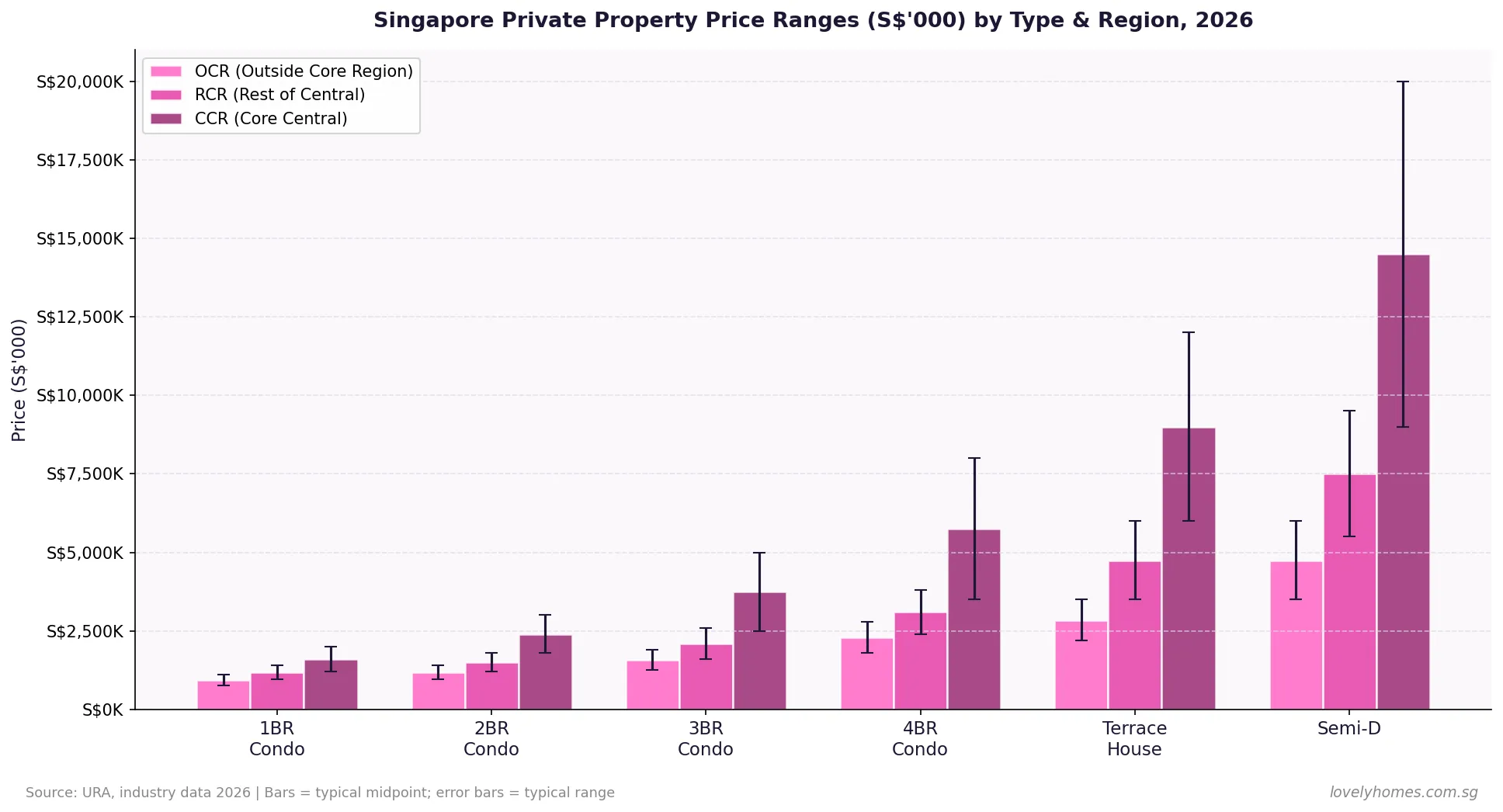
- Private condominium PSF: S$1,340–S$1,480 PSF, comfortably below CCR (S$2,500+) and RCR (S$1,900+).
- Excellent MRT connectivity: EWL + DTL interchange at Tampines MRT; Cross Island Line (CRL) Tampines interchange opening ~2030.
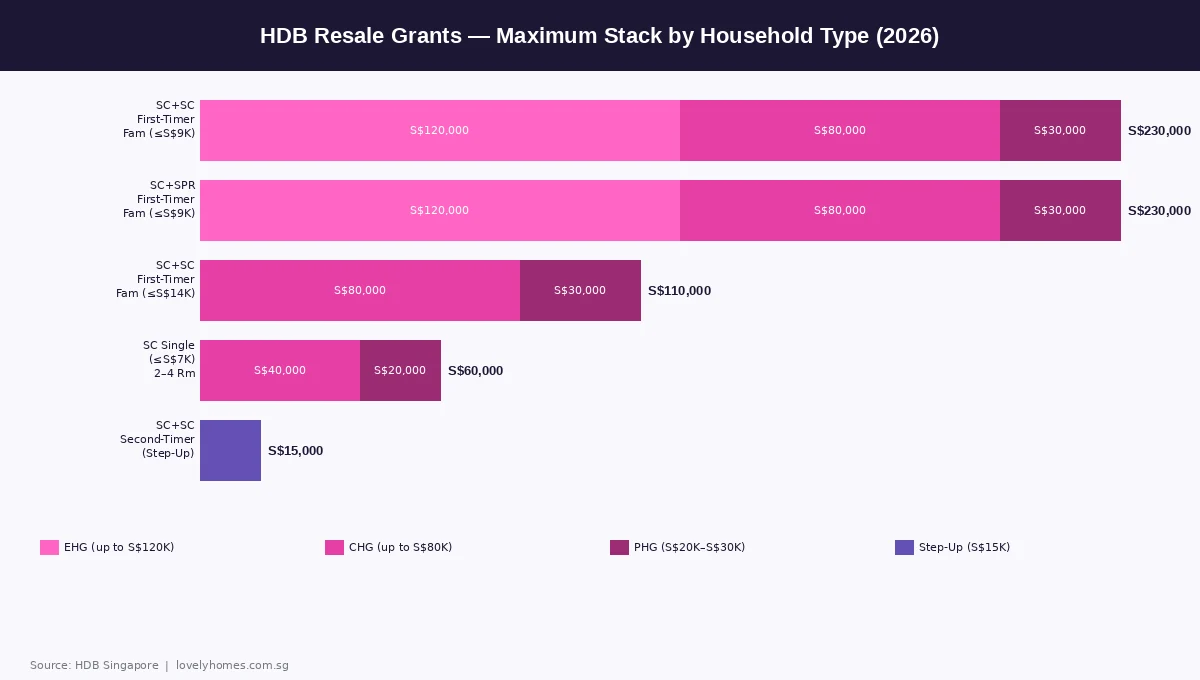
- First-timer SC-SC couples can access up to S$120,000 in HDB grants (EHG + Family Grant, income-dependent).
- Strong rental demand from Changi Airport and Changi Business Park supports gross yields of 3.2%–4.0% for private condos.
Tampines is one of Singapore’s most established and best-resourced new towns, situated in the East Region approximately 25 km from the city centre. Built out from the early 1980s, it has evolved from a purely residential HDB estate into a full-service regional hub with its own commercial district, a major retail cluster, and two MRT lines, with a third, the Cross Island Line, arriving around 2030. This guide covers everything you need to know before buying in Tampines in 2026.
Tampines at a Glance
Tampines is a mature HDB estate in URA’s East Region, designated as a Regional Centre under the URA Master Plan 2019. The resident population is approximately 260,000. Key community infrastructure includes Tampines Hub (the world’s first integrated community and lifestyle hub, housing a public library, hawker centre, 5,000-seat stadium, and cineplex), Tampines Mall, Century Square, IKEA, and White Sands.
HDB Resale Prices in Tampines: 2026 Benchmarks
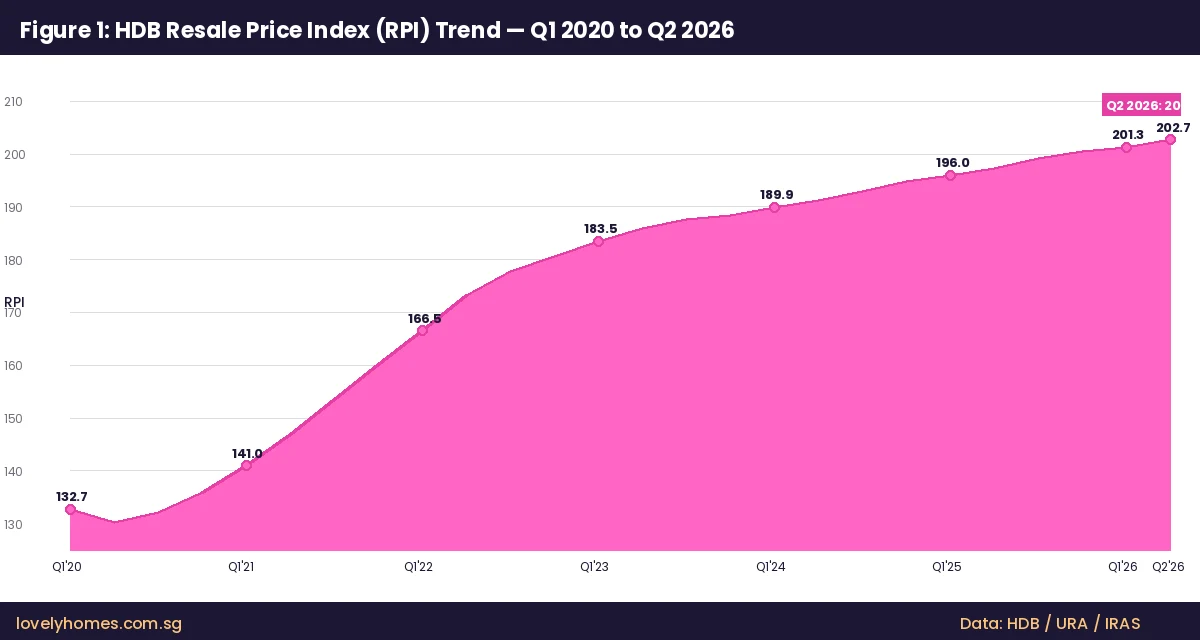
Tampines HDB resale prices have remained resilient through 2025–2026, broadly tracking the overall HDB resale market which posted an RPI of 202.7 in Q2 2026 (+0.7% QoQ).
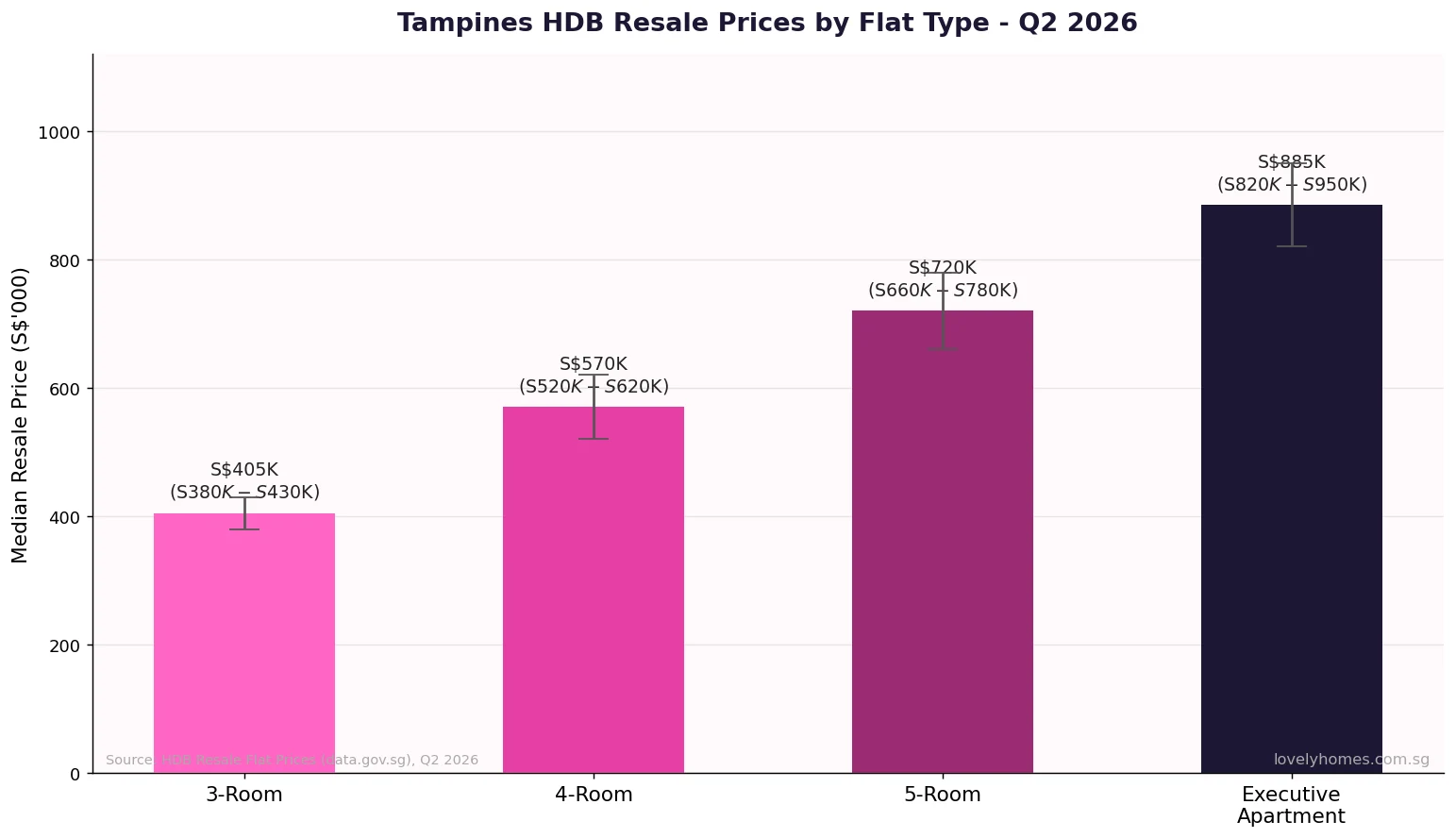
| Flat Type | Median Price | Typical Range | Notes |
|---|---|---|---|
| 3-Room | S$405,000 | S$380K–S$430K | Strong rental demand from singles and couples |
| 4-Room | S$570,000 | S$520K–S$620K | Most liquid flat type; CRL uplift potential |
| 5-Room | S$720,000 | S$660K–S$780K | School-belt premium near Poi Ching and UWCSEA East |
| Executive Apartment (EA) | S$880,000 | S$820K–S$950K | Limited stock; high-floor units attract significant premium |
Prices reflect standard HDB flats with remaining lease >70 years. Flats with remaining lease below 60 years may face CPF usage restrictions.
Private Condominium Prices in Tampines
Indicative secondary-market PSF as at Q2 2026: Treasure at Tampines (2022 TOP, 2,203 units): S$1,340–S$1,390 PSF. The Tapestry (2021 TOP, 861 units): S$1,360–S$1,420 PSF. Parc Central Residences (2024 TOP, EC approaching privatisation): S$1,380–S$1,460 PSF. At S$1,340–S$1,480 PSF, Tampines private condos are priced well below CCR benchmarks (S$2,500+/PSF) and RCR benchmarks (S$1,900+/PSF).
Schools in Tampines
School proximity is a significant price driver. Key schools: Poi Ching School (Phase 2B/2C oversubscribed, 5%–10% premium for flats within 1 km); St Hilda’s Primary School (strong Phase 2B/2C demand); UWCSEA East Campus (Tampines Road, drives expatriate family rental demand for larger private units and 5-Room flats). Other adequately supplied primaries include Tampines Primary, Changkat Primary, Yu Neng Primary, and East Spring Primary.
MRT Connectivity: EWL, DTL, and the Cross Island Line
Tampines benefits from one of the strongest public transport profiles of any OCR new town.
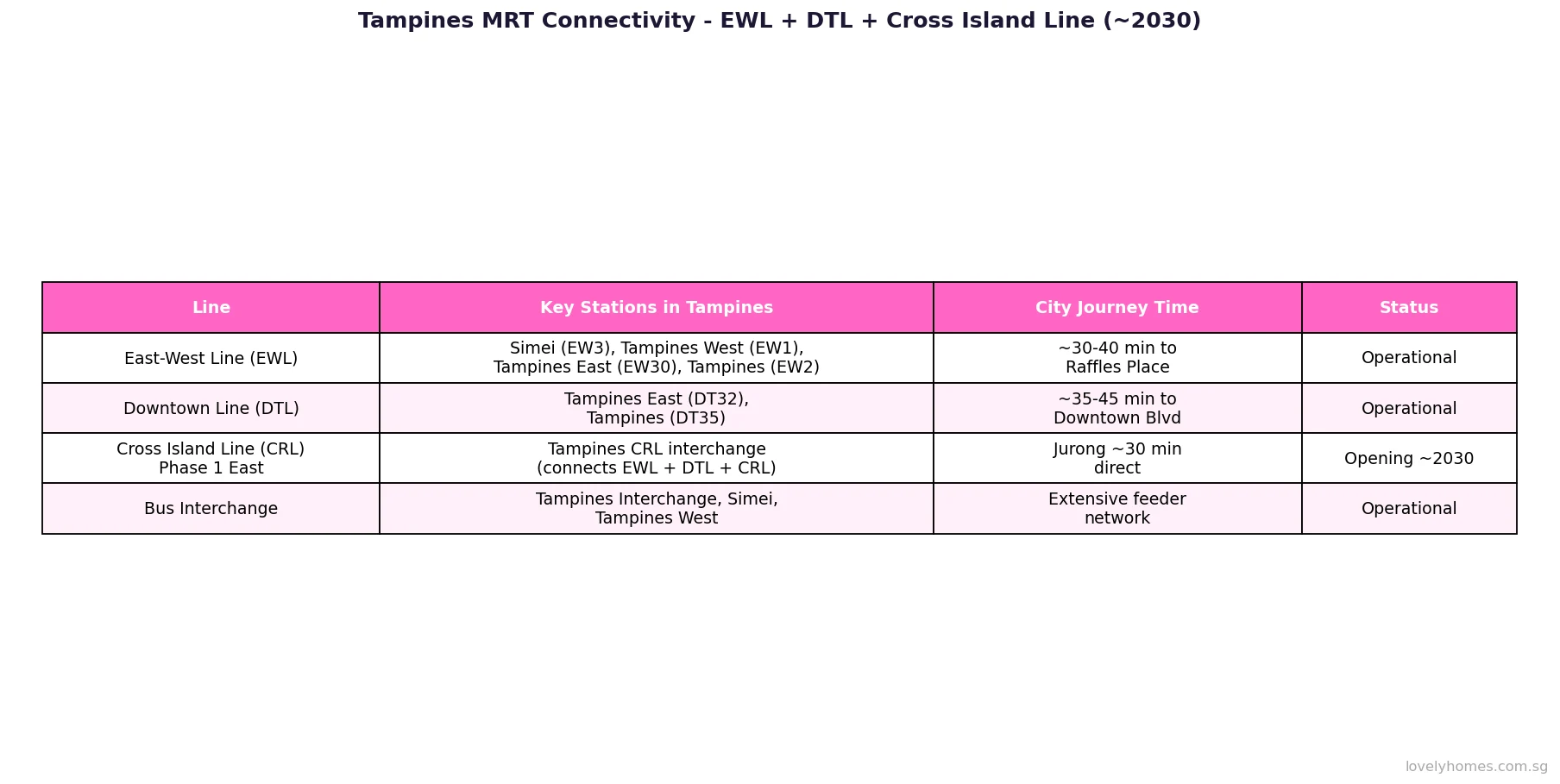
The Cross Island Line (CRL) is the most significant upcoming infrastructure event for Tampines property values. CRL Phase 1 East Section will create an interchange at Tampines MRT, providing direct access to Ang Mo Kio, Buona Vista, and Jurong Lake District without routing through the CBD. Jurong Lake District drops from 45+ minutes to approximately 30 minutes. CRL Phase 1 East is targeted for opening around 2030.
Tampines Investment Thesis: Three Structural Pillars
- CRL uplift (2026–2030 horizon). The station proximity premium has not yet been fully priced in. Historical precedent from earlier DTL opening suggests a 3%–8% uplift for properties within 400m of a new station in the 12–24 months surrounding opening.
- Changi Airport employment catchment. Changi Airport employs approximately 43,000 workers at the airport campus, with additional tens of thousands in Changi Business Park and Airport City. Tampines is the nearest major residential town to Changi, providing a structural rental demand base.
- Tampines Regional Centre commercial anchor. As a URA-designated Regional Centre, Tampines receives ongoing commercial development investment. Additional population from Tampines North will sustain and grow the retail and F&B ecosystem.
Risks and Considerations
- Distance from the CBD. At ~25 km from Raffles Place, buyers whose employers are concentrated in the CBD should factor in a 30–40 minute MRT commute.
- Tampines North new supply. 7,000–9,000 new BTO flats from 2024 through the late 2020s may moderate resale price growth in the medium term.
- Lease decay in older stock. Many Tampines HDB blocks built in the 1980s have remaining leases of 59–69 years. Flats below 60 years remaining face CPF usage restrictions.
- SORA sensitivity. At 3.40% indicative SORA-based rates in Q2 2026, TDSR constraints already bind some buyer profiles.
Worked Example: First-Timer SC Couple Buying a 4-Room Tampines HDB
Mr and Mrs Lim are a Singapore Citizen couple, both aged 29, with a combined gross monthly income of S$7,500. They are buying a 4-Room resale flat in Tampines Street 82, agreed price S$565,000, remaining lease 72 years.
| Item | Amount | Notes |
|---|---|---|
| Purchase Price | S$565,000 | Agreed resale price |
| EHG (Enhanced CPF Housing Grant) | (S$70,000) | Income S$7,500/mth; EHG tapered (max S$80K at ≤S$5,000) — S$70K at S$7,500 |
| Family Grant | (S$50,000) | SC-SC couple, mature estate 4-Room |
| Total Grants | (S$120,000) | Reduces loan and/or cash needed |
| BSD (on S$565K) | S$11,650 | 1% x S$180K + 2% x S$180K + 3% x S$205K |
| ABSD | Nil | SC first property |
| HDB Loan (80% of S$565K) | S$452,000 | 2.60% p.a., 25 years |
| Monthly Repayment (est.) | S$2,034/month | At HDB concessionary rate 2.60% |
| MSR Check | 27.1% of S$7,500 | PASS (below 30% cap) |
| Estimated Cash Outlay | ~S$25,000 | BSD S$11,650 + option/exercise fee ~S$5,650 + legal fees ~S$2,500 + misc |
This example shows that a first-timer SC couple earning S$7,500/mth combined can acquire a 4-Room Tampines resale flat at S$565,000 with minimal cash outlay. The MSR check passes at 27.1%, comfortably inside the 30% cap.
What Might Come Next for Tampines Property
The 2026–2030 outlook for Tampines property is cautiously positive, driven principally by two non-market catalysts: CRL completion (~2030) and Changi Airport City development (Terminal 5 expected mid-2030s). Together these represent a decade-long employment and connectivity uplift cycle that few OCR towns can match. The primary risk is macro: a sharp SORA rate increase or a regional economic slowdown would dampen private condo capital values, though HDB resale demand tends to be more resilient given the owner-occupier demographic.
Frequently Asked Questions
Is Tampines a mature or non-mature HDB estate?
Tampines is classified by HDB as a mature estate. This means resale flat buyers are eligible for the full range of mature-estate grants, including the Enhanced CPF Housing Grant (EHG) of up to S$120,000 for families and S$60,000 for singles, the Family Grant of up to S$80,000 (SC-SC couple, income-dependent), and the Proximity Housing Grant (PHG) of up to S$30,000. Mature-estate status also reflects established amenities, schools, and transport, which partly explains why Tampines resale prices are higher than non-mature estates such as Punggol and Tengah.
What is the Cross Island Line impact on Tampines property?
CRL Phase 1 East Section will add a Tampines interchange connecting EWL, DTL, and CRL into a single hub. CRL travels westward through Defu, Serangoon North, Ang Mo Kio, Buona Vista, and Jurong Lake District, creating a new east–west spine without routing through the city centre. For Tampines residents this reduces Jurong Lake District journey time from 45+ minutes to approximately 30 minutes. Historical data from earlier MRT extensions suggests a 3%–8% price uplift within 400m of new stations in the 12–24 months surrounding opening. CRL is targeted to open around 2030.
Which Tampines primary schools trigger a proximity premium?
The most sought-after primary schools within 1 km of Tampines HDB estates are Poi Ching School and St Hilda’s Primary School, both of which have been oversubscribed at Phase 2B/2C registration in recent years. Properties within 1 km command a 5%–10% premium over comparable units outside the catchment zone. UWCSEA East drives expatriate family rental demand for nearby larger private units. Always verify current MOE catchment boundaries before purchasing.
How does Tampines compare to Bedok for investment?
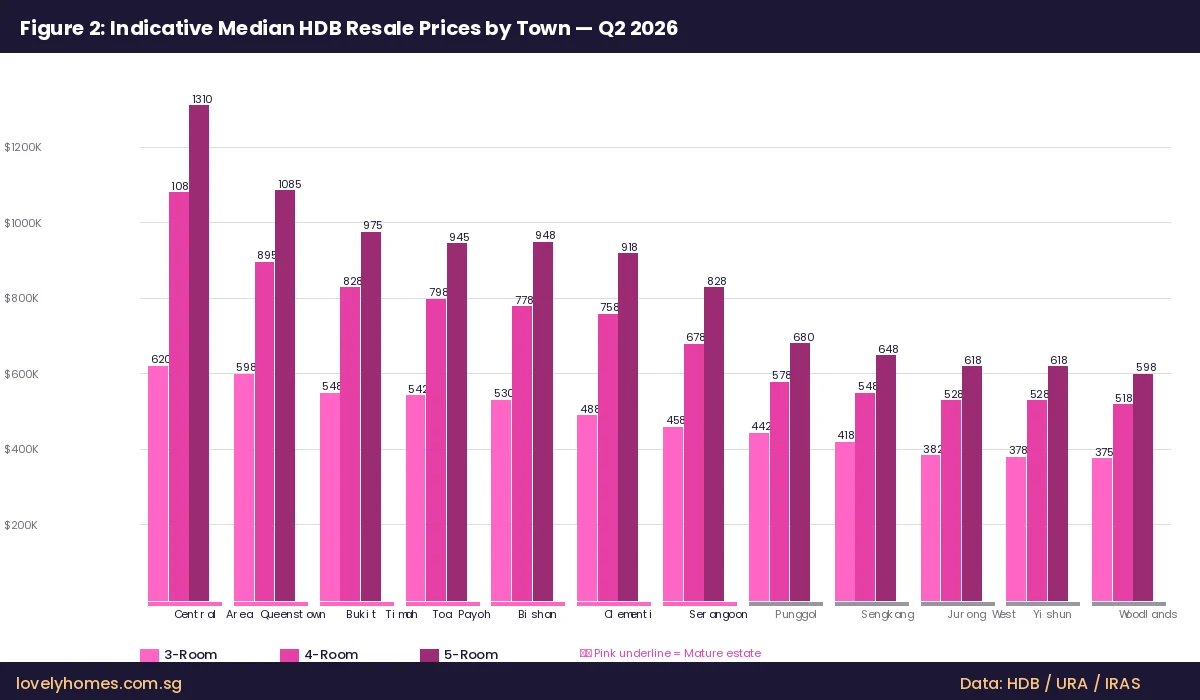
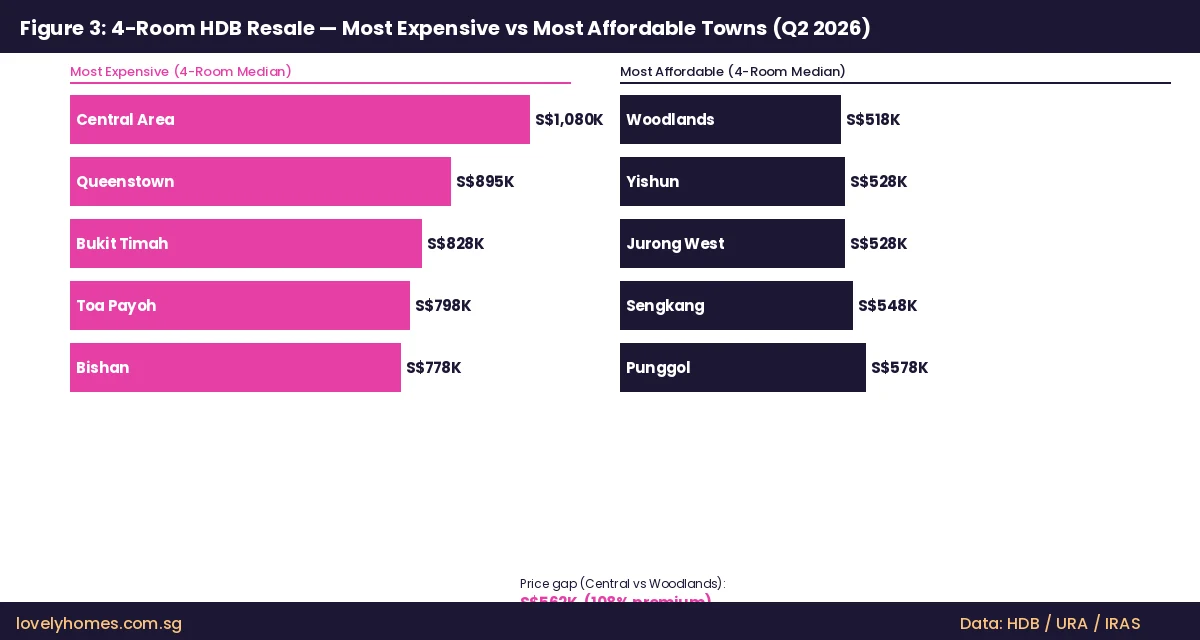
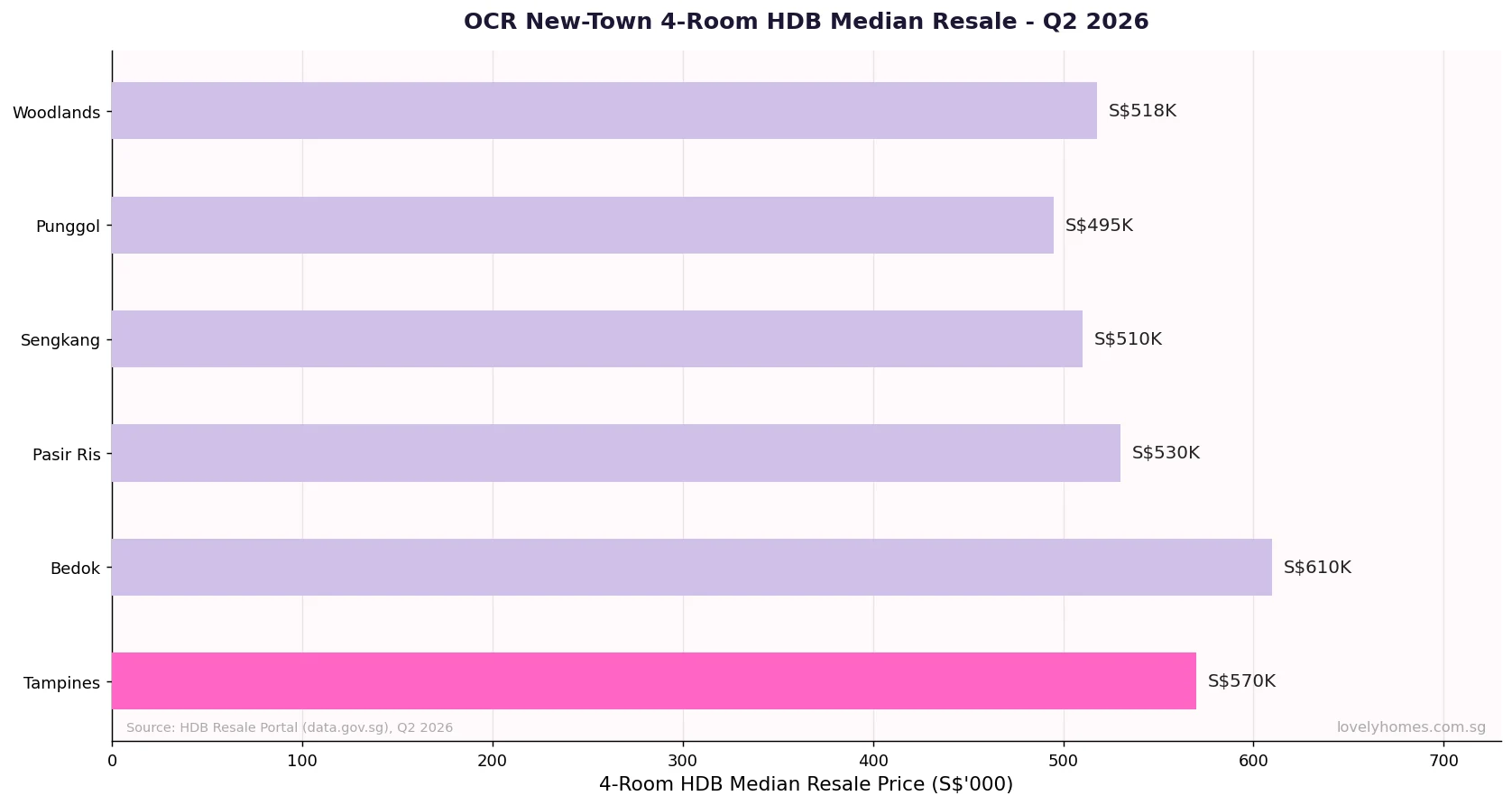
Bedok is a mature estate closer to the CBD (District 16, ~14 km from Raffles Place vs Tampines’ ~25 km), which partly explains Bedok’s higher 4-Room HDB median (~S$610K vs Tampines’ ~S$570K). Tampines has the advantage of a larger commercial hub (Tampines Regional Centre), stronger Changi Airport employment catchment, and a clearer CRL uplift catalyst over 2026–2030. Investors prioritising the CRL story may favour Tampines; those prioritising CBD proximity and resale liquidity may prefer Bedok.
What is Tampines North and how does it affect the existing estate?
Tampines North is a new HDB district adjacent to the existing estate, adding approximately 7,000–9,000 new flats in BTO launches from 2024 through the late 2020s. New BTO supply typically moderates resale price growth in the medium term. However, Tampines North’s additional population density will sustain retail and amenity demand in the broader Tampines Regional Centre, and the estate has its own CRL station (Tampines North) planned.
Can foreigners buy property in Tampines?
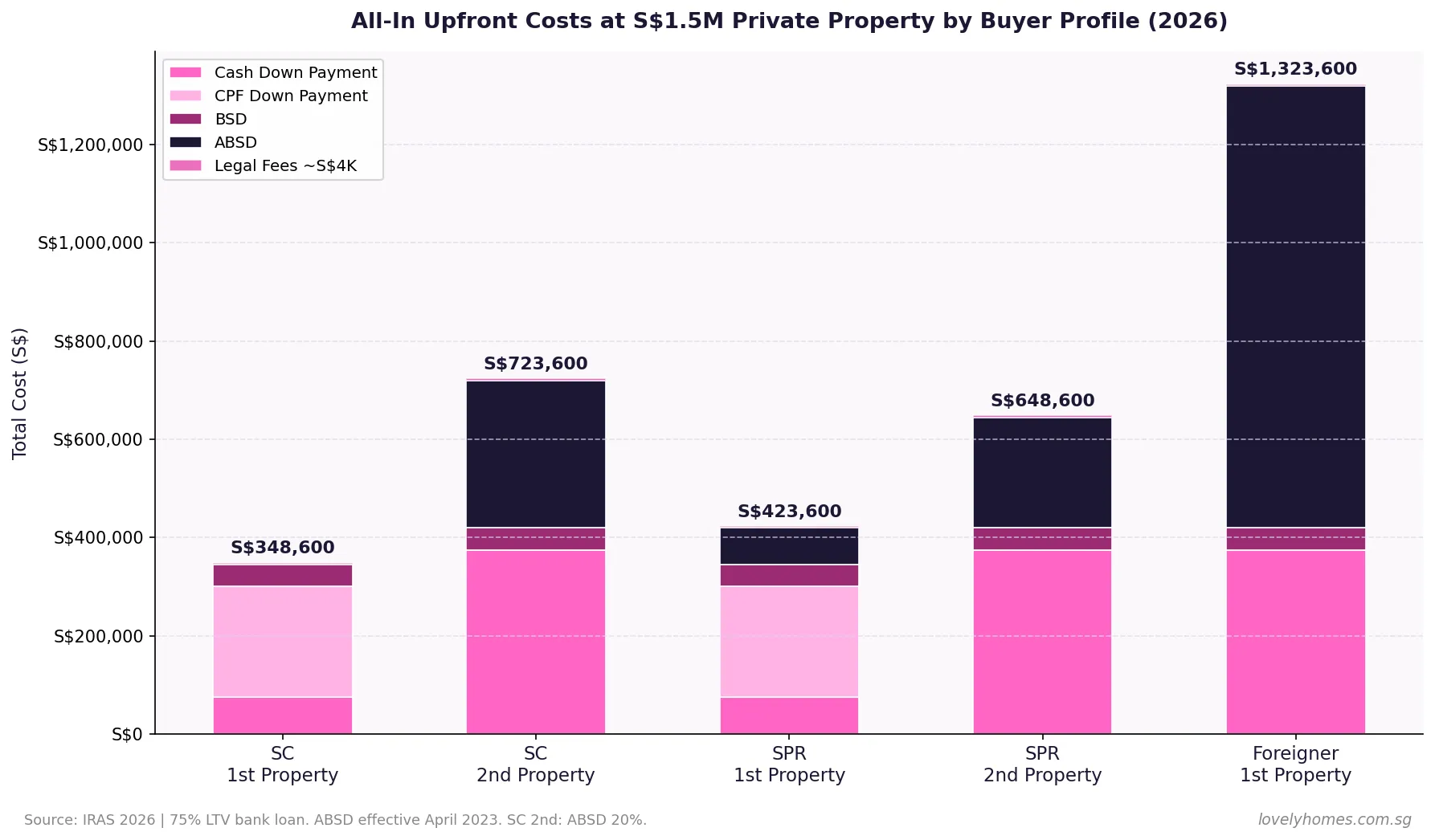
Foreigners can purchase private condominium units in Tampines, subject to 60% ABSD (as at 26 August 2026). They cannot purchase HDB flats, which are restricted to Singapore Citizens and Permanent Residents. Landed property anywhere in Singapore is restricted to Singapore Citizens under the Residential Property Act.
What rental yield can I expect from a Tampines condominium?
Based on URA rental transaction records for early 2026, Tampines condominiums typically yield 3.2%–4.0% gross on an annualised basis. Smaller units (1BR–2BR) close to Tampines MRT interchange tend to achieve the upper range due to strong demand from Changi Airport workers and Changi Business Park professionals. Net yield after property tax, maintenance fees, and agent fees is typically 2.5%–3.2%.
Related Articles
- Ang Mo Kio Neighbourhood and Property Guide 2026
- Bukit Timah District 21 Property Investment Guide 2026
- Singapore HDB Grant Complete Guide 2026
- HDB BTO vs Resale: Which Should You Choose in 2026?
- HDB Resale Prices by Town 2026
- Singapore Property Buyer’s Checklist 2026
Disclaimer: This guide is for general information only and does not constitute financial, property, or legal advice. HDB grant eligibility, school catchment zones, MRT opening dates, and property prices are subject to change. Always verify current grant eligibility at the HDB website and check URA for the latest planning data. Consult a licensed financial adviser before making any property decision.