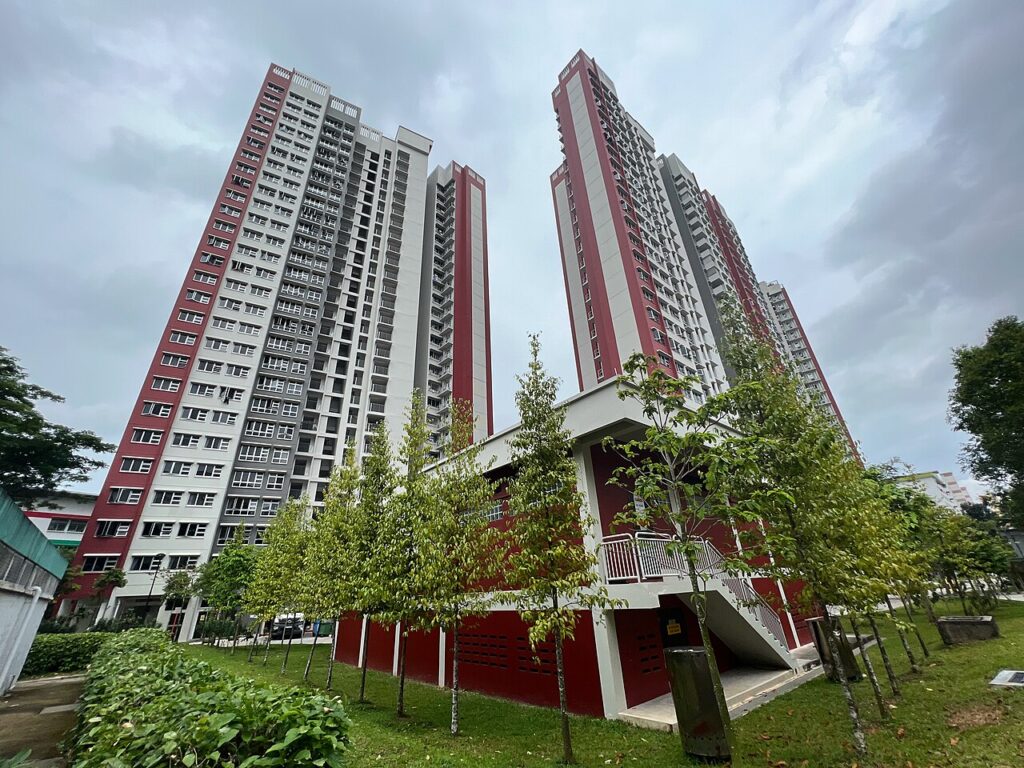
Singapore Home Insurance Guide 2026: HDB Fire Insurance, Home Contents, MRTA and FDW Cover Explained

Singapore Home Insurance Guide 2026: HDB Fire Insurance, Home Contents, MRTA and FDW Cover Explained

Home insurance in Singapore is one of the most consistently misunderstood areas of property ownership. Many HDB flat owners believe they are fully covered by the mandatory HDB Fire Insurance policy that comes with their flat. Most are not. Private condo owners sometimes assume their building’s master policy protects their contents. It typically does not. And across all property types, the gap between what a homeowner thinks they are insured for and what they would actually receive in a claim can run to tens of thousands of Singapore dollars.

This guide explains exactly what each category of Singapore home insurance covers, what it does not cover, how much it costs, and what the appropriate level of coverage looks like for an HDB flat owner, a condominium resident, and a landed property owner in 2026.

Quick Answer — Singapore Home Insurance 2026 at a glance

  • HDB Fire Insurance is mandatory for HDB flat owners with an outstanding HDB loan. It covers only the building structure, not contents. Annual premiums start from approximately S$5.50 per year for a 2-room flat.
  • Home Contents Insurance is optional but highly recommended. It covers furniture, electronics, clothing, and valuables against fire, theft, water damage, and other perils.
  • Mortgage Reducing Term Assurance (MRTA) and Mortgage Level Term Assurance (MLTA) are life insurance policies that pay off the mortgage if the borrower dies or becomes totally and permanently disabled.
  • Foreign Domestic Worker (FDW) Insurance is mandatory for all households employing a maid in Singapore, administered under the Employment of Foreign Manpower Act.
  • Most comprehensive home insurance packages for a 4-room HDB flat with S$100,000 contents cover cost approximately S$120–S$200 per year in 2026.
  • Premiums are not regulated by MAS — shop around and compare at least three insurers before buying.
  • ABSD and stamp duties do not apply to insurance premiums; see our ABSD Singapore 2026 guide for property transaction costs

The Four Main Categories of Singapore Home Insurance

Singapore’s home insurance market is structured around four distinct insurance categories, each addressing a different layer of financial risk. Understanding which category applies to your situation is the essential first step before comparing policies or premiums.

The first category, HDB Fire Insurance, is a government-mandated basic policy administered under the HDB’s Fire Insurance Scheme. The second category, Home Contents Insurance, is a commercial product sold by private insurers to cover the movable assets inside your home. The third category encompasses Mortgage Insurance products (MRTA and MLTA), which are life-insurance instruments designed to discharge a mortgage on death or total permanent disability. The fourth category, FDW Insurance, is a mandatory cover for employers of foreign domestic workers.

Singapore home insurance types and indicative annual premiums 2026 comparison
Figure 1: Singapore Home Insurance Types — Indicative Annual Premiums 2026. Premiums are indicative only; actual quotes vary by insurer, property type, and individual risk profile.

HDB Fire Insurance: What It Covers and What It Does Not

The HDB Fire Insurance Scheme is administered by the Housing & Development Board and is compulsory for all HDB flat owners with an outstanding HDB loan. Private bank loans on HDB flats do not legally require HDB Fire Insurance, but most banks impose an equivalent building insurance requirement as a loan condition. The scheme is underwritten by a single insurer appointed by HDB through a tender process — as at 2026, Etiqa Insurance Pte Ltd holds the mandate.

What HDB Fire Insurance covers: The policy insures the structural components of the flat, including the original fixtures, internal walls, floors, ceilings, and the built-in fittings that were installed by HDB when the flat was first built (kitchen cabinets, bathroom fittings, electrical wiring). The insured sum is the estimated cost to rebuild the structural elements in the event of fire or an allied peril (smoke, explosion, lightning, impact).

What HDB Fire Insurance does NOT cover: It does not cover any renovations, additions, or alterations made by the flat owner after purchase. It does not cover furniture, electrical appliances, clothing, jewellery, art, or any other movable contents. It does not cover accidental damage, water damage from external sources (such as a burst pipe in the unit above), theft, or public liability. For most HDB owners, the renovation work they commission after purchase — which can cost S$30,000–S$100,000 for a 4-room flat — is entirely uninsured under the HDB Fire Insurance Scheme.

Singapore home insurance key facts 2026 mandatory optional HDB FDW MRTA contents cover
Figure 2: Singapore Home Insurance at a Glance — 2026 Key Statistics. Sources: HDB, MOM, MAS, industry data.

Home Contents Insurance: What It Is and How Much You Need

Home Contents Insurance is a private commercial product sold by insurers including NTUC Income, AIA, AXA, Sompo (formerly Sompo Japan), Great Eastern, and Etiqa, among others. Policies are not standardised, so coverage, exclusions, and premiums vary significantly between providers. Buyers should compare policy wordings carefully, not just premium prices.

A standard Home Contents Insurance policy typically covers: furniture and fittings (including renovation works), electronic appliances, clothing and personal effects, and jewellery (subject to per-item and aggregate sub-limits). Perils covered typically include fire, lightning, explosion, theft, vandalism, water damage from burst pipes or overflowing tanks, and in some policies, accidental damage. Most policies exclude flood, earthquake, and subsidence, though Singapore’s geography makes these perils relatively rare.

The key figure to determine is your sum insured — the amount of cover you are purchasing. Many homeowners significantly underestimate the replacement value of their contents. A practical exercise is to walk through your home and estimate the current replacement cost (not original purchase price) of every item: bedroom furniture, mattresses, wardrobe and clothing, kitchen appliances, television, computer equipment, power tools, jewellery, and children’s toys and equipment. For a 4-room HDB flat with moderate furnishings and a mid-range renovation, the replacement cost of contents and renovation works combined often exceeds S$100,000–S$150,000.

Mortgage Insurance: MRTA vs MLTA

Mortgage insurance addresses a different risk: the risk that the borrower dies or becomes totally and permanently disabled (TPD) before the mortgage is paid off, leaving the surviving family with a property but no capacity to service the loan.

Mortgage Reducing Term Assurance (MRTA) is the simpler instrument. It provides a death/TPD benefit that reduces over time in line with the outstanding mortgage balance. If you borrow S$500,000 and die in Year 5, the MRTA pays out approximately S$460,000 (the remaining balance), discharging the mortgage. MRTA does not pay out a lump sum beyond the mortgage balance; there is no residual benefit to the estate. Premiums for MRTA are typically paid as a single lump sum at loan inception, often capitalised into the loan amount itself. Indicative single-premium MRTA for a S$500,000 loan over 25 years for a 35-year-old non-smoker is approximately S$15,000–S$25,000.

Mortgage Level Term Assurance (MLTA) is a level-sum-assured life policy that provides a fixed death/TPD benefit (e.g. S$500,000) throughout the policy term regardless of the outstanding mortgage balance. If the insured dies in Year 20 and the mortgage balance is S$200,000, the MLTA pays S$500,000 — S$200,000 discharges the mortgage and S$300,000 goes to the estate. MLTA premiums are paid monthly or annually and are higher than MRTA on an equivalent sum-assured basis, but the policy accrues surrender value and provides greater financial protection for the family.

The Monetary Authority of Singapore (MAS) regulates both MRTA and MLTA as insurance products. HDB Home Loan borrowers are required to have adequate life insurance covering the loan amount, but are not required to purchase any specific product. Buyers who take a bank loan for a private property are typically not legally required to purchase mortgage insurance, though banks may offer (and recommend) these products as part of the loan package.

Foreign Domestic Worker (FDW) Insurance

Any household employing a Foreign Domestic Worker in Singapore must purchase FDW Insurance as a condition of the work permit, administered under the Employment of Foreign Manpower Act and enforced by the Ministry of Manpower (MOM). The mandatory minimum coverage includes personal accident insurance of S$60,000, hospitalisation and surgical expenses of S$15,000 per year, and a security bond of S$5,000 (waived if the employer meets certain criteria).

MOM-approved FDW Insurance policies are available from a range of insurers at annual premiums of approximately S$220–S$350, depending on the insurer, the coverage level, and whether optional add-ons (such as repatriation costs, maternity cover, or third-party liability) are included. Premiums have risen modestly since 2022 due to increased hospitalisation cost claims. Employers must renew FDW Insurance annually and cannot allow it to lapse without risking permit revocation and MOM sanctions.

Summary Table: Singapore Home Insurance Types 2026

Insurance Type Mandatory? What It Covers What It Does NOT Cover Indicative Annual Cost
HDB Fire Insurance Yes (HDB loan) Structure, original HDB fixtures & fittings Renovation, contents, accidental damage, water ingress from outside S$5.50–S$14.50
Home Contents Insurance No Furniture, appliances, renovation, clothing, jewellery Flood, earthquake, wear & tear, high-value items above sub-limit S$80–S$350+
MRTA (Mortgage) No Outstanding mortgage balance on death/TPD Critical illness, income protection, residual estate benefit Single premium ~S$15K–S$25K total
MLTA (Mortgage) No Fixed life sum assured on death/TPD Critical illness unless rider added S$800–S$1,800/yr (monthly premiums)
FDW Insurance Yes (maid employers) PA, hospitalisation, security bond Employer liability unless optional add-on purchased S$220–S$350
Personal Liability No Third-party bodily injury/property damage from your home Intentional acts, business use, motorised vehicles S$60–S$120

Worked Example: How Much Should a 4-Room HDB Owner Spend on Home Insurance?

Mr and Mrs Lim own a 4-room HDB flat in Tampines, purchased for S$580,000 with an outstanding HDB loan of S$380,000. They spent S$65,000 on renovation (kitchen, bathrooms, built-in wardrobes, flooring). Their home contents include furniture (S$15,000), electronics and appliances (S$12,000), clothing and personal effects (S$8,000), and Mrs Lim’s jewellery (S$25,000). They employ a Foreign Domestic Worker.

Mandatory insurance they already have: HDB Fire Insurance (approximately S$8.50/year for a 4-room flat), covering the original HDB structure. FDW Insurance for their domestic worker (approximately S$260/year). Total mandatory: approximately S$269/year.

What they need but do not yet have: The HDB Fire Insurance does NOT cover their S$65,000 renovation, S$55,000 in contents, or the S$25,000 jewellery. A Home Contents Insurance policy with S$150,000 sum insured (covering renovation and contents) with a jewellery rider up to S$30,000 would cost approximately S$170/year from a typical Singapore insurer. Personal Liability cover (S$500,000 limit for accidental injury to a third party in their home) would add approximately S$80/year.

Total recommended insurance spend: Mandatory S$269 + Home Contents S$170 + Personal Liability S$80 = approximately S$519/year for comprehensive home insurance protection. This represents approximately 0.09% of the flat’s purchase price annually — a modest cost relative to the financial risk of being uninsured against a fire, water damage event, or theft.

Mortgage insurance: For an outstanding loan of S$380,000, a single-premium MRTA would cost approximately S$12,000–S$18,000 capitalised into the loan, or an MLTA at S$500,000 sum assured would cost approximately S$1,200/year in monthly premiums for Mr Lim aged 38. Whether to choose MRTA or MLTA depends on their broader financial planning, life insurance coverage from existing policies, and whether they value the surrender value and estate planning aspects of MLTA.

Singapore home insurance HDB fire insurance premium by flat type and home contents cover tiers 2026
Figure 3: HDB Fire Insurance Annual Premiums by Flat Type (left) and Recommended Home Contents Cover by Property Type (right) — 2026. Data: indicative based on insurer premium schedules and industry estimates.

Why This Matters for Singapore Homeowners

Singapore’s property prices mean that most homeowners’ single largest financial asset is their property. The paradox is that many of these same homeowners carry inadequate insurance against the events most likely to cause a partial or total loss of that asset — fire, water damage, and theft. Insurance penetration for home contents in Singapore has historically been low relative to the value of assets at risk, a fact that the General Insurance Association of Singapore (GIA) has repeatedly flagged in its annual market reports.

The situation is compounded by two misunderstandings. First, HDB flat owners conflate the mandatory HDB Fire Insurance with comprehensive home protection, and feel covered when they are not. Second, strata condo owners assume their MCST’s building insurance covers the interior of their unit and its contents, when in fact the building policy typically covers only the structure and common areas — not renovations, fittings, or personal property within individual units. Understanding precisely what your current insurance does and does not cover is the critical first step.

From an investment standpoint, home insurance also protects rental income. If a flood or fire damages a tenanted property and makes it uninhabitable, most comprehensive policies include Loss of Rent cover (typically 10–15% of the sum insured) to compensate the landlord for the rental income lost during the repair period. Without this cover, a landlord faces both repair costs and lost income simultaneously — a double financial impact that can take years to recover from.

What Might Come Next for Singapore Home Insurance

Several developments are likely to shape the home insurance market over the medium term. Rising renovation costs — up an estimated 20–30% since 2019 due to supply chain disruptions and labour shortages — mean that sum-insured amounts set several years ago may be materially inadequate today. Homeowners who have not reviewed their Home Contents Insurance policy since completing their renovation should reassess their sum insured.

Climate-related risks are also receiving increasing attention from Singapore’s insurance regulators. The MAS’s climate risk framework has prompted insurers to review their underwriting models for flood and extreme weather events. While Singapore’s drainage infrastructure is among the world’s best, flash flooding in low-lying residential areas has caused property damage in recent years, and some insurers have introduced flood exclusions or sub-limits in their home policies. Buyers should read policy wordings carefully for flood coverage.

Finally, the increasing value of jewellery, watches, and art collections in Singapore homes — driven in part by the Ultra High Net Worth influx since 2021 — has prompted specialist insurers to develop dedicated high-value personal property floaters that sit above standard home contents policies. For homeowners with individual items worth more than S$10,000–S$15,000, a standard Home Contents policy’s per-item sub-limit (typically S$1,500–S$5,000) may be inadequate, and a specialist all-risks policy should be considered.

Frequently Asked Questions

Is HDB Fire Insurance compulsory if I take a bank loan instead of an HDB loan?

The HDB Fire Insurance Scheme is legally mandatory only for HDB flat owners with an outstanding HDB loan. If you take a bank loan for your HDB flat, you are not legally required to purchase HDB Fire Insurance specifically. However, most banks impose their own building insurance requirement as a loan condition — they typically require you to purchase a fire insurance policy covering at least the reinstatement value of the structural components. You may purchase this from any MAS-licensed insurer, not only the HDB scheme provider. In practice, most bank-loan HDB buyers do purchase fire insurance, and some also purchase comprehensive home contents insurance on top. Confirm your bank’s specific requirement in your loan letter of offer.

Does my condo’s MCST master policy cover my unit’s contents and renovation?

No. The MCST’s master building insurance policy covers the common areas, external structure, and the original building components — the concrete structure, lift shafts, roof, corridors, and shared facilities. It does not cover any renovations, fittings, furniture, appliances, or personal effects inside individual units. It also typically does not cover accidental damage or water ingress originating within your own unit (as distinct from structural ingress through the building envelope). As a condo owner, you need your own Home Contents Insurance policy to cover your interior renovations, contents, and personal effects. The MCST policy exists to protect the collective asset — not the individual unit owner’s possessions.

What is the difference between MRTA and MLTA, and which should I choose?

MRTA (Mortgage Reducing Term Assurance) is a pure protection product — the sum insured reduces over time in line with the outstanding loan balance. If you die or become totally and permanently disabled, the insurer pays out the remaining mortgage balance, clearing the debt. MRTA has no surrender value and no residual benefit beyond the mortgage discharge. It is typically cheaper than MLTA, especially when the premium is calculated at loan inception on a single-premium basis. MLTA (Mortgage Level Term Assurance) is a level-sum life policy. The sum assured remains constant throughout the term. If the insured dies in Year 20 and the remaining mortgage is S$150,000, the MLTA pays the full sum assured (e.g. S$500,000), clearing the mortgage and leaving S$350,000 for the estate. MLTA accrues surrender value and typically includes whole-of-life or extended coverage options. The choice between MRTA and MLTA depends on your broader life insurance holdings, estate planning objectives, and budget. Consult a licensed Financial Adviser before deciding.

How much Home Contents Insurance do I actually need?

The correct sum insured is the current replacement cost of everything in your home that is not part of the building structure — furniture, electronics, appliances, clothing, books, children’s equipment, sports gear, and jewellery — plus the full reinstatement cost of any renovation works you have carried out (new flooring, built-in wardrobes, kitchen cabinets, bathroom fittings, lighting, painting). For a 4-room HDB flat with a moderate renovation (S$50,000–S$70,000) and standard furnishings, the total replacement cost typically falls in the S$120,000–S$180,000 range. Many homeowners significantly underestimate this figure by forgetting to include renovation costs, systematically undervaluing their belongings, and failing to account for appreciation in replacement costs since the items were purchased. Reviewing and updating your sum insured every two to three years is advisable.

Can I use CPF to pay for home insurance premiums?

No. CPF funds may not be used to pay general insurance premiums, including Home Contents Insurance, HDB Fire Insurance, or FDW Insurance. CPF OA funds may be used for the purchase of a home (down payment, BSD, monthly loan instalments for certain loan types) but not for ongoing insurance premium payments. MLTA (Mortgage Level Term Assurance) premiums may be payable from CPF OA funds in certain approved schemes — verify this directly with the insurer and CPF Board. MRTA premiums capitalised into the loan amount are funded by the loan itself, not directly from CPF. For most home insurance products, premiums must be paid by GIRO, credit card, or cheque from a bank account.

What happens if my neighbour causes a fire that damages my flat?

If a fire originates in a neighbouring unit and spreads to damage your flat, your recourse depends on the specific facts and whether your neighbour was negligent. Under Singapore tort law, you may have a civil claim against a negligent neighbour for damage to your property. In practice, pursuing such claims can be lengthy and uncertain. The practical protection is to ensure you have your own Home Contents Insurance (and where applicable, Houseowner Insurance) that covers fire damage regardless of origin — your insurer will then subrogate against your neighbour’s insurer if negligence is established, relieving you of the burden of pursuing the claim directly. Never rely solely on a third party’s insurance to protect your assets.

Related Articles

Disclaimer

All insurance premium figures in this article are indicative and based on publicly available market information as at July 2026. Actual premiums depend on the insurer, policy terms, property type, sum insured, and individual risk factors. The MAS’s Financial Institutions Directory at mas.gov.sg lists all licensed insurers operating in Singapore. HDB Fire Insurance scheme details are published at hdb.gov.sg. FDW Insurance requirements are administered by MOM at mom.gov.sg. This article is for general information purposes only and does not constitute financial, legal, or insurance advice. Readers should consult a licensed Financial Adviser or insurance professional before purchasing any insurance product. LovelyHomes is an independent editorial property information platform and does not receive commissions from or recommend any specific insurer.

Singapore Landlord Guide 2026: Rental Income Tax, Tenancy Agreements, Property Tax and Landlord Rights

Singapore Landlord Guide 2026: Rental Income Tax, Tenancy Agreements, Property Tax and Landlord Rights

Quick Answer: Singapore Landlord Key Facts 2026

  • Rental income is taxable: Resident landlords pay progressive income tax (0–22%) on net rental income after allowable deductions. Non-residents pay a flat 24% on gross rent.
  • Allowable deductions include: mortgage interest, property tax, fire insurance, maintenance and repair costs, and agent letting fees. Furniture, renovation, and capital improvements are not deductible.
  • Property tax on rental property: the Non-Owner-Occupied (NOO) progressive rate applies — from 10% on the first S$30,000 of Annual Value up to 24% on amounts above S$75,000 (IRAS, from 1 January 2024).
  • Stamp duty on tenancy agreement: 0.4% of total rent for leases of one year or less; tiered rates for longer leases. Must be stamped via IRAS within 14 days of signing.
  • HDB landlords must complete their Minimum Occupation Period (MOP) — 5 years for standard flats, 10 years for Plus/Prime BTO — and obtain HDB’s written approval before renting out the entire flat.
  • Short-term rentals (e.g. Airbnb): prohibited for all residential properties in Singapore. Minimum rental term is three consecutive months under the Planning Act.
  • Security deposit: typically one to two months’ rent. Disputes up to S$30,000 can be filed at the Small Claims Tribunal (SCT).

What Does It Mean to Be a Landlord in Singapore?

A landlord in Singapore is any person or entity that lets a residential property to a tenant in exchange for rent. The term covers the full spectrum: from an HDB flat owner renting out a spare bedroom, to a property investor managing a portfolio of private condominiums in the Core Central Region.

Singapore’s rental market is regulated by multiple government bodies. The Inland Revenue Authority of Singapore (IRAS) collects income tax on rental proceeds and administers stamp duty on tenancy agreements. The Housing and Development Board (HDB) regulates the subletting of public housing flats. The Urban Redevelopment Authority (URA) sets rules for private residential properties, including the minimum rental period. The Building and Construction Authority (BCA) governs strata management corporations (MCSTs) for condominiums. Understanding who regulates what is the first step to staying compliant and protecting your net yield.

Singapore’s residential rental market encompasses an estimated 58,000 private units and 56,000 HDB flats listed for rent at any given time. With median gross rental yields at 2.5–3.5% for condominiums and 3.5–4.5% for HDB flats (indicative 2026 figures), understanding the full cost and compliance picture is essential for any landlord.

Rental Income Tax: What Landlords Owe IRAS

Rental income received by a Singapore tax resident is assessable income under the Income Tax Act 1947. It must be declared on IRAS Form B1 (individuals) or Form B (self-employed persons and those with non-employment income) by 15 April each year, covering income from the preceding calendar year.

IRAS defines rental income broadly: monthly rent, any payment for the right to use the property, furniture rent charged separately, and even a lump-sum premium or key-money received at the start of a tenancy are all assessable.

Singapore rental income tax rates 2026 resident vs non-resident landlords allowable deductions
Figure 1: Singapore Rental Income Tax — Resident Progressive Rates and Allowable Deductions (IRAS 2026). Non-resident landlords pay a flat 24% on gross rent with no deductions.

Resident Landlords: Net Income After Allowable Deductions

For Singapore tax residents, the taxable base is net rental income: gross rent received less the following allowable deductions recognised by IRAS:

  • Mortgage interest: interest on the loan used to purchase the property. Principal repayments are not deductible. For joint owners, only the portion of interest proportional to each individual’s share applies.
  • Property tax: the annual IRAS property tax bill for the rented property.
  • Fire and landlord insurance premiums taken out on the property.
  • Maintenance and repair costs: reasonable wear-and-tear repairs — replacing broken fixtures, repainting between tenancies. Capital improvements that enhance property value are not deductible.
  • Agent letting commission: the fee paid to a property agent for sourcing the tenant. Typically one month’s rent for a two-year lease, deductible in the year paid.

Net rental income is then added to the landlord’s total chargeable income and taxed at the applicable progressive resident rates: 0% on the first S$20,000, rising to 22% on amounts exceeding S$320,000.

Non-Resident Landlords: Flat-Rate Tax on Gross Rent

Non-resident individuals — for example, a foreigner who owns Singapore property but is not tax-resident here — are taxed at a flat rate of 24% on gross rent, with no deductions permitted. Non-residents may elect to be taxed at the resident progressive rates if this produces a lower liability, subject to IRAS rules. Where tax is withheld by a tenant, the landlord is responsible for ensuring accurate filing.

Property Tax for Landlords: The NOO Rate

Every property owner in Singapore pays property tax, regardless of whether the property is occupied or rented. When a residential property is rented out, the Non-Owner-Occupied (NOO) progressive rate applies — substantially higher than the owner-occupied (OO) rate. This differential is a deliberate policy to discourage speculative property holding.

The NOO rate is applied to the property’s Annual Value (AV) — IRAS’s estimate of the property’s annual market rent if let unfurnished. The AV is reviewed periodically. As a reference: a typical 4-room HDB flat in a mature estate carries an AV of approximately S$16,000–S$22,000; a mid-range condominium 2-bedroom unit in the Rest of Central Region may carry an AV of S$28,000–S$40,000. NOO property tax for a condo unit with AV S$30,000 is approximately S$3,000 per year (IRAS, 2024 rates).

Landlords should budget for this cost at the start of each financial year. IRAS issues property tax bills in December for the following year; the due date is 31 January.

Stamp Duty on Tenancy Agreements

A tenancy agreement is a dutiable document under the Stamp Duties Act. Stamp duty must be paid via the IRAS myStampDuty portal within 14 days of signing if the document is signed in Singapore, or within 30 days if signed overseas.

The stamp duty rate depends on the length of the lease:

  • Lease of one year or less: 0.4% of the total rent for the full lease period.
  • Lease of more than one year up to three years: 0.4% of average annual rent for the first year, plus 0.2% of average annual rent for each remaining year.
  • Lease of more than three years or indefinite period: 0.4% of four times the average annual rent.

Who pays? By default, the tenant pays. However, landlord and tenant may agree otherwise and should record this in the tenancy agreement. Failure to stamp on time incurs a penalty of up to four times the duty owed.

Singapore tenancy agreement process timeline 2026 LOI stamp duty move-in
Figure 3: Tenancy Agreement Process in Singapore — Six Stages from Listing to Move-In (2026). IRAS stamping must be completed within 14 days of signing.

HDB-Specific Subletting Rules 2026

Owners of HDB flats face a more regulated environment than private property owners. The key rules as at 7 July 2026 are as follows.

Minimum Occupation Period (MOP): A flat owner must complete the MOP before renting out the entire flat. The MOP is five years for standard BTO, resale, and DBSS flats, measured from the date of key collection. For Plus and Prime BTO flats launched from the February 2024 exercise onwards, the MOP is ten years. There is no MOP restriction on renting out individual bedrooms, provided the owner continues to physically reside in the flat.

HDB Approval Required: Before renting out the entire flat, the owner must obtain HDB’s written approval via the HDB Resale Portal. Approval is granted online and must be renewed every three years. Renting out without approval may result in enforcement action, including compulsory acquisition of the flat by HDB.

Eligible Tenants: HDB flats may only be rented to Singapore Citizens, Singapore Permanent Residents, and non-citizens holding a valid long-term or work pass (Employment Pass, S Pass, Work Permit, Dependant’s Pass, Long-Term Visit Pass). Visitors and tourists are ineligible tenants for both entire flats and individual bedrooms.

Occupancy Cap: HDB 1- to 3-room flats: maximum four occupants total. HDB 4-room flats and larger: maximum six occupants. This includes all persons residing in the flat, whether family members, tenants, or sub-tenants.

Short-Term Rentals Prohibited: Renting any HDB flat or private residential unit for periods shorter than three consecutive months is prohibited under the Planning Act. URA enforces this actively; owners face composition fines and court action.

Annual Landlord Costs: What Eats Into Your Yield

Singapore landlord annual cost components 2026 HDB condo income tax property tax maintenance
Figure 2: Annual Landlord Cost Components — HDB 4-Room (S$3,000/mth) vs Condo 2BR (S$6,000/mth) — Singapore 2026. Indicative estimates based on current IRAS rates and market data.

A landlord’s gross rent is not the same as net yield. Several recurring cost lines erode returns:

  • Agent commission: typically one month’s rent for a new two-year lease. Some landlords negotiate a reduced fee for renewal tenancies.
  • Income tax on net rental income: a landlord in the 11.5% marginal bracket with S$20,000 net rental income may pay approximately S$2,300 in tax attributable to rental.
  • NOO property tax: significantly higher than OO rates. An HDB 4-room flat with AV S$18,000 incurs approximately S$1,800/year at NOO rates; a condominium 2BR with AV S$30,000 incurs approximately S$3,000/year.
  • MCST maintenance fees (condo landlords): typically S$200–S$600/month. These continue even during vacancy periods and cannot be passed to tenants unless contractually agreed.
  • Void periods: vacancy between tenancies reduces annual yield. In 2026, average void periods range from two to eight weeks depending on property type, location, and prevailing demand.

Summary: Key Landlord Obligations at a Glance

Obligation Authority Requirement Penalty for Non-Compliance
Declare rental income IRAS Form B / B1, by 15 April annually Penalty, back taxes, and interest
Stamp tenancy agreement IRAS Within 14 days of signing Up to 4× stamp duty owed
HDB subletting approval HDB Before renting out entire HDB flat Compulsory acquisition possible
Minimum 3-month rental period URA All residential properties Composition fine; court action
Pay property tax (NOO rate) IRAS Annual bill; due 31 January 5% surcharge on arrears
Maintain structure and fittings Common law Quiet enjoyment and habitability Tenant may withhold rent or sue
Register HDB tenants HDB Register via HDB Resale Portal Warning and enforcement action

Worked Example: Mr Ng Rents Out His 4-Room HDB in Bishan

Mr Ng (Singapore Citizen) owns a 4-room HDB flat in Bishan. He completed his MOP in August 2023 and obtained HDB subletting approval in September 2023. He rents the entire flat to a Korean couple on Employment Passes for S$3,000/month on a two-year lease commencing 1 October 2023.

Annual gross rental income: S$3,000 × 12 = S$36,000.

Allowable deductions for Year of Assessment 2024:

  • Mortgage interest (HDB loan S$350,000, approximately 25 years remaining, ~3.2% annual interest): S$11,200
  • NOO property tax (AV S$18,000, first S$18,000 at 10%): S$1,800
  • Fire and landlord insurance: S$380
  • Maintenance and minor repairs: S$720
  • Agent letting commission (1 month, amortised over 2-year lease): S$1,500

Total deductions: S$15,600. Net rental income: S$20,400.

Stamp duty on tenancy (paid by tenant): 2-year lease, total rent S$72,000. Stamp duty = 0.4% × S$36,000 (Year 1) + 0.2% × S$36,000 (Year 2) = S$144 + S$72 = S$216.

Income tax on rental income: Mr Ng’s total chargeable income (employment income S$82,000 + net rental S$20,400 = S$102,400). Tax at resident rates: approximately S$5,920. Rental’s share (~20%): approximately S$1,184 attributable to rental income.

Net yield analysis: S$36,000 gross rent − S$15,600 deductions − S$1,184 rental-attributable tax = S$19,216 net annual income, on an assumed flat value of S$580,000. Net yield: approximately 3.3%. The effective tax rate on rental income is approximately 3.3% of gross rent — substantially lower than the nominal income tax bracket because mortgage interest and property tax heavily reduce the taxable base.

Why This Matters for Singapore Landlords in 2026

The Singapore rental market has undergone significant structural change since 2022. Post-COVID demand from expatriates pushed prime condominium rents 30–40% above 2019 levels by 2023. By 2025–2026, those gains moderated as a record Government land sales pipeline — 9,320 units in the 2026 Confirmed List alone — fed new supply into the market. HDB rents similarly softened by 4–8% in 2025 as demand normalised.

The HDB Resale Price Index fell for a second consecutive quarter in Q2 2026 (to 202.7, down 0.3% quarter-on-quarter), a sign of broader market softening that affects rental demand confidence. For landlords, pricing discipline and tenant retention matter more than they did in the peak years.

Compared with other regional cities, Singapore stands out for regulatory transparency: IRAS publishes clear guidance on rental tax, HDB’s portal is fully digital, and Small Claims Tribunal procedures are accessible to ordinary landlords and tenants alike. The administrative burden is manageable for compliant landlords who treat property rental as the regulated business activity it is.

What Might Come Next

Several policy developments are worth monitoring. The Government’s ongoing BTO completions in Tengah, Bidadari, and Bayshore — adding more than 30,000 units through 2027–2028 — will sustain downward pressure on HDB resale and rental prices in the medium term. IRAS is also expected to review Annual Values for private residential properties in late 2026, reflecting the more moderate rental market of 2025; any downward revision would reduce NOO property tax bills.

There are ongoing policy discussions about whether to introduce more formal licensing requirements for private residential landlords, similar to frameworks in the United Kingdom and Australia. No formal proposal has been tabled as at July 2026, but landlords with multiple properties should monitor parliamentary proceedings and Ministry of National Development announcements closely.

Frequently Asked Questions

Do I need to declare rental income if I am only renting out a spare bedroom?

Yes. Any payment received for the right to use your property — including a single bedroom — is assessable rental income. You may claim deductions proportional to the rented area (for example, 25% of mortgage interest and property tax if one of four rooms is let). Declare on Form B1 by 15 April. There is no de minimis exemption threshold for rental income in Singapore.

Can I use CPF to pay my property tax or income tax on rental income?

No. CPF Ordinary Account (OA) funds may only be used for specific property-related payments: the downpayment, monthly mortgage instalments, and Buyer’s Stamp Duty on purchase. Annual property tax, income tax on rental proceeds, agent commissions, and all other landlord costs must be paid in cash. This is a common point of confusion for first-time landlords.

What can I do if my tenant stops paying rent?

First, issue a formal written notice of the breach and allow a reasonable cure period (typically 14 days). If unpaid rent does not exceed S$30,000, the Small Claims Tribunal (SCT) provides a faster and lower-cost route than the civil courts. For larger amounts, a civil suit in the District Court or High Court may be necessary. The landlord may also apply for a Writ of Distress to seize the tenant’s goods. The security deposit held may be applied against arrears at the end of the tenancy, but not unilaterally mid-lease unless the agreement expressly permits this.

Do I need HDB approval to rent out a bedroom in my flat before completing the MOP?

The MOP restriction applies only to renting out the entire flat. Before completing the MOP, you may rent out individual bedrooms, provided you continue to physically reside in the flat alongside the tenants. You must still register the subletting of bedrooms with HDB via the Resale Portal. Tourists and visitors without valid passes remain ineligible as tenants for rooms as well as for entire flats.

Is the security deposit I receive from a tenant taxable income?

No, not when received. A security deposit is a refundable sum held as security against the tenant’s obligations; it is not income at the point of receipt. However, if you legitimately forfeit all or part of the deposit — for example, because the tenant terminated early and the agreement entitles you to retain one month as a penalty — the forfeited amount becomes assessable income in the year of forfeiture and must be declared to IRAS.

Can foreigners rent HDB flats in Singapore?

Foreigners may rent HDB flats provided they hold a valid long-term pass. Eligible pass types include the Employment Pass (EP), S Pass, Work Permit, Dependant’s Pass (DP), and Long-Term Visit Pass (LTVP). Tourists and visitors on Social Visit Passes, Student’s Passes used for short stays, and persons without a valid pass are not eligible tenants for HDB flats — whether for an entire flat or a room. The HDB Resale Portal enables flat owners to verify a prospective tenant’s eligibility before signing.

Disclaimer: This article is for general informational purposes only and does not constitute tax, legal, or financial advice. Rental income tax rules, property tax rates, and HDB subletting regulations are subject to change. Information reflects publicly available guidance from IRAS (iras.gov.sg), HDB (hdb.gov.sg), and URA (ura.gov.sg) as at 7 July 2026. Please consult a qualified tax adviser, conveyancing solicitor, or licensed property agent before making rental property decisions.

Singapore HDB Inheritance and Transfer Guide 2026: Joint Tenancy, CPF Rules and Who Can Inherit

Singapore HDB Inheritance and Transfer Guide 2026: Joint Tenancy, CPF Rules and Who Can Inherit

Quick Answer: Singapore HDB Inheritance & Transfer Guide 2026

  • HDB flats held under Joint Tenancy (JT) pass automatically to the surviving owner by right of survivorship — no probate required and no Will can override this.
  • Flats held under Tenancy-in-Common (TIC) pass according to the deceased’s Will or, if there is no Will, the Intestate Succession Act (ISA). Muslim estates are governed by the Administration of Muslim Law Act (AMLA) and Faraid rules.
  • The deceased owner’s CPF principal and accrued interest used for the flat is refunded to their CPF account — not to the estate — and distributed to CPF nominees or the CPF Public Trustee.
  • Any outstanding HDB loan on the flat must be assumed by the inheriting owner (subject to HDB approval) or discharged; the flat cannot be retained if the inheritor cannot service the loan.
  • The inheritor must meet HDB eligibility criteria to retain the flat. Ineligible inheritors (including foreigners) must sell within 6 months or HDB may compulsorily acquire the flat.
  • Singapore Citizens generally have the widest inheritance eligibility; SPRs and family members in non-standard situations require case-by-case HDB assessment.
  • The Minimum Occupation Period (MOP) typically restarts from the date of the transfer for the new owner when the flat is transferred (other than via JT survivorship).
  • Making a Will and CPF nomination while alive is the single most important step HDB owners can take to ensure their wishes are carried out on death.

Introduction: When a HDB Owner Passes Away

The death of a Housing & Development Board (HDB) flat owner raises a series of consequential legal and practical questions: Who takes over the flat? What happens to the outstanding mortgage? Are there CPF refunds? How long does the process take? For the 1.1 million HDB households in Singapore, understanding the inheritance and transfer rules is not just academic — it is part of responsible property ownership and estate planning.

Singapore’s framework for HDB flat inheritance is governed by several bodies of law operating concurrently: HDB’s own eligibility and transfer rules, the Conveyancing and Law of Property Act which recognises the right of survivorship for Joint Tenancy, the Intestate Succession Act (ISA) which distributes estates without Wills, and — for Muslim Singaporeans — the Administration of Muslim Law Act (AMLA) and the principles of Faraid Islamic inheritance. The CPF Board administers the refund of CPF monies on death separately from the flat transfer.

HDB Flat Ownership Structures: Joint Tenancy vs Tenancy-in-Common

When two or more people purchase an HDB flat together, they must choose between two forms of co-ownership: Joint Tenancy (JT) or Tenancy-in-Common (TIC). The choice made at purchase has profound consequences on what happens to the flat when one owner dies.

Under Joint Tenancy, all owners hold the flat jointly without defined individual shares. The central legal feature of JT is the right of survivorship: on the death of any one joint tenant, that person’s interest in the flat automatically vests in the surviving joint tenant(s). No probate or letters of administration are required; no Will can override this automatic transfer. HDB flats purchased by couples are registered in Joint Tenancy by default.

Under Tenancy-in-Common, each owner holds a specified, separate share — for example, 50%/50% or 60%/40%. On the death of a TIC owner, their share forms part of their estate and is distributed according to their Will, or the ISA if they die intestate (without a Will). TIC must be specifically elected at the time of purchase or during ownership via a legal severance of the JT arrangement.

Singapore HDB Joint Tenancy vs Tenancy-in-Common comparison table — right of survivorship inheritance Will implications 2026
Figure 1: Joint Tenancy vs Tenancy-in-Common — seven key differences for HDB flat co-owners. Source: HDB, Singapore Law. Click to enlarge.

The Right of Survivorship: How Joint Tenancy Works on Death

The right of survivorship is a powerful legal mechanism that simplifies the transfer of HDB flats in the common scenario where a married couple owns a flat and one spouse passes away. When the first spouse dies, the surviving spouse automatically becomes the sole owner of the flat — there is no need to go through the courts, apply for probate, or even instruct a solicitor for the transfer itself (though an application must be made to HDB to update the records).

The process involves notifying HDB within 30 days of the death, submitting the death certificate, the original title deeds or relevant HDB documentation, and completing HDB’s survivorship transfer form. HDB will then update its records to reflect the surviving owner as the sole registered proprietor. The entire administrative process typically takes 3–6 weeks once documents are submitted.

The surviving JT owner inherits the flat subject to any outstanding HDB or bank loan. If the deceased was the primary borrower and the surviving spouse does not meet the bank’s income criteria to assume the sole loan, they may need to make other arrangements — including partial repayment, sourcing a guarantor, or selling the flat. It is advisable for couples to ensure both spouses are listed as co-borrowers on any mortgage to avoid this complication.

Tenancy-in-Common and the Intestate Succession Act

For flat owners holding the property under Tenancy-in-Common, the death of one owner requires a formal estate administration process before the flat can be transferred to the inheritor. If the deceased left a valid Will, executors named in the Will apply for a Grant of Probate from the Singapore High Court. If there is no Will, the next-of-kin applies for Letters of Administration. Both processes take 3–6 months on average for uncontested estates, though complex cases can take longer.

Where there is no Will, the ISA prescribes how the estate is distributed based on the family structure. For example, if the deceased leaves a spouse and children, the spouse receives 50% of the estate and the children share the remaining 50% equally. If only a spouse survives (no children, no living parents), the spouse receives the entire estate. The ISA does not apply to Muslim Singaporeans, whose estates are governed by Faraid rules under AMLA, administered through the Syariah Court for distribution certificates.

CPF and HDB on the Death of an Owner

CPF monies used to purchase an HDB flat do not form part of the flat’s transfer on death — they are handled separately by the CPF Board. When an owner dies, all CPF funds used to purchase the flat — including both the original principal withdrawn and the accrued interest at 2.5% p.a. compounded — must be refunded to the deceased’s CPF account. These funds are then distributed to CPF nominees (designated by the deceased via a CPF nomination form before death), or — if there is no nomination — to the Public Trustee for distribution under the Intestate Succession Act.

This CPF refund is separate from the flat’s ownership transfer. The inheritor who takes over the flat does not receive the deceased’s CPF monies as part of the flat — they receive only the flat itself, potentially subject to an outstanding mortgage. The CPF refund may significantly reduce the equity available in the flat if the loan is outstanding, as the CPF monies do not offset the mortgage on death.

If the flat has an outstanding HDB concessionary loan at the time of death, the surviving owner or inheritor must arrange with HDB to either assume the loan (if they qualify) or repay it. In some cases where the deceased had Home Protection Scheme (HPS) insurance (a mortgage-reducing insurance administered by CPF Board), the outstanding HDB loan may be discharged on death, passing the flat to the inheritor debt-free. All HDB flat owners with an outstanding HDB loan are required to maintain HPS cover, making this a meaningful protection for families.

HDB flat inheritance eligibility Singapore 2026 — who can retain an HDB flat SC spouse child PR sibling parents foreigners
Figure 2: HDB Inheritance Eligibility — who can retain an HDB flat and under what conditions. Green = generally eligible; Yellow = conditional/HDB approval required; Red = must sell. Source: HDB. Click to enlarge.

Who Can Retain an Inherited HDB Flat?

The right to retain an inherited HDB flat is subject to HDB’s standard eligibility criteria. The core principle is that HDB flats are public housing meant for Singapore citizens and permanent residents who meet the relevant conditions. Simply inheriting a flat does not guarantee the right to keep it if the inheritor does not meet HDB’s eligibility framework.

Singapore Citizen beneficiaries in a nuclear family context — such as a surviving SC spouse or adult SC children — generally have the widest eligibility to retain an HDB flat. However, they must not already own another HDB flat (subject to the non-concurrent ownership rule) and must not hold any private residential property at the time of inheritance (or must dispose of private property within 6 months). Singapore Permanent Resident inheritors are assessed on a case-by-case basis by HDB and face more restrictions. Foreigners (non-PRs) are not eligible to own HDB flats and must sell any inherited flat within 6 months; failure to do so can result in HDB compulsorily acquiring the flat.

Where a flat is inherited by a minor (below 21), HDB typically holds the flat in a statutory trust arrangement until the child reaches majority. A statutory trustee (often a parent or guardian) is appointed to manage the flat in the interim.

Applying to Transfer or Retain the HDB Flat

The formal process of applying to retain or transfer an HDB flat after a death involves several steps that typically span 3–9 months depending on the estate complexity, whether probate is required, and HDB’s processing time. The beneficiary or executor must submit an application to HDB with the death certificate, identity documents, Grant of Probate or Letters of Administration (if TIC), and supporting documents evidencing eligibility (e.g. income documents, CPF statement, private property declaration).

HDB will assess the application, verify eligibility, check for any outstanding charges or HDB loans on the flat, and — where the inheritor is taking over a loan — require the inheritor to meet the relevant debt servicing criteria. If approved, the transfer is completed via a legal instrument lodged with the Singapore Land Authority (SLA), and the Land Register is updated to reflect the new owner.

HDB inheritance process flowchart Singapore 2026 — steps from death notification to flat transfer outcomes
Figure 3: HDB Inheritance Process — from the owner’s passing to the three possible outcomes: retention, sale, or compulsory acquisition. Source: HDB, Singapore Law Society. Click to enlarge.

Selling an Inherited HDB Flat

Where the inheritor is ineligible to retain the HDB flat — either because they do not meet HDB’s eligibility criteria or because they choose to liquidate the asset — the flat must be sold on the open HDB resale market. The 6-month timeline begins from when ownership is formally transferred to the ineligible inheritor (not from the date of death), giving families some breathing room to arrange the estate and marketing process.

The sale proceeds are handled as follows: the outstanding HDB loan (if any) is repaid first from the sale price; CPF monies used by all owners over the flat’s ownership history are refunded (with accrued interest) to each respective owner’s CPF account or estate; legal and agent costs are deducted; and the net cash proceeds form part of the estate for distribution. If the flat was sold at the prevailing resale market price, the estate may receive a meaningful cash sum — particularly for flats in mature estates with substantial appreciation.

Scenario Ownership Type Legal Process Required Timeline (est.) MOP Reset?
SC surviving spouse (JT) Joint Tenancy Notify HDB; submit death cert + survivorship docs 3–6 weeks admin No (continuity)
SC child inheriting via Will (TIC) Tenancy-in-Common Grant of Probate + HDB transfer application 4–8 months Yes (from transfer date)
SC child inheriting — intestate (TIC) Tenancy-in-Common Letters of Administration + HDB transfer application 5–10 months Yes
PR beneficiary (TIC or JT estate) Either Probate/LOA + HDB case-by-case assessment 6–12 months Yes
Ineligible beneficiary — must sell Either Transfer to ineligible owner + list for HDB resale Must sell within 6 months of transfer N/A (sold)
Minor inheritor (below 21) Either Statutory trust arrangement via HDB; trustee appointed Until majority Assessed at age 21

Worked Example: The Lim Family — SC Widow Inheriting Under Joint Tenancy

David and Susan Lim are Singapore Citizens who purchased a 4-room HDB flat in Ang Mo Kio in 2015 under Joint Tenancy at S$450,000, financed by an HDB concessionary loan. Their outstanding HDB loan as at June 2026 is S$210,000. David passes away unexpectedly in June 2026 at age 58.

Step 1 — Survivorship: As the flat was held in JT, Susan automatically becomes the sole owner of the flat by right of survivorship. No probate is required. Susan notifies HDB within 30 days and submits the death certificate and survivorship transfer form.

Step 2 — CPF refund: David had used S$180,000 in CPF OA (principal) towards the flat purchase and monthly instalments over 11 years. Accrued interest on these CPF withdrawals at 2.5% p.a. amounts to approximately S$61,000. The total CPF refund of S$241,000 is credited back to David’s CPF account. As David made a CPF nomination naming Susan and their two adult children, the S$241,000 in David’s CPF is distributed per the nomination — not as part of the flat’s transfer.

Step 3 — Mortgage: David maintained Home Protection Scheme (HPS) insurance on the HDB loan. On his death, the outstanding S$210,000 HDB loan is discharged by HPS, passing the flat to Susan debt-free.

Outcome: Susan now owns the flat in sole name, free of mortgage, with the flat’s estimated resale value at ~S$620,000 (based on comparable resale transactions in the area in 2026). The net equity in the flat for Susan is approximately S$620,000 (since the CPF refund went to David’s CPF estate, not reducing the flat’s market value). The HDB admin process took approximately 5 weeks from death notification to registration of Susan as sole owner.

Key lesson: The combination of JT ownership, HPS insurance, and CPF nomination meant that the inheritance process was administratively simple and economically optimal for Susan. Had David not maintained HPS, Susan would have needed to service the S$210,000 loan herself from retirement savings or a new bank loan — a significant burden at age 56.

What This Means for HDB Flat Owners

Estate planning for HDB flat owners in Singapore is not a complex exercise, but it does require deliberate action rather than relying on defaults. The most important steps any HDB owner can take are: first, confirm the current ownership structure of their flat (JT or TIC) and whether it reflects their actual wishes; second, maintain a valid and up-to-date CPF nomination so that CPF monies reach the intended beneficiaries; third, consider making a Will to address any TIC share and other non-CPF assets; and fourth, ensure adequate HPS cover is maintained on any outstanding HDB loan to protect the family from the mortgage burden on death.

Joint Tenancy works well for most married couples as a default — it is simple, automatic, and avoids probate delays. However, for blended families, second marriages, business partners owning flats together, or Muslim families seeking Faraid-compliant distributions, Tenancy-in-Common provides greater flexibility and should be considered with legal advice.

What Might Come Next

There are no announced changes to Singapore’s HDB inheritance framework as at June 2026. The Law Reform Commission has previously considered but not implemented recommendations on simplifying intestate succession for HDB flats, and the Ministry of Law continues to review options for making probate processes faster and less costly for estates with modest assets. The digitisation of the Probate Court and HDB’s integrated estate management platform (accessible via MyHDBPage) has already reduced administrative timelines in recent years. HDB owners and estate practitioners should monitor any future legislative changes to the Probate and Administration Act, the Intestate Succession Act, and HDB’s Housing Policy as Singapore’s population ages and inheritance scenarios become more common.

Frequently Asked Questions: HDB Inheritance & Transfer

Can I change my HDB flat from Joint Tenancy to Tenancy-in-Common?

Yes. A Joint Tenancy in an HDB flat can be severed to become a Tenancy-in-Common through a legal process called a severance of joint tenancy. This involves instructing a solicitor to prepare and lodge the relevant instrument at the Singapore Land Authority. Both owners must consent to the severance. The legal costs typically range from S$1,500 to S$2,500 depending on the complexity. Once severed, each owner’s defined share (usually 50%/50% unless otherwise specified) can be bequeathed to beneficiaries via a Will, bypassing the right of survivorship. HDB’s approval may be required in some cases.

What if the deceased HDB owner did not leave a CPF nomination?

If the deceased did not make a CPF nomination, the CPF Board will transfer the CPF savings (including the refunded flat-related CPF monies) to the Public Trustee’s Office. The Public Trustee distributes these funds according to the Intestate Succession Act — meaning they follow the same intestate distribution rules as other estate assets (e.g., 50% to spouse, 50% to children). This process adds time and cost to the estate administration. It is strongly advisable to make a CPF nomination and to update it whenever family circumstances change.

Does the Minimum Occupation Period (MOP) restart when I inherit an HDB flat?

Generally yes, when a flat is transferred to a new owner via inheritance (other than a Joint Tenancy survivorship transfer, where the surviving owner continues the original MOP timeline), the MOP is assessed from the date the new owner takes legal title of the flat. For example, if you inherit a flat in June 2026, your 5-year MOP (or 10-year MOP for Plus/Prime flats purchased under the new classification rules) begins from June 2026. You must continue to occupy the flat and cannot sublet the whole flat or purchase any other residential property during the MOP period. Always confirm the specific MOP conditions with HDB when applying for the transfer.

What is the Home Protection Scheme (HPS) and is it compulsory?

HPS is a mortgage-reducing insurance administered by CPF Board that covers the outstanding HDB home loan in the event of the insured owner’s death, terminal illness, or total permanent disability. It is compulsory for all HDB flat owners with outstanding HDB concessionary loans who have CPF OA savings. For HDB flat owners with bank loans, HPS cover is not mandatory but CPF Board strongly recommends it. HPS premiums are payable from CPF OA and are relatively affordable. On the insured event (e.g., death), HPS discharges the outstanding loan balance up to the insured amount, passing the flat to the family debt-free. Reviewing your HPS coverage amount (especially if you have refinanced to a bank loan) is an important part of property ownership in Singapore.

Can a Muslim Singaporean’s HDB flat be distributed via Faraid rules?

Under Singapore law, a Muslim person’s estate — including any HDB flat held under Tenancy-in-Common — is governed by Faraid (Islamic inheritance law) as applied by the Syariah Court under the Administration of Muslim Law Act (AMLA), rather than the civil Intestate Succession Act. The Syariah Court issues an Inheritance Certificate specifying the Faraid shares to each beneficiary. For HDB flats under Joint Tenancy, however, the civil right of survivorship technically applies — a tension between civil and religious law that some Muslim families resolve by electing Tenancy-in-Common and making a Will consistent with Faraid requirements. Muslim HDB owners are strongly advised to consult both a Syariah lawyer and HDB to ensure their ownership structure and estate plans align with their religious obligations.

How long does the HDB inheritance transfer process typically take?

The timeline varies significantly by case type. For Joint Tenancy survivorship transfers — the simplest scenario — the HDB administrative process typically takes 3 to 6 weeks once all required documents are submitted. For Tenancy-in-Common cases where probate is needed, the Grant of Probate or Letters of Administration alone typically takes 3–6 months, after which the HDB transfer application takes a further 4–8 weeks. Complex estates involving disputes, overseas beneficiaries, or unusual eligibility circumstances can take 12–24 months or more. Throughout this period, the flat can generally continue to be occupied by eligible family members, though it cannot be sold or rented out until the transfer is completed and any applicable MOP is met.

Disclaimer: This article is produced by LovelyHomes Editorial for informational and educational purposes only. It does not constitute legal, estate planning, or financial advice. HDB eligibility rules, CPF policies, probate procedures, and Islamic inheritance law described are based on information current as at June 2026. These rules can change. In particular, individual circumstances vary greatly — factors including citizenship status, existing property ownership, outstanding loans, and family composition can materially affect outcomes. Always consult a licensed Singapore solicitor (for estate planning and probate matters), a Muslim law practitioner for Syariah-related estates, and refer to HDB, CPF Board, Ministry of Law, and Syariah Court of Singapore official sources.
×

Click anywhere outside to close

Singapore MCST Guide 2026: Management Fees, Sinking Fund, By-Laws and Your Rights as a Condo Owner

Singapore MCST Guide 2026: Management Fees, Sinking Fund, By-Laws and Your Rights as a Condo Owner

Quick Answer: Singapore MCST and Condo Management 2026

  • MCST stands for Management Corporation Strata Title — the legal body that owns and manages common property in every privatised strata development in Singapore.
  • Management Council (MC) is elected by all unit owners at the Annual General Meeting (AGM) and is responsible for running the estate on their behalf.
  • Two statutory funds: the Management Fund (day-to-day operations) and the Sinking Fund (capital expenditure reserve, minimum 10% of total contributions under BMSMA).
  • Typical fees range from S$200–S$600/month for a 2–3 bedroom unit, depending on development size, facilities, and location.
  • By-laws are the rules governing unit owners’ rights and obligations — breach can result in fines of up to S$5,000 under the Building Maintenance and Strata Management Act (BMSMA).
  • Dispute resolution follows a clear pathway: raise with MC → formal complaint → Strata Titles Board (STB) mediation → STB Order (legally binding).
  • Legislation: the BMSMA (Cap. 30C) governs all strata management in Singapore, administered by the Building and Construction Authority (BCA).

What Is an MCST? The Legal Foundation of Condo Living

Every private strata development in Singapore — be it a condo, mixed development, or strata-titled commercial building — is governed by a Management Corporation Strata Title, commonly abbreviated as MCST. The MCST is not a service provider or a management company: it is a statutory body corporate created automatically by law when a strata development’s subsidiary strata certificates of title are issued. In plain terms, the moment you become a subsidiary proprietor (i.e., a unit owner) in a strata development, you automatically become a member of the MCST. You have voting rights, you share in the obligations, and you benefit from the management of common property.

The legal framework is the Building Maintenance and Strata Management Act (BMSMA), Chapter 30C of Singapore’s statutes. The BMSMA is administered by the Building and Construction Authority (BCA) under the Ministry of National Development (MND). It prescribes how MCSTs are constituted, how they manage funds, how by-laws are made and enforced, and how disputes are resolved. For buyers and investors, understanding the MCST is not optional — it directly affects your monthly costs, your rights in the estate, and your ability to renovate or use your unit.

The Management Council: Who Runs Your Condo?

The day-to-day affairs of the MCST are delegated to the Management Council (MC), a committee of elected subsidiary proprietors. Under BMSMA, the MC must have a minimum of 3 members and a maximum of 14, and council members must be unit owners (or nominees of corporate owners). The MC is elected at the AGM, which must be held within 15 months of the previous AGM.

The MC holds significant authority: it sets the annual budget, approves expenditure from both the Management Fund and Sinking Fund, engages and supervises the Managing Agent (MA), enforces by-laws, grants or denies renovation approvals, and represents the MCST in legal matters. In practice, the MC also exercises considerable informal authority over the day-to-day “feel” of an estate — how promptly maintenance issues are addressed, how strictly by-laws are enforced, how transparently accounts are reported to owners.

Most MCSTs engage a professional Managing Agent (MA) — a licensed company that handles operational tasks on the MC’s behalf, including maintenance scheduling, security rostering, contractor management, accounting, and AGM administration. The MA operates under a service contract and is accountable to the MC, not to individual unit owners. Disputes with the MA are resolved through the MC.

Management Fund and Sinking Fund: Your MCST Levies Explained

Every subsidiary proprietor pays monthly contributions (commonly called “maintenance fees”) to the MCST. Under BMSMA, these contributions are split between two statutory funds:

The Management Fund covers recurring operational costs: security services, cleaning, common area utilities (lifts, lighting, pool pumps), landscaping, insurance (fire and public liability), administration, audit fees, and routine minor repairs. Think of this as the MCST’s operating budget.

The Sinking Fund is a capital reserve for major future expenditure: lift overhauls, façade waterproofing, roof replacement, mechanical and electrical system replacements, pool refurbishment, road resurfacing, and similar major works. BMSMA requires that the Sinking Fund must receive contributions equivalent to at least 10% of the total contributions collected (i.e., at least one-tenth of the combined Management Fund and Sinking Fund contributions must go to the Sinking Fund). Most well-managed developments set a higher target — 25–35% of total contributions — to build an adequate reserve.

Singapore MCST management fund sinking fund breakdown BMSMA
Figure 1: MCST Management Fund vs Sinking Fund — Typical Contribution Split and Indicative Expenditure Categories. Source: BMSMA Cap. 30C, BCA Building Maintenance Guidelines.

Contributions are allocated per unit according to share values — a number assigned to each unit based on its area and type when the development is first surveyed. A larger unit typically carries a higher share value and pays a proportionately larger monthly contribution. Share values are fixed and cannot be changed without a unanimous resolution.

How Much Are MCST Fees? A Guide by Condo Type

MCST fees vary enormously across Singapore’s condo landscape. Key factors include the number of units in the development (more units spread fixed costs over a larger base, reducing per-unit fees), the range of facilities (pools, gyms, tennis courts, concierge all cost money to maintain), the age of the development (older buildings have higher maintenance costs), and the quality of financial management by the MC.

Singapore MCST annual fees by condo type 2026 indicative range
Figure 2: Indicative Annual MCST Fees per Unit by Condo Type (2BR–3BR Reference Unit), 2026. Figures are estimates based on typical fee structures; actual fees depend on each development’s budget.

As a general benchmark: a mass-market OCR condominium with 500 or more units and standard facilities (pool, gym, BBQ area) might charge S$200–S$300 per month for a 3BR unit. A mid-range RCR development with around 300 units and a fuller facility suite (multiple pools, function rooms, tennis court) might charge S$250–S$400 per month. A boutique freehold development in Districts 9 or 10 with 80 units and concierge services might charge S$350–S$600 or more per month — the smaller the development, the fewer units to share fixed costs.

Buyers should always request and study the MCST’s audited financial statements (particularly the Sinking Fund balance and adequacy ratio) before purchasing any resale unit. A development with an underfunded Sinking Fund is a red flag — owners will face either a special levy or deteriorating maintenance when major capital works are required.

By-Laws: The Rules of Strata Living

MCST by-laws govern the obligations and restrictions on subsidiary proprietors and their tenants and visitors. Singapore law establishes two tiers of by-laws. The Model By-Laws, set out in the Fourth Schedule of BMSMA, apply automatically to all strata developments and cover fundamentals: prohibiting nuisance to neighbours, keeping common areas clean, not obstructing stairways and corridors, maintaining smoke and cooking fumes within units, and not damaging common property.

Developments may additionally pass additional by-laws by ordinary resolution at an AGM. These can cover matters such as pet policies (breed or size restrictions), short-term rental rules (many condos have by-laws restricting Airbnb-style rentals to a minimum 3-month or 6-month tenancy), renovation hours and noise restrictions, car park allocation rules, and use of facilities. Critically, additional by-laws cannot override the BMSMA or conflict with it — a by-law purporting to ban all pets entirely, for example, may be challengeable as unreasonable.

Breach of by-laws can result in fines of up to S$5,000 per breach under BMSMA, imposed by order of the Strata Titles Boards (STB). In practice, MCSTs typically issue written warnings first; formal enforcement action is reserved for persistent or serious breaches.

Renovation Approvals: What You Need the MCST’s Permission For

If you own a strata unit, you generally have the right to carry out renovation works within your unit, subject to certain approvals and restrictions. Works that affect common property — balcony modifications, structural walls that may be shared, roof access, plumbing in common risers — require MCST approval in addition to any Building and Construction Authority (BCA) or Urban Redevelopment Authority (URA) permits. Internal reconfigurations (knocking down non-structural internal walls, replacing flooring, kitchen refits) typically do not require MCST approval but must comply with time and noise restrictions in the by-laws.

A common area of confusion is the aircon ledge and balcony enclosure. These are typically common property, meaning any modification (enclosing, expanding, adding screens) requires MCST approval. Unauthorised enclosures are one of the most frequent by-law enforcement issues in Singapore condominiums. Always confirm with the MC in writing before commencing any works that touch external walls, balconies, or roof areas.

Summary: Key MCST Rules at a Glance

Topic Rule / Key Point Legislation / Source
MCST formation Automatically formed when strata title issued; all unit owners are members BMSMA s. 29
Management Council size 3–14 members elected at AGM; must be unit owners or nominees BMSMA s. 53
AGM frequency Must be held annually; not more than 15 months since last AGM BMSMA s. 27
Sinking Fund minimum At least 10% of total contributions; MC can set higher target BMSMA s. 38
By-law breach fines Up to S$5,000 per breach, by STB order BMSMA s. 32
Common property works Require MCST written consent; MC can set conditions BMSMA s. 37
Dispute resolution STB mediation → STB Order → High Court appeal (law only) BMSMA Part VI
Quorum for ordinary resolution ≥30% of total share values represented at a general meeting BMSMA s. 75
Pets Governed by by-laws; model by-laws do not prohibit pets; additional by-laws may impose restrictions BMSMA 4th Schedule
Short-term rentals Permitted subject to by-laws and URA regulations; many MCSTs have by-laws requiring minimum 3–6 month tenancy URA guidelines

Worked Example: Mr Tan’s S$9,000 Balcony Dispute

Mr Tan owns a 3BR unit in a mid-range RCR condominium. His balcony faces a pleasant courtyard and he wishes to enclose it with floor-to-ceiling glass panels to create a larger living area. He proceeds without MCST consent and engages a contractor who completes the works over two weekends.

The MC sends a formal notice of breach under the by-laws: the balcony is common property under the strata plan, and any modification requires prior written MCST approval. The MC orders the works to be removed at Mr Tan’s expense within 30 days. Mr Tan disputes this — he argues the panels are removable and he is not damaging the building.

The MC applies to the Strata Titles Boards (STB) for an order requiring reinstatement. At mediation, the STB mediator helps both parties reach a compromise: Mr Tan may retain the glass enclosure provided it is a fully removable system (no drilling into structural walls), an engineer certifies it does not affect load-bearing elements, and he pays a S$500 administrative fee to the MCST. Without compromise, a formal STB Order could have required full reinstatement at an estimated cost of S$8,000–S$12,000 in contractor fees, plus a potential fine of up to S$5,000.

Lesson: always obtain MCST written approval before any works touching common property. The cost of a dispute far exceeds the inconvenience of applying in advance. For guidance on tenant-related strata disputes, see our Rental Tenant Rights Guide 2026.

Dispute Resolution: The Strata Titles Boards (STB)

When a dispute arises between a subsidiary proprietor and the MCST (or between two unit owners about strata matters), Singapore provides a dedicated tribunal: the Strata Titles Boards (STB), established under BMSMA and administered by the Ministry of Law (MinLaw). STB proceedings are designed to be accessible and affordable — filing fees are modest, legal representation is optional, and the process is less adversarial than court litigation.

Common STB applications include: orders requiring the MCST to carry out maintenance works; disputes about by-law enforcement or breach penalties; objections to special levies; disputes about the allocation of car park lots; and applications to invalidate decisions made at AGMs where proper notice was not given. The STB first attempts mediation — parties meet with a mediator in a structured session. If mediation fails, the STB constitutes a formal hearing panel, receives evidence, and issues an Order. STB Orders are legally binding and enforceable in the courts. Appeal lies to the High Court, but only on questions of law.

Singapore MCST governance structure dispute resolution pathway STB BMSMA
Figure 3: Singapore MCST Governance Structure and Dispute Resolution Pathway — from unit owners through Management Council to Strata Titles Boards. Source: BMSMA Cap. 30C, MinLaw.

What Might Change: BMSMA Review and Future Reforms

The BMSMA was comprehensively amended in 2010 and has been updated periodically since. BCA periodically reviews strata management regulations in response to industry feedback and changing market conditions. Areas of ongoing discussion as at mid-2026 include: tightening rules on managing agents’ qualifications and licensing; improving transparency of MCST financial reporting to unit owners; and clarifying the rules on short-term rental by-laws in the context of Singapore’s broader short-term rental regulatory framework. Buyers should monitor BCA and MinLaw announcements for any legislative updates that might affect their rights and obligations as condo owners.

Frequently Asked Questions About Singapore MCSTs

Can the MCST increase maintenance fees without my consent?

Yes. The Management Council has the authority to set the annual budget and the contribution amounts (maintenance fees) required from each unit owner, subject to approval at the AGM by ordinary resolution. An ordinary resolution requires a simple majority of votes cast (by share value) at a general meeting. If you disagree with a fee increase, you can vote against it at the AGM or requisition an extraordinary general meeting to challenge it. Practically speaking, however, fee increases are usually incremental and reflect genuine cost increases — MCSTs that chronically underfund their budgets end up with deteriorating estates and greater special levy calls down the line.

What is a special levy and when can the MCST impose one?

A special levy is a one-time additional contribution imposed on all unit owners to fund a specific capital expenditure that has arisen unexpectedly or that the Sinking Fund is insufficient to cover. Common triggers include emergency structural repairs, lift replacements ahead of schedule, or the costs of defending the MCST in legal proceedings. Under BMSMA, a special levy must be approved by ordinary resolution at a general meeting. The amount allocated to each unit is based on share value. Special levies are a red flag in developments that have historically underfunded their Sinking Fund — which is why buyers should always check the Sinking Fund balance and recent spending history before purchasing a resale unit. A healthy Sinking Fund protects against special levies.

What happens if I stop paying my MCST fees?

Unpaid MCST contributions are a debt owed to the MCST. Under BMSMA, the MCST has a statutory lien over your unit for unpaid contributions — it can register this lien with the Singapore Land Authority (SLA) and ultimately pursue recovery through the courts. If you are selling your unit, solicitors acting on the sale will identify any outstanding MCST arrears, which must be settled before completion. Persistent non-payment can also result in the MCST applying to the STB for enforcement orders. There is no grace period prescribed in law, though most MCSTs will issue demand letters before proceeding to formal enforcement action.

Can I attend an AGM and vote even if I have outstanding MCST fees?

Under BMSMA, unit owners who are in arrears of contributions may be denied the right to vote at a general meeting. Specifically, a subsidiary proprietor is not entitled to vote at any general meeting if any contribution payable in respect of their lot has been in arrears for more than 30 days before the date of the meeting. You retain the right to attend and speak, but you lose voting rights until the arrears are cleared. This is an important incentive for timely payment, particularly for contentious AGM resolutions such as special levies or managing agent contract renewals.

My neighbour is violating the condo by-laws — what can I do?

The primary enforcement mechanism for by-law breaches is through the MCST, not individual unit owners. You should first report the breach in writing to the Managing Agent or Management Council, providing clear details (date, nature of breach, evidence where available). The MC has the authority and obligation to investigate and take enforcement action. If the MC fails to act on a legitimate complaint, you can raise the matter at the AGM or requisition an extraordinary general meeting. As a last resort, you may apply to the STB directly under BMSMA section 111 for an order requiring the MC to take enforcement action. The STB process is designed to be accessible — you do not need a lawyer to file an application.

Can I rent out my condo unit on Airbnb or short-term rental platforms?

Short-term rental of private residential properties in Singapore is regulated by URA under its Short-Term Accommodation (STA) Framework. As at 2026, private residential properties listed for short-term rental must meet URA’s requirements, including a minimum rental period of three consecutive months per tenant. Many MCSTs additionally pass by-laws imposing their own minimum tenancy periods or restricting short-term rentals entirely within their estates. You should check both URA’s current STA guidelines and your specific development’s by-laws before listing your property. Breach of URA regulations can result in fines, and breach of MCST by-laws can result in STB enforcement. For the rental rules from the tenant’s perspective, see our Singapore Rental Tenant Rights Guide 2026.

I want to buy an en bloc / collective sale — how does the MCST factor in?

In an en bloc (collective sale), the MCST plays a key administrative role but does not initiate or block the sale. The en bloc process is governed by the Land Titles (Strata) Act (LTSA), not BMSMA. Owners seeking a collective sale form a collective sale committee (CSC), separate from the MC. The CSC must obtain consent from subsidiary proprietors holding 80% of total share value (for developments over 10 years old) or 90% (for developments under 10 years old) before applying to the STB for a sale order. Dissenting owners can file objections with the STB. The MC continues to manage the estate throughout the en bloc process, including collecting maintenance fees and addressing day-to-day repairs, until the sale is completed and the strata title scheme is wound up.

Related Articles

Disclaimer: This article is for general informational purposes only and does not constitute legal, financial, or property advice. Information on BMSMA provisions is based on the Act as at June 2026; amendments may occur — readers should verify against the current statutes at sso.agc.gov.sg and consult the Building and Construction Authority (bca.gov.sg), the Strata Titles Boards (mlaw.gov.sg/strata-titles-boards), or a qualified lawyer for advice specific to their strata development and circumstances.

Singapore HDB Subletting and Room Rental Guide 2026: Rules, Eligibility, Quota and How to Apply

Singapore HDB Subletting and Room Rental Guide 2026: Rules, Eligibility, Quota and How to Apply

Quick Answer: HDB Subletting Rules 2026

  • Whole flat rental requires HDB approval and completion of the 5-year Minimum Occupation Period (MOP); PLH flats require 10 years.
  • Room rental does not require HDB approval, but owners must notify HDB and stay within occupancy limits.
  • Eligible tenants include Singapore Citizens, PRs, and most valid pass holders (EP, S Pass, WP, LTVP+, DP).
  • Non-Malaysian foreign nationals are subject to a block/neighbourhood non-citizen quota. Check availability before committing to a foreign tenant.
  • Rental income from HDB flats is taxable; allowable deductions include mortgage interest, property tax, agent commission, and maintenance.
  • Stamp duty on tenancy agreements is borne by the tenant and calculated at 0.4% of annual rent per year of the lease.
  • Subletting without required HDB approval can result in compulsory acquisition of the flat at below-market prices.
  • As at Q1 2026, whole-flat 4-room HDB rents in mature estates range from S$2,800–S$3,800 per month; common rooms fetch S$700–S$1,100.

Singapore’s HDB subletting market is one of the most closely regulated rental ecosystems in the Asia-Pacific region. The Housing and Development Board (HDB), a statutory board under the Ministry of National Development, administers subletting rules for all 1.1 million HDB flats island-wide. Its objectives are twofold: to protect the social function of public housing as owner-occupied homes, and to preserve the ethnic and social integration that HDB estates are designed to foster. For flat owners who have fulfilled their ownership obligations, subletting — whether of the whole flat or individual rooms — is a permitted and often financially rewarding arrangement. This guide covers every rule, quota, application step, and tax implication you need to understand before listing your HDB flat on the rental market in 2026.

HDB subletting eligibility rules matrix — whole flat vs room rental comparison table 2026
Figure 1: HDB Subletting Rules — Whole Flat vs Room Rental. Source: HDB (Housing & Development Board), as at June 2026.

Understanding the Two Types of HDB Subletting

HDB distinguishes sharply between whole flat subletting — renting out the entire flat while you live elsewhere — and subletting of bedrooms — renting individual rooms to tenants while you continue to reside in the flat. The rules, approval requirements, and consequences differ materially between these two arrangements.

Whole flat subletting is governed by HDB’s subletting policy, which requires formal approval before the arrangement begins. You must have fulfilled the flat’s Minimum Occupation Period (MOP), and you must apply via the My HDBPage portal. HDB will assess the proposed tenancy, verify that the tenant nationality and headcount are within prescribed limits, and issue an approval letter. Each approval covers a tenancy of up to three years, after which you must renew. The key point: subletting without approval where approval is required exposes you to enforcement action, including — in the most serious cases — compulsory acquisition of the flat by HDB at below-market prices.

Room rental (subletting bedrooms while the owner remains resident) operates under a simpler framework. HDB approval is not required; however, you must register the arrangement via My HDBPage and ensure total headcount (owners and tenants combined) stays within your flat’s prescribed occupancy limit. Room rentals are also subject to the non-citizen subletting quota, and stamp duty rules apply in the same way as for whole-flat tenancies.

Minimum Occupation Period Requirements

The MOP for whole flat subletting mirrors the MOP for the right to sell: five years for standard BTO and resale HDB flats, counting from the date on which you received the keys. For flats classified as Prime Location Public Housing (PLH) — including certain Rochor and Queenstown sites — the MOP is 10 years. Executive Condominiums (ECs) have a separate MOP framework and are not governed by HDB subletting rules once the EC reaches 5 years from TOP, at which point it is treated as a privatised development.

PLH flats and subletting restriction. Prime Location Public Housing flats carry a 10-year MOP and an additional restriction: even after MOP, you may only sublet the whole flat for up to 5 years in aggregate over your ownership period. HDB introduced this rule in November 2021 to curb investment speculation in centrally located public housing.

Room rental (subletting individual bedrooms) has no MOP restriction. You may sublet rooms from day one of ownership, provided you are residing in the flat and the headcount limits are met. This makes room rental a popular arrangement for younger owners in the early years of their mortgage.

Eligible Tenants: Nationality and Pass Requirements

HDB maintains an approved list of eligible tenant groups. For both whole flat and room rental, the following categories are permitted:

  • Singapore Citizens (SC)
  • Singapore Permanent Residents (SPR)
  • Long-Term Visit Pass Plus holders (LTVP+)
  • Employment Pass (EP) holders
  • S Pass (SP) holders
  • Work Permit (WP) holders
  • Personalised Employment Pass (PEP) holders
  • Dependent Pass (DP) holders
  • Student Pass (SVP) holders — for room rental only

Visitor Pass and Short-Term Visit Pass holders are not eligible. Any person on a pass with fewer than three months remaining validity at tenancy commencement is also ineligible. Tourists and individuals on social visit passes may not be HDB tenants under any circumstances.

HDB flat occupancy limits and non-citizen subletting quota by flat type 2026
Figure 2: HDB Flat Occupancy & Non-Citizen Subletting Limits by Flat Type. Source: HDB, as at June 2026.

The Non-Citizen (Non-Malaysian) Subletting Quota

One of the more nuanced rules in HDB subletting is the non-citizen quota, commonly referred to as the non-Malaysian foreign tenant quota. This quota limits the proportion of non-Malaysian foreign nationals who may reside in any given HDB block or neighbourhood at any point in time. Malaysians are exempt from this quota because of Singapore’s longstanding demographic and historical ties with Malaysia.

HDB does not publish precise quota thresholds publicly for each estate, but landlords can verify whether a specific address is subject to quota restrictions via the My HDBPage portal before entering into any tenancy agreement. If the block is at or near its quota, HDB will not approve the tenancy or register the foreign national as an occupant.

Practical implication: if your block is popular with foreign tenant populations — often blocks near MRT stations, industrial zones, or international schools — check quota availability before committing to a non-Malaysian foreign national tenant. Failing to comply with the quota, whether intentionally or inadvertently, may result in HDB revoking your subletting approval.

The Application Process for Whole Flat Subletting

Applying to sublet your whole HDB flat is a straightforward process conducted through My HDBPage. The steps are:

  1. Log in to My HDBPage via your SingPass credentials and navigate to the subletting application under “Manage My Flat”.
  2. Submit tenant details: full name, NRIC or passport number, pass type and expiry date, and intended tenancy dates.
  3. HDB reviews the application and verifies eligibility. Processing typically takes three to five working days.
  4. Receive the approval letter. You must not allow the tenant to move in before receiving HDB’s written approval.
  5. Stamp the tenancy agreement with IRAS via the e-Stamping portal within 14 days of signing (if signed in Singapore) or 30 days (if signed overseas).
  6. Notify HDB of early termination if the tenancy ends before the approved period, via My HDBPage.

Stamp Duty on HDB Tenancy Agreements

Stamp duty on a tenancy agreement is governed by the Stamp Duties Act, administered by IRAS. The obligation to stamp falls on the tenant, unless contractually agreed otherwise. The formula is:

Tenancy Duration Stamp Duty Formula Example: S$2,800/mth, 24 months
Up to 1 year 0.4% of annual rent 0.4% x S$2,800 x 12 = S$134
1–3 years 0.4% x average annual rent x lease years 0.4% x S$2,800 x 12 x 2 = S$269
More than 3 years 0.4% x average annual rent x 4 (deemed) N/A for typical HDB 2-year tenancy
Room rental (per room agreement) Same formula applied to room rent amount if > S$1,000/mth 0.4% x S$1,100 x 12 = S$53

Stamp duty must be paid within 14 days of signing (in Singapore) or 30 days (overseas). Late stamping incurs a penalty of up to four times the unpaid duty.

Rental Income Tax: What HDB Landlords Must Declare

Rental income from HDB subletting — whether whole flat or room rental — is assessable income under the Income Tax Act and must be declared to IRAS in your annual personal income tax return. IRAS permits landlords to deduct allowable expenses against rental income:

  • Mortgage interest — only the interest component, not principal repayment.
  • Property tax — the annual tax levied on the flat by IRAS.
  • Fire insurance premium.
  • Maintenance and repair costs — not capital improvements or renovations.
  • Agent commission — if a licensed property agent facilitated the tenancy.
  • Furniture wear and tear — on an allowable depreciation basis, not full replacement cost.

For partial subletting (room rental), only a proportionate share of allowable expenses may be deducted, corresponding to the number of rooms sublet as a fraction of total rooms in the flat.

Indicative HDB room and whole flat rental price ranges Singapore Q1 2026
Figure 3: Indicative Singapore HDB Rental Ranges by Room Type, Q1 2026. Source: HDB Resale Portal transaction data. Actual rent varies by location, floor, condition and amenities.

Worked Example: 5-Room HDB Owner Subletting Two Rooms

Scenario: Mr and Mrs Tan, SC Couple — Bishan 5-Room HDB

Mr and Mrs Tan own a 5-room HDB flat in Bishan purchased in 2019. Their MOP was cleared in February 2024. They decide to sublet two bedrooms to offset their remaining HDB loan of S$450,000 at 2.6% per annum, equating to approximately S$2,038 per month.

Arrangement: Room rental — two bedrooms sublet; the Tans remain resident in the master bedroom. Total occupancy: 4 persons — within the 5-room flat’s prescribed limit of 9 persons.

Room 1 (common room, with A/C): S$1,150/mth
Room 2 (junior master, with A/C): S$1,500/mth
Total gross rental income per annumS$31,800
Proportionate deductible expenses (2 of 4 bedrooms = 50%):
  Mortgage interest (est. S$7,020 p.a.) x 50%S$3,510
  Property tax (est. S$1,700 p.a.) x 50%S$850
  Insurance and maintenance x 50%S$300
Total deductible expensesS$4,660
Net assessable rental incomeS$27,140
Estimated additional income tax (added to employment income at ~8% marginal rate)~S$2,170 p.a.

Stamp duty: Room 1 (12-mth lease, S$1,150/mth): S$1,150 x 12 x 0.4% = S$55. Room 2 (12-mth lease, S$1,500/mth): S$1,500 x 12 x 0.4% = S$72. Total: S$127 (borne by tenants under standard agreement terms).

Net monthly benefit: S$2,650/mth gross rental income minus approximately S$181/mth estimated tax cost leaves the Tans with approximately S$2,469/mth net — comfortably covering their S$2,038 monthly mortgage payment, with S$431/mth surplus.

What This Means for HDB Owners in 2026

The HDB rental market in 2026 remains favourable for landlords. Private rental supply has moderated as fewer expatriates take full-flat leases, and HDB flats — particularly in mature estates with MRT connectivity — continue to attract strong demand from both local and foreign tenants seeking affordable alternatives to private rentals.

The 13,480 HDB flats reaching their 5-year MOP in 2026 represent the largest single-year cohort to become MOP-eligible since 2020. Many owners are considering subletting the whole flat as part of an upgrade strategy: purchase a private property while the HDB flat generates rental income to offset the new mortgage, then sell the HDB within the ABSD remission window if applicable. This “bridge rental” strategy is legal and relatively common among upgraders, but requires careful timing to avoid ABSD clawback. See our ABSD remission guide for the full timing rules.

Room rental remains the most tax-efficient and legally low-friction subletting option for owner-occupiers. The absence of a formal HDB approval process, combined with the ability to start from day one of ownership, makes room rental attractive for younger owners in the early years of their mortgage. Common room rents in mature estates have held firm at S$900–S$1,400 per month inclusive of utilities, driven by demand from younger working professionals and foreign students attending universities in the Central and North regions.

What Might Come Next

HDB’s post-2022 policy adjustments have been focused primarily on the sales market rather than the rental market. However, policymakers have signalled awareness of affordability concerns in the rental sector. The February 2023 tightening of short-term letting rules — which strengthened the prohibition on Airbnb-style subletting of HDB flats for periods shorter than six months — was a reminder that HDB will act when rental patterns conflict with its social objectives. Future tightening could include stricter enforcement of occupancy limits, expanded PLH restrictions on subletting duration, or a broadening of the non-citizen quota framework to cover additional nationalities. For now, the rules described in this guide reflect HDB’s posture as at June 2026, and no changes to the subletting framework have been publicly signalled for the remainder of 2026.

Frequently Asked Questions

Can I sublet my whole HDB flat if I have not completed MOP?
No. Whole flat subletting requires you to have fulfilled the Minimum Occupation Period — five years for standard flats, ten years for PLH-designated flats. The MOP clock for BTO flats starts from the date you collect your keys. If you sublet your whole flat before MOP without HDB approval, you are in breach of HDB’s terms and conditions, and HDB may compulsorily acquire your flat at a price it determines — typically below market value.
Do I need HDB approval to rent out a room in my flat?
No formal approval is required for room rental, but you must notify HDB via My HDBPage. You must be residing in the flat yourself, and the total number of occupants must not exceed the prescribed limit for your flat type. You must also ensure any non-Malaysian foreign national tenant does not cause the block or neighbourhood to exceed its non-citizen quota. HDB will reject the registration if the quota is full for that nationality at your address.
Can foreigners rent HDB flats?
Yes, provided they hold an eligible pass (EP, S Pass, WP, DP, LTVP+, etc.) with at least three months’ remaining validity at tenancy commencement. However, non-Malaysian foreign nationals are subject to HDB’s non-citizen subletting quota. If the block or neighbourhood quota has been reached, HDB will not approve or register the tenancy of that foreign national. Landlords should check quota availability via My HDBPage before committing to a foreign tenant to avoid a situation where the tenancy agreement is signed but cannot be registered.
What happens if I sublet my HDB flat without required approval?
Subletting your whole HDB flat without HDB’s prior written approval is a serious breach. Enforcement actions escalate from written warnings and financial penalties to — in the most serious cases — compulsory acquisition of the flat at HDB’s assessed price, which is typically below market value. HDB conducts regular estate inspections and acts on public tip-offs. Subletting without approval is treated as a fundamental misuse of public housing resources, not a minor technical infraction.
Is rental income from my HDB flat taxable?
Yes. Rental income from HDB subletting must be declared to IRAS in your annual personal income tax return. You may deduct allowable expenses such as mortgage interest, property tax, fire insurance, agent commission, and maintenance costs. For partial subletting (room rental), only a proportionate share of these expenses is deductible. Capital expenditure — renovation, new air-conditioning installation, bathroom fitting — is generally not fully deductible, though a wear-and-tear allowance may apply to furnishings. IRAS provides detailed guidance at iras.gov.sg.
Can I increase rent mid-tenancy?
No, unless the tenancy agreement includes an explicit rent review clause permitting increases at specified intervals. A tenancy agreement is a legally binding contract, and unilaterally increasing rent outside its terms is a breach of contract that exposes you to a claim by the tenant. If you wish to revise the rent, negotiate a mutual variation to the agreement, have it signed by both parties, and stamp the variation document with IRAS. Alternatively, allow the fixed-term tenancy to expire and offer a new tenancy at the revised rent.
What is the maximum number of people allowed in my HDB flat?
HDB’s prescribed occupancy limits by flat type are: 2-Room Flexi — 4 persons; 3-Room — 6 persons; 4-Room — 6 persons; 5-Room — 9 persons; Executive — 9 persons. These limits apply to all persons physically residing in the flat — owners, authorised occupants, and tenants combined. HDB introduced these limits in 2012 to address overcrowding. For room rental, ensure that adding tenant headcount does not push the total above the prescribed limit for your flat type.
Disclaimer: The information in this article is for general educational purposes only and reflects HDB subletting rules as at June 2026. HDB policies may change; always verify current rules at hdb.gov.sg. Tax information is a general summary of IRAS rules; individual tax obligations depend on your specific circumstances. Stamp duty figures are illustrative. This article does not constitute legal, tax, or financial advice. Consult a licensed solicitor, a qualified tax adviser, or an HDB-registered property agent for advice tailored to your situation.

Singapore Property Due Diligence Guide 2026: Title Search, URA Zoning, Legal Requisitions and What Every Buyer Must Check

Singapore Property Due Diligence Guide 2026: Title Search, URA Zoning, Legal Requisitions and What Every Buyer Must Check

Property due diligence in Singapore is the structured process of verifying every material fact about a property before you exercise the Option to Purchase (OTP). Skip it, and you risk buying a flat encumbered by a neighbour’s registered easement, a condo subject to a drainage reserve that prevents extension, or a resale HDB unit where the previous owner left behind outstanding Management Corporation fees. This guide walks you through every check — what it is, who runs it, and what a failure means for your purchase.

Quick Answer — Property Due Diligence at a Glance

  • Due diligence covers 10 distinct checks spanning legal title, planning, physical condition, and financial encumbrances.
  • The title search (run by your solicitor) reveals mortgages, caveats, and encumbrances registered against the property at the Singapore Land Authority (SLA).
  • URA Master Plan zoning tells you what the land is approved for — critical if you are buying a shophouse or a property in a conservation area.
  • Legal requisitions go to 8–12 government agencies (URA, HDB, LTA, NEA, BCA, PUB, NParks, SCDF) and typically take 2–3 weeks to return.
  • A bank valuation below your OTP price means the shortfall must be funded in cash — CPF and loan proceeds are capped at the lower of price or valuation.
  • CPF withdrawal for private property is restricted if the remaining lease is short; check this before committing.
  • Defects inspection costs S$400–S$800 and should always be done before exercising the OTP for a resale property.

What Is Property Due Diligence and Why Does It Matter?

In Singapore’s property market, the OTP commits you legally to the purchase once exercised. You will forfeit your option fee (typically 1% of the purchase price for private properties) if you walk away after granting. For high-value transactions, this can mean losing S$15,000–S$30,000 or more if you discover a problem after the OTP is signed but before you exercise it — and substantially more if you exercise and then discover defects or legal complications.

Due diligence is your window to uncover these problems before you are locked in. Singapore’s Torrens title system (administered by SLA under the Land Titles Act) means that most legal interests are registered on the land register and are therefore discoverable — but only if you look. Unregistered interests such as verbal agreements, side letters, or informal easements are not discoverable through a title search and represent a residual risk in all real estate transactions.

Your conveyancing solicitor handles the bulk of the legal checks once the OTP is granted. But several steps — particularly the physical inspection, the URA zoning check, and the CPF remaining-lease calculation — are things you should carry out before signing the OTP, while you still have negotiating leverage and can still walk away cleanly.

Property due diligence checklist 10 steps before signing OTP Singapore 2026
Figure 1: The 10-step property due diligence checklist every Singapore buyer should complete before or immediately after signing the OTP. Steps 1, 4, 7, and 9 should be completed before signing; Steps 2, 3, 5, 6, 8, and 10 are completed by your solicitor after the OTP is granted.

Step 1: Establishing Ownership and Basic Eligibility

Before signing anything, confirm the identity of the legal owner using the SLA’s Integrated Land Information Service (INLIS). You can pay S$5 to search by property address and obtain the registered proprietor’s name. Discrepancies between the SLA record and the seller’s identity should be flagged immediately to your solicitor. For HDB resale, log on to the HDB Resale Portal to check eligibility — specifically the Ethnic Integration Policy (EIP) quota for the block and neighbourhood, and whether the seller has fulfilled the Minimum Occupation Period (MOP) and is entitled to sell.

For private property, confirm whether there are any Qualifying Certificate (QC) obligations on the seller (relevant for foreign developer-owned properties) or any Additional Buyer’s Stamp Duty (ABSD) implications on your own buyer profile. Our ABSD Singapore 2026 Complete Guide covers this in full.

Step 2: Title Search — What the Land Register Reveals

A title search is run by your conveyancing solicitor using SLA’s land register. It reveals every registered interest on the title at that moment: mortgages, caveats, cautions, restrictions, and in some cases, easements. The search is conducted both at the time of the OTP and again shortly before completion to ensure no new interests have been registered in the interim.

Mortgages registered against the title must be discharged on completion — your solicitor will direct the sale proceeds to the seller’s bank and obtain a formal discharge before the transfer is registered in your name. Caveats lodged by the seller’s previous buyer (who never completed) must also be removed before you can take clean title. Restrictive covenants — which may limit use to residential purposes, prohibit subdivision, or require consent for structural alterations — bind all subsequent owners and can significantly affect a property’s development potential.

Types of property encumbrances Singapore title search reveals mortgages caveats easements statutory charges
Figure 2: Six categories of encumbrance that a Singapore title search may reveal. All must be resolved before legal completion; Lis Pendens and restrictive covenants require careful legal advice before you commit.

Step 3: Lodging Your Caveat After the OTP

Once you have signed the OTP and paid the option fee, your solicitor should lodge a caveat against the property on your behalf as soon as practicable. This caveat notifies the world that you have an equitable interest in the property as the pending purchaser. Without a caveat, a dishonest seller could theoretically sign a second OTP for the same property with another buyer, or the seller’s creditors could register a charge that clouds the title before you complete. SLA charges S$64.45 per caveat as at 2026. The caveat is removed by SLA upon completion and registration of the transfer in your name.

Step 4: URA Master Plan — Zoning, GPR and Allowable Use

The Urban Redevelopment Authority (URA) publishes the Master Plan 2019, which designates every parcel of land in Singapore with a zone and, for most zones, a Gross Plot Ratio (GPR). The GPR determines how much development is permitted — a site with a 1.4 GPR can have a total gross floor area of 1.4 times the land area, while a 2.8 GPR allows twice that.

For most buyers purchasing an existing strata title unit (condo, HUDC), the URA zone is primarily relevant for future redevelopment potential — a higher GPR means a more valuable en-bloc site and a potentially higher collective sale pay-out. For buyers of landed property or shophouses, the zone governs what you can build, extend, or convert. A mixed-use shophouse in a Conservation Area, for example, requires URA approval for any alteration and must retain the heritage facade — renovation costs and timelines are substantially higher.

URA Master Plan zones Singapore residential commercial white site buyer implications 2026
Figure 3 (left) illustrates the approximate distribution of Singapore’s land by URA Master Plan zone. The table (right) explains the practical implications for property buyers under each major zone type.

Step 5: Legal Requisitions — Eight Government Agencies in One Sweep

Legal requisitions are formal enquiries that your solicitor sends to government agencies after the OTP is granted. They are mandatory on all private property transactions and are standard practice for HDB resale transactions as well. The agencies typically covered are URA (planning permission history, road lines), HDB (resale approval, outstanding loans), Land Transport Authority (road line plans, MRT land acquisition, drainage reserves), National Environment Agency (pollution control orders), Building and Construction Authority (structural safety notices, building plan approvals), Public Utilities Board (sewerage connections, drainage reserves), National Parks Board (gazetted trees), and Singapore Civil Defence Force (fire safety certificates). Requisitions typically take 2–3 weeks to return. A drainage reserve from PUB, for example, means a strip of land along a boundary must remain clear for drainage access — any permanent structure within it may need to be removed. These findings are not deal-breakers in themselves, but they affect what you can do with the property and should factor into your negotiation and renovation plans.

Outstanding Charges: Property Tax, Maintenance, and Sinking Fund

Two categories of financial obligation attach to a Singapore property and can, if unpaid, transfer to the new owner as a statutory charge on the land. Property tax is levied by the Inland Revenue Authority of Singapore (IRAS) annually on the Annual Value of the property. If the seller has arrears, IRAS can pursue them as a debt secured against the property. Your solicitor will obtain an IRAS property tax certificate confirming no arrears as at completion, and any balance of the current year’s tax will be apportioned between buyer and seller. Management Corporation (MCST) fees and sinking fund contributions apply to all strata-title properties. These cover building maintenance, security, and the sinking fund for major repairs. Your solicitor obtains a certificate from the MCST confirming all charges are current; any arrears are deducted from the sale proceeds.

Charge / Obligation Levied By Consequence of Arrears How Resolved at Completion
Property Tax IRAS Statutory charge on land; IRAS can pursue buyer Deducted from sale proceeds; IRAS issues clearance
MCST Maintenance Fees Management Corporation Debt against property; MCST has statutory lien Deducted from sale proceeds; MCST issues clearance
Sinking Fund Arrears Management Corporation Same as maintenance fees Deducted from sale proceeds; MCST issues clearance
HDB Outstanding Loan HDB HDB must be paid off before title transfers Discharged from sale proceeds at completion
Town Council S&CC HDB Town Council Council may pursue buyer; HDB will not process resale with arrears Seller must clear all arrears before HDB processes resale
Statutory Agency Orders PUB, NEA, BCA Outstanding order may pass to new owner Solicitor flags via requisitions; buyer negotiates with seller

Property Defects Inspection: What to Check Before You Exercise the OTP

A physical inspection by a professional building inspector examines structural integrity, mechanical and electrical systems, water ingress, and finishes. In Singapore, professional inspection fees typically range from S$400 to S$800 for a standard condo unit and S$800 to S$1,500 for a landed property. Key areas inspected include: structural walls and columns for cracks or movement; ceiling and floor slabs for water staining indicating leaks from above; windows for proper sealing; air-conditioning systems; plumbing; electrical outlets; and tiling for hollow spots or grout failure. If the inspection reveals defects, you have three options: negotiate a price reduction reflecting the cost of repair; require the seller to make good before completion; or accept the property as-is if the defects are cosmetic only.

Bank Valuation vs OTP Price: When the Numbers Don’t Match

Your bank appoints its own valuer to assess the property’s market value independently of the OTP price you have agreed. If the bank’s valuation comes in below the OTP price, your loan and CPF usage are capped at the lower valuation figure. The shortfall must be funded entirely in cash. For example: if you agree to buy a property at S$1.5 million but the bank values it at S$1.45 million, the S$50,000 shortfall cannot be funded via CPF or loan. On top of the standard cash outlay, you must produce an additional S$50,000 in cash. To mitigate this risk: ask your solicitor to engage the bank early for an indicative valuation before you sign the OTP. Our Singapore Property Financing Guide 2026 explains LTV ratios and CPF interaction in detail.

CPF Restrictions: Remaining Lease and the Age Equation

For private property, the CPF Board imposes restrictions on how much CPF can be used depending on the property’s remaining lease. The key rule: CPF OA savings can be used up to the applicable percentage of the lower of purchase price or valuation, provided the lease covers the youngest buyer to at least age 95. Where the lease falls short of that threshold, the CPF usage limit is pro-rated. Always compute the remaining lease-to-55 figure before committing to a purchase. A 1970s leasehold development with 47 years remaining may have severe CPF restrictions that alter the entire financing arithmetic. For HDB flats, separate rules apply — we cover these in our CPF Property Usage Guide 2026.

Worked Example: Ms Yeoh’s D15 Condo Purchase

Profile: Ms Yeoh (Singapore Citizen, 38, gross income S$9,500/month), buying her first private property — a District 15 freehold 2-bedroom condo resale, 969 sqft, OTP price S$1.5 million.

Eligibility (Step 1): Freehold, no EIP or HDB restrictions. First property — ABSD S$0, BSD S$44,600 (payable via CPF).

URA zoning (Step 4): Residential (GPR 1.4, 12-storey block). No conservation area, no road line plan issues. En-bloc potential noted but not material to current purchase.

Requisitions (Step 5): PUB returns a 1.5-metre drainage reserve along the northern boundary. This affects ground-floor garden units but not Ms Yeoh’s high-floor unit. URA: no outstanding development charges. LTA: no road widening planned.

Outstanding charges: IRAS reveals S$2,400 in property tax arrears. Solicitor directs seller to clear from sale proceeds. MCST clearance: all fees current.

Defects inspection (Step 7): Professional inspector (S$550 fee) finds 3 defects: hairline crack in bedroom wall (cosmetic, repair S$200); faulty fan coil in main bedroom (repair S$400); hollow tiles in wet kitchen, 12 tiles (re-grout S$350). Ms Yeoh negotiates a S$1,000 price reduction; seller agrees, OTP price revised to S$1.499 million.

Bank valuation (Step 8): Bank values property at S$1.48 million — S$19,000 below revised OTP. Cash top-up required: S$19,000. Loan: 75% LTV of S$1.48M = S$1.11 million at 3.1% over 30 years = S$4,740/month. TDSR: S$4,740 / S$9,500 = 49.9% — below the 55% cap, PASS.

CPF (Step 9): Freehold property, no remaining-lease restriction. CPF OA balance S$85,000 used for BSD (S$44,600) and partial down payment.

Total cash outlay: 1% option fee S$14,990 + 4% exercise balance S$59,960 + valuation shortfall S$19,000 + legal fees S$4,800 + defects inspector S$550 + valuation fee S$450 = approximately S$99,750 in cash, plus S$44,600 CPF for BSD.

Why This Matters for Singapore Property Buyers

Singapore’s regulatory framework provides unusually strong protections compared to other property markets in the region. SLA’s Torrens system gives indefeasibility of title — once a transfer is registered, you generally cannot be dispossessed by a prior unregistered interest. But indefeasibility does not protect against interests that were registered before your title, or against physical defects that no government agency records. The combination of high transaction taxes (BSD up to 6% plus potentially ABSD), legal costs, renovation costs, and agent commissions means that the total cost of getting a Singapore property transaction wrong can easily exceed S$100,000 on a S$1.5 million purchase. Due diligence is genuine risk management, not a bureaucratic hurdle.

International buyers, particularly those from markets where verbal agreements are common and title insurance is the norm, should note that Singapore does not have a title insurance market in the US sense. Your protection comes from the rigour of the Torrens register and from the due diligence process your solicitor runs. Engaging an experienced Singapore-qualified conveyancing solicitor is arguably the most important due-diligence step of all. For the full conveyancing process, see our Singapore Property Conveyancing Guide 2026.

What Might Come Next: Digital Due Diligence and Faster Requisitions

SLA has been progressively digitising Singapore’s land register and making INLIS data more accessible. The OneMap platform (jointly maintained by SLA and the Singapore Government) now overlays URA Master Plan zoning, road line plans, and SLA land boundaries on a single geospatial interface, reducing the time needed to assemble basic due diligence information. Looking forward, it is plausible that AI-assisted requisition processing could reduce the current 2–3-week response time for legal requisitions to days, allowing faster and more efficient property transactions without compromising thoroughness. The Ministry of Law has also been exploring reforms to simplify conveyancing procedures, though no specific timeline has been announced as at mid-2026.

Frequently Asked Questions

Can I do the due diligence myself, or do I need a solicitor?

You can and should personally carry out Steps 1, 4, and 7 (ownership check via INLIS, URA zoning check, and physical inspection) before signing the OTP. However, Steps 2, 3, 5, 6, 8, and 10 require a licensed solicitor who has access to SLA’s full search system and the authority to issue formal legal requisitions to government agencies. Attempting to run title searches or lodge caveats without a solicitor is inadvisable and, for most instruments, not legally permissible for a layperson. Solicitor fees for conveyancing typically range from S$2,500 to S$6,000 depending on the transaction value and complexity.

What if the legal requisitions reveal a drainage reserve on the property?

A drainage reserve means PUB has a right of access over a strip of land (typically 1–3 metres wide along a boundary) for drainage maintenance. You cannot build permanent structures over the reserve. For high-floor condo units, this is generally not material — it affects the site boundary but not your unit. For landed properties or ground-floor units with garden access, it can restrict extension plans. You should factor this into your renovation budget and negotiate accordingly. A drainage reserve does not void the purchase and is not grounds to rescind the OTP, but it may affect the market value of the property if significant.

How long do I have to exercise the OTP after signing it?

For private resale property, the OTP is valid for 14 days from the date of grant (unless the parties agree a longer period). Within those 14 days, you must exercise the OTP by signing the acceptance copy and paying the exercise fee (typically 4% of the purchase price for private property, making the total deposit 5%). You cannot extend the OTP unilaterally — it requires the seller’s agreement. This 14-day window is precisely why you should complete the physical inspection and URA zoning check before signing the OTP, not after. For HDB resale, the OTP validity period is also typically 14 days from the date of grant.

Does due diligence differ for HDB resale flats?

Several checks are HDB-specific. For resale HDB flats, you must verify the seller has fulfilled the MOP (5 years for standard BTO and resale flats, 10 years for Prime Location Public Housing flats), check the Ethnic Integration Policy quota for the block and neighbourhood, confirm there are no outstanding Town Council service and conservancy charges, and ensure the seller’s HDB loan (if any) will be fully discharged at completion. Legal requisitions for HDB resale are processed through the HDB Resale Portal rather than through individual agency requisitions. You should also confirm the flat’s remaining lease and its impact on CPF and loan eligibility. Our HDB Resale Buying Process Guide 2026 covers the full HDB-specific process.

Can a seller misrepresent the condition of the property and what recourse do I have?

Singapore property transactions follow the principle of caveat emptor — let the buyer beware — for physical condition. However, sellers have a duty not to make fraudulent or negligent misrepresentations about material facts. If a seller actively conceals a known structural defect (for example, paints over a crack that was flagged in a prior structural report) and you can prove this, you may have a claim under the Misrepresentation Act or in tort. The practical challenge is proving knowledge and concealment. This is why a professional defects inspection creates a contemporaneous record before completion. For serious defects discovered after completion, seek legal advice promptly as time limits apply.

Do I need a separate building inspection for a new launch condo?

For new launch properties, you take possession at the point of vacant possession, typically 3–5 years after the OTP for off-plan purchases. At vacant possession, the developer issues a formal defects list period (often 12 months) during which they must rectify any defects reported. You should still conduct a thorough inspection at vacant possession with a professional inspector — the developer’s obligation to rectify only applies to defects formally reported within the defects period. After the defects period expires, rectification becomes your responsibility and can be costly for structural or waterproofing issues.

What is the SLA Road Line Plan and why does it matter for landed property buyers?

The SLA Road Line Plan (RLP) shows the planned final boundary of a road adjacent to or affecting the property. If your property sits within the planned road reserve, a portion of your land — typically at the front setback — may eventually be acquired by LTA for road widening. The acquisition is compulsory and is compensated at market value under the Land Acquisition Act, but the timing is uncertain. For landed properties, an RLP reservation affects how close to the boundary you can build and may reduce the effective usable area of the site. Your solicitor flags this in the LTA requisition response, and you should factor it into your purchase decision accordingly.

Related Articles


Disclaimer: This article is for general informational purposes only and does not constitute legal, financial or professional advice. Property transactions in Singapore involve complex legal and financial considerations. Always engage a Singapore-qualified solicitor, a licensed property agent, and a bank or financial adviser for advice specific to your circumstances. For the authoritative position on any matter, refer to the Singapore Land Authority (sla.gov.sg), the Urban Redevelopment Authority (ura.gov.sg), HDB (hdb.gov.sg), the Inland Revenue Authority of Singapore (iras.gov.sg), and the CPF Board (cpf.gov.sg).

Translate »