En Bloc Sale Singapore 2026: The 80% Threshold, STB Process and What Owners Receive

En Bloc Sale Singapore 2026: The 80% Threshold, STB Process and What Owners Receive

An en bloc sale — formally a collective sale — is the moment a strata-titled development sells itself to a redeveloper as a single asset. For owners, it is the most consequential corporate action a Singapore home will ever face: a single tender result decides the family’s payout, the timeline of moving home, and whether the building survives at all. This guide unpacks the rules in the Land Titles (Strata) Act that govern the process, the 80% / 90% consent threshold that decides whether a sale can proceed, the four-stage CSC-CSA-tender-STB pipeline that takes a candidate development from discussion to handover, a worked S$650 million payout split across 200 units, and the minority-objection grounds the Strata Titles Board has historically accepted.

Quick Answer

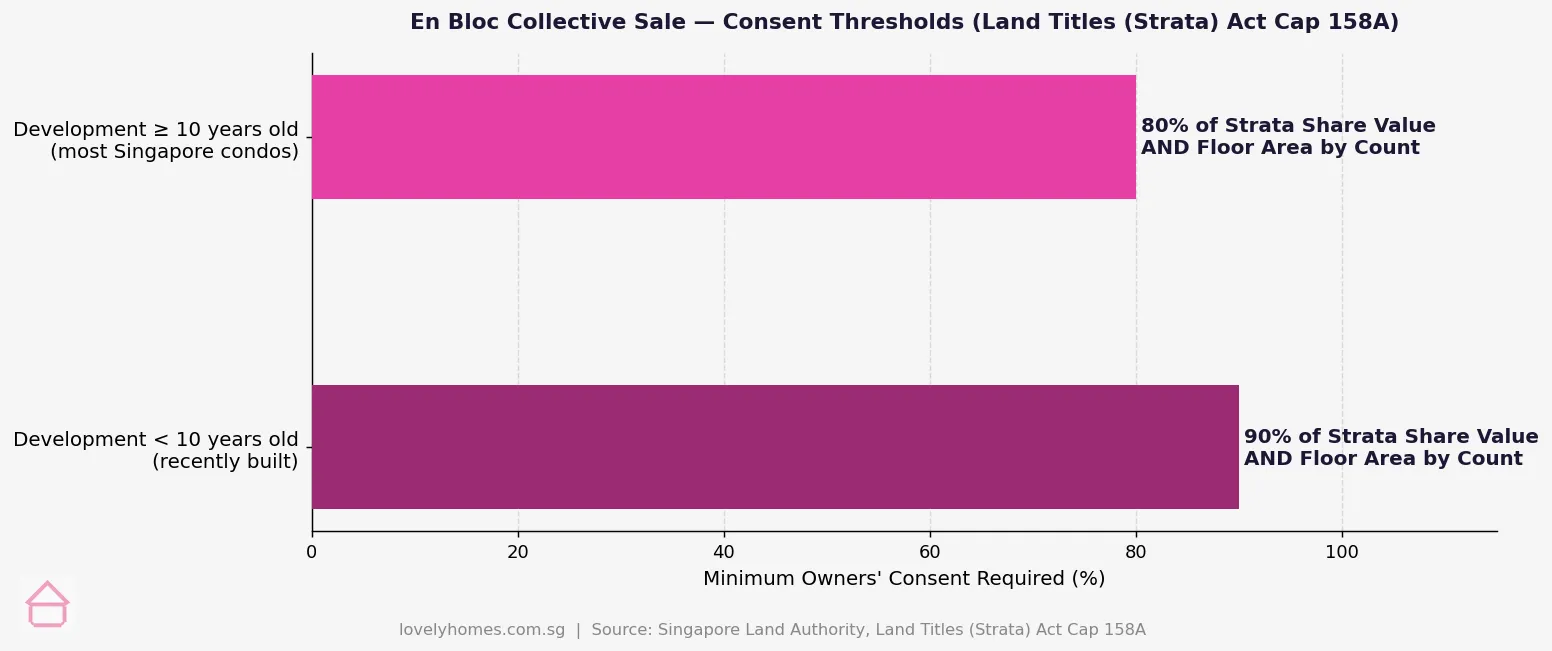
  • An en bloc sale needs 80% consent (developments ≥10 years) or 90% (under 10 years) by both share value AND strata area.
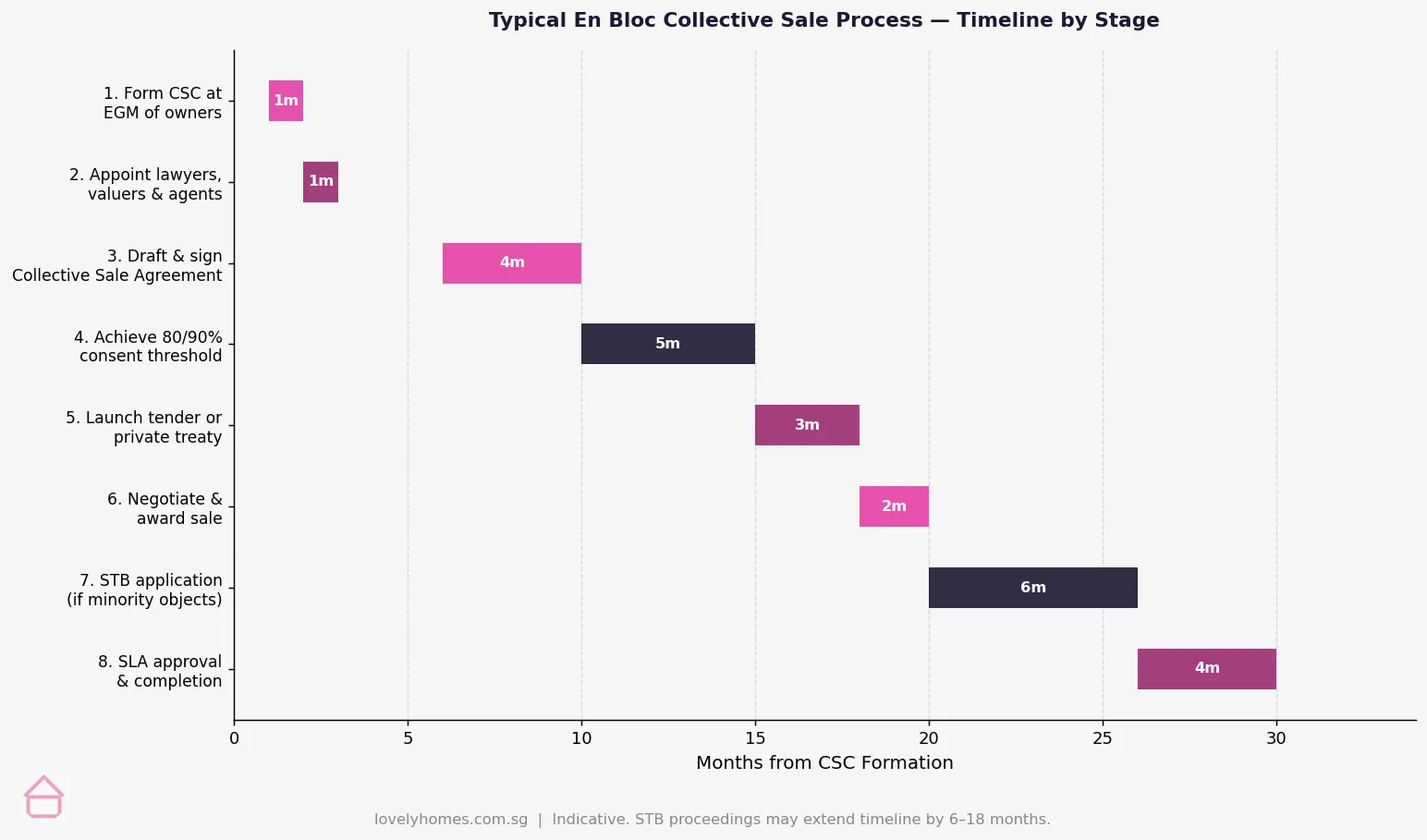
  • The process runs through four stages: form CSC, sign CSA, tender, and apply to the Strata Titles Board (STB) — typical end-to-end 18 to 36 months.
  • Owners typically receive a 30% to 50% premium over open-market resale value of an equivalent unit.
  • Distribution method is set in the CSA: by share value, strata area, equal apportionment, or a valuation-led hybrid.
  • Minority owners can object at the STB on grounds of bad faith, insufficient sale price, financial loss, or procedural defects.
  • All registered owners must sign for a unit to count, and mortgagee consent is required where the unit is mortgaged.
  • Failure to clear the threshold within 12 months of the first signature voids the CSA and the process restarts.
En Bloc Sale Singapore 2026 hero — collective sale guide
LovelyHomes — collective sale 2026: how the 80% threshold, STB approval and owner payouts actually work.

Why en bloc sales exist in Singapore

Singapore’s land scarcity and short leasehold tenures (typically 99 years for condos) make redevelopment economics powerful. By the time a 1980s-era condo passes its 30-year mark, the residual lease has 60+ years left, the building’s gross plot ratio is often well below the current Master Plan ceiling, and the underlying land is worth materially more in a redeveloped state than as an aging strata block. The collective-sale mechanism allows the asset to be unlocked without requiring 100% unanimity, while still protecting minority owners through the Strata Titles Board.

The legal framework sits in Part VA of the Land Titles (Strata) Act, introduced in 1999 and amended materially in 2007 (post-2006 boom protections), 2010 (CSC governance), and most recently 2017 (timing rules and bad-faith protections). The amendments have steadily tightened minority-owner safeguards while preserving the threshold-based decision rule.

The consent threshold: 80% vs 90%

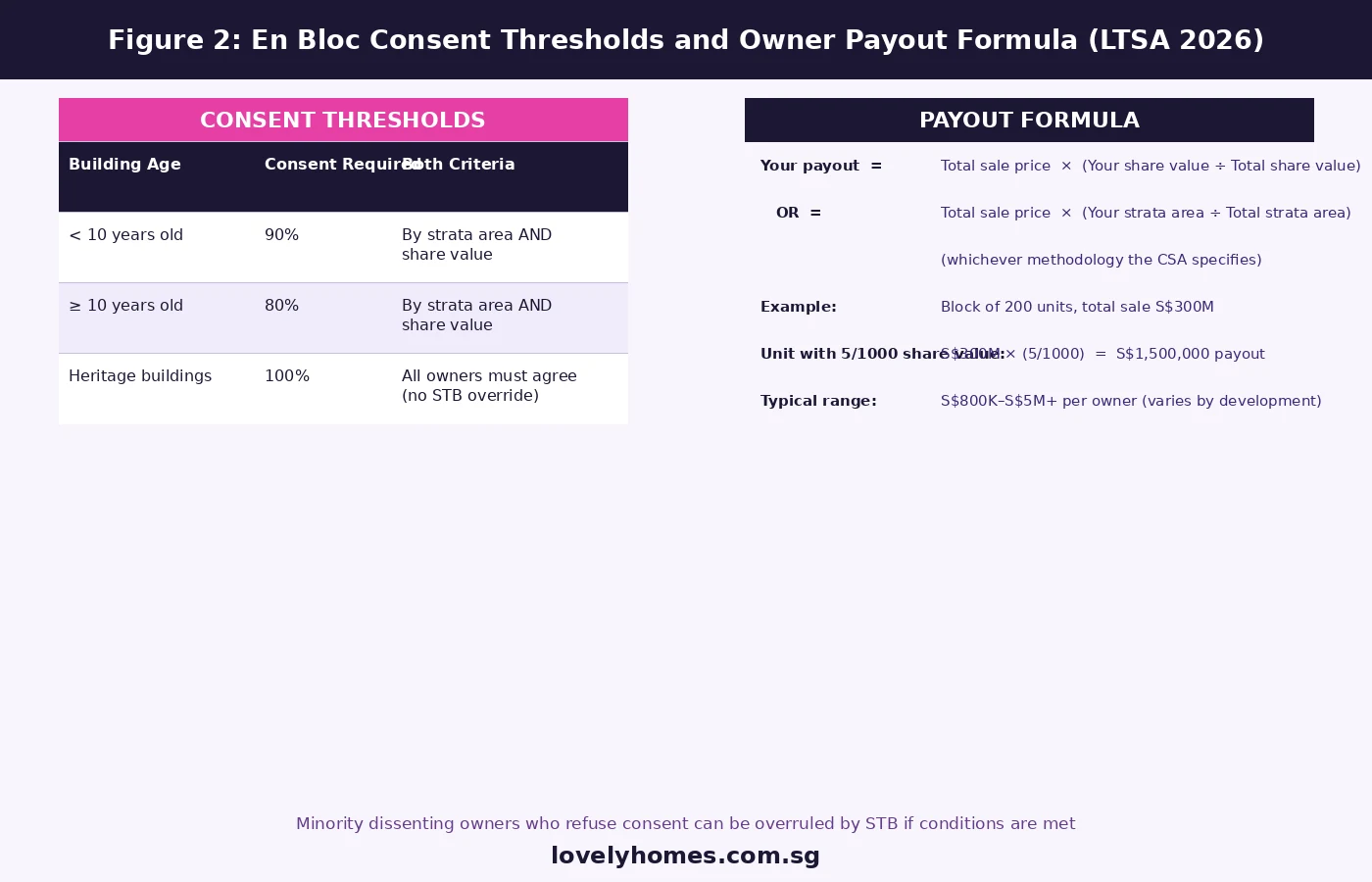
The two-tier threshold is the structural pivot of the entire regime. A development that is 10 years or older from completion needs 80% consent by both share value and strata area. A development younger than 10 years needs 90%. The dual-axis test means a building cannot rely on penthouses (high share value, low strata count) or on small units (low share value, high strata count) alone to clear the bar; both axes must hit the threshold.

En bloc 80% consent threshold and four-stage timeline Singapore 2026
Figure 1: consent-threshold tiers and the four-stage en bloc pipeline.

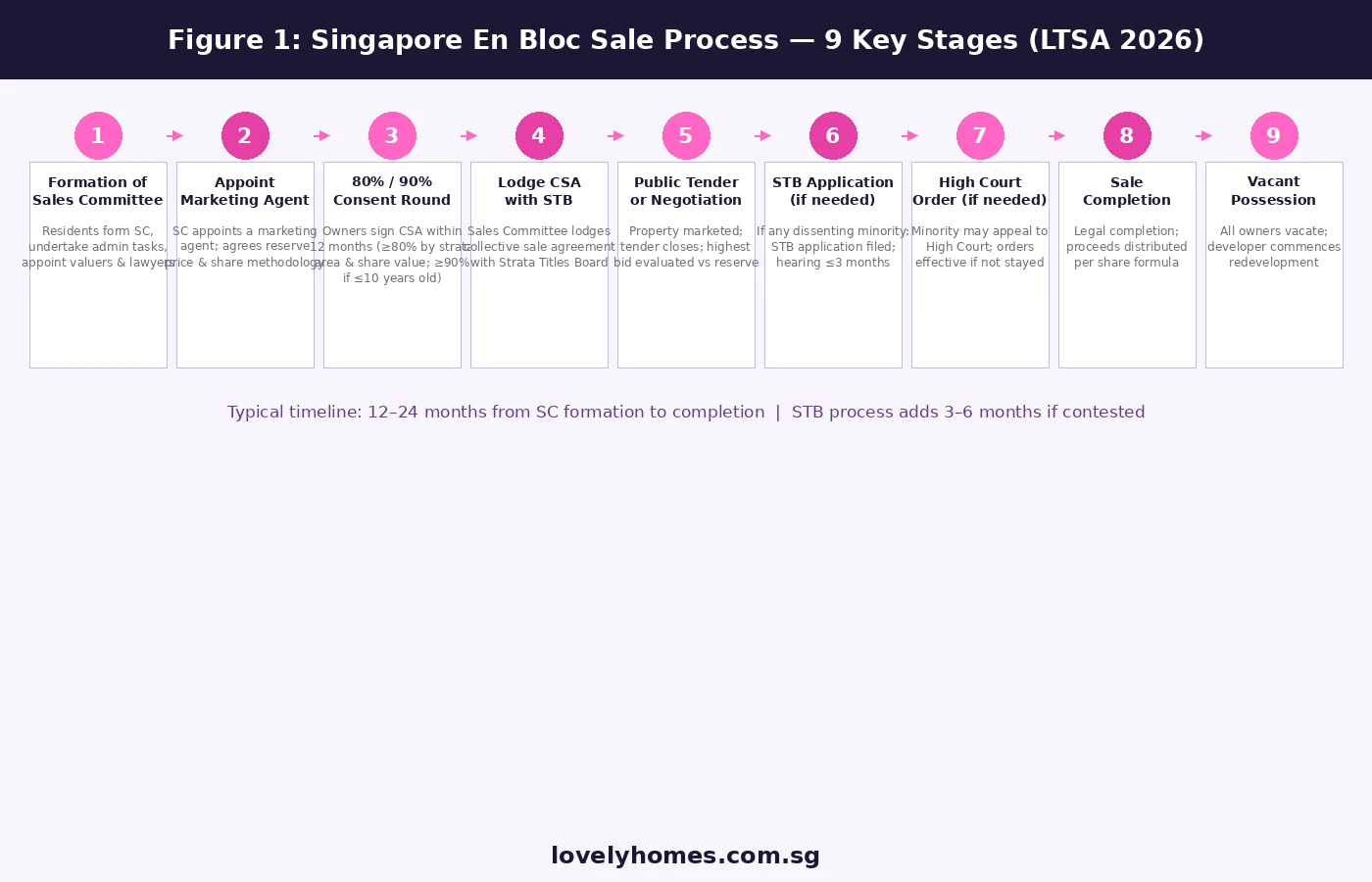
Stage 1 — Forming the Collective Sale Committee (CSC)

An en bloc attempt formally begins at an EGM where subsidiary proprietors elect a CSC by a simple majority of those present and voting. The CSC is typically three to seven owners, and its statutory duty is to act in good faith on behalf of all owners, not to push a sale at any cost. The CSC selects a marketing agent and a legal team, both of whom must be disclosed to all owners, and runs an initial sounding to gauge appetite.

Key governance rules: at least three CSC members must be subsidiary proprietors of the development; CSC members cannot have a conflict of interest with the marketing agent or developer; the CSC must hold quarterly meetings open to owners with minutes circulated; and the CSC’s appointment can be revoked by an EGM at any time.

Stage 2 — Signing the Collective Sale Agreement (CSA)

The CSA is the legal contract that binds signing owners to sell. It must specify: the reserve price, the apportionment method, distribution timing at completion, fee allocations, and a 5-day cooling-off period after signature during which an owner may rescind without penalty. The threshold must be reached within 12 months of the first signature; if not, the CSA lapses and the process restarts.

Most CSAs in 2026 specify apportionment by share value as the default — it is mathematically simple and well-tested in court. Some CSAs use strata area (favouring larger units), equal apportionment (favouring smaller units, rare), or a valuation-led hybrid where an independent valuer apportions based on a per-unit current-market valuation. The choice of method is itself a flashpoint — a small-unit-heavy estate that picks share-value apportionment will see its 1-bed owners receive proportionally less than a 1:1 equal split, and that asymmetry is sometimes the reason consent stalls.

Stage 3 — Tender and the developer market

Once threshold is met, the CSC instructs the marketing agent to launch a public tender. Tenders typically run 6 to 8 weeks; the reserve price is published, alongside the development’s gross floor area, plot ratio, lease tenure, and any URA pre-application advice. Bidders are most often consortia of local developers, foreign developers, and capital-backed real-estate funds.

If the highest bid clears the reserve, the CSC awards the tender. If no bid clears, the CSC may negotiate a private treaty with the highest bidder, but this carries a higher risk of minority objection at the STB stage on “below market” grounds. Some 2025 tenders that failed at the public stage have been re-launched at lower reserves after CSC vote — an option the CSA must explicitly authorise.

Stage 4 — Strata Titles Board approval

The successful tender triggers the application to the Strata Titles Board for a sale order. Minority owners (those who did not sign the CSA) may file objections within the prescribed window. The Board examines whether the transaction was conducted in good faith, whether the sale price is at or near market value, and whether procedural requirements were met.

The STB will issue a sale order in the majority of contested cases provided the procedural and good-faith tests are met — but the Board has historically refused sale orders where the marketing agent had a hidden conflict, where the reserve was set without independent valuation, or where signatures were collected with materially incomplete information. Once the order issues, the sale completes ~3 to 6 months later, owners receive their distribution, and they are typically given 6 to 12 months from completion to vacate.

How the payout actually splits

Distribution to owners happens at completion, after deducting transaction costs (marketing fees ~0.5% to 1.5%, legal fees ~0.15% to 0.30%, stamp duty fractions per the CSA, and any reserve fund contributions). The figure each owner receives is determined by the apportionment method, share value, and any premium-tier bumps the CSA may have built in (e.g. a 5% top-up for ground-floor units that lose access to private gardens).

En bloc S$650m worked payout 200 unit condo Singapore 2026
Figure 2: worked S$650 million sale split across 200 units with three share-value tiers.

Worked Example: 200-unit leasehold condo, S$650m sale

Profile. A hypothetical 1996-completion 99-year leasehold condo at the city fringe, 200 units across two towers, 1980s-era plot ratio of 1.6 against a current Master Plan ceiling of 2.8. Mix: 60 × 1-bedroom (50 sqm, share value 5), 120 × 3-bedroom (100 sqm, share value 8), 20 × penthouses (170 sqm, share value 11).

Total share values: (60×5) + (120×8) + (20×11) = 300 + 960 + 220 = 1,180 share units.

Tender outcome. Reserve price set at S$640m; highest tender comes in at S$650m. CSC awards.

Deductions. Marketing fees + legal fees ~1.5% = S$9.7m. Stamp duty / GST allocations per CSA = S$1.3m. Net distributable: S$639.0m.

Allocation by share value:

  • Tier A (1-bed, 60 units): 300 ÷ 1,180 × S$639.0m = S$162.5m total → S$2.71m per unit gross. After deducting ~S$60k legal/admin per unit, net S$1.62m in cash to each 1-bed owner.
  • Tier B (3-bed, 120 units): 960 ÷ 1,180 × S$639.0m = S$520.0m → S$4.33m per unit gross. Net per unit ~S$2.60m.
  • Tier C (penthouse, 20 units): 220 ÷ 1,180 × S$639.0m = S$119.1m → S$5.96m per unit gross. Net per unit ~S$3.57m.

Open-market comparator. A 3-bedroom 100 sqm unit in the same estate trades at ~S$1.80m on the resale market in 2026. The en bloc payout of S$2.60m net represents a ~45% premium over the open-market alternative — the headline number that drives consent in most successful collective sales.

Mortgage payoff. Owners with outstanding mortgages have the bank’s payoff figure deducted at completion. CPF refunds (capital + accrued interest) flow back to OA accounts before the cash residual reaches the owner.

When the STB rejects an en bloc

Strata Titles Board en bloc objection grounds Singapore 2026
Figure 3: the four most commonly cited STB objection grounds under section 84A.

The Board does not rubber-stamp en bloc sales. Roughly one in seven contested applications since 2014 has resulted in a refused sale order or a forced re-tender. The four most cited grounds are: bad faith (s.84A(7)(a)) — typically conflicted CSC or hidden marketing-agent commissions; insufficient sale price (s.84A(7)(b)) — reserve set without proper valuation; financial loss (s.84A(8)(b)) — owner would receive less than original purchase + duty (rare and hard to prove); and procedural defects (s.84A(7)(c)) — typically EGM-notice or signature-collection irregularities.

Summary table — what each stage requires

Stage Approval Required Documentation Typical Time
Form CSC Simple majority at EGM Notice of EGM, minutes 2 to 4 months
Sign CSA 80% / 90% threshold within 12 months CSA, owner registers, mortgagee consents 6 to 12 months
Public tender CSC awards highest bid above reserve Tender notice, valuation report, URA pre-application 2 to 3 months
STB application Sale order from Strata Titles Board Application, owner statements, valuation, transaction file 3 to 9 months
Completion All consents, sale order, payments cleared Conveyancing, mortgage payoffs, distribution 3 to 6 months after STB order

What this means for owners

If you live in a 30+ year-old condo with a low plot ratio and a high Master Plan ceiling, your unit is structurally a candidate for collective sale. Three behaviours protect you: read every CSA paragraph, especially apportionment and reserve clauses; insist on independent valuation at reserve-setting time; and track CSC minutes to spot conflicts of interest early. If the apportionment method materially disadvantages your unit type, raise it before signing — the threshold dynamics give every owner real bargaining leverage in the early signature phase.

If you are a minority objector, your strongest grounds are usually procedural (notice defects), conflict-based (CSC or marketing-agent conflicts of interest), or valuation-driven (reserve set below market). A pure “I do not want to move” objection is unlikely to succeed — the Board has consistently held that majority will to redevelop is recognised once the threshold is met.

What might come next

Singapore en bloc activity is broadly cyclical, tracking developer land-bank appetite and the URA Government Land Sales calendar. With 17 new launches scheduled for the rest of 2026 and a heavy GLS pipeline (Bayshore Drive, Holland Plain, Peck Hay Road, River Valley Green C, Morrison Lane), most large developers are well-stocked through 2027 — moderating the pace of speculative en bloc bids. By 2028, as land-bank pressure rebuilds, expect a renewed wave of en bloc tenders for District 9 / 10 / 11 candidate sites and selected fringe-CCR sites with redevelopment uplift.

Legislative direction over 2026 to 2027 is likely to focus on tightening the disclosure regime around marketing-agent conflicts and tightening the CSC’s quarterly-reporting cadence. Expect no change to the 80% / 90% thresholds — those have stabilised after the 2017 amendments and command broad industry consensus.

FAQ

If I do not sign the CSA, can the sale still proceed?

Yes, provided the threshold is met without your signature. The 80% / 90% test is by share value AND strata area — once both axes clear, the sale binds all owners (signing and non-signing) once the STB issues the sale order. Non-signing owners receive the same per-unit distribution as signers under the apportionment method specified in the CSA.

What is the cooling-off period after I sign?

The Land Titles (Strata) Act gives signing owners a 5-day cooling-off after signature, during which the owner may rescind their signature without cause and without penalty. After day 5 the signature is binding and contributes to the threshold count.

Do I need bank consent if my unit is mortgaged?

Yes. The mortgagee (your bank) must consent in writing for your signature to count toward the threshold. Banks usually grant consent without difficulty because the en bloc payout fully refinances the loan with surplus to the owner — it is operationally a clean payoff. The consent is filed alongside your signed CSA in the owner register the CSC maintains.

What happens to the resale levy and CPF refunds at completion?

If you previously took a subsidised flat (BTO, EC) and the en bloc condo was your second purchase, the resale levy was already paid. CPF refunds — both capital and accrued interest — are remitted back to your CPF Ordinary Account first, with the residual cash distribution flowing to your bank account. The CPF mechanics mirror an open-market resale: the Board is paid first, accrued interest is paid second, surplus is paid third.

How long do I have to vacate after the sale completes?

The CSA typically gives owners 6 to 12 months from the completion date to vacate. The exact figure is negotiated between the CSC and the developer at tender stage and recorded in the sale-and-purchase agreement. Some recent tenders have offered 24-month leasebacks where the developer has not finalised its construction permits, allowing owners more time to find replacement homes.

Can I claim ABSD remission on a replacement property bought before en bloc completion?

If the en bloc owner is a Singapore Citizen replacing one residential property with another, ABSD remission applies provided the existing en bloc unit is sold within 6 months of the new property’s completion (or 6 months of OTP for completed units). Strict timing applies — most owners coordinate with their solicitor and the CSC’s expected completion window before signing the OTP on a replacement home.

If my unit is held in a trust or by a foreign owner, what changes?

Trust-held units sign through the trustee, with proper trust documents filed in the owner register. Foreign-owned units sign normally — there is no foreigner restriction at the en bloc stage. ABSD on the eventual replacement purchase is the relevant friction (60% for foreigners as at 2026), not the collective-sale process itself.

Related Articles

Disclaimer

This article is general guidance for Singapore strata-titled property owners considering or affected by an en bloc / collective sale. Statutory rules sit in Part VA of the Land Titles (Strata) Act, accessible via Singapore Statutes Online; the regulator on minority-objection adjudication is the Strata Titles Board. Property tax, stamp duty, and ABSD rules sit with IRAS. CPF refund mechanics sit with the CPF Board. Consult a licensed solicitor for your specific transaction; figures in worked examples are illustrative.

Tags: en bloc, collective sale, Land Titles Strata Act, 80 percent threshold, 90 percent threshold, Strata Titles Board, STB, Collective Sale Committee, CSC, Collective Sale Agreement, CSA, share value, strata area, reserve price, minority objection, conveyancing, redevelopment.

High Point Condo Returns at S$580M: 5th En-Bloc Attempt for D9 Freehold Tower, Tender 9 June 2026

High Point Condo Returns at S$580M: 5th En-Bloc Attempt for D9 Freehold Tower, Tender 9 June 2026

High Point Condo S$580M en-bloc 2026 — D9 freehold Mount Elizabeth hero
High Point Condo, 30 Mount Elizabeth — fifth en-bloc attempt at S$580 million.

Quick answer — High Point’s 5th en-bloc bid in 30 seconds

  • High Point Condo at 30 Mount Elizabeth, District 9, has been launched for public tender at a guide price of S$580 million.
  • The site is a freehold residential plot of 4,422.8 sqm (≈47,607 sq ft) with a baseline plot ratio of 4.45 and a maximum height of up to 36 storeys.
  • After factoring the 7% bonus floor area, the guide price translates to approximately S$2,641 psf per plot ratio (ppr).
  • The current building is a 22-storey block with 59 units (57 apartments and 2 penthouses).
  • This is the owners’ fifth collective sale attempt since 2019. A 2021 winning bid of S$556.7 million was abandoned by the buyer, who forfeited a S$1 million deposit.
  • The tender closes 9 June 2026. No land betterment charge is payable up to the baseline plot ratio.
  • If sold, owners would each receive a meaningful pay-out — a function of unit size and apportionment — and a redevelopment of up to 36 storeys could yield 200+ units in one of Singapore’s most central freehold pockets.

What was launched and at what price

The owners of High Point, a 22-storey freehold residential tower at 30 Mount Elizabeth, have launched the development for public tender at a guide price of S$580 million. The tender is being run by an appointed sole marketing agent and closes at 3pm on 9 June 2026. The owners expect bids in line with the guide, although final pricing — like every collective sale — will depend on the depth of developer interest and the cost of redevelopment finance available at the time of submission.

The land rate, after factoring in the 7% bonus gross floor area that the Urban Redevelopment Authority (URA) typically allows for high-quality private residential redevelopment, works out to approximately S$2,641 per square foot per plot ratio (psf ppr). That sits below the recent benchmarks set by other District 9 freehold transactions and well below the prices commanded by 99-year leasehold city-fringe Government Land Sales (GLS) sites — context that the marketing team is leaning into in framing this as the most attractive of the five attempts to date.

High Point Condo en-bloc 2026 fact panel — site area, plot ratio, guide price
Figure 1 · The site fundamentals at a glance — freehold tenure, central D9 address, baseline plot ratio of 4.45.

Why this site, and why now

Mount Elizabeth is one of the quietest streets in the Orchard sub-precinct — sufficiently inside the prime shopping belt to enjoy the convenience and cachet of an Orchard Road postal code, but tucked off the main thoroughfares. The site is freehold, residential-zoned, and walking distance to Orchard MRT (NSL/TEL interchange) and the Mount Elizabeth Hospital cluster. For a developer pricing a future luxury launch, the value proposition is clear: there is almost no remaining freehold residential redevelopment supply at this scale within the Orchard postal districts, and demand from owner-occupiers and ultra-prime buyers — including Singapore’s growing pool of wealthy citizens, returning Singaporean PRs, and qualifying foreign buyers — has remained resilient through the cooling-measure cycle.

The 2026 launch arrives in a market where freehold scarcity is the dominant valuation factor. Government Land Sales programmes have skewed heavily toward 99-year leasehold tenders for the past decade, and the supply of unbuilt freehold land in District 9 has dwindled to a handful of en-bloc sites at any given moment. Freehold tenure has historically commanded a 10–20% price premium over comparable 99-year stock, and that premium has widened in the last 24 months as buyers became more attentive to lease decay risk.

The fifth attempt — what changed

High Point has tried to sell collectively four times before. The first two attempts, in 2019 and 2020, failed to find a willing buyer at the asking price. The third attempt in 2021 produced what looked like a winner — a Hong Kong-listed bidder put in a successful S$556.7 million tender — only for the buyer to walk back the deal, forfeiting its S$1 million deposit, citing post-pandemic uncertainty around China outbound capital and the trajectory of Hong Kong’s property market. A fourth, quieter attempt in 2024 also did not transact.

High Point Condo en-bloc timeline — five collective sale attempts 2019 to 2026
Figure 2 · Five attempts in seven years — the 2026 launch sets a higher reserve than 2021, but a softer ask than the 2024 round.

The 2026 reserve sits modestly above the 2021 winning bid in nominal terms but, importantly, below the 2024 ask. Several developers in the Singapore market have rebuilt land pipelines after a tighter 2024–2025 cycle, and the Tan Boon Liat Building tender at S$1 billion, the Loyang Valley collective sale at S$880 million, and the Kallang Close GLS at S$1,415 psf ppr have together signalled a renewed appetite for sites with clear redevelopment economics. High Point fits the profile — small enough to underwrite without taking on a mega-launch risk, prestigious enough to command top-of-market psf at launch.

Site economics — what a developer would pay for

Item Figure
Site area 4,422.8 sqm (≈47,607 sq ft)
Tenure Freehold
Zoning Residential
Baseline plot ratio 4.45
Bonus GFA +7% (subject to URA approval)
Maximum height Up to 36 storeys
Guide price S$580,000,000
Land rate (incl. 7% bonus GFA) ≈S$2,641 psf ppr
Land betterment charge to baseline plot ratio Nil
Existing improvements 22-storey block, 59 units (57 apartments + 2 penthouses)
Tender close 9 June 2026, public tender

At 4.45 plot ratio plus 7% bonus, the achievable gross floor area lands roughly in the 220,000–230,000 sq ft band — enough to deliver in the order of 220–250 luxury units depending on average size. Factoring construction costs at the upper end of the 2026 BCA tender curve plus margins typical for a luxury launch, breakeven would land near the high S$3,500–S$4,000 psf zone, suggesting a likely launch psf above S$4,500. That is consistent with the trajectory established by recent UpperHouse launches at Orchard Boulevard.

What it means for the wider en-bloc market

If High Point transacts in 2026, it will be the third major Orchard-area freehold sale in eighteen months, alongside the Watten Estate momentum and the Tan Boon Liat industrial-to-residential rezoning play. That trio would mark a clear reactivation of the District 9 land cycle — important context for buyers watching freehold replacement-cost benchmarks tick up. If the tender closes without a bid, expect a quieter but more concentrated 2027 round of attempts as freehold scarcity continues to bind.

For sitting owners across other ageing freehold blocks in the Orchard belt, High Point’s outcome is a useful price discovery event. A successful sale at or above guide signals to other strata-owner committees that a freehold premium of around S$2,600–S$2,800 psf ppr is achievable for prime District 9 redevelopment land. A second failed attempt would push more sellers to wait for the next interest-rate down-cycle.

What might come next

Three near-term watchpoints are worth flagging. First, whether established luxury-segment developers — particularly those with strong Orchard track records — submit competing bids, or whether the tender draws more boutique entrants. Second, whether MAS’s macroprudential settings on residential lending shift in the second half of 2026, which would change developers’ ability to underwrite long-build luxury launches. Third, whether the URA opens a parallel District 9 GLS site in the H2 2026 reserve list — a competing freehold-equivalent leasehold tender could meaningfully change the bid mathematics here.

Frequently asked questions

What does S$2,641 psf ppr translate to in expected new launch price?

Land cost is roughly 50–60% of total development cost in a Singapore prime freehold launch. Adding construction, financing, marketing, holding period interest, GST and developer margin, breakeven typically sits 50–70% above land cost. That puts breakeven near S$4,000 psf and a likely launch psf comfortably above S$4,500 — in line with very recent District 9 / Orchard launches.

How much would each owner receive if the sale goes through?

Apportionment depends on share value, unit size, and the collective sale agreement signed by owners. Typical Orchard freehold redevelopments deliver per-unit pay-outs that are a substantial multiple of recent open-market resale prices for the same units. The exact figures will be disclosed by the marketing agent to owners; outsiders should not assume a specific number until the tender result is announced.

Why did the 2021 winning bid fall through?

In December 2021, the Hong Kong-listed buyer that submitted the winning S$556.7 million tender walked back the bid and forfeited the S$1 million tender deposit. The buyer cited unfavourable post-pandemic conditions, including capital outflow uncertainty from Hong Kong/Mainland China and a softer luxury-segment outlook. The site has remained available for redevelopment since.

What’s the difference between a public tender and a private treaty sale?

A public tender is an open process — any qualified developer can submit a sealed bid by the tender close. A private treaty sale is negotiated directly with one or more identified parties. The High Point launch is a public tender, which typically maximises competitive tension if developer interest is broad.

Will the new development require a land betterment charge?

The marketing pack indicates that no land betterment charge is payable to redevelop up to the baseline plot ratio of 4.45. If the eventual buyer applies for additional GFA beyond the bonus or seeks a change of use, betterment charges or top-up land premiums may apply. URA’s published betterment-charge tables for the locality apply to those scenarios.

How does this compare to other 2026 collective sale launches?

The Tan Boon Liat Building (industrial-to-mixed-use rezoning, S$1 billion guide) and Loyang Valley (changi-fringe condo, S$880 million guide) are the other large 2026 marquee launches. High Point sits below both in absolute size but commands the highest psf-ppr land rate of the three because of its freehold tenure and prime D9 address.

Disclaimer: Site facts, guide price, plot ratio, and tender timetable in this article are summarised from the public marketing pack and the broader market reporting around the High Point collective sale launch in April 2026. Land betterment charge treatment, achievable plot ratio, and unit-mix assumptions remain subject to URA approval — verify current details on the Urban Redevelopment Authority site at ura.gov.sg. Stamp-duty, financing, and tax implications referenced here should be checked with the Inland Revenue Authority of Singapore (IRAS) at iras.gov.sg and the Monetary Authority of Singapore (MAS) at mas.gov.sg. This article is general market commentary and not investment, legal, or tax advice.

Tan Boon Liat Building Returns at S$1 Billion: 13% Reserve Cut, URA Mixed-Use Rezoning, Tender 12 May 2026

Tan Boon Liat Building Returns at S$1 Billion: 13% Reserve Cut, URA Mixed-Use Rezoning, Tender 12 May 2026

Singapore’s freehold collective-sale market has its first billion-dollar live tender of 2026. The owners of Tan Boon Liat Building at 315 Outram Road have relaunched the site for collective sale at a reserve price of S$1,000,000,000 — a 13% reduction from the S$1.15 billion guide that was unsuccessful in 2025. The tender opens immediately and closes on 12 May 2026 at 3:00 pm. With the URA’s conditional-in-principle support to rezone the site from Business 1 to mixed-use residential-with-commercial, Tan Boon Liat is the most strategically significant en-bloc opportunity in the Outram-Havelock corridor since the area began its post-Thomson-East Coast Line transformation.

This article walks through the deal particulars, why the price was cut, what the URA conditions actually require, and how Tan Boon Liat sits against the rest of 2026’s collective-sale league table. All figures reflect publicly disclosed information as of 26 April 2026.

Quick Answer — Tan Boon Liat 2026 at a glance

  • Reserve price: S$1.0 billion (was S$1.15 billion in 2025).
  • Site: 315 Outram Road, D3 — freehold, ~89,879 sq ft.
  • Existing 15-storey building used as furniture / showroom strata.
  • URA in-principle rezoning: residential-with-commercial mixed use.
  • Required mix: ≤1,500 sqm retail + ≥10,000 sqm serviced apartments (3-month minimum stay).
  • Closest MRT: Havelock (TEL), ~150 m walk.
  • Tender closes 12 May 2026.
  • No ABSD on the acquisition (B1 commercial zoning) — a major draw for developers.

Why a 13% reserve cut?

The 2025 collective-sale process closed without a qualifying bid despite drawing strong expressions of interest. Two factors drove the price cut for the 2026 relaunch:

  1. Land-rate reset. The 2025 reserve translated to roughly S$3,050 psf ppr post-rezoning. Recent benchmarks in Outram-Havelock and the broader RCR have settled in the S$2,400–2,700 psf ppr range. The new S$1.0 billion reserve implies approximately S$2,650 psf ppr after standard lease top-up and land-betterment provisions, putting Tan Boon Liat back inside the cycle’s clearing-price band.
  2. Capital-cost discipline. Singapore’s 3-month compounded SORA has stabilised in the 2.7–3.0% band, but developer hurdle rates have nudged higher as construction-cost inflation persisted through 2025. A 13% lower land cost gives bidders the cushion they need to underwrite a circa-2030 launch at viable selling prices for the residential and serviced-apartment components.

For the broader picture on land-rate trends, see our Singapore Private Property Market Q1 2026 analysis.

The URA conditions — what a buyer actually has to build

Tan Boon Liat Building en-bloc 2026 — site, sale particulars and URA rezoning conditions
Figure 1: Tan Boon Liat Building — site & sale particulars at relaunch.

The site’s current zoning is Business 1 (B1), the standard “light industrial / clean industry” classification. Under URA’s in-principle response, a successful buyer can rezone subject to three quantitative conditions:

  • Up to 1,500 sqm of commercial space on the first storey, intended to keep the new building active at street level along Outram Road;
  • At least 10,000 sqm of serviced apartments, to be operated under a long-stay tier with a minimum stay of three months — this provides Singapore-side rental supply for relocating professionals while staying outside short-stay (hotel) regulation;
  • The balance as residential strata, sized to typical Outram unit mixes.

The residential strata is the value-add: roughly two-thirds of the post-rezoning GFA can be sold as private apartments, generating the cash flow that justifies the land bid. The serviced-apartment requirement is unusual but increasingly common in URA’s rezoning conditions — it aligns with the Government’s “live-work-stay” push for the Greater Southern Waterfront and central-fringe redevelopment, and the 3-month minimum-stay floor avoids competing with hotels.

Location — what Havelock MRT changed

The Tan Boon Liat site is no more than 150 metres from Havelock MRT, which opened in November 2022 as part of Stage 3 of the Thomson-East Coast Line. The combination of TEL connectivity, Outram Park (NEL/EWL/TEL triple-line interchange) two stops away, and walking access to Singapore General Hospital, Pearl’s Hill and Robertson Quay puts the site inside one of the most rapidly re-rated city-fringe corridors of the past five years. Our Thomson-East Coast Line property guide tracks the segment-by-segment psf re-rating along the line.

Tan Boon Liat in the 2026 league table

Singapore 2026 collective-sale league table — Tan Boon Liat, Loyang Valley, Centrepoint, Pek Chuan, Serenity Park
Figure 2: 2026 year-to-date collective sales — Tan Boon Liat in context.

The 2026 collective-sale calendar has been busier than 2025 from the start:

  • Loyang Valley — Pasir Ris, D17, 99-year leasehold residential. Sold for S$880 million on its third attempt to a SingHaiyi-led consortium, awarded on 17 April 2026. Covered in our Loyang Valley en-bloc piece.
  • The Centrepoint Rear Block — Orchard Road, D9, 99-year leasehold mixed-use strata. Sold for S$391.9 million to Frasers Property on 26 February 2026. The buyer already held the majority of the front block, so this consolidates the entire Centrepoint footprint.
  • Pek Chuan Building — Lavender Street, 99-year commercial property. Relaunched at S$80 million; tender closed 10 April 2026.
  • Serenity Park — Springleaf, OCR freehold cluster strata. Currently in marketing.
  • Tan Boon Liat Building — the largest live tender, with the most consequential rezoning narrative.

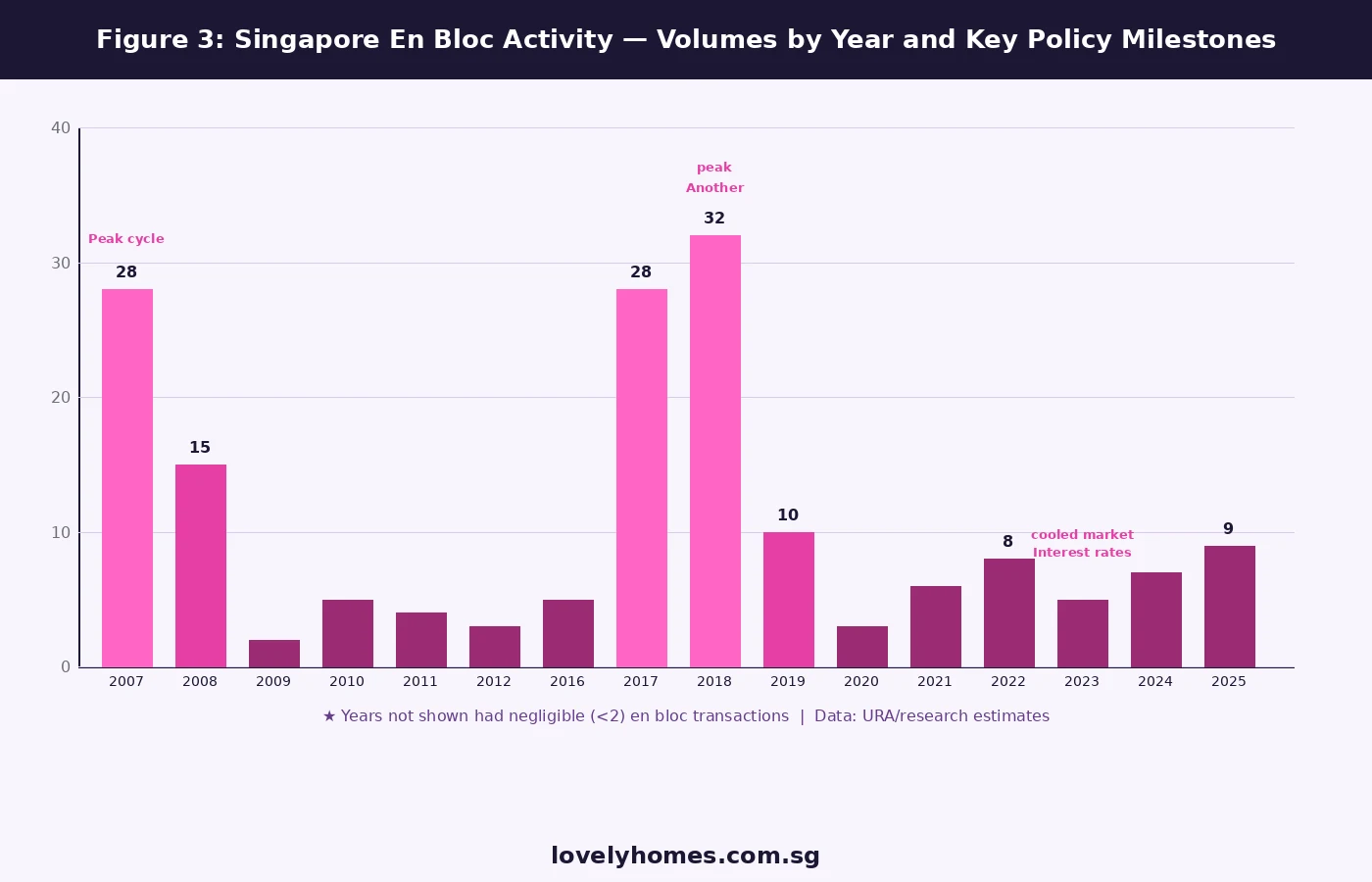
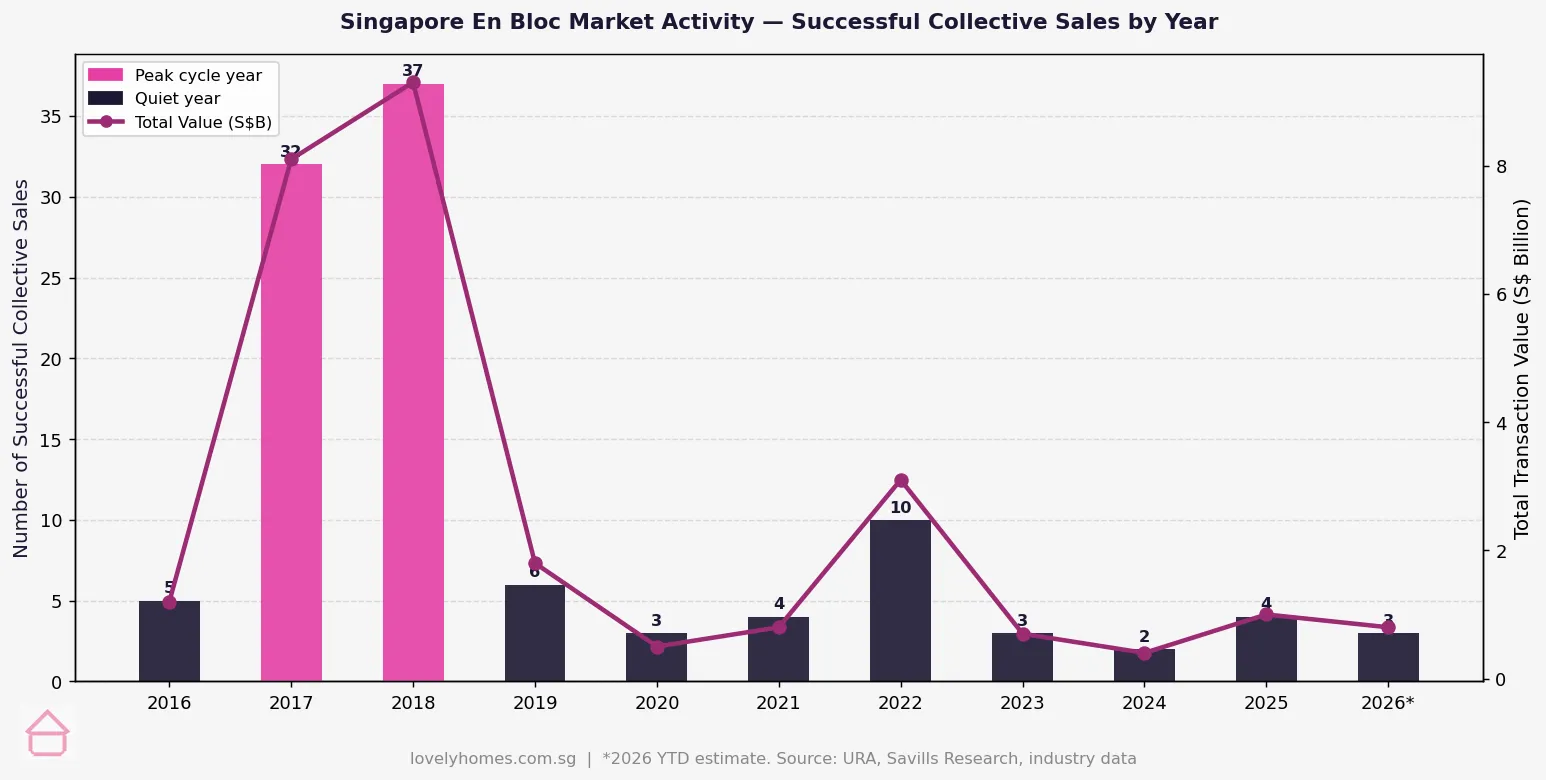
Total 2026 year-to-date en-bloc volume (announced reserves plus closed awards) is approximately S$2.37 billion — already approaching the 2025 full-year tally. If Tan Boon Liat clears at or near reserve, 2026 will be the most active collective-sale year since 2018.

Summary table — Tan Boon Liat 2026 essentials

Item Detail
Address 315 Outram Road, Singapore (D3)
Tenure Freehold
Site area ~89,879 sq ft
Existing GFA ~377,000 sq ft (15 storeys)
Current zoning Business 1 (B1)
Indicative new zoning Residential with commercial 1st storey
Reserve price (2026) S$1.0 billion
Implied land rate ~S$2,650 psf ppr
Tender close 12 May 2026, 3:00 pm
ABSD on site Not applicable (commercial zoning)
Closest MRT Havelock (TEL), ~150 m

Why this matters — the freehold city-fringe scarcity story

Genuine freehold land of this scale within 1.5 km of the central business district is functionally non-replenishable. Government Land Sales sites are predominantly 99-year leasehold; en-bloc transactions are the only meaningful supply route for fresh freehold development in central Singapore. A Tan Boon Liat clearance creates roughly 1,000 to 1,300 net residential units plus the serviced-apartment component, all on freehold tenure inside the Outram fringe. For comparison, the 1H 2026 GLS programme’s seven private residential sites add 9,185 leasehold units across the entire island.

The implications cycle through three places:

  • Existing Outram-Havelock owners — new freehold competing supply, but at price points likely above existing 99-year leasehold stock, supporting RCR psf indices on completion (circa 2029–2030).
  • The 1H 2026 GLS bid book — if Tan Boon Liat clears at S$2,650 psf ppr, the implied price benchmark hardens for the River Valley Green Parcel C and the Berlayar Drive GLS sites.
  • Buyers waiting for prices to fall — freehold central supply continues to thin; cooling-measure-led discount expectations are fading. See our 2026 market outlook.

What might come next

Three scenarios for the 12 May tender outcome:

  1. Clears at or near reserve. Most likely outcome given the 13% reset. A bid in the S$960–1,030 million range would close the deal within owner expectations and trigger a similar-style rezoning play across other URA-flagged B1 sites.
  2. One marginal-bid scenario. If a single bid arrives below reserve, the consortium can ask owners to vote on a lower acceptance level (still requires the 80% by share value), which may or may not pass.
  3. No qualifying bid. A second consecutive failed tender would push the owners’ committee to consider an even lower 2027 reserve or, more likely, a temporary withdrawal until 2027–28 when the broader rate cycle improves.

For continuing coverage of en-bloc activity see our En-Bloc News stream and Transaction News sections.

Frequently Asked Questions

Why is there no ABSD on this acquisition?

The Additional Buyer’s Stamp Duty applies to residential properties. Tan Boon Liat’s existing zoning is Business 1 (commercial), so the developer’s land acquisition is treated as a commercial purchase and ABSD does not apply. ABSD only re-enters the picture once the rezoning to residential is approved and the developer triggers the Qualifying Certificate / Additional Buyer’s Stamp Duty for housing developers, which is 40% (5% non-remittable, 35% remittable on completion + sell-through within 5 years). See our ABSD complete guide.

What is the difference between a 1st and 2nd attempt en-bloc reserve?

A second attempt typically follows market intelligence from the first round — either the reserve was too high, or the bid window was too short, or there were development-plan uncertainties that put off bidders. Owners can revote on a new reserve through the Collective Sale Committee (CSC), achieving 80% consent again. For Tan Boon Liat, the 13% reduction reflects market feedback during the 2025 process.

What does “in-principle” rezoning mean? Is the rezoning guaranteed?

“In-principle” support is URA’s indicative response that a rezoning application would likely be approved subject to specified conditions. It is a planning indication, not an actual rezoning. The successful bidder must submit a formal outline application for development control approval and the Government may impose additional payment (Differential Premium) for the increase in plot ratio and the change of use.

Are existing strata owners obligated to vacate immediately on sale?

No. Singapore en-bloc completions typically allow a 6–12 month vacant possession window. The collective-sale agreement specifies the date by which all owners must hand over keys; until then, existing tenancies (if any) and owner-occupier use continue. Demolition and construction commence after vacant possession is delivered to the buyer.

Could foreign developers bid for Tan Boon Liat?

Yes. The Residential Property Act restrictions on foreign ownership do not apply to commercial-zoned land at acquisition. Foreign developers can and do bid for B1 sites and for collective-sale opportunities; they pick up the standard housing-developer ABSD obligation only when the site is rezoned to residential and units are sold to homebuyers. See our Foreign Buyer Guide Singapore 2026 for the broader framework.

When could a launch happen if Tan Boon Liat is sold in May 2026?

A typical timeline from collective-sale award to first-day launch is 30–42 months. After award, the buyer typically takes 6–12 months for vacant possession, 6 months for design and authority approvals, 24–30 months for construction up to the launch-ready superstructure stage. A May 2026 award could produce a 2H 2028 to 1H 2029 launch. TOP would follow 24–36 months after launch.

Related reading on LovelyHomes

Disclaimer: This article is for general information only based on publicly disclosed details as of 26 April 2026. Tender outcomes, rezoning approvals and final pricing remain subject to the Tan Boon Liat collective-sale committee, the awarded bidder, and the Urban Redevelopment Authority. Always verify the current position with the URA and a licensed Singapore conveyancing lawyer before acting on any property transaction.

En Bloc Sale Singapore: The Full Process, Who Wins, Who Loses (2026)

En Bloc Sale Singapore: The Full Process, Who Wins, Who Loses (2026)

Quick answer
An en bloc sale (collective sale) in Singapore needs 80% consent by share value AND by strata area for developments over 10 years old (90% if newer). Approval by the Strata Titles Board (STB) is mandatory. Typical timeline from first EGM to payout is 12–24 months. Payouts are apportioned by share value, unit size and sometimes a ‘method 3’ weighted formula. A seller typically walks away with 30–80% above current market value if the en bloc clears.

En bloc sales are Singapore’s redevelopment pressure valve. Old, land-inefficient stock comes down; new, plot-ratio-maxed stock goes up. For owners, a successful collective sale can deliver a premium that no private resale would ever produce. For minority owners, it can feel like a forced uprooting.

This guide sets out the 2026 legal framework, the five-stage timeline, how payouts are apportioned, and why a large share of launched en blocs never complete. For the investment-return angle see our freehold vs 99-year comparison.

En bloc process diagram — five stages from EGM to completion, plus win/lose comparison
The five gates every Singapore en bloc has to clear.

Under the Land Titles (Strata) Act, the required consent threshold is:

Building age Consent required Measured by
Less than 10 years old 90% Share value AND strata area
10 years old and above 80% Share value AND strata area

The dual-test is crucial: a block can fail en bloc because the consenting owners, while ≥80% by share value, collectively occupy <80% of strata area (or vice versa).

The five-stage timeline

Stage 1 — First EGM and Sales Committee (month 1–3)

Owners convene, table a resolution and elect a Sales Committee (usually 7–12 people). The committee tenders for a marketing agent and a law firm.

Stage 2 — Consent and CSA signing (month 3–9)

The Collective Sale Agreement (CSA) sets out reserve price, apportionment formula, and minimum sale period. Owners sign in waves. The committee must hit the consent threshold within a defined window.

Stage 3 — Launch and tender (month 9–12)

Public tender or expressions-of-interest exercise. The reserve price is the floor; the Sales Committee can negotiate private treaty if the tender under-bids.

Stage 4 — STB approval (month 12–18)

The Strata Titles Board reviews objections from minority owners. STB looks for procedural compliance and “good faith”.

Stage 5 — Order and completion (month 18–24)

Once the STB issues its Order, completion follows at the agreed long-stop date. Owners receive their share of the sale proceeds at completion — which is how most feel the payout, not in monthly instalments.

How the payout is apportioned

Three common methods:

  • Method 1 — Share value. Pure pro-rata to each unit’s share value.
  • Method 2 — Strata area. Pro-rata to unit size.
  • Method 3 — Weighted. A formula (often an equal-weight blend of methods 1, 2, and valuation). Used when unit mix is very uneven.

The apportionment formula is the single biggest source of minority objections — which is why professional advisors draft it very carefully before the CSA is circulated.

Why en blocs fail

  • Reserve price set above developer breakeven after ABSD + cooling measures.
  • Minority objections upheld at STB (procedural failure, apportionment unfairness, good-faith concerns).
  • Consent stalls under the 80% threshold.
  • Tightening market conditions between CSA and launch.

Worked example — a typical mid-sized en bloc

Take a 200-unit RCR condo bought for S$800m, with a total strata area of 250,000 sqft. An owner of a 1,100-sqft unit with a share value of 10 (out of a total 2,000) would, under pure share-value apportionment, receive S$4.0m (10/2000 × S$800m). If they originally paid S$2.2m and still owe S$800k, their net payout is S$3.2m — roughly 80% above their effective basis. The exact figure depends entirely on the CSA formula and outstanding mortgage.

Frequently asked questions

Can I opt out if I refuse to sign?

If 80% (or 90% for under-10-years) consent is reached, a minority owner cannot block the sale outright — but they can file an objection with STB. STB can adjust apportionment but rarely stops a well-drafted en bloc.

What tax applies on en bloc payouts?

Seller’s Stamp Duty (SSD) applies if the owner has held the property for less than three years. See our SSD guide. Capital gain itself is not taxed in Singapore for individuals.

Do HDB flats go en bloc?

No. HDB redevelopment happens via SERS (compulsory) or VERS (voluntary). See our VERS guide.

What triggers a ‘good-faith’ challenge at STB?

Typical flags: conflict of interest on the Sales Committee, undisclosed side deals, apportionment that under-values specific unit types, procedural lapses in EGMs.


This guide is for general information only and is accurate as of April 2026. Singapore property rules, taxes and cooling measures change frequently — always verify current figures with URA, IRAS, HDB or a licensed professional before committing. LovelyHomes is not a financial, legal or tax advisor.


Translate »