Bedok 4-Room HDB Resale Hits S$1.17M — Bedok South Horizon Sets Record at MOP

Bedok 4-Room HDB Resale Hits S$1.17M — Bedok South Horizon Sets Record at MOP

Bedok South Horizon 4-room resale S$1.17 million record April 2026 hero
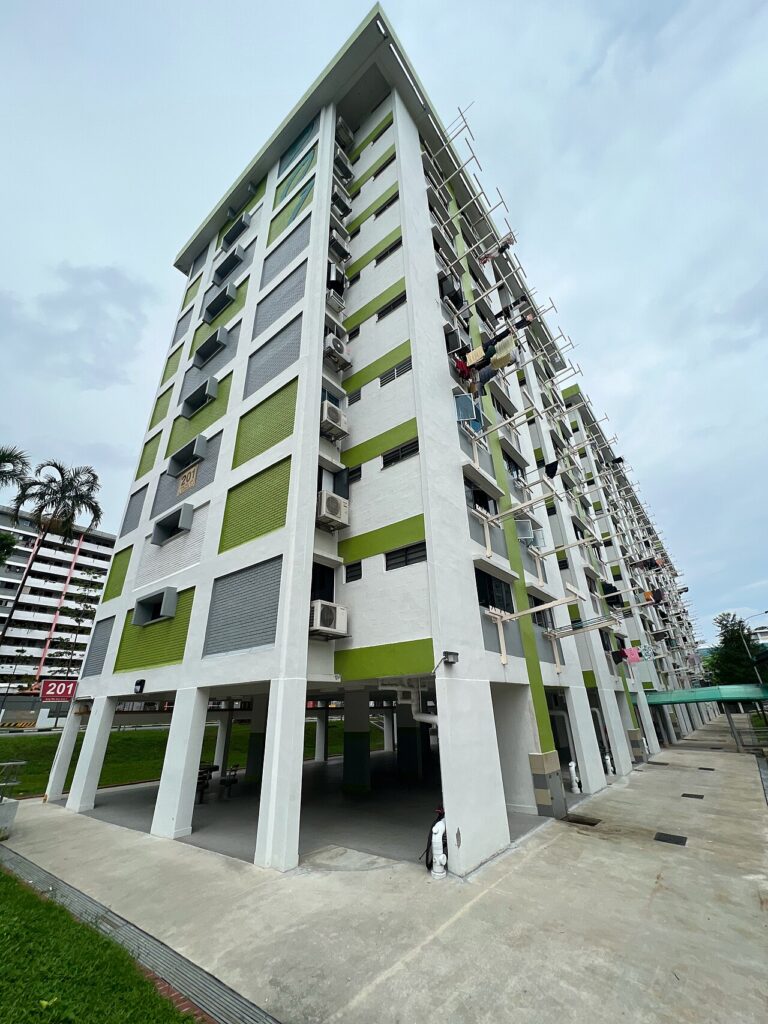
Bedok South Horizon — the November 2016 BTO project that just reset the OCR resale ceiling.

Quick Answer

  • A 4-room flat at Block 154B Bedok South Road (Bedok South Horizon) sold for S$1.17 million in April 2026 — a new resale record for any 4-room HDB flat in Bedok.
  • The unit measures 1,001 sqft, translating to S$1,168 psf, with around 94 years of lease left.
  • It was the second record-breaker in the same block within a few weeks: an earlier transaction at S$1.12 million had already taken the previous best, S$995,000 at 430A Bedok North Road, off the top.
  • Bedok South Horizon was launched in the November 2016 BTO exercise and only reached its 5-year Minimum Occupation Period in early 2026, so this is the first wave of post-MOP supply hitting the market.
  • The transaction comes despite the Q1 2026 HDB Resale Price Index falling 0.1% — the first quarterly decline in almost seven years — confirming that top-quartile flats in OCR estates can still set records even in a softening index.
  • Several other November 2016 BTO estates are due to MOP across 2026 (Punggol Northshore, Tampines GreenGem, Senja Heights, Bidadari Alkaff Vista). Their first sales will be the comparables to watch.

What Happened

Bedok South Horizon, a 5-room and 4-room BTO project located along Bedok South Road, has just produced two record-setting resale transactions within the space of a month. The first, at S$1.12 million, was reported earlier in April 2026 and was already the highest 4-room price ever paid in Bedok. A second flat in the same block, Block 154B, then sold for S$1.17 million — beating the first record by S$50,000 within weeks and setting a new ceiling at S$1,168 per square foot.

The flat in question is a standard 1,001 sqft 4-room layout. With its November 2016 launch date, the Minimum Occupation Period only lifted in early 2026, which means this is among the very first batches of resale supply emerging from this BTO cohort. Bedok South Horizon flats still carry roughly 94 years of lease, which is structurally important for buyer financing — both bank loans and HDB Concessionary Loans get the cleanest treatment when the lease can comfortably cover the youngest occupier’s age plus 95.

Bedok South Horizon resale record progression
Figure 1: Two record sales in one month — Bedok South Horizon resets the 4-room benchmark.

Why the Record Matters

The headline number is dramatic, but the context matters more than the price. Three things make this transaction noteworthy.

It happened against a falling index. The official HDB Resale Price Index slipped 0.1% in Q1 2026, the first quarterly decline since Q2 2019. That index is a town-and-flat-type-mix-adjusted average. A single record-setting unit does not move it. But the gap between the index and individual standout transactions has widened in 2026 — a pattern that often surfaces during a market plateau, when buyers concentrate on the very best stock.

The neighbourhood is non-mature OCR. Bedok is mature in colloquial terms but classified as part of the East Region in HDB’s official segmentation. The estate has a long-established food culture, multiple Circle Line and East-West Line stations, and direct expressway access. Bedok South Horizon’s specific cluster also benefits from being a short walk from Tanah Merah MRT and the East Coast Park linear route — amenities that lift price more than psf-level supply curves predict.

The MOP wave is just beginning. The November 2016 BTO exercise was substantial. Bedok South Horizon’s MOP in early 2026 is the first significant supply event from that cohort. Senja Heights (Bukit Panjang), Bidadari Alkaff Vista (Toa Payoh), Punggol Northshore and Tampines GreenGem are scheduled to MOP across the rest of 2026. Each of those will produce its own first-MOP comparables, and brokers will be benchmarking back to Bedok South Horizon for the rest of the year.

The Numbers in Context

Metric Value Context
Sale price S$1,170,000 New 4-room Bedok record
Floor area 1,001 sqft Standard 4-room BTO layout
Effective psf S$1,168 Sets a new OCR 4-room MOP-fresh psf benchmark
Lease remaining ~94 years Comfortable for any buyer profile
Original BTO launch November 2016 5-year MOP lifted early 2026
Block 154B Bedok South Road Same block produced two consecutive records in April 2026
Q1 2026 HDB Resale Index -0.1% QoQ First quarterly decline in nearly 7 years (URA + HDB)

What This Tells Us About the OCR HDB Market

The signal here is not that the market is broadly heating up. The Q1 2026 RPI says the opposite — town-mix-adjusted prices have just turned negative for the first time in seven years. The signal is that quality differentiation is widening. In a softening index, the top-quartile of flats — fresh-MOP, low-lease-decay, near MRT, in established food and retail catchments — keep getting bid. The bottom quartile is where the index decline is being felt: older flats, longer-distance MRT walks, smaller resale liquidity.

For buyers, this means the headline decline in the RPI will not be felt evenly. A first-time upgrader looking at a fresh MOP unit in Bedok, Tampines or Punggol should not expect to negotiate down on the assumption that “the market is falling”. A buyer hunting in older non-mature pockets with longer commutes may have more leverage than they did in 2024.

For sellers in the November 2016 BTO cohort, the timing of MOP versus first listing is a real lever. Pricing the unit at “first-mover premium” in the first three months after MOP — when there are very few comparables — has produced strong outcomes on the OCR fringe in 2024 and 2025. Bedok South Horizon’s two records reinforce that pattern.

Comparable November 2016 BTO projects reaching MOP 2026
Figure 2: Other November 2016 BTO estates due to MOP across the rest of 2026.

What’s Next on the MOP Calendar

Several projects from the same November 2016 BTO cohort are scheduled to MOP across 2026, and brokers will be using Bedok South Horizon as the comparable. Senja Heights in Bukit Panjang is the next in line. Bidadari Alkaff Vista in Toa Payoh, on the much-watched Bidadari estate, is a more direct urban comparison and likely to clear higher psf because of mature-estate proximity. Punggol Northshore waterfront flats and Tampines GreenGem are the next two that will benchmark against the OCR fringe.

Watch for two leading indicators: (a) the first listing prices on PropertyGuru and 99.co immediately after each project’s MOP date, and (b) the first three completed sales filed on the HDB Resale Portal. Together those are the cleanest first read on whether the Bedok South Horizon record is a one-off or a template for the cohort.

Frequently Asked Questions

How much income do you need to buy a S$1.17 million HDB flat?

Under MAS rules, a Mortgage Servicing Ratio (MSR) cap of 30% applies to HDB flats financed by a bank loan, and a Total Debt Servicing Ratio (TDSR) cap of 55% applies on top. At an indicative bank fixed rate of 2.85% and a 30-year tenure, the maximum loan on a S$1.17 million flat (after 25% downpayment) is roughly S$877,500. Stress-tested at 4.0%, that loan requires monthly household income of approximately S$13,950 to fit MSR. Cash and CPF down payment plus stamp duties take the entry-cost figure to roughly S$310,000.

Why is Bedok considered non-mature when it feels mature?

HDB classifies estates as “mature” or “non-mature” based on the age of the township, the size of the dwelling stock and the level of amenity development. Bedok feels mature culturally — Bedok 85 hawker centre, Bedok Reservoir, multiple shopping malls — but in HDB’s official BTO segmentation it is part of the broader East Region grouping where some pockets are still classified as non-mature for sales-launch eligibility purposes. The classification matters mainly for BTO pricing tiers and grant eligibility, not for resale.

Does CPF Accrued Interest reduce the seller’s net proceeds significantly?

Bedok South Horizon flats were bought as BTO at much lower prices in 2017-2018 (typical 4-room BTO price in that period was S$430k-S$500k). The CPF used for downpayment and instalments has compounded at the OA rate of 2.5% for around 8-9 years. On a typical buyer profile, CPF Accrued Interest at this stage is roughly S$70k-S$110k. Sellers receiving the S$1.17m gross will see roughly S$950k-S$1.05m net of mortgage redemption and CPF refund — still a healthy capital gain.

Are Bedok South Horizon prices reflective of the wider Bedok 4-room market?

Not directly. These are MOP-fresh flats with 94 years of lease, in a relatively new BTO project. The wider Bedok 4-room market includes flats with 60-70 years of lease in older blocks closer to Bedok Reservoir, which transact at very different price points. Bedok South Horizon sets a ceiling for what fresh-MOP top-quartile stock can achieve in the area, not the median.

Will the next MOP cohort match Bedok South Horizon’s pricing?

Mature-estate projects (Bidadari, Toa Payoh) typically clear higher psf than non-mature OCR fringe. Punggol waterfront flats in Northshore should clear comparable psf because of the lifestyle premium. Tampines GreenGem will be a closer Bedok analogue. Whether all of them break the S$1.17m mark depends on unit size and floor — Bedok South Horizon’s record was set on a high floor, which is a meaningful price-lift factor.

What does this mean for buyers in HDB BTO June 2026 ballot?

The June 2026 BTO exercise covers Ang Mo Kio, Bishan, Bukit Merah, Sembawang and Woodlands — all at BTO pricing tiers, well below resale levels. Bedok South Horizon’s record is not directly relevant. What is relevant is the implicit signal: prime-location MOP-fresh 4-room flats can clear above S$1m even in a softening index, which is a useful data point for first-time buyers weighing BTO ballot vs resale entry.

Disclaimer. This article reports a Singapore HDB resale transaction filed in April 2026, drawn from publicly disclosed HDB Resale Portal data and reporting by EdgeProp, Stacked Homes, and Yahoo Singapore. Specific lot, price, and lease numbers should be verified directly via the HDB Resale Flat Prices portal. Nothing here is financial advice. Verify all financing assumptions with the MAS TDSR/MSR rules and a licensed mortgage adviser before acting.

HDB Resale Prices Slip 0.1% in Q1 2026 — First Quarterly Decline in Almost Seven Years

HDB Resale Prices Slip 0.1% in Q1 2026 — First Quarterly Decline in Almost Seven Years

The Housing & Development Board released its full Q1 2026 statistics on 24 April 2026, confirming what the flash estimate had hinted at three weeks earlier: the HDB Resale Price Index slipped 0.1% quarter-on-quarter, the first quarterly contraction in almost seven years. The last time HDB resale prices fell on a QoQ basis was Q2 2019, before the post-COVID supply squeeze and the surge in million-dollar transactions reset the public-housing market.

The headline is small in absolute terms — one-tenth of one percent — but it lands as the inflection most market participants have been waiting for since price growth stalled in mid-2024. Coupled with a private residential market that rose 0.9% in the same quarter, Q1 2026 is the rarest of episodes: a clean break in the public-vs-private price trajectory.

Quick Answer — what changed in Q1 2026

  • HDB Resale Price Index: −0.1% QoQ — first quarterly fall since Q2 2019 (27 quarters ago).
  • Private Property Price Index: +0.9% QoQ — led by non-landed at +1.3%.
  • Million-dollar HDB resale share moderated after a record-setting 2025.
  • HDB pipeline: 6,900 BTO flats coming in June 2026 across Ang Mo Kio, Bishan, Bukit Merah, Sembawang, Woodlands.
  • Developer sales for private new launches: ~3,375 units, −32% QoQ after a heavy 4Q 2025 launch slate.
  • The HDB-vs-private QoQ gap (~1.0 ppt) is the widest in HDB’s-down direction since 2009.

The Number in Context

HDB Resale Price Index history makes the Q1 print feel less like a sudden drop and more like the natural end of a deceleration. Growth was 2.5% in Q3 2024 at its peak, slowed to 0.5% in Q3 2025, and ticked up modestly to 0.7% in Q4 2025 before turning negative in Q1 2026. The chart below sets the trajectory out cleanly.

HDB Resale Price Index quarter on quarter percentage change Q2 2023 to Q1 2026 first decline since Q2 2019
Figure 1. HDB Resale Price Index, quarter-on-quarter percentage change from Q2 2023 to Q1 2026. Q1 2026 is the first negative print in 27 quarters; the previous decline was Q2 2019. Growth had been decelerating for five consecutive quarters before turning negative.

Reading the bars carefully, the deceleration has been visible since Q2 2025 (+0.9%) and has been a steady step-down rather than a spike-then-fall. That tells us the Q1 2026 fall is most likely the cumulative effect of supply-side and demand-side easing rather than a single-quarter shock.

The Divergence: HDB Down, Private Up

The single most striking feature of Q1 2026 is not the HDB number on its own — it is how it sits next to the private market.

HDB resale negative 0.1 percent versus private residential positive 0.9 percent Q1 2026 Singapore housing divergence
Figure 2. HDB resale fell 0.1% QoQ while private residential rose 0.9% in Q1 2026, with non-landed private property up 1.3%. The 1.0 ppt gap in HDB’s down-direction has not been seen since 2009.

The mass-market substitution effect — private buyers priced out of the bottom end downgrading to HDB resale, supporting prices — has weakened compared with 2024-2025. Two reasons appear to be at play. First, OCR new launch projects launched in Q1 2026 priced higher than the comparable launches a year ago, which discouraged the marginal HDB-to-private trade-up buyer and, by feedback, reduced cash-over-valuation pressure on resale. Second, the private market’s gain is narrowly concentrated at the top end (188 transactions of S$5M+, the highest in two years), which does not transmit downward into mass-market public housing.

What Drove the HDB Softness

Three structural drivers, all working in the same direction:

  1. BTO supply is back. HDB has put roughly 19,600 BTO flats to ballot across the three exercises in 2025 and the May 2026 launch. The pipeline announcement of another 6,900 flats in June 2026 reinforces the message: first-time buyers can wait, and many are. Substitution from resale to BTO is now structurally easier than at any point since 2019.
  2. Post-MOP supply is approaching a 5-year peak. Flats from the 2018-2020 BTO bumper slate are clearing their five-year Minimum Occupation Period, putting more resale stock on the market exactly as demand cools. EdgeProp has tracked roughly 25,000-26,000 MOP-eligible units coming online in 2026 alone, a higher number than the 2024 cohort.
  3. Million-dollar mania has cooled. The volume of S$1m+ HDB resale transactions stabilised in late 2025 and shows the first signs of moderation in Q1 2026. This does not pull the index meaningfully on its own, but it removes one of the louder narrative supports of the previous two-year run.

Summary Statistics — Q1 2026 Market Scoreboard

Metric Q4 2025 Q1 2026 QoQ change
HDB Resale Price Index +0.7% −0.1% −0.8 ppt
URA Private Residential PPI +0.6% +0.9% +0.3 ppt
URA Non-Landed Sub-Index −0.2% +1.3% +1.5 ppt
Developer launches (uncompleted units) 2,632 1,844 −30%
Unsold pipeline (incl. ECs) ~16,800 17,032 +1.4%

What This Means for Buyers and Sellers

HDB buyers — particularly first-timers — have a cleaner case to be patient. With BTO supply rising, post-MOP resale supply rising, and price momentum reversing, the cost of waiting six to twelve months is lower than at any point in the last three years. Buyers who must transact in 2026 should benchmark against fewer comparable sales rather than panic-bid; offers at the lower end of the previous month’s transaction band are realistic.

HDB sellers need to recalibrate. Pricing aspirations anchored on Q3 2024-style runaway million-dollar headlines are now visibly out of line with the market. Buyers’ agents are reporting the first widespread instances of price reductions on listings sitting more than 30 days, which had been almost unheard of since 2020. The right pricing strategy is: list at the median of the most recent six transactions in your block-and-flat-type bracket, not the high.

Private-market buyers face the opposite signal. Top-end CCR continued to absorb in volume, mid-tier RCR new launches priced well, and the unsold pipeline has begun to rise for the first time in five quarters — a sign that absorption is lagging supply. Mass-market OCR resale comparables are softening (helped by the HDB knock-on); buyers in this segment have negotiating leverage they did not have in 2024.

What Might Come Next

The Q2 2026 numbers, to be released in late July, will tell us whether Q1 was a one-quarter wobble or the start of a flatlining/down trend. Watch:

  • The BTO June 2026 ballot uptake — if first-timer demand for the Bishan and Ang Mo Kio sites is heavily oversubscribed, that confirms the substitution-from-resale-to-BTO story.
  • Median CoV (cash-over-valuation) — if median CoV continues to drift toward zero across mature estates, sellers will follow.
  • 5-year-MOP-onset volume in 2H 2026 — we expect another 12,000-13,000 units to hit MOP in the second half, doubling the resale supply boost relative to 1H.
  • Cooling-measure response — with the public side cooling on its own, MOF/MND have one less reason to introduce new public-housing-targeted measures. ABSD-side calibration is more likely if private prices keep accelerating.

Frequently Asked Questions

Is HDB resale officially in a “downturn” now?

One quarter of −0.1% does not constitute a downturn by any conventional definition — analysts typically wait for two consecutive quarters of contraction or a cumulative drop of ≥ 1% before using that label. What Q1 2026 is, is the first credible inflection in the multi-year uptrend. The market is now in a state where flat-to-mildly-negative is the most likely path through 2026, with renewed growth contingent on demand-side surprise (faster job growth, immigration tailwinds) or supply-side disappointment (BTO delays, slower MOP releases).

How does the −0.1% break down by flat type?

HDB does not publish flat-type sub-indices in the headline release, but transaction-level analysis from third-party platforms suggests softness was concentrated in 4-room and 5-room mature-estate units — the segments that drove the 2024-25 million-dollar run-up. 3-room and Executive Apartments held up better. Non-mature-estate prices were close to flat. We expect HDB’s breakdown press release later in May to confirm this pattern.

Does this affect HDB BTO ballot demand?

Indirectly, yes — in two opposing directions. A softer resale market makes resale a more accessible alternative to BTO (lower headline asking prices, less million-dollar drama), which could reduce BTO oversubscription. But uncertainty about future resale prices also pushes risk-averse first-timers toward BTO’s known-cost path, which could increase ballot demand. The June 2026 ballot will be the cleanest read on which effect dominates.

Are the cooling measures from December 2024 finally working?

The August 2024 HDB-loan tightening (LTV cut from 80% to 75% for HDB loans) and the December 2024 cooling measures certainly removed marginal demand at the top of the price band. But the resale slowdown is at least as much a supply story (BTO ramp + MOP wave) as a demand story (cooling measures + interest rates). Officials will be cautious about declaring victory; the gap to private prices will be the metric they watch closest.

Should I delay my HDB resale purchase?

If you have a flexible 12-month buying window, the case for patience has strengthened. If you need to transact in the next 90 days (e.g. for relocation, family reasons, or a coordinated upgrade), the headline change is small enough that timing arguments are second-order — price the unit you want and negotiate hard against current comparables. The bigger risk for buyers right now is overpaying the late-cycle list price, not underpaying ahead of a rebound.

How does this compare to the 2009 episode?

2009 was the global-financial-crisis quarter when HDB resale fell 0.8% as Singapore entered a technical recession. The current episode is much smaller in scale (−0.1%) and the macro backdrop is different — no recession, employment is solid, and interest rates are easing rather than spiking. So 2009 is a useful reference for “first decline after years of growth”, but not for the magnitude or duration of what may follow.

Related Articles

Disclaimer

This piece is for general information only and does not constitute investment, financial, or property advice. Statistics are drawn from the Housing & Development Board Q1 2026 release of 24 April 2026 and the Urban Redevelopment Authority Q1 2026 release of the same date. Always verify current figures with the primary sources, and consult a licensed property professional before transacting.

HDB BTO Application Guide Singapore 2026: Eligibility, Income Ceilings, Ballot & the EIP Quota

HDB BTO Application Guide Singapore 2026: Eligibility, Income Ceilings, Ballot & the EIP Quota

The Build-To-Order (BTO) flat is the default starting point for most Singaporean households — subsidised, brand-new, and built on land released by the Housing & Development Board (HDB) only when there are enough committed buyers. In 2026, every BTO launch in a mature estate sees a 4-7x oversubscription rate; popular projects in Queenstown or Kallang/Whampoa cross 10x. That ballot pressure is why understanding the eligibility schemes, income ceilings, grant stack, and Ethnic Integration Policy quota is the single most leveraged hour you will spend before keying in your application.

This 2026 guide walks you through every gate — from the four eligibility schemes and the S$14,000 income ceiling, through the ballot mechanics and queue numbers, into the grants stack that can knock S$80,000 off your purchase price, and the EIP/SPR quota that decides which racial profiles can bid for which units. Figures reflect HDB’s policy stack as at April 2026.

Quick Answer — BTO at a glance

  • Income ceiling: S$14,000 (combined, family scheme); S$21,000 (extended-family or joint singles); S$7,000 (single SC, 2-room Flexi only).
  • Citizenship: at least one Singapore Citizen for any scheme except Joint Singles (which requires all SC).
  • Minimum age: 21 for couples; 35 for singles applying alone.
  • Ballot: queue number is randomly drawn within priority groups; first-timers get up to 3 queue numbers (vs 1 for second-timers).
  • Top grant stack (first-timer SC+SC): EHG S$120k + Family Grant S$80k + Proximity Grant S$30k = up to S$230k for resale; up to S$80k for BTO.
  • EIP/SPR quotas: apply at both block and neighbourhood level; a unit may show as “quota reached” for your race even if available physically.
  • Application fee: S$10 non-refundable; ballot results in 4–6 weeks.

What is BTO and Why Does the Scheme Exist?

The Build-To-Order scheme is HDB’s primary public-housing supply channel: instead of speculatively building flats and trying to sell them, HDB collects applications first and only proceeds to construction when at least 65–70% of units in a project have committed buyers. The buyer commits early (signing the lease and paying the 5% downpayment) and waits 3.5–4.5 years for completion, in exchange for a steeply subsidised price relative to comparable resale stock.

The scheme replaced an earlier system called Registration for Flats (RFS) in April 2002 and has since become the dominant route for first-time HDB buyers. Roughly 20,000–25,000 BTO flats are launched per year across four launches (typically February, May, August, November). The 2026 supply target announced by the Ministry of National Development is 22,000 units.

The Five Eligibility Schemes — Pick One

HDB classifies every applicant into exactly one of five schemes. Your scheme determines the income ceiling, age limits, allowed flat sizes, and the grant stack you qualify for. Choosing the right scheme is not optional — HDB will reject the application if you fit one scheme but apply under another.

HDB BTO application guide Singapore 2026 — eligibility schemes and income ceilings comparison
Figure 1: All five BTO eligibility schemes side-by-side — pick the one that maximises your grant entitlement.

Public Scheme (Family Nucleus)

The default scheme for married SC couples or parent-child households. At least one applicant must be a Singapore Citizen and at least one must be 21 or older. Combined gross household income is capped at S$14,000 for a standard application, or S$21,000 for an Extended-Family application (applicant + parents). The full range of flat types is available — 2-room Flexi to 5-room and 3Gen, including Plus and Prime locations.

Fiancé/Fiancée Scheme

For couples not yet married. Both applicants must be 21 or older and at least one a Singapore Citizen. The S$14,000 ceiling applies. The catch: you must produce a marriage certificate within 3 months of key collection, otherwise HDB has the right to repossess the unit. Couples who break off the engagement before key collection can withdraw without forfeiting the option fee.

Single Singapore Citizen Scheme

For singles aged 35 or older holding Singapore Citizenship. Only 2-room Flexi flats are available, and only in selected non-mature estates. Income ceiling is S$7,000. Couples who do not qualify under the Family or Fiancé schemes (e.g. one party is a foreigner) cannot use this route — it is genuinely a singles-only scheme.

Joint Singles Scheme

Two to four singles aged 35+ may co-apply. All must be Singapore Citizens. The combined income ceiling rises to S$21,000. Flat types extend up to 5-room. Joint singles must all hold equal shares; ownership cannot be reorganised after key collection. This scheme is increasingly used by adult siblings and long-term unmarried partners.

Non-Citizen Family Scheme

Where a Singapore Citizen is married to a Singapore Permanent Resident. The SC applicant must be 21 or older, the income ceiling sits at S$14,000, and only 2-room Flexi to 5-room flats are available (Plus and Prime are off-limits). Note: a Singapore Citizen married to a foreigner who is not a PR cannot apply under any HDB scheme — the household must wait for the foreigner to obtain PR status.

Income Ceilings — What Counts and How They Calculate

HDB’s income ceiling is based on average gross monthly household income. “Gross” means before CPF and tax. “Average” means the trailing 12-month average for salaried income; for variable income (commissions, bonuses, self-employment), HDB uses the most recent 24 months, divides by 24, then adds a 30% buffer to be conservative.

Applicants must submit Notice of Assessment (NOA) tax statements, the latest 3 months of payslips, and an Income Declaration (IRAS-issued for self-employed). HDB cross-checks against IRAS records. Inflated declarations to qualify for higher grants will be caught at the HFE (HDB Flat Eligibility) letter stage and the application rescinded; the ban from re-applying is 5 years.

For couples planning a BTO purchase but expecting one party to receive a windfall bonus or commission, timing matters: buy now while the trailing-12-month average is still under the ceiling, or wait until the 12 months have rolled past the bonus event.

The Application Process — What to Do, In Order

HDB BTO application guide Singapore 2026 — application timeline from ballot to key collection
Figure 2: Indicative 4–5 year BTO journey from ballot to key collection.

The mechanics of a BTO application have not changed materially since 2018, but the digital tooling has. Today every step bar key collection happens through the HDB Flat Portal and CPF/MyInfo integration:

  1. Obtain HFE Letter — the HDB Flat Eligibility letter (introduced 9 May 2023) bundles eligibility assessment, grant assessment, and loan eligibility into one document valid for 6 months. You need it before you can apply for any BTO. Generated through the HDB Flat Portal in 21 working days; lenders use it to issue an in-principle approval.
  2. Application window — each launch opens for 7 days. Apply via the HDB Flat Portal; the application fee is S$10 non-refundable. Applicants choose up to two flat types in their preferred town.
  3. Ballot — 3–5 weeks after close. Each application is randomly drawn within its priority group (First-Timer Family, First-Timer Single, Second-Timer, etc.) and assigned a queue number. First-timers receive up to 3 queue-number chances (the “3 queue numbers” rule introduced in 2022); second-timers receive 1.
  4. Flat selection appointment — you are booked into a 4-hour slot starting from queue number 1 onward. Lower queue numbers see the full selection; later applicants see only what is left. Bring your spouse, your HFE letter, and the option fee (S$500–2,000 by flat type, paid by NETS).
  5. Sign Agreement for Lease — about 4 months after selection. You pay 5% downpayment, less the option fee already paid. Funds may come from CPF OA + cash; if you are taking an HDB concessionary loan, no cash is required.
  6. Construction — typically 3.5–4 years. HDB releases progress updates by SMS and the Flat Portal.
  7. Notice of Vacant Possession + Key Collection — the final 5% of the price is paid; you collect keys and the 5-year Minimum Occupation Period (MOP) clock starts ticking.

The Ballot — How Queue Numbers Are Decided

The single biggest source of confusion among first-time applicants is the difference between “ballot” and “flat selection”. The ballot determines your queue number; flat selection is when you actually pick a unit. The queue is sequenced by:

  1. Priority groups (in order): Married Couples Priority Scheme (MCPS); Parenthood Priority Scheme (PPS); Multi-Generation Priority Scheme (MGPS); Tenants Priority Scheme; First-Timer Family; First-Timer Single; Second-Timer; Joint Singles.
  2. Within a priority group: a random ballot.
  3. Tiebreakers: later launches have started using the SC1 (sole-citizen 1-applicant) tiebreaker first.

Practical implication: a first-timer SC+SC couple with one child applying under PPS gets a meaningfully better queue position than the same couple without the priority application. Each launch reserves 30% of supply for first-timers, with the balance for second-timers and singles — so even a poor queue number does not necessarily mean exclusion if you are a first-timer.

The EIP and SPR Quotas — Why “Available” Doesn’t Mean “Available to You”

The Ethnic Integration Policy (EIP) was introduced in 1989 to prevent the formation of mono-ethnic enclaves. Every HDB block and every neighbourhood has a maximum proportion of flats that may be sold to each ethnic group:

  • Chinese: 84% of a neighbourhood, 87% of a block.
  • Malay: 22% of a neighbourhood, 25% of a block.
  • Indian / Other: 10% of a neighbourhood, 13% of a block.

The Singapore Permanent Resident (SPR) Quota sits on top of EIP and limits the proportion of non-Malaysian SPR households per neighbourhood (5%) and per block (8%). Malaysian SPRs are exempt because they are considered demographically and culturally close to Singaporean groups.

Each unit at flat selection shows the live EIP/SPR status. A unit may be physically vacant but unavailable to your ethnic group because the quota is full. You see this most acutely in popular projects in Bishan, Queenstown, or Bukit Merah, where Chinese-quota units sell out first while Indian-quota units may still be open at queue number 200+. Plan your back-up unit choices accordingly.

Grants — The Stack That Can Pay for Your Furniture

For BTO applicants, grants are awarded in fewer types than for resale buyers, but the absolute amounts are still material. As of 1 February 2024 the BTO-side grants are:

  • Enhanced CPF Housing Grant (EHG): S$5,000 to S$120,000 sliding scale by household income. The full S$120k is available for households earning up to S$1,500/month; the grant tapers to S$5,000 at the S$9,000–9,500 income band.
  • Family Grant: S$10,000 to S$80,000 depending on flat type and income, available only for resale BTO and for Plus/Prime BTO under the new classification. Standard BTOs do not qualify (the subsidy is built into the price).
  • Proximity Housing Grant (PHG): S$30,000 if buying with parents living in the same household; S$15,000 if buying within 4 km of parents’ existing flat.
HDB BTO application guide Singapore 2026 — S$520K 4-room cost stack with grants
Figure 3: Worked example — SC+SC couple buying a S$520K 4-room BTO with a S$80K grant stack.

BTO Classification — Standard, Plus, Prime

From October 2024 onwards, every new BTO is classified as Standard, Plus, or Prime. This shifts the subsidy structure and the resale rules:

  • Standard: the legacy framework. 5-year MOP, no resale-price clawback, no income ceiling on the resale buyer. The default for non-mature estates.
  • Plus: 10-year MOP, income ceiling of S$14k applies even on resale, partial subsidy clawback at resale. Found in choicer locations within outer-mature estates.
  • Prime: 10-year MOP, S$14k income ceiling on resale, 6% subsidy clawback, no whole-flat rental ever (only room rental). Reserved for the most attractive locations like Queenstown and Kallang/Whampoa.

The classification affects your effective return on the flat 10 years out. A Plus flat in Hougang sold to a quota-restricted resale buyer will trade at a discount to the equivalent Standard flat in nearby Sengkang — that is the design intent, to keep the subsidy in the public-housing system.

Worked Example — SC+SC Couple, Combined S$10,500/Month

Take a 32-year-old + 30-year-old SC+SC couple, married, no children, combined gross income S$10,500/month. They are first-timers and applying under the Family Scheme. They target a 4-room BTO at S$520,000 in Punggol Coast (a Standard project).

  • Income ceiling check: S$10,500 < S$14,000. PASS.
  • Grants: EHG at the S$8,001–10,500 income band = S$45,000. Family Grant: not applicable for Standard BTOs. PHG: S$15,000 if their parents live within 4 km. Total: S$60,000.
  • Effective price: S$520,000 − S$60,000 = S$460,000.
  • Down payment (5% with HDB loan): S$23,000, payable from CPF OA.
  • HDB loan @ 2.6%, 25 years: S$437,000 principal × 2.6% ⇒ monthly instalment ~S$1,985.
  • BSD: 1% on first S$180k + 2% on next S$180k + 3% on next S$160k ≈ S$8,200, payable in cash or CPF OA.
  • Legal fees (HDB conveyancing): ~S$800.

Total upfront cash + CPF outlay: ~S$32,000 (downpayment + BSD + legal + option fee). Monthly outlay during construction: ~S$95/month service & conservancy charges only. Monthly outlay after key collection: ~S$2,070 (loan + S&C). Against a household income of S$10,500/month gross (~S$8,400 take-home), the loan is comfortably within the 30% MSR (Mortgage Servicing Ratio) limit for HDB loans.

Common Mistakes BTO Applicants Make

  1. Skipping the HFE letter — without it, you cannot apply. Generate the HFE 6–8 weeks before the launch you want.
  2. Choosing a project where your ethnic quota is already full — check the EIP status on the launch site before applying.
  3. Underestimating the income ceiling buffer — HDB adds a 30% buffer for variable income. Sit just under the ceiling, not at it.
  4. Applying as Family before marriage — if you are not yet married, you must use the Fiancé scheme. The Family scheme is for already-married couples.
  5. Ignoring the 5-year MOP — or now 10-year for Plus/Prime. The MOP starts on key collection, not application; selling within MOP requires HDB’s express consent and is rarely granted.

What This Means for You

For most Singaporean first-timer households, BTO remains the single most subsidised real-estate transaction available. A successful 4-room BTO in 2026 typically delivers a paper gain of 60–100% by the end of the 5-year MOP — not because the project is special, but because the price gap between BTO and resale is structurally maintained. The key is winning the ballot. Increase your odds by applying under the right priority scheme (PPS for couples with children, MCPS for newlyweds), targeting non-mature estates where oversubscription is lower, and being flexible on flat type (4-room ballots have higher success rates than 5-room).

What Might Come Next

The Ministry of National Development has signalled three policy directions for the 2026–2028 horizon. First, BTO supply is forecast to remain at 22,000–25,000 per year through 2028, after which the pipeline tapers to 18,000 as the demographic bulge passes. Second, the Plus/Prime classification is expected to be applied to roughly 30% of new launches by 2028, up from ~15% in 2025. Third, the Joint Singles Scheme age threshold may be lowered from 35 to 30 if the Singapore Together Forward dialogue feedback gains policy traction. None of these is yet officially confirmed; watch the COS speech each March for the firm announcements.

Summary — Eligibility & Grant Stack by Scheme (Quick Reference)

Scheme Min Age Citizenship Income Ceiling Flat Sizes Top Grant Stack
Public (Family Nucleus) 21 (one) ≥1 SC S$14,000 2-rm to 5-rm + 3Gen EHG up to S$120k + PHG S$30k
Fiancé/Fiancée 21 (both) ≥1 SC S$14,000 2-rm to 5-rm EHG up to S$120k + PHG
Single SC 35 SC only S$7,000 2-rm Flexi only EHG-Singles up to S$60k
Joint Singles 35 (each) All SC S$21,000 (combined) 2-rm Flexi to 5-rm EHG-Singles up to S$60k each
Non-Citizen Family 21 (SC) 1 SC + 1 PR S$14,000 2-rm Flexi to 5-rm EHG up to S$120k

Frequently Asked Questions

Can I apply for a BTO if I already own a private property?

Yes, but you must dispose of your private property within 30 months of key collection of the BTO. If you fail to do so, HDB may compulsorily acquire the BTO at original cost. The 30-month window is intended to allow for sale logistics. You also forfeit any first-timer status — you will be treated as a second-timer for grant calculations. Most second-time HDB applicants in this position are downsizing from a private property after children leave home, or rebalancing portfolios after en-bloc proceeds.

How long does the entire process take, from application to keys?

Plan for 4 to 4.5 years from application close to key collection on a typical BTO project, with a further 5 years (Standard) or 10 years (Plus/Prime) of Minimum Occupation Period before you can sell. The construction stage is the longest phase — typically 36–48 months from breaking ground. Projects in Tengah and Punggol have generally tracked the lower end; mature-estate projects in Queenstown and Bishan have hit the upper end due to site constraints.

What happens if I fail the ballot?

You forfeit only the S$10 application fee and may apply again at the next launch. There is no penalty or queue-number penalty for non-selection — in fact, first-timers retain their first-timer status and the 3-queue-number allocation. Many couples cycle through 4–6 launches before securing a unit in their preferred town. To shorten the wait, broaden the geographies you are willing to apply in, or apply under a priority scheme like Parenthood Priority if you have children.

Can I use a private bank loan instead of an HDB concessionary loan?

Yes — bank financing is allowed for BTO buyers, and currently many do because SORA-pegged floating rates have hovered around 3.5–3.8% (vs the HDB concessionary rate at 2.6%, fixed at CPF OA + 0.1%). The trade-off: bank loans require a 25% downpayment (5% cash + 20% cash/CPF) instead of the 0% cash + 20% CPF on an HDB loan. Once you choose bank financing for your first BTO, you cannot switch back to an HDB concessionary loan for the same flat. Most first-timer BTO buyers stay on the HDB loan for the cash-flow flexibility.

If we are not yet married, can we still apply?

Yes — under the Fiancé/Fiancée Scheme. Both applicants must be 21+ and at least one a Singapore Citizen. You declare your intention to marry; HDB requires you to produce a marriage certificate within 3 months of key collection. If the relationship breaks down before key collection, you may withdraw from the application and forfeit only the option fee — HDB will not pursue you for damages.

How does the EIP affect resale value of my flat?

The EIP can constrain the buyer pool when you eventually sell. If your block’s Chinese quota is full and you are Chinese, you can only sell to a non-Chinese buyer — which is a smaller market and typically yields a 1–3% price discount. The reverse is also true: minority-quota sellers in mature estates often see a small premium. Most owners do not feel this until they list; consult your conveyancing lawyer for an EIP-aware listing strategy.

Can I rent out my BTO flat after MOP?

For Standard BTOs: yes, after the 5-year MOP, you may rent out the entire flat under HDB’s Whole Flat Rental scheme (subject to a 6-monthly registration). For Plus and Prime BTOs: only room rental is permitted, never whole-flat rental. The whole-flat rental rule is a permanent restriction designed to keep the subsidy in the owner-occupier pool. Non-citizen sub-tenant quotas also apply: the Non-Citizen Quota caps non-Malaysian PRs at 5% of a neighbourhood and 8% of a block.

Related Articles

Disclaimer

This guide is for general information only and does not constitute legal, financial, or housing advice. Eligibility schemes, income ceilings, grant amounts, EIP/SPR quotas, and BTO classification rules are illustrative as at April 2026 and are subject to change at the discretion of the Housing & Development Board, the Ministry of National Development, and the Central Provident Fund Board. Always verify the latest figures with primary sources — the Housing & Development Board, the CPF Board, the Inland Revenue Authority of Singapore, and consult a qualified housing consultant or conveyancing lawyer before signing any agreement.

HDB Resale Levy Singapore 2026: Who Pays It, How Much, and How to Avoid It

HDB Resale Levy Singapore 2026: Who Pays It, How Much, and How to Avoid It

HDB resale levy Singapore 2026 — full guide hero image
HDB Resale Levy Singapore 2026 — who pays, when, and how to plan around it.

Quick answer — the resale levy in 30 seconds

  • The HDB resale levy is a one-off charge on second-timer households who take a second housing subsidy from HDB (BTO, Sale of Balance Flats, or a new Executive Condominium).
  • It does not apply if you sell your subsidised flat and buy on the open resale market without claiming any fresh HDB grant.
  • For first subsidised flats taken from 3 March 2006, the levy is a fixed amount — S$15,000 for a 2-room sold up to S$55,000 for an EC.
  • Households who got their first subsidy before 3 March 2006 pay a percentage levy of 10–25% of the resale price instead.
  • Singles Scheme buyers pay half the household amount.
  • The levy is paid in cash (or net cash proceeds from selling the first flat) — CPF cannot be used.
  • Payment is collected at the point of booking the second subsidised flat, before key collection.
  • Buying on the open market means no levy, but you still face BSD, ABSD (where applicable) and SSD if you sell within three years.

What is the HDB resale levy?

The resale levy is a charge that the Housing & Development Board (HDB) imposes on a household which has already enjoyed a housing subsidy and now wants a second bite at one. The Government’s logic is straightforward: public housing subsidies are taxpayer-funded, and a household should not collect them twice without contributing back. Selling the first subsidised flat is fine; what triggers the levy is the act of booking another subsidised flat — a fresh BTO, a Sale of Balance Flat, an open booking unit, or a brand-new Executive Condominium directly from the developer.

Crucially, the levy is administered by HDB, not IRAS. It is separate from Buyer’s Stamp Duty, ABSD, and Seller’s Stamp Duty. You can owe stamp duties and a resale levy in different scenarios, and they are calculated, paid, and tracked independently.

HDB resale levy Singapore 2026 — fixed levy amounts by flat type for households and singles
Figure 1 · Fixed-dollar resale levy amounts in force since 3 March 2006. Source: HDB.

Who actually pays the levy?

The resale levy travels with the household, not the property. If at any point in your housing history you (or your spouse, or your essential occupier) have already enjoyed an HDB subsidy, you are a second-timer in HDB’s eyes the next time you approach them for a fresh subsidy. The subsidies that count include:

  • A new flat purchased directly from HDB (BTO, Sale of Balance Flats, Re-Offer of Balance Flats, open-booking flats).
  • A Design, Build and Sell Scheme (DBSS) flat bought from a private developer.
  • An Executive Condominium bought directly from the developer (first hand).
  • A resale flat bought with one of the older Resale Application Grants — CPF Housing Grant for Family, Singles Grant, or Half-Housing Grant — taken before changes to the levy rules.
  • HUDC flats and SERS replacement flats taken under HDB schemes count similarly.

If your only subsidy was the Enhanced CPF Housing Grant (EHG) or the Family Grant on a resale flat purchased after 3 March 2006, you are not automatically deemed a levy-paying second-timer for the purpose of a future resale flat purchase — but you do pay the levy if you next buy a new flat or new EC.

How the levy is calculated

Two regimes apply, and the dividing line is the date of your first subsidised flat’s key collection (or in the case of an EC, the date you signed the Sale & Purchase Agreement).

Fixed-dollar levy (first flat from 3 March 2006)

This is the regime almost every modern buyer falls under. The amount is locked to the type of flat you sold:

First subsidised flat sold Household levy Singles Scheme levy
2-room flat S$15,000 S$7,500
3-room flat S$30,000 S$15,000
4-room flat S$40,000 S$20,000
5-room flat S$45,000 S$22,500
Executive flat / HUDC S$50,000 S$25,000
Executive Condominium S$55,000 S$27,500

The fixed amount does not move with property prices, which is good news for households whose first flat appreciated heavily in resale. A 4-room sold today for S$700,000 still owes only S$40,000 in levy — about 5.7% of the resale price.

Percentage levy (first flat before 3 March 2006)

Older second-timers face the legacy regime. Levy is set as a percentage of the higher of the resale price or 90% of the market valuation:

First subsidised flat sold Household levy % Singles Scheme levy %
2-room flat 10% 5%
3-room flat 20% 10%
4-room flat 22.5% 11.25%
5-room flat 25% 12.5%
Executive flat / HUDC 25% 12.5%

For a household that sold a 4-room legacy flat for S$650,000, the percentage levy lands at S$146,250 — markedly higher than the modern fixed levy. This is one reason long-time HDB owners often choose to remain in the resale market rather than ballot for a fresh BTO.

When and how the levy is paid

HDB collects the resale levy at the point of booking the second subsidised flat. In practice this means:

  1. You sell your first subsidised flat. CPF is refunded with accrued interest; the cash balance is yours.
  2. You ballot for, queue, and book a second BTO/SBF/SBF or sign for an EC.
  3. HDB issues a payment notice for the levy, payable in cash only. CPF cannot be used.
  4. Levy is paid before signing the lease agreement / S&P. Failure to pay forfeits the booking.

If the second flat is booked before the first has been sold, HDB defers the levy to the resale completion date and may require an undertaking. Some buyers structure it this way to avoid being homeless between sale and BTO completion, especially in long-build projects.

HDB resale levy 2026 decision flow — who owes the levy
Figure 2 · Walk the four questions in order — the first answer that breaks the chain decides your outcome.

Who is exempt or partially relieved?

HDB allows a small set of waivers and concessions, and these matter most for older households and downgraders:

  • Buying a 2-room Flexi flat on a short lease (45 years or less) at age 55 and above. The resale levy is waived in full to encourage right-sizing.
  • Buying a Studio Apartment / Community Care Apartment. No resale levy applies (these are senior-targeted typologies).
  • Divorce settlements where one party retains the existing flat. No levy event; only one of the parties may face a levy if they later buy a fresh subsidised flat.
  • Sub-letting income or rental of bedrooms does not trigger the levy. The levy only fires when the subsidised flat is sold and a new subsidised flat is booked.
  • Open-market resale purchases without grants are not levy events. You can move from a 4-room HDB to another resale 5-room without grant, and no levy is triggered.

Resale levy vs CPF refund vs stamp duty — separating the bills

It is easy to confuse three different cash flows that all hit a second-timer household at roughly the same time. They are independent and add up:

What you pay Who collects Triggers Source of funds
Resale levy HDB Booking second subsidised flat Cash only
CPF accrued interest CPF Board (refund into your OA) Sale of any flat Auto-deducted from sale proceeds
Buyer’s Stamp Duty IRAS Any property purchase Cash + CPF allowed
Additional Buyer’s Stamp Duty IRAS Second / third / foreign buyer purchase Cash + CPF allowed
Seller’s Stamp Duty IRAS Sale within 3-year holding period From sale proceeds

The CPF accrued interest is not a fee — it is your own money being returned to your OA — but it shrinks the cash you can deploy on the next purchase. Plan around it the same way you plan around the resale levy.

Worked example — same family, two paths

Take a Singapore Citizen couple, married 12 years, who bought a 4-room BTO in Punggol for S$320,000 in 2014 with a Family Grant. In 2026 they have hit the 5-year MOP, the flat is valued at S$680,000, and they are deciding whether to upgrade through a fresh BTO or to buy a private resale condo.

HDB resale levy worked example 2026 — second BTO vs private resale condo cost stack
Figure 3 · Whichever way they go, the resale levy is small relative to private stamp duty.

Path A — buying a 5-room BTO — costs S$40,000 in levy plus the new flat price of S$580,000. Path B — buying an S$1.4M open-market resale condo — skips the levy entirely but adds S$45,400 in BSD and S$280,000 in ABSD at the 20% citizen-second-property rate, totalling S$325,400 in stamp duty. The headline conclusion: the resale levy is real money, but it is dwarfed by ABSD whenever the alternative is a private-market upgrade. Couples often see this comparison only after they put pen to paper, which is why it pays to model both routes early.

Why the levy exists at all

Singapore’s housing model rests on two policy pillars: keeping public housing affordable to first-timers, and rationing taxpayer subsidies. Without a levy, a household could ride the BTO market repeatedly — cashing in on resale price growth at each cycle and stepping up to bigger flats with full subsidies each time. The levy is the friction that makes a second BTO a deliberate choice rather than a default. It also keeps queues for new BTOs balanced — first-timers always get priority, but second-timers compete for the remaining quota and pay the levy if they win one.

Compared with peer markets, the Singapore approach is unusual. Hong Kong’s Home Ownership Scheme uses a price clawback rather than a flat levy. Australia’s First Home Owner Grant has no second-time levy because grants there are smaller and time-limited. The Singaporean fixed-dollar approach is a useful piece of housing-policy plumbing that most buyers only encounter once.

What this means for you

If you are a current HDB owner thinking about your next move, the levy reshapes the decision in three concrete ways. First, it makes the open resale route surprisingly competitive — for many flat types the levy is comparable to the lawyer-and-valuer fees on a private resale and is comfortably under the BSD on a S$1.5M condo. Second, because the levy is fixed, smaller flat owners (2-room, 3-room) face a friendlier upgrade path than larger flat owners; the household that sold a 5-room or EC pays the most. Third, the levy is cash-only — that imposes a real liquidity hit at exactly the moment you are also funding the down-payment, legal fees, and renovation on the next home.

A common mistake is to treat the levy as one of many transaction costs and bake it into the budget late. Run the numbers up front, ideally on the same spreadsheet you use for down payment and LTV planning. If you are upgrading to a private property, the right comparison is the levy versus the ABSD and BSD on the alternative — almost always a smaller bill, in absolute terms, than the stamp duties on a S$1.5M+ condo.

What might come next

The fixed-dollar regime has been frozen since March 2006. Construction costs and median flat prices have roughly tripled since then, which has progressively eroded the real value of the levy. There has been periodic public commentary that the Government may reconsider the schedule — either by indexing it to a property price benchmark or by raising the EC and 5-room amounts. In the same vein, the percentage-based legacy regime continues to age out as pre-2006 first-flat owners exit the market.

Two policy directions are plausible from here. One is a recalibration that pushes the larger-flat levies upward to keep relative ratios stable as flat prices move. The other is a structural rethink that ties the levy to the resale price like the legacy regime, but capped to avoid punishing strong resale gains. Either direction would arrive with notice and a generous grace period for booked transactions; speculation is not a reason to rush a BTO ballot. The forward-looking view here is that some upward adjustment is likely over the next several years, but transparency and lead time are part of HDB’s playbook.

Frequently asked questions

Does the resale levy apply if I sell my HDB and buy a private condo?

No. The levy only triggers when you book another subsidised flat from HDB (BTO, SBF, fresh EC). Buying a private resale condo or a new condo from a developer does not engage the levy at all — although you will face full BSD plus ABSD where applicable.

Does the resale levy apply when I buy a resale flat with a CPF grant?

For first subsidised flats taken from 3 March 2006 onwards, second-timer households who buy a resale flat with grants are subject to a smaller adjustment rather than a full resale levy. Historically (pre-March 2006) a percentage levy did apply. Always check HDB’s resale flat eligibility letter for your specific case before you make an offer.

Can I pay the resale levy from my CPF Ordinary Account?

No. The levy is payable in cash. The cash you have on hand from the sale of your first flat — after CPF is refunded with accrued interest — is the typical source of funds. Some households top up with a small bridging loan to cover the gap between flat sale completion and second-flat booking.

What if my spouse and I both owned subsidised flats before marriage?

HDB looks at the household, not the individual. If either of you previously took an HDB subsidy, the next subsidised flat the new household books is treated as a second purchase. Only one resale levy is owed per household per flat sold.

Will the levy be waived if I am buying a smaller flat to right-size?

Only in tightly defined cases — chiefly the 2-room Flexi short-lease flat at 55+, and Studio Apartment / Community Care Apartment purchases. Right-sizing into a longer-lease 2-room or 3-room generally still triggers the levy if it is a fresh subsidised flat.

Does the resale levy apply to Executive Condominium buyers?

Yes — and it is the largest category, S$55,000 for households who previously sold an EC. Crucially, the levy fires on the first hand EC purchase only. After the EC’s 5-year MOP and 10-year privatisation, subsequent buyers are private-market buyers and never face the levy.

If I divorce and one of us keeps the flat, does the other party still owe the levy?

The party who retains the flat keeps the subsidy attribution; if they later remarry and book another subsidised flat, the levy applies. The other party’s eligibility is reviewed against their new household status — the levy is only assessed at the point of booking a fresh subsidised purchase.

Disclaimer: This article summarises the resale levy regime as administered by the Housing & Development Board (HDB) of Singapore. Levy amounts, eligibility rules and waivers may be updated by HDB from time to time. Always verify the current schedule against the HDB resale levy page on hdb.gov.sg, your eligibility letter, and where relevant the Inland Revenue Authority of Singapore (IRAS), the Central Provident Fund (CPF) Board, the Monetary Authority of Singapore (MAS), and SingStat for housing market data. This article does not constitute legal, financial or tax advice — speak to a licensed conveyancing lawyer, a HDB-listed mortgage advisor, or a registered financial adviser before transacting.

CPF Housing Grant Singapore 2026: Complete Guide to EHG, Family Grant & Proximity Grant

CPF Housing Grant Singapore 2026: Complete Guide to EHG, Family Grant & Proximity Grant

Quick Answer — CPF Housing Grants at a glance

  • First-timer families can receive up to S$80,000 in Enhanced CPF Housing Grant (EHG) for BTO or resale flats (household income ≤ S$9,000/month).
  • Singles buying a 2-Room Flexi BTO qualify for up to S$40,000 EHG (individual income ≤ S$4,500/month).
  • Resale buyers can stack the Family Grant (up to S$50,000) with the EHG and the Proximity Housing Grant (PHG, up to S$30,000) — potentially S$160,000 in total grants.
  • The PHG has no income ceiling and rewards buyers who live near or with parents or children.
  • All CPF grants go into your CPF Ordinary Account (OA) and are used against the purchase price — but they accrue interest that must be refunded upon sale.
  • Grants do not eliminate your cash component of the downpayment — at least 5% cash is still required for bank loans.
  • Applications are via the HDB flat portal and must be completed before exercising the Option to Purchase (OTP).

What Are CPF Housing Grants and Who Administers Them?

CPF Housing Grants are direct subsidies paid by the Singapore Government into the buyer’s CPF Ordinary Account (OA) to help Singaporeans afford their first — and in some cases, second — HDB flat. They are administered jointly by the Housing & Development Board (HDB) and the Central Provident Fund Board (CPF Board), with eligibility rules updated periodically to reflect prevailing market conditions and government housing policy.

Unlike an ABSD remission or a bank subsidy, a CPF Housing Grant is a genuine cash transfer from the public purse into your CPF OA. It immediately reduces the amount you need to borrow or fund from savings, which lowers your monthly mortgage instalment. However, grants are not free in the accounting sense: when you eventually sell the flat, the grant amount — plus accrued interest at the CPF OA rate of 2.5% per annum — must be refunded back into your CPF OA. The net effect is deferred rather than eliminated cost.

As of 26 April 2026, the key grant types in force are the Enhanced CPF Housing Grant (EHG), the Family Grant, the Proximity Housing Grant (PHG), and the Step-Up CPF Housing Grant for eligible second-timers under the Fresh Start Housing Scheme.

Enhanced CPF Housing Grant (EHG) — Rates and Eligibility

The Enhanced CPF Housing Grant, introduced in September 2019 to replace the Additional CPF Housing Grant (AHG) and Special CPF Housing Grant (SHG), is the flagship subsidy for first-timer buyers. It is progressive — the lower the household income, the higher the grant — and applies to both new BTO flats and resale HDB flats, making it more flexible than its predecessors.

Enhanced CPF Housing Grant EHG amounts by monthly household income band Singapore 2026

Figure 1: EHG amounts (S$’000) for singles vs families, by monthly household income band. Source: HDB (2026).

EHG for Families

For married or engaged couples — including those applying under the Fiancé/Fiancée Scheme — the EHG ranges from S$5,000 (household income ≤ S$8,000/month) to S$80,000 (household income ≤ S$1,500/month). The income assessed is the average gross monthly income of both applicants over the 12 months preceding the application. If the combined household income exceeds S$9,000/month, no EHG is payable.

EHG for Singles

First-timer singles aged 35 and above buying a 2-Room Flexi BTO flat in a non-mature estate qualify for EHG on a scaled basis, up to S$40,000 (individual income ≤ S$1,500/month). A single with income ≤ S$4,500/month qualifies for a minimum S$5,000 grant. Singles buying resale flats under the Single Singapore Citizen (SSC) scheme are also eligible, provided they purchase a 5-room flat or smaller.

Monthly Gross Income (Household) EHG — Families EHG — Singles
≤ S$1,500 S$80,000 S$40,000
≤ S$2,500 S$75,000 S$35,000
≤ S$3,500 S$70,000 S$30,000
≤ S$4,500 S$65,000 S$25,000
≤ S$5,500 S$60,000 S$20,000
≤ S$6,500 S$55,000 S$15,000
≤ S$7,500 S$50,000 S$10,000
≤ S$9,000 S$30,000–S$40,000 Not eligible

Family Grant — For Resale HDB Buyers

The Family Grant is available exclusively to buyers of resale HDB flats and is stackable on top of the EHG. It acknowledges that resale flat prices in many estates carry a premium over BTO prices, and provides an additional buffer for buyers who prefer a specific location or immediate occupancy over the BTO ballot process.

The Family Grant is administered by HDB and paid into the CPF OA of eligible applicants. Key parameters as of 2026:

  • SC + SC couple or family: S$50,000
  • SC + SPR couple or family: S$40,000
  • Singles (SSC scheme, resale 5-room or smaller): S$25,000
  • Income ceiling: S$14,000/month combined household income
  • Flat type restriction: any resale flat type; no restriction by town or estate

The S$14,000/month income ceiling makes the Family Grant accessible to many dual-income professional couples who earn too much for the EHG but still value the additional subsidy when purchasing resale.

Proximity Housing Grant (PHG) — Rewarding Family Ties

Introduced in August 2015, the Proximity Housing Grant is one of the most distinctive features of Singapore’s housing policy. It uses a direct cash subsidy to incentivise multi-generational proximity — encouraging adult children to live near, or with, their elderly parents. It applies only to resale HDB flats and has no income ceiling, meaning higher-earning buyers can benefit too.

Proximity Housing Grant PHG amounts by scenario Singapore 2026 living with or within 4km of parents

Figure 3: PHG amounts by proximity scenario, for families and singles. Source: HDB (2026).

The PHG has four tiers based on whether you are buying as a family or single, and whether you are moving with parents or children (same household) or within 4 km of them:

Buyer Type Living With Parents/Child Living Within 4 km
Families (married/engaged couples) S$30,000 S$20,000
Singles (SSC scheme) S$15,000 S$10,000

The “living with” criterion requires the parent or child to be registered on the same flat as an occupier. The “within 4 km” criterion uses the straight-line distance between postal codes, verified at the point of application. The PHG is a one-time benefit — once received, it cannot be claimed again on a subsequent flat purchase.

Step-Up CPF Housing Grant — Fresh Start Scheme

The Step-Up CPF Housing Grant is a targeted measure for a specific group: second-timer applicants who previously owned a subsidised flat and now qualify for a second chance at affordable owner-occupied housing under HDB’s Fresh Start Housing Scheme, which was introduced in October 2016 and expanded over subsequent years.

Eligibility is tightly defined: second-timer families with at least one child aged under 16; monthly household income ≤ S$7,000; must apply for a 2-Room Flexi BTO flat; must not currently own a flat or private residential property; and must fulfil a 5-year Fresh Start Housing Scheme Minimum Occupation Period on the new flat. The grant amount is up to S$50,000. It is not stackable with the EHG.

CPF Housing Grants at a Glance — Summary Table

CPF Housing Grant Singapore 2026 summary table EHG Family Grant PHG Step-Up Grant amounts and eligibility

Figure 2: Summary of all CPF Housing Grant types — amounts, income ceilings, and eligible property types. Source: HDB / CPF Board (2026).

Worked Example — Maximum Grant Stack for a Resale Buyer

Scenario: SC + SC First-Timer Couple, Resale Flat Near Parents

Buyer profile: Mr and Mrs Tan — married, both Singapore Citizens, first-timer applicants. Combined monthly gross income: S$6,800. Mrs Tan’s parents reside in the same block as the resale flat they are purchasing in Ang Mo Kio.

  • EHG (family, income band S$6,500–S$7,500): S$50,000
  • Family Grant (SC + SC, resale): S$50,000
  • PHG (same block as parents = “living with”): S$30,000
  • Total grants: S$130,000

Purchase price: S$600,000 (4-Room resale, Ang Mo Kio)
Effective net cost after grants: S$470,000 (before stamp duties and legal fees).
BSD on S$600,000: approximately S$12,600.
ABSD: Nil (first residential property, Singapore Citizen buyers).
Legal / conveyancing fees: approximately S$2,500–S$4,000.

Taking an HDB concessionary loan at 90% LTV: loan = S$540,000 less S$130,000 grants = S$410,000 loan needed, reducing the monthly instalment significantly versus purchasing without grants.

The CPF Accrued Interest Rule — The Hidden Cost of Grants

Every dollar drawn from your CPF OA — including grant monies — accrues interest at the CPF OA rate (currently 2.5% per annum). When you sell the flat, the CPF Board requires you to refund the principal amount used (including grants) plus the hypothetical interest that amount would have earned in the OA. This refund is returned to your CPF OA — not the government — and is available for future use in retirement or a subsequent property purchase.

Practical implication: a S$80,000 EHG held for 10 years accrues approximately S$22,000–S$25,000 in interest (compounded at 2.5% p.a.), bringing the total CPF refund for the grant alone to roughly S$102,000–S$105,000. Plan for this when modelling net sale proceeds on exit. If the sale price is insufficient to cover the full CPF refund, you keep the shortfall — you are not personally liable to top up the difference.

Why CPF Housing Grants Matter for Singapore’s Property Market

CPF Housing Grants fulfil a dual function in Singapore’s property ecosystem. At the individual level, they represent one of the most powerful demand-side subsidies in the world — transferring significant public funds directly to low- and middle-income buyers to help them achieve owner-occupation without over-relying on private financing. At the market level, they compress effective pricing for first-timers in the HDB resale segment, sustaining affordability across economic cycles.

The 2019 introduction of the EHG deliberately raised the income ceiling to S$9,000/month (from S$6,000/month under the legacy AHG/SHG regime), reflecting the Government’s recognition that median household incomes had risen and the historical ceilings were excluding a growing segment of first-timers who genuinely needed assistance.

Compared with equivalent policies in Hong Kong — where the Home Ownership Scheme provides a flat discount on market price rather than a direct grant — or Australia, where the First Home Owner Grant is a modest flat sum, Singapore’s progressive, stackable grant framework is both more generous and more targeted to income need.

What Might Come Next — Grant Policy Outlook for 2026–2028

The CPF Housing Grant framework is reviewed periodically in tandem with BTO flat pricing and HDB resale indices. Three plausible near-term developments:

  1. EHG income ceiling revision: With household income growth continuing, HDB may raise the S$9,000/month family ceiling to extend coverage to the lower-professional bracket — especially as Prime Location Public Housing (PLH) flat prices edge towards S$700,000–S$800,000 in central estates.
  2. PHG extension to BTO buyers: Currently restricted to resale buyers, extending the PHG to BTO buyers in family-friendly towns like Tengah and Bidadari has been discussed in policy circles, though not confirmed as of this date.
  3. Grant indexing to flat type or BTO pricing band: A flat S$80,000 EHG ceiling becomes proportionally less meaningful as PLH BTO prices climb. Grant amounts indexed to flat type could better reflect affordability gaps across different segments.

These are speculative. Always verify current grant levels at the HDB Grant Eligibility page before exercising any OTP.

Frequently Asked Questions

Can I use CPF Housing Grants towards the downpayment?

Grants are credited into your CPF OA and can be applied in the same way as your own CPF savings — towards the downpayment, the purchase price, and stamp duties (BSD). However, if you are taking a bank loan, the minimum 5% cash downpayment must be paid in cash; CPF (including grants) cannot cover this component. If you are taking an HDB concessionary loan, there is no mandatory cash component, so grants can fully offset the downpayment requirement alongside your other CPF OA balance.

Can both the EHG and Family Grant be claimed for the same resale flat purchase?

Yes. For resale flat purchases, a first-timer SC couple can claim both the EHG and the Family Grant simultaneously, provided they meet the eligibility criteria for each. If the couple also qualifies for the PHG — for example, buying near parents — that can be added on top. The theoretical maximum for an SC + SC couple buying resale is S$80,000 (EHG) + S$50,000 (Family) + S$30,000 (PHG living-with) = S$160,000, though achieving the maximum EHG requires a household income ≤ S$1,500/month, which is uncommon for buyers at today’s resale prices.

Does receiving a CPF Housing Grant affect my HDB Loan Eligibility (HLE)?

Grants and HLE are assessed separately. Your HDB Loan Eligibility letter determines the maximum HDB concessionary loan you can borrow, based on income, credit history, outstanding debts, and MSR/TDSR compliance. Grants reduce the net amount you need to borrow, but the HLE loan quantum is not directly inflated by the grant. You apply for both the HLE and the grant through the HDB flat portal before exercising the OTP.

I am a Singapore Permanent Resident married to a Singapore Citizen. What grants are we eligible for?

An SC + SPR couple counts as a mixed-citizenship household for CPF grant purposes. You are eligible for the EHG at the family rate (since one applicant is SC), the Family Grant at the reduced SC + SPR amount of S$40,000, and the PHG if applicable. You are not eligible for the full SC + SC Family Grant of S$50,000. The SPR spouse’s income is included in the combined household income calculation for EHG and Family Grant means-testing.

What happens to my grant if I divorce after purchasing the flat?

Divorce does not trigger a grant clawback. The grant remains in the CPF OA of the respective owner(s) and normal CPF refund-on-sale rules apply. However, if the divorce results in one party retaining the flat and the other being bought out, the outgoing party’s CPF contributions — including grant amounts attributed to them — must be refunded at that point, with accrued interest. This is handled through the matrimonial asset division process, usually with the assistance of a family law solicitor.

Can I appeal for a higher grant if my income is irregular or I am self-employed?

Yes. HDB uses average gross monthly income over the 12 months preceding the application for means-testing. If your income is irregular — for example, you are a freelancer, commission-based worker, or recently returned to employment — HDB has a declared income process for the self-employed and an appeal mechanism for unusual circumstances. Supporting documents such as Notice of Assessment from IRAS, payslips, or CPF contribution history are typically required. Speak to an HDB branch officer early in the process if your income situation is non-standard.

Do the grants expire if I do not use them within a certain period?

CPF Housing Grants are credited into your CPF OA at the point of flat purchase — they are not a time-limited voucher. However, your eligibility to receive grants can change: if your income rises above the ceiling before application, or if you purchase a private property before your HDB flat, you may lose eligibility. The grant application must be submitted before you exercise the Option to Purchase, and the grant is disbursed only upon completion of the purchase.

Disclaimer: This article is intended for general information only and does not constitute financial, legal, or tax advice. CPF Housing Grant amounts, income ceilings, and eligibility conditions are subject to change. Always verify current grant details on the official HDB Grant Eligibility page and the CPF Board Home Ownership page. Consult a licensed property agent (CEA-registered) or HDB branch officer before making any purchase decision.

×

Click anywhere to close

Translate »