Property Division in a Singapore Divorce 2026: What Happens to Your HDB Flat and Private Property
Quick Answer: Property Division in a Singapore Divorce
- Under Section 112 of the Women’s Charter, the Family Justice Courts divide “matrimonial assets”, not just assets held in joint names, and the matrimonial home is almost always included in that pool, whichever spouse’s name it is registered under.
- For an HDB flat, one spouse can apply to retain the flat by buying over the other’s share (subject to HDB eligibility and approval), or the couple can sell the flat and split the net proceeds according to the court-ordered ratio.
- For private property, the same principle applies: retain-and-buy-over, sell-and-split, or transfer of the whole property to one party with a payout to the other.
- The Court of Appeal’s “structured approach” (from ANJ v ANK) is the standard method for dividing assets in a long dual-income marriage: direct financial contributions and indirect (including homemaking) contributions are each ratioed, then averaged, then adjusted for other factors.
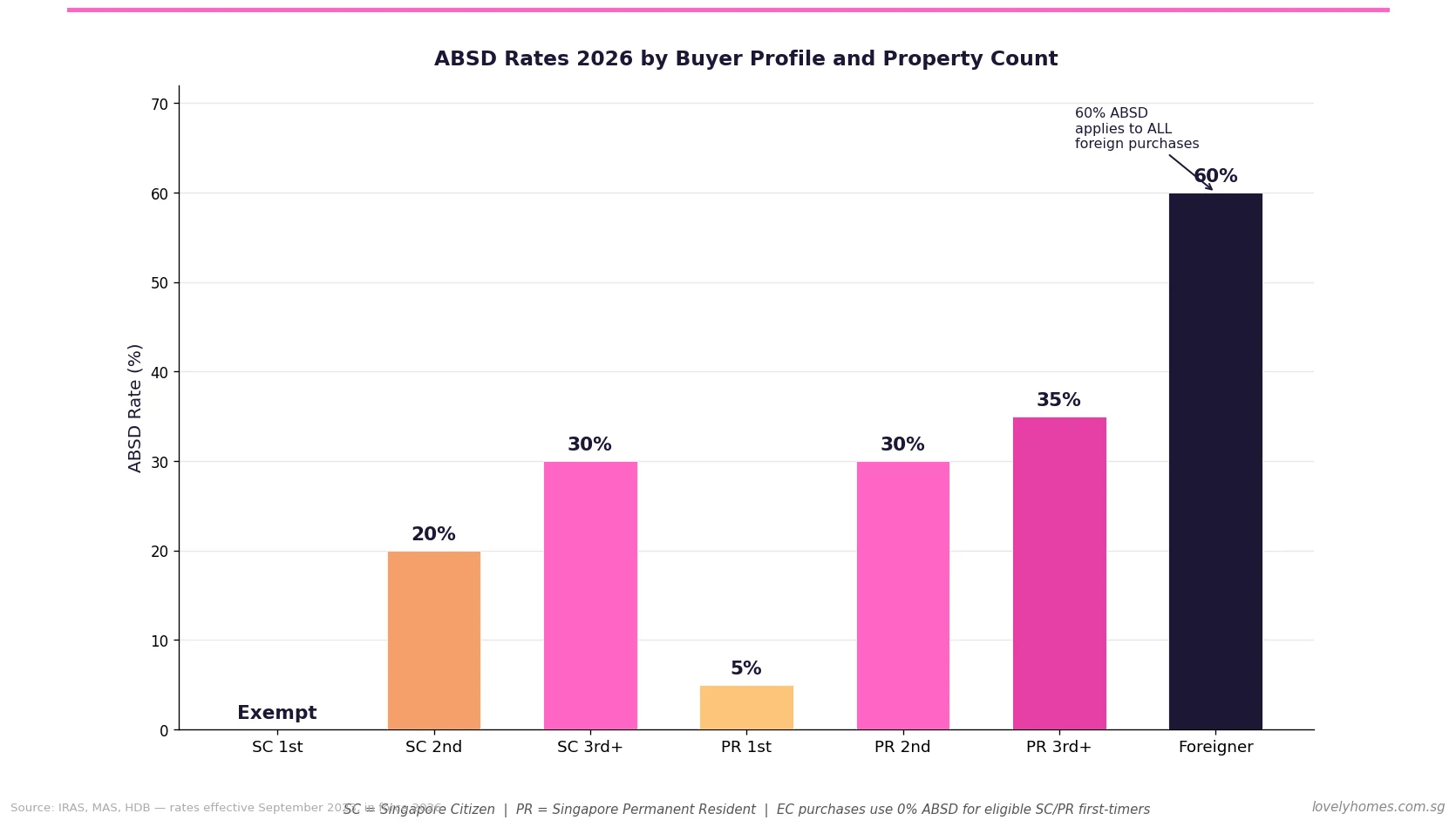
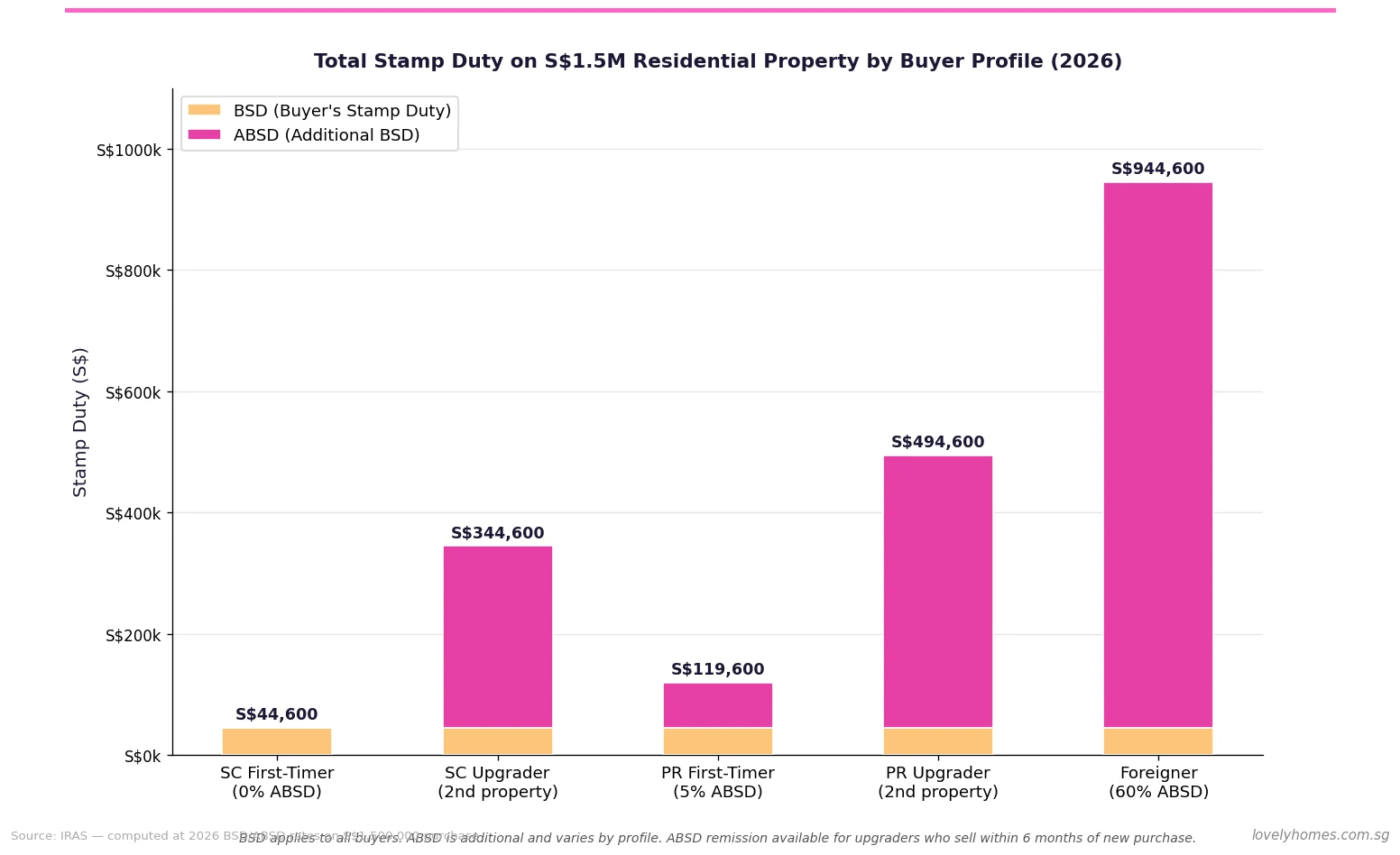
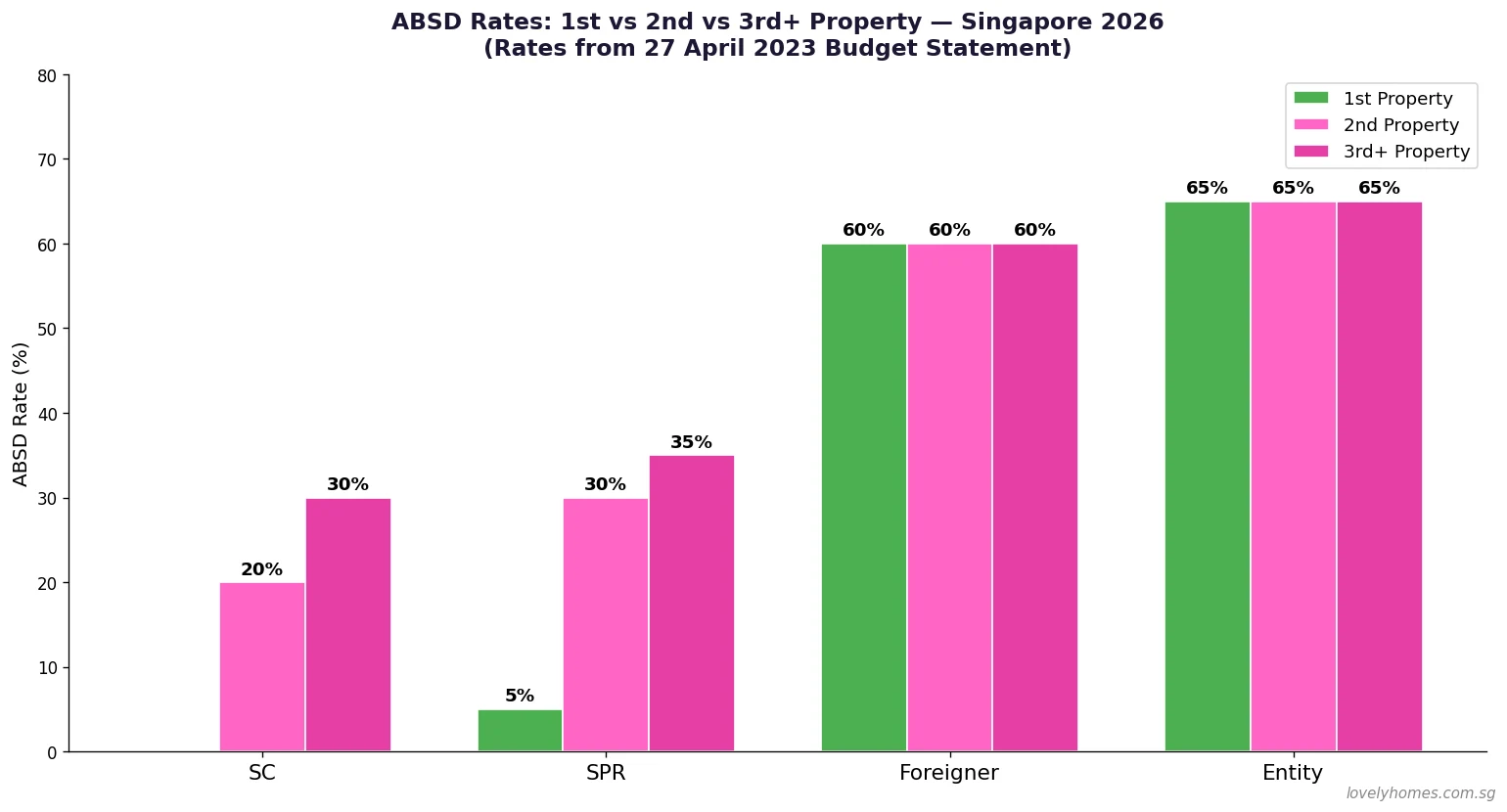
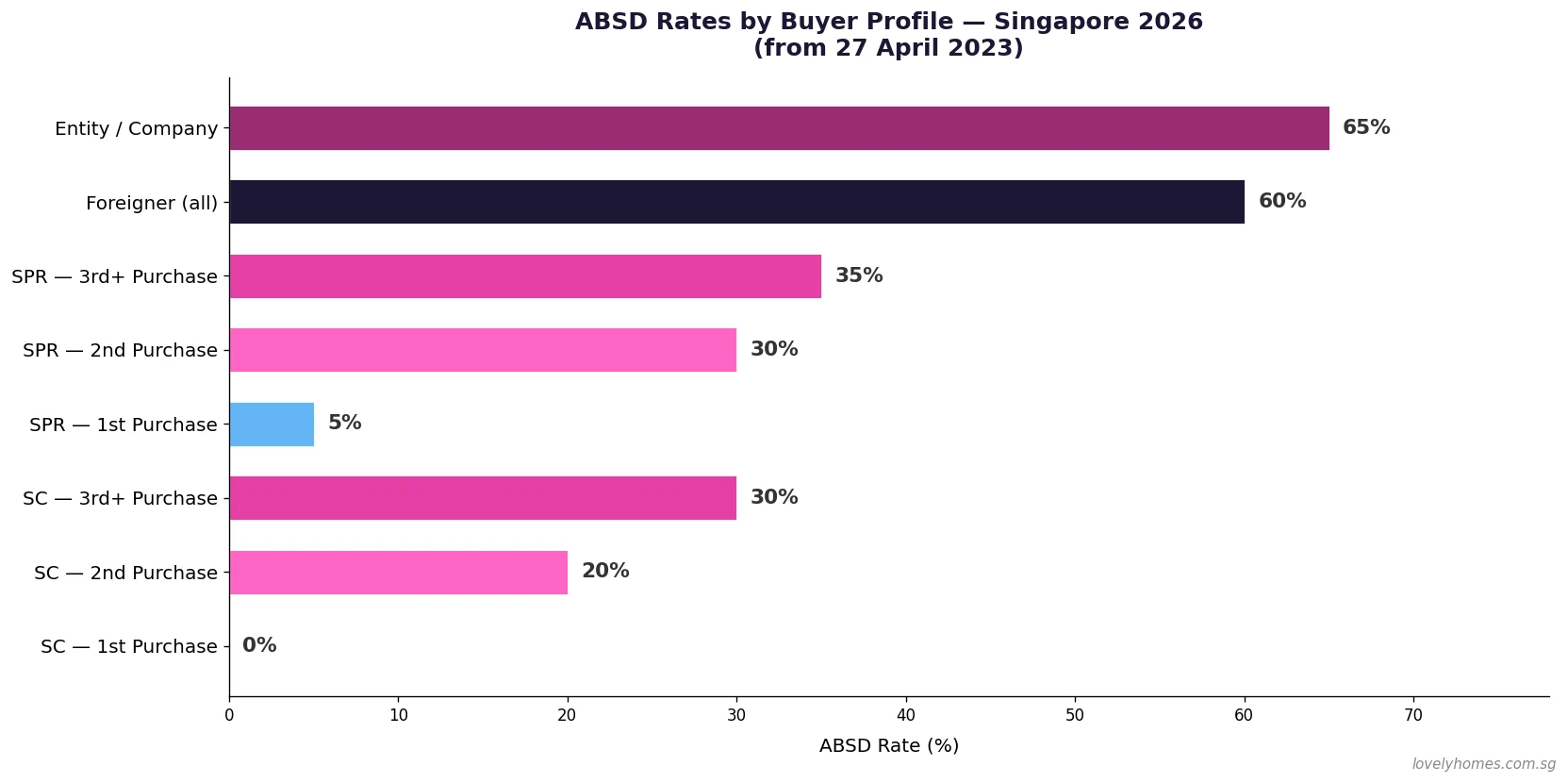
- A transfer of property pursuant to a divorce court order is exempt from Additional Buyer’s Stamp Duty (ABSD), but ordinary Buyer’s Stamp Duty (BSD) is still payable on the value of the share being transferred.
- Any CPF savings (principal plus accrued interest at 2.5% p.a.) used towards the property generally must be refunded to the relinquishing spouse’s CPF account upon transfer, unless the court orders otherwise.
- Contested divorces involving significant assets or young children can take well over a year to resolve; simplified, uncontested divorces with an agreed consent order can move considerably faster.
- This is a general guide only. Every marriage’s facts are different, and specific legal advice from a family lawyer is essential before agreeing to any division of property.
What Happens to Property When a Marriage Ends in Singapore?
When a marriage in Singapore ends in divorce, the couple’s property, including the family home, does not automatically split down the middle or stay with whoever’s name is on the title. Instead, the Family Justice Courts apply the framework set out in the Women’s Charter (Cap 353), primarily Section 112, to divide what the law calls “matrimonial assets” between the two parties in a manner the court considers just and equitable. This is a fundamentally different concept from simple legal ownership: a flat registered solely in the husband’s name can still be treated as a shared matrimonial asset if it was acquired during the marriage or used as the family home, and a wife with no income of her own can still be awarded a substantial share for her non-financial contributions as a homemaker and caregiver.
For most Singaporean couples, the family home, whether an HDB flat or private property, is by far the largest asset in the pool, which is why property division is usually the single most consequential financial outcome of a divorce. This guide walks through how the courts decide what counts, how the division ratio is worked out, what actually happens to an HDB flat or private property afterwards, and the stamp duty and CPF mechanics that follow.
What Counts as a “Matrimonial Asset”?
Under Section 112, a matrimonial asset is broadly any asset acquired by either or both parties during the marriage, plus any asset acquired before the marriage by one party that was ordinarily used or enjoyed by both parties (or their children) or that was substantially improved during the marriage by the other party or both parties together. In practice, this sweeps in far more than most people expect: salaries and bonuses earned and saved during the marriage, investment portfolios, CPF balances, insurance policies with cash value, the family car, and, critically, the matrimonial home, even if that home was purchased by one spouse before the wedding, because a home lived in by both spouses is almost always treated as a matrimonial asset regardless of whose name is on the title or when it was bought.
Assets that generally fall outside the pool include property acquired by one spouse through gift or inheritance and kept separate throughout the marriage, and assets one party owned before the marriage that were never used, enjoyed or improved by the other spouse. The key qualifier is “generally”: if a gifted or inherited asset was subsequently used as the family home, or was substantially improved using matrimonial funds or the other spouse’s efforts, it can be pulled back into the divisible pool. Because this line is fact-sensitive and frequently disputed, couples with pre-marital property, inheritances or significant gifts should get specific legal advice early rather than assume an asset is automatically excluded.
How the Courts Divide Assets: The Structured Approach
For long, dual-income marriages, the Court of Appeal’s decision in ANJ v ANK [2015] SGCA 34 set out what has become the standard “structured approach” for dividing the matrimonial asset pool. The court first works out each party’s direct financial contribution ratio, based on how much each party paid towards acquiring, improving and paying down the assets, including CPF contributions and mortgage instalments. It then separately works out an indirect contribution ratio, which captures both indirect financial contributions (such as paying for household expenses or children’s education while the other party services the mortgage) and non-financial contributions, most importantly homemaking and caregiving, which the courts have repeatedly emphasised deserve real, not token, recognition.
The two ratios (direct and indirect) are then averaged to produce each party’s headline entitlement percentage of the asset pool. Finally, the court considers whether the “other factors” listed in Section 112(2), such as the duration of the marriage, the needs of any children, the age and health of each party, and each party’s future earning capacity, warrant an adjustment from that headline figure. For shorter marriages, single-income households, or cases where a strict structured calculation would not achieve a just outcome, the courts retain discretion to apply a more “broad-brush” or global assessment instead. There is no fixed formula that guarantees any particular split; every case ultimately turns on its own facts, which is why obtaining advice from a family lawyer before agreeing to (or contesting) a proposed division is so important.
What Happens to an HDB Flat After a Divorce?
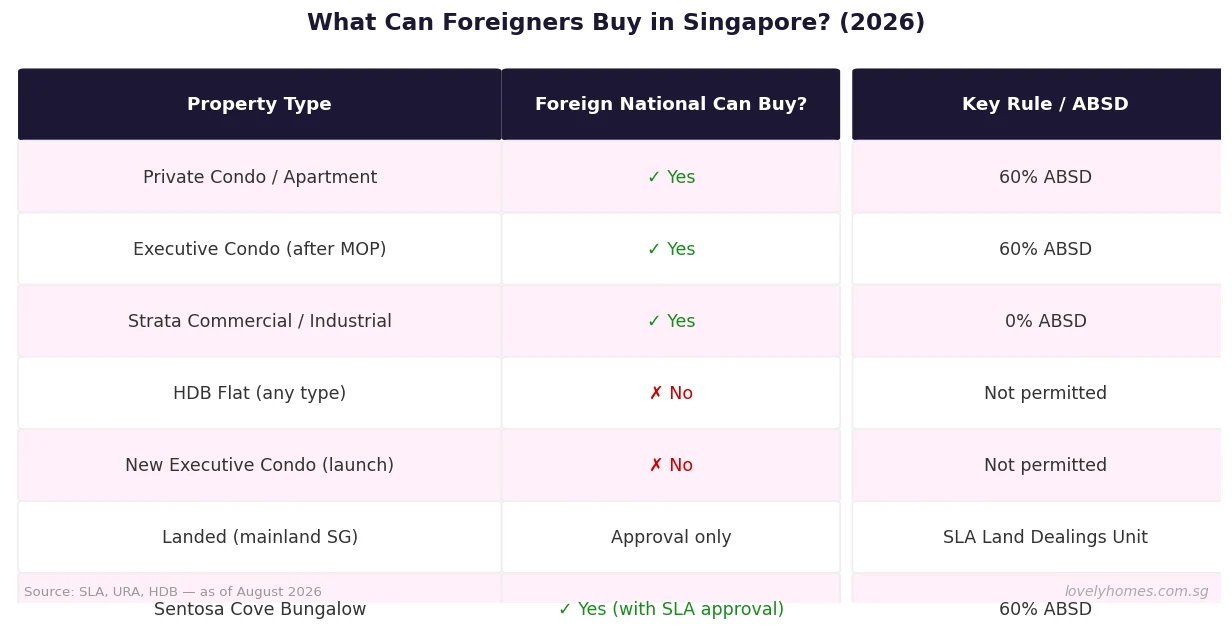
For couples whose main asset is an HDB flat, there are broadly three outcomes once the court has decided the division ratio, or once the parties reach an agreed consent order. First, one spouse can apply to retain the flat by buying over the other’s share of the flat’s value, effectively becoming the sole owner, subject to HDB’s eligibility rules (citizenship or PR status, not owning another HDB flat or private property beyond permitted limits, and HDB’s approval of the ownership transfer). Second, the couple can agree to sell the flat on the open market and split the net sale proceeds according to the court-ordered ratio, after settling the outstanding mortgage, CPF refund and any resale levy considerations. Third, in some cases, the court may order the flat to be retained temporarily for the benefit of the children, with a spouse granted a right of occupation until a later trigger event (such as the youngest child turning 21) before the flat is eventually sold or transferred.
Because HDB flats sit within a public housing scheme, any of these outcomes still requires HDB’s approval of the change in ownership or occupancy, on top of the family court’s order; a court order alone does not automatically override HDB’s eligibility framework, so parties should factor in this additional administrative step and its processing time when planning next steps after the ancillary matters hearing.
What Happens to Private Property After a Divorce?
Private property division follows the same underlying Section 112 principles, but without HDB’s eligibility overlay, giving couples somewhat more flexibility in how they structure the outcome. A spouse can retain the property by refinancing the existing mortgage into their sole name and paying the other spouse their share of the equity, the property can be sold on the open market with proceeds split per the court order, or, less commonly, the property can be transferred into joint names under a different ownership structure (for example, converting a joint tenancy into a tenancy-in-common with unequal shares reflecting the court’s division ratio) so both parties retain an interest pending a later sale. Whichever route is chosen, refinancing or transferring sole ownership will require the retaining spouse to qualify for a mortgage on their own income and creditworthiness, which is often a genuine practical constraint, particularly if the property was originally financed based on both spouses’ combined income.
Stamp Duty and CPF Considerations on a Divorce-Related Transfer
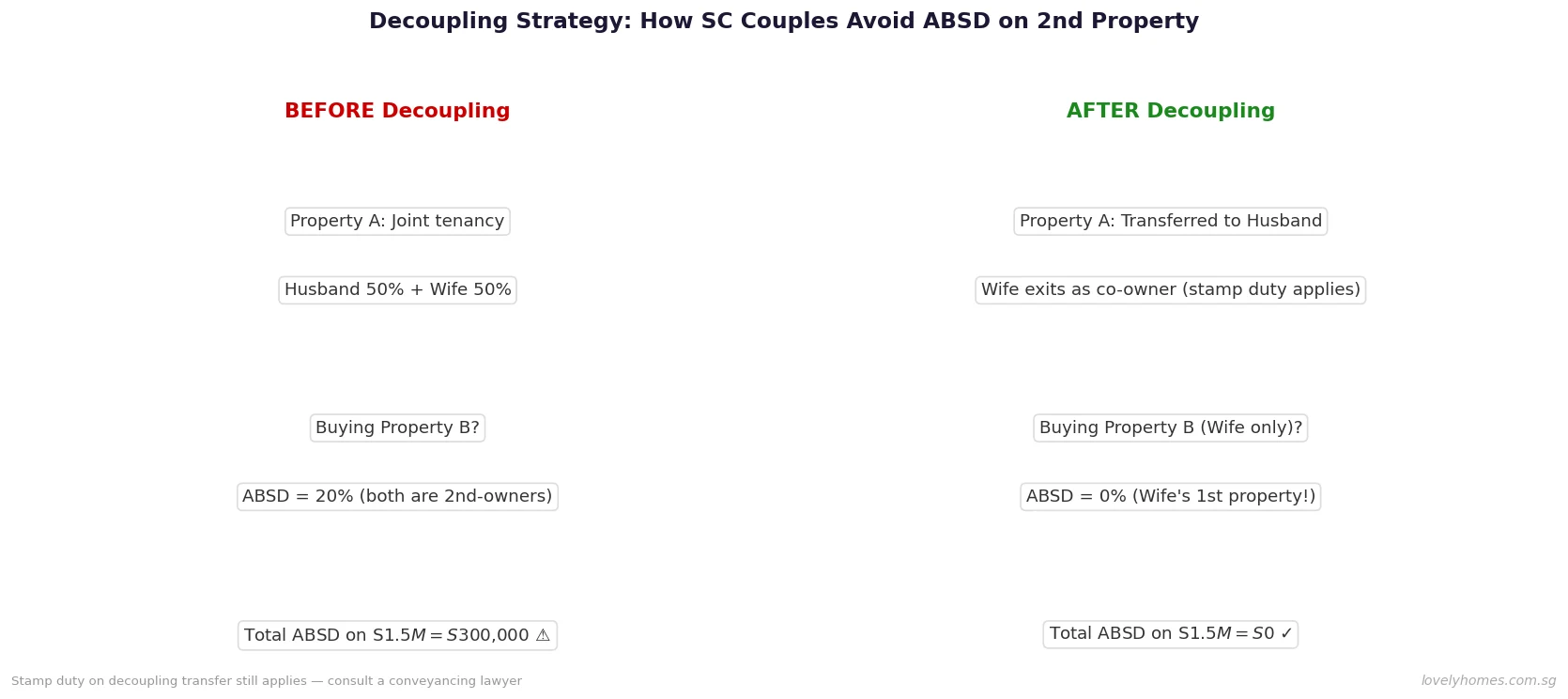
Two financial mechanics apply whenever a property (or a share of one) changes hands as part of a divorce settlement. First, stamp duty: a transfer of property pursuant to a court order made in divorce or judicial separation proceedings is exempt from Additional Buyer’s Stamp Duty (ABSD), recognising that this is a division of existing matrimonial assets rather than a fresh purchase. However, ordinary Buyer’s Stamp Duty (BSD) still applies, calculated on the market value of the share being transferred to the retaining spouse, on the same progressive BSD scale that applies to any other residential property transaction.
Second, CPF refunds: where CPF Ordinary Account savings were used to fund the property (whether for the downpayment, monthly instalments, or both), the spouse who is relinquishing their share is generally required to refund the CPF principal amount used plus accrued interest at 2.5% per annum, compounded over the years the CPF monies were utilised, back into their own CPF account upon the transfer, unless the court’s order specifies a different treatment. This CPF refund obligation can be a significant, sometimes underestimated, cash-flow consideration for the retaining spouse, since it effectively adds to the buyout cost even though the money is going into the other spouse’s CPF account rather than being paid out in cash.
Summary: Property Division in a Singapore Divorce at a Glance
| Question | Short Answer |
|---|---|
| Which law governs property division? | Section 112 of the Women’s Charter (Cap 353). |
| Is the home included even if in one spouse’s name? | Almost always yes, if it was used as the matrimonial home. |
| What is the “structured approach”? | Average of direct and indirect contribution ratios, then adjusted for other factors. |
| Is ABSD payable on a divorce transfer? | No, it is exempt; BSD is still payable on the transferred share’s value. |
| Does CPF need to be refunded? | Generally yes, principal plus 2.5% p.a. accrued interest, unless the court orders otherwise. |
| Does HDB need to approve the outcome? | Yes, HDB’s own eligibility and approval rules apply on top of the court order. |
Worked Example: Dividing the Asset Pool for Mr and Mrs Tan
Profile: Mr and Mrs Tan have been married for 14 years and are divorcing. Their matrimonial asset pool, comprising their private condo (net of the outstanding mortgage), joint savings, CPF balances used towards the home, and investment accounts, totals S$1,450,000.
Step 1, direct contributions: Mrs Tan’s income funded roughly 40% of the direct financial contributions towards the assets (mortgage instalments, CPF, cash savings); Mr Tan’s income funded the remaining 60%.
Step 2, indirect contributions: Mrs Tan took a career break for six years to care for their two children and managed the household throughout the marriage; the court assesses her indirect contribution ratio at 70%, against Mr Tan’s 30%.
Step 3, average the ratios: Mrs Tan’s headline entitlement is (40% + 70%) / 2 = 55%. Mr Tan’s headline entitlement is (60% + 30%) / 2 = 45%.
Step 4, adjustment: the court considers the children’s needs and Mrs Tan’s reduced earning capacity after her career break, and decides no further adjustment is warranted, confirming the 55/45 split.
Outcome: Mrs Tan is entitled to S$1,450,000 x 55% = S$797,500; Mr Tan is entitled to S$1,450,000 x 45% = S$652,500. Mr Tan chooses to retain the condo (valued at S$1,650,000, with S$650,000 outstanding on the mortgage, giving net equity of S$1,000,000 within the pool); he refinances the mortgage in his sole name and pays Mrs Tan a cash equalisation sum to reflect her 55% share of the total pool, alongside her share of the other assets, and separately refunds the CPF used towards the home (principal plus 2.5% p.a. accrued interest) into her CPF account. Buyer’s Stamp Duty is payable on the value of the share being transferred into Mr Tan’s sole name, while ABSD is exempt because the transfer is made pursuant to the divorce court order.
Why This Matters When You’re Going Through a Divorce
Property is usually the single largest, and often the most emotionally charged, asset in a divorce, which makes understanding the framework before entering negotiations genuinely valuable. Couples who understand how the structured approach works, and who gather clear documentation of their direct and indirect contributions early, are typically better placed to reach a fair consent order without a lengthy contested hearing. Equally important is recognising the practical follow-through: a court order determining the division ratio is not the end of the process for property specifically, since HDB approval, mortgage refinancing eligibility, stamp duty and CPF refund calculations all still need to be worked through afterwards, and underestimating these steps can delay finalising the split even after the ancillary matters hearing has concluded.
What Might Come Next
The following is informed speculation, not confirmed policy. As dual-income households and more equal caregiving arrangements become more common in Singapore, it is plausible that future case law could continue refining how indirect, non-financial contributions are weighted relative to direct financial contributions, building further on the structured approach set out in ANJ v ANK. Some family law commentary has also floated whether HDB’s approval process for post-divorce ownership transfers could be streamlined or made more predictable in processing time, given how frequently this step follows a court order, though no specific change to HDB’s process has been announced as at this writing.
Frequently Asked Questions
Does it matter whose name the HDB flat or property is registered under?
Not as much as many people assume. The court looks at whether the asset is a “matrimonial asset” under Section 112, not simply whose name appears on the title. A flat solely in one spouse’s name is still very likely to be divided if it served as the matrimonial home.
Is inherited property automatically excluded from division?
Generally, yes, if it was kept separate and never used or improved during the marriage. However, if inherited property was used as the family home, or substantially improved with matrimonial funds or the other spouse’s efforts, it can still be brought into the divisible pool, so this should be checked with a family lawyer rather than assumed.
Can a spouse who never worked still get a share of the property?
Yes. The structured approach explicitly recognises indirect, non-financial contributions such as homemaking and caregiving, and the Court of Appeal has repeatedly emphasised these deserve genuine, not token, weighting, sometimes resulting in the non-earning spouse receiving close to or even above half of the pool.
Do we have to sell the flat if we cannot agree on who keeps it?
If neither party can afford or qualify to buy over the other’s share, or the parties cannot agree, the court can order the flat to be sold on the open market with proceeds divided according to the ordered ratio. Selling is the common fallback when a buy-over is not practically achievable.
Is ABSD really exempt for a divorce-related property transfer?
Yes, a transfer of property made pursuant to a court order in divorce or judicial separation proceedings is exempt from Additional Buyer’s Stamp Duty. Ordinary Buyer’s Stamp Duty, however, still applies to the value of the share being transferred.
How long does the property division process usually take?
This varies enormously. An uncontested divorce with an agreed consent order on property division can be finalised in a matter of months, while a contested case involving disputed valuations, significant assets, or young children can take well over a year before the ancillary matters are resolved.
Can we agree on our own division without going through the full court process?
Yes. Many couples negotiate a consent order, often with the help of family lawyers or mediators, setting out an agreed division of assets, which the court then formalises. This is typically faster and less costly than a fully contested hearing, provided both parties genuinely agree on the terms.
Related Articles on LovelyHomes
- Singapore Property Ownership Transfer Guide 2026
- Buyer’s Stamp Duty (BSD) Singapore 2026: Complete Guide
- ABSD Singapore 2026: Complete Guide to Additional Buyer’s Stamp Duty
- HDB Minimum Occupation Period (MOP) Singapore 2026: Complete Guide
- Singapore HDB CPF Usage Guide 2026
- Can You Own Two HDB Flats in Singapore? Eligibility, MOP and Resale Levy Rules
Click anywhere outside to close