Pearl’s Hill BTO: Singapore’s Tallest Public Housing — 60 Storeys, 1,700 Flats, First in 40 Years

Pearl’s Hill BTO: Singapore’s Tallest Public Housing — 60 Storeys, 1,700 Flats, First in 40 Years

Pearl's Hill BTO 60 storey tallest HDB Singapore comparison infographic
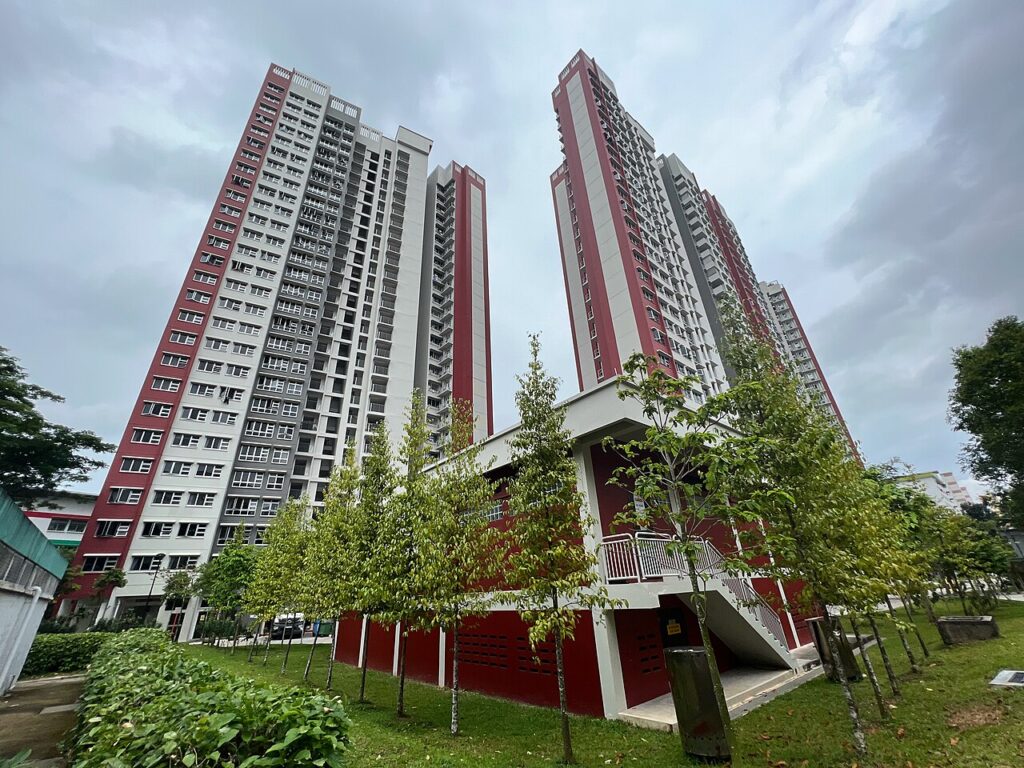
The Pearl’s Hill BTO will exceed 60 storeys, edging past Pinnacle @ Duxton (50 storeys) as Singapore’s tallest public-housing project.

Quick take

HDB has confirmed that a new BTO project at Pearl’s Hill in Outram will rise to more than 60 storeys — overtaking Pinnacle @ Duxton (50 storeys) as Singapore’s tallest public-housing project. The development sits on the site of the former Outram Park Complex, next to Outram Park MRT (NEL/EWL/TEL interchange), and will deliver approximately 1,700 BTO flats across 2-Room Flexi, 3-Room and 4-Room formats, plus over 140 public rental flats. It is the first new public housing in Pearl’s Hill in more than four decades.

Design — Shan Shui Hua

The blocks vary in height, with sky gardens and landscape terraces stepping up the hillside. The architecture references Shan Shui Hua (山水画) — the traditional Chinese ink-painting tradition that depicts mountains and flowing water in harmonic balance. The reference is more than aesthetic: the project sits at the base of Pearl’s Hill City Park, one of Singapore’s least-visited central parks, and the design language is intended to extend the park’s contour line up into the residential elevation rather than impose a rectilinear slab profile.

Location and connectivity

Pearl’s Hill sits between Chinatown and Outram, immediately adjacent to Outram Park MRT — a triple-line interchange (North-East Line, East-West Line, Thomson-East Coast Line) opened to the TEL extension in 2022. From Outram Park, residents reach Raffles Place in two stops, Marina Bay in three, and Orchard in five. SGH (Singapore General Hospital) is a five-minute walk; Tiong Bahru Market and the Pearl’s Hill heritage cluster sit on either side of the park.

Prime BTO classification

Pearl’s Hill is unambiguously in the central five-kilometre radius and will almost certainly be launched under the Prime BTO framework. Practically, that means: a 10-year MOP (vs the standard 5-year), a subsidy clawback on resale (the percentage to be confirmed at launch but is currently 8% for Prime flats), and tighter resale eligibility (Singaporean families, with a household income ceiling on resale buyers). Foreign buyers and investors are excluded from the resale pool. Indicative pricing has not been published, but commentators have flagged the S$700,000+ band for 4-Rooms as plausible — in line with the 2024 Pearl’s Hill GLS land tender benchmarks.

When does it launch?

HDB has indicated the Pearl’s Hill BTO will launch within the next few years — i.e. across the 2026–2028 sales exercises, with Minister Chee Hong Tat confirming the project in his Committee of Supply 2026 speech on 4 March 2026. The Toa Payoh West BTO at the former Caldecott site is the parallel central announcement, scheduled for the October 2026 sales exercise.

Why it matters

The Pearl’s Hill BTO is the most prominent confirmation yet that HDB is willing to build vertically and centrally — going beyond the SkyVille and SkyTerrace experiments at Dawson and Pinnacle’s 50-storey precedent. For homebuyers, it offers a rare chance to access genuinely central living at HDB prices, with the trade-off of Prime BTO restrictions. For the broader market, it signals a deliberate reweighting of public housing supply back into the central planning areas after two decades dominated by the Tengah-Punggol-Tampines new-town axis.

EC vs Private Condo Singapore 2026: The 10-Year Total Cost of Ownership

EC vs Private Condo Singapore 2026: The 10-Year Total Cost of Ownership

EC vs Private Condo Singapore 2026 10-year total cost of ownership
Stacked-bar TCO comparison for a Singaporean couple buying in 2026 — EC saves roughly S$0.9m over 10 years before post-MOP uplift.

Quick answer

For an eligible first-time Singaporean couple with household income under S$16,000/month, an Executive Condominium (EC) wins on almost every financial metric over a 10-year horizon. The purchase price is typically 25–30% lower than a comparable private condo, CPF grants can add up to S$30,000, mortgage interest savings compound, and the historical post-MOP capital gain has been 40–60% versus 18–28% for private condos. The trade-offs are the five-year Minimum Occupancy Period (MOP), restricted resale pool, and the 10-year wait before foreigners can buy.

What makes an Executive Condominium different

Executive Condominiums are a hybrid scheme introduced in 1996 to serve the “sandwich class” — households whose income exceeds the HDB Build-To-Order (BTO) ceiling of S$14,000/month but who cannot comfortably afford a private condo. ECs are built to identical specifications as private condos (same facilities, same PPVC construction, same architects and interior designers) but are sold under HDB rules for the first 10 years: buyers must meet income and citizenship eligibility, the Minimum Occupancy Period is five years, and resale during years five to ten is limited to Singapore Citizens and Permanent Residents. On year 10, the project is “privatised” and trades as a fully open-market private condo.

Who qualifies — the eligibility matrix

Executive Condo versus Private Condo eligibility criteria Singapore 2026
EC eligibility is gated on citizenship, family nucleus and the S$16,000/month Executive Income Scheme (EIS) ceiling — revised 1 January 2025.

The most common disqualifier in 2026 is income. HDB’s Executive Income Scheme ceiling was raised from S$14,000 to S$16,000 per month on 1 January 2025 — 28% higher than in 2019. This captures households where, for example, both spouses earn S$8,000 each. But for dual-income professional couples in their early thirties, it remains a binding constraint: bonus-laden earners in tech, legal and finance quickly cross the ceiling, and HDB uses a 12-month average.

Opening-day price gap — why ECs undercut private condos

The Government Land Sales price for EC sites is deliberately lower than equivalent private condo sites, reflecting the embedded subsidy in the scheme. In 2025 Otto Place EC (Tengah) and Novo Place EC (Plantation Close) launched at psf bands of S$1,450–S$1,650, while the closest private comparables (Parktown Residence in Tampines North, J’den in Jurong) transacted at S$2,200–S$2,550. That is a 30–35% discount before grants.

Cost component (10-yr)Executive Condo (S$1.5m)Private Condo (S$2.0m)Difference
Purchase price1,500,0002,000,000+500,000
Buyer’s Stamp Duty44,60064,600+20,000
CPF grant (Family)(30,000)0+30,000
Renovation + legal60,00070,000+10,000
Mortgage interest (3.5% × 25 yr, 75% LTV)310,000470,000+160,000
Maintenance (S$400 × 120 mo)48,00084,000+36,000
Property tax (AV S$32k vs S$45k, owner-occupier)36,00072,000+36,000
10-year all-in TCO~1.968m~2.761m+793,000
Illustrative TCO. Maintenance, property tax and renovation are modelled at OCR-level ranges. Private condo assumes a typical 99-year OCR launch at S$2,000 psf for 1,000 sq ft.

Post-MOP capital gain — the real alpha

EC post-MOP capital gain curve versus private condo price index Singapore
Illustrative EC vs private-condo 10-year price index. Year 5 is the MOP inflection point — the resale pool opens to SPRs.

The structural advantage of ECs is that they cross-read into the private condo market on privatisation (Year 10). Because opening-day EC buyers paid a subsidised GLS price, the market gap closes as the scheme matures. URA resale data from 2014–2024 shows EC resale indices gaining 40–60% over a 10-year hold versus 18–28% for equivalent-vintage private condos, although the private condo sample is biased towards already-appreciated central assets. The Y5–Y7 window is where the step-change happens because the SPR resale pool opens after MOP.

MOP, resale restrictions and the 10-year staircase

  • Years 1–5 (MOP): Must occupy. Cannot rent the entire flat (room rentals allowed subject to HDB rules). Cannot sell.
  • Years 5–10: Resale open to Singapore Citizens and Permanent Residents. Cannot sell to foreigners or companies. Must still meet HDB resale conditions (no ABSD on the SPR buyer is the key attraction).
  • Year 10 onwards (privatisation): The project is fully privatised. Foreigners can buy. Project becomes indistinguishable from a regular private condo.

Most owners who flip for capital gain do so at Year 5.5 to Year 7 — post-MOP when the discount to private condos is widest and demand from upgrader SPRs peaks. Owners who hold through privatisation also do well, but market timing matters more because the privatisation often coincides with one of the 7–10 year macro cycles.

When the private condo is the better choice

  • Income over S$16,000/month — you are ineligible for EC, no further analysis needed.
  • You value liquidity — private condos can be sold anytime. ECs cannot be sold during MOP, even in emergencies, without HDB consent.
  • You want a CCR / RCR address — ECs are only built on OCR GLS sites (Tengah, Plantation Close, Tampines, Punggol, Woodlands). If you need Orchard, Bukit Timah or the Southern Waterfront, you must go private.
  • You plan to rent the whole unit early — ECs forbid full-unit rental during MOP. Private condos can be rented from Day 1.
  • You want to buy under a company / trust — not allowed for ECs.
  • You are buying as an investment, not a home — the EC scheme is designed for owner-occupation. The MOP makes pure-investment arithmetic work poorly.

Forward view for 2026 launches

Two 2026 EC launches anchor the calendar: Otto Place EC (Tengah Garden Walk, ~600 units) and Novo Place EC (Plantation Close, ~500 units). Both are priced into the S$1,500–S$1,700 psf band for quality-finished units and have benefited from the EIS ceiling increase to S$16,000 — the pre-booking registrations at both projects reportedly exceed available unit counts by 4–5×. Private comparables in the same 2026 window include ELTA (Clementi Avenue 1, OCR) and Promenade Peak (Zion Road, CCR) — both at S$2,300–S$2,800 psf. The 2026 market therefore offers a cleaner-than-usual EC vs private A/B test.

FAQ

1. Can a single Singaporean buy an EC?

Not under the Public Scheme. Singles aged 35+ can only buy an EC under the Joint Singles Scheme with another single, or under the Fiancé/Fiancée Scheme with a Singaporean partner.

2. Is there an ABSD on an EC purchase?

No, not for the buyer — EC is treated as a first property (provided you sell your existing HDB within six months and do not own any other residential). BSD applies at the standard slabs.

3. What is the resale levy on moving from HDB to EC?

A resale levy of S$50,000 (3-room), S$45,000 (4-room), S$55,000 (5-room) or S$60,000 (Executive) applies if you previously enjoyed a first-timer HDB benefit. The levy is deducted from sale proceeds at the EC purchase.

4. How much CPF can I use for an EC?

Subject to the Valuation Limit (100% of the lower of purchase price or valuation) and the Withdrawal Limit (120% of VL). TDSR caps total monthly debt at 55% of gross income; MSR caps EC-specific mortgage at 30% of gross income — whichever is tighter applies.

5. What happens if our income exceeds S$16k/month during MOP?

Nothing — the ceiling applies at the point of application. You will not lose the unit if your income grows after the OTP is exercised.

6. Can the EC grant be refunded if I sell?

The grant plus CPF accrued interest (2.5% p.a. notional) must be returned to your CPF-Ordinary Account at resale. It is a timing friction, not a permanent loss.

7. Do ECs qualify for the Enhanced Housing Grant (EHG)?

Yes, for first-timer households earning under S$9,000/month (up to S$30,000 in EHG tiers). Above that band, EC buyers receive only the CPF Housing Grant if eligible.

8. Is the 5-year MOP counted from key collection or from OTP?

From key collection (TOP), not OTP. So a 2026-booked EC with a 2029 TOP hits MOP in 2034 and privatises in 2039.

9. Can I rent out rooms during MOP?

Yes, subject to HDB rules: maximum 6 occupants including the owner, registered subletting arrangements, no short-term stays. The entire unit cannot be rented.

10. How does the 10-year privatisation affect value?

Privatisation removes the buyer-eligibility restrictions, widening the pool to foreigners and entities. Historically this produces a small upward step (3–5%) in resale psf on privatisation week, but the bulk of the EC-vs-private gap closes between Years 5 and 8.

Disclaimer

This article is general information, not personal financial or tax advice. CPF rules, HDB eligibility criteria, EHG amounts, BSD slabs and Green Mark certification pathways change. Figures are illustrative and based on HDB, CPF Board and IRAS published rules as at February 2025 (Budget 2025). Always verify the current position at hdb.gov.sg, cpf.gov.sg and iras.gov.sg before acting.

Decoupling Property Singapore 2026: Does the Maths Still Work After 60% ABSD?

Decoupling Property Singapore 2026: Does the Maths Still Work After 60% ABSD?

Decoupling property Singapore 2026 worked example before and after 60% ABSD
Worked example — same S$2m property, same half-share transfer, different ABSD era.

Quick answer

Yes — decoupling still pencils out in 2026 for most Singaporean couples planning a second property within two years. The Buyer’s Stamp Duty (BSD) on a half-share transfer is typically S$24,000–S$44,000 all-in, while the Additional Buyer’s Stamp Duty (ABSD) saving on a ~S$2m second property runs S$400,000–S$600,000 depending on citizenship. What has changed is the tolerance window: with ABSD now at 60% for foreigners (from 30%) and 20% for a Singapore citizen’s second property (from 17%), decoupling only makes sense if the second purchase is imminent and funded; otherwise you are paying the BSD upfront for an option you may never exercise.

What “decoupling” actually means

In Singapore property practice, decoupling is the act of transferring one spouse’s share in a jointly-owned private residential property to the other spouse, so that the selling spouse is legally recorded as owning zero properties and can therefore buy a second home without paying the punitive ABSD rate that applies to a Singapore citizen’s second property (20% since 15 February 2025, up from 17%). The buying spouse takes full title to the original home and refinances the mortgage in their own name.

Importantly, decoupling has been banned for HDB flats since 10 April 2018 — the Housing & Development Board will not register a share transfer between owners unless one of the narrow exceptions applies (divorce, financial hardship, renunciation of citizenship). The strategy only works on fully-paid or refinanceable private residential property: condominiums, executive condominiums that have crossed the 10-year privatisation mark, cluster houses, and landed homes.

Why the calculus changed in 2023–2025

Before the 27 April 2023 ABSD hike, the arithmetic was straightforward. A Singaporean couple buying a second S$2m property would pay 17% ABSD (S$340,000). Decoupling the first home cost S$24,600 of BSD plus ~S$5,000 in legal and valuation fees — a net saving of roughly S$310,000. Every tax-literate married couple who could decouple did decouple.

Then the cooling measures stacked up:

  • 27 April 2023 — ABSD for Singapore citizens’ 2nd property raised from 17% to 20%; PR 2nd property from 25% to 30%; foreigner flat rate from 30% to 60%; entities from 35% to 65%.
  • 14 August 2024 — Mortgage Servicing Ratio and Total Debt Servicing Ratio floors tightened, eroding the loan quantum the buying spouse can re-underwrite.
  • 15 February 2025 — the ABSD 6-year remission window for couples was clarified but not broadened; BSD upper marginal rate raised to 6% on the portion above S$1.5m and 5% on S$1.5m–S$3m, making decoupling more expensive than before even though the ABSD saving also grew.

The absolute saving from decoupling in 2026 is larger than it was in 2022 (because 20% of S$2m is more than 17% of S$2m). But the friction cost is also higher, and the optionality risk — paying BSD for a second purchase you end up not making — has become the decisive variable.

Worked example: S$2m property held 50/50 by a Singaporean couple

Spouse A transfers her 50% share to Spouse B for the market value of S$1,000,000. Spouse B takes out a fresh loan for his portion, CPF is refunded to Spouse A, and the title is updated by the Singapore Land Authority.

ItemAmount (S$)Computed as
BSD on half-share transfer24,6001% × 180k + 2% × 180k + 3% × 640k + 4% × first-1m slab (post-Feb 2023 rates)
Legal fees — conveyancing × 26,000Two independent firms, one for each spouse
Valuation report800Required by IRAS + bank
Re-mortgage arrangement fee1,500Bank discharge + new facility
Sub-total friction cost32,900
ABSD saved on S$2m second buy400,00020% × S$2,000,000 (SC 2nd, post-27 Apr 2023)
Net tax saving367,100Break-even at a second-property purchase price of ≈ S$165,000
Break-even on decoupling is reached if Spouse A ever buys a second property worth more than ~S$165k — effectively any private property.

The 2026 decision matrix

Decoupling decision matrix Singapore 2026
Eight household profiles mapped against timing. The green checkmarks cluster where the second purchase is within 12 months.

Two patterns emerge from the matrix. First, timing is now the most sensitive variable. The longer the window between decoupling and the second purchase, the higher the chance that new cooling measures, ABSD rate changes, or personal circumstances (a promotion bumping household income, a medical event, a relocation) invalidate the plan. Second, higher-quantum households benefit more — the BSD on a half-share of a S$3m property is about S$42,000, but the ABSD saving on an equivalent S$3m second purchase is S$600,000. The saving-to-friction ratio is most attractive in the S$2m–S$4m property band.

The 10- to 14-week process

Decoupling Singapore process timeline 10 to 14 weeks
From engaging separate conveyancers to completion of CPF charge discharge.

A clean decoupling — where the buying spouse has the loan capacity and CPF on hand — takes ten weeks end-to-end. The critical path is the fresh loan underwriting: the purchasing spouse’s TDSR and MSR are re-evaluated from scratch, which can trip up households where one spouse holds most of the CPF or bank-qualified income. Couples should get an in-principle approval from the chosen bank before committing to the decoupling, not after.

What can go wrong

  • IRAS anti-avoidance challenge — Section 33A of the Stamp Duties Act allows IRAS to recharacterise a transaction it considers tax-motivated without commercial substance. In the 2024 Boon Suan decision, the taxpayer’s decoupling was upheld as legitimate, but the bar was set higher for sham pricing and circular-loan structures. Stick to market valuations.
  • Second purchase never happens — if the buying spouse loses income or the target property does not materialise, the BSD paid on decoupling is sunk cost.
  • CPF accrued interest shortfall — Spouse A must refund the CPF used plus notional 2.5% accrued interest; if the half-share valuation is below the original CPF contribution, the shortfall must be topped up in cash.
  • New cooling measure tightens ABSD further — the strategy protects against the current 20% rate but not against future ones. Most practitioners think the 2023 hike is the ceiling for this cycle, but the 2011 / 2013 / 2018 precedents warn against assuming rates only go up in one direction.

Alternatives that work better for some households

Decoupling is not the only way to buy a second property as a married couple. Consider:

  • Buy under one spouse’s name from day one — if you are still house-hunting for the first property, avoid joint ownership unless CPF or loan structure requires it. This sidesteps the decoupling cost entirely.
  • Buy under an adult child’s name — ABSD still applies at the child’s citizenship rate, but there is no decoupling friction. Watch the implications for estate planning and HDB eligibility.
  • Pay the ABSD and claim remission on subsequent sale of the first home within 6 years — the ABSD remission for married Singaporean couples (IRAS e-Tax Guide, Feb 2025) returns the full 20% if the first home is sold within 6 years of the second purchase.
  • Switch to commercial property or REITs — no ABSD applies, at the cost of a different tax and yield profile.

Forward view — what could change the calculus again

The two biggest “regime change” risks to a 2026 decoupling plan are (a) a further ABSD hike on SC second properties above 20%, which would deepen the saving but also lengthen the tolerance window on BSD paid today, and (b) IRAS pattern-matching against half-share transfers. The Ministry of Finance’s February 2025 Budget maintained the current ABSD structure and signalled that policy attention had moved to the supply side — BTO, GLS and EC launches — rather than further demand-side measures. Practitioners expect stability through 2026, which is also the planning horizon most couples need.

FAQ

1. Can we decouple our HDB flat?

No — HDB decoupling was banned on 10 April 2018 except in narrow circumstances (divorce, bankruptcy, renunciation of citizenship).

2. How long after decoupling must we wait before buying the second property?

There is no minimum waiting period — the second purchase can complete the day after the decoupling completes. Many couples schedule the OTP for the second property within two weeks.

3. Does decoupling trigger Seller’s Stamp Duty (SSD) on the original property?

Yes if the original property was bought less than three years ago. The half-share transfer counts as a “disposal” for SSD purposes: 12% of value in Year 1, 8% in Year 2, 4% in Year 3, 0% thereafter.

4. Can we pay for the half-share transfer using CPF?

Yes, subject to CPF Withdrawal Limits and Valuation Limit rules. The buying spouse’s CPF-OA can pay the half-share consideration exactly as if it were a resale purchase.

5. What’s the BSD rate on a S$1m half-share?

Applying the current BSD slabs: 1% on the first S$180k + 2% on the next S$180k + 3% on the next S$640k + 4% on the final S$0 of the first S$1m = S$24,600 total. On a S$1.5m half-share it would be S$44,600.

6. Is legal advice mandatory?

Not mandatory, but two independent conveyancers are strongly recommended — one for the transferring spouse, one for the receiving spouse — because their interests diverge even within a marriage.

7. Can we decouple a property still under its 3-year SSD window?

Technically yes, but the SSD charge usually wipes out the ABSD saving. Wait until the property has crossed the 3-year SSD threshold.

8. Does the buying spouse need to physically move in?

No — the buying spouse becomes sole legal owner but occupancy of a spouse is not disturbed. The property remains the matrimonial home.

9. If the second property is a new launch, when is the ABSD paid?

Within 14 days of the Option to Purchase being exercised (at booking), regardless of TOP date. IRAS stamps the OTP — not the later SPA — for ABSD purposes.

10. What if we want the second property to be joint-name?

Then decoupling does not help — ABSD applies at the rate of the highest-owning party in a joint purchase (20% for an SC who already owns a property). You would need to buy the second in the selling spouse’s sole name.

Disclaimer

This article is general information, not personal tax, financial or legal advice. Stamp duty rates, CPF rules and ABSD remission criteria are subject to change without notice. Always obtain advice from an IRAS-registered conveyancer and tax professional before executing a decoupling. Figures are illustrative and based on IRAS e-Tax Guide on Stamp Duties published February 2025; see iras.gov.sg for the current position.

Singapore Q1 2026 Flash Estimates: Private Up, Public Down — The First Divergence in Seven Years

Singapore Q1 2026 Flash Estimates: Private Up, Public Down — The First Divergence in Seven Years

Singapore Q1 2026 flash estimates: private residential +0.3% vs HDB resale -0.1%
Private residential and HDB resale flash indices diverged for the first time in seven years. Source: URA and HDB flash estimates, 1 April 2026.

Quick take: On 1 April 2026, URA’s flash estimate showed the overall private residential price index rising 0.3% quarter-on-quarter in Q1 2026, while HDB’s flash estimate put the Resale Price Index at -0.1% quarter-on-quarter — the first public-housing decline since Q2 2019. The two segments have moved in the same direction almost every quarter since mid-2019. This quarter, they have not.

What the numbers actually say

URA’s flash estimate is a fast read on transactions caveated in the first ten weeks of the quarter. For Q1 2026, the non-landed segment carried the whole index: non-landed prices were up an estimated 1.0%, led by the Outside Central Region at +1.3%, followed by the Rest of Central Region at +0.8% and the Core Central Region at +0.4%. Landed homes pulled the headline the other way at about -2.4%, a reminder that the landed market trades thinly and can swing on a handful of deals.

The other private-market signal behind the flash is volume. New-sale launches collapsed to roughly 60% below Q4 2025. With only a thin slate of launches in January and February and most developers holding fire until after Chinese New Year, the bulk of Q1 price action came from resale and sub-sale transactions rather than showflat pricing power. When new launches return in strength from Q2, the price signal will widen again.

On the public side, HDB’s flash estimate at -0.1% is small in headline terms but large in narrative. The Resale Price Index has risen in every single quarter since Q3 2019 — twenty-six consecutive quarters of gains. A flash print at zero, or marginally below it, breaks that run. Final numbers, due in late April, may revise the estimate either way by a tenth or two, but the direction is the news.

Why the two markets are diverging now

Three forces are separating private and public prices this quarter.

1. The cooling measures have landed unevenly. The August 2024 LTV tightening for HDB loans (90% to 75%) and the continued 15-month wait-out rule for private downgraders have compressed HDB resale demand more than the private market. Private buyers financing with bank loans at lower LTV ceilings were already used to higher cash-and-CPF components; HDB resale buyers, many of whom are upgraders or first-timers, feel the tightening at the margin where deals close.

2. BTO supply has materially improved. HDB is pushing through roughly 50,000 flats across the 2025 and 2026 programmes. The June 2026 BTO exercise will offer about 6,900 flats across Ang Mo Kio, Bishan, Bukit Merah, Sembawang and Woodlands. When first-timers have a realistic shot at a BTO within 18 to 24 months, the urgency premium in resale prices eases. That is exactly the mechanism HDB publicly described when it reintroduced the Prime, Plus and Standard classification in late 2024.

3. The private market found a new OCR anchor. The OCR leading at +1.3% reflects the mass-market bid for newer freehold and 99-year projects where the price-per-square-foot still reads as a discount to the RCR. Buyers priced out of the core are not disappearing — they are rotating outward. HDB resale, by contrast, has no similar pressure valve; the product is the product.

How the divergence compares historically

The last time HDB resale fell while the URA index rose was Q2 2019 — the final stretch of the post-2018-cooling-measures adjustment, when public housing was absorbing ABSD-driven demand shifts. Before that, divergence episodes clustered around the 2013-2014 tightening and the 2008-2009 cycle. Divergence is not unprecedented; what is unusual is how long the two markets have moved together. From Q3 2019 to Q4 2025, both indices posted gains in every single quarter.

One quarter is not a trend. The signal here is less “HDB is falling” and more “HDB has stopped rising.” That is still a meaningful shift after seven years of one-way pressure.

What this means for buyers and sellers

HDB resale buyers: The urgency is lower. If the June BTO ballot in a town you would consider is a serious option, running both tracks in parallel is now a more defensible strategy than it was 12 months ago. Million-dollar resale records will continue to happen in flagship locations, but the median flat in a mature estate is no longer compounding at 8-10% a year.

HDB sellers: Price realism matters. COV (cash-over-valuation) expectations set in 2024 no longer hold in most estates. Sellers who fix an asking price based on a neighbour’s Q3 2025 transaction are increasingly missing the window and sitting on the listing for two to three months before cutting.

Private buyers: The OCR is where the action is, and the Q2 launch slate will test how much pricing power developers actually have. Watch median PSF for OCR new launches in Q2 against late-2025 comparable projects. If developers push prices 3-5% above comparables and still clear 30% on launch weekend, the private cycle re-accelerates. If they stall, the flash estimate flatters a cooler underlying market.

Private sellers and sub-sale owners: The CCR-to-OCR spread narrowed again in Q1. Holders of older freehold CCR stock should benchmark against current RCR new-launch pricing rather than historical CCR premiums — the buyer pool has shifted.

What to watch between now and late April

Three things will sharpen the picture in the next three weeks:

  • Final Q1 numbers (late April): URA and HDB publish the full quarterly indices with sub-indices by region and flat type. The flash can revise by up to 0.2 percentage points in either direction.
  • April and May new-launch pricing: Two to three large OCR launches are pencilled in for Q2. Median PSF at launch will tell us whether developers are testing the ceiling or holding.
  • June 2026 BTO application rates: First-timer subscription ratios in Ang Mo Kio and Bishan will signal how much pressure is still in the resale market. Application rates above 3x in non-mature estates typically foreshadow resale strength; ratios closer to 1x suggest buyers are comfortable waiting.

The bigger frame

Singapore’s residential market has been remarkable for its synchronised climb since 2019. That era is pausing. Whether Q1 2026 turns out to be a one-quarter wobble or the start of a sustained rebalancing between public and private depends on three things: the new-launch pipeline in Q2 and Q3, the pace of BTO completions absorbing first-timer demand, and whether any further cooling measures are signalled in the mid-year review.

For now, the most honest read of the flash estimates is this: the private market is still advancing, the public market has stopped, and the gap between them is the most interesting number in Q1.

FAQ

How reliable is the URA flash estimate?

The flash estimate is based on the first ten weeks of caveated transactions and is typically revised by ±0.1 to ±0.2 percentage points when the final index is published three to four weeks later. Direction is usually preserved; magnitude can shift.

Is the HDB flash estimate the first decline since 2019?

Yes. HDB’s Resale Price Index last posted a quarter-on-quarter decline in Q2 2019. The Q1 2026 flash at -0.1% is the first negative print in twenty-seven quarters. The final number, due in late April, will confirm or revise this.

Why did private new launches drop 60% QoQ?

Q1 is seasonally slow because of Chinese New Year and because developers typically time launches to coincide with stronger post-Lunar-New-Year demand in Q2. Q1 2026 had a thinner launch slate than usual with most of the pipeline deferred to April onwards, which amplified the quarter-on-quarter drop.

Will the June 2026 BTO exercise affect resale prices?

At the margin, yes. 6,900 flats across five towns is a meaningful supply signal, especially in non-mature estates where first-timer application ratios drive most of the urgency pricing in resale. Towns included are Ang Mo Kio, Bishan, Bukit Merah, Sembawang and Woodlands.

Should I wait to buy?

Flash estimates are one input among many. If you have found the right unit at the right price relative to comparable transactions in the last 60-90 days, macro prints rarely change the calculus. If you are timing the cycle, wait for the final Q1 numbers and the Q2 launch pricing before committing.


Disclaimer: This article reports on URA and HDB flash estimates published on 1 April 2026 and is for general information only. Flash estimates are preliminary and subject to revision. Individual transactions vary by project, unit, tenure and timing. This is not financial, investment or property advice. Buyers and sellers should seek advice from qualified professionals and verify figures against the official URA and HDB releases before making decisions.

Related reading on lovelyhomes.com.sg: TDSR and MSR: How Much Can You Actually Borrow in Singapore 2026 · Freehold vs 99-Year Leasehold Singapore 2026: The Real Price of Time.

TDSR and MSR Singapore 2026: The Complete Borrowing Limits Guide

TDSR and MSR Singapore 2026: The Complete Borrowing Limits Guide

TDSR and MSR Singapore 2026: 55% and 30% borrowing limits infographic
Figure 1: The two numbers that decide every Singapore home loan — TDSR at 55% of income and MSR at 30% for HDB and EC purchases.

If you have ever wondered why the bank’s pre-approval letter gave you a smaller loan than you budgeted for — or why a friend on the same salary can borrow noticeably more than you — the answer almost always comes down to two acronyms: TDSR and MSR. These are the two borrowing limits the Monetary Authority of Singapore (MAS) bakes into every residential mortgage, and in 2026 they are the single biggest determinants of how much home you can actually finance.

This guide is the 2026 edition. It covers exactly how TDSR and MSR are calculated, how they interact with the loan-to-value (LTV) cap, where the 4.0% stress-test rate comes from, what counts as income, what doesn’t, and — crucially — how to game the numbers in your favour without breaking any rules. We walk through a fully-worked Singapore example end-to-end and finish with the policy trajectory so you know what to watch for next.

Quick Answer: The 10 Things Every Singapore Borrower Should Know

  • TDSR is 55%. Total monthly debt repayments — including the new mortgage — cannot exceed 55% of your gross monthly income. Applies to every residential property loan.
  • MSR is 30%. Mortgage repayments on an HDB flat or Executive Condominium (EC) bought from the developer cannot exceed 30% of gross monthly income. Private condos and landed property have no MSR.
  • Stress-test rate is 4.0%. TDSR and MSR are calculated at a medium-term interest rate of 4.0% for residential loans, regardless of the rate you actually pay today.
  • LTV caps layer on top. First housing loan: up to 75% of purchase price. Second housing loan: up to 45%. Third and beyond: up to 35%.
  • Age and tenure matter. If the loan tenure pushes past age 65, or exceeds 30 years (25 for HDB), the LTV cap drops by 20 percentage points.
  • Variable income is haircut by 30%. Commission, bonus, rental and freelance earnings are only counted at 70% of the proven figure.
  • Existing debts eat into headroom. Car loans, credit-card minimum payments, student loans, and other mortgages all hit your TDSR ceiling before the new home loan does.
  • Guarantors are counted too. If you guarantee a sibling’s loan, it may sit in your TDSR — not theirs.
  • Cash down-payment rules mirror LTV. The first 5% (25% at higher LTV tiers) must be paid in cash; the balance can be CPF Ordinary Account funds.
  • Refinancing carve-out. Borrowers refinancing an owner-occupied property with no cash-out may be exempted from TDSR — a narrow but useful escape hatch.

What Is TDSR — The Framework That Underpins Every Home Loan

The Total Debt Servicing Ratio was introduced in June 2013 as part of MAS’s cooling-measures programme (see our full cooling measures timeline for the wider context). Its purpose is simple: to stop households from levering up to a level where a modest rise in interest rates would push them into negative cash flow. The 2010s saw Singapore’s household debt-to-GDP ratio climb past 70%, and MAS wanted a circuit-breaker that worked the same way regardless of which bank a buyer walked into.

TDSR caps all monthly debt obligations at 55% of gross monthly income. “All debt” is deliberately broad: it includes the prospective home-loan instalment (calculated at the stress-test rate), existing mortgages, car loans, personal loans, renovation loans, student loans, credit-card minimum repayments and any loans you have personally guaranteed. Even a dormant credit card with a S$20,000 limit is counted if the bank uses the 3% minimum-payment convention.

The ratio was originally set at 60% in 2013 and tightened to 55% in December 2021, where it remains in 2026. That three-percentage-point shave looks small on paper but at a typical Singapore household income removes roughly S$150,000–S$200,000 of borrowing capacity.

What Is MSR — The Second Ratio You Cannot Ignore for HDB and EC Buyers

The Mortgage Servicing Ratio is narrower but stricter. Introduced for HDB loans in 2011 and extended to bank loans on HDB flats in 2013, MSR caps the mortgage portion alone at 30% of gross monthly income for purchases of HDB flats and Executive Condominiums bought directly from the developer.

MSR is a subset of TDSR, not a substitute. HDB and new-EC buyers must clear both ratios — the tighter of the two binds. In practice MSR is almost always the binding constraint for HDB buyers because existing debt rarely adds up to the 25-percentage-point gap between MSR (30%) and TDSR (55%). For EC buyers the numbers narrow as the project moves through its 10-year maturation period — after the five-year minimum occupation period and the ten-year privatisation, a resale EC is treated like a private condo for borrowing-limit purposes, so TDSR alone applies.

For a side-by-side look at which ratios hit which property type, the matrix below summarises 2026 rules.

Singapore TDSR MSR LTV by property type matrix 2026
Figure 2: 2026 borrowing limits by property type. HDB flats and ECs face both MSR and TDSR; private condos, landed property and commercial assets only face TDSR.

How the 4.0% Stress-Test Rate Works — And Why It Matters More Than Your Actual Rate

Here is the trap that catches most first-time buyers: banks must calculate your monthly instalment using an assumed rate of 4.0% for residential mortgages, even if your actual rate is 2.5% or 3.0%. This is the medium-term interest rate, set by MAS and reviewed from time to time. It was revised upward from 3.5% to 4.0% in September 2022 and has not moved since.

Why 4.0%? The rate is designed to approximate the long-run average that Singapore floating-rate loans have oscillated around over a 30-year horizon. It is deliberately punitive — regulators would rather have borrowers told “you qualify for less” at origination than have the same borrowers go into arrears when rates spike. Anyone who lived through the 2022–2023 rate cycle, when three-month SORA went from 0.2% to 3.8% in 18 months, will appreciate the logic.

The mechanic: the bank plugs a 4.0% rate into the standard amortisation formula using your chosen loan tenure, derives an assumed monthly instalment, and tests that figure against your TDSR (55%) and, if applicable, MSR (30%). Your actual repayment — calculated at whatever rate the bank is offering — will be lower in most cases, leaving you with a margin of safety that MAS consciously engineered.

What Counts as Income — And Why Variable Pay Is Penalised

Income for TDSR/MSR purposes is not what you see on your IRAS tax statement. MAS prescribes a structured treatment:

  • Fixed salary. Counted at 100%. Evidenced by payslips (usually three to six months) and the latest CPF contribution history.
  • Variable income. Commission, bonus, overtime, and freelance earnings are haircut by 30%, so only 70% of the verified average is recognised. The haircut applies to the entire variable component, even if you can show multiple years of steady track record.
  • Rental income. Counted at 70% of the gross rent receivable, net of void periods. A two-year tenancy agreement is strong evidence; month-to-month leases are viewed more sceptically.
  • Self-employed / business income. Two years of Notice of Assessment (NOA) are the default evidentiary bar, with the 30% haircut applied.
  • Allowances and AWS. Typically 100% if contractual and evidenced; otherwise haircut.

This is where the seemingly simple 55% number becomes surprisingly individual. A banker earning S$12,000 monthly but with 40% of that as variable gets assessed on S$7,200 fixed + S$3,360 post-haircut variable = S$10,560 — so the TDSR ceiling drops to S$5,808 per month rather than the nominal S$6,600.

What Counts as Debt — The Items Borrowers Miss

The other half of the equation is debt. The headline items — the new home loan instalment, existing mortgages, and car loans — are obvious. Less obvious items often catch borrowers out:

  • Credit-card minimum payments. Banks use a 3% minimum convention on the outstanding balance (or sometimes on the total credit limit). If you carry S$30,000 revolving credit across cards, that is a S$900 monthly hit on your TDSR — shaving S$192,000 off your loan ceiling at a 4.0% stress rate over 30 years.
  • Renovation and personal loans. Unsecured loan instalments count in full.
  • Student loans. Included in TDSR from the date repayments begin.
  • Guarantor obligations. If you have co-signed a relative’s loan and there is no formal debt-transfer, some banks will count the full instalment against you. Others use 50%. Ask the relationship manager explicitly.
  • Outstanding ABSD remission obligations. If you are on a remission schedule (e.g. from selling a prior property to claim remission on a new purchase), the existing loan remains in TDSR until the sale completes.

A Fully-Worked Example: A S$10,000-a-Month Household Buying a Private Condo

TDSR worked example Singapore S$10,000 monthly income
Figure 3: How different existing-debt profiles crater the monthly headroom available for a new mortgage, given a household earning S$10,000 gross.

Consider a dual-income couple: combined gross monthly salary S$10,000, both on fixed pay, no variable component. They are looking at a S$1.8 million resale private condo in District 15.

Step 1 — TDSR cap. 55% × S$10,000 = S$5,500. No MSR applies because this is a private condo.

Step 2 — Existing debts. One car loan at S$800/month and revolving credit balances generating a S$300/month minimum payment. Total existing obligations: S$1,100.

Step 3 — Headroom for the new mortgage. S$5,500 − S$1,100 = S$4,400 per month available for the new home loan instalment.

Step 4 — Maximum loan principal. At the 4.0% stress rate over a 30-year tenure, S$4,400 monthly funds approximately S$922,000 of loan principal (standard amortisation formula: P = M × [(1 − (1 + r)^(−n)) / r]).

Step 5 — LTV cap. At 75% LTV on an S$1.8m purchase, the bank could lend up to S$1,350,000 — but TDSR limits them to S$922,000 here, so TDSR binds, not LTV. The couple needs S$878,000 of combined cash and CPF equity.

Flip the same household to an HDB flat at S$700,000: now MSR binds first. 30% × S$10,000 = S$3,000 maximum mortgage instalment. That fundamentally funds roughly S$628,000 — well below the 75% LTV ceiling of S$525,000… wait. In this case the 75% LTV actually binds below MSR, because S$525,000 of loan needs only about S$2,500/month at 4.0% over 25 years, comfortably inside MSR. So the couple’s CPF-plus-cash needs to fill the remaining S$175,000.

These two scenarios show the recurring pattern: for HDB/EC buyers, MSR or LTV usually binds; for private/landed buyers, TDSR usually binds. The flow of the calculation matters, and every added dollar of existing debt has a disproportionate impact through the 30-year amortisation lever.

How to Legitimately Maximise Your Borrowing Ceiling

Nothing below involves gaming the system — each lever is recognised by banks and MAS. Together they can add S$200,000–S$400,000 to a buyer’s loan ceiling.

  • Close dormant credit facilities. A S$50,000 unused overdraft or a clutch of credit cards still hits TDSR via the 3% minimum rule. A week of admin before you apply for pre-approval can move the needle.
  • Pay down the car loan. High-instalment vehicle finance is the single most common TDSR killer. A S$1,000 monthly car note costs you roughly S$210,000 of home-loan capacity at 4.0%/30yr.
  • Lengthen the tenure (cautiously). A 30-year tenure beats a 25-year one on headline TDSR because the stress-rate instalment is lower — but watch the age-65 and 30-year triggers that knock the LTV down 20 points.
  • Co-apply with a higher earner. Joint applications aggregate income and debt. If spouses have different debt loads, consider which combination maximises the pooled headroom.
  • Formalise variable income. A commissioned sales professional with one year of written contracts may be haircut more heavily than one with two years of NOAs. Waiting one tax cycle can unlock meaningful capacity.
  • Use a Loan Assessment before committing. Banks in Singapore offer in-principle approval (IPA) at no cost. Three IPAs from different banks let you benchmark the figure.

How Singapore’s Framework Compares Globally

Singapore is not alone in prescribing debt-service ratios, but its combination is unusually strict. Hong Kong applies a 50% debt-service ratio with a 70% LTV cap for first-time owner-occupiers — broadly comparable but no separate MSR for public housing. The United Kingdom uses a 4.5× income loan-to-income ratio at most lenders (soft cap), with affordability stress-tested at 3 percentage points over the reversion rate. Australia’s prudential regulator APRA applies a serviceability buffer of 3 percentage points over the contracted rate — a rule-of-thumb approach rather than a hard ratio.

The common thread in all four jurisdictions is a stress-test mechanism designed to withstand a rate spike. Singapore’s 4.0% medium-term rate is higher (more conservative) than the contracted-rate buffers used in the UK and Australia, which is one reason Singaporean household debt has been more resilient through recent cycles than peers. MAS has been explicit that this is by design: household leverage is viewed as a systemic risk, not purely a consumer-protection issue.

What Might Come Next — The Forward View

The 4.0% stress rate has held since September 2022. Three scenarios could prompt a revision in the next 12–18 months:

  • Sustained higher long-term rates. If three-month SORA settles above 3.5% on a durable basis, MAS may nudge the medium-term rate to 4.25% or 4.5% to preserve the buffer it represents.
  • Renewed leverage in the private condo segment. If luxury-segment TDSR headroom is being used aggressively to bid up prime-district prices, expect tighter LTV on second/third loans rather than a TDSR change.
  • Public housing affordability stress. If HDB resale prices outrun wage growth materially, MSR could tighten from 30% to 25%. This would be the single most consequential move for first-time buyers.

None of the above is signalled by MAS at the time of writing (April 2026) — but the Financial Stability Review due in November 2026 is the data release to watch. Historically MAS has adjusted TDSR and MSR in the December statement that accompanies the cooling-measures package.

Frequently Asked Questions

1. Does TDSR apply to refinancing my existing mortgage?
For owner-occupied properties, a clean refinance without any cash-out and without extending the principal is generally exempted from TDSR under a carve-out MAS introduced to avoid penalising existing borrowers. If you take a cash-out top-up or increase the principal, the full TDSR test applies. For investment-property refinancing, TDSR applies in full regardless of cash-out status, so build in a review of your current debt profile before signing any refinance Letter of Offer.

2. How is TDSR calculated if I am self-employed with irregular income?
Banks use two years of Notice of Assessment (NOA) as the primary evidentiary source, take the simple average, apply the 30% haircut, and treat the resulting figure as your recognised gross monthly income. A particularly strong year — say a bumper bonus — will be smoothed. If you have less than two years of NOAs the bank will often decline or require a significantly larger down-payment. Incorporating yourself through a Pte Ltd does not change this; director’s remuneration drawn as salary is still subject to the haircut.

3. Can I borrow more by stretching the loan tenure?
Up to a point, yes. A 30-year tenure reduces the stress-rate instalment versus a 25-year tenure, increasing how much loan principal S$4,400 (in our worked example) can support. But two triggers cap the benefit: if your loan extends past age 65 or exceeds 30 years (25 for HDB), the LTV cap drops by 20 percentage points — from 75% to 55% on a first loan. The net effect is usually worse, not better. Most brokers recommend landing the tenure such that the loan concludes at or just before age 65.

4. Are joint-borrower applications better than going solo?
Usually, because they aggregate income while both parties still share the TDSR ceiling. The nuance is “income-weighted average age” for tenure calculations — if a 55-year-old and a 35-year-old co-apply, the bank blends their ages by income share to determine the maximum allowable tenure. Adding a much older co-applicant to a younger borrower can shorten the tenure and reduce the headroom on paper. Structured correctly, joint applications reliably produce higher approvals than solo for dual-income households.

5. What happens to TDSR if interest rates fall sharply?
Nothing, in the short run. The 4.0% stress rate is a regulatory input, not a market rate. Falling SORA means your actual monthly instalment shrinks and your actual debt-service ratio improves, but the ceiling at which MAS sets the TDSR bar is unchanged. Over a multi-year horizon, if rates settle well below 4.0% on a sustained basis, MAS may consider lowering the stress rate — but the precedent is that adjustments are infrequent (the last move was September 2022).

6. Does CPF Ordinary Account balance count as income for TDSR?
No. CPF OA is treated as equity (part of the down-payment and subsequent instalments), not as income. The monthly CPF contribution inflow also does not count as additional income — your CPF contributions are already a reduction from your gross pay, and gross pay is what banks use. The only way CPF affects borrowing capacity indirectly is through the Home Protection Scheme (for HDB loans) and through the cash-CPF split in the down-payment.

7. I was denied because of TDSR — what are my options?
First, get the denial reasoning in writing and compare it with a second IPA at a different bank — underwriting interpretations vary on edge cases, particularly around variable income and guarantor obligations. Second, tackle the debt side: clear a car loan, consolidate or close credit cards, discharge a guarantor role. Third, stretch the timeline: a fresh NOA next April may unlock the variable-income shortfall. Fourth, reduce the target property price — a 10% lower purchase price typically requires a proportionally smaller loan and therefore a smaller headroom. Finally, consider a joint application with a fixed-income parent (though this binds their future TDSR too).

Related LovelyHomes Guides

Disclaimer

This article is an editorial guide for general information only and does not constitute financial, legal or mortgage advice. The figures quoted reflect rules in force on the date of publication (April 2026) and may change. Confirm the authoritative position with the Monetary Authority of Singapore (MAS), the Housing & Development Board (HDB), your bank’s credit officer and a licensed mortgage broker before committing to any loan or property purchase. Interest-rate scenarios and worked examples are illustrative; your actual borrowing ceiling depends on the full underwriting review at application.

Bridging Loan Singapore 2026: How to Buy Before You Sell

Bridging Loan Singapore 2026: How to Buy Before You Sell

A bridging loan in Singapore is a short-term loan — typically 3 to 6 months — that covers the gap between buying your next home and receiving the sale proceeds from your current one. For upgraders who want to move into the new place before the buyer of the old one pays up, the bridge is often the single tool that makes the whole sequence possible without triggering a 20%+ ABSD bill.

This 2026 guide walks through how a bridging loan works, when it beats paying ABSD upfront, what it actually costs, and the scenarios where a bridge genuinely rescues an upgrade vs the ones where it quietly lights cash on fire.

Quick Answer — Bridging Loan at a Glance

  • Tenure: typically 3–6 months, interest-only.
  • Rate: typically 5%–6% p.a. (materially higher than a normal mortgage).
  • Amount: bridges the downpayment of the new property, backed by expected sale proceeds of the current one.
  • Purpose: lets you avoid holding two properties simultaneously (which triggers ABSD).
  • Cost: S$5k–S$10k for a typical 3-month bridge — usually far less than the ABSD it avoids.

Why Bridging Loans Exist: The Upgrader’s Timing Problem

Singapore’s ABSD regime penalises buyers who hold two residential properties at the same time. A Singapore Citizen upgrading from an HDB flat to a condo pays 20% ABSD on the new property if they complete the purchase before the old HDB is sold. On a S$1.5m condo, that is S$300,000 in ABSD — potentially claimable back six months later under the married couple remission, but only if the old property sells on time.

The cleanest way to avoid that 20% outlay is the sell-first, buy-second route. But this creates a different problem: where do you live while waiting to complete your new home? Renting is expensive and disruptive, and the mechanics of moving a family twice in a year are brutal.

Bridging loans solve the cash-flow mismatch so you can effectively buy-first-sell-second without ever holding both properties at completion.

How a Bridging Loan Works, Step by Step

Bridging loan Singapore timeline diagram showing existing home sale, bridging drawn, both homes overlap and sale repays bridge
Figure 1: Your existing home sells after your new home completes — a bridging loan covers the downpayment on the new home until sale proceeds arrive.
  1. You sell your existing home. OTP exercised, buyer’s 5% deposit received, completion date agreed (typically 10–14 weeks out).
  2. You buy your new home. OTP exercised on new property, downpayment due before your old sale completes.
  3. The bridging loan is drawn. Your bank issues a loan of up to 80% of the expected sale proceeds to fund the new downpayment. Interest accrues monthly at ~5–6% p.a. (interest-only, no principal repayment).
  4. Sale of old home completes. Proceeds flow straight into the bridging loan, clearing principal and accrued interest in one tranche. Any surplus is yours.
  5. Normal mortgage on new home continues. The bridge is gone; you carry only the new home’s regular mortgage.

Costs and Rates

Singapore bridging loans typically charge 5%–6% per annum, payable monthly on the outstanding balance. Banks rarely charge formal setup fees, but valuation and legal costs can total S$1,500–S$2,500.

Worked example: S$400k bridge for 4 months

  • Bridge amount: S$400,000
  • Rate: 5.5% p.a.
  • Interest per month: S$400,000 × 5.5% / 12 = S$1,833
  • Total interest over 4 months: S$7,333
  • Plus ~S$2,000 in legal/valuation
  • All-in cost: ~S$9,333

Compare that to the alternative: pay 20% ABSD of S$300,000 upfront on the new property, tying up cash for 6+ months while waiting for the remission refund to arrive. A bridging loan is almost always cheaper.

Two Flavours of Bridging Loan

  • Capitalised bridging loan (HDB-style): interest rolls into the loan and is paid off together with principal at sale completion. Simpler, slightly more expensive.
  • Simultaneous repayment bridging loan: monthly interest paid from your cash-flow during the bridge period. Slightly cheaper in absolute terms but requires ongoing cash outlay.

Most banks offer both; ask for quotes on each.

When a Bridging Loan Makes Sense

  1. You have a firm buyer for your existing home. OTP exercised, 5% deposit received. Banks require this as proof of expected sale proceeds.
  2. You are buying within 3–6 months of the old sale completing. Longer gaps make the interest cost unpalatable.
  3. You cannot wait for the old sale to complete before buying. If the new property is a once-in-a-decade opportunity (unit you’ve been watching for years, developer early-bird), time-sensitivity justifies the cost.
  4. You would otherwise pay ABSD and claim refund. The bridging interest is almost always less than the opportunity cost of parking 20% of purchase price with IRAS for 6+ months.

When a Bridging Loan is a Trap

  1. Your existing home hasn’t sold. Without a firm OTP, no bank will issue a bridging loan. Some private lenders will, at 8%+ — almost never worth it.
  2. Your buyer falls through. If your buyer rescinds or fails to complete, your bridging loan converts into a permanent, high-cost second mortgage. Make sure your buyer is well-qualified.
  3. Your sale completion slips. Each month of delay costs another S$1,800–S$2,000 on a S$400k bridge. Build a realistic completion timeline, not a hopeful one.
  4. You are eligible for the married couple ABSD remission anyway. If you are an SC couple upgrading, you may pay ABSD upfront and claim it back within 6 months of the new property’s TOP. The bridging loan just moves the cash-flow friction; it does not eliminate stamp duty.

Bridging Loans vs. ABSD Remission: The Real Comparison

Most Singaporean upgraders have two viable paths for buying before selling:

  • Path A: Pay ABSD, claim remission. Pay 20% ABSD (S$300,000 on a S$1.5m buy) up front. Sell old home within 6 months of new property’s completion (TOP). Claim full remission. Time value of money lost: ~S$7,500 at 2.5% p.a. for 6 months. No bridging interest.
  • Path B: Take bridging loan. Sell old home first (complete before new buy), use bridge to fund new downpayment. Pay 0% ABSD on new property. Bridging interest cost: ~S$7,000–S$10,000.

Path B is usually cheaper in absolute terms. Path A is simpler (no sale-timing risk) and is the default if your existing home is in a slow-selling segment.

How to Apply

Every major Singapore bank offers bridging loans. The application flow is standard:

  1. Get an OTP on your new property and OTP-back on your existing home (from the buyer).
  2. Approach your intended bank for both the new-home mortgage and the bridge as a joint application.
  3. Submit the old-home OTP as proof of expected sale proceeds.
  4. Bank values both properties, confirms bridge quantum.
  5. Bridge is drawn at the new-home completion; settled at old-home completion.

Most banks insist you take the new mortgage from them too — bridging loans are effectively a loss-leader to capture the long-term mortgage customer.

Frequently Asked Questions

Can I get a bridging loan if my existing home has not yet received an OTP?

Not from a mainstream bank. Some private financing providers will consider it, at rates starting around 8% p.a. In almost every case, it is cheaper to delay the new purchase than to use private financing.

What happens if the sale of my existing home falls through?

The bridging loan becomes due at the original 6-month mark. Most banks will consider extending or converting to a term loan, but at materially higher rates. Always plan for this contingency by having a backup buyer or a Plan B.

Is the interest on a bridging loan tax-deductible?

Generally no for owner-occupied property. Investment property rules differ — consult a tax professional.

Can I use CPF to service the bridging loan?

No. Bridging loans must be serviced in cash. CPF can fund the underlying downpayment but not the bridge interest.

What is the maximum bridge amount?

Typically 80% of the expected net sale proceeds of the existing property, subject to the bank’s internal risk assessment.

What to Do Next

  1. ABSD Singapore 2026 Complete Guide — the tax the bridging loan helps you avoid.
  2. Condo Downpayment Singapore 2026 — what the bridging loan is actually funding.
  3. All Home Loans & Mortgages.

Disclaimer: This guide is general information, not financial advice. Bridging loan terms vary by bank and property profile. Always consult a licensed mortgage broker before committing to a bridge and upgrade sequence.

Translate »