Singapore HDB Resale Guide 2026: Complete Guide to Buying and Selling HDB Resale Flats

Singapore HDB Resale Guide 2026: Complete Guide to Buying and Selling HDB Resale Flats

Quick Answer — HDB Resale Singapore 2026: Key Takeaways

  • Who can buy: Singapore Citizens (SC) and Permanent Residents (PR) forming an eligible family nucleus or joining an SC under the Joint Singles Scheme.
  • No income ceiling for eligibility — but grants (EHG up to S$80,000 for families) require household income ≤ S$14,000/mth.
  • Market price, no HDB price control: HDB resale flats are sold at negotiated market prices; Cash Over Valuation (COV) is common in mature estates.
  • HFE letter mandatory since May 2023: All buyers must obtain a valid HDB Flat Eligibility (HFE) letter before submitting any Option to Purchase (OTP).
  • HDB Loan: 2.6% p.a., up to 80% LTV (capped at assessed monthly instalment ≤ 30% MSR); Bank Loan: up to 75% LTV, market rate ~3–4% p.a.
  • Resale prices: The HDB Resale Price Index (RPI) hit 216.3 in Q1 2026 — up 41% since Q1 2021, with growth moderating to +0.9% QoQ in Q1 2026.
  • Process: HFE letter → flat search → OTP (21-day validity) → resale flat application → HDB appointment → completion (typically 8–12 weeks total).
  • MOP: 5 years from key collection before you can sell, rent out entire flat, or buy a private property (10 years for Plus/Prime classification flats bought from HDB directly — not applicable to resale).

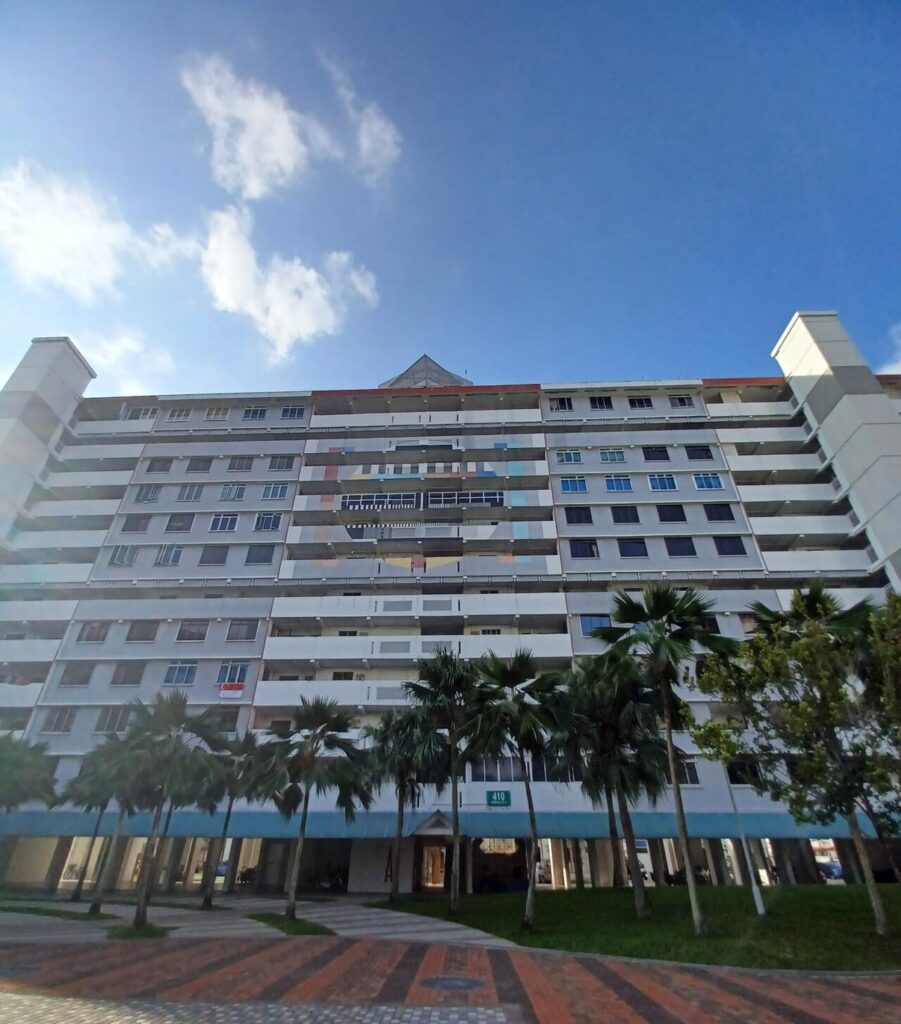
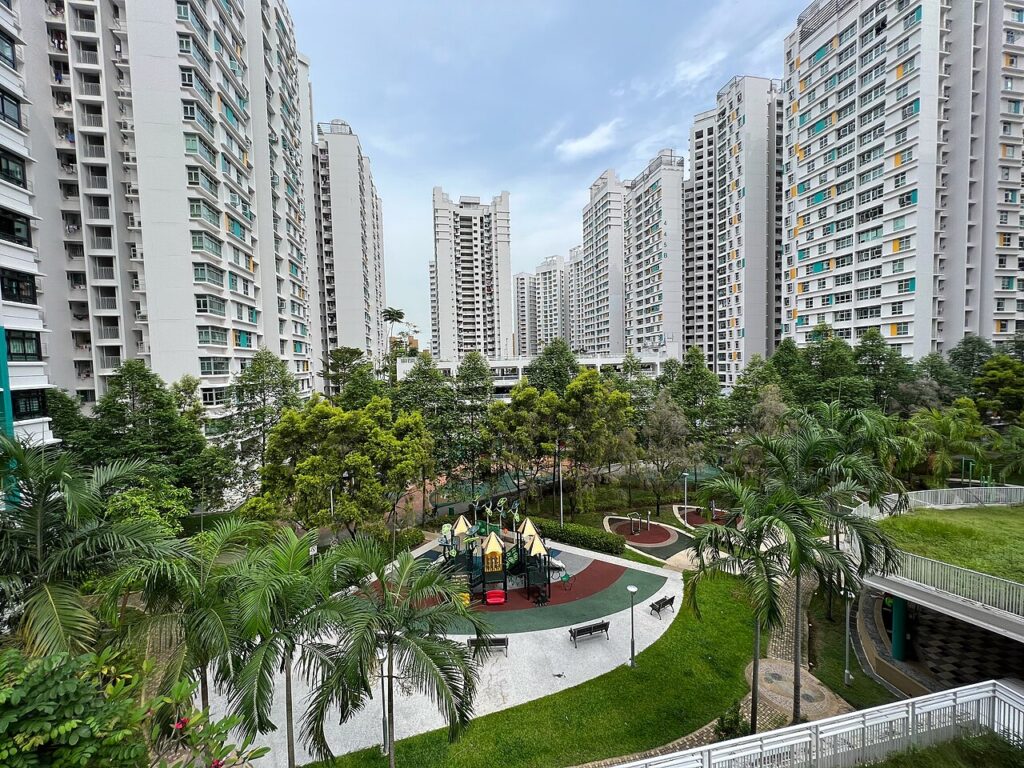
HDB resale flats form the backbone of Singapore’s housing market. With over 1.1 million flats across 24 towns and estates, the HDB resale market gives buyers immediate access to established neighbourhoods — complete with MRT stations, schools, hawker centres, and community infrastructure — without the multi-year wait of a Build-To-Order (BTO) exercise.

In 2025, approximately 29,000 HDB resale transactions were completed, a volume broadly consistent with the five-year average. Prices have risen sharply since 2021 — the Resale Price Index surged 41% between Q1 2021 and Q1 2026 — but the pace of growth has eased considerably. Understanding how to navigate the resale market in 2026 requires clarity on eligibility rules, grant quantum, financing limits, and the sequencing of each step in the purchase process.

This guide covers every dimension of Singapore HDB resale — whether you are a first-time buyer seeking a mature estate flat, an upgrader buying a five-room in a choice location, or a seller assessing the right time to exit.

HDB resale price ranges by flat type Singapore 2026 — horizontal bar chart
Figure 1: Singapore HDB Resale Price Ranges by Flat Type, Q1 2026 (indicative OCR prices; CCR/mature estate premiums apply). Source: HDB, URA REALIS.

Who Can Buy an HDB Resale Flat in Singapore?

HDB resale eligibility is governed by the Housing and Development Act (Cap 129) and administered by the Housing and Development Board. The core requirement is that at least one buyer must be a Singapore Citizen, and the buyers must form a qualifying family nucleus. The main eligibility schemes are:

Public Scheme: The most common scheme, open to SCs or SPRs who are married, engaged, or are parent-and-child pairs, siblings, or orphans. At least one SC or SPR is required; if all applicants are SCs, an unrestricted range of unit types and sizes is available. SPR-only families may purchase 3-room or larger resale flats in non-mature towns and estates.

Single Singapore Citizen (SSC) Scheme: SCs aged 35 and above who are single, divorced, or widowed may purchase a 2-room Flexi to 5-room resale flat anywhere in Singapore. This scheme was introduced to support housing access for non-family-nucleus applicants.

Joint Singles Scheme (JSS): Two or more SCs aged 35 and above who are not related may co-purchase an HDB resale flat (3-room or smaller) together.

Non-Citizen Spouse Scheme: A lone SC married to a non-citizen (non-SPR) may purchase a resale flat if the couple does not already own private property.

Fiancé/Fiancée Scheme: Engaged couples may purchase a resale flat before marriage, provided they marry within three months of key collection and register their marriage with HDB.

Importantly, there is no income ceiling to purchase an HDB resale flat — the income limits only affect grant eligibility. This contrasts with BTO where the household income ceiling of S$14,000/mth (or S$21,000/mth for larger flat types) applies to eligibility itself.

Buyers who currently own private property — locally or overseas — generally cannot purchase an HDB resale flat while retaining that private property. SCs and SPRs who own private property may buy an HDB resale flat only after disposing of the private property, with a six-month window to complete the disposal.

HDB Resale Valuation and Cash Over Valuation (COV)

Unlike BTO flats whose prices are set by HDB, resale flat prices are negotiated freely between buyer and seller. HDB appoints an approved valuer to assess the flat’s market value at the point of the resale application; the valuation is typically commissioned two to three weeks after the OTP is exercised.

If the agreed price exceeds the assessed valuation, the difference — the Cash Over Valuation (COV) — must be paid entirely in cash. CPF Ordinary Account funds and housing loans can only cover up to the assessed valuation. COV has ranged from zero to over S$100,000 depending on location, flat type, floor level, facing, and the overall market temperature. In the current market (Q1 2026), median COV in mature estates such as Toa Payoh, Bishan, and Queenstown typically ranges between S$20,000 and S$60,000.

As a practical matter, buyers should budget for potential COV as part of upfront cash requirements, especially when competing for flats in highly sought-after precincts. Sellers should price with awareness that excessive COV requests can deter buyers, who must source that cash component from personal savings, not CPF.

Housing Grants for HDB Resale Flats 2026

The Singapore government offers a generous portfolio of grants to subsidise HDB resale purchases. These are administered by HDB and credited either to the buyer’s CPF Ordinary Account or disbursed as cash at completion.

Enhanced CPF Housing Grant (EHG): The flagship resale grant, available to both first-time families and first-time singles. For first-time families, the EHG ranges from S$25,000 (household income S$10,501–S$12,000/mth) to S$80,000 (household income not exceeding S$3,000/mth). For first-time singles, the quantum is half the family rate at the same income band. The EHG is credited to the buyer’s CPF OA and applied against the purchase price. Critically, the EHG is available regardless of which town, flat type, or remaining lease the resale flat has, provided the flat’s remaining lease covers the youngest buyer to at least age 95.

Proximity Housing Grant (PHG): Introduced in 2015, the PHG rewards buyers who purchase close to their parents or children. Families receive S$30,000 if they purchase within the same town or within 4 km of their parents/children; S$20,000 if within 4 km only. Singles receive S$15,000 (same town or 4 km) or S$10,000 (4 km only). The PHG is credited as cash and disbursed at completion.

Step-Up CPF Housing Grant: Available to second-time buyers who previously lived in a 2-room BTO flat (Standard or Plus in non-mature estates) and are upgrading to a 4-room or smaller resale flat in a non-mature town. The quantum is S$15,000, credited to CPF OA.

CPF Housing Grant for Resale Flats: Applicable under certain conditions for buyers who already received grants under the old AHG/SHG framework before it was superseded by the EHG in 2019. New buyers from 2019 onwards are assessed under the EHG regime instead.

HDB resale housing grants 2026 — EHG and PHG by household income bar chart
Figure 2: HDB Resale Grants 2026 — EHG and PHG quantum by household income tier. EHG up to S$80,000 for families; PHG up to S$30,000. Source: HDB.

Financing Your HDB Resale Purchase

Two financing options are available: the HDB Concessionary Loan and a bank housing loan. The choice has permanent consequences — once you take a bank loan for the current or a prior flat, you cannot subsequently revert to the HDB loan for a future purchase.

The HDB Concessionary Loan carries a rate of 2.6% per annum (0.1 percentage point above the CPF OA rate of 2.5%), fixed by HDB and reviewed quarterly. Its key advantages are stability, a higher LTV limit of 80% (versus 75% for bank loans), and the absence of a mandatory cash down-payment — the full 20% downpayment can be paid from CPF OA. The Mortgage Servicing Ratio (MSR) cap of 30% of gross monthly income applies to both HDB and bank loans on HDB flats.

A bank loan is subject to market rates, which in Q1 2026 range from approximately 3.0–3.8% p.a. depending on loan package type (fixed or floating). The LTV is capped at 75%, and a minimum 5% cash downpayment is mandatory (the remaining 20% of the purchase price can be met with CPF). If you have an outstanding housing loan on any property, the LTV ceiling drops further and TDSR (Total Debt Servicing Ratio, 55% of gross income) applies in addition to MSR.

The HDB Flat Eligibility (HFE) Letter — mandatory since May 2023 — consolidates in a single document the buyer’s eligibility to purchase a resale flat, the CPF housing grants they are entitled to, and the HDB Concessionary Loan quantum they may borrow. The HFE letter is valid for six months and must be obtained before the seller issues any OTP.

HDB Resale vs HDB BTO vs EC — Quick Comparison

Parameter HDB Resale HDB BTO Executive Condo (EC)
Price control Market-driven; COV possible Subsidised by HDB; below market Market-driven; no subsidy
Wait time Immediate (8–12 wks completion) 3–5 years wait 3–4 years (new) or immediate (resale)
Income ceiling None (grants require ≤S$14,000) S$14,000/mth (most types) S$16,000/mth (new EC)
Grants available EHG (up to S$80k) + PHG (up to S$30k) EHG (up to S$80k) AHG/FHG (EC-specific; limited)
MOP 5 years from key collection 5 years (Standard); 10 years (Plus/Prime) 5 years (after TOP) for sale; 10 years for privatisation
Foreigners SC/SPR only SC only (as at least one applicant) SC/SPR only (new EC); anyone after 10 years
CPF usage OA up to VL (Valuation Limit) OA up to VL OA up to VL

The HDB Resale Process Step by Step

The HDB resale process follows a defined sequence governed by HDB’s administrative procedures. From first search to key collection typically spans eight to twelve weeks.

Step 1 — Apply for HFE Letter: Before any flat viewing or negotiation, both buyers must apply jointly for the HDB Flat Eligibility (HFE) letter via the HDB Flat Portal. HDB reviews CPF balances, existing property ownership, and loan history; processing takes five to ten business days. The HFE letter confirms grant entitlements and maximum loan quantum.

Step 2 — Flat Search and Negotiation: Use HDB’s ResaleFlatListings portal or engage a CEA-registered salesperson. Review transaction data on HDB’s website to calibrate a fair offer. Agree price, preferred completion date, and any fixtures to be included. Sellers and buyers can transact without agents under HDB’s direct registration option.

Step 3 — Option to Purchase (OTP): The seller issues an OTP valid for 21 calendar days. The buyer pays the Option fee (≤ S$1,000 for flats priced ≤ S$500,000; ≤ S$2,000 for flats > S$500,000). Within the 21-day window, the buyer decides to exercise by paying the Exercise fee (deducted from the purchase price) and submitting the resale flat application.

Step 4 — Resale Flat Application: Both buyer and seller submit separate portions of the application on HDB’s portal. HDB processes the application, appoints a valuer, and reviews grant eligibility — typically two to three weeks. An Approval-in-Principle (AIP) or Approval letter follows.

Step 5 — HDB Resale Appointment: Both parties attend a scheduled appointment at HDB Hub or via online portal. Documents are signed, CPF withdrawals authorised, and completion legalities confirmed. Stamp duty (BSD) is payable within 14 days of the OTP exercise date.

Step 6 — Completion and Key Collection: On the agreed completion date, HDB transfers the title and the buyer collects the keys. The five-year MOP clock starts from this date.

Worked Example: Mr & Mrs Chan — Tampines 4-Room Resale

Scenario: Mr & Mrs Chan, both Singapore Citizens, joint gross monthly income S$9,200. First-time buyers. Purchasing a 4-room resale flat in Tampines (mature estate), agreed price S$720,000. Mrs Chan’s parents live in Tampines — PHG proximity within 4 km applies. Couple plans to take HDB Concessionary Loan.

Grant entitlement (HFE letter):
EHG (income S$9,001–S$10,500 band): S$35,000 (credited to CPF OA)
PHG (parents within 4 km): S$20,000 (cash disbursed at completion)
Total grants: S$55,000

Stamp duty:
BSD on S$720,000: first S$180k × 1% = S$1,800 + next S$180k × 2% = S$3,600 + remaining S$360k × 3% = S$10,800 = S$16,200 BSD
ABSD: nil (SC purchasing first residential property)

Financing:
HDB Concessionary Loan (LTV 80%): S$720,000 × 80% = S$576,000 loan
Monthly instalment @ 2.6% p.a., 25-year tenure: ≈ S$2,607/mth
MSR: S$2,607 ÷ S$9,200 = 28.3% — PASS (≤30%)

Downpayment (20% = S$144,000):
EHG S$35,000 credited to CPF OA; assume existing CPF OA S$85,000 each (combined S$170,000 + S$35,000 = S$205,000 available in CPF)
S$144,000 covered entirely from CPF OA — no cash downpayment required

Cash upfront (items payable in cash):
BSD S$16,200 (can pay from CPF or cash) + Legal fees ~S$2,500 + Survey fee S$290 + Option Exercise fee ~S$2,000 = ~S$21,000 (most payable from CPF)
PHG cash grant of S$20,000 received at completion partially offsets out-of-pocket costs

HDB Resale Price Index RPI trend Q1 2021 to Q1 2026 Singapore chart
Figure 3: Singapore HDB Resale Price Index (RPI) Q1 2021 to Q1 2026 — 41% cumulative growth; pace moderating to +0.9% QoQ by Q1 2026. Source: HDB Resale Statistics.

Why HDB Resale Prices Matter for Buyers and Sellers in 2026

The HDB Resale Price Index at 216.3 as of Q1 2026 reflects a market that has absorbed significant price appreciation over five years but is now settling into a slower growth phase. The pace of quarterly increase has decelerated from over 3% QoQ at the 2021–2022 peak to under 1% by Q1 2026. This matters for buyers in two ways: the fear of missing out that drove frantic bidding and record COV payments in 2022 has eased, but asking prices remain structurally elevated.

The emergence of million-dollar HDB flats — a rare phenomenon before 2021, now recorded in the hundreds annually — reflects both genuine scarcity of prime-location resale stock and the wider anchor effects of elevated private market pricing. Buyers in mature estates such as Queenstown, Bishan, Bukit Merah, Toa Payoh, and Clementi should model their budget around prices that remain 35–50% above 2019 levels.

For sellers, the moderation in price growth means that extraordinary COV premiums of S$100,000 or more are harder to sustain outside genuinely irreplaceable locations. A well-priced flat at or near valuation with a clean transaction history and a remaining lease comfortably above 65 years will still attract competitive offers.

What Might Come Next — HDB Resale Outlook for H2 2026

The following is analytical perspective, not financial advice. Readers should form their own view and seek professional guidance where appropriate.

Several structural factors point to continued price resilience in the HDB resale market through 2026. BTO supply — while improving, with HDB targeting 19,600 new flats for the year — cannot satisfy immediate demand from buyers with pressing housing timelines. The June 2026 BTO exercise covers 6,900 flats across Ang Mo Kio, Bishan, Bukit Merah, Sembawang, and Woodlands, with application windows opening around 11 June 2026 — but successful applicants will wait three to five years for keys, sustaining demand for resale units throughout that period.

Interest rate policy adds a counterweight. HDB’s concessionary loan rate of 2.6% has remained stable, but bank loan rates at 3–4% represent a meaningful servicing cost for buyers who do not qualify for or prefer not to use the HDB loan. Any prolonged period of elevated rates compresses affordability and exerts a modest downward pressure on resale prices, particularly in less sought-after non-mature estates. The MAS Financial Stability Review 2025 noted the property market as resilient but flagged household debt-servicing burdens as a risk to monitor.

The government’s supply-side response — including the BTO Plus and Prime frameworks and the 2H2026 GLS programme releasing approximately 9,200 new private units — will take several years to materialise as completed stock. In the near term, the HDB resale market is likely to remain a seller’s market in mature estates and a more balanced market in non-mature towns.

Frequently Asked Questions — HDB Resale Singapore 2026

Can I buy an HDB resale flat if I already own a private property?

Generally, no — SCs and SPRs who own a private residential property (local or overseas) are not permitted to purchase an HDB flat without first disposing of the private property. However, there is a six-month disposal window: you may purchase the HDB resale flat first and dispose of the private property within six months of the HDB flat’s completion date. Failure to comply results in HDB taking action under the Housing and Development Act. Note that even if disposal is completed within the window, the Additional Buyer’s Stamp Duty (ABSD) for the HDB purchase is not subject to the standard married-couple remission scheme that applies to private property purchases — the HDB flat is treated as a separate stamp duty regime.

What is the MOP for HDB resale flats, and does it apply to Plus/Prime resale flats too?

The standard Minimum Occupation Period (MOP) for all HDB resale flats is five years from the date of key collection (or the date HDB records as the start of the owner’s occupation). The extended ten-year MOP for Plus and Prime classification flats applies only to flats purchased directly from HDB under a BTO exercise — it does not attach to resale transactions of those flat types. This means a buyer purchasing a Plus or Prime flat on the resale market is subject only to the standard five-year MOP, not the extended ten-year restriction. The PLH resale conditions (sub-sale restrictions and clawback) also do not carry forward to resale purchasers of Plus/Prime flats.

What happens if the agreed resale price is below HDB’s valuation?

If the agreed purchase price is below the HDB-assessed valuation, the buyer benefits — the housing loan amount can still be based on up to 80% of the assessed valuation, giving the buyer access to the same maximum loan quantum as if they had paid valuation. CPF usage is also capped at the assessed valuation (or the Withdrawal Limit, whichever applies), so a below-valuation purchase stretches the buyer’s CPF further. There is no penalty or restriction on transacting below valuation, and sellers sometimes accept below-valuation prices in a slower market or when they need to transact quickly.

How is the Enhanced CPF Housing Grant (EHG) calculated for joint buyers with different nationalities?

For mixed-nationality couples (one SC, one SPR), the grant computation uses the average gross monthly income of both applicants. The same grant table applies. However, SPR-only households are not eligible for the EHG — at least one applicant must be a Singapore Citizen for the EHG to apply. Where one buyer earns significantly more than the other, the blended average income can push the couple into a lower grant tier than the lower-earning partner’s income alone would suggest, so the computational basis of the HFE letter should be reviewed carefully before finalising the purchase decision.

Can I use CPF to pay the Cash Over Valuation (COV) on an HDB resale flat?

No. COV — the amount by which an agreed resale price exceeds HDB’s assessed valuation — must be paid entirely in cash. CPF Ordinary Account funds and housing loan proceeds can only be applied up to the assessed valuation of the flat. This is a hard rule under the CPF Act and the Housing and Development Act. Buyers in competitive markets must therefore budget for COV as a pure cash outlay, separate from the CPF-funded downpayment and the loan amount. Sellers often know this constraint and price accordingly, using COV as a market-clearing mechanism in high-demand areas.

What are the stamp duties payable when buying an HDB resale flat?

Buyer’s Stamp Duty (BSD) applies to all HDB resale purchases. The BSD rate schedule (effective 15 February 2023) is: first S$180,000 at 1%; next S$180,000 at 2%; next S$640,000 at 3%; next S$500,000 at 4%; next S$1,500,000 at 5%; amounts above S$3,000,000 at 6%. For a flat purchased at S$600,000, the BSD works out to S$13,200 (S$1,800 + S$3,600 + S$7,800). Additional Buyer’s Stamp Duty (ABSD) is nil for Singapore Citizens purchasing their first residential property. SPRs purchasing their first property pay 5% ABSD; SPRs purchasing a second property pay 30% ABSD. BSD must be paid within 14 days of exercising the OTP. It can be paid from CPF OA funds if sufficient balance is available.

Related Articles on LovelyHomes

Disclaimer

This article is for general informational purposes only and does not constitute financial, legal, or property advice. HDB policies, grant eligibility criteria, loan limits, stamp duty rates, and market statistics are subject to change by the Housing and Development Board, the Inland Revenue Authority of Singapore (IRAS), the Monetary Authority of Singapore (MAS), and the CPF Board. Readers should verify all figures directly with HDB at www.hdb.gov.sg, IRAS at www.iras.gov.sg, and consult a licensed property salesperson registered with the Council for Estate Agencies (CEA) and/or a licensed financial adviser before making any property transaction decision. Property investment carries risk; past price performance does not guarantee future returns.

×

En Bloc Singapore 2026: Complete Guide to Collective Sales for Owners and Investors

En Bloc Singapore 2026: Complete Guide to Collective Sales for Owners and Investors

Quick Answer: En Bloc Singapore 2026 — Key Facts at a Glance

  • What is en bloc? A collective sale where the majority of owners in a strata development agree to sell the entire site to a single buyer — typically a property developer.
  • Consent threshold: 80% (development ≥ 10 years old) or 90% (younger than 10 years) — measured by strata share value AND floor area simultaneously.
  • Legal framework: Land Titles (Strata) Act (Cap 158A), administered by the Singapore Land Authority (SLA).
  • Minority protection: Dissenting owners may object to the Strata Titles Board (STB); the STB may still approve if the sale is not prejudicial to the minority.
  • Market cycle: Peak was 2017–2018 (~S$8–9 billion/year). Subdued since: 2–10 completions a year from 2019 to 2026.
  • Owner proceeds: Generally capital in nature and not subject to income tax. Seller’s Stamp Duty (SSD) applies if sold within 3 years of purchase.
  • Developer ABSD: 35% entity rate; conditional 30% remission if all units sold within 5 years of the collective sale order.
  • Timeline: Typically 18–30 months from Collective Sale Committee formation to completion.

What Is an En Bloc Sale and Why Does It Happen?

In Singapore, an en bloc sale — formally a collective sale — occurs when the majority of owners in a strata-titled development agree to sell the entire site to a single buyer, usually a property developer intending to demolish the existing buildings and redevelop the land. Singapore’s Land Titles (Strata) Act (Cap 158A) allows a supermajority of owners to proceed over minority objections, provided the statutory criteria are met and, where necessary, the Strata Titles Board (STB) approves the application. The economic driver is land scarcity: ageing private estates on prime sites with low plot ratios relative to current URA Master Plan permissions present lucrative redevelopment opportunities, and owners can achieve premiums over individual market value that would be impossible through a solo sale.

Legal Framework: The Land Titles (Strata) Act

The Land Titles (Strata) Act (Cap 158A) (LTSA), administered by the SLA and the STB, is the primary legislation governing collective sales. Key amendments in 1999, 2007, and 2010 progressively strengthened minority-owner protections — including requirements for independent financial advice for elderly or low-income owners, stricter disclosure obligations, and clearer rules on how proceeds must be distributed. Under the LTSA, every collective sale must satisfy two tests: the consent threshold (required supermajority by strata share value and floor area) and the good faith test (the sale must be conducted fairly, taking into account sale price, distribution method, and any relationships between the purchaser and CSC members).

en bloc collective sale consent threshold 80 percent 90 percent Singapore Land Titles Strata Act Cap 158A
Figure 1: En bloc consent thresholds under LTSA Cap 158A. Both the strata share value and floor area tests must be satisfied simultaneously. Source: Singapore Land Authority / Land Titles (Strata) Act Cap 158A.

How Consent Is Measured: Strata Share Value and Floor Area

The threshold must be met on two dimensions simultaneously: by strata share value (a weighting assigned to each unit at strata subdivision) and by floor area (the actual area of each unit in square metres). A development where 82% of owners by strata share value have signed the Collective Sale Agreement (CSA), but only 78% by floor area, has not yet met the 80% bar. This dual requirement protects against situations where a few large-unit owners could dominate the value calculation while a majority of smaller-unit owners might not support the sale.

The En Bloc Process: Stage by Stage

A collective sale follows a defined statutory sequence. The timeline below is typical, though individual developments vary in complexity and duration.

en bloc collective sale process timeline stages months Singapore 2026
Figure 2: Typical en bloc timeline from Collective Sale Committee formation to SLA completion. The full process routinely takes 18–30 months; STB proceedings add significantly more time. Source: LovelyHomes editorial, SLA data.

Stage 1 — Forming the Collective Sale Committee (CSC)

At least 20% of subsidiary proprietors by share value must requisition an Extraordinary General Meeting (EGM). At the EGM, owners vote to form a CSC — typically 3 to 14 elected owner-members — who manage the sale process on behalf of all owners. The CSC owes statutory duties of care to all owners, including those who oppose the en bloc.

Stage 2 — Appointing Professional Advisers

The CSC appoints a solicitor, an independent valuer (to establish the reserve price and market value), and a marketing agent. LTSA conflict-of-interest rules require that all three be independent — no relationship may exist between these advisers, the CSC, and the prospective purchaser.

Stage 3 — Drafting and Signing the Collective Sale Agreement

The CSA specifies the reserve price, distribution method, marketing approach, and conditions of sale. It must be made available for inspection by all owners before signatures are collected. The LTSA imposes a 12-month window to achieve the required threshold — if the deadline lapses without success, the process must restart from the EGM stage.

Stage 4 — Public Tender or Private Treaty

Once the threshold is met, the site is marketed via a minimum 10-week public tender. If the tender produces no acceptable bid, the CSC may pursue private treaty negotiations for up to 10 months. Any bid at or above the reserve price may be accepted by the CSC.

Stage 5 — STB Application (If Required)

Non-signing owners have 21 days after notification of the sale to file objections with the STB. If objections are raised, the CSC applies to the STB for approval. The STB holds hearings and may approve the sale if satisfied it was conducted in good faith and is not genuinely prejudicial to the minority objectors. Where no objections are filed, the sale proceeds directly to SLA without STB involvement.

Stage 6 — SLA Completion

The SLA processes the legal title transfer. The developer pays the agreed price; all owners receive their allocated proceeds per the CSA distribution formula. The development is then vacated, demolished, and redeveloped.

Singapore En Bloc Market: History and Current Activity

Singapore en bloc market activity number of collective sales 2016 to 2026
Figure 3: Singapore en bloc collective sale activity 2016–2026. The 2017–2018 peak saw 32–37 successful sales totalling approximately S$8–9 billion. Activity has been subdued since 2019 due to elevated developer ABSD and rising construction costs. *2026 YTD estimate. Source: URA, industry research data.

Singapore’s en bloc market moves in cycles driven by land prices, developer appetite, cooling measures, and interest rates. The 2017–2018 boom was fuelled by a prolonged low-interest-rate environment and strong developer land-banking demand following the 2013–2016 property price trough. The Government responded decisively in July 2018: developer ABSD was raised from 15% to 25%, effectively pricing many en bloc deals out of developer feasibility. Since 2019, annual completions have ranged from just 2 to 10, versus more than 30 at the peak.

In 2026, the market remains quiet. Developer ABSD is now 35% for entities, with a conditional 30% remission if all units are completed and sold within 5 years of the collective sale order — still a significant carrying-cost burden. Rising construction costs (up approximately 20–30% since 2020) further compress developer margins. Industry analysts note that a meaningful revival requires either a reduction in developer ABSD or a significant moderation in owner price expectations — or both.

Summary Table: Key En Bloc Parameters

Parameter Detail Source / Reference
Consent threshold (≥ 10 years) 80% by strata share value AND floor area LTSA Cap 158A s. 84A
Consent threshold (< 10 years) 90% by strata share value AND floor area LTSA Cap 158A s. 84A
CSA signing window 12 months to achieve the threshold SLA guidelines
Public tender period Minimum 10 weeks LTSA s. 84C
Private treaty (post-failed tender) Up to 10 months SLA guidelines
Objection window 21 days after owners are notified of the sale LTSA, STB Rules
STB process duration Typically 6–18 additional months STB, SLA data
SSD for individual owners 12%/8%/4% if sold within 1/2/3 years of purchase IRAS Stamp Duties Act Cap 312
BSD for developer (entity) Progressive 1–6% on purchase price IRAS
ABSD for developer (entity) 35%; conditional 30% remission if all units sold within 5 years IRAS, Ministry of Finance

Worked Example: What Owners Receive in an En Bloc Sale

Case Study: Hillview Gardens Collective Sale (Illustrative Example)

Background: Hillview Gardens is a fictional 1995-built condominium of 120 units in District 23 (Bukit Timah area). At 31 years old, the 80% consent threshold applies. Land area approximately 7,800 sqm; URA Master Plan plot ratio 2.1; estimated redevelopment GFA approximately 16,380 sqm (176,250 sq ft).

Reserve price: S$220 million (~S$1,249 psf ppr). Tender result: A developer bids S$238 million (~S$1,351 psf ppr), above the reserve.

Indicative owner proceeds (blended strata share value + floor area formula):

  • 2-bedroom owner (86 sqm, share value 12): approximately S$1.62M
  • 3-bedroom owner (126 sqm, share value 18): approximately S$2.45M
  • Penthouse owner (248 sqm, share value 35): approximately S$4.87M

SSD consideration: The 2BR owner who purchased in October 2024 at S$1.05M and receives S$1.62M triggers SSD at 4% (sold in year 2 of ownership after purchase) — approximately S$64,800 payable to IRAS before netting out proceeds.

Developer cost summary: S$238M land + BSD approximately S$8.8M + ABSD 35% = S$83.3M ABSD upfront (S$71.4M conditionally remitted if 5-year sell-down target met, leaving net S$11.9M non-remittable ABSD). Construction estimated at S$97–115M for approximately 200 new 99-year leasehold units. Total development outlay approximately S$350–370M.

Why This Matters for Singapore Homeowners and Investors

En bloc optionality — the possibility of a collective sale at a significant premium over individual market value — is a genuine pricing factor in Singapore’s property market. Buyers of units in ageing estates with favourable plot ratios and URA Master Plan zoning frequently factor this in. Understanding the en bloc process allows owners to participate meaningfully in CSC elections, evaluate distribution formulas, and make informed decisions about whether to sign the CSA or exercise their statutory rights as minority objectors. For property investors, en bloc adds a second return pathway alongside rental yield and capital appreciation — albeit a probabilistic one, since the majority of developments never complete a collective sale.

What Might Come Next: En Bloc Outlook for 2026–2028

A revival in Singapore’s en bloc market depends primarily on developer ABSD and construction-cost trajectories. At the current 35% rate (net effective approximately 5% after conditional remission), most en bloc pricing equations remain tight for developers. Any easing of the developer ABSD rate — which requires a Ministry of Finance decision — would likely unlock significant pent-up activity. Many developments formed between 2007 and 2015 have already crossed the 10-year threshold (allowing the lower 80% consent bar) and are candidates for future en bloc bids. Industry analysts place the probability of a new en bloc mini-cycle at moderate-to-high by 2028–2030, contingent on interest-rate normalisation and government policy direction. Separately, the Government’s Voluntary Early Redevelopment Scheme (VERS) — a public-sector counterpart for ageing HDB estates — continues in pilot stage, signalling the Government’s long-term commitment to estate renewal beyond the private sector alone.

Frequently Asked Questions

Can I be forced to sell my property in an en bloc even if I did not sign the CSA?

Yes. Once the consent threshold has been met and either no objections are filed within 21 days or the STB approves the application despite minority objections, the collective sale order is legally binding on all subsidiary proprietors — including those who did not sign the CSA. The STB will deny an application only where the sale was not conducted in good faith or where it finds the transaction to be genuinely prejudicial to the minority. In practice, the STB approves the overwhelming majority of collective sale applications brought before it. This binding mechanism is a deliberate feature of Singapore’s regime, designed to enable urban renewal without individual vetoes indefinitely blocking community-level redevelopment decisions.

How is my individual share of the en bloc proceeds calculated?

The distribution method must be specified in the Collective Sale Agreement and disclosed to all owners before they are invited to sign. The three most common methods are: distribution by strata share value (the weighting assigned at the time of strata subdivision), by floor area (the actual size of each unit), or a blended formula combining both in agreed proportions. Disputes over the distribution formula are one of the most common reasons en bloc attempts fail to reach the consent threshold — owners of larger units generally favour floor-area distribution, while those with relatively high strata share values may prefer the share-value method.

Is profit from an en bloc sale subject to income tax in Singapore?

For most individual property owners, proceeds from an en bloc sale are treated as capital gains and are therefore not subject to income tax — Singapore does not impose a general capital gains tax on real property. However, Seller’s Stamp Duty (SSD) applies if the property was acquired within the 3 years prior to the collective sale: 12% in the first year, 8% in the second year, and 4% in the third year (calculated on the higher of sale price or market value). Owners who hold the property for more than 3 years pay no SSD. Property traders or those who purchased specifically for resale may be taxed differently by IRAS. Consult a qualified tax adviser if your circumstances are complex.

What happens to tenants when an en bloc sale completes?

Tenants have no legal right to block or delay a collective sale. Existing tenancy agreements remain binding on the owner (and, during the transition, on the developer-purchaser) until legal completion. Once completion occurs, the developer takes vacant possession and all tenancies must end. Landlords are generally obliged to give reasonable notice and return security deposits. Tenants should review their tenancy agreements carefully — en bloc completion is a termination event typically outside the landlord’s direct control, and some agreements include specific clauses addressing this scenario.

How does developer ABSD affect the en bloc price owners receive?

Developer ABSD is currently 35% of the land purchase price for entities, with a conditional 30 percentage-point remission if the developer completes the project and sells all units within 5 years — leaving a non-remittable 5% ABSD minimum. On a S$300M en bloc transaction, this means S$105M in upfront ABSD, of which S$90M may eventually be remitted, but S$15M is permanently sunk. This significantly raises the bar for developer feasibility and directly depresses the price developers will bid for en bloc sites. The higher the developer ABSD, the wider the gap between owner expectations and developer bids — which is why the rate has been the primary dampener on en bloc activity since the July 2018 cooling measures.

What is the difference between an en bloc and a Government Land Sales (GLS) site?

A Government Land Sales (GLS) site is released directly by the Government — typically through the URA or the HDB — via public tender to developers. GLS sites are usually vacant or cleared land with no existing private owners to compensate. An en bloc site is privately held: the developer must negotiate with existing owners, obtain a collective sale order, and pay a premium above individual resale values. GLS is faster, more predictable, and more transparent in timeline; en bloc offers locations in established neighbourhoods that the Government does not hold land to release, and can provide superior amenity and locational attributes for certain buyers. Developers typically pursue both channels simultaneously as part of their land-banking strategies.

Related Articles

Disclaimer

This article is for general informational and educational purposes only and does not constitute legal, tax, or financial advice. En bloc collective sale laws, ABSD rates, Strata Titles Board procedures, and Seller’s Stamp Duty rules are subject to change by the Singapore Government. Owners and investors considering participation in a collective sale should engage a Singapore-qualified solicitor experienced in collective sales, an independent valuer registered with IRAS, and a licensed property agent registered with the Council for Estate Agencies (CEA). For the most current legal requirements, refer to the Singapore Land Authority (sla.gov.sg), IRAS (iras.gov.sg), the Strata Titles Board (stratatitlesboard.gov.sg), and the Urban Redevelopment Authority (ura.gov.sg).

Singapore Stamp Duty Complete Guide 2026: BSD, ABSD, SSD and ACD Explained

Singapore Stamp Duty Complete Guide 2026: BSD, ABSD, SSD and ACD Explained

×Click anywhere or press Esc to close

Singapore stamp duty is not a single tax — it is a suite of four distinct levies that can collectively add hundreds of thousands of dollars to the cost of a property transaction. Understanding each one, when it applies, and how to calculate it is essential before you sign any Option to Purchase. This guide covers all four: Buyer’s Stamp Duty (BSD), Additional Buyer’s Stamp Duty (ABSD), Seller’s Stamp Duty (SSD), and Additional Conveyance Duty (ACD).

All figures are current as at 31 May 2026. For the authoritative position, always refer to the IRAS Stamp Duty page and consult a licensed conveyancing lawyer before transacting.

Quick Answer — Singapore Stamp Duty at a Glance

  • BSD — payable by EVERY buyer on every property purchase. Progressive rates 1%–6%.
  • ABSD — additional levy on top of BSD. Singapore Citizens pay 0% on their first property, 20% on their second, 30% on their third+. PRs pay 5%/30%/35%. Foreigners pay 60% on any residential property.
  • SSD — payable by the SELLER if the property is sold within 3 years of purchase. Rates: 12% (Year 1), 8% (Year 2), 4% (Year 3), nil thereafter.
  • ACD — applies when residential property is transferred indirectly through corporate equity. Flat 33% on the residential property value component.
  • BSD and ABSD are payable within 14 days of the Option to Purchase (OTP) or Sale & Purchase Agreement.
  • SSD is payable within 14 days of the sale contract.
  • CPF cannot be used to pay stamp duty at the point of purchase — you must pay in cash first, then apply for CPF reimbursement.
  • ABSD remission is available to Singapore Citizen couples replacing their matrimonial home — subject to conditions and strict timelines.

What Is Stamp Duty and Why Does Singapore Use It?

Stamp duty is a transaction tax levied on documents that effect the transfer of a property or shares in a property-holding entity. In Singapore, the Inland Revenue Authority of Singapore (IRAS) administers all stamp duties under the Stamp Duties Act (Cap. 312). The modern stamp duty regime serves two purposes: raising revenue, and acting as a macro-prudential tool to moderate speculative demand in the residential property market.

When you buy a residential property, you will encounter BSD and possibly ABSD. When you sell, SSD may apply if you sell too quickly. If a property changes hands through an equity transfer in a company, ACD enters the picture. Each levy has its own trigger, its own rate schedule, and its own payment deadline.

Buyer’s Stamp Duty (BSD) — the Baseline Tax Every Buyer Pays

BSD is the foundational property transaction tax. Every buyer — regardless of citizenship, residency status, or how many properties they already own — pays BSD on every property purchase. It is computed on the higher of the purchase price or the market value of the property at the time of acquisition.

The rates are progressive for residential property:

Purchase Price / Market Value BSD Rate Max BSD from This Tier
First S$180,000 1% S$1,800
Next S$180,000 2% S$3,600
Next S$640,000 3% S$19,200
Next S$500,000 4% S$20,000
Next S$1,500,000 5% S$75,000
Above S$3,000,000 6% No cap

A separate, flat-rate BSD schedule applies to non-residential property (commercial, industrial): 1% on the first S$180,000, 2% on the next S$180,000, and 3% on the remainder — capped at 3%. The progressive residential schedule shown above took effect for instruments executed on or after 15 February 2023, when the 5% and 6% tiers were introduced for high-value transactions.

Worked example (BSD only, S$1.5M residential condo):

First S$180,000 × 1% = S$1,800
Next S$180,000 × 2% = S$3,600
Next S$640,000 × 3% = S$19,200
Next S$500,000 × 4% = S$20,000
Total BSD = S$44,600

BSD is a fixed cost — there is no way to reduce it lawfully short of negotiating a lower purchase price. It is also not remissible (there are no BSD remission schemes for residential buyers equivalent to the ABSD remission).

Additional Buyer’s Stamp Duty (ABSD) — the Policy Lever

ABSD was introduced in December 2011 and has been raised five times since, most recently in April 2023. It is the single largest upfront cost for most second-property buyers and foreigners. ABSD is levied on top of BSD, at a flat rate on the entire purchase price.

Total stamp duty BSD plus ABSD by buyer profile Singapore 2026 — SC SPR foreigner entity table
Figure 1: Total stamp duty (BSD + ABSD) payable by buyer profile and property price — Singapore 2026. Source: IRAS.

The current ABSD rate schedule (applicable to instruments executed on or after 27 April 2023) is:

Buyer Profile 1st Property 2nd Property 3rd & Subsequent
Singapore Citizen (SC) 0% 20% 30%
Singapore Permanent Resident (SPR) 5% 30% 35%
Foreigner (individual) 60% 60% 60%
Entity (company, trustee) 65% 65% 65%
Housing developer 40%* 40%* 40%*

* 5% of the developer ABSD is non-remittable. The remaining 35% is remittable upon completing the project and selling all units within 5 years.

FTA nationals — citizens of Iceland, Liechtenstein, Norway, Switzerland, and the United States — are accorded Singapore Citizen ABSD treatment under the respective Free Trade Agreements.

For a detailed breakdown of ABSD remission schemes (including the Married Couple Remission for upgraders), see our ABSD Complete Guide 2026.

Seller’s Stamp Duty (SSD) — the Anti-Flipping Tax

SSD was introduced in February 2010 to discourage short-term residential property speculation. It is paid by the seller (not the buyer) when a residential property is disposed of within three years of its acquisition. The rate depends on how quickly the seller flips the property:

Seller's Stamp Duty SSD rates by holding period Singapore 2026
Figure 2: SSD rates by holding period — residential property, Singapore 2026. Source: IRAS.

SSD is calculated on the higher of the sale price or the market value at the time of disposal. The holding period is measured from the date of purchase (execution of the Sale & Purchase Agreement) to the date of sale (execution of the disposal S&P). SSD does not apply to properties acquired before 20 February 2010, nor does it apply to commercial or industrial property.

Note: If you inherit a property and subsequently sell it, the SSD holding period runs from the original purchase date (the date the deceased acquired the property), not from the date of inheritance. This is a common source of confusion. If a parent bought a condo in 2024 and passed away in 2025, and the heir sells in early 2026, SSD at 8% could still apply.

The SSD is the reason most investor-buyers hold Singapore residential property for at least three years before selling. In practice, the combination of SSD and the time needed to recover transaction costs (BSD + ABSD + legal fees + agent commissions) means the effective minimum hold for a profitable flip is typically four to five years.

Additional Conveyance Duty (ACD) — the Entity Transfer Tax

ACD was introduced in May 2017 to close a loophole that allowed buyers to acquire residential property held in companies without paying ABSD — by buying shares in the company rather than the property directly. Under the ACD regime, a transfer of equity interests in a residential-property-holding entity is taxed as if it were a direct property acquisition.

ACD applies when:

  • The acquirer obtains a significant ownership interest (≥50%) in an entity (company, trust, or partnership);
  • That entity holds Singapore residential property as its primary asset; and
  • The residential property component exceeds a de minimis threshold.

The ACD rate is 33% on the residential property value component, levied on top of the existing stamp duty on the share transfer (which is normally 0.2%). For a $10 million residential property held in a company, an ACD transaction could trigger an additional $3.3 million in duty — making it broadly equivalent in cost to a direct ABSD transaction.

ACD is highly specialised and typically arises in commercial real estate transactions, family wealth restructuring, or en-bloc-related scenarios. Most individual residential buyers will never encounter it. If you are structuring a transaction that involves acquiring shares in a company that holds Singapore residential property, engage a tax adviser with stamp-duty expertise before proceeding.

Summary: All Four Singapore Stamp Duties at a Glance

Duty Who Pays When It Applies Rate (Residential) Deadline
BSD Buyer All property purchases 1%–6% progressive 14 days from OTP/S&P
ABSD Buyer 2nd+ property / foreigner / entity 0%–65% flat on full price 14 days from OTP/S&P
SSD Seller Sold within 3 years of purchase 4%–12% flat on full price 14 days from disposal S&P
ACD Acquirer of equity ≥50% stake in residential-property entity 33% on resi property value 14 days from share transfer

Comprehensive Worked Example: SC Couple Upgrading from HDB to Private Condo

Mr & Mrs Pang are Singapore Citizens. They own a Bishan 5-room HDB flat (purchased 2018, fully paid under CPF). They want to buy a S$2,000,000 2-bedroom freehold condo in District 10 and sell the HDB afterwards. Here is the full stamp duty picture:

Scenario A: Buy the condo BEFORE selling the HDB

Because they still own the HDB, the condo is their second residential property. ABSD at 20% is triggered.

  • BSD on S$2,000,000: S$64,600
  • ABSD (20%): S$400,000
  • Total stamp duty: S$464,600
  • However, they can apply for the ABSD Married Couple Remission — they get the S$400,000 back if they sell the HDB within 6 months of the later of (a) the condo’s purchase date or (b) its TOP date.
  • They must pay the ABSD upfront in cash and wait for the refund.

Scenario B: Sell the HDB FIRST, then buy the condo

After selling the HDB, they hold zero residential properties. The condo becomes their first residential property. Zero ABSD.

  • BSD on S$2,000,000: S$64,600
  • ABSD: S$0
  • Total stamp duty: S$64,600
Total stamp duty worked example three buyer profiles at S 2 million Singapore 2026
Figure 3: Total stamp duty at S$2,000,000 — SC 1st property, SC 2nd property, and SPR 2nd property compared. Source: IRAS 2026.

Scenario B saves the Pangs S$400,000 and avoids the need for the remission application. The trade-off is the risk of not finding a new home before the HDB sale completes — and potentially needing temporary accommodation in the interim. Many upgrading couples use a bridging loan to manage this gap.

When Does Stamp Duty Really Matter? — Why These Numbers Are So Significant

Stamp duty in Singapore is, by international standards, among the highest in the world for non-citizen buyers. A foreign individual purchasing a S$3 million residential property in 2026 faces: BSD of approximately S$119,600 plus ABSD of S$1,800,000 — a total of S$1,919,600, or 64% of the purchase price. This is intentional: the Government has consistently stated that Singapore’s residential property market is primarily for Singaporeans to live in, and the ABSD is the mechanism that enforces that policy goal.

For Singapore Citizens, the numbers are far more manageable — but still significant. A first-time buyer at S$2 million pays S$64,600 in BSD alone. For an upgrader buying their second property at the same price, adding S$400,000 in ABSD transforms what might otherwise be a healthy financial decision into a transaction that requires either substantial cash reserves or careful sequencing via the remission route.

Stamp duty also has a secondary effect on the property market as a whole: it creates a minimum holding period incentive. Investors who pay BSD and ABSD on entry need their property to appreciate by at least those amounts — plus legal costs, agent commissions, and financing costs — before they break even on a sale. This structurally discourages short-term speculation and was a deliberate part of the policy design when rates were raised in 2021 and 2023.

What Might Change in 2026 and Beyond?

This section is speculative analysis, not official policy.

As at May 2026, there has been no signal from the Ministry of Finance or MAS of imminent changes to the stamp duty regime. Private residential prices rose 0.9% in Q1 2026 — a moderate pace that does not, on its own, suggest further tightening is imminent. The Government has traditionally intervened when quarterly price growth exceeds 2–3% or when transaction volumes indicate re-entry of speculative buyers.

Watch for the following triggers that could lead to a review: (1) sustained quarter-on-quarter private price growth above 2% for two or more consecutive quarters; (2) a significant rise in foreign buyer transactions as a proportion of total; (3) a global interest rate environment that makes Singapore dollar assets more attractive to offshore capital. Conversely, a sharp economic slowdown could prompt targeted relief — as was done in 2020 with the COVID-19 stamp-duty deferral scheme.

Frequently Asked Questions

Can I use my CPF to pay stamp duty?

No, not at the point of payment. BSD and ABSD (and SSD for sellers) must be paid in cash by the statutory deadline. After the duty has been stamped and paid, you may apply to withdraw from your CPF Ordinary Account to reimburse the cash outlay, provided the property qualifies under CPF Board rules and you have sufficient OA balance. The CPF withdrawal is a reimbursement step, not a direct payment channel.

Does SSD apply if I sell because of financial hardship?

There are no hardship exemptions to SSD built into the Stamp Duties Act. SSD is triggered automatically on any disposal within 3 years of purchase, regardless of the reason for sale. IRAS has no general discretion to waive SSD except in the specific circumstances defined in the Act (e.g. compulsory acquisition by the state). If you are facing distress and need to sell within the SSD window, factor the SSD cost into your net sale proceeds before deciding.

My spouse is a foreigner. Do we pay 60% ABSD on our first home together?

For a jointly-owned first matrimonial home where one owner is a Singapore Citizen and the other is a foreigner, the couple can apply for ABSD remission to be taxed at the SC rate (0% on a first property). The remission is available for a property that will be used as the couple’s matrimonial home, and conditions must be met. The ABSD is still payable upfront at the foreigner rate; the remission is applied for thereafter. Engage a conveyancing lawyer well before the OTP is exercised to ensure the remission application is properly structured.

Is stamp duty payable on a property gift (transfer without payment)?

Yes. BSD (and ABSD where applicable) is computed on the market value of the property at the time of transfer, even if no money changes hands. A parent transferring a private condo to an adult child as a gift is treated as a purchase at market value for stamp duty purposes. The child is treated as the buyer and must pay BSD and ABSD based on their own buyer profile and existing property count.

How is stamp duty calculated for an uncompleted property (new launch)?

For an uncompleted unit bought directly from the developer, the stamp duty is computed on the purchase price stated in the Sale & Purchase Agreement (which is executed at the point of booking the unit). ABSD — where applicable — is payable within 14 days of the S&P execution, which means the full ABSD amount is due upfront even though the project may not complete for several years. The Married Couple Remission window (6 months to sell the existing property) runs from the later of the S&P date or the Temporary Occupation Permit (TOP) date.

Does stamp duty apply to HDB flat purchases?

Yes. BSD applies to all HDB flat purchases (new BTO and resale) at the same progressive rates as private residential property. For new BTO flats, BSD is computed on the selling price set by HDB; for resale, it is on the higher of the resale price or HDB’s valuation. ABSD also applies to HDB flat purchases under the same rules — although Singapore Citizen first-time buyers pay 0% ABSD, meaning only BSD is due. SPR first-time buyers face 5% ABSD even on an HDB flat purchase.

Related Articles


Disclaimer: This article is for general informational purposes only and does not constitute legal, tax, or financial advice. Stamp duty rates and remission rules may change. Always verify the current position with the IRAS Stamp Duty page and the Ministry of Finance. Consult a licensed conveyancing lawyer or tax specialist before transacting.

Singapore Property Inheritance Guide 2026: Wills, CPF Nominations, HDB Flats and Stamp Duty Explained

Singapore Property Inheritance Guide 2026: Wills, CPF Nominations, HDB Flats and Stamp Duty Explained

Inheriting property in Singapore is rarely straightforward. Whether you are the surviving spouse of an HDB flat owner, a child named in a parent’s will, or a beneficiary who just discovered their loved one died without any estate planning, the rules governing how Singapore residential property passes on death are layered, sometimes counterintuitive, and — if you get them wrong — expensive. This Singapore property inheritance guide 2026 consolidates everything you need to know: the Intestate Succession Act, making a valid will, CPF nomination rules that override your will, HDB flat transfer procedures, stamp duty obligations, the probate process, and the legitimate planning strategies every property owner in Singapore should consider.

Quick Answer — Singapore Property Inheritance at a Glance

  • Without a will, the Intestate Succession Act (Cap 146) governs distribution — your spouse gets 50%, your children share the other 50% (or spouse takes all if no children).
  • CPF savings bypass your will entirely — they go to your CPF nominees, or to the Public Trustee if you have none.
  • HDB flats may be retained by eligible family members under the Right of Occupancy Scheme; if no eligible occupier exists, HDB buys back the flat at market value.
  • No estate duty applies in Singapore — abolished in February 2008. Inherited property itself is not subject to stamp duty on the death transfer.
  • However, a subsequent gift or sale of inherited property to another person can trigger Buyer’s Stamp Duty (BSD) and, critically, ABSD based on the recipient’s property count and citizenship.
  • A properly executed will, CPF nomination, and LPA can prevent months of delays, court applications, and avoidable costs.
  • Probate in Singapore typically takes 4–9 months for a straightforward estate; more complex multi-property or overseas-asset estates may take 12–24 months.

The Intestate Succession Act — What Happens Without a Will

When a Singapore resident who is not a Muslim dies without a valid will, the Intestate Succession Act (Cap 146), administered by the Family Justice Courts, determines who inherits the estate. The Act follows a fixed hierarchy of beneficiaries and applies to both HDB flats and private residential property (subject to the special HDB rules discussed later).

The most important thing to understand is that the Act’s rules are inflexible — the court has no discretion to vary them based on your wishes or circumstances. If you want a different outcome, you need a will.

Singapore intestacy distribution chart by family situation 2026 — Intestate Succession Act shares for spouse, children, parents, siblings
Figure 1: Distribution of estate under the Intestate Succession Act by family situation. Percentages represent share of the full estate.
Survivors at Death Who Inherits (and Share)
Spouse only (no children, no parents) Spouse — 100%
Spouse + children Spouse 50% / Children share 50% equally
Children only (no spouse) Children — 100% shared equally
Spouse + parents (no children) Spouse 50% / Parents 50%
Parents only (no spouse, no children) Parents — 100% equally
Siblings only Siblings — 100% equally
No family at all Government — bona vacantia

Critically, the Intestate Succession Act does not apply to Muslims in Singapore — Muslim estates are governed by Islamic inheritance law (faraid) administered through the Syariah Court and Muslim Trust Fund (MUIS). If you are Muslim, consult a lawyer or MUIS directly.

Making a Valid Will in Singapore

A will is the cornerstone of any estate plan. Under the Wills Act (Cap 352), a valid Singapore will must be:

  • In writing (typed or handwritten).
  • Signed by the testator (the person making the will) at the foot of the document.
  • Witnessed by two independent witnesses — both present at the same time when the testator signs. Neither witness (nor their spouse) can be a beneficiary.
  • Made by a person aged 21 or older (or a member of the armed forces on active service).

There is no requirement to register a will with any government body in Singapore, though many solicitors recommend lodging it with the Wills Registry at the Singapore Academy of Law for a small fee (~S$50). A will can be revoked at any time by making a new one or by destroying the original with the intention to revoke. Marriage automatically revokes a prior will in Singapore.

What your will can do: direct who receives your private residential property; name your executor; appoint guardians for minor children; specify funeral wishes; establish testamentary trusts for minors or dependants. What it cannot do: override CPF nominations, bypass HDB rules on flat ownership, or transfer assets held in joint tenancy (these pass automatically to the surviving joint tenant by operation of law).

CPF Nominations — The Rule That Overrides Your Will

Many Singapore property owners are surprised to learn that their CPF Ordinary Account (OA) savings — which are frequently used to fund property purchases and monthly mortgage instalments — do not form part of their estate and cannot be distributed via a will. CPF monies are governed separately by the Central Provident Fund Act and paid out exclusively to CPF nominees upon death.

If you have not made a CPF nomination, your CPF savings (OA, SA, MediSave) will be transferred to the Public Trustee’s Office, which then distributes them according to the Intestate Succession Act — but charges an administration fee (0.75%–2.75% of the CPF balance, capped at S$6,000). This process can take 6–12 months. A CPF nomination is free, takes about 10 minutes via the CPF Board website, and can be updated any time.

Note also: if you bought your HDB flat using CPF, the CPF funds drawn plus accrued interest must be refunded to your CPF account on the sale or transfer of the flat. This affects the net cash proceeds available to your estate or your surviving family members.

HDB Flat Inheritance — Special Rules Apply

HDB flats come with a unique set of rules on death that do not apply to private residential property. The guiding principle is that an HDB flat should continue to be used as an owner-occupied home for a qualifying Singapore household — it is not freely tradeable inheritance that can be sold at will.

Scenario A: Joint tenancy — surviving joint tenant takes all

Most married couples own their HDB flat as joint tenants. On the death of one owner, the surviving joint tenant automatically becomes the sole owner by right of survivorship — no probate is required, and no will can override this. The surviving owner needs only to lodge a Notice of Death with HDB and the Singapore Land Authority (SLA) to update the title.

Scenario B: Tenancy-in-common — estate share passes via will or ISA

If the flat was held as tenancy-in-common, the deceased’s share passes to the estate and is then distributed via the will or the Intestate Succession Act. The beneficiary of the share must be an eligible person under HDB’s policies — meaning they must form a family nucleus with the remaining flat owner(s), be a Singapore Citizen or PR, and meet the HDB eligibility criteria. If the beneficiary is not eligible (e.g. a foreigner child), HDB will require the flat to be sold.

Scenario C: Sole owner dies — HDB’s Retention Scheme

If the deceased was the sole owner, HDB allows eligible occupiers (family members currently living in the flat who meet eligibility criteria) to apply to retain the flat under the Right of Occupancy Scheme. If no eligible occupier exists, HDB will buy back the flat at market value, and the proceeds go to the estate.

Importantly, the Minimum Occupation Period (MOP) for the inherited flat is assessed separately. An inheriting family member does not automatically “reset” the MOP clock — HDB’s rules on this have specific carve-outs. Always check with HDB directly at the time of inheritance.

Private Residential Property — Inheritance and Stamp Duty

Private condominiums, landed houses, and freehold/leasehold private apartments follow a different set of rules from HDB flats. There is no HDB eligibility requirement — foreigners can inherit private property — but stamp duty implications arise when the property is subsequently transferred or sold.

Stamp duty BSD and ABSD costs on property transfer by recipient profile Singapore 2026 — gifting S$800,000 property
Figure 2: Indicative BSD and ABSD payable when gifting/transferring a S$800,000 private residential property by recipient profile. Note: inheritance itself (via estate) is not subject to stamp duty; duty is triggered by a subsequent gift or sale.

No stamp duty on the death transfer itself

The transfer of property to a beneficiary via a will or intestacy is treated as a transmission on death. Under the Stamp Duties Act, such transmissions are exempt from Buyer’s Stamp Duty and ABSD. No duty is payable when the executor or administrator assents the property to the beneficiary. Singapore also abolished estate duty in February 2008, so there is no inheritance tax on the total value of the estate.

ABSD when you inherit a second or third property

However, the inherited property is counted toward your property count for future purchases. This is a critical but frequently misunderstood rule. If you are a Singapore Citizen who already owns one condominium and then inherb a second private property from a deceased parent, your property count becomes two. If you subsequently buy a third property, ABSD of 30% (SC rate for 3rd property) applies. Plan accordingly.

Gifting property inter vivos (lifetime transfers)

If you choose to gift a property to a family member during your lifetime (rather than leaving it via will), BSD is triggered on the market value of the property at the time of transfer. ABSD also applies based on the recipient’s citizenship and property count. A gift to your Singapore Citizen child who already owns one property would attract 20% ABSD on the market value — potentially hundreds of thousands of dollars.

🏠 Worked Example: The Tan Family Estate

Situation: Mr Tan (Singapore Citizen) passed away on 15 March 2026, leaving a 4-bedroom condominium in Bishan worth S$2,100,000 and a 5-room HDB flat in Ang Mo Kio worth S$780,000. Mr Tan had a valid will leaving both properties to his wife (Mrs Tan, SC) and two adult children (both SC, each with their own private condominiums). The HDB flat was held in joint tenancy with Mrs Tan; the condo was held in Mr Tan’s sole name.

HDB flat (joint tenancy):

  • Passes automatically to Mrs Tan by right of survivorship — no probate required for HDB.
  • Mrs Tan lodges a Notice of Death with HDB and SLA. Title updated in her sole name.
  • No stamp duty on this transmission. Mrs Tan now holds the HDB as sole owner.

Bishan condominium (sole name, covered by will):

  • Executor obtains Grant of Probate from the Family Justice Courts — estimated 4–6 months.
  • Will bequeaths the condo 50% to Mrs Tan and 25% each to Child 1 and Child 2.
  • Transmission to all three beneficiaries: BSD = Nil; ABSD = Nil (transmission on death exempt).
  • Mrs Tan’s property count: now HDB flat + 50% share in Bishan condo = 2 properties held.
  • Each child’s property count: now their existing condo + 25% Bishan share = 2 properties each.
  • If any of them buys another property, ABSD will be charged at the 3rd-property SC rate (30%).

BSD + Legal costs for probate:

  • Probate solicitor fees (estimated): S$3,500–S$6,000 for a clean estate
  • Court filing fee (estimated): S$750–S$1,500
  • Assent (Conveyancing for condo transfer): S$1,500–S$2,500 legal fees + SLA registration ~S$165
  • Total estate settlement cost: approximately S$6,500–S$10,000

Key lesson: Having a valid will allowed Mr Tan’s estate to be distributed efficiently. Without a will, the ISA would have given Mrs Tan 50% and split the other 50% equally between the two children — a similar result here, but in more complex family structures the ISA’s rigid hierarchy can produce very different outcomes from what the deceased intended.

The Probate Process in Singapore

When a person dies leaving a will, the executor named in the will applies to the Family Justice Courts for a Grant of Probate, which authorises the executor to administer the estate. If there is no will, the next-of-kin applies for Letters of Administration — a broadly equivalent process but typically requiring two sureties (guarantors).

Key steps in the process:

  1. Death registration — the attending doctor issues a Cause of Death certificate; the Registrar of Deaths (ICA) issues the Death Certificate, usually within a few days.
  2. Identify and value assets — bank accounts, CPF balances, property title searches (SLA), shareholdings, insurance policies, foreign assets.
  3. Engage a probate solicitor — unless the estate is very simple (below S$50,000 with no immovable property), legal representation is strongly recommended.
  4. File for Grant of Probate / Letters of Administration at the Family Justice Courts — fees are payable on a sliding scale based on the estate value.
  5. Advertise for creditors — in a local newspaper, to flush out any outstanding liabilities.
  6. Pay outstanding debts and liabilities — including any outstanding mortgage (the estate must redeem the mortgage or service it until the property is transferred or sold).
  7. Transfer or sell the property — the executor assents (transfers title) to the beneficiary or conducts a sale, remitting proceeds to the estate.
  8. Distribute balance to beneficiaries — with a proper estate account and receipts.

A straightforward Singapore estate with no overseas assets, no disputes, and a valid will typically takes 4–9 months from death to final distribution. Estates with overseas property can take significantly longer due to separate probate requirements in each jurisdiction.

How CPF monies, HDB flat and private property are distributed on death with and without a will Singapore 2026
Figure 3: Distribution of CPF monies, HDB flat, and private residential property on death under different planning scenarios.

Estate Planning — What Every Singapore Property Owner Should Do

Singapore’s property market is one of the most valuable asset classes for most families. Leaving the transmission of that wealth to chance — or to the rigidities of the Intestate Succession Act — is a risk that is easily and cheaply avoided. A comprehensive estate plan for a property-owning Singapore family typically involves four instruments:

Instrument What it Covers Who Administers Cost (Approx.)
Will Private property, bank accounts, personal effects, guardianship of minor children Family Justice Courts (probate) S$300–S$1,200 (straightforward)
CPF Nomination CPF OA, SA, MediSave balances CPF Board (direct payment) Free
HDB Nomination (if applicable) Share in HDB flat (for tenancy-in-common owners) HDB Free
Lasting Power of Attorney (LPA) Decision-making if you lose mental capacity (not on death) Office of the Public Guardian S$75 (standard); free if certified by legal aid

Why Singapore Property Inheritance Matters in 2026

Singapore is in the midst of a significant intergenerational wealth transfer. According to industry estimates, the cohort of HDB flat owners who purchased under SERS and other early schemes in the 1970s–1990s are now in their 70s and 80s. Hundreds of thousands of HDB flats — many now in the S$600,000–S$1,100,000+ resale range — will change hands via inheritance over the next decade. Add private condominiums and landed property to the mix, and the scale of property wealth being inherited is unprecedented in Singapore’s history.

At the same time, the 2023 ABSD increase to 60% for foreigners and 20%/30% for Singapore Citizens on 2nd/3rd properties has made the counting of inherited properties a material financial issue. An unexpected inheritance that tips a SC buyer from “first property” to “second property” status can turn a planned purchase into an ABSD liability of 20% — potentially S$400,000+ on a typical CCR condominium.

What Might Come Next

This section contains editorial speculation and is clearly labelled as such.

Singapore’s government has occasionally reviewed the rules around HDB flat inheritance, particularly in the context of ageing lease profiles and the VERS (Voluntary Early Redevelopment Scheme) pipeline. There is some industry discussion about whether the Right of Occupancy Scheme might be tightened as Singapore’s HDB stock ages and more flats with shorter remaining leases pass between generations — since family members inheriting a flat with 30 or 40 years of lease remaining face a very different investment proposition from those inheriting a newer flat.

On the stamp-duty side, there is no indication that Singapore intends to reintroduce estate duty (abolished 2008). The MND and MOF have historically viewed the abolition as positive for Singapore’s competitiveness as a wealth hub. For now, the transmission-on-death BSD/ABSD exemption also appears stable. Changes to ABSD for inherited properties — e.g. a grace period or exemption from the property count for inherited shares — have been discussed in industry circles but have not been signalled by the Government.

Frequently Asked Questions

Does inheriting a property count toward my ABSD property count?

Yes. Once a property is transmitted to you as a beneficiary and you are registered as owner (or part-owner) at the Singapore Land Authority, it counts toward your residential property count for ABSD purposes. This means that if you already own one private property and you inherit a second one, you are considered a second-property owner. A subsequent purchase would attract the SC third-property ABSD rate of 30%. There is currently no grace period or inherited-property exemption from this counting rule. If you are planning a purchase and know an inheritance is likely, speak to a lawyer about the timing and sequencing.

My parent passed away and left an HDB flat in their sole name. What happens?

If the deceased was the sole HDB owner and there is a valid will, the executor will apply for Grant of Probate. HDB will then assess whether any of the occupiers listed in the flat (or beneficiaries named in the will) qualify to retain it under their eligibility criteria — they must be a Singapore Citizen or PR, form a proper family nucleus, and satisfy income/property ownership requirements. If an eligible person exists, the flat can be transferred to them (subject to HDB’s approval). If no eligible occupier or beneficiary qualifies, HDB has the right to buy back the flat at market value, and the proceeds form part of the estate. Contact HDB’s Branch directly early in the probate process to understand your options.

Can I sell an inherited private property immediately, or do I need to wait?

There is no mandatory holding period for private property inherited via an estate. Once the Grant of Probate or Letters of Administration is obtained and the title is assented to you, you can sell the property. However, Seller’s Stamp Duty (SSD) applies if the property is sold within 3 years of the deceased’s purchase date — not from the date you inherited it. SSD is 12%/8%/4% for disposals in the 1st/2nd/3rd year respectively. Check the original purchase date on the title register before deciding to sell quickly after inheritance. For HDB flats, the 5-year MOP from the original flat purchase date must also be observed before the flat can be sold on the open market.

What is the difference between a CPF nomination and a will for property?

A CPF nomination governs your CPF savings only (OA, SA, MediSave balances) and completely overrides your will for those assets. The CPF Board pays out directly to your nominees without going through probate. A will governs your private property, bank accounts, personal assets, and other estate assets — but not CPF savings. If you have bought your property using CPF funds and there is an outstanding CPF accrued interest amount, that is refunded to the CPF account on sale or transfer of the property, and then distributed to your CPF nominees. You should make both a valid will and a CPF nomination to ensure all assets are covered.

Is there any tax payable on inherited property in Singapore?

Singapore abolished estate duty in February 2008. No estate duty or inheritance tax is levied on the value of an estate. The transmission of a property to a beneficiary via will or intestacy is also exempt from Buyer’s Stamp Duty (BSD) and Additional Buyer’s Stamp Duty (ABSD) at the point of transfer. However, once you are registered as the owner of an inherited property, normal property tax (administered by IRAS) applies going forward at the prevailing rates — owner-occupied or non-owner-occupied depending on whether you live in the property. Annual property tax on a S$800,000 private condominium (non-owner-occupied) is approximately S$3,200–S$6,400 depending on the Annual Value assessed by IRAS.

What happens to an inherited HDB flat if none of the beneficiaries are eligible to own it?

If none of the will’s beneficiaries (or ISA-entitled family members) meet HDB’s eligibility criteria to retain the flat — for instance, all of them are foreigners, or they each already own private property — HDB will issue a directive requiring the estate to sell the flat on the open market or surrender it to HDB. If sold on the open market, any SC or PR eligible buyer can purchase it as a resale HDB flat in the normal manner. The net proceeds (after mortgage redemption and CPF refund obligations) are distributed to the estate’s beneficiaries. HDB typically allows up to 12 months for the estate to resolve the flat’s status before taking further action.

How long does probate take in Singapore and how much does it cost?

A straightforward Singapore estate with a valid will, no overseas assets, and no disputes typically takes 4–9 months from death to final distribution. An estate requiring Letters of Administration (no will) adds 1–3 months for additional surety and advertising requirements. Complex estates with foreign property, trust structures, or contested claims can take 12–36 months or more. Professional costs typically include: probate lawyer fees (S$3,500–S$8,000 for a clean estate, higher for complexity), Court filing fees on a sliding scale based on estate value, property assent legal fees (S$1,500–S$3,000 per property), and SLA registration fees (~S$165 per property). The Public Trustee’s Office also charges a fee of 0.75%–2.75% of CPF monies distributed where there is no CPF nomination.

Disclaimer: This guide is for general information only and does not constitute legal, tax, or financial advice. Inheritance and estate law is complex and fact-specific. Rules around HDB flat eligibility, CPF nominations, stamp duty, and probate procedures may change. Always verify the current position on the Intestate Succession Act (Singapore Statutes Online), the CPF Board nomination portal, and HDB’s official guidance. Consult a licensed Singapore lawyer for advice specific to your situation. For tax implications, refer to IRAS Property Tax.

×

Click anywhere outside the image to close

Good Class Bungalow (GCB) Singapore 2026: Complete Guide to Eligibility, Areas, Prices and Acquisition Costs

Good Class Bungalow (GCB) Singapore 2026: Complete Guide to Eligibility, Areas, Prices and Acquisition Costs

Quick Answer: Good Class Bungalow (GCB) at a Glance

  • Eligibility: Singapore Citizens only — Permanent Residents and foreigners cannot purchase GCBs
  • Minimum Plot: 1,400 sqm (~15,069 sqft) as defined by URA; maximum site coverage 40%; height limit 2 storeys plus attic
  • Price Range: S$15M–S$150M+ depending on area tier and plot size; median psf ~S$2,100 (2025)
  • Number of GCBs: Approximately 2,700–2,800 units across 39 gazetted GCB areas in Singapore
  • BSD (S$28M example): Approximately S$2.07M (8% marginal rate above S$6M)
  • ABSD: Nil for SC buying first residential property; 20% for SC buying second; 35% for PR; 60% for foreigners
  • Annual Transactions: ~90–190 transactions per year; 2021 peak of ~187 driven by low interest rates
  • Key GCB Areas: Nassim Road/Hill (ultra-prime), Cluny Hill, Caldecott Hill, Leedon Road, Swiss Club Road

In the hierarchy of Singapore’s residential property market, the Good Class Bungalow (GCB) occupies a category of its own. Protected by strict URA planning parameters and restricted to Singapore Citizens only, GCBs are the most tightly regulated — and among the most coveted — properties in the country. With fewer than 2,800 units spread across 39 designated areas, the GCB market is defined by scarcity, exclusivity, and the kind of long-term value resilience that institutional investors typically associate with trophy assets.

This guide explains the planning rules, buyer eligibility, price tiers, transaction trends, and acquisition costs that define Singapore’s GCB market in 2026 — with a full worked example of what it costs a Singapore Citizen to purchase a S$28 million bungalow in a prime GCB area.

What Is a Good Class Bungalow? The URA Definition

A Good Class Bungalow is a detached dwelling house located within one of URA’s 39 gazetted GCB Areas. The planning parameters are set by URA’s Master Plan and are non-negotiable: the minimum land area is 1,400 sqm (approximately 15,069 sqft). Unlike standard landed property elsewhere in Singapore, GCBs cannot be subdivided below this threshold — a deliberate policy choice by URA to preserve the low-density, high-greenery character of these enclaves.

Additional development controls apply: site coverage is capped at 40% (meaning at most 560 sqm of a 1,400 sqm plot can be covered by the building footprint); building height is limited to two storeys plus an attic and a basement; and setback requirements ensure generous greenery between structures. The effect is a de facto exclusivity floor: even a plot at the minimum threshold costs between S$15 million and S$50 million depending on location, and the construction of a purpose-built bungalow adds a further S$3 million–S$8 million at current build costs.

Who Can Buy a GCB in Singapore?

Only Singapore Citizens may purchase landed residential property in gazetted GCB Areas. This restriction is absolute — Singapore Permanent Residents, foreigners, and companies (including Singapore-incorporated entities) are ineligible unless specific ministerial approval is obtained, which is rarely granted for private residential purposes. The restriction applies regardless of whether the buyer is a high-net-worth individual, a family office, or a foreign sovereign wealth fund — GCBs are citizen-only assets.

This legal restriction is administered under the Residential Property Act (RPA), overseen by the Singapore Land Authority (SLA). Any transaction involving a non-citizen buyer requires prior written approval from the Minister for Law, and approvals for GCBs are essentially never granted for purely residential purposes. Prospective foreign buyers wishing to invest in Singapore’s landed property market are directed to Sentosa Cove, which operates under a separate framework.

Good Class Bungalow area price tiers Singapore 2026 showing ultra prime prime and established GCB areas
Figure 1: GCB areas by price tier — ultra-prime (Nassim, Cluny Hill), prime (Caldecott, Leedon), and established (King Albert Park, Binjai Park). Source: URA, industry transaction data.

The 39 GCB Areas: Location, Tier, and Character

URA has gazetted 39 GCB Areas across Singapore, concentrated primarily in the central-west corridor between Bukit Timah, Tanglin, and Holland. The areas range from ultra-prime enclaves — where plots on Nassim Road have traded at record prices exceeding S$4,000 psf of land — to more established residential pockets in Peirce Road or Binjai Park where values are more accessible.

The three broad pricing tiers (illustrated in Figure 1) reflect differences in land scarcity, proximity to Orchard Road and the CBD, plot sizes, and the historic prestige of each enclave. Tier 1 (Ultra-Prime) covers Nassim Road/Hill, Cluny Hill, Ridout Road, and Dalvey Road — areas where transaction prices typically start at S$50 million and have reached S$148 million (Nassim Road, 2021) for landmark plots. Tier 2 (Prime) encompasses Caldecott Hill, Adam Park, Leedon Road, and Swiss Club Road — where a mid-sized plot at S$25 million–S$55 million represents reasonable market value. Tier 3 (Established) includes King Albert Park, Binjai Park, Peirce Road, and Upper Thomson, where the GCB premium is significant but entry-level plots can be found in the S$15 million–S$30 million range.

GCB Transaction Trends: Volume and Pricing 2019–2025

Despite representing a tiny slice of Singapore’s overall residential property market, GCB transactions attract disproportionate attention from analysts and media because they serve as a barometer of ultra-high-net-worth (UHNW) confidence in Singapore as a wealth hub.

Singapore GCB annual transactions and median land price 2019 to 2025 bar and line chart
Figure 2: Singapore GCB annual transaction volume (bars) and median land price per sqft (line), 2019–2025. Source: URA REALIS / industry estimates.

The 2021 boom — when GCB transactions surged to approximately 187 — was driven by a confluence of factors: historically low global interest rates, Singapore’s successful management of COVID-19 relative to peer cities, and an influx of ultra-high-net-worth families relocating their base to Singapore. Median land prices peaked around S$2,180 psf in 2022 before softening modestly as global interest rates rose. By 2025, transaction volumes had stabilised at approximately 120 per year and median land prices had recovered to roughly S$2,120 psf — demonstrating the market’s characteristic price resilience even as volumes remained well below the 2021 peak.

The long-run story is one of consistent appreciation: GCB land values have risen from approximately S$1,420 psf in 2019 to S$2,120 psf in 2025 — a compound annual growth rate of approximately 6.9% over six years, outpacing Singapore’s Private Residential Property Price Index over the same period.

Buying Costs: BSD, ABSD, and Total Acquisition Outlay

Acquiring a GCB involves several layers of transaction cost. The most significant are Buyer’s Stamp Duty (BSD) and, where applicable, Additional Buyer’s Stamp Duty (ABSD). Both are administered by the Inland Revenue Authority of Singapore (IRAS).

BSD applies to all property purchases in Singapore and is computed on the purchase price or market value (whichever is higher) at progressive rates. For a GCB purchase at S$28 million, the BSD calculation is: 1% on the first S$180,000 (S$1,800) + 2% on the next S$180,000 (S$3,600) + 3% on the next S$640,000 (S$19,200) + 4% on the next S$500,000 (S$20,000) + 5% on the next S$1,500,000 (S$75,000) + 6% on the next S$1,500,000 (S$90,000) + 7% on the next S$1,500,000 (S$105,000) + 8% on the remaining S$22,000,000 (S$1,760,000). Total BSD: approximately S$2,074,600.

ABSD is determined by the buyer’s residency status and the number of residential properties already owned. Singapore Citizens buying their first residential property pay nil ABSD; buying a second, 20%; buying a third or subsequent, 30%. PRs pay 5% on first, 30% on second. Foreigners pay 60% flat.

GCB acquisition cost breakdown Singapore 28 million worked example showing BSD ABSD downpayment and total upfront cash
Figure 3: GCB acquisition cost breakdown — worked example for a S$28M purchase by a SC buying their first residential property.

GCB Key Facts: Summary Table

Parameter Detail Governing Body
Minimum plot size 1,400 sqm (~15,069 sqft) URA Master Plan
Maximum site coverage 40% of plot area URA
Maximum height 2 storeys + attic + basement URA
Buyer eligibility Singapore Citizens only SLA / Residential Property Act
No. of gazetted GCB areas 39 URA
Estimated GCB stock ~2,700–2,800 units URA / industry
Annual transactions (2025 est.) ~120 URA REALIS
Median land price (2025 est.) ~S$2,100–S$2,200 psf URA REALIS
BSD (at S$28M) ~S$2,074,600 (~7.4% of price) IRAS
ABSD (SC, 1st property) Nil IRAS

Worked Example: Buying a S$28M GCB (SC, First Property)

Mr Tan Wei Ming is a Singapore Citizen entrepreneur, aged 52, with no existing residential properties. He wishes to acquire a freehold GCB plot in the Caldecott Hill area (Tier 2 prime) measuring 1,650 sqm at a price of S$28,000,000 — approximately S$1,697 psf of land.

BSD: Computed per IRAS progressive rates as detailed above. Total BSD: approximately S$2,074,600 (7.4% of purchase price).

ABSD: Nil — Mr Tan is a Singapore Citizen buying his first residential property.

Financing: Maximum Loan-to-Value (LTV) for a non-HDB property purchase by an individual with no existing mortgage is 75% from a bank. Loan quantum = S$21,000,000. At an indicative 3.0% per annum over a 25-year tenure, the estimated monthly instalment is approximately S$99,600/month (indicative; subject to TDSR compliance and bank assessment). Cash downpayment (25%) = S$7,000,000.

Total upfront cash outlay: S$7,000,000 (downpayment) + S$2,074,600 (BSD) + approximately S$18,000 (legal/disbursements) = approximately S$9,092,600.

TDSR: At a monthly income of S$300,000 (indicative for this profile), monthly mortgage of S$99,600 equates to a TDSR of 33.2% — within MAS’s 55% TDSR cap. UHNW buyers with predominantly investment or dividend income should note that banks apply haircuts to variable income streams in TDSR assessment; structuring advice from a private bank relationship manager is advisable before committing.

Why GCBs Matter: The Investment Perspective

GCBs are among the few truly scarce assets in Singapore’s property market. The total GCB stock is essentially fixed — URA’s planning framework prevents new GCB areas from being gazetted, and the subdivision rules prevent existing plots from being broken up. This structural supply ceiling, combined with Singapore’s political stability, rule of law, and its role as a global wealth management hub, creates a long-run demand and supply dynamic that has supported price appreciation even through global financial crises and pandemic disruptions.

Compared with trophy residential property in peer cities — Hong Kong, London, Sydney — Singapore’s GCB market offers a relatively transparent transaction environment (URA REALIS provides full transaction history), robust title security (Torrens system administered by SLA), and no capital gains tax on property disposal. The absence of estate duty (abolished in 2008) further enhances GCBs as intergenerational wealth transfer vehicles for Singapore Citizens.

What Might Come Next in the GCB Market

Several macro factors are worth monitoring. Singapore’s Family Office (FO) sector has grown to over 1,500 registered single-family offices as at 2025, and while GCB purchases require Singapore Citizenship, FO principals who have naturalised as Citizens represent a growing pool of qualified buyers. This gradual structural demand increment — as wealth migration matures into citizenship — is a medium-term tailwind for GCB values, all else equal.

On the supply side, there is occasional discussion of whether URA might ever revise GCB area boundaries or minimum plot sizes. No such revisions have been announced or signalled as at writing. Any regulatory tightening (e.g. raising the minimum plot threshold) would, if anything, reduce future supply and could be price-supportive for existing GCBs. Conversely, a sustained period of high global interest rates constraining UHNW liquidity could suppress transaction volumes further, though historical evidence suggests GCB prices are relatively price-inelastic because they are purchased largely without leverage stress.

Frequently Asked Questions

Can a Singapore Permanent Resident buy a GCB?

No. Only Singapore Citizens may purchase Good Class Bungalows or any landed residential property within gazetted GCB Areas. This restriction is legislated under the Residential Property Act (RPA) and is administered by the Singapore Land Authority (SLA). PRs who wish to purchase landed property in Singapore are limited to non-GCB landed homes (e.g. terrace houses, semi-detached, detached outside GCB Areas), subject to ministerial approval on a case-by-case basis. Even for non-GCB landed, PR buyers must satisfy SLA’s criteria, which are not routinely granted.

How many GCB areas are there in Singapore?

URA has gazetted 39 GCB Areas across Singapore, concentrated primarily in the central-west region (Bukit Timah, Tanglin, Holland, and Caldecott corridors). The total estimated GCB stock is approximately 2,700–2,800 individual bungalows across all 39 areas, making GCBs one of the most limited housing categories in the country. The 39 areas range from the ultra-prime Nassim Road enclave to more accessible established areas such as King Albert Park and Binjai Park.

What is the minimum plot size for a GCB?

The minimum land area for a Good Class Bungalow is 1,400 square metres (approximately 15,069 sqft), as defined in URA’s Master Plan and the Residential Property Act. Plots below this threshold cannot be classified as GCBs. Site coverage is capped at 40%, meaning the building footprint may not exceed 560 sqm on a minimum-sized plot. The height limit is two storeys above ground, with an attic and one basement storey permitted. These controls are enforced by URA as part of Singapore’s statutory development approval process.

What is the BSD on a S$28M GCB purchase?

Buyer’s Stamp Duty (BSD) is calculated at IRAS’s progressive rates: 1% on the first S$180,000 (S$1,800); 2% on the next S$180,000 (S$3,600); 3% on the next S$640,000 (S$19,200); 4% on the next S$500,000 (S$20,000); 5% on the next S$1,500,000 (S$75,000); 6% on the next S$1,500,000 (S$90,000); 7% on the next S$1,500,000 (S$105,000); and 8% on the remaining S$22,000,000 (S$1,760,000). The total BSD is approximately S$2,074,600, equal to about 7.4% of the purchase price. ABSD is nil for a Singapore Citizen purchasing their first residential property.

Are there capital gains taxes when selling a GCB?

Singapore does not levy a capital gains tax on the disposal of property, including GCBs. However, the Seller’s Stamp Duty (SSD) may apply if the property is disposed of within three years of purchase: 12% if sold in the first year, 8% in the second year, and 4% in the third year. SSD does not apply to disposals after the three-year holding period. Property tax — an annual charge based on Annual Value computed by IRAS — continues to apply during ownership at non-owner-occupier rates if the property is tenanted, or owner-occupier rates if it is the owner’s primary residence.

Can a GCB be rented out?

Yes. GCBs may be rented out subject to URA’s rental regulations, which require a minimum tenancy of three consecutive months for the entire dwelling (whole-unit rental). Short-term rentals (less than three months) are not permitted for any private residential property in Singapore. Rental income from a GCB is treated as taxable income for the owner and must be declared to IRAS, though allowable deductions (mortgage interest, property tax, insurance, maintenance) can offset the taxable rental amount. Overseas owners should note that rental income may also trigger tax reporting obligations in their country of tax residence.

How liquid is the GCB market?

The GCB market is characterised by low liquidity relative to the mass-market residential sector. With only 90–190 transactions per year across all 39 areas, average time-on-market for a GCB can range from several months to over a year depending on the specific area, asking price, and macro conditions. This illiquidity is a key risk consideration for buyers who may need to exit within a short timeframe. On the other hand, the market’s depth of UHNW demand — particularly in ultra-prime areas — means that correctly priced GCBs in Tier 1 areas rarely trade at distressed prices even in down-cycles.

Related Articles


Disclaimer: All GCB prices, transaction volumes, and land price figures cited in this article are estimates based on publicly available data from URA REALIS, industry research, and secondary sources as at Q1 2026. They are for general information purposes only and do not constitute financial, investment, legal, or tax advice. GCB transactions involve substantial sums and complex regulatory requirements. Prospective buyers should engage a Singapore-qualified solicitor, consult the Singapore Land Authority (sla.gov.sg), verify BSD and ABSD liabilities directly with IRAS (iras.gov.sg), and obtain independent property valuations before making any commitment. This article does not constitute an offer to sell or a solicitation to purchase any property.

Singapore Shophouse Investment Guide 2026: Conservation, Yields and Buyer’s Checklist

Singapore Shophouse Investment Guide 2026: Conservation, Yields and Buyer’s Checklist

Singapore’s conservation shophouses are among the most distinctive and sought-after assets in any property portfolio. Compact in footprint but rich in character, these two- to three-storey heritage buildings — with their distinctive five-foot ways, shuttered windows, and ornate facades — dot the streetscapes of Chinatown, Tanjong Pagar, Kampong Glam, Little India, and Joo Chiat. They are also among the most complex properties to buy, finance, and manage. This guide covers everything an investor needs to know: what drives shophouse values, how yields compare with mainstream residential and industrial assets, the regulatory constraints of URA conservation status, and the real numbers behind a shophouse transaction.

Quick Answer — Singapore Shophouse Investment 2026 at a glance

  • Commercial shophouses are not subject to Additional Buyer’s Stamp Duty (ABSD) — a significant advantage for investors who already own residential property.
  • Price ranges: S$3.5M–S$32M+ depending on location, size, tenure, and conservation grade.
  • Gross rental yields for commercial shophouses: 2.5–4.5% (commercial GF tenants pay a premium); mixed-use yields slightly lower at 2.8–3.5%.
  • Most conservation shophouses carry 999-year or freehold tenure — offering leasehold decay-free capital preservation.
  • URA conservation rules restrict external alterations; internal works are generally permitted with URA’s Written Permission.
  • BSD applies at the standard residential/commercial scale on the full purchase price.
  • Financing: commercial property loans, typically 80% LTV for pure commercial; some banks apply mixed-use restrictions.
  • Corner shophouses command a 30–40% price premium over intermediate units of the same size.

What Is a Singapore Conservation Shophouse?

The term “shophouse” describes a narrow, multi-storey building originally designed for combined commercial and residential use — a shop on the ground floor, living quarters above. Built predominantly during the 19th and early 20th centuries under British colonial rule, Singapore’s surviving shophouses reflect a unique architectural style that blends Chinese, Malay, and European influences: the Straits Chinese (Peranakan), the Early Shophouse, the First Transitional, the Late Shophouse, and the Art Deco styles are the main conservation categories identified by the Urban Redevelopment Authority (URA).

URA has gazetted five primary conservation areas where shophouses are subject to strict conservation guidelines:

  • Chinatown (including Tanjong Pagar, Kreta Ayer, Smith Street, and Bukit Pasoh sub-precincts)
  • Little India (Serangoon Road corridor, Race Course Road)
  • Kampong Glam (Arab Street, Bussorah Street, Haji Lane)
  • Joo Chiat / Katong (East Coast corridor)
  • Emerald Hill / Cairnhill (CCR, predominantly residential conservation)

Beyond these gazetted areas, some shophouses in Geylang, Serangoon, and Balestier fall under conservation categories but at lower intensities. The conservation status restricts what can be done to the exterior — facades, roofs, five-foot ways, and key internal structural elements must be preserved — but allows substantial internal renovation. This makes shophouses genuinely adaptable assets: refurbished to F&B use, boutique hotels, co-working spaces, or premium retail.

Price Ranges by Conservation Area (2026)

Singapore conservation shophouse price ranges by location 2026 — Tanjong Pagar, Chinatown, Kampong Glam, Little India, Joo Chiat
Figure 1: Indicative conservation shophouse price ranges by conservation precinct, Singapore 2026. Price varies significantly by size (land area, built-up), tenure, condition, and corner vs intermediate position. Source: industry transaction data.

The price gap between precincts is substantial. Tanjong Pagar shophouses — proximity to the CBD, high-end F&B demand, international appeal — trade at S$8M–S$32M+ for larger or corner units. Chinatown prime streets (Club Street, Neil Road, Duxton Hill) can reach S$25M for a sizeable corner unit. Kampong Glam and Little India trade at more accessible entry points (S$4M–S$18M), with strong tourist and lifestyle tenant demand. Joo Chiat remains attractive for investors seeking yield over prestige — units there trade at S$3.5M–S$8M and attract strong F&B, wellness, and boutique retail tenants.

Rental Yields and How They Compare

Indicative gross rental yield comparison by property type Singapore 2026 — shophouse vs condo vs HDB vs industrial
Figure 2: Indicative gross rental yield comparison by property type, Singapore 2026. Yields before tax, vacancy, maintenance, and financing costs. Source: URA, HDB, industry estimates.

Shophouses with a commercial ground floor tenanted by F&B, retail, or lifestyle operators typically generate gross yields of 3.5–4.5% — higher than most private residential condos and competitive with industrial units when you factor in capital appreciation. Mixed-use shophouses (where the upper floors are residential) yield slightly less (2.8–3.5%) because residential rents per sqft are lower than prime commercial. The attraction of shophouses lies not just in current yield but in the scarcity premium: URA does not permit new conservation shophouses to be built, and the total stock is finite. Capital appreciation over 10- and 20-year periods has consistently outperformed OCR residential condos in the same time frames, according to industry data.

The No-ABSD Advantage

This is the single most compelling reason property investors look at shophouses. Under Singapore’s ABSD regime, commercial property is entirely excluded from the ABSD count. A Singapore Citizen who already owns a private condominium would normally pay 20% ABSD on a second residential purchase. On a S$6M shophouse, that would amount to S$1.2M — which simply does not apply. The BSD still applies on the shophouse purchase at the standard BSD scale, but the ABSD zero is a substantial advantage.

The same principle applies to foreigners: a non-resident foreigner buying a Singapore residential property pays 60% ABSD. Buying a commercial shophouse? Zero ABSD. For foreign investors with capital to deploy in Singapore real estate, prime commercial shophouses have become a preferred structure precisely because of this ABSD exemption. For a full breakdown of ABSD and how it affects different buyer profiles, see our ABSD Singapore 2026 Complete Guide.

Conservation Rules — What You Can and Cannot Do

Before purchasing a shophouse, investors must understand exactly what URA’s conservation guidelines permit:

Element Permitted Restricted / Prohibited
Facade Restoration, repainting in period-appropriate colours Alteration of external profile, removal of ornamental features
Five-Foot Way Public pedestrian access must be maintained Enclosure or privatisation of the five-foot way
Internal Layout Extensive alteration with Written Permission; floor plan changes Removal of original load-bearing walls without approval
Roof Replacement of roof tiles in original style; skylights in rear Raising roof height or changing roof profile
Extensions Rear extensions with URA approval and setback compliance Front extensions, significant height increases
Use Change Change of use with planning permission (e.g. residential to hotel) Uses incompatible with conservation area character

The practical implication: internal renovations and fit-outs can be comprehensive — new MEP systems, open-plan ground floors, boutique hotel conversions, co-working fit-outs — but all external work requires URA’s Written Permission. A qualified architect familiar with conservation guidelines is essential for any significant Additions and Alterations (A&A) works.

Financing a Shophouse Purchase

Shophouse financing differs meaningfully from residential mortgage financing:

  • Commercial property loans (not housing loans) apply — typically from the same major Singapore banks but under different terms. Some banks classify mixed-use shophouses as commercial for loan purposes.
  • Loan-to-Value (LTV): Most banks will lend up to 80% LTV on pure commercial shophouses. For mixed-use (residential upper floors), some banks apply a blended LTV of 70–75% depending on their internal classification. Unlike residential mortgages, there is no HDB or MAS-mandated minimum LTV floor for commercial — terms are at the bank’s discretion.
  • TDSR applies — the 55% Total Debt Servicing Ratio applies to shophouse purchases as it does to all Singapore property financing. You must demonstrate sufficient income to service the loan.
  • Loan tenure: Typically 25–30 years, but some banks cap shophouse loans at 20–25 years, particularly for older buildings where remaining structural life is a concern.
  • Interest rates: Shophouse commercial loans are generally priced at SORA + a margin, typically 1.5–2.5% margin, resulting in effective rates of 3.5–4.5% in the current environment — higher than residential mortgage rates.
  • CPF cannot be used to fund a shophouse purchase. The 20% downpayment (assuming 80% LTV) and all BSD/legal costs must be in cash or business funds.

Worked Example — Buying a S$6M Joo Chiat Shophouse

Acquisition cost breakdown for a S$6 million commercial shophouse Singapore 2026
Figure 3: Illustrative acquisition cost breakdown for a S$6M commercial shophouse, Singapore 2026. BSD calculated on residential BSD scale for illustration; actual BSD for commercial transactions may differ. Source: LovelyHomes analysis.

Mr Tan is a Singapore Citizen who already owns a private condominium in Bishan (his principal residence). He wishes to acquire a 2.5-storey intermediate shophouse on East Coast Road, Joo Chiat, for S$6,000,000. The shophouse has a commercial ground floor (approx. 800 sqft) and two residential upper floors (approx. 1,200 sqft each). Tenure is 999-year leasehold from 1840 (effectively freehold in practice).

Cost Item Amount Notes
Purchase Price S$6,000,000 Agreed with seller
BSD (approx.) S$168,400 1%/2%/3%/4%/5%/6% progressive on S$6M
ABSD S$0 Commercial property — ABSD does not apply
Legal Fees (buyer) ~S$18,000 Conveyancing for commercial transaction
Agent Commission ~S$60,000 Typically 1% of price (negotiable)
A&A / Renovation ~S$300,000 Commercial GF fit-out + residential refresh
Total Acquisition Cost ~S$6,546,400 Before financing costs

Financing: Mr Tan arranges a commercial property loan at 80% LTV — borrowing S$4,800,000 at SORA + 1.8% (approximately 3.8% effective rate, 25-year term). Monthly instalment: approximately S$25,000/month.

Income: Ground floor (commercial): S$8,000/month from an F&B tenant. Upper floors (residential): S$6,500/month combined from two tenants. Total: S$14,500/month gross rent.

Net position: Gross yield: 14,500 × 12 / 6,000,000 = 2.9%. After property tax (~S$7,200/year on residential NOO + 10% commercial AV), maintenance, and occasional vacancy, net yield settles at approximately 2.2–2.5%. The real case rests on capital appreciation — Joo Chiat shophouses have seen strong transactional demand and supply scarcity since 2021, with industry figures showing 15–25% value growth over 5-year periods in prime Joo Chiat streetscapes.

Key Risks and Due Diligence Checklist

Shophouse investment is not without risk. Buyers must assess:

  • Structural condition: Conservation buildings are old. An independent building survey by a professional engineer (PE) is essential before purchase. Termite damage, foundation settlement, and roof condition are the most common issues.
  • Encumbrances: Check the SLA title search thoroughly — some shophouses carry restrictive covenants, outstanding charges, or right-of-way easements that affect use and redevelopment potential.
  • Rent roll and tenant quality: Verify actual rent, lease term, security deposit held, and tenant’s business licence (particularly for F&B tenants — NEA and SFA licences must be current).
  • URA approval history: Check whether prior owners obtained Written Permission for any works. Unauthorised structures must be regularised or removed — at the buyer’s cost.
  • Zoning: The URA Master Plan zoning determines permitted uses. Most shophouses are zoned Commercial or Commercial & Residential — but some edge-area shophouses have mixed zoning that restricts certain business activities.
  • Tenure and title: 999-year shophouses are near-equivalent to freehold for practical purposes, but verify the exact commencement date and remaining lease (e.g. a shophouse on a 999-year lease commencing 1840 has approximately 813 years remaining as of 2026).

Summary Table — Shophouse vs Residential Condo Investment (2026)

Parameter Conservation Shophouse Private Residential Condo
ABSD (2nd property, SC) S$0 20% of price
Entry Price Range S$3.5M–S$32M+ S$600K–S$5M+ (OCR to CCR)
Gross Yield 2.5–4.5% 2.6–3.8%
Tenure Mostly 999yr/freehold Mix: 99yr, 999yr, freehold
CPF Eligible No Yes (SC/PR)
Financing LTV Up to 80% (commercial loan) Up to 75% (housing loan)
Property Tax 10% (commercial) + NOO residential NOO rates: 12–36%
Supply Constraint Absolute — no new stock possible Ongoing GLS supply adds new units
Conservation Constraints External alteration restricted; URA WP required Subject to strata by-laws only

What Might Come Next for Singapore Shophouses

The shophouse market has been resilient through multiple cooling-measure cycles precisely because it sits outside the residential ABSD framework. Looking ahead:

  • Demand remains structurally strong from family offices and ultra-high-net-worth individuals (UHNWIs) who find 60% ABSD on residential property prohibitive but can access shophouses without that burden.
  • The URA 2023 Master Plan has not significantly changed shophouse zoning — conservation areas remain designated, and no new shophouse supply is on the horizon.
  • F&B and wellness operators remain the most active commercial tenants, drawing on Singapore’s strong food culture and tourist footfall in heritage precincts.
  • Risk to watch: If the Government were ever to extend ABSD to commercial property acquisitions (speculative and without current policy indication), shophouse demand from the residential-ABSD-averse investor class would moderate significantly. This is a tail risk — not current policy — but worth monitoring.

Frequently Asked Questions

Can foreigners buy Singapore shophouses?

Yes — commercial shophouses may be purchased by foreigners and foreign entities without ABSD, as they fall outside the Residential Property Act’s restrictions on foreign ownership of residential property. However, if a shophouse has residential upper floors (mixed-use), the Residential Property Act may apply to those floors, requiring SLA approval for foreign ownership of the residential portion. In practice, most investors purchasing mixed-use shophouses hold the property through a Singapore-incorporated company or structure it commercially. Always obtain qualified legal advice on the exact SLA classification of any shophouse before committing to purchase.

How much rental income can I earn from a S$6M shophouse?

At indicative gross yields of 2.5–4.5%, a S$6M shophouse generates approximately S$150,000–S$270,000 in gross annual rental income (S$12,500–S$22,500/month). The actual figure depends on the tenant mix, lease terms, and whether the commercial ground floor is currently tenanted. Top-quality F&B tenants in prime Chinatown or Tanjong Pagar shophouses have been known to pay S$18,000–S$25,000/month for a ground floor alone. Deduct property tax, maintenance, insurance, and occasional vacancy to arrive at net income. Rental income is taxable at your marginal personal income tax rate (for individual owners) or corporate tax rate (for companies), with allowable expense deductions including property tax, interest, depreciation, and repair costs.

What is the difference between a conservation shophouse and a non-conservation shophouse?

A conservation shophouse has been gazetted by URA under the Planning Act as a conservation building. This means it is legally protected — demolition is prohibited, and any external alterations require URA’s Written Permission. In return, conservation shophouses carry significant cachet and scarcity value that non-conservation shophouses do not. Non-conservation shophouses (sometimes called “walk-up” shophouses) can be found in areas like Geylang or parts of Balestier where URA conservation designation does not apply. These can be demolished and redeveloped within the planning parameters, which may offer more flexibility — but they lack the heritage premium that conservation status confers. Most of the market premium and investor demand is concentrated in gazetted conservation shophouses.

Can I convert a shophouse into a boutique hotel?

Yes — change of use from commercial/residential to hotel use is possible with the relevant planning approvals. You need URA Written Permission for the change of use (which involves demonstrating the proposal meets conservation guidelines for the external treatment), Singapore Tourism Board (STB) licensing for hotel operation, and compliance with fire safety regulations from SCDF. Several conservation shophouses in Chinatown and Kampong Glam have been successfully converted into boutique hotels with 4–12 rooms, commanding premium nightly rates. The conversion capex is significant — typically S$400,000–S$800,000+ depending on the extent of works — but successful boutique hotel operators have demonstrated gross revenue yields well above standard residential tenancy.

What is Seller’s Stamp Duty on shophouses?

Singapore’s Seller’s Stamp Duty (SSD) applies only to residential property. Commercial shophouses (pure commercial GF + upper floors) are not subject to SSD — you can sell at any time without a holding-period penalty. This is another advantage over residential investment properties, where SSD of 4% (sold within 1 year), 3% (within 2 years), or 2% (within 3 years) of purchase can erode gains on short-to-medium holds. The SSD exemption makes shophouses attractive for investors who may need liquidity flexibility. For mixed-use shophouses with residential upper floors, seek specific legal advice on whether the residential SSD applies to the residential portion of the transaction value.

How do I find out the URA conservation grade and permitted uses of a specific shophouse?

The URA SPACE map portal shows planning parameters, conservation categories, and approved use for every plot in Singapore. Enter the address or street name to view the URA Master Plan zoning, GPR, and conservation designation. The SLA’s INLIS (Integrated Land Information Service) provides detailed title search information including tenure, encumbrances, and registered easements. For the conservation guidelines specific to your shophouse’s style and location, the URA Conservation Guidelines publications (available on URA’s website) set out exactly what is and is not permitted. Always engage a qualified architect and conveyancing lawyer familiar with conservation properties before committing to any shophouse transaction.

Related Articles


Disclaimer: This guide is for general information only and does not constitute legal, financial, or investment advice. Shophouse prices, rental yields, and financing terms are indicative and subject to market conditions. URA conservation guidelines, planning parameters, and BSD/ABSD rules are subject to change. Always engage a licensed conveyancing lawyer and qualified architect before any shophouse transaction or renovation. Verify all planning permissions and title information with the relevant authorities (URA, SLA, IRAS) before proceeding. Past capital appreciation is not indicative of future returns.

Translate »