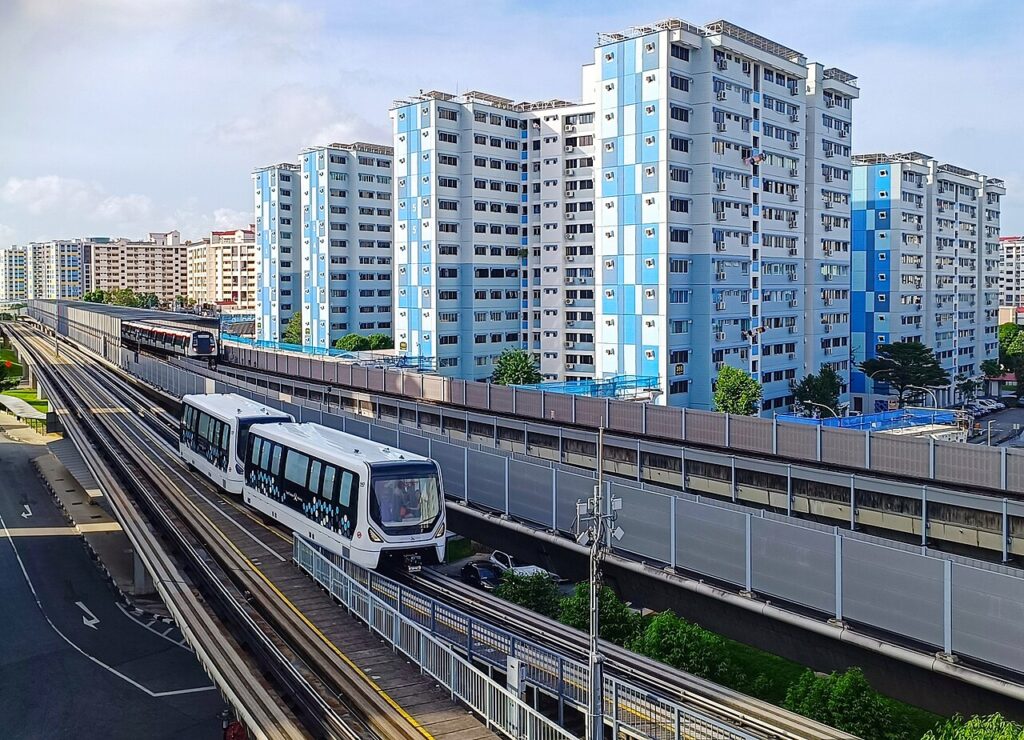
Minimum Occupation Period (MOP) Singapore 2026: HDB, EC and Private Property Rules Explained
With the EC MOP just doubled to 10 years from 8 May 2026, understanding the Minimum Occupation Period is more important than ever for buyers, upgraders and investors.
Quick Answer — Key Takeaways
- Standard HDB flats (resale and BTO) have a 5-year MOP from the date of key collection. You cannot sell, rent out the entire flat, or purchase another residential property during this period.
- HDB Plus flats (non-mature estates, higher subsidy) and HDB Prime flats (RCR/CCR locations, highest subsidy) have a 10-year MOP, reflecting the deeper subsidies received.
- Executive Condominiums (ECs) launched before 8 May 2026 carry a 5-year MOP from TOP. Those launched on or after 8 May 2026 have a new 10-year MOP under cooling measures announced by MND.
- Private condominiums and landed property have no MOP. The Seller’s Stamp Duty (SSD) — not MOP — is the effective lock-up mechanism for private residential property, applying for up to 3 years after purchase.
- During HDB MOP, you may rent out individual rooms but not the entire flat.
- Violation of MOP rules — such as renting out the whole flat illegally or purchasing a 2nd residential property — can result in compulsory acquisition of the HDB flat by HDB at a significantly below-market price.
- After MOP, EC owners can sell on the resale market to Singapore Citizens and PRs; the EC becomes fully privatised (open market to foreigners) only at the 10-year mark under old rules, or 15-year mark under the new post-8 May 2026 rules.
- The MOP clock resets if you take a new lease on an existing flat or receive a replacement flat.
What Is the Minimum Occupation Period (MOP)?
The Minimum Occupation Period (MOP) is a mandatory holding requirement imposed by the Housing & Development Board (HDB) on subsidised public housing and Executive Condominiums. It exists to ensure that buyers use their subsidised property as a genuine primary residence rather than immediately flipping it for profit, and to preserve the social intent of Singapore’s public housing programme — which aims to provide affordable, stable homes for resident families, not speculative investment vehicles.
The MOP was first introduced in its current form in the 1990s and has been progressively tightened as part of Singapore’s broader property market stabilisation policy. The most recent and significant change came on 8 May 2026, when Minister Chee Hong Tat (MND) announced that ECs launched from that date would carry a doubled MOP of 10 years (from 5 years) — a major shift for the EC segment, which had previously enjoyed a shorter lock-up than standard HDB flats.

MOP for Standard HDB Flats
For all BTO and resale HDB flats classified as “Standard” — the majority of the HDB stock — the MOP is 5 years. The clock starts from the date of key collection (for BTO flats) or the date of resale completion registered with HDB (for resale flat purchases). Both are known as the “date of possession” or “date of acquisition” in HDB’s official documentation.
During the 5-year MOP, an HDB flat owner:
Cannot: sell the flat on the HDB resale market; sublet the entire flat (individual rooms are allowed); own or purchase any other local residential property (including private condominiums and landed houses — note that overseas properties are not restricted).
Can: take in HDB-approved lodgers; rent out individual bedrooms under HDB’s subletting rules; continue to enjoy CPF housing grants on the existing flat; refinance the HDB loan to a bank loan (the reverse — bank loan to HDB loan — is not permitted).
The 5-year MOP applies regardless of whether the flat was purchased with or without grants. However, flats purchased under the Proximity Housing Grant (PHG) or the Enhanced Housing Grant (EHG) still carry the standard 5-year MOP — the grants do not extend the MOP for Standard flats.
MOP for HDB Plus and Prime Flats (10 Years)
Since the October 2024 BTO launch, HDB has classified new BTO flats into three bands: Standard, Plus, and Prime. The Plus and Prime categories carry enhanced subsidies but come with stricter post-MOP conditions, including a 10-year MOP and a subsidy clawback mechanism when the flat is subsequently sold:
Plus flats are located in non-mature estates near transport nodes or with other locational advantages (e.g., Tengah, parts of Tampines). The 10-year MOP reflects the higher-than-standard subsidies provided. Upon eventual resale, a percentage of the sale proceeds is clawed back by HDB (the exact percentage is determined at time of booking) to account for the subsidy received.
Prime flats are located in the Rest of Central Region (RCR) and Core Central Region (CCR) — historically where market rates would make public housing prohibitively expensive. The 10-year MOP is the same as Plus, but the subsidy clawback is higher and the flat must be sold back to eligible buyers within HDB’s framework for a longer period. Prime flat owners also face income ceiling checks at the time of resale.
The key practical difference between Standard and Plus/Prime flats: a Standard flat buyer can resell on the open HDB resale market after 5 years with no clawback; a Plus or Prime buyer waits 10 years and faces clawback obligations that reduce net proceeds from sale.
EC MOP: The Game-Changing 8 May 2026 Rule

Executive Condominiums (ECs) occupy a hybrid position — built and sold by private developers, subsidised by the government, and initially available only to eligible Singaporean households (income ceiling S$16,000/month as at May 2026). They are a popular “sandwich class” housing option that offers near-private-condo quality at below-market prices.
Under the rules that applied to all ECs launched before 8 May 2026, the EC MOP was 5 years from TOP (Temporary Occupation Permit). After 5 years, owners could resell on the resale market to eligible SCs and PRs. At the 10-year mark, the EC automatically privatised — becoming legally equivalent to a private condominium, freely tradeable on the open market and available to foreigners.
On 8 May 2026, MND announced a package of EC cooling measures. For ECs in projects whose sales are launched on or after 8 May 2026, the MOP is now 10 years from TOP, and privatisation now occurs at the 15-year mark (not 10). This extends the effective investment lock-up by 5 years across the board.
| Milestone | EC (before 8 May 2026) | EC (from 8 May 2026) |
|---|---|---|
| MOP expires (resale to SC/PR opens) | Year 5 from TOP | Year 10 from TOP |
| Full privatisation (open market) | Year 10 from TOP | Year 15 from TOP |
| First-timer quota for new launch | 70% | 90% |
| Deferred Payment Scheme | Available | Removed |
Importantly, the new 10-year MOP does NOT apply retroactively to ECs already launched before 8 May 2026. Buyers who purchased units in projects like Aurea (Tengah), THE ORIE, or other launches before this date retain the original 5-year MOP.
Private Condo and Landed Property: No MOP, but SSD
Private residential property — condominiums, apartments, strata landed units, and non-strata landed houses — is not subject to any MOP. Owners are free to sell at any time after completion of the purchase. However, the Seller’s Stamp Duty (SSD) acts as a de facto short-term lock-up:
SSD rates for private residential property sold within 3 years of purchase: 12% if sold in Year 1; 8% if sold in Year 2; 4% if sold in Year 3. No SSD applies if the property is held for more than 3 years. The SSD is calculated on the sale price or market value, whichever is higher.
In practice, the SSD makes immediate resale of private residential property economically prohibitive in most scenarios. A buyer of a S$2M condo who sells within 12 months faces an SSD of S$240,000 — effectively erasing any short-term appreciation. The MOP concept for public housing is thus paralleled by SSD in the private market, though the SSD is a financial deterrent rather than an absolute prohibition.
Worked Example: EC Buyer Under Old vs New MOP

Consider Mr and Mrs Lee, a Singapore Citizen couple with a combined gross income of S$12,500/month. They are looking at a new EC launch at S$1,350,000 for a 4-room unit (launched after 8 May 2026). Their HDB flat is rented out to their parents — but for purposes of EC eligibility, they are selling the HDB before the EC application, so they will be treated as first-timers.
Purchase price: S$1,350,000. BSD = S$1,800 + S$3,600 + S$19,200 + S$20,000 + S$25,000 = S$39,600. No ABSD for first-time SC purchase. MSR check: 30% × S$12,500 = S$3,750/month maximum instalment. At 4.0% stress test / 30-yr tenure, this supports a loan of approximately S$643,000 — which is below the 75% LTV cap of S$1,012,500. They can borrow to the MSR limit.
New 10-year MOP scenario: The EC TOP is expected in 2028. Under new rules, MOP expires in 2038. Privatisation occurs in 2043. If they wish to sell after MOP expiry in 2038 assuming a 40% price appreciation (to S$1,890,000), their unleveraged annualised return over 12 years (purchase to 2038) = approximately 3.4% per annum. With leverage (75% LTV bank loan), the equity return is amplified — but the absolute lock-up is doubled versus the old rules.
Old 5-year MOP comparator: Under the pre-8 May 2026 rules, the same buyer could have sold at Year 5 from TOP (approximately 2033) at a 25% appreciation = S$1,687,500 — generating approximately 4.6% pa unleveraged over 7 years. The new rules meaningfully extend the investment horizon and reduce the optionality that made ECs attractive to upgraders who planned to sell at the 5-year mark.
The practical implication: buyers who view EC primarily as a medium-term investment vehicle (buy, MOP, sell) need to adjust their financial models for a 10-year horizon. Buyers who intend to live in the EC for the long term are less affected.
What Happens If You Violate MOP Rules?
HDB takes MOP violations seriously. Penalties include HDB compulsory acquisition of the flat at below-market price, financial penalties of up to S$5,000 per offence for illegal subletting, and disqualification from future HDB flat purchases for a period of between 5 and 10 years. HDB actively audits compliance through utility consumption patterns, mail delivery records, and periodic inspections. Buyers who need to relocate temporarily for work-related reasons overseas may apply to HDB for a subletting waiver, but approval is not guaranteed and must be sought in advance.
What Might Come Next
The EC MOP extension to 10 years is the most significant MOP-related change since 2013. In the near term, property analysts and observers will be watching whether the MOP extension — combined with the removal of the Deferred Payment Scheme and the 90% first-timer quota — causes EC demand to moderate meaningfully at new launches in 2026 and 2027. If EC sales remain robust despite the tighter terms, it would suggest that genuine owner-occupier demand continues to drive the segment. If sales slow sharply, MND may reconsider the pace or scope of implementation. The Standard HDB MOP of 5 years is unlikely to change in the near term — any extension there would affect the vast majority of HDB resale transactions and could significantly dampen resale market liquidity.
FAQ — MOP Singapore 2026
Can I buy a private condominium while my HDB flat is under MOP?
No. During the MOP period, HDB flat owners cannot purchase any other local residential property, including private condominiums, executive condominiums (if you already own one), or landed property. The restriction applies to both new purchases and acquisitions by gift, inheritance, or court order. If you wish to buy a private condo while your HDB is under MOP, you must first divest the HDB flat — but since it cannot be sold during MOP, this is not possible. The only exception is overseas property: owning property outside Singapore does not violate MOP rules and does not affect your HDB flat status. Once the MOP expires, you may purchase a private condo — but ABSD of 20% (for SC on a 2nd residential property) will apply.
Does the MOP reset if I take over ownership of an HDB flat from a family member?
In most cases where a change in ownership occurs — for example, adding or removing a joint owner, or inheriting a flat — the MOP position of the incoming owner is assessed from the date of the ownership change, not the original key collection date. This means that if you are added as a joint owner mid-MOP, you begin your own MOP from the date of registration, which may effectively extend the overall MOP beyond the original 5-year period. The specific treatment depends on the circumstances and HDB’s discretion; buyers should seek written confirmation from HDB before proceeding with any mid-MOP ownership transfer. Estate agents should flag this risk clearly in any transaction involving a flat not yet past MOP.
Does an inherited HDB flat have an MOP?
If you inherit an HDB flat from a deceased owner who had already fulfilled the MOP, the inherited flat does not impose a new MOP on you. You may sell the flat on the resale market (subject to HDB’s eligibility rules for inheritance and co-ownership). However, if the deceased had not yet completed the MOP at time of death, the beneficiary inherits the remaining MOP obligation and must fulfil it before selling. HDB reviews each inheritance case individually, and in genuine hardship circumstances (e.g., the beneficiary already owns property elsewhere), HDB may grant an exemption to sell before MOP expiry — but this is discretionary and requires a formal application.
Does the EC MOP change affect ECs that have already been launched before 8 May 2026?
No — the new 10-year MOP and 15-year privatisation rule apply only to EC projects whose sales are launched on or after 8 May 2026. Buyers in EC projects that launched before this date — including major projects launched in 2024 and early 2025 — are not affected. Their original 5-year MOP and 10-year privatisation schedule remain intact. This “grandfathering” of existing launches is consistent with how MND has historically applied policy changes: prospectively, not retrospectively. Buyers who signed their S&P agreement before 8 May 2026 keep the old rules regardless of when TOP is issued.
Can I rent out rooms in my HDB flat during the MOP?
Yes — renting out individual rooms (subletting of bedrooms) is permitted during the MOP, subject to HDB’s subletting rules. You must continue to live in the flat as your principal place of residence, meaning at least one owner must be ordinarily resident in the flat. You may rent out individual rooms to Singapore Citizens, PRs, or foreign nationals holding valid passes (Employment Pass, S Pass, Work Permit, Student Pass, etc.), subject to HDB’s occupancy cap (maximum 6 occupants for a 3-room or larger flat; 4 occupants for 1- and 2-room flats). Room rental income is subject to income tax as “non-trade income” and must be declared to IRAS annually.
What is the MOP for a resale HDB flat I purchase on the open market?
When you purchase an HDB flat on the resale market, your MOP runs for 5 years from the date of your completed resale transaction (the date HDB registers the change of ownership). The prior owner’s MOP history is irrelevant — each new owner begins their own 5-year MOP from the date of their acquisition. This applies whether you are a first-time buyer purchasing a resale flat with the CPF Housing Grant or an existing flat owner upgrading. Note that Plus and Prime flat classifications apply only to flats sold under HDB’s BTO framework from October 2024 onwards; resale flats transacted on the open market are classified as Standard and carry a 5-year MOP.
Can an SC sell an EC during MOP if it is an urgent financial hardship?
ECs are private property once launched (they are developed by private developers and governed by the Housing Developers Rules), but they are subject to HDB-administered restrictions during the MOP period. Unlike HDB flats, there is no formal HDB “hardship exemption” framework for early EC resale during MOP. An EC owner who experiences genuine financial distress would need to seek legal and financial advice — options might include subletting the whole EC (which is not allowed during EC MOP), selling at a loss to a willing SC/PR buyer before MOP (which is prohibited), or pursuing restructuring of the mortgage. The correct response in financial hardship during EC MOP is to engage your mortgage bank early and seek advice from a MAS-regulated financial adviser.
Related Articles
- Singapore EC Cooling Measures May 2026: 10-Year MOP, 90% First-Timer Quota and End of the Deferred Payment Scheme
- Executive Condominium Singapore 2026: Complete Guide to Eligibility, MOP, Privatisation & Pricing
- Seller’s Stamp Duty (SSD) Singapore 2026: When You Pay, How Much, and How to Avoid It Legally
- ABSD Singapore 2026: Complete Guide to Additional Buyer’s Stamp Duty
- Plus and Prime Flats Singapore 2026: 10-Year MOP, Subsidy Clawback and Who Should Buy
- HDB Resale Procedure Singapore 2026: HFE Letter, OTP, Resale Application and Timeline
- Buyer’s Stamp Duty (BSD) Singapore 2026: Rates, Calculation and Exemptions
Disclaimer: This article is for general informational purposes only and does not constitute legal, financial, or tax advice. MOP rules, EC cooling measures, and HDB eligibility requirements are subject to change by government policy; always verify the current position directly with the Housing & Development Board (HDB), the Ministry of National Development (MND), and the Inland Revenue Authority of Singapore (IRAS). EC cooling measure details announced on 8 May 2026 may be subject to further implementing legislation. Consult a licensed conveyancing solicitor, a MAS-regulated financial adviser, and HDB directly before making any property purchase decision.