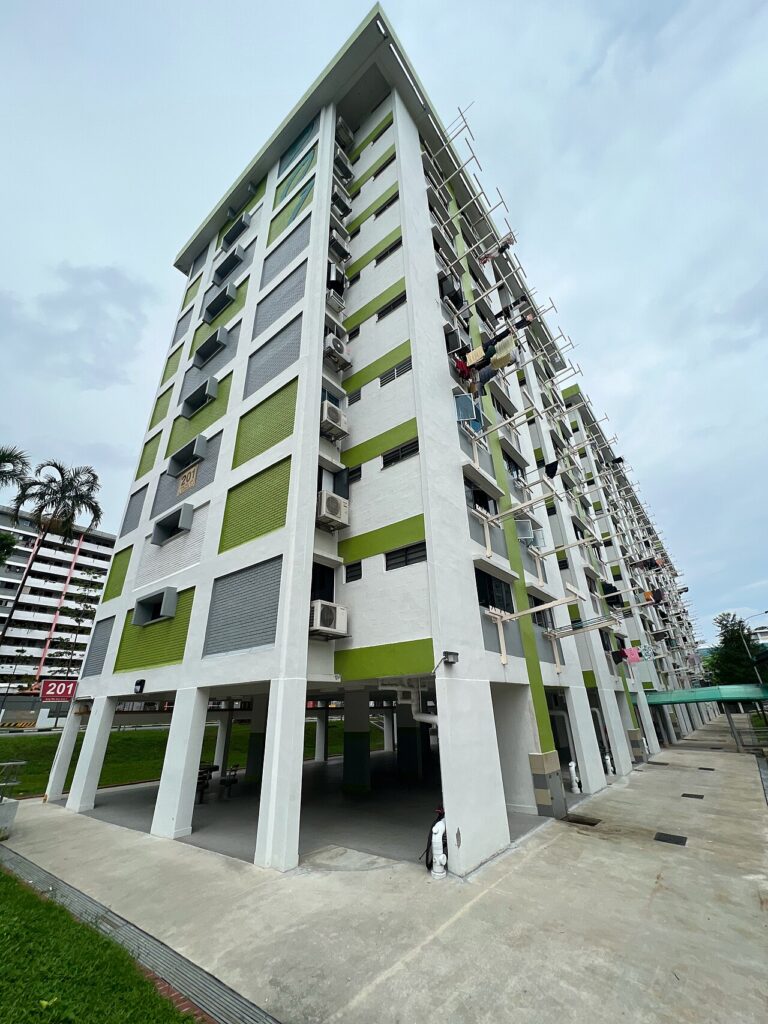
Strata Title and MCST in Singapore 2026: How Your Condo Is Actually Run

Strata Title and MCST in Singapore 2026: How Your Condo Is Actually Run

If you own a condominium, executive condo, or strata-titled landed home in Singapore, you do not really own a building — you own a slice of one, a “strata lot“. Everything outside that slice (the lift you ride to work, the pool you swim in, the lobby that smells faintly of Diptyque) is common property, and it is run by a body corporate called the Management Corporation Strata Title — the MCST.

Most owners pay their monthly maintenance fee, attend an AGM once in a blue moon, and never think about it again. Then a leak appears in the carpark, the lifts hit 25 years and need a S$2 million modernisation, or someone wants to put a new awning on their balcony — and suddenly the structure that runs your home becomes very real, very fast. This guide walks you through how strata title actually works in Singapore, what your MCST does, where your money goes, and the rights and obligations you signed up for the moment your conveyancing lawyer registered your title at the Singapore Land Authority.

Quick Answer — strata title and MCST in 30 seconds

  • You own a strata lot (your unit + accessory areas) plus a share value in common property.
  • The MCST manages common property under the Building Maintenance and Strata Management Act (BMSMA 2004).
  • Your monthly bill funds two ring-fenced pots: a Management Fund (~75%) for day-to-day running and a Sinking Fund (~25%) for major capital works.
  • Decisions are made at AGMs by share-value vote — ordinary majority for routine matters, ≥75% special resolution for capital expenditure above S$200,000.
  • Indicative monthly fees: S$280-450 OCR mass-market, S$420-680 mid-tier RCR, S$780-1,400 luxury CCR, S$1,500+ ultra-luxury.
  • Renovations affecting common property require written MCST approval before BCA submission (BMSMA s.37).
  • Disputes above the council level go to the Strata Titles Boards — not the civil courts in the first instance.

What Is Strata Title and Why Does Singapore Use It?

Strata title is the legal mechanism that makes vertical, multi-owner property possible. When a developer builds a condominium, the Singapore Land Authority registers a strata plan dividing the building into individual lots (the units, plus accessory lots like balconies, planter boxes and air-con ledges) and common property (everything else). Each lot is a separate parcel of land in law, with its own title deed, its own share value, and its own set of rights to the common property.

Without strata title, only the developer or a single co-owner group could hold the title to a multi-storey building — you would be buying a long lease from them, not freehold ownership of a defined unit. Strata title gives you genuine real-estate ownership, the right to mortgage your lot independently, and the right to participate in governance of the building. The trade-off is that you must accept a co-ownership regime: a council elected by other owners, by-laws that bind you, and a duty to contribute to communal expenses whether you use the facilities or not.

Singapore’s strata regime sits inside the Building Maintenance and Strata Management Act 2004 (BMSMA), supplemented by the Land Titles (Strata) Act 1967. Together they cover roughly 12,000 strata-titled developments and over 750,000 strata lots across the island as at the start of 2026. If you own anywhere in Singapore that is not landed-on-its-own-plot, you are almost certainly subject to BMSMA.

The Core Concept: Strata Lot, Common Property, Share Value

Three pieces of paper are issued when your conveyancing completes: the certificate of title for your strata lot, the strata plan for the development, and the schedule of share values. They define everything that follows.

Strata lot

Your physical unit, defined by the centre line of internal walls, the upper surface of the floor, and the under-side of the ceiling slab. Accessory lots include balconies, private enclosed spaces (PES), aircon ledges, and any car-park or storage spaces specifically allocated to your unit on the strata plan. You can renovate inside your strata lot largely as you wish — subject to BCA rules, MCST house rules, and structural integrity.

Common property

Everything outside your strata lot that is not somebody else’s lot. Lifts, lobbies, pools, gyms, gardens, common corridors, the external façade, the roof, the basement carpark, M&E plant rooms, and the structural slabs themselves. Common property is owned collectively by all subsidiary proprietors as tenants-in-common in the proportion of their share values, and managed by the MCST.

Share value

A whole number assigned to each lot in the strata plan that determines (a) your voting weight at general meetings and (b) your contribution to the common funds. Larger units get higher share values. A typical 1,000 sqft 3-bedroom unit might carry 10 share values; a 600 sqft 2-bedroom might carry 6. If your unit’s share value is 10 out of a building total of 5,000, you pay 0.2% of every common-fund expense and cast 10 votes (out of 5,000) on every resolution.

Indicative MCST Fees by Condo Segment (2026)

Before you commit to a unit, look at the monthly maintenance bill. It is the single biggest variable holding cost of ownership and varies enormously by segment. The figure below sets out what most owners actually pay across five common segments of the Singapore market in 2026.

Singapore MCST monthly maintenance fees by condo segment 2026 — OCR mid-tier RCR luxury CCR ultra-luxury mixed-use comparison
Figure 1. Typical monthly MCST fees by condo segment, 2026. Mid-tier RCR developments cluster around S$550/month; CCR luxury and integrated mixed-use developments routinely exceed S$1,000/month due to higher staffing, premium finishes and shared retail-component costs.
Segment Typical monthly fee (per unit) Sinking fund share Drivers of cost
Mass-market OCR S$280-450 ~25% Basic facilities, lower headcount, fewer lifts, surface carparks
Mid-tier RCR S$420-680 ~25% Full facilities suite, multi-deck basement carpark, larger landscape
Luxury CCR S$780-1,400 ~25-30% 24-hr concierge, valet, branded F&M for plant, smaller lot count to share costs
Strata landed / GCB enclave S$1,500-3,500 ~30% Few lots, large land area, perimeter security, private roads
Mixed-use integrated S$620-1,100 ~25% Shared cost-allocation with retail/commercial component, dual-MCST structures

One important nuance: integrated developments often have two MCSTs — one for the residential strata, one for the entire development. Your monthly bill is therefore the sum of both layers. Always ask the marketing agent for the dual-MCST cost breakdown before signing.

The Two Funds Inside Every MCST Bill

Your monthly maintenance fee is not a single pot of money. By law it splits into two ring-fenced trust accounts — the Management Fund (general operations) and the Sinking Fund (capital reserves) — and the council cannot move money freely between them.

Singapore MCST management fund vs sinking fund 75-25 split with AGM voting structure under BMSMA 2026
Figure 2. Where your MCST contribution actually goes. The 75/25 management/sinking split is convention, not law — specific developments may sit anywhere between 70/30 and 80/20 depending on age, plant complexity, and council appetite.

Management Fund

Pays for everything that recurs: cleaning contracts, security guarding, lift maintenance, pool chemistry, gym servicing, common-area utilities, landscaping, MCST insurance premiums, property tax on common property (yes — the building itself is taxed on the rental value of its common areas), council members’ honoraria, AGM venue, audit and legal fees, and the salary of the appointed managing agent. If the toilet roll runs out in the lobby, the management fund replaces it.

Sinking Fund

Funds large, infrequent capital works that would otherwise hit owners with sudden special levies. Lift modernisation (typically required at 25-30 years and costing S$120k-180k per lift), exterior repainting, re-roofing, façade re-cladding, pool retiling, M&E plant replacement, and statutory upgrades (e.g. lift safety upgrades mandated by BCA, fire-system retrofits required by SCDF). A well-run building should hold roughly 2-3 years of operating expenditure in the sinking fund at any time.

Why the wall between them matters

Section 38 of the BMSMA prohibits using management-fund money to pay for sinking-fund items, and vice versa. This protects future owners: if the council were free to spend the sinking fund on day-to-day items, you would arrive at the 25-year mark with no money for the lift modernisation, and the council would have to issue a one-off levy of, say, S$15,000 per unit to make up the gap. Always read the audited accounts before bidding on a resale unit — a depleted sinking fund is a hidden liability the buyer inherits.

Governance: Council, AGMs, Voting

The MCST is the body corporate; the council is its elected board. Owners (subsidiary proprietors) elect a council of 3 to 14 members at the AGM, each serving one-year terms. The council appoints office-bearers (chair, secretary, treasurer) and engages a managing agent — a licensed property-management firm that runs the day-to-day operation.

Annual General Meeting (AGM)

Must be held within 15 months of the previous one. Owners receive at least 14 days’ written notice with the agenda, audited accounts, the proposed annual budget, and any resolutions for vote. Standard agenda items: receive the audited accounts, fix the next year’s budget and contribution rates, elect the council, appoint the auditor, transact special resolutions.

Resolution thresholds

  • Ordinary resolution — simple majority of the share values voted. Used for routine business: budget approval, council elections, day-to-day spending decisions within budget.
  • Special resolution — ≥75% of share values voted in favour, with ≤25% against. Required for capital expenditure exceeding S$200,000 (s.40 BMSMA), variation of by-laws, and certain by-law-affecting matters.
  • 90% resolution — required to vary common property boundaries or transfer common property.
  • Unanimous resolution — required for any change that affects an individual lot owner’s title or rights.

Extraordinary General Meetings (EGM)

Called between AGMs for urgent matters — usually a special-resolution capital project (e.g. lift modernisation), an unplanned major repair, or to vote on a collective sale resolution. Owners holding ≥20% of share values can requisition an EGM directly.

Worked Example: What a S$1.5M OCR Condo Owner Pays in a Year

Numbers ground the abstract. Here is what a typical Singapore Citizen owner-occupier of a 1,000-sqft, 3-bedroom unit in a mid-tier OCR development worth S$1.5 million actually pays the MCST and IRAS over a year, assuming no leasehold-related issues and no rental income.

Worked example annual ownership cost S$1.5M Singapore OCR condo 2026 — MCST sinking property tax insurance special levy stack
Figure 3. Annual ownership cost stack for a S$1.5M OCR 3-bedroom condo unit, 2026. Maintenance and sinking-fund contributions dominate; property tax is comparatively small at this AV tier. A one-off lift modernisation special levy of S$600 is included to show how capital works can spike a single year’s bill.

Three observations stand out. First, the recurring carry on a S$1.5M unit is a real number — about S$5,000-7,000 per year, or 0.4-0.5% of unit value, before any one-off special levies. Second, the property-tax line at this AV tier is genuinely small; most of your tax burden was paid up front as BSD when you bought. Third, special levies are not in the monthly bill — they are voted at AGM/EGM and sit on top, often with 3-6 months’ notice. Plan a 1-2% capital reserve of unit value over a 10-year horizon if you want to avoid surprises.

Your Rights and Obligations as a Subsidiary Proprietor

Buying a strata lot binds you to a contract you may never have read — the by-laws of the development, set out in the First Schedule of the BMSMA (the prescribed by-laws) and in any additional by-laws passed by special resolution at the AGM. Key obligations every owner has:

  • Pay contributions on time — arrears attract interest (often 10% p.a.) and the MCST may register a charge on your title under s.34 BMSMA after 30 days, blocking refinancing or sale until paid.
  • Get written approval before altering common property — even private balcony tinting or aircon-ledge enclosures usually need MCST consent under s.37.
  • Comply with the by-laws on noise hours, pet keeping, short-let restrictions (typically minimum 3 months for residential), commercial use limitations, and exterior-facade alterations.
  • Allow access for the MCST or its contractors to perform repairs to common property running through your lot, on reasonable notice.

Conversely, the rights you can enforce:

  • Inspect the records — minutes, accounts, contracts. Owners are entitled to see anything in the corporate register on reasonable notice (a small fee may apply).
  • Stand for council, attend and vote at general meetings, and propose resolutions.
  • Requisition an EGM if you can muster 20% of share values.
  • Apply to the Strata Titles Boards if the council acts unreasonably, refuses by-law-approved alterations, or makes invalid decisions.

Disputes: The Strata Titles Boards

The Strata Titles Boards (STB) — constituted under the BMSMA and the Building Maintenance Act — are the specialised tribunal that hears strata disputes. Most owner-vs-MCST or owner-vs-owner strata disputes cannot go to the High Court in the first instance; they must come through the STB. Common applications:

  • Section 92 applications to compel the MCST to take a specific action (e.g. carry out a long-overdue repair).
  • Section 31 applications to vary or invalidate a by-law that is unreasonable or oppressive.
  • Collective-sale applications under the Land Titles (Strata) Act — the 80%/90% en-bloc consent threshold mechanic is litigated here.
  • Disputes over share values, accessory-lot rights, and exclusive-use grants over common property.

STB filing fees are modest (S$500-1,000 typically) and the process is faster and lighter than the High Court — expect 6-9 months from filing to determination on most matters.

What to Watch When Buying Resale

If you are buying a strata-titled resale, the MCST is going to be your landlord-of-sorts. A few things to inspect before exercising the OTP:

  1. Last 3 years of audited accounts. Look for a healthy sinking fund, no qualified audit opinions, and no pattern of outsized recurring deficits.
  2. Latest AGM minutes. Check for upcoming capital works that may trigger a special levy. Lift modernisation, repainting, and façade works in the pipeline will hit your wallet.
  3. Outstanding maintenance arrears on the lot. Ask your conveyancer to obtain a section 50 certificate from the MCST — arrears transfer with the lot.
  4. By-laws. Read the additional by-laws — some buildings restrict pet weight, prohibit short-lets entirely, ban exterior changes, or impose dress codes in common areas.
  5. Legal disputes. Ask whether the MCST is currently in any STB or High Court proceedings — ongoing disputes can mean a deteriorating building or financial drain.

How Strata Title Differs From Other Tenure Forms

Singapore’s strata regime is similar in principle to Hong Kong’s multi-storey buildings regime, the Australian strata title system (from which the term originates), and US condominium ownership — but the BMSMA framework is more prescriptive than most. By comparison:

  • vs HDB ownership — HDB flat owners are not subsidiary proprietors of an MCST. The HDB itself manages the estate. Town councils handle the day-to-day common-property functions, funded by service-and-conservancy charges (S&CC).
  • vs landed property — A standalone landed home on a freehold or 99-year leasehold parcel has no MCST and no shared common property. You bear all costs and decisions yourself, but you also have full autonomy.
  • vs strata-landed — Cluster housing and strata-landed enclaves do have an MCST, but with a much smaller lot count (often 30-100). Their fees are correspondingly higher per unit because fixed costs are spread thin.

What Might Come Next: Strata Reform Watch

BCA and the Ministry of National Development have been quietly consulting on a third tranche of BMSMA amendments since 2024. The most-talked-about proposals as at April 2026:

  • Mandatory minimum sinking-fund balance tied to building age (e.g. 18 months of opex once the building is over 10 years old). Aimed at preventing under-funded sinking funds.
  • Compulsory professional MCST chairs for buildings of over 500 lots, in response to dispute volumes from large integrated developments.
  • Streamlined STB process for routine repairs — a fast-track procedure to compel obvious common-property maintenance.
  • Stricter rules on short-term lets — aligning the BMSMA with URA’s 3-month minimum-let regime to give MCSTs cleaner enforcement teeth.

None of the above is yet law. We will update this guide when the next round of amendments is gazetted.

Frequently Asked Questions

Can the MCST force me to renovate or repair my own unit?

Generally no — renovations inside your strata lot are your decision, subject to BCA structural rules and any by-law restrictions (e.g. flooring requirements above the second storey). The MCST can however require you to remedy a condition inside your lot that is causing damage to common property or to neighbouring lots — a leaking bathroom waterproofing membrane, for example, where moisture is reaching the unit below. If you fail to act, the MCST can perform the works and charge them back to your lot under s.41 BMSMA.

What happens if the council goes broke?

If the management fund runs out, the MCST cannot pay contractors or salaries. The council must call an EGM to pass a special levy (a one-off contribution from all owners pro-rata to share value) to recapitalise. Repeated insolvency is a sign of either chronic under-budgeting or council misconduct — in extreme cases the STB can appoint an interim manager to run the MCST under s.85.

Can I rent out my parking space to non-residents?

It depends on whether your parking lot is an accessory lot, an exclusive-use common-property right, or a transient-use right. Accessory lots can typically be sublet to anyone in some buildings but most modern by-laws restrict carpark sub-letting to residents of the development only for security reasons. Always check the additional by-laws and house rules — sub-letting to non-residents in breach of by-laws is enforceable by the STB.

How are votes weighted — one-lot-one-vote or by share value?

Share-value votes apply by default. So a penthouse with a share value of 24 has roughly 4 times the voting weight of a 1-bedroom unit with a share value of 6. This is intentional: larger units pay more to the common funds and bear more of the financial impact of decisions, so they vote in proportion. Some routine matters (e.g. council elections) may also be conducted on a one-vote-per-lot basis under the BMSMA’s voting rules.

If I am buying a brand-new condo, when does the MCST actually come into existence?

The MCST is constituted automatically on the date the strata-title plan is registered with the SLA. In practice, the developer manages the building from TOP onwards under an “interim period” with an interim management committee (often staffed by the developer and a few early-mover owners). The first AGM — where the permanent council is elected — must be held within 13 months of the first lot being conveyed (s.27 BMSMA). Until then, your monthly fee is charged at developer-set rates, which may be re-budgeted up or down at the first AGM.

Do I need MCST consent for a kitchen renovation?

If the renovation is purely cosmetic and stays within your lot — new countertops, replacement appliances, repainting — you usually only need to notify the managing agent and pay any renovation deposit / debris fee under house rules. If you are touching any wet area, structural element, exterior, or anything that could affect a neighbouring lot or common property, you need written MCST approval before submitting plans to BCA. Most buildings require approved-contractor lists, work-hour windows (typically 9am-6pm Monday-Saturday, no Sundays/public holidays), and a renovation deposit of S$1,000-3,000.

How do collective sales fit into the strata regime?

Collective sale (en-bloc) is the process by which the MCST as a whole sells the entire development to a redeveloper, with proceeds distributed among lot owners. Under the Land Titles (Strata) Act, an 80% share-value-and-floor-area consent threshold applies to developments over 10 years old (90% for younger ones). The STB hears applications and may approve, vary, or reject the sale. Successful collective sales effectively dissolve the MCST on completion. We cover the process in detail in our En-Bloc Sale Process Guide.

Related Articles

Disclaimer

This guide is for general information only and does not constitute legal, tax, or financial advice. The Building Maintenance and Strata Management Act, the Land Titles (Strata) Act, and associated subsidiary legislation are the authoritative sources of strata-title law in Singapore and have been amended several times since 2004. Always verify the current position with the Building and Construction Authority, the Singapore Land Authority, the Ministry of Law, and the Inland Revenue Authority of Singapore — and consult a licensed conveyancing or strata-management lawyer before acting on any specific matter.

Property Conveyancing Guide Singapore 2026: OTP, S&P Agreement, Legal Fees & Timelines

Property Conveyancing Guide Singapore 2026: OTP, S&P Agreement, Legal Fees & Timelines

Quick Answer — property conveyancing in Singapore at a glance

  • Conveyancing is the legal transfer of property ownership from seller to buyer, handled by a Singapore-licensed lawyer on each side.
  • For resale private property: the Option to Purchase (OTP) gives the buyer 14 calendar days to exercise, paying 1% + 4% option fee and BSD/ABSD.
  • BSD and ABSD are due within 14 days of signing the OTP or Sale and Purchase Agreement — whichever is earlier.
  • Completion (keys and balance payment) typically occurs 8–12 weeks after exercising the OTP for resale condo; 6–8 weeks for HDB resale.
  • Buyer’s conveyancing legal fees for a S$1 million resale condo are approximately S$2,700–S$3,500 (including GST).
  • For new launches, the developer’s lawyers handle the Sale and Purchase Agreement; you still need your own lawyer to review and for the mortgage.
  • CPF OA funds can be used to pay BSD, legal fees, and the balance of the purchase price — but not the 5% mandatory cash downpayment for bank loans.

What Is Conveyancing and Why Do You Need a Lawyer?

Conveyancing is the legal process by which the title (ownership rights) of a property is formally transferred from one party to another. In Singapore, all conveyancing for residential property must be handled by a qualified Singapore-licensed lawyer (advocate and solicitor). You cannot self-convey a property transaction — the Law Society of Singapore and the Land Titles Act require a qualified professional to prepare the instruments of transfer, conduct the requisitions, and handle the lodgement with the Singapore Land Authority (SLA).

The conveyancing lawyer acts as far more than a document drafter. They carry out title searches, verify that the property is free of encumbrances, co-ordinate with CPF Board to release CPF funds, liaise with the mortgagee bank, and ensure that all stamp duties are correctly assessed and paid on time. For buyers in particular, appointing a good conveyancing lawyer early — ideally before exercising the Option to Purchase — can prevent costly mistakes around timing and documentation.

Both buyer and seller must appoint their own separate lawyers. The same law firm cannot act for both parties in the same transaction (conflict of interest rules under the Legal Profession (Professional Conduct) Rules). In HDB transactions, HDB’s legal arm processes the resale procedures and buyers/sellers interact via the HDB Flat Portal, but a buyer may still choose to appoint a private lawyer to advise.

The Option to Purchase (OTP) — Singapore’s Property Buying Trigger

For private residential property, the conveyancing process formally begins with the Option to Purchase (OTP). The OTP is a legal document granted by the seller to the buyer, giving the buyer an exclusive right to purchase the property at the agreed price within a specified period — in Singapore, typically 14 calendar days from the date the option is granted.

The OTP process works as follows. First, the seller grants the OTP upon receipt of the option fee — conventionally 1% of the agreed purchase price, paid in cash. This amount is non-refundable if the buyer chooses not to exercise. The buyer then has 14 days to decide whether to proceed. If proceeding, the buyer exercises the OTP by signing the acceptance copy and returning it to the seller’s lawyer together with:

  • An additional exercise fee of 4% of the purchase price (also cash); and
  • Payment of the Buyer’s Stamp Duty (BSD) and, where applicable, Additional Buyer’s Stamp Duty (ABSD) — both are due within 14 days of the OTP being granted, not 14 days from exercise.

The total 5% (1% option + 4% exercise fee) forms the initial deposit, which is typically held by the seller’s solicitors in their client account and released to the seller upon completion. The balance of the purchase price — typically 95% — is paid on the completion date.

Step Amount Timing Payment Mode
Option fee (grant OTP) 1% of price Day 0 Cash/cashier’s order
Exercise fee (exercise OTP) 4% of price Within 14 calendar days Cash/cashier’s order
BSD (all buyers) Progressive, ~0.6–3%+ Within 14 days of OTP date Cash or CPF OA
ABSD (where applicable) 5–60% flat rate Within 14 days of OTP date Cash only (CPF for reimbursement later)
Balance purchase price ~95% of price Completion date (8–12 weeks) CPF OA + bank loan + cash top-up

The Conveyancing Timeline — From OTP to Keys

Singapore resale private property conveyancing timeline from OTP to completion 2026

Figure 1: Approximate conveyancing timeline for a resale private residential property, Singapore 2026. Timings are indicative and may vary depending on parties and conditions. Source: Singapore Law Society / LovelyHomes analysis.

After the OTP is exercised, your conveyancing lawyer moves through a series of standard steps. The requisition phase involves sending formal enquiries to government bodies — the Land Titles Registry (SLA), URA (planning queries), HDB (where applicable), PUB, SP Group, and others — to confirm there are no adverse encumbrances, outstanding charges, or regulatory issues on the title. This typically takes two to three weeks.

Simultaneously, if you are taking a bank loan, the mortgage documentation is being prepared: the bank’s solicitors (often the same firm acting for you) will prepare the mortgage instrument, and CPF Board will be notified to set aside or release your CPF OA funds for the purchase. For new citizens or PRs using CPF for the first time for property, additional verification steps apply.

The completion appointment brings all parties together (or their lawyers in escrow). The buyer’s lawyers hand over the balance payment; the seller’s lawyers hand over the title documents and release the keys. In Singapore, completion is a smooth, paperwork-driven process — you do not physically attend a courtroom or signing ceremony (unlike some other jurisdictions). The average buyer simply receives a call from their lawyer confirming completion, and then collects the keys.

New Launch Private Property — Different Process, Same Stamp Duties

When buying a new launch directly from a developer (whether a condo or an executive condominium), the conveyancing process differs in several important respects:

  • The developer uses its own solicitors to prepare the Sale and Purchase Agreement (S&P Agreement) — a standardised statutory form prescribed by the Controller of Housing under the Housing Developers (Control and Licensing) Act.
  • There is no OTP for new launches; instead, you first sign an Option to Purchase issued by the developer (usually after booking a unit and paying a booking fee of typically 5%), followed by the S&P Agreement within 3 weeks.
  • BSD and ABSD remain payable within 14 days of the S&P Agreement date.
  • Payment follows the Progressive Payment Scheme (PPS) — instalments tied to construction milestones over the build period (typically 3–5 years to TOP).
  • You should still appoint your own independent conveyancing lawyer to review the S&P Agreement and handle your CPF and mortgage documentation, even though the developer’s lawyers lead the transaction.

Conveyancing Legal Fees — What to Expect in 2026

Singapore property conveyancing legal fees estimate by purchase price 2026 buyer vs seller

Figure 2: Estimated conveyancing legal fees for buyer and seller by property price band, Singapore 2026. All figures are indicative estimates including GST; actual fees vary by law firm and complexity.

Conveyancing legal fees in Singapore are not regulated by a fixed scale for private property transactions (unlike some Commonwealth jurisdictions). Law firms set their own fees, though market rates are broadly competitive. As a rough guide for 2026:

Purchase Price Buyer’s Legal Fees (est.) Seller’s Legal Fees (est.)
Up to S$500,000 S$1,800–S$2,500 S$1,500–S$2,000
S$500,001–S$1,000,000 S$2,500–S$3,200 S$2,000–S$2,700
S$1,000,001–S$2,000,000 S$3,000–S$4,200 S$2,500–S$3,500
S$2,000,001–S$3,000,000 S$4,000–S$5,500 S$3,300–S$4,500
Above S$3,000,000 S$5,000+ S$4,000+

These figures include disbursements (SLA lodgement fees, title search fees, stamp certificate) but exclude the mortgage-related legal work, which is typically billed separately by the bank’s panel solicitors. Many buyers find that choosing a law firm on the bank’s mortgage panel saves money — you may qualify for a “combined” rate covering both the purchase and the mortgage documents.

For HDB resale transactions, the HDB Resale Flat Portal provides a standardised suite of forms and handles the administrative process centrally. A buyer may engage a private lawyer for S$1,000–S$2,000 for advice, but the HDB legal process itself is not separately billed to the buyer.

Worked Example — Full Buying Cost Breakdown, Resale Condo S$1.5 Million

Scenario: Singapore Citizen couple buying their second property — Resale Condo, S$1,500,000, District 15

Both buyers are Singapore Citizens. They already own their HDB flat (first property). They are purchasing the condo jointly as their second property.

  • Option fee (1%, cash): S$15,000 — paid when OTP granted. Non-refundable if not exercised.
  • Exercise fee (4%, cash): S$60,000 — paid within 14 days of OTP date.
  • BSD (progressive): S$44,600 — due within 14 days of OTP. Can be paid via CPF OA.
  • ABSD (20% for SC 2nd property): S$300,000 — due within 14 days of OTP. Must be paid in cash initially; CPF may be used for reimbursement after stamping.
  • Buyer’s legal fees: approximately S$3,200–S$4,200 (including GST and disbursements).
  • Valuation fee: approximately S$800–S$1,200 (required by the bank for mortgage drawdown).
  • Balance 95% at completion: S$1,425,000 — funded via CPF OA balance + bank mortgage.

Total upfront cash required before completion: S$15,000 + S$60,000 + S$300,000 (ABSD) + BSD disbursement + legal fees ≈ S$382,000–S$385,000 in cash before leveraging CPF. This illustrates why ABSD planning is critical for second-property buyers — the S$300,000 ABSD alone is a major cash drain.

Singapore property buying costs breakdown comparison HDB resale vs private resale condo 2026

Figure 3: Full cost comparison — HDB resale (S$600K) vs private resale condo (S$1.5M) for a SC buying a second property. Source: IRAS / HDB / LovelyHomes analysis (2026).

CPF and Conveyancing — What Can and Cannot Be Paid with CPF

Understanding which costs can be funded from your CPF OA and which must be cash is essential to avoid a last-minute shortfall. As a general rule:

Cost Item CPF OA Usable? Notes
Buyer’s Stamp Duty (BSD) Yes Deducted from CPF at the time of payment
ABSD No (initially) Must be paid in cash first; CPF reimbursement applies after stamping
5% downpayment (bank loan) No Mandatory cash requirement; cannot use CPF
Balance above 5% (bank loan LTV) Yes CPF OA used for the remainder of the 25% equity requirement
Legal / conveyancing fees Yes Up to a cap set by CPF Board based on purchase price
Valuation fee Generally No Usually paid directly to the valuer in cash
Monthly mortgage instalments Yes Subject to CPF Withdrawal Limit and Valuation Limit

Why Conveyancing Matters — Common Mistakes to Avoid

Many first-time buyers in Singapore underestimate the legal and procedural complexity of a property transaction. The most frequent pitfalls encountered in conveyancing are:

  1. Exercising the OTP without sufficient cash for ABSD: Buyers sometimes discover — after paying the 1% option fee — that they do not have the cash to cover ABSD on exercise. This is a costly error: forfeiting the 1% option fee and walking away. Pre-compute your full buying cost (including ABSD) before paying the option fee.
  2. Delaying the BSD/ABSD payment: Both duties are due within 14 days of the OTP date — not 14 days from exercise. A buyer who exercises on day 13 still has only one day to pay stamp duty. Failure to stamp on time attracts penalties of 2–4× the duty payable.
  3. Not checking encumbrances before exercising: A competent conveyancing lawyer will run a title search and caveat check before the exercise deadline. Buyers who rush this step can find themselves bound to a property with an undisclosed mortgage or legal charge.
  4. Assuming the developer’s lawyer acts for you: For new launches, the developer’s solicitors act exclusively for the developer. Your interests are protected only by your own appointed lawyer.
  5. Forgetting to budget for legal fees in the completion funds: On completion day, your lawyer will draw up a “completion account” showing exactly how the balance is funded (CPF, loan drawdown, cash). Buyers who have not kept the legal fees in their CPF or cash buffer occasionally face a shortfall at the last moment.

What Might Come Next — Conveyancing Reform Outlook 2026–2028

Singapore’s conveyancing framework is relatively mature and stable, but two developments bear watching. First, the Ministry of Law has been progressively digitising the conveyancing process — the Integrated Land Information Service (INLIS) already allows electronic title searches, and there are ongoing discussions around greater use of digital instruments of transfer. Second, the Law Society’s standardisation of HDB resale procedures has reduced friction significantly, and a similar standardisation framework for private property may be on the horizon. Buyers and sellers should expect a leaner, more fully digital process by the late 2020s, but the fundamental legal requirement for a qualified solicitor to handle the transfer is not expected to change.

Frequently Asked Questions

Do I need a lawyer to buy an HDB resale flat, or can HDB handle everything?

For most straightforward HDB resale transactions, the HDB Resale Flat Portal handles the administrative and procedural steps centrally — buyers and sellers submit resale applications online, and HDB’s in-house legal process manages the transfer instruments. You are not strictly required to appoint a private conveyancing lawyer. However, if your situation involves CPF complications, outstanding mortgages, an estate sale, unusual co-ownership structures, or a divorce settlement, engaging a private lawyer (typically S$1,000–S$2,000) for independent advice is well worthwhile. For private property transactions, a private lawyer is mandatory.

Can I use the same lawyer as the seller?

No. A Singapore law firm cannot act for both buyer and seller in the same property transaction. This rule exists to prevent conflicts of interest — your lawyer’s duty is to protect your interests alone, and the seller’s lawyer’s duty is the opposite. If a seller’s law firm approaches you offering to “save costs” by acting for both sides, this is in breach of the Legal Profession (Professional Conduct) Rules and should be declined.

What happens if the seller pulls out after granting the OTP?

The OTP is a binding contractual document. If the seller withdraws after granting the option and you have already exercised it, the seller is in breach of contract. You can seek specific performance (a court order requiring the seller to complete the sale) or claim damages including your costs of conveyancing, financing, and any foreseeable losses. Your conveyancing lawyer should advise you promptly if a seller attempts to back out post-exercise. The 1% option fee paid to obtain the OTP is generally retained by the buyer in such cases, but recovery of the full loss typically requires legal proceedings.

How long does conveyancing take for a new launch (BTO or developer)?

For new BTO flats, the HDB handles the conveyancing entirely in-house upon completion of the flat. The process typically takes 4–8 weeks after HDB notifies you that your flat is ready for collection (after Temporary Occupation Permit is granted and your unit passes inspection). For private new launches, the formal transfer of title occurs upon completion of the building project — conveyancing is triggered at that point, typically 3–5 years after the booking date. During the construction period, you are making progressive payments but do not yet hold the legal title to the unit.

Is there stamp duty on a rental tenancy agreement in Singapore?

Yes, but it is much smaller than BSD or ABSD. Tenancy agreements in Singapore attract stamp duty under the Stamp Duties Act. The rate is S$1 per S$250 of annual rent for leases of 4 years or less, and a higher rate applies for longer tenancies. For a 2-year tenancy at S$4,000/month (S$48,000 annual rent), the stamp duty would be approximately S$192. Stamp duty on tenancy agreements is normally split between landlord and tenant by convention, unless the tenancy agreement specifies otherwise. Payment is via IRAS e-Stamping portal and must be completed within 14 days of execution.

Can foreigners engage a Singapore conveyancing lawyer and buy private property?

Yes. Foreigners may engage any Singapore-licensed advocate and solicitor to handle a private residential property conveyancing. Under the Residential Property Act, foreigners may purchase non-landed private residential properties (condos and apartments) without restriction. Landed property, including terrace houses, semi-detached, and detached houses, generally requires SLA approval for foreign buyers, with limited exceptions (e.g., Sentosa Cove). ABSD at 60% applies on any residential property purchase by a foreigner. Your conveyancing lawyer will advise on eligibility and the ABSD position at the outset of the transaction.

Disclaimer: This article is intended for general information only and does not constitute legal or financial advice. Conveyancing procedures, stamp duty rates, and CPF rules are subject to change. Always consult a Singapore-licensed conveyancing lawyer before entering into any property transaction. For official guidance, refer to the Ministry of Law, Law Society of Singapore, IRAS Stamp Duty, and Singapore Land Authority.

×

Click anywhere to close

New Launch vs Resale Condo Singapore 2026: Which Should You Buy?

New Launch vs Resale Condo Singapore 2026: Which Should You Buy?

New Launch vs Resale Condo Singapore 2026 — which should you buy?

New Launch vs Resale Condo Singapore 2026: Which Should You Buy?

Every Singapore property buyer faces this question. Should you purchase a new-launch condominium directly from the developer — paying a premium for a brand-new unit you will not occupy for two to four years — or buy a resale unit in the secondary market, moving in immediately at a price that reflects market reality rather than developer optimism? The answer is not universal. It depends on your holding horizon, cash-flow situation, rental needs, ABSD position, and how you value certainty of finishes versus flexibility of timing. This guide unpacks every dimension of the new launch vs resale decision for Singapore buyers in 2026.

Quick Answer — Key Takeaways

  • New launches suit buyers who can wait 2–5 years, want progressive payment to spread cash outlay, and value guaranteed new finishes with a 12-month Defects Liability Period.
  • Resale condos suit buyers who need immediate occupancy, want rental income from day one, or are targeting specific buildings or locations where no new supply is coming.
  • ABSD timing matters most for upgraders: a new launch delays the ABSD-remission clock for married SC couples but also delays the resale of an existing property.
  • Freehold new launches in Districts 9–11 and 15 are rare — when they appear (e.g. Meyer Blue), they typically carry a 10–20% psf premium over leasehold comparable launches but preserve CPF flexibility for future buyers.
  • Resale condos under 10 years old (sub-5yr from TOP) often price close to new-launch psf but allow immediate occupancy — the best of both worlds, sometimes.
  • Progressive payment on new launches means loan interest accrues only on drawn amounts — typically saving S$30,000–S$80,000 in interest over a 3-year construction period versus a full drawdown on a resale purchase.
  • The URA new-launch pipeline for 2026 shows only 17 projects — a 30% year-on-year drop — increasing scarcity pressure on the new-launch segment and potentially supporting resale prices in parallel.

What Is a New Launch Condo in Singapore?

A new launch condominium is a development sold directly by the developer — either off-plan (before construction begins) or during construction under the Progressive Payment Scheme (PPS). Buyers sign the Option to Purchase (OTP), exercise within 3 weeks, and then pay in stages as construction milestones are certified by the Building and Construction Authority (BCA). The buyer does not take vacant possession until the developer issues the Notice of Vacant Possession (also known as TOP — Temporary Occupation Permit) — typically 2.5 to 5 years after launch.

New launches in Singapore are governed by the Housing Developers (Control and Licensing) Act. Developers must maintain a project account at a licensed bank, and all purchase monies flow through that account. The Sales and Purchase Agreement (SPA) must be signed within 3 weeks of OTP exercise, and the SPA locks in price, specifications, and handover timeline.

What Is a Resale Condo in Singapore?

A resale condominium is any private residential unit purchased from a seller in the secondary market — not from the original developer. Resale transactions are governed by standard property law: OTP, caveat lodgement with SLA, 10-week completion timeline, and full payment (loan drawdown + CPF + cash) at completion. The buyer takes vacant possession at legal completion, typically within 10–12 weeks of OTP.

Resale units can range from newly-issued (just received TOP from the developer) to 30-year-old developments. The age, remaining lease (for 99-year developments), MCST condition, and unit condition all factor into the resale price and the true total cost of ownership.

New launch vs resale condo Singapore 2026 key comparison table across 10 factors
Figure 1: New Launch vs Resale Condo — 10-Factor Comparison, Singapore 2026. Sources: URA, MAS, IRAS. Indicative only.

Progressive Payment: New Launch’s Biggest Cash-Flow Advantage

The single most misunderstood advantage of buying a new launch is the Progressive Payment Scheme. Under PPS, the S$2 million purchase price is not paid in full at completion. Instead, it is paid in stages as construction milestones are certified — typically 5% at OTP, 15% at SPA (within 3 weeks), and the balance in eight certified tranches as the building rises. This has two significant advantages.

First, the bank loan is drawn progressively. If a buyer takes a S$1.5 million loan on a S$2 million purchase, the bank draws only what is needed for each tranche — meaning interest accrues only on the drawn amount. During a 3-year construction period, a buyer might draw an average of 50% of the loan — saving approximately S$60,000–S$80,000 in interest at current SORA-pegged rates of approximately 3.5–4.0% compared to a full drawdown on a resale purchase. Second, the CPF drawdown is also progressive, meaning CPF balances continue to earn 2.5% per annum on the undrawn amount during the construction period.

Worked Example: S$2M New Launch vs Resale, SC 2nd Property, 75% LTV

Purchase priceS$2,000,000
BSD (new formula from 15 Feb 2023)S$52,600
ABSD (SC 2nd property, 20%)S$400,000
Down payment (25%: 5% cash + 20% CPF/cash)S$500,000
Bank loan (75% LTV)S$1,500,000
New launch: interest saving (3 yr progressive vs full drawdown at 3.7%)~ S$55,500 saved
New launch: renovation cost (post-TOP, year 4)S$40,000–S$80,000
Resale: renovation cost (immediate, 10yr old unit)S$80,000–S$200,000
New launch: rental income foregone (3 yrs at S$4,000/mo)S$144,000 opportunity cost
Total year-1 cash outlay difference (NL vs Resale)NL saves ~S$120,000–S$180,000 in year 1
New launch vs resale condo Singapore illustrative cash outlay comparison table 2026
Figure 2: Illustrative Cash Outlay Comparison — S$2M New Launch vs Resale, SC 2nd-property buyer, April 2026. Sources: IRAS, MAS, industry rental benchmarks. Indicative only.

When a Resale Condo Beats a New Launch

Resale condos are the right answer in several specific scenarios. The most common is immediate occupancy need: a buyer who is relocating, who has just sold their HDB (MOP cleared) and needs housing within 10 weeks, or who has children in school and needs stability, cannot absorb a 3-year construction wait. The rental income argument is also compelling — a resale investor can begin receiving S$3,000–S$5,000 per month from completion day, versus zero income for 3–4 years on a new launch with a carrying cost of approximately S$4,000–S$6,000 per month in loan interest.

Resale condos also allow buyers to physically inspect the unit, the MCST management quality, noise levels, actual view corridors, and defect history before committing. New-launch buyers are buying off a showflat — often a different floor level, a different stack, and a different floor area from the unit they will actually occupy. This risk is non-trivial in Singapore’s high-density developments where a 3-storey difference can mean the difference between an unobstructed sea view and a blocked brick wall.

When a New Launch Beats a Resale

The case for new launches is strongest in three scenarios. First, when a developer has priced the launch below secondary-market comparable transactions (known as a “launch discount”) — this is common in OCR launches competing for HDB upgrader dollars. Second, when the project’s TOP date coincides with a catalyst event (MRT opening, school rezoning, masterplan development) that will lift values by completion. Third, when the buyer has CPF savings that would otherwise earn 2.5% in the OA, and spreads those savings across a 3-year progressive payment — essentially deferring a large purchase while maintaining CPF compound growth.

The 2026 supply pipeline context amplifies the new-launch case: with only 17 new launches scheduled for 2026 (versus 24 in 2025 and a 5-year average of 22), supply is genuinely constrained. Projects like UPPERHOUSE at Orchard Boulevard (301 units, D10), Meyer Blue (226 units, D15), and SORA EC (440 units, D22) represent rare entry points into their respective submarkets. Missing a new launch in a supply-constrained environment often means waiting 2–3 years for the next comparable opportunity.

The ABSD Timing Dimension

For married Singapore Citizens buying a second property, ABSD timing is often the decisive factor in the new launch vs resale debate. Under the ABSD remission rules, a married SC couple where one spouse owns a property may claim an ABSD remission (effectively a refund) if they sell the first property within 6 months of obtaining the second property’s TOP. This remission is not available for resale purchases — the 6-month clock starts from the date of completion, not from TOP.

This asymmetry means that buying a new launch with a 3-year construction period gives the couple approximately 3 years + 6 months to sell their first property before the ABSD refund deadline. Buying a resale means the clock starts immediately at completion — creating pressure to sell within 6 months of moving in. For couples with children or other lifestyle constraints that make a fast first-property sale difficult, the new launch gives meaningfully more breathing room on the ABSD remission timeline.

What This Means for You in 2026

The market context of 2026 favours a nuanced approach. The Singapore private residential price index rose 0.3% in Q1 2026 — modest but positive, with OCR outperforming (+1.3% QoQ). Resale volume is recovering from 2024 lows. New-launch pipeline is compressed. This combination suggests that well-located new launches with 2028–2029 TOPs are capturing forward-looking demand, while quality resale stock in mature estates (D10, D15, D19) is benefiting from genuine occupancy demand. There is no universal winner — but buyers who understand the cash-flow mechanics, ABSD timing, and supply context are better positioned to make the call that fits their specific circumstances.

What Might Come Next

Looking ahead to H2 2026 and 2027, several factors could shift the new launch vs resale calculus. The Jurong Lake District master development (JLD) is expected to see its first major private-sector completions in 2028–2029, potentially lifting demand for nearby new launches in D22. The Thomson-East Coast Line (TEL) full completion in 2026 has already begun repricing D15 and D26 resale stock. And a potential ABSD recalibration — speculation has surrounded the 60% foreigner rate since 2023 — could reignite demand in the CCR resale segment if any relief is announced. Buyers considering new launches with 2029 TOPs should stress-test their hold strategy against these macro scenarios.

Related Articles

Frequently Asked Questions

Can I use CPF to buy both a new launch and a resale condo?
Yes. CPF Ordinary Account (OA) savings can be used for both new launches (progressive drawdowns as construction milestones are met) and resale condos (full drawdown at completion). For 99-year leasehold properties, CPF withdrawal is subject to the CPF Withdrawal Limit (typically capped at the purchase price or valuation, whichever is lower) and the Valuation Limit rules after the property reaches 30 years’ remaining lease. For freehold properties, there is no lease-related CPF restriction. See our CPF guide for full details.
What happens if a new launch is delayed and TOP is pushed back?
Developers in Singapore are legally required under the Housing Developers (Control and Licensing) Act to deliver TOP by the contractual deadline specified in the Sales and Purchase Agreement (SPA). If TOP is delayed beyond the SPA deadline, buyers are entitled to late delivery compensation at 10% per annum of the purchase price (i.e. approximately 2.74% for every 100 days of delay). This compensation is typically credited against the final payment at completion. Buyers should verify the SPA’s Vacant Possession date and Late Delivery Compensation clause before exercising their OTP.
Is it cheaper to buy a resale condo just after TOP?
Not necessarily. Resale units just after TOP (within 2 years of the development’s Temporary Occupation Permit) are often priced at or above the developer’s launch price — particularly if the project achieved strong initial take-up. Motivated sellers in the sub-2-year resale cohort are typically those who purchased for investment and are seeking early exit, or those who bought speculatively and need to exit before the market moves against them. Buyers seeking a bargain are more likely to find it in resale units 8–15 years from TOP, where the original buyers have either paid down significant loan principal or are willing to negotiate for liquidity reasons.
What is the Defects Liability Period for new launches?
The Defects Liability Period (DLP) for new launches in Singapore is 12 months from the date of TOP. During this period, the developer is legally obligated to rectify any defects in the unit and common areas at no cost to the buyer. Buyers should conduct a thorough defects inspection (also called a “handover inspection”) at TOP and submit a comprehensive defects list to the developer within the DLP. After 12 months, all rectification costs are borne by the MCST (for common areas) or by the individual owner (for within-unit defects).
Can I rent out a new launch condo during construction?
No. You cannot rent out a new-launch unit during construction because vacant possession has not been granted. The unit is legally part of the developer’s project account and does not yet constitute a separate strata lot. Rental income is only possible after TOP is issued and the strata title transfer is completed. For buyers who need rental income during the construction period, a resale condo is the only option — or retaining a separate investment property while the new launch is under construction.
How does ABSD ABSD remission work for new launches vs resale?
For a married SC couple where one spouse holds a property and is buying a second, ABSD remission (clawback of the 20% ABSD paid) is available if the first property is sold within 6 months of: (a) the new property’s TOP date (for new launches), or (b) the legal completion date (for resale purchases). This means a new launch with a 3-year construction period gives the couple approximately 3 years + 6 months to sell their first property — versus just 6 months from completion for a resale purchase. The extended window makes new launches structurally more ABSD-friendly for upgraders who want to retain their first property as long as possible. See our ABSD guide for full remission conditions.

DISCLAIMER: All information in this article is for general informational purposes only and does not constitute legal, financial, or property advice. Property market conditions, stamp duty rates, and CPF rules are subject to change by government policy. All price and yield figures are indicative and based on publicly available data as at 24 April 2026. Buyers should seek independent advice from a licensed property agent, financial adviser, and solicitor before making any property purchase decision. LovelyHomes.com.sg is an independent editorial platform and does not represent any developer, agent, or financial institution. Refer to official sources: URA (ura.gov.sg), IRAS (iras.gov.sg), CPF Board (cpf.gov.sg), MAS (mas.gov.sg), HDB (hdb.gov.sg).


HDB to Condo Upgrade Guide 2026: How to Upgrade Without Paying ABSD

HDB to Condo Upgrade Guide 2026: How to Upgrade Without Paying ABSD

Upgrading from an HDB flat to a private condominium is the most common property milestone in Singapore. For a Singapore Citizen couple who bought their HDB in the early 2010s, the combination of substantial HDB appreciation, accumulated CPF savings, and rising household income has made condo upgrading more achievable than it has ever been — but the transaction is still the most financially consequential decision most families will make. Getting the sequencing wrong can cost S$300,000 or more in avoidable Additional Buyer’s Stamp Duty (ABSD). This guide walks you through every step, from checking your eligibility to collecting your new keys.

Quick Answer — HDB to Condo Upgrade at a Glance

  • Minimum Occupation Period (MOP): You must have fulfilled 5 years’ MOP before selling your HDB flat
  • ABSD — Sell First: Zero ABSD if you sell your HDB before purchasing the condo
  • ABSD — Buy First: 20% ABSD upfront, claimable if you sell the HDB within 6 months (SC couples only)
  • LTV for second property: 45% maximum loan-to-value (55% down payment required) if you still hold the HDB at the time of condo purchase
  • CPF usage: Your CPF OA (refunded from HDB sale + current balance) can fund the new condo’s down payment and monthly mortgage
  • 2026 market context: Private prices up 0.3% q-o-q in Q1 2026; just ~8,100 new launch units in the 2026 pipeline — act with research but without panic
HDB to Condo Upgrade — Cost Snapshot
Illustrative example: SC couple selling 4-room HDB, buying S$1.85m resale condo

HDB Resale Proceeds (est.) S$550,000 (net after CPF refund + accrued interest)
Cash-over-Valuation (if any) S$0–S$50,000 (typical in current market)
Down Payment (25%, 5% cash) S$462,500 (S$92,500 cash + S$370,000 CPF/cash)
Buyer’s Stamp Duty (BSD) ~S$44,100 (on S$1.85m, paid in cash)
ABSD — Sell First scenario S$0 (no second property held simultaneously)
ABSD — Buy First scenario S$370,000 (20% on S$1.85m — claimable if sold within 6 mths)
Legal / Conveyancing (est.) ~S$3,000–S$5,000
Total Upfront (Sell First) ~S$95,000–S$100,000 cash + CPF OA
Source: IRAS stamp duty tables + CPF Board rules — 24 April 2026
LovelyHomeslovelyhomes.com.sg

Step 1 — Check Your HDB Eligibility: Has Your MOP Been Met?

The first gateway to upgrading is the Minimum Occupation Period. For most HDB flats (BTO and resale), the MOP is 5 years from the date you collect the keys. You cannot sell your HDB flat, rent out the entire flat, or purchase a private property — whether in Singapore or overseas — until your MOP has been fulfilled. This applies to both joint owners.

Exceptions exist for certain special categories (e.g., divorce, death of owner, financial hardship), but these require HDB approval. For the vast majority of upgraders, the path is straightforward: wait out the MOP, then proceed. Check your MOP completion date on the HDB website or via the My HDBPage portal.

Step 2 — The Critical Decision: Sell First or Buy First?

This is the most consequential decision in the entire upgrader journey. It determines whether you pay S$0 or potentially hundreds of thousands of dollars in ABSD, and it shapes your entire financing plan. There is no universally right answer, but there is a framework for making the decision.

Option A — Sell First (Recommended for most upgraders)

You sell your HDB flat first, collect the proceeds, clear your HDB loan (if any), and receive your CPF refund (principal drawn plus accrued interest). You are then in the position of a first-time private property buyer: clean title history, 75% LTV (25% down payment), and zero ABSD as a Singapore Citizen buying your first private property. The trade-off is a temporary housing gap — you need somewhere to stay between selling the HDB and moving into the new condo. Options include renting privately, staying with family, or timing the HDB sale to coincide with a condo’s TOP date.

Option B — Buy First (ABSD Remission Route)

An SC couple can purchase a replacement private home while still owning the HDB flat, pay the 20% ABSD upfront, and then apply for a remission from IRAS after selling the HDB — provided the HDB is sold within 6 months of the condo’s purchase date (or 6 months after the condo’s TOP date for uncompleted projects). If the conditions are met, IRAS refunds the full 20% ABSD. The advantage is continuity of housing with no displacement. The risks are: (1) LTV drops to 45% because you hold two properties; (2) the 6-month sale deadline creates pressure; (3) if you miss the deadline for any reason, the ABSD is forfeited.

Important: Only SC-SC or SC-SPR couples qualify

The ABSD remission for replacement property purchases applies only to married couples where at least one spouse is a Singapore Citizen. Single buyers and SPR-SPR couples do not qualify for this remission. Always verify your eligibility with your conveyancing lawyer before relying on this route.

Sell First vs Buy First — Side-by-Side Comparison

Factor Sell First Buy First (with Remission)
ABSD payable upfront S$0 S$370,000 (20% on S$1.85m)
ABSD recoverable? N/A — no ABSD paid Yes, if HDB sold within 6 months of new purchase
Interim housing needed? Likely yes — bridge gap between sale and move-in No — can stay in HDB until new condo TOP or handover
Bridging loan required? Possibly (for IPA lapse or timing gap) Usually no; but servicing 2 mortgages concurrently is a risk
Financial flexibility Full sales proceeds available before next purchase Tie-up of capital; dual mortgage risk
Ideal for Buyers who want a clean break; financial discipline preferred Families who need continuity of housing; confident of selling HDB within 6 months
Risk Temporary displacement; may miss specific launch ABSD remission application not guaranteed; timing pressure
Key Takeaway
For most HDB upgraders, Sell First eliminates ABSD entirely and reduces financial risk. Buy First suits families who cannot afford temporary displacement and are confident in selling their HDB within 6 months.
Source: IRAS / CPF Board — 24 April 2026
LovelyHomeslovelyhomes.com.sg

Step 3 — Understanding Your Finances: How Much Can You Afford?

The upgrader’s budget equation has three inputs: net HDB sale proceeds, current CPF OA balance, and borrowing capacity. Here is how each works.

Net HDB proceeds: Your gross HDB sale price minus (a) the outstanding HDB loan balance (if any), (b) the CPF principal withdrawn plus accrued interest at 2.5% per annum (this is refunded back to your CPF OA, not paid in cash), (c) legal and conveyancing costs, and (d) agent commission (typically 1–2% of sale price). The cash proceeds are what remains after all of the above — in a fully-paid-up HDB bought in 2010, this could be substantial cash plus a large CPF refund.

CPF OA balance (post-refund): Once your HDB is sold, all CPF OA monies drawn for the purchase (plus 2.5% p.a. accrued interest) are returned to your OA. This refreshed CPF balance can be applied toward the down payment and monthly instalments of the new condo. Note: the CPF Usage Rules for private property limit how much you can use depending on the remaining lease of the property and your age at the time of purchase. For a 99-year leasehold condo with >60 years remaining, the full Valuation Limit applies.

Loan eligibility (TDSR): Your Total Debt Servicing Ratio must not exceed 55% of your gross monthly income across all outstanding debt obligations. For most salaried couples in dual-income households, this is not the binding constraint. The loan quantum for a private property is subject to a 75% LTV (Sell First) or 45% LTV (Buy First while HDB still held). At 75% LTV, a S$1.85 million condo requires a S$462,500 down payment (25%), of which at least 5% (S$92,500) must be in cash.

Step 4 — Buyer’s Stamp Duty: What You Will Pay

BSD is payable by every buyer — it applies regardless of whether you hold any other property. It is calculated on the higher of the purchase price or the market value of the property, using the progressive table below.

BSD Rates in Singapore 2026

Purchase Price Band BSD Rate BSD on That Band
First S$180,000 1% S$1,800
Next S$180,000 (S$180k–S$360k) 2% S$3,600
Next S$640,000 (S$360k–S$1m) 3% S$19,200
Next S$500,000 (S$1m–S$1.5m) 4% S$20,000
Next S$1,500,000 (S$1.5m–S$3m) 5% S$75,000 max in this band
Above S$3,000,000 6% Variable
Key Takeaway
BSD on a S$1.85 million condo = S$1,800 + S$3,600 + S$19,200 + S$20,000 + (S$350,000 × 5%) = S$1,800 + S$3,600 + S$19,200 + S$20,000 + S$17,500 = ~S$62,100.
Source: IRAS — iras.gov.sg/taxes/stamp-duty — 24 April 2026
LovelyHomeslovelyhomes.com.sg

Step 5 — New Launch vs Resale: Which Route for Upgraders?

New launch condos offer the Progressive Payment Scheme (PPS), where you pay in stages as construction milestones are reached. This creates a natural cash-flow buffer: you do not need the full loan amount drawn down on day one, giving you time to sell your HDB and rebuild savings before full monthly instalments begin. The trade-off is a 3–4 year wait for TOP, during which you may need to rent. New launches in Singapore’s 2026 pipeline are heavily subscribed — popular projects such as Pinery Residences achieved a 92.5% launch-weekend take-up rate in early 2026 — so acting decisively at launch is important for choice units.

Resale condos offer immediate occupation, avoiding the rental gap entirely. You can time the HDB sale to coincide with resale condo completion in as little as 8–12 weeks. The full loan amount is drawn down from day one, so your monthly commitment is immediate. Resale units in popular districts (15, 19, 23, 26) may command a premium over new launches on a per-square-foot basis, but you avoid the risk of TOP delays and the uncertainty of unit quality before handover.

Step 6 — Executive Condominiums: The Upgrader’s Middle Ground

Executive Condominiums (ECs) are a hybrid product developed by private developers but sold at subsidised prices to HDB upgraders. They are subject to an eligibility framework (Monthly Household Income ceiling: S$16,000; you must not have owned private property in the preceding 30 months; at least one applicant must be SC or PR), but if you qualify, ECs offer condo-standard facilities at prices typically 20–30% below comparable private condos in the same area. ABSD is not payable when buying a new EC directly from the developer, even if you still own your HDB flat — a significant advantage over the private condo route.

The 2026 EC pipeline includes Rivelle Tampines EC and projects in Sembawang and Plantation Close. These are worth considering for eligible upgraders who prioritise value over prime CCR address.

Step 7 — Getting Your In-Principle Approval (IPA)

Before signing any Option to Purchase (OTP), secure an In-Principle Approval (IPA) from your bank. An IPA gives you a formal indication of the loan quantum, interest rate, and tenure the bank is willing to offer, based on your income documents and credit profile. Having an IPA in hand at the showflat means you know your exact budget envelope and can make a confident, irreversible decision when the OTP is presented. Note that an IPA is not a formal Letter of Offer — the bank will conduct a full assessment when you submit a formal loan application — but it is the closest proxy available before a specific unit is identified. Most banks issue IPAs within 2–3 business days. Compare rates across at least 3 banks, including fixed-rate (typically 2.5–3.5% in 2026), floating SORA-linked, and fixed-SORA hybrid packages.

Step 8 — The Legal Process: From OTP to Keys

For a new launch condo, the process runs: (1) exercise the OTP (1% booking fee) → (2) sign the Sale & Purchase Agreement within 3 weeks (typically 4–9% more paid) → (3) engage a conveyancing lawyer → (4) pay BSD (and ABSD if applicable) within 14 days of OTP exercise → (5) progress payments as per the PPS schedule over the construction period → (6) collect keys at TOP → (7) complete final payment and receive Certificate of Statutory Completion. The conveyancing lawyer handles stamp duty payments, title searches, bank loan drawdown, and final completion. Budget S$3,000–S$5,000 in legal fees for a standard new-launch purchase.

2026 Market Context — Is Now the Right Time?

The Q1 2026 URA flash estimate showed a modest 0.3% quarter-on-quarter increase in private residential prices, with the OCR (where most upgrader condos are priced) leading at +1.3% q-o-q. The 2026 launch pipeline is significantly constrained at approximately 8,100 units across 17 projects, down 30% from 2025. This supply tightness tends to sustain prices and take-up rates at quality launches, as seen in the strong weekend sales figures at Pinery Residences (92.5% sold) in Q1 2026.

For upgraders, the current environment suggests a window of stable prices with limited new supply — not a runaway market, but also not a buyer’s market in the traditional sense. Prioritise location, unit type, and fit-for-purpose over speculation. The best condo purchase for an upgrader family is one they can comfortably afford and intend to occupy for at least 5 years.

Frequently Asked Questions

Can I own an HDB and a condo at the same time?

Yes, but only after fulfilling the HDB MOP. An SC or SPR can hold both an HDB flat and a private property simultaneously after MOP, subject to paying 20% ABSD (SC) or 30% ABSD (SPR) on the private purchase. You must then sell the HDB within the prescribed timeframe to claim ABSD remission (SC couples only). You cannot own an HDB and a private property at the same time before MOP — this would breach HDB ownership rules.

Does CPF need to be returned when I sell my HDB?

Yes. All CPF monies withdrawn for the HDB purchase (including the principal and accrued interest at 2.5% p.a.) are automatically returned to your CPF OA upon sale. You do not get this cash in hand; it goes back into your CPF OA. However, you can then re-use this CPF OA balance for the new condo purchase, subject to CPF usage rules for private properties.

What is the maximum loan for a condo if I still own my HDB?

If you hold an existing property (including an HDB flat) at the time of the condo purchase, the maximum LTV for a bank loan is 45% — meaning a 55% down payment is required, of which 25% must be in cash. This is a significant constraint and one of the key reasons most upgraders prefer the Sell First strategy.

Can I use my CPF to pay for the condo if the remaining lease is short?

CPF usage for private property is subject to the Lease Remnant Restriction: the property’s remaining lease must cover the youngest buyer to age 95. For most new-launch 99-year leasehold condos, this requirement is easily satisfied. Shorter-lease or older resale properties may restrict CPF usage or trigger a pro-rated cap. Check the CPF online calculator or consult your conveyancing lawyer.

What if I miss the 6-month ABSD remission deadline?

If you fail to sell your HDB within the 6-month window, the ABSD is not refunded. It is permanently forfeited. IRAS does grant extensions in exceptional circumstances (e.g., death of a co-owner), but these are discretionary and not guaranteed. If you are buying first, build in a buffer and engage a property agent to market your HDB promptly after exercising the condo OTP.

Related Guides

Disclaimer: This guide is for general information only and does not constitute financial, legal, or tax advice. ABSD rates, LTV limits, CPF rules, and HDB eligibility conditions are subject to change. Always verify current figures on the IRAS website and CPF Board, and consult a licensed property agent and conveyancing solicitor before proceeding.


Shoebox Units in Singapore: Are They Still a Good Investment? (2026)

Shoebox Units in Singapore: Are They Still a Good Investment? (2026)

Quick answer
URA defines a shoebox unit as a private residential unit under 500 sqft (46.4 sqm). Typical quantum in 2026 is S$0.9m–S$1.5m depending on region. Gross rental yields are 4.0–5.2% — the highest among private residential formats. Resale liquidity is harder than 2-bedders, especially in supply-heavy pockets. Shoeboxes still work as first rungs on the ladder, as pure yield plays near business parks, and as foreigner-owned entry points under ABSD 60%.

Shoeboxes have been polarising since URA first named them in 2012. Sceptics call them “yield traps” with poor resale mobility. Defenders point at sold-out launches in Geylang, Paya Lebar and Bugis, and at the arithmetic of getting into private property on one income.

This guide sets out the URA rules, the current quantum and yield picture, and the situations where the shoebox format genuinely still works. For broader investor comparison, read alongside our CCR vs RCR vs OCR guide.

Shoebox units scorecard — size, quantum, yield, resale horizon and trade-offs
The shoebox format, scored across size, quantum, yield and resale.

What counts as a shoebox

URA classifies any non-landed private residential unit under 500 sqft as a shoebox. Some of these are pure studios; others are 1-bedders with a defined bedroom. The common thread is minimal circulation space and a single main living area.

Since 2018 / 2019 URA guidelines, developers face minimum-size rules at project level outside the Central Area: typical average unit sizes must be above a floor (raised further in 2023 for selected districts), which caps how many shoeboxes go into a new OCR project.

Quantum and PSF

Region Typical quantum (new + resale) PSF (shoebox)
CCR S$1.2m–S$1.6m ~S$3,200
RCR S$1.0m–S$1.4m ~S$2,600
OCR S$0.9m–S$1.2m ~S$2,100

Shoebox PSF always runs above larger units in the same project — developers price the scarcity of small-unit entry tickets.

Rental yield

Rental yields run 4.0–5.2% gross across regions. The drivers:

  • Single-occupant tenant profile willing to pay a rent-per-head premium
  • Shorter vacancy cycles in business-park / CBD-fringe locations
  • Lower total maintenance cost base

Net yield (after maintenance fees, property tax, insurance, agent fees) is typically 70–80% of gross.

Who shoeboxes suit

  • Singles / young couples without children: entry ticket into private property from one income.
  • Upgraders from HDB wanting a second income stream (inside LTV limits).
  • Foreign buyers absorbing ABSD 60% on a smaller base.
  • Near-workplace pied-à-terres in Marina South / Paya Lebar.

Where the numbers break

Four failure modes:

  • Supply concentration. A 500-unit shoebox-heavy OCR project produces a resale queue where nothing moves.
  • Capital appreciation lag. Over 5–10 year horizons, 2-bedders have outperformed shoeboxes in most tracked projects.
  • Family-upgrade demand ceiling. Hard to sell to growing families.
  • Rental concentration risk. Yield dependence on proximity to specific employment nodes.

Worked example — OCR shoebox, 10-year horizon

A S$1.1m OCR shoebox bought at launch in 2016, rented at S$2,800/month from year 2, with 3% annual rent escalation and a 1.5% net of gross conversion:

  • Gross rent over 10 years: ~S$385,000
  • Net rent (70%): ~S$270,000
  • Capital appreciation at 2%/year: ~S$245,000 price uplift
  • Transaction costs (BSD, agent, legal): ~S$45,000

Simple pre-SSD, pre-CPF-accrued-interest total return: roughly S$470,000 on a ~S$250,000 net cash outlay (assuming 75% LTV). Attractive on paper — but highly sensitive to vacancy and rental softness.

Frequently asked questions

Can I buy a shoebox in an HDB estate?

HDB flats are not shoeboxes under URA’s definition (they’re public housing). The 2-room Flexi at ~430 sqft is the closest HDB analogue; the Fresh Start scheme uses it. See our Fresh Start guide.

Are shoeboxes eligible for CPF usage?

Yes, same as any private residential. Lease-to-95 test still applies.

What’s the smallest shoebox allowed?

URA’s minimum internal gross floor area for new developments is 35 sqm (~377 sqft). Some pre-rule stock goes smaller.

Does URA measurement exclude balconies?

URA applies a minimum GFA excluding balcony. Resale listings typically quote strata area including balcony, so always check the GFA.


This guide is for general information only and is accurate as of April 2026. Singapore property rules, taxes and cooling measures change frequently — always verify current figures with URA, IRAS, HDB or a licensed professional before committing. LovelyHomes is not a financial, legal or tax advisor.


Dual-Key Condo Units in Singapore: Who They’re Really For (2026)

Dual-Key Condo Units in Singapore: Who They’re Really For (2026)

Quick answer
A dual-key condo is a single strata title with two self-contained sub-units — typically a main 2 or 3-bed and a separate studio — behind a shared private lobby. It counts as one property for ABSD, LTV and TDSR. Typical size is 1,100–1,600 sqft. Rental yield uplift from partial rental is 0.5–1.0% over an equivalent single-key unit. Best for multi-gen families, WFH separation, or partial rentals while occupying the main unit.

The dual-key layout was a mid-2010s development marketing innovation: take a standard 3-bedroom floorplate, wall off one of the rooms into a self-contained studio with its own kitchenette and bathroom, and sell the whole thing as one strata title. Ten years on, dual-keys are a small but durable slice of the launch menu — and the rental maths often makes sense.

This guide covers the layout, the financing treatment, the rental-yield case, and the situations where a dual-key actively hurts you. If dual-key is on your shortlist alongside other condo formats, our condo downpayment guide covers the cash/CPF/LTV maths you’ll need to price it.

Dual-key condo floorplan schematic with main unit, sub-unit and shared private lobby
Typical dual-key layout — one title, two self-contained homes.

What a dual-key actually is

Two separate self-contained units sharing a private lift lobby. Each unit has its own:

  • Front door
  • Kitchen or kitchenette
  • Bathroom
  • Living / sleeping area

But critically, they share one strata title, one loan, one ABSD payment, one property-tax account.

Typical sizes and configurations

Layout Main unit Sub-unit Total size
2 + 1 dual-key 2-bed, ~700–900 sqft Studio, ~300–400 sqft 1,100–1,300 sqft
3 + 1 dual-key 3-bed, ~950–1,200 sqft Studio, ~400 sqft 1,400–1,600 sqft

Financing, ABSD and TDSR

One property, one set of duties

The entire dual-key unit is a single purchase. BSD and ABSD are calculated on the full purchase price; LTV is capped as if it were one property; TDSR and MSR apply once. This is the defining benefit over buying two shoeboxes — which would each attract separate ABSD.

Bank valuation quirks

Valuers apply a small discount to the sub-unit versus a freestanding studio, because it cannot be sold or remortgaged separately. Expect 3–6% under the sum of two equivalent standalone units.

The rental-yield case

The typical dual-key yield uplift runs 0.5–1.0 percentage points over an equivalent single-key 3-bedder. Two drivers:

  • The studio rents at studio PSF, which is always the highest PSF band.
  • Partial-rental frees the owner to occupy the main unit — keeping one-time ABSD exposure.

Who dual-keys suit

  • Multi-gen families: adult children, parents-in-law, or a helper with a separate bath/kitchen.
  • Hybrid owner-occupy + rent-out: owner in the main unit, studio leased on 12-month terms (short-term AirBnB is prohibited under URA < 3-month rule).
  • WFH professionals: completely separate workspace behind its own door.
  • First-time investors: live in the main unit, let the studio produce cash flow without triggering ABSD on a second property.

When the dual-key format hurts

  • Resale liquidity is thinner than a standard 3-bedder — the buyer pool is narrower (single families who want a standard 3-bed may skip dual-keys).
  • The sub-unit can feel cramped without good natural light — check window/air conditioning provisions.
  • PSF at launch is often above the comparable single-key because the developer prices in the yield-potential premium.

Frequently asked questions

Can I sell the two units separately later?

No. One strata title. The only way to sell separately is physical remodelling + strata subdivision, which is almost never approved.

Can I AirBnB the sub-unit?

No. URA forbids short-term rentals (< 3 months) of private residential property. 12-month leases are fine; serviced-residence-style rentals are not.

How does property tax work?

One tax account based on the unit’s Annual Value. If you owner-occupy the main and lease the sub-unit, the owner-occupier AV rates apply to the whole unit — a subtle benefit over leasing the entire unit. See our property tax guide.

Do dual-keys en bloc well?

Same as any other unit in the development — the en bloc sale is on the development, not the unit. Apportionment is usually by total share value, so dual-key owners are not disadvantaged.


This guide is for general information only and is accurate as of April 2026. Singapore property rules, taxes and cooling measures change frequently — always verify current figures with URA, IRAS, HDB or a licensed professional before committing. LovelyHomes is not a financial, legal or tax advisor.


Translate »