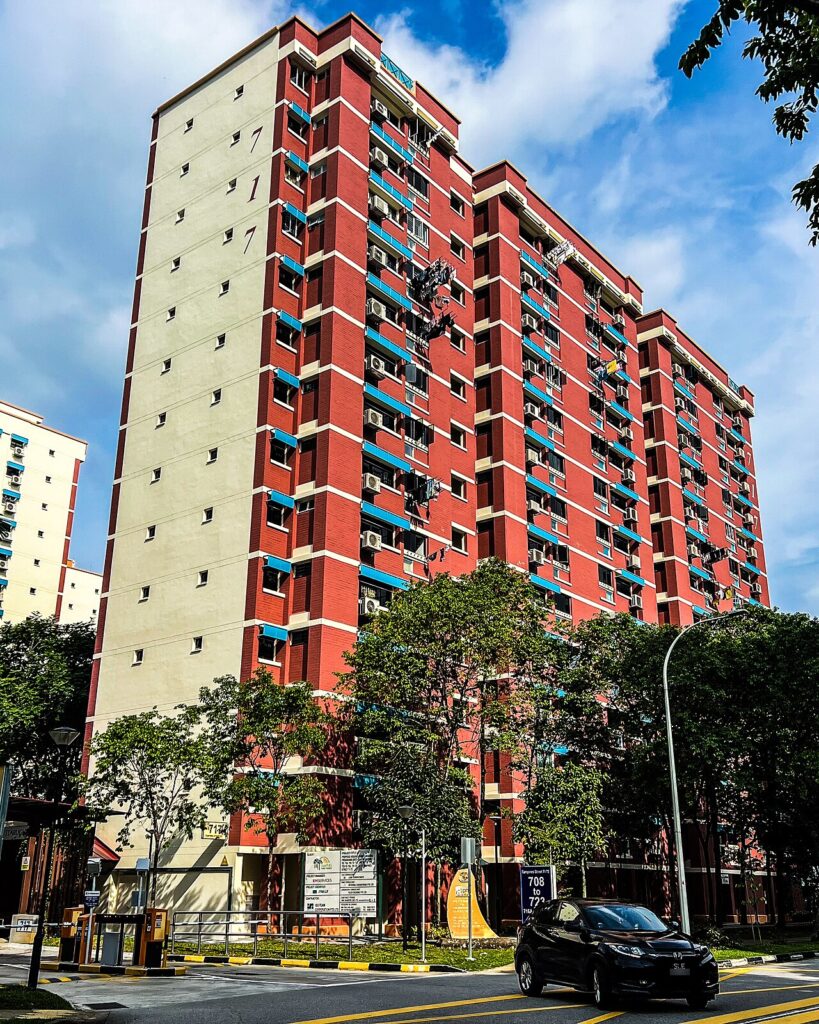
Renting a Condo in Singapore 2026: Complete Guide to Leases, Costs and Tenant Rights

Renting a Condo in Singapore 2026: Complete Guide to Leases, Costs and Tenant Rights

Quick Answer — Renting a condo in Singapore at a glance

  • Median condo rent in 2026: S$3,100–S$5,700/month depending on unit size and region
  • URA private residential rental index fell 1.2% in Q1 2026 as new supply enters the market
  • Minimum legal tenancy for private property: 3 months (short-term rentals under 3 months are prohibited)
  • Upfront costs: typically 1+1 month security deposit + half-month agent commission
  • Stamp duty on tenancy agreement: 0.4% × annual rent × number of years
  • Landlord must supply a functional, habitable unit; tenant pays utilities and minor repairs
  • Look for a diplomatic clause if your stay may be cut short — usually exercisable after month 12
  • The non-citizen quota (NCQ) limits foreign tenants in HDB estates to 8% per neighbourhood and 11% per block — condo rentals have no NCQ restriction

Renting a condominium in Singapore is the entry point for most expatriates, professionals on employment passes, and Singaporeans who are in between home ownership. It is also increasingly attractive to local upgraders who sell their HDB flat but want flexibility before committing to a private purchase. In 2026, the rental market has shifted in tenants’ favour: vacancy rates have edged up to around 7%, the Urban Redevelopment Authority (URA) reported a 1.2% quarterly decline in the private residential rental index in Q1 2026, and landlords in many districts are now negotiating where they once insisted. This guide explains how renting a condo in Singapore actually works — from understanding what a unit costs across different regions, to signing a legally compliant tenancy agreement, to knowing your rights as a tenant when things go wrong.

The Singapore Private Rental Market in 2026

Singapore’s private residential rental market is administered indirectly by the URA, which tracks rental transactions and publishes quarterly price and rental indices. Unlike HDB rentals, private condo rentals are not subject to nationality quotas — a landlord may rent to any nationality with a valid pass or PR status. The market is therefore more internationalised, with a significant proportion of tenants being expatriates on Employment Passes (EP) or S Passes, as well as Singaporeans awaiting new-launch completion.

After an extraordinary run-up of over 40% in rental values between 2021 and 2023 — driven by post-pandemic return of expats, supply constraints, and HDB delays — the market began softening in late 2023 and has continued to normalise. As at Q1 2026, private residential rents remain elevated against 2019 levels but are declining gradually as the pipeline of 17,032 unsold units (URA Q1 2026) and completions from 2022–2024 launches add supply. Vacancy has widened to an estimated 7%, giving tenants meaningful negotiating leverage for the first time in years.

Singapore condo median rental rates by unit type and region 2026
Figure 1: Median monthly condo rents by unit type and region, Q1 2026. OCR = Outside Central Region (suburbs); RCR = Rest of Central Region (city fringe); CCR = Core Central Region (prime). Source: URA, industry estimates.

Condo Rental Rates by Region and Unit Type

Rental rates vary significantly by district, unit size, floor level, and age of development. The URA divides Singapore into three broad rental markets: the Core Central Region (CCR), covering Districts 9, 10, 11, and the Downtown Core; the Rest of Central Region (RCR), covering city-fringe areas such as Queenstown, Bishan, Toa Payoh, and Geylang; and the Outside Central Region (OCR), covering mass-market suburbs such as Punggol, Sengkang, Tampines, Woodlands, and Jurong.

Unit Type OCR (Suburbs) RCR (City Fringe) CCR (Prime)
Studio / 1-Bedroom S$2,800–S$3,500/mth S$3,500–S$4,500/mth S$4,000–S$6,000/mth
2-Bedroom S$3,800–S$5,000/mth S$4,800–S$6,500/mth S$5,500–S$9,000/mth
3-Bedroom S$5,000–S$6,500/mth S$6,000–S$8,500/mth S$7,500–S$14,000/mth
4-Bedroom / Penthouse S$6,500–S$9,000/mth S$7,500–S$12,000/mth S$10,000–S$25,000+/mth

These are indicative ranges for units in good condition within well-maintained developments. Older freehold condos in established CCR districts (such as Nassim Road or Ardmore Park) can command premiums well above the ranges shown. Conversely, mass-market condos in OCR estates near an MRT station but without premium fittings typically sit at the lower end. Furnished units command a premium of roughly 10–20% over unfurnished equivalents, though most condo landlords provide at minimum white goods and air-conditioning units.

Types of Condo Available for Rent

Singapore’s private residential market offers several distinct product types under the broad “condo” umbrella. A standard condominium is a multi-unit strata development of six or more floors with full facilities — swimming pool, gym, function room, and 24-hour security. An apartment block (fewer than five floors, no mandatory facilities) is technically different from a condominium under the Planning Act but is marketed identically. Landed property — terraces, semi-detached, detached houses — is rented by Singaporeans and permanent residents with ease, but foreigners require approval from the Singapore Land Authority under the Residential Property Act to rent non-condominium landed property; condo units are fully open to foreigners.

Serviced apartments, though physically similar to condos, operate under a hotel licence and are typically rented on weekly or monthly terms. They sit outside the standard tenancy framework and carry no stamp duty obligation but command significant rent premiums for the flexibility and daily services included. They are a popular bridge while a new expatriate’s permanent housing is arranged.

Step-by-Step Rental Process

Renting a condo in Singapore follows a reasonably standardised process, though timelines can compress or extend depending on landlord circumstances and market conditions.

Step 1 — Search and shortlist. Most tenants search on PropertyGuru, 99.co, or STProperty. View three to five properties in person before making an offer. Pay attention to maintenance standards, lift lobby cleanliness, pool condition, and the responsiveness of the management corporation (MCST) — all signal how well-managed the development is.

Step 2 — Letter of Intent (LOI). Once you identify a unit, you submit a Letter of Intent — a one-page document specifying the agreed rent, tenancy term, move-in date, and any special requests (additional parking, pet clause, specific appliances). The LOI is accompanied by a good-faith deposit equal to one month’s rent. The landlord has three to seven days to sign or counter-propose.

Step 3 — Tenancy Agreement (TA). Once the LOI is agreed, the landlord’s solicitor (or the landlord directly) prepares the Tenancy Agreement. This is the binding legal contract. Review it carefully — particularly the diplomatic clause, the inventory schedule, the repair obligations, and any early termination penalties. Once signed, both parties pay the stamp duty on the TA.

Step 4 — Stamp duty and move-in. The tenant (or landlord, depending on agreement) stamps the TA with the Inland Revenue Authority of Singapore (IRAS) at 0.4% of the annual rent multiplied by the number of years of the tenancy. On the move-in date, the balance of the security deposit is paid and a thorough condition check of the unit is conducted and documented.

Rental Yields — Understanding the Landlord’s Perspective

Gross rental yield is the annual rent divided by the purchase price of the property. Understanding yields helps tenants appreciate why landlords price units the way they do, and can be a useful data point in negotiations — a landlord who bought at the peak of 2022–2023 faces significant yield compression and may be more flexible on rent than official asking prices suggest.

Gross condo rental yield by unit type and region Singapore 2026
Figure 2: Gross rental yield by unit type and region, 2026. Smaller units in OCR outperform on yield; prime CCR condos yield the least but attract higher-income tenants. Source: industry estimates based on URA transaction data.

Costs to Budget For as a Tenant

The headline monthly rent is not the only cost a prospective condo tenant must account for. Before signing, budget for the following upfront payments.

Security deposit: The market convention is one month’s security deposit per year of tenancy. A standard two-year tenancy therefore requires a two-month security deposit — typically paid in two instalments: one at LOI stage and one at TA signing. The deposit is held by the landlord and returned within 14 days of vacating (subject to any deductions for damage beyond fair wear and tear).

Agent commission: For a two-year or longer lease, the tenant typically pays half a month’s commission to the tenant’s agent, and the landlord pays one month to the landlord’s agent. For shorter leases, commission structures vary. Always clarify this before engagement — some co-broking arrangements shift the full commission to the tenant.

Stamp duty on tenancy agreement: The rate is 0.4% of the total rent payable. For a two-year tenancy at S$4,500/month, this works out to S$4,500 × 12 × 2 × 0.4% = S$432. This is typically paid by the tenant within 14 days of signing the TA.

Utilities: Utilities (electricity, water, gas) are the tenant’s responsibility in virtually all private condo tenancies. In 2026, a typical 2BR condo unit incurs electricity costs of approximately S$120–S$220/month depending on air-conditioning usage. The Open Electricity Market (OEM) allows tenants to choose between retailers for potentially lower rates.

Cost Item Typical Amount Who Pays Timing
Security deposit (2yr lease) 2 months’ rent Tenant At LOI + at TA signing
Agent commission 0.5–1 month’s rent Tenant (0.5) + Landlord (1) At TA signing
Stamp duty on TA 0.4% × annual rent × years Usually tenant Within 14 days of TA signing
First month’s rent 1 month’s rent Tenant On move-in date
Utilities connection S$100–S$200 deposit Tenant Before move-in
Minor maintenance Varies Tenant (fair wear & tear) Throughout tenancy

Tenancy Agreement — Key Clauses to Negotiate

The Tenancy Agreement is a standard-form document in Singapore, often based on the Law Society’s approved template, but landlords routinely customise it. As a tenant, pay particular attention to the following clauses before signing.

Diplomatic clause: This entitles the tenant to terminate the lease early if they receive a confirmed repatriation or job transfer. The standard form allows exercise after the first 12 months of a 24-month lease, with two months’ written notice. Not all landlords will agree to this, especially for shorter leases. If you are on an Employment Pass that could be cancelled, insist on this clause.

Repair obligations: The landlord is generally responsible for structural repairs and maintaining fixed installations such as built-in kitchen appliances, water heaters, and air-conditioning systems in working order. The tenant is responsible for day-to-day maintenance — changing light bulbs, maintaining cleanliness, and repairing damage caused by the tenant. The TA should specify a cost threshold (commonly S$150–S$300) below which the tenant handles repairs without recourse to the landlord.

Pet clause: Most condo tenancy agreements prohibit pets by default. If you have a pet, negotiate the pet clause in the LOI stage — do not assume goodwill after signing. Landlords who agree often require an additional deposit.

Subletting: Subletting without written landlord consent is a breach of the TA. If you may need to sublet a room, negotiate an express subletting clause at the outset. Note that subleasing to more than six unrelated persons in a condo unit breaches the Urban Redevelopment Authority’s occupancy cap regulations.

Worked Example: Mr Rajesh, Renting a 3-Bedroom OCR Condo

Mr Rajesh is a Malaysian national on an Employment Pass, earning S$12,000/month. He is relocating from a company-provided serviced apartment to a self-arranged private condo for a 24-month lease starting 1 August 2026. He identifies a 3-bedroom, 1,300 sq ft condo unit in Sengkang (OCR) at S$5,200/month (unfurnished).

Upfront costs:

  • Good-faith deposit at LOI: S$5,200 (1 month)
  • Balance security deposit at TA signing: S$5,200 (2nd month of 2-month deposit)
  • First month’s rent: S$5,200
  • Stamp duty: S$5,200 × 12 × 2 × 0.4% = S$499
  • Tenant agent commission (0.5 month): S$2,600
  • Utilities connection deposit: S$150
  • Total upfront: approximately S$18,849

Ongoing monthly: Rent S$5,200 + estimated utilities S$200 = S$5,400/month. This represents 45% of Mr Rajesh’s gross income, within the comfort range for a single-income expat household. He negotiated a diplomatic clause exercisable after month 14 with two months’ written notice, which his employer agreed to support if repatriation is required.

Market check: The landlord originally listed at S$5,500/month. Because vacancy in the OCR rental market has widened and two similar units in the same development are vacant, Mr Rajesh’s agent negotiated S$5,200 — a S$300/month or S$7,200 saving over the two-year lease. This illustrates the current market dynamic: asking prices are often negotiable by 5–8% for quality tenants willing to commit to longer terms.

The Market Shift: What the Rental Index Tells Us

URA private residential rental index trend Q1 2020 to Q1 2026
Figure 3: URA Private Residential Rental Index, Q1 2020 to Q1 2026. After peaking in early 2023, rents have declined for eight consecutive quarters. The index remains approximately 29% above Q1 2020 levels. Source: URA.

The URA private residential rental index peaked around Q1 2023 at approximately 181.5 (base Q4 2011 = 100). It has since declined to around 168.3 in Q1 2026 — a fall of about 7.3% from peak — but remains some 29% above Q1 2020 pre-pandemic levels. This context matters for tenants: rents are lower than the 2023 frenzy but are not at pre-2021 levels, and the rate of decline has slowed. A sustained oversupply scenario would push rents further down; conversely, if global business activity picks up and EP inflows accelerate, the market could tighten again by late 2026 or 2027.

What Might Come Next — Rental Market Outlook

The short-to-medium outlook for Singapore condo rentals in 2026 and 2027 leans modestly in tenants’ favour. Three supply-side factors support further gentle softening: the completion pipeline from 2022–2024 new launches continues to deliver units; the 2H 2026 Government Land Sales programme announced in June 2026 will add further medium-term supply; and the 17,032 unsold private units as at Q1 2026 represent a substantial buffer. On the demand side, the Singapore labour market remains tight with EP inflows expected to hold at current levels, which should provide a floor under rental demand.

That said, the era of 8–15% annual rental increases is clearly over for now. Tenants in 2026 should expect flat to modestly declining rents in OCR and RCR areas, while CCR prime districts — where international tenant budgets are less price-sensitive — may see more stable or even firmer rents if global financial activity sustains. Tenants renewing leases expiring in mid-2026 should push firmly for discounts of 5–10% versus their 2024 contracted rates.

Frequently Asked Questions

Can a foreigner rent a condo in Singapore?

Yes. Foreigners with a valid pass (Employment Pass, S Pass, Dependent Pass, Long-Term Visit Pass, or Student Pass) may rent any private condo unit without restriction. There is no nationality quota on private condo rentals, unlike HDB estates which are subject to the non-citizen quota. Foreigners may not rent landed property (terrace, semi-detached, or detached house) without approval from the Singapore Land Authority under the Residential Property Act, but this restriction does not apply to condominium units.

What is the minimum tenancy period for a condo?

The minimum tenancy for a private residential property in Singapore is three consecutive months. Short-term rentals of less than three months — including Airbnb-style arrangements — are illegal for private residential units under the Planning Act. Penalties for illegal short-term rentals are severe: landlords face fines of up to S$200,000 for each infringement. Serviced apartments that are licensed as hotels operate under different rules and may rent on daily or weekly terms.

How much is stamp duty on a condo tenancy agreement?

Stamp duty on a Tenancy Agreement is payable to the Inland Revenue Authority of Singapore (IRAS) at a rate of 0.4% of the total rent payable over the lease term. The formula is: Annual Rent × Number of Years × 0.4%. For a 2-year lease at S$4,800/month, the calculation is S$4,800 × 12 × 2 × 0.4% = S$461. Stamp duty must be paid within 14 days of signing the TA. Either the landlord or the tenant may pay — it is negotiable but conventionally the tenant’s responsibility. The stamped TA is the enforceable document for any dispute resolution in the Singapore courts.

What is a diplomatic clause and do I need one?

A diplomatic clause (also called a “relocation clause”) entitles the tenant to terminate the lease early if they receive a confirmed job transfer, repatriation, or redundancy. In Singapore, the standard diplomatic clause allows the tenant to break a 2-year lease after 12 months by giving two months’ written notice and providing documentary evidence (e.g., a letter from the employer). The clause is named “diplomatic” because it was originally designed for embassy and diplomatic personnel but is now used widely by all corporate tenants on Employment Passes. If there is any chance you may be relocated during your lease, insist on a diplomatic clause before signing — it cannot easily be added after the TA is executed.

Who is responsible for air-conditioning servicing?

The landlord is responsible for ensuring the air-conditioning units are in working order at the commencement of the tenancy. During the tenancy, the maintenance obligation depends on the TA wording. Most standard TAs require the tenant to service the air-conditioning units every three months and maintain them in working order for normal wear and tear, while the landlord is responsible for major repairs (compressor failure, refrigerant recharging) that exceed the minor repair threshold (typically S$150–S$300). Always ensure the TA specifies who pays for which type of air-con repair to avoid disputes.

Can my landlord increase the rent mid-tenancy?

No. Once a Tenancy Agreement is signed and stamped, the agreed rent is contractually fixed for the duration of the lease. The landlord cannot unilaterally increase the rent during the tenancy term. Rent may only be renegotiated at renewal. This is one key reason to sign a longer lease in a falling rental market — it locks in your current rate and protects against any potential reversal. Conversely, in a rising rental market, signing a shorter lease preserves your ability to relocate to a lower-priced unit or negotiate more aggressively at expiry.

How do I get my security deposit back?

At the end of the tenancy, both landlord and tenant (or their agents) conduct a check-out inspection against the original check-in inventory report. The landlord has 14 days from the end of the tenancy to return the deposit (or the agreed balance). Deductions may only be made for damage beyond fair wear and tear — meaning damage caused by misuse, negligence, or accident, not ordinary ageing. If the landlord disputes deductions, the tenant can escalate to the Small Claims Tribunal (SCT) — the SCT hears rental disputes up to S$30,000 and does not require legal representation. Always photograph the unit thoroughly at both check-in and check-out and keep all written communications with the landlord.

Related Articles

Disclaimer: This article is intended as general information only and does not constitute legal or financial advice. Rental market figures are indicative estimates based on URA published data and industry surveys as at Q1–Q2 2026 and may differ from individual transactions. Tenancy law, stamp duty rates, and regulatory requirements may change — always verify current figures with the Inland Revenue Authority of Singapore (IRAS), the Urban Redevelopment Authority (URA), and a qualified property lawyer before entering into any tenancy. LovelyHomes does not act as a property agent and does not endorse any landlord, developer, or property service provider.

Singapore Rental Market Guide 2026: HDB and Condo Rents, Yields and Outlook Explained

Singapore Rental Market Guide 2026: HDB and Condo Rents, Yields and Outlook Explained

Quick Answer: Singapore Rental Market 2026

  • Singapore’s private residential rental index rose 0.3% in Q1 2026 (URA), recovering from a 0.5% dip in Q4 2025, but remains below the 2023 peak.
  • HDB rental index eased 0.1% in Q1 2026, continuing a gradual softening from the 2023 high after two years of elevated rents.
  • Median rents in Q1 2026: HDB 4-room S$2,600/mth, condominium 2-bedroom S$3,600/mth (OCR), condominium 3-bedroom S$5,200/mth.
  • Gross rental yields remain attractive for HDB (4.7–5.6%) compared with private condominiums in Core Central Region (CCR) (2.6%).
  • Rising supply from 2024–2025 completions is the dominant dampener; landlords must price competitively in 2026.
  • Demand drivers: foreign professional workforce (Employment Pass/S Pass holders), expat families on education visas, and domestic upgraders waiting for new homes to complete.
  • Short-term rentals (fewer than 3 months) remain prohibited for residential properties in Singapore under URA regulations.
  • Landlords must declare rental income on their annual income tax returns to IRAS; allowable deductions include mortgage interest, property tax, and maintenance fees.

Understanding Singapore’s Rental Market

Singapore’s residential rental market is one of Asia’s most closely watched — shaped by a unique interplay of government-controlled HDB supply, private condominium completions, immigration policy, and one of the highest proportions of home ownership in the world (approximately 89%). Unlike many global cities, Singapore’s rental sector is comparatively small: most residents own their HDB flats. The rental pool is disproportionately driven by the expatriate workforce and a domestic segment of upgraders temporarily between properties.

The Urban Redevelopment Authority (URA) tracks the Private Residential Rental Index quarterly; HDB separately tracks the HDB Rental Index. Both indices are released alongside quarterly real estate statistics — the primary authoritative source for rental market data. The Q1 2026 URA statistics confirmed that private rental growth has moderated after the exceptional surge of 2021–2023, when the market rose over 50% from its COVID-era trough on the back of a supply drought and surging foreign workforce arrivals.

Rental Index Trend: 2020–2026

The rental cycle of this decade is one of the most dramatic in Singapore’s property history. From a base of approximately 100 in early 2020, the HDB Rental Index rose to a peak of approximately 163 by mid-2023 before softening. Private residential rents peaked near 175 in mid-2023. As at Q1 2026, both indices have retreated — the HDB index to approximately 156, the private residential index to approximately 165 — representing a correction of roughly 4–6% from peak.

Singapore rental index trend 2020 to 2026 - HDB vs private residential rental index
Figure 1: Singapore HDB and Private Residential Rental Index trend, Q1 2020 – Q1 2026 (Q1 2020 = 100). Sources: URA, HDB quarterly real estate statistics.

The correction has been driven primarily by supply normalisation — a wave of private condominium completions in 2024–2025 (including several large integrated developments) added significant rental stock to the market, while post-COVID foreign workforce growth moderated as global companies trimmed headcount in 2024–2025. Nevertheless, rents remain approximately 55% higher in absolute terms than pre-COVID levels for most property types.

Median Monthly Rents by Property Type, Q1 2026

Industry figures from Q1 2026 show median monthly rents across property types as follows. HDB room types continue to offer the most accessible entry point for tenants, while Core Central Region (CCR) condominiums command a substantial premium reflecting proximity to the CBD and top international schools.

Singapore median monthly rents 2026 - HDB and condo by room type Q1 2024 vs Q1 2026
Figure 2: Singapore median monthly rents Q1 2024 vs Q1 2026 by property type. All figures are indicative medians; individual transacted rents vary by location, floor, condition, and furnishing.

Key observations from the Q1 2026 data: HDB 3-room rents have eased from approximately S$2,300/mth in Q1 2024 to approximately S$2,200/mth, a modest 4.3% decline. Private condominium 3-bedroom rents have softened more noticeably from approximately S$5,500/mth to S$5,200/mth (−5.5%). Executive flat rents remain relatively sticky at approximately S$3,100/mth, reflecting persistently high demand from larger families displaced from the HDB resale market by the 15-month wait.

Gross Rental Yields by Property Type

Gross rental yield is calculated as annual rent divided by market value. In Singapore’s context, it is an imperfect but useful comparator — particularly when set against the CPF Ordinary Account rate of 2.5% p.a. and typical bank mortgage rates of 3.0–3.7% p.a. in 2026. Properties yielding below the mortgage rate require careful cash flow modelling; properties yielding above 4.5% can generate positive carry even at current financing costs.

Singapore rental yield by property type 2026 - HDB condo landed gross yield comparison
Figure 3: Gross rental yield by property type, Singapore Q1 2026. Yields are gross — deduct mortgage interest, property tax, management fees, vacancy, and maintenance for net yield calculations.

HDB flats deliver the highest gross yields precisely because their prices are regulated and their transacted values remain significantly below equivalent private condominiums. A well-located 3-room HDB in Toa Payoh with a transacted rent of S$2,200/mth and a resale value of approximately S$470,000 generates a gross yield of approximately 5.6% — among the highest in Singapore’s residential market. However, HDB landlords face non-citizen quota constraints (8% or 11% per block/neighbourhood) and must comply with the Minimum Occupation Period (MOP) rules and HDB approval requirements. See our comprehensive HDB Rental Guide 2026 for full details.

Landlord Obligations and Legal Framework

Residential tenancies in Singapore are governed primarily by contract law — there is no Residential Tenancies Act equivalent to those in the United Kingdom or Australia. The standard Tenancy Agreement is a contractual document prepared by either party’s lawyer or the property agent. Key regulatory requirements for landlords include:

  • Stamp duty on tenancy agreements: The tenant is liable to pay stamp duty on the tenancy agreement via IRAS e-Stamping. The rate is 0.4% of the total rent for leases of 1–4 years; for leases exceeding 4 years, the rate is 4% of the average annual rent. In practice, landlords should confirm the stamp duty is paid within 14 days of signing, as IRAS treats it as a condition for the agreement to be legally admissible in court.
  • Short-term rental prohibition: URA regulations prohibit the use of private residential properties for accommodation for periods of fewer than 3 consecutive months. Platforms such as Airbnb, Agoda (short-stay listings), and similar are prohibited for residential properties. Violations carry fines of up to S$200,000 per offence.
  • HDB subletting rules: HDB flat owners who have completed their Minimum Occupation Period (MOP) may sublet their whole flat or individual bedrooms, subject to HDB approval, non-citizen quota compliance, and the maximum occupancy limits (8 persons per flat until 31 December 2026 under the current temporary relaxation).
  • Property tax: Landlords pay property tax at non-owner-occupier rates (typically 10–20% of the Annual Value for private properties, 10% for HDB), which is a deductible expense against rental income.
  • Rental income tax: Rental income is taxable as personal income in Singapore. Allowable deductions include mortgage interest, property tax, fire insurance premiums, maintenance fees, and depreciation of approved furniture at 20% per annum declining balance.

Summary: Singapore Rental Market at a Glance, 2026

Property Type Typical Monthly Rent Gross Yield Key Tenant Profile
HDB 2-room S$1,400–S$1,600 ~5.2% Singles, young couples
HDB 3-room S$2,000–S$2,400 ~5.6% Small families, couples
HDB 4-room S$2,400–S$2,800 ~5.1% Families, expat workers
HDB 5-room S$2,600–S$3,200 ~4.7% Families, management expats
Condo 1-bedroom (OCR) S$2,400–S$2,800 ~3.8% Young professionals
Condo 2-bedroom (OCR) S$3,200–S$4,000 ~3.8% Couples, small families
Condo 2-bedroom (CCR) S$4,500–S$6,500 ~2.6% Senior expat executives
Landed Terrace S$6,000–S$10,000 ~2.1% High-net-worth families

Worked Example: Mr Rajan Buys a 3-Room HDB to Rent Out in Ang Mo Kio

Mr Rajan, a Singapore Citizen, purchased a 3-room HDB resale flat in Ang Mo Kio in August 2021 for S$450,000. His MOP completed in August 2026 and he immediately lists it for whole-flat rental while upgrading to a condominium. Key figures:

  • Purchase price: S$450,000 in August 2021.
  • MOP completion: August 2026 (5 years from key collection).
  • Estimated market rent (Q1 2026): S$2,100–S$2,300/mth for a well-maintained 3-room in Ang Mo Kio.
  • Monthly gross income: S$2,200/mth (midpoint).
  • Annual gross rent: S$26,400.
  • Gross yield: S$26,400 / S$450,000 = 5.9% (calculated on original purchase price; current AV-based valuation ~S$480,000 gives ~5.5%).
  • Property tax (non-owner-occupier): Annual Value approximately S$24,000; property tax approximately S$2,400/yr at 10%.
  • Mortgage interest (if outstanding loan S$150,000 at 2.6%): ~S$3,900/yr (deductible).
  • Net rental income (estimated): S$26,400 − S$2,400 (property tax) − S$3,900 (interest) − S$1,200 (maintenance, insurance) = approximately S$18,900/yr, taxable at Mr Rajan’s personal income rate.
  • Stamp duty on 12-month tenancy at S$2,200/mth: 0.4% × S$26,400 = S$105.60 (tenant’s liability but landlords confirm this is paid).

The non-citizen quota check (8% neighbourhood / 11% block) must be confirmed with HDB before signing the Tenancy Agreement. HDB approval is required for whole-flat rental; approval is typically granted within 3–5 business days via the HDB Resale Portal.

What Might Come Next for Singapore Rents

The 2026 rental market is characterised by a bifurcation: HDB rents are gradually softening as more MOP flats come onto the rental market and demand moderates, while premium private rents in the CCR are proving stickier, supported by a resilient pool of senior expatriate tenants who cannot or will not rent HDB. The key upside risk to the softening thesis is a reversal in Singapore’s technology and financial services hiring cycle — any rebound in Employment Pass issuances (which fell in 2024–2025 under tighter Fair Consideration Framework scrutiny) would tighten rental supply rapidly given the low vacancy rates in well-located projects. The key downside risk is continued elevated completions through 2026–2027 from the record launch years of 2021–2022, which will maintain supply pressure on mid-market condominiums.

For investors evaluating rental yield against price appreciation potential, the OCR condominium segment offers the most balanced risk-reward in 2026: gross yields of approximately 3.5–4.0% are competitive with bank deposit rates after factoring in leverage, while capital value upside from Jurong Lake District and Cross Island Line catalysts provides a medium-term appreciation thesis. See our Singapore Property Investment Guide 2026 for a full cross-asset comparison.

Frequently Asked Questions

Are Singapore rents going up or down in 2026?

Singapore’s rental market is in a gradual softening phase in 2026. According to URA Q1 2026 data, the private residential rental index rose 0.3% quarter-on-quarter — a marginal recovery after a 0.5% dip in Q4 2025 — but remains below the 2023 peak. HDB rents eased 0.1% in Q1 2026. The dominant factors are increased supply from 2024–2025 completions and moderating foreign workforce demand. Most market observers expect rents to remain broadly flat to slightly lower through 2026, with premium CCR properties proving more resilient than mass-market OCR condominiums and HDB flats.

Can I Airbnb my Singapore condo or HDB flat?

No. URA regulations prohibit the use of private residential properties for short-term accommodation of fewer than 3 consecutive months. This applies equally to condominiums, landed properties, and HDB flats. Listing a Singapore residential property on Airbnb, Agoda short-stay, or similar platforms is a regulatory offence carrying fines of up to S$200,000 per offence. HDB additionally prohibits subletting to short-term visitors regardless of platform. The minimum tenancy period for all residential properties in Singapore is 3 months.

Do I need to declare rental income to IRAS?

Yes. Rental income is taxable as personal income in Singapore and must be declared on your annual Income Tax return. IRAS requires landlords to report gross rent received, then deduct allowable expenses: mortgage interest (on the loan for the rented property), property tax paid, fire insurance premiums, cost of maintenance and repairs (but not capital improvements), management fees, and furniture depreciation at 20% per annum declining balance on approved items. Failure to declare rental income attracts penalties of up to 200% of the tax undercharged. See IRAS’s guide at iras.gov.sg for the current rental income declaration checklist.

What is the non-citizen quota for HDB rentals?

HDB imposes a Non-Citizen Quota (NCQ) to preserve the social mix of HDB estates. The quota limits the proportion of HDB flats in each block and neighbourhood that may be rented to non-Malaysia foreigners (i.e., all non-citizens who are not Malaysian citizens). The limits are 8% at the neighbourhood level and 11% at the block level. If either quota has been met, the landlord cannot rent to a non-Malaysian foreigner regardless of HDB approval status. Malaysia citizens are exempt from the NCQ. Singapore PRs count as citizens for NCQ purposes. Always check the NCQ status on the HDB website before signing any Tenancy Agreement with a foreign tenant.

What is a diplomatic clause in a tenancy agreement?

A diplomatic clause (or Diplomatic Break Clause) is a contractual provision that allows the tenant to terminate the tenancy early if they are relocated or transferred out of Singapore by their employer — typically with 2 months’ written notice after the first year of the lease. It is commonly requested by expatriate tenants and their employers. Landlords generally accept diplomatic clauses for premium properties where the tenant pool is predominantly expatriate. The clause should specify the minimum tenancy period before it can be activated (typically 12 months), the notice period, and whether any penalty or notice fee applies. If the tenant exercises the clause, they forgo the security deposit for the unused period — the exact mechanism is a matter of negotiation.

How is stamp duty on a tenancy agreement calculated?

Stamp duty on a Tenancy Agreement is calculated under the Stamp Duties Act (Cap. 312). For a lease of 1–4 years, the duty is 0.4% of the total rent payable over the tenancy period. For a lease exceeding 4 years, the duty is 4% of the average annual rent. Example: a 12-month lease at S$3,500/mth = total rent S$42,000; stamp duty = 0.4% × S$42,000 = S$168. Payment is due within 14 days of signing via the IRAS e-Stamping portal. The stamp duty is the tenant’s liability by default, but the Tenancy Agreement may specify otherwise. An unstamped tenancy agreement is inadmissible as evidence in court, though the tenancy itself remains contractually enforceable as between the parties.

What is a typical security deposit for a Singapore rental?

The market convention in Singapore is one month’s rent as security deposit for every year of tenancy — so a 1-year lease typically requires a 1-month deposit, and a 2-year lease requires a 2-month deposit. For leases with a diplomatic clause, landlords sometimes negotiate a 2-month deposit for a 1-year lease as additional security against early termination. There is no statutory cap on the security deposit amount in Singapore — it is entirely a matter of negotiation. The deposit should be held in a separate client account by the agent or returned directly to the landlord, and must be refunded within 14 days after the end of the tenancy (less any deductions for damage or unpaid rent, supported by receipts and a condition report).

Related Articles

Disclaimer: This article is intended for general informational purposes only and does not constitute legal, tax, or financial advice. Rental figures, yields, and index data cited are based on information available as at 7 June 2026 and are subject to change. Individual rental outcomes depend on property location, condition, furnishing level, and prevailing market conditions. Readers should consult a licensed Singapore real estate agent (CEA-registered), a Monetary Authority of Singapore (MAS) licensed financial adviser, and IRAS for personalised rental income tax guidance. Authoritative references: URA (ura.gov.sg), HDB (hdb.gov.sg), IRAS (iras.gov.sg), CEA (cea.gov.sg).

Renting Out Your HDB Flat 2026: Rules, Quotas, Rental Rates and Step-by-Step Landlord Guide

Renting Out Your HDB Flat 2026: Rules, Quotas, Rental Rates and Step-by-Step Landlord Guide

Renting out HDB flat Singapore 2026 landlord guide rules quotas rental rates
Singapore HDB Rental Landlord Guide 2026 — rules, quotas, rental rates and step-by-step subletting process.
Quick Answer: Renting Out Your HDB Flat 2026 — Key Facts

  • Who can sublet the whole flat? Singapore Citizens (SC) only. Permanent Residents (PR) may only rent out individual bedrooms — not the entire flat.
  • Minimum Occupation Period (MOP): 5 years from the date of key collection before subletting is permitted. Older flats purchased before 30 August 2010 without a grant have a 3-year MOP.
  • Minimum lease term: 6 months per tenancy agreement for whole-flat rental. No minimum for bedroom rental.
  • Non-Citizen Quota: 8% at neighbourhood level and 11% at block level. Applies when any tenant renting the whole flat is a non-Malaysian non-citizen.
  • Occupancy cap (temporarily relaxed): Up to 8 unrelated persons in a 4-room or larger HDB flat (relaxed from 6 until 31 December 2026).
  • HDB approval required: Flat owners must register the subletting with HDB online before tenants move in. Failure is a serious offence.
  • Typical rental rates (Q1 2026): 3-room S$2,200–2,600/mth; 4-room S$2,600–3,200/mth; 5-room S$3,000–3,800/mth.
  • Rental yields: Approximately 5–7% gross depending on flat type and estate.

Can You Rent Out Your HDB Flat?

HDB flats in Singapore can be rented out, but the rules are considerably more prescriptive than for private residential property. The framework is administered by HDB under the Housing and Development Act (Cap 129), and non-compliance can result in severe penalties including compulsory acquisition of the flat. The rules distinguish sharply between who can rent (citizenship status), what can be rented (whole flat versus individual bedrooms), who the tenants can be (nationality quotas), and for how long (minimum tenancy periods).

Before considering subletting, flat owners should also understand how rental income interacts with their CPF, ABSD obligations, and income tax position — particularly if they have moved out to live elsewhere. This guide covers the complete picture for Singapore Citizens and Permanent Residents who own an HDB flat and wish to generate rental income from it.

Who is Eligible to Sublet?

The eligibility rules operate at two levels: (1) who can sublet the entire flat, and (2) who can rent out individual bedrooms.

HDB subletting eligibility Singapore Citizens PR whole flat bedroom rental rules 2026
Figure 2: HDB Subletting Eligibility — Singapore Citizens vs Permanent Residents | Source: HDB

Singapore Citizens (SC) may sublet their entire flat or individual bedrooms, subject to completing the MOP and receiving HDB’s approval for each subletting period. The flat owner does not need to live in the flat during the subletting period — they may reside elsewhere, including in private property, for the duration.

Permanent Residents (PR) may rent out individual bedrooms in their HDB flat, but may NOT sublet the entire flat. If a PR owns an HDB flat, the PR (or at least one listed owner) must continue to reside in the flat at all times while bedrooms are being rented out. PRs who wish to vacate entirely and rent out the whole flat must either sell the flat or apply for an SC-sponsored transfer — there is no exception.

Both SC and PR flat owners must have completed the applicable MOP before any subletting (whole flat or bedroom) is permitted.

Minimum Occupation Period (MOP) Before Subletting

The MOP is the most fundamental gating requirement for HDB subletting. It runs from the date of key collection (not purchase date) and applies to all flats regardless of whether they were purchased directly from HDB (BTO/DBSS) or on the open resale market with a grant:

  • Standard MOP (most flats): 5 years from key collection. Applies to all BTO flats, DBSS, and resale flats purchased with a CPF housing grant.
  • Shortened MOP: 3 years for resale flats purchased before 30 August 2010 without any housing grant. Very few flats remain in this category.
  • Plus and Prime flats: 10-year MOP. These are flats in highly sought-after locations announced under the 2023 HDB classification framework. Subletting the whole flat is not permitted even after the 10-year MOP — only bedroom rental is allowed for Plus and Prime flat owners.

Note that any period during which the flat was unoccupied (e.g., the owner lived overseas for work) may be deducted from the MOP clock by HDB in certain circumstances — check with HDB directly if this situation applies to you.

HDB Rental Rates in 2026

HDB rental rates have risen meaningfully since the pandemic-era demand surge, with median rents across all flat types up approximately 3.2% year-on-year as of Q1 2026. The chart below shows the typical monthly rental range by flat type across Singapore:

HDB median monthly rental range by flat type Singapore Q1 2026 3-room 4-room 5-room executive
Figure 1: HDB Median Monthly Rental Range by Flat Type — Q1 2026 | Source: HDB / data.gov.sg | Bars show range; horizontal line shows median

These are Singapore-wide medians — estate location significantly affects achievable rents. Central estates (Toa Payoh, Bishan, Queenstown) typically command 15–25% premiums over the national median for the same flat type. Outer estates (Woodlands, Sembawang, Choa Chu Kang) trade at 5–15% discounts. The temporary relaxation of the occupancy cap to 8 unrelated persons (until 31 December 2026) has supported demand from shared accommodation arrangements, particularly in the co-living segment.

Non-Citizen Subletting Quota

To maintain the ethnic and community character of HDB estates, HDB imposes a Non-Citizen Quota (NCQ) on whole-flat subletting:

Level Quota What It Means
Neighbourhood 8% No more than 8% of flats in the neighbourhood may be sublet to non-Malaysian non-citizen tenants
Block 11% No more than 11% of flats in the block may be sublet to non-Malaysian non-citizen tenants

Source: HDB | Quota does not apply to bedroom rental — only whole-flat subletting.

Malaysian nationals are excluded from the NCQ calculation — a legacy of the historical close ties between Singapore and Malaysia. If the NCQ for your block or neighbourhood has been reached, you may only sublet your flat to Singaporean or Malaysian tenants. You can check the current NCQ status for any block through the HDB e-Services portal before entering into a tenancy agreement.

The NCQ is particularly relevant in popular expat neighbourhoods (Queenstown, Tiong Bahru, Toa Payoh) and around MRT hubs, where demand from foreign professionals is high. Landlords in these estates should monitor the NCQ status regularly — it changes as tenancy agreements expire and new ones begin.

Occupancy Cap — Temporarily Relaxed Until 31 December 2026

In January 2024, the Government temporarily relaxed the maximum number of unrelated occupants in larger HDB flats and private residential properties to address tight rental market conditions for foreign workers and students. As at 7 June 2026, this relaxation remains in effect:

Property Type Normal Cap Relaxed Cap (until 31 Dec 2026)
HDB 4-room or larger (or private property 90sqm+) 6 unrelated persons 8 unrelated persons
HDB 1-room, 2-room, 3-room (or private property below 90sqm) 6 unrelated persons 6 unrelated persons (no change)

Source: HDB / URA joint press release, January 2024 | Relaxation valid until 31 December 2026.

Landlords of larger flats who wish to maximise occupancy for room-rental models should note that the occupancy cap reverts to 6 persons on 1 January 2027 unless HDB announces a further extension. Co-living operators using HDB flats as their supply base are particularly exposed to this change.

How to Apply — The Subletting Process

The subletting process involves HDB approval before tenants can move in. Here is the step-by-step workflow for a whole-flat subletting:

  1. Confirm MOP has been satisfied: Check your key collection date and ensure 5 years have passed. Do not sign any tenancy agreement until the MOP is complete.
  2. Confirm eligibility: Ensure you are an SC flat owner. Confirm all registered owners consent to the subletting.
  3. Check NCQ status: Log in to HDB e-Services to confirm the NCQ for your block and neighbourhood is not fully utilised if you plan to rent to non-Malaysian non-citizens.
  4. Negotiate and sign a tenancy agreement: The minimum tenancy period for a whole flat is 6 months. You may sublet for up to 3 years at a time, subject to renewal approval from HDB.
  5. Register the subletting with HDB: Submit the subletting application online via HDB e-Services before the tenants move in. Provide tenants’ details (NRIC/FIN, nationality, employment pass type if applicable). This is a statutory requirement — failure to register before tenants move in is a breach of the Housing and Development Act.
  6. Receive HDB approval: HDB will issue a confirmation letter (typically within a few working days for compliant applications). Retain this letter for your records.
  7. Collect rent and manage the tenancy: Issue a proper tenancy agreement. Collect a security deposit (typically 1–2 months rent). Stamp the tenancy agreement via IRAS e-Stamping (stamp duty on rental: 0.4% of total rent for leases exceeding one year).
  8. Renewal: Notify HDB and apply for renewal before each renewal period. HDB re-checks eligibility and NCQ at each renewal.

Rental Yield Analysis — Is Renting Out Worth It?

HDB gross rental yield by flat type Singapore 2026 investment return comparison
Figure 3: Estimated Gross Rental Yield by HDB Flat Type — Q1 2026 | Source: LovelyHomes calculations based on HDB median rents and resale prices

Gross rental yields on HDB flats are among the highest of any property class in Singapore, ranging from approximately 5.1% to 6.9% depending on flat type. Smaller flats (2-room, 3-room) generate higher yields relative to their resale values because rents have not declined proportionately with the relatively lower price points. Larger flats (5-room, Executive) generate lower percentage yields but higher absolute monthly income.

Net yields — after property tax, maintenance fees, and occasional void periods — are typically 0.5–1.0 percentage points lower than gross. At 5–6% net yield, HDB flats compare favourably to private condo yields (typically 3–4% net) and offer a meaningful income return for SC flat owners who have upgraded to private property and retained their HDB flat — a common wealth-building strategy for Singapore families, subject to ABSD on the second property.

Summary Table: HDB Whole-Flat vs Bedroom Rental — Key Differences

Rule Whole-Flat Rental Bedroom Rental
Who can sublet Singapore Citizens only SC and PR flat owners
Owner must reside in flat No — owner may live elsewhere Yes — PR owner must remain in flat
Minimum lease 6 months No statutory minimum
Maximum subletting period 3 years (renewable) No statutory maximum per term
Non-Citizen Quota Yes — 8%/11% (neighbourhood/block) Not applicable
HDB approval required Yes — before tenants move in Yes — must register bedroom tenants
Tenancy stamp duty 0.4% of total rent (IRAS) 0.4% of total rent (IRAS)
Income tax on rental income Yes — reportable to IRAS Yes — reportable to IRAS

Source: HDB / IRAS | As at 7 June 2026.

Worked Example: Mr and Mrs Tan Rent Out Their Toa Payoh HDB Flat

Mr and Mrs Tan, both Singapore Citizens, purchased a 4-room HDB flat in Toa Payoh in June 2018 and collected keys in September 2021. They completed their 5-year MOP in September 2026. Having upgraded to a private condominium in Bishan in April 2026 (paying ABSD as a second property purchase), they wish to sublet their HDB flat for rental income to help service the new mortgage.

Rental market check: A 4-room HDB in Toa Payoh commands S$2,800–S$3,200/mth. They aim for S$3,000/mth.

NCQ check: Their block in Toa Payoh Lorong 2 has NCQ utilisation at 6% (neighbourhood) and 9% (block) — both below the 8%/11% thresholds. They can rent to non-Malaysian non-citizens.

Process: They sign a 12-month tenancy agreement at S$3,000/mth with an expatriate family. Security deposit: S$6,000 (2 months). Tenancy stamp duty: 0.4% x S$3,000 x 12 months = S$144, payable to IRAS. They register the subletting with HDB before the tenants move in.

Financials:

  • Annual rental income: S$36,000
  • Property tax on rented-out flat (annual value ~S$20,400 x 12% owner-occupier rate — no, since it is now non-owner-occupied, higher rates apply: 10–20% on AV): approximately S$2,040–S$4,080/year
  • Maintenance fee: approximately S$70–S$80/mth = S$840–S$960/year
  • Gross yield: S$36,000 / S$780,000 (estimated flat value) = 4.6% gross
  • Net yield (after property tax and maintenance): approximately 3.7–4.0%
  • Annual net rental income (approx.): S$29,000–S$31,000

Mr and Mrs Tan must also declare the rental income in their annual personal income tax returns filed with IRAS. They may deduct allowable expenses (property tax, maintenance fees, mortgage interest if the loan relates to the rented property, insurance, agent fees) from the rental income before tax. There is no Capital Gains Tax in Singapore, so future sale proceeds are not taxed.

Why HDB Rental Income Matters — and What It Means for Flat Owners

For Singapore Citizens who have upgraded to private housing and retained their HDB flat, rental income from the HDB flat is one of Singapore’s most tax-efficient income streams. At yields of 5–7% gross and no CGT, a S$600,000 HDB flat generating S$30,000 per year in net rental income represents a meaningful supplement to household income. The key constraint is that such a strategy requires paying ABSD on the private property (currently 20% for SC second property — see our ABSD guide for full rates), which takes years of rental income to recover. The maths works best for SC couples who are certain they want to hold both properties long term.

For SC flat owners who do not own other property — for example, those who travel frequently for work — the ability to rent out the whole flat while living elsewhere provides genuine flexibility. The 6-month minimum tenancy ensures landlords are not trapped in indefinitely short arrangements, while the 3-year maximum subletting period (renewable) provides medium-term income stability.

What Might Change for HDB Rental Rules

This section reflects editorial analysis and is speculative in nature.

The temporary occupancy cap relaxation (from 6 to 8 unrelated persons in larger flats) is set to expire on 31 December 2026. HDB will assess whether rental market conditions continue to justify the relaxation. If the rental market tightens further — driven by continued foreign workforce growth and an undersupply of completed units — the relaxation may be extended. If the private rental market stabilises, it is more likely to revert to 6 persons. Landlords operating shared-accommodation models should not assume the relaxation will continue beyond year-end without official confirmation.

More broadly, the HDB Plus and Prime classification framework (announced in 2023) will progressively bring more units with 10-year MOPs and whole-flat subletting restrictions into the resale pool as these projects complete. Over the next decade, the supply of freely-sublettable HDB flats (i.e., non-Plus, non-Prime flats with completed MOPs) will remain substantial but may not grow as rapidly as the overall HDB stock.

Frequently Asked Questions

I am a PR and want to rent out my whole HDB flat — is this allowed?

No. Permanent Residents are not permitted to sublet the entire HDB flat. PRs may only rent out individual bedrooms in the flat, and must continue to reside in the flat at all times while bedroom tenants are present. If you are a PR and wish to vacate the flat entirely, you must sell the flat on the open market. There is no exception for this rule. If you become a Singapore Citizen after purchasing your flat, you immediately become eligible to sublet the whole flat (subject to MOP completion) — another advantage of SC status for property owners.

Can a foreigner rent an HDB flat in Singapore?

Yes, foreigners may rent HDB flats as tenants. However, the Non-Citizen Quota (8% neighbourhood / 11% block) limits how many HDB flats in any given area can be rented to non-Malaysian non-citizens. If the quota for a block is reached, only Singaporean or Malaysian tenants are permitted. Foreigners should check with potential landlords whether the quota has been reached before committing to a lease. The quota does not apply to bedroom rental — foreigners may always rent individual bedrooms in HDB flats regardless of quota status.

What happens if I rent out my flat without HDB approval?

Subletting without HDB approval is a serious breach of the Housing and Development Act. Penalties include a fine of up to S$5,000 for first offences, and compulsory acquisition of the flat (forced sale at market value with no premium) for repeat or serious offences. HDB conducts periodic estate checks and receives tip-offs from neighbours, so non-compliant landlords are regularly caught. The financial cost of compulsory acquisition — losing the flat at market value with no recourse to negotiate — far outweighs any short-term rental income gained from operating without approval.

Do I need to pay tax on rental income from my HDB flat?

Yes. Rental income from an HDB flat is taxable income in Singapore and must be declared in your annual Income Tax Return filed with IRAS. The income is taxed at your marginal personal income tax rate (ranging from 0% to 24% for residents). You may deduct allowable expenses from the rental income: mortgage interest (if the loan relates to the rented property), property tax, fire insurance, maintenance fees, and agent commission. Wear and tear (depreciation) is not a deductible expense under Singapore tax rules. You are also entitled to a deemed deduction of 15% of the gross rent in lieu of actual expenses if that is simpler. Speak to a tax adviser if your rental income is material. See the IRAS website for the specific guidelines.

Can I rent out my HDB flat on Airbnb or other short-term platforms?

No. Short-term rentals of HDB flats — defined as any rental period of less than 6 months — are strictly prohibited under HDB rules and the Hotels Licensing Act. Platforms like Airbnb, Booking.com, and similar services facilitate short-term stays that would violate the minimum 6-month tenancy requirement for whole-flat subletting. HDB has prosecuted flat owners for Airbnb violations and the consequences are the same as for any unlicensed subletting: fines and potential compulsory acquisition. This prohibition applies to HDB flats; private residential property is governed by separate URA rules (which also generally prohibit short-term lets of under 3 months for most private properties).

What is the stamp duty on a rental agreement for an HDB flat?

Rental agreements for HDB flats (and private residential property) must be stamped via the IRAS e-Stamping Portal within 14 days of signing. The stamp duty rate is 0.4% of the total rent for leases exceeding one year, and 0.2% of the total rent for leases of one year or less. For a typical 12-month lease at S$2,800/mth, the stamp duty is 0.4% x S$33,600 = S$134.40. The duty is conventionally paid by the tenant (as the party receiving the tenancy document), though landlord and tenant may agree otherwise in the tenancy agreement.

My HDB MOP will be completed in 3 months. Can I start looking for tenants now?

You may market the flat and negotiate tenancy terms before the MOP is completed, but you cannot sign a tenancy agreement or submit the HDB subletting application until the MOP date has passed. In practice, the market is aware of this constraint and tenants are generally willing to allow for a short lead time between signing and move-in. A common approach is to agree on the lease terms and execute the tenancy agreement on the day of (or shortly after) MOP completion, with tenants moving in a week or two later — giving time for HDB approval to be received (typically 3–5 working days for compliant applications).

Related Articles

Disclaimer

This article is for general informational purposes only and does not constitute legal, tax, or financial advice. HDB policies, occupancy cap rules, and rental regulations can change. Always verify current eligibility conditions, quotas, and approval requirements directly with HDB and consult a qualified Singapore property lawyer or tax adviser before making rental decisions. Rental rates, yields, and government policy cited are based on information available as at 7 June 2026.

Singapore Property Rental Guide 2026: Renting, Landlord Rules and Market Rates Explained

Singapore Property Rental Guide 2026: Renting, Landlord Rules and Market Rates Explained

Quick Answer — Singapore Rental Market 2026

  • Median HDB 4-room rent (OCR mature): S$2,100–S$3,200/month
  • Median private condo 2BR (OCR): S$3,200–S$4,800/month; CCR: S$4,500–S$7,000/month
  • HDB subletting allowed only after 5-year MOP; minimum tenancy: 6 months
  • Private condo: can rent entire unit from day one; no MOP restriction
  • Tenancy Agreement stamp duty: S$4 per S$250 of rent for leases up to 4 years (IRAS)
  • Security deposit: typically 1 month per year of tenancy (by convention, not law)
  • Rental income is taxable under IRAS; deductions permitted for mortgage interest, maintenance, and agent fees
  • Foreigners may rent any residential property without restriction
  • Q1 2026 vacancy rate: ~5.8% (OCR condo), ~7.5% (CCR condo) — supply-side pressure easing

Singapore’s Rental Market in 2026: An Overview

Singapore’s residential rental market entered 2026 after two years of adjustment. The extraordinary rental surge of 2022–2023 — when median rents rose by 30–40% driven by returning expatriates, supply disruptions, and a flood of en-bloc proceeds — has given way to a more measured environment. Vacancy rates across private residential properties averaged 7.6% at end-2025 (URA), reflecting a significant influx of completed units from the 2021–2023 pipeline.

Yet demand remains structurally healthy. Singapore’s open-economy model, its position as a regional headquarters hub, and a steady pipeline of work-permit and employment-pass holders keep rental absorption strong in the OCR and mature HDB heartland districts. For first-time landlords considering a buy-to-let strategy, and for tenants navigating a complex regulatory framework, understanding the rules administered by the Housing & Development Board (HDB), the Urban Redevelopment Authority (URA), and the Inland Revenue Authority of Singapore (IRAS) is essential.

HDB Flat Subletting Rules: What Every Landlord and Tenant Must Know

HDB flats are subsidised public housing built for owner-occupation, not investment. Subletting an entire HDB flat — or even individual rooms — is subject to a strict ruleset administered by the HDB under the Housing and Development Act.

Minimum Occupation Period (MOP)

Before a flat owner may sublet the entire flat, the property must have completed its 5-year Minimum Occupation Period (MOP) from the date of key collection. For flats purchased under the Prime Location Public Housing (PLH) or Plus classification introduced under HDB’s new classification system (effective BTO exercises from October 2023), the MOP is 10 years.

Room Rental (Subletting a bedroom)

Room-only subletting — where the owner continues to reside in the flat — is permitted before MOP, subject to occupancy cap rules. From 22 January 2026, the HDB and URA implemented a temporary relaxation of the occupancy cap to allow up to 8 unrelated persons in a flat or private residential property (up from the standard 6), applicable until 22 January 2028.

Key HDB subletting rules at a glance

  • Minimum tenancy term: 6 consecutive months per subletting period
  • Maximum subletting term: 3 years per application (renewable)
  • HDB subletting application must be made online at hdb.gov.sg before the subletting commences
  • Subtenants must be Singapore Citizens, Permanent Residents, or foreigners with a valid long-term pass (Employment Pass, S Pass, Dependent Pass, Long-Term Visit Pass)
  • Non-citizen (NR) subletting quota: no more than 8% of the HDB block may be sublet to non-Malaysian foreigners
Singapore rental market monthly rent ranges by property type 2026
Figure 1: Singapore rental market — monthly rent ranges by property type and location, Q1 2026. Source: URA Rental Statistics.

Private Condo and Landed Property Rental Rules

Private residential properties — condominiums, apartments, and landed houses — are not subject to MOP restrictions. An investor who purchases a newly-launched private condo may sublet the entire unit immediately upon receiving the Temporary Occupation Permit (TOP), subject to two key rules administered by URA:

  • Minimum tenancy term: 3 consecutive months for private residential properties (compared to 6 months for HDB)
  • Occupancy cap: The standard cap is 6 unrelated persons per dwelling unit; the temporary relaxation to 8 persons applies through January 2028
  • Short-term rental prohibition: Platforms such as Airbnb and similar short-stay apps are prohibited for private residential properties in Singapore. Rental terms below 3 months are illegal and carry fines of up to S$5,000

Landed properties — terraced houses, semi-detached, and bungalows — follow private property rules (3-month minimum, no MOP). Foreign ownership of landed property is restricted under the Residential Property Act 1976, but foreigners may rent any landed home freely.

Rental Rates in 2026: What to Budget as a Tenant

Singapore’s rental market is priced according to property type, location (CCR/RCR/OCR), floor level, condition, and proximity to MRT stations. The data below reflects URA and HDB Rental Statistics for Q1 2026. All figures are monthly rents in Singapore dollars.

Property Type Location Typical Monthly Rent Indicative PSF
HDB 2-room OCR S$1,400–S$2,000 S$3.0–S$4.2
HDB 3-room OCR S$1,700–S$2,500 S$2.8–S$3.8
HDB 4-room OCR (mature) S$2,100–S$3,200 S$2.6–S$3.5
HDB 4-room CCR/RCR (Bishan, Toa Payoh) S$2,600–S$3,900 S$3.2–S$4.2
Condo 1BR OCR S$2,400–S$3,600 S$4.2–S$5.5
Condo 1BR CCR S$3,200–S$5,200 S$5.5–S$8.0
Condo 2BR OCR S$3,200–S$4,800 S$3.8–S$5.2
Condo 2BR CCR S$4,500–S$7,000 S$5.8–S$8.5
Condo 3BR OCR S$4,200–S$6,500 S$3.5–S$5.0
Landed terrace OCR S$5,500–S$9,000 S$2.8–S$4.5

Stamp Duty on Tenancy Agreements

In Singapore, the tenant bears the cost of stamping the Tenancy Agreement (TA) via IRAS e-Stamp within 14 days of signing. The stamp duty rate is:

  • For leases of 4 years or less: S$4 for every S$250 (or part thereof) of the total rent payable over the term
  • For leases exceeding 4 years (or indefinite term): calculated on the higher of total rent or 4× annual rent, at the same rate

Example: A 2-year tenancy at S$3,500/month = S$84,000 total rent. Stamp duty = S$84,000 ÷ S$250 × S$4 = S$1,344. This must be paid via the IRAS e-Stamping portal at iras.gov.sg.

Rental Yield and Investment Performance

For property investors, gross rental yield is calculated as annual rent divided by purchase price. Singapore’s rental yields have compressed over the past decade as capital values outpaced rent growth, yet certain property types and locations still offer respectable returns — particularly HDB-adjacent OCR condos near MRT nodes and mature-town HDB resale flats after MOP.

Singapore rental yield and capital growth by property type 2026
Figure 2: Gross rental yield vs 3-year capital growth by property type — Singapore Q1 2026. Source: URA / lovelyhomes.com.sg research.

HDB resale flats offer the highest gross rental yields (4.0–4.4%) among mainstream property types, owing to relatively affordable purchase prices and sustained heartlander demand. Private condo yields are lower (2.5–3.8%), but the CCR segment benefits from stronger long-term capital growth — up to +15.2% over three years for CCR 3-bedroom units — driven by the irreplaceable land scarcity in Districts 9–11. Landed property yields are modest (2.0%) but capital growth is exceptional (+18.5%), reflecting the structural restriction on new landed supply in Singapore.

PSF Benchmarks and Vacancy Rates Across the Market

Analysing median monthly rent on a per-square-foot (PSF) basis allows meaningful comparison across property types of different sizes. URA’s Q1 2026 Rental Statistics show that CCR condos command the highest PSF (~S$6.80/sqft/month) but also carry the highest vacancy rates (~7.5%), reflecting the elevated supply completions in the prime districts. OCR condos are priced more keenly (~S$4.10 PSF) with lower vacancy (~5.8%).

Singapore median monthly rent PSF and vacancy rate by segment 2026
Figure 3: Median monthly rent PSF and vacancy rate by property segment — Singapore Q1 2026. Source: URA Rental Statistics.

Rental Income Tax for Landlords

Rental income is taxable in Singapore under the Income Tax Act. Landlords must declare gross rental receipts in their annual tax returns (Year of Assessment for the preceding calendar year). Allowable deductions reduce the taxable rental income:

  • Mortgage interest (for the period the property was rented out; capital repayments are not deductible)
  • Property tax paid on the rented property
  • Fire insurance premiums
  • Maintenance and repair costs (not capital improvements)
  • Agent commission (for securing the tenancy)

For individual landlords, the net rental income is added to total chargeable income and taxed at progressive rates (0–22% for residents in YA 2026). Non-resident landlords face a flat 24% withholding tax on gross rental income unless a lower treaty rate applies. IRAS cross-checks rental declarations against the HDB/URA subletting register, so non-disclosure carries significant risk.

Tenant Rights and Responsibilities in Singapore

Singapore does not have a dedicated Tenants’ Rights Act. Tenancy agreements are governed by general contract law and the Distress Act (Cap 84). However, several protections and obligations apply by convention and statute:

  • Security deposit: typically 1 month per year of tenancy (2 months for a 2-year lease). The landlord must return the deposit within 14 days of lease expiry, less documented deductions for damage beyond fair wear and tear
  • Good Faith Principle (HDB): HDB subletting landlords may not impose conditions on how subtenants use common areas of the flat
  • Quiet enjoyment: A tenant in possession cannot be evicted without court order once a TA is duly executed and stamped
  • Utilities: Tenants are solely responsible for utilities (SP Services) unless expressly stated in the TA
  • Dispute resolution: Landlord-tenant disputes may be referred to the Community Disputes Resolution Tribunals (CDRT) or Small Claims Tribunals (SCT) for claims under S$20,000

Worked Example: The Nguyens Rent and Invest in Singapore

Mr & Mrs Nguyen, Vietnamese nationals on Employment Passes, arrive in Singapore in June 2026. They have a monthly EP allowance of S$12,000 combined and wish to rent a 3-bedroom condo in the east (D15/D16 Marine Parade/Bedok corridor) for a 2-year lease.

  • Target unit: 3BR condo, 1,100 sqft, Marine Terrace area — asking rent S$5,200/month
  • Security deposit: 2 months × S$5,200 = S$10,400 (refundable at end of lease)
  • Advance rent: 1 month = S$5,200
  • Tenancy Agreement stamp duty: Total rent = S$5,200 × 24 = S$124,800. Stamp duty = S$124,800 ÷ 250 × 4 = S$1,997
  • Agent commission: Typically 1 month (half/half split with landlord) = S$2,600, usually borne by landlord for a 2-year lease from month 13 onwards per industry convention
  • Total upfront cash outlay by tenant: S$10,400 + S$5,200 + S$1,997 = S$17,597
  • Annual rental budget: S$5,200 × 12 = S$62,400 (51.7% of annual EP income — in the higher range, but Singapore’s 55% TDSR is a credit metric, not an expense-to-income rule for tenants)

Simultaneously, Mr & Mrs Nguyen consider whether to invest in a D16 OCR condo unit at S$1.65M. As foreigners, they would pay BSD S$51,800 + ABSD S$1,072,500 (65% of S$1.65M) = S$1,124,300 total stamp duty — effectively a 68% surcharge on the purchase price. ABSD for foreigners at 65% makes direct property investment by foreigners financially prohibitive in most cases; rental remains the rational choice for non-PR residents.

Why the Rental Market Matters for Property Investors

Singapore’s rental market is not a peripheral consideration — it directly influences property valuations, lending decisions, and investment returns. The MAS Total Debt Servicing Ratio (TDSR) framework allows a landlord to include up to 70% of verified rental income from existing investment properties when computing their debt-servicing capacity for new loan applications. This means a property generating S$4,000/month in verifiable rental income effectively allows the landlord to carry an additional S$2,800/month in debt obligations under TDSR calculations — a meaningful lever for portfolio expansion.

For owner-occupiers considering upgrading, rental yield is also an opportunity cost metric: if your HDB flat could generate S$3,000/month post-MOP but you remain in it rent-free, that S$3,000 is the implicit value of owner-occupation compared against renting out and renting elsewhere. The condo vs HDB upgrader analysis is informed significantly by this rental yield comparison.

What Might Come Next for Singapore Rentals

The near-term rental outlook points to continued moderation. The completion of large private condo projects in the OCR and RCR pipeline — particularly the Tengah, Bukit Timah, and Greater Southern Waterfront corridors — will keep vacancy elevated through 2026–2027. However, several countervailing forces support long-term demand: Singapore’s push to attract global business headquarters, the expanding one-north and JTC LaunchPad ecosystem, and the steady pace of permanent residence approvals all support rental absorption. If URA’s Q2 2026 data (expected July 2026) shows vacancy stabilising below 8%, that will be a positive signal for landlords. The HDB subletting market is likely to tighten further as the 2019–2021 BTO cohort approaches MOP in 2024–2026, releasing a new wave of HDB supply into the rental pool at precisely the moment private vacancy is also elevated. Tenants may benefit from negotiating power in this window.

Frequently Asked Questions

Can I rent out my HDB flat before completing the MOP?

You cannot sublet the entire HDB flat before completing the 5-year MOP (or 10-year MOP for PLH/Plus flats). However, you may sublet individual rooms — provided you continue to reside in the flat yourself. Room subletting does not require HDB approval, but the occupancy cap still applies (maximum 6 unrelated persons, or 8 during the temporary relaxation period through January 2028). Subletting the entire flat pre-MOP is a breach of the HDB terms and conditions and may result in compulsory acquisition of the flat by HDB.

What is the minimum tenancy period for a private condo in Singapore?

The minimum tenancy for a private residential property (including condominiums, apartments, and landed houses) in Singapore is 3 consecutive months, as set by URA regulations. Any lease shorter than 3 months is classified as short-term rental and is prohibited. For HDB flats, the minimum is 6 consecutive months. Short-stay platform listings (Airbnb-style) are illegal for all residential properties in Singapore and can result in fines of up to S$5,000 per offence.

Do I need to pay income tax on rental income in Singapore?

Yes. Rental income received by individuals is subject to income tax under the Income Tax Act (Cap 134). You must declare gross rental receipts in your annual income tax return. Allowable deductions include mortgage interest (not capital repayment), property tax, fire insurance premiums, maintenance and repair costs, and agent commission. The taxable net rental income is added to your other chargeable income and taxed at progressive rates (0–22% for residents in YA 2026; 24% flat for non-residents). IRAS cross-references HDB and URA subletting records, so undeclared rental income carries significant audit risk. You may file via myTax Portal at iras.gov.sg.

Who pays stamp duty on a Tenancy Agreement — landlord or tenant?

By convention and IRAS practice, the tenant bears the stamp duty on the Tenancy Agreement, unless the TA expressly states otherwise. The rate is S$4 per S$250 (or part thereof) of the total rent payable over the term (for leases up to 4 years). Stamp duty must be paid via IRAS e-Stamping within 14 days of signing the TA if signed in Singapore, or within 30 days if signed overseas. An unstamped TA is inadmissible in court as evidence, which is a significant risk if a landlord-tenant dispute later arises.

Can a foreigner rent a private condo or HDB flat in Singapore?

Foreigners may rent private residential properties (condominiums, apartments, landed houses) without restriction. However, foreigners may only rent HDB flats if they hold a valid long-term pass — specifically an Employment Pass, S Pass, Dependent Pass, or Long-Term Visit Pass. Tourist visa holders (SVP/STP) and short-term pass holders cannot legally rent an HDB flat. The HDB maintains a non-citizen (non-Malaysian foreigner) quota of 8% per HDB block — once that quota is reached, additional non-Malaysian foreigners cannot rent any flat in that block regardless of their pass type.

What security deposit is standard in Singapore rental agreements?

Singapore’s rental market follows the convention of 1 month’s deposit per year of tenancy — so a 1-year lease carries a 1-month deposit and a 2-year lease carries a 2-month deposit. This is not enshrined in statute but is industry standard enforced by the IRAS stamp-duty framework (which uses “gross rent” inclusive of any deposit payments). The landlord must return the full deposit within 14 days after the lease end date, less documented deductions for damage beyond normal fair wear and tear. Disputes over deposit deductions may be brought before the Small Claims Tribunal (SCT) for claims under S$20,000.

What happens if my landlord refuses to return my security deposit?

If a landlord unlawfully withholds a security deposit, the tenant may file a claim with the Small Claims Tribunal (SCT) for disputes involving sums up to S$20,000, or with the Community Disputes Resolution Tribunal (CDRT) if the dispute also involves neighbourly conduct. A stamped Tenancy Agreement is the primary piece of evidence; ensure you retain a signed copy and document the flat’s condition with photographs at both the start and end of the tenancy. The Consumer Association of Singapore (CASE) also provides mediation for tenancy disputes. Singapore’s courts have consistently upheld tenants’ rights to deposit recovery where the landlord cannot produce evidence of actual damage.

Related Articles


Disclaimer: The information in this guide is for general educational purposes only and does not constitute legal, tax, or financial advice. Rental rules, stamp duty rates, and HDB policies are subject to change by the relevant authorities — HDB, URA, IRAS, CPF Board, and MAS. Always verify current rules at the official government portals (hdb.gov.sg, ura.gov.sg, iras.gov.sg) and consult a licensed property agent or solicitor before entering into any tenancy or purchase transaction. LovelyHomes is an independent editorial platform and is not affiliated with any property agency.

Rental Income Tax Singapore 2026: Complete IRAS Guide for Landlords

Rental Income Tax Singapore 2026: Complete IRAS Guide for Landlords

If you own a property in Singapore and rent it out — whether an HDB flat, a private condominium, or a landed house — the rental income you receive is taxable. The Inland Revenue Authority of Singapore (IRAS) treats rental income as part of your total chargeable income for that Year of Assessment (YA), taxed at the prevailing personal income tax rates. Knowing how the system works, which expenses you may deduct, and when to file are not merely compliance obligations — they directly affect your net return on any investment property you hold.

This guide covers every aspect of rental income tax in Singapore for YA 2026 (income earned in 2025): what counts as rental income, allowable deductions, the tax rate schedule, filing deadlines, worked examples, and the most common landlord mistakes that trigger IRAS scrutiny.

Quick Answer — Key Takeaways

  • Rental income from Singapore properties is taxable; you must declare it in your annual income tax return.
  • Net rental income = gross rent minus allowable deductions (mortgage interest, property tax, maintenance, insurance, agent fees for renewals).
  • Personal income tax rates for YA 2026 range from 0% (first S$20,000) to 22% (above S$320,000 chargeable income).
  • Capital expenditure — renovations, improvements, furniture purchases — is not deductible; only revenue expenses qualify.
  • IRAS filing deadline: 18 April 2026 (paper) / 18 April 2026 (e-filing via myTax Portal); penalties of up to 200% of unpaid tax may apply for non-declaration.
  • Mortgage principal repayments are not deductible; only the interest component qualifies.
  • Foreign rental income remitted to Singapore by tax residents is also taxable (with credit for foreign taxes paid).
  • A property rented partially for personal use requires apportionment of expenses.

What Counts as Rental Income in Singapore

IRAS defines rental income broadly. It includes all amounts received or receivable from letting out a property in Singapore: monthly or annual rent, advance rent, premiums received for granting a lease, and service or facility charges included in the rental arrangement. If your tenant pays utilities as part of a gross rental arrangement and reimburses you, that reimbursement is also rental income.

What does not count: genuine security deposits that you hold in trust and will refund are not income. However, if a deposit is forfeited (e.g., the tenant breaks the lease), the forfeited amount becomes income in the year it is forfeited.

Rental income is assessed on a received basis for individuals — meaning you declare what you actually received (or were entitled to receive) during the calendar year 2025 for YA 2026, regardless of when the tenancy period technically falls.

Singapore personal income tax rates 2026 chargeable income brackets for rental income IRAS
Figure 1: Singapore personal income tax rate schedule for YA 2026. Rental profits are added to all other income sources to determine which bracket applies. Source: IRAS.

The tax rates above are progressive and cumulative. A landlord whose only income is rental income of S$60,000 net does not pay 7% on the full S$60,000. Instead, the first S$20,000 attracts 0%, the next S$10,000 attracts 2% (S$200), the next S$10,000 attracts 3.5% (S$350), and the remaining S$20,000 attracts 7% (S$1,400) — a total tax of S$1,950, an effective rate of 3.25%.

Allowable Deductions: What You Can Claim Against Rental Income

IRAS applies the revenue versus capital test to every expense. Revenue expenses — those incurred to earn rental income on an ongoing basis — are deductible. Capital expenses — those that create or improve a long-term asset — are not. The distinction sometimes requires careful analysis, especially for renovation and repair costs.

Expense Category Deductible? Notes
Mortgage interest ✓ Yes Interest portion only; not principal repayment. Proportionate if property partly owner-occupied.
Property tax (annual) ✓ Yes The property tax bill from IRAS itself is deductible as a landlord expense.
Fire / home insurance premium ✓ Yes Premiums for insurance on the rented property are allowable.
Maintenance and repairs ✓ Yes Restoring to original condition (e.g., repainting, plumbing repairs) — revenue in nature.
Agent commission (renewal) ✓ Yes Renewal commissions are revenue expenses. First-time lease commissions may be disallowed.
Advertising costs ✓ Yes Costs of finding a tenant (online listings, print ads).
Furniture rental ✓ Yes Monthly rental of furniture provided to tenant is deductible; purchase of furniture is not.
Renovation and improvements ✗ No Capital in nature — creates new value. Not deductible regardless of amount.
Mortgage principal repayment ✗ No Capital repayment only reduces liability; does not generate income.
Furniture purchase ✗ No Capital expenditure; no depreciation allowance available to individuals.
Initial agent commission (new lease) ✗ No IRAS typically treats this as capital to secure the tenancy; not ongoing revenue.
Personal expenses ✗ No Any expenses not wholly and exclusively incurred to produce rental income.

rental expenses deductible vs non-deductible IRAS Singapore 2026 landlord guide
Figure 2: Deductible versus non-deductible rental expenses for Singapore landlords (YA 2026). Source: IRAS e-Tax Guide on Taxation of Property Owners.

Repairs vs Improvements — The Critical Distinction

The boundary between a deductible repair and a disallowed improvement is one of the most contested areas in rental tax practice. IRAS looks at whether the work restores an asset to its original working condition (deductible) or improves it beyond its original state (capital, not deductible). Replacing a broken tile with an identical tile: deductible. Replacing worn carpet with hardwood flooring: capital. Repainting walls in the same colour: deductible. Knocking down a wall to open plan the kitchen: capital. When in doubt, document the original condition and the work scope, and retain quotes and invoices.

Mortgage Interest — Most Valuable Deduction for Leveraged Landlords

For landlords who financed their investment property with a bank loan, the interest component of each monthly mortgage instalment is deductible. You must obtain a mortgage statement from your bank showing the split between principal and interest for the year — this is typically included in your annual statement or available via the bank’s portal.

If you live in the property for part of the year and rent it out for the remainder, you must apportion the interest on a time basis. For example, if you rented the property for nine out of twelve months, only 9/12ths of the annual interest is deductible.

How Net Rental Income Is Calculated: Three Scenarios

annual rental income breakdown gross deductions net chargeable income Singapore 2026 scenarios
Figure 3: Annual rental income breakdown — gross rent, total deductions, and net chargeable income — across three common Singapore landlord scenarios (YA 2026). Figures are illustrative.

The three scenarios above reflect a spectrum of Singapore rental situations. A modest HDB 4-room flat in a mature estate rented at S$2,500 per month (S$30,000 gross per year) might yield deductions of approximately S$9,500 (mortgage interest S$6,500, property tax S$1,800, fire insurance S$400, maintenance S$800), leaving net chargeable rental income of roughly S$20,500. A city-fringe condo 2-bedroom at S$4,200 per month carries higher deductions (larger mortgage, higher property tax) and nets approximately S$32,200. A 3-bedroom at S$6,500 per month nets roughly S$49,500 after all allowable deductions.

Worked Example: Mr Tan’s Investment Condo, YA 2026

Property: 2-bedroom condominium in Tampines, purchased March 2023 for S$1.2 million. Bank loan of S$840,000 at 3.0% p.a. fixed (2-year lock-in, now on floating SORA+0.9% ≈ 3.25% p.a.). Rented at S$3,800 per month for the full 12 months of 2025.

Step 1 — Gross Rental Income: S$3,800 × 12 = S$45,600

Step 2 — Allowable Deductions:

  • Mortgage interest (from bank statement): S$26,000
  • Annual property tax (owner-letting rate at AV S$26,400): approx. S$3,696
  • Fire insurance premium: S$480
  • Maintenance and service charge (tenant-occupied): S$0 (tenant pays MCST; landlord pays S$200/qtr sinking fund) = S$800
  • Agent commission for renewal (year 2 renewal, half-month): S$1,900
  • Total Deductions: S$32,876

Step 3 — Net Rental Income: S$45,600 − S$32,876 = S$12,724

Step 4 — Tax on Rental Income: Mr Tan also earns an employment income of S$120,000. His total chargeable income is S$120,000 + S$12,724 = S$132,724 (assuming standard personal reliefs of, say, S$20,000 apply, reducing to S$112,724 chargeable). Applying the YA 2026 brackets, his incremental tax on the S$12,724 rental profit (falling in the 11.5–15% marginal bands) is approximately S$1,850.

Key insight: Mortgage interest is the single largest deduction — without it, net rental income would have been S$38,724, and the incremental tax nearly four times higher. Landlords with high-interest-rate loans in 2025 (SORA-linked packages averaging 3.0–3.5%) benefit the most from the interest deduction.

Filing Obligations: How and When to Declare Rental Income

Rental income is declared in your annual income tax return via myTax Portal (IRAS). The filing deadline is 18 April each year for both paper and e-filing; for YA 2026 (income earned in calendar year 2025), you should have filed by 18 April 2026. If you missed the deadline, file immediately to minimise late penalties.

On your return, you will see a section titled Rental Income where you enter: the address of each rented property, gross rent received, and itemised deductions. IRAS may request supporting documents — keep mortgage statements, tenancy agreements, property tax bills, invoices for maintenance, and insurance schedules for at least five years.

Obligation Detail Consequence of Non-Compliance
Declare rental income Gross rent from all Singapore and foreign rental properties Penalty up to 200% of unpaid tax; prosecution for wilful non-declaration
e-File via myTax Portal Deadline: 18 April each YA Late filing penalty; estimated assessment by IRAS if returns not filed
Retain records 5 years from relevant YA IRAS may disallow deductions if supporting documents unavailable
Notify IRAS of change in rental status If property was previously owner-occupied Incorrect owner-occupier property tax rates may trigger recovery

Property Tax on Rented Properties — A Related but Separate Obligation

Property tax (administered by IRAS separately from income tax) applies to all Singapore properties. Owner-occupiers receive a concessionary progressive rate; landlords renting out their properties pay the higher non-owner-occupier rate on the Annual Value (AV) of the property. The non-owner-occupier residential property tax rates for 2026 range from 12% (first S$30,000 AV) to 36% (AV above S$90,000), reflecting the government’s ongoing property cooling stance.

Critically, the property tax bill itself is a deductible expense against your rental income for income tax purposes — effectively giving you a partial recovery of the property tax cost at your marginal income tax rate. For a landlord in the 15% income tax bracket, a S$5,000 property tax bill reduces rental income tax by S$750.

HDB Flat Rental — Additional Considerations

HDB flat owners who sublet their flat (or individual rooms) must first obtain HDB approval before renting. Once approval is granted, all rental income rules above apply equally — declare gross rent, claim allowable deductions, pay income tax on the net profit. The mortgage interest deduction is particularly significant for HDB owners who carry an outstanding HDB concessionary loan (2.60% p.a. as at May 2026), as the interest on that loan is deductible.

Note that HDB owner-occupier property tax rates apply to HDB flats irrespective of whether you sublet individual rooms (as opposed to the whole flat). If you rent out the entire flat, HDB requires you to rent a replacement home, and the non-owner property tax rate applies.

Foreign Rental Income for Singapore Tax Residents

If you are a Singapore tax resident and receive rental income from overseas properties (Malaysia, Thailand, Australia, the United Kingdom, and so on), that income is generally taxable in Singapore when it is remitted or deemed remitted to Singapore. Singapore does not tax foreign income that is kept offshore. However, once transferred to a Singapore bank account — even briefly — it is treated as remitted. You may claim a credit for foreign taxes paid on that income, subject to the double tax agreements Singapore maintains with over 80 countries.

What This Means for Singapore Landlords in 2026

Singapore’s rental income tax framework is moderate by global standards — the progressive rate structure, generous mortgage interest deduction, and property tax deductibility all reduce the effective tax burden for most landlords. However, three factors are squeezing margins in 2026: elevated mortgage rates (SORA-linked packages remain near 3.0–3.5%), higher non-owner-occupier property tax rates following the 2024–2025 AV revision cycle, and increased ABSD costs that raise the entry price for new investment purchases.

Net rental yields across Singapore private residential properties averaged 3.0–3.6% in Q1 2026 (industry data), down from the 4.0–4.5% range prevalent in 2022. For a leveraged landlord on a 75% LTV mortgage at 3.25% interest, the after-tax net yield may narrow to 1.5–2.5% depending on location and property type — compelling careful cash-flow modelling before any new acquisition.

What Might Come Next: Rental Tax Policy Outlook

This section is speculative and should not be relied upon for financial decisions. Singapore’s tax authorities have signalled no imminent changes to the personal income tax treatment of rental income. However, three developments are worth monitoring: (1) further property tax AV revisions for 2026–2027, which IRAS reviews annually and which directly affect the size of the deductible property tax bill; (2) any shifts in SORA-linked benchmark rates as the global monetary cycle evolves, affecting deductible mortgage interest; and (3) potential tightening of the regime for short-term rental platforms (Airbnb, Booking.com), which IRAS may subject to different rules if legislative changes follow proposed government reviews.

Frequently Asked Questions

Do I need to declare rental income if I only rent out one room?

Yes. IRAS requires you to declare all rental income, including income from subletting a single bedroom in your HDB flat or private property. The gross rent received for the room, less allowable deductions (apportioned based on the rented room’s floor area as a proportion of total floor area), must be reported in your annual income tax return. The apportionment approach applies to expenses like mortgage interest, property tax, and maintenance that cover the whole property.

Can I deduct renovation costs incurred before the tenant moved in?

Generally, no. IRAS treats renovation expenditure as capital expenditure, even if done to attract a tenant. The only exception is expenditure that constitutes genuine repair — restoring the property to its existing condition — rather than improvement. A fresh coat of paint before a new tenancy commences is typically allowable; a full kitchen overhaul or new bathroom suite is not. Retain full documentation of the pre- and post-renovation condition and all invoices.

My property was vacant for three months — can I still deduct mortgage interest for those months?

IRAS’s position is that you may deduct mortgage interest for vacant periods only if the vacancy arises because you are actively seeking a tenant (for example, the existing tenant has moved out and you are marketing the unit). If the property is vacant because you are occupying it for personal use or have no intention of renting during that period, the interest for those months is not deductible. Keep records of your rental marketing efforts (listing screenshots, agent correspondence) during any vacancy period.

How does IRAS know I have rental income if I do not declare it?

IRAS has multiple data-matching sources: HDB approval records for flat subletting, URA rental contract submissions (required for private properties since 2021), tenancy agreements registered with SLA, and property transaction data. IRAS also receives bank interest income information and can cross-reference rental deposits with landlord declarations. Undeclared rental income has led to IRAS audits resulting in penalties of up to 200% of underpaid tax. The risk of non-declaration significantly outweighs any short-term saving.

Can joint owners of an investment property both claim deductions?

Yes. Where a property is jointly owned, both owners must declare their respective share of the rental income and may each claim their proportionate share of the allowable deductions. If the property is held as tenants-in-common with unequal shares (for example, 60/40), each owner declares income and deductions in those proportions. Joint tenants (equal shares by default) split 50/50. Each owner files a separate income tax return.

Is rental income from Airbnb and short-term lets treated the same way?

For income tax purposes, yes — all rental income, whether from long-term tenancies or short-term platform bookings, is taxable. However, short-term rentals of private residential properties (less than three consecutive months per guest) are illegal in Singapore under URA regulations unless the property has a specific hotel or serviced apartment licence. HDB flats require a minimum rental period of six months per tenant. Accordingly, most Airbnb-style activity in Singapore private homes is legally prohibited. IRAS’s income tax rules would apply to any such income, but the underlying activity also exposes the owner to URA enforcement.

What if my rental income creates a loss (deductions exceed rent received)?

If your allowable deductions exceed your gross rental income for a year (producing a rental loss), IRAS generally does not allow that loss to be offset against other income sources such as employment income. Rental losses may in some circumstances be carried forward to offset future rental income from the same property. The rules on loss relief are complex and depend on whether the rental activity constitutes a trade — for most individual landlords, losses are quarantined within the rental income category. Consult a registered tax professional if you anticipate a rental loss position.

Related Articles

Disclaimer

This article is intended for general informational purposes only and does not constitute tax, legal, or financial advice. Tax rules are subject to change; always verify current rates, thresholds, and filing requirements directly with the Inland Revenue Authority of Singapore (IRAS) at iras.gov.sg and the Monetary Authority of Singapore (MAS). Readers with specific tax questions regarding their rental properties should consult a qualified Singapore tax professional or a licensed financial adviser. Figures and examples used are illustrative and may not reflect your individual circumstances.

HDB Flat Subletting Singapore 2026: Complete Guide to Rules, MOP, Occupancy Cap and Rental Income Tax

HDB Flat Subletting Singapore 2026: Complete Guide to Rules, MOP, Occupancy Cap and Rental Income Tax

Last updated: 17 May 2026  |  Authority: HDB, IRAS

Quick Answer: Can I Rent Out My HDB Flat?

  • Singapore Citizens (SC) can sublet the whole flat or individual bedrooms after meeting the 5-year Minimum Occupation Period (MOP), with HDB approval.
  • Permanent Residents (PR) can only rent out spare bedrooms — not the entire flat — and must continue living in the flat.
  • You must physically occupy the flat for at least 5 years from key collection before subletting; overseas postings do not pause the clock.
  • Minimum rental period: 6 months per tenancy. Short-term lettings (Airbnb-style) are strictly prohibited and can result in flat acquisition.
  • The occupancy cap has been temporarily raised: 4-room flats and larger may now accommodate 8 unrelated persons (up from 6) until 31 December 2028, under a joint HDB/URA directive.
  • All rental income must be declared to IRAS annually. You may deduct actual allowable expenses or elect the 15% deemed deduction — actual expenses typically save more.
  • Penalties for subletting without HDB approval: fine up to S$5,000 for a first offence; compulsory flat acquisition for repeat or serious offences.
  • Always register the tenancy with HDB within 7 days of the start of the lease.

What Is HDB Subletting?

Subletting — or renting out — your HDB flat or its spare bedrooms is permitted under the Housing and Development Act (Cap. 129) and is administered by the Housing and Development Board (HDB). It allows eligible flat owners to generate rental income while providing accommodation to tenants who cannot or prefer not to buy their own home. As at Q1 2026, approximately 58,600 HDB flats are being rented out in Singapore’s private rental market, with HDB subletting constituting an important segment of the broader rental ecosystem. HDB rental data is monitored by URA and published quarterly as part of Singapore’s official rental market statistics.

HDB subletting eligibility matrix 2026 — SC vs PR rules
Figure 1: HDB subletting eligibility matrix 2026 — who can sublet what, MOP requirement, and approval pathway. Source: HDB.

Eligibility: Who Can Sublet and What

HDB’s subletting rules distinguish sharply between Singapore Citizens and Permanent Residents, and between subletting a whole flat versus individual bedrooms.

Whole Flat Subletting — Singapore Citizens Only

Only SC flat owners may sublet the entire flat (i.e., move out and rent the property to tenants). The owner and his/her household members are not required to remain in the flat during the subletting period. Conditions:

  • MOP met: 5 years of physical occupation from the date of key collection, calculated on the basis of the flat’s registration period at HDB. Importantly, if the owner relocates overseas for work, the overseas period does not count towards the MOP — the clock pauses.
  • Only 3-room flats or larger may be sublet. 1-room and 2-room Flexi flats cannot be sublet as whole units.
  • Owner must not own other residential property in Singapore concurrently, unless HDB grants prior approval (typically for medical or employment reasons).
  • Tenants must be eligible: Singapore Citizens, PRs, and certain non-citizen pass holders (Employment Pass, S-Pass, Dependent Pass, Long-Term Visit Pass) are accepted. Tourists are not.

Bedroom Subletting — SC and PR Owners

Both SC and PR owners may sublet spare bedrooms in a 3-room or larger flat, provided the owner (and their household members) continue to reside in the flat. This is sometimes called the “stay-in landlord” model. Only spare bedrooms may be rented — the HDB does not allow the sublet of common spaces (living room, dining room, kitchen) as standalone tenancies.

The 5-Year MOP Requirement — A Critical Threshold

The Minimum Occupation Period (MOP) is the most common eligibility barrier for would-be HDB landlords. It is administered by HDB under the Housing and Development Act and applies to all HDB flat types, including flats purchased via the Build-To-Order (BTO) scheme, the Sale of Balance Flats (SBF) exercise, and the open market resale market.

The MOP clock starts from the date the flat’s keys are collected, not from the date of legal completion or the date the purchase price was paid. For BTO flats, this means the MOP begins when the owner takes physical possession of the flat after construction is completed — sometimes 3–5 years after the application. The 5-year MOP must be met in full before a subletting application can be submitted.

For HDB Plus and Prime classification flats (introduced under the new 2024 HDB flat classification framework), the MOP is extended to 10 years, and additional restrictions apply, including a clawback subsidy on resale. Owners of Plus/Prime flats must therefore wait a full 10 years from key collection before subletting.

HDB occupancy cap rules 2026 — temporary relaxation to 8 persons
Figure 2: HDB occupancy cap rules 2026 — temporary relaxation from 6 to 8 unrelated persons for 4-room+ flats, effective 22 January 2024 and extended to 31 December 2028. Sources: HDB, URA.

Occupancy Cap: How Many Tenants Can I Have?

HDB has long imposed a cap on the total number of occupants in a rented flat to prevent overcrowding. Under a joint press release issued by HDB and URA on 20 December 2023, and subsequently extended in January 2026 to run until 31 December 2028, a temporary relaxation is in force:

Flat Type Standard Cap Relaxed Cap (until 31 Dec 2028) Notes
1-Room / 2-Room Flexi 4 4 (no change) Cannot be sublet as whole unit
3-Room HDB 6 6 (no change) Relaxation applies to 4-room+ only
4-Room HDB and larger 6 8 Temporary relaxation; extended to Dec 2028
Private apt ≥ 90 m² 6 8 URA parallel relaxation

The relaxation was introduced to help meet demand from Singapore’s growing foreign workforce during a period of constrained housing supply. The counting of occupants includes all residents in the flat — so an owner who lives in the flat with their family of four and rents out two spare bedrooms must ensure that the combined headcount of family members plus tenants does not exceed the applicable cap.

How to Apply for HDB Subletting Approval

HDB has moved entirely to an online approval process via its My HDBPage portal at hdb.gov.sg. The process, administered by HDB’s Resale and Rental Policy Division, typically takes 7–14 working days for approval:

  1. Confirm MOP status — log in to My HDBPage and verify that the flat’s MOP has been met.
  2. Submit subletting application — provide details of the proposed tenancy: start date, number of tenants, nationality of each tenant, and proposed rental amount.
  3. Await HDB approval — do NOT allow tenants to move in before written approval is received. Early occupation is treated as unauthorised subletting.
  4. Register tenant(s) — once approved, register the tenancy on My HDBPage within 7 days of the tenancy start date.
  5. Renewal — subletting approvals are granted for a fixed period (maximum 3 years at a time). Renewals must be applied for before expiry; you must reconfirm tenant details and the rental amount.
HDB rental income tax 2026 — actual vs 15 percent deemed deduction
Figure 3: HDB rental income tax 2026 — comparing Path A (actual deductions) vs Path B (15% deemed deduction) for a landlord receiving S$24,000 gross annual rent. Source: IRAS.

Rental Income Tax: What You Must Declare to IRAS

All HDB rental income — whether from subletting the whole flat or individual rooms — must be declared to the Inland Revenue Authority of Singapore (IRAS) in your annual income tax return (Form B for self-employed; Form B1 for employees). This obligation applies regardless of the amount received; even a single room rented out at S$500/month represents S$6,000 of annual taxable income if no deductions are claimed.

Two Deduction Paths

IRAS allows flat owners to reduce their taxable rental income by choosing one of two approaches:

  • Path A — Actual Deductions: Deduct your actual allowable expenses, which include: mortgage interest (the interest component of your bank loan instalment); property tax on the flat; costs of maintenance and repair; and the annual HDB subletting administration fee (S$20). You may not deduct principal repayment, renovation costs, furniture, or appliances.
  • Path B — 15% Deemed Deduction: Simply deduct 15% of your gross rental income as a flat rate to cover all expenses. This is simpler but almost always results in a higher taxable income than Path A for landlords with a mortgage.

Worked Example: Rental Tax Calculation

Worked Example — Mdm Tan, 52, SC, renting out 2 spare bedrooms in her Tampines 5-room HDB
Gross annual rent received: S$24,000 (two rooms at S$1,000/month each).
Mdm Tan’s mortgage interest component (on her outstanding bank loan): S$6,500/yr.
Property tax (non-owner-occupier rate not applicable since she still lives in flat): S$1,260/yr.
Repair and maintenance: S$800/yr. HDB fee: S$20.

Path A (Actual): S$24,000 − S$6,500 − S$1,260 − S$800 − S$20 = S$15,420 taxable.
Path B (15% Deemed): S$24,000 × 85% = S$20,400 taxable.

Path A is S$4,980 lower in this case and should be elected. At a 7% marginal tax rate, that difference saves approximately S$348 in income tax annually.

Important: Since Mdm Tan continues to live in the flat, she retains her owner-occupier property tax rate (lower rate). She should ensure her tenancy agreement is stamped as “partially let” — not “wholly let” — so that IRAS treats the entire flat at the owner-occupier rate rather than the non-owner-occupier rate.

Penalties for Subletting Without Approval

HDB takes unauthorised subletting seriously. Under the Housing and Development Act, penalties include:

Offence Penalty Notes
Subletting without HDB approval Fine up to S$5,000 (first offence) Court can order eviction of tenants
Repeat/serious subletting violations Compulsory flat acquisition HDB buys flat at below-market price
Short-term letting (Airbnb-style) Fine up to S$5,000 + possible acquisition Minimum 6-month tenancy strictly enforced
Failure to register tenancy within 7 days Warning / fine Administrative penalty; HDB portal tracks this

What the Rental Market Means for HDB Landlords in 2026

The Singapore private rental market, which encompasses HDB subletted flats, private condos, and landed property, has seen rents ease modestly in 2026 after a record-breaking run in 2022–2023. URA’s non-landed private residential rental index showed a marginal uptick of 0.3% quarter-on-quarter in Q1 2026 — ending a seven-quarter declining streak — with the rental market stabilising as the supply wave of 55,800 pipeline units is absorbed.

For HDB room rentals specifically, demand has remained robust from Singapore’s Employment Pass and S-Pass workforce, particularly in mature estates with MRT access (Tampines, Bedok, Jurong, Bishan). A spare bedroom in a well-located 4-room HDB flat typically commands S$800–S$1,200 per month in 2026, with the upper end driven by proximity to MRT stations on the Downtown Line or Thomson-East Coast Line.

FAQ: HDB Subletting Questions Answered

Can I sublet my HDB flat if I go overseas for work?
Generally no, unless you have met your 5-year MOP in full before you depart. The MOP clock requires physical occupation — periods spent overseas do not count towards MOP. However, if you have already cleared MOP and obtained HDB approval for subletting, you may sublet the flat even while living abroad (whole-flat subletting by SC owners is permitted). HDB does grant administrative exceptions for overseas work postings in very limited circumstances; applications must be made to HDB’s Branch Service Centre in advance.
Can I rent out my HDB flat short-term on Airbnb?
No. Short-term accommodation rentals below 6 months are strictly prohibited for HDB flats (and private residential properties) under Singapore law. The minimum tenancy period is 6 months. HDB and URA conduct active enforcement, including inspections triggered by neighbour complaints. First-time offenders face fines of up to S$5,000; repeat offenders may face compulsory flat acquisition. There is no “grace period” or de minimis exception — even a single night’s Airbnb rental is a violation.
Do I need to pay tax on HDB rental income?
Yes. All rental income received from subletting your HDB flat or bedrooms is taxable in Singapore under the Income Tax Act (Cap. 134), administered by IRAS. You must declare the gross rental income in your annual income tax return. You may reduce your taxable income by choosing between actual allowable deductions (mortgage interest, property tax, repairs, HDB fee) or the 15% deemed deduction. In most cases with an outstanding mortgage, Path A (actual deductions) yields a lower taxable income. Failure to declare rental income is a tax offence and may result in penalties and back taxes.
Can a Permanent Resident sublet their whole HDB flat?
No. Permanent Residents (PRs) are only permitted to rent out spare bedrooms in their HDB flat, and only while they continue to reside in the flat themselves. PRs cannot sublet the whole flat and move out. This restriction reflects HDB’s policy that the flat must serve the owner’s residential needs as its primary purpose. If a PR couple were to both move out and rent the entire flat, they would be in violation of HDB’s subletting rules, even if they have cleared their 5-year MOP.
What is the new 8-person occupancy cap and when does it expire?
Under a joint HDB/URA directive that took effect on 22 January 2024 and was extended in January 2026, 4-room and larger HDB flats (and private apartments ≥ 90 m²) may now accommodate up to 8 unrelated persons, up from the previous cap of 6. This temporary relaxation was introduced to alleviate rental market pressure during a period of high workforce demand and constrained housing supply. It is scheduled to remain in force until 31 December 2028, at which point the caps are expected to revert to their standard levels. 3-room HDB flats remain subject to the 6-person cap and were not included in the relaxation.
How do HDB Plus and Prime flat owners sublet under the new flat classification system?
HDB’s new flat classification framework (Standard, Plus, Prime), which applies to BTO flats launched from the August 2024 exercise onwards, extends the MOP to 10 years for Plus and Prime flats. This means owners of such flats must wait 10 years from key collection before they can sublet their flat. In addition, Plus and Prime flats carry a subsidy clawback of 6% and 9% respectively on the resale price, and they come with tighter eligibility rules. For HDB Standard flats (the majority of BTO supply), the MOP remains 5 years and subletting rules are unchanged.

Related Articles

Disclaimer: This guide to HDB subletting rules is produced for general informational purposes only. HDB’s subletting policies, eligibility criteria, approval processes, and occupancy caps are subject to change. Always verify the current rules on HDB’s official website at hdb.gov.sg or by contacting HDB directly before proceeding. Rental income tax treatment is subject to IRAS guidelines; consult a tax professional or the IRAS website for the latest guidance. LovelyHomes does not provide legal or tax advice.

Translate »