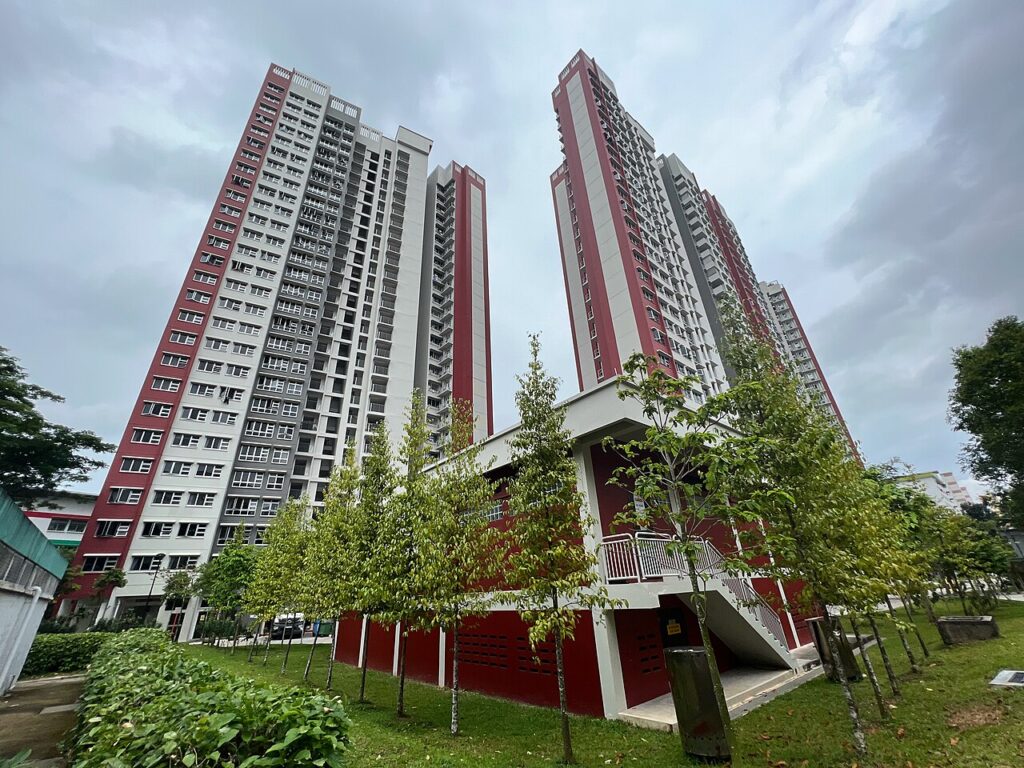
Singapore CPF Property Withdrawal Limits 2026: OA Valuation Limit, Withdrawal Limit and Accrued Interest Explained

Singapore CPF Property Withdrawal Limits 2026: OA Valuation Limit, Withdrawal Limit and Accrued Interest Explained

Quick Answer: CPF Property Withdrawal Limits in 60 Seconds

  • Valuation Limit (VL): The lower of the purchase price or the property’s market valuation. CPF usage is capped at 100% of the VL for down-payments and loan instalments combined.
  • Withdrawal Limit (WL): 120% of the VL — the absolute maximum CPF that may be drawn for a property (for leases with ≥ 60 years remaining when the youngest buyer turns 55).
  • Accrued interest: CPF Board charges 2.5% p.a. on all CPF Ordinary Account (OA) monies used for property. On sale, you must refund the principal plus accrued interest to your CPF account.
  • Age 55 rule: After age 55, you must first set aside the Basic Retirement Sum (BRS) or Full Retirement Sum (FRS) in your Retirement Account before further CPF OA can be used for property.
  • Lease adequacy: CPF OA cannot be used if the remaining lease is under 20 years; for shorter leases (20–59 years), a pro-rated WL applies. The lease must cover the youngest buyer to age 95 for unrestricted use.
  • HDB loans: Up to 80% LTV from HDB; CPF OA can cover the full 20% cash/CPF downpayment. Bank loans: 75% LTV with 5% mandatory cash; CPF can cover the remaining 20% downpayment.
  • Refund on sale: Net sale proceeds first repay the bank/HDB loan; remaining cash replenishes CPF up to the refund amount before you receive any cash proceeds.

What Is the CPF Ordinary Account and How Is It Used for Property?

The Central Provident Fund (CPF) is Singapore’s mandatory social security savings system, administered by the CPF Board. Every employed Singapore Citizen and Permanent Resident contributes a percentage of their monthly wages into three CPF accounts: the Ordinary Account (OA), the Special Account (SA), and the MediSave Account (MA). The OA earns a guaranteed 2.5% per annum (p.a.) interest, currently with a floor rate maintained by the CPF Board. It is the OA that may be used for housing — specifically for the purchase or construction of HDB flats, Executive Condominiums (ECs), and private residential property, as well as for home protection insurance premiums and property tax.

The CPF framework for property withdrawals is governed by the CPF Act (Cap. 36) and the CPF Housing Schemes administered by the CPF Board. Two concepts sit at the heart of the framework: the Valuation Limit (VL) and the Withdrawal Limit (WL). Understanding both — and their interaction with accrued interest, lease adequacy rules, and the post-55 retirement sum requirements — is essential for every property buyer in Singapore.

Valuation Limit (VL) and Withdrawal Limit (WL) Explained

The Valuation Limit (VL) is defined as the lower of the purchase price or the Chief Valuer’s assessed market value of the property at the time of purchase. For most buyers transacting at or near market price, the VL will equal the purchase price. For buyers paying a significant premium above valuation — common in competitive en-bloc or collective-sale situations — the VL will be capped at the lower valuation figure. CPF OA monies used for the downpayment and all subsequent monthly mortgage instalments together cannot exceed the VL.

The Withdrawal Limit (WL) is set at 120% of the VL. This is the absolute ceiling on the total amount of CPF OA that may be used for a single property across the entire ownership period. The WL is higher than the VL to accommodate the progressive drawdown of CPF for monthly instalments: even after the full VL is exhausted for the principal portion, buyers may continue using CPF for instalments up to the WL threshold. Figure 1 visualises the VL and WL across five representative purchase price scenarios.

CPF valuation limit vs withdrawal limit by purchase price Singapore 2026 — bar chart showing VL and WL for S$500k to S$2M properties
Figure 1: CPF Valuation Limit vs Withdrawal Limit by Purchase Price (2026). WL = 120% of VL. Assumes lease ≥ 60 years remaining at age 55 and property value equals purchase price. Source: CPF Board (cpf.gov.sg).

Lease Adequacy: How Property Lease Length Affects CPF Usage

The CPF Board applies lease adequacy rules to protect CPF members from over-investing their retirement savings in depreciating assets. For a buyer to enjoy unrestricted CPF usage up to the full WL (120% of VL), the property’s remaining lease must cover the youngest buyer from the date of purchase to at least age 95. In practice, this means a 30-year-old buying a property with an 80-year remaining lease has no CPF restriction (80 years covers them to age 110 well above 95). However, a 45-year-old buying a 99-year flat built in 1985 — meaning approximately 58 years of lease remain — would face a pro-rated WL calculation, since the lease does not cover them to age 95 (45 + 58 = 103: marginal case; check CPF Board calculator for exact figure).

If a property’s remaining lease at the time of purchase is under 30 years, CPF OA cannot be used at all. Properties with remaining leases between 30 and 59 years at the time the youngest buyer turns 55 are subject to a reduced pro-rated WL — the CPF Board will provide an exact figure through its online calculator. This lease adequacy framework was substantially tightened in a series of regulatory updates in 2019 and 2021 and is particularly relevant for older HDB resale flats and ageing freehold private properties on a 99-year lease nearing expiry.

Remaining Lease (at purchase) CPF Usage Permitted? WL Cap Notes
≥ 60 years AND covers youngest buyer to 95 Yes — full WL 120% of VL Standard case for most new and resale purchases
30–59 years Yes — pro-rated WL Reduced (CPF Board calculator) Common for older HDB flats built pre-1985
20–29 years Restricted use only Significantly reduced CPF Board approval required
Under 20 years No CPF usage Nil Full cash purchase only

Accrued Interest: The Hidden Cost of Using CPF for Property

One of the most frequently misunderstood aspects of CPF housing withdrawals is the concept of accrued interest. When you use CPF OA monies for your property, the CPF Board does not treat those funds as a gift — they are treated as a loan from your retirement account. The 2.5% p.a. interest that your OA would have earned had the money not been used for property continues to accumulate as a notional debt against your CPF housing account. This means that when you sell your property, you must refund both the principal amount withdrawn and all the accrued interest to your CPF OA (or Retirement Account if you are over 55). You do not pay this interest out of pocket while you own the property — it accrues notionally — but it becomes payable at the point of sale from your net sale proceeds.

CPF accrued interest accumulation over 30 years — S$200,000 CPF drawn at 2.5% per annum OA rate Singapore 2026
Figure 2: CPF Accrued Interest Accumulation — S$200,000 CPF Drawn at 2.5% p.a. OA Rate over 30 Years. By Year 30, the total CPF refund required is approximately S$419,000 — more than double the original withdrawal. Source: CPF Board formula; indicative calculation.

Figure 2 illustrates the compounding effect: on a S$200,000 CPF withdrawal at the 2.5% p.a. OA rate, the accrued interest reaches approximately S$28,000 by Year 5, S$62,000 by Year 10, and S$219,000 by Year 30. The total CPF refund required after 30 years of ownership is thus approximately S$419,000 — more than double the original withdrawal. This is not a cash loss if property prices appreciate sufficiently, but it means that the net cash proceeds from a property sale are significantly lower than buyers sometimes expect. For HDB upgraders who use maximum CPF for their flat purchase, this accrued interest obligation can materially affect the cash available for a subsequent private property purchase.

CPF Usage After Age 55: Retirement Sum Rules

Once a CPF member turns 55, the CPF Board creates a Retirement Account (RA) by sweeping funds from the Special Account (SA) and then OA into the RA up to the applicable Full Retirement Sum (FRS). For 2026, the FRS is S$213,000 and the Basic Retirement Sum (BRS) is S$106,500. The Enhanced Retirement Sum (ERS) is S$319,500 (150% of FRS).

After age 55, you may continue using your remaining OA for property only after setting aside the BRS in your RA — and only if you have pledged your property to cover the BRS shortfall up to the FRS. In practical terms: if your RA balance after the SA and OA sweep equals or exceeds the FRS, you retain full flexibility to use the remaining OA for property instalments. If your RA is below the FRS but above the BRS and you have pledged your property, you may also continue using OA. However, if your RA is below the BRS, no further CPF OA can be used for property until the BRS shortfall is resolved. Figure 3 summarises the maximum CPF OA usage across different buyer profiles.

Maximum CPF OA usage by property type and buyer profile Singapore 2026 — HDB BTO EC private condo age 55 plus
Figure 3: Maximum CPF OA Usage by Property Type & Buyer Profile (2026). Indicative — verify with CPF Board for your specific case. Source: CPF Board (cpf.gov.sg).

CPF for HDB Flats: HDB Loan vs Bank Loan Rules

Singapore Citizens (SCs) purchasing an HDB flat have the option of a concessionary HDB loan (administered by HDB, funded by the government) or a bank loan from a commercial lender. The loan type significantly affects how CPF may be deployed. Under an HDB loan (LTV up to 80%, interest rate currently 2.6% p.a.), buyers may use CPF OA to cover the full downpayment — there is no mandatory cash component for the 20% downpayment, and CPF can cover 100% of the downpayment. Under a bank loan (LTV 75%), buyers must pay a minimum of 5% of the purchase price in cash, but the remaining 20% downpayment (and monthly instalments within the WL) can come from CPF OA. For first-timer SC couples purchasing an HDB flat, the Enhanced CPF Housing Grant (EHG) and Proximity Housing Grant (PHG) supplements, administered by HDB, reduce the effective purchase price and therefore the total CPF required, making home ownership more accessible.

CPF for Private Property and Executive Condominiums

For private residential property (and ECs, which are treated as private property for CPF purposes after their five-year Minimum Occupation Period), the CPF OA may be used for: the downpayment (above the mandatory 5% cash for bank loans); monthly loan instalments to the bank; and stamp duties. The VL and WL rules apply as described above. It is important to note that for private property, CPF usage for the downpayment is capped at the difference between the purchase price and the bank loan amount (i.e. the cash/CPF portion of the downpayment). CPF cannot be used to pay the mandatory 5% cash downpayment — that must always come from cash. Stamp duties (BSD and ABSD) may be paid from the CPF OA in some circumstances, but most buyers pay these from cash to preserve CPF for loan servicing.

The CPF Refund Calculation: What You Owe on Sale

When you sell a property, the sequence of repayments from the net sale proceeds is: (1) outstanding bank or HDB loan; (2) seller’s legal fees and agent commissions; (3) CPF refund (principal withdrawn + accrued interest) to CPF OA; (4) any remaining cash to the seller. If the net sale proceeds after paying off the loan are insufficient to cover the full CPF refund, you are not required to top up the shortfall in cash — you simply refund what is available. However, this shortfall means your CPF OA and retirement savings are permanently reduced, which can affect your CPF LIFE monthly payout in retirement and your ability to make future CPF-funded property purchases.

Worked Example: HDB Resale Flat Purchase and Sale

Mr and Mrs Lim are Singapore Citizens, both aged 34. They purchase a Bishan 4-room HDB resale flat for S$750,000 in January 2021. They take an HDB concessionary loan of S$600,000 (80% LTV, 2.6% p.a.) and use S$150,000 from their combined CPF OA for the downpayment. Over five years of ownership, they make monthly CPF OA contributions totalling an additional S$120,000 towards mortgage instalments, bringing total CPF drawn to S$270,000.

Valuation Limit: S$750,000 (purchase price = valuation). Withdrawal Limit: S$900,000 (120% × S$750,000).

CPF drawn by January 2026 (5 years): S$270,000 principal. At 2.5% p.a. compounding, accrued interest over 5 years ≈ S$270,000 × ((1.025)^5 – 1) = S$270,000 × 0.1314 = approximately S$35,500. Total CPF refund required: S$270,000 + S$35,500 = S$305,500.

Sale in January 2026: Market price S$950,000. Outstanding HDB loan balance ≈ S$540,000. Legal and agent fees ≈ S$16,000. Net proceeds after loan repayment and fees: S$950,000 – S$540,000 – S$16,000 = S$394,000. CPF refund of S$305,500 is repaid to CPF OA; remaining cash proceeds to Mr and Mrs Lim: S$394,000 – S$305,500 = S$88,500. This S$88,500 in cash, combined with the S$305,500 refunded to CPF OA (now available for a new purchase), provides the platform for their next HDB or private property purchase.

What This Means for You: Planning Around CPF Limits

The CPF housing framework is designed to strike a balance between enabling Singaporeans to purchase homes and preserving retirement adequacy. The 2.5% p.a. accrued interest rule and the post-55 retirement sum requirements are both policy tools to prevent CPF members from depleting their retirement savings on property speculation. For long-term owner-occupiers who purchase well-located property and hold through full loan tenure, the accrued interest is offset by capital appreciation — but buyers who purchase at the top of a cycle or sell in a down market may find that the CPF refund obligation leaves them with less cash than expected.

Key planning implications: First, preserve CPF OA capacity for property by minimising voluntary CPF top-ups or top-ups to Special Account (SA) if you anticipate a large property purchase within three to five years — money in SA cannot be used for housing. Second, understand the WL ceiling: once you have used 120% of the VL for a property, no further CPF OA can be drawn for that property regardless of your remaining OA balance. Third, for buyers approaching age 55, model the post-55 retirement sum scenario carefully with a CPF planner — the retirement sum set-aside requirement can significantly reduce the CPF available for property instalments precisely at the point when income typically peaks.

What Might Come Next: CPF Housing Framework Changes to Watch

The CPF Board reviews the housing withdrawal framework periodically, typically in conjunction with the HDB Loan-to-Value (LTV) and MAS TDSR policy cycles. Key forward-looking considerations for 2026–2028 include: the annual upward revision of the BRS and FRS (typically 3%–5% per year), which progressively tightens the CPF available for property after age 55; potential further tightening of the lease adequacy rules for older HDB flats as more pre-1990s stock enters the 30–40-year remaining lease window; and the long-run policy direction on whether CPF should be used more restrictively for investment properties (currently allowed within the same VL/WL framework as owner-occupied units). Buyers should check cpf.gov.sg for the most current BRS/FRS figures, WL calculators and policy updates before transacting.

Frequently Asked Questions: CPF Property Withdrawal Limits Singapore 2026

How much CPF can I use to buy a private condo?

For a private condominium, you can use CPF OA up to the Withdrawal Limit (WL), which is 120% of the Valuation Limit (VL). The VL is the lower of the purchase price or the property’s valuation. For example, on a S$1,500,000 private condo with a valuation of S$1,500,000, the VL is S$1,500,000 and the WL is S$1,800,000. You cannot use more than S$1,800,000 in total CPF OA for that property across its entire ownership period. In practice, most buyers will not reach the WL because the bank will only lend 75% LTV (S$1,125,000 on a S$1,500,000 purchase), leaving S$375,000 for cash/CPF downpayment (of which S$75,000 — 5% — must be cash). The CPF OA portion for the downpayment is thus up to S$300,000, and subsequent instalments continue to draw down against the WL.

Do I have to pay back accrued interest when I sell my property?

Yes. When you sell your property, you must refund the total CPF used (principal + accrued interest at 2.5% p.a. for OA) back to your CPF OA. This refund is automatic — it is deducted from your sale proceeds before you receive any cash. If the net sale proceeds after the mortgage repayment are insufficient to cover the full CPF refund, you repay only what is available; there is no obligation to top up the shortfall in cash. However, this will reduce your CPF OA and retirement savings balance. The accrued interest rate is 2.5% p.a. compounded on OA monies. It is important to note that this is not a cash expense while you own the property — it accrues notionally and becomes payable only at the point of sale or transfer.

Can I use CPF after age 55 to pay for property?

Yes, but with restrictions. After age 55, the CPF Board creates a Retirement Account (RA) and sweeps funds from your Special Account (SA) and, if needed, Ordinary Account (OA) to meet the Full Retirement Sum (FRS) — S$213,000 for 2026. You may continue to use your remaining OA for property instalments only after setting aside the Basic Retirement Sum (BRS, S$106,500 for 2026) in the RA, provided you have pledged your property to cover the BRS-to-FRS gap. If your RA exceeds the FRS, you retain full OA flexibility for property. In all cases, the VL/WL cap continues to apply — you cannot use OA beyond the WL for any single property regardless of age. The BRS and FRS are revised upwards annually, so check cpf.gov.sg for the current year’s figures.

What happens to CPF if the remaining lease on my flat is less than 60 years?

If the remaining lease on an HDB flat or private property is between 30 and 59 years at the time the youngest buyer turns 55, CPF usage is subject to a pro-rated Withdrawal Limit — the CPF Board will calculate a reduced WL based on how much of the lease remains relative to the CPF member’s projected lifespan to age 95. If the remaining lease is under 30 years, CPF OA usage is even more restricted. If it is under 20 years, no CPF OA may be used at all. This rule primarily affects older HDB resale flats built in the 1970s and 1980s, particularly those in mature estates like Toa Payoh, Queenstown and Ang Mo Kio where some units now have fewer than 60 years of lease remaining. Buyers should use the CPF Housing Usage calculator at cpf.gov.sg to check the exact WL for any specific unit before committing to a purchase.

Can CPF be used to pay Additional Buyer’s Stamp Duty (ABSD)?

In principle, CPF OA can be used to pay Buyer’s Stamp Duty (BSD) and Additional Buyer’s Stamp Duty (ABSD) for property purchases under the CPF Approved Housing Schemes. However, given that stamp duties must typically be paid within 14 days of signing the Option to Purchase (OTP) — and CPF disbursements can take several working days — most buyers pay BSD and ABSD from cash to avoid timing risk. For large ABSD bills (e.g. 20% on a second SC purchase, or 60% for a foreign buyer), the quantum involved often far exceeds the buyer’s CPF OA balance, making cash payment the only viable option. Always verify the CPF withdrawal conditions with the CPF Board and your conveyancing lawyer before the OTP exercise.

What is CPF pledging, and how does it affect my property purchase?

CPF pledging is a mechanism that allows property owners over age 55 who have not met the Full Retirement Sum (FRS) in their Retirement Account to pledge their property as security against the shortfall between the Basic Retirement Sum (BRS) and the FRS. By pledging, the member demonstrates to the CPF Board that the eventual sale proceeds of the property will fund the retirement sum gap, and the CPF Board then permits continued use of the OA for mortgage instalments. Pledging does not restrict the owner’s ability to sell or refinance the property — it simply records the CPF Board’s interest in a portion of future sale proceeds. Importantly, pledging can only be applied if the property has sufficient equity (net value after mortgage) to cover the BRS-to-FRS gap. Members should initiate the pledging application through the CPF Board’s online portal.

How does CPF usage affect my net cash proceeds when I sell my property?

CPF usage reduces your net cash-in-hand on property sale, because the refund (principal + accrued interest) comes directly out of your sale proceeds before you receive any cash. For example, if you sell a flat for S$950,000 with an outstanding loan of S$540,000 and a CPF refund obligation of S$305,500, your net cash after costs is only around S$88,500 — even though the gross sale profit appears much larger. The CPF refund is not a loss: the money goes back into your CPF OA where it earns 2.5% p.a. guaranteed and can be reused for your next property purchase. However, it means that sellers who need a large cash sum from their property sale (e.g. for a private property downpayment) must carefully model the CPF refund obligation in their upgrade financial planning.

Related Articles on LovelyHomes


Disclaimer: This article is produced by LovelyHomes for general informational purposes only and does not constitute financial, legal or CPF advice. All CPF withdrawal limits, accrued interest calculations, retirement sum figures and property financing examples are indicative and based on CPF Board and HDB published guidelines as at 2026. The Basic Retirement Sum (BRS), Full Retirement Sum (FRS) and Enhanced Retirement Sum (ERS) are revised annually by the CPF Board. Before making any CPF withdrawal for property purposes, readers should verify all information with the CPF Board (cpf.gov.sg), HDB (hdb.gov.sg), and the Inland Revenue Authority of Singapore (iras.gov.sg), and consult a licensed financial adviser and/or property conveyancing lawyer. CPF rules are subject to change; always rely on the official CPF Board website for authoritative guidance.

×

TDSR and MSR Singapore 2026: Complete Guide to Property Borrowing Limits

TDSR and MSR Singapore 2026: Complete Guide to Property Borrowing Limits

Quick Answer — TDSR and MSR at a Glance

  • TDSR (Total Debt Servicing Ratio): Your total monthly debt obligations — including the new home loan — must not exceed 55% of your gross monthly income. Applies to all property purchases.
  • MSR (Mortgage Servicing Ratio): Your monthly HDB or EC loan instalment must not exceed 30% of your gross monthly income. Applies only to HDB flat and new EC purchases.
  • Both are assessed at the point of loan application, using a stress-test interest rate set by MAS — currently 4.0% p.a. for private property and 3.0% p.a. for HDB loans (floor rates; lenders use whichever is higher).
  • Variable income (commissions, bonuses) is typically discounted by 30% when computing TDSR/MSR.
  • Both rules are administered under MAS Notice 645 (for banks) and parallel HDB Board regulations.
  • Exceeding either limit means the bank cannot grant the loan — regardless of your credit score or property value.

What Are TDSR and MSR? Why Do They Exist?

The Total Debt Servicing Ratio and the Mortgage Servicing Ratio are Singapore’s two primary borrower-level safeguards in the property financing framework. Where measures like ABSD and SSD are transaction taxes designed to moderate demand, TDSR and MSR go deeper — they regulate how much any individual borrower can take on, regardless of the property’s value or the borrower’s wealth.

TDSR was introduced on 29 June 2013 by the Monetary Authority of Singapore (MAS), replacing an earlier and less comprehensive framework. It applies to all property loans — for purchases, refinancing, and equity loans on any residential, commercial, or industrial property. MSR — a tighter, supplementary ratio — applies specifically to loans for HDB flats and Executive Condominiums, reflecting the government’s commitment to keeping public and quasi-public housing genuinely affordable for owner-occupiers.

Together, these two ratios are one of the most powerful levers in Singapore’s financial stability toolkit. For a full picture of the broader cooling-measures context, see our Property Cooling Measures Timeline.

TDSR and MSR — The Framework Explained

TDSR Total Debt Servicing Ratio and MSR Mortgage Servicing Ratio Singapore 2026 framework diagram
Figure 1: TDSR and MSR frameworks side by side — what counts, the applicable cap, and who each applies to. Source: MAS Notice 645 / HDB Board.

TDSR — Total Debt Servicing Ratio (55%)

The TDSR calculation adds up all monthly debt obligations — the proposed new home loan instalment, car loans, student loans, credit card minimum payments, personal loans, and any other outstanding borrowing — and divides the total by the borrower’s gross monthly income. The result must not exceed 55%.

TDSR = (All monthly debt obligations ÷ Gross monthly income) × 100 ≤ 55%

The computation is not quite as simple as it sounds. MAS rules require lenders to apply the following adjustments:

  • Stress-test rate: The home loan instalment is computed using the higher of the actual loan interest rate or the MAS floor rate (currently 4.0% p.a. for non-HDB residential properties, 3.5% p.a. for the medium-term rate). This means your TDSR-qualifying instalment is calculated on a higher hypothetical rate than the bank’s actual offer rate.
  • Variable income haircut: If part of your income is variable — commissions, overtime, bonuses, rental income — lenders typically apply a 30% discount. A borrower earning S$8,000 base + S$2,000 monthly commission would have an assessed income of S$8,000 + (S$2,000 × 70%) = S$9,400 for TDSR purposes.
  • Joint borrowers: Where two or more people take a loan together, the TDSR is assessed on the combined monthly income and combined monthly obligations. This can significantly increase the loan quantum available to a couple.

MSR — Mortgage Servicing Ratio (30%)

MSR applies only when you take a loan to buy an HDB resale flat or a new Executive Condominium (EC) during its initial owner-occupation period. It is an additional, tighter constraint on top of TDSR. Where TDSR considers all debts, MSR focuses only on the monthly instalment of the specific HDB or EC loan in question:

MSR = (Monthly HDB or EC loan instalment ÷ Gross monthly income) × 100 ≤ 30%

MSR does not apply to private condominiums or landed property — even those on 99-year leasehold land. When buying a private condo, only TDSR applies (plus the standard LTV limits). When buying an HDB flat or new EC, both TDSR and MSR apply; the borrower must satisfy whichever is the more restrictive of the two.

Worked Example — TDSR and MSR in Practice

Mr and Mrs Lim are a Singapore Citizen couple. Mr Lim earns S$7,500/month salary; Mrs Lim earns S$5,500/month. Combined gross income: S$13,000/month. They have a car loan with a monthly instalment of S$1,200.

Scenario A: Buying an S$800,000 HDB resale flat (bank loan)

  • MSR limit: 30% × S$13,000 = S$3,900/month for the HDB loan instalment.
  • TDSR limit: 55% × S$13,000 = S$7,150/month for all debts. Less car loan S$1,200 = S$5,950/month available for home loan.
  • The binding constraint is MSR at S$3,900/month.
  • Maximum loan at 4.0% stress-test, 25-year tenure: approximately S$741,000.
  • Property price S$800,000; 20% LTV floor for HDB → minimum 20% cash + CPF = S$160,000. Loan fits within LTV (S$640,000 < S$741,000 MSR limit). ✓

Scenario B: Buying a S$1.5 million private condo (bank loan, MSR does not apply)

  • TDSR limit: S$7,150/month for home loan (after car loan S$1,200).
  • Maximum loan at 4.0% p.a., 25-year tenure: approximately S$1.36 million.
  • LTV for second property (they still own a first property): 45% → maximum loan S$675,000. LTV is now the binding constraint, not TDSR.
  • This is why for investors buying second properties, ABSD and LTV often matter more than TDSR.

How TDSR Affects Your Maximum Loan Quantum

Maximum home loan by monthly income under TDSR 55% and MSR 30% Singapore 2026 bar chart
Figure 2: Illustrative maximum loan quantum by gross monthly income, assuming no other debts, 25-year loan tenure and 4.0% p.a. stress-test rate. Actual loan amounts depend on credit profile and LTV limits.

The chart illustrates how the 55% TDSR cap translates into loan quantum across different income levels, assuming no other debts. In practice, most borrowers have existing obligations — car loans, credit cards, study loans — that compress the available TDSR headroom and reduce the maximum home loan accordingly.

The Hidden TDSR Trap: Other Debts

Many first-time buyers underestimate how much existing debt erodes their borrowing capacity. Every dollar of existing monthly debt obligation reduces the monthly instalment available for a home loan, which translates into a smaller maximum loan.

Effect of other debts on maximum home loan under TDSR 55% Singapore income S$10000 per month 2026
Figure 3: How car loans, credit card minimums, and personal loans reduce the maximum home loan for a borrower on S$10,000/month gross income. Stress-test rate 4.0% p.a., 25-year tenure.

A borrower earning S$10,000/month with a car loan of S$1,200/month and credit card minimum payments of S$500/month has only S$3,800/month left for a home loan instalment under the 55% TDSR cap — compared to S$5,500 if they had no other debts. That S$1,700 monthly reduction translates into roughly S$330,000 less in maximum loan quantum at current stress-test rates. This is why financial planners consistently advise property aspirants to pay down or close outstanding credit facilities before applying for a mortgage.

TDSR, MSR and the Loan-to-Value (LTV) Framework

TDSR and MSR cap how much you can service; the Loan-to-Value limits cap how much you can borrow as a proportion of the property value. The two frameworks operate in parallel — both must be satisfied simultaneously. The applicable LTV limit depends on whether you are buying with HDB loan or bank loan, and how many outstanding property loans you have:

Loan Type 1st Property Loan 2nd Property Loan 3rd+ Property Loan
HDB concessionary loan 80% of flat value N/A (only for 1st HDB purchase) N/A
Bank loan (no outstanding loans) 75% of property value 45% 35%
Bank loan (1+ outstanding loan) 45% 35% 35%

In practice, it is common for the LTV limit to be the binding constraint when buying investment properties (2nd or 3rd property), while TDSR / MSR is more likely to bite first-time buyers with lower incomes or significant existing debts.

TDSR Exemptions and Special Cases

A small number of situations fall outside the standard TDSR computation:

  • Bridging loans: Bridging loans used for the express purpose of financing a property being simultaneously sold are treated differently — the outstanding bridging instalment is excluded from TDSR until the property is sold, subject to conditions.
  • Retirees and elderly borrowers: Banks may use retirement income, CPF LIFE payouts, or annuity income to support TDSR calculations, though the assessment is more complex and requires additional documentation.
  • Refinancing with no cash-out: From August 2021, MAS allowed certain refinancing transactions — specifically owner-occupier residential loans where no equity is being extracted — to be exempt from TDSR. The borrower must have been servicing the existing loan for at least 12 months and must not be extracting equity.

Why TDSR and MSR Matter for Sellers Too

TDSR and MSR are typically framed as buyer concerns. But sellers are affected too:

  • Pricing strategy: A seller asking S$1.5 million for a condo needs to consider whether the pool of buyers who can qualify for a S$1.05 million bank loan (70% LTV) under TDSR is large enough to generate competitive offers. A listing price that implies a loan instalment near the TDSR limit for the target buyer profile will attract fewer bidders.
  • Timing of your own purchase: If you are selling to fund a new purchase, be aware that even after the sale proceeds come in, your TDSR is still assessed on your ongoing monthly income — not on net worth or cash in the bank.

What Might Change?

The TDSR framework has been remarkably stable since 2013, though MAS adjusted the cap from 60% to 55% in December 2021 as part of a broader tightening round. As of May 2026, MAS has not signalled any further changes to TDSR or MSR thresholds. However, MAS publishes annual Financial Stability Reviews (typically in November) which assess household leverage and mortgage risk — these are the best early indicators of possible future adjustments. Read the latest review at mas.gov.sg.

Frequently Asked Questions

What counts as “gross monthly income” for TDSR?

Gross monthly income includes fixed salary, director’s fees, and recognised recurring income. Variable components — commissions, bonuses, overtime — are typically discounted by 30% per MAS guidance. Self-employed individuals use their assessed income from NOA (Notice of Assessment) averaged over 2 years. Rental income is included but also subject to a discount. The bank will determine the applicable figure based on supporting documents submitted at loan application.

Why is my loan computed at a higher rate than the bank’s offer rate?

MAS requires lenders to stress-test all property loans using a minimum floor rate — currently 4.0% p.a. for private residential properties (or the actual rate if higher). This ensures borrowers can still service their loans if interest rates rise after the lock-in period expires. The bank’s actual offer rate (e.g. 3.0% in a low-rate environment) is used for the actual instalment calculation, but the TDSR computation uses the stress-test rate to determine affordability.

Does CPF count as income for TDSR purposes?

No. CPF contributions and balances are not counted as income for TDSR calculations — they are savings, not income. However, using CPF to fund the down payment or monthly instalment does reduce the cash instalment burden, and CPF usage is factored into your overall mortgage planning. The TDSR calculation is based on cash-equivalent gross income per MAS Notice 645.

Does paying off a car loan before applying for a mortgage really help?

Yes, significantly. Each S$1,000 in monthly debt obligations you eliminate frees up S$1,000 in TDSR headroom. At a 4.0% stress-test rate over 25 years, that translates into roughly S$190,000 in additional loan quantum. If you are planning a property purchase in the next 1–2 years, clearing high-instalment debts well in advance is one of the most concrete steps you can take to maximise your borrowing capacity.

I am buying an HDB flat. Do I need to satisfy both TDSR and MSR?

Yes. When taking a bank loan for an HDB resale flat, both TDSR (55%) and MSR (30%) apply. You must satisfy whichever is the more restrictive constraint. In most cases, for HDB buyers, the MSR 30% cap is the binding constraint because it is narrower. If you take an HDB concessionary loan (the HDB loan), the rules are similar but administered by HDB rather than MAS — the MSR cap of 30% still applies.

Can I use a guarantor to get around TDSR?

A guarantor’s income can be included in the TDSR computation only if the guarantor is a co-borrower — i.e. their name is on the loan. If the guarantor is merely guaranteeing repayment without being a borrower, their income cannot be used to support TDSR. Adding a co-borrower is a legitimate approach, but also means the co-borrower’s ABSD property count and LTV position are affected by the loan.

How do TDSR and MSR interact with HDB’s income ceiling for BTO?

HDB’s income ceiling for BTO applications (currently S$14,000/month for couples for most flat types) is a separate eligibility criterion — it determines whether you can apply for a BTO flat, not how much you can borrow. TDSR and MSR determine the loan quantum once you are eligible. A couple earning S$14,000 may pass the HDB income ceiling but still be limited in their borrowing by TDSR/MSR, particularly if they have significant existing debt obligations.

Related Articles

Disclaimer

This article is for general informational purposes only and does not constitute financial, legal, or mortgage advice. TDSR and MSR rules are administered by the Monetary Authority of Singapore under MAS Notice 645 and MAS Notice 645A, and by HDB under its loan policies — these are subject to change. The loan quantum illustrations in this article are indicative only and assume simplified conditions. Always consult a licensed mortgage broker or financial adviser, and verify the current rules directly at mas.gov.sg and hdb.gov.sg before making any borrowing decisions.

×

Click anywhere or press Esc to close

Mortgage Refinancing vs Repricing Singapore 2026: When to Switch Banks and When to Stay

Mortgage Refinancing vs Repricing Singapore 2026: When to Switch Banks and When to Stay

Quick Answer — Refinancing vs Repricing 2026

  • Refinancing means moving your home loan to a new bank. Repricing means renegotiating your rate with your existing bank.
  • Refinancing typically saves more (0.2–0.5% p.a.) but incurs upfront costs of S$2,500–S$4,000 (legal + valuation). Repricing saves less but costs nothing or very little.
  • The break-even horizon for refinancing a S$800,000 loan is approximately 13 months — refinance only if you plan to hold the loan beyond that.
  • In Q2 2026, the 1-month SORA stands at approximately 1.20%, down from a peak of 3.68% in mid-2023. Fixed 2-year packages from major banks are available at 1.78%–1.85% p.a.
  • Never refinance within a lock-in period without checking the penalty — typically 1.5% of the outstanding loan, which can wipe out years of interest savings.
  • Banks are legally required to provide a 30-day free conversion option at the end of each lock-in period — use this as your review trigger date.
  • If your remaining tenure is less than 5 years or your outstanding balance is under S$200,000, the absolute saving from refinancing is usually not worth the administrative effort.

Every Singapore home loan has an anniversary. When the initial lock-in period ends — typically after two or three years — you face a critical decision: do you let the bank roll your mortgage onto its standard rate (often significantly higher), do you reprice it with the same bank, or do you switch to a new lender entirely?

Most homeowners do nothing, which is the most expensive choice. Singapore banks rely on inertia: the standard variable rate a homeowner reverts to after lock-in can be 0.5–0.8 percentage points higher than the rate a new customer would receive. On a S$700,000 outstanding balance, that gap costs approximately S$3,500–S$5,600 per year in additional interest.

This guide explains exactly how refinancing and repricing work in Singapore in 2026, the mathematics of when each option pays, how to read the SORA-based rate environment, and the specific situations where each choice makes sense. Pair it with our Singapore Home Loan Comparison guide for the full picture on choosing between HDB loans, fixed rates, and floating packages.

1. The Core Distinction: Refinancing vs Repricing

Refinancing is the process of discharging your existing home loan and taking out a new loan from a different bank. Legally, the new bank pays off your old loan and registers a new mortgage over your property. You go through a full credit assessment, a new loan agreement, legal completion and (usually) a new valuation. The entire process takes 4–8 weeks from application to disbursement.

Repricing is an internal renegotiation with your existing bank. You ask the bank to move your loan from its current rate to a newer, lower package. No change of lender takes place; no new legal process is required; and no new credit check is typically conducted. The bank simply updates your loan terms. Repricing can be completed in 2–4 weeks and usually costs nothing or carries a small administrative fee of S$500–S$800.

Refinancing vs repricing comparison table Singapore 2026 — 10 key dimensions for homeowners
Figure 1: Refinancing vs repricing across 10 dimensions — a complete side-by-side comparison for Singapore homeowners in 2026.

2. When Does Refinancing Make Sense?

Refinancing is financially beneficial when the interest rate saving is large enough to recover the upfront switching costs within your planned holding period. The key variables are:

  • Outstanding loan balance: The larger the balance, the larger the absolute saving per percentage point of rate reduction. A 0.4% saving on S$800,000 is S$3,200/year; the same saving on S$200,000 is only S$800/year.
  • Rate differential: The gap between your current rate and the best available package. In Q2 2026, homeowners on standard variable rates of 2.2–2.5% p.a. can often find fixed 2-year packages at 1.78–1.85%, creating a saving of 0.3–0.7 percentage points.
  • Remaining tenure: With 20+ years remaining, even moderate rate savings compound significantly. With 3–5 years left, the absolute saving window is much smaller.
  • Lock-in status: You must be outside the lock-in period. If you refinance within lock-in, the clawback penalty (typically 1.5% of outstanding loan) will likely exceed any rate saving.

As a general rule: refinancing makes sense when the outstanding balance exceeds S$400,000, the rate saving exceeds 0.3% p.a., and you are outside your lock-in period.

3. The Break-Even Mathematics

Break-even analysis mortgage refinancing Singapore 2026 — S$800,000 loan worked example
Figure 2: Break-even calculation for refinancing an S$800,000 outstanding loan from 2.20% to 1.80% p.a. — the switching costs are recovered in approximately 13 months.

The break-even formula is straightforward:

Break-even months = Total switching costs ÷ Monthly interest saving

For the example in Figure 2: a S$800,000 outstanding balance at 2.20% costs approximately S$1,467/month in interest. At 1.80%, this falls to S$1,200/month — a saving of S$267/month. With total switching costs of S$3,500, break-even occurs at month 13.1. Over a 2-year new lock-in, the net saving is S$267 × 24 − S$3,500 = S$2,908.

Critically, this is a simplified calculation on interest only. In practice, you should also factor in: any cash-back offer from the new bank (which reduces effective switching cost); whether the new bank’s rate holds for the full 2 years or is a promotional teaser; and the difference in processing timescales that creates a month or two of overlap where both the old and new rates apply.

4. The 2026 Rate Environment: SORA Has Fallen Significantly

SORA rate history 2022 to 2026 and Singapore bank mortgage rates Q2 2026 comparison
Figure 3: Singapore’s 1-month SORA peaked at 3.68% in July 2023 and has since fallen to approximately 1.20% in May 2026. Q2 2026 bank fixed packages are now at 1.78–1.85% p.a.

The SORA (Singapore Overnight Rate Average) is the benchmark underpinning most floating-rate home loans in Singapore, replacing SIBOR in 2024. After peaking at 3.68% in July 2023, 1-month SORA has fallen steadily as the US Federal Reserve began its easing cycle in late 2024. By May 2026, 1-month SORA stands at approximately 1.20%.

This rate decline has transformed the refinancing calculus. Homeowners who locked into 3-year fixed rates at 3.0–3.5% in 2023 are now significantly out-of-money relative to the market. Their lock-in periods of 2–3 years mean they are emerging (or will emerge in 2025–2026) into a market where 2-year fixed packages are available at 1.78–1.85%. The saving potential is substantial.

Conversely, homeowners on SORA-based floating packages taken in 2024–2025 at spreads of +0.8–1.0% above SORA are currently paying approximately 2.0–2.2% p.a. — and the rate will decline further as SORA continues to fall. These homeowners may find that staying floating is better than locking into a fixed rate, as the fixed rate today may prove higher than the floating rate in 12–18 months.

5. How to Negotiate Repricing

Repricing is underused by Singapore homeowners who assume the bank will not move. In practice, banks negotiate repricing regularly — particularly for borrowers with good payment records and large loan balances. The process:

  1. Check your lock-in expiry date. Most loan packages have a letter from your bank confirming the lock-in end date. If you cannot find it, call the mortgage servicing hotline.
  2. Review the bank’s current new-customer packages. Banks publish their mortgage rate sheets online (DBS, OCBC, UOB all have rate pages). Identify the best package a new customer would receive.
  3. Submit a repricing request. Call the mortgage servicing team (not the branch) and request a repricing. Mention that you are comparing competitor packages. Banks have a dedicated repricing/retention team.
  4. Request the “Board Rate” alternative. If the bank will not match a competitor’s promotional rate, ask whether a lower spread-over-SORA package is available.
  5. Compare the offer vs. refinancing. If the bank offers a rate within 0.1–0.15% of a competitor, the S$3,500 switching cost makes refinancing uneconomical for most loan sizes.

Banks are also required under MAS guidelines to proactively offer refinancing information to borrowers nearing the end of their lock-in periods. This obligation has been reinforced as part of the MAS guidelines on responsible mortgage lending.

6. Worked Example: Mr and Mrs Wong

Mr and Mrs Wong (both Singapore Citizens) purchased a S$1.35 million OCR condo in 2023, financing S$1,012,500 (75% LTV) with a DBS 2-year fixed rate at 3.10% p.a. Their lock-in period ends in August 2026. Outstanding balance at that point: approximately S$968,000 (after 36 months of instalments at ~S$4,980/month).

Option A — Reprice with DBS: DBS offers to move them to their current 2-year fixed package at 1.80% p.a. New monthly instalment: approximately S$4,480 — a saving of S$500/month. No fees. Total 2-year saving: S$500 × 24 = S$12,000.

Option B — Refinance to OCBC: OCBC offers 1.75% fixed 2 years with a S$2,000 cash-back incentive. Legal + valuation fees: S$3,200. New monthly instalment: ~S$4,450 — S$530/month saving vs current rate. Over 24 months: S$530 × 24 + S$2,000 cash-back − S$3,200 costs = S$11,520 net saving.

Decision: Option A (repricing) saves S$480 more over 2 years with far less administration. The Wongs should accept DBS’s repricing offer. Had DBS offered 1.90% instead of 1.80%, Option B would pull ahead — so it always pays to get the repricing offer in writing before deciding.

7. CPF Implications

When you refinance (switch banks), the new bank uses CPF to service the new loan in the same way as the old one. There is no interruption in CPF usage. However, if you have been using CPF Ordinary Account for loan repayments, the CPF accrued interest on the CPF principal withdrawn continues to accumulate throughout — refinancing does not reset or reduce this accrued interest obligation. Ensure you understand how the accrued interest will be settled when you eventually sell the property.

8. What Might Come Next

The trajectory of SORA — which follows US Fed rates with a lag — is the key variable. As at May 2026, the market broadly expects one or two further Fed cuts in 2026, which would push 1-month SORA below 1.0% by end-2026. If this materialises, homeowners currently on SORA-based floating packages will see their rates fall further without any action required. Fixed rates, by contrast, are priced partly on the forward rate curve and already factor in some further SORA easing — locking in a 2-year fixed now is effectively a bet that SORA will not fall significantly below 0.8–1.0% over the next 24 months.

MAS has also indicated continued focus on responsible lending standards. Any homeowner refinancing must satisfy the TDSR 55% cap under the new lender’s assessment, even if they have been meeting repayments comfortably for years. If income has changed since the original loan was taken, this is an important consideration.

Summary Table: When to Refinance vs Reprice

Situation Recommended Action Why
Outstanding balance > S$500k, outside lock-in, rate gap > 0.3% Refinance Break-even < 12 months; net saving substantial over 2 years
Outstanding balance S$200k–S$500k, rate gap 0.2–0.3% Reprice first, then compare Repricing may close the gap; only refinance if bank won’t budge
Within lock-in period Wait or reprice only Clawback penalty (1.5%) likely exceeds rate saving
Remaining tenure < 5 years Reprice or do nothing Short window limits absolute savings from refinancing
Outstanding balance < S$200k Reprice only Absolute saving too small to justify S$3,000–S$4,000 switching cost
Currently on floating SORA, SORA falling Stay floating; review at 6-month intervals Falling SORA reduces your rate automatically without any action

FAQ: Mortgage Refinancing and Repricing Singapore 2026

What is the difference between refinancing and repricing?

Refinancing involves switching your home loan from your current bank to a new lender. The new bank pays off your existing loan and a new mortgage is registered. You incur legal fees, valuation fees, and go through a fresh credit assessment. Repricing means renegotiating your rate with your existing bank without changing lenders — no legal process, typically no fees, and faster completion (2–4 weeks vs 4–8 weeks). Refinancing typically offers a larger rate saving; repricing is simpler and cheaper to execute.

When is the right time to refinance my home loan?

The ideal time to refinance is in the 3-month window before your current lock-in period expires. By starting the process 90 days before expiry, you can complete the new loan application, approval, and legal completion just as your lock-in ends, avoiding any overlap or clawback penalties. Refinancing within the lock-in period triggers a clawback penalty (typically 1.5% of outstanding loan), which in most cases wipes out the rate saving entirely.

What are the typical costs of refinancing in Singapore?

The main costs are legal fees (S$1,800–S$2,500) and valuation fees (S$500–S$800), totalling S$2,500–S$3,500 for a standard condominium. Some banks offer a “legal subsidy” or cash-back offer of S$1,500–S$3,000 to offset these costs, effectively reducing or eliminating the net upfront expense. You should always ask the new bank whether a legal subsidy is available and factor it into your break-even calculation.

Does refinancing affect my CPF usage?

No — refinancing does not interrupt or change your CPF usage for the home loan. The new bank will receive CPF contributions in exactly the same way as the old bank, and the CPF Board processes this automatically. However, the CPF accrued interest on any CPF principal already used continues to accumulate throughout the life of the loan. Switching banks does not reduce or reset the accrued interest obligation that will be due when you sell the property.

Will refinancing affect my TDSR or LTV?

Yes — refinancing requires a full new credit assessment by the new bank, including a recalculation of your TDSR (Total Debt Servicing Ratio). If your income has changed significantly since the original loan was taken (e.g., you switched to self-employment, took a pay cut, or took on additional debt), you may find that the new bank’s TDSR calculation limits the loan amount they can offer. The LTV ceiling for refinancing an existing loan is generally 75% for private properties (bank loan), unchanged from a purchase. If property values have fallen since purchase, a new valuation may show a lower property value, potentially affecting the LTV-based loan amount.

Is a floating or fixed rate better in 2026?

In May 2026, with 1-month SORA at approximately 1.20% and market expectations pointing to further easing, floating SORA-based packages (SORA + spread of 0.8–1.0%) result in effective rates of approximately 2.0–2.2% p.a. Fixed 2-year packages are available at 1.78–1.85%. The fixed rates currently appear cheaper than floating, but if SORA falls below 0.8% in the next 12–18 months, the floating rate will dip below the fixed rate. The decision depends on your view on further SORA movements and your appetite for rate certainty. For most owner-occupiers prioritising budgeting certainty, a 2-year fixed package currently makes sense.

Can I refinance an HDB loan to a bank loan?

Yes. You can switch from an HDB concessionary loan (2.60% p.a.) to a bank loan, and many homeowners have done so when bank rates fell below HDB’s rate. The process involves applying to the bank, obtaining HDB’s agreement, and completing the documentation for the discharge of the HDB loan. One important restriction: once you switch from an HDB loan to a bank loan, you cannot switch back to an HDB loan. This is irreversible. Given that HDB’s 2.60% rate (pegged at 0.1% above CPF OA rate) is a stable floor and bank rates can rise above it, ensure you are comfortable with a bank loan for the life of the mortgage before making this switch.

Related Articles

Disclaimer

This article is for general informational and educational purposes only. It does not constitute financial, legal, or mortgage advice. Interest rates, bank packages, and SORA values referenced reflect information available as at May 2026 and are subject to change. Always obtain a current rate sheet from your bank or mortgage broker before making any refinancing or repricing decision. Consult a licensed mortgage broker, MAS-regulated financial adviser, or solicitor for advice specific to your circumstances. For authoritative guidance on TDSR and MAS mortgage regulations, refer to mas.gov.sg. For CPF-related queries, refer to cpf.gov.sg.

Property Inheritance & Estate Planning Singapore 2026: Wills, CPF Nominations, Intestacy and What Happens to Your Home

Property Inheritance & Estate Planning Singapore 2026: Wills, CPF Nominations, Intestacy and What Happens to Your Home

Quick Answer — Property Inheritance in Singapore at a Glance

  • Singapore abolished estate duty (a tax on assets passed on death) in February 2008. There is currently no estate duty in Singapore.
  • Without a valid will, your property passes according to the Intestate Succession Act (Cap. 146) — the statutory order is spouse → children → parents → siblings → other kin.
  • Muslims in Singapore follow a different framework: the Administration of Muslim Law Act (AMLA) and Faraid (Islamic inheritance law).
  • CPF balances are not part of your estate and do not follow your will — they are distributed according to your CPF nomination, or to the Public Trustee if no nomination exists.
  • HDB flats held under Joint Tenancy automatically pass to the surviving owner via the Right of Survivorship — bypassing both the will and intestacy rules.
  • A valid will, a CPF nomination, and a Lasting Power of Attorney (LPA) are three separate documents — each serves a different purpose and all three are recommended.
  • Property inheritance is administered primarily through the Public Trustee’s Office, the Family Justice Courts, and the CPF Board.

Singapore’s Estate Duty — Abolished in 2008

Before we discuss what happens to your property when you pass away, it is worth addressing one of the most persistent misconceptions in Singapore estate planning: estate duty. Singapore’s estate duty — a tax levied on the total value of assets passing on death — was abolished with effect from 15 February 2008. Estates of persons who died on or after that date are not subject to estate duty, regardless of the value of assets involved.

This is a significant advantage of Singapore as a domicile for wealth and property. Unlike jurisdictions such as the United Kingdom (where inheritance tax applies at 40% above a threshold) or the United States (which imposes federal estate tax on larger estates), Singapore imposes no tax at all on the transfer of assets upon death. The value of your property — whether a S$500,000 HDB flat or a S$5 million bungalow — passes to your beneficiaries without any estate-level deduction.

While estate duty is gone, the process of distributing a deceased’s assets still requires legal administration: obtaining a Grant of Probate (if there is a will) or Letters of Administration (if there is no will), settling debts and liabilities, and transferring property into beneficiaries’ names. These processes take time and incur legal costs even without any estate tax.

Intestate Succession — What Happens Without a Will

If a Singapore resident (non-Muslim) dies without a valid will, their estate — including any real property held in their sole name or as a Tenant-in-Common — is distributed according to the Intestate Succession Act (Cap. 146). This Act sets out a fixed statutory order of priority:

Singapore intestate succession order flowchart — Intestate Succession Act spouse children parents siblings
Figure 1: Singapore intestate succession order under the Intestate Succession Act. CPF balances and Joint Tenancy properties are outside the estate and follow separate rules.

Under the ISA, if the deceased is survived by both a spouse and children, the spouse receives one half of the estate and the children share the remaining half equally. If there is a spouse but no children (and no surviving parents), the spouse inherits everything. If there are children but no spouse, the children share the estate equally. If neither a spouse nor children survive, the estate passes to the deceased’s parents, and so on down the family tree.

The crucial point is that the ISA does not allow the deceased to direct who receives what. An elderly parent may have intended to leave a private condo to one particular child — perhaps the one who cared for them — but without a will, the ISA mandates equal distribution among all children. This is one of the strongest practical arguments for drafting a will, even for individuals with relatively modest assets.

Making a Valid Will in Singapore

A will in Singapore is governed by the Wills Act (Cap. 352). To be valid, a will must be:

Written (in any language), signed by the testator (the person making the will) at the foot or end of the will in the presence of two or more witnesses who are present at the same time, and attested and subscribed by those witnesses in the presence of the testator. A witness to the will — and their spouse — cannot be a beneficiary under that same will. A beneficiary who witnesses the will loses their entitlement under it, though the will itself remains valid.

The testator must be at least 21 years of age and must be of sound mind (testamentary capacity). Wills made before marriage are automatically revoked by the subsequent marriage unless made in contemplation of that specific marriage. A divorce does not revoke a will, but a divorced spouse is treated as having predeceased the testator for the purpose of any gift to them in the will.

There is no requirement to register a will with any government agency in Singapore, though some solicitors recommend depositing a copy with the Singapore Academy of Law’s Wills Registry for a small fee, to make it easier for family members to locate the will after death.

HDB Flat Inheritance — Ownership Type is Everything

For most Singaporean families, the HDB flat is the most valuable asset in the estate. How it passes on death depends critically on the type of ownership under which it is held.

HDB flat ownership types inheritance Singapore — joint tenancy tenancy in common sole ownership rules
Figure 2: The three HDB flat ownership types and what happens when an owner passes away. Joint Tenancy bypasses both wills and intestacy — the flat goes directly to the surviving co-owner.

Under Joint Tenancy — the most common arrangement for married couples — the Right of Survivorship means the flat automatically vests in the surviving owner(s) on the death of any one owner. No probate or letters of administration are needed for the flat itself. The surviving spouse merely needs to apply to HDB to update the ownership records with the appropriate death certificate. This is administratively simple and avoids the delays of estate administration entirely.

Under Tenancy-in-Common, each owner holds a defined percentage of the flat. This arrangement is common in decoupling scenarios (where spouses split ownership to allow one to buy a second property as a “first-time” buyer) or where unmarried co-owners hold property together. On the death of one owner, their defined share passes according to their will or intestacy rules — it does not automatically go to the surviving co-owner. HDB requires the transfer of the deceased’s share to be processed within a prescribed timeframe, and the incoming beneficiary must meet HDB eligibility criteria (citizenship, family nucleus) to retain the flat.

Where a beneficiary is ineligible to inherit a Tenancy-in-Common share (for example, a foreigner who cannot hold an HDB flat), HDB may require that the flat be sold on the open market and the proceeds distributed among beneficiaries.

CPF Balances — Separate from Your Estate

CPF savings — including the Ordinary Account, Special Account, MediSave Account, and Retirement Account — do not form part of your estate. They are not subject to your will. Instead, they are distributed according to your CPF nomination.

A CPF nomination directs the CPF Board to pay your balances to your nominated persons in the proportions you specify. Nominations are made via the CPF Online Services portal and can be updated at any time. It is important to review your nomination after major life events — marriage, divorce, the birth of children, and the death of a nominee.

If you die without a valid CPF nomination, your CPF savings are transferred to the Public Trustee’s Office, which distributes them in accordance with the Intestate Succession Act (for non-Muslims). This may delay distribution significantly — the Public Trustee process can take considerably longer than a direct CPF nomination. The administrative fee charged by the Public Trustee is also borne by the estate.

One frequently misunderstood point: the Home Protection Scheme (HPS) — the mortgage-reducing insurance tied to HDB flats — is also administered by CPF and is separate from general CPF balances. On the death of an insured HDB owner, the HPS pays out the outstanding loan directly to HDB, ensuring the flat is fully paid up. This is separate from the CPF nomination proceeds.

Private Property Inheritance and the Grant of Probate

For private property held in a deceased’s sole name or as Tenancy-in-Common, the estate must obtain a Grant of Probate (if there is a valid will) or Letters of Administration (if there is no will) before the property can be transferred to beneficiaries or sold. These are court orders issued by the Family Justice Courts that authorise the executor or administrator to deal with the estate.

The process typically involves filing a petition with the court, advertising for creditors, paying off the deceased’s debts and liabilities, and then transferring or selling the property. For a straightforward estate, this can take three to six months; for complex estates with disputes, multiple properties, or overseas assets, it can take considerably longer.

A key consideration for inherited private property is the Additional Buyer’s Stamp Duty (ABSD) position of the beneficiary. A property acquired by way of inheritance is not a “purchase” under the ABSD rules — the transfer of an inherited property does not attract ABSD on that transfer itself. However, the inherited property does count toward the beneficiary’s property count for future purchases. A Singapore Citizen who inherits a private condo and already owns their own home is considered to own two residential properties — any subsequent purchase would be at the SC second-property ABSD rate of 20%.

Worked Example — The Lim Family Estate

Mr Lim, aged 68, passes away in May 2026 without a valid will. He owned the following assets:

Asset Type / Notes Estimated Value
Bishan 5-room HDB flat Joint Tenancy with wife, Mrs Lim S$900,000
District 15 private condo unit Tenancy-in-Common: Mr Lim 60%, son David 40% S$1,200,000 (total)
CPF balances (OA + SA + MA) CPF nomination: 100% to Mrs Lim S$220,000
Bank savings / cash Sole name S$150,000

Survivors: wife Mrs Lim (Singapore Citizen) and son David (Singapore Citizen, 40 years old).

What happens under intestacy:

The Bishan HDB flat passes automatically to Mrs Lim via the Right of Survivorship (Joint Tenancy). Mrs Lim applies to HDB to update ownership records. No probate needed for this asset.

The District 15 condo: Mr Lim’s 60% share (worth S$720,000) forms part of his estate. Under the ISA, with a surviving spouse and one child, Mrs Lim receives 1/2 = S$360,000 worth of the 60% share, and David receives the other 1/2 = S$360,000 worth. Added to David’s existing 40% share (worth S$480,000), David would hold an effective 70% economic interest (S$840,000) and Mrs Lim 30% (S$360,000). However, as a Tenancy-in-Common arrangement, the exact legal process involves the family obtaining Letters of Administration and then lodging a transfer of the 60% share in the proportions dictated by ISA. Both Mrs Lim and David will need to meet ABSD and property ownership rules in respect of this acquisition.

The CPF balances of S$220,000 are paid directly to Mrs Lim by the CPF Board, pursuant to Mr Lim’s existing nomination. These funds do not enter the estate at all.

The bank savings of S$150,000 form part of the estate. Under ISA, Mrs Lim receives S$75,000 and David receives S$75,000.

The key lesson: if Mr Lim had made a will directing the condo 60% share entirely to Mrs Lim (to simplify ownership and avoid David’s ABSD exposure on the inherited share), or directing specific cash amounts to his son, the distribution would have been far more tax-efficient and administratively simpler. Without a will, the family must engage a lawyer to obtain Letters of Administration, pay the Public Trustee fees (since no administrator was named), and deal with the complexity of a Tenancy-in-Common estate transfer under the ISA proportions.

Lasting Power of Attorney — Planning for Incapacity

A will takes effect only on death. A Lasting Power of Attorney (LPA) takes effect while you are still alive but have lost mental capacity. The LPA is a legal document made under the Mental Capacity Act (Cap. 177A) that appoints a donee (or donees) to make decisions on your behalf regarding personal welfare and/or property and affairs.

For property matters, an LPA with a property-and-affairs grant allows the donee to manage your bank accounts, collect rent from investment properties, sell or purchase property on your behalf, and manage your CPF affairs (to a limited extent). Without an LPA, if you lose mental capacity, your family would need to apply to the Family Justice Courts for a deputy to be appointed — a longer and more expensive process.

LPAs are registered with the Office of the Public Guardian (OPG) under the Ministry of Social and Family Development. Registration takes several weeks and requires a certificate issuer (a doctor or lawyer) to certify that you understood the document when signing it. There is a registration fee of S$75 for the standard form LPA.

Singapore property estate planning checklist — will CPF nomination LPA HDB ownership insurance review
Figure 3: Six-step estate planning checklist for Singapore property owners. Each step serves a distinct purpose — all six are recommended regardless of estate size.

Muslim Inheritance — A Different Framework

For Muslims in Singapore, property inheritance is governed by the Administration of Muslim Law Act (AMLA, Cap. 3) and Faraid — the Islamic system of inheritance. Under Faraid, the deceased’s assets are distributed to prescribed categories of heirs (such as spouse, children, parents, and siblings) in fixed shares determined by Islamic law, regardless of any contrary instructions in a will.

Muslim testators may not disinherit the heirs prescribed under Faraid, and cannot give more than one-third of their estate to non-heirs (including charities). Wills made by Muslim testators must comply with Faraid; a will that purports to override Faraid distribution is not enforceable to the extent of any excess. The Syariah Court handles inheritance matters for Muslims, including the issue of inheritance certificates (heirship certificates).

For HDB flats owned by Muslims under Joint Tenancy, the same Right of Survivorship applies — the flat passes to the surviving co-owner without going through Faraid. However, Muslim co-owners who are aware that their Faraid heirs may have an entitlement to the flat should take advice from a Muslim inheritance specialist or a lawyer with expertise in AMLA.

What Might Come Next — Policy Outlook

Singapore has not signalled any intention to reintroduce estate duty, and the Government’s consistent position has been that removing estate duty supports long-term capital accumulation and generational wealth transfer. However, several areas of estate and inheritance policy may evolve over the coming years.

The CPF nomination framework may be updated to allow more flexible or conditional nominations. Currently, CPF nominations are straightforward percentage allocations with no conditions attached. A “contingent nomination” structure — common in other jurisdictions — would allow members to specify alternative nominees if a primary nominee predeceases them. CPF Board has historically reviewed and modernised its member-facing tools periodically.

HDB’s policies on inherited flat eligibility — particularly for sole-name flats where beneficiaries may not meet the flat ownership eligibility criteria — are also periodically reviewed. As Singapore’s population ages and more HDB flats are transferred via inheritance, simplifications to the administrative process would be welcome.

Frequently Asked Questions

Can a foreigner inherit an HDB flat in Singapore?

No. HDB flats can only be owned by Singapore Citizens or Permanent Residents (and only under specific conditions for PRs, such as meeting the family nucleus requirement). If a foreigner inherits an HDB flat through a will or intestacy, they are not permitted to retain ownership of the flat. In such a situation, HDB will require the flat to be sold on the open market within a specified period and the proceeds distributed to the beneficiary. Similarly, if all remaining family members who inherit a Tenancy-in-Common HDB flat are ineligible to hold it, a sale is required. This is an important planning consideration: if you wish to leave your HDB flat to a non-citizen beneficiary, you should understand that the flat itself cannot be transferred — only the monetary value of its proceeds.

Does an inherited property attract ABSD for the beneficiary?

No — the transfer of an inherited residential property to a beneficiary does not attract ABSD on that specific transfer. ABSD applies to purchases; an inheritance is not a purchase. However, the inherited property counts toward the beneficiary’s residential property count for any future purchases. A Singapore Citizen who inherits a private condo and already owns their HDB flat would be considered a two-property owner. If they subsequently purchase another residential property, it would be subject to the 20% SC second-property ABSD (or 30% if they already own two) on the purchase price. This ABSD implication of inherited properties is frequently overlooked in estate planning discussions and can significantly affect the beneficiary’s property strategy going forward.

How long does the probate process take in Singapore for a property estate?

For a straightforward estate — a single will, no disputes, assets held only in Singapore — the Grant of Probate typically takes three to five months from the date of filing the petition with the Family Justice Courts. Where there is no will (Letters of Administration required), the process can take four to six months or more, due to the additional step of advertising for creditors and the Public Trustee’s involvement if needed. For contested estates — where family members dispute the will or the appointment of the administrator — proceedings can extend for years. The Singapore Law Society maintains a directory of probate lawyers; it is worth engaging a specialist early if the estate includes property, CPF assets, or any overseas elements, as these add complexity to the administration.

What happens to the mortgage on an inherited property?

The outstanding mortgage on a property does not disappear when the owner dies — it becomes a liability of the estate. For HDB flats covered by the Home Protection Scheme (HPS), the outstanding HDB loan balance is paid off by HPS upon the insured owner’s death, leaving the flat free of debt. For private properties with bank mortgages, the estate is liable for the outstanding loan. If the beneficiaries wish to retain the property, they must either settle the loan from estate funds, refinance the loan in their own names (subject to TDSR and lender approval), or sell the property and use the proceeds to repay the loan before distributing the balance to beneficiaries. Where the estate does not have sufficient liquid funds to service the mortgage during the probate period, the executor must arrange interim financing or seek a quick sale to prevent default.

Is a CPF nomination the same as a will?

No — a CPF nomination and a will are entirely separate legal instruments. A will governs your estate assets — property, bank accounts, investments, personal belongings — that pass on death. A CPF nomination governs only your CPF balances, which are excluded from your estate by statute. The two documents can name different beneficiaries or different proportions without conflict. Many Singaporeans make the mistake of assuming that a will automatically covers their CPF savings — it does not. If you have both a will and a CPF nomination, both are valid and operate independently. You should ensure that together they reflect a coherent overall plan: for example, that the beneficiaries of your CPF nomination are consistent with the overall distribution you intend, and that the proportion of CPF versus estate assets going to each beneficiary aligns with your wishes.

Can I change my will or CPF nomination after making them?

Yes — both can be changed at any time while you have legal capacity. A new will typically revokes the prior will if it contains a standard revocation clause; alternatively, you can execute a codicil (a supplementary document amending the existing will). A CPF nomination is changed by submitting a new nomination through the CPF Online Services portal or at a CPF Service Centre — the new nomination automatically supersedes any prior nomination. There is no limit to the number of times you may change either document. It is advisable to review both after any major life event — marriage, divorce, death of a beneficiary, birth of a child, or significant change in your asset base — to ensure they still reflect your wishes and that the named beneficiaries are still the right people.

Related Articles

Disclaimer: This article is for general information only and does not constitute legal, tax, estate-planning, or financial advice. Singapore’s laws governing wills, intestacy, CPF, and HDB property ownership are subject to change. The worked example is a simplified illustration; actual outcomes will vary depending on individual circumstances, court discretion, and the specific facts of the estate. Always consult a licensed solicitor, an accredited estate planner, or the relevant government body (CPF Board, HDB, Public Trustee’s Office) before making any decisions about estate planning, property transfer, or inheritance. For Muslim inheritance queries, consult a practitioner with expertise in AMLA and Faraid. Official sources: Intestate Succession Act; CPF Nomination; HDB Transfer of Flat Ownership.

Renovation Loan Singapore 2026: Complete Guide to Rates, Limits and Approved Works

Renovation Loan Singapore 2026: Complete Guide to Rates, Limits and Approved Works

Quick Answer: Renovation Loan Singapore 2026 — Key Facts

  • What is it? An unsecured personal loan offered by licensed financial institutions to finance home renovation works.
  • Loan limit: Typically up to S$30,000 or 6× your monthly income, whichever is lower.
  • Interest rates: Flat rates of approximately 2.88%–3.49% p.a. (Effective Interest Rate 5.4%–6.5% p.a.).
  • Tenure: Up to 5 years (most banks offer 1–5 years).
  • CPF not allowed: You cannot use your CPF Ordinary Account for renovation — cash or loan only.
  • Who qualifies: Singapore Citizens, Permanent Residents, and eligible Employment Pass holders aged 21+.
  • HDB flats: Structural and civil works require prior approval from HDB before renovation begins.
  • GST applies: As of 1 January 2024, GST is 9% on all renovation contractor invoices.

What Is a Renovation Loan in Singapore?

A renovation loan is a purpose-bound unsecured loan offered by Monetary Authority of Singapore (MAS)-regulated banks and licensed financial institutions. Unlike a home loan — which is secured against your property — a renovation loan is a personal credit facility ring-fenced for approved home improvement works. It is administered separately from your mortgage and does not require additional collateral.

The objective is straightforward: to help Singaporean homeowners spread the cost of renovating a newly purchased HDB flat, executive condominium, or private property over manageable monthly instalments, rather than drawing down lump-sum savings in one hit.

In 2026, renovation costs in Singapore have continued to climb, driven by higher material costs, post-pandemic labour tightness, and the mandatory 9% GST applied since January 2024. A typical 4-room HDB flat renovation now costs between S$35,000 and S$60,000 for a full-gut-and-rebuild scope, making the renovation loan a meaningful financing tool for most first-time buyers.

Renovation loan Singapore 2026 bank comparison table — DBS OCBC UOB Standard Chartered rates limits tenure
Figure 1: Key renovation loan features across major Singapore banks, May 2026. Rates indicative — verify directly with each lender before applying.

Who Administers Renovation Loans?

Renovation loans are offered exclusively by MAS-licensed banks and finance companies. They are not government-subsidised products, unlike the CPF Housing Grant or the HDB Concessionary Loan. The key lenders as at 2026 include DBS/POSB, OCBC, UOB, Standard Chartered, Citibank, and several others. Each sets its own flat rate, effective interest rate, minimum loan amount, and processing fee structure — which is why comparing offers before committing is essential.

The Moneylenders Act (Cap. 188) prohibits licensed moneylenders from marketing loans specifically labelled as “renovation loans” to unsecured personal credit borrowers, though some borrowers do turn to licensed moneylenders for shortfall amounts; rates there are materially higher (up to 4% per month on outstanding balances) and should be approached with extreme caution.

Eligibility: Who Can Apply?

Bank renovation loan eligibility criteria are broadly consistent across lenders, though specific income thresholds vary:

Criterion Typical Requirement Notes
Age Minimum 21 years old Some banks cap at 65 at loan maturity
Citizenship SC, PR, or EP/S-Pass holder Non-residents may face stricter income requirements
Minimum Income S$24,000–S$30,000 per annum Loan limit = lower of S$30,000 or 6× monthly income
Credit History Good CBS credit grade (AA–BB preferred) Checked via Credit Bureau Singapore at application
Property Ownership Must be owner/co-owner of property to be renovated Proof via HDB/URA records or title deed
Renovation Quotes Contractor invoices or at least 1 quotation required Loan disbursed to contractor, not directly to borrower

Approved Renovation Works — What the Loan Covers

The defining feature of a renovation loan — as distinct from a general personal loan — is that it can only be used for approved renovation or improvement works. Banks require contractors’ invoices as proof, and funds are typically disbursed directly to the contractor. This protects lenders from the loan being diverted to non-renovation spending.

Approved vs not-approved renovation works for Singapore renovation loan 2026
Figure 2: Works covered and excluded under Singapore bank renovation loans, 2026. Always confirm with your lender before signing the contractor agreement.

For HDB flat owners, an additional layer of approval applies. Under HDB’s Renovation Guidelines, certain works — including demolishing non-structural walls, hacking floor tiles, installing heavy feature walls, and any works affecting the building’s structural integrity — require prior written approval from HDB before work can commence. Failure to obtain this approval can result in a Rectification Order, fines, and in severe cases, compulsory reinstatement at the owner’s cost.

HDB’s e-Service portal allows flat owners to apply for Renovation Permits online; most approvals for standard works are granted within three to five working days. Your bank does not liaise with HDB on your behalf — this is entirely your responsibility as the flat owner.

Interest Rates, Loan Limits and Repayment

Understanding the difference between a flat interest rate and an Effective Interest Rate (EIR) is critical when comparing renovation loans. Banks advertise the flat rate because it sounds lower, but the EIR — which accounts for the reducing loan balance over time — is the true cost of borrowing.

For example, a 2.88% flat rate on a 5-year, S$30,000 loan translates to an EIR of approximately 5.4% per annum. On a monthly repayment basis, that works out to roughly S$565 per month across 60 months, with total interest paid of approximately S$3,900 — a meaningful but manageable premium for spreading renovation costs over five years.

The MAS-mandated borrowing limit cap means that if your gross monthly income is S$4,000, your maximum renovation loan is S$24,000 (6× S$4,000), even if the bank’s product ceiling is S$30,000. This aggregate unsecured credit limit (across all unsecured credit facilities) is capped at 12× monthly income for borrowers with annual income below S$120,000.

Can You Use CPF for Renovation?

No. The CPF Board explicitly prohibits the use of CPF Ordinary Account (OA) savings for home renovation. Your CPF OA may only be used for the purchase of an approved HDB flat, executive condominium, or private residential property, and for the repayment of an approved housing loan. Renovation is not an approved purpose under the CPF Act (Cap. 36).

This means that regardless of how much you have accumulated in your CPF OA, every dollar of your renovation must be funded either from cash savings or a renovation loan. This is a common misconception among first-time buyers who assume that CPF — having covered the down payment — can also cover the renovation tab.

4-room HDB renovation cost breakdown Singapore 2026 — kitchen bathroom flooring carpentry painting air-conditioning
Figure 3: Indicative 4-room HDB renovation cost breakdown, 2026. Total S$40,000: loan covers S$30,000; S$10,000 self-funded. Monthly repayment at 2.88% flat over 5 years: ~S$565.

Worked Example: The Tan Family’s S$40,000 HDB Renovation

Mr and Mrs Tan, both Singapore Citizens aged 32 and 30, have just collected keys to their 4-room BTO flat in Tengah. They received keys in March 2026. Their combined gross monthly income is S$9,500. After accounting for their home loan, their existing monthly financial commitments are modest. They plan a full renovation costing approximately S$40,000.

Step 1 — CPF check: They confirm they cannot use CPF for renovation. Their CPF OA savings remain untouched for future home-loan instalments.

Step 2 — Loan limit: 6 × S$9,500 = S$57,000. The bank product ceiling is S$30,000. Their loan is capped at S$30,000.

Step 3 — Cash shortfall: S$40,000 total cost − S$30,000 loan = S$10,000 cash top-up from savings.

Step 4 — Repayment at 2.88% flat rate, 5-year tenure:

Item Amount
Loan amount S$30,000
Monthly repayment (60 months) ~S$565
Total interest paid (5 years) ~S$3,900
Cash top-up (out of pocket) S$10,000
Total renovation outlay (cash + interest) S$13,900

The Tans’ TDSR is unaffected in terms of their home loan (renovation loans, being unsecured credit, count towards the MAS aggregate unsecured credit limit rather than the TDSR property-loan computation). Their S$565 monthly renovation repayment does, however, reduce disposable income for the duration of the loan — a practical cash-flow consideration when budgeting for the first five years in their new flat.

What This Means for Singapore Homebuyers in 2026

With renovation costs continuing to rise — industry data points to a 15–20% increase in contractor rates between 2021 and 2026 — the renovation loan has become a near-universal fixture in a first-time buyer’s financial plan. The important discipline is to draw only what is needed: a maxed-out S$30,000 loan taken simply because it is available creates an unnecessary debt burden on top of your mortgage.

Experienced buyers typically adopt a phased renovation strategy: loan the absolute essentials (kitchen, bathrooms, flooring) in Phase 1, then fund discretionary aesthetics (feature walls, bespoke carpentry, statement lighting) from savings in Phase 2, twelve to twenty-four months later when cash flow has normalised.

What Might Come Next

There is no current signal from MAS that renovation loan limits will be increased. Some financial observers have called for the S$30,000 ceiling — last reviewed several years ago — to be revised upward to reflect inflation in renovation costs. Whether MAS acts on this in its next review of unsecured credit guidelines remains to be seen. Separately, should Singapore’s interest rate environment continue to normalise post-2026, bank flat rates on renovation loans may ease modestly, improving affordability.

Frequently Asked Questions

Can I apply for a renovation loan before I collect my flat keys?

Most banks require you to have already collected the keys to your property before disbursing a renovation loan, as they will ask for proof of ownership (e.g., HDB acknowledgement or title deed). Some banks allow you to apply up to three months before key collection, but disbursement is only triggered upon confirmation of ownership. Check with your specific lender on their pre-key-collection policy.

Does a renovation loan affect my home loan TDSR?

Not directly. Renovation loans are classified as unsecured credit under MAS guidelines, not as property loans. They do not form part of the Total Debt Servicing Ratio (TDSR) computation for your home loan. However, they do count toward your aggregate unsecured credit limit (capped at 12× monthly income). If you are applying for a renovation loan shortly after taking a home loan, the bank will assess your credit capacity on a consolidated basis.

What happens if my renovation costs exceed S$30,000?

You will need to fund the excess from personal savings, or consider taking a personal loan (which may carry a higher interest rate than a dedicated renovation loan). Some homeowners choose to phase renovations — borrowing the maximum S$30,000 for the initial works, repaying part of the loan over one to two years, then applying for a top-up or second loan for subsequent phases. It is generally inadvisable to combine renovation loan funds with high-interest credit card debt to bridge a shortfall.

Can I claim renovation costs as a tax deduction?

No, if the property is owner-occupied and not generating rental income. You cannot claim renovation costs against personal income tax for your primary residence. If you are renting out a room or the entire unit, renovation costs may be deductible as allowable expenses against your rental income — but only for the income-producing portion and only for works that are not of a capital improvement nature. Consult IRAS guidelines or a tax adviser for your specific situation.

Do I need HDB approval before I start renovation on my flat?

Yes, for certain categories of work. HDB requires prior written approval for structural changes, hacking of floor tiles, installation of heavy feature walls, and any modifications to the flat’s structural elements. Cosmetic works such as painting, installing blinds, and placing furniture do not require HDB approval. You can apply for an HDB Renovation Permit through the HDB e-Service portal. Works commenced without required approval can result in Rectification Orders and fines.

How long does renovation loan approval take?

Most major banks in Singapore process renovation loan applications within two to five working days. Approval in principle can sometimes be obtained on the same day for existing bank customers with a good credit profile. Full disbursement to your contractor typically follows within three to seven working days of loan approval, depending on the bank’s internal processes and the verification of contractor invoices.

Is there a penalty for early repayment of a renovation loan?

This varies by lender. Some banks impose an early repayment fee of one to two months’ interest if you settle the loan before the agreed tenure ends. Others, especially those competing aggressively for market share, have removed early repayment penalties. Always read the Loan Agreement carefully before signing. If you expect a lump sum (e.g., year-end bonus, CPF refund from property sale) that would let you repay early, factor the penalty into your net savings calculation.

Related Articles

Disclaimer: This article is intended for general informational purposes only and does not constitute financial, legal, or banking advice. Renovation loan rates, limits, and terms are subject to change at any time by individual lenders and are not guaranteed. Readers should verify current product terms directly with their chosen bank and consult a licensed financial adviser for personalised guidance. For official information on CPF usage rules, visit www.cpf.gov.sg. For MAS regulations on unsecured credit, refer to www.mas.gov.sg. For HDB Renovation Permits, visit www.hdb.gov.sg.

Mortgagee Sale Singapore 2026: What Buyers and Defaulting Owners Must Know

Mortgagee Sale Singapore 2026: What Buyers and Defaulting Owners Must Know

SINGAPORE PROPERTY FINANCE

Mortgagee Sale Singapore 2026: What Buyers and Defaulting Owners Must Know

⚡ Quick Answer

  • A mortgagee sale occurs when a borrower defaults on their home loan and the bank (mortgagee) exercises its power of sale to recover the outstanding debt.
  • Banks must obtain a Court Order for Sale before listing the property — they cannot unilaterally dispose of it.
  • Properties at mortgagee sale typically transact at 5–15% below prevailing market value, but prices have tightened since 2020 as buyers compete more aggressively.
  • Caveat emptor (buyer beware) applies strictly — the bank gives no warranty on title defects, outstanding maintenance arrears, or physical condition.
  • CPF accrued interest and outstanding CPF withdrawals are deducted from sale proceeds, which can leave defaulting owners with less than expected after settlement.
  • Buyers can use a standard bank loan to finance a mortgagee purchase; however, the bank usually requires a higher valuation deposit if there is a significant gap between bid price and valuation.
  • Mortgagee sales are listed on JLL, Colliers, Knight Frank, and CBRE auction portals — not the general MLS or CEA database.
  • The Residential Property Act (RPA) and Land Titles Act govern the mortgagee’s power of sale in Singapore.

What Is a Mortgagee Sale?

A mortgagee sale — sometimes called a foreclosure sale in other jurisdictions — is the process by which a financial institution that holds a mortgage over a property exercises its legal right to sell that property after the borrower (mortgagor) has defaulted on loan repayments. In Singapore, this power is governed primarily by the Land Titles Act (Cap. 157) and the terms of the mortgage instrument registered with the Singapore Land Authority (SLA).

Unlike the United States, where lenders can foreclose outright, Singapore’s legal framework requires the bank to obtain a Court Order for Sale from the High Court before proceeding. This judicial oversight means defaulting owners retain some ability to cure the arrears right up until the court hearing, and is one reason the process typically takes six to twelve months from first default to auction completion.

Mortgagee sales are administered by the bank’s appointed solicitors in conjunction with professional auctioneers or tender managers — typically JLL, Colliers International, Knight Frank, or CBRE in Singapore. Properties are listed on these firms’ auction websites and in the Straits Times legal notices.

Mortgagee sale process Singapore 2026 — 5 stages from loan default to auction
Figure 1: The five-stage mortgagee sale process in Singapore — from loan default through Court Order to auction or tender. Source: LovelyHomes research; Land Titles Act (Cap. 157).

When Does a Bank Trigger a Mortgagee Sale?

A mortgagee sale is a lender’s last resort. Banks are generally reluctant to force a sale because auction prices are often lower than open-market values, meaning the net recovery may fall short of the outstanding loan balance. In practice, a mortgagee sale is triggered only after the following sequence:

  1. Arrears accumulate (typically three or more months). Many banks allow up to six months before issuing formal notice, particularly where the borrower has engaged proactively.
  2. Formal demand letter. The bank’s solicitors issue a letter demanding full repayment — principal, outstanding interest, and legal costs — within a stipulated period (commonly 21–30 days).
  3. Court application. If the demand is not met, the bank applies to the High Court for an Order for Sale. A judicial commissioner reviews whether the mortgage is in arrears and whether the power of sale has crystallised.
  4. Order for Sale granted. The court order empowers the bank to proceed. At this point the borrower’s only recourse is to settle in full before the property is sold.
  5. Auction or tender. The bank appoints an auctioneer; the property is listed with an indicative reserve price, which is usually set at or near the outstanding loan balance rather than market value.

Borrowers in financial distress who communicate early with their bank may negotiate payment restructuring, a temporary moratorium, or a voluntary sale at market price — all preferable outcomes compared to a mortgagee auction.

Mortgagee Sale vs Private Sale: Key Differences

Understanding the structural differences between a mortgagee sale and an ordinary private resale is essential before placing a bid. The most critical distinction is that in a mortgagee sale, the bank is the vendor — and banks are motivated purely by debt recovery, not by achieving the best possible market price.

Mortgagee sale vs private sale Singapore 2026 comparison — price, caveat emptor, timeline, risk
Figure 2: Mortgagee sale vs private sale — key differences across price, warranty, timeline, and risk. Source: LovelyHomes research; Law Society of Singapore.

The single most important risk for buyers is caveat emptor. In a private resale, the seller’s solicitors provide warranties and representations in the Sale and Purchase (S&P) Agreement. In a mortgagee sale, the bank’s solicitors expressly disclaim all warranties — the bank does not warrant that the property is free from encumbrances beyond the first mortgage, nor does it guarantee vacant possession in every case. Buyers must commission an independent title search via the Singapore Land Authority (SLA), a building inspection, and a verification of management corporation strata title (MCST) outstanding fees before bidding.

How to Buy at a Mortgagee Auction or Tender

The practical steps for purchasing a mortgagee property differ meaningfully from a standard resale purchase:

  1. Identify listings. Check JLL, Colliers, Knight Frank, and CBRE auction schedules, as well as legal notices in the Straits Times. URA REALIS does not separately flag mortgagee transactions — you must go to auction portals directly.
  2. Conduct due diligence before the auction. Commission an SLA title search (approximately S$150) to verify encumbrances; arrange a physical inspection if the bank permits entry; check MCST arrears with the management office.
  3. Arrange financing in advance. Banks will not extend a mortgage on the day of auction. You need an in-principle approval (IPA) for a loan amount covering the expected bid range before attending. Most buyers have their 25% cash/CPF component ready as well.
  4. Attend the auction with a cashier’s order. For auction sales, the successful bidder must typically pay a 10% deposit on the hammer price immediately via cashier’s order. This is non-refundable if you subsequently fail to complete.
  5. Complete within the stipulated period. Mortgagee sale contracts typically allow 10–12 weeks for completion — shorter than the standard private resale. Engage your solicitors immediately after the auction.
  6. Account for ABSD and BSD. Normal stamp duty rules apply. If this is your second or subsequent residential property, ABSD is payable in addition to Buyer’s Stamp Duty (BSD).

Who Administers Mortgagee Sales?

The Monetary Authority of Singapore (MAS) regulates lenders under the Banking Act; it does not administer individual mortgagee sales. The power of sale itself is exercised by the financial institution under the Land Titles Act, with judicial oversight from the Singapore High Court. Professional auctioneers registered with the Singapore Institute of Surveyors and Valuers (SISV) are typically engaged to conduct the auction.

What Happens to the Defaulting Owner?

Many borrowers approaching a mortgagee sale assume that once the bank sells the property, their financial obligations end. This is not always the case:

  • Shortfall claims. If the sale proceeds are insufficient to repay the full outstanding loan (including legal costs and accrued interest), the bank may sue the former owner for the balance — known as a deficiency judgment.
  • CPF deductions. The CPF Board will require repayment of all CPF funds withdrawn for the property plus accrued interest at 2.5–3.5% per annum (depending on the OA or SA rate applicable). These are deducted from sale proceeds before the owner receives any surplus.
  • Adverse credit record. A mortgagee sale is recorded with the Credit Bureau Singapore (CBS) and significantly impairs the owner’s ability to secure new financing for an extended period.
  • Surplus proceeds. If the sale fetches more than the outstanding debt plus costs, the surplus is returned to the owner — though in practice, tight auction prices mean surpluses are modest.

Borrowers in pre-foreclosure distress are strongly advised to engage a licensed legal professional and approach the bank’s mortgage restructuring desk proactively. Voluntary sale at market price almost always yields a better outcome than allowing the bank to proceed to auction.

Mortgagee Sales in Numbers — Singapore 2024–2026

Singapore’s mortgagee sale volume remains low by international standards, reflecting the city-state’s high household savings rate, CPF housing grant support, and banks’ preference for early loan restructuring. Industry data show approximately 80–120 mortgagee auctions per year across all property types, with private condominiums accounting for roughly 60% of listings. HDB flats can also be subject to mortgagee proceedings but are less common because HDB’s Deferred Payment Scheme and concessionary loan terms give borrowers more time to cure arrears.

Average hammer prices at Singapore mortgagee auctions in 2024–2025 ranged from 90–95% of prevailing market valuation — a meaningful tightening from the 80–85% typical in 2016–2019. This reflects greater buyer competition, tighter housing supply, and savvier investors. Discounts are more pronounced for older leasehold properties and units in developments with high MCST arrears.

Worked Example: Buying an OCR Condo at Mortgagee Auction

The following example illustrates the full cost picture for a buyer acquiring a mortgagee-sale condominium in the Outside Central Region (OCR).

Scenario: Mr and Mrs Tan, Singapore Citizens, first property, purchasing a 936 sqft 3-bedroom unit in Tampines that was listed by the mortgagee (DBS Bank). Prevailing market value: approximately S$1.27M. Reserve price set at S$1.15M. Winning bid: S$1.18M.

Mortgagee sale worked example Singapore 2026 — S$1.18M OCR condo buyer cost stack
Figure 3: Worked example — cost stack for a first-time SC buyer at a S$1.18M mortgagee auction. Indicative gross rental yield of ~3.9% pa. Source: LovelyHomes research; IRAS BSD tables.
Item Amount (S$) Notes
Winning bid price 1,180,000 ~7% below market; hammer price
Buyer’s Stamp Duty (BSD) 34,200 IRAS 2026 rates on S$1.18M
Legal fees (buyer’s solicitor) 3,500 Approximate conveyancing fee
Survey / valuation report 1,200 Required by lender before loan approval
Bank loan (75% LTV — first property) 885,000 Subject to TDSR at 4.0% stress-test rate
Cash + CPF required (25% + BSD + fees) ~333,900 CPF OA can be used for 25% component + BSD
Discount vs market (S$1.27M) ~90,000 Notional savings vs buying on open market

At an indicative gross rent of S$3,800 per month (S$45,600 per annum), the gross rental yield on the acquisition cost is approximately 3.86% per annum. After deducting estimated annual costs (property tax at owner-occupier rate if self-using, or non-owner-occupier ~S$5,400 + MCST S$3,600 + maintenance S$2,400), the net yield on a buy-to-let basis is approximately 3.2–3.4% per annum. This compares favourably with a comparable open-market purchase at S$1.27M, which would yield approximately 3.59% gross before costs.

Why This Matters for Property Buyers in 2026

With Singapore’s private residential market still operating at elevated price levels following the Q1 2026 revision upward to +0.9% quarter-on-quarter, mortgagee sales represent one of the few pathways for buyers to acquire a property at a discount to assessed market value. However, the so-called “mortgagee discount” has compressed significantly since the pandemic era, and buyers should not assume an automatic bargain. Rigorous due diligence — particularly on MCST arrears, outstanding conservancy charges for HDB cases, encumbrances, and physical condition — is non-negotiable.

For investors, the MAS’s Loan-to-Value limits and Total Debt Servicing Ratio (TDSR) framework apply to mortgagee purchases exactly as they do to open-market purchases. There is no special financing concession for mortgagee buyers. Buyers must also ensure that the bid price does not significantly exceed the bank’s valuation, as banks will only lend against the lower of purchase price or valuation.

What Might Come Next for Mortgagee Sales in Singapore

As Singapore’s housing market matures, several factors could influence mortgagee sale volumes over the 2026–2028 period. Rising interest rates between 2022 and 2024 increased debt-servicing burdens, and while rates have moderated in 2025–2026, the delayed impact of variable-rate repricing may push marginal borrowers into distress in late 2026 or 2027. A significant cooling of private residential capital values — not LovelyHomes’ base case, but plausible if MAS tightens further — would also widen the bid-valuation gap, making mortgagee sales more attractive again. Monitoring MAS’s Financial Stability Review (published annually in November) is advisable for investors tracking this segment.

Frequently Asked Questions

Can the defaulting owner stop a mortgagee sale at the last minute?

Yes — in theory. Even after the Court Order for Sale is granted, the borrower can apply to court for a stay of proceedings if they can demonstrate a genuine ability to repay the arrears in full within a short period. Courts have granted stays where borrowers produced evidence of imminent refinancing, inheritance proceeds, or a firm sale agreement at market price. However, such applications are costly, success is not guaranteed, and the window closes permanently once the property is sold to a third-party buyer at auction. The safest strategy is to approach the bank and seek restructuring before legal action commences.

Do I need to pay ABSD on a mortgagee sale purchase?

Yes. The Additional Buyer’s Stamp Duty (ABSD) framework applies to all residential property acquisitions in Singapore, regardless of how the property is sold. If you are a Singapore Citizen purchasing your second residential property, ABSD of 20% is payable on the purchase price (or market value, whichever is higher). Singapore Permanent Residents face ABSD of 5% on their first purchase and 30% on any subsequent acquisition. Foreigners pay 60% ABSD. There is no exemption for mortgagee sale purchases — budget for ABSD before bidding at any auction.

What is the difference between a mortgagee sale and a property auction?

Not all property auctions are mortgagee sales. Auctions in Singapore also cover receiver sales (where a receiver is appointed over a company’s assets), trustee sales (estate distributions), and voluntary owner auctions where the owner opts for a quick sale via public tender. Mortgagee sales are distinguished by the fact that the bank — not the owner — is the vendor, and the proceeds are applied first to debt recovery. The key practical difference for buyers is the absence of seller warranties and the shorter due diligence window typical of a mortgagee transaction.

Can I use my CPF to pay for a mortgagee sale property?

Yes, subject to the usual CPF Housing Withdrawal rules. You may use CPF Ordinary Account savings to pay the 25% downpayment component (cash or CPF) and to service monthly mortgage instalments, provided the property has at least 30 years of remaining lease and the remaining lease covers the youngest buyer to at least age 95. For older leasehold properties — common in mortgagee portfolios — CPF usage may be restricted or prorated by the CPF Board under the Remaining Lease Policy. Check CPF usage eligibility before bidding on any leasehold unit aged over 30 years.

What happens if no bids are received at a mortgagee auction?

If no acceptable bid is received (i.e., bids do not meet the bank’s reserve price), the property is “passed in” — effectively unsold. The bank can then relist the property at a subsequent auction, typically with a lower reserve price, or convert to a private tender or negotiated sale. Passed-in rates have historically ranged from 40–60% at Singapore property auctions, though this varies considerably by property type and market conditions. For buyers, a passed-in result can be an opportunity to approach the bank’s appointed agent directly with a private offer at or slightly above the failed reserve price.

Is vacant possession guaranteed in a mortgagee sale?

Not always. In many mortgagee sale contracts, the bank sells the property “as is where is” — meaning the buyer takes responsibility for obtaining vacant possession from any existing occupants, including the defaulting owner and any tenants. If sitting tenants have a valid tenancy agreement that predates the bank’s mortgage, those tenancy rights may survive the sale and bind the new owner. Buyers should conduct a physical inspection before bidding and, where possible, verify with the bank’s agent whether the property is currently occupied. Factor in the cost and time of a possession order (Writ of Possession from the Magistrate’s Court) if occupants refuse to vacate.

Are HDB flats subject to mortgagee sales in Singapore?

Yes, though with important differences. HDB flat owners who have taken an HDB concessionary loan and default on repayments face HDB repossession proceedings — not a bank mortgagee auction — because HDB is both the lessor and the lender in most cases. HDB’s process involves issuing a notice of repossession, and HDB may sell the flat on the open market. For HDB owners who took a bank loan (rather than HDB loan), the bank can pursue a mortgagee sale via the High Court, but HDB’s consent is required at each stage given its position as the superior lessor under the Housing and Development Act. Mortgagee sales of HDB flats at public auction are rare but do occur; buyers at such auctions must satisfy all HDB resale eligibility criteria.

Related Articles

Disclaimer: This article is for general informational purposes only and does not constitute legal, financial, or investment advice. Mortgagee sale procedures, stamp duty rates, CPF rules, and court processes are subject to change. Consult a licensed Singapore lawyer, a qualified financial adviser, and the relevant authorities — including the Singapore Land Authority (SLA), Inland Revenue Authority of Singapore (IRAS), CPF Board, and the High Court Registry — before making any property acquisition or financial decision. Loan eligibility is subject to individual assessment by financial institutions under MAS guidelines.

Last updated: 9 May 2026. Data sources: Land Titles Act (Cap. 157); MAS; Singapore Land Authority; IRAS; CPF Board; JLL Singapore auction reports 2024–2025.

Translate »